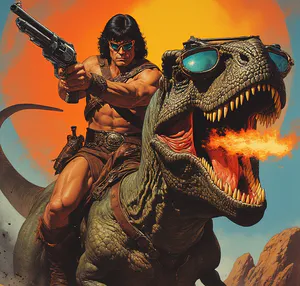
Las Vegas is the savage heart of the American Dream
Hunter S. Thompson
Hunter S. Thompson

The Game of Philosophical Knife Fights.
Inside your character is a supernatural gift, that their perception can become reality, and accomplish things that the slumbering masses would think are impossible. How they do this is something that differs for every one of the so-called awakened, some chant rituals and draw sigils, some call upon spirits, some pray to the divine, some build wondrous devices, it matters not how they do it, all methods are real in the eyes of their practitioners and in their tangible effects on the world.
With time and study your character will deepen their wisdom and soar higher, past the old limits and the boundaries of reality. This journey of self discovery will not be an easy one, as every supernatural action draws a reaction from the mundane reality that is held together by the consensus of everyday life; too much boldness, too blatant a use of magic can result in terrifying backlash as reality reasserts itself in a most violent way. Ever present in the background also are the architects of the present age, the group that took the society from a world of superstition and myth and to one of cold, unbending science and technology. They are the Technocracy, and they are the enemy of every free spirited mage that dares to practice the supernatural arts in the modern day. Whether they are embedded in law enforcement, research labs, or corporate hierarchies, their agents are ever present and utterly devoted to snuffing out any trace of the supernatural. Against them stand the nine traditions, disparate groups of mages united by their battle against the technocrats, holding out hope that a world where the supernatural is part of everyday life can bloom again, and that every human pursue their own spiritual awakening. In the vastness of the world there are other, even stranger kinds one may encounter, some whose quest to control reality has led them to be lost in their own dreams, completely unmoored from the mundane, or those who would prefer to see it all burn, who revel and delight at every last corner of reality they can blight with a little more decay or bitterness.
Mage is about both the inner battle of self-mastery and the outer battle of individuals against a society that demand that any nail that sticks out be hammered down, it’s a game where people discuss the nature of reality and have kung fu fights with terminator robots, it’s a game about perseverance, hope, and everything else that comes up along the way. And yes, it is The Game of Philosophical Knife Fights.
What is this RP?
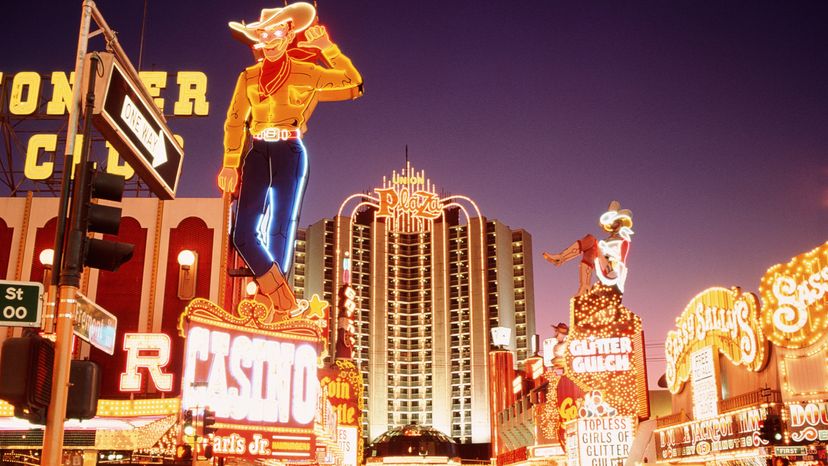
This RP centers on a small group of mages brought together by chance in the city of Las Vegas. They might be new to magic, they might be new to Vegas, new to both or new to neither. A chance discovery of a strange, otherworldly poker chip brings all of them together, and gives them their first taste of the wider storm brewing on the horizon. They’ll start off with humble powers and grow over time, as they get drawn into a larger conflict brewing behind the scenes. Vegas has got a lot of themes to explore, from reality the border between reality and illusions, to risking it on all on a crazy bet, to the just plain insanity of fighting a war for reality in a city that features fake Venice, fake Paris, fake New York, and fake Rome among other things.
I would describe the style I’m trying to run as a quasi-sandbox. There will be a lot of plot hooks that your characters are given the option to pursue, with freedom to pick and choose among them, and you’re encouraged to add your own ideas or personal subplots in also. As the GM I will try to make most of them have some impact on the overall story to create a sense of plot progression. Hopefully, it can allow for player freedom and create variety between personal, episodic, and long term plot lines. I’m looking for dedicated players who would want to be part of that; knowledge of the setting is not necessary, I’m happy to answer any questions that come up along the way. Please be comfortable writing long posts for collaborations and detailed scenes, though solo scenes without much happening still won’t need more than a handful of paragraphs.

Rules
1. Be kind to everyone. If you have a dispute, work it out in a civil way.
2. Respect the bounds of the RP. Remember the general rules about not godmoding, controlling others characters, making characters that are overpowered/setting breaking, or contradicting what’s been established for RP. There’s plenty of room to work with others and incorporate ideas, just try to talk it through first.
3. Be part of a group. Try to work with people to make the RP happen, give people the opportunity to decide where the plot goes. Also, if you end up leaving the RP, it's all fine, just let us know if you can.
If anyone is extra eager to get started on a character, here you go.
The nine traditions cover most Mages outside of the Technocracy, but it is not mandatory to belong to one. There are Mages who follow more niche methodologies usually called crafts (looking those up is left as an exercise for the reader), or those that follow a personal methodology that doesn't align with any large group, called Orphans.
Information on Traditions (Yes I did steal this from TV Tropes):
Order of Hermes: The traditional 'wizard' and user of Hermetic Magic. Masters of the Sphere of Forces.
Verbena: Pagan and druidic-inspired witches who use healing and transformation powers. Masters of the Sphere of Life.
Celestial Chorus: Spiritual and religious miracle workers who channel the power of their faith. Masters of the Sphere of Prime.
Dreamspeakers (Kha'vadi): Shamans who commune with the world of the spirits. Obviously, masters of the Sphere of Spirit.
Akashic Brotherhood (Akashayana): Enlightened monks from the Far East, and experts of Supernatural Martial Arts. Masters of the Sphere of Mind.
Euthanatos (Chakravanti): Necromantic mages who guide the great wheel of death and rebirth. Masters of the Sphere of Entropy.
Cult of Ecstasy (Sahajiya): Mages who seek to alter perceptions and find new experiences, usually through the use of sex, drugs, and rock and roll. Masters of the Sphere of Time.
Sons of Ether: Mad Scientist mages who embrace the weirder and more fantastic theories of Science. Also known as the gender-neutral Society of Ether or Etherites. Masters of the Sphere of Matter.
Virtual Adepts: Computer wizards and hacker mages who seek to open up technology to the masses. Masters of the Sphere of Correspondence.
Information on Traditions (Yes I did steal this from TV Tropes):
Order of Hermes: The traditional 'wizard' and user of Hermetic Magic. Masters of the Sphere of Forces.
Verbena: Pagan and druidic-inspired witches who use healing and transformation powers. Masters of the Sphere of Life.
Celestial Chorus: Spiritual and religious miracle workers who channel the power of their faith. Masters of the Sphere of Prime.
Dreamspeakers (Kha'vadi): Shamans who commune with the world of the spirits. Obviously, masters of the Sphere of Spirit.
Akashic Brotherhood (Akashayana): Enlightened monks from the Far East, and experts of Supernatural Martial Arts. Masters of the Sphere of Mind.
Euthanatos (Chakravanti): Necromantic mages who guide the great wheel of death and rebirth. Masters of the Sphere of Entropy.
Cult of Ecstasy (Sahajiya): Mages who seek to alter perceptions and find new experiences, usually through the use of sex, drugs, and rock and roll. Masters of the Sphere of Time.
Sons of Ether: Mad Scientist mages who embrace the weirder and more fantastic theories of Science. Also known as the gender-neutral Society of Ether or Etherites. Masters of the Sphere of Matter.
Virtual Adepts: Computer wizards and hacker mages who seek to open up technology to the masses. Masters of the Sphere of Correspondence.
These are the areas of magic someone can be proficient in, what spheres someone is competent with determines what kinds of magical effects they can create. More skill with a sphere will allow for more impressive feats. Combining spheres allows people to do things one sphere alone cannot, such as using Life and Matter to turn a statue into a living being, Forces and Mind to turn thoughts into a light projection, or Matter and Correspondence to teleport an inanimate object
Name | What it covers | Example effects
Correspondence | Space, Distance, Connections | Sense far away places, open portals, teleport, manipulate the distance between things
Entropy | Fate, probability, uncertainty, chaos, possibilities | Control chance outcomes, curse something with bad luck, alter the probability of potential events
Forces | Energy, elemental forces, motion, vibration, light | Conjure light, throw fireballs, dull sound, manipulate electricity, telekinesis
Life | Living things, biological processes | Heal wounds, shapeshift living things, inflict diseases, enhance natural abilities
Matter | Inanimate objects, physical materials | Reshape inanimate objects, transmute lead into gold, turn solid things into liquid, create chemical reactions
Mind | Thought, mental processes, consciousness, psychology, human judgment, perception | Read minds, manipulate emotions, conjure illusions, attack people on a telepathic level
Prime | Raw magical energy, the primal essence of reality | Sense magic, counter magic, harvest magical energies from nodes, embed magic in places and objects, manage paradox backlash
Spirit | Other worlds, spirits, hauntings | See other dimensions, talk to spirits, venture into the spirit world, open portals to other worlds
Time | The flow of time, speed and duration, the past and the future | Get premonitions, slow time, speed up things to supernatural levels
Name | What it covers | Example effects
Correspondence | Space, Distance, Connections | Sense far away places, open portals, teleport, manipulate the distance between things
Entropy | Fate, probability, uncertainty, chaos, possibilities | Control chance outcomes, curse something with bad luck, alter the probability of potential events
Forces | Energy, elemental forces, motion, vibration, light | Conjure light, throw fireballs, dull sound, manipulate electricity, telekinesis
Life | Living things, biological processes | Heal wounds, shapeshift living things, inflict diseases, enhance natural abilities
Matter | Inanimate objects, physical materials | Reshape inanimate objects, transmute lead into gold, turn solid things into liquid, create chemical reactions
Mind | Thought, mental processes, consciousness, psychology, human judgment, perception | Read minds, manipulate emotions, conjure illusions, attack people on a telepathic level
Prime | Raw magical energy, the primal essence of reality | Sense magic, counter magic, harvest magical energies from nodes, embed magic in places and objects, manage paradox backlash
Spirit | Other worlds, spirits, hauntings | See other dimensions, talk to spirits, venture into the spirit world, open portals to other worlds
Time | The flow of time, speed and duration, the past and the future | Get premonitions, slow time, speed up things to supernatural levels
Quote that embodies the character. Can be something they said, something said about them, or a famous quote that fits them

| Tradition ▔▔▔▔▔▔▔▔▔▔ Tradition of magic (Can be any of the nine traditions, any of the disparates, or an Orphan mage. No Nephandi, no marauders, and no open Technocrats. Defectors and undercover Technocrats are allow) Spheres ▔▔▔▔▔▔▔▔▔▔▔▔▔ (List the spheres of magic that your character has skill with, in order of most skilled to least skilled. The less you list, the more skilled you will be at each of them. ) ▔▔▔▔▔▔▔▔▔▔▔▔▔ |  _______________________________________________ Full Name Age (18 or older, please) Appearance details not highlighted in the image used (optional) Outlook: This section is the one where you talk about who your character is as a person. Personality is a big part, so are inner struggles, and their general outlook on life. This is also the section where you talk about their relationship with reality, what do they actually do when they are working magic? What actions do they take to invoke these powers, how do they think they operate? Are there inbuilt assumptions or limitations? This is also where you can talk about your mage's Avatar, the entity that exists inside the Mage's mind and represents their connection with their magic. How this operates differs for every mage, some see their avatar as a person that comes in their dreams, others hear a voice in their head, still others may not even see them a conscious being, just notice signs and messages that seem to be from a mirror of themselves. How overtly it appears to a mage also varies, some hear from them only once in a blue moon, others seldom spend a moment where they don't feel their avatar's presence in some way | Personal History ▔▔▔▔▔▔▔▔▔▔▔▔▔ (Talk about their biography, how they came to be where they are now) Plot Hooks ▔▔▔▔▔▔▔▔▔▔▔▔▔ (Not required. If you want to list potential storylines or unresolved issues related to your character that might come up later, this is where you can do that) |
Affiliations
▔▔▔▔▔▔▔▔
(Not Required. List characters they know and have some kind of relationship with. Can be PCs or NPCs)
Character: Relationship
Ascension: When a Mage reaches a level of enlightenment surpasses all limitations and moves on to a higher state, one beyond this reality. So rare that it is not confirmed to ever have happened, it is more of an abstract goal for mages.
Ascension War: The name for the ongoing conflict among Mages, trying to define the nature of reality and the beliefs of the general public. Largely, it is fight between the Traditions, who want a dynamic, mystical world with little control over magic and widespread belief in any kind of supernatural power, and the Technocracy who want a static, standardized, safe and predictable world where Magic is subsumed as part of technology and science and reason and incremental progress rule.
Arcane: A natural “stealth aura” skilled mages project, which makes it easier for odd, subtle and unnatural details to go unnoticed
Avatar: A piece of the Mage’s personality that represents their connection to the supernatural forces. How the Avatar appears and communicates is different for every Mage, while it is common for them to see them as a human figure of the opposite gender, others may simply hear a voice, see a whispy apparition, or even just perceive subtle signs in the world that seem to communicate with them. How active an Avatar is also varies from Mage to Mage, to some it is a constant presence, others only speak to them sporadically, offering cryptic spiritual insights or appearing at profound moments.
Awakened: People aware of the supernatural
Bygone: Mythical creatures that are no longer believed to be real, but may still exist in very limited numbers in places hidden from the general masses
Chantry: A base for Mages
Coincidental Magic: Magic that doesn’t arouse suspicion, subtle enough that an unawakened observer wouldn’t realize anything is off
Focus: Something a Mage uses when performing magic, defined by their paradigm. It may be an object such as a wand or a smartphone, a phrase they say, or gestures, or any combination of the above, whatever they think is necessary to work their magic. If it’s an action or external object they use when they do their magic, it’s a focus. How elaborate they are varies, generally the more elaborate the effect the more elaborate the use of Foci must be, and the more experienced the Mage the less they need to rely on Foci.
Gauntlet: The barrier between the normal world and the spirit world, the one that keeps spirits from intruding. It varies in strength from place to place, and skilled mages can manipulate it’s strength also.
Mage: A human who can use their own beliefs and practices to affect reality in a way that breaks what is generally understood to be possible by the general public.
Marauder: A Mage who has completely lost touch with reality, warping reality just by their mere presence. Their hazy mental state means they only have limited free will and little awareness of others around them, the area around them functions like step into another world, with the consensus reality gone. Inside this zone, Paradox backlash still exist but the nature of their powers means it is frequently redirected at other people inside the area around them, leading to chaotic and disastrous outcomes. It is rare that a Mage ever ends up in such a distorted state and when it happens it is difficult to hide, prone to massive collateral damage and generally treated as a top priority for suppression by the Technocracy and Traditions alike.
Nephandi: Mages who worship the ideas of decay, destruction, and corruption. They desire Decension, the opposite of Ascension for both themselves and the entire world. They aren’t about power, personal gain, or anything else except an end to all things, they are without redeeming qualities. Nephandi aren’t just Mages that engages in malevolent activities, they have become something else and their Avatar is stained for all time. They are rare, and every organized group of Mages prefers to keep it that way; the Traditions, the Technocracy, the disparate groups, and even Marauders all have a zero tolerance policy and try to eliminate a Nephandi whenever the opportunity presents itself. Because of this, most Nephandi are masters at hiding their status, and prefer to work in the shadows, never letting people see their true selves until it is too late.
Node: A place rich in magical power, where mages can tap into this power to enhance their own effects or harvest it for other purposes
Paradox: The negative consequences of magic that breaks the consensus reality. The actual extent depends on how large the violation is, how many witnesses it had, the mage’s own skill in mitigating it, and whether the Mage has accumulated a lot of paradox that they have not managed to discharge from previous actions that they have not managed to discharge. Very large paradox backlash can result in permanent changes, summon dangerous entities called Paradox Spirits, or send the Mage to other realities called Paradox Realms.
Quiet: A Mage’s natural tendency to lose touch with reality. Can be mild or quite severe depending on their use of magic and their own
Quintessence: Also known as Prime, the primal essence of all reality. It is basically raw magical potential, if a mage has access to a lot of it, it becomes easier to perform great feats. When mages conjure something from nothing as opposed to manipulating objects and forces already around them, they are using Quintessence. The Prime sphere deals with directly, representing a Mage’s skill with calling upon and manipulating it. Note: This is not a mana system, Mages do not “run out” of Quintessence and then find themselves unable to perform magic, it is just another factor that makes certain types of magic easier or harder depending on how much excess Quintessence they have.
Resonance: The traces Magic leaves behind on the world. The traces left by small acts are not noticeable except by other mages, the resonance from more powerful magic can manifest itself in ways that even the unawakened can notice it, like nature magic causing the plants to grow wilder and more verdant, or spirit magic making the voices of the other world loud enough to be heard without magical means.
Rote: A standard magical effect, one that is commonly repeated and useful in many contexts
Seeking: A moment when a Mage faces the barrier to the next stage of enlightenment, a spiritual trial. What this will look like differs for every mage, as does what triggers it, but they are always intense experiences, layered with symbolism related to their life and their worldview. Success can lead them to reach new levels of power and knowledge, failures can be traumatic experiences.
Sleepers: Someone who is not awakened, like your average person off the street. It’s harder to magic if there are many sleepers around, if they don’t believe what they’re seeing is possible it becomes more difficult to pull off a magical effect.
Tass: Magical energy imbued into a physical object, allowing it to be transported, traded or used to enable other magical effects.
Technocracy: The shadowy organization of Mages that aims to create a consistent, safe, and prosperous reality. They trace their roots an offshoot of the Order of Hermes, acting out of concern for protecting the sleeping masses from the damage of the supernatural run wild. They practice magic as science and technology, some of it so advanced that it resembles sci-fi, but with rigorous discipline and little tolerance for any other forms. Their vision is one of modernity and constant but gradual and pre-planned progress and are happy to point to the vast improvements in quality of life that science and technology have given average people all across the world. Despite the bureaucracy and demands for conformity, the Technocracy itself is not a monolith, inside you will find people ranging from those who covertly desire a reconciliation with the Traditions to those that demand total eradication as a top priority, and people that range from truly dedicated to the plight of average people all over the world to those that see that see all of them as indistinct, thoughtless masses unworthy of any dignity or agency. They are organized in five Conventions, each with a different area of focus: The Syndicate (Control of money and commerce), New World Order (Control of media, narratives, information, and government), Progenitors (Biological research and technology), Iteration X (Computers and Engineering), and the Void Engineers (Exploration, of earth and beyond).
Umbra: The spirit world, containing everything from spiritual entities to alternate realities, to living representations of concepts and collective emotions, eldritch horrors, and more. Magic can be far more powerful out here, outside the reach of sleepers, but with that comes other dangers. Often divided into several subcategories such as the Near Umbra, the Middle Umbra, and the Far Umbra, every further venture being stranger, more wonderous, and more dangerous that the last.
Vulgar Magic: Magic that blatantly breaks with the normally assumed laws of reality, and would be obvious to an average bystander
Ascension War: The name for the ongoing conflict among Mages, trying to define the nature of reality and the beliefs of the general public. Largely, it is fight between the Traditions, who want a dynamic, mystical world with little control over magic and widespread belief in any kind of supernatural power, and the Technocracy who want a static, standardized, safe and predictable world where Magic is subsumed as part of technology and science and reason and incremental progress rule.
Arcane: A natural “stealth aura” skilled mages project, which makes it easier for odd, subtle and unnatural details to go unnoticed
Avatar: A piece of the Mage’s personality that represents their connection to the supernatural forces. How the Avatar appears and communicates is different for every Mage, while it is common for them to see them as a human figure of the opposite gender, others may simply hear a voice, see a whispy apparition, or even just perceive subtle signs in the world that seem to communicate with them. How active an Avatar is also varies from Mage to Mage, to some it is a constant presence, others only speak to them sporadically, offering cryptic spiritual insights or appearing at profound moments.
Awakened: People aware of the supernatural
Bygone: Mythical creatures that are no longer believed to be real, but may still exist in very limited numbers in places hidden from the general masses
Chantry: A base for Mages
Coincidental Magic: Magic that doesn’t arouse suspicion, subtle enough that an unawakened observer wouldn’t realize anything is off
Focus: Something a Mage uses when performing magic, defined by their paradigm. It may be an object such as a wand or a smartphone, a phrase they say, or gestures, or any combination of the above, whatever they think is necessary to work their magic. If it’s an action or external object they use when they do their magic, it’s a focus. How elaborate they are varies, generally the more elaborate the effect the more elaborate the use of Foci must be, and the more experienced the Mage the less they need to rely on Foci.
Gauntlet: The barrier between the normal world and the spirit world, the one that keeps spirits from intruding. It varies in strength from place to place, and skilled mages can manipulate it’s strength also.
Mage: A human who can use their own beliefs and practices to affect reality in a way that breaks what is generally understood to be possible by the general public.
Marauder: A Mage who has completely lost touch with reality, warping reality just by their mere presence. Their hazy mental state means they only have limited free will and little awareness of others around them, the area around them functions like step into another world, with the consensus reality gone. Inside this zone, Paradox backlash still exist but the nature of their powers means it is frequently redirected at other people inside the area around them, leading to chaotic and disastrous outcomes. It is rare that a Mage ever ends up in such a distorted state and when it happens it is difficult to hide, prone to massive collateral damage and generally treated as a top priority for suppression by the Technocracy and Traditions alike.
Nephandi: Mages who worship the ideas of decay, destruction, and corruption. They desire Decension, the opposite of Ascension for both themselves and the entire world. They aren’t about power, personal gain, or anything else except an end to all things, they are without redeeming qualities. Nephandi aren’t just Mages that engages in malevolent activities, they have become something else and their Avatar is stained for all time. They are rare, and every organized group of Mages prefers to keep it that way; the Traditions, the Technocracy, the disparate groups, and even Marauders all have a zero tolerance policy and try to eliminate a Nephandi whenever the opportunity presents itself. Because of this, most Nephandi are masters at hiding their status, and prefer to work in the shadows, never letting people see their true selves until it is too late.
Node: A place rich in magical power, where mages can tap into this power to enhance their own effects or harvest it for other purposes
Paradox: The negative consequences of magic that breaks the consensus reality. The actual extent depends on how large the violation is, how many witnesses it had, the mage’s own skill in mitigating it, and whether the Mage has accumulated a lot of paradox that they have not managed to discharge from previous actions that they have not managed to discharge. Very large paradox backlash can result in permanent changes, summon dangerous entities called Paradox Spirits, or send the Mage to other realities called Paradox Realms.
Quiet: A Mage’s natural tendency to lose touch with reality. Can be mild or quite severe depending on their use of magic and their own
Quintessence: Also known as Prime, the primal essence of all reality. It is basically raw magical potential, if a mage has access to a lot of it, it becomes easier to perform great feats. When mages conjure something from nothing as opposed to manipulating objects and forces already around them, they are using Quintessence. The Prime sphere deals with directly, representing a Mage’s skill with calling upon and manipulating it. Note: This is not a mana system, Mages do not “run out” of Quintessence and then find themselves unable to perform magic, it is just another factor that makes certain types of magic easier or harder depending on how much excess Quintessence they have.
Resonance: The traces Magic leaves behind on the world. The traces left by small acts are not noticeable except by other mages, the resonance from more powerful magic can manifest itself in ways that even the unawakened can notice it, like nature magic causing the plants to grow wilder and more verdant, or spirit magic making the voices of the other world loud enough to be heard without magical means.
Rote: A standard magical effect, one that is commonly repeated and useful in many contexts
Seeking: A moment when a Mage faces the barrier to the next stage of enlightenment, a spiritual trial. What this will look like differs for every mage, as does what triggers it, but they are always intense experiences, layered with symbolism related to their life and their worldview. Success can lead them to reach new levels of power and knowledge, failures can be traumatic experiences.
Sleepers: Someone who is not awakened, like your average person off the street. It’s harder to magic if there are many sleepers around, if they don’t believe what they’re seeing is possible it becomes more difficult to pull off a magical effect.
Tass: Magical energy imbued into a physical object, allowing it to be transported, traded or used to enable other magical effects.
Technocracy: The shadowy organization of Mages that aims to create a consistent, safe, and prosperous reality. They trace their roots an offshoot of the Order of Hermes, acting out of concern for protecting the sleeping masses from the damage of the supernatural run wild. They practice magic as science and technology, some of it so advanced that it resembles sci-fi, but with rigorous discipline and little tolerance for any other forms. Their vision is one of modernity and constant but gradual and pre-planned progress and are happy to point to the vast improvements in quality of life that science and technology have given average people all across the world. Despite the bureaucracy and demands for conformity, the Technocracy itself is not a monolith, inside you will find people ranging from those who covertly desire a reconciliation with the Traditions to those that demand total eradication as a top priority, and people that range from truly dedicated to the plight of average people all over the world to those that see that see all of them as indistinct, thoughtless masses unworthy of any dignity or agency. They are organized in five Conventions, each with a different area of focus: The Syndicate (Control of money and commerce), New World Order (Control of media, narratives, information, and government), Progenitors (Biological research and technology), Iteration X (Computers and Engineering), and the Void Engineers (Exploration, of earth and beyond).
Umbra: The spirit world, containing everything from spiritual entities to alternate realities, to living representations of concepts and collective emotions, eldritch horrors, and more. Magic can be far more powerful out here, outside the reach of sleepers, but with that comes other dangers. Often divided into several subcategories such as the Near Umbra, the Middle Umbra, and the Far Umbra, every further venture being stranger, more wonderous, and more dangerous that the last.
Vulgar Magic: Magic that blatantly breaks with the normally assumed laws of reality, and would be obvious to an average bystander

Do you feel lucky?