 Member


You are talking to the GMs, Dawnon. I have no qualms.
@Lugubrious, I'll fix that when I next edit the Compendium. Thank you for pointing that out.

- Last Seen: 1 yr ago
- Old Guild Username: BBeast
- Joined: 12 yrs ago
- Posts: 1624 (0.36 / day)
- VMs: 0
-
Username history
- BBeast 12 yrs ago
Status
Recent Statuses
7 yrs ago
Current
I'm now a professional physicist. Isn't that awesome?
6
likes
8 yrs ago
Exams are done! I'm free!
2
likes
8 yrs ago
"Life is complex - it has real and imaginary parts."
2
likes
9 yrs ago
Science doesn't rest
9 yrs ago
Reason Reified, Lord Logiker, Sciencomancer Superbus
Bio
I am a Roleplayer with an interest in science fiction and fantasy, with a preference for Casual. I have been roleplaying for several years, and have even taken a stab at running a few RPs.
Outside the Guild, I am an Australian science student, gamer, musician and roleplayer (that's right, IRL too).
Outside the Guild, I am an Australian science student, gamer, musician and roleplayer (that's right, IRL too).
Most Recent Posts
Calvartem left the walkers on their own and galloped off down the paved road. The squadron of soldiers coming from the opposite direction did not concern him, as he simply stunned them with a wave of shadow and by the time they were able to see again Shadowmane had gone over their heads and was running off down the streets. Encased in the alleyways bathed in red, Calvartem wove through the town, with Shadowmane able to take the corners even at speed. Twice he ran into a person who had been foolish enough to stay outside, and he zombified them, but they were just small change compared to what he was after. Calvartem's goal was the town's crypt. Even if the crypt contained nothing but piles of bones he would be able to form a hoard of walkers from it which would allow him to tip the balance in his favour.
Eventually he came across a church, standing proud and adorned in white, almost defying the blood light of the Source, although Calvartem would likely later learn that it was quite modest compared to some cathedrals in this section of Elysium. He dismounted and entered through the double doors, with Shadowmane trotting in behind him, and was immediately confronted by three priests garbed in blue robes. Calvartem outstretched his staff and shot a bolt of black fire at one priest, but it was absorbed by a floating glowing sigil cast by the priests.
"Your terror ends here, dark beast!" shouted one of the priests. He threw forth a spray of enchanted water conjured from his hands, which Calvartem deflected with a shield of shadow.
"You mortals can not stop me," Calvartem retorted, throwing a dark fireball at the group. The priests countered with an arm of water, which scattered on hitting and extinguishing the fireball.
"You can not stand against our gods," another priest asserted. They cast another sigil and pushed the runic pattern towards Calvartem, who dissolved it with dark magic from a tap of his staff.
"Have you looked at the sky? Your gods have abandoned you," Calvartem taunted. He then struck the ground with his staff, unleashing a wave of black fire which overwhelmed the watery defences the priests attempted to conjure and struck them down. The Necromancer then finished them off with three black bolts. Passing them, he tapped the ground with his staff and the priests rose as zombies, who ambled outside in search of prey.
Calvartem found the crypt down a side staircase. Tapping the ground black tendrils slithered across the room and entered the jars and coffins crammed onto shelves. The entire room, previously deathly still, stirred to life as corpses broke out of their boxes and bones assembled into complete skeletons. The room was quickly overflowing with walkers, which poured out onto the streets followed by Calvartem and Shadowmane. Mounting up, the Necromancer raised his staff into the air, signalling the walkers to assemble around him. He pointed his hoard forwards into the alleys, and Calvartem followed behind, letting the walkers clear the way and the houses.
Eventually he came across a church, standing proud and adorned in white, almost defying the blood light of the Source, although Calvartem would likely later learn that it was quite modest compared to some cathedrals in this section of Elysium. He dismounted and entered through the double doors, with Shadowmane trotting in behind him, and was immediately confronted by three priests garbed in blue robes. Calvartem outstretched his staff and shot a bolt of black fire at one priest, but it was absorbed by a floating glowing sigil cast by the priests.
"Your terror ends here, dark beast!" shouted one of the priests. He threw forth a spray of enchanted water conjured from his hands, which Calvartem deflected with a shield of shadow.
"You mortals can not stop me," Calvartem retorted, throwing a dark fireball at the group. The priests countered with an arm of water, which scattered on hitting and extinguishing the fireball.
"You can not stand against our gods," another priest asserted. They cast another sigil and pushed the runic pattern towards Calvartem, who dissolved it with dark magic from a tap of his staff.
"Have you looked at the sky? Your gods have abandoned you," Calvartem taunted. He then struck the ground with his staff, unleashing a wave of black fire which overwhelmed the watery defences the priests attempted to conjure and struck them down. The Necromancer then finished them off with three black bolts. Passing them, he tapped the ground with his staff and the priests rose as zombies, who ambled outside in search of prey.
Calvartem found the crypt down a side staircase. Tapping the ground black tendrils slithered across the room and entered the jars and coffins crammed onto shelves. The entire room, previously deathly still, stirred to life as corpses broke out of their boxes and bones assembled into complete skeletons. The room was quickly overflowing with walkers, which poured out onto the streets followed by Calvartem and Shadowmane. Mounting up, the Necromancer raised his staff into the air, signalling the walkers to assemble around him. He pointed his hoard forwards into the alleys, and Calvartem followed behind, letting the walkers clear the way and the houses.
There are no hard limits to how much and how often you can change your Avatar, aside from your level of power. Typically, major modifications of self should be limited to with-in your Heart. While you could theoretically completely redevelop your entire Avatar on a regular basis, this would interfere with your Keeper as a character. The general practise is to have a single major Avatar transformation, to upgrade your Keeper from your initial form to your full form, and minor modifications if necessary; or to stick with your initial Avatar.
Endocrinology said
Addiction
Addiction is the continued repetition of a behaviour despite adverse consequences, or a neurological impairment leading to such behaviours. Classic hallmarks of addiction include impaired control over substances or behaviour, preoccupation with substance or behaviour, continued use despite consequences, and denial. Habits and patterns associated with addiction are typically characterised by immediate gratification (short-term reward), coupled with delayed deleterious effects (long-term costs).
Physiological dependence occurs when the body has to adjust to the substance by incorporating the substance into its "normal" functioning. This state creates the conditions of tolerance and withdrawal. Tolerance is the process by which the body continually adapts to the substance and requires increasingly larger amounts to achieve the original effects. Withdrawal refers to physical and psychological symptoms experienced when reducing or discontinuing a substance that the body has become dependent on. Symptoms of withdrawal generally include but are not limited to anxiety, irritability, intense cravings for the substance, nausea, hallucinations, headaches, cold sweats, and tremors.
Several brain regions are also involved in the biological mechanisms of addiction. Most notably, the release of dopamine into the nucleus accumbens, which is triggered by a wide variety of drugs in a wide variety of ways, plays a role in the reinforcing qualities of stimuli. Since dopamine secretion is also characteristic of natural reinforcing stimuli such as food, water, and sex, it's evident that the addictive nature of drug involves processes that hijack these mechanisms. Research indicates that this process begins in the limbic dopaminergic system and subsequently modifies other parts of the brain that receive input from the affected neurons. Among these areas is the ventral tegmental area.
The nucleus accumbens (NAc) and the ventral tegmental area (VTA) are the primary sites where drugs of abuse act. The following are commonly considered abused drugs: heroin, cocaine, alcohol, opiates, marijuana, nicotine, amphetamine, and their synthetic analogues. These drugs alter the neuromodulatory influence of dopamine on the processing of reinforcement signals by prolonging the action of dopamine in the nucleus accumbens or by potentiating the activation of neurons in the VTA and NAc. The most common drugs of abuse stimulate the release of dopamine, which creates both their rewarding and the psychomotor effects. Compulsive drug-taking behaviours are a result of the permanent functional changes in the mesolimbic dopamine system arising from repetitive dopamine stimulation. Molecular and cellular adaptations are responsible for a sensitised dopamine activity in the VTA and along the mesolimbic dopamine projection in response to drug abuse. In the VTA of addicted individuals, the activity of the dopamine-synthesising enzyme tyrosine hydroxylase increases, as does the ability of these neurons to respond to excitatory inputs. The latter effect is secondary to increases in the activity of the transcription factor CREB and the up regulation of GluR1, an important subunit of AMPA receptors for glutamate. These alterations in neural processing could account for the waning influence of adaptive emotional signals in the operation of decision making faculties as drug-seeking and drug-taking behaviours become habitual and compulsive.
The withdrawal phenomenon occurs because the deficit in reward functioning causes the organism to enter a distress cycle wherein the drugs become necessary to restore the normal homoeostatic state. Recent research has shown that even after the final stages of withdrawal have been passed, an organism will reinstate the drug-seeking behaviour if exposed to the drug or drug-related stimuli.
Today Zachary had brought along supplies so he could spend the night in this workshop, keeping it safe and reducing the need for travel. This included a mattress, rations, water-core shower and a fresh change of clothes. Zachary looked at his rations and realised that they were running very low. Tomorrow the military were holding their weekly handout of rations, so he would have to make that trip tomorrow. As he set about eating dinner Kaa'is sparked up a conversation.
We had a pretty close call with that gang this morning, Kaa'is commented.
"Yes, that could have gone much worse," Zachary replied casually.
We were armed with the wind cannon, but at such close ranges it would have been awkward to use. What normally ends up happening is we clobber them metal objects, like the wind cannon or their own weapons, Kaa'is continued.
Zachary sighed. "Where are you going with this?"
I'm thinking that it is about time we were armed with something suited for hand-to-hand combat, rather than having to improvise with things not designed for clobbering, Kaa'is said.
Zachary stopped to consider this for a few moments. Eventually he cautiously suggested, "So, something like brass knuckles. Except bulkier."
Exactly! That shouldn't be hard, just a piece of metal which sits in your hand around your fingers.
Zachary moved over to his scrap heap and picked out some metal bars and bar-like scraps. A little time with a blowtorch, grinder and welder was enough to produce a pair of iron knuckles. The main feature of these were the heavy metal bar placed to hit things which Zachary punched. He could move the iron knuckles using his powers, allowing him to deliver blows of great force. As an additional feature he had padded the grip so that punches would be less likely to shatter his own hand. Zachary punched the air a few times experimentally and seemed satisfied with the weight. He slipped them into his jacket pockets, where he would be able to easily draw them on a moment's notice, either by his magnetic powers or by hand. Zachary practised drawing them and giving a few gabs several times.
When he finished, Zachary put the iron knuckles back, washed his hands and ate the remainder of his dinner. He then brushed his teeth and settled down to read. He was learning lots of interesting things from the textbook. Eventually he finished a chapter, put the book down, turned off the lights and lay down on his mattress to sleep. He would need to get an early start next morning if he wanted to have the most success in collecting rations.
On the back of Shadowmane, Calvartem crested a hill and stopped on top of it. From there he could see the town of interest. The town itself was walled, with walls about 4 metres tall, with several guards watching the gates for the flow of traffic. Inside the walls houses were crowded together, which formed many tight alleyways. There was also an open section amidst the houses, which was likely a plaza where market was held. Roughly in the middle stood the castle, with more walls, this time 8 metres high, and parapets. Outside the town were numerous farm houses, complete with farms. Calvartem considered his strategy. The first walls would be a problem to get past. One option would be to dash through the gates before they can be closed and then summon walkers from with-in. This surprise attack may give him an advantage, but it ran the risk of trapping him in with an unknown enemy force. Another option would be to slaughter the people of the farms, raise their dead, then merge them into Breaker to get through the gates, but this would take time and they could arrange a defence. A third option would be to raise a smaller hoard outside, jump over the walls and open the gates from with-in himself.
He was still weighing up his options when the light changed. The pure white light, which Calvartem found sickly, which bathed the land suddenly became blood red. Looking to the sky, he saw that the sun had also turned red, tinting the sky that colour too. Keeper and human alike would recognise such an event as an apocalyptic omen, although only one group would be pleased with such a sign. Spurred on by this event, Calvartem brandished his staff and Shadowmane galloped towards the farmhouses. Circling around one house, Calvartem waved his staff over the ground, releasing tendrils of black fire which snaked their way over the ground until they found buried bodies. A couple of humans rose from two graves and a dead dog came to life as well. Calvartem left the walkers to do what they did to the inhabitants of the house as he quickly made his way to the next house, and the next one. Meanwhile the guards, who had also seen the sun turn red, saw a skeletal wizard riding on a horse of shadows raising corpses from the ground, so they rose the alarm and closed the gates. In just a couple of minutes Calvartem had visited four houses and gone back to each of them to raise the slain occupants as walkers and amass them towards the gate.
In this time the town guard had been alerted to the crisis and they too were amassing. Two musketeers stood on the wall above the gate, and a line of soldiers stood ready to defend behind the gate. As the hoard approached the musketeers fired, one shot striking a walker and one striking Shadowmane. Neither shot seemed to slow down either target, so the musketeers were left to quickly reload. Calvartem drew near to the gate well ahead of the hoard, and as he did he blasted one of the musketeers off the wall with a black fireball. Without breaking pace, Shadowmane then leaped up, landed with amazing precision on top of the wall and turned towards the other musketeer. This soldier, surprised and terrified at the tall horse and the skeleton riding on it which was now standing right in front of him, abandoned his attempt to reload and drew his sabre. He was not able to use it as Shadowmane trotted forwards and nudged him off the wall, causing him to tumble head-first into the cobbles below.
As Calvartem looked down at the ex-musketeer a crossbow bolt ricocheted off one of his ribs, shattering it inside his robe, and a fireball narrowly missed Shadowmane. This injury annoyed Calvartem more than it inconvenienced him, so he spurred Shadowmane to jump down in front of the gatehouse, which was a bit down an alley to the main road where the soldiers were waiting. Calvartem swiftly dismounted and entered through the door of the guardhouse. He laid a hand on a surprised guard with-in and cast his dark magic directly into the guard. The guard's skin rapidly wrinkled and greyed as he was rapidly aged to death. Two seconds later, once the guard had died, Calvartem converted him into a walker and withdrew his hand, in time to throw up a brief shield of shadow to block the second guard's sword. The first guard, who was still armed despite being a zombie, threw himself at the second guard and ran him through. At a wave of his staff, Calvartem possessed the second guard and sent both of them out the door to slow down the soldiers who were now closing in on his position.
Have bought himself a couple of spare moments, Calvartem approached the large wooden wheel which, by means of pulleys, opened and closed the gate. Calvartem grabbed hold of the wheel and turned it, and after several revolutions of the large wheel it jerked to a halt, indicating that the door was fully open. Outside he heard the soldiers stop as they heard the gate open and the uneven footsteps of his walker hoard enter the town.
Walking outside, Calvartem saw the soldiers assembled in the alleyway, with their rear end fighting back the newly arrived walkers and the front end advancing towards him and Shadowmane over the dismembered bodies of the two walker-guards. The nearest soldier, protected by a shield, raised his sword to strike Calvartem but was too slow as Calvartem fired a ball of black fire at the guard under his sword. The fireball exploded, knocking back and dazing the soldiers and giving Calvartem time to mount up upon Shadowmane. With a wave of his staff, tendrils of black fire threaded their way through the air to the two slain walkers on the ground. The black fire quickly knitted the limbs together and replaced missing muscle with magic, restoring the walkers to fighting condition in the middle of the group of soldiers. In the chaos that ensured, Shadowmane leaped over the soldiers on his front, landed behind the soldiers on the opposite front and charged through, pushing down the soldiers and parting the walkers. As soon as Shadowmane had passed the walkers dived upon the fallen soldiers. The alleyway was now a melee of blades, fire, hands and teeth, the red lighting making it seem even more bloody. After a quick glance, Calvartem cast his summoning magic again, restoring three walkers and raising two slain soldiers.
Calvartem looked up the main road. The civilians were nowhere to be seen- they must be either holed up inside their houses or evacuated deeper into the town- but another unit of soldiers was assembling at the far end. Calvartem would have laughed if his fleshless physiology had made that a natural action. There would be much more of this battle ahead, and a gloriously bloody battle it would be.
He was still weighing up his options when the light changed. The pure white light, which Calvartem found sickly, which bathed the land suddenly became blood red. Looking to the sky, he saw that the sun had also turned red, tinting the sky that colour too. Keeper and human alike would recognise such an event as an apocalyptic omen, although only one group would be pleased with such a sign. Spurred on by this event, Calvartem brandished his staff and Shadowmane galloped towards the farmhouses. Circling around one house, Calvartem waved his staff over the ground, releasing tendrils of black fire which snaked their way over the ground until they found buried bodies. A couple of humans rose from two graves and a dead dog came to life as well. Calvartem left the walkers to do what they did to the inhabitants of the house as he quickly made his way to the next house, and the next one. Meanwhile the guards, who had also seen the sun turn red, saw a skeletal wizard riding on a horse of shadows raising corpses from the ground, so they rose the alarm and closed the gates. In just a couple of minutes Calvartem had visited four houses and gone back to each of them to raise the slain occupants as walkers and amass them towards the gate.
In this time the town guard had been alerted to the crisis and they too were amassing. Two musketeers stood on the wall above the gate, and a line of soldiers stood ready to defend behind the gate. As the hoard approached the musketeers fired, one shot striking a walker and one striking Shadowmane. Neither shot seemed to slow down either target, so the musketeers were left to quickly reload. Calvartem drew near to the gate well ahead of the hoard, and as he did he blasted one of the musketeers off the wall with a black fireball. Without breaking pace, Shadowmane then leaped up, landed with amazing precision on top of the wall and turned towards the other musketeer. This soldier, surprised and terrified at the tall horse and the skeleton riding on it which was now standing right in front of him, abandoned his attempt to reload and drew his sabre. He was not able to use it as Shadowmane trotted forwards and nudged him off the wall, causing him to tumble head-first into the cobbles below.
As Calvartem looked down at the ex-musketeer a crossbow bolt ricocheted off one of his ribs, shattering it inside his robe, and a fireball narrowly missed Shadowmane. This injury annoyed Calvartem more than it inconvenienced him, so he spurred Shadowmane to jump down in front of the gatehouse, which was a bit down an alley to the main road where the soldiers were waiting. Calvartem swiftly dismounted and entered through the door of the guardhouse. He laid a hand on a surprised guard with-in and cast his dark magic directly into the guard. The guard's skin rapidly wrinkled and greyed as he was rapidly aged to death. Two seconds later, once the guard had died, Calvartem converted him into a walker and withdrew his hand, in time to throw up a brief shield of shadow to block the second guard's sword. The first guard, who was still armed despite being a zombie, threw himself at the second guard and ran him through. At a wave of his staff, Calvartem possessed the second guard and sent both of them out the door to slow down the soldiers who were now closing in on his position.
Have bought himself a couple of spare moments, Calvartem approached the large wooden wheel which, by means of pulleys, opened and closed the gate. Calvartem grabbed hold of the wheel and turned it, and after several revolutions of the large wheel it jerked to a halt, indicating that the door was fully open. Outside he heard the soldiers stop as they heard the gate open and the uneven footsteps of his walker hoard enter the town.
Walking outside, Calvartem saw the soldiers assembled in the alleyway, with their rear end fighting back the newly arrived walkers and the front end advancing towards him and Shadowmane over the dismembered bodies of the two walker-guards. The nearest soldier, protected by a shield, raised his sword to strike Calvartem but was too slow as Calvartem fired a ball of black fire at the guard under his sword. The fireball exploded, knocking back and dazing the soldiers and giving Calvartem time to mount up upon Shadowmane. With a wave of his staff, tendrils of black fire threaded their way through the air to the two slain walkers on the ground. The black fire quickly knitted the limbs together and replaced missing muscle with magic, restoring the walkers to fighting condition in the middle of the group of soldiers. In the chaos that ensured, Shadowmane leaped over the soldiers on his front, landed behind the soldiers on the opposite front and charged through, pushing down the soldiers and parting the walkers. As soon as Shadowmane had passed the walkers dived upon the fallen soldiers. The alleyway was now a melee of blades, fire, hands and teeth, the red lighting making it seem even more bloody. After a quick glance, Calvartem cast his summoning magic again, restoring three walkers and raising two slain soldiers.
Calvartem looked up the main road. The civilians were nowhere to be seen- they must be either holed up inside their houses or evacuated deeper into the town- but another unit of soldiers was assembling at the far end. Calvartem would have laughed if his fleshless physiology had made that a natural action. There would be much more of this battle ahead, and a gloriously bloody battle it would be.
I was thinking things were getting quiet here. I sometimes forget that this can be a busy time of the year in some parts of the world.
@Trapeziod, I hope you remember that Ifrit is only a Rogue Being. Yes, the battle will be dramatic, but he'll still have a really hard time razing Paterdomus, even with a lot of the army out on crusades. Just remember.
Oh, and this applies to everybody: you may have read that the sun and sky just turned red. This is a rather obvious change to anyone with a view of the sky. It is also a permanent change, until further notice. It will be a troubling sign to many humans. I would like it if everyone were not to casually ignore this rather significant and ubiquitous event.
@Trapeziod, I hope you remember that Ifrit is only a Rogue Being. Yes, the battle will be dramatic, but he'll still have a really hard time razing Paterdomus, even with a lot of the army out on crusades. Just remember.
Oh, and this applies to everybody: you may have read that the sun and sky just turned red. This is a rather obvious change to anyone with a view of the sky. It is also a permanent change, until further notice. It will be a troubling sign to many humans. I would like it if everyone were not to casually ignore this rather significant and ubiquitous event.
Endocrinology said
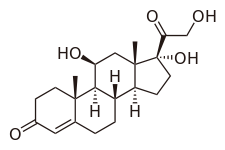
Cortisol
Cortisol is a steroid hormone, more specifically a glucocorticoid, produced by the zona fasciculata of the adrenal cortex. It is released in response to stress and a low level of blood glucocorticoid. Its primary functions are to increase blood sugar through gluconeogenesis, suppress the immune system, and aid with fat, protein, and carbohydrate metabolisms. It also decreases bone formation.
Cortisol is produced in the human body by the adrenal gland in the zona fasciculata, the second of three layers comprising the adrenal cortex. The cortex forms the outer "bark" of each adrenal gland, situated atop the kidneys. The release of cortisol is controlled by the hypothalamus, a part of the brain. The secretion of corticotropin-releasing hormone (CRH) by the hypothalamus triggers cells in the neighbouring anterior pituitary to secrete another hormone, the adrenocorticotropic hormone (ACTH), into the vascular system, through which blood carries it to the adrenal cortex.
In the fasting state, cortisol stimulates gluconeogenesis (formation of glucose, in the liver, from certain amino acids, glycerol, lactate, and/or propionate), and activates anti-stress and anti-inflammatory pathways. Cortisol prevents the release of substances in the body that cause inflammation.
Cortisol is released in response to stress, sparing available glucose for the brain, generating new energy from stored reserves, and diverting energy from low-priority activities (such as the immune system) in order to survive immediate threats or prepare for the exertion of rising to a new day.

With tools in hand Zachary began working on the various systems of his carriage. His powers had made significant changes to his work-flow. Underneath the carriage, he casually levitated a spanner to his hand so he could remove a section of mangled power redirection piping. He used one hand to grab the pipe for stability and also so he could read it to see the state of the nuts and bolts. With the spanner, he would use it to loosen a nut and then, with a flick of his metal bending, he unscrewed it the rest of the way without having to manually turn it. On the tighter screws he used his magnetic powers to apply some extra force to the spanner. Removing the offending segment of piping Zachary slid out from underneath the carriage and headed over to the spare parts. He found a suitable replacement, which wasn't hard as such parts are common, and returned to the carriage. Putting the nuts and bolts back on went in much the same way as before, this time using his powers to levitate the nuts and bolts which had been lying on the ground into their positions. He was able to give the piping a strong nudge where it was required to get it into shape and use his machine reading to tell him exactly how well it lined up and sealed.
This done, Zachary moved up to inspect the engine block. A few moments of reading it gave him all the diagnostics he needed. Save for the missing kinetic core, the sparker metal was partially missing, so he'd have to patch that up if he wanted the force to be delivered evenly. Sliding back out, Zachary grabbed a scrap of compatible sparker and collected his welder by passing his hand over it and picked up his welding mask manually. Back underneath, Zachary used his magnetic powers to hold the new piece of sparker in place, machine read so he could see exactly what he was doing without needing his eyes and used the welding torch to partially melt the new sparker into place, using his magnetic powers all the while to mould it into shape. This was tricky, as his powers had a limit. He had found earlier that if a metal is hotter than its Curie point, he can't manipulate it. So in order to still be able to use his powers Zachary only heated part of the new metal at any one time. To help get it into place when hot he also telekinetically used a rounded lump of metal as a small hammer. In no time at all Zachary had repaired the engine's core housing to his satisfaction.
Moving on to the electronics and electrics, Zachary had a bit more work to do. A lightning core battery, which was missing, powered the rest of the core devices in the vehicle. Controlling the power supply was the controls, with a mix of manual switches and embedded circuits. Fortunately, from a quick diagnostic Zachary was able to identify that the small silicon chip circuitry was still intact and functional, although a couple of relays would need replacing. Numerous wires had also been severed, so those would have to be fixed too. With his powers of machine reading, he was able to find these problems much faster and much more accurately than a normal mechanic could. His metal manipulating powers also helped him in dealing with parts which were out of easy reach, such as fallen wires. Most of the broken wires could be accessed with a bit of elbow grease and a screwdriver to remove internal panels. The electronics could be access from the underside of the carriage. After a lot of tinkering, Zachary finally finished with the electrics.
Settling down for an early dinner, after having washed his hands of course, Zachary looked on at the carriage. While no improvements were visible on the surface, he knew that a lot of progress had been made under the chassis. A lot of work still remained- he would have to find and install the correct cores, rebalance the power manifold and many other little changes to make it run reliably. Then there was still the ambitious goal of adding the skyway unit to it so it could climb up the Wall. And he pondered all this as he ate, and he looked forwards to the project ahead.
Perhaps he is a bit wide in the picture. He is wearing a rather heavy cloak, though, so we can say its loose-fitting in the picture.
I drew a picture of Zachary. My scanner refused to scan, so I had to take a photo instead.

Space- cold, lifeless and unforgiving, yet also powerful, awe-inspiring and all-encompassing. This was where Zadok is at his prime, able to draw on the cosmic energy unfiltered by the atmosphere and channel it to perform mighty spells, both of restoration and destruction. The vacuum, the radiation and the extreme temperatures did not harm Zadok as he flew towards this world's sun. The Ripper had flashed off at what could possibly have been the speed of light, or at least a large fraction of it, as soon as Elysium's atmosphere had been left behind, so Zadok knew he had no chance of beating him there. What he might be able to do is interrupt whatever scheme the Ripper was doing, but first he would have to cross the vast distance at a somewhat more modest speed. In that time, he was able to think.
First, he took in the views. Looking back he saw the world of Elysium stretch out beneath him. The great continent, of various shades of green, yellow and white, dominated the globe amidst a sea of deep blue dotted with tiny islands and archipelagos. On the continent he could make out several cities, with their dark dense point of houses with farmlands radiating out from them for a great distance. Then he looked to the stars. The stars painted a beautiful tapestry across the sky, like a work of art by a master painter. However, Zadok sensed that these stars were little more than a cosmic tapestry. They lacked the seemingly infinite depth of the stars in Outremar's skies, of the sense of a whole universe out there, with these stars being just ornaments for the centrepiece of this universe. Finally, he turned the the sun he was approaching. Its glow was radiant, and he could feel the magic laced among its rays. He looked closer, and saw something odd. He hadn't seen it before, as the light made it difficult to tell, but he saw it now. This sun was not a star- it was a gas giant, or perhaps a brown dwarf. It should not produce light, yet it did. This sun is clearly a very magical object, and quite a novelty to Zadok.
So this was the universe Sophist had created. He sighed remorsefully at the memory of his old friend. On Outremar, between the ages of Keepers, Sophist would often leave to his own private world which seemed to be his pride and joy. And now he saw it- a world which had been brilliantly crafted and well designed. But now Sophist was gone, and his world was under threat. It struck Zadok that this time he stood alone against the emerging evil. Before There had always been the other Anti-Keepers, but they had all been killed in the battle of the Apocalypse. Sophist was defeated when fighting against the Horseman War, the Weaver was destroyed by the very threads of the universe he was supposed to protect, and the rest were variously slain in the fighting against the Keepers aligned with the Horsemen. While Zadok had always been prone to working alone, the idea that he would have to fight back this entire threat by himself was daunting. However, he was still determined to protect this world, to honour Sophist and to make up for where he had failed in Outremar.
Eventually he reached the Source. Up close he could easily see the billowing clouds of blue and green gases which formed this sun, with intense light and magic shining through the clouds in rays. From up close the magic saturated Zadok's body, giving him extra strength and vigour. What he would need if he were to have any chance of defending this world was strength, and as there was no sign of the Ripper yet Zadok approached the gasses which covered the Source, hoping to dive in and absorb some of its power. However, he was just about to reach the surface when he sensed a disturbance so he hesitated. The Source began to pulse and heave violently, so Zadok flew back with a high-speed dash. The Source still close enough to fill Zadok's field of view, the light began to change from its pure white to red. Suddenly, the majestic blues and greens of the Source gave way to a sinister crimson red, and the light changed likewise. The once-peaceful clouds now thrashed about chaotically, and the pattern of emerging rays became erratic. The Horsemen of the Apocalypse and even the mighty Corumag himself, the father of all Keepers, had not instilled any fear into Zadok, but now he was terrified for the Ripper had taken control of an entire sun.
Even to those on Elysium below, who knew nothing about the Ripper and the power he now held, their very sun turning red, tinting the sky with its crimson light, would surely be a sign that doom was approaching.
First, he took in the views. Looking back he saw the world of Elysium stretch out beneath him. The great continent, of various shades of green, yellow and white, dominated the globe amidst a sea of deep blue dotted with tiny islands and archipelagos. On the continent he could make out several cities, with their dark dense point of houses with farmlands radiating out from them for a great distance. Then he looked to the stars. The stars painted a beautiful tapestry across the sky, like a work of art by a master painter. However, Zadok sensed that these stars were little more than a cosmic tapestry. They lacked the seemingly infinite depth of the stars in Outremar's skies, of the sense of a whole universe out there, with these stars being just ornaments for the centrepiece of this universe. Finally, he turned the the sun he was approaching. Its glow was radiant, and he could feel the magic laced among its rays. He looked closer, and saw something odd. He hadn't seen it before, as the light made it difficult to tell, but he saw it now. This sun was not a star- it was a gas giant, or perhaps a brown dwarf. It should not produce light, yet it did. This sun is clearly a very magical object, and quite a novelty to Zadok.
So this was the universe Sophist had created. He sighed remorsefully at the memory of his old friend. On Outremar, between the ages of Keepers, Sophist would often leave to his own private world which seemed to be his pride and joy. And now he saw it- a world which had been brilliantly crafted and well designed. But now Sophist was gone, and his world was under threat. It struck Zadok that this time he stood alone against the emerging evil. Before There had always been the other Anti-Keepers, but they had all been killed in the battle of the Apocalypse. Sophist was defeated when fighting against the Horseman War, the Weaver was destroyed by the very threads of the universe he was supposed to protect, and the rest were variously slain in the fighting against the Keepers aligned with the Horsemen. While Zadok had always been prone to working alone, the idea that he would have to fight back this entire threat by himself was daunting. However, he was still determined to protect this world, to honour Sophist and to make up for where he had failed in Outremar.
Eventually he reached the Source. Up close he could easily see the billowing clouds of blue and green gases which formed this sun, with intense light and magic shining through the clouds in rays. From up close the magic saturated Zadok's body, giving him extra strength and vigour. What he would need if he were to have any chance of defending this world was strength, and as there was no sign of the Ripper yet Zadok approached the gasses which covered the Source, hoping to dive in and absorb some of its power. However, he was just about to reach the surface when he sensed a disturbance so he hesitated. The Source began to pulse and heave violently, so Zadok flew back with a high-speed dash. The Source still close enough to fill Zadok's field of view, the light began to change from its pure white to red. Suddenly, the majestic blues and greens of the Source gave way to a sinister crimson red, and the light changed likewise. The once-peaceful clouds now thrashed about chaotically, and the pattern of emerging rays became erratic. The Horsemen of the Apocalypse and even the mighty Corumag himself, the father of all Keepers, had not instilled any fear into Zadok, but now he was terrified for the Ripper had taken control of an entire sun.
Even to those on Elysium below, who knew nothing about the Ripper and the power he now held, their very sun turning red, tinting the sky with its crimson light, would surely be a sign that doom was approaching.
© 2007-2026