• Last Seen: MIA
  • Joined: 12 yrs ago
  • Posts: 347 (0.08 / day)
  • VMs: 1
  • Username history
    1. Outcast 12 yrs ago
  • Latest 10 profile visitors:

Status

User has no status, yet

Bio

User has no bio, yet

Most Recent Posts

Events of the World: 1864


Europe
Disappointed by the poor response by the public to the war and conscription, Albert Edward authorised the army to conduct reforms and to attempt to modernise the military.
(-£480, +1 army sublevel)

After the failure to build ships the previous year, the navy ordered shipyards to start spitting out vessels or face consequences. Grudgingly, a few new ironclads were built, but not nearly the amount the navy was hoping for.
(-£4,000, +2 ironclads, +2 ironclads in 1 turn)

The British navy, now that Italy's navy had been severely destroyed, moved to blockade the peninsula. It was mostly successful, but the huge length of the Italian coastline meant that a few smugglers managed to slip through occasionally. British vessels also moved against Russia's Far East to blockade there, but again, it was only partially successful. Finally, British ships in the Baltic began bombarding Dutch, Prussian, and Northern German ports and towns. Fierce defence by coastal batteries kept the raiders from doing too much damage.
(Italy partially blockaded, Russia even more blockaded, small decrease in income to Netherlands, Prussia)

The French also attempted to turn public opinion against the Prussians. With a large Prussian army camped out in Alsace-Lorrain, many were willing to believe, and a wave of nationalism swept through France.
(-£82, +10% public support)

Among the Belgian refugees that fled into France was a man called Joseph Montigny, who brought with him the designs for a revolutionary new weapon, the Montigny mitrailleuse, a crank-operated machine-gun. French military experts seized on the designs, and prototypes were soon being tested.
(-£410, +8% equipment)


Testing the new weapon


Hoping to demonstrate their new vessel to their allies across the channel, the Plongeur submarine was sent to Britain for studying. Unfortunately, it sank during the journey. British naval officials were not impressed.

Now that they had more time, French officers began to improve the training of their new recruits.
(-£510, +1 army sublevel)

The Prussian army decided that the current cannons were of poor quality compared to the French equivalents, and ordered the production of better quality cannons. Training immediately went ahead with the new weapons.
(-£490, +1 army sublevel)

Recruits continued to pour in, forming lines going around the blocks at recruitment offices, and the Prussian High Command eagerly went ahead with training them.
(+300,000 conscripts)

Prussian chemists managed to improve the quality of their gunpowder, making it burn more uniformly.
(-£300, +6% equipment)

Austria was made up of dozens of different ethnic groups, many of whom chafed under Hapsburg rule. A rousing speech by the Kaiser, however, convinced many to follow him, and any thoughts of rebelling against the Empire were effectively silenced.
(-£78, +5% public support)

By copying tactics from their allies and enemies alike, the Austrian army managed to improve the coordination and quality of their armed forces.
(-£580, +1 army sublevel)

Old military technology was gradually phased out with new designs in the Austrian army.
(-£310, +5% equipment)

In Sweden, the new constitution was finally drawn up, uniting the Kingdoms of Sweden and Norway with Denmark.

The quality of Sweden’s factories was modernised and improved.
(-£520, +1 industry sublevel)

With war raging in Europe, the neutral haven of Sweden led to a flood of refugees. The Swedish government opened its borders to the refugees.
(-£120, +10,000 population)

The Dutch navy decided that instead of building new ships, the better plan would be to convert the current wooden sail-powered vessels into armoured steam-driven ships.
(-£620, -1 ship-of-the-line, -3 sail frigates, +1 ironclad, +3 screw frigates)
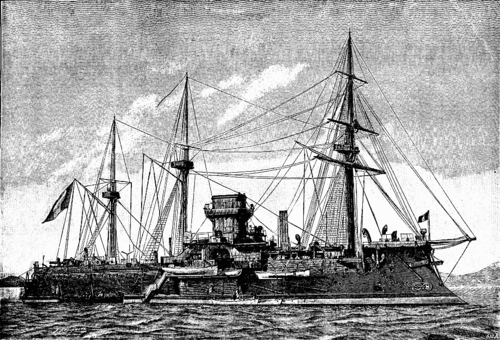

Dutch ironclad – a former ship-of-the-line


Propaganda was released portraying the war as a Dutch nationalist struggle. There was some success in converting those against the war.
(-£110, +5% public support)

Factories in the Netherlands were directed to the production of new and better equipment for the Dutch army.
(-£300, +5% equipment)

The Russian army was reformed, with corrupt and nepotistic officers rooted out and replaced with those who had more merit for the job.
(-£490, +1 army sublevel)

The Russian army also attempted to produce newer models of artillery. However, a fatal design flaw went unnoticed until after production had begun, and it would be a while before the factories could fix the error.
(-£100)

A massive conscription plan went underway in Russia, with thousands of new recruits being given a uniform and a weapon and sent to the front line.
(+450,000 conscripts)

Domnitor Alexandru Ioan Cuza, leader of the Romanian people, made a rousing speech to improve Romanian unity and nationalism in this dangerous time.
(-£90, +5% public support)

Romanian shipyards began producing new vessels, although the low industry level struggled somewhat with the order.
(-£2,450, +1 screw frigate, +3 sail frigates)

Military drills were conducted by Romania to try and prepare for a Russian invasion.
(-£500, +1 army sublevel)

The Italian army began rapid conscription to prepare for the war. The recent victory in Veneto helped recruitment, however it was still fewer men than hoped.
(+120,000 conscripts)

The output of farms and mines in Italy were increased, all for the war effort.
(-£400, +1 resource sublevel)

Italian officers pored over reports of the strategy that led to victory in Veneto, and drills were conducted to test the new methods.
(-£490, +1 army sublevel)

Better quality equipment was purchased by the Italian military.
(-£310, +5% equipment)

In the Ottoman Empire, blueprints of the new breach loading Tabatière rifles gained from France were submitted to factories and weapons manufacturers. Production began, but many factories were slow to catch on how they work.
(-£300, +5% equipment in 1 turn)

A brutal reform of the tax system was launched, intending to crack down on corruption within the Ottoman bureaucracy.
(-£300, increased income)

Making use of French and British experts, the Ottoman army was drilled and pushed to new levels of efficiency.
(-£500, +1 army sublevel)

Greece, surrounded by the Ottoman Empire, decided on the construction of forts on the border, with regulars stationed there.
(-£450, increased defences on the Greek-Ottoman border)

The government seized control of farms and mines, claiming they were needed for the war effort. To their surprise, most were okay with the move, as Greek nationalism and anti-Turkish feelings were strong.
(-£360, +1 resource sublevel)

A propaganda campaign was launched to drum up support for the war.
(-£77, +5% public support)

Spain attempted to outfit their current vessels with better technology and better equipment.
(-£470, +1 navy sublevel)

Exploitation of Spain’s colonial resources was increased, as Spain itself had few natural resources.
(-£420, +2 resource sublevels)

Factories were built all over Spain in an attempt to increase industrial output.
(-£530, +1 industry sublevel)

The Americas
In the USA, the house and senate passed the 13th amendment to the Constitution, abolishing slavery in the United States. While some claimed it was an act of desperation, with pressure being piled on the CSA, this didn’t seem the case.
(+35 prestige)


First reading of the Emancipation Proclamation

Admiral Farragut, leading a fleet of one ironclad, six ships-of-the-line, ten screw frigates, and twelve sail frigates attempted to sail into Charleston harbour to bombard the Confederate capitol. However, Farragut underestimated the Confederate defences. Waiting until the Union ships had sailed deep into the harbour, Confederate batteries on the shore and on Fort Sumter opened fire, ambushing the Union fleet, forcing them to retreat under heavy fire.
(-1 ship-of-the-line, -3 screw frigates, -3 sail frigates to the USA)

Virginia, although occupied by the Union, still had a largely pro-confederate population. However, this was not the case in the western part of the state, and Lincoln allowed West Virginia to split from the rest of Virginia and become a separate state.

In the Confederacy, President Davis embarked on an ambitious plan to raise more recruits. He freed any slaves and their immediate families if they agreed to three years military service. Thousands rose to the opportunity, however some slave-owners demanded reparations, and there were many soldiers who did not like the idea of serving alongside black troops.
(-£120, +100,000 conscripts, -5% public support)

Hefty rewards were offered to any privateer who could sink or even capture a Union vessel. Many attempted this, but for the most part, the Union ships were victorious. However, a few managed to sink Union vessels, and one daring privateer even managed to capture one, returning to the Confederacy to claim his reward.
(-£100, +1 sail frigate to the CSA, -3 sail frigates to the USA)

The Confederacy, on top of allowing slaves to join, also widened the age-range for conscription. Many new recruits were now conscripted, but short of the amount the government hoped for.
(+72,000 conscripts, CSA now at their maximum level of conscripts)

A joint project between the Colombia government and the Church boosted the education of those living in the countryside.
(-£150, +5% education rate)

Incentives were offered to anyone who invested in Colombian factories. Many took the offer, as the war in Europe was hurting industrial output.
(-£470, +1 industry sublevel)

Better roads were built connecting ports with more inland regions, with the hopes that it would boost economic growth and commerce in the region.
(-£500, +1 infrastructure sublevel)

As it was election year in Colombia, a propaganda campaign launched by the Conservative candidate Bartolomé Calvo. It was successful, and the population stayed conservative.
(-£90, +5% public support, new leader)


Colombia’s new President


In Brazil, the government launched a massive agricultural campaign to increase the output of farms.
(-£310, +1 resource sublevel)

Transports were once again sent to North America to pick up refugees. As always, the ships were full.
(-£400, +7,000 population)

Trade flowed between Brazil and Sweden, trading Brazilian produce for Swedish technology, increasing the income of both nations.
(increased income to Brazil, Sweden)

Argentinean ports were upgraded and expanded, to facilitate an increase in trade. It was an ambitious plan, and an expensive one, but it soon brought results.
(-£720, +1 infrastructure sublevel, +1 resource sublevel)

The region of Patagonia was slowly brought under Argentine control, as settlers began to move south, protected by soldiers. Most natives of the region decided to join the Republic, but there was some sporadic fighting.
(-£200, Argentinean territory increased)

The government built schools in all urban areas, and implemented a policy to make primary education free and compulsory in Argentina.
(-£230, +7% education rate)

Foreign investors were encouraged to build factories in Argentina. Some took up the offer, but progress was slow.
(-£510, +1 industry sublevel in 1 turn)

Asia
The Great Qing furthered their education reforms, hoping to develop a modern and standardised system across the entirety of the Middle Kingdom.
(-£240, +6% education rate)

Roads and railways were built quickly and efficiently, connecting the outer regions of Mongolia and Xinjiang with more populous regions.
(-£490, +1 infrastructure sublevel)

Attempts were made to improve the quality of the military’s arsenals and shipyards, however bureaucratic errors meant little results.
(No effect)

The size of the Japanese navy was increased, with 3 new sail frigates and 2 new screw frigates joining the fleet. However, the cost was high.
(-£3,100, +2 screw frigates, +3 sail frigates)


Japanese naval vessel in Tokyo harbour


Naval war games were held in order to ensure the new vessels were integrated successfully into the Japanese fleet. These were expensive, but ultimately the new ships performed well.
(-£500, +1 naval sublevel)

The army was also reformed, with attempts made to review and change the military doctrine to reflect modern times.
(-£520, +1 army sublevel)
Sorry about the wait. Only two steps left - calculating population, and finding a few interesting pics - and the update will be finished.
Ooh, ooh, save a spot for me too, boss. I'll do better this time I promise.

Edit: I was going to back whoever was best for my lands. If everyone around me backed Helen, so would I. It wasn't easy bordering both the Crownlands and the Church lands.
Sorry, the deadline has passed, and the update is already mostly written up.
Maxwell has kindly agreed to take control of the Ottoman Empire.
@Rare; he PMed me a while back.
Sorry to see you go, Kho.

I've PMed the guy top of the waiting list. Kho kindly sent his orders in before he left, so I'm not in a hurry to replace him before the update. As it stands, Flooby is second on the list and Pepper is third, so if Maxwell doesn't respond, you two can sort out you takes the OE and who waits for another slot to open.

@Work_U_Dumb; want me to add you to the waiting list?
The Gruelling Effects of War


The election loomed close for Lincoln. The Union had had some victories, but the population was growing weary of war, and victory in the election was far from a certain thing for Lincoln. Hoping to end the war as soon as possible, he drafted the Enrollment Act, which was passed by Congress. This allowed for wider conscription of men, but the new conscripts were mostly factory workers and knew little of soldier life. It would take a while before the new recruits could be trained. There was also a widespread outrage in the Union over conscription, with many comparing conscription with slavery, and draft riots in New York City killed dozens, wounded hundreds, and caused a large amount of damage.
(+100,000 conscripts, -5% public support for the USA)

Determined to not let Grant bully him all the way to Charleston, Thomas decided to push northwards to try and force Grant back. With both sides recieving reinforcements, the size of the armies dwarfed anything seen on the North American continent before. Thomas' Army of Northern Virginia, numbering 160,000, faced the 250,000 strong Army of the Potomac. Thomas gave the orders to advance, surprising Grant, who had expected him to continue to use a defensive strategy. The Army of Northern Virginia moved northwest, hoping to get around the Army of the Potomac and make a break for Washington. Grant immediately sent an advance guard to cut them off, before rousing his main force to give chase. Thomas overran the advance guard, but it did slow him down for long enough for Grant to catch up and force a battle near the town of Roxboro. Thomas had planned on leaving a rearguard to hold off Grant while he advanced forward, should this situation come to pass, and to try and counter this, Grant was forced to split his army and engage with only half his men while the others swung round to the north of the Confederates. The battle almost immediately swung in favour of the Confederates, with the experienced soldiers sending a hail of fire onto the Union force. Casualties were piling up, but Grant held firm, trusting in his subordinate Winfield S Hancock. His faith was not misplaced. The remaining half of the Army of the Potomac engaged the Army of Northern Virginia a few hours after midday. The now surrounded Confederate army fought on bravely. Thomas, realising his attempt on marching on Washington had been foiled once again, broke out through the weaker flank of the Union army and moved south again. The Army of the Potomac, shocked by their huge losses, allowed Thomas to escape. The north had won once again, but at such a high cost, many wondered if it was worth it.
(-62,300 conscripts to the USA, -28,400 conscripts to the CSA)

Sherman once again attempted to take Atlanta. Lee, perhaps feeling sorry that he had made so many attempts without success, decided the best strategy was to withdraw during the night and regroup southeast. Sherman entered the city, but a few hours later, came under attack as Lee attempted to circle around the city and cut off Sherman's supply lines. However, it was not to be as easy as Lee hoped; Shermans army was around the same size as Grant's was, and Sherman was able to put the pressure of sheer weight of numbers against Lee. Deciding that surrounding Sherman would not be an option, Lee was forced to abandon his gambit and withdraw south. Sherman, having finally captured the city of Atlanta, embarked on what he described as a 'march to the sea', claiming he would burn his way to the city of Savannah, cutting the Confederacy in half. However, Lee met him at the outskirts of the town of Macon. Having the advantage of terrain once again, Lee ground Sherman's advance to a halt, and although he couldn't defeat them completely, he managed to force Sherman back, to wait out the winter in Atlanta before trying again in the new year.
(-41,100 conscripts to the USA, -19,700 conscripts to the CSA)

The newly formed Army of East Tennessee, 40,000 strong under the command of General Edward Porter Alexander, made plans to move north to attempt to recapture Nashville. However, news that Atlanta had fallen shocked Alexander, and he was indecisive as to whether he should carry on or not. When he finally decided to follow orders and march, a series of technical failures and poor experience of the men delayed him so long that he decided he would not make it before winter came. Alexander did not move his army, instead staying in his camp and relaying instructions back to Charleston, ready to either move forward in the new year or move east to assist Lee.

On Tuesday 8th November, 1864, Lincoln once again ran for Presidency. His opponent was George B. McClellan, who had been put forward as the Democrat condidate due to his popularity after his vicory in capturing Richmont earlier in the war. Lincoln used Sherman's recent success in capturing Atlanta as propaganda to further his campaign, and as the votes were counted, it seemed to pay off, although only just. 4,031,887 votes were cast, with Lincoln gaining 2,118,388 of them, McClellan gaining 1,913,499 votes. Lincoln retained the Presidency of the United States of America.
A'ight, I can't be botherd scouring the internet for pictures of 19th Century battles right now. Might do it in the morning. In order to save time (and my sanity) I skipped any orders that didn't need to be there. If you gave an order to defend a particular area, and that place was not attacked, assume it is being defended. I mean, luck and rolls are important, but not even the Italians could fail to defend an unattacked border.

ACW update coming later in the week. Any questions, feel free to ask, but do it nicely please. I make mistakes, you all know this, but getting angry about it won't solve anything.
First Clash of the Giants


As the nations of Europe prepared for war, raising armies was the first move on everyone's agenda. With railroads now common in Europe, the example set by the Americans demonstrated how swiftly an army could now move, and military advisors on both sides of the war quickly realised this would be a war unlike anything before. Speed was now of the utmost importance, and instead of attempting to raise numbers to their full capacity before engaging, a move that could take many months, commanders instead elected to raise and train as many as possible in a short space of time.

Prussia had a flood of recruits, but decided it could only train 200,000 in time for their first campaigns, so many were turned away and told to wait until they were called up.
(+200,000 conscripts to Prussia)

Austria also found it easy to raise an army.
(+260,000 conscripts to Austria)

France, fueled by nationalism, quickly raised an army to face the Prussians, although the speed at which this war progressed forced them to cut their conscription short before the expected number was reached.
(+250,000 conscripts to France)

Britain, on the other hand, faced numerous problems. Tensions were still high on the home islands, and thousands attempted to dodge the draft.
(+150,000 conscripts to Britain)

Russia found that their earlier emancipation of the serfs freed up large numbers of their population for military service, and the planned number was reached quickly and efficiently.
(+200,000 conscripts to Russia)

The call to Jihad in the Ottoman Empire galvanised thousands to enlist. However, a minor shortage of equipment plus poor census records meant that the Ottoman military could only enlist a portion of those signing up.
(+220,000 conscripts to the Ottoman Empire)

Italy had a flood of volunteers, as a government propaganda campaign convinced many that it was for the defence of Italy itself.
(+260,000 conscripts to Italy)

The Netherlands found conscription fairly easy, and managed to raise as large an army as it could handle.
(+170,000 conscripts to the Netherlands)

Greece also raised a decent army.
(+30,000 conscripts to Greece)

Only Romania managed to raise an army to its maximum - indeed, some ethnic Romanians, frustrated by long waits, snuck over the border from the Ottoman Empire and Austria, and the Romanian government turned a blind eye.
(+100,000 conscripts to Romania)

The first shots of the war were fired in the Rhineland. 39,000 Prussian regulars of the Army of the Elbe moved into the territory heading for Metz. The Austrian government, having only taken control of the territory a few years previously, had placed few soldiers, and those that were there fell back almost immediately. Running parallel was the larger First Army, numbering 81,000 regulars. As they occupied the Rhineland and began to move beyond, they encountered resistance from French defenders. A short battle occurred, with few casualties on either side, before Prussian commanders pulled back their men, as they had not yet received orders to attack the French as of yet.
(-1,100 conscripts to France, -670 regulars to Prussia)

The first major offensive was planned by the Italians. The Army of Veneto, a huge army numbering 290,000 troops, 160,000 of them regulars, crossed over the Adige River and began marching for Veneto. Opposing them was a 230,000 strong force of Austrians, 100,000 of them regulars. The attack began with a heavy srtillery bombardment from both sides. Then, when the cannonfire ceased, the Italian army charged forwards and stormed the Austrian defences. The Austrian soldiers initially found it easy to mow down waves of Italian attackers, but the weight of numbers plus a determined charge forced a gap in the Austrian defences around midmorning. The Italians seized the opportunity and streamed through the gap, forcing the Austrian army back. The Austrian commander gave the order to retreat, hoping to save his army from destruction, and the Austrians fell back to the city of Venice, with the Italians following at a leisurely pace. The Italians had won the first major battle of the war, but it had come at a high price.
(-5,300 regulars, -24,500 conscripts to Italy, -4,900 regulars, -19,700 conscripts to Austria)

Austria also came under attack from the east. A Russian army, the Army of Saint Petersburg, numbering 150,000, attacked Galicia. At the same time, the 125,000 strong Army of Kiev moved from Ukraine to attack Czernowitz. While initially coming under very light retaliation, as they moved west it became apparent that the Austrians had dug in strongly along the Carpathian Mountains, and would not budge easily. The attempted two pronged attack by the Russians was quickly bogged down, as the Austrians held the high ground and cut down the Russians. Russian commanders ordered their men to keep pushing, but it came to no avail and as night fell, they were forced to call off the assault.
(-35,600 conscripts to Russia, -11,500 conscripts to Austria)

Although it was debatable which side was strongest on land, the Allied Powers held a clear naval dominance over the Eighth Coalition. A British naval contingent of 100 vessels moved into the Baltic. The poor navies of Prussia and the Netherlands escaped destruction by hugging the coastline and staying near coastal batteries, but this was not enough to stop the British, with assistance from the French navy, from completely blockading them. The countries of the Mediterranean Pact, Italy, Spain, and Greece, escaped blockade for the time, but with Britain controlling the Straits of Gibraltar and having dominance in the Atlantic, it would be only a matter of time before they were blockaded too. Russia lost any trade through the Baltic, and the Turkish Straits were also closed by the Ottoman government, but they kept a lifeline open through the Far East.
(Prussia and the Netherlands under a blockade. Russia partially blockaded)

In the Mediterranean, the Allied Powers initiated a campaign to take control of the sea. Placed under the control of the British admiral Michael Seymour, the combined allied fleet of British, Austrian, and Turkish vessels attempted to hunt down Eighth Coalition ships. The Eighth Coalition ships, wisely, scattered and attempted to escape destruction. After months of tracking individual ships with little success, the Allied Fleet encountered a gathering of Italian vessels in the Adriatic. A swift battle ensued. The Allies had numerical superiority on their side, but the Italians fought bravely, and made sure the Allies were bleeding for every Italian vessel lost. Although the Allies had the victory, it did not mean the destruction of the italian fleet, as some vessels escaped. More than that, Italian vessels being built in shipyards were moved and disguised, so that they might escape destruction. The Regia Marina would live to fight another day. Elsewhere, a Greek ship was sank, but the others fell back to Athens harbour, defended by coastal guns, and survived. Their new ironclad did not leave the harbour, as the Greeks did not wish to see it at the bottom of the Aegean so soon after its construction.
(-2 ships-of-the-line, -4 screw frigates, -4 sail frigates to Italy, -1 ship-of-the-line to Britain, -1 screw frigate, -3 sail frigates to Austria, -2 ships-of-the-line, -5 screw frigates, -3 sail frigates to the Ottoman Empire, -1 sail frigate to Greece)

The calls by the Ottoman Empire for Jihad reverberated around the Muslim world. There was some response in Spanish and Dutch muslim colonies, but the largest effect was seen in Russia. Russia's calls for Holy War and Christian rhetoric made large numbers of enemies amongst muslims in the Caucasus and Central Asia, and muslim guerilla forces began cutting railway lines and destroying supply routes.
(-1 infrastructure level, -10% public support to Russia, -1 resource level to the Netherlands, -1 resource level to Spain)

With the year's campaigning over, many nations began to train their soldiers better in expectation for even bloodier fighting next year, while others began purchasing or manufacturing weapons.
(-£510, +1 army sublevel to Britain, -£490, +1 army sublevel to Austria, -£530, +1 army sublevel to Greece, -£280, +6% equipment to Russia, -£190, +3% equipment to Romania)
© 2007-2026
BBCode Cheatsheet