Zurajai Member
Unintentional Never-Poster

- Last Seen: 4 yrs ago
- Joined: 12 yrs ago
- Posts: 126 (0.03 / day)
- VMs: 0
-
Username history
- Zurajai 12 yrs ago
Status
User has no status, yet
Bio
User has no bio, yet
Most Recent Posts
I would prefer nuclear weapons not make a showing at all. Let it not be the player's choice but the moderator's choice. If Milkman has a desire to see our nations find uranium and the discover it's latent properties then we will have access to it; no sooner, no later.
Sorry about taking my jolly time. I'm trying to edit my post but I find the new system to be incredibly unintuitive. Having a hard time bring my post over to the current system.

Noordelijk Bondsrepubliek Vakbonden/Northern Federal Republic of Unions
Nation's History
The Federal Republic of Unions was founded just over twenty years ago as a wave of Syndicalist revolutions occurred in the north saw multiple governments in the region toppled and replaced by Syndicalist Republics. These revolutions began with the peaceful overthrow of the monarchist government in the Principality of Naarden where growing unrest within the country led to a referendum, which ended with the abdication. The lower classes of neighboring States took heart in the successful revolution of Naarden and took up their own attempts met with mixed success early on.
The first of these revolutions following the success in the Naarden was in the neighboring region of Flamardie where the far more aggressive defenders of the monarchists fought against the revolutionaries there. This was mirrored in Vallonia-Picardie where the similarly monarchist governments of the two regions made a pact to stop the spread of Syndicalism. The brutal conflict there only relented with the deaths of the two monarchs and the disillusion of their corrupt governments. In stark contrast to the brutality in the west, the revolutions in the east were relatively peaceful, with the peoples ousting the monarchs in Creußen, Elzach, and Lobenjun and the wealthy oligarchs in Denau and Rabenau.
Since the founding of the NFRU it's main goal has been the continued spread of Syndicalist values around the world. With similar communist revolutions occurring in nearby polities it has become a major focus of the Federal Republic's government to support them in any way they can. With the revolution in the Kingdom of Dereham the NFRU made it's first steps in arming and supporting revolutions in other countries.
Race
Human majority. Officially the NFRU is multi-racial and accepts all peoples into it's arms. Numerous ethnic groups exist within the Republics, many of which sharing land with each other. These are the Naardeners, Picards, Flamards, Cournaille, Haldyr, and Hanzhans. Generally skin color remains light among all ethnicities, with fair hair being more common the farther east you go, most common in Hanzhans and Haldyr but seen in Naardeners frequently as well, with red hair being the majority among Cournaille.
Form of Government
The NFRU is considered a Federal Republic, relying on a decentralized system of Republics unified under one federal government as a response to distrust of powerful, centralized government. This distrust has led to numerous checks and balances placed on the executive department's leader, the Proletariat General, and similar positions of power. At the individual Republic level democratic representation is given to all citizens, whom elect officials to represent them in the Congress of their individual Republic. Each individual republic itself has representation within the Federal Congress, based solely on their population.
The political position of Proletariat General is granted with the expectation that the incumbent will focus on the good of the Proletariat, not the state. In accordance with this, a Lieutenant Proletariat General is elected with similar powers who is to aid the Proletariat General in matters of foreign affairs so that the Proletariat General might focus on internal matters as his position requires.
An elected body of legislators and judiciaries exists in the form of the Proletariat Assembly which deals in law making and the enforcing of said laws for the Republics. Each Republic is given representation equivalent to their population, of which these officials will then vote on legislation. Said legislation may only become a law once the direct democratic process is taken to ratify the legislation in each Republic.
The Vergadering voor Sociale Harmonie, or Assembly for Social Harmony, is a further political body within the Federal Republic that has been on the rise as it's power base has expanded in recent years. A great deal of paranoia for political corruption has grown as political historians point to age of states having direct links to corruption within governments. In order to counteract this the legislature, with further ratification by direct vote, created the Assembly for Social Harmony with the intention of counteracting said possible corruption. An organization made up of lawyers, accountants, and self-repentant bureaucrats, ASH Inspectors regularly check in on branches of the Federal and Republican governments, doing complete inspections if need be, on the hunt for possible misuse of taxes or corruption. In the event of finding such discrepancies a force of well equipped enforces stand ready to enact sentences.
Current Leader(s)
Proletariat-General Erasmus Koen Dreyer - The incumbent Proletariat-General Erasmus Dreyer hails from the metropolis of Venlo, the Capital of the Naarden Republic. Born of a lower middle class family back during the reign of Prince Damian van Haanrath, Erasmus joined the many protesters swelling the streets of the Principality's capital, demanding the abdication of the Prince just over twenty years prior. Although not instrumental or even necessarily important to the victory against Monarchism that was won in Naarden, the young revolutionary quickly traveled the embattled region of Flamardie where he fought against the brutal monarchist government forces fighting against revolutionaries there. He is most know for his fiery demeanor, born of being a revolutionary, but few would call him out as anything more than a proud citizen of the Federation. Several of his detractors, however, would claim this to be a character flaw expected of far more aggressive politicians.
Lieutenant Proletariat-General Erhard Brandt - The current Lieutenant Proletariat-General stands as Erhard Brandt, a ethnic Hanzhan hailing from the capital city of Emden in Denau. He was elected along with Erasmus and though not the first to hold his post has certainly been influential in the position. As with all Lieutenant Proletariat-Generals, Erhard is expected to focus on foreign affairs during times of peace to allow the Proletariat-General and the electorate the ability to focus on matters deemed more important: that of internal issues and focuses. To this goal, Erhard has filled the admirably, acting as the foreign minister and diplomat to other Syndintern Nations and those abroad. He is characterized by his cool demeanor and level headed nature when under stress.
Notable Figures
Inspector General Marceline Lara Favreau - Marceline Lara Favreau is the current Inspector General of the ASH, a member of the old liberal, educated elite of Vallonia-Picardie before the abdication of Prince Damiaan. She was instrumental in the founding of ASH and was indeed it's first and only Inspector General since it's inception. The woman has since been the major power behind ASH, with her goals remaining the continued safeguarding of governance from corruption. She has been called cold and calculating by those who have seen her meteoric rise as telling and many point to similar organizations from Monarchist nations, citing that one step towards militancy is all ASH needs to become reminiscent of the militant arm of a fascist party.
Commandant General Ansgar Gehring - Ansgar Gehring is the aging Commandant General of the Federal Army and gained his position as a foreign fighter in Vallonia-Picardie during the brutal fighting that occurred there during the early days of the Federal Republic. The ethnic Haldyr, born of a small village in Lobenjun, gained notoriety in the conflict for his tactical know how, having claimed it's source being his father's earlier military career in the Monarchist Lobenjun's military. He was promoted to Colonel in the Vallonia-Picardie citizen's militia during the revolution and stepped down with the eventual disbanding of the militias, later commissioned the 23rd Lobenjun Landwehr as it's Colonel. It was soon after that the rapidly changing Federal Army put in the request for his transfer to Federal Command and request was made for him to serve as it's Commandant General, to which he accepted after several weeks of thought.
Commandant Admiral Denis Thys - Denis Thys is ethnic Flamard born in Naarden and is currently the Commandant Admiral of the Federal Navy. The man is old by all standards, having reached his seventieth year only several months ago, and is considered one of the last holds the old Monarchist regimes have on the Federal Republics. He was, at one point, a Captain within several monarchist navies with a long history of naval excellence. Throughout his career he became famed for his aggressive naval tactics which saw each and every one of the Monarchist navies succeed against the other, depending on whom he served with at the time. When the revolution occurred Thys was serving as a Captain aboard the Naarden warship, the HMS Vertrouwen, and although he was not a revolutionary himself he quickly picked the winning side in the matter. Lacking any naval officers of note he naturally became the Commandant Admiral of choice as numerous veterans of his campaigns expressed their trust in his abilities.
Commandant General Arzur Gwencalon - Arzur Gwencalon is the relatively young Commandant General of the Federal Air Corps and has garnered a following of loyal and exuberant pilots under his command. Ever since his service in Flamardie as a foreign fighter from Cournaille, Arzur has developed an air of adventure around him, often seen by the youth of the Federal Republic as a dashing sky captain. In fact, several children's stories have been written with a character by the name of Arzur, a dashing adventurer and captain of a sky-ship. In reality, Arzur Gwencalon has developed this mystique for a specific reason: his extroverted nature thrives on such attention. This alone has been pointed at as a reason for his retirement yet the youthful Commandant General has yet to even speak on the matter, let alone reply to such thoughts.
Damiaan Ferdinand Gerd van Haanrath, ex-Prince of Naarden- The famous ex-Prince of Naarden is Damiaan Ferdinand Gerd van Haanrath, eleventh of his line, remains a citizen of Naarden even after his abdication as Prince. A well known fact from before the revolution, Damiaan has always been one for ignoring the traditional responsibilities as a Prince, a fact that brought great displeasure to his much more traditionalist father. Throughout his years as Prince of Naarden he was known for shirking duties and escaping the Court to take part in much more enjoyable endeavors, most famously being his love of partying. When the revolution occurred in Naarden and the request for his abdication made, Damiaan accepted the demands of his people with little resentment. For his cooperation and relative kind treatment of his people whom were fed up with the system, less so the Prince himself, he was granted the right to keep much of his own personal wealth with productive lands and palatial estates being taken and put to proper use. Ever since he has remained in Naarden, surprisingly pleased with his station in life as a unique curiosity for the young children of the Republic. As he has reached his fifties a strange shift has shown itself in the populace: this ex-Prince had became a beloved symbol of Naardener history. Talks within Naarden have began determining the possibility of reinstating the title of Prince as a ceremonial, historical title and granting it to Damiaan. This has been met with harsh disagreement from the Republics of Vallonia-Picardie and Flamardie but, as is constitutional law, the right to decide is given to the people of the Republic he will be affecting.
Total Population
<98 Million
Nation's Location:
[img=http://i.imgur.com/wtuRELN.png]
Nation's Geography:
As with much of the north, the Federal Republic consists of relatively sparse foresting along with highlands and expansive plains. Due to the clockwise turning gyre in the inland sea the Federal Republic remains generally temperate compared to nations at similar latitudes. The mountainous and hilly regions of the Federal Republic are known to hold vast mineral resources and are becoming more and more exploited as technology advances to levels necessary to efficiently put said resources to use.
Economy:
One of the hallmarks of the International's revolutionary program is the Work Exchange, an organization by which unions come together to cooperatively manage the distribution of goods and services. There are Work Exchanges for cities, provinces, and regions, as well a Central Work Exchange for the NFRU as a whole.
At the level of the workplace, NFRU union frameworks vary. In liberated territory, almost all workplaces are either worker-owned/managed cooperatives or integrated into larger democratic bodies. Sometimes the union itself acts as the governing body of all its constituent workplaces, owning many workplaces with managers appointed by the central democratic representatives or elected themselves.
The economy of the NFRU focuses around the basic factors of production: agriculture, mining, quarrying all fall under the focus of the Republics. These industries have rapidly become industrialized in the past two decades as a Syndicalist state but factories focused on production with these materials are relatively infrequent, at least compared to their fellow members of Syndintern. This has allowed the NFRU economy to boom as it provides basic, necessary resources to their closest allies whilst also using materials at a decent rate.
Technology Overview
Technology within the Federal Republic, ever since the successful revolutions in the north, has focused on infrastructure and the means of production. Militarily the NFRU see's a focus on artillery and air technology, as well as a reliance on lighter warships such as destroyers and submarines. As of recently early forays into possible legged designs to supplant traditional tracked and wheeled vehicles have been made.
Military Overview
Population
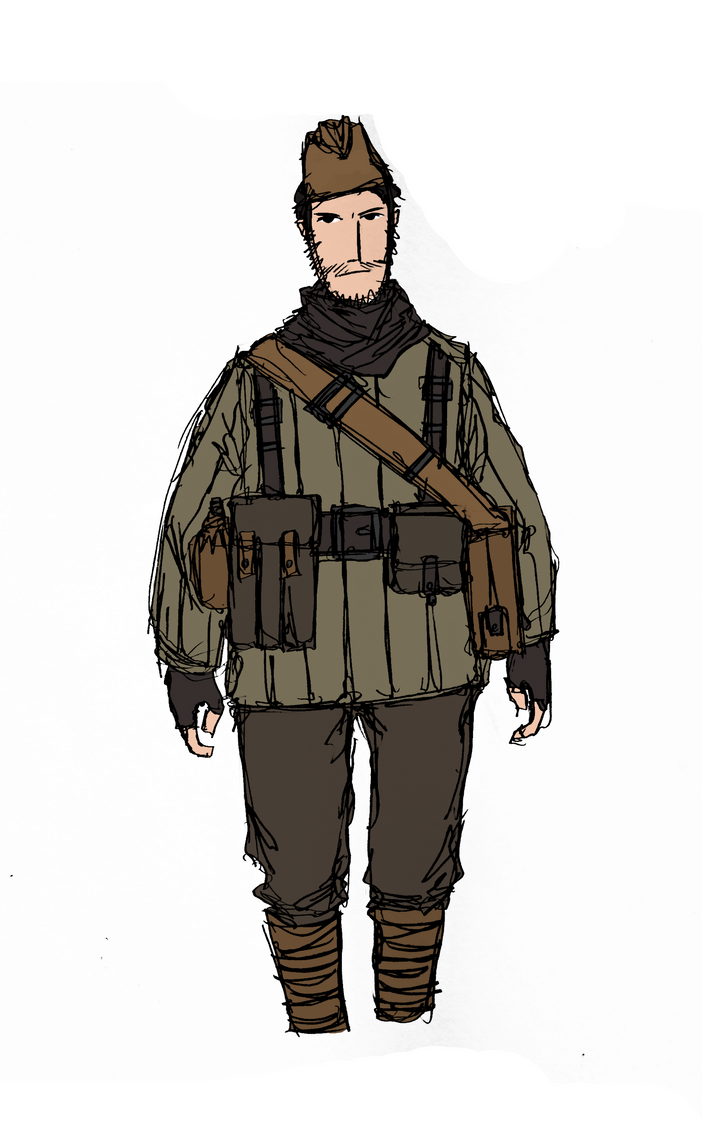
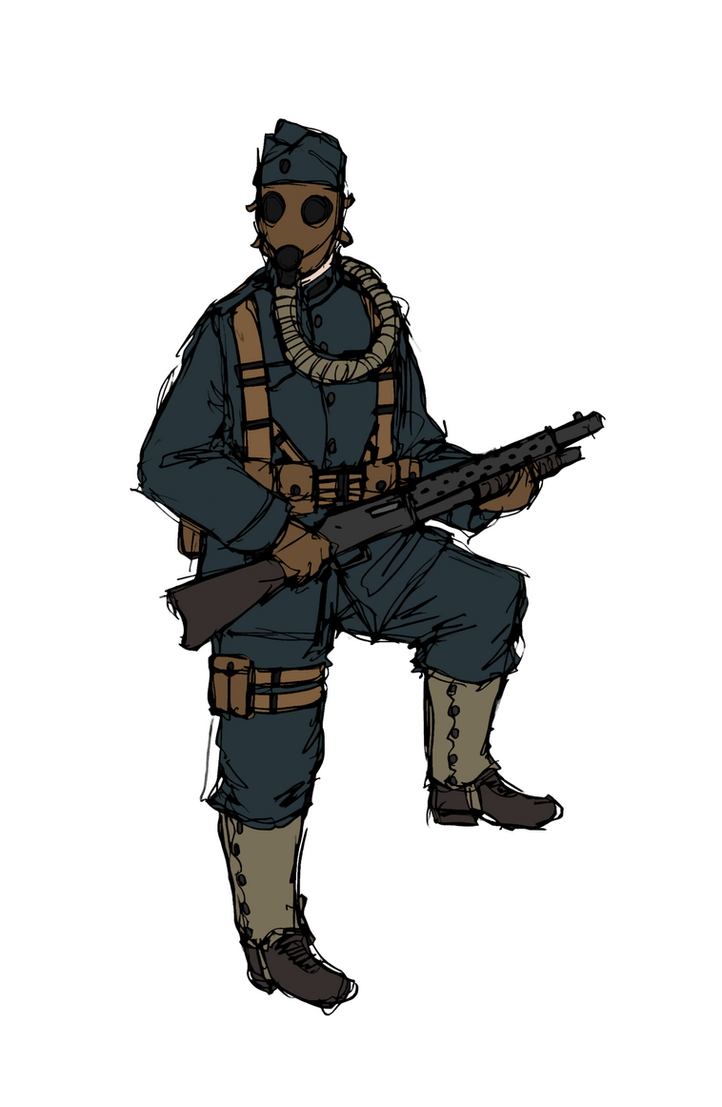
3% total - 2,850,000 Personnel





"I read that mess, can we start already!?"
Here!
In
"The Great Nations of Kervan" The Dawn of Tomorrow's World Nation Library
→
11 yrs ago
Forum: Character Sheets
[center][img=http://i.imgur.com/nafXeS1.png][/center]
Noordelijk Bondsrepubliek Vakbonden/Northern Federal Republic of Unions
Nation's History
The Federal Republic of Unions was founded just over twenty years ago as a wave of Syndicalist revolutions occurred in the north saw multiple governments in the region toppled and replaced by Syndicalist Republics. These revolutions began with the peaceful overthrow of the monarchist government in the Principality of Naarden where growing unrest within the country led to a referendum, which ended with the abdication. The lower classes of neighboring States took heart in the successful revolution of Naarden and took up their own attempts met with mixed success early on.
The first of these revolutions following the success in the Naarden was in the neighboring region of Flamardie where the far more aggressive defenders of the monarchists fought against the revolutionaries there. This was mirrored in Vallonia-Picardie where the similarly monarchist governments of the two regions made a pact to stop the spread of Syndicalism. The brutal conflict there only relented with the deaths of the two monarchs and the disillusion of their corrupt governments. In stark contrast to the brutality in the west, the revolutions in the east were relatively peaceful, with the peoples ousting the monarchs in Creußen, Elzach, and Lobenjun and the wealthy oligarchs in Denau and Rabenau.
Since the founding of the NFRU it's main goal has been the continued spread of Syndicalist values around the world. With similar communist revolutions occurring in nearby polities it has become a major focus of the Federal Republic's government to support them in any way they can. With the revolution in the Kingdom of Dereham the NFRU made it's first steps in arming and supporting revolutions in other countries.
Race
Human majority. Officially the NFRU is multi-racial and accepts all peoples into it's arms. Numerous ethnic groups exist within the Republics, many of which sharing land with each other. These are the Naardeners, Picards, Flamards, Cournaille, Haldyr, and Hanzhans. Generally skin color remains light among all ethnicities, with fair hair being more common the farther east you go, most common in Hanzhans and Haldyr but seen in Naardeners frequently as well, with red hair being the majority among Cournaille.
Form of Government
The NFRU is considered a Federal Republic, relying on a decentralized system of Republics unified under one federal government as a response to distrust of powerful, centralized government. This distrust has led to numerous checks and balances placed on the executive department's leader, the Proletariat General, and similar positions of power. At the individual Republic level democratic representation is given to all citizens, whom elect officials to represent them in the Congress of their individual Republic. Each individual republic itself has representation within the Federal Congress, based solely on their population.
The political position of Proletariat General is granted with the expectation that the incumbent will focus on the good of the Proletariat, not the state. In accordance with this, a Lieutenant Proletariat General is elected with similar powers who is to aid the Proletariat General in matters of foreign affairs so that the Proletariat General might focus on internal matters as his position requires.
An elected body of legislators and judiciaries exists in the form of the Proletariat Assembly which deals in law making and the enforcing of said laws for the Republics. Each Republic is given representation equivalent to their population, of which these officials will then vote on legislation. Said legislation may only become a law once the direct democratic process is taken to ratify the legislation in each Republic.
The Vergadering voor Sociale Harmonie, or Assembly for Social Harmony, is a further political body within the Federal Republic that has been on the rise as it's power base has expanded in recent years. A great deal of paranoia for political corruption has grown as political historians point to age of states having direct links to corruption within governments. In order to counteract this the legislature, with further ratification by direct vote, created the Assembly for Social Harmony with the intention of counteracting said possible corruption. An organization made up of lawyers, accountants, and self-repentant bureaucrats, ASH Inspectors regularly check in on branches of the Federal and Republican governments, doing complete inspections if need be, on the hunt for possible misuse of taxes or corruption. In the event of finding such discrepancies a force of well equipped enforces stand ready to enact sentences.
Current Leader(s)
Proletariat-General Erasmus Koen Dreyer - The incumbent Proletariat-General Erasmus Dreyer hails from the metropolis of Venlo, the Capital of the Naarden Republic. Born of a lower middle class family back during the reign of Prince Damian van Haanrath, Erasmus joined the many protesters swelling the streets of the Principality's capital, demanding the abdication of the Prince just over twenty years prior. Although not instrumental or even necessarily important to the victory against Monarchism that was won in Naarden, the young revolutionary quickly traveled the embattled region of Flamardie where he fought against the brutal monarchist government forces fighting against revolutionaries there. He is most know for his fiery demeanor, born of being a revolutionary, but few would call him out as anything more than a proud citizen of the Federation. Several of his detractors, however, would claim this to be a character flaw expected of far more aggressive politicians.
Lieutenant Proletariat-General Erhard Brandt - The current Lieutenant Proletariat-General stands as Erhard Brandt, a ethnic Hanzhan hailing from the capital city of Emden in Denau. He was elected along with Erasmus and though not the first to hold his post has certainly been influential in the position. As with all Lieutenant Proletariat-Generals, Erhard is expected to focus on foreign affairs during times of peace to allow the Proletariat-General and the electorate the ability to focus on matters deemed more important: that of internal issues and focuses. To this goal, Erhard has filled the admirably, acting as the foreign minister and diplomat to other Syndintern Nations and those abroad. He is characterized by his cool demeanor and level headed nature when under stress.
Notable Figures
Inspector General Marceline Lara Favreau - Marceline Lara Favreau is the current Inspector General of the ASH, a member of the old liberal, educated elite of Vallonia-Picardie before the abdication of Prince Damiaan. She was instrumental in the founding of ASH and was indeed it's first and only Inspector General since it's inception. The woman has since been the major power behind ASH, with her goals remaining the continued safeguarding of governance from corruption. She has been called cold and calculating by those who have seen her meteoric rise as telling and many point to similar organizations from Monarchist nations, citing that one step towards militancy is all ASH needs to become reminiscent of the militant arm of a fascist party.
Commandant General Ansgar Gehring - Ansgar Gehring is the aging Commandant General of the Federal Army and gained his position as a foreign fighter in Vallonia-Picardie during the brutal fighting that occurred there during the early days of the Federal Republic. The ethnic Haldyr, born of a small village in Lobenjun, gained notoriety in the conflict for his tactical know how, having claimed it's source being his father's earlier military career in the Monarchist Lobenjun's military. He was promoted to Colonel in the Vallonia-Picardie citizen's militia during the revolution and stepped down with the eventual disbanding of the militias, later commissioned the 23rd Lobenjun Landwehr as it's Colonel. It was soon after that the rapidly changing Federal Army put in the request for his transfer to Federal Command and request was made for him to serve as it's Commandant General, to which he accepted after several weeks of thought.
Commandant Admiral Denis Thys - Denis Thys is ethnic Flamard born in Naarden and is currently the Commandant Admiral of the Federal Navy. The man is old by all standards, having reached his seventieth year only several months ago, and is considered one of the last holds the old Monarchist regimes have on the Federal Republics. He was, at one point, a Captain within several monarchist navies with a long history of naval excellence. Throughout his career he became famed for his aggressive naval tactics which saw each and every one of the Monarchist navies succeed against the other, depending on whom he served with at the time. When the revolution occurred Thys was serving as a Captain aboard the Naarden warship, the HMS Vertrouwen, and although he was not a revolutionary himself he quickly picked the winning side in the matter. Lacking any naval officers of note he naturally became the Commandant Admiral of choice as numerous veterans of his campaigns expressed their trust in his abilities.
Commandant General Arzur Gwencalon - Arzur Gwencalon is the relatively young Commandant General of the Federal Air Corps and has garnered a following of loyal and exuberant pilots under his command. Ever since his service in Flamardie as a foreign fighter from Cournaille, Arzur has developed an air of adventure around him, often seen by the youth of the Federal Republic as a dashing sky captain. In fact, several children's stories have been written with a character by the name of Arzur, a dashing adventurer and captain of a sky-ship. In reality, Arzur Gwencalon has developed this mystique for a specific reason: his extroverted nature thrives on such attention. This alone has been pointed at as a reason for his retirement yet the youthful Commandant General has yet to even speak on the matter, let alone reply to such thoughts.
Damiaan Ferdinand Gerd van Haanrath, ex-Prince of Naarden- The famous ex-Prince of Naarden is Damiaan Ferdinand Gerd van Haanrath, eleventh of his line, remains a citizen of Naarden even after his abdication as Prince. A well known fact from before the revolution, Damiaan has always been one for ignoring the traditional responsibilities as a Prince, a fact that brought great displeasure to his much more traditionalist father. Throughout his years as Prince of Naarden he was known for shirking duties and escaping the Court to take part in much more enjoyable endeavors, most famously being his love of partying. When the revolution occurred in Naarden and the request for his abdication made, Damiaan accepted the demands of his people with little resentment. For his cooperation and relative kind treatment of his people whom were fed up with the system, less so the Prince himself, he was granted the right to keep much of his own personal wealth with productive lands and palatial estates being taken and put to proper use. Ever since he has remained in Naarden, surprisingly pleased with his station in life as a unique curiosity for the young children of the Republic. As he has reached his fifties a strange shift has shown itself in the populace: this ex-Prince had became a beloved symbol of Naardener history. Talks within Naarden have began determining the possibility of reinstating the title of Prince as a ceremonial, historical title and granting it to Damiaan. This has been met with harsh disagreement from the Republics of Vallonia-Picardie and Flamardie but, as is constitutional law, the right to decide is given to the people of the Republic he will be affecting.
Total Population
<98 Million
Nation's Location:
[img=http://i.imgur.com/wtuRELN.png]
Nation's Geography:
As with much of the north, the Federal Republic consists of relatively sparse foresting along with highlands and expansive plains. Due to the clockwise turning gyre in the inland sea the Federal Republic remains generally temperate compared to nations at similar latitudes. The mountainous and hilly regions of the Federal Republic are known to hold vast mineral resources and are becoming more and more exploited as technology advances to levels necessary to efficiently put said resources to use.
Economy:
One of the hallmarks of the International's revolutionary program is the Work Exchange, an organization by which unions come together to cooperatively manage the distribution of goods and services. There are Work Exchanges for cities, provinces, and regions, as well a Central Work Exchange for the NFRU as a whole.
At the level of the workplace, NFRU union frameworks vary. In liberated territory, almost all workplaces are either worker-owned/managed cooperatives or integrated into larger democratic bodies. Sometimes the union itself acts as the governing body of all its constituent workplaces, owning many workplaces with managers appointed by the central democratic representatives or elected themselves.
The economy of the NFRU focuses around the basic factors of production: agriculture, mining, quarrying all fall under the focus of the Republics. These industries have rapidly become industrialized in the past two decades as a Syndicalist state but factories focused on production with these materials are relatively infrequent, at least compared to their fellow members of Syndintern. This has allowed the NFRU economy to boom as it provides basic, necessary resources to their closest allies whilst also using materials at a decent rate.
Technology Overview
Technology within the Federal Republic, ever since the successful revolutions in the north, has focused on infrastructure and the means of production. Militarily the NFRU see's a focus on artillery and air technology, as well as a reliance on lighter warships such as destroyers and submarines. As of recently early forays into possible legged designs to supplant traditional tracked and wheeled vehicles have been made.
Military Overview
Population
3% total - 2,850,000 Personnel
"I read that mess, can we start already!?"
Now, where in the world did our admin go? No word from Skepic in several days.
I'd say go ahead and do it!
Skepic, can I please get an a-OK on my app? Many thanks.
I believe mine is as finished as I'm going to get it.
I myself am a bit displeased with it. You say you gained it during your age of exploration but it's not like you found India or North America. You found regions populated with similarly technologically advanced people. We're on the same continent, after all.
© 2007-2026