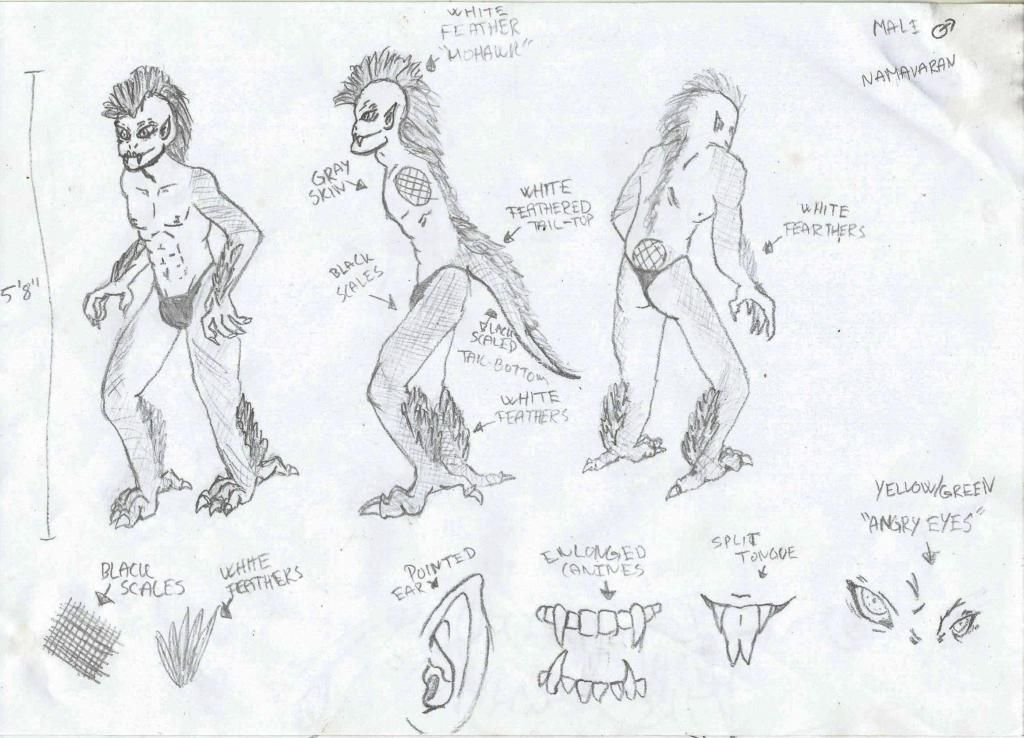
I am currently working on my race and although I am by no means an artist, I have made some sketches to show the appeance of the creatures. One of males (front, side and back view) and one of females (front, side and back view, too). I made close-up sketches of their eyes (both males and females), their tongues (they have split tongues), their teeth (really can't easily describe this one) and their ears (pointed, so yeah).
As I said, I am no artist, but you can tell what is what and all that.
Now, will I have to write desciptions of these things as well, or will the illustrations be enough? Same goes for other stuff I will be sketching later (aritfacts, ruins and such).
The Mad Hatter Member
... All the best people are
STATUS: After 4 years of doing other types of Rping, I think I'm returning home 1 yr ago
- Last Seen: 1 mo ago
- Joined: 12 yrs ago
- Posts: 744 (0.17 / day)
- VMs: 2
-
Username history
- The Mad Hatter 12 yrs ago
-
Latest 10 profile visitors:
-
Most recent →
 Otreas
Status
Recent Statuses
1 yr ago
Current
After 4 years of doing other types of Rping, I think I'm returning home
3
likes
5 yrs ago
I cannot - for the life of me - manage to manually turn off my PS4 by pressing the button. My damn cat, however, manages to hit it every single she even bypasses the console.
1
like
6 yrs ago
My kids found an old Barbie TV from when I was a kid - you know, the kind that was huge and boxy with a tiny-ass screen - and my daughter said "No, mommy, TV's are flat." Another parenting fail.
10
likes
6 yrs ago
My kids don't understand what a (computer) mouse is or how to use it. They keep poking and swiping at my monitor. I have failed as a parent.
6
likes
6 yrs ago
When your kid gets super excioted and just up and læeave their friends to come give you a hug when you come to get them from daycare
5
likes
Bio
Life has been a bitch for a while. but I think I'm good to come back now
Most Recent Posts
Consider this a "Reservation" where my character will be posted.
.:EDIT:.
.:EDIT:.

Forced and rushed post is obviously forced and rushed. But it is there.
Planes were just about the most horrific thing that had ever been invented by mankind. If humans were supposed to fly, they would have wings, or something. Sitting in a giant steel box, thousands of feet off of the unrelenting ground that was just waiting for the plane to return to where it belonged, well, Owen did not like it one bit. It was not is first flight, though. The first time had been when he was sixteen. He had been going to Germany for a photo shoot. He had had to be doped up something terrible; he was freaking out that bad. Luckily, he was handling it better this time, with all the things running through his head.
He felt like he had been cheating. Being a model was all fine and dandy; he liked his job just fine and he was darned good at it. If he was only this handsome because of his abilities, well, it was cheating. It was worse than doping for professional athletes. Then again, it would not be cheating if he was just naturally handsome, right? Well, he was. He was just naturally able to change his looks to be handsome. Right? He could not exactly help having these abilities.
Owen scoffed at himself and shook his head lightly. Only he would be in a situation like this and still be thinking about his looks.
His mother had warned him about a hundred times that this might be a trap to capture him and his siblings. He had frozen up when she called them his siblings. He had always considered Emily his sibling, his sister, even through all of these mental accusations against his parents. He did not think of them as his “real” parents, but he had still thought of Emily as his sister. It was a little weird. His mother had gone on to warn him about these people that wanted his powers. He had told her that his powers were probably not all that great, compared to what the others might be able to do.
“Really?” his mother had said, looking at him with a look between disappointed and annoyed, “So you don't think that, say, taking the place of a government official is a nice trait to have. You could impersonate anyone perfectly, Owen.”
He could see her point in how his powers could be dangerous in the wrong hands. For the purpose of saving the world, though, they seemed pretty useless. What would he do? Morph into a little girl and start crying so the bad guys would feel bad for him? Yeah, right.
Ground, sweet ground! After finally returning to the surface of the planet, rather than hovering high above it, getting his luggage and retrieving his bike from cargo, Owen started by getting himself some overpriced airport food. He was starving. He had always eaten a lot and he only ate more when he was nervous or excited. He was kind of both, right now. After consuming his own weight in sandwiches and coffee, he was on his way.
Looking at the address at his hand helped just about as much as singing a carol would have; he had no clue how to get there. He was already straddling his bike, his birthday gift to himself the year before. He had three options in a situation like this. He could hop off of his bike and go ask someone for directions. He could drive around for hours, hoping to find the right place. Or he could call his mother. Asking for directions was out of the question. He had no idea who here was a good guy and who was not. He could risk putting both himself and his “siblings” in danger by talking to strangers. Calling his mother was a risk, too. She might come get him. Driving around for hours it was, then.
Surprisingly, it did not take him as long as expected to get to Malupo Industries. The fact that the e-mail had mentioned it to be the central of the place really helped. It only took him an hour, rather than several of them. His heart felt like it was attempting to break through his ribcage and onto the floor, though.
He parked his bike and took a deep breath. This could be his last moments. He could be captured, tortured and who knows what. It was best not to think of those things. Bad thoughts usually lead to bad actions, his father always said.
Once inside, he felt a bit more at ease. Everything looked normal. It looked sort of like the agency where he got all of his modeling jobs. There was a front desk and a receptionist and all. Actually, it looked more like the place his father worked than it did the agency.
“Uh, I...” he began as he stepped up to the reception desk, earning the attention of the man sitting there, who quirked a brow at him, “I'm here for... the job interview?” he almost questioned. It sounded wrong, to him. Did he remember it right? That was what he needed to say, right?
“State your name, please,” the receptionist all but ordered, though he sounded very bored with the whole thing.
“Owen,” he said, a little too fast so it came out sounding like a cough or something, “Uhh, Owen. Owen Bright, sir.”
The receptionist gave a curt nod, “Have a seat. Someone will be here for you in a moment.”
Owen just nodded dumbly, standing around for a moment before he actually went to sit. He sat at the edge of the seat, looking around worriedly. He wondered how many of the people passing through were his “siblings”. Some others were there for the Job Interview, too, so he guessed that they, at least, were. If it was a trap, it was a big one. Nice.
Eventually, after what seemed like hours, but were probably just a few minutes, a man in a suit came up to him, “Right this way, sir,” he said and headed off, seemingly without giving a damn if Owen followed or not.
Owen headed after him quickly, probably looking like a lost puppy following the closest resemblance of safety it could find. They entered an elevator, where the man pushed the button to the twenty-third floor. They walked around a bit before they came to a seemingly random room, where the man stopped. There were lots of doors, here. And a lot of little machine-thingies that he had only seen in movies; they looked like fingerprint scanners. He silently wished that his mother was there to tell him.
“Place your finger on the scanner, sir,” the suited man instructed, gesturing towards the machine-thingy with a flick of his wrist.
Maybe they would steal his identity and make a non-super clone of him to take his place in the world and just dispose of him. Bad thoughts, bad. He pushed all bad thoughts away and silently placed a finger on the contraption; his face turned the other way and his eyes squeezed shut as if something terrible would happen.
Nothing did. The door simply opened.
Inside was a room. At the end of the room was another door. For a few moments, nothing happened. When something did happen, it was utterly anticlimactic. He did not even have to do anything; the door simply opened.
Looking back at his suited friend, he realized that he was supposed to go on on his own. The man was simply standing by the first door, waiting patiently for him to get the idea. When he seemingly did not, the man nodded and headed over to the second door, standing beside it.
“Right this way, sir,” he stated, gesturing to the open door next to him.
Owen wanted to roll his eyes and the dude for thinking he was an idiot. He did not, though. He just went through the door as he was told. The door clicked shut behind him. Now, if this was a setup or a trap, there were two doors, a maze of hallways, an elevator ride and another door between him and his bike. He had virtually no chance of escape and his odds were not very good from the start. He felt a little bit screwed.
“State your full name, please,” a female voice suddenly sounded over the speakers and Owen nearly jumped out of his good skin. In fact, he sort of did. He shrank a little bit, on instinct, as if trying to hide in plain sight. He always had been easy to startle, but he usually got angry in those situations. Right now, he was too freaked out to do anything, really.
“Owen!” he practically squeaked out, sounding like a scared little mouse, “I – Uhh, my name is … I mean...” he jumbled around, trying to catch his heart and put it back into his chest; metaphorically, of course.
He took a deep breath and sighed, “My name is Owen. Owen Bright,” he stated, “but before my parents named me, mom said I was Subject-087.”
He felt like he had been cheating. Being a model was all fine and dandy; he liked his job just fine and he was darned good at it. If he was only this handsome because of his abilities, well, it was cheating. It was worse than doping for professional athletes. Then again, it would not be cheating if he was just naturally handsome, right? Well, he was. He was just naturally able to change his looks to be handsome. Right? He could not exactly help having these abilities.
Owen scoffed at himself and shook his head lightly. Only he would be in a situation like this and still be thinking about his looks.
His mother had warned him about a hundred times that this might be a trap to capture him and his siblings. He had frozen up when she called them his siblings. He had always considered Emily his sibling, his sister, even through all of these mental accusations against his parents. He did not think of them as his “real” parents, but he had still thought of Emily as his sister. It was a little weird. His mother had gone on to warn him about these people that wanted his powers. He had told her that his powers were probably not all that great, compared to what the others might be able to do.
“Really?” his mother had said, looking at him with a look between disappointed and annoyed, “So you don't think that, say, taking the place of a government official is a nice trait to have. You could impersonate anyone perfectly, Owen.”
He could see her point in how his powers could be dangerous in the wrong hands. For the purpose of saving the world, though, they seemed pretty useless. What would he do? Morph into a little girl and start crying so the bad guys would feel bad for him? Yeah, right.
Ground, sweet ground! After finally returning to the surface of the planet, rather than hovering high above it, getting his luggage and retrieving his bike from cargo, Owen started by getting himself some overpriced airport food. He was starving. He had always eaten a lot and he only ate more when he was nervous or excited. He was kind of both, right now. After consuming his own weight in sandwiches and coffee, he was on his way.
Looking at the address at his hand helped just about as much as singing a carol would have; he had no clue how to get there. He was already straddling his bike, his birthday gift to himself the year before. He had three options in a situation like this. He could hop off of his bike and go ask someone for directions. He could drive around for hours, hoping to find the right place. Or he could call his mother. Asking for directions was out of the question. He had no idea who here was a good guy and who was not. He could risk putting both himself and his “siblings” in danger by talking to strangers. Calling his mother was a risk, too. She might come get him. Driving around for hours it was, then.
Surprisingly, it did not take him as long as expected to get to Malupo Industries. The fact that the e-mail had mentioned it to be the central of the place really helped. It only took him an hour, rather than several of them. His heart felt like it was attempting to break through his ribcage and onto the floor, though.
He parked his bike and took a deep breath. This could be his last moments. He could be captured, tortured and who knows what. It was best not to think of those things. Bad thoughts usually lead to bad actions, his father always said.
Once inside, he felt a bit more at ease. Everything looked normal. It looked sort of like the agency where he got all of his modeling jobs. There was a front desk and a receptionist and all. Actually, it looked more like the place his father worked than it did the agency.
“Uh, I...” he began as he stepped up to the reception desk, earning the attention of the man sitting there, who quirked a brow at him, “I'm here for... the job interview?” he almost questioned. It sounded wrong, to him. Did he remember it right? That was what he needed to say, right?
“State your name, please,” the receptionist all but ordered, though he sounded very bored with the whole thing.
“Owen,” he said, a little too fast so it came out sounding like a cough or something, “Uhh, Owen. Owen Bright, sir.”
The receptionist gave a curt nod, “Have a seat. Someone will be here for you in a moment.”
Owen just nodded dumbly, standing around for a moment before he actually went to sit. He sat at the edge of the seat, looking around worriedly. He wondered how many of the people passing through were his “siblings”. Some others were there for the Job Interview, too, so he guessed that they, at least, were. If it was a trap, it was a big one. Nice.
Eventually, after what seemed like hours, but were probably just a few minutes, a man in a suit came up to him, “Right this way, sir,” he said and headed off, seemingly without giving a damn if Owen followed or not.
Owen headed after him quickly, probably looking like a lost puppy following the closest resemblance of safety it could find. They entered an elevator, where the man pushed the button to the twenty-third floor. They walked around a bit before they came to a seemingly random room, where the man stopped. There were lots of doors, here. And a lot of little machine-thingies that he had only seen in movies; they looked like fingerprint scanners. He silently wished that his mother was there to tell him.
“Place your finger on the scanner, sir,” the suited man instructed, gesturing towards the machine-thingy with a flick of his wrist.
Maybe they would steal his identity and make a non-super clone of him to take his place in the world and just dispose of him. Bad thoughts, bad. He pushed all bad thoughts away and silently placed a finger on the contraption; his face turned the other way and his eyes squeezed shut as if something terrible would happen.
Nothing did. The door simply opened.
Inside was a room. At the end of the room was another door. For a few moments, nothing happened. When something did happen, it was utterly anticlimactic. He did not even have to do anything; the door simply opened.
Looking back at his suited friend, he realized that he was supposed to go on on his own. The man was simply standing by the first door, waiting patiently for him to get the idea. When he seemingly did not, the man nodded and headed over to the second door, standing beside it.
“Right this way, sir,” he stated, gesturing to the open door next to him.
Owen wanted to roll his eyes and the dude for thinking he was an idiot. He did not, though. He just went through the door as he was told. The door clicked shut behind him. Now, if this was a setup or a trap, there were two doors, a maze of hallways, an elevator ride and another door between him and his bike. He had virtually no chance of escape and his odds were not very good from the start. He felt a little bit screwed.
“State your full name, please,” a female voice suddenly sounded over the speakers and Owen nearly jumped out of his good skin. In fact, he sort of did. He shrank a little bit, on instinct, as if trying to hide in plain sight. He always had been easy to startle, but he usually got angry in those situations. Right now, he was too freaked out to do anything, really.
“Owen!” he practically squeaked out, sounding like a scared little mouse, “I – Uhh, my name is … I mean...” he jumbled around, trying to catch his heart and put it back into his chest; metaphorically, of course.
He took a deep breath and sighed, “My name is Owen. Owen Bright,” he stated, “but before my parents named me, mom said I was Subject-087.”
The first time Owen Bright listened to the audio logs of Doctor Blackburn and the one entry by the Ghost, he was confused to the point where he was sure he had heard it all wrong. Super babies was just too far fetched for his brain to wrap around it. Him being one of them was downright ridiculous. He was nothing special, after all. He was a bit spoiled, he would admit that, but that was about it. And the thing with his hair; but growing out your hair could not possibly be considered “super-human”.
The second time he listened to the audio logs, he started thinking a bit more about his life. Had anything supernatural happened to him that he did just not think about? A few instances came to mind. Like that one time, during P.E., while they had been playing Dodgeball and Evan, that assholeish bully, had thrown the ball straight at his face. It had bounced off without any pain and just went straight back at Evan and hit him square on the nose. He had gotten a nose-bleed and Owen had been lectured about not aiming for the face.
The third time he heard the audio logs, he was really listening. Maybe his science classes were good for something anyways. He really wanted to try and understand. Had he learned of this Ark earlier, while it was still up and running, he and his friends would have been protesting outside. But it had shut down about the same time he was born. If he really was one of those super babies, it would mean that one of his parents were most likely some scientist person that had helped “make” him. His father could barely figure out how the stove worked, so he would put his money on his mother. She had always helped him with his homework, too.
The fourth time he listened, he started to realize what all of this meant. If he really was some super human, he would have to go and help with those enemies that the Ghost was talking about. Sure, she had said that he did not have to, but it sounded like when his mother said he did not have to help her do the dishes. He had a choice, but not going was a bad one and would mean he wound not be getting dessert.
The fifth time was the charm. He finally just sighed, rubbed his face with his hands and resigned to his fate. He would have to talk to his parents first, of course. If he presented them with this evidence and all that, they would have to tell him the truth. Maybe he would be able to learn something that the audio logs did not tell him; like what it was he could do. Yeah... He would definitely have to talk to his parents first.
It was a couple of hours after he had made up his mind. Dinner had been served, eaten and cleaned back up. It was just Owen and his parents, since Emily had long since moved out and found an apartment of her own. Owen was nervous, though. As much as he hated his parents sometimes, he loved them, too. He was not quite ready to lose them, yet and having them tell him that he was basically stolen from some government project was pretty much losing them.
“Mom..?” he finally mustered up the courage to all but whimper while they were watching some cooking show on the TV, just chilling after dinner.
His mother, Denise Bright, started at the sudden, utterly heartbreaking sound of her sons voice. She turned in her seat immediately and looked at him with wide, worried eyes, “What's the matter, baby? Does anything hurt?” was her immediate response.
Owen felt his heart break at the look on his mothers face. She was genuinely worried about him. He had never before doubted that his parents loved him. Why would he doubt it now? Even if they had stolen him and were not his biological parents, they had always been there for him. They had never treated him bad or done anything but love him like their own.
“Mom,” he began again, drawing in a shuttering, nervous breath. He could tell his mother was holding herself back from smothering him in worried hugs and kisses. “Mom, I got an email today. From a girl called Sarah Blackburn.”
His mother stiffened up at the mention of the girl's name. Her face went cold and her shoulders tensed. The very mention of her obviously scared her shitless.
“She told you, then?” was her clipped reply. Her expression did not change. She did not want to reveal anything.
Owen sank to try and relieve the lump that was forming in his throat. His mother was going to hate him after this, “In a way. She sent me a file that gave me access to some audio logs from the Ark. Most of what is going on has already been explained.”
“Good,” his father butted in with a calm, soft tone, “Then you understand that we took you in voluntarily, to protect you and give you a normal life?” he inquired with a lifted brow.
Owen nodded dully, his mouth dry as sandpaper. He really did understand. He was just scared, right?
“So...” his mother began, her voice a bit warmer, but laced with a tone of hurt, “What do you want to know? You have a reason for bringing this up, yes?”
“Yeah,” Owen said, not really thinking it through before he said it, “What can I do?”
After a long talk with his parents; his mother telling him about his supposed abilities and them telling him a bit more about what had happened back at the Ark and his mother trying to explain to him how it all worked, Owen went to bed with his head spinning with information. Well, he went to his room, anyways.
He was looking at himself in the mirror. He was a good looking guy, he decided to himself. He found himself wondering if he had made himself a good looking guy. Had he unconsciously molded himself into his image of what a good looking guy looked like? Was it the genes used for the project that were just naturally good looking, to ensure that the future super-humans would be attractive, or something. Maybe he had just gotten lucky.
He held up a hand in front of his face, so he could no longer see his reflection. What if he thought about looking different? Would his appearance change to match? He took a deep breath and held it, eyes shut tightly and lips pressed together into a thin line as he concentrated all that he could on trying to be someone else.
He felt nothing.
After a few moments of standing there, feeling silly for even trying, he opened his eyes back up. The sight that met him in the mirror made him jump a bit as he let out a startled squeak. He had breasts. Wide hips, breasts and long, dark hair. His eyes were no longer that powder blue color that they had (supposedly) always been, but a deep green. He reached out one of his thin-fingered hands, with the manicured nails and touched his own reflection gently. He looked just like Michelle. Michelle wearing his clothes, but he looked like her, nonetheless.
Something was not quite right, though. He was certain that Michelle's lips were not quite that plum and her breasts certainly were not that big. Her eyes were not as bright as his were and her hair was not that long. As he realized these things, they changed. It was not disgusting to look at, like Mystique from the X-Men movies or something. It simply changed. His lips shrank, his hair grew shorter, his breasts got smaller and so on, until he looked exactly like he imagined Michelle.
“Cool.”
“You're really going to go?” his mother asked him with worry etched into her every feature as she stood awkwardly in the door opening while he packed a few things into his duffel bag.
“Yeah...” was his distracted reply while he stuffed a few pairs of clean boxers into the bag. Neither he, nor his mother commented on the pink ones.
His mother sighed and ran a hand through her graying hair, pushing it out of her face, “There are so many others, dear, and so many of them with powers more fit for something like this.” she rationalized.
Owen stopped to turn and look at her with one brow raised and the other pushed down, “And what if they think like that, too? No one will go. Someone has to do something, so why not me? If what you said is true, I can't really get hurt, right? I reflect stuff, or something, right?”
“It's still dangerous,” his mother squeaked, “Even if you were immortal, I wouldn't want you to go.”
“I'm going, mom,” he deadpanned, shoving his favorite sweatshirt into his bag with a rather aggressive movement.
The conversation ended at that.
The second time he listened to the audio logs, he started thinking a bit more about his life. Had anything supernatural happened to him that he did just not think about? A few instances came to mind. Like that one time, during P.E., while they had been playing Dodgeball and Evan, that assholeish bully, had thrown the ball straight at his face. It had bounced off without any pain and just went straight back at Evan and hit him square on the nose. He had gotten a nose-bleed and Owen had been lectured about not aiming for the face.
The third time he heard the audio logs, he was really listening. Maybe his science classes were good for something anyways. He really wanted to try and understand. Had he learned of this Ark earlier, while it was still up and running, he and his friends would have been protesting outside. But it had shut down about the same time he was born. If he really was one of those super babies, it would mean that one of his parents were most likely some scientist person that had helped “make” him. His father could barely figure out how the stove worked, so he would put his money on his mother. She had always helped him with his homework, too.
The fourth time he listened, he started to realize what all of this meant. If he really was some super human, he would have to go and help with those enemies that the Ghost was talking about. Sure, she had said that he did not have to, but it sounded like when his mother said he did not have to help her do the dishes. He had a choice, but not going was a bad one and would mean he wound not be getting dessert.
The fifth time was the charm. He finally just sighed, rubbed his face with his hands and resigned to his fate. He would have to talk to his parents first, of course. If he presented them with this evidence and all that, they would have to tell him the truth. Maybe he would be able to learn something that the audio logs did not tell him; like what it was he could do. Yeah... He would definitely have to talk to his parents first.
It was a couple of hours after he had made up his mind. Dinner had been served, eaten and cleaned back up. It was just Owen and his parents, since Emily had long since moved out and found an apartment of her own. Owen was nervous, though. As much as he hated his parents sometimes, he loved them, too. He was not quite ready to lose them, yet and having them tell him that he was basically stolen from some government project was pretty much losing them.
“Mom..?” he finally mustered up the courage to all but whimper while they were watching some cooking show on the TV, just chilling after dinner.
His mother, Denise Bright, started at the sudden, utterly heartbreaking sound of her sons voice. She turned in her seat immediately and looked at him with wide, worried eyes, “What's the matter, baby? Does anything hurt?” was her immediate response.
Owen felt his heart break at the look on his mothers face. She was genuinely worried about him. He had never before doubted that his parents loved him. Why would he doubt it now? Even if they had stolen him and were not his biological parents, they had always been there for him. They had never treated him bad or done anything but love him like their own.
“Mom,” he began again, drawing in a shuttering, nervous breath. He could tell his mother was holding herself back from smothering him in worried hugs and kisses. “Mom, I got an email today. From a girl called Sarah Blackburn.”
His mother stiffened up at the mention of the girl's name. Her face went cold and her shoulders tensed. The very mention of her obviously scared her shitless.
“She told you, then?” was her clipped reply. Her expression did not change. She did not want to reveal anything.
Owen sank to try and relieve the lump that was forming in his throat. His mother was going to hate him after this, “In a way. She sent me a file that gave me access to some audio logs from the Ark. Most of what is going on has already been explained.”
“Good,” his father butted in with a calm, soft tone, “Then you understand that we took you in voluntarily, to protect you and give you a normal life?” he inquired with a lifted brow.
Owen nodded dully, his mouth dry as sandpaper. He really did understand. He was just scared, right?
“So...” his mother began, her voice a bit warmer, but laced with a tone of hurt, “What do you want to know? You have a reason for bringing this up, yes?”
“Yeah,” Owen said, not really thinking it through before he said it, “What can I do?”
After a long talk with his parents; his mother telling him about his supposed abilities and them telling him a bit more about what had happened back at the Ark and his mother trying to explain to him how it all worked, Owen went to bed with his head spinning with information. Well, he went to his room, anyways.
He was looking at himself in the mirror. He was a good looking guy, he decided to himself. He found himself wondering if he had made himself a good looking guy. Had he unconsciously molded himself into his image of what a good looking guy looked like? Was it the genes used for the project that were just naturally good looking, to ensure that the future super-humans would be attractive, or something. Maybe he had just gotten lucky.
He held up a hand in front of his face, so he could no longer see his reflection. What if he thought about looking different? Would his appearance change to match? He took a deep breath and held it, eyes shut tightly and lips pressed together into a thin line as he concentrated all that he could on trying to be someone else.
He felt nothing.
After a few moments of standing there, feeling silly for even trying, he opened his eyes back up. The sight that met him in the mirror made him jump a bit as he let out a startled squeak. He had breasts. Wide hips, breasts and long, dark hair. His eyes were no longer that powder blue color that they had (supposedly) always been, but a deep green. He reached out one of his thin-fingered hands, with the manicured nails and touched his own reflection gently. He looked just like Michelle. Michelle wearing his clothes, but he looked like her, nonetheless.
Something was not quite right, though. He was certain that Michelle's lips were not quite that plum and her breasts certainly were not that big. Her eyes were not as bright as his were and her hair was not that long. As he realized these things, they changed. It was not disgusting to look at, like Mystique from the X-Men movies or something. It simply changed. His lips shrank, his hair grew shorter, his breasts got smaller and so on, until he looked exactly like he imagined Michelle.
“Cool.”
“You're really going to go?” his mother asked him with worry etched into her every feature as she stood awkwardly in the door opening while he packed a few things into his duffel bag.
“Yeah...” was his distracted reply while he stuffed a few pairs of clean boxers into the bag. Neither he, nor his mother commented on the pink ones.
His mother sighed and ran a hand through her graying hair, pushing it out of her face, “There are so many others, dear, and so many of them with powers more fit for something like this.” she rationalized.
Owen stopped to turn and look at her with one brow raised and the other pushed down, “And what if they think like that, too? No one will go. Someone has to do something, so why not me? If what you said is true, I can't really get hurt, right? I reflect stuff, or something, right?”
“It's still dangerous,” his mother squeaked, “Even if you were immortal, I wouldn't want you to go.”
“I'm going, mom,” he deadpanned, shoving his favorite sweatshirt into his bag with a rather aggressive movement.
The conversation ended at that.
I think I should probably warn you in advance; I suck at first posts. I'm on my fifth attempt at giving it the right feel, but it just won't pice together right. Damned first posts...
.:EDIT:.
Nevermind that... My post was done faster than expected.
.:EDIT:.
Nevermind that... My post was done faster than expected.
This reminds me of that old game, Corpse Party... Cool.
I guess it could get interesting.
I guess it could get interesting.
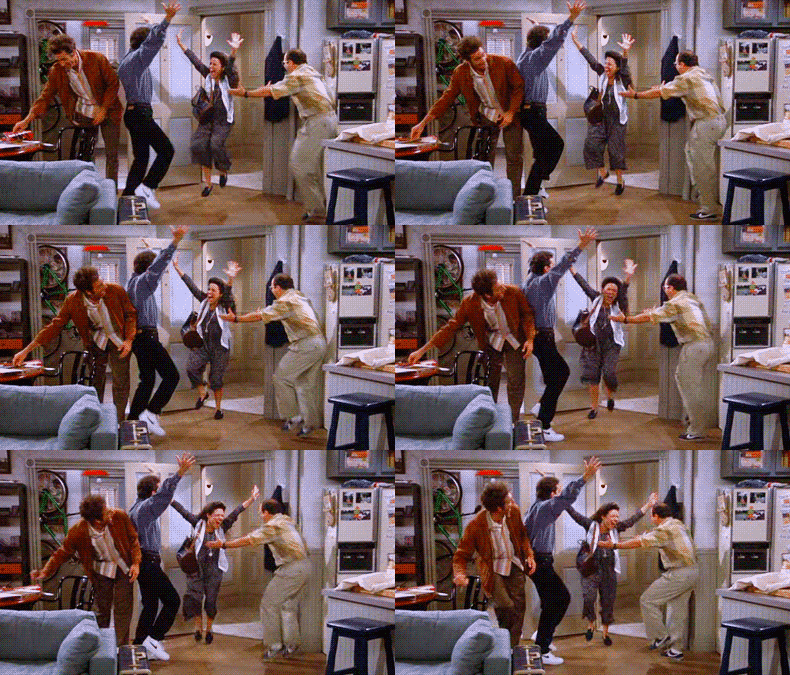
I saw the first IC post was up and I was like:
Reaper said
I apologise for the lack of news or updates.. I've been grinding on World of Tanks and hanging out with friends the past few days.
IC post should up over the weekend!
@MadHatter: You, sir, are most appreciated. Have cookie.
Life comes first, of course.
Magnificent! We await your literary masterpiece with held breaths.
*elegant, respectful bow* Always of service, my Lady.
I made a list of accepted characters with links to their character sheets and the players profile for you:
Alma, The Professional played by Synthorian
Demetrius played by Callthecops
Jin Yensid played by Sage
Merlin and Arthur played by TheMasterNarrator
Owen Bright played by The Mad Hatter
Sarah Blackburn played by Reaper
(To see (and copy) the codes and such, click the "View Raw" option at the top right of the post)
Alma, The Professional played by Synthorian
Demetrius played by Callthecops
Jin Yensid played by Sage
Merlin and Arthur played by TheMasterNarrator
Owen Bright played by The Mad Hatter
Sarah Blackburn played by Reaper
(To see (and copy) the codes and such, click the "View Raw" option at the top right of the post)
© 2007-2026