The original interest check can be found here.
[IC] ᛢ 𝕳𝖔𝖓𝖔𝖗𝖌𝖚𝖆𝖗𝖉, 𝔬𝔯, 𝔱𝔥𝔢 𝔓𝔯𝔦𝔠𝔢 𝔬𝔣 𝔇𝔲𝔱𝔶 ᛢ
- Romance
- 1x1
- Fantasy
- Advanced
- Slice of Life
- Military
- School
- GM TokyoPewPew Co-GM Tlaloc Co-GM Festive
Join Status:
Full
GM

TokyoPewPew rpguilder (derogatory)
Member
Seen
21 min ago


𝖲𝖾𝗉𝗍𝖾𝗆𝖻𝖾𝗋 𝗍𝗁𝖾 𝟣𝗌𝗍, 𝖠𝗇𝗇𝗈 𝟧𝟫𝟦 𝖢𝖾𝗋𝗇𝗎𝗏𝖺𝗅𝗂𝖺𝗇
────────────────────────────────•⋅⊰༻༒︎༺⊱⋅•──────────────────────────────────
𝖂ith breakfast swallowed, and the pony watered, and the innkeeper paid off, and her personal effects in good order—everything brushed which must be supple, starched which must be stiff, steeled and stoned which must be readily sharp—the acting countess of Rodon saw fit to embark, a choice she regretted nigh-immediately. Stepping out into the clear morning, mounting (with labored groan) the lively, chestnut-colored rouncey, and spurring the beast into a trot down High Street, she was not even out of sight of the tavern, hardly upwind of its reeks, when already she had need of her kerchief. This article she dabbed to her face, and the back of her neck; though it did little to soothe the sting of her sweat wringing up through her pores. Being a gentlewoman, elegant and august, would be so easy were it not for such heats. Such wretched, abominable heats which debased her to removing her hat, fanning it to her miserable, clammy face like a harlot with her paper fan; giving her want to loosen the lace cravat about her neck, shed her fine silk justacorps; tempting her by half to frolick in the fountain like a naked child! But, it was the suffering which distinguished that same gentlewoman, the true gentlewoman, from all her counterfeits, was it not? A lesser woman would purchase with her dignity the momentary comfort of a discarded coat, a doffed hat; she would dip her toes in the fountain, and gorge herself fat on switchel. As for the countess, by her own estimation no lesser woman whatever, she rode on. She rode and she suffered, silently, as women do.
They made way for her pony as it passed, the townsfolk of Ansbourg; removed their hats (those who even wore hats anymore) and bowed their gazes low; knowing not, mayhap, her name nor her arms nor her countenance, but recognizing in her bearing a mark of her stature, a measure of Laachtalian nobility. The countess, having not visited the heartlands in some time, took the moment to observe the latest fashions running rampant across the populace. A pity. The young cosmopolitan wheresoever he rode now looked the half-dressed louse.
Ere long dirt road had given way to paved streets, livestock palisades to walls; tall and true, fluttering with His Imperial Majesty's colors, yet garrisoned by men in the consul's steel-on-white-on-grey, their hilts glittering in the mornlight, their bayonets stowed rakishly in their sashes. Beneath the gatehouse did the countess ride, its passage a swirling eddy of people: farmhands and other laborers departing the taverns, bloated with breakfast, to return to the fields, and that same ilk transporting the summer's first bushels inversely, field to market; wealthy children on their way to school or to fortepiano lessons. The heat curled off the cobblestones. By now the lady's breathing was a tatter; her forehead was as slick as oyster meat.
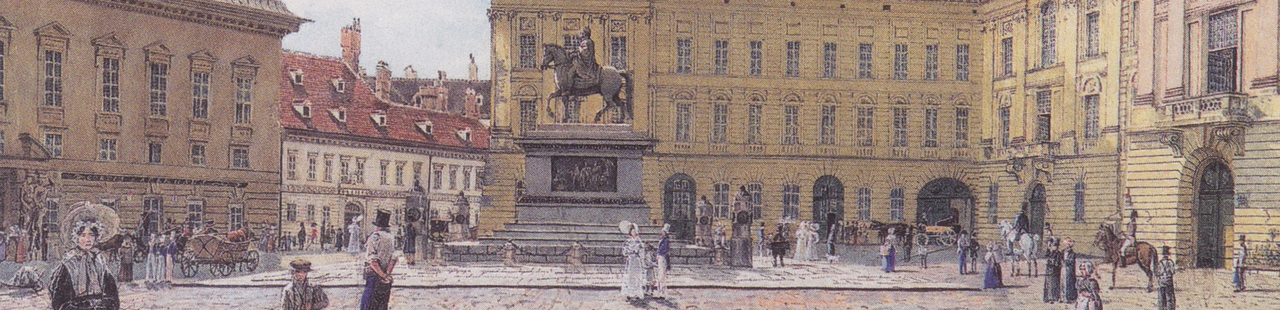
The building, a darling of Segiomara Square, stood tall and proud and great of breadth over the concourse; a venerable thing, its eggshell-white façade interrupted only by uniform windows (creamy with drawn curtains), and by the hotel's name leafed high and large in golden Fraktur. Long was the morning shadow cast by its copper-green roof, a roosting place for iron angels; for dry-throated grotesques of stone. A great many wondrous marble stoops, affixed to opera houses and courts-of-law and other places, made themselves available for the perching, as did several small gardens dotting the square. But in truth the countess saw no better place to grace with her highborn bottom than Segiomara herself, resplendent there upon her plinth. The hand which she did not clutch to her spear, coiled and draped with fruit-heavy vines, she outstretched to the north, longing for something known only by her and the sculptor and the God of a more barbaric era. Her hair befell either shoulder in two braids as thick as ship rigging; a spiral brooch clasped her cloak over one breast, the other copious and strong, engorged-seeming. The image of queenship herself, weather-stained and white with pigeon shit, and yet she cast as lovely and cool a shadow as any other. The countess dismounted her rouncey, sat herself upon the setback of the plinth, and when she was certain—entirely certain—that no one observed her, she deigned at the least to lift her hat from her clammy head, and set it upon one knee. Already the sweat began to wick from her forehead, and with it some of that obscene warmth.
From one pocket she procured her pouch and her tamp, from the other her pipe, which she filled and packed firm. But with none the streetlamps flickering at this virginal hour she could only have her spill at the ready, and await the right passerby. A good many ladies traversed the square already, and some gentlemen too, no doubt bound for the culture houses overlooking the estimable square, and the ballrooms and the parlors; it was, after all, still the social season. But of the few with pipes clenched between gaily gleaming teeth, none of the propensity to stop when petitioned for a share off their embers; none the nonchalance of gait and mood among those hurried lot; so the lady sucked the smokeless air through damp, unburnt leaves, chewed the bit, and bided. It afforded her the chance to observe the public as it walked by, anyhow—a ménagerie of travesties.
For the ladies she harbored no scorn—in every place, and every time, was it their lot to suffer for their art, in their whalebone corsets and powdered mercury facepaints—but the men—woe, the men......In a few breathless years had the latest fads rampaged through the commons like a plague; an affliction not of body but of sensibility, which bared the necks of those who had forgone their cravats, cocked their hats (or worse still, stripped their greasy curls of all ornament whatever), sheared smooth and hairless their babe-faces (but, of course, for a few ridiculous strips of beard about the ears). And what should the good countess have made of the tails affixed to the backs of their coats, flaring behind them like peacock plumage while they strutted down the road? No doubt they thought themselves so very dashing and rakish in these costumes of theirs; but didn't they see? There was no less artifice in their unbuttoned collars and cocked hats than in her own ribbons, lace, and hosiery. And there was no use, no use at all, in so much raffishness if one could not make it look effortless. Without that nonchalance, they only gave the appearance of having forgotten their cravats at home; slovenly, rather than aloof. But there was nothing to be done about it. Once concerned with a great many such things, before she knew it and entirely without warning she'd become a lord, rife with greater concernments than these; and the fashions, the etiquette, all of it had left her behind like a lees, rising ever and on to more novel things.
Still, she couldn't help it bringing her no small irritation to think how these peafowl sauntered past the humble partridge, no doubt mistaking her subtler style for stodginess, her tastes—hardly "new" per sē, not so intrepid or avant garde, but elegant, reliable enough—for obsolescence. Alas. Were it so simple a matter to carry one's self with the airs and attitudes befitting these men's betters, suffering in her silks no matter the weather, they would not say in places south of Ansbourg, "Noblesse oblige"—a phrase with, it occurred to her, had no equal in the local tongue.
Natürlich.
Checking her pocket watch and, with an authoritative click, snapping it shut again, she remarked upon the hour, which had begun to draw certain uniforms from the hotel, across Segiomara Square; some with escort while others went unaccompanied. It was a black tabard, shrouded under a cloak, also black, coming down to the same length about the knees; with tall, stiff jackboots, and a shako of modest panache, and a single-shouldered sash of maroon. Pinchbeck were the accents, which were a knot of braided cord to the shako's one side, the aiguillettes of the opposite shoulder, the clasp of the cloak; a few more bits of metal; insignia and such. But even at a slapdash glance did the countess know each of these passersby, despite the regalia, for an imposter. The way their feet clicked down the cobblestones, their strides laden with none of the measure, the anxious, unsure quietude; too straightly did they stand, likewise, and too firmly did they hold their gazes peerward as they merried along. No, the person the countess had come to fetch was of an altogether different breed. She could not exactly purport to call her "meek," but softly-spoken? Attracted, like sowbugs, to the mossy repose of cool, dark places? At times as sullen and gloomy as a church during dirge? Aye. Aye, those she was. And such a waste, too. All her mother's beauty, squandered on solitude and sulking......
Another moment later and there she was!—issuing from the Royal Palanquin; down the grand marble steps, between the marble elks seated en sejant (one point broken, by some past mischief, off the antlers of the sinister). The lady needed not catch the details in the countenance to know. It was in the way she robbed the jackboots of all their grandeur, tiptoeing down the steps so as to trouble no one with the clack-clacking of the hobnails. How her every word and every gesture reeked of apology, as if she did not deserve the very space she occupied from door to stair, stair to landing. How she made way for the porters and waitstaff who by all accounts should have made way for her. But how could they know?—only the academy's parade uniform betrayed her importance within the social order. As for the girl behind the cloth, all the fanciful names and titles and all the highborn blood in the empire lacked the strength to break through her true nature. What inspired other dukes' and earls' daughters to greatness seemed instead a furtive, shameful thing to their father's; something to smuggle place to place within a guilt-pricked heart. Something to bury.
It had taken many years and even a few switchings to teach the girl not to wince when she approached, or when she had to make appearance at the many balls thrown at Château Montmarcy. That, or perhaps she was finally taking in her personage a morsel of pride; for as the countess stood—returning to her ringleted head her ribboned hat—and strode over, pipe bit still betwixt her teeth and reins still in her gauntleted fist, she actually, contrary to all her nature, thought to smile. And not only politely—artlessly, beamingly she smiled. Not even taking care to shroud behind her upper lip the overlapped fang of which she was so girlishly ashamed.
"Tilly," said the countess. "Good morning."
The addressed effected her very best bow, either blushing slightly or awash with the same morning heat, beneath her black cloak and black tabard and leather, black helm. "How do I look?"
With great fondness and no small pride tightening her face did the countess look on. Twirling her finger—"Pirouette," she ordered—she took in the regalia's every feature, the flowing and the flaring of cinched fabrics as her sister obliged, spinning on her heels—"and a flourish"—this too Tilly did dutifully, doffing her shako and giving her characteristic curtsy-brandish-thing, charming in its clumsiness.
"Perfection. Well—" Having noted something, the countess stepped forward to correct it: reaching for her face, brushing aside the curtain of hair, on her dexter side, which so relished in falling over Hloþhilde's lovely face, obscuring her mist-grey eyes. Delicately her sister tucked the impish lock behind her ear. "There. Now you're perfect. My Gods, Tilly, just to look at you—majestueuse."
So it was a blush after all, she remarked to herself—as her words wrenched the smile wider, wider; deepening as well the wan, rosy pools of Hloþhilde's cheeks into an ocean's scarlet. The latter buried her mouth and her nose behind her hands; Countess Helgeða laughed.
It was then the younger's turn to notice a peculiarity about the face of the elder; and by the time the countess realized that she reached for the pipe, already it was snatched. "How long have you been suckling on this thing like a babe at a milkless teat?" Hloþhilde teased.
"You need not let it concern you," she said in reply, grasping to have it back, but her sister was quick, and still giggling she gave a quick scrabble up the hotel steps.
"They have a fire lit in the foyer."
"Come. Do not make yourself late for your own entrance ceremony."
"I will be only a minute," said the girl—finding her courage, and an equal measure of obstinance, when she wanted—and ere the countess could object she was off. Where she departed empty-handed, when she returned again some minutes later she'd somehow sourced a cedar spill, mayhap from the receptionist or even the gentlemen's parlor. This and the now-smoldering pipe she cradled in her cupped hands like a pair of baby birds, guarding them from even the frailest gusts. With great dignity and poise did she then offer the pipe to Helgeða's pursed, slightly smirking lips; but then the first cough escaped her, extinguishing an itch the smoke had coaxed from her throat, and with that itch all the gesture's grace, all its elegance. Too amused to be irritated, the countess took the bowl into her hand, and the bit to her tongue, and said nothing of it, only sucking air through the cinder, which soon enough had gushed the first ribbon of pungent smoke, a milky thing which drifted away and upward, dissipating, as if supped by the angels on the rooftops.
With the leaves well-seated in the pipe and the ashes in no danger of dwindling, the countess left them dangling from her clenched lips. Fastening together her freed hands and cupping them low about her sister's knee, the latter objected, saying, "Please, Hellie—I am a child no longer."
"And yet still and always the baby," she refuted. "Up."
Wondering, perhaps, whether this was her ceremony which she soon attended or her sister's, with a roll of her eyes "Tilly" stepped her heel into the waiting palms, and allowed herself to be hoisted into the saddle. Then, with every other business finished but to go, the two at last embarked. West, until the sharp right onto High Street, which unlike the genteel square began to sprawl and meander lazily uphill.
"So," gasped the countess as they walked, she and the pony, "how have the Free Cities treated you? Enjoying them, are you?"
"I suppose," said Tilly, distant-seeming, her attention pulled away by the rooftops; their architecture.
But eager to ignite conversation as she had ignited the half-lit pipe so graciously fetched to her, the lady pressed on. "Seen any shows?" said she. "Met anyone for supper?"
"Just settling in......"
Helgeða hummed thoughtfully. Looking to the small satchels and purses lining the girl-thing's waistbelt, she considered the gentler, more urbane way of having her answer; but what was life without the occasional amusement? So she lifted her riding crop, choking back tight against the jeweled handle; stood well clear of the pony's hindlegs, and gave its haunch one good switching. With a whinny and a kick the beast threw itself forward, nearly catapulting the unprepared Tilly from the saddle. Only the cantel and a tight grip on the horn saved her from the cobblestones, and she was across the street and partway up the hill when she regained control over the spooked animal. Pomegranate-red from the embarrassment of having nearly collided with half a dozen saunterers and carriages, the girl did not know what to think until she saw her sister, catching up to her; grinning, swaying her weight to and fro with haughty triumph.
"You fool-ass, what are you—how—what if I'd—" At once flustered and humiliated and enraged, Tilly knew not whether first to demand to know what she was doing, or apologize to the bystanders she'd very nearly trampled, or save some fragment of her injured honor, and so her tongue stumbled over all of these at once.
"You jingle like a sleighbell, girl," Hellie chided. "Jingle!—jingle!"
What did she mean by this? Her addled brain went to the small metal accents of her parade uniform: the clinking of the badges and beltloops, the slight rattle in the hilt of her parade saber. Plainly did the countess see her confusion patting at her collar and her epaulets and her ceremonious weapon, so she lifted the tip of the riding crop. "That," she said, with a jab to Tilly's coinpurse, the silver vollmarks jostling within, "was for disobeying my orders."
"Ouch!" Tilly hissed at the prodding to her kidney, sharp and (seemingly) unprovoked. "What in the Twelve Hells—"
"Language. Thou dreary, stingy girl! When I persuaded father to give you that allowance I had you promise to enjoy yourself, or did I not? Make some acquaintances—have a taste of the world beyond the little walls of our château! But what have you done instead? Locked yourself away in a courtyard somewhere, no doubt; practiced your fencing against a tree for your lack of a sparring partner; read books, and spent not one single penny on aught more lavish than a crust of ryebread."
"You're wrong! I—......" the uncertainty in her own offended convictions—the realizing that her sister knew her too well—caused Tilly pause—"I bought a sachertorte the other day."
"Your decadence dismays us all. And how was it?"
She averted her gaze, souring slightly in less-than-fond remembrance. "Dry."
As expected of the osterlands, the countess kept to herself. "Listen to me, Tilly," she said, breaking off to continue their walk, watching only to assure that the younger dutifully whipped back up to pace. "In one week's time I will be returning to Marsènne. Thereafter you will have your duties—teachers to oblige, calendars to keep, yes—but by the way, you will be alone, with only yourself to obey."
During the pony's panicked canter that unruly lock of hair had dislodged itself from behind Tilly's ear, falling forward, shrouding her expression once more from the good countess's scrutinies. Even more unreadable than usual was her glum sister.
"Only yourself to look to while plotting your course," she continued in a pant, but as for the exhileration of this day—life's first freedom sprawled out before her, or even the expected fear of making the wrong choice, following down the wrong road—nothing. "Are you listening to me?"
"Of course I am," said Tilly, attempting, in her timbres, to muster some second measure of indignation; but even this sounded more akin to a whimper. Her downcast, sidewise glare blunted by the flinch in her shoulders, anticipating another thwack! of the riding crop.
"But you know," chided the good countess Helgeða, "only this once in your life will it be your first journey from home—your first flap from the nest. And all this daydreaming while it passes you by—it disserves you."
"I only mean to wonder—" began the accused—but realizing some silliness to her words ere they departed her lips, or mayhap the futility in the persuasion—"no. You're right; 'tis nothing."
All her life, from girlhood to woman grown, had Helgeða sought to understand, like a sailor, the riptides of that soul she called her own soul's mirror—the cardinal winds whereon those thoughts drifted, and all the desert islands, distant and lonely, whereon they roosted. An entire lifetime had she spent charting those turbulent oceans. So when she saw the furtiveness—the quiet, grasping yearning in young Tilly's expression—there was some assurance to be found in seeing she'd struck the mark. Likewise a deep sadness, that even here, a half and a hundred leagues from home, yes, even here she feared the impish wind which would steal away with her words, and carry them to all the wrong ears, pricking them with her insolence.
"Worry not for the duties which have made off with his attention today," Hellie said. "He will set them aside to visit during the solstice holiday; willingly, should he choose it, or if not then I will drag him by his beard. I swear it by Brennicus's bones."
Such a warm and dulcet laugh Tilly had; a bucking, galloping thing; and shameless in the teeth, the gleaming, girlish teeth. "I'd like that," she confessed.
"'Tis a promise, then. And you!—after you've had a few days to settle in, and ere I have returned to Rodon, let us meet for noontime supper. You will regale me with how well you've settled in, the friends you've made—all over a proper cake. Good, moist, Marsènnish cake."
"I'd like that, too, methinks."
"Good. For now—gods, spare me," she sighed—as through some conspiracy between the blazing mornlight and the hugging of the dress wools dark as jet against her waist and the long, uphill journey along the cobblestones, the warmth eddied to the countess's brain; the world went swimming from her vision. Within grasping distance, only a lamppost wrought of iron seemed a rightful crutch, a roost wherefrom to recover her breath. "Forgive me, sweet sister. My skin sings for the breezes cooled over the dale, 'tis all—and this frock, atrocious thing—grant me but a moment's repose, and I'll be right again."
But it wouldn't do; not with her blood and kin halfway to sprawling cross the road, fallen before the next set of hooves and carriage wheels to happen along; not with room aplenty in the shelf of the saddle, and the rest of the hill to surmount, and a courtyard to reach ere the clocktowers' brazen chime. Not with the public beginning to take notice of their uncouth frolickings. Before the countess could compose herself unaccompanied, she found the pony sidled up abreast of her, and from above, outstretched and gloved in kidskin, a hand. Tilly had also flushed warm and pinkish, though not for being overdressed in the trim, dark wools of her parade dress; she looked nervously side-aside, sensing eyes on them.
"I'm quite alright, Tilly," the countess protested, swatting the hand away.
"I will hear no argument. Come on."
"Difficulties be damned—someone must give you away—" panted the beleaguered—"as befitting this—your finest hour."
"My 'finest hour' will soon see my sister fainted in the heat, face-down in horse leavings. Come!"
Pushing hard against the walk's vigors, its tolls upon her petal-soft body, Helgeða managed at the least to upright herself. Despite still laboring about the bodice, and flushed of face, she'd donned defiantly a look of bemusement; sharp, wry, and utterly befitting the acting countess of Rodon. She remarked upon this entreaty; pretended a moment's pause in its appraisal. "Very well," she relented, reaching for the hand still offered, "but only to the barbican. I will dismount there."
It took all Hellie's scrabbling and all her grinning junior's strength of shoulder to drag her into the lap of the saddle, but in no time whatever she sat both legs to the side, and they were off!—at full canter, up High Street where it crossed with Peltmarket, dodging hats and awnings and parasols all the while.
"So tell me when you became so gallant," cooed that breath just behind Tilly's ear, now that it had had a moment to catch itself, the wind billowing alike in cape and coattail, caressing and cooling their summer-blighted necks. "Who knew a dashing uniform was all it took to shuck our little pearl from her shell?"
Tilly pretended not to hear, engrossed with the road and evading its many obstacles, whether fixed or moving.
The countess tried once more—"I need not ask you your room number, I suppose," she said; "soon you'll be rebuffing boys left and right, and I need only follow the trail of broken hearts"—but when this too failed to elicit a reaction, Hellie placed an arm to the wide of Tilly's shoulders, rested there her cheek, and sighed, watching as the city of Ansbourg passed by in panorama. It wasn't long before she began to see more of those uniforms, then more and more; and not only in wayward scatterings like back in the square, but gatherings, congregations of them, congealing on the sidewalk to mount the last of the hill together. Upperclassmen meeting their juniors for the first time—younger siblings, and cousins from distant cadet branches, and the friends of these. Corps already scouting amongst the fresh blood, vainglorious in their sashes and ribbons-of-office. Last year's friends saying hello, how good to see you. Parents, siblings, and belovèd tutors swapping tearful goodbyes. Hellie turned her despondent, listless gaze away from the blur of shops and newspaper stands, turned it uphill. She could see, just past the swell of the hill, the first formings of the belfries, the spires, the gatehouse. There stood the Command Academy, awaiting them.
They made way for her pony as it passed, the townsfolk of Ansbourg; removed their hats (those who even wore hats anymore) and bowed their gazes low; knowing not, mayhap, her name nor her arms nor her countenance, but recognizing in her bearing a mark of her stature, a measure of Laachtalian nobility. The countess, having not visited the heartlands in some time, took the moment to observe the latest fashions running rampant across the populace. A pity. The young cosmopolitan wheresoever he rode now looked the half-dressed louse.
Ere long dirt road had given way to paved streets, livestock palisades to walls; tall and true, fluttering with His Imperial Majesty's colors, yet garrisoned by men in the consul's steel-on-white-on-grey, their hilts glittering in the mornlight, their bayonets stowed rakishly in their sashes. Beneath the gatehouse did the countess ride, its passage a swirling eddy of people: farmhands and other laborers departing the taverns, bloated with breakfast, to return to the fields, and that same ilk transporting the summer's first bushels inversely, field to market; wealthy children on their way to school or to fortepiano lessons. The heat curled off the cobblestones. By now the lady's breathing was a tatter; her forehead was as slick as oyster meat.
The building, a darling of Segiomara Square, stood tall and proud and great of breadth over the concourse; a venerable thing, its eggshell-white façade interrupted only by uniform windows (creamy with drawn curtains), and by the hotel's name leafed high and large in golden Fraktur. Long was the morning shadow cast by its copper-green roof, a roosting place for iron angels; for dry-throated grotesques of stone. A great many wondrous marble stoops, affixed to opera houses and courts-of-law and other places, made themselves available for the perching, as did several small gardens dotting the square. But in truth the countess saw no better place to grace with her highborn bottom than Segiomara herself, resplendent there upon her plinth. The hand which she did not clutch to her spear, coiled and draped with fruit-heavy vines, she outstretched to the north, longing for something known only by her and the sculptor and the God of a more barbaric era. Her hair befell either shoulder in two braids as thick as ship rigging; a spiral brooch clasped her cloak over one breast, the other copious and strong, engorged-seeming. The image of queenship herself, weather-stained and white with pigeon shit, and yet she cast as lovely and cool a shadow as any other. The countess dismounted her rouncey, sat herself upon the setback of the plinth, and when she was certain—entirely certain—that no one observed her, she deigned at the least to lift her hat from her clammy head, and set it upon one knee. Already the sweat began to wick from her forehead, and with it some of that obscene warmth.
From one pocket she procured her pouch and her tamp, from the other her pipe, which she filled and packed firm. But with none the streetlamps flickering at this virginal hour she could only have her spill at the ready, and await the right passerby. A good many ladies traversed the square already, and some gentlemen too, no doubt bound for the culture houses overlooking the estimable square, and the ballrooms and the parlors; it was, after all, still the social season. But of the few with pipes clenched between gaily gleaming teeth, none of the propensity to stop when petitioned for a share off their embers; none the nonchalance of gait and mood among those hurried lot; so the lady sucked the smokeless air through damp, unburnt leaves, chewed the bit, and bided. It afforded her the chance to observe the public as it walked by, anyhow—a ménagerie of travesties.
For the ladies she harbored no scorn—in every place, and every time, was it their lot to suffer for their art, in their whalebone corsets and powdered mercury facepaints—but the men—woe, the men......In a few breathless years had the latest fads rampaged through the commons like a plague; an affliction not of body but of sensibility, which bared the necks of those who had forgone their cravats, cocked their hats (or worse still, stripped their greasy curls of all ornament whatever), sheared smooth and hairless their babe-faces (but, of course, for a few ridiculous strips of beard about the ears). And what should the good countess have made of the tails affixed to the backs of their coats, flaring behind them like peacock plumage while they strutted down the road? No doubt they thought themselves so very dashing and rakish in these costumes of theirs; but didn't they see? There was no less artifice in their unbuttoned collars and cocked hats than in her own ribbons, lace, and hosiery. And there was no use, no use at all, in so much raffishness if one could not make it look effortless. Without that nonchalance, they only gave the appearance of having forgotten their cravats at home; slovenly, rather than aloof. But there was nothing to be done about it. Once concerned with a great many such things, before she knew it and entirely without warning she'd become a lord, rife with greater concernments than these; and the fashions, the etiquette, all of it had left her behind like a lees, rising ever and on to more novel things.
Still, she couldn't help it bringing her no small irritation to think how these peafowl sauntered past the humble partridge, no doubt mistaking her subtler style for stodginess, her tastes—hardly "new" per sē, not so intrepid or avant garde, but elegant, reliable enough—for obsolescence. Alas. Were it so simple a matter to carry one's self with the airs and attitudes befitting these men's betters, suffering in her silks no matter the weather, they would not say in places south of Ansbourg, "Noblesse oblige"—a phrase with, it occurred to her, had no equal in the local tongue.
Natürlich.
Checking her pocket watch and, with an authoritative click, snapping it shut again, she remarked upon the hour, which had begun to draw certain uniforms from the hotel, across Segiomara Square; some with escort while others went unaccompanied. It was a black tabard, shrouded under a cloak, also black, coming down to the same length about the knees; with tall, stiff jackboots, and a shako of modest panache, and a single-shouldered sash of maroon. Pinchbeck were the accents, which were a knot of braided cord to the shako's one side, the aiguillettes of the opposite shoulder, the clasp of the cloak; a few more bits of metal; insignia and such. But even at a slapdash glance did the countess know each of these passersby, despite the regalia, for an imposter. The way their feet clicked down the cobblestones, their strides laden with none of the measure, the anxious, unsure quietude; too straightly did they stand, likewise, and too firmly did they hold their gazes peerward as they merried along. No, the person the countess had come to fetch was of an altogether different breed. She could not exactly purport to call her "meek," but softly-spoken? Attracted, like sowbugs, to the mossy repose of cool, dark places? At times as sullen and gloomy as a church during dirge? Aye. Aye, those she was. And such a waste, too. All her mother's beauty, squandered on solitude and sulking......
Another moment later and there she was!—issuing from the Royal Palanquin; down the grand marble steps, between the marble elks seated en sejant (one point broken, by some past mischief, off the antlers of the sinister). The lady needed not catch the details in the countenance to know. It was in the way she robbed the jackboots of all their grandeur, tiptoeing down the steps so as to trouble no one with the clack-clacking of the hobnails. How her every word and every gesture reeked of apology, as if she did not deserve the very space she occupied from door to stair, stair to landing. How she made way for the porters and waitstaff who by all accounts should have made way for her. But how could they know?—only the academy's parade uniform betrayed her importance within the social order. As for the girl behind the cloth, all the fanciful names and titles and all the highborn blood in the empire lacked the strength to break through her true nature. What inspired other dukes' and earls' daughters to greatness seemed instead a furtive, shameful thing to their father's; something to smuggle place to place within a guilt-pricked heart. Something to bury.
It had taken many years and even a few switchings to teach the girl not to wince when she approached, or when she had to make appearance at the many balls thrown at Château Montmarcy. That, or perhaps she was finally taking in her personage a morsel of pride; for as the countess stood—returning to her ringleted head her ribboned hat—and strode over, pipe bit still betwixt her teeth and reins still in her gauntleted fist, she actually, contrary to all her nature, thought to smile. And not only politely—artlessly, beamingly she smiled. Not even taking care to shroud behind her upper lip the overlapped fang of which she was so girlishly ashamed.
"Tilly," said the countess. "Good morning."
The addressed effected her very best bow, either blushing slightly or awash with the same morning heat, beneath her black cloak and black tabard and leather, black helm. "How do I look?"
With great fondness and no small pride tightening her face did the countess look on. Twirling her finger—"Pirouette," she ordered—she took in the regalia's every feature, the flowing and the flaring of cinched fabrics as her sister obliged, spinning on her heels—"and a flourish"—this too Tilly did dutifully, doffing her shako and giving her characteristic curtsy-brandish-thing, charming in its clumsiness.
"Perfection. Well—" Having noted something, the countess stepped forward to correct it: reaching for her face, brushing aside the curtain of hair, on her dexter side, which so relished in falling over Hloþhilde's lovely face, obscuring her mist-grey eyes. Delicately her sister tucked the impish lock behind her ear. "There. Now you're perfect. My Gods, Tilly, just to look at you—majestueuse."
So it was a blush after all, she remarked to herself—as her words wrenched the smile wider, wider; deepening as well the wan, rosy pools of Hloþhilde's cheeks into an ocean's scarlet. The latter buried her mouth and her nose behind her hands; Countess Helgeða laughed.
It was then the younger's turn to notice a peculiarity about the face of the elder; and by the time the countess realized that she reached for the pipe, already it was snatched. "How long have you been suckling on this thing like a babe at a milkless teat?" Hloþhilde teased.
"You need not let it concern you," she said in reply, grasping to have it back, but her sister was quick, and still giggling she gave a quick scrabble up the hotel steps.
"They have a fire lit in the foyer."
"Come. Do not make yourself late for your own entrance ceremony."
"I will be only a minute," said the girl—finding her courage, and an equal measure of obstinance, when she wanted—and ere the countess could object she was off. Where she departed empty-handed, when she returned again some minutes later she'd somehow sourced a cedar spill, mayhap from the receptionist or even the gentlemen's parlor. This and the now-smoldering pipe she cradled in her cupped hands like a pair of baby birds, guarding them from even the frailest gusts. With great dignity and poise did she then offer the pipe to Helgeða's pursed, slightly smirking lips; but then the first cough escaped her, extinguishing an itch the smoke had coaxed from her throat, and with that itch all the gesture's grace, all its elegance. Too amused to be irritated, the countess took the bowl into her hand, and the bit to her tongue, and said nothing of it, only sucking air through the cinder, which soon enough had gushed the first ribbon of pungent smoke, a milky thing which drifted away and upward, dissipating, as if supped by the angels on the rooftops.
With the leaves well-seated in the pipe and the ashes in no danger of dwindling, the countess left them dangling from her clenched lips. Fastening together her freed hands and cupping them low about her sister's knee, the latter objected, saying, "Please, Hellie—I am a child no longer."
"And yet still and always the baby," she refuted. "Up."
Wondering, perhaps, whether this was her ceremony which she soon attended or her sister's, with a roll of her eyes "Tilly" stepped her heel into the waiting palms, and allowed herself to be hoisted into the saddle. Then, with every other business finished but to go, the two at last embarked. West, until the sharp right onto High Street, which unlike the genteel square began to sprawl and meander lazily uphill.
"So," gasped the countess as they walked, she and the pony, "how have the Free Cities treated you? Enjoying them, are you?"
"I suppose," said Tilly, distant-seeming, her attention pulled away by the rooftops; their architecture.
But eager to ignite conversation as she had ignited the half-lit pipe so graciously fetched to her, the lady pressed on. "Seen any shows?" said she. "Met anyone for supper?"
"Just settling in......"
Helgeða hummed thoughtfully. Looking to the small satchels and purses lining the girl-thing's waistbelt, she considered the gentler, more urbane way of having her answer; but what was life without the occasional amusement? So she lifted her riding crop, choking back tight against the jeweled handle; stood well clear of the pony's hindlegs, and gave its haunch one good switching. With a whinny and a kick the beast threw itself forward, nearly catapulting the unprepared Tilly from the saddle. Only the cantel and a tight grip on the horn saved her from the cobblestones, and she was across the street and partway up the hill when she regained control over the spooked animal. Pomegranate-red from the embarrassment of having nearly collided with half a dozen saunterers and carriages, the girl did not know what to think until she saw her sister, catching up to her; grinning, swaying her weight to and fro with haughty triumph.
"You fool-ass, what are you—how—what if I'd—" At once flustered and humiliated and enraged, Tilly knew not whether first to demand to know what she was doing, or apologize to the bystanders she'd very nearly trampled, or save some fragment of her injured honor, and so her tongue stumbled over all of these at once.
"You jingle like a sleighbell, girl," Hellie chided. "Jingle!—jingle!"
What did she mean by this? Her addled brain went to the small metal accents of her parade uniform: the clinking of the badges and beltloops, the slight rattle in the hilt of her parade saber. Plainly did the countess see her confusion patting at her collar and her epaulets and her ceremonious weapon, so she lifted the tip of the riding crop. "That," she said, with a jab to Tilly's coinpurse, the silver vollmarks jostling within, "was for disobeying my orders."
"Ouch!" Tilly hissed at the prodding to her kidney, sharp and (seemingly) unprovoked. "What in the Twelve Hells—"
"Language. Thou dreary, stingy girl! When I persuaded father to give you that allowance I had you promise to enjoy yourself, or did I not? Make some acquaintances—have a taste of the world beyond the little walls of our château! But what have you done instead? Locked yourself away in a courtyard somewhere, no doubt; practiced your fencing against a tree for your lack of a sparring partner; read books, and spent not one single penny on aught more lavish than a crust of ryebread."
"You're wrong! I—......" the uncertainty in her own offended convictions—the realizing that her sister knew her too well—caused Tilly pause—"I bought a sachertorte the other day."
"Your decadence dismays us all. And how was it?"
She averted her gaze, souring slightly in less-than-fond remembrance. "Dry."
As expected of the osterlands, the countess kept to herself. "Listen to me, Tilly," she said, breaking off to continue their walk, watching only to assure that the younger dutifully whipped back up to pace. "In one week's time I will be returning to Marsènne. Thereafter you will have your duties—teachers to oblige, calendars to keep, yes—but by the way, you will be alone, with only yourself to obey."
During the pony's panicked canter that unruly lock of hair had dislodged itself from behind Tilly's ear, falling forward, shrouding her expression once more from the good countess's scrutinies. Even more unreadable than usual was her glum sister.
"Only yourself to look to while plotting your course," she continued in a pant, but as for the exhileration of this day—life's first freedom sprawled out before her, or even the expected fear of making the wrong choice, following down the wrong road—nothing. "Are you listening to me?"
"Of course I am," said Tilly, attempting, in her timbres, to muster some second measure of indignation; but even this sounded more akin to a whimper. Her downcast, sidewise glare blunted by the flinch in her shoulders, anticipating another thwack! of the riding crop.
"But you know," chided the good countess Helgeða, "only this once in your life will it be your first journey from home—your first flap from the nest. And all this daydreaming while it passes you by—it disserves you."
"I only mean to wonder—" began the accused—but realizing some silliness to her words ere they departed her lips, or mayhap the futility in the persuasion—"no. You're right; 'tis nothing."
All her life, from girlhood to woman grown, had Helgeða sought to understand, like a sailor, the riptides of that soul she called her own soul's mirror—the cardinal winds whereon those thoughts drifted, and all the desert islands, distant and lonely, whereon they roosted. An entire lifetime had she spent charting those turbulent oceans. So when she saw the furtiveness—the quiet, grasping yearning in young Tilly's expression—there was some assurance to be found in seeing she'd struck the mark. Likewise a deep sadness, that even here, a half and a hundred leagues from home, yes, even here she feared the impish wind which would steal away with her words, and carry them to all the wrong ears, pricking them with her insolence.
"Worry not for the duties which have made off with his attention today," Hellie said. "He will set them aside to visit during the solstice holiday; willingly, should he choose it, or if not then I will drag him by his beard. I swear it by Brennicus's bones."
Such a warm and dulcet laugh Tilly had; a bucking, galloping thing; and shameless in the teeth, the gleaming, girlish teeth. "I'd like that," she confessed.
"'Tis a promise, then. And you!—after you've had a few days to settle in, and ere I have returned to Rodon, let us meet for noontime supper. You will regale me with how well you've settled in, the friends you've made—all over a proper cake. Good, moist, Marsènnish cake."
"I'd like that, too, methinks."
"Good. For now—gods, spare me," she sighed—as through some conspiracy between the blazing mornlight and the hugging of the dress wools dark as jet against her waist and the long, uphill journey along the cobblestones, the warmth eddied to the countess's brain; the world went swimming from her vision. Within grasping distance, only a lamppost wrought of iron seemed a rightful crutch, a roost wherefrom to recover her breath. "Forgive me, sweet sister. My skin sings for the breezes cooled over the dale, 'tis all—and this frock, atrocious thing—grant me but a moment's repose, and I'll be right again."
But it wouldn't do; not with her blood and kin halfway to sprawling cross the road, fallen before the next set of hooves and carriage wheels to happen along; not with room aplenty in the shelf of the saddle, and the rest of the hill to surmount, and a courtyard to reach ere the clocktowers' brazen chime. Not with the public beginning to take notice of their uncouth frolickings. Before the countess could compose herself unaccompanied, she found the pony sidled up abreast of her, and from above, outstretched and gloved in kidskin, a hand. Tilly had also flushed warm and pinkish, though not for being overdressed in the trim, dark wools of her parade dress; she looked nervously side-aside, sensing eyes on them.
"I'm quite alright, Tilly," the countess protested, swatting the hand away.
"I will hear no argument. Come on."
"Difficulties be damned—someone must give you away—" panted the beleaguered—"as befitting this—your finest hour."
"My 'finest hour' will soon see my sister fainted in the heat, face-down in horse leavings. Come!"
Pushing hard against the walk's vigors, its tolls upon her petal-soft body, Helgeða managed at the least to upright herself. Despite still laboring about the bodice, and flushed of face, she'd donned defiantly a look of bemusement; sharp, wry, and utterly befitting the acting countess of Rodon. She remarked upon this entreaty; pretended a moment's pause in its appraisal. "Very well," she relented, reaching for the hand still offered, "but only to the barbican. I will dismount there."
It took all Hellie's scrabbling and all her grinning junior's strength of shoulder to drag her into the lap of the saddle, but in no time whatever she sat both legs to the side, and they were off!—at full canter, up High Street where it crossed with Peltmarket, dodging hats and awnings and parasols all the while.
"So tell me when you became so gallant," cooed that breath just behind Tilly's ear, now that it had had a moment to catch itself, the wind billowing alike in cape and coattail, caressing and cooling their summer-blighted necks. "Who knew a dashing uniform was all it took to shuck our little pearl from her shell?"
Tilly pretended not to hear, engrossed with the road and evading its many obstacles, whether fixed or moving.
The countess tried once more—"I need not ask you your room number, I suppose," she said; "soon you'll be rebuffing boys left and right, and I need only follow the trail of broken hearts"—but when this too failed to elicit a reaction, Hellie placed an arm to the wide of Tilly's shoulders, rested there her cheek, and sighed, watching as the city of Ansbourg passed by in panorama. It wasn't long before she began to see more of those uniforms, then more and more; and not only in wayward scatterings like back in the square, but gatherings, congregations of them, congealing on the sidewalk to mount the last of the hill together. Upperclassmen meeting their juniors for the first time—younger siblings, and cousins from distant cadet branches, and the friends of these. Corps already scouting amongst the fresh blood, vainglorious in their sashes and ribbons-of-office. Last year's friends saying hello, how good to see you. Parents, siblings, and belovèd tutors swapping tearful goodbyes. Hellie turned her despondent, listless gaze away from the blur of shops and newspaper stands, turned it uphill. She could see, just past the swell of the hill, the first formings of the belfries, the spires, the gatehouse. There stood the Command Academy, awaiting them.
────────────────────────────────•⋅⊰༻༒︎༺⊱⋅•──────────────────────────────────
1x Like

coGM

Tlaloc METAL FINGERS
Member
Seen
8 mos ago

ℜ𝔬𝔢𝔩𝔬 Ⅰ
────────────────────────────────•⋅⊰༻༒︎༺⊱⋅•──────────────────────────────────
The hotel room was a resplendent haven from the morning’s withering heat — a delicacy that Roelo was not particularly keen to sample. When drawing the curtains earlier in the forenoon, he was briefly baptised in the uncondensed power of the sun, which had prompted him to commiserate over the unfortunate truth that the ceremonial attire was primarily black. He had arrived in the city the previous evening, by which time the sun had already begun its long retreat, leaving behind a pleasant, tranquilising warmth. Most prospective students had arrived in the weeks prior; participating in an optional (though encouraged) excursion across Ansbourg, familiarising themself with the sights, the culture, and perhaps most importantly, one another. Jochem had sought to persuade Roelo to participate in this ‘bedding in’ period, but he had no interest in doing so. The past year had drained him of any motivation to socialise — every meaningful friendship he’d cultivated had ended unceremoniously. He felt far more camaraderie with the harbour-folk than the jeunesse dorée. Although he was quite possibly from the wealthiest family of any of the academy’s new crop, he had no interest in flaunting his privilege, and he had even less interest in befriending those who coveted it. He found himself repulsed by the very class of individual that he was surrounded by; the same class that he himself belonged to. Ideally, he’d find some haunt in the crossroads of the city where people came and went frequently; he’d seek to blend in with the proletariat, and he’d make company that lasted until it didn’t. Committing to anything more serious daunted him.
The room, situated within the Royal Palanquin Hotel, was adequately lavish for a noble of his standing. Rich damask wallpaper of burgundy and honey-gold lined the walls, matched in hue by the heavy artisanal rug that enveloped the floor. A crystalline chandelier refracted delicate light all-around, and ornate mouldings and cornices framed the room, accentuating its features like a bodice to a maiden. The scent of fresh linen and polished wood drew about an aura of cleanliness, something the housekeepers had no-doubt worked tirelessly to achieve. Though spacious, there was no sense of emptiness in the room, with an array of fine furniture plugging any zone that would be otherwise purposeless. Among them; a large canopied bed with elaborate finials and embroidered pillows, a brass-handled armoire, a full-length cheval mirror, a fireplace with a sleek marble mantlepiece, a plush armchair, a recently polished escritoire with an inkstand and quill, and a huge, intricately carved wardrobe. Though Roelo would make use of several of these fittings in preparation for the ceremony, he couldn’t help but consider how little most of them would be used throughout their lifespan, which was presumably fairly short-lived in such a well-reputed institution. A small table acted as centrepiece to the room, serving no function other than to bear a vase of vivid flowers. Roelo had studied the bouquet the previous night, enamoured by the flowers' perfection, having brushed his fingers lightly across their delicate blossoms in admiration. They were strangely oily to the touch, he had found, and upon closer inspection, were not flowers at all, but waxwork imitations — a novel trend that hadn’t yet made its way as far north as île Monding. He couldn’t put his finger on why, but their existence made him profoundly sad.
Roelo adjusted the cheval mirror, angling it to better inspect himself, having already donned the majority of his ceremonial garb. He studied his appearance, his eyes tracing each detail, searching for any significant imperfections. The process felt strangely dissociating, and he found himself peering into what felt like his own soul for a moment or three, feeling a sudden, chilling awareness of self. Quickly, it melted away, and all he saw was a man. A gaunt, pale man, with skin that was frankly ashen when compared to many of the inhabitants of the presently sun-kissed Ansbourg. Cascading down to his shoulders was a head of unfashionably-long, wheat-brown hair, wavy and thick — which might’ve appeared feminine were it not contrasted by a firm jawline. He had dark, melancholy eyes, with a penetrating gaze, nestled ‘neath dark, arched eyebrows. In many ways, he was an attractive man, but one that was dispirited and vacant. He had a pallid look about him, though he carried no sickness; not of the body, at least.
A knock at his door stirred him from his introspection. He answered, and was met by his elder brother, Jochem, who wore a tasteful tailcoat and a less-tasteful tangerine cravat—as was the de Barbroeck way. Jochem's face was much alike Roelo's, though his cropped, groomed hair was perhaps more lordly.
“Now there cuts a striking figure,” said Jochem, clasping his brother firmly upon the shoulder as he entered.
Roelo gave a thankful nod as he returned to his position afront the mirror, where he continued to apply the finishing touches to his appearance.
Jochem sauntered over to the window, full-drawing the half-drawn curtains that Roelo had retreated from after being blasted by the morning sun. He glanced out at the road leading up to the hotel, before turning back to face Roelo. “Are you nervous?,” he asked.
“Not particularly,” Roelo replied, glancing over the shoulder of his reflection to meet his brother’s gaze. Dark circles hovered over the elder’s orbits; he hadn’t slept well. “Are you?"
“A little,” Jochem admitted. “By the turn of the month, if all is well, I will be holding a babe in my arms.”
“Daunting,” Roelo said plainly. “How do you reconcile the gravity of it all?”
“I’m not quite sure that I do.”
“I trust you’ll forgive my absence from such a momentous occasion as the arrival of your heir,” Roelo spoke sincerely, but without a whisper of tenderness.
“Your absence is noted, but not begrudged,” Jochem smiled, though there was a palpable sense of woe in his eyes. Clearly, he’d hoped for Roelo to be present for the upbringing of his child, or, at the very least, the early infancy. “One must follow the course set before them, however untimely it may be... Life has a way of pulling us in different directions, don’t you think?”
Roelo shot him an uninspired look. It was soothing to posit that life’s funny little idiosyncrasies were responsible for the brothers’ estrangement, but it was an insincere thought. They’d had plenty of opportunity for fraternal bonding across the last decade, but they had only grown further apart. Meaningful coincidence absolves a man of his own failings; the synchronicity keeps him sane. Jochem was a man of ambition, an idealist, and above all, a self-deceiver: he had worked too hard and sacrificed too much to take accountability for any failed relationships. Roelo, on the other had, was a cynic, though he might consider himself a realist. He had no interest in romanticising his disaffections. His immunity to sentimentality, and his bluntness, bruised Jochem — but did not provoke him. The older brother was emotionally unavailable, but he was not one to upset the apple-cart, so he changed the subject.
“This place will be good for you; a more pleasant clime, plenty to do—a good society of equals.” Jochem fidgeted with his cufflinks, toying with the imaginary manacles that bound him to this awkward interaction. “It’s a fresh start, in many ways.”
“I suppose that’s one way to put it,” Roelo said, unenthused. “Though I daresay you wouldn’t exchange places with me given the opportunity.”
“I’m sure you wouldn’t either,” Jochem replied with a facetious raise of the brow: “Or have you been coveting the dukedom for all these years, without my being aware?”
Roelo smiled faintly, shaking his head as he adjusted the sleek fold of his black tabard to ensure it lay smoothly against his chest.
“Remember, this place isn’t all books and drills,” said Jochem, despite having no more of an understanding of the academy’s inner workings than Roelo. “There’s plenty you can do. Fêtes, soirées, debates — much to experience.”
“Debates?” Roelo said, placing his shako, the proverbial cherry on the cake, upon his crown. “So we’re to parry with words now, are we?”
“You speak as if you lack experience,” Jochem approached, helping to straighten the cap, positioning its maroon sash over Roelo’s shoulder. “Persuasion, rhetoric — it’s all part of the training. You never know when it might serve you.”
“I’ll be sure to hone my tongue, then. Wouldn’t want to be caught unarmed.”
“I find that very unlikely,” Jochem chuckled, grateful for Roelo’s efforts to engage in small-talk. “But better to be overprepared than the contrary.”
Roelo gave his reflection a final appraisal. He was not one to agonise over his appearance, but he knew that it was a matter of dressing well himself, or being pulled aside by his father and dressed by a retainer. If appearing the part would mean his father’s prompt departure, then appear the part he would.
“Ready to go?” Jochem asked. “Father should be here any minute.”
Roelo nodded.
It occurred to him that this conversation with Jochem might well have been their longest in years. Clearly, the elder brother had discovered a yearning for reconnection as they arrived at the precipice of partition. Roelo’s first thought was: ’too little, too late’; that he’d been left to drown in his solitude by Jochem for the best part of a decade, and that any attempt at an idyllic farewell would be bluntly rejected — but he couldn’t help but feel pity for the firstborn. Roelo stood now at the very gates of his father’s domain, and was moments away from walking out a free man. Jochem, on the other hand, was burdened for as long as their father lived to a life of subservience. Roelo had always suspected that Jochem’s stoicism was a flimsy veil that he hid beneath, and had resented him for not braving grief’s storm together; he couldn’t forget that, nor forgive, but perhaps he could appease Jochem’s conscience with a smile. And so he did, and though it was a forceful one, a hollow one, it was a smile nonetheless — and an indication of some remaining concern for Jochem’s wellbeing.
As they brothers departed the hotel, their father’s prior arrival was evident. Dragoons bearing the orange lion of de Barbroeck flanked a five-glass landau down the lane, which was drawn by two healthy shires. The streets were not yet fully a-bustle, for the de Barbroecks would be arriving at the academy early, the Duke having arranged a brief meeting with the establishment’s principle. Jochem, followed by Roelo, approached the carriage, whose driver held a door open dutifully. The vehicle was an elegant piece of craftsmanship: its body made of a lustrous black wood engraved with intricate gold detailing. It seated four passengers vis-à-vis, though it was presently only occupied by one.
“Good morning, father,” Jochem initiated, taking his seat, followed by Roelo, across from the Duke.
Tælman was dressed with gravitas befitting his station, but with a level of subtlety that would prevent him from becoming a distraction. He wore a long, double-breasted frock coat of deep midnight blue, the fabric woven from the finest wool. Small, polished brass buttons ran in two neat rows down the front of the coat, each one engraved with the family crest — a lion rampant intertwined with a laurel wreath. Like his firstborn, Tælman wore a tangerine cravat, which was matched in colour by the fine embroidery upon his cuffs and lapels. He was a man of two faces. One was that of a striking socialite; a man of charisma and magnetism. The other, and the one he wore at present, was the stern, unmoved face of a patriarch. The latter, of course, was his true self. He was feared by those close to him, and beloved by those he kept at an arms distance. Despite his icy mannerisms, he seemed content with what he saw before him.
“Well assembled,” he said dryly, regarding Roelo.
Roelo nodded. His father’s words were always sincere, but seldom complimentary. Today, the flattery was well-deserved. The Roelo that was being shuttled to the entrance ceremony was not the usual Roelo — but a fleeting chimera summoned by the Duke only on special occasion. Today, even the most discerning eye would be fooled into considering him a man of refinement and grandeur. Of course, a day away from the demands of his liege-father would be pinprick enough to burst the bubble containing this imperious air: but for today, it enveloped him. This day, after all, was not truly about him. Though pomp and ceremony was intended as a hospitality for the tenderfoot of the Command Academy: for Roelo, it felt more like a political exchange. Just as a young woman is ceremonially wed, Roelo was a benefaction offered by his father for political gain. Duke Tælman, the gracious and fair, would present his contribution to the Laachtalian army in an act of bittersweet deference — reluctantly, but pridefully, offering up his beloved son for the good of the realm. That was the narrative that would be spun, but it was an apodictic mistruth. In actuality, Roelo was a stain upon Tælman’s personage; an unsightly wart that made ugly his otherwise spotless reputation. Of all parties, it was Tælman who benefitted the most from this situation, ridding himself of his greatest impediment once and for all, and looking reverent while doing so. Roelo wasn’t entirely dissatisfied with the prospect of enrolling at the academy, however. It freed him from his shackles somewhat, granting reprieve from his bitter existence in île Monding. When all was said and done, it might allow him to be recognised for his rank, not his family name — something that had become a veritable poison upon his tongue.
Any sense of rapport between the de Barbroeck brothers shrank under the watchful eye of their lord-father, with the carriage rolling smoothly into motion. Roelo was quickly reminded of the true driving force behind their estrangement; it was not their late mother, nor either of the young men themselves, but their insatiable senior. When in his presence, Jochem became an incarnation of the Duke’s will; he was the Duke’s loyal blade, his devoted servant, his justice, his wrath. He was whatever Tælman desired him to be. This, of course, reflected very poorly on Roelo, who lacked even a fraction of Jochem’s zeal. And so, a strange quiet fell over the three, and the journey passed by mostly in silence, with each de Barbroeck feigning an intense interest in the city views — so not to reveal the true extent of their individual discomfort.
As the carriage crested the hill on which the academy sat, Roelo's future stretched out in panorama before him; a fortress of learning and discipline, perched like a crown upon the brow of the landscape. Though they were arriving an hour early on account of the Generalfeldmarschall’s invitation, there were already scores of prospective students arriving, many accompanied by a family member or two. The carriage slowed to a halt in front of the gatehouse, which drew open for the Duke’s early admittance, though its passengers would disembark outside. The driver dismounted the landau, once more opening its door, allowing the three de Barbroecks a graceful exit. They took a moment to compose themselves, taking in the establishment’s scholastic charm, before their attention was drawn to a man who stood uniformly beside the now-static vehicle. A figure who, despite not being particularly imposing in a physical sense, wielded an aura of dignity and dominance. Hladekný wore a garb of pine-green and white, a crimson sash sitting across his chest to make clear his station. A ceremonial sabre hung from his braided belt, and a white-plumed bicorne hat with a green cockade was perched upon his head. His tunic was crowded by a panoply of medals, all delicately polished, but clearly earned over the span of several decades. Roelo, having been instructed a-thousand-fold to do so by his father, regarded Hladekný with a reticent bow. The white-haired man seemed pleased by this, outstretching his hand to the Duke with a phlegmatic smile. While Hladekný was surely aware of Roelo’s dalliance with impropriety, it was clear that he was glad to welcome the son of a prince-elector, especially one who was a passionate advocate for the imperial military.
“Duke de Barbroeck, a pleasure to finally meet your acquaintance,” Hladekný said, his voice deep and rich. “I have long admired your unabated efforts to expel the ‘vrijbuiter’ from your shores; not to mention your continued generosity toward the academy.”
“Likewise, Generalfeldmarschall,” Tælman smiled warmly, accepting Hladekný’s outstretched hand with a firm shake, and adopting his 'other face'. “Your reputation precedes you. It is thanks to men like you that this empire still stands through its many vicissitudes.”
“Vicissitudes that bare discussion, I daresay,” Hladekný replied, before turning to regard the younger de Barbroecks. “Gentlemen, enjoy the ceremony.”
And with that, they absconded. No invitation to their moot, no personalised welcome for Roelo. He liked it better that way. He didn't want special treatment. If he was to emerge successful from this place, he would want it to be through hard-work and good merit, not nepotism. Though, he considered, every single man and woman who would enter the assembly today was, to some degree, a beneficiary of nepotism.
Roelo and Jochem strolled down the cobbled roadside, taking in the campus' surrounding views with time to kill. It was silent for a little while, before Roelo spoke once more.
“Jochem, what do you think you'll name them?,” he asked. “Your child, I mean.”
“Well,” Jochem seemed to release a long-pent-up breath. “I've always been fond of the name Lœfri. It was our great-great grandfather's name. It means 'beloved warrior'. I'd venture to say it sounds rather powerful.”
“It's grand,” Roelo said with approval. “And what if it's a girl?”
Jochem was silent for a few moments, seeming a little flustered. “Well - you know, I couldn't...”
Roelo stopped still, closing his eyes, pained. Couldn't name her after mother; that was what he was going to say. It hadn't been what Roelo was even searching for, which made it sting all the more. Of course he couldn't name her after that woman, for we do not speak of her. Jochem's cowardly reaction repulsed him. Why couldn't he have just said a name?
“I haven't decided,” Jochem continued, aware of his faux-pas, and keen to quickly bury it. “I will have to ask Friða.”
Roelo felt no desire to engage in further the conversation. He resumed walking, steadily tracking the border of the academy's campus, waiting for the bell-chime that would summon him to the ceremony. Jochem was not fool enough to add further fuel to the fire, and joined Roelo in his silence.
The room, situated within the Royal Palanquin Hotel, was adequately lavish for a noble of his standing. Rich damask wallpaper of burgundy and honey-gold lined the walls, matched in hue by the heavy artisanal rug that enveloped the floor. A crystalline chandelier refracted delicate light all-around, and ornate mouldings and cornices framed the room, accentuating its features like a bodice to a maiden. The scent of fresh linen and polished wood drew about an aura of cleanliness, something the housekeepers had no-doubt worked tirelessly to achieve. Though spacious, there was no sense of emptiness in the room, with an array of fine furniture plugging any zone that would be otherwise purposeless. Among them; a large canopied bed with elaborate finials and embroidered pillows, a brass-handled armoire, a full-length cheval mirror, a fireplace with a sleek marble mantlepiece, a plush armchair, a recently polished escritoire with an inkstand and quill, and a huge, intricately carved wardrobe. Though Roelo would make use of several of these fittings in preparation for the ceremony, he couldn’t help but consider how little most of them would be used throughout their lifespan, which was presumably fairly short-lived in such a well-reputed institution. A small table acted as centrepiece to the room, serving no function other than to bear a vase of vivid flowers. Roelo had studied the bouquet the previous night, enamoured by the flowers' perfection, having brushed his fingers lightly across their delicate blossoms in admiration. They were strangely oily to the touch, he had found, and upon closer inspection, were not flowers at all, but waxwork imitations — a novel trend that hadn’t yet made its way as far north as île Monding. He couldn’t put his finger on why, but their existence made him profoundly sad.
Roelo adjusted the cheval mirror, angling it to better inspect himself, having already donned the majority of his ceremonial garb. He studied his appearance, his eyes tracing each detail, searching for any significant imperfections. The process felt strangely dissociating, and he found himself peering into what felt like his own soul for a moment or three, feeling a sudden, chilling awareness of self. Quickly, it melted away, and all he saw was a man. A gaunt, pale man, with skin that was frankly ashen when compared to many of the inhabitants of the presently sun-kissed Ansbourg. Cascading down to his shoulders was a head of unfashionably-long, wheat-brown hair, wavy and thick — which might’ve appeared feminine were it not contrasted by a firm jawline. He had dark, melancholy eyes, with a penetrating gaze, nestled ‘neath dark, arched eyebrows. In many ways, he was an attractive man, but one that was dispirited and vacant. He had a pallid look about him, though he carried no sickness; not of the body, at least.
A knock at his door stirred him from his introspection. He answered, and was met by his elder brother, Jochem, who wore a tasteful tailcoat and a less-tasteful tangerine cravat—as was the de Barbroeck way. Jochem's face was much alike Roelo's, though his cropped, groomed hair was perhaps more lordly.
“Now there cuts a striking figure,” said Jochem, clasping his brother firmly upon the shoulder as he entered.
Roelo gave a thankful nod as he returned to his position afront the mirror, where he continued to apply the finishing touches to his appearance.
Jochem sauntered over to the window, full-drawing the half-drawn curtains that Roelo had retreated from after being blasted by the morning sun. He glanced out at the road leading up to the hotel, before turning back to face Roelo. “Are you nervous?,” he asked.
“Not particularly,” Roelo replied, glancing over the shoulder of his reflection to meet his brother’s gaze. Dark circles hovered over the elder’s orbits; he hadn’t slept well. “Are you?"
“A little,” Jochem admitted. “By the turn of the month, if all is well, I will be holding a babe in my arms.”
“Daunting,” Roelo said plainly. “How do you reconcile the gravity of it all?”
“I’m not quite sure that I do.”
“I trust you’ll forgive my absence from such a momentous occasion as the arrival of your heir,” Roelo spoke sincerely, but without a whisper of tenderness.
“Your absence is noted, but not begrudged,” Jochem smiled, though there was a palpable sense of woe in his eyes. Clearly, he’d hoped for Roelo to be present for the upbringing of his child, or, at the very least, the early infancy. “One must follow the course set before them, however untimely it may be... Life has a way of pulling us in different directions, don’t you think?”
Roelo shot him an uninspired look. It was soothing to posit that life’s funny little idiosyncrasies were responsible for the brothers’ estrangement, but it was an insincere thought. They’d had plenty of opportunity for fraternal bonding across the last decade, but they had only grown further apart. Meaningful coincidence absolves a man of his own failings; the synchronicity keeps him sane. Jochem was a man of ambition, an idealist, and above all, a self-deceiver: he had worked too hard and sacrificed too much to take accountability for any failed relationships. Roelo, on the other had, was a cynic, though he might consider himself a realist. He had no interest in romanticising his disaffections. His immunity to sentimentality, and his bluntness, bruised Jochem — but did not provoke him. The older brother was emotionally unavailable, but he was not one to upset the apple-cart, so he changed the subject.
“This place will be good for you; a more pleasant clime, plenty to do—a good society of equals.” Jochem fidgeted with his cufflinks, toying with the imaginary manacles that bound him to this awkward interaction. “It’s a fresh start, in many ways.”
“I suppose that’s one way to put it,” Roelo said, unenthused. “Though I daresay you wouldn’t exchange places with me given the opportunity.”
“I’m sure you wouldn’t either,” Jochem replied with a facetious raise of the brow: “Or have you been coveting the dukedom for all these years, without my being aware?”
Roelo smiled faintly, shaking his head as he adjusted the sleek fold of his black tabard to ensure it lay smoothly against his chest.
“Remember, this place isn’t all books and drills,” said Jochem, despite having no more of an understanding of the academy’s inner workings than Roelo. “There’s plenty you can do. Fêtes, soirées, debates — much to experience.”
“Debates?” Roelo said, placing his shako, the proverbial cherry on the cake, upon his crown. “So we’re to parry with words now, are we?”
“You speak as if you lack experience,” Jochem approached, helping to straighten the cap, positioning its maroon sash over Roelo’s shoulder. “Persuasion, rhetoric — it’s all part of the training. You never know when it might serve you.”
“I’ll be sure to hone my tongue, then. Wouldn’t want to be caught unarmed.”
“I find that very unlikely,” Jochem chuckled, grateful for Roelo’s efforts to engage in small-talk. “But better to be overprepared than the contrary.”
Roelo gave his reflection a final appraisal. He was not one to agonise over his appearance, but he knew that it was a matter of dressing well himself, or being pulled aside by his father and dressed by a retainer. If appearing the part would mean his father’s prompt departure, then appear the part he would.
“Ready to go?” Jochem asked. “Father should be here any minute.”
Roelo nodded.
It occurred to him that this conversation with Jochem might well have been their longest in years. Clearly, the elder brother had discovered a yearning for reconnection as they arrived at the precipice of partition. Roelo’s first thought was: ’too little, too late’; that he’d been left to drown in his solitude by Jochem for the best part of a decade, and that any attempt at an idyllic farewell would be bluntly rejected — but he couldn’t help but feel pity for the firstborn. Roelo stood now at the very gates of his father’s domain, and was moments away from walking out a free man. Jochem, on the other hand, was burdened for as long as their father lived to a life of subservience. Roelo had always suspected that Jochem’s stoicism was a flimsy veil that he hid beneath, and had resented him for not braving grief’s storm together; he couldn’t forget that, nor forgive, but perhaps he could appease Jochem’s conscience with a smile. And so he did, and though it was a forceful one, a hollow one, it was a smile nonetheless — and an indication of some remaining concern for Jochem’s wellbeing.
As they brothers departed the hotel, their father’s prior arrival was evident. Dragoons bearing the orange lion of de Barbroeck flanked a five-glass landau down the lane, which was drawn by two healthy shires. The streets were not yet fully a-bustle, for the de Barbroecks would be arriving at the academy early, the Duke having arranged a brief meeting with the establishment’s principle. Jochem, followed by Roelo, approached the carriage, whose driver held a door open dutifully. The vehicle was an elegant piece of craftsmanship: its body made of a lustrous black wood engraved with intricate gold detailing. It seated four passengers vis-à-vis, though it was presently only occupied by one.
“Good morning, father,” Jochem initiated, taking his seat, followed by Roelo, across from the Duke.
Tælman was dressed with gravitas befitting his station, but with a level of subtlety that would prevent him from becoming a distraction. He wore a long, double-breasted frock coat of deep midnight blue, the fabric woven from the finest wool. Small, polished brass buttons ran in two neat rows down the front of the coat, each one engraved with the family crest — a lion rampant intertwined with a laurel wreath. Like his firstborn, Tælman wore a tangerine cravat, which was matched in colour by the fine embroidery upon his cuffs and lapels. He was a man of two faces. One was that of a striking socialite; a man of charisma and magnetism. The other, and the one he wore at present, was the stern, unmoved face of a patriarch. The latter, of course, was his true self. He was feared by those close to him, and beloved by those he kept at an arms distance. Despite his icy mannerisms, he seemed content with what he saw before him.
“Well assembled,” he said dryly, regarding Roelo.
Roelo nodded. His father’s words were always sincere, but seldom complimentary. Today, the flattery was well-deserved. The Roelo that was being shuttled to the entrance ceremony was not the usual Roelo — but a fleeting chimera summoned by the Duke only on special occasion. Today, even the most discerning eye would be fooled into considering him a man of refinement and grandeur. Of course, a day away from the demands of his liege-father would be pinprick enough to burst the bubble containing this imperious air: but for today, it enveloped him. This day, after all, was not truly about him. Though pomp and ceremony was intended as a hospitality for the tenderfoot of the Command Academy: for Roelo, it felt more like a political exchange. Just as a young woman is ceremonially wed, Roelo was a benefaction offered by his father for political gain. Duke Tælman, the gracious and fair, would present his contribution to the Laachtalian army in an act of bittersweet deference — reluctantly, but pridefully, offering up his beloved son for the good of the realm. That was the narrative that would be spun, but it was an apodictic mistruth. In actuality, Roelo was a stain upon Tælman’s personage; an unsightly wart that made ugly his otherwise spotless reputation. Of all parties, it was Tælman who benefitted the most from this situation, ridding himself of his greatest impediment once and for all, and looking reverent while doing so. Roelo wasn’t entirely dissatisfied with the prospect of enrolling at the academy, however. It freed him from his shackles somewhat, granting reprieve from his bitter existence in île Monding. When all was said and done, it might allow him to be recognised for his rank, not his family name — something that had become a veritable poison upon his tongue.
Any sense of rapport between the de Barbroeck brothers shrank under the watchful eye of their lord-father, with the carriage rolling smoothly into motion. Roelo was quickly reminded of the true driving force behind their estrangement; it was not their late mother, nor either of the young men themselves, but their insatiable senior. When in his presence, Jochem became an incarnation of the Duke’s will; he was the Duke’s loyal blade, his devoted servant, his justice, his wrath. He was whatever Tælman desired him to be. This, of course, reflected very poorly on Roelo, who lacked even a fraction of Jochem’s zeal. And so, a strange quiet fell over the three, and the journey passed by mostly in silence, with each de Barbroeck feigning an intense interest in the city views — so not to reveal the true extent of their individual discomfort.
As the carriage crested the hill on which the academy sat, Roelo's future stretched out in panorama before him; a fortress of learning and discipline, perched like a crown upon the brow of the landscape. Though they were arriving an hour early on account of the Generalfeldmarschall’s invitation, there were already scores of prospective students arriving, many accompanied by a family member or two. The carriage slowed to a halt in front of the gatehouse, which drew open for the Duke’s early admittance, though its passengers would disembark outside. The driver dismounted the landau, once more opening its door, allowing the three de Barbroecks a graceful exit. They took a moment to compose themselves, taking in the establishment’s scholastic charm, before their attention was drawn to a man who stood uniformly beside the now-static vehicle. A figure who, despite not being particularly imposing in a physical sense, wielded an aura of dignity and dominance. Hladekný wore a garb of pine-green and white, a crimson sash sitting across his chest to make clear his station. A ceremonial sabre hung from his braided belt, and a white-plumed bicorne hat with a green cockade was perched upon his head. His tunic was crowded by a panoply of medals, all delicately polished, but clearly earned over the span of several decades. Roelo, having been instructed a-thousand-fold to do so by his father, regarded Hladekný with a reticent bow. The white-haired man seemed pleased by this, outstretching his hand to the Duke with a phlegmatic smile. While Hladekný was surely aware of Roelo’s dalliance with impropriety, it was clear that he was glad to welcome the son of a prince-elector, especially one who was a passionate advocate for the imperial military.
“Duke de Barbroeck, a pleasure to finally meet your acquaintance,” Hladekný said, his voice deep and rich. “I have long admired your unabated efforts to expel the ‘vrijbuiter’ from your shores; not to mention your continued generosity toward the academy.”
“Likewise, Generalfeldmarschall,” Tælman smiled warmly, accepting Hladekný’s outstretched hand with a firm shake, and adopting his 'other face'. “Your reputation precedes you. It is thanks to men like you that this empire still stands through its many vicissitudes.”
“Vicissitudes that bare discussion, I daresay,” Hladekný replied, before turning to regard the younger de Barbroecks. “Gentlemen, enjoy the ceremony.”
And with that, they absconded. No invitation to their moot, no personalised welcome for Roelo. He liked it better that way. He didn't want special treatment. If he was to emerge successful from this place, he would want it to be through hard-work and good merit, not nepotism. Though, he considered, every single man and woman who would enter the assembly today was, to some degree, a beneficiary of nepotism.
Roelo and Jochem strolled down the cobbled roadside, taking in the campus' surrounding views with time to kill. It was silent for a little while, before Roelo spoke once more.
“Jochem, what do you think you'll name them?,” he asked. “Your child, I mean.”
“Well,” Jochem seemed to release a long-pent-up breath. “I've always been fond of the name Lœfri. It was our great-great grandfather's name. It means 'beloved warrior'. I'd venture to say it sounds rather powerful.”
“It's grand,” Roelo said with approval. “And what if it's a girl?”
Jochem was silent for a few moments, seeming a little flustered. “Well - you know, I couldn't...”
Roelo stopped still, closing his eyes, pained. Couldn't name her after mother; that was what he was going to say. It hadn't been what Roelo was even searching for, which made it sting all the more. Of course he couldn't name her after that woman, for we do not speak of her. Jochem's cowardly reaction repulsed him. Why couldn't he have just said a name?
“I haven't decided,” Jochem continued, aware of his faux-pas, and keen to quickly bury it. “I will have to ask Friða.”
Roelo felt no desire to engage in further the conversation. He resumed walking, steadily tracking the border of the academy's campus, waiting for the bell-chime that would summon him to the ceremony. Jochem was not fool enough to add further fuel to the fire, and joined Roelo in his silence.
────────────────────────────────•⋅⊰༻༒︎༺⊱⋅•──────────────────────────────────
1x Like
GM
TokyoPewPew rpguilder (derogatory)
Member
Seen
21 min ago
────────────────────────────────•⋅⊰༻༒︎༺⊱⋅•──────────────────────────────────
𝕿he nearer the pony clopped and whinnied toward the Ansbourg Imperial Command Academy's gatehouse was all the tighter Tilly tensed in the shoulders; all the more that she indulged her dreadful habit of turning her head this way and that, sensing, whisker-like, for the scrutinies of the quickly-gathering throng. So very cat-like in that way, the countess remarked. How hypocritically her baby sister hungered for contemplation, hunted the appreciativeness of others; until she had these, pierced and wriggling betwixt her teeth, and knew no longer what to do with them; and so always scorned them in the end, the way cats scorn the mouse once still and silent and spent of all its struggle. Always longing for little considerations—letters, lockets, cameos—anything to prove they cared—but less than a glance and a smile would send her away again to the farthest corners of the room, to the cloisters, to her locked and barricaded bedchamber, red-faced, flutter-chested. Ah. Young, fickle Tilly. How dearly she wanted father in Rodon, mother in the Afterweald, and all her cousins and cadets all over the duchy to see her now, so trim and regal in her uniform. Paradoxically, how shy and scarlet she would turn when came that precious moment.
Helgeða wondered. Was it truly so humiliating to be seen like this?—in clothes unfamiliar, perhaps a bit ill-fitting before the tailor's magic touch, but dashing all the same?—making a bit of an entrance astride a noble steed? (And with such an elegant, beautiful lady clinging to her hip, just like in the periodicals!) Still, with no small arsenal of ways to tease and embarrass the younger Guillarmes daughter, but with no one about to amuse by it, she sighingly obliged; hardly waiting for the rouncey to slow to a trot before sliding off the saddle, and stumbling forward to a halt. She busied herself upturning her pipe and scraping out the last of the ashes onto the dusty white ground while Tilly, at her own pace and with far greater measure of practiced dignity (she was feeling by now, after all, quite bashful around the crowd), also dismounted. The breeze of course had been nice while it lasted, but there again stood the two in the morning heat (growing hotter by the hour), their skins beginning to notice the languid, leaden air, the most unmentionable crooks and crevices of their bodies once more dampening under their fineries. Dignity, indeed.
The two set their hands to dusting the road from their boots, smoothing the seats of their hems; Tilly, for her part, knew then as the time to affix her shako, straighten the plated strap about her ears. While they preened, the countess could not help noticing that the thickest of the throngs had gathered 'round a particular four-wheeled coach, its team of draft horses caparisoned in a vivid orange. (Or was it tenné?) One of a station as modest as hers should not risk venturing too near, lest she presumed to stand in the presence of an Emperor's son, a Prince-Elector's second cousin, or gods know who; but she made the most of her vantage, rising to her tiptoes and straining for a better look.
"What are you doing?"
"Oh," exclaimed the countess, arranging, in its surprised, flighty sort of inflection, for that curt syllable to come off rather offhanded, less like absentmindedness than an interruption, "I don't suppose we know the next time we will be able to meet, do we?"
"With my luggage to unpack, my Fahnenjunker certificate to notarize, campus to find my way around, first classes to attend," Tilly, having either not noticed or not minded, rambled off with a lengthy, contemplative pause—"......no. I would suppose not."
"C'est la vie. Not the moment I would have chosen, but, 'tis the moment which will have to suffice."
"Moment?" replied the curious, smirking, and only slightly alarmed Hloþhilde. "Moment for what?"
Turning her gentle, quiet contempt from the clamorous crowds back to the pony she still clutched by the mouth, reins to bit to teeth, Hellie gave a nod toward its haunches. "Saddlebag. Starboard side."
Hloþhilde looked, too, and gave the animal's strong, skittish hindlegs a wide berth while wandering over to its other shank.
Afforded a second moment to catch a glance at the visitors in the coach, Hellie looked just in time to watch its doors swing wide. Two—no, at least three of them stepped out from the carriage, offering the coachmen no regard. However, someone who stood eminently prominent amongst the gathering crowd, in his tall and plumèd bicorne, and full dress beneath that—he had their full attention and address.
"Damn," Hellie whispered, not afforded a good look at any one of them with the wide-swung carriage door obscuring the arrivals' faces, and the backs of all those heads obscuring the host. She looked back to her darling sister, who rooted through the wrong saddlebag, and rolled her eyes. "The other starboard."
"Silence."
"Thank the gods 'tis not the naval academy you enrolled for, ay, Tilly?"
"Shut up!"
"Oh, my lord—just open it already."
Having said that, Helgeða could all but read her darling Tilly's thoughts in their unfurling metamorphosis from irritation to confusion to wonder. A gift—what could it be, and whom from?—how precious, her childlike enthusiasm, overtaking her like a fever! First she found the right compartment, and identified the thing by its velour wrapping, its silk ribbon, not a crate of punches and stains for re-tooling a broken saddle, no mere cigar box or half-sack of rations, but the box, her box—and drawing it from a leather tube-scabbard, seeing that it was many times longer than its breadth, feeling in her delicate hands the weight and the balance of it—the girl-woman, without yet reaching to unravel the knot, already had begun to infer.
Her disappointment matched only her need not to show it; to let the expected courtesies prevail.
"I cannot accept this," she said pensively.
"You can and you will."
"Hellie......"
"Darling," she interrupted. "Dearest. Respectfully, I did not spend ten gyldmarks and three weeks back-and-forthing with that—......horny toad of a blacksmith for you to rebuff now. Then, I did not spend three days by train, then one more by horseback coming all this way, bringing it to you, all for you to not even open it up and look inside." She stepped nearer, and Tilly had under her belt a lifetime of knowing what to expect from her elder sister when she was feeling saucy and enraged. But in lieu of the expected flick to the forehead or tug of her downy, drab hair, Tilly was pulled in close, and held taut about the shoulders. "'Tis yours," said Hellie. "And I will hear no more argument."
When they pulled away she could see Hloþhilde's curiosity getting the better of her, working hard to eat away at and supplant all her reservations. But what reservations they were. A lifetime of such disappointments had turned the thing gloomy since girlhood. Already she was expecting it to snap in twain in its first swing; or for the hilt to start rattling, such that no glue or binding could make it cease rattling, as with the piece she had once deemed her favorite, a cheap, skimped-upon thing purchased at groaning duress by their pinch of a father, as if buying a wide-eyed daughter her first blade had massively burdened the house coffers. If not that then some bullyish upperclassman would steal it from her, or it would slip from its frog and be lost forever in the sucking muds of a riverbed, or destiny would assure one or another way that she was deprived of her keepsake in the very same hour wherein she'd finally allowed herself to grow fond of it.
In one final burst of abstinence, Hloþhilde protested, "'Tis not regulation dress......They surely will not bid me wear it on campus......"
"Then wear it on the weekends," Hellie countered. "On fine, cool evenings after class. While walking the streets of Ansbourg, riding through the woods beyond the outskirts, going dancing with your new friends, treating them to noontime supper—surely these headmasters and disciplinarians cannot decide what a gentlelady wears then?"
And there it was: the final blow to beat down all of Tilly's gates, her portcullises, her ramparts. Her sensibilities had stood no chance against Hellie's doggèd obstinance, but they had certainly put up a better fight than usual. Unfurling the ribbon and allowing it to snag on the breeze, fluttering and scuttling away along the white, foot-tamped ground, the younger sister opened the lid of the box by its hinge, and stared down into the plush silk cushions which safeguarded her gift from all possible scratching; so soft they seemed knitted from rainclouds, from birdsong on a summer night.
"It's beautiful," she sighed, working tirelessly to dam up her affections while they threatened to overwhelm her, and burst out all at once as a single deluge. "Thank you, Hellie."
"'Tis from all of us. And we are all so very proud of you," Hellie said. "Please remember that."
"I will." But Hloþhilde hesitated to ask; had to muster up the courage to ask. Employ all her little tricks, refusing to make eye contact, pretending she spoke to herself......
"......Even father?"
"Especially father." The countess drew a breath she hadn't noticed she needed until her chest started aching, the last breath gone stale and hot inside of her. "Well! I can hardly be holding this beast during the ceremony, can I? I'd better go and have him stabled. Ah, and I should find a few locals to ask about some decent restaurants nearby. We cannot have your going-away supper being dry and stodgy like that cake—hoomph!"
"Prithee stay," Tilly whimpered, muffled by the fabrics at her sister's back; for she'd very nearly tumbled the both of them over with the running, tackling hug she'd sent slamming into Hellie's waist just after the latter had turned to find a stable-boy.
"Urgh—uh—" Hellie struggled—"sweet sister, is this not conduct unbefitting a—?"
"I don't care." The squeeze tightened, the breaths, already laboring in the heat and the fine clothes and the nearby stink of hay and manure, grew ever the more difficult to draw. "I cannot wait until Solstice to see you again. Please, please leave me not."
Hellie gasped, and upon hearing this found herself the one having to be stoic. It was nothing at all like she'd come to expect of courage, surrounded by all this pomp and circumstance. Not at all like the reassurances offered to an aging old earl who feared for the slow death of his legacy. Not at all like sitting at the end of the birthing bed. The deathbed. Countess Helgeða du Guillarmes smiled softly.
"We will meet for dinner in a few days, and you will regale me about your first week at academy," she promised, in her reassuring, cooing, big-sisterly way. A tone Tilly had heard all her life, from broken toys to scraped elbows to the burial of an old and sickly hunting-dog. "Thereafter we will write. Every week if you wish it. And in three years, just three short, miniscule years, you will not have to be brave anymore. Because a hero you will be, and a hero returned to us. But for now—" wriggling about face in the midst of this death-squeeze which had not yet relented, Hellie put a hand to the small of her sister's back, and another to her collarbone, and softly but sternly corrected Tilly's posture. "Dignity. Poise. And courage in all things. Promise me."
Sweet, darling Tilly's face, wrenched with grief and trembling; about the lower lip, about the wrinkles of the nose. "I promise," she mewled.
Helgeða embraced her once again. "Good girl. I love you so much."
"I love you too. All of you."
The countess pulled away again. "I shall return in time to find a seat by the door," she said, and knew there and then that she had to turn, to leave at once, and decisively; using the pony as an excuse again if she must, but to depart. Quickly; heartlessly. Before she, herself, no longer had it in her to be brave.
Now only time would tell whether Hloþhilde could break free of her most childish tendencies. No longer could she be seen clutching at her big sister's skirt, or running to her dour father to grudgingly solve her problems. Albeit in a circumstance the young countess could never have anticipated, the time had come to see what Tilly, her Tilly, could accomplish on her own. Her own skill, her own wits, and her own reputation. Yes. One last bravery, just this once to see the babe off on a high note, and then it was Tilly's turn.
Like a trout gutted of its innards did Hloþhilde stand there, watching Hellie go; feeling like some vital part of herself, priceless and irreplaceable, was departing from this world forever. For three months would she go without seeing her château—feeling the cold mountain air blustering between the pillars of the cloister, smelling the air perfumed down in the valley by the flowering Nierreux grapes—the same manservants changing her sheets, the same grandfatherly castellan who saw to her breakfasts and lessons......Three little months and yet to a girl who had gone not three days without these comforts at a time, they seemed a cold and desolate lifetime. So there she stood, clutching the box, her only memento to remember them by, seeming still warm with Hellie's tender touch.
And before her, the very first first step to take in her journey, the very first threshold to cross over on her way to heroism: the academy's gatehouse, replete with raised portcullis and imitation murderholes, and beneath those features, an older gentlewoman standing at a podium, admitting a queue of students in uniform one family name at a time.
"Good morning, sirs. Lansbach, is it? Let's see, L, L......here it is. Young Herr Lansbach, you will be seated in section B, with Professor Aberstein. Yes, godspeed and best of luck to you. Good morning, sir, last name, please? Let's see, Pfalaner......Is that by chance spelled with an F, or a P-H? Ah, I see......You're also in section B, with Professor Aberstein. Have a great year. Good morning, Fräulein. Family name, please?......"
Helgeða wondered. Was it truly so humiliating to be seen like this?—in clothes unfamiliar, perhaps a bit ill-fitting before the tailor's magic touch, but dashing all the same?—making a bit of an entrance astride a noble steed? (And with such an elegant, beautiful lady clinging to her hip, just like in the periodicals!) Still, with no small arsenal of ways to tease and embarrass the younger Guillarmes daughter, but with no one about to amuse by it, she sighingly obliged; hardly waiting for the rouncey to slow to a trot before sliding off the saddle, and stumbling forward to a halt. She busied herself upturning her pipe and scraping out the last of the ashes onto the dusty white ground while Tilly, at her own pace and with far greater measure of practiced dignity (she was feeling by now, after all, quite bashful around the crowd), also dismounted. The breeze of course had been nice while it lasted, but there again stood the two in the morning heat (growing hotter by the hour), their skins beginning to notice the languid, leaden air, the most unmentionable crooks and crevices of their bodies once more dampening under their fineries. Dignity, indeed.
The two set their hands to dusting the road from their boots, smoothing the seats of their hems; Tilly, for her part, knew then as the time to affix her shako, straighten the plated strap about her ears. While they preened, the countess could not help noticing that the thickest of the throngs had gathered 'round a particular four-wheeled coach, its team of draft horses caparisoned in a vivid orange. (Or was it tenné?) One of a station as modest as hers should not risk venturing too near, lest she presumed to stand in the presence of an Emperor's son, a Prince-Elector's second cousin, or gods know who; but she made the most of her vantage, rising to her tiptoes and straining for a better look.
"What are you doing?"
"Oh," exclaimed the countess, arranging, in its surprised, flighty sort of inflection, for that curt syllable to come off rather offhanded, less like absentmindedness than an interruption, "I don't suppose we know the next time we will be able to meet, do we?"
"With my luggage to unpack, my Fahnenjunker certificate to notarize, campus to find my way around, first classes to attend," Tilly, having either not noticed or not minded, rambled off with a lengthy, contemplative pause—"......no. I would suppose not."
"C'est la vie. Not the moment I would have chosen, but, 'tis the moment which will have to suffice."
"Moment?" replied the curious, smirking, and only slightly alarmed Hloþhilde. "Moment for what?"
Turning her gentle, quiet contempt from the clamorous crowds back to the pony she still clutched by the mouth, reins to bit to teeth, Hellie gave a nod toward its haunches. "Saddlebag. Starboard side."
Hloþhilde looked, too, and gave the animal's strong, skittish hindlegs a wide berth while wandering over to its other shank.
Afforded a second moment to catch a glance at the visitors in the coach, Hellie looked just in time to watch its doors swing wide. Two—no, at least three of them stepped out from the carriage, offering the coachmen no regard. However, someone who stood eminently prominent amongst the gathering crowd, in his tall and plumèd bicorne, and full dress beneath that—he had their full attention and address.
"Damn," Hellie whispered, not afforded a good look at any one of them with the wide-swung carriage door obscuring the arrivals' faces, and the backs of all those heads obscuring the host. She looked back to her darling sister, who rooted through the wrong saddlebag, and rolled her eyes. "The other starboard."
"Silence."
"Thank the gods 'tis not the naval academy you enrolled for, ay, Tilly?"
"Shut up!"
"Oh, my lord—just open it already."
Having said that, Helgeða could all but read her darling Tilly's thoughts in their unfurling metamorphosis from irritation to confusion to wonder. A gift—what could it be, and whom from?—how precious, her childlike enthusiasm, overtaking her like a fever! First she found the right compartment, and identified the thing by its velour wrapping, its silk ribbon, not a crate of punches and stains for re-tooling a broken saddle, no mere cigar box or half-sack of rations, but the box, her box—and drawing it from a leather tube-scabbard, seeing that it was many times longer than its breadth, feeling in her delicate hands the weight and the balance of it—the girl-woman, without yet reaching to unravel the knot, already had begun to infer.
Her disappointment matched only her need not to show it; to let the expected courtesies prevail.
"I cannot accept this," she said pensively.
"You can and you will."
"Hellie......"
"Darling," she interrupted. "Dearest. Respectfully, I did not spend ten gyldmarks and three weeks back-and-forthing with that—......horny toad of a blacksmith for you to rebuff now. Then, I did not spend three days by train, then one more by horseback coming all this way, bringing it to you, all for you to not even open it up and look inside." She stepped nearer, and Tilly had under her belt a lifetime of knowing what to expect from her elder sister when she was feeling saucy and enraged. But in lieu of the expected flick to the forehead or tug of her downy, drab hair, Tilly was pulled in close, and held taut about the shoulders. "'Tis yours," said Hellie. "And I will hear no more argument."
When they pulled away she could see Hloþhilde's curiosity getting the better of her, working hard to eat away at and supplant all her reservations. But what reservations they were. A lifetime of such disappointments had turned the thing gloomy since girlhood. Already she was expecting it to snap in twain in its first swing; or for the hilt to start rattling, such that no glue or binding could make it cease rattling, as with the piece she had once deemed her favorite, a cheap, skimped-upon thing purchased at groaning duress by their pinch of a father, as if buying a wide-eyed daughter her first blade had massively burdened the house coffers. If not that then some bullyish upperclassman would steal it from her, or it would slip from its frog and be lost forever in the sucking muds of a riverbed, or destiny would assure one or another way that she was deprived of her keepsake in the very same hour wherein she'd finally allowed herself to grow fond of it.
In one final burst of abstinence, Hloþhilde protested, "'Tis not regulation dress......They surely will not bid me wear it on campus......"
"Then wear it on the weekends," Hellie countered. "On fine, cool evenings after class. While walking the streets of Ansbourg, riding through the woods beyond the outskirts, going dancing with your new friends, treating them to noontime supper—surely these headmasters and disciplinarians cannot decide what a gentlelady wears then?"
And there it was: the final blow to beat down all of Tilly's gates, her portcullises, her ramparts. Her sensibilities had stood no chance against Hellie's doggèd obstinance, but they had certainly put up a better fight than usual. Unfurling the ribbon and allowing it to snag on the breeze, fluttering and scuttling away along the white, foot-tamped ground, the younger sister opened the lid of the box by its hinge, and stared down into the plush silk cushions which safeguarded her gift from all possible scratching; so soft they seemed knitted from rainclouds, from birdsong on a summer night.
"It's beautiful," she sighed, working tirelessly to dam up her affections while they threatened to overwhelm her, and burst out all at once as a single deluge. "Thank you, Hellie."
"'Tis from all of us. And we are all so very proud of you," Hellie said. "Please remember that."
"I will." But Hloþhilde hesitated to ask; had to muster up the courage to ask. Employ all her little tricks, refusing to make eye contact, pretending she spoke to herself......
"......Even father?"
"Especially father." The countess drew a breath she hadn't noticed she needed until her chest started aching, the last breath gone stale and hot inside of her. "Well! I can hardly be holding this beast during the ceremony, can I? I'd better go and have him stabled. Ah, and I should find a few locals to ask about some decent restaurants nearby. We cannot have your going-away supper being dry and stodgy like that cake—hoomph!"
"Prithee stay," Tilly whimpered, muffled by the fabrics at her sister's back; for she'd very nearly tumbled the both of them over with the running, tackling hug she'd sent slamming into Hellie's waist just after the latter had turned to find a stable-boy.
"Urgh—uh—" Hellie struggled—"sweet sister, is this not conduct unbefitting a—?"
"I don't care." The squeeze tightened, the breaths, already laboring in the heat and the fine clothes and the nearby stink of hay and manure, grew ever the more difficult to draw. "I cannot wait until Solstice to see you again. Please, please leave me not."
Hellie gasped, and upon hearing this found herself the one having to be stoic. It was nothing at all like she'd come to expect of courage, surrounded by all this pomp and circumstance. Not at all like the reassurances offered to an aging old earl who feared for the slow death of his legacy. Not at all like sitting at the end of the birthing bed. The deathbed. Countess Helgeða du Guillarmes smiled softly.
"We will meet for dinner in a few days, and you will regale me about your first week at academy," she promised, in her reassuring, cooing, big-sisterly way. A tone Tilly had heard all her life, from broken toys to scraped elbows to the burial of an old and sickly hunting-dog. "Thereafter we will write. Every week if you wish it. And in three years, just three short, miniscule years, you will not have to be brave anymore. Because a hero you will be, and a hero returned to us. But for now—" wriggling about face in the midst of this death-squeeze which had not yet relented, Hellie put a hand to the small of her sister's back, and another to her collarbone, and softly but sternly corrected Tilly's posture. "Dignity. Poise. And courage in all things. Promise me."
Sweet, darling Tilly's face, wrenched with grief and trembling; about the lower lip, about the wrinkles of the nose. "I promise," she mewled.
Helgeða embraced her once again. "Good girl. I love you so much."
"I love you too. All of you."
The countess pulled away again. "I shall return in time to find a seat by the door," she said, and knew there and then that she had to turn, to leave at once, and decisively; using the pony as an excuse again if she must, but to depart. Quickly; heartlessly. Before she, herself, no longer had it in her to be brave.
Now only time would tell whether Hloþhilde could break free of her most childish tendencies. No longer could she be seen clutching at her big sister's skirt, or running to her dour father to grudgingly solve her problems. Albeit in a circumstance the young countess could never have anticipated, the time had come to see what Tilly, her Tilly, could accomplish on her own. Her own skill, her own wits, and her own reputation. Yes. One last bravery, just this once to see the babe off on a high note, and then it was Tilly's turn.
Like a trout gutted of its innards did Hloþhilde stand there, watching Hellie go; feeling like some vital part of herself, priceless and irreplaceable, was departing from this world forever. For three months would she go without seeing her château—feeling the cold mountain air blustering between the pillars of the cloister, smelling the air perfumed down in the valley by the flowering Nierreux grapes—the same manservants changing her sheets, the same grandfatherly castellan who saw to her breakfasts and lessons......Three little months and yet to a girl who had gone not three days without these comforts at a time, they seemed a cold and desolate lifetime. So there she stood, clutching the box, her only memento to remember them by, seeming still warm with Hellie's tender touch.
And before her, the very first first step to take in her journey, the very first threshold to cross over on her way to heroism: the academy's gatehouse, replete with raised portcullis and imitation murderholes, and beneath those features, an older gentlewoman standing at a podium, admitting a queue of students in uniform one family name at a time.
"Good morning, sirs. Lansbach, is it? Let's see, L, L......here it is. Young Herr Lansbach, you will be seated in section B, with Professor Aberstein. Yes, godspeed and best of luck to you. Good morning, sir, last name, please? Let's see, Pfalaner......Is that by chance spelled with an F, or a P-H? Ah, I see......You're also in section B, with Professor Aberstein. Have a great year. Good morning, Fräulein. Family name, please?......"
────────────────────────────────•⋅⊰༻༒︎༺⊱⋅•──────────────────────────────────
1x Like
coGM
Tlaloc METAL FINGERS
Member
Seen
8 mos ago
ℜ𝔬𝔢𝔩𝔬 Ⅱ
────────────────────────────────•⋅⊰༻༒︎༺⊱⋅•──────────────────────────────────
Roelo and Jochem stood side by side in hushed anticipation at the roadside, the silence between them stretching uncomfortably, neither quite sure of how to broach the growing chasm of unspoken words. Before either one of them could bridge the divide, it came time for them to part, with the cadets beginning their filtration through the gatehouse that Duke de Barbroeck had disappeared through earlier. Accompanying family members remained behind; a common, emotional glaze washing over many of them as they watched their kin pass the threshold. While the parents who stood on would later bare witness to the ceremony, they were, in this very moment, relinquishing authority and responsibility for their secondborns. The young men and women who stepped through the gatehouse were to swear upon new bonds, to enter into a new ménage — that of the Laachtalian army.
“Perhaps next we meet you might make match my might with a sabre,” Jochem quipped.
“Please, the only stand-off you’ve ever had the better of me in is a tanzstunde,” Roelo said back, a light smile cresting his face.
Jochem chuckled ‘fore glancing back at the mounting queue at the gatehouse. “Well, this is it,” he said, seeming to pause afterwards, unsure of what gesture was appropriate to extend to Roelo. He settled on an outstretched hand. “Good luck, Roelo. I’ll see you again before too long.”
“Until then, Jochem,” Roelo replied, accepting the handshake. It was only now that he realised how much he would miss his brother. Though they had neglected to bond with one another over the last few years, it seemed to Roelo that the two had an unspoken bond, as most siblings with a common trauma tend to possess. If he had more mettle, he’d swallow his pride, tell his brother he loved him, embrace him. But he couldn’t. Even as the thought traced his mind, he recalled his resentments; his bitterness. “I’ll see you again soon,” he said, unwittingly mimicking Jochem. “Bring my well-wishes home with you to Friða.”
And with that, they parted. Jochem watched Roelo as he fell in line out front the gatehouse, as he approached its stewardess, and as he received his seating instruction. Roelo glanced over his shoulder, catching one final glimpse of Jochem before he disappeared out of view. He wondered what ran through Jochem’s mind as they parted ways; if he had considered some form of apology, or an assertive show of affection. He supposed that it did not matter, as nothing had came of it.
As he walked down the arcade, he caught a fleeting glimpse of a hollow-cheeked, copper-haired boy who walked at his parallel. The young man’s eyes had seemingly been affixed to Roelo, but were spooked by his noticing. Roelo’s scepticism quickly reared its head; it had been foolish to arrive in procession with his famous father — it had already drawn obsequious attention.
The quadrangle that Roelo was shepherded into seemed to be at the academy’s heart, with several cloistered walkways branching out to other parts of campus. Enclosed by balustrades, the quadrangle’s well-tended lawn was perfectly square, framed by circumjacent flagstone pathways on which the cadets stood waiting. In the centre of the quadrangle, upon the grass, a military band stood uniformly, not yet performing. They wore high-collared jackets with silver epaulettes, and boasted a wide variety of instruments; brass, woodwind, and percussion. While the academy had a consistent aesthetic, it had seen gradual expansions and renovations over the years, with several of its buildings attaining characterful idiosyncracies. Some of the buildings featured columned porticoes and arched entrances, while others displayed a more austere, stately simplicity. O'er one corner of the quadrangle rested a clocktower with a pyramidal pinnacle, its great hands fashioned from polished brass; its parapets and cornices works of most admirable craftsmanship. Equidescently on each of the four sides of the quadrangle were gonfalons depicting the academy’s black-fielded coat of arms; a white, diagonal bend engouled by golden wolves, and a broken blade. The great, dark hardwood door that sealed away the ceremonial hall was engraved with the same heraldry. Sitting beneath an embossed archivolt, and providing gateway to the largest building on campus, the door was perhaps the most focal feature of the court. Within a matter of minutes they would agape, but for now they remained stolid custodians of the ceremonial hall’s mystique.
The young gentlefolk who lined the pathways of the quadrangle had abandoned any militaristic uniformity as they awaited admittance to the hall. Many had drifted over to acquaintances to chat, with several crowdlets forming around the courtyard. Roelo observed the cliques that were beginning to develop. While many of them would likely dissolve within a matter of days of classes being assigned, it was curious to observe the platonic courtship that was already transpiring. Roelo thought of them as baby birds forced to abscond the nest — desperately seeking out safety in numbers, magnetically drawn to whoever or whatever could make them feel secure. There was laughter and frivolity between some, but Roelo could see through the pleasantries. These young men and women were all playing a game, he thought, a game that no-one acknowledged. Each and every one of the pretenders who assembled in their little crowds wore a disingenuous smile, and proudly introduced a filtered, curated version of themselves to one another. One could not be plucked from their home, thrust into a new city, and then find a new flock so easily; these people were pretending to be friends. The thought comforted Roelo, and made it far easier for him to reconcile with his own social leprosy. He wasn’t the only pariah here, though; as between the clusters of would-be friends were a fair few individuals who, like Roelo, stood alone. One such individual made his way, sheepishly, towards Roelo — the same red-haired fellow who he’d noticed watching him earlier.
“Ah, hello,” the fellow said.
“Good morning,” Roelo replied noncommittally, unwilling to offer his full attention to the approaching cadet, lest he unknowingly consent to a lengthy conversation. His regard remained mostly affixed on his surroundings, granting his unwanted guest the occasional glance.
“Eubén Hügerhaufen,” the red-head said with a polite smile and an extended hand. There was a little bit of a tremble in his voice as he spoke.
Roelo glanced down at his hand, but did not accept it. “What do you want?,” he said bluntly. His suspicions were redoubled by the spontaneous introduction. This Eubén was a sycophant, no doubt; an opportunist who had seen Roelo arrive beside his renowned, tangerine-clad father, and thought that he might score himself a powerful ally by befriending the son of a duke.
“Ah, ehm, I just thought it prudent that I introduce myself,” Eubén replied, his polite smile dashed away; his pale skin flushed pink with embarrassment. “I just thought, on account of us both being seated in the same section, we might benefit from introducing ourselves to one another.”
The conniving crawler had listened in on his seating arrangements? Roelo had to quell the desire to strike the schemer where he stood. He sighed brazenly, making no effort to prolong the smalltalk.
The bell tolled; the conversation faltered before it had even began, and Roelo was grateful for it.
“Perhaps we might talk again soon,” said Eubén feebly, completely neutered by Roelo’s rudeness. Given the boy’s inelegance, any sycophantic intents may well have been a misread on Roelo’s part.
Eerily, by the bell’s second toll, the throng’s ambience had dissipated entirely. Nine times did it knell, marking the hour, before it resolved in momentary silence. The quiet was evanescent, almost immediately replaced by the sound of drums, cymbals, trumpets, trombones, tubas, clarinets, bassoons and serpents. Out blared Dämmerungs Marsch, a composition used often across the continent as a statement of regimental pride. Rousing and bold, brass and percussion interlocked in triumphant, staccato triplets. It was a feast for the ears for any true patriot, and an admirable exposition of uniformity in art for anyone otherwise. Conversely, it was intimidating — its crescendo was oppressive; paired with the sweltering heat of the morn, it formed a volcanic tempest around the cadets, reverberating across the quadrangle’s walls. For the lionhearted, it was be a euphoric baptism; for the meek, a claustrophobic paroxysm; for Roelo, somewhere in the between. He was no nationalist, but he could not deny that something stirred within him through the music — a call to heroism, a promise of worth. He felt himself shiver, but quickly sought to vanquish the childlike bewilderment, composing himself; grasping back out for his usual state of irreverence. In his apathy, he was impervious, he was untouchable, and he was safe.
The hall’s doors were pushed open, and beckon did the ceremony.
“Perhaps next we meet you might make match my might with a sabre,” Jochem quipped.
“Please, the only stand-off you’ve ever had the better of me in is a tanzstunde,” Roelo said back, a light smile cresting his face.
Jochem chuckled ‘fore glancing back at the mounting queue at the gatehouse. “Well, this is it,” he said, seeming to pause afterwards, unsure of what gesture was appropriate to extend to Roelo. He settled on an outstretched hand. “Good luck, Roelo. I’ll see you again before too long.”
“Until then, Jochem,” Roelo replied, accepting the handshake. It was only now that he realised how much he would miss his brother. Though they had neglected to bond with one another over the last few years, it seemed to Roelo that the two had an unspoken bond, as most siblings with a common trauma tend to possess. If he had more mettle, he’d swallow his pride, tell his brother he loved him, embrace him. But he couldn’t. Even as the thought traced his mind, he recalled his resentments; his bitterness. “I’ll see you again soon,” he said, unwittingly mimicking Jochem. “Bring my well-wishes home with you to Friða.”
And with that, they parted. Jochem watched Roelo as he fell in line out front the gatehouse, as he approached its stewardess, and as he received his seating instruction. Roelo glanced over his shoulder, catching one final glimpse of Jochem before he disappeared out of view. He wondered what ran through Jochem’s mind as they parted ways; if he had considered some form of apology, or an assertive show of affection. He supposed that it did not matter, as nothing had came of it.
As he walked down the arcade, he caught a fleeting glimpse of a hollow-cheeked, copper-haired boy who walked at his parallel. The young man’s eyes had seemingly been affixed to Roelo, but were spooked by his noticing. Roelo’s scepticism quickly reared its head; it had been foolish to arrive in procession with his famous father — it had already drawn obsequious attention.
The quadrangle that Roelo was shepherded into seemed to be at the academy’s heart, with several cloistered walkways branching out to other parts of campus. Enclosed by balustrades, the quadrangle’s well-tended lawn was perfectly square, framed by circumjacent flagstone pathways on which the cadets stood waiting. In the centre of the quadrangle, upon the grass, a military band stood uniformly, not yet performing. They wore high-collared jackets with silver epaulettes, and boasted a wide variety of instruments; brass, woodwind, and percussion. While the academy had a consistent aesthetic, it had seen gradual expansions and renovations over the years, with several of its buildings attaining characterful idiosyncracies. Some of the buildings featured columned porticoes and arched entrances, while others displayed a more austere, stately simplicity. O'er one corner of the quadrangle rested a clocktower with a pyramidal pinnacle, its great hands fashioned from polished brass; its parapets and cornices works of most admirable craftsmanship. Equidescently on each of the four sides of the quadrangle were gonfalons depicting the academy’s black-fielded coat of arms; a white, diagonal bend engouled by golden wolves, and a broken blade. The great, dark hardwood door that sealed away the ceremonial hall was engraved with the same heraldry. Sitting beneath an embossed archivolt, and providing gateway to the largest building on campus, the door was perhaps the most focal feature of the court. Within a matter of minutes they would agape, but for now they remained stolid custodians of the ceremonial hall’s mystique.
The young gentlefolk who lined the pathways of the quadrangle had abandoned any militaristic uniformity as they awaited admittance to the hall. Many had drifted over to acquaintances to chat, with several crowdlets forming around the courtyard. Roelo observed the cliques that were beginning to develop. While many of them would likely dissolve within a matter of days of classes being assigned, it was curious to observe the platonic courtship that was already transpiring. Roelo thought of them as baby birds forced to abscond the nest — desperately seeking out safety in numbers, magnetically drawn to whoever or whatever could make them feel secure. There was laughter and frivolity between some, but Roelo could see through the pleasantries. These young men and women were all playing a game, he thought, a game that no-one acknowledged. Each and every one of the pretenders who assembled in their little crowds wore a disingenuous smile, and proudly introduced a filtered, curated version of themselves to one another. One could not be plucked from their home, thrust into a new city, and then find a new flock so easily; these people were pretending to be friends. The thought comforted Roelo, and made it far easier for him to reconcile with his own social leprosy. He wasn’t the only pariah here, though; as between the clusters of would-be friends were a fair few individuals who, like Roelo, stood alone. One such individual made his way, sheepishly, towards Roelo — the same red-haired fellow who he’d noticed watching him earlier.
“Ah, hello,” the fellow said.
“Good morning,” Roelo replied noncommittally, unwilling to offer his full attention to the approaching cadet, lest he unknowingly consent to a lengthy conversation. His regard remained mostly affixed on his surroundings, granting his unwanted guest the occasional glance.
“Eubén Hügerhaufen,” the red-head said with a polite smile and an extended hand. There was a little bit of a tremble in his voice as he spoke.
Roelo glanced down at his hand, but did not accept it. “What do you want?,” he said bluntly. His suspicions were redoubled by the spontaneous introduction. This Eubén was a sycophant, no doubt; an opportunist who had seen Roelo arrive beside his renowned, tangerine-clad father, and thought that he might score himself a powerful ally by befriending the son of a duke.
“Ah, ehm, I just thought it prudent that I introduce myself,” Eubén replied, his polite smile dashed away; his pale skin flushed pink with embarrassment. “I just thought, on account of us both being seated in the same section, we might benefit from introducing ourselves to one another.”
The conniving crawler had listened in on his seating arrangements? Roelo had to quell the desire to strike the schemer where he stood. He sighed brazenly, making no effort to prolong the smalltalk.
The bell tolled; the conversation faltered before it had even began, and Roelo was grateful for it.
“Perhaps we might talk again soon,” said Eubén feebly, completely neutered by Roelo’s rudeness. Given the boy’s inelegance, any sycophantic intents may well have been a misread on Roelo’s part.
Eerily, by the bell’s second toll, the throng’s ambience had dissipated entirely. Nine times did it knell, marking the hour, before it resolved in momentary silence. The quiet was evanescent, almost immediately replaced by the sound of drums, cymbals, trumpets, trombones, tubas, clarinets, bassoons and serpents. Out blared Dämmerungs Marsch, a composition used often across the continent as a statement of regimental pride. Rousing and bold, brass and percussion interlocked in triumphant, staccato triplets. It was a feast for the ears for any true patriot, and an admirable exposition of uniformity in art for anyone otherwise. Conversely, it was intimidating — its crescendo was oppressive; paired with the sweltering heat of the morn, it formed a volcanic tempest around the cadets, reverberating across the quadrangle’s walls. For the lionhearted, it was be a euphoric baptism; for the meek, a claustrophobic paroxysm; for Roelo, somewhere in the between. He was no nationalist, but he could not deny that something stirred within him through the music — a call to heroism, a promise of worth. He felt himself shiver, but quickly sought to vanquish the childlike bewilderment, composing himself; grasping back out for his usual state of irreverence. In his apathy, he was impervious, he was untouchable, and he was safe.
The hall’s doors were pushed open, and beckon did the ceremony.
────────────────────────────────•⋅⊰༻༒︎༺⊱⋅•──────────────────────────────────
1x Like
GM
TokyoPewPew rpguilder (derogatory)
Member
Seen
21 min ago
────────────────────────────────•⋅⊰༻༒︎༺⊱⋅•──────────────────────────────────
𝕳loþhilde watched her sister go; watched her until the distance, the crowd, and the turning of a corner all conspired to conceal her, whereon all at once the enormity of the girl's situation began to subsume her. Above towered the school's crown steeple, the glint of a polished copper bell contained betwixt the buttresses; beneath that, the many spires and crenellations. The bell's ringer, sat precariously near to the precipice at the utmost edge of the eighty-foot drop, ate his breakfast and smoked a cigarillo with practiced nonchalance, monitoring as a goshawk does, watching for the scurrying of voles from the safety of his eyrie. Others, much nearer to the ground, but still so raptor-like, also surveyed the gathering freshmen. Like their prey they wore uniforms, though of a simpler ilk, the shakos swapped out for a humble képi, the Ivernii-styled tabard for a mess tunic, the breeches for striped trousers. More remarkable to Hloþhilde, however, were their ornaments, their cuffs and collars heavier with rank, their sashes laden with a great many badges and ribbons of achievement; and most extraordinary of all were their half-capes, not drab and black like hers but scarlet and smaragdine, sapphiric and golden. In coteries they'd gathered, one color never daring to mingle with another, creating a territoried effect all across the courtyard. The reds observed from a rampart, seated playfully between the merlons, or dangling their jackbooted feet over the parapet; the purples, from the windows and mock-murderslits of a second-story skywalk; as for the irreputable greens, the four swapping back and forth betwixt themselves a pipe and a bottle of apricot schnapps, they stood just there, near enough against a courtyard wall for one to choke on their vapors, which mingled on the air with their cheap smoke, and their cheap, strong perfumes.
When she saw that they whispered amongst themselves, these flocks of boys (they were mostly boys), and likewise pointed out to each other certain individuals standing in the queue, Hloþhilde resolved herself not to look too intensely or with too great an interest (though she was most assuredly intrigued). For she had noticed from the freshmen in front of her just how easily the uniforms exclaimed their every movement. They could not take a step without her hearing it jingle about the insignia, and rattle in the rings of their sword belts. But still more indictingly than that, they could not turn their heads, not even in passing interest, without the peaks and the plumage of their massive helms betraying it. So stiffly she stood, statuesque, nutcracker-like, except perhaps in the eyes, preferring by far to appear as if she had not noticed the motley boys at all. But they certainly noticed her; her and the rest of the fresh meat, passing by in a row as if on butchers' hooks.
Only ten students ahead, the secretary at the podium had just admitted another one, sending her on her way down the hall and on to the assemblage beyond. di Valdemar was her name, if Hloþhilde had heard it true; a daughter from the southern duchies, not that she could say just how far the other girl had traveled, nor the importance her family claimed among the peerage. Despite growing up around talks of territories weakened, corrupted, and shrunk—highwaymen, treaties, and revolution—it left Hloþhilde to wonder whether Laachtalia was still far too great for any one girl to see in the entirety, even with horses and inns and the ever-expanding railroads to assist in her travels. She listened a little more closely then, wondering if she might next hear a stodgy, oatmealish name hailing from the salt-swept lowlands of Lóðyria, or the mellifluous dialect of a Tuonon; perhaps even a fellow student hailing from Marsènne—her Marsènne, the streets still fragrant with bay myrtle this time of year, the tables copious with the vines' first harvest—Marsènne, which it was much too soon to regard with such sentimentality, there, before she'd even passed beneath the spires and the belfry and the gatehouse......
Another freshman processed, another shuffling-forward of the line. Ötz, or Lutz, or something similar was the lad's name, Hloþhilde hadn't been listening all too well, but sharp in its monosyllabism, ending crisply on the teeth like the biting of an apple. Onward he strode, past the secretary and her podium, beneath the decorative portcullis. Eight now.
Suffering from a dearth of anything better to let draw her eye, Hloþhilde retrieved from one of her abundant pouches and pockets the proceedings' formulary, already wrinkled and corner-worn by half a dozen such reiterations. She affected to remind herself of its contents, though in truth she had already committed them to memory the previous night, wary of joining a march to the wrong step, or a song of the wrong key; of rising to attention when she should be seated and sitting when she should rise. After all, in anything and all things was it this child's aim to go unnoticed; to be unworthy of scrutiny was to suffer no scorn. Thankfully, whether by sensing some quality of hers which their coteries deemed loathsome, or, inversely, by sensing that she lacked a quality requisite in all their members, for the moment the wolfish boys in the cocked caps and the gaudy half-cloaks did not waylay. Hloþhilde chanced here and there a sidewise peek, and indeed, to her relief other boys farther back in the queue, taller boys, stronger boys, appeared to have drawn to themselves that hungry appraisal.
Looking down at the formulary once more, Hloþhilde noted at the very top of the billing, lauded in so many fanciful words, the Ansbourg Students' Band & Choir, opening the ceremonies with their rendition of the Syggstrunnslied; and further down the page several more lays and hymns, interspersed between various speeches from alumni and valedictorians; even a drill or two from the acting ensigns. It occurred to her then to wonder: just who were these ruffian boys that had time aplenty to loiter and drink and leer at the freshmen while more important happenings proceeded mere rooms away? And what precisely could be the significance of their colors, brandished on their persons with the same pride as a flag, a banner, a coat of arms—those colors' sanctity guarded with the very same zeal as these?
"Good morning, Mein Herr," said the secretary, her nearby voice more bounteous then among the stirrings of the crowd, all the clinking and rattling and the other ungainly adjustments of bodies unaccustomed to their trappings, "family name, please?"
"Von Hulmboldt, ma'am, should it please you," said the student whose turn had arrived.
Another heartlander, Hloþhilde remarked to herself. And there, with but three or four spaces to go until her turn, did it strike her to ponder: did others among the students listen out, as she did, for names while they were uttered? Did they too scour for familiarities or recognitions, searching for commonalities in rank or in region? And from these questions spawned more still: where did an earl's second daughter rank up among this throng? Should she speak with humility or with pride, as a better or an equal or a subordinate? She did not know. She did not know, and all her father's instructions and all her sister's artless bluster had not prepared her for this, her very first interaction at the academy. One rendered effortless by her fellow students' assuredness and ease, but which gnawed deeper at her the longer she dwelt on it. Perhaps the simplest way her career could begin—a greeting, a name, and a brisk walk down a hallway to an assigned seat—and already was her first panic setting in.
In three years' time, ancestors willing, she would be a second lieutenant, braving shot and sword and spike; all odds would she defy, Death himself would she provoke! How long then did she mean to tremble and fret over such toothless exchanges as these? It would one day be a queue-headed, saber-swinging Sároveč coming at her, or a Jethaian darwan's lance, purchased in fine silks; so why there, ere she had even passed beneath the very first threshold?
"Godspeed, and have a good year," the secretary was saying. "A most blessèd morning to you, my lord," she said, having processed one and moved on to the next (and, evidently, recognized him without introduction at that). "The professor favored with Your Grace's pupilship this year is......"
No longer did Hloþhilde let astray her attention toward the bell or its dour-seeming ringer, or the school's magnificent spires and shingles; not the sharpness of the uniforms or the clacking of their ornaments; not even the gaily colored ruffians with their pipes and their bottles and their daggers. A madness seeming to overcome her, she soon found herself listening obsessively, singularly, for cues from the very few students who before her yet remained. Whether they spoke in hushed timbres or bragging ones, whether they sauntered or skulked; whether some measure of humility, as pupils in a place of learning, should supersede their status as lords and ladies, or the children of such; and furthermore, whether earning the notice of their peers should be worth earning likewise the notice of those delinquents all over the courtyard. All of these Hloþhilde measured and meted down to their most painstaking units. And most of all, lest the right words, the most graceful, nonchalant words, should not come to her naturally, she began to rehearse. Recite. Until she'd shambled far enough forward, and she stood unimpeded before the clerk, herself so poised, so effortlessly dignified despite her station, speaking (for all anyone knew) to dukes and princes with all the same ease as one addresses a bellhop or a waiter.
"A lovely morning, Fräulein," the woman said. "Your name, please?"
"Hloþhilde!" volunteered the child.
"Ah—......A beautiful name, no doubt—strong, and queenly—" the woman smiled a reassuring, motherly smile—"but I do mean your family name."
"Oh. Uh, it's du Guillarmes," she answered. Despite the pleasant shade to be found in the threshold beneath the gatehouse and its hoardings, her face was beginning to feel terribly warm. "Well, maybe de Guillarmes—a common-enough mistake—not that you would make such a mistake, of course—I only mean—well, I'm sure you know what I mean—but it's Marsènnish, so it should be under du, not von, or maybe de, like I said—"
"Guillarmes is fine," said the woman, her countenance remaining stiffly pleasant, her cool, steel-blue eyes sliding down to a page her spindly fingers had already turned to as if with a will of their own. "And I see it right here. Herr Schöst will be your professor this year. His is Section E. Godspeed and the very best of luck to you."
"You too!" Hloþhilde hurried to say, suddenly wincing. "I mean—Schöst. Yes. Thank you."
"Good day......Good morning, sir. Your name, please?......"
Hloþhilde gripped tightly her present and hurried on into the courtyard proper, and through a tall set of doors, following where she had seen the others go; her face by then utterly aflush and hot with humiliation. All the sudden, staring down Death's rifled barrel, or seeing Death's eyes reflected in the glimmer of a freshly stoned blade, did not seem half so unpleasant.
When she saw that they whispered amongst themselves, these flocks of boys (they were mostly boys), and likewise pointed out to each other certain individuals standing in the queue, Hloþhilde resolved herself not to look too intensely or with too great an interest (though she was most assuredly intrigued). For she had noticed from the freshmen in front of her just how easily the uniforms exclaimed their every movement. They could not take a step without her hearing it jingle about the insignia, and rattle in the rings of their sword belts. But still more indictingly than that, they could not turn their heads, not even in passing interest, without the peaks and the plumage of their massive helms betraying it. So stiffly she stood, statuesque, nutcracker-like, except perhaps in the eyes, preferring by far to appear as if she had not noticed the motley boys at all. But they certainly noticed her; her and the rest of the fresh meat, passing by in a row as if on butchers' hooks.
Only ten students ahead, the secretary at the podium had just admitted another one, sending her on her way down the hall and on to the assemblage beyond. di Valdemar was her name, if Hloþhilde had heard it true; a daughter from the southern duchies, not that she could say just how far the other girl had traveled, nor the importance her family claimed among the peerage. Despite growing up around talks of territories weakened, corrupted, and shrunk—highwaymen, treaties, and revolution—it left Hloþhilde to wonder whether Laachtalia was still far too great for any one girl to see in the entirety, even with horses and inns and the ever-expanding railroads to assist in her travels. She listened a little more closely then, wondering if she might next hear a stodgy, oatmealish name hailing from the salt-swept lowlands of Lóðyria, or the mellifluous dialect of a Tuonon; perhaps even a fellow student hailing from Marsènne—her Marsènne, the streets still fragrant with bay myrtle this time of year, the tables copious with the vines' first harvest—Marsènne, which it was much too soon to regard with such sentimentality, there, before she'd even passed beneath the spires and the belfry and the gatehouse......
Another freshman processed, another shuffling-forward of the line. Ötz, or Lutz, or something similar was the lad's name, Hloþhilde hadn't been listening all too well, but sharp in its monosyllabism, ending crisply on the teeth like the biting of an apple. Onward he strode, past the secretary and her podium, beneath the decorative portcullis. Eight now.
Suffering from a dearth of anything better to let draw her eye, Hloþhilde retrieved from one of her abundant pouches and pockets the proceedings' formulary, already wrinkled and corner-worn by half a dozen such reiterations. She affected to remind herself of its contents, though in truth she had already committed them to memory the previous night, wary of joining a march to the wrong step, or a song of the wrong key; of rising to attention when she should be seated and sitting when she should rise. After all, in anything and all things was it this child's aim to go unnoticed; to be unworthy of scrutiny was to suffer no scorn. Thankfully, whether by sensing some quality of hers which their coteries deemed loathsome, or, inversely, by sensing that she lacked a quality requisite in all their members, for the moment the wolfish boys in the cocked caps and the gaudy half-cloaks did not waylay. Hloþhilde chanced here and there a sidewise peek, and indeed, to her relief other boys farther back in the queue, taller boys, stronger boys, appeared to have drawn to themselves that hungry appraisal.
Looking down at the formulary once more, Hloþhilde noted at the very top of the billing, lauded in so many fanciful words, the Ansbourg Students' Band & Choir, opening the ceremonies with their rendition of the Syggstrunnslied; and further down the page several more lays and hymns, interspersed between various speeches from alumni and valedictorians; even a drill or two from the acting ensigns. It occurred to her then to wonder: just who were these ruffian boys that had time aplenty to loiter and drink and leer at the freshmen while more important happenings proceeded mere rooms away? And what precisely could be the significance of their colors, brandished on their persons with the same pride as a flag, a banner, a coat of arms—those colors' sanctity guarded with the very same zeal as these?
"Good morning, Mein Herr," said the secretary, her nearby voice more bounteous then among the stirrings of the crowd, all the clinking and rattling and the other ungainly adjustments of bodies unaccustomed to their trappings, "family name, please?"
"Von Hulmboldt, ma'am, should it please you," said the student whose turn had arrived.
Another heartlander, Hloþhilde remarked to herself. And there, with but three or four spaces to go until her turn, did it strike her to ponder: did others among the students listen out, as she did, for names while they were uttered? Did they too scour for familiarities or recognitions, searching for commonalities in rank or in region? And from these questions spawned more still: where did an earl's second daughter rank up among this throng? Should she speak with humility or with pride, as a better or an equal or a subordinate? She did not know. She did not know, and all her father's instructions and all her sister's artless bluster had not prepared her for this, her very first interaction at the academy. One rendered effortless by her fellow students' assuredness and ease, but which gnawed deeper at her the longer she dwelt on it. Perhaps the simplest way her career could begin—a greeting, a name, and a brisk walk down a hallway to an assigned seat—and already was her first panic setting in.
In three years' time, ancestors willing, she would be a second lieutenant, braving shot and sword and spike; all odds would she defy, Death himself would she provoke! How long then did she mean to tremble and fret over such toothless exchanges as these? It would one day be a queue-headed, saber-swinging Sároveč coming at her, or a Jethaian darwan's lance, purchased in fine silks; so why there, ere she had even passed beneath the very first threshold?
"Godspeed, and have a good year," the secretary was saying. "A most blessèd morning to you, my lord," she said, having processed one and moved on to the next (and, evidently, recognized him without introduction at that). "The professor favored with Your Grace's pupilship this year is......"
No longer did Hloþhilde let astray her attention toward the bell or its dour-seeming ringer, or the school's magnificent spires and shingles; not the sharpness of the uniforms or the clacking of their ornaments; not even the gaily colored ruffians with their pipes and their bottles and their daggers. A madness seeming to overcome her, she soon found herself listening obsessively, singularly, for cues from the very few students who before her yet remained. Whether they spoke in hushed timbres or bragging ones, whether they sauntered or skulked; whether some measure of humility, as pupils in a place of learning, should supersede their status as lords and ladies, or the children of such; and furthermore, whether earning the notice of their peers should be worth earning likewise the notice of those delinquents all over the courtyard. All of these Hloþhilde measured and meted down to their most painstaking units. And most of all, lest the right words, the most graceful, nonchalant words, should not come to her naturally, she began to rehearse. Recite. Until she'd shambled far enough forward, and she stood unimpeded before the clerk, herself so poised, so effortlessly dignified despite her station, speaking (for all anyone knew) to dukes and princes with all the same ease as one addresses a bellhop or a waiter.
"A lovely morning, Fräulein," the woman said. "Your name, please?"
"Hloþhilde!" volunteered the child.
"Ah—......A beautiful name, no doubt—strong, and queenly—" the woman smiled a reassuring, motherly smile—"but I do mean your family name."
"Oh. Uh, it's du Guillarmes," she answered. Despite the pleasant shade to be found in the threshold beneath the gatehouse and its hoardings, her face was beginning to feel terribly warm. "Well, maybe de Guillarmes—a common-enough mistake—not that you would make such a mistake, of course—I only mean—well, I'm sure you know what I mean—but it's Marsènnish, so it should be under du, not von, or maybe de, like I said—"
"Guillarmes is fine," said the woman, her countenance remaining stiffly pleasant, her cool, steel-blue eyes sliding down to a page her spindly fingers had already turned to as if with a will of their own. "And I see it right here. Herr Schöst will be your professor this year. His is Section E. Godspeed and the very best of luck to you."
"You too!" Hloþhilde hurried to say, suddenly wincing. "I mean—Schöst. Yes. Thank you."
"Good day......Good morning, sir. Your name, please?......"
Hloþhilde gripped tightly her present and hurried on into the courtyard proper, and through a tall set of doors, following where she had seen the others go; her face by then utterly aflush and hot with humiliation. All the sudden, staring down Death's rifled barrel, or seeing Death's eyes reflected in the glimmer of a freshly stoned blade, did not seem half so unpleasant.
────────────────────────────────•⋅⊰༻༒︎༺⊱⋅•──────────────────────────────────
1x Like
coGM
Tlaloc METAL FINGERS
Member
Seen
8 mos ago
ℜ𝔬𝔢𝔩𝔬 Ⅲ
────────────────────────────────•⋅⊰༻༒︎༺⊱⋅•──────────────────────────────────
The room was decorated with varying regimental and military standards, which were interspersed with fine oil paintings of former academy chancellors. The lower half of the rear wall was spanned by five narrow vertical columns of stained glass, which sat beneath a singular, domineering circular window. The glass was masterfully designed; salted with rich reds, blues, purples, greens, and yellows; depicting various scenes and imagery of Laachtalian legend — the victory on Römtung Hill, the felling of the Green Drake, the coronation of Paol the Great. The morning’s violent sunlight filtered through the glasswork, coruscating vibrantly across the stone floor, rendering the chandeliers and candelabras in the room rather redundant. Afront the windows was a broad dais draped in crimson velvet, and hemmed with tassels of gold. At the anterior of the dais was a tapered mahogany lectern, where upon the Generalfeldmarschall would soon address the cadets with a commencement speech. Behind it, cushioned tables were positioned; fifty ceremonial smallswords lay restfully, awaiting their bestowal on the neophytes. Fifty-five padded, velvet seats were afront the dais; one for each student, and an extra for their respective professors. Further from the dais were benches arranged for family, which would be filled after the cadets had all filtered in and found their place. The music carried thunderously from outside, but little noise came from within, the cadets adopting a hushed reverence only interrupted by an occasional whisper. As they trickled in, they made their way to one of the five labelled sections: from A through E.
In front of the first four sections stood four professors, each lingering in wait, surveying and regarding their new pupils as they approached. Rigid and elegant, they stood as their cadets might in three years time, as gleaming examples of military excellence. The fifth, the custodian of Section E, made no such attempt at politesse. Roelo might not have noticed the man hunched in a seat at the starboard of the hall, had he not been looking for him. Though he might’ve been mistaken for someone of lesser station, it seemed to be Schöst who haunted the nearly-shadows, his cane resting against the wall. He was bereft of ceremonial medallions, his regimentals were dark and utilitarian, and unlike his contemporaries, he made no attempt to shephard and usher. Schöst looked as if he’d once been an imposing man, but he’d been left mangled by a particularly unkind wartime injury, which fleeced him of any real aura of grandeur. With that said, what he lacked in intimidation by way of physical prominence, he might’ve recovered through ghoulishness. It was a cruel thought, but an undeniable one, that the professor’s afflictions, along with his wider countenance, made him look somewhat baleful, somewhat miserly. It wasn’t that his face wore irritation, or any particular unkindness — in fact, it wore nothing at all, but his dark eyes reminded Roelo of a painting’s; not vacant of thought, but unreadable and forbidding. While looks were often misleading, Roelo couldn’t help but suppose that, when it came to his edifier, he’d drawn the short straw. Schöst had the look of a laggard; he hadn’t yet even opened his mouth, and he’d already left an unbecoming impression on any who laid eyes on him. Perhaps, Roelo considered, no straw had been drawn at all. After all, he was in class five of five. He wondered how these classes were even selected — it wasn’t alphabetically, lest a de Barbroeck would, of course, be seated in Section A. Was he merely among the paddings-out of the fifty annual entrants? The leftovers? The back face of the meticulously decorated festive tree, not quite as preened and perfected as its other margins? It would make sense. Hladekný and Tælman were clearly friendly; the latter must’ve told the former of Roelo’s many shortcomings. Roelo imagined them together, chuckling peevishly as they celebrated their mutually-beneficial exchange, clinking goblets of bon vin; Hladekný obtaining generous donations and endorsements, and Tælman ridding himself of his albatross. It didn’t matter, though. He’d prove them both wrong.
Roelo observed his classmates as he took his own seat; there was the red-haired boy, who he made sure not to make eye-contact with, and five other males, none of which he recognised — he felt a sense of relief that the execrable Jan-Hugo Breitkreutz was not among them. Three girls took their seats; one dark-haired and mousy, one brunette, confident and eagle-like, and one blonde: attractive. He looked away. Now that he was here, his tribe of nine beside him, the intimacy of it all daunted him. As much as he had intended to blend into the crowd, to keep his head down; it seemed a rather ridiculous thought now in practice. How would he go unperceived in such a small troop? Already some of the boys were breathing their names to each-other, exchanging hand-shakes and smiles.
“My name is Ṣaẓriq,” whispered the lad to Roelo’s left — who had dark skin and coiled hair. He angled himself, and his hand, to the de Barbroeck. “Nice to meet you.”
“Yes — good morning,” Roelo replied impulsively, shaking the extended hand. He seemed to react without any forethought. “Roelo.”
Ṣaẓriq gave a small grin, and a nod, before turning his attention away.
Idiot, Roelo thought. Why such an unwieldy greeting? Why did your voice pitch itself so falsetto? You sound like a fool.
Roelo had been too caught in his own head to notice, but the guests had all taken their seats, and the band had gone quiet. The cadets began to rise to their feet for a reason unknown to Roelo — but he quickly followed suit nonetheless. Out from a side passage, he noticed, had emerged Generalfeldmarschall Hladekný. The chancellor strode uniformly to the dais, and the entire hall stood in deferential quiet. For a few moments, the room was utterly silent.
“Thank you,” Hladekný started, clearing his throat as he took his place at the lectern. His bass voice resonated through the room, carrying effortlessly to those at the rear. He carried no script with him; with his imminent speech seemingly committed to memory. “Good morning.”
“Cadets,” he continued. “This hall, where you gather today, has borne witness to many generations of young men and women who, like you, once bathed in anticipation, in pride, and perhaps in uncertainty for what lies ahead. But you are not just inheritors of the past; you are the future of our Empire. Each of you, from this day forward, carries the weight of a storied legacy on your shoulders. And a great weight it is. It is a responsibility — a privilege — to safeguard the principles that have forged our realm, to uphold the values that will continue to guide it through generations to come. For many of you, today is a cause for celebration: a new beginning. But I must forewarn you. I speak before you in obsequy of your childhood, as today you must bid it farewell. Tomorrow, you will be children no longer. War is cruel, and it is merciless. It would be neglectful of us, as the guardians of your potential, to treat you as anything other than men and women levied with the highest of expectations.”
“The professors before you are among the most skilled and proven officers in the Laachtalian Empire. They will guide you, yes, but they will not carry your burdens. It is up to you to rise to the challenge. Where you may have found excuses and comforts as nestlings, you will find here only hard truths. You will be tested, you will be judged, and you will be held to a standard higher than you have ever known. You will face doubt; pain; defeat. Your boundaries will be appraised and dismantled. You will learn discipline; and like an iron in fire, you will fortify. The path you have chosen is an arduous one, but not in futility. This, I promise; each and every one of you who dedicates themself wholly to your study will undergo a glorious metamorphosis, discovering a mastery of self that you had previously thought unattainable. The tools and teachings with which we provide you, if taken responsively, will pave the way for your legend. While firstborns destined for high peerage you are not, do not misclassify yourselves as ancillary to your kin. While your elders play a role of great importance in their gentry, it is not they who will hold-fast the marches and bounds of this Empire. It is not they who will ensure the destiny of our realm. It is you, truly, who bares the legacy of Lethuwic.”
The chancellor fell momentarily silent, and the crowd applauded.
“Now, cadets, you will bind yourself to the Empire in oath,” he resumed, as the applause diminuendoed. “You arrived here, today, as scion; naïve and unfledged. Join me, in eulogy, and shed your old skin. Your new life begins now.”
Each cadet had, of course, been briefed on their induction. Section by section, marshalled by their professor, they would form a queue. One by one, they would be summoned by Hladekný to approach the dais, taking several sharp, precise steps forward. There, an officer would hold aloft a ceremonial scroll bearing the oath of allegiance. The cadet would raise their right hand, palm forward, and recite the oath, while standing at attention. Meanwhile, Hladekný would retrieve one of fifty ceremonial smallswords from the table on the dais, which he would bestow upon the cadet following the recital of their oath. Hladekný would hold the sword horizontally in both hands, and the cadet would step forward, bow, and receive it. Thereafter, they would exit through the passage to the left, giving a stoic parting glance to any family members that watched on.
Up came Section A, their professor quietly organising them into a queue before the dais. One by one, they approached Hladekný. While nerves could be heard and observed through occasional minor fumbles and missteps, the students filtered through without any significant embarrassment. Section B followed, then Section C. Within the throng of the third cluster was Jan-Hugo, a contemptible young man who wore a smug leer. Roelo had learned to detest the Breitkreutz, who was everything Roelo was not; an arrogant justiciar, a flatterer, a would-be paladin. He knew that Jan-Hugo would worm his way through the academy, currying favour with anyone and everyone with a shred of influence. He’d undoubtedly be popular and successful; an exemplar, just like Jochem. He felt a pang of what might be jealousy at the thought, but quickly surrendered it, tasting bile on his tongue at the thought of envying the grotesque Jan-Hugo. Section D passed by, and ‘fore long, Herr Schöst issued a heavy sigh, struggling with his cane; arising to direct his decade to the dais.
While Roelo might’ve experienced pangs of anxiety at the thought of socialising with his peers, he felt no such apprehension at the prospect of claiming his smallsword. In fact, as he found himself second in the queue of ten, he felt a warmness engulf him; a fervent euphoria. The ritual was important threefold; as Hladekný had posited, it was a relinquishment of childhood, a coming of age; it was a transfer of responsibility, and an acceptance of destiny; and finally, and most crucially, it was an absconsion from Tælman. Roelo’s chains would break, and he would be his own man, with his own path to carve. When he considered it, he realised he didn’t care much about protecting the Empire; it could crumble, and he would not weep. But the thought of becoming a great man, and forging a legacy that existed independently from his father’s — now that was a sweet delight. The way he saw it, that ascension was worth almost anything; he’d kill for it; he’d become subservient to another entity for it. Was it petty? Most certainly. Did that make the thought any less rhapsodic? Most certainly not. He had no other desires, and enough incentive to push him beyond the limits of most. He would surpass every other in his throng. He would best Jan-Hugo, and not only would he best him, but he would ensure that he was bitterly embarrassed; that there could be no doubt in the mind of any onlooker who was the man of greater moral fibre. Others would be here to make friends, to find love, to explore the realm. He cared not for such things; he only sought to dominate.
He approached the lectern, and recited the oath, hand aloft: “I swear to uphold the laws and values of the Laachtalian Empire, to bring strength to its people in war and in peace, and to uphold the honour of the realm in all my deeds, in life and unto death."
Hladekný offered out the blade, a resilience in his eyes.
Roelo claimed it. Goosebumps crested his skin.
As he left the hall, chin kept high, he searched the benches at the room’s rear. Quickly, he locked eyes with Jochem, who gave a friendly nod, which he returned; and then Tælman, who was expressionless. The moment hung in the air for a few seconds as Roelo made his way to the exit, and neither flinched; both were cold and reserved.
And then he left. He wondered when he would see his father next. Perhaps he never would; though that was an optimistic thought, as the Duke would come sniffing for renown and acclaim when Roelo eventually completed his studies.
He exhaled, resting against the wall of the passageway he had entered. Here he would wait for the rest of his class, after which point, he assumed, Herr Schöst would provide further instruction. He studied the smallsword in his grasp, keen to examine it in all of its majesty. While in its sheath, all that could be seen of the weapon was its rounded guard, urn-shaped cap, and black, leather-bound grip; which was woven with neat brass wire. The scabbard from which the hilt protruded was fashioned of black-lacquered leather, and reinforced with brass fittings; chape and throat painstakingly polished. Suspensions rings were affixed to the scabbard, ensuring its security upon a cadet’s belt in march. He placed his hand on the hilt, releasing the instrument from its confines. The blade itself was straight and slender, thirty-two inches in length, and shaped of the finest steel. Its ceremonial temperament was evident by virtue of its blunt tip, but the sword was nonetheless ergonomic. Its edge was razor-sharp, reflecting light sharply in a keen line, and its cylindrical grip was designed to fit comfortably in hand; well-balanced and elegant. It was accepted — nay, encouraged, that this blade might etch cicatrix in monomachy; though its gelded point would ensure the prevention of any premature tragedy. It was a weapon, of course, but it was principally an article of uniform, an essential part of each cadet’s personal effects for the coming years. Pleased, he let the sword slip back into its case.
With each minute passed came another of Roelo’s classmates, until all had exited the hall. Most of the others assessed their blades in the same manner as Roelo, while the others lingered awkwardly, awaiting Schöst’s approach. It so happened that they would come to wait for longer than they had expected.
In front of the first four sections stood four professors, each lingering in wait, surveying and regarding their new pupils as they approached. Rigid and elegant, they stood as their cadets might in three years time, as gleaming examples of military excellence. The fifth, the custodian of Section E, made no such attempt at politesse. Roelo might not have noticed the man hunched in a seat at the starboard of the hall, had he not been looking for him. Though he might’ve been mistaken for someone of lesser station, it seemed to be Schöst who haunted the nearly-shadows, his cane resting against the wall. He was bereft of ceremonial medallions, his regimentals were dark and utilitarian, and unlike his contemporaries, he made no attempt to shephard and usher. Schöst looked as if he’d once been an imposing man, but he’d been left mangled by a particularly unkind wartime injury, which fleeced him of any real aura of grandeur. With that said, what he lacked in intimidation by way of physical prominence, he might’ve recovered through ghoulishness. It was a cruel thought, but an undeniable one, that the professor’s afflictions, along with his wider countenance, made him look somewhat baleful, somewhat miserly. It wasn’t that his face wore irritation, or any particular unkindness — in fact, it wore nothing at all, but his dark eyes reminded Roelo of a painting’s; not vacant of thought, but unreadable and forbidding. While looks were often misleading, Roelo couldn’t help but suppose that, when it came to his edifier, he’d drawn the short straw. Schöst had the look of a laggard; he hadn’t yet even opened his mouth, and he’d already left an unbecoming impression on any who laid eyes on him. Perhaps, Roelo considered, no straw had been drawn at all. After all, he was in class five of five. He wondered how these classes were even selected — it wasn’t alphabetically, lest a de Barbroeck would, of course, be seated in Section A. Was he merely among the paddings-out of the fifty annual entrants? The leftovers? The back face of the meticulously decorated festive tree, not quite as preened and perfected as its other margins? It would make sense. Hladekný and Tælman were clearly friendly; the latter must’ve told the former of Roelo’s many shortcomings. Roelo imagined them together, chuckling peevishly as they celebrated their mutually-beneficial exchange, clinking goblets of bon vin; Hladekný obtaining generous donations and endorsements, and Tælman ridding himself of his albatross. It didn’t matter, though. He’d prove them both wrong.
Roelo observed his classmates as he took his own seat; there was the red-haired boy, who he made sure not to make eye-contact with, and five other males, none of which he recognised — he felt a sense of relief that the execrable Jan-Hugo Breitkreutz was not among them. Three girls took their seats; one dark-haired and mousy, one brunette, confident and eagle-like, and one blonde: attractive. He looked away. Now that he was here, his tribe of nine beside him, the intimacy of it all daunted him. As much as he had intended to blend into the crowd, to keep his head down; it seemed a rather ridiculous thought now in practice. How would he go unperceived in such a small troop? Already some of the boys were breathing their names to each-other, exchanging hand-shakes and smiles.
“My name is Ṣaẓriq,” whispered the lad to Roelo’s left — who had dark skin and coiled hair. He angled himself, and his hand, to the de Barbroeck. “Nice to meet you.”
“Yes — good morning,” Roelo replied impulsively, shaking the extended hand. He seemed to react without any forethought. “Roelo.”
Ṣaẓriq gave a small grin, and a nod, before turning his attention away.
Idiot, Roelo thought. Why such an unwieldy greeting? Why did your voice pitch itself so falsetto? You sound like a fool.
Roelo had been too caught in his own head to notice, but the guests had all taken their seats, and the band had gone quiet. The cadets began to rise to their feet for a reason unknown to Roelo — but he quickly followed suit nonetheless. Out from a side passage, he noticed, had emerged Generalfeldmarschall Hladekný. The chancellor strode uniformly to the dais, and the entire hall stood in deferential quiet. For a few moments, the room was utterly silent.
“Thank you,” Hladekný started, clearing his throat as he took his place at the lectern. His bass voice resonated through the room, carrying effortlessly to those at the rear. He carried no script with him; with his imminent speech seemingly committed to memory. “Good morning.”
“Cadets,” he continued. “This hall, where you gather today, has borne witness to many generations of young men and women who, like you, once bathed in anticipation, in pride, and perhaps in uncertainty for what lies ahead. But you are not just inheritors of the past; you are the future of our Empire. Each of you, from this day forward, carries the weight of a storied legacy on your shoulders. And a great weight it is. It is a responsibility — a privilege — to safeguard the principles that have forged our realm, to uphold the values that will continue to guide it through generations to come. For many of you, today is a cause for celebration: a new beginning. But I must forewarn you. I speak before you in obsequy of your childhood, as today you must bid it farewell. Tomorrow, you will be children no longer. War is cruel, and it is merciless. It would be neglectful of us, as the guardians of your potential, to treat you as anything other than men and women levied with the highest of expectations.”
“The professors before you are among the most skilled and proven officers in the Laachtalian Empire. They will guide you, yes, but they will not carry your burdens. It is up to you to rise to the challenge. Where you may have found excuses and comforts as nestlings, you will find here only hard truths. You will be tested, you will be judged, and you will be held to a standard higher than you have ever known. You will face doubt; pain; defeat. Your boundaries will be appraised and dismantled. You will learn discipline; and like an iron in fire, you will fortify. The path you have chosen is an arduous one, but not in futility. This, I promise; each and every one of you who dedicates themself wholly to your study will undergo a glorious metamorphosis, discovering a mastery of self that you had previously thought unattainable. The tools and teachings with which we provide you, if taken responsively, will pave the way for your legend. While firstborns destined for high peerage you are not, do not misclassify yourselves as ancillary to your kin. While your elders play a role of great importance in their gentry, it is not they who will hold-fast the marches and bounds of this Empire. It is not they who will ensure the destiny of our realm. It is you, truly, who bares the legacy of Lethuwic.”
The chancellor fell momentarily silent, and the crowd applauded.
“Now, cadets, you will bind yourself to the Empire in oath,” he resumed, as the applause diminuendoed. “You arrived here, today, as scion; naïve and unfledged. Join me, in eulogy, and shed your old skin. Your new life begins now.”
Each cadet had, of course, been briefed on their induction. Section by section, marshalled by their professor, they would form a queue. One by one, they would be summoned by Hladekný to approach the dais, taking several sharp, precise steps forward. There, an officer would hold aloft a ceremonial scroll bearing the oath of allegiance. The cadet would raise their right hand, palm forward, and recite the oath, while standing at attention. Meanwhile, Hladekný would retrieve one of fifty ceremonial smallswords from the table on the dais, which he would bestow upon the cadet following the recital of their oath. Hladekný would hold the sword horizontally in both hands, and the cadet would step forward, bow, and receive it. Thereafter, they would exit through the passage to the left, giving a stoic parting glance to any family members that watched on.
Up came Section A, their professor quietly organising them into a queue before the dais. One by one, they approached Hladekný. While nerves could be heard and observed through occasional minor fumbles and missteps, the students filtered through without any significant embarrassment. Section B followed, then Section C. Within the throng of the third cluster was Jan-Hugo, a contemptible young man who wore a smug leer. Roelo had learned to detest the Breitkreutz, who was everything Roelo was not; an arrogant justiciar, a flatterer, a would-be paladin. He knew that Jan-Hugo would worm his way through the academy, currying favour with anyone and everyone with a shred of influence. He’d undoubtedly be popular and successful; an exemplar, just like Jochem. He felt a pang of what might be jealousy at the thought, but quickly surrendered it, tasting bile on his tongue at the thought of envying the grotesque Jan-Hugo. Section D passed by, and ‘fore long, Herr Schöst issued a heavy sigh, struggling with his cane; arising to direct his decade to the dais.
While Roelo might’ve experienced pangs of anxiety at the thought of socialising with his peers, he felt no such apprehension at the prospect of claiming his smallsword. In fact, as he found himself second in the queue of ten, he felt a warmness engulf him; a fervent euphoria. The ritual was important threefold; as Hladekný had posited, it was a relinquishment of childhood, a coming of age; it was a transfer of responsibility, and an acceptance of destiny; and finally, and most crucially, it was an absconsion from Tælman. Roelo’s chains would break, and he would be his own man, with his own path to carve. When he considered it, he realised he didn’t care much about protecting the Empire; it could crumble, and he would not weep. But the thought of becoming a great man, and forging a legacy that existed independently from his father’s — now that was a sweet delight. The way he saw it, that ascension was worth almost anything; he’d kill for it; he’d become subservient to another entity for it. Was it petty? Most certainly. Did that make the thought any less rhapsodic? Most certainly not. He had no other desires, and enough incentive to push him beyond the limits of most. He would surpass every other in his throng. He would best Jan-Hugo, and not only would he best him, but he would ensure that he was bitterly embarrassed; that there could be no doubt in the mind of any onlooker who was the man of greater moral fibre. Others would be here to make friends, to find love, to explore the realm. He cared not for such things; he only sought to dominate.
He approached the lectern, and recited the oath, hand aloft: “I swear to uphold the laws and values of the Laachtalian Empire, to bring strength to its people in war and in peace, and to uphold the honour of the realm in all my deeds, in life and unto death."
Hladekný offered out the blade, a resilience in his eyes.
Roelo claimed it. Goosebumps crested his skin.
As he left the hall, chin kept high, he searched the benches at the room’s rear. Quickly, he locked eyes with Jochem, who gave a friendly nod, which he returned; and then Tælman, who was expressionless. The moment hung in the air for a few seconds as Roelo made his way to the exit, and neither flinched; both were cold and reserved.
And then he left. He wondered when he would see his father next. Perhaps he never would; though that was an optimistic thought, as the Duke would come sniffing for renown and acclaim when Roelo eventually completed his studies.
He exhaled, resting against the wall of the passageway he had entered. Here he would wait for the rest of his class, after which point, he assumed, Herr Schöst would provide further instruction. He studied the smallsword in his grasp, keen to examine it in all of its majesty. While in its sheath, all that could be seen of the weapon was its rounded guard, urn-shaped cap, and black, leather-bound grip; which was woven with neat brass wire. The scabbard from which the hilt protruded was fashioned of black-lacquered leather, and reinforced with brass fittings; chape and throat painstakingly polished. Suspensions rings were affixed to the scabbard, ensuring its security upon a cadet’s belt in march. He placed his hand on the hilt, releasing the instrument from its confines. The blade itself was straight and slender, thirty-two inches in length, and shaped of the finest steel. Its ceremonial temperament was evident by virtue of its blunt tip, but the sword was nonetheless ergonomic. Its edge was razor-sharp, reflecting light sharply in a keen line, and its cylindrical grip was designed to fit comfortably in hand; well-balanced and elegant. It was accepted — nay, encouraged, that this blade might etch cicatrix in monomachy; though its gelded point would ensure the prevention of any premature tragedy. It was a weapon, of course, but it was principally an article of uniform, an essential part of each cadet’s personal effects for the coming years. Pleased, he let the sword slip back into its case.
With each minute passed came another of Roelo’s classmates, until all had exited the hall. Most of the others assessed their blades in the same manner as Roelo, while the others lingered awkwardly, awaiting Schöst’s approach. It so happened that they would come to wait for longer than they had expected.
────────────────────────────────•⋅⊰༻༒︎༺⊱⋅•──────────────────────────────────
1x Like
GM
TokyoPewPew rpguilder (derogatory)
Member
Seen
21 min ago
────────────────────────────────•⋅⊰༻༒︎༺⊱⋅•──────────────────────────────────
𝕳ow very foolish she'd been. How changelessly, irredeemably foolish. To think she would come to this place and not make herself look silly—that she would generate for her name, her family, her progeny, anything but embarrassment and shame, like she always did—why? Why did she choose to become a soldier? Why not the comfortable solitude of the priory, or the squirrelish busywork of a barrister when father had laid her options bare? Better yet, why not go off into the countryside and have no one but herself to answer to, curl up in a tavern somewhere and rot? Just what had she thought would happen coming to this place with all its etiquettes, its uniformities, pleasantries, rules? What, exactly?
Deep and stately and many-cornered was this hall down which she'd been herded, its farthest reaches flickering with lamp and brazier which were not kissed first by the sunlight, streaming down through the stained-glass windows, between the pillars of a nearby cloister. But worst of all were the eyes; the roving, judging eyes of her peers, yes, but painted eyes as well, nailed to every wall, transfixed upon her every vulnerability, her every weakness and mistake. Eyes framed in painted teak and guarded by dusty glass, eyes abutted by bald, liver-spotted foreheads, by powdered wigs, by mutton-chop moustaches, by turkey-gizzard chins and decorative gorgets......In the hundred years this school had stood it seemed one painter or another had immortalized the unapproving glare of every headmaster, every donor, every visiting adjudant-commandant to ever grace its lecture halls with their loquaciousness, its many and spacious benches with their highfalutin bottoms......Some of these brushstroke ghosts were of long-dead men, others of the recently retired, or of the still-in-service; most stared out from frames barely larger than a dinnerplate, but some from canvases the size of a dressing mirror, a few particularly lauded figures taking up half the walls to which their likenesses were crucified by nail and wire. Some wore anachronistic armor, some court dress, some a simple sacksuit cut for the rigors of the desk and the chalkboard. But despite all these disparities, they did share one commonality: not one of these figures had smiled for his portrait. Imperiousness and rigidity and fatherly dissatisfaction, yes—each of these moods was accounted-for across the walls of this hazy corridor—but not one of these dead men looked down on her with pride. Not one with love.
Real or imagined, emanating from eyes of jelly or eyes of oil, soon these scrutinies, far more than the greasy smoke guttering from the braziers, were tightening her chest, stealing her breath, and Hloþhilde for the time could no longer bear to exist as the others existed, walking down this hallway, beneath its portraits and over its carpets, past its banners and tapestries, the way a dutiful salmon swims a fixed current, follows the curves and swells of a river it is powerless to divert. A trespasser was she to this place—a pretender to all its disciplines and trades—and the longer she stood there gawking up at the paintings and breaking beneath their deafening, roaring, silent judgment was the sooner someone would have her pegged for an impostor, and she had to get away, she had to find a place where she could breathe again, if she could only breathe again......
There—a staircase—she knew not where it led but it mattered not, not if it got her away from that woman and the other first-years and most of all those nasty, terrible paintings. Hloþhilde climbed until she'd long escaped those purviews. She climbed until it was not the loud noises and the louder disdain which yawned her up but the inviting calm of derelict classrooms, of an empty landing (replete with chairs by the northern window, for sneaking in an inbetween-classes nap, or chat, or study session), of the balustrade and the precious, impalpable view it afforded over the hall and its gathering procession. Then, when the slightest sound betrayed that one of those classrooms may have been less uninhabited than it first appeared, or when an awe-stricken peer, in wonderment of the paintings, the chandeliers, the tapestries, let wander his gaze a bit too high, a bit too near to her hiding place, she receded even deeper into the cheerless second story, finding her refuge behind a bookcase, a suit of armor, or whatsoever stood great enough of height and breadth to mask her passage. All the while Hloþhilde told herself she'd been stupid for coming here, stupid for thinking she could make it as far as the front gate without looking the idiot. It was warmer here, the heat from the braziers, the lamps, the candles all rising up between the rafters, morning sunlight pouring through those northern windows in stiff, scintillating beams. But here was silence (or near enough to it, as the dense stone floors swallowed up all the noises issuant from below, reducing them to distant, muted echoes), and solitude, and so here she sat to collect herself, unconcerned with the sweat once more rising up through her skin, the dark wool itching and chafing......She had not been crying when driven to this place, but somehow there were tears at her cheeks, sprung forth from eyes hot with rage, with loathing; hot with shame......
Of course, worse than the feeling of having humiliated herself in front of the academy's aide and a few of her peers was the still-more-foolish feeling of having so viciously overreacted; of finding her composure, returning to her senses, and realizing just how small of a snake she had managed to nurture into a dragon, capable of devouring all her joys, all her peace. It was thus, over a number of minutes no one cared enough to count, that the young apprentice restored herself to her feet, restored the breath to her chest, serenity once more befalling the seas of her mind after the squalls had taken their turn. And there she stood, emerged unharmed like always; like always, more disquieted by the worry itself than by whatsoever had caused it. Is this how she would behave the first time a musket, a lance, a cannon was leveled her way? she wondered—she would curl up somewhere, heaving and gripping and waiting for it to be over? If all these professors and headmasters even let her step foot on a battlefield, that is—if she did not first humiliate herself beyond all possible pity, earning herself an unceremonious ousting through that very same door whence she'd just toddled, unprepared. Undeserving.
Then again, perhaps that was not so bad an outcome—to quietly depart before she'd made an impression among her teachers, made a friend or two, and tricked any number of these people into believing in her, like she always did. Hellie and father would be furious—how they'd shout and sigh—but better to have it over with sooner than late—better to uproot now, before she could disappoint them by yielding no fruits despite their most efforted cultivations, no? To let them down sooner, gentler, before their hopes had soared too high, grown too weighty. Moreover, did they not also share in the blame?—for ever thinking she could overcome her own nature?—(as if anyone truly could, in the end......)
Hloþhilde peered down nervously over the banister, lest someone should have chosen that exact moment to let his eyes wander up toward the second floor. Let them wonder what her purpose had been in the alcoves and corners of this place, she resolved; exploring without a chaperone, scrambling to find the privy, aught was better than the truth. She gave a hearty sniffle, and with the hem of her sleeve hurried to mop the last of the tears from her face, those detestable, bitter little beads somehow blacker than the fabric into which they soon soaked, and vanished. Then, the strangling of a scream; the smothering. It was the very same look she'd worn at so many of father's soirées, deep into the night when the music was too loud, and the cravats had come off, and the men roved chop-licking through the grasses of the party, the wine having doused all their temperances (inflamed all their hungers). A weary, practiced look, as frayed with use as a childhood doll, popped at the seams, button eyes rolled beneath the bed, dog-chewed, but for all its abuses and ugliness still dearly cherished......Hloþhilde thought she might, at the least, make it down the stairs before this artifice of hers did falter—that it should be the sight of her fellow students which spurned her back into place, or the stirrings of the ceremony—Hellie, watching hopeful and proud from the loges—but, no—remained standing watch over the hall, like its most rigid and implacable halberdiers, were those paintings. Still measuring her with their gazes. Still dissatisfied by what they found in her; only, their judgment had alchemized somewhat. No longer did she feel to have disappointed this stately audience via self-inflicted error and faux pas. Now they rather seemed to ask, in their silent, looming way, whether this was the farthest her courage could carry her. If she had nothing better to offer them than a whelp-like whimper of submission......It maddened her how they looked down on her. Like a bellows did they stir and feed a rage in her belly, and yet what was to be done for it? She could not so much as enter this place without resistance; not one person, neither peer nor professor, could she address without some girlish foolness leaking from her mouth. Some of the paintings hung far enough down the wall to observe in detail, and so Hloþhilde did, daring even to run a finger over one or two, baptizing her hand in the holy dusts and cobwebs settled on the glass as if in the hopes of stealing away with a mote of their majesty. Ingomar, the Wolfenspear, dreamlike upon his destrier, 'neath his eagle-crested helm, blade-fanged; Headmaster v. Bracken, by far the more urbane figure with his thicket of a mustache and his slicks of ash-brown hair, his imperial nose and moody brow. Other, greater portraits imposed from well beyond Hloþhilde's reach, nailed high upon the eaves that they might judge all who passed beneath their gilt frames; for instance, the massive Sixth Prince of Laachtalia, 580, a handsome man in impressive armor, wearing for his sash and baldric a white-and-scarlet flag, lion-rampant and laurel wreaths on plain field, draped mid-flutter over his august person; another of curled, white wig (the artist having taken pains to capture the powder sprinkled across his shoulders), and long, aristocratic face, and droll expression, simply titled, via burnished bronze plaque, Our Founder. These figures, each and all, in their turns had mounted enormous difficulties in their quests to win power, to level their enemies; to unite their people under tribe or nation or even a brotherly pursuit of the arts and sciences. Hloþhilde, in her glaring inadequacy, questioned what each of them had had that she so lacked. Whether it was something innate to the blood, and thus impossible for one as small as her to earn through even the most immense exertions of studiousness and grit. And was her father, despite all his ambitions, destined to resent his station forever, no matter how he yearned and vied, because the world had cut him from a lesser bolt?—and, inversely, had all the kings and heroes of history risen to greatness because they were born with that very greatness already imbued in their marrow? Standing there beneath all the shadows of those massive men, all their immortal phantoms pinned to the academy walls, to the young, lost Hloþhilde it seemed painfully so.
Nonetheless, though each and all of these paintings stirred in her a vicious guilt, a vicious shame, not one of these was the one to truly rouse her heart. That, compared to some of its neighbors upon the wall, was a modest thing, ovular, and framed in simple stained wood; its title more ostentatious than its contents by half: Hródda, Queen of the Vedatanii, After the Breaking of the Siege at Uxantium, boasting only a few feets' breadth at its widest point, and nestled, almost demurely, between two other portraits far more grandiose than itself.
Hloþhilde knew her histories well enough to recognize the scene, even without the title plaque's mnemonic assistance. In the background stood the smolders of the sacred Witchtimber, and in the fore the wreckage of the besieged town cut thereof, its wattles trampled, its palisades loosened and leaned-over from the blood-loosened earth, or splintered or burned. The subject walked a field strewn with the standards of her enemy, scarlet, each depicting an eight-spoked, eight-bladed circle (simultaneously sun and wheel), some scorched, others tattered, all of them forlorn and shattered at her feet. Hródda "Hard-law" had, by all accounts, defeated the Nhirishmen; she'd triumphed. So why did every vivid, stark, expertly-stroked detail—from the dreary color of the smoke-strangled afternoon sky percolating through the immense firmament, to the ruin at the titular queen's feet, to her stumbling posture and dazed, desolate expression—speak of forsakenment, of devastation, of ruin? And her cloak, not cut and ribboned from her shoulders but torn, her brooch dislodged amidst the maze of blood and limbs strewn over the ravaged ground, and so her cloak draped and dragging; and her sandals, one lost shortly behind her, the other barely clinging on by an unsnapped strap or two, and her tunic-dress, also not sliced, also ripped, as if they were not swords and spears she'd barely fended off with all her ferocity but fingernails, the rape and reaving of her womanhood. And the trophy impaled upon the tip of her sword—too weak was she to lift it and so while she staggered forth she dragged it along with her, grip feeble around the hilt of bronze, the faceless head obscured by its own braids of black hair drawn over its face, snagged on the wet dust. Hródda's thigh bled on one side, her breast bruised and exposed on the other, the coppery-golden hair seeming feral with matting and knots. Her every muscle seemed to strain and labor against the weight of the sword, the weight of the broken armor, or her own crumpled body. Such movement captured in the stillness of the image; such a rhapsody of rage, of terror, of the bitter coldness of her victory. Truly, the apocalypse had come for Uxantium, and at first Hloþhilde wondered why anyone would go on in such a state, fighting through the pain of every every break, every cut and every burn, and to reunite with what—houses razed, families slaughtered, kin and foe made equal by their terrored, wounded bleating, the empty pleasure of gloating over the dead? It was when she decided the "why" didn't matter, however, that Hloþhilde understood. The queen's victory had cost her everything that day—everything perhaps but her pride, according to the artist. But she endured. She continued. And she suffered. Not to find anything of value among the embers, not to save some final vestige from the flames, but because that is simply what a queen does. What a warrior does.
Steered then by impulse to have it once more between her hands—to see how the mornlight snagged upon the buffed steel, the polished silver—she opened the box again. The locket and the chape and the pommel all engraved with the same motif, of raspberry vines twisting, grasping across their surfaces; the gentle curl of the quillons, and the comforting swell of the grip; the smell of fresh leather emanating from the frog and scabbard; though she had not yet been afforded the chance to wear it, already it brought her some comfort to touch her hand along the joined metals, and even just to have it in view. A token of her family's—no, her sister's faith in her. Did it not deserve, as noted by the Signore di Vicquerno in the foreword to his Comprensioni sull'Arte del Combattimento Singolo, to "be drawn only in service of the King, the preservation of Life, or the defence of Honour"? Shouldst the interwoven metals in the hilt, steel-on-silver, not ripen with a most distinguished patina, darkening and dulling where the sweat of her hand had tarnished it, and her years of carry and practice had worn them fresh again, on and on until it was formed to her hand and storied and perfect? And shouldst the blade not notch upon the edges of other steels, and scratch where it had worn through to the locket from so many drawings and sheathings, and stain grey with blood wheresoever she had carelessly nicked herself, and shouldst it not be born anew by scouring cloth and whetting-stone? Would it not be a terrible shame to hang it from a nail and relegate it to a wall ornament (if a winsome one)—or worse yet, to shove it away in drawer or wardrobe, too beautiful to throw away while too ignominious, too stark a reminder of this painful day to display proudly in the room?
Hloþhilde turned her gaze upward, meeting once more the gazes of Ingomar the Wolfenspear, and Headmaster von Bracken; and Duke Tælman van Barbroek, and Emperor Vernholf III, and all the rest of them, their expressions fixed in their pitilessness. She snapped shut the box, clicked her way down the stony stair, and filed in along with the rest of the students, sardine-like, in their search for their respective sections. She knew her answer.
At the end of the first hall opened up several crossroads of cobblestone, a great many doors, stairs, and forking corridors leading this way and that, each a vein which together formed the circulatory system of the school, flowing with students and faculty, rich with their wisdoms. But following wordlessly where the others went, Hloþhilde needed not travel so far, nor so deftly navigate; for at the northwest corner of the cloister had five professors sequestered their broods. At first overwhelmed and awestruck by the sight of her nine-and-forty peers all gathered in one place (it was, she realized, not so many people as it sounded—the rarity of the opportunity afforded to her, the exclusivity of her place, all beginning at last to strike her), she meandered between the herds of eight students or ten, meaning to overhear which section was her section, and which imposing man was her professor, the elusive Herr Schöst. Those teachers who had once attended and graduated this school wore proudly their couleurs, their bright caps, cloaks, and ribbons bearing no small resemblance to those worn by the ruffians out by the gatehouse. Those who'd seen action—actually stood a theatre, and orchestrated movements and actions thereon—preferred their medals, their parade helms. Their staunch hairstyles and thick, virile facial hair, streaked with grey, looked so very grand beneath a brim of polished leather, above a collar of steel. It brought Hloþhilde no great surprise to learn, through her eavesdropping, that none of these men were to be her tutor for the next three years. ("Morning, chaps. Is this Section C, then?" "No, friend, Section B—I reckon yours to be that one there," and so forth.) In fact, only fitting, thought she, with jaded ease, that she should fall in with their own most irregular misfit.
Unlike the four by whom he seemed so beleaguered, his patience so quietly tested—their standing at perfect parade-rest in their military fineries, all preening and flaunting—the man sat upon the balustrade, his walnut-headed cane propped beside; his clothing dark and roomy, his ringleted hair reeking of négligence. But most of all his demeanor, a bittering thing, seeming to poison the moods of any who stood too near, producing around himself, allelopathically, a certain perimeter of solitude. He watched her awhile, ere something else caught his curiosity.
Hloþhilde was choosing for herself such a distance that she should not attract this man's (enduring) attention, while likewise not straying too far from his orbit as to seem wayward or lost, when a voice—feminine and clarion-sweet—addressed her. And there, just beside her in Schöst's erratic little flock, stood the one to whom that voice belonged, shorter than her, golden-haired, and resting nonchalantly her slender hand where soon her hilt would go—an effortless, nay, ingrained posture. Indeed, that hand seemed less comfortable without the sword than with, falling where there was no pommel to catch it.
"T'would seem you're the tenth." Confidently, declaringly this girl spoke, unconcerned with being heard for the chatter resounding all about her, in every direction, as other classmates too made fast acquaintances, or recalled distant encounters of their own.
Hloþhilde, nonetheless, startled at the address. "Pardon me?"
"I've been counting," said the blonde. "Ten to a class, and you're the tenth. Herr Schöst, ja?"
"Um—I—" (taking a moment to muster all that lordly poise Hellie had spoke of)—"I have the right place, then?"
Suddenly robbed of one hand, and pulled in close thereby, Hloþhilde stumbled forth. Squealing delightedly, the blonde girl had snatched away with it, and had then both of her own hands clasped around it; but not to shake or to squeeze, as if it was, rather, something more precious merely to own, to possess, like a porcelain doll, too brittle by far to play with. "Wunderbar!" exclaimed this girl. "I have so dearly wanted another friend to sit beside. I've already met Giselmina, of course—she's the one sitting nearer to Herr Professor, with the birthmark on her chin—pretty, isn't she?—"
While the blonde prattled, Hloþhilde's eye wandered the field of helms and pinned-up hairstyles afore of her. Besides the aforementioned Giselmina, perfect and statuesque in her aloofness beside the veined marble pillar, there were the seven young gentlemen to be her classmates: there were paler boys and some more sun-bronzed ones, fairhaired boys and black; thin and aristocratic-wristed, or oxen and strong. But besides her fellow young gentlemen were their environs; already, there on the first day of September, had the aspens and honey locusts shading the cloister gilded at the tips, even their greener leaves slightly yellowed in the mornlight, summer's tenderness giving way to brittle, conflagrant autumn. Like a dandruff had the first leaves been shaken from the twigs, still damp underfoot. And overhead, a few threadbare clouds drifted across a sky deeply, fathomlessly blue. The sun had crested; the day had come.
"Oh, but where are my manners?" the girl was saying. "I'm Agalind. Agalind von Einsbück. And you, my new friend, are too tall to be Merovisch—too elegant for a Lóðyrian—and that accent—no, no, let me guess—you're a Märzener!"
Hloþhilde, for her part, had judged Agalind to hail from a place not so far from Ansbourg whatever. The same duchy; perhaps even the same county. Her accent, her boldness, her hair of burnished sunfire, her eyes of glacial grey—but Hloþhilde was being watched, and measured, and worse than that, correctly. Agalind's clear, grey, dangerously sincere eyes had a keenness to them now and that made them so very uncomfortable to stand beneath, the way stained-glass windows captured and trapped the noontime heat; and the taller girl had the sudden urge to be elsewhere. Anywhere but there being browsed like a museum hall, admired like its many exhibits. But where could she go?—particularly with a herald arriving through the far door, and announcing everyone to full attention; with the dour Mr. Schöst reaching for his cane, steeling with grim determination, struggling to his mangled feet.
"Hloþhilde," she whispered, accepting then and there that she was trapped beside this person, boisterous and cocksure. For the length of the ceremony, and for the next three years. "Hloþhilde du Guillarmes. Uh, my sister calls me Tilly."
She cursed viciously whatever urge had just caused her to volunteer that information. Still, the girl seemed terribly pleased with this answer.
"Well, Tilly," said Agalind, exuberant in her triumph, latching (of course) to the pet-name like barnacles to a keel, "let us become fast friends, ja?"
Deep and stately and many-cornered was this hall down which she'd been herded, its farthest reaches flickering with lamp and brazier which were not kissed first by the sunlight, streaming down through the stained-glass windows, between the pillars of a nearby cloister. But worst of all were the eyes; the roving, judging eyes of her peers, yes, but painted eyes as well, nailed to every wall, transfixed upon her every vulnerability, her every weakness and mistake. Eyes framed in painted teak and guarded by dusty glass, eyes abutted by bald, liver-spotted foreheads, by powdered wigs, by mutton-chop moustaches, by turkey-gizzard chins and decorative gorgets......In the hundred years this school had stood it seemed one painter or another had immortalized the unapproving glare of every headmaster, every donor, every visiting adjudant-commandant to ever grace its lecture halls with their loquaciousness, its many and spacious benches with their highfalutin bottoms......Some of these brushstroke ghosts were of long-dead men, others of the recently retired, or of the still-in-service; most stared out from frames barely larger than a dinnerplate, but some from canvases the size of a dressing mirror, a few particularly lauded figures taking up half the walls to which their likenesses were crucified by nail and wire. Some wore anachronistic armor, some court dress, some a simple sacksuit cut for the rigors of the desk and the chalkboard. But despite all these disparities, they did share one commonality: not one of these figures had smiled for his portrait. Imperiousness and rigidity and fatherly dissatisfaction, yes—each of these moods was accounted-for across the walls of this hazy corridor—but not one of these dead men looked down on her with pride. Not one with love.
Real or imagined, emanating from eyes of jelly or eyes of oil, soon these scrutinies, far more than the greasy smoke guttering from the braziers, were tightening her chest, stealing her breath, and Hloþhilde for the time could no longer bear to exist as the others existed, walking down this hallway, beneath its portraits and over its carpets, past its banners and tapestries, the way a dutiful salmon swims a fixed current, follows the curves and swells of a river it is powerless to divert. A trespasser was she to this place—a pretender to all its disciplines and trades—and the longer she stood there gawking up at the paintings and breaking beneath their deafening, roaring, silent judgment was the sooner someone would have her pegged for an impostor, and she had to get away, she had to find a place where she could breathe again, if she could only breathe again......
There—a staircase—she knew not where it led but it mattered not, not if it got her away from that woman and the other first-years and most of all those nasty, terrible paintings. Hloþhilde climbed until she'd long escaped those purviews. She climbed until it was not the loud noises and the louder disdain which yawned her up but the inviting calm of derelict classrooms, of an empty landing (replete with chairs by the northern window, for sneaking in an inbetween-classes nap, or chat, or study session), of the balustrade and the precious, impalpable view it afforded over the hall and its gathering procession. Then, when the slightest sound betrayed that one of those classrooms may have been less uninhabited than it first appeared, or when an awe-stricken peer, in wonderment of the paintings, the chandeliers, the tapestries, let wander his gaze a bit too high, a bit too near to her hiding place, she receded even deeper into the cheerless second story, finding her refuge behind a bookcase, a suit of armor, or whatsoever stood great enough of height and breadth to mask her passage. All the while Hloþhilde told herself she'd been stupid for coming here, stupid for thinking she could make it as far as the front gate without looking the idiot. It was warmer here, the heat from the braziers, the lamps, the candles all rising up between the rafters, morning sunlight pouring through those northern windows in stiff, scintillating beams. But here was silence (or near enough to it, as the dense stone floors swallowed up all the noises issuant from below, reducing them to distant, muted echoes), and solitude, and so here she sat to collect herself, unconcerned with the sweat once more rising up through her skin, the dark wool itching and chafing......She had not been crying when driven to this place, but somehow there were tears at her cheeks, sprung forth from eyes hot with rage, with loathing; hot with shame......
Of course, worse than the feeling of having humiliated herself in front of the academy's aide and a few of her peers was the still-more-foolish feeling of having so viciously overreacted; of finding her composure, returning to her senses, and realizing just how small of a snake she had managed to nurture into a dragon, capable of devouring all her joys, all her peace. It was thus, over a number of minutes no one cared enough to count, that the young apprentice restored herself to her feet, restored the breath to her chest, serenity once more befalling the seas of her mind after the squalls had taken their turn. And there she stood, emerged unharmed like always; like always, more disquieted by the worry itself than by whatsoever had caused it. Is this how she would behave the first time a musket, a lance, a cannon was leveled her way? she wondered—she would curl up somewhere, heaving and gripping and waiting for it to be over? If all these professors and headmasters even let her step foot on a battlefield, that is—if she did not first humiliate herself beyond all possible pity, earning herself an unceremonious ousting through that very same door whence she'd just toddled, unprepared. Undeserving.
Then again, perhaps that was not so bad an outcome—to quietly depart before she'd made an impression among her teachers, made a friend or two, and tricked any number of these people into believing in her, like she always did. Hellie and father would be furious—how they'd shout and sigh—but better to have it over with sooner than late—better to uproot now, before she could disappoint them by yielding no fruits despite their most efforted cultivations, no? To let them down sooner, gentler, before their hopes had soared too high, grown too weighty. Moreover, did they not also share in the blame?—for ever thinking she could overcome her own nature?—(as if anyone truly could, in the end......)
Hloþhilde peered down nervously over the banister, lest someone should have chosen that exact moment to let his eyes wander up toward the second floor. Let them wonder what her purpose had been in the alcoves and corners of this place, she resolved; exploring without a chaperone, scrambling to find the privy, aught was better than the truth. She gave a hearty sniffle, and with the hem of her sleeve hurried to mop the last of the tears from her face, those detestable, bitter little beads somehow blacker than the fabric into which they soon soaked, and vanished. Then, the strangling of a scream; the smothering. It was the very same look she'd worn at so many of father's soirées, deep into the night when the music was too loud, and the cravats had come off, and the men roved chop-licking through the grasses of the party, the wine having doused all their temperances (inflamed all their hungers). A weary, practiced look, as frayed with use as a childhood doll, popped at the seams, button eyes rolled beneath the bed, dog-chewed, but for all its abuses and ugliness still dearly cherished......Hloþhilde thought she might, at the least, make it down the stairs before this artifice of hers did falter—that it should be the sight of her fellow students which spurned her back into place, or the stirrings of the ceremony—Hellie, watching hopeful and proud from the loges—but, no—remained standing watch over the hall, like its most rigid and implacable halberdiers, were those paintings. Still measuring her with their gazes. Still dissatisfied by what they found in her; only, their judgment had alchemized somewhat. No longer did she feel to have disappointed this stately audience via self-inflicted error and faux pas. Now they rather seemed to ask, in their silent, looming way, whether this was the farthest her courage could carry her. If she had nothing better to offer them than a whelp-like whimper of submission......It maddened her how they looked down on her. Like a bellows did they stir and feed a rage in her belly, and yet what was to be done for it? She could not so much as enter this place without resistance; not one person, neither peer nor professor, could she address without some girlish foolness leaking from her mouth. Some of the paintings hung far enough down the wall to observe in detail, and so Hloþhilde did, daring even to run a finger over one or two, baptizing her hand in the holy dusts and cobwebs settled on the glass as if in the hopes of stealing away with a mote of their majesty. Ingomar, the Wolfenspear, dreamlike upon his destrier, 'neath his eagle-crested helm, blade-fanged; Headmaster v. Bracken, by far the more urbane figure with his thicket of a mustache and his slicks of ash-brown hair, his imperial nose and moody brow. Other, greater portraits imposed from well beyond Hloþhilde's reach, nailed high upon the eaves that they might judge all who passed beneath their gilt frames; for instance, the massive Sixth Prince of Laachtalia, 580, a handsome man in impressive armor, wearing for his sash and baldric a white-and-scarlet flag, lion-rampant and laurel wreaths on plain field, draped mid-flutter over his august person; another of curled, white wig (the artist having taken pains to capture the powder sprinkled across his shoulders), and long, aristocratic face, and droll expression, simply titled, via burnished bronze plaque, Our Founder. These figures, each and all, in their turns had mounted enormous difficulties in their quests to win power, to level their enemies; to unite their people under tribe or nation or even a brotherly pursuit of the arts and sciences. Hloþhilde, in her glaring inadequacy, questioned what each of them had had that she so lacked. Whether it was something innate to the blood, and thus impossible for one as small as her to earn through even the most immense exertions of studiousness and grit. And was her father, despite all his ambitions, destined to resent his station forever, no matter how he yearned and vied, because the world had cut him from a lesser bolt?—and, inversely, had all the kings and heroes of history risen to greatness because they were born with that very greatness already imbued in their marrow? Standing there beneath all the shadows of those massive men, all their immortal phantoms pinned to the academy walls, to the young, lost Hloþhilde it seemed painfully so.
Nonetheless, though each and all of these paintings stirred in her a vicious guilt, a vicious shame, not one of these was the one to truly rouse her heart. That, compared to some of its neighbors upon the wall, was a modest thing, ovular, and framed in simple stained wood; its title more ostentatious than its contents by half: Hródda, Queen of the Vedatanii, After the Breaking of the Siege at Uxantium, boasting only a few feets' breadth at its widest point, and nestled, almost demurely, between two other portraits far more grandiose than itself.
Hloþhilde knew her histories well enough to recognize the scene, even without the title plaque's mnemonic assistance. In the background stood the smolders of the sacred Witchtimber, and in the fore the wreckage of the besieged town cut thereof, its wattles trampled, its palisades loosened and leaned-over from the blood-loosened earth, or splintered or burned. The subject walked a field strewn with the standards of her enemy, scarlet, each depicting an eight-spoked, eight-bladed circle (simultaneously sun and wheel), some scorched, others tattered, all of them forlorn and shattered at her feet. Hródda "Hard-law" had, by all accounts, defeated the Nhirishmen; she'd triumphed. So why did every vivid, stark, expertly-stroked detail—from the dreary color of the smoke-strangled afternoon sky percolating through the immense firmament, to the ruin at the titular queen's feet, to her stumbling posture and dazed, desolate expression—speak of forsakenment, of devastation, of ruin? And her cloak, not cut and ribboned from her shoulders but torn, her brooch dislodged amidst the maze of blood and limbs strewn over the ravaged ground, and so her cloak draped and dragging; and her sandals, one lost shortly behind her, the other barely clinging on by an unsnapped strap or two, and her tunic-dress, also not sliced, also ripped, as if they were not swords and spears she'd barely fended off with all her ferocity but fingernails, the rape and reaving of her womanhood. And the trophy impaled upon the tip of her sword—too weak was she to lift it and so while she staggered forth she dragged it along with her, grip feeble around the hilt of bronze, the faceless head obscured by its own braids of black hair drawn over its face, snagged on the wet dust. Hródda's thigh bled on one side, her breast bruised and exposed on the other, the coppery-golden hair seeming feral with matting and knots. Her every muscle seemed to strain and labor against the weight of the sword, the weight of the broken armor, or her own crumpled body. Such movement captured in the stillness of the image; such a rhapsody of rage, of terror, of the bitter coldness of her victory. Truly, the apocalypse had come for Uxantium, and at first Hloþhilde wondered why anyone would go on in such a state, fighting through the pain of every every break, every cut and every burn, and to reunite with what—houses razed, families slaughtered, kin and foe made equal by their terrored, wounded bleating, the empty pleasure of gloating over the dead? It was when she decided the "why" didn't matter, however, that Hloþhilde understood. The queen's victory had cost her everything that day—everything perhaps but her pride, according to the artist. But she endured. She continued. And she suffered. Not to find anything of value among the embers, not to save some final vestige from the flames, but because that is simply what a queen does. What a warrior does.
Steered then by impulse to have it once more between her hands—to see how the mornlight snagged upon the buffed steel, the polished silver—she opened the box again. The locket and the chape and the pommel all engraved with the same motif, of raspberry vines twisting, grasping across their surfaces; the gentle curl of the quillons, and the comforting swell of the grip; the smell of fresh leather emanating from the frog and scabbard; though she had not yet been afforded the chance to wear it, already it brought her some comfort to touch her hand along the joined metals, and even just to have it in view. A token of her family's—no, her sister's faith in her. Did it not deserve, as noted by the Signore di Vicquerno in the foreword to his Comprensioni sull'Arte del Combattimento Singolo, to "be drawn only in service of the King, the preservation of Life, or the defence of Honour"? Shouldst the interwoven metals in the hilt, steel-on-silver, not ripen with a most distinguished patina, darkening and dulling where the sweat of her hand had tarnished it, and her years of carry and practice had worn them fresh again, on and on until it was formed to her hand and storied and perfect? And shouldst the blade not notch upon the edges of other steels, and scratch where it had worn through to the locket from so many drawings and sheathings, and stain grey with blood wheresoever she had carelessly nicked herself, and shouldst it not be born anew by scouring cloth and whetting-stone? Would it not be a terrible shame to hang it from a nail and relegate it to a wall ornament (if a winsome one)—or worse yet, to shove it away in drawer or wardrobe, too beautiful to throw away while too ignominious, too stark a reminder of this painful day to display proudly in the room?
Hloþhilde turned her gaze upward, meeting once more the gazes of Ingomar the Wolfenspear, and Headmaster von Bracken; and Duke Tælman van Barbroek, and Emperor Vernholf III, and all the rest of them, their expressions fixed in their pitilessness. She snapped shut the box, clicked her way down the stony stair, and filed in along with the rest of the students, sardine-like, in their search for their respective sections. She knew her answer.
At the end of the first hall opened up several crossroads of cobblestone, a great many doors, stairs, and forking corridors leading this way and that, each a vein which together formed the circulatory system of the school, flowing with students and faculty, rich with their wisdoms. But following wordlessly where the others went, Hloþhilde needed not travel so far, nor so deftly navigate; for at the northwest corner of the cloister had five professors sequestered their broods. At first overwhelmed and awestruck by the sight of her nine-and-forty peers all gathered in one place (it was, she realized, not so many people as it sounded—the rarity of the opportunity afforded to her, the exclusivity of her place, all beginning at last to strike her), she meandered between the herds of eight students or ten, meaning to overhear which section was her section, and which imposing man was her professor, the elusive Herr Schöst. Those teachers who had once attended and graduated this school wore proudly their couleurs, their bright caps, cloaks, and ribbons bearing no small resemblance to those worn by the ruffians out by the gatehouse. Those who'd seen action—actually stood a theatre, and orchestrated movements and actions thereon—preferred their medals, their parade helms. Their staunch hairstyles and thick, virile facial hair, streaked with grey, looked so very grand beneath a brim of polished leather, above a collar of steel. It brought Hloþhilde no great surprise to learn, through her eavesdropping, that none of these men were to be her tutor for the next three years. ("Morning, chaps. Is this Section C, then?" "No, friend, Section B—I reckon yours to be that one there," and so forth.) In fact, only fitting, thought she, with jaded ease, that she should fall in with their own most irregular misfit.
Unlike the four by whom he seemed so beleaguered, his patience so quietly tested—their standing at perfect parade-rest in their military fineries, all preening and flaunting—the man sat upon the balustrade, his walnut-headed cane propped beside; his clothing dark and roomy, his ringleted hair reeking of négligence. But most of all his demeanor, a bittering thing, seeming to poison the moods of any who stood too near, producing around himself, allelopathically, a certain perimeter of solitude. He watched her awhile, ere something else caught his curiosity.
Hloþhilde was choosing for herself such a distance that she should not attract this man's (enduring) attention, while likewise not straying too far from his orbit as to seem wayward or lost, when a voice—feminine and clarion-sweet—addressed her. And there, just beside her in Schöst's erratic little flock, stood the one to whom that voice belonged, shorter than her, golden-haired, and resting nonchalantly her slender hand where soon her hilt would go—an effortless, nay, ingrained posture. Indeed, that hand seemed less comfortable without the sword than with, falling where there was no pommel to catch it.
"T'would seem you're the tenth." Confidently, declaringly this girl spoke, unconcerned with being heard for the chatter resounding all about her, in every direction, as other classmates too made fast acquaintances, or recalled distant encounters of their own.
Hloþhilde, nonetheless, startled at the address. "Pardon me?"
"I've been counting," said the blonde. "Ten to a class, and you're the tenth. Herr Schöst, ja?"
"Um—I—" (taking a moment to muster all that lordly poise Hellie had spoke of)—"I have the right place, then?"
Suddenly robbed of one hand, and pulled in close thereby, Hloþhilde stumbled forth. Squealing delightedly, the blonde girl had snatched away with it, and had then both of her own hands clasped around it; but not to shake or to squeeze, as if it was, rather, something more precious merely to own, to possess, like a porcelain doll, too brittle by far to play with. "Wunderbar!" exclaimed this girl. "I have so dearly wanted another friend to sit beside. I've already met Giselmina, of course—she's the one sitting nearer to Herr Professor, with the birthmark on her chin—pretty, isn't she?—"
While the blonde prattled, Hloþhilde's eye wandered the field of helms and pinned-up hairstyles afore of her. Besides the aforementioned Giselmina, perfect and statuesque in her aloofness beside the veined marble pillar, there were the seven young gentlemen to be her classmates: there were paler boys and some more sun-bronzed ones, fairhaired boys and black; thin and aristocratic-wristed, or oxen and strong. But besides her fellow young gentlemen were their environs; already, there on the first day of September, had the aspens and honey locusts shading the cloister gilded at the tips, even their greener leaves slightly yellowed in the mornlight, summer's tenderness giving way to brittle, conflagrant autumn. Like a dandruff had the first leaves been shaken from the twigs, still damp underfoot. And overhead, a few threadbare clouds drifted across a sky deeply, fathomlessly blue. The sun had crested; the day had come.
"Oh, but where are my manners?" the girl was saying. "I'm Agalind. Agalind von Einsbück. And you, my new friend, are too tall to be Merovisch—too elegant for a Lóðyrian—and that accent—no, no, let me guess—you're a Märzener!"
Hloþhilde, for her part, had judged Agalind to hail from a place not so far from Ansbourg whatever. The same duchy; perhaps even the same county. Her accent, her boldness, her hair of burnished sunfire, her eyes of glacial grey—but Hloþhilde was being watched, and measured, and worse than that, correctly. Agalind's clear, grey, dangerously sincere eyes had a keenness to them now and that made them so very uncomfortable to stand beneath, the way stained-glass windows captured and trapped the noontime heat; and the taller girl had the sudden urge to be elsewhere. Anywhere but there being browsed like a museum hall, admired like its many exhibits. But where could she go?—particularly with a herald arriving through the far door, and announcing everyone to full attention; with the dour Mr. Schöst reaching for his cane, steeling with grim determination, struggling to his mangled feet.
"Hloþhilde," she whispered, accepting then and there that she was trapped beside this person, boisterous and cocksure. For the length of the ceremony, and for the next three years. "Hloþhilde du Guillarmes. Uh, my sister calls me Tilly."
She cursed viciously whatever urge had just caused her to volunteer that information. Still, the girl seemed terribly pleased with this answer.
"Well, Tilly," said Agalind, exuberant in her triumph, latching (of course) to the pet-name like barnacles to a keel, "let us become fast friends, ja?"
────────────────────────────────•⋅⊰༻༒︎༺⊱⋅•──────────────────────────────────
𝕱irst there was the silence. Issued their instructions by the arriving herald, the five classes stood arranged at the door, back-to-fore; with Class E to set the pace, and lead the march. Twice they received their directive—down a hall and turning at a marble bust, down the center to the front of the assembly, and filling in to the left—but Hloþhilde decided simply to trust where led the boys afore of her. She and Agalind, as naturally as drinking from the same cup, shared in a glimpse of nervous jubilation. Then, nothing; nothing but the catspaw clouds skulking past on high, nothing but the faintest whistling of a wind between the cloister pillars; the rustling of the autumn-brittled aspens, molting leaves like a dandruff. Each of these the students dared not break, almost devout in their orderliness. But supreme over all other silences stood that which resounded through the castle walls, brimming with an audience hushed and bated at the turning of pages. The lifting of a conductor's arms.
Then, in full fortissimo, the roll of the drums, the blare of the horns—the splendor of music! The Syggstrunnslied had begun, and like a ghost did its echoes, distant and dampened, hum through the ancestral walls. The stone, the foundation, and the very mortar of this place, once dismal and grey, all come alive with lyrics known by every Laachtalian tongue, with melodies buried in every Laachtalian heart. Some among the freshmen could not help but hum along, their breasts aflame with fervor. Herr Schöst's demeanor, however, did not waver—staunch in its bitter grimness.
Hloþhilde knew not how best to proceed—only to walk when walked the boys ahead of her, ushered, no doubt, into the next hall by that stodgy herald. The music was louder then, all-consuming, shuddering through every bead of the chandelier, every flagstone lining the stark, cool corridor. Then, it wasn't—the holding of a note, the applause, the collective sighing of so many chairs. The festivities continued with a speech, inaudible through the heavy doors and the immovable walls, save for the occasional stressed inflection; how this person, a gentleman, so emphasized certain words like "not a privilege but a duty," and "never," and "eternally." Already her blood thrummed over her ears; her chest began to squeeze; as she imagined tripping on her way down the aisle, seating herself too early, forgetting the lyrics no true Laachtalian would ever forget.
"Say," said a terribly hushed voice just abreast of her, "is this what I think it is?"
Already feeling terribly possessive over the box, even though she'd only held it for but a few minutes—even though she'd only allowed herself but a meager peek into its contents, the feeblest little taste of ownership over the thing—Hloþhilde clenched to it that slightest bit more tightly. It is, she so dearly wanted to say, and 'tis not yours to touch. Of course, on their travels from her heart to her mind to her tongue, these words' edges had a way of blunting against all her niceties. "From my sister," she divulged, praying for that to be warning enough.
Alas. "May I?" said Agalind, and ere Hloþhilde could object, small, delicate fingers, smaller than her own, worked at the hinges of the box, peeling back the lid. And, too polite to chastise, lest she should drive away perhaps the very first friend she might have made at this school, she kept her silence; condoned. Pretended it did not irritate her terribly to know that another's fingerprints blotted her new sword before she'd even had the chance to wear it.
Agalind stifled a gasp. "The silver-on-grey is magnificent. And the ricasso—such elegant touches all! Your sister has very good taste, t'would seem."
"Thank you."
"Alas that mine has already been sent ahead to my room, along with the rest of the luggage," Agalind whispered. "'Tis hardly so new and pristine, of course—I've worn it for years—but once we've settled in, we simply must christen this with a spar, don't you think?"
But Hloþhilde, robbed of her chance to answer, jolted with fright. For that distinctive tap-tap-scrape of a lilted, three-leggèd walk, one leg made of hickory and another dragged behind with a heavy limp, had come to rest just aft of the two girls—an effect she had first paid no mind. But it was, of course, Professor Schöst; catching up, in his shambling way, to the far brisker pace of his young and sprightly students. At first passing those two girls by, but then detecting their hushed chitchat, he must have let his cane fall with a particularly harsh rap upon the flagstones, there, so near to Hloþhilde's foot that it could not have been anything else but a warning shot, aimed at her poor, unguarded toes. The two yelping in unison (and stifling their skittish giggles), they met his expression, flashing with reprimand; heeded this message, and the good Herr Schöst needed not chastise them a second time, issuing on to the fore of the queue once more to wait with the rest of them. This girl seemed naught but trouble, decided the reproached Hloþhilde—who, nonetheless, could not but envision the adventures they'd have, the mischief they'd make, if she did not separate their friendship at birth. Agalind was already so very charming, true enough. So calming to stand beside with all her excesses of confidence, of aplomb.
𝕿he longer they stood there, squirming like bugs in a perforated jar, ready for the pin and the cork, warming the hall with their entanglement of nervous bodies, was the more the worsted wool of her uniform seemed to rake her skin, and draw thereof a terrible itch. And why not?—with nothing else serving to whisk away her attention—the hall stark and bare of the previous's fineries, the speeches and the music inaudible through the wall, and Schöst, vigilant Schöst, in his lackadaisical slouch against the stairwell, appearing entirely to the contrary, but his ears too sharp by far to fool—that abhorrent itch, of black wool on summertime skin, provided the only diversion. From the regimen of steps and lyrics and rituals she had so dearly committed to memory in previous nights, and from the inevitable thought that she'd forgotten one; all her vain efforts to banish the dread that she would somehow err in performing these, too. And not only in front of a secretary and a small periphery of students from other classes, peers she may never see again; hundreds of people. Thousands. She could hear them in there, the impatient tapping of their feet against the rafter floors, the squealing of benches beneath the shifting of all their amassed weight, the timely applause! A sister, a headmaster, a professor, a class, a populace—and who knew?—perhaps an Archduke awaited in there, a Prince, an Elector—humiliate herself then and she might as well humiliate herself before the entire town of Ansbourg.
No. Before an empire.
"I swear to uphold the laws and values of the Laachtalian Empire," Hloþhilde mouthed, "I swear to uphold the laws and values of the Laachtalian Empire, I swear to uphold......" Tight was her chest, and swimming her head, but if she could only perfect the words; have them so utterly troughed in her mind by so many reiterations, chisel over stone, chisel over stone, that she could not possibly forget them......
Agalind, knowing not what so worried this new darling of hers (but how could she?—as effortlessly composed as she was), knew nonetheless to give her shoulder a squeeze, and to meet her gaze with an unflustered wink. Hloþhilde affected what little tics she could to reassure the girl she was quite alright; a faint smile here, there a straightening of her back and shoulders (as if literally inflated by the confidence); but the recesses of her mind remained a bedlam.
To bring strength to its people in war and in peace, to bring strength to its people...... Only one thing interrupted this chanting, this sheepish trance, and that was the arrival of a second herald through a yet-farther set of doors, leaned around a corner and beckoning to Schöst to march his greenhorn platoon through to the lecture chamber. And so began again his three-leggèd lilt, the crisp rapping of his cane against the flagstones. So began the drumming of some twenty boots behind him, their heels all of stiff, snappy leather, earning there and then their very first scuff marks, the first of their patina.
Keeping with Schöst's labored, lolling pace perhaps robbed their entrance of its grandeur for some. But for Hloþhilde was it a most valued opportunity. Rushed to her seat and arranged into the various rotes of the ceremony, she would have no chance to turn her head—nay, hardly a chance to cough without all the audience detecting it; in the shaking of her panache, and the rattling of her insignia, just as it had been back in the courtyard, the uniform itself forcing these untempered boys to stand straighter, and carry themselves with greater dignity than ever they had mustered before in all their lives. Still, with all his nonchalance (or was it apathy?) did their professor break them through the doors, onto the carpet beyond; down an aisle and on toward their rows. Narrow, confined halls of drab stone, like a birth canal, opened up to a womb of marble; of granite and alabaster, draped all in the colors of Empire. Flags and ensigns and coats of arms, stitched silk on lustrous silk. Like all the spectacles and cues which had come before, this entrance too the audience applauded. The music of their clapping hands and stamping feet could have filled a countryside and there it was, birdcaged beneath a domed vault and between hallowed walls which already had stood for a century, and intended to stand for centuries more. Thunderous was the applause and yet harmonious; choiral, and echoing back into a shared history, forward into a shared future.
Hloþhilde stole her chances where she could; turning the corner from aisle to row, for instance, and about-facing to place her gift beneath her chair, as others placed their own bouquets; moreover, while she doffed certain articles in readying herself for her seat, cloak smoothed out and cast over the back of the chair, helm doffed and held at the ready. In these sparse moments did her eyes wander the ceiling, the coffers, the opera boxes. Hellie had promised to be there. She would not have broken triflingly such an oath; she had to be somewhere up there. And yet in scouring the crowds gathered behind the students and above, peering down on them from on high, Hloþhilde saw only the same sea of cravats, and lapels, and waistcoats. A few cockades and ribbons. Twisted mustaches and forkèd beards. And in such multitudes! Just how many had arrived for this moment, and from what distant reaches of civilization? But with Hellie unaccounted for among those throngs, realizing the sight of them would only further shrivel her courage, the younger de Guillarmes sister resolved herself to the conduct of one unobserved at all. She would simply have to act as if they were not up there, looming, observing—remarking.
After the last of the applause died down, so too did the final flourish from the band, and through a great many horns and pipings, acoustic channels and coffers, did a great voice, an already-potent, assured voice, only furthered by these effects, begin to thunder across the vaulting. It urged them to sit, that voice, whereupon a multitude of helmets was seated upon a multitude of knees, plumes rustling, badges rattling. The voice belonged to the same man from before; stately and eminent and old, dressed in his gently rusted cuirass which jingled with medals, his bicorne which wavered with wilted feathers white. The one who had met that four-teamed carriage in person, even doffed his hat and bowed for its most prized passengers. Hloþhilde, at no more than a glance, had already come to expect no less from this man. Though his voice was tinnier than she had guessed, rasping sword-from-scabbardlike on certain trills, and in some places whistling like a tea kettle, his barrel-chested, thick-bearded personage spoke wordlessly of strength. Perhaps his voice had been even mightier once; less consumptive; but what he spoke of he addressed with a fervor which utterly filled the room. Not in his stature nor his seething countenance nor in his booming, rolling voice did he once falter; a well-practiced speech, reiterated over decades, to dozens of graduating classes. May be that he even deigned to mean what he said, inflaming his words not from performance, but the passions.
"My name is Hladekný," they began: "first a viscount, then a brigadier-general, and after that, for but a few brief, bloodless years, a field marshal. Now, in the autumn of my life, like a leaf shaken from the heights of the tallest oak, have I come aflutter to my earnèd rest within this very institution, as its humble headmaster." He indulged in a timely pause; perhaps seeing something amusing in the crowd, or thinking to himself a timely jape, for he smirked down into the flat of the podium. "I can hear some of you now. 'How dare he self-aggrandize at a time like this? Speaking of personal glories instead of duty, and sacrifice, and empire?' Fear not. For when I speak of myself, 'tis not lost on me that I speak of the past. Dust and cobwebs. In fact, the future—of the Reichsarmee, of the Crown, of peace, of honor, of Laachtalia, of Everything—it stands not upon this dais at all. It sits before us, in these very rows."
He gestured to the very center of the front rows (to the astonished Class C) and all the room once more erupted into applause (Hloþhilde's time to chance another peek—behind her and above; over the heads of the upperclassmen sat just behind her, who despite a mere year's distance between them in training and discipline, seemed utterly unflappable and rigid in their graces—already more ironlike). She lamented how this pause did not give her moment enough to count them. One year ago, sitting then where she sat now, in the front-most rows reserved exclusively for the new admittals, there had been fifty of them; but did fifty sit behind her in that moment? Just how many had succumbed to the tests, the rigors, the expectancies? But the clamor from the crowd once more snuffed out; the speech continued, dragging Hloþhilde's attention once more to the front of the room.
Beginning in earnest, it began predictably enough; inheritors of this, the future of that. Yes, yes. In truth, more interesting than the platitudes was how each of her peers in the front rows received them. She noted which faces brightened with enthused zeal, which remained deadened and dim like the cold ashes of an ardor long-ago-spent. Agalind, for the time, remained suitably unimpressed, though not without her graces, throwing all of herself into every applause, every teeming silence—precisely as expected of her. A few of the seven lads, hardly the masters of themselves which Agalind was, did not listen with her practiced measure, none of her decorum; even Hloþhilde sensed the change within their breasts, as the speech, stinger-like, slithered between two ribs and grabbed each one of them by their passions, injecting into them all the speaker's mettle, shaking them to an animate fury. As if Hladekný issued to each one of them in personal conference, extracting and distilling the very fierceness from their hearts.
But it was Schöst who managed to surprise her once again. True, Hloþhilde had come by now to expect his calloused indifference; his immunity to all ceremony and ritual; the music, the audience, the grandeur, all of it failing to stir from his soul its reeking, lilypadded stagnancy. But slouched there, bombarded by Hladekný's verbiage, and by all the sanctimonies of a crowd most well-trained, knowing fully when to chew the silence or when to clap or when to work themselves into an uproarious froth, Herr Schöst excreted a disgust the likes of which Hloþhilde had thought too crass—too vulgar—too blasphemous to ever find refuge in such a place as this, all its rites and traditions. Transfixed to him as all those paintings nailed to the academy walls, she watched as he employed every tactic, short of squinting shut his eyes and plugging his ears with wax, which would shut out this bedlam from his mind. How he drilled his livid gaze into some insignificant detail of the carpet tassels at his feet, or the various scuffs and scratches in the weary shoes (one more worn than the other) which had shambled these corridors, endured these speeches, for a decade or more. For Schöst was young, but carried with him, everywhere and at all times, the bitter desolation of a soul which longed for a carefree boyhood from many summers past; a ghost too forlorn to even haunt the halls he drifted.
No mere battle wound could so buttress a man with hatred, Hloþhilde was sure. So, what? What chained him to this place he so despised; what salary could be worth this day-and-nightly torment, marionetting himself along with rituals he resented, choreographed by people he loathed?
So consuming was his melancholy that it even seemed to bend the speech, nay, the room itself around it, sucking these down into its quagmires. The mood itself had changed, bidding Hloþhilde's attention once more to the fore of the room, toward the dais. Gone was Hladekný's enthusiasm, stripped away was all his zeal; he spoke softer then, slower, and in mustering from his deepest bowels this vicious anguish, he bent and stooped, gargoyle-like, over the lectern, clutching his talons round its book stand, sneering out at the new students like the limping prey, and the audience behind them and above them his legion of circling, black-feathered angels. No longer did he speak of duty, privilege, and other such high-minded abstractions at all, this headmaster, but the reek of the powder. Of mud. The screams of men and the roar of guns and the screams of devils all in choir. Gunfire and hellfire licking at the gods' sky in obscene confederacy. Daring them all to object with all their better understandings of what it was to be a soldier. Daring them to tell him what it truly meant to war. The audience, robbed of all their gaiety, as if then and there watching the Generalfeldmarschall join, and paint, and stuff with silken pillows their fifty children's coffins, looked on in astonished silence. All the while his dismal visions danced above them, echoing and amplified across the acoustics of the vaulted ceiling.
"The professors before you are among the most skilled and proven officers in the Laachtalian Empire. They will guide you, yes, but they will not carry your burdens. It is up to you to rise to the challenge," said the headmaster. It was Hloþhilde he addressed; and the rest of the nine-and-forty, yes, but it was she who had very nearly turned away before her journey through this place had truly begun, and who'd tasted already a morsel of the suffering then promised. "Where you may have found excuses and comforts as nestlings, you will find here only hard truths. You will be tested, you will be judged, and you will be held to a standard higher than you have ever known. You will face doubt; pain; defeat. Your boundaries will be appraised and dismantled. You will learn discipline; and like an iron in fire, you will fortify."
In all their copious silence laid a stunned terror, wide-eyed like that which belonged to the roe deer catching flashes off the hunter's barrel, the snap of twigs beneath his booted step. Had any one of them anticipated this?—a school intent on frightening them away with ghost stories, professors and headmasters like demons intent on sapping away with their will, their strength, their courage? Where was the eiderdown they'd been stuffed with all their lives by nostalgic grandfathers, by sentimental fencing teachers, by eager and emboldening parents—their power and their glory?
And before any one member in the audience had resolved in full to object, either to the vicious lies in themselves or the charlatan who uttered them, he had already finished. Hladekný's final, resounding syllable died across the vaulting, to a threadbare applause; undeterred, he ushered in the next proceeding. Explaining to all of them their role in the next ritual, he called the first student to the dais. The time had arrived for each of the fifty, starting on the opposite side of the room, with Class A, to deliver her oath. The headmaster asked the first boy his name, and though he spoke too softly to hear it, it seemed not from any dearth of courage; rather, an assumed intimacy on the part of the two participants, the older grasping the younger by the shoulder with a reassuring squeeze. Swapping reassuring whispers.
"Judeau von Sarkenberg!" declared the headmaster, loud enough to shatter that personal intonation, and announce to all the name of the prospective soldier who before them stood. "Repeat after me, lad." Issued he the oath, and Judeau mimicked it, effortlessly earning for himself that most sublime thunder, bellowing all through the lecture hall, the stamping and the clapping. Hloþhilde had both times followed along with the words, mouthing each one a moment before it was uttered. She would do so for most of the forty situated before her. But the finality of her own moment fast approached; forty was too few, far too few. Her chest feeling so much like a womb, the heart within it kicking and thrashing like a babe nourished on all her terror, all her dread, she peered out across the row. Morbidly compelled to count its ranks, and see with her own eyes as it shrank with every student processed up there, upon the stage and down the aisle and out of sight.
Should she have been grateful or dismayed that she would be one of the last? Perhaps forty students later the audience would have lost interest, offering only what remained of their halfhearted, obliged participation. Or, the later students would be all the more memorable amidst the slew.
"Egil of Stückeren!" announced the headmaster. "Repeat after me, son."
"Hmm. A commoner," Agalind remarked without a hint of malice, not holding the boy's lack of a family name against him for a moment. Of course, it brought Hloþhilde no comfort to know that she, or anyone, actually engaged with the ceremonies; that they were observing, and listening, and remarking. And worst of all: remembering.
Once more she was compelled to lean forward, looking past Agalind and over to the bedlam of Class A, with one student called up to wait in the aisle for every one processed through and then off the stage. Teeming with nerves, yet also pride, as they waited their turns. Damn it all! How was her own time onstage simultaneously so far away and yet so fleetingly near? How did she all at once dread what seemed but around a street corner, yet have to sit there squirming for minutes which felt akin to hours? Again she hazarded a glance up into the opera boxes, the audience pews; Hellie was up there somewhere, she had to be, but with their longing gazes unable to lock, their eyes unable to meet, it mattered not. Without Hellie there, there was no landfall, no sandbar, nary even a life raft to cling to in a sea of strangers. Another name, another seat closer. And another. Most of them spoke more brazenly than the intrepid Judeau had, their names bearing no repeating by the perfectly affable Hladekný. Even this, however, brought Hloþhilde some degree of shame, as she found herself hoping—wishing—for other students to stumble and err before she did; that she might gauge the reaction from the crowd, and know likewise that she alone would not stick out in their memories of this day. Serving as the centerpiece of all their bemused reminiscence and anecdotes......
"I swear to uphold the laws and values of the Laachtalian Empire, to bring strength to its people in war and in peace......" said Egil.
"......and to uphold the honour of the realm in all my deeds, in life and unto death," Hloþhilde murmured along. "In all my deeds in life and unto death......" Of course, she only needed worry if she actually made a mistake at all, and with the number of times she had repeated to herself this simple sentence, driving the words over her brain again and again until it was furrowed with their shapes, it should hardly have been possible.
Moreover—she pondered—even if she did somehow blunder over the words, surely in the last fifteen thousand years someone besides her had made of himself a fool before a crowd? Statesmen—schoolteachers—flautists and drummers and harpsichordists—even pharaohs? Maybe Artheuse Himself had once or twice stuttered and stammered his way through a speech. Why not? Give five hundred of them in a lifetime and surely no man could for five hundred successive incidents deliver perfection! How many great men had suffered similarly as she, laboring and agonizing before the stirring of a crowd? And how had each carried on despite his errors? The line shortened—the row was vacated—nearer and nearer to Hloþhilde did her fellow first-years rise from their seats, walk down the aisles, and give their introductions before their families, their peers, and their Empire—and then walk out through the vomitorium, this whole excruciating affair put behind them for-ever.
She blinked, and somehow it was Class E's turn.
Hloþhilde tried so very dearly not to panic. How terribly she tried to focus on something, on anything else but her impending decimation. She began with learning the names of some of her classmates. Giselmina—Giselmina Van der Szaalm, as it happened—remained stony and unflappable and lovely as she delivered in her oatmealy accent the magic words, the answer to the riddle, earning her passage over the stage and on through the academy doors. Just behind her answered another Tussenzijner: one Roelo de Barbroeck.
Before Roelo had even the chance to speak—nay, very nearly before Herr Hladekný had—from the moment the name left the headmaster's lips (foamy from two hours of bellowing) it had churned the crowd into an uproar of whispers and mutters; a turning of heads, a daisy-chain of mouths to ears, mouths to ears. Hloþhilde had heard of the Dukes of Lóðyria, of course. Everyone had, from the greatest political minds to the lowliest, muddy-footed peasant bairns. But the onlookers, ravenous for gossip and news, thirsted to know how a Prince-Elector's son had turned up at a military academy. Some even conjectured that they must have misheard; they had not known there to be a Barbroeck named Roelo at all. A second wife's firstborn?—perhaps even a bastard? Even the upperclassmen, sitting mere rows behind Hloþhilde and the others, exchanged tantalized words. "We should test that one," said one. "He would do nicely, I think."
From a second: "Agreed. He has a fire in him."
"A radiant blaze, or a guttering candle?"
Three voices chuckled in unison.
Floating amidst the pandemonium across the audience was the silence onstage, while Roelo and Hladekný waited for a return to the room's previous reverence; an oath unheard, after all, was no oath whatever. And how did Roelo feel about all this attention, and not, from what Hloþhilde could hear, of any welcome kind?—only jeering, and judgment, and scorn. Only as a centerpiece to their cruel scandals and slanders. How did he take it? She could not see much of his bearing, situated behind and beside him as she was; but what she did see astonished her: his head wanting to slouch forward, his shoulders shrink up in a shamed, defensive posture. And despite this instinct, how he pushed to remain straight-backed and high-headed. A quaking of silent rage to his hands, made subtle by his stifling. How brave he was being.
Then, having given his oath, Roelo turned to make the same march as the two-and-forty before him, and she saw him, as rhapsodic as any of the massive things which had preceded him, the massive orchestral chords and the crashing applause. His determination. His indignation. His spite. His fury.
For a single moment—only the one—Hloþhilde was not the next chicken on the chopping block, not the next bug primed for the scorch of the magnifying glass or the cold, crushing impalement of the pin through the cork. Just another member of the crowd, peering down on him. And she was in awe.
Agalind's turn came two students later, which left Hloþhilde standing, box in hand and shako acrest of her little head, at the fore of the aisle. She should have been terrified; as terrified as she had been for nearly an hour leading up to the moment. Instead she thought of Roelo. She suspected this time was not the first for him; ridicule and scrutiny chasing him like so many phantoms in their incalculable legions. Perhaps she was foolish, attributing to him so much bravery when he seemed so practiced in navigating such derisions. After all, after practice came grace; after grace, mastery. Perhaps it was no mark on his character at all that Roelo so nobly ignored the cavorting of the crowd but a symptom of his circumstance. It mattered not. As Agalind descended the dais (having performed as elegantly as Hloþhilde had already come to expect of her), the induction had very nearly concluded, with but three or four students left to enlist. Her turn had arrived.
Hloþhilde did not look to her right; but not for any fear of drowning among all those jackal-like eyes and all those jackal-like smiles. She had seen with her own eyes, tasted with her own teeth, what so amused them; what-upon they fed their sorry merriment.
And like all those eyes were stricken blind, and all those teeth plucked from the gums, their scrutiny seemed somehow powerless then.
The blood coursed slow and honey-like through Hloþhilde's veins; pumped tirelessly in her ears. But before her stood the table, and the four remaining swords. Her sword.
"What is your name, lass?" said the headmaster, still managing, despite the rote, to muster for her a sort of grandfatherly affection, twinkling alike in smile and in gaze. Not to would have been to spit in the face of she who offered up her life to him for the next three years. To Laachtalia for the rest of time.
"Hlo—" she began to say to him. But it felt—wrong, somehow. Like she was once more relying on the courtesies (the pities) of another. It wouldn't do. It would not do.
She turned and there they sat in all their multitudes, chitchatting, watching listlessly, adjusting their cravats, checking their pocket watches; most of them quite ready to be done with all this ritual, the people they'd come to see, to support, already long ejected from the lecture hall.
But then, by coincidence, glowering up into the opera boxes—there sat Hellie, holding a kerchief over her mouth, and beginning to weep.
Hloþhilde smiled.
"My name is Hloþhilde du Guillarmes! Daughter of Count Grinault-Pôntëfors du Guillarmes of Rodon!" shouted the soldier-to-be, up to her sister, up to all of them, that not even a dormouse could find a nook in the wall and escape her declaration; that the very ceiling resounded with it. "'Twill be an honor to serve you all!"
Then, in full fortissimo, the roll of the drums, the blare of the horns—the splendor of music! The Syggstrunnslied had begun, and like a ghost did its echoes, distant and dampened, hum through the ancestral walls. The stone, the foundation, and the very mortar of this place, once dismal and grey, all come alive with lyrics known by every Laachtalian tongue, with melodies buried in every Laachtalian heart. Some among the freshmen could not help but hum along, their breasts aflame with fervor. Herr Schöst's demeanor, however, did not waver—staunch in its bitter grimness.
Hloþhilde knew not how best to proceed—only to walk when walked the boys ahead of her, ushered, no doubt, into the next hall by that stodgy herald. The music was louder then, all-consuming, shuddering through every bead of the chandelier, every flagstone lining the stark, cool corridor. Then, it wasn't—the holding of a note, the applause, the collective sighing of so many chairs. The festivities continued with a speech, inaudible through the heavy doors and the immovable walls, save for the occasional stressed inflection; how this person, a gentleman, so emphasized certain words like "not a privilege but a duty," and "never," and "eternally." Already her blood thrummed over her ears; her chest began to squeeze; as she imagined tripping on her way down the aisle, seating herself too early, forgetting the lyrics no true Laachtalian would ever forget.
"Say," said a terribly hushed voice just abreast of her, "is this what I think it is?"
Already feeling terribly possessive over the box, even though she'd only held it for but a few minutes—even though she'd only allowed herself but a meager peek into its contents, the feeblest little taste of ownership over the thing—Hloþhilde clenched to it that slightest bit more tightly. It is, she so dearly wanted to say, and 'tis not yours to touch. Of course, on their travels from her heart to her mind to her tongue, these words' edges had a way of blunting against all her niceties. "From my sister," she divulged, praying for that to be warning enough.
Alas. "May I?" said Agalind, and ere Hloþhilde could object, small, delicate fingers, smaller than her own, worked at the hinges of the box, peeling back the lid. And, too polite to chastise, lest she should drive away perhaps the very first friend she might have made at this school, she kept her silence; condoned. Pretended it did not irritate her terribly to know that another's fingerprints blotted her new sword before she'd even had the chance to wear it.
Agalind stifled a gasp. "The silver-on-grey is magnificent. And the ricasso—such elegant touches all! Your sister has very good taste, t'would seem."
"Thank you."
"Alas that mine has already been sent ahead to my room, along with the rest of the luggage," Agalind whispered. "'Tis hardly so new and pristine, of course—I've worn it for years—but once we've settled in, we simply must christen this with a spar, don't you think?"
But Hloþhilde, robbed of her chance to answer, jolted with fright. For that distinctive tap-tap-scrape of a lilted, three-leggèd walk, one leg made of hickory and another dragged behind with a heavy limp, had come to rest just aft of the two girls—an effect she had first paid no mind. But it was, of course, Professor Schöst; catching up, in his shambling way, to the far brisker pace of his young and sprightly students. At first passing those two girls by, but then detecting their hushed chitchat, he must have let his cane fall with a particularly harsh rap upon the flagstones, there, so near to Hloþhilde's foot that it could not have been anything else but a warning shot, aimed at her poor, unguarded toes. The two yelping in unison (and stifling their skittish giggles), they met his expression, flashing with reprimand; heeded this message, and the good Herr Schöst needed not chastise them a second time, issuing on to the fore of the queue once more to wait with the rest of them. This girl seemed naught but trouble, decided the reproached Hloþhilde—who, nonetheless, could not but envision the adventures they'd have, the mischief they'd make, if she did not separate their friendship at birth. Agalind was already so very charming, true enough. So calming to stand beside with all her excesses of confidence, of aplomb.
𝕿he longer they stood there, squirming like bugs in a perforated jar, ready for the pin and the cork, warming the hall with their entanglement of nervous bodies, was the more the worsted wool of her uniform seemed to rake her skin, and draw thereof a terrible itch. And why not?—with nothing else serving to whisk away her attention—the hall stark and bare of the previous's fineries, the speeches and the music inaudible through the wall, and Schöst, vigilant Schöst, in his lackadaisical slouch against the stairwell, appearing entirely to the contrary, but his ears too sharp by far to fool—that abhorrent itch, of black wool on summertime skin, provided the only diversion. From the regimen of steps and lyrics and rituals she had so dearly committed to memory in previous nights, and from the inevitable thought that she'd forgotten one; all her vain efforts to banish the dread that she would somehow err in performing these, too. And not only in front of a secretary and a small periphery of students from other classes, peers she may never see again; hundreds of people. Thousands. She could hear them in there, the impatient tapping of their feet against the rafter floors, the squealing of benches beneath the shifting of all their amassed weight, the timely applause! A sister, a headmaster, a professor, a class, a populace—and who knew?—perhaps an Archduke awaited in there, a Prince, an Elector—humiliate herself then and she might as well humiliate herself before the entire town of Ansbourg.
No. Before an empire.
"I swear to uphold the laws and values of the Laachtalian Empire," Hloþhilde mouthed, "I swear to uphold the laws and values of the Laachtalian Empire, I swear to uphold......" Tight was her chest, and swimming her head, but if she could only perfect the words; have them so utterly troughed in her mind by so many reiterations, chisel over stone, chisel over stone, that she could not possibly forget them......
Agalind, knowing not what so worried this new darling of hers (but how could she?—as effortlessly composed as she was), knew nonetheless to give her shoulder a squeeze, and to meet her gaze with an unflustered wink. Hloþhilde affected what little tics she could to reassure the girl she was quite alright; a faint smile here, there a straightening of her back and shoulders (as if literally inflated by the confidence); but the recesses of her mind remained a bedlam.
To bring strength to its people in war and in peace, to bring strength to its people...... Only one thing interrupted this chanting, this sheepish trance, and that was the arrival of a second herald through a yet-farther set of doors, leaned around a corner and beckoning to Schöst to march his greenhorn platoon through to the lecture chamber. And so began again his three-leggèd lilt, the crisp rapping of his cane against the flagstones. So began the drumming of some twenty boots behind him, their heels all of stiff, snappy leather, earning there and then their very first scuff marks, the first of their patina.
Keeping with Schöst's labored, lolling pace perhaps robbed their entrance of its grandeur for some. But for Hloþhilde was it a most valued opportunity. Rushed to her seat and arranged into the various rotes of the ceremony, she would have no chance to turn her head—nay, hardly a chance to cough without all the audience detecting it; in the shaking of her panache, and the rattling of her insignia, just as it had been back in the courtyard, the uniform itself forcing these untempered boys to stand straighter, and carry themselves with greater dignity than ever they had mustered before in all their lives. Still, with all his nonchalance (or was it apathy?) did their professor break them through the doors, onto the carpet beyond; down an aisle and on toward their rows. Narrow, confined halls of drab stone, like a birth canal, opened up to a womb of marble; of granite and alabaster, draped all in the colors of Empire. Flags and ensigns and coats of arms, stitched silk on lustrous silk. Like all the spectacles and cues which had come before, this entrance too the audience applauded. The music of their clapping hands and stamping feet could have filled a countryside and there it was, birdcaged beneath a domed vault and between hallowed walls which already had stood for a century, and intended to stand for centuries more. Thunderous was the applause and yet harmonious; choiral, and echoing back into a shared history, forward into a shared future.
Hloþhilde stole her chances where she could; turning the corner from aisle to row, for instance, and about-facing to place her gift beneath her chair, as others placed their own bouquets; moreover, while she doffed certain articles in readying herself for her seat, cloak smoothed out and cast over the back of the chair, helm doffed and held at the ready. In these sparse moments did her eyes wander the ceiling, the coffers, the opera boxes. Hellie had promised to be there. She would not have broken triflingly such an oath; she had to be somewhere up there. And yet in scouring the crowds gathered behind the students and above, peering down on them from on high, Hloþhilde saw only the same sea of cravats, and lapels, and waistcoats. A few cockades and ribbons. Twisted mustaches and forkèd beards. And in such multitudes! Just how many had arrived for this moment, and from what distant reaches of civilization? But with Hellie unaccounted for among those throngs, realizing the sight of them would only further shrivel her courage, the younger de Guillarmes sister resolved herself to the conduct of one unobserved at all. She would simply have to act as if they were not up there, looming, observing—remarking.
After the last of the applause died down, so too did the final flourish from the band, and through a great many horns and pipings, acoustic channels and coffers, did a great voice, an already-potent, assured voice, only furthered by these effects, begin to thunder across the vaulting. It urged them to sit, that voice, whereupon a multitude of helmets was seated upon a multitude of knees, plumes rustling, badges rattling. The voice belonged to the same man from before; stately and eminent and old, dressed in his gently rusted cuirass which jingled with medals, his bicorne which wavered with wilted feathers white. The one who had met that four-teamed carriage in person, even doffed his hat and bowed for its most prized passengers. Hloþhilde, at no more than a glance, had already come to expect no less from this man. Though his voice was tinnier than she had guessed, rasping sword-from-scabbardlike on certain trills, and in some places whistling like a tea kettle, his barrel-chested, thick-bearded personage spoke wordlessly of strength. Perhaps his voice had been even mightier once; less consumptive; but what he spoke of he addressed with a fervor which utterly filled the room. Not in his stature nor his seething countenance nor in his booming, rolling voice did he once falter; a well-practiced speech, reiterated over decades, to dozens of graduating classes. May be that he even deigned to mean what he said, inflaming his words not from performance, but the passions.
"My name is Hladekný," they began: "first a viscount, then a brigadier-general, and after that, for but a few brief, bloodless years, a field marshal. Now, in the autumn of my life, like a leaf shaken from the heights of the tallest oak, have I come aflutter to my earnèd rest within this very institution, as its humble headmaster." He indulged in a timely pause; perhaps seeing something amusing in the crowd, or thinking to himself a timely jape, for he smirked down into the flat of the podium. "I can hear some of you now. 'How dare he self-aggrandize at a time like this? Speaking of personal glories instead of duty, and sacrifice, and empire?' Fear not. For when I speak of myself, 'tis not lost on me that I speak of the past. Dust and cobwebs. In fact, the future—of the Reichsarmee, of the Crown, of peace, of honor, of Laachtalia, of Everything—it stands not upon this dais at all. It sits before us, in these very rows."
He gestured to the very center of the front rows (to the astonished Class C) and all the room once more erupted into applause (Hloþhilde's time to chance another peek—behind her and above; over the heads of the upperclassmen sat just behind her, who despite a mere year's distance between them in training and discipline, seemed utterly unflappable and rigid in their graces—already more ironlike). She lamented how this pause did not give her moment enough to count them. One year ago, sitting then where she sat now, in the front-most rows reserved exclusively for the new admittals, there had been fifty of them; but did fifty sit behind her in that moment? Just how many had succumbed to the tests, the rigors, the expectancies? But the clamor from the crowd once more snuffed out; the speech continued, dragging Hloþhilde's attention once more to the front of the room.
Beginning in earnest, it began predictably enough; inheritors of this, the future of that. Yes, yes. In truth, more interesting than the platitudes was how each of her peers in the front rows received them. She noted which faces brightened with enthused zeal, which remained deadened and dim like the cold ashes of an ardor long-ago-spent. Agalind, for the time, remained suitably unimpressed, though not without her graces, throwing all of herself into every applause, every teeming silence—precisely as expected of her. A few of the seven lads, hardly the masters of themselves which Agalind was, did not listen with her practiced measure, none of her decorum; even Hloþhilde sensed the change within their breasts, as the speech, stinger-like, slithered between two ribs and grabbed each one of them by their passions, injecting into them all the speaker's mettle, shaking them to an animate fury. As if Hladekný issued to each one of them in personal conference, extracting and distilling the very fierceness from their hearts.
But it was Schöst who managed to surprise her once again. True, Hloþhilde had come by now to expect his calloused indifference; his immunity to all ceremony and ritual; the music, the audience, the grandeur, all of it failing to stir from his soul its reeking, lilypadded stagnancy. But slouched there, bombarded by Hladekný's verbiage, and by all the sanctimonies of a crowd most well-trained, knowing fully when to chew the silence or when to clap or when to work themselves into an uproarious froth, Herr Schöst excreted a disgust the likes of which Hloþhilde had thought too crass—too vulgar—too blasphemous to ever find refuge in such a place as this, all its rites and traditions. Transfixed to him as all those paintings nailed to the academy walls, she watched as he employed every tactic, short of squinting shut his eyes and plugging his ears with wax, which would shut out this bedlam from his mind. How he drilled his livid gaze into some insignificant detail of the carpet tassels at his feet, or the various scuffs and scratches in the weary shoes (one more worn than the other) which had shambled these corridors, endured these speeches, for a decade or more. For Schöst was young, but carried with him, everywhere and at all times, the bitter desolation of a soul which longed for a carefree boyhood from many summers past; a ghost too forlorn to even haunt the halls he drifted.
No mere battle wound could so buttress a man with hatred, Hloþhilde was sure. So, what? What chained him to this place he so despised; what salary could be worth this day-and-nightly torment, marionetting himself along with rituals he resented, choreographed by people he loathed?
So consuming was his melancholy that it even seemed to bend the speech, nay, the room itself around it, sucking these down into its quagmires. The mood itself had changed, bidding Hloþhilde's attention once more to the fore of the room, toward the dais. Gone was Hladekný's enthusiasm, stripped away was all his zeal; he spoke softer then, slower, and in mustering from his deepest bowels this vicious anguish, he bent and stooped, gargoyle-like, over the lectern, clutching his talons round its book stand, sneering out at the new students like the limping prey, and the audience behind them and above them his legion of circling, black-feathered angels. No longer did he speak of duty, privilege, and other such high-minded abstractions at all, this headmaster, but the reek of the powder. Of mud. The screams of men and the roar of guns and the screams of devils all in choir. Gunfire and hellfire licking at the gods' sky in obscene confederacy. Daring them all to object with all their better understandings of what it was to be a soldier. Daring them to tell him what it truly meant to war. The audience, robbed of all their gaiety, as if then and there watching the Generalfeldmarschall join, and paint, and stuff with silken pillows their fifty children's coffins, looked on in astonished silence. All the while his dismal visions danced above them, echoing and amplified across the acoustics of the vaulted ceiling.
"The professors before you are among the most skilled and proven officers in the Laachtalian Empire. They will guide you, yes, but they will not carry your burdens. It is up to you to rise to the challenge," said the headmaster. It was Hloþhilde he addressed; and the rest of the nine-and-forty, yes, but it was she who had very nearly turned away before her journey through this place had truly begun, and who'd tasted already a morsel of the suffering then promised. "Where you may have found excuses and comforts as nestlings, you will find here only hard truths. You will be tested, you will be judged, and you will be held to a standard higher than you have ever known. You will face doubt; pain; defeat. Your boundaries will be appraised and dismantled. You will learn discipline; and like an iron in fire, you will fortify."
In all their copious silence laid a stunned terror, wide-eyed like that which belonged to the roe deer catching flashes off the hunter's barrel, the snap of twigs beneath his booted step. Had any one of them anticipated this?—a school intent on frightening them away with ghost stories, professors and headmasters like demons intent on sapping away with their will, their strength, their courage? Where was the eiderdown they'd been stuffed with all their lives by nostalgic grandfathers, by sentimental fencing teachers, by eager and emboldening parents—their power and their glory?
And before any one member in the audience had resolved in full to object, either to the vicious lies in themselves or the charlatan who uttered them, he had already finished. Hladekný's final, resounding syllable died across the vaulting, to a threadbare applause; undeterred, he ushered in the next proceeding. Explaining to all of them their role in the next ritual, he called the first student to the dais. The time had arrived for each of the fifty, starting on the opposite side of the room, with Class A, to deliver her oath. The headmaster asked the first boy his name, and though he spoke too softly to hear it, it seemed not from any dearth of courage; rather, an assumed intimacy on the part of the two participants, the older grasping the younger by the shoulder with a reassuring squeeze. Swapping reassuring whispers.
"Judeau von Sarkenberg!" declared the headmaster, loud enough to shatter that personal intonation, and announce to all the name of the prospective soldier who before them stood. "Repeat after me, lad." Issued he the oath, and Judeau mimicked it, effortlessly earning for himself that most sublime thunder, bellowing all through the lecture hall, the stamping and the clapping. Hloþhilde had both times followed along with the words, mouthing each one a moment before it was uttered. She would do so for most of the forty situated before her. But the finality of her own moment fast approached; forty was too few, far too few. Her chest feeling so much like a womb, the heart within it kicking and thrashing like a babe nourished on all her terror, all her dread, she peered out across the row. Morbidly compelled to count its ranks, and see with her own eyes as it shrank with every student processed up there, upon the stage and down the aisle and out of sight.
Should she have been grateful or dismayed that she would be one of the last? Perhaps forty students later the audience would have lost interest, offering only what remained of their halfhearted, obliged participation. Or, the later students would be all the more memorable amidst the slew.
"Egil of Stückeren!" announced the headmaster. "Repeat after me, son."
"Hmm. A commoner," Agalind remarked without a hint of malice, not holding the boy's lack of a family name against him for a moment. Of course, it brought Hloþhilde no comfort to know that she, or anyone, actually engaged with the ceremonies; that they were observing, and listening, and remarking. And worst of all: remembering.
Once more she was compelled to lean forward, looking past Agalind and over to the bedlam of Class A, with one student called up to wait in the aisle for every one processed through and then off the stage. Teeming with nerves, yet also pride, as they waited their turns. Damn it all! How was her own time onstage simultaneously so far away and yet so fleetingly near? How did she all at once dread what seemed but around a street corner, yet have to sit there squirming for minutes which felt akin to hours? Again she hazarded a glance up into the opera boxes, the audience pews; Hellie was up there somewhere, she had to be, but with their longing gazes unable to lock, their eyes unable to meet, it mattered not. Without Hellie there, there was no landfall, no sandbar, nary even a life raft to cling to in a sea of strangers. Another name, another seat closer. And another. Most of them spoke more brazenly than the intrepid Judeau had, their names bearing no repeating by the perfectly affable Hladekný. Even this, however, brought Hloþhilde some degree of shame, as she found herself hoping—wishing—for other students to stumble and err before she did; that she might gauge the reaction from the crowd, and know likewise that she alone would not stick out in their memories of this day. Serving as the centerpiece of all their bemused reminiscence and anecdotes......
"I swear to uphold the laws and values of the Laachtalian Empire, to bring strength to its people in war and in peace......" said Egil.
"......and to uphold the honour of the realm in all my deeds, in life and unto death," Hloþhilde murmured along. "In all my deeds in life and unto death......" Of course, she only needed worry if she actually made a mistake at all, and with the number of times she had repeated to herself this simple sentence, driving the words over her brain again and again until it was furrowed with their shapes, it should hardly have been possible.
Moreover—she pondered—even if she did somehow blunder over the words, surely in the last fifteen thousand years someone besides her had made of himself a fool before a crowd? Statesmen—schoolteachers—flautists and drummers and harpsichordists—even pharaohs? Maybe Artheuse Himself had once or twice stuttered and stammered his way through a speech. Why not? Give five hundred of them in a lifetime and surely no man could for five hundred successive incidents deliver perfection! How many great men had suffered similarly as she, laboring and agonizing before the stirring of a crowd? And how had each carried on despite his errors? The line shortened—the row was vacated—nearer and nearer to Hloþhilde did her fellow first-years rise from their seats, walk down the aisles, and give their introductions before their families, their peers, and their Empire—and then walk out through the vomitorium, this whole excruciating affair put behind them for-ever.
She blinked, and somehow it was Class E's turn.
Hloþhilde tried so very dearly not to panic. How terribly she tried to focus on something, on anything else but her impending decimation. She began with learning the names of some of her classmates. Giselmina—Giselmina Van der Szaalm, as it happened—remained stony and unflappable and lovely as she delivered in her oatmealy accent the magic words, the answer to the riddle, earning her passage over the stage and on through the academy doors. Just behind her answered another Tussenzijner: one Roelo de Barbroeck.
Before Roelo had even the chance to speak—nay, very nearly before Herr Hladekný had—from the moment the name left the headmaster's lips (foamy from two hours of bellowing) it had churned the crowd into an uproar of whispers and mutters; a turning of heads, a daisy-chain of mouths to ears, mouths to ears. Hloþhilde had heard of the Dukes of Lóðyria, of course. Everyone had, from the greatest political minds to the lowliest, muddy-footed peasant bairns. But the onlookers, ravenous for gossip and news, thirsted to know how a Prince-Elector's son had turned up at a military academy. Some even conjectured that they must have misheard; they had not known there to be a Barbroeck named Roelo at all. A second wife's firstborn?—perhaps even a bastard? Even the upperclassmen, sitting mere rows behind Hloþhilde and the others, exchanged tantalized words. "We should test that one," said one. "He would do nicely, I think."
From a second: "Agreed. He has a fire in him."
"A radiant blaze, or a guttering candle?"
Three voices chuckled in unison.
Floating amidst the pandemonium across the audience was the silence onstage, while Roelo and Hladekný waited for a return to the room's previous reverence; an oath unheard, after all, was no oath whatever. And how did Roelo feel about all this attention, and not, from what Hloþhilde could hear, of any welcome kind?—only jeering, and judgment, and scorn. Only as a centerpiece to their cruel scandals and slanders. How did he take it? She could not see much of his bearing, situated behind and beside him as she was; but what she did see astonished her: his head wanting to slouch forward, his shoulders shrink up in a shamed, defensive posture. And despite this instinct, how he pushed to remain straight-backed and high-headed. A quaking of silent rage to his hands, made subtle by his stifling. How brave he was being.
Then, having given his oath, Roelo turned to make the same march as the two-and-forty before him, and she saw him, as rhapsodic as any of the massive things which had preceded him, the massive orchestral chords and the crashing applause. His determination. His indignation. His spite. His fury.
For a single moment—only the one—Hloþhilde was not the next chicken on the chopping block, not the next bug primed for the scorch of the magnifying glass or the cold, crushing impalement of the pin through the cork. Just another member of the crowd, peering down on him. And she was in awe.
Agalind's turn came two students later, which left Hloþhilde standing, box in hand and shako acrest of her little head, at the fore of the aisle. She should have been terrified; as terrified as she had been for nearly an hour leading up to the moment. Instead she thought of Roelo. She suspected this time was not the first for him; ridicule and scrutiny chasing him like so many phantoms in their incalculable legions. Perhaps she was foolish, attributing to him so much bravery when he seemed so practiced in navigating such derisions. After all, after practice came grace; after grace, mastery. Perhaps it was no mark on his character at all that Roelo so nobly ignored the cavorting of the crowd but a symptom of his circumstance. It mattered not. As Agalind descended the dais (having performed as elegantly as Hloþhilde had already come to expect of her), the induction had very nearly concluded, with but three or four students left to enlist. Her turn had arrived.
Hloþhilde did not look to her right; but not for any fear of drowning among all those jackal-like eyes and all those jackal-like smiles. She had seen with her own eyes, tasted with her own teeth, what so amused them; what-upon they fed their sorry merriment.
And like all those eyes were stricken blind, and all those teeth plucked from the gums, their scrutiny seemed somehow powerless then.
The blood coursed slow and honey-like through Hloþhilde's veins; pumped tirelessly in her ears. But before her stood the table, and the four remaining swords. Her sword.
"What is your name, lass?" said the headmaster, still managing, despite the rote, to muster for her a sort of grandfatherly affection, twinkling alike in smile and in gaze. Not to would have been to spit in the face of she who offered up her life to him for the next three years. To Laachtalia for the rest of time.
"Hlo—" she began to say to him. But it felt—wrong, somehow. Like she was once more relying on the courtesies (the pities) of another. It wouldn't do. It would not do.
She turned and there they sat in all their multitudes, chitchatting, watching listlessly, adjusting their cravats, checking their pocket watches; most of them quite ready to be done with all this ritual, the people they'd come to see, to support, already long ejected from the lecture hall.
But then, by coincidence, glowering up into the opera boxes—there sat Hellie, holding a kerchief over her mouth, and beginning to weep.
Hloþhilde smiled.
"My name is Hloþhilde du Guillarmes! Daughter of Count Grinault-Pôntëfors du Guillarmes of Rodon!" shouted the soldier-to-be, up to her sister, up to all of them, that not even a dormouse could find a nook in the wall and escape her declaration; that the very ceiling resounded with it. "'Twill be an honor to serve you all!"
────────────────────────────────•⋅⊰༻༒︎༺⊱⋅•──────────────────────────────────
1x Like
coGM
Tlaloc METAL FINGERS
Member
Seen
8 mos ago
ℜ𝔬𝔢𝔩𝔬 Ⅳ
────────────────────────────────•⋅⊰༻༒︎༺⊱⋅•──────────────────────────────────
Class E found themselves in an arcade; one of several that exited the grand hall. The passageway, which offered access to the western wings of the academy, offered them welcome shade via its roof and columns; protecting them from the unrepentant sun, whose ire only grew as midday approached. Roelo noted how quickly his nine classmates seemed to herd into clusters. As each ensign left the hall into the loggia, following a brief intermission in which they inspected their new ceremonial effects and allowed their adrenaline to dull, they seemed to edge towards their neighbour. Smalltalk broke out; manufactured ice-breakers disguised as off-the-cuff musings. Subtly they prospected one-another, eager to find some commonality to latch on to — attempting to form the embryo of a clique.
“I hope that they teach us real swordwork, and not just parade drills.”
“Where’s your accent from? Sounds Herckelitzer to me. — — I thought so! I have cousins in Sanckt Prellin. Beautiful city.”
“This place is a maze. I’m sure to get lost…”
Roelo, meanwhile, positioned himself a few steps afar of the others, glancing out at the academy grounds. He was keen to appear uninterested by his peers; too preoccupied with studying the layout of his new stamping ground. In truth, he chose careful moments to snatch a glance at his classmates. They reminded Roelo of the waterfowl that nested upon the riverbanks of île Mondin; goslings banding into gaggles for kinship and survival; drawn together by instinct and insecurity. Roelo would not satisfy himself with the shallow comforts of such a flock — for if he was to succeed as he stubbornly compacted so to do, he need not forget that eagles fly alone. While it was true that he would one day need a rapport with his battle-brothers when the time came to march, Roelo dismissed the notion that he needed to seek out easy camaraderie. He thought instead upon legends and kings — men who won loyalty not through pleasantries or social standing, but through the sheer electricity of their presence. He would not fawn and flatter: he would sharpen his blade until it sang his name across the Empire. He vowed wordlessly to make it so; to rise above every lickspittle in his path, and to better each and every one, without once employing their craven etiquette. The gloams of his psyche whispered contradictions, of course. Of a longing for an end to his solitude — once involuntary, now self-imposed. But these contemplations fell silent when held against Hladekný’s sonorous words, which echoed still in Roelo’s mind: “where you may have found excuses and comforts as nestlings, you will find here only hard truths.” The others would find themselves ill-prepared, he thought, when the cruelty of war was revealed to them. He was different, or so he believed. He knew that winter would come, even as the sun still burned above. But this itself was a naïvety, for never before had Roelo been truly cold.
The six other boys found themselves in a scattering: two small groups that were huddled close enough to seem as one. It was unintentional, of course, but their haphazard arrangement felt like a primitive military formation — built not for the defense of flesh, but for the adolescent ego. Now and then, they’d glance over at Roelo. They knew now of his noble standing, and he was sure they would seek to ingratiate themselves to him in time. There came great perks in befriending a de Barbroeck, after all — more fool them for assuming him to be one in anything more than name. He’d not ever spend another nonessential coin of his father’s wealth; not on himself, and certainly not on anyone who hoped to squeeze him for his goodwill. In truth, Roelo knew it not, but he was fortunate in moments like these that he carried such a prestigious name. Had his peers not been privy to the authority of his house, any sense of mystery and mastery that he presently carried would have been superseded by his incongruity. He was strange and unapproachable; a disparate outsider; someone who would undoubtedly be mocked and ridiculed as a freak had he been of common blood. While the boys would more-than-likely come to find his temperament unpalatable, many would forgive it — for such aloofness was not only uncommon, but perhaps even romanticised within the highest class of gentry.
Across from the boys, the three girls seemed also to convene, subconsciously self-segregated at the first opportunity. The shepherd of their ensemble was clear to see; the blonde, in her magnetism, seemed to have pulled the other girls into her orbit almost immediately. She stood slightly apart from her would-be-friends, though not in a way that suggested isolation. Rather, it was a studied sort of elevation… a peahen’s perch: and the others were already falling into step. She would be the matriarch of Class E, that much was already clear, and she had the looks and confidence that meant she would assuredly have her pick of the bunch should she seek a paramour among the boys. The brunette did not draw a second glance from Roelo, but he did take a moment to examine the dark-haired girl, who had, only minutes ago, seemed lamblike and unremarkable. Her posture seemed less shrunken, and she now held a fervour in her eyes that Roelo had not noticed upon first appraisal. Perhaps Hladekný had galvanised her with his words — still, she seemed content in acquiescing to the blonde’s uncontested campaign for class-queen.
A breeze drifted through the arcade, stirring the edges of cloaks and plumes. On the other side of the garden that the pathway bordered, Groups C and D followed their respective professors, gradually filtering out of sight. Schöst, meanwhile, was nowhere to be seen. Minutes passed.
One of the boys — the lean one with the hooked nose and Herckelitz accent — had taken it upon himself to entertain the others with some embellished tale of a chase and subsequent duel with a cutpurse. He gesticulated theatrically, and the others laughed, too readily. Roelo rolled his eyes, though nobody would have been able to see it. He folded his arms, drawing in a breath that carried heat-warmed grass and stone. He considered, briefly, what might remain of this moment in ten years — whether the faces around him would grow sharper or blur into anonymity. Would any of them rise high enough to be remembered? — other than himself, of course. He would brazenly ensure of his success, or die in the process. The academy would mould them all, certainly — but what shape would they take? Champions or failures? Or corpses?
From one of the shaded corridors leading deeper into the western wing, a set of footsteps approached. They lacked the dragging and clicking that would signal the arrival of Schöst, but nonetheless silenced the class. A gentlewoman of some perceived seniority emerged to regard them.
“Class E,” she spoke. “Please follow me.”
“Where is Herr Schöst, ma’am?,” one of the boys asked — an apt question, given that the other groups had been accompanied by their new tutors.
“He has returned to his quarters. You will meet him in class this afternoon.”
There was something in her tone — not curt, but clinical — that discouraged further inquiry. The boy who had asked merely nodded politely. With that, she turned on her heel, and the ten students scampered attentively behind.
“I hope that they teach us real swordwork, and not just parade drills.”
“Where’s your accent from? Sounds Herckelitzer to me. — — I thought so! I have cousins in Sanckt Prellin. Beautiful city.”
“This place is a maze. I’m sure to get lost…”
Roelo, meanwhile, positioned himself a few steps afar of the others, glancing out at the academy grounds. He was keen to appear uninterested by his peers; too preoccupied with studying the layout of his new stamping ground. In truth, he chose careful moments to snatch a glance at his classmates. They reminded Roelo of the waterfowl that nested upon the riverbanks of île Mondin; goslings banding into gaggles for kinship and survival; drawn together by instinct and insecurity. Roelo would not satisfy himself with the shallow comforts of such a flock — for if he was to succeed as he stubbornly compacted so to do, he need not forget that eagles fly alone. While it was true that he would one day need a rapport with his battle-brothers when the time came to march, Roelo dismissed the notion that he needed to seek out easy camaraderie. He thought instead upon legends and kings — men who won loyalty not through pleasantries or social standing, but through the sheer electricity of their presence. He would not fawn and flatter: he would sharpen his blade until it sang his name across the Empire. He vowed wordlessly to make it so; to rise above every lickspittle in his path, and to better each and every one, without once employing their craven etiquette. The gloams of his psyche whispered contradictions, of course. Of a longing for an end to his solitude — once involuntary, now self-imposed. But these contemplations fell silent when held against Hladekný’s sonorous words, which echoed still in Roelo’s mind: “where you may have found excuses and comforts as nestlings, you will find here only hard truths.” The others would find themselves ill-prepared, he thought, when the cruelty of war was revealed to them. He was different, or so he believed. He knew that winter would come, even as the sun still burned above. But this itself was a naïvety, for never before had Roelo been truly cold.
The six other boys found themselves in a scattering: two small groups that were huddled close enough to seem as one. It was unintentional, of course, but their haphazard arrangement felt like a primitive military formation — built not for the defense of flesh, but for the adolescent ego. Now and then, they’d glance over at Roelo. They knew now of his noble standing, and he was sure they would seek to ingratiate themselves to him in time. There came great perks in befriending a de Barbroeck, after all — more fool them for assuming him to be one in anything more than name. He’d not ever spend another nonessential coin of his father’s wealth; not on himself, and certainly not on anyone who hoped to squeeze him for his goodwill. In truth, Roelo knew it not, but he was fortunate in moments like these that he carried such a prestigious name. Had his peers not been privy to the authority of his house, any sense of mystery and mastery that he presently carried would have been superseded by his incongruity. He was strange and unapproachable; a disparate outsider; someone who would undoubtedly be mocked and ridiculed as a freak had he been of common blood. While the boys would more-than-likely come to find his temperament unpalatable, many would forgive it — for such aloofness was not only uncommon, but perhaps even romanticised within the highest class of gentry.
Across from the boys, the three girls seemed also to convene, subconsciously self-segregated at the first opportunity. The shepherd of their ensemble was clear to see; the blonde, in her magnetism, seemed to have pulled the other girls into her orbit almost immediately. She stood slightly apart from her would-be-friends, though not in a way that suggested isolation. Rather, it was a studied sort of elevation… a peahen’s perch: and the others were already falling into step. She would be the matriarch of Class E, that much was already clear, and she had the looks and confidence that meant she would assuredly have her pick of the bunch should she seek a paramour among the boys. The brunette did not draw a second glance from Roelo, but he did take a moment to examine the dark-haired girl, who had, only minutes ago, seemed lamblike and unremarkable. Her posture seemed less shrunken, and she now held a fervour in her eyes that Roelo had not noticed upon first appraisal. Perhaps Hladekný had galvanised her with his words — still, she seemed content in acquiescing to the blonde’s uncontested campaign for class-queen.
A breeze drifted through the arcade, stirring the edges of cloaks and plumes. On the other side of the garden that the pathway bordered, Groups C and D followed their respective professors, gradually filtering out of sight. Schöst, meanwhile, was nowhere to be seen. Minutes passed.
One of the boys — the lean one with the hooked nose and Herckelitz accent — had taken it upon himself to entertain the others with some embellished tale of a chase and subsequent duel with a cutpurse. He gesticulated theatrically, and the others laughed, too readily. Roelo rolled his eyes, though nobody would have been able to see it. He folded his arms, drawing in a breath that carried heat-warmed grass and stone. He considered, briefly, what might remain of this moment in ten years — whether the faces around him would grow sharper or blur into anonymity. Would any of them rise high enough to be remembered? — other than himself, of course. He would brazenly ensure of his success, or die in the process. The academy would mould them all, certainly — but what shape would they take? Champions or failures? Or corpses?
From one of the shaded corridors leading deeper into the western wing, a set of footsteps approached. They lacked the dragging and clicking that would signal the arrival of Schöst, but nonetheless silenced the class. A gentlewoman of some perceived seniority emerged to regard them.
“Class E,” she spoke. “Please follow me.”
“Where is Herr Schöst, ma’am?,” one of the boys asked — an apt question, given that the other groups had been accompanied by their new tutors.
“He has returned to his quarters. You will meet him in class this afternoon.”
There was something in her tone — not curt, but clinical — that discouraged further inquiry. The boy who had asked merely nodded politely. With that, she turned on her heel, and the ten students scampered attentively behind.
────────────────────────────────•⋅⊰༻༒︎༺⊱⋅•──────────────────────────────────
1x Like
GM
TokyoPewPew rpguilder (derogatory)
Member
Seen
21 min ago
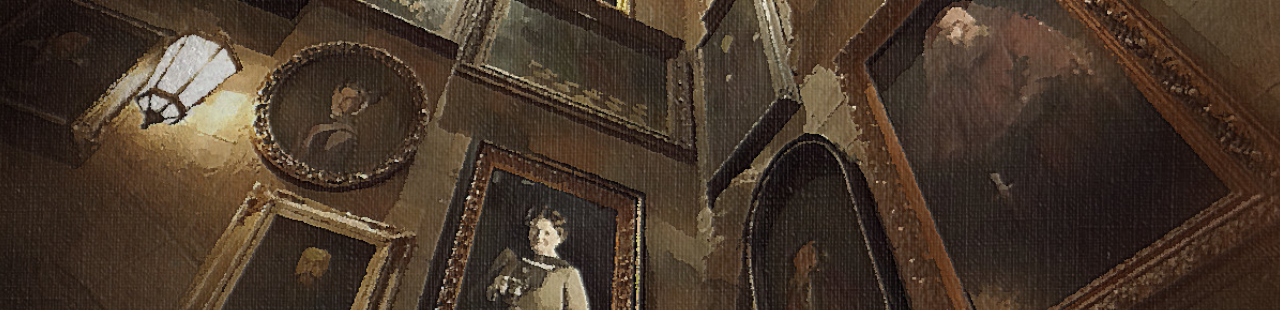
────────────────────────────────•⋅⊰༻༒︎༺⊱⋅•──────────────────────────────────
𝕴n bygone days—in crueler days—Hladekný and the Kuratorium and all the rest of them would have pressganged poor Herr Schöst to the very front of this preposterous little parade. "Who better?" they would wheedle, as if empty flatteries filled his belly; filled the lamps of his tenement; as if, swallowed like a spoonful of laudanum, they should calm the song strumming from the ruin of his leg—"indeed, who better? And besides, they who are the future of the Empire should meet their teacher sooner than late, do you not agree?" So away he'd go, compliantly dragging himself up one staircase and down the next, away to the furthest corners of the longest fields used for drilling and shooting and riding, up into the pigeon-eyries of the tallest mock-towers. The classroom the canteen the barracks the parlors the lecture halls. And behind him would march the halfscore, only some of them attentive and curious, only some asking him the same fatuous questions as the ten before them had once asked three years past, and the ten before them, and on, and on. Names, dates, small, vapid disparities in the paintings versus how their rich fathers and fancy tutors had once described the subjects thus depicted. And with every step the nerves would scream, the joints would pop, the ligaments would pluck, each of these a voice in a symphony of suffering. And click-click-drag, click-click-drag, the same demeaning tempo which accompanied him everywhere, the barber's, the opera. And in the end, wearied of his pace and spent of all their patience, their attentions wandering the ceiling as he trudged them to and fro, the ten would learn nothing anyway; arriving late to class the next day, bursting from the lips with excuses and apology, having retained none of his directions, none his warnings on how best to traverse the Academy's many labyrinths. Labyrinths whose shortcuts and beelines he himself had learned better than anyone (the briefness of his walks depending on it).
Thank the Champions for tenure—Schöst remarked.
The last of his charge having said his piece, and made his noble exit—a commons boy by the name of Dauncey Heathhill, all brimming with fierce moxie from his silvery-blond head to his watery grey eyes down to his chore-hardened hands—Schöst had beaten a hasty retreat in short order behind the lad; as hasty as his faculties permitted, at the least. Through the immense, polished doors, beneath the benches. There he lingered for a time, haunting the shadows of that particular vomitorium, a glint from his cane the only intimation of his being there. He observed from afar as the others paid young Herr Heathhill little mind; and, of those who did, with no small dose of silent, seething contempt. Schöst watched as the boy feigned either ignorance or apathy, hoping to convince the others—as he had convinced himself—of his own vicious independence. Quite standard fare, in all, for a sheepdog nesting among wolves.
A good few of the professor's charge had managed already to surprise him, however. Einsbück: all the decency and airs he had come to expect from such a lovely little thing, and yet her haughtiness poisoning these virtues by less than half. They would all be flocking to her soon, sheltering under her graces: the girls for morale and assurance; the rest for affectations and flatteries. Schöst noted her well. He would have to place her where the others could not so comfortably fall in step with her whims.
The dark-haired girl with the porridgey-thick accent—the Märzener—many such figures had traveled beneath the wrought-iron gates through the years, all manner of trembling, stuttering wrecks, reluctant and terrified. Schöst had seen them come and go by the dozens: pawns to the wills and wishes of others, most oft; not driven to water by some deep, innate thirst all their own but herded there like so many dutiful fillies. Most had flunked, the fires around them burning hotter than the fire within. But this—such an intense, severe Melancholy, always guarded and measured, always skirting and shrinking—such anomalies as this he had seldom encountered. Frankly, he wondered how such people as Frau du Guillarmes received acceptance letters at all. How had not one single member of the secretariat wondered whether a person who can hardly crush a beetle, hardly ask for another mug of beer at supper, might one day find it within herself to send a company of men downhill into flintlock and cannon fire? And how had Guillarmes herself not protested, absconded, tantrummed her way to freedom in the weeks it took to process her application? No matter, remarked the professor—she had arrived, and once she had arrived there were but three ways to leave, each less pleasant than the last.
Still, whence that sudden burst of courage atop the dais?
It accomplished fairly little, all told—the crowd, restless and squirming up there in the unpadded benches, had hardly stirred at the address—and it hardly diverted Guillarmes's fate, shouldst expulsion await therein—yet Schöst could not dislodge the feeling that he had misjudged this girl at first appraisal. That he'd beheld a dried-up riverbed and assumed it lifeless; that he'd mistaken the sluggish creep of a lava flow for hard, cold stone. There was an energy to this one; a potential Schöst hoped to measure, and galvanize, and drag from its dormancy. She might even prove to be the best pick for this year's—well. He paused a moment, cautioned himself against too eager a verdict. The first test had a way of banishing his predispositions.
Ahead the children continued to pat each other by the backs, hiss to each other their little assurances. Already they settled into the expected coteries: girls separating from young men, commoners and minor lordlings distancing themselves from certain family names, the ones which loomed over their own, their shadows long and broad and inescapable. Foam rising, lees sinking; precisely as the natural structure ordained. Dauncey Heathhill also watched young Hloþhilde, also intrigued—or perhaps perturbed—by the spectacle which had preceded his own; but he remained staunch in his solitude, and so did not care to confront it.
After affording the children one moment's repose, Frau Wiezlern—sweet, merciful Frau Wiezlern—offered them, the ten, a comfortable falsehood, and awayed them toward the first landmark of the tour. They obeyed with perfect graces, and good thing, too; the vomitorium reverberated with the last enunciations of the final speech, and the walls and ceiling and even the heel-smoothed flagstones began to rumble with the crash of one last applause, humming through the architecture. That was his cue; the time had arrived for Schöst to make his escape before the out-flooding throngs washed away with him. So for the first-and-thousandth time he click-click-dragged himself away from the amphitheatre, up the shallow slope of the vomitorium, toward the portrait hall. Click-click-drag. And he had very nearly slipped away behind the assembly which was to be his charge for the next three years, nearly eluded all scrutinies, when the Barbroeck boy crossed the threshold.
A moment's recognition glinted from the boy's winsome features: that the secretary had deceived him—had deceived all of them—yes—but powerless was this before the far-greater discomfort, that he was watched. Weighed and measured upon some scale he did not yet know how to tilt. For Herr Schöst's moody glower remained as impenetrable as fog, as unflinching as stone, and it had the most effervescent effect of annealing young Roelo likewise, drawing from the depths of him some vinegary recalcitrance.
Ere long something had devolved in the airs of this place; the encounter had alchemized from mere insipid happenstance into a kind of contest: a trial of wills—the raging strength of the sea crashing against the immensity of the shore, two beasts corded-necked and antler-locked, two blades seized and sparking. What proved two stubborn spirits by each refusing to retreat from this, a battle unspoken and yet most intimately understood, insignificant yet all-consuming? Schöst had his suspicions—about the both of them. But the rumbling of the crowd grew louder; the humming of the flagstones all the more unignorable; deferring to his powers of authority, Herr Professor (still not diverting his gaze—not for a moment) nodded his head once aside, urging the boy in the direction of his peers. And only after lingering one moment more—proving, in that insolent way, that no one told Roelo of House Barbroeck what to do—no one save for Roelo himself—he stalked away to catch the others.
Hobbling into the portrait hall proper, Schöst took a moment to survey. But the amphitheatre by then was ejecting the first of the crowds in coursing rivers down the vomitoria, and as for the northern passage, of Roelo—the speedy thing—only spectres and shadows remained. So the good professor, sensing the coming of the tides, rucked himself to the stair. Braced himself against the wall, careful not to disturb the sacred dust lain across the paintings and busts and cameos in sheets. And towed himself, grimacingly, to the next floor, away to the nearest skybridge.
His march would not see him returned to Classroom E until the Academy's great belltower had chimed the hour's end; it, and the dozens and hundreds of lesser clocks scattered across the grounds, all in diffuse, discordant harmony. Classroom corners and coat pockets. (Nearly three hours of speeches, and ritual, and pomp. Brennicus's beard.) But acting remarkably unconcerned with the dew-sweat beaded at his neck, the clamminess at his brow, the great many throes shocking up into his hip and down into his sorry, screaming knee, Schöst allowed himself only the single repose, done discreetly and with some hurry: a rummaging down into his doctor's-bag, a retrieval of glass and bottle thereof, a generous pour, a toss down his gullet. And with the brandy sugarcoating his tongue, and singeing his throat, and sending warmth creeping out from the pit of his stomach, conditions had improved; he could set himself to his task.
He settled at his desk (he and his chair creaking in solidarity), gathered the dossiers, scraped out the clots from the nib of his pen. Unrolled, uncorked, trimmed, dipped. Outside the birch trees wavered in a breeze which did not quite reach the innards of the stodgy classroom through the windows; a few finches flitted among the branches, chasing each other.
When Schöst, at ritual's end, had written every name, and scattered over them a three-fingered pinch of pounce, he took to them his pen-knife, slicing them out from the page, having them, then, in a tidy little pile of ribbons. Into two columns he arranged these names across his desk (the wood already crisscrossed with dozens of such cuts). He already had some idea of who should lead each team, at the least.
It was only then, of course, consumed by this esoteric exercise—peering down at one column ever-so-slightly longer than the other—that he noticed the unevenness. The discrepancy. The mistake.
"Eleven?" he murmured aloud. Not once in its hundred years had Ansbourg Imperial Command Academy admitted more than the allotted share of freshmen. That was fifty students a year—ten to a class—no more and no fewer. Not only mere tradition hinged on this arrangement but an air of exclusivity; the school's very prestige as the finest and most rigorous in all Laachtalia. A paltry fifty per year out of sixty million subjects; hundreds of thousands of whom were young, fit, and eligible.
Schöst paused. Who had Hladekný, the most conservative man he knew, ignored tradition to hurry past the bursars?
Unless...
Which of these eleven students had somehow cheated his way in?
Thank the Champions for tenure—Schöst remarked.
The last of his charge having said his piece, and made his noble exit—a commons boy by the name of Dauncey Heathhill, all brimming with fierce moxie from his silvery-blond head to his watery grey eyes down to his chore-hardened hands—Schöst had beaten a hasty retreat in short order behind the lad; as hasty as his faculties permitted, at the least. Through the immense, polished doors, beneath the benches. There he lingered for a time, haunting the shadows of that particular vomitorium, a glint from his cane the only intimation of his being there. He observed from afar as the others paid young Herr Heathhill little mind; and, of those who did, with no small dose of silent, seething contempt. Schöst watched as the boy feigned either ignorance or apathy, hoping to convince the others—as he had convinced himself—of his own vicious independence. Quite standard fare, in all, for a sheepdog nesting among wolves.
A good few of the professor's charge had managed already to surprise him, however. Einsbück: all the decency and airs he had come to expect from such a lovely little thing, and yet her haughtiness poisoning these virtues by less than half. They would all be flocking to her soon, sheltering under her graces: the girls for morale and assurance; the rest for affectations and flatteries. Schöst noted her well. He would have to place her where the others could not so comfortably fall in step with her whims.
The dark-haired girl with the porridgey-thick accent—the Märzener—many such figures had traveled beneath the wrought-iron gates through the years, all manner of trembling, stuttering wrecks, reluctant and terrified. Schöst had seen them come and go by the dozens: pawns to the wills and wishes of others, most oft; not driven to water by some deep, innate thirst all their own but herded there like so many dutiful fillies. Most had flunked, the fires around them burning hotter than the fire within. But this—such an intense, severe Melancholy, always guarded and measured, always skirting and shrinking—such anomalies as this he had seldom encountered. Frankly, he wondered how such people as Frau du Guillarmes received acceptance letters at all. How had not one single member of the secretariat wondered whether a person who can hardly crush a beetle, hardly ask for another mug of beer at supper, might one day find it within herself to send a company of men downhill into flintlock and cannon fire? And how had Guillarmes herself not protested, absconded, tantrummed her way to freedom in the weeks it took to process her application? No matter, remarked the professor—she had arrived, and once she had arrived there were but three ways to leave, each less pleasant than the last.
Still, whence that sudden burst of courage atop the dais?
It accomplished fairly little, all told—the crowd, restless and squirming up there in the unpadded benches, had hardly stirred at the address—and it hardly diverted Guillarmes's fate, shouldst expulsion await therein—yet Schöst could not dislodge the feeling that he had misjudged this girl at first appraisal. That he'd beheld a dried-up riverbed and assumed it lifeless; that he'd mistaken the sluggish creep of a lava flow for hard, cold stone. There was an energy to this one; a potential Schöst hoped to measure, and galvanize, and drag from its dormancy. She might even prove to be the best pick for this year's—well. He paused a moment, cautioned himself against too eager a verdict. The first test had a way of banishing his predispositions.
Ahead the children continued to pat each other by the backs, hiss to each other their little assurances. Already they settled into the expected coteries: girls separating from young men, commoners and minor lordlings distancing themselves from certain family names, the ones which loomed over their own, their shadows long and broad and inescapable. Foam rising, lees sinking; precisely as the natural structure ordained. Dauncey Heathhill also watched young Hloþhilde, also intrigued—or perhaps perturbed—by the spectacle which had preceded his own; but he remained staunch in his solitude, and so did not care to confront it.
After affording the children one moment's repose, Frau Wiezlern—sweet, merciful Frau Wiezlern—offered them, the ten, a comfortable falsehood, and awayed them toward the first landmark of the tour. They obeyed with perfect graces, and good thing, too; the vomitorium reverberated with the last enunciations of the final speech, and the walls and ceiling and even the heel-smoothed flagstones began to rumble with the crash of one last applause, humming through the architecture. That was his cue; the time had arrived for Schöst to make his escape before the out-flooding throngs washed away with him. So for the first-and-thousandth time he click-click-dragged himself away from the amphitheatre, up the shallow slope of the vomitorium, toward the portrait hall. Click-click-drag. And he had very nearly slipped away behind the assembly which was to be his charge for the next three years, nearly eluded all scrutinies, when the Barbroeck boy crossed the threshold.
A moment's recognition glinted from the boy's winsome features: that the secretary had deceived him—had deceived all of them—yes—but powerless was this before the far-greater discomfort, that he was watched. Weighed and measured upon some scale he did not yet know how to tilt. For Herr Schöst's moody glower remained as impenetrable as fog, as unflinching as stone, and it had the most effervescent effect of annealing young Roelo likewise, drawing from the depths of him some vinegary recalcitrance.
Ere long something had devolved in the airs of this place; the encounter had alchemized from mere insipid happenstance into a kind of contest: a trial of wills—the raging strength of the sea crashing against the immensity of the shore, two beasts corded-necked and antler-locked, two blades seized and sparking. What proved two stubborn spirits by each refusing to retreat from this, a battle unspoken and yet most intimately understood, insignificant yet all-consuming? Schöst had his suspicions—about the both of them. But the rumbling of the crowd grew louder; the humming of the flagstones all the more unignorable; deferring to his powers of authority, Herr Professor (still not diverting his gaze—not for a moment) nodded his head once aside, urging the boy in the direction of his peers. And only after lingering one moment more—proving, in that insolent way, that no one told Roelo of House Barbroeck what to do—no one save for Roelo himself—he stalked away to catch the others.
Hobbling into the portrait hall proper, Schöst took a moment to survey. But the amphitheatre by then was ejecting the first of the crowds in coursing rivers down the vomitoria, and as for the northern passage, of Roelo—the speedy thing—only spectres and shadows remained. So the good professor, sensing the coming of the tides, rucked himself to the stair. Braced himself against the wall, careful not to disturb the sacred dust lain across the paintings and busts and cameos in sheets. And towed himself, grimacingly, to the next floor, away to the nearest skybridge.
His march would not see him returned to Classroom E until the Academy's great belltower had chimed the hour's end; it, and the dozens and hundreds of lesser clocks scattered across the grounds, all in diffuse, discordant harmony. Classroom corners and coat pockets. (Nearly three hours of speeches, and ritual, and pomp. Brennicus's beard.) But acting remarkably unconcerned with the dew-sweat beaded at his neck, the clamminess at his brow, the great many throes shocking up into his hip and down into his sorry, screaming knee, Schöst allowed himself only the single repose, done discreetly and with some hurry: a rummaging down into his doctor's-bag, a retrieval of glass and bottle thereof, a generous pour, a toss down his gullet. And with the brandy sugarcoating his tongue, and singeing his throat, and sending warmth creeping out from the pit of his stomach, conditions had improved; he could set himself to his task.
He settled at his desk (he and his chair creaking in solidarity), gathered the dossiers, scraped out the clots from the nib of his pen. Unrolled, uncorked, trimmed, dipped. Outside the birch trees wavered in a breeze which did not quite reach the innards of the stodgy classroom through the windows; a few finches flitted among the branches, chasing each other.
When Schöst, at ritual's end, had written every name, and scattered over them a three-fingered pinch of pounce, he took to them his pen-knife, slicing them out from the page, having them, then, in a tidy little pile of ribbons. Into two columns he arranged these names across his desk (the wood already crisscrossed with dozens of such cuts). He already had some idea of who should lead each team, at the least.
It was only then, of course, consumed by this esoteric exercise—peering down at one column ever-so-slightly longer than the other—that he noticed the unevenness. The discrepancy. The mistake.
"Eleven?" he murmured aloud. Not once in its hundred years had Ansbourg Imperial Command Academy admitted more than the allotted share of freshmen. That was fifty students a year—ten to a class—no more and no fewer. Not only mere tradition hinged on this arrangement but an air of exclusivity; the school's very prestige as the finest and most rigorous in all Laachtalia. A paltry fifty per year out of sixty million subjects; hundreds of thousands of whom were young, fit, and eligible.
Schöst paused. Who had Hladekný, the most conservative man he knew, ignored tradition to hurry past the bursars?
Unless...
Which of these eleven students had somehow cheated his way in?
────────────────────────────────•⋅⊰༻༒︎༺⊱⋅•──────────────────────────────────
1x Like
coGM
Tlaloc METAL FINGERS
Member
Seen
8 mos ago
ℜ𝔬𝔢𝔩𝔬 Ⅴ
────────────────────────────────•⋅⊰༻༒︎༺⊱⋅•──────────────────────────────────
The woman led Class E out through the arcade beyond a heavy pair of doors, out into the open air. As the midday heat glanced Roelo's skin, he realised how much of a repose the building's shade had given him, and drew up a hand to shield his eyes. Around the corner from this side-exit, he could just about see the main gates of the ceremonial hall, now open, with a handful of the older and more meandering guests still making their exit, but the majority of attendants long-gone. The music from the quadrangle had long fallen still, though Roelo couldn’t put a finger on exactly when it had ceased.
“My name is Frau Wiezlern,” the matron said, angling her head to regard the shoaling classmates behind her. “I am a house matron, and it is my responsibility to monitor the care and discipline of first-year students. Though you will, over the coming three years, become very familiar with the campus, I will provide a concise orientation to the principal buildings and their functions.”
She gestured first to the building behind the class; from which they had exited.
“This building, affixed to Die Zeremonium, is Zierseldt Hall. It has many faculty offices; one of which is my own, the third door on the left of the main entrance — you will find my name engraved upon the door. Should you need to address any issues that you are experiencing, whether academic or personal, you are free to visit me there, and I will do what I can do find a reasonable solution. The other faculty, mind you, may not be so welcoming, should you arrive at their office door uninvited. Otherwise, the Zierseldt is also home to our studentenkorps facilities, which you will all learn more about in the coming days.”
Wiezlern then pointed yonder to what appeared to be one of the older structures on-campus, nestled against the outer wall and crowned by a sturdy, round watchtower. She began walking oncemore, approaching the building in what would be the first adjustment in a clockwise tour of campus.
“This is Härlenger Hall: the only building within the academy that is strictly out of bounds for students. I ensure you that the faculty have our fair share of headaches within working hours to deal with, so kindly do not encroach upon our quarters. However, you are free to admire its masonry from afar. It is said that —”
It was quickly apparent that Wiezlern was not equipped with the virtue of brevity. She had a tendency to over-explain, which became all-the-more clear with each stop on her concise orientation — about the many amenities of Das Panoptikum, and how she felt about them, or the storied history of Die Zeremonium and its mighty clocktower. Little did this interest Roelo. He would not eagerly frolick through the halls in his spare time, sampling the academy’s many extracurricular pastimes, nor drinking in its architectural ambience. He was here to succeed, and was willing to be egregiously stubborn and spiteful to push himself to do so. There would be no distractions, as he had already decided. And thus again, did he find himself screaming into the void of his own mind: about what he would do here, how he would prove them all wrong, and poor Wiezlerns’ words fell deaf on him. She continued her tour past Die Kantine and the Bistrot Bélandre; the latter of which served labskaus, of which’s qualities she proselytized in great detail.
Beyond the cantine and bistro was Der Sportplatz — the largest outdoor area within the academy's walls, where parade drills and other such activities took place. Along the near-side of the field were several small sandpits that were used as arenas for duelists. Beside one, a small crowd had gathered — notably including the students and teachers of Classes C and D, along with a host of older students.
“Come, students,” ordered Wiezlern. “I believe our third-years are conducting a demonstration.”
Indeed, as Class E grew closer to the dueling ring, it was evident that mensur was in process. Two girls; third-years, were engaged in single combat, a professor standing to their side as an officiant, and a nurse crouched at the ready should viscera be drawn. Both duelists were positioned most excellently in fechterstellung: feet shoulder-width, sword arm cocked at the shoulder in a high guard, the blade angled diagonally back, like a whip coiled before its strike; the other arm kept still to the back. Each young cadet wore light-cloth armor on the arm, torso, and throat, as well as iron spectacles that guarded their eyes and nose; for there would be no enucleation nor rhinectomy at this academy — wounds elsewhere upon the body, however, were almost guaranteed. In fact, one of the girls, red-haired and fleet-footed, wore a particularly severe scar that traced the left side of her face horizontally like a second jawline. The wound was almost perfectly parallel to the line of her chin, aside from a flick of etched flesh at the end of the line that darted towards her cheek. Sand and gravel crunched beneath her bootheals, and those of her opponent’s, as they adjusted in rhythm with their blades’ movement. Roelo squinted into the sunlight. The red-haired girl was turned slightly in profile, her neck pale and glistening where her linen collar ended. She moved effortlessly — measured, taut, refined by discipline. Her cinnamon hair was pinned back into a tight braid. He noted how the scar did not burden her beauty — it made her seem fierce, and far more beautiful than the powdered-cheeked maidens of île Monding. The girl opposite her, brunette and broad of shoulder, carried herself like a battering ram. She too wore scars; though fewer, and fainter in nature.
Their blades snapped together — a flash of lightning; a crack across heated glass. Again — again — again. Minimal was the footwork, subtle were the lunges, for if either participant left the sand-drawn perimeter, either by stumble or retreat, it would be considered a shameful abdication. What movement there was was calculated and perfect.
It was almost difficult to see when it ended. The contact had been glancing, and, at first, as the professor stepped forward to end the fight, the brunette looked over in frustrated protest, as if to argue that she hadn’t been struck. Within a moment, however, crimson had drawn from her cheek, and she withdrew any pretense of protest — by which point the red-head had already returned her sword to its scabbard.
"Blut!,” cried the professor, raising his hand, and thus marking the end of the fight.
There was no bow. No “well fought”; no proffered hand. A brief, austere applause trickled through the crowd. Some of the first-years clapped with more enthusiasm before noting the restraint of their elders, and quickly amended their own standards. This was the way of mensur — while it felt in many ways like a sport, it was not one. It was a tradition, and one without a victor or a loser. While it was clear to see who the triumphant of this particular mêlée was, both had participated in a lesson, at least in the eyes of the pedagogues, and each had found ‘victory’ of their own in their learnings. The nurse did not move towards the wounded, but gladly attended her when she approached. It was likely the caregivers of the academy had seen far worse resulting wounds, and were content to allow duelists a moments reprieve before rushing to their aid: especially when only afflicted with superficial flesh wounds.
The other combatant, the unbloodied, tore off her eye-guard and wiped back the sweat from her brow. She reached at the bindings of her hair, and her braid came undone like a snare released. Strands of red hair, darkened by sweat at the roots, slipped loose in spirals and fanned out across her shoulders. Some clung to the collar of her dueling vest. Others trailed over the curve of her throat and down the pale slope where her collarbone peeked between the folds of linen. The sun caught the copper of it, as if igniting the dying embers of a fire. Roelo watched her glide back into the crowd. Despite her success, despite the pressure of being placed upon a pedestal in front of the first-years, she seemed unmoved: as if her heart had remained at resting pace all the while. Roelo could not say the same for himself, but tore his eyes away.
“Very good, very good, but enough of a delay,” called Wiezlern. “On to the barracks.”
And so Class E migrated beyond Der Sportplatz, beneath the arch of the Gatehouse, and up to the terraced buildings that would, for the next three years, be their home. There again did Wiezlern stop, and once more did she liberally orate about the various dos and don'ts of this particular locale.
“Boys will keep to their bunks, and girls to theirs.”
“I should not even have to say this, but do not hang your linens from your bunk like a fieldhand. We have drying lines — use them.”
“Do not leave boots in the corridor. I will throw them out of the window.”
Roelo found his mind flâner back to the red-haired girl. He hoped he might see her again, or perhaps afford himself the courage to ask her name; though, he realised, it was likely a foolish endeavour. After-all, as a third-year, she would be twenty-one, a far cry from his boyish eighteen.
As Wiezlern drawled on, a boy shuffled beside Roelo and cleared his throat.
“Hail,” the lad said lowly, so to not be heard by Wiezlern: offering out his hand to shake. “Lutz von Ecklingen.”
Roelo, though unenthused with the idea of whatever interaction was about to be enforced on him, accepted the handshake.
"You’re a de Barbroeck, right? Like the Duke of Orange?,” Lutz continued, a trace of excitement showing on his lips. “Must be a bit dull here by comparison."
Roelo bit his tongue. This was not an interaction he had any desire to indulge, but it was bound to come sooner or later. He had considered how he might navigate such an inquest previously. He could lie — claim to be the son of a peripheral second-cousin; but it was more than likely that he’d be quickly caught in the falsity. While indeed he was Tælman’s shame; a black sheep who was seldom paraded and celebrated by his kin: he was not quite shunned to the degree in which he was totally anonymous. Should there be any other Loðyrians among his stream, it was imaginable that they’d have heard of the name Roelo de Barbroeck — if not for his standing alone, then for his controversies. He was the son who'd infamously, and ignobly, assaulted a household guard. The one who'd gotten blind-drunk during Reevingtide and embarrassed himself, driven to sickness aside the plinth of a war monument after altercating with sailors at the local taphouse. The one whose noble father had ordered his own son's name stricken from the ledgers of port stewardship, and whose brother now made diplomatic rounds alone, without the troubled second son in tow. While his face might not be known across Loðyria, his name was. And perhaps even this busybody — the prying Lutz — might already be privy to these tales. Sometimes, thought Roelo, a querier will ask a burdensome question while already knowing an answer, only to see its recipient squirm under the weight. Nonetheless, Roelo had reconciled with the fact that any denial of his standing would only cause him another headache down the line. He had no desire to stand in Tælman’s shadow — but he would not hide from it, either. He would give this sycophant what he desired, but little more, by confessing his kinship to the the Duke of Orange; the Lion of Loðyria.
As much as Roelo loathed his father, he recognised why many across the Empire, especially those who valued justice and valour, perceived Duke Tælman as something of a living legend. It was not without reason. Over the span of two decades, the Duke had taken the tide-torn, pillaged coasts of his home nation and turned them into some of the most secure harbourlands in the Empire. What had previously been a region plagued by pagan raiders from the cold north — honourless men with axes and guns and cursèd blood-oaths — was now patrolled, fortified, and swept clear of the banners of corsairs. Now, trade thrived, fishermen dared to cast their nets at sea, and children could visit the beaches at summertime without a constant peril hanging over them. Tælman had achieved this through not only diplomacy and reform, but with fire and gallows. He had sank more ships and hanged more men than anyone alive — and he had done so without being perceived as a tyrant or a madman. No, he was respected; so respected, in fact, that it was a common thought among the gentry of the Empire that he was best placed to ascend to the Imperial throne, should an election take place in the near-future.
“I am. The Duke is my father,” Roelo responded — aloof, but not entirely dismissive. To shirk this mite, he’d have to first indulge him. “And no, quite the opposite. The weather here is much more pleasant.”
Though he did not offer such an intimacy as eye contact with his unwanted interlocutor, he noted the excitement that befell Lutz’ face with his confirmation. He must’ve thought he’d struck lucky by being classed with such a celebutante.
“They call him the Tallyman out there, don’t they?,” asked Lutz. “On account of how many pirates he’s hanged.”
Roelo nodded, dispassionately. “That’s what they say.” He spoke curtly, of course, with intent to hamstring the conversation. But his response, to his great despair, instead seemed to invite further questioning.
“Did you ever cross swords with them? — the brânwîchen?,” Lutz asked, speaking the final world in an exaggerated Loðyrian accent.
Perhaps Lutz employed a word foreign to him to flaunt his linguistic chops, or his erudite knowledge of geopolitics. Either way, it did not endear him to Roelo as intended. The lordling had to tame his glower and pull back the very reigns of his optic nerves to restrain an eye-roll. Roelo let the silence hang, hoping Lutz might tactfully interpret his disinterest and retreat. But no such luck. The boy’s grin had only widened, pleased with his own pronunciation, his own cleverness.
“I hear they’re among the most heartless and violent of men,” Lutz continued, hoping, perhaps, to elicit some epic tale of swashbuckling from Roelo.
“I never had the displeasure,” Roelo responded. “They are clever enough not to come inland these days.”
“Young man,” Frau Wiezlern spoke abruptly, aiming her icy stare at Roelo, breaking momentarily from her meandering instructions to provide a verbal slap-on-the-wrist. “You will have plenty of time to get acquainted with your classmates after I am finished talking.”
Roelo dipped his head, quietly grateful for her rescue — yet still a little resentful that Lutz’s advance ended with him being the one chastised. “Apologies, ma’am.”
She nodded, wordlessly accepting his apology, and then on went her monologue — describing, at length, the logistics of laundry, ’what to do in the event of fire’, and other such equally uninteresting topics.
“Sorry,” whispered Lutz with a sheepish smile, nudging Roelo in the arm.
Wiezlern, winding down on her lengthy induction, then delivered a room key to the hands of each of the classmates.
“Now, you have the best part of... oh, half an hour — how the time does pass — to get yourself acquainted with your quarters, and to see yourself fed and watered. After that, please make your way to the main complex,” Wiezlern pointed over to the building that surrounded the quadrangle. “East Wing, Room 3. Herr Schöst will be waiting. On the hour. I advise you arrive promptly.”
“My name is Frau Wiezlern,” the matron said, angling her head to regard the shoaling classmates behind her. “I am a house matron, and it is my responsibility to monitor the care and discipline of first-year students. Though you will, over the coming three years, become very familiar with the campus, I will provide a concise orientation to the principal buildings and their functions.”
She gestured first to the building behind the class; from which they had exited.
“This building, affixed to Die Zeremonium, is Zierseldt Hall. It has many faculty offices; one of which is my own, the third door on the left of the main entrance — you will find my name engraved upon the door. Should you need to address any issues that you are experiencing, whether academic or personal, you are free to visit me there, and I will do what I can do find a reasonable solution. The other faculty, mind you, may not be so welcoming, should you arrive at their office door uninvited. Otherwise, the Zierseldt is also home to our studentenkorps facilities, which you will all learn more about in the coming days.”
Wiezlern then pointed yonder to what appeared to be one of the older structures on-campus, nestled against the outer wall and crowned by a sturdy, round watchtower. She began walking oncemore, approaching the building in what would be the first adjustment in a clockwise tour of campus.
“This is Härlenger Hall: the only building within the academy that is strictly out of bounds for students. I ensure you that the faculty have our fair share of headaches within working hours to deal with, so kindly do not encroach upon our quarters. However, you are free to admire its masonry from afar. It is said that —”
It was quickly apparent that Wiezlern was not equipped with the virtue of brevity. She had a tendency to over-explain, which became all-the-more clear with each stop on her concise orientation — about the many amenities of Das Panoptikum, and how she felt about them, or the storied history of Die Zeremonium and its mighty clocktower. Little did this interest Roelo. He would not eagerly frolick through the halls in his spare time, sampling the academy’s many extracurricular pastimes, nor drinking in its architectural ambience. He was here to succeed, and was willing to be egregiously stubborn and spiteful to push himself to do so. There would be no distractions, as he had already decided. And thus again, did he find himself screaming into the void of his own mind: about what he would do here, how he would prove them all wrong, and poor Wiezlerns’ words fell deaf on him. She continued her tour past Die Kantine and the Bistrot Bélandre; the latter of which served labskaus, of which’s qualities she proselytized in great detail.
Beyond the cantine and bistro was Der Sportplatz — the largest outdoor area within the academy's walls, where parade drills and other such activities took place. Along the near-side of the field were several small sandpits that were used as arenas for duelists. Beside one, a small crowd had gathered — notably including the students and teachers of Classes C and D, along with a host of older students.
“Come, students,” ordered Wiezlern. “I believe our third-years are conducting a demonstration.”
Indeed, as Class E grew closer to the dueling ring, it was evident that mensur was in process. Two girls; third-years, were engaged in single combat, a professor standing to their side as an officiant, and a nurse crouched at the ready should viscera be drawn. Both duelists were positioned most excellently in fechterstellung: feet shoulder-width, sword arm cocked at the shoulder in a high guard, the blade angled diagonally back, like a whip coiled before its strike; the other arm kept still to the back. Each young cadet wore light-cloth armor on the arm, torso, and throat, as well as iron spectacles that guarded their eyes and nose; for there would be no enucleation nor rhinectomy at this academy — wounds elsewhere upon the body, however, were almost guaranteed. In fact, one of the girls, red-haired and fleet-footed, wore a particularly severe scar that traced the left side of her face horizontally like a second jawline. The wound was almost perfectly parallel to the line of her chin, aside from a flick of etched flesh at the end of the line that darted towards her cheek. Sand and gravel crunched beneath her bootheals, and those of her opponent’s, as they adjusted in rhythm with their blades’ movement. Roelo squinted into the sunlight. The red-haired girl was turned slightly in profile, her neck pale and glistening where her linen collar ended. She moved effortlessly — measured, taut, refined by discipline. Her cinnamon hair was pinned back into a tight braid. He noted how the scar did not burden her beauty — it made her seem fierce, and far more beautiful than the powdered-cheeked maidens of île Monding. The girl opposite her, brunette and broad of shoulder, carried herself like a battering ram. She too wore scars; though fewer, and fainter in nature.
Their blades snapped together — a flash of lightning; a crack across heated glass. Again — again — again. Minimal was the footwork, subtle were the lunges, for if either participant left the sand-drawn perimeter, either by stumble or retreat, it would be considered a shameful abdication. What movement there was was calculated and perfect.
It was almost difficult to see when it ended. The contact had been glancing, and, at first, as the professor stepped forward to end the fight, the brunette looked over in frustrated protest, as if to argue that she hadn’t been struck. Within a moment, however, crimson had drawn from her cheek, and she withdrew any pretense of protest — by which point the red-head had already returned her sword to its scabbard.
"Blut!,” cried the professor, raising his hand, and thus marking the end of the fight.
There was no bow. No “well fought”; no proffered hand. A brief, austere applause trickled through the crowd. Some of the first-years clapped with more enthusiasm before noting the restraint of their elders, and quickly amended their own standards. This was the way of mensur — while it felt in many ways like a sport, it was not one. It was a tradition, and one without a victor or a loser. While it was clear to see who the triumphant of this particular mêlée was, both had participated in a lesson, at least in the eyes of the pedagogues, and each had found ‘victory’ of their own in their learnings. The nurse did not move towards the wounded, but gladly attended her when she approached. It was likely the caregivers of the academy had seen far worse resulting wounds, and were content to allow duelists a moments reprieve before rushing to their aid: especially when only afflicted with superficial flesh wounds.
The other combatant, the unbloodied, tore off her eye-guard and wiped back the sweat from her brow. She reached at the bindings of her hair, and her braid came undone like a snare released. Strands of red hair, darkened by sweat at the roots, slipped loose in spirals and fanned out across her shoulders. Some clung to the collar of her dueling vest. Others trailed over the curve of her throat and down the pale slope where her collarbone peeked between the folds of linen. The sun caught the copper of it, as if igniting the dying embers of a fire. Roelo watched her glide back into the crowd. Despite her success, despite the pressure of being placed upon a pedestal in front of the first-years, she seemed unmoved: as if her heart had remained at resting pace all the while. Roelo could not say the same for himself, but tore his eyes away.
“Very good, very good, but enough of a delay,” called Wiezlern. “On to the barracks.”
And so Class E migrated beyond Der Sportplatz, beneath the arch of the Gatehouse, and up to the terraced buildings that would, for the next three years, be their home. There again did Wiezlern stop, and once more did she liberally orate about the various dos and don'ts of this particular locale.
“Boys will keep to their bunks, and girls to theirs.”
“I should not even have to say this, but do not hang your linens from your bunk like a fieldhand. We have drying lines — use them.”
“Do not leave boots in the corridor. I will throw them out of the window.”
Roelo found his mind flâner back to the red-haired girl. He hoped he might see her again, or perhaps afford himself the courage to ask her name; though, he realised, it was likely a foolish endeavour. After-all, as a third-year, she would be twenty-one, a far cry from his boyish eighteen.
As Wiezlern drawled on, a boy shuffled beside Roelo and cleared his throat.
“Hail,” the lad said lowly, so to not be heard by Wiezlern: offering out his hand to shake. “Lutz von Ecklingen.”
Roelo, though unenthused with the idea of whatever interaction was about to be enforced on him, accepted the handshake.
"You’re a de Barbroeck, right? Like the Duke of Orange?,” Lutz continued, a trace of excitement showing on his lips. “Must be a bit dull here by comparison."
Roelo bit his tongue. This was not an interaction he had any desire to indulge, but it was bound to come sooner or later. He had considered how he might navigate such an inquest previously. He could lie — claim to be the son of a peripheral second-cousin; but it was more than likely that he’d be quickly caught in the falsity. While indeed he was Tælman’s shame; a black sheep who was seldom paraded and celebrated by his kin: he was not quite shunned to the degree in which he was totally anonymous. Should there be any other Loðyrians among his stream, it was imaginable that they’d have heard of the name Roelo de Barbroeck — if not for his standing alone, then for his controversies. He was the son who'd infamously, and ignobly, assaulted a household guard. The one who'd gotten blind-drunk during Reevingtide and embarrassed himself, driven to sickness aside the plinth of a war monument after altercating with sailors at the local taphouse. The one whose noble father had ordered his own son's name stricken from the ledgers of port stewardship, and whose brother now made diplomatic rounds alone, without the troubled second son in tow. While his face might not be known across Loðyria, his name was. And perhaps even this busybody — the prying Lutz — might already be privy to these tales. Sometimes, thought Roelo, a querier will ask a burdensome question while already knowing an answer, only to see its recipient squirm under the weight. Nonetheless, Roelo had reconciled with the fact that any denial of his standing would only cause him another headache down the line. He had no desire to stand in Tælman’s shadow — but he would not hide from it, either. He would give this sycophant what he desired, but little more, by confessing his kinship to the the Duke of Orange; the Lion of Loðyria.
As much as Roelo loathed his father, he recognised why many across the Empire, especially those who valued justice and valour, perceived Duke Tælman as something of a living legend. It was not without reason. Over the span of two decades, the Duke had taken the tide-torn, pillaged coasts of his home nation and turned them into some of the most secure harbourlands in the Empire. What had previously been a region plagued by pagan raiders from the cold north — honourless men with axes and guns and cursèd blood-oaths — was now patrolled, fortified, and swept clear of the banners of corsairs. Now, trade thrived, fishermen dared to cast their nets at sea, and children could visit the beaches at summertime without a constant peril hanging over them. Tælman had achieved this through not only diplomacy and reform, but with fire and gallows. He had sank more ships and hanged more men than anyone alive — and he had done so without being perceived as a tyrant or a madman. No, he was respected; so respected, in fact, that it was a common thought among the gentry of the Empire that he was best placed to ascend to the Imperial throne, should an election take place in the near-future.
“I am. The Duke is my father,” Roelo responded — aloof, but not entirely dismissive. To shirk this mite, he’d have to first indulge him. “And no, quite the opposite. The weather here is much more pleasant.”
Though he did not offer such an intimacy as eye contact with his unwanted interlocutor, he noted the excitement that befell Lutz’ face with his confirmation. He must’ve thought he’d struck lucky by being classed with such a celebutante.
“They call him the Tallyman out there, don’t they?,” asked Lutz. “On account of how many pirates he’s hanged.”
Roelo nodded, dispassionately. “That’s what they say.” He spoke curtly, of course, with intent to hamstring the conversation. But his response, to his great despair, instead seemed to invite further questioning.
“Did you ever cross swords with them? — the brânwîchen?,” Lutz asked, speaking the final world in an exaggerated Loðyrian accent.
Perhaps Lutz employed a word foreign to him to flaunt his linguistic chops, or his erudite knowledge of geopolitics. Either way, it did not endear him to Roelo as intended. The lordling had to tame his glower and pull back the very reigns of his optic nerves to restrain an eye-roll. Roelo let the silence hang, hoping Lutz might tactfully interpret his disinterest and retreat. But no such luck. The boy’s grin had only widened, pleased with his own pronunciation, his own cleverness.
“I hear they’re among the most heartless and violent of men,” Lutz continued, hoping, perhaps, to elicit some epic tale of swashbuckling from Roelo.
“I never had the displeasure,” Roelo responded. “They are clever enough not to come inland these days.”
“Young man,” Frau Wiezlern spoke abruptly, aiming her icy stare at Roelo, breaking momentarily from her meandering instructions to provide a verbal slap-on-the-wrist. “You will have plenty of time to get acquainted with your classmates after I am finished talking.”
Roelo dipped his head, quietly grateful for her rescue — yet still a little resentful that Lutz’s advance ended with him being the one chastised. “Apologies, ma’am.”
She nodded, wordlessly accepting his apology, and then on went her monologue — describing, at length, the logistics of laundry, ’what to do in the event of fire’, and other such equally uninteresting topics.
“Sorry,” whispered Lutz with a sheepish smile, nudging Roelo in the arm.
Wiezlern, winding down on her lengthy induction, then delivered a room key to the hands of each of the classmates.
“Now, you have the best part of... oh, half an hour — how the time does pass — to get yourself acquainted with your quarters, and to see yourself fed and watered. After that, please make your way to the main complex,” Wiezlern pointed over to the building that surrounded the quadrangle. “East Wing, Room 3. Herr Schöst will be waiting. On the hour. I advise you arrive promptly.”
────────────────────────────────•⋅⊰༻༒︎༺⊱⋅•──────────────────────────────────

GM
TokyoPewPew rpguilder (derogatory)
Member
Seen
21 min ago
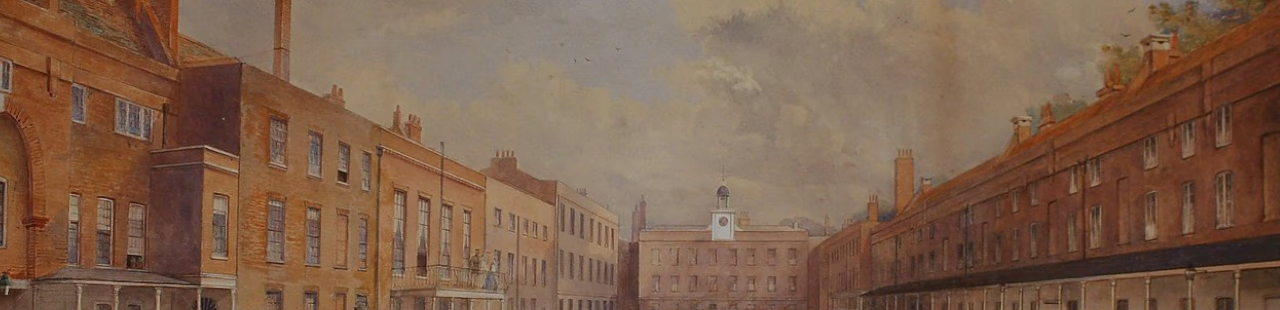
────────────────────────────────•⋅⊰༻༒︎༺⊱⋅•──────────────────────────────────
"𝕲ods' bones!" cursed the third and final of Class E's she-students, who the others had already dubbed Mina—simply Mina—"I thought Death itself might fail to shut her up."
Agalind did not chastise the obscenity pouring from her new companion's mouth, nor cringe thereof; even in the presence of such unladylike conduct did she remain as nonchalant and courteous as always. Instead, feigning a momentary deafness, she put a fingertip between her teeth, and bit down, and thereby liberated that hand of its gauntlet, which she tucked into her sword belt. Reached she then for her pocket watch, reviewing the hands and dials coolly. "Do you suppose we might lunch at the canteen, if we hurried?" she said. "Three hours of walking and speeches and I am so terribly famished."
"We wouldn't even make it through the beer line," Mina bemoaned. "Not after that wretch Wiezlern tried to kill us of old age."
"Yes, most probably. What a shame."
"Tell me about it. I've been holding in a water for the better part of an hour."
"Mina, please," Agalind said—giggling, so as to sound less disquieted.
But along the barracks wall, broiling beneath the cloudless sky at its highest noontime glory, sat their own and several other students' luggage; still packed, and tossed into rows. Any porters were long gone, these valuables guarded only by a single residency assistant, clad from scalp to toes in civvies and sunburnt lethargy. Judging from the gaps, many students—entire classes of them, in fact—had come and gone and claimed their suitcases already in the time it had taken Schöst's charge to receive some semblance of a dénouement to Wiezlern's poetic Epic. They'd still been slogging from hall to hall while the rest of their grade claimed their bunks, aired out their belongings, sprawled, lunched, strolled. The ten, afforded none such luxuries, grumbled and murmured but hurried to their task.
For Hloþhilde it was no small envy, watching as several of the seven bickered to be the ones to relieve Agalind and Mina of their luggage—the first protesting and are-you-suring; hesitating, then, to the boys' relief, capitulating—and the latter readily discarding her effects into their awaiting clutches. Meanwhile there sat her own bags, all two of them (save for the gift box, which she had wearied of rucking around through the glare and the heat approximately an eon ago), untouched. Smaller than the others', simpler, and so forlorn-looking there creased and sagging against the wall like a pair of old, worn stovepipe boots. Disheartened but resolved not to show it, Hloþhilde swung Hellie's sword beneath one arm, and squatted, and after some struggle had stood upright again with both bags in tow. Their unassuming appearances had deceived her, however: within the bags clattered a great many articles, some of them large and cumbersome all their own; drawing from the girl an astounded groan as she labored to her feet. Wondering whether her sister had packed her off to military school with sacks of ingots from the tinsmith's, Hloþhilde waddled as best she could toward the barracks door, careful not to let her shako tilt clean off her head, wary too of swaying off course as she fought the heft of her cargo with every step. Ere long the bags' bottoms seemed about ready to rip in twain and spill all their embarrassing, girlish contents all over the foyer floor; so too as their handles threatened to rend clean through her quickly-purpling fingers. All the same, if any boys had noticed her plight then they made no gesture to rescue her thereof.
The stairs proved the day's greatest trial; but with some hobbling (rather Schöst-like in form, as it happened), and enough sweat soaked into her greyish wools to impress a farmhand, Hloþhilde managed it in a single trip, and at the top of the concourse allowed herself her first moment of respite. There, panting and heaving and glistening, she stared long and hard down the halls, each one flanked on both sides and down its entire breadth by identical white doors. And one of them was hers. She told herself that again and again as she foraged for the grit to keep going through the blood drumming in her head, the constriction in her fingers, the throttling heat of her parade uniform. One of those doors was hers. It was hers it was hers she'd earned it or if not yet then by the Champions she was going to.
Heading south from the central rotunda, it was closed when she arrived and so she saw it, writ in wood trim leafed in peeling gold: eighty seven. Her number. Her address for the next year. This she recognized for the names chalked just beneath, upon a slate board in a most tidy and elegant hand:
The latter gave Hloþhilde pause, but she thought that hardly strange. Any one of them would wonder about her newest companion-of-circumstance, that person in whose company (or, at the least, in whose proximity) she was to spend the lion's share of the next year, between classes and balls and platoon drills. In fact, likeliest they already did, all twoscore-and-a-half of the tender freshmen entering this building for the first and seeing their names etched beside the names of strangers on slate boards. Checking for the abbreviated preposition before the family name, to know they doffed their fineries and lowered their eyelids among fellow noblemen's-sons (von meaning a heartlander, de/des/du a Westmarcher or Low Countryman; di belonging to those families hailing from former Rhobardy—once a duchy, then independent—distrusted and despised). The lavishness of any personal effects strewn around the door, around the room; their tastes in art, in wine, in girls, in politics. And on and on. Surely they endeavored to learn, the fifty, what they could about each other ere even thinking to cross that fateful threshold. Searching for that common shore whereon to escape uncertain waters.
For her part, Hloþhilde knew her histories well enough. She knew Leutgarde—queen-consort to Raduwik the Black—and her own namesake to have fought on opposing sides of the same civil war, some eight centuries ago. She only prayed this did not bode ill for her relations with her bunkmate. She certainly didn't think herself susceptible to superstition; least of all the one which compelled Laachtalian parents to name their children after heroes and kings and conquerors, lest their lives should prove unfortunate, unfruitful, or worst of all—uneventful. Still. When that many people believe something, mustn't there be some germ of truth to it? And if this Leutgarde von Müßel was one such believer, why, she'd be determined to hate poor Tilly before she'd even met her proper, would she not? Prejudice informed behavior informed prejudice; prophecy fulfilled itself.
All at once eager, anxious, and acutely aware of her scant free time tapping down to nothing with every tick of the clock, she set down a bag and rapped her hand against their door—her door—once, then again—and when both times no answer came, she eased herself inside, dragging her luggage in behind her like an antlion. And she heaped her bags into the center of the room, and shut the door behind her, and suddenly Agalind and Mina's practiced aloofness seemed so very distant, as did the playful, teasing, yet categorically frustrated efforts of their suitors. Barely audible as a murmur from the far wall. For Hloþhilde arrived upon an empty room; her roommate having abandoned it already, but not before claiming the lower bunk, and staking what parts of the room she'd deemed the choicest (the nearer of two desks; a bedpost, seized on behalf of a heavy woolen greatcoat; most of the hooks by the door). There stood two display stands on a large night table: one empty, the other replete with full parade regalia, buffed and gleaming; helm and sash and gauntlets and aiguillettes. A few interesting advertisements and lithographs pinned to the walls. The reek of tobacco smoke, and the culprit's half-burnt evidence lain across her desk, spilled from the antler bowl when it had fallen over from its pipe rack. Lamps and matches. A small shelf filled with treatises on tactics, natural sciences, warrior-poetry; and, curiously, sewing.
Hloþhilde placed her new sword on the upper bunk; did not concern herself, for the time, with finding the best place nor the most regal way to mount it. For she had grown much too curious as to the contents of her suitcases. Given what toils and labors she had undergone already—and it was not lost on her that the day was scarcely half burnt—she hoped it was exactly what she suspected; and exactly as restorative. So she shed her fineries—helm, sash, and the rest—mimicked Leutgarde's arrangement as best she could while ordering them upon the second display stand—and hauled the heavier of the two bags up onto the empty desk.
As it happened, she knew her sister well. Beneath a doll from her girlhood, and a supply of womanly napkins, and a few nice pens and all other manner of essentials, Helgeða had stashed enough treasures to count as a small hoard. The bottles she'd wrapped in jute and straw to protect them during transit, but Hloþhilde recognized enough of them from the glass alone—the shapes, colors, and opacities—that she had little need for the concealed labels whatever. Château Moinmarcy: their house's personal label, crisp, off-dry, and strikingly citrusy, owing to shady terroir, early harvest, and ready use of the pomace in the fermentation. (Tall, skinny, and seaglass-green, the bottle.) Eaux d'Aubris, a dessert wine of matchless quality: apricot-sweet, and yet light-bodied, a little effervescent; hardly so stodgy and syrupy as a port or a cream sherry. As suitable with ripe cheese as with cake and one of Tilly's very favorites (no doubt why Helgeða had packed several bottles). A table red from the Vuererro region; the one father used to ship in by the hogshead right before a banquet. One or two more that Hloþhilde did not recognize. Ones her sister perhaps had meant for them to sample together during their upcoming lunch.
"Damn it, Hellie," she muttered, humiliated yet honored; feeling terribly ridiculous, and yet smiling ear to ear. For what would the others say when they found out the Marsènne girl, true to type, had arrived on campus with well over a gallon of fine wines stowed in her luggage?—and she had not yet even reached the bag's bottom. Would she next dredge up a fine Marsènnish pennyloaf, already buttered? A jar of olives? Saucissons? Twelve Hells, a whole picnic spread? The first pangs of homesickness were calcifying in her gut like gallstones, but with the hunger, the heat, the whiling of the hour also gnawing, Hloþhilde was not so anguished not to press on.
Another few moments and she'd discovered, inspected, and restored again the contents of the tins buried beneath her civilian clothes. Some homemade—wrapped in waxcloth and packed into older tins—others still sealed, fresh from the stalls and shops of the Vaillons-sur-Monvre. A loaf of pain d'épices, fragrant with honey and ginger. Dates and cherries and lime wheels glacéed in their syrups—their glassy shells cracked in transit but still glistening. Little apple and blackberry pâtés, powdered white as mothwings. Wedges of Souvrental and croûte-des-rubis, crammed piano-key-tight into the canister. A small wheel of Valagnan.
Valagnan...
This alone she did not place back in its tin; did not stash away again beneath the pile of chemises, with the rest of the treasure-hoard; her hands, possessed of a will all their own, refusing to part with the precious parcel lest it melt away like a morning dew once divested of her touch, returned to the memory whence it was conjured. Valagnan. She pressed the marinated grape leaves between her fingers, brittled by the journey, strewing a scant few crumbs across the desk, yet still holding. She raised the wheel to her nose. Sour and peppery. Creamy and herbed. Time and distance and the box had muted the aromas but not extinguished them—could not extinguish them—not those halcyon dreams which had perfumed Hloþhilde's every moment at the castle she had once called home.
"Had once" called home?
The thought petrified her, beastly in its sharpness. Was it already no longer hers? (Then was it she who'd forsaken it, or the inverse?) This she did not yet dare interrogate—not with class encroaching all the nearer, not when she had need of her composure—but when came time to first cut into the precious wheel and taste it, when the creaminess and the dried herbs of the garrigue and the soured rind all scented her throat, Hloþhilde suspected she would have her answer. So she placed the stuff into tin and tin inside her roomiest undershirt, squirreling it at the very bottom of her suitcase, even as she left the rest of her gifts unattended atop her desk. (Her bunkmate or any other thief could have at the rest if so possessed by boorishness but not the Valagnan, anything but that.) A desk barely staked as her own; a naked wall not yet so; a grandfather clock nibbling up the seconds and spittooning them into the past. Cluck. Cluck. Three years, it clucked to her, her only company for the next several minutes. Three years.
Agalind did not chastise the obscenity pouring from her new companion's mouth, nor cringe thereof; even in the presence of such unladylike conduct did she remain as nonchalant and courteous as always. Instead, feigning a momentary deafness, she put a fingertip between her teeth, and bit down, and thereby liberated that hand of its gauntlet, which she tucked into her sword belt. Reached she then for her pocket watch, reviewing the hands and dials coolly. "Do you suppose we might lunch at the canteen, if we hurried?" she said. "Three hours of walking and speeches and I am so terribly famished."
"We wouldn't even make it through the beer line," Mina bemoaned. "Not after that wretch Wiezlern tried to kill us of old age."
"Yes, most probably. What a shame."
"Tell me about it. I've been holding in a water for the better part of an hour."
"Mina, please," Agalind said—giggling, so as to sound less disquieted.
But along the barracks wall, broiling beneath the cloudless sky at its highest noontime glory, sat their own and several other students' luggage; still packed, and tossed into rows. Any porters were long gone, these valuables guarded only by a single residency assistant, clad from scalp to toes in civvies and sunburnt lethargy. Judging from the gaps, many students—entire classes of them, in fact—had come and gone and claimed their suitcases already in the time it had taken Schöst's charge to receive some semblance of a dénouement to Wiezlern's poetic Epic. They'd still been slogging from hall to hall while the rest of their grade claimed their bunks, aired out their belongings, sprawled, lunched, strolled. The ten, afforded none such luxuries, grumbled and murmured but hurried to their task.
For Hloþhilde it was no small envy, watching as several of the seven bickered to be the ones to relieve Agalind and Mina of their luggage—the first protesting and are-you-suring; hesitating, then, to the boys' relief, capitulating—and the latter readily discarding her effects into their awaiting clutches. Meanwhile there sat her own bags, all two of them (save for the gift box, which she had wearied of rucking around through the glare and the heat approximately an eon ago), untouched. Smaller than the others', simpler, and so forlorn-looking there creased and sagging against the wall like a pair of old, worn stovepipe boots. Disheartened but resolved not to show it, Hloþhilde swung Hellie's sword beneath one arm, and squatted, and after some struggle had stood upright again with both bags in tow. Their unassuming appearances had deceived her, however: within the bags clattered a great many articles, some of them large and cumbersome all their own; drawing from the girl an astounded groan as she labored to her feet. Wondering whether her sister had packed her off to military school with sacks of ingots from the tinsmith's, Hloþhilde waddled as best she could toward the barracks door, careful not to let her shako tilt clean off her head, wary too of swaying off course as she fought the heft of her cargo with every step. Ere long the bags' bottoms seemed about ready to rip in twain and spill all their embarrassing, girlish contents all over the foyer floor; so too as their handles threatened to rend clean through her quickly-purpling fingers. All the same, if any boys had noticed her plight then they made no gesture to rescue her thereof.
The stairs proved the day's greatest trial; but with some hobbling (rather Schöst-like in form, as it happened), and enough sweat soaked into her greyish wools to impress a farmhand, Hloþhilde managed it in a single trip, and at the top of the concourse allowed herself her first moment of respite. There, panting and heaving and glistening, she stared long and hard down the halls, each one flanked on both sides and down its entire breadth by identical white doors. And one of them was hers. She told herself that again and again as she foraged for the grit to keep going through the blood drumming in her head, the constriction in her fingers, the throttling heat of her parade uniform. One of those doors was hers. It was hers it was hers she'd earned it or if not yet then by the Champions she was going to.
Heading south from the central rotunda, it was closed when she arrived and so she saw it, writ in wood trim leafed in peeling gold: eighty seven. Her number. Her address for the next year. This she recognized for the names chalked just beneath, upon a slate board in a most tidy and elegant hand:
d. GUILLARMES, HLOÞHILDE
v. MÜßEL, LEUTGARDE
The latter gave Hloþhilde pause, but she thought that hardly strange. Any one of them would wonder about her newest companion-of-circumstance, that person in whose company (or, at the least, in whose proximity) she was to spend the lion's share of the next year, between classes and balls and platoon drills. In fact, likeliest they already did, all twoscore-and-a-half of the tender freshmen entering this building for the first and seeing their names etched beside the names of strangers on slate boards. Checking for the abbreviated preposition before the family name, to know they doffed their fineries and lowered their eyelids among fellow noblemen's-sons (von meaning a heartlander, de/des/du a Westmarcher or Low Countryman; di belonging to those families hailing from former Rhobardy—once a duchy, then independent—distrusted and despised). The lavishness of any personal effects strewn around the door, around the room; their tastes in art, in wine, in girls, in politics. And on and on. Surely they endeavored to learn, the fifty, what they could about each other ere even thinking to cross that fateful threshold. Searching for that common shore whereon to escape uncertain waters.
For her part, Hloþhilde knew her histories well enough. She knew Leutgarde—queen-consort to Raduwik the Black—and her own namesake to have fought on opposing sides of the same civil war, some eight centuries ago. She only prayed this did not bode ill for her relations with her bunkmate. She certainly didn't think herself susceptible to superstition; least of all the one which compelled Laachtalian parents to name their children after heroes and kings and conquerors, lest their lives should prove unfortunate, unfruitful, or worst of all—uneventful. Still. When that many people believe something, mustn't there be some germ of truth to it? And if this Leutgarde von Müßel was one such believer, why, she'd be determined to hate poor Tilly before she'd even met her proper, would she not? Prejudice informed behavior informed prejudice; prophecy fulfilled itself.
All at once eager, anxious, and acutely aware of her scant free time tapping down to nothing with every tick of the clock, she set down a bag and rapped her hand against their door—her door—once, then again—and when both times no answer came, she eased herself inside, dragging her luggage in behind her like an antlion. And she heaped her bags into the center of the room, and shut the door behind her, and suddenly Agalind and Mina's practiced aloofness seemed so very distant, as did the playful, teasing, yet categorically frustrated efforts of their suitors. Barely audible as a murmur from the far wall. For Hloþhilde arrived upon an empty room; her roommate having abandoned it already, but not before claiming the lower bunk, and staking what parts of the room she'd deemed the choicest (the nearer of two desks; a bedpost, seized on behalf of a heavy woolen greatcoat; most of the hooks by the door). There stood two display stands on a large night table: one empty, the other replete with full parade regalia, buffed and gleaming; helm and sash and gauntlets and aiguillettes. A few interesting advertisements and lithographs pinned to the walls. The reek of tobacco smoke, and the culprit's half-burnt evidence lain across her desk, spilled from the antler bowl when it had fallen over from its pipe rack. Lamps and matches. A small shelf filled with treatises on tactics, natural sciences, warrior-poetry; and, curiously, sewing.
Hloþhilde placed her new sword on the upper bunk; did not concern herself, for the time, with finding the best place nor the most regal way to mount it. For she had grown much too curious as to the contents of her suitcases. Given what toils and labors she had undergone already—and it was not lost on her that the day was scarcely half burnt—she hoped it was exactly what she suspected; and exactly as restorative. So she shed her fineries—helm, sash, and the rest—mimicked Leutgarde's arrangement as best she could while ordering them upon the second display stand—and hauled the heavier of the two bags up onto the empty desk.
As it happened, she knew her sister well. Beneath a doll from her girlhood, and a supply of womanly napkins, and a few nice pens and all other manner of essentials, Helgeða had stashed enough treasures to count as a small hoard. The bottles she'd wrapped in jute and straw to protect them during transit, but Hloþhilde recognized enough of them from the glass alone—the shapes, colors, and opacities—that she had little need for the concealed labels whatever. Château Moinmarcy: their house's personal label, crisp, off-dry, and strikingly citrusy, owing to shady terroir, early harvest, and ready use of the pomace in the fermentation. (Tall, skinny, and seaglass-green, the bottle.) Eaux d'Aubris, a dessert wine of matchless quality: apricot-sweet, and yet light-bodied, a little effervescent; hardly so stodgy and syrupy as a port or a cream sherry. As suitable with ripe cheese as with cake and one of Tilly's very favorites (no doubt why Helgeða had packed several bottles). A table red from the Vuererro region; the one father used to ship in by the hogshead right before a banquet. One or two more that Hloþhilde did not recognize. Ones her sister perhaps had meant for them to sample together during their upcoming lunch.
"Damn it, Hellie," she muttered, humiliated yet honored; feeling terribly ridiculous, and yet smiling ear to ear. For what would the others say when they found out the Marsènne girl, true to type, had arrived on campus with well over a gallon of fine wines stowed in her luggage?—and she had not yet even reached the bag's bottom. Would she next dredge up a fine Marsènnish pennyloaf, already buttered? A jar of olives? Saucissons? Twelve Hells, a whole picnic spread? The first pangs of homesickness were calcifying in her gut like gallstones, but with the hunger, the heat, the whiling of the hour also gnawing, Hloþhilde was not so anguished not to press on.
Another few moments and she'd discovered, inspected, and restored again the contents of the tins buried beneath her civilian clothes. Some homemade—wrapped in waxcloth and packed into older tins—others still sealed, fresh from the stalls and shops of the Vaillons-sur-Monvre. A loaf of pain d'épices, fragrant with honey and ginger. Dates and cherries and lime wheels glacéed in their syrups—their glassy shells cracked in transit but still glistening. Little apple and blackberry pâtés, powdered white as mothwings. Wedges of Souvrental and croûte-des-rubis, crammed piano-key-tight into the canister. A small wheel of Valagnan.
Valagnan...
This alone she did not place back in its tin; did not stash away again beneath the pile of chemises, with the rest of the treasure-hoard; her hands, possessed of a will all their own, refusing to part with the precious parcel lest it melt away like a morning dew once divested of her touch, returned to the memory whence it was conjured. Valagnan. She pressed the marinated grape leaves between her fingers, brittled by the journey, strewing a scant few crumbs across the desk, yet still holding. She raised the wheel to her nose. Sour and peppery. Creamy and herbed. Time and distance and the box had muted the aromas but not extinguished them—could not extinguish them—not those halcyon dreams which had perfumed Hloþhilde's every moment at the castle she had once called home.
"Had once" called home?
The thought petrified her, beastly in its sharpness. Was it already no longer hers? (Then was it she who'd forsaken it, or the inverse?) This she did not yet dare interrogate—not with class encroaching all the nearer, not when she had need of her composure—but when came time to first cut into the precious wheel and taste it, when the creaminess and the dried herbs of the garrigue and the soured rind all scented her throat, Hloþhilde suspected she would have her answer. So she placed the stuff into tin and tin inside her roomiest undershirt, squirreling it at the very bottom of her suitcase, even as she left the rest of her gifts unattended atop her desk. (Her bunkmate or any other thief could have at the rest if so possessed by boorishness but not the Valagnan, anything but that.) A desk barely staked as her own; a naked wall not yet so; a grandfather clock nibbling up the seconds and spittooning them into the past. Cluck. Cluck. Three years, it clucked to her, her only company for the next several minutes. Three years.
────────────────────────────────•⋅⊰༻༒︎༺⊱⋅•──────────────────────────────────
coGM

Festive Homo Ex Imagine Dei Partus Est
Member
Seen
3 days ago
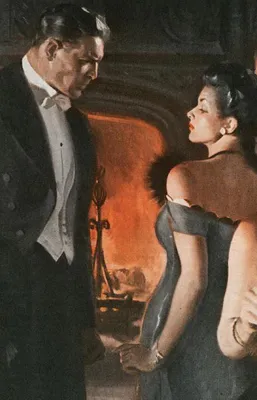

────────────────────────────────•⋅⊰༻༒︎༺⊱⋅•──────────────────────────────────
.
“Asli.”
A small, delicate hand waved through the trickling water of the creek that flowed and craved its own way through the forest, and parted the coverage of the leaves that shaded the two from the morning sun. Her hand twirled around in the clarity of it, the cold little droplets fell upon and quickly left from the girl's hand as she watched the ways it changed the light that shone upon it, how its movement changed the way it reflected, how it danced differently than simply an even flow. She had sat here for minutes, watching as it changed, yet with a slight weight that seemed to bear upon her shoulders.
“Hm?” Asli’s neck turned with a glance, sweat beaded off his forehead with the flick as he faced his sister, crouched down by the water. It was a quaint spot, a small reprieve, what both deemed as an escape from the burdens that stalked them in their waking hour, a small oasis where little pressure existed. One where usually a sister curled up beneath the shade of spruce and a brother struck the bark off one only a few paces over with one of the few things he had left from his birthland.
The sword in his hand fell to his side as he heaved, his breath heavy and low, the energy burned from him, likened to a candle melted down to its last bit of wax. “Oh? Finally speaking today, sister? I was scared you were too lost in that head of yours. Regale me, dear Hace, what is the matter?” A small smile fell upon his lips as he sheathed the sword at his waist.
“Why must you go?” Hace spoke, swiping a black curl from her eyes as her head shifted away from the flowing creek. There had been very few days where the two hadn’t been joined at the hip, yet it seemed as the days passed in but a blink and the year ran past them, these fleeting moments of peace in the woods grew less and less in frequency. And while she was always a girl of few words, she always wore a face that could say more than any syllable that came from her lips. Such was one who wore dejection, with eyes that peered toward his but didn’t hold it, and a mouth sat with lips that had entered into a slight frown, different from the bright smile she had always held.
“Why must I go? The same reason Mahzon stayed; I can’t lie in wait forever. I can’t stay here upon these lands and live off the spoils of the Baron ‘til I am decrepit.” Asli closed the distance between the two, placing himself upon a felled log that sat only mere feet away from where she was crouched. Asli’s eye fell down to his hand, tracing the thin band of gold inlaid with silver and a crimson-stained jewel in the center piece, the same on that his sister wore. It was a little memento of their brother, of the dynasty that now spilled their own kin's blood. “I guess I need to make something of myself. Something more than the boy walks in the shadow of the guards on patrol.”
“I suppose it is a better arrangement.”Hace stood as she spoke, patting the bottom of her skirt of the dirt she had tracked onto it when she stood. Soon, the spot beside her brother was filled, and her hands were sunk into her brother's satchel to retrieve the journal nestled within.
“Besides, I shan’t be gone forever. So don’t frown, Hace.” With a turn and cock of the head he flashed that same grin that in years past had been an infectious one to ignite her own.
“That’s the same thing Mahzon said.” Little had changed in the girl's face; the corner of her lips sank only lower as she stared out upon the creek aimlessly, almost looking through it as if she could see through the earth. A silence was born in the wake of her words. As if they were under the current of water, both held their breaths, their tongues tied with little clue of what to even mutter next. They sat like the air itself was solid, and they could do little to cut through it. Asli's mouth moved, opened, and closed as he fought to even find the words.
“Just take care of mother for me, won’t you?”
“He said that, too, Asli. He said that, too.”
Quiet. There was little of it to be found at the academy. Throughout this meager time within these walls of limestone and brick, there was but an absence of it, along every turn, from his lonely trip through the gates and orientation to the journey led by the quite wordy woman whose name he had lost through the stream of sounds that flowed from her lips with little reprieve. ‘Tis but a type of noise he had almost forgot, such was one brought forth by the will of man and their pomp and regality. Little of such was found in the Osterland, among the rolling hills where cattle fed and man marched, was a staunch silence that pervaded the fields, where but it was only broken by the rustling of wind ‘neath the pale blue sky and the trickling of water that was hidden within the forests that dotted the map. Yet, within this room of worn wooden furniture, sterile as he had been the first of the duo to be living in such quarters, there was that silence. Where he felt he could hear his own breathing, where there were no eyes, no other ears, simply only him and the small buzz of activity from beyond the room.
Asli basked in the sweet embrace of the quiet for but only a second, heaving the baggage that had turned his knuckles white onto the desk. Yet he was not the only one who would be dwelling in such an abode; beyond the door, stationed above it, was a placard that read but two names: his own and one of another. Roelo de Barbroeck was the name he had seen, and it was not one he could truthfully say he knew. The surname, however, rang the slightest of bells in his memory. It was ducal in nature, with enough prominence, he surmised, to even trickle down into the knowledge of the nephew of a lowly baron, who had absconded from his birth country to that of his mothers. And although a third of his life within this plane had been spent in the empire, the fineries of its politics were lost on him, yet still the tales of prince-electors in both the dark realm of intrigue and upon the field of battle were still heralded to him by his mother. And while his people, such tales of them had seemed so utterly foreign, so far and distant from what he had lived before upon these lands. Now he knew it was all the same. Rather than brothers who held the title of prince taking the other's lives in the haram, they held titles such as duke, or count, or whatever regal name they hold themself to under the broader position of prince-elector who slaughtered each other in the realm of public opinion during a Kur; a different system, but losses are still counted, and despot is still made. He could only ponder on how the boy would present, how deeply he would hold to the name that stood as more than simply himself, how much of it he would make a defining trait of his character. Asli once knew many men who clung to the prestige of their name, the grandeur that encompassed it, many of whom he held the displeasure of calling his brothers, yet all of whom he knew of as naught but pompous pretenders. And by God, he hoped his bunkmate was not one of these men.
His hands flicked tarnished iron clasps that held the case shut as he opened one of the only two bags he brought along. Since the move, he had rarely kept many effects in his possession; the fact that most of his items that stood in his room at Grünestal stood as a testament to such. From first glance, it was plain by nature, but only what could be seen was his assortment of clothes, shirts, and breeches of browns, whites, navys, and blacks laid stacked upon each other. Gone were his days wrapped in a kaftan of dark greens and reds with a kuşak upon his waist. Now he stood in full Ansbourg parade dress, which a shako on his head, where in other lands could sit a fez, which he soon placed beside his luggage on the table.
Asli soon moved to packing away clothes that covered the rest of the items he owned. It was not much to see: a small assortment of closed boxes, pages of letters he had yet to read from his family, one each from his mother and his sister, and the many people he had come to forge friendships with in the barony, yet still none from his brother. It was a letter he had long lost hope of receiving, and that if any of his own letters made it across the sea, there was but a slim chance there was even anyone was receiving them but the old staff who likely tossed it. His tan hand fondled with the edges of the letters, bound in a twine his mother wrapped upon it, and surprised him with the day before he had set off for the heartlands. Asli didn’t know if he could read them yet, didn’t know if he was ready to face the words of more people he had left behind yet again. He ruffled the top of the letters once more, almost 10 in count. The one he averted his gaze from the most was the only one written in a script different from that of the others, written in a tongue he hadn’t spoken, read, seen, or even thought since years long passed. With the quick pull open of a drawer and grasp of the letters within his hand, Asli quickly dropped them within. Such was reading for another day.
With that, he removed the last effects from the bottom of the luggage, closing it back and placing it up against the wall beside his desk. It was little that stood before him now, only a few unmarked black casings and small bags of trinkets, yet these were the few that never left his side. Beads of rich browns carved of dead desert trees that ended in a small jewel wrapped in silver fell upon his hand as Asli emptied the little bag. Alongside it sat what appeared to be a gilded book encased in iron with a glass on its front. It had been quite a bit since he last prayed. The trip to the academy from Osterland was a long one, traveling without reprieve until they touched down within the city limits, simply for him to be thrust into a ceremony that flashed past in him a blur. Hell, even before his arrival, most days it had been hard to keep a schedule without court Sözadam constant hustling. Yet, it was one of the many things he missed. He missed the great grandeur of the temples lined words of scripture and whose windows bore colors of reds, blues, greens, and yellows. He missed the feast brought before them every prayer in reverence of Alparslan and his nine faris. Laachtalian lacked it all but in its stead they stood before stones laden in ornaments, painted and prim, that told stories of the dead, not beatified. It was different, strange, a custom he was only able to grasp the fringes of. No matter. He had abandoned the ways of his birth quite yet.
Asli’s hands gripped the prayer beads between his fingers, his hands open in a cusp, as the small book sat in the middle. He didn’t need to read it, he didn’t need to search its pages for the verse he desired; he knew exactly what he desired to pray on. So in this small piece of quiet, away from it all, from his home, from his mother, his sister, his brother, he embraced in this short little time he was afforded.
“Asli.”
A small, delicate hand waved through the trickling water of the creek that flowed and craved its own way through the forest, and parted the coverage of the leaves that shaded the two from the morning sun. Her hand twirled around in the clarity of it, the cold little droplets fell upon and quickly left from the girl's hand as she watched the ways it changed the light that shone upon it, how its movement changed the way it reflected, how it danced differently than simply an even flow. She had sat here for minutes, watching as it changed, yet with a slight weight that seemed to bear upon her shoulders.
“Hm?” Asli’s neck turned with a glance, sweat beaded off his forehead with the flick as he faced his sister, crouched down by the water. It was a quaint spot, a small reprieve, what both deemed as an escape from the burdens that stalked them in their waking hour, a small oasis where little pressure existed. One where usually a sister curled up beneath the shade of spruce and a brother struck the bark off one only a few paces over with one of the few things he had left from his birthland.
The sword in his hand fell to his side as he heaved, his breath heavy and low, the energy burned from him, likened to a candle melted down to its last bit of wax. “Oh? Finally speaking today, sister? I was scared you were too lost in that head of yours. Regale me, dear Hace, what is the matter?” A small smile fell upon his lips as he sheathed the sword at his waist.
“Why must you go?” Hace spoke, swiping a black curl from her eyes as her head shifted away from the flowing creek. There had been very few days where the two hadn’t been joined at the hip, yet it seemed as the days passed in but a blink and the year ran past them, these fleeting moments of peace in the woods grew less and less in frequency. And while she was always a girl of few words, she always wore a face that could say more than any syllable that came from her lips. Such was one who wore dejection, with eyes that peered toward his but didn’t hold it, and a mouth sat with lips that had entered into a slight frown, different from the bright smile she had always held.
“Why must I go? The same reason Mahzon stayed; I can’t lie in wait forever. I can’t stay here upon these lands and live off the spoils of the Baron ‘til I am decrepit.” Asli closed the distance between the two, placing himself upon a felled log that sat only mere feet away from where she was crouched. Asli’s eye fell down to his hand, tracing the thin band of gold inlaid with silver and a crimson-stained jewel in the center piece, the same on that his sister wore. It was a little memento of their brother, of the dynasty that now spilled their own kin's blood. “I guess I need to make something of myself. Something more than the boy walks in the shadow of the guards on patrol.”
“I suppose it is a better arrangement.”Hace stood as she spoke, patting the bottom of her skirt of the dirt she had tracked onto it when she stood. Soon, the spot beside her brother was filled, and her hands were sunk into her brother's satchel to retrieve the journal nestled within.
“Besides, I shan’t be gone forever. So don’t frown, Hace.” With a turn and cock of the head he flashed that same grin that in years past had been an infectious one to ignite her own.
“That’s the same thing Mahzon said.” Little had changed in the girl's face; the corner of her lips sank only lower as she stared out upon the creek aimlessly, almost looking through it as if she could see through the earth. A silence was born in the wake of her words. As if they were under the current of water, both held their breaths, their tongues tied with little clue of what to even mutter next. They sat like the air itself was solid, and they could do little to cut through it. Asli's mouth moved, opened, and closed as he fought to even find the words.
“Just take care of mother for me, won’t you?”
“He said that, too, Asli. He said that, too.”
────────────•⋅⊰༻༒︎༺⊱⋅•────────────

────────────•⋅⊰༻༒︎༺⊱⋅•────────────
────────────•⋅⊰༻༒︎༺⊱⋅•────────────
Quiet. There was little of it to be found at the academy. Throughout this meager time within these walls of limestone and brick, there was but an absence of it, along every turn, from his lonely trip through the gates and orientation to the journey led by the quite wordy woman whose name he had lost through the stream of sounds that flowed from her lips with little reprieve. ‘Tis but a type of noise he had almost forgot, such was one brought forth by the will of man and their pomp and regality. Little of such was found in the Osterland, among the rolling hills where cattle fed and man marched, was a staunch silence that pervaded the fields, where but it was only broken by the rustling of wind ‘neath the pale blue sky and the trickling of water that was hidden within the forests that dotted the map. Yet, within this room of worn wooden furniture, sterile as he had been the first of the duo to be living in such quarters, there was that silence. Where he felt he could hear his own breathing, where there were no eyes, no other ears, simply only him and the small buzz of activity from beyond the room.
Asli basked in the sweet embrace of the quiet for but only a second, heaving the baggage that had turned his knuckles white onto the desk. Yet he was not the only one who would be dwelling in such an abode; beyond the door, stationed above it, was a placard that read but two names: his own and one of another. Roelo de Barbroeck was the name he had seen, and it was not one he could truthfully say he knew. The surname, however, rang the slightest of bells in his memory. It was ducal in nature, with enough prominence, he surmised, to even trickle down into the knowledge of the nephew of a lowly baron, who had absconded from his birth country to that of his mothers. And although a third of his life within this plane had been spent in the empire, the fineries of its politics were lost on him, yet still the tales of prince-electors in both the dark realm of intrigue and upon the field of battle were still heralded to him by his mother. And while his people, such tales of them had seemed so utterly foreign, so far and distant from what he had lived before upon these lands. Now he knew it was all the same. Rather than brothers who held the title of prince taking the other's lives in the haram, they held titles such as duke, or count, or whatever regal name they hold themself to under the broader position of prince-elector who slaughtered each other in the realm of public opinion during a Kur; a different system, but losses are still counted, and despot is still made. He could only ponder on how the boy would present, how deeply he would hold to the name that stood as more than simply himself, how much of it he would make a defining trait of his character. Asli once knew many men who clung to the prestige of their name, the grandeur that encompassed it, many of whom he held the displeasure of calling his brothers, yet all of whom he knew of as naught but pompous pretenders. And by God, he hoped his bunkmate was not one of these men.
His hands flicked tarnished iron clasps that held the case shut as he opened one of the only two bags he brought along. Since the move, he had rarely kept many effects in his possession; the fact that most of his items that stood in his room at Grünestal stood as a testament to such. From first glance, it was plain by nature, but only what could be seen was his assortment of clothes, shirts, and breeches of browns, whites, navys, and blacks laid stacked upon each other. Gone were his days wrapped in a kaftan of dark greens and reds with a kuşak upon his waist. Now he stood in full Ansbourg parade dress, which a shako on his head, where in other lands could sit a fez, which he soon placed beside his luggage on the table.
Asli soon moved to packing away clothes that covered the rest of the items he owned. It was not much to see: a small assortment of closed boxes, pages of letters he had yet to read from his family, one each from his mother and his sister, and the many people he had come to forge friendships with in the barony, yet still none from his brother. It was a letter he had long lost hope of receiving, and that if any of his own letters made it across the sea, there was but a slim chance there was even anyone was receiving them but the old staff who likely tossed it. His tan hand fondled with the edges of the letters, bound in a twine his mother wrapped upon it, and surprised him with the day before he had set off for the heartlands. Asli didn’t know if he could read them yet, didn’t know if he was ready to face the words of more people he had left behind yet again. He ruffled the top of the letters once more, almost 10 in count. The one he averted his gaze from the most was the only one written in a script different from that of the others, written in a tongue he hadn’t spoken, read, seen, or even thought since years long passed. With the quick pull open of a drawer and grasp of the letters within his hand, Asli quickly dropped them within. Such was reading for another day.
With that, he removed the last effects from the bottom of the luggage, closing it back and placing it up against the wall beside his desk. It was little that stood before him now, only a few unmarked black casings and small bags of trinkets, yet these were the few that never left his side. Beads of rich browns carved of dead desert trees that ended in a small jewel wrapped in silver fell upon his hand as Asli emptied the little bag. Alongside it sat what appeared to be a gilded book encased in iron with a glass on its front. It had been quite a bit since he last prayed. The trip to the academy from Osterland was a long one, traveling without reprieve until they touched down within the city limits, simply for him to be thrust into a ceremony that flashed past in him a blur. Hell, even before his arrival, most days it had been hard to keep a schedule without court Sözadam constant hustling. Yet, it was one of the many things he missed. He missed the great grandeur of the temples lined words of scripture and whose windows bore colors of reds, blues, greens, and yellows. He missed the feast brought before them every prayer in reverence of Alparslan and his nine faris. Laachtalian lacked it all but in its stead they stood before stones laden in ornaments, painted and prim, that told stories of the dead, not beatified. It was different, strange, a custom he was only able to grasp the fringes of. No matter. He had abandoned the ways of his birth quite yet.
Asli’s hands gripped the prayer beads between his fingers, his hands open in a cusp, as the small book sat in the middle. He didn’t need to read it, he didn’t need to search its pages for the verse he desired; he knew exactly what he desired to pray on. So in this small piece of quiet, away from it all, from his home, from his mother, his sister, his brother, he embraced in this short little time he was afforded.
────────────────────────────────•⋅⊰༻༒︎༺⊱⋅•──────────────────────────────────
2x Like
coGM
Tlaloc METAL FINGERS
Member
Seen
8 mos ago
ℜ𝔬𝔢𝔩𝔬 Ⅵ
────────────────────────────────•⋅⊰༻༒︎༺⊱⋅•──────────────────────────────────
Roelo loosened his grip on his luggage and paused outside of the door. From within, he could hear the faint rustle of fabric, the soft clunk of metal; sounds that indicated his bunkmate had already begun the process of unpacking. At a standstill, his eyes settled on the brass placard screwed into the wood before him. His name was there, just as expected — paired beneath the curlicue sprawl of another name he wasn’t sure how to pronounce.
Muruvvetoglu — a name, he recalled, that was of mid-eastern dynastic importance: though he wasn’t sure to what effect. It was a name that belonged to the Sultanate: a land beclothed in tülbend and kaftan, and clad in enameled zırh, saber abrandished. The mother language of the Sultanate, though deft and urbane upon the tongue of a native, was rendered cumbersome and disfigured by foreigners, and so such an un-Loðyrian name as Muruvvetoglu was not so easily indexed by Roelo. Nonetheless, he imagined, young Asli must be of some relative importance to find himself accepted into the prestigious Ansbourg Imperial Command Academy. He wondered about what kind of circumstances had led his bunkmate down the path to Ansbourg — perhaps he was a ward to a Laachtalian noble, issued to the Empire in diplomatic exchange, or a dignitary of the Sultan sent to tender relations with the Diet. These were questions that danced upon his mind, but he would not hazard to be so bold in burdening his new acquaintance with. Any kind of curiosity that Roelo had with the people he met was well-contained: he would be subtle in his questioning. He knew what it was like to be scrutinised by the curious; to be prodded and interrogated. He was keen not to brandish such behaviour upon others. And so, for a moment or three, Roelo did take pause at the door, to consider and prepare for this pivotal moot, for as soon as he entered, he would need to obscure his fascinations and play the part of a reasonable, inoffensive roommate. He wondered if his new acquaintance would allow him the same courtesies. While, to the best of Roelo’s knowledge, the Sultanate’s noblesse were hospitable enough — for he had heard tales of their hostmanship; generously bestowing food, drink, tobacco, and various other kindnesses to foreign dignitaries who visited their demesne — he wagered they would likely be less star-stricken than a Laachtalian in the presence of a de Barbroeck. This he was thankful for, for what ulterior motive might an outlander have to curry Roelo’s favour? While a few paranoid answers to this very question glanced his mind, he sought to banish them. If he could not, at least, find repose in his own quarters, he would surely lose his wits over the coming three years.
He opened the door.
There, fairly still, was Roelo’s roommate: for now, finished with his unpacking. He seemed entranced – eyes closed, spine straightened – before being roused from his reverie by Roelo’s arrival. Roelo saw the prayerbeads that drooped from Asli’s knuckles.
In Laachtalia, such theistic practices were considered esoteric to most – and even fearsomely preternatural to those of a superstitious disposition. Roelo sympathised that deity worship could, and likely would, be looked upon with waryness, at least among commonfolk. While most had grown skeptical to such histories, it was said that laymagic – or ‘folk magic’ – was once as commonly employed in Laachtalia as a cobbler’s awl, or a smith’s hammer. Thus, gnostic religion was, to some, a frowned upon practice: for it might be conflated with witchcraft. To any educated man or woman, this thinking would be absurd; Roelo knew prayerbeads were not an instrument of occultism, but totems of faith no different to the sacred grieving trees scattered most commonly throughout the northern counties of Laachtalia. Thankfully, while great swathes of the Empire lacked such tact in regard to foreign customs, Asli was unlikely to encounter such brazen ignorances within the academy. Generally, among gentry, it was considered both uncouth and foolish to speak ill of unfamiliar culture, and Roelo was certain that the lion’s share of Ansbourg’s new arrivals would adhere to this principle. After all, to the Muruvvetoglu, the Laachtalian manner of reverence was sure to be a strange one. It was most common in these lands to look upon heroic ancestors with the same kind of veneration that foreigners reserved for their saints and awliya. Roelo, for one, felt no such fidelity – perhaps, in part, due to his distaste for his own father, who, no doubt, in centuries to come, would be hallowed for his many triumphs.
“Would it be disrespectful if I kept my boots on?,” was the cleverest greeting he could offer in reference to the supplicant; a greeting he emphasised most casually. He regretted such a dry comment as soon as it left his lips.
“It is of little matter to me,” the supplicant replied, tilting back his head in Roelo’s direction. “Your name is on the board outside as well.”
“Still seems only right to offer you it first-hand,” said the de Barbroeck, taking a moment to regard his new lodgemate before retrieving his luggage from behind the door. “Roelo.”
“The sentiment is indeed appreciated,” replied Muruvvetoglu, swiftly returning his prayerbeads to the black bag on the table. “Yet, it would be a farce to treat a dorm with the reverence of a temple.” He extended a hand to Roelo. “Asli.”
Roelo did not enjoy introductions, but as a Duke’s son, he’d made thousands. He quickly, confidently received the handshake with politesse. He listened attentively to Asli’s voice as he spoke; an accent was there, but it did not seem particularly thick. He spoke the imperial tongue very well. Though he had promised himself not to prod or pester his new roommate, his curiosity was piqued. He was tired indeed from the politics of Laachtalia; but horizons afar were of great interest to him. He imagined the life of a lordling in the Sultanate to be a languid one – of poetry and wine, of long afternoons in silken parlours, of sweet incense and perfume, of cardamom tea and hookah molasses. He imagined the domed buildings, cut from sandstone and marble, and the fragrant, sun-drenched bazaars, far more desiccated than even such a searing Laachtalian day as this. These were fantasies that he envied; though fantasies, not truisms, to be sure. These were musings drawn from the euphemised second-hand tales of sailors and travelers who made passage through in Loðyria; tales that Roelo would pay great attention to. Throughout his mid-teens he had made quite a habit of vanishing into the of annals of île Monding, far from the encroaching eyes of his father, to hear tales of distant lands in taverns and taphouses from the commonfolk. He knew they were embellished, but nonetheless did they inspire a craving for adventure in his heart. Alas, unlike the sea-beaten, bronze-tanned raconteurs of île Monding, Roelo was not born to be a sailor or tradesman. Perhaps, however, he could still see the world and its marvels in service of the Empire. While his mind trotted the globe, his body shifted luggage in through the doorway, pushing it towards the bunk. Decidedly, he would organise it later, after the day’s classes had ended. It was far too hot to fumble with it all now.
“Have you travelled far?,” he asked neutrally, knocking back the clasps on one of his bags, searching for clothing suitable for the classroom.
“I have. The Osterlind countryside isn’t the most connected of regions.”
“Been to the heartlands before?,” Roelo returned, carrying his new trappings with him behind the folding screen in the corner of the room, and beginning the process of changing out of his ceremonial garb.
“This is all new,” said the voice of Asli from the other side of the screen. “Once – when I was very young – yet since then I have rarely crossed the borders into a city like this.”
Roelo wrinkled his nose. He’d hoped to glean more about his roommate’s origin without overtly asking. “I recognise your family name, I think,” he pivoted. “Didn’t peg the Sultanate for producing imperial officers”
“You do, huh?,” Asli replied with mild intrigue. “But anyway, there is much in the way of movement in this realm in the countryside, with a foreign-held title of little worth. Nowadays at least. Regardless, the sword has always been my calling. And it is for my mother’s land I will wield it.”
Interesting; Roelo had never met a foreigner so willing to shed blood for Laachtalia, never mind a would-be janissary. “Perhaps some day soon you’ll test it against mine.” He emerged a few moments later, garbed in the class dress; gauntlets tucked into epaulets. For now, he had exhausted this topic – lest he risk the possibility of uningratiating himself. “What do you make of our tutor?”
“I shall await the day,” Asli said, turning his head to the emerging Roelo. “As for the tutor? I cannot say I am very impressed. His temper is certainly nothing to sing praises about. I have seen men much older, and much weaker, hold more jovial expressions than I have seen from him so far.”
“I suppose we will soon find out, but I share your concerns,” Roelo nodded. Briskly, he took a seat at his desk and unlatched a smaller bag bundled with his luggage. Soon, the clocktower bell would chime for three quarters of an hour, instructing students to begin their exodus to class – not enough time to venture to the mess hall. He’d settle for his own dry rations.
“Glad to hear,” Asli said, before returning his attention to his own unpacking. He seemed a steady, mild-mannered young man. Inoffensive. Roelo was content: at least, for now.
Delicately, Roelo prepared his meager feast. From a bundle of wax cloth came cured sausage coins; from a small glass jar, fermented radish. With them, he paired small, black bread biscuits — dense, bite-sized, and laced with anise— chewing thoughtfully as he glanced out the window. He nearly offered his new companion a serving of the snack, but quickly bit his tongue; recalling the cultural differences in meat and its various preparations. He thanked his conscience for evading a faux pas, and allowed his mind to drift to his next introduction: that of his teacher.
Before long, the bell beckoned, and with it, the first moot with the darling Herr Schöst.
Muruvvetoglu — a name, he recalled, that was of mid-eastern dynastic importance: though he wasn’t sure to what effect. It was a name that belonged to the Sultanate: a land beclothed in tülbend and kaftan, and clad in enameled zırh, saber abrandished. The mother language of the Sultanate, though deft and urbane upon the tongue of a native, was rendered cumbersome and disfigured by foreigners, and so such an un-Loðyrian name as Muruvvetoglu was not so easily indexed by Roelo. Nonetheless, he imagined, young Asli must be of some relative importance to find himself accepted into the prestigious Ansbourg Imperial Command Academy. He wondered about what kind of circumstances had led his bunkmate down the path to Ansbourg — perhaps he was a ward to a Laachtalian noble, issued to the Empire in diplomatic exchange, or a dignitary of the Sultan sent to tender relations with the Diet. These were questions that danced upon his mind, but he would not hazard to be so bold in burdening his new acquaintance with. Any kind of curiosity that Roelo had with the people he met was well-contained: he would be subtle in his questioning. He knew what it was like to be scrutinised by the curious; to be prodded and interrogated. He was keen not to brandish such behaviour upon others. And so, for a moment or three, Roelo did take pause at the door, to consider and prepare for this pivotal moot, for as soon as he entered, he would need to obscure his fascinations and play the part of a reasonable, inoffensive roommate. He wondered if his new acquaintance would allow him the same courtesies. While, to the best of Roelo’s knowledge, the Sultanate’s noblesse were hospitable enough — for he had heard tales of their hostmanship; generously bestowing food, drink, tobacco, and various other kindnesses to foreign dignitaries who visited their demesne — he wagered they would likely be less star-stricken than a Laachtalian in the presence of a de Barbroeck. This he was thankful for, for what ulterior motive might an outlander have to curry Roelo’s favour? While a few paranoid answers to this very question glanced his mind, he sought to banish them. If he could not, at least, find repose in his own quarters, he would surely lose his wits over the coming three years.
He opened the door.
There, fairly still, was Roelo’s roommate: for now, finished with his unpacking. He seemed entranced – eyes closed, spine straightened – before being roused from his reverie by Roelo’s arrival. Roelo saw the prayerbeads that drooped from Asli’s knuckles.
In Laachtalia, such theistic practices were considered esoteric to most – and even fearsomely preternatural to those of a superstitious disposition. Roelo sympathised that deity worship could, and likely would, be looked upon with waryness, at least among commonfolk. While most had grown skeptical to such histories, it was said that laymagic – or ‘folk magic’ – was once as commonly employed in Laachtalia as a cobbler’s awl, or a smith’s hammer. Thus, gnostic religion was, to some, a frowned upon practice: for it might be conflated with witchcraft. To any educated man or woman, this thinking would be absurd; Roelo knew prayerbeads were not an instrument of occultism, but totems of faith no different to the sacred grieving trees scattered most commonly throughout the northern counties of Laachtalia. Thankfully, while great swathes of the Empire lacked such tact in regard to foreign customs, Asli was unlikely to encounter such brazen ignorances within the academy. Generally, among gentry, it was considered both uncouth and foolish to speak ill of unfamiliar culture, and Roelo was certain that the lion’s share of Ansbourg’s new arrivals would adhere to this principle. After all, to the Muruvvetoglu, the Laachtalian manner of reverence was sure to be a strange one. It was most common in these lands to look upon heroic ancestors with the same kind of veneration that foreigners reserved for their saints and awliya. Roelo, for one, felt no such fidelity – perhaps, in part, due to his distaste for his own father, who, no doubt, in centuries to come, would be hallowed for his many triumphs.
“Would it be disrespectful if I kept my boots on?,” was the cleverest greeting he could offer in reference to the supplicant; a greeting he emphasised most casually. He regretted such a dry comment as soon as it left his lips.
“It is of little matter to me,” the supplicant replied, tilting back his head in Roelo’s direction. “Your name is on the board outside as well.”
“Still seems only right to offer you it first-hand,” said the de Barbroeck, taking a moment to regard his new lodgemate before retrieving his luggage from behind the door. “Roelo.”
“The sentiment is indeed appreciated,” replied Muruvvetoglu, swiftly returning his prayerbeads to the black bag on the table. “Yet, it would be a farce to treat a dorm with the reverence of a temple.” He extended a hand to Roelo. “Asli.”
Roelo did not enjoy introductions, but as a Duke’s son, he’d made thousands. He quickly, confidently received the handshake with politesse. He listened attentively to Asli’s voice as he spoke; an accent was there, but it did not seem particularly thick. He spoke the imperial tongue very well. Though he had promised himself not to prod or pester his new roommate, his curiosity was piqued. He was tired indeed from the politics of Laachtalia; but horizons afar were of great interest to him. He imagined the life of a lordling in the Sultanate to be a languid one – of poetry and wine, of long afternoons in silken parlours, of sweet incense and perfume, of cardamom tea and hookah molasses. He imagined the domed buildings, cut from sandstone and marble, and the fragrant, sun-drenched bazaars, far more desiccated than even such a searing Laachtalian day as this. These were fantasies that he envied; though fantasies, not truisms, to be sure. These were musings drawn from the euphemised second-hand tales of sailors and travelers who made passage through in Loðyria; tales that Roelo would pay great attention to. Throughout his mid-teens he had made quite a habit of vanishing into the of annals of île Monding, far from the encroaching eyes of his father, to hear tales of distant lands in taverns and taphouses from the commonfolk. He knew they were embellished, but nonetheless did they inspire a craving for adventure in his heart. Alas, unlike the sea-beaten, bronze-tanned raconteurs of île Monding, Roelo was not born to be a sailor or tradesman. Perhaps, however, he could still see the world and its marvels in service of the Empire. While his mind trotted the globe, his body shifted luggage in through the doorway, pushing it towards the bunk. Decidedly, he would organise it later, after the day’s classes had ended. It was far too hot to fumble with it all now.
“Have you travelled far?,” he asked neutrally, knocking back the clasps on one of his bags, searching for clothing suitable for the classroom.
“I have. The Osterlind countryside isn’t the most connected of regions.”
“Been to the heartlands before?,” Roelo returned, carrying his new trappings with him behind the folding screen in the corner of the room, and beginning the process of changing out of his ceremonial garb.
“This is all new,” said the voice of Asli from the other side of the screen. “Once – when I was very young – yet since then I have rarely crossed the borders into a city like this.”
Roelo wrinkled his nose. He’d hoped to glean more about his roommate’s origin without overtly asking. “I recognise your family name, I think,” he pivoted. “Didn’t peg the Sultanate for producing imperial officers”
“You do, huh?,” Asli replied with mild intrigue. “But anyway, there is much in the way of movement in this realm in the countryside, with a foreign-held title of little worth. Nowadays at least. Regardless, the sword has always been my calling. And it is for my mother’s land I will wield it.”
Interesting; Roelo had never met a foreigner so willing to shed blood for Laachtalia, never mind a would-be janissary. “Perhaps some day soon you’ll test it against mine.” He emerged a few moments later, garbed in the class dress; gauntlets tucked into epaulets. For now, he had exhausted this topic – lest he risk the possibility of uningratiating himself. “What do you make of our tutor?”
“I shall await the day,” Asli said, turning his head to the emerging Roelo. “As for the tutor? I cannot say I am very impressed. His temper is certainly nothing to sing praises about. I have seen men much older, and much weaker, hold more jovial expressions than I have seen from him so far.”
“I suppose we will soon find out, but I share your concerns,” Roelo nodded. Briskly, he took a seat at his desk and unlatched a smaller bag bundled with his luggage. Soon, the clocktower bell would chime for three quarters of an hour, instructing students to begin their exodus to class – not enough time to venture to the mess hall. He’d settle for his own dry rations.
“Glad to hear,” Asli said, before returning his attention to his own unpacking. He seemed a steady, mild-mannered young man. Inoffensive. Roelo was content: at least, for now.
Delicately, Roelo prepared his meager feast. From a bundle of wax cloth came cured sausage coins; from a small glass jar, fermented radish. With them, he paired small, black bread biscuits — dense, bite-sized, and laced with anise— chewing thoughtfully as he glanced out the window. He nearly offered his new companion a serving of the snack, but quickly bit his tongue; recalling the cultural differences in meat and its various preparations. He thanked his conscience for evading a faux pas, and allowed his mind to drift to his next introduction: that of his teacher.
Before long, the bell beckoned, and with it, the first moot with the darling Herr Schöst.
────────────────────────────────•⋅⊰༻༒︎༺⊱⋅•──────────────────────────────────
2x Like
GM
TokyoPewPew rpguilder (derogatory)
Member
Seen
21 min ago
────────────────────────────────•⋅⊰༻༒︎༺⊱⋅•──────────────────────────────────
𝕬fter much deliberating and indecision, Hloþhilde stayed her hand: choosing, in the end, to eat nothing at all, and to attend her first class weary and famished. For what felt like an hour had she wavered—measuring what she craved versus what would molder and stale the soonest, price versus sentimental value, the momentousness of the occasion—but time and again all of these had paled against the principal measure, that of the treasures' scarcity. It may seem a strange thing to say about a trove which overflowed from desk surface and from suitcase, stacked tin over tin and stowed in every furtive place her luggage afforded; until one remembers how long these victuals—these keepsakes—needed to last. At least until the next equinox but likelier until Midwinter, when the academy might send the cadets away to their homes for revelry and giftgiving, or else invite the families to a banquet therefor. Until, reunited over spiced wine and yeastcakes, the one sister would horrify the other with tales of what the local shops dared to call authentic Marsènnish provisions, traditional Marsènnish pastries; and the latter, appalled, would assure the first that she had filled two boxes from the markets of their girlhood, packed them tight, padded them for the journey the way an oyster cushions its pearls. But if Hloþhilde's stores were to survive until then she would have to subside on crumbs; mete out carefully those precious morsels. Savor. Ration.
Checking her pocket watch, she startled herself to haste. She clicked shut the cover, a scratched horn jaw biting down on scratched glass tongue; shoved the old, cheap thing down into its new abode in the lowest and leftmost flap pocket of her dress tunic; gathered up her messenger satchel, every stiff, black compartment already brimming with the requisite materials. Enjoying the color, the touch of elegance which a few wine bottles, artfully arranged, brought to the peeling windowsill, she had otherwise stashed away already the remainder of her treasures, so out of the room she awayed, and down the hall, and down the stairs, and out into the southern quadrangle, where no one awaited her but the sun; the stiff, languid breeze.
This perplexed and disheartened the girl. When she had lain in bed staring up at the vaulted ceiling of her bedroom, imagining this moment, the moment creeping nearer with every hour, she had always conjured for her phantom a companion or three, walking all abreast between the birches and the parapets, giggling about this or that in their shivering, cap-clutching leisure. Featureless, save for their hair, wind-tossed; formless behind their immaculate tunics and billowing breeches and the click-clacketing of their hobnailed feet, yet smiling, striding, resplendent. Their uniforms as grey as the flagstones as the stormcloud-shaded sky, yet the figures themselves as golden as autumn's sheddings, which skittered the same walkways in swirls. (In Hloþhilde's daydreams it was always autumn.) So whither Agalind? Whither Mina? Whither their newfound retinue of doting suitors? Elsewhere. Nowhere. Gone on without her or if not that, dallying back at their rooms, contented with the company so gathered.
The girl found the pump by the barracks' eastmost corner; rolled her sleeves, that she would not darken them as she dabbed her nape, baptized her hands, cupped the cold, sweet, stone-drawn waters to her lips, splashed them to her brow. Across the quadrangle did the din of a crowd still travel, as a hundred cadets' thousand parents and cousins and siblings meandered their way to the mock-barbican, admiring the architecture as they went, chitchatting over pipes and cigars, behind the silk fans' flutter, beneath the shaded splay of their parasols. But uninterested was she in the wish-her-wells of strangers, so Hloþhilde kept to her side of the lawn, journeying north first, then along the inner gatehouse, averting the crowds, their pleasantries. Once more the afternoon heat dewed in her crevices. She wondered if her classmates already despised her.
Checking her pocket watch, she startled herself to haste. She clicked shut the cover, a scratched horn jaw biting down on scratched glass tongue; shoved the old, cheap thing down into its new abode in the lowest and leftmost flap pocket of her dress tunic; gathered up her messenger satchel, every stiff, black compartment already brimming with the requisite materials. Enjoying the color, the touch of elegance which a few wine bottles, artfully arranged, brought to the peeling windowsill, she had otherwise stashed away already the remainder of her treasures, so out of the room she awayed, and down the hall, and down the stairs, and out into the southern quadrangle, where no one awaited her but the sun; the stiff, languid breeze.
This perplexed and disheartened the girl. When she had lain in bed staring up at the vaulted ceiling of her bedroom, imagining this moment, the moment creeping nearer with every hour, she had always conjured for her phantom a companion or three, walking all abreast between the birches and the parapets, giggling about this or that in their shivering, cap-clutching leisure. Featureless, save for their hair, wind-tossed; formless behind their immaculate tunics and billowing breeches and the click-clacketing of their hobnailed feet, yet smiling, striding, resplendent. Their uniforms as grey as the flagstones as the stormcloud-shaded sky, yet the figures themselves as golden as autumn's sheddings, which skittered the same walkways in swirls. (In Hloþhilde's daydreams it was always autumn.) So whither Agalind? Whither Mina? Whither their newfound retinue of doting suitors? Elsewhere. Nowhere. Gone on without her or if not that, dallying back at their rooms, contented with the company so gathered.
The girl found the pump by the barracks' eastmost corner; rolled her sleeves, that she would not darken them as she dabbed her nape, baptized her hands, cupped the cold, sweet, stone-drawn waters to her lips, splashed them to her brow. Across the quadrangle did the din of a crowd still travel, as a hundred cadets' thousand parents and cousins and siblings meandered their way to the mock-barbican, admiring the architecture as they went, chitchatting over pipes and cigars, behind the silk fans' flutter, beneath the shaded splay of their parasols. But uninterested was she in the wish-her-wells of strangers, so Hloþhilde kept to her side of the lawn, journeying north first, then along the inner gatehouse, averting the crowds, their pleasantries. Once more the afternoon heat dewed in her crevices. She wondered if her classmates already despised her.
────────────────────────────────•⋅⊰༻༒︎༺⊱⋅•──────────────────────────────────
1x Like
© 2007-2026