Full Name: Mustafa bin Mahmud
Nicknames: Onion-head, the foreign roach, the Grand Beylerbey Mustafa the Reformer.
Gender: Male
Age: 20
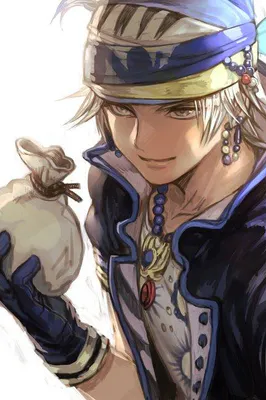
Appearance: Mustafa stands at an average 5’9,” with a skinny build that, while not dire enough to draw comparisons to a thimble, show that his focus lay first and foremost in the field of scholastics. Among the subjects of the empire, he is easily identifiable as a “recent acquisition” of the Regheim Empire. First off, he has olive skin, which makes him stick out like a sore thumb when he is anywhere near the capital. Of course, he could simply pass for a hard working peasant—were it not for his clothing. An enormous white turban befitting of his status, dark sleeveless coat, white harem pants, and an orange leather button-up shirt underneath. Truly, he could not make more of an active effort to stand out if he tried. Though willing to conform with imperial standard clothing, the turban always stays.
Personality:
Prideful, yet stern, Mustafa is a man who lives for his work to his own detriment. He is of a keen mind who always seeks to improve, alter, reform—no matter how small, he believes that a people should always strive towards progress. To that end, he can constantly be found with a book in hand for a variety of subjects, politics, history, and military strategy, even. Responsibility was thrust upon him from a young age and he always strived to be the best man to fulfill it. Consequently, he is not the most gregarious. He is serious, sarcastic, and tolerant of only so much incompetence before he becomes irate. Heads have rolled as a result. Not many, but they have. In spite of that, he is seen as an able leader and strict, but fair authority figure. His people love him and his subjects respect him. He knows his value and all who know him do as well, a pragmatic man yet not one who would ignore the needs of his people.
Amidst uncertain times where lords are foaming at the mouth to gain independence, his strength as a vassal lies in his loyalty above all else. While he would never go so far as to abandon his culture entirely, he went through great lengths to integrate his people to the standard of the empire. The resources his Beylerbelik received from the empire, along with the greater stability and wonderful stories they brought with them. Though his culture makes him foreign to most of the empire’s subjects, he has made it his duty to have his people—the Aydınlık—be recognized as worthy of the empire’s splendor. Though they may scoff at his ways, he is equipped with a sharp tongue and a knack for subtlety, two skills that will serve both him and the empress quite well as they change the tide of their collapsing empire.
Biography:
Mustafa was born to a family who worshipped Taşınmaz Taş, a god whose followers preached moderation, fertility, veneration of one’s elders, and the strict maintenance of the social hierarchy. As such, it was allowed—encouraged, even—for noble worshippers to have at least four wives and plenty of children from which to choose a worthy heir. Occasionally, however, this led to many conflicts in between wives. All of them were equal, so all vied for their children to inherit their father’s lands, no matter the cost.
Mustafa was the tenth of Mahmud’s twelve sons, a lecherous, irresponsible Beylerbey of Konya who only succeeded his father due to being the only child he had had due to a marked lack of virility and early death. He took as many wives as the faith legally allowed and sired more than a handful of children out of wedlock. He was known to be self-interested and ignoble, having never been groomed into a proper heir on account of his father’s early demise, creating the craven who the Regheim Empire was able to conquer without a fight, much to the outrage of the Andurdur Sultanate. Any titles held within the land was the property of the Sultan! To surrender one and continue as ruler on top of that was both theft and betrayal of the highest magnitude. And yet, at the time, there was nothing to be done about the traitor, for the storm of Regheim was unstoppable.
He was neither a true ruler, nor father, indulging in the pleasures of nobility than the responsibility of rule. It was assumed that, with his lack of chosen heir, it would default to his eldest son, Mehmed, who was a beloved figure for being the only one of Mahmud’s children capable of compensating for his father’s irresponsibility at court. As such, Mustafa was always in the background, left to his studies with the support of various court tutors, both local and from Regheim to assure the leaders of their newly acquired lands were taught in accordance with the empire’s values. Throughout this, he was pushed by his mother, Malhun, a strict and demanding woman who pushed him to make himself known. Though mocked as an unapproachable, condescending, iceberg of a woman, there was no doubting she wanted what was best for her child.
He was known to all who knew of him as a young talent, committed to perfecting any spell that was taught to him, reading about any topic that would further his talent as a ruler, and was known for being profound, though simple, poet. However, he never appeared to have any serious chance of inheriting considering his youth—and never truly wanted it, frankly. Until in but a week, Mahmud died after indulging in one of his many sinful glasses of wine. At the dinner table, he was noted to have suddenly paused, bulged his eyes, then fell flat onto the floor without a pulse. The wine examined and, very quickly, they realized that it had been poisoned
The court was shaken, rumors abound about the culprit of the obvious assassination. It was commonly agreed upon—silently, of course—that Mehmed had enough of his father’s debauchery and finally struck him down so that he would be able to set their lands upon the proper course, which admittedly, no one was opposed to. As such, life went on as normal after an initial fright, with the court quite optimistic about their new ruler’s potential.
Until he was found with a knife in his back only a week later.
This caused scandal among the palace inhabitants and fear within the wives. Who was behind all of this? What if their sons were attacked next? What if they were attacked next? Within no time at all, it was all out war between wives and mistresses alike. They applied the full force of the connections they had made to capitalize on the silent succession war that had broken out, spiraling the realm into a state of instability.
As one could imagine, this instilled unbelievable paranoia into the young Mustafa. While intelligent, he was markedly lacking in social connections due to his intense focus on scholastics—he never wanted to rule in the first place, what use could connections possibly do for him? Fortunately for him, at the age of thirteen, he was still malleable enough to grow through this. Though awkward in his attempts at first, he slowly began to amass connections around the palace. It was a simple, yet incredibly important process. Starting conversations with the nobles on matters of politics, lavishing praise and extra pay the treasury upon guards and soldiers of note—only to those who truly deserved it, of course, indiscriminate praise was no praise at all—and even speaking to the servants, for additional practice if nothing else.
All the while he expressed the utmost caution. Any food he ate went through a food taster, about four of them dying due to this. He was incredibly cautious, always overlooking his shoulders for potential assailants and sleeping with one eye open to capture any murderers with a well placed spell. Five men were captured and beheaded for his diligence. And throughout all of this, no matter how frightened he was on the inside, he maintained an aura of calm nobility, earning him the respect of those who saw him as a weak bookworm who was bound to die sooner than later.
But he didn’t. And all attempts to snuff out his flame made it burn more furiously. Soon, there were only four sons left, not counting Mustafa. Mahmud II, the fourth son, who took the reins despite suffering from a dire mental disability which made him act more akin to a child, despite being twenty five years old. It was the consensus that his mother was attempting to take the reins for herself. This did not cause great scandal, however, it was agreed that he would be removed in due time, perhaps in a week, regardless of what his fidgety mother wished. The next was Osman, the fifth son, known for his penchant for combat that garnered him the admiration of the soldiers. He was lauded as a dueling genius who would doubtlessly become a grand conqueror. The next was the seventh son, Kanuni, who was lauded as a gregarious, ambitious individual who was surrounded by rumors of powerlust. And the last one was Abbas, the eleventh son, a shy little boy of only nine years.
To put a long story short, Mustafa needed them all out of his way and fast. After a year of constant assassination attempts, Mustafa was now a fourteen year old who understood that, if he valued his life, he would have to take power. In fact, he was starting to believe that he deserved it, that his constant survival was proof that he was the only one fit to inherit the Beylerbelik. The time for his offense was now and it would be as swift as it was decisive.
But he was subtle about it. At first, he rallied together with Osman, claiming that he believed in his right to rule as the strongest of the sons. Swayed by his praise, the two of them rallied the guards who admired them both and stormed into the throne room, where Mahmud II (or his mother, rather) was discussing policy with one of the court nobles. Mustafa explained, in no uncertain terms, that his brother, though an innocent man, was simply not fit to rule and, he emphasized, they would not allow his mother to play them for fools and seize power for herself. She would leave, immediately, with Mahmud II abdicating to Osman effective immediately or face beheading. After initial protests, calling the lot of them traitors to her son’s rightful rule, she broke down in tears and forced her son to relinquish his power, leaving in exile while her son remained in the care of the court attendants. One brother down without a hint of blood on his hands. If only the next step could be so clean.
With the help of a court noble, Ahmed, who he befriended over a mutual love of poetry, he arranged an assassination. During Osman’s daily ride through the city, he was shot down by a group of his bandits who killed him and feigned attempts at shooting the guards before scurrying off. This caused an uproar similar to the first and second killings. For a young man of Osman’s status—his potential—was enough to thrust the court into an uproar, with the obvious suspicion falling on Kanuni.
Before he could use his silver tongue to calm the palace down, Mustafa rallied the soldiers yet again to execute the man who had taken his noble brother away. In light of his role in putting Osman into power in the first place, few questioned his potential culpability at the time. Kanuni certainly would have, had he not been stabbed and beheaded before it was possible. His middle aged mother was taken from the court in tears and made to leave, while Osman’s was allowed a more lavish stay away from the palace in a rather expensive villa while she mourned her own loss.
And so, Mustafa was the Beylerbey and fashioned himself a grand turban to signify his newfound status. But there was one final concern he would have to contend with: Abbas. His mother was still in the palace after all this time. If that was not a statement of intent, nothing was. After all this time, she was holding out hope. But her son was only a boy, not known for being particularly talented. Innocent, like Mahmud II. If allowed to grow and rally support of his known, as he himself had, he could be a problem. He had gotten along well with him, though they were hardly close considering the circumstances.
He went to his mother’s chambers to have a word with her, only to be informed she was enjoying a lavish stay at a bathhouse by a patrolling guard. Mustafa elected to wait for her in her room, noticing that her closet had been left open. He rolled his eyes. Had she been taking from the treasury to buy lavish new clothing? Such a misuse of funds simply could not do. He looked through the dresses, feeling the fabric her newfound status had afforded her. When he had gone through the older clothing, the robes she had donned before, particularly one in the back away somewhat blocked by the others, he felt something hard. As he poked at it with a finger, he swore that he felt something swishing about. Had she bought a new perfume as well?
Curiously, he pulled it out to reveal a vial of a clear liquid with a smell he swore stabbed straight into the bottom of his eyes. When he snuck out to ask the court Kutsal Adam, their priest for the worship of Taşınmaz Taş, the learned man remarked in shock that this was poison they identified in the food Mahmud had eaten initially. For the first time, the normally reserved Mustafa looked horrified. And when he went to his room that day, he quietly sobbed for the first time. All that death. The blood on his hands. She had set that all into motion? She manipulated all of them? The sadness turned to rage and he thrashed about his room, leaving the once majestic chamber in a state of disarray. When concerned palace officials questioned him, he half honestly said:
“When I think of all the good lives lost in such petty squabbling, how could I not be consumed by my own anger?”
He had made his decision on Abbas. His mother. And Malhun. She died in the same way Mahmud did, eyes bulged and face to the floor during dinner. He immediately sent for Abbas and his mother to come to the throne room. He explained to them, in no uncertain terms, that for the sake of stopping this bloodshed, he would punish neither her nor her soon for the vast sin that they had committed. Though fervently denying any involvement, he would hear none of it and laid out his terms. While she would have to leave, Abbas would stay under his tutelage and learn from him such that he could have a reliable partner to run the Beylerbelik in due time. She, on the other hand, would be forced to leave to a home close to the palace. Seeing a clear generosity in what could have been a brutal execution sentence, she accepted, glad that, if nothing else, her son would have a modicum of the influence she had wanted for him.
With that, the Mahmud Beylerbelik Succession War had drawn to a close. 9 sons dead, 3 alive. By the end, Mustafa could only question the validity of his faith. The god they worshipped was unique in that he explicitly endorsed the polyamorous arrangement that resulted in this. If such a god did not inherently see the folly behind his message to be fruitful in such a way, then he was a God clearly not worth following. That was when he remembered the god of the Regheim Empire, the same empire that had kept the order and relief to their people while the succession crisis thrusted their lands into unrest. Had it not been for them, his life would look quite different. With that in mind, he knew that it was time for massive reforms and began to worship the god Morgandr, for if that was the god of the empire that had served him so well, then that would have to be his own god as well.
But he had to prove himself first and foremost to the people before any progress could be made. He began by instituting massive relief from the treasury and lowering the taxes as much as was feasible. And then, in an unprecedented move, he allowed the peasants most afflicted by the turmoil, that is, the famine, shattered economy, and the foolish succession war on top of that, to openly air their grievances one by one. He faced every single insult with a straight face and allowed them to leave while he bowed and asked for their forgiveness, unheard of considering the divine blessings bestowed upon the rulers who followed the faith and the quiet suffering the population was meant to endure for their superiors. Yet, he humbled himself and asked for their patience as he brought stability to the land.
To the great protests of the Kutsal Adams, he confiscated the hefty donations made to them over the years and put them into the relief effort, all the while passing programs which allowed peasants to send their teenage children or young adults to be mentored in a trade by various craftsmen of the Beylerbelik. Those who were once destined to be farmers were saved from their, at the moment, nearly impossible careers to aid in the creation of trade goods they could sell to other lords in the empire in exchange for whatever scraps of food they could muster. The goods were amateur, but plentiful, meaning that citizens of less harshly affected regions would be happy to pay for the affordable baubles they produced. Their crudeness was seen as “appealingly foreign” by the native empire subjects.
All the while preachers and nobles alike were outraged by the social upheaval. But now that the peasants knew how good things could be, they questioned and questioned. Why should they be relegated to mere farmers? Why could they not aspire for more? Was a god who would relegate them to such a fate worth following at all? This could not have possibly gone better. With the people on his side, Mustafa publicly renounced Taşınmaz Taş as a worthless god who had left them all to die when the empire and Morgandr had provided so much progress to them.
The peasants, fervent with the passion they were told for so long to snuff out, cheered him on and in the coming months would be so receptive to holy men of Regheim that any nobles who dared denounced Morgandr would fear for their lives. If they did not convert, they certainly did not come out in support of their God as their home was made into a heathenland. With the introduction of this new god, the general populace became interested in the culture of Regheim and integrated it into aspects of it into their own, with some expressing interest in learning the language as well.
By that time, Mustafa received an epithet, “the Reformer,” and was spoken of with awe by all who knew of him. His acclaim stretched so far for creating a haven amongst the chaos that he was ordered to come to the capital and assist with the disaster that had befallen the lands. Leaving the Beylerbelik in the hands of the now fifteen year old and able Abbas, whose mother Mustafa had “forgiven” and allowed to return upon his leave, he set out to save the empire from certain destruction.
 Member

 Yankee,
 Not a Sayan,
Tenderly,
Not a Sayan,
Tenderly,
 Deft,
ppppppp,
Deft,
ppppppp,
 Candy Cane Elf,
abc
Candy Cane Elf,
abc