STATUS:
"Out of every hundred men, ten shouldn't even be there, eighty are targets, nine are the real fighters, for they make the battle. But one is a warrior, and he will bring the others back." -Heraclitus
7 yrs ago
Current
"Out of every hundred men, ten shouldn't even be there, eighty are targets, nine are the real fighters, for they make the battle. But one is a warrior, and he will bring the others back." -Heraclitus
3
likes
9 yrs ago
"I have resolved never to start an unjust war, but never to end a legitimate one except by defeating my enemies." -King Charles XII 'Carolus Rex' of Sweden, 1700
1
like
9 yrs ago
“Civilians are like beans; you buy 'em as needed for any job which merely requires skill and savvy. But you can't buy fighting spirit.” -Robert A. Heinlein
5
likes
9 yrs ago
"The soldier is also a citizen. In fact, the highest obligation and privilege of citizenship is that of bearing arms for one’s country” -General George S. Patton Jr.
3
likes
9 yrs ago
"Wine has drowned more than the sea." -Roman proverb
Survivalist: From as young as his late teenage years, Mitch was living a nomadic lifestyle, travelling up and down the banks of the Great River in the craft of killing and selling off the parts of wild fauna. Thus, he possesses the skills necessary to live off the land through even the coldest winter. Pathfinder: His years along the Great River have given him an impeccable view into the lay of the land, giving him an unrivaled terrain advantage when the need to travel arises. Marksman: Mitch, as a hunter, had to possess great skill with a long gun and six-shooter alike, thus branding him as an expert marksman with each, from foot and horseback. Partially Literate: Despite what some may think by his lifestyle, he has an idea of how to read. Though he may not be the best, he can still make heads or tails of a note scrawled on some paper scrap. Musician: While unable to read music himself, Mitch is an avid player of the banjo, and possesses one he had bought in his early twenties, along with the knowledge to play a few select tunes.
PERSONALITY
Mitch is one of a lonesome sort, as one would expect from perhaps a cowboy from times of the Old West. His early life on the floodplains of what once was Western Tennessee taught him hard lessons of the life in this New World. The absence of his parents by the time he was of sixteen years sent him to the course of life for a trapper, and his time alone has given him insight into the nature of the world which he lives. This has given him an outlook of apathy on the current world.
HISTORY
Born forty years ago on the banks and floodplains of the Great River, Mitch lived in a remote setting with his family. A mother and father were present, along with three siblings, two sisters, two brothers, two older, two younger. Early in his life, an epidemic of tuberculosis came about within the household, taking his two brothers and one sister, along with his father. Left with his mother and one younger sister, he was thrust into the role of the patriarch of the house. He became avid at hunting and fishing as his father once had, maintaining the flow of food to the household, as well as becoming the one to chop firewood. At the age of sixteen, he came home to his mother and dear sister missing. Weeks of daily searching along the surrounding plains and woods yielded nothing. His course of action was to take the family steed and to stuff all the provisions he could unto the saddlebags, riding for the very banks of the river where the Freetowns laid. A series of dead-end farmhand occupations along the floodplains yielded little money, and so he began the noble attempt of hunting and trapping, selling off the excess furs and meat for profit, which paid handsomely. For the past few decades and odd years, he has done the very same.
INVENTORY
Sharps rifle: He owns a relic of the old world for his primary weapon, a Sharps reproduction of the 1859 model. It utilizes .52 caliber cartridges with 475 grains of black powder. For ease of use, it possesses a pellet-primer feeding system that makes the loading process quicker, as, while it can use percussion caps, the primer feed is quicker. A modification to the rifle is an affixed bayonet lug, which he possesses a ‘pig-sticker’-type bayonet for.
Colt 1851 Navy Model: Another old-world reproduction, his Colt 1851 Navy has been his trusty sidearm ever since he first started the trade. It utilizes .44 caliber cartridges with 25 grains of black powder. It possesses an odd modification for its type, namely a cylinder that can be easily detached without the need to detach the barrel. Thus, he generally carries two extra loaded cylinders for quick reloading. It possesses a fine aesthetic with engravings done by his own father.
‘Arkansas Toothpick’ Longknife: Mitch’s knife of which he uses most for the butchering of animals. It sports an 18 inch long steel blade and an oak grip, It is furnished with brass.
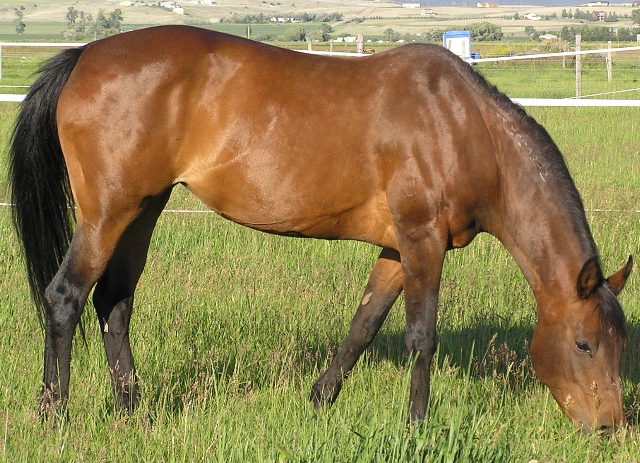
Copenhagen: Mitch’s trusty steed, Copenhagen is a bay mare which he acquired upon the death of his previous horse from old age. It has served him a good thirteen years as of now.
Banjo: His musical instrument of choice, he often spends time entertaining himself around the fire with the few tunes he knows.
REASON FOR VISITING
Mitch has just come in from one of his hunting expeditions, hoping to sell off the hides and meat of about three deer and two boars.
RELATIONS
Mary was Mitch's now missing mother. She has been described as kindhearted, generous, and loving. The circumstances surrounding her disappearance are mysterious.
Aldebert was Mitch's father. He has been described as stern, loving, and strong. Taken at the age of thirty-four by tuberculosis.
Survivalist: From as young as his late teenage years, Mitch was living a nomadic lifestyle, travelling up and down the banks of the Great River in the craft of killing and selling off the parts of wild fauna. Thus, he possesses the skills necessary to live off the land through even the coldest winter. Pathfinder: His years along the Great River have given him an impeccable view into the lay of the land, giving him an unrivaled terrain advantage when the need to travel arises. Marksman: Mitch, as a hunter, had to possess great skill with a long gun and six-shooter alike, thus branding him as an expert marksman with each, from foot and horseback. Partially Literate: Despite what some may think by his lifestyle, he has an idea of how to read. Though he may not be the best, he can still make heads or tails of a note scrawled on some paper scrap. Musician: While unable to read music himself, Mitch is an avid player of the banjo, and possesses one he had bought in his early twenties, along with the knowledge to play a few select tunes.
PERSONALITY
Mitch is one of a lonesome sort, as one would expect from perhaps a cowboy from times of the Old West. His early life on the floodplains of what once was Western Tennessee taught him hard lessons of the life in this New World. The absence of his parents by the time he was of sixteen years sent him to the course of life for a trapper, and his time alone has given him insight into the nature of the world which he lives. This has given him an outlook of apathy on the current world.
HISTORY
Born forty years ago on the banks and floodplains of the Great River, Mitch lived in a remote setting with his family. A mother and father were present, along with three siblings, two sisters, two brothers, two older, two younger. Early in his life, an epidemic of tuberculosis came about within the household, taking his two brothers and one sister, along with his father. Left with his mother and one younger sister, he was thrust into the role of the patriarch of the house. He became avid at hunting and fishing as his father once had, maintaining the flow of food to the household, as well as becoming the one to chop firewood. At the age of sixteen, he came home to his mother and dear sister missing. Weeks of daily searching along the surrounding plains and woods yielded nothing. His course of action was to take the family steed and to stuff all the provisions he could unto the saddlebags, riding for the very banks of the river where the Freetowns laid. A series of dead-end farmhand occupations along the floodplains yielded little money, and so he began the noble attempt of hunting and trapping, selling off the excess furs and meat for profit, which paid handsomely. For the past few decades and odd years, he has done the very same.
INVENTORY
Sharps rifle: He owns a relic of the old world for his primary weapon, a Sharps reproduction of the 1859 model. It utilizes .52 caliber cartridges with 475 grains of black powder. For ease of use, it possesses a pellet-primer feeding system that makes the loading process quicker, as, while it can use percussion caps, the primer feed is quicker. A modification to the rifle is an affixed bayonet lug, which he possesses a ‘pig-sticker’-type bayonet for.
Colt 1851 Navy Model: Another old-world reproduction, his Colt 1851 Navy has been his trusty sidearm ever since he first started the trade. It utilizes .44 caliber cartridges with 25 grains of black powder. It possesses an odd modification for its type, namely a cylinder that can be easily detached without the need to detach the barrel. Thus, he generally carries two extra loaded cylinders for quick reloading. It possesses a fine aesthetic with engravings done by his own father.
‘Arkansas Toothpick’ Longknife: Mitch’s knife of which he uses most for the butchering of animals. It sports an 18 inch long steel blade and an oak grip, It is furnished with brass.
Copenhagen: Mitch’s trusty steed, Copenhagen is a bay mare which he acquired upon the death of his previous horse from old age. It has served him a good thirteen years as of now.
Banjo: His musical instrument of choice, he often spends time entertaining himself around the fire with the few tunes he knows.
REASON FOR VISITING
Mitch has just come in from one of his hunting expeditions, hoping to sell off the hides and meat of about three deer and two boars.
RELATIONS
Mary was Mitch's now missing mother. She has been described as kindhearted, generous, and loving. The circumstances surrounding her disappearance are mysterious.
Aldebert was Mitch's father. He has been described as stern, loving, and strong. Taken at the age of thirty-four by tuberculosis.
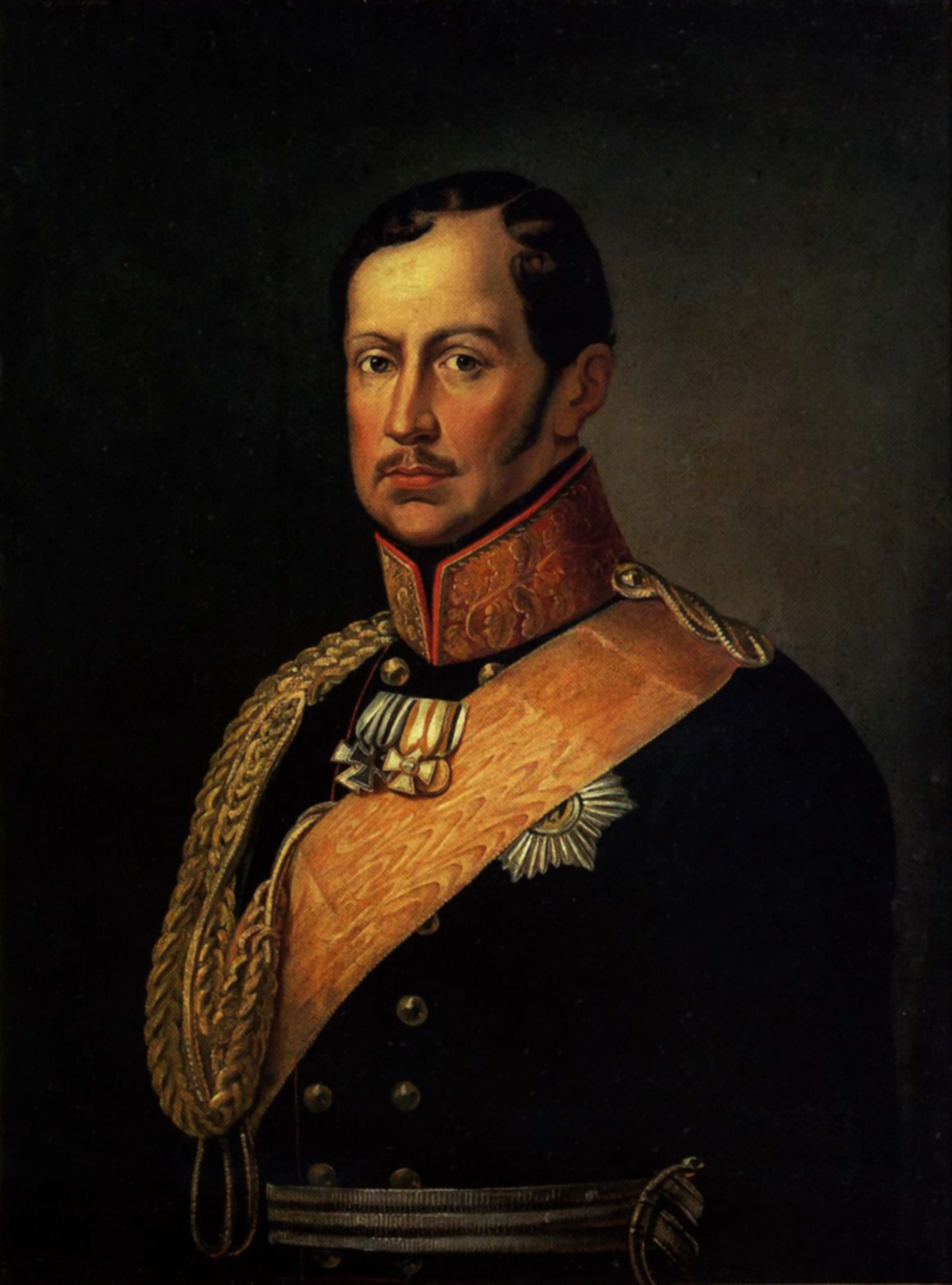
Age: 34 Height: 5’10” (1.7 m) Weight: 147 lbs (66 kg) Beliefs: Eugen is a devout Christian, of the Episcopalian denomination. Despite being a monarch himself, he firmly believes in the rights of man, and the freedoms that come with it. Thus, he heavily advocates the current constitutional monarchy in place. Biography: Eugen was born in the heartland of Ellada, only three decades after its founding, to a noble house. His early life was within a keep overlooking a walled city on the southern edge of Ellada’s territory. There he learned the academics. Arithmetic, reading and writing, geography, history, and the fine arts. He became an avid musician of the string variety, and passed his teenage years both honing his playing of the violin and as well hunting game of varying sizes within the forests of central Europe. But it soon came time for him to rule. His father, on his deathbed with tuberculosis, gave Eugen his blessing, and he came to rule. Coronated only two years ago, he makes to consolidate the Reich, and to expand.
History: Ellada has only existed for 64 years, and has seen three rulers in that time. Formed from intermarriage and intermingling of the royalty of duchies eventually ensured that these aforementioned states became a strong union under the banner of Ellada. Turbulent is a word that could describe its first years, when duchies tried to undermine its status as a united power. They won each war, and within each, most of the battles. This developed a sense of military strength within the Reich, and in a particular set of wars, Eugen’s father gained the title of ‘the Soldier King’. While not a sizeable force, Ellada’s was one to be reckoned with. However, in these recent years, none have dared disturb Ellada, and an era of peace is upon them. It is 1800, and the balance of power remains steady.
Claim: 58, 61, 64
Military Strength: Musket Division in Province 58 Musket Division in Province 61
I'm no master of formatting but I hope to fix anything of the sort in the coming days.
The air was brisk and cool, yet the sun shone bright, across a cloudless sky of purplish-blue. The dwarf moon Feavis hung low in the sky, as close as ever with its dull purple. The forums of the city bustled, merchants and citizens alike crowding these civilized strip malls dotted everywhere across Xiro. Iti'Okh of higher status marched around proudly in vibrant fabrics, many accompanied by their Iti'Ni "servants", slaves of many purpose, while the lower classes bumbled in tunics and skirts. But, on everyone's lips, from the wealthiest banker to the lowliest slave, was the same thing. The election. Storefronts and news posts were rife with gossip, debates, and, in some cases, scuffles, over the results of the election for the newest Consul.
The pick had occurred a mere few days ago, at the turn of the year, and it was inauguration day. The lucky man himself, a former Legatus and Magistrate by the name of Vytan'Syvo. "That man is no good!" growled an old man in commoner's tunic, complaining. "I heard he wants a weaker Republic! He wants the provinces to govern themselves, to maintain militias! He is no good, I tell you all!" He called out over the din of the forum. None bothered to answer, as most were funneling westwards, where a spire towered above the city adorned with their own banner, and below it, the governmental Capitol building known as the High Curia, or alternatively, the Consulate.
Banners adorned the immaculate and polished marble and stone walls of the Consulate, and the pillars afront towered high above the crowds of mixed composition. And on those steps, a platform, and atop it stood Vytan himself, surrounded by Senators and Magistrates, and secured by a perimeter of Praetorian Guard.
He wore armor of gold color, but of normal function, a traditional dress for any Consul that had served. Hanging from the creases in the armor, the mark of the Consul, a cape of purple normally shrouded around the Consul's robe. After waves and greetings to the cheering crowd, a Senator took the stage, the crowd growing quiet. He tapped the rather out-of-place microphone, clearing his throat and speaking.
"Greetings, people of Itium. As you may know, the elections are over, and the new Consul has been elected, to serve his term of eight years, and it is my job, as the Senatorial Speaker, to confirm the inauguration. So, let us get on with it." He beckoned Vytan, stepping to the side of the microphone and straightening his purple Senatorial sash.
Vytan stepped forward, standing parallel to the Speaker, and the Speaker began again. "Vytan'Syvo, Magistrate of the Grere Province and former Legatus of X Legion, by popular sovereignty of the People, the Council, the Senate, and, above most, the Gods, you have been selected, by candidacy and election, as the next Consul of the Republic of Itium, as the supreme Executive, commander of the Excercitus, and the hand of the Gods. Please raise your right hand and repeat after me."
"I, Vytan'Syvo, House Syvo." Said the Speaker, with Vytan repeating, and with the same throughout the rest. "Do swear, under the Gods, to maintain the freedom and wellbeing of the People and the Republic, and to obey the Compact strictly, with every breath within my body." Vytan was with it the whole time, repeating it as it came, and the Speaker diverted once it was done. "Gods assist you, Consul."
Vytan stepped to the microphone, mandibles adjusting. "My deepest thanks, Senator." He turned to the audience, who were still silent for the most part. "People of Itium," His raspy voice boomed. "I would like to start on the note that I may be Consul, but I am not your ruler. I may be the Executive, but I am no monarch. No, as the Consul, I do not rule, I am no dictator. I am a servant, a servant to the Gods, and a servant to the People." The crowd rustled, cheers escaping in a roar which ceased only a period that seemed ages later.
"As you may know, it is a new age. The last revolt is behind us, a century ago, and we are united, stronger than ever before, and all that is left to look to, is the stars. For too long have we been reclusive, hermits that served to only alienate ourselves from those out there that we know exist." He called, the crowds answering with a cheer.
"Make no mistake, the strife is not gone. Tough times will be upon us... “ He paused, thinking. “But we must have the will, the endurance, and the power to see through those trials, for as long as we are in the favor of the Gods, we shall know no fear, we shall know no defeat, and we shall forever triumph!” The crowd erupted in a roar of cheers as the Consul turned, exiting stage left.
Short but sweet, the inauguration speech said what needed to be said. Itium is on the rise.
Government Type: Representative Democracy (Republican) The Itiumite system of government is a refined system of representative democracy, or republicanism, that is best described as a strong central body subscribed to by semi-autonomous provinces.
Leadership: The leadership of the Republic is split between three branches: At its head, an executive body consisting of a Consul which is generally the figurehead of the government, accompanied by his own retinue and cabinet of advisors. The most powerful branch is the legislative body, which consists of a non-elected upper house, the Senate, and an elected lower house, the Magistrate Assembly. Finally, is the branch that has no central leadership, known as the Courts. Generally each province has a High Court, each of which can rule a piece of legislation unlawful due to it violating the Itium Compact, upon which the legislation is sent before the Consul, who either refutes or passes the piece of legislation based upon his interpretation of the Compact.
Offworld Holdings: Though not particularly new at any rate to space travel, the Itiumites own very little in regards to offworld territory. Infact, their only offworld holdings are their three moons: Uiwei, the largest of the moons and barren of all atmosphere, a mere chunk of orange, rusty rock. Uinov, the “middle” moon of size, with an atmosphere that is extremely toxic to most carbon-based life, and extremely hot as a result of the very same gases which made it uninhabitable. And lastly, Feavis, the smallest moon, purple in color and the closest of all three to Itium, without an atmosphere. Each moon has had no attempts at colonization from the people of Itium, due to aforementioned uninhabitability. Rather, those with no atmosphere have each small outposts that serve to provide scientific data, among other things.
Persons of Importance: WIP
Species:
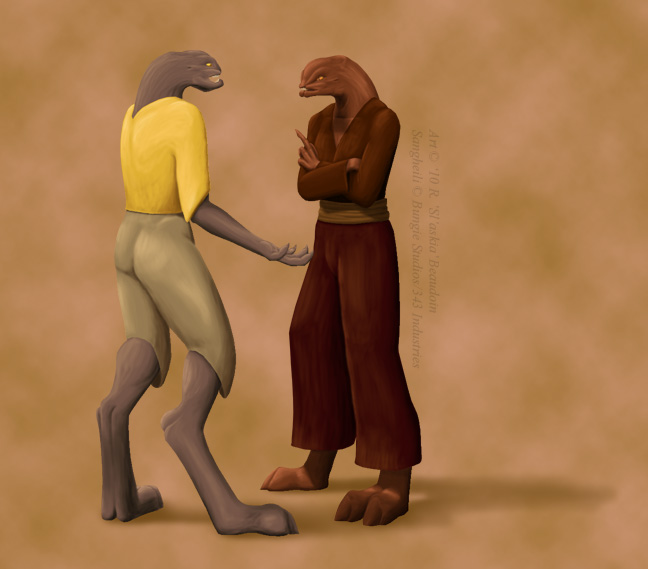
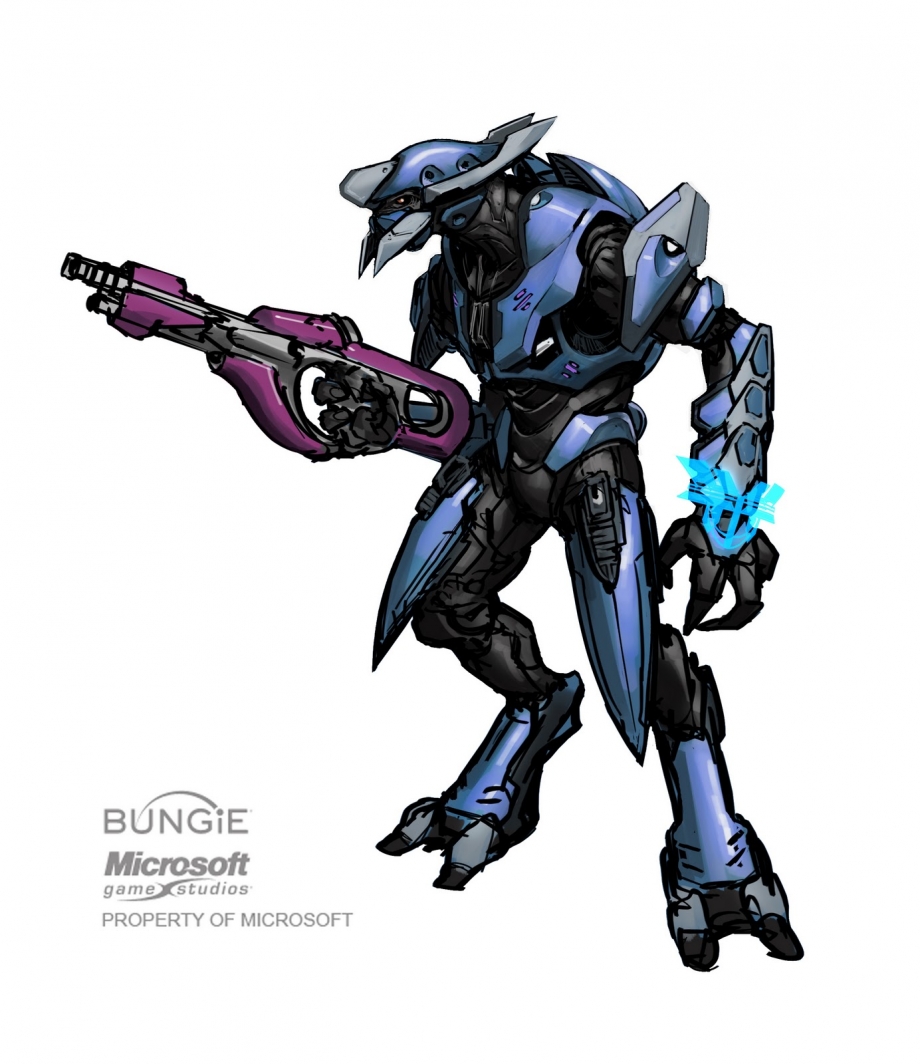
The Iti’Okh (pronounced Ishee’Ock) are digitigrade carbon-based lifeforms that are the primary inhabitants of the world known as Itium. Being carbon-based life, they operate in a similar fashion to others of kind. They generally breathe oxygen, though the natural mix they breathe generally consists of a majority nitrogen with a significant oxygen component, along with another component consisting of a mix of the elements known as the “noble gases”. Said gases are in stronger concentration on Itium than on Terra, which possesses a similar mixture of gases, but the mixture of gases on Itium are less than lethal to any beings that do breathe oxygen. Being omnivores, the Iti’Okh consume both the meat of animals, whether hunted or raised, along with the harvest of fruits and vegetables either gathered or grown. Their physiological traits include that of being rather tall, with males being an average of 6’8-7’4, and females an average of 6’3-6’7. As for weight, males are on average between 290-320 lbs, and females between 230-260 lbs. They possess a binary circulatory system that pumps indigo-colored blood. They have quadruple-hinged jaws, with an upper jaw lined with sharp teeth for tearing meat and fruits/vegetables. Four mandibles are below those, with arrays of sharp teeth which ‘grind’ the meat or fruits/vegetables into a fine consistency of a sort. In the rear of the mouth are more teeth, molars which then make sure the food is properly chewed and grinded down to be safely swallowed. Their eyes lack L cone cells, allowing them to see into the “infrabrown” range, though depriving them of the ability to perceive the color purple, rather it being identified as a darker shade of blue.
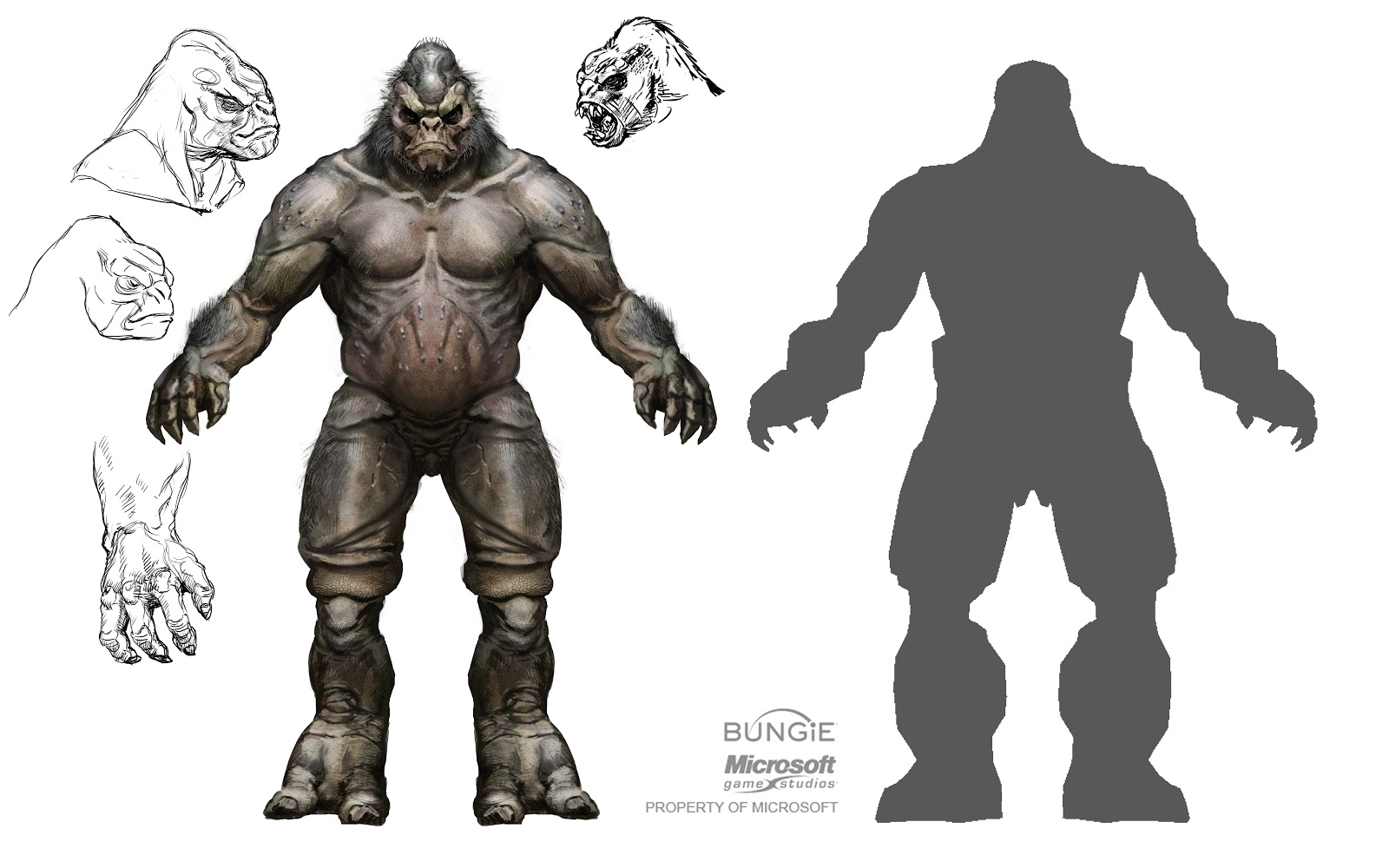
The Iti’Ni (pronounced Ishee’Nee) are plantigrade carbon-based lifeforms that are the minority sapient race of Itium. They breathe the same as the Iti’Okh. They are notorious carnivores, evolved from vicious predators that once preyed on the wildlife of Itium. They have red blood, pumped by a closed circulatory system. Males are generally a height of 7’3-8’2 when mature, with females being about the same. The dimorphism between the genders is little, also ensuring average weight for most of the Iti’Ni population to be 340-410 lbs.
Demography:
History: The people of Itium are an old sort. Possibly one of the oldest in Jalaryias, and some of the most sophisticated, some of the most complex. Millennia, even Epochs ago, the races that inhabit Itium had their humble beginnings. Aquatic life was all that dominated the surface of Itium, and land masses were few and far between. Eras came, and eras passed, and the first life took to the water, reptilians that became monstrous beings, or, alternatively, became small beings, mammals that were dwarfed by other life, driven into burrows.
The formation of the three moons is often attributed to the rise of the mammalian species of Itium, and scientific evidence points to such. Back long ago, impacts between large celestial bodies were common, but were catastrophic all the same. Two specific events within centuries of eachother formed both the largest and smallest moons of Itium, and single-handedly extinguished those predators that roamed the surface, leaving only those small, burrowing mammals to live.
Evolution came at a quicker pace, though none are sure why. Sapience came first to the Iti’Okh, millennia ago. Hunter gatherers, they were experts of pursuing prey, evading predators, and when all else failed, adapting to use their surroundings to survive. However, the need to adapt was not the only threat. The race now known as the Iti’Ni were once great predators, carnivorous beasts that killed and feasted. The Iti’Okh’s sapience, ability to adapt, and to evade saw the Iti’Ni develop the same, becoming sapient beings, albeit more savage than their counterpart.
Savagery gave way to technological adaptation. Fire, tools, agriculture, animal husbandry. It all served both populations to advance in leaps and bounds. Communities, towns, cities, and empires rose and fell over decades and centuries. Warring between these bodies on grounds of territory, of resources, of religion, and of culture were common, especially between the two races in general. But, despite the civil setbacks of warfare, the act of such only advances the prowess and technology of both races.
About a millennia ago, many of the Iti’Okh had been united under a single banner, a republic, while the Iti’Ni were still barbarians, living in tribes. Though the Iti’Ni were stronger, possessing the force to kill many troops themselves before perishing, they lacked the cunning, the tactics, or the numbers that the Iti’Okh had, and the disunited tribes were conquered over the course of a single century.
Technology progressed onwards, but Itium was not without strife. The subjugated Iti’Ni rebelled on many occasions, but each time their rebellion was put down. Now, in modernity, with the space age in full bloom and the people of Itium taking to the stars, the last rebellion was a century ago. And with that last bloody footnote, Itium looks to the future, reaching out after so long being reclusive.
Military: Exercitus aut. Itium The Armed Services of Itium are a formidable sort, heavily reminiscent of old military tradition of the Iti’Okh melded with the newest technology and tactics of questionable age.
The ground forces of Itium are best described as masters of discipline, men of strict tradition, armed with the latest weaponry available to them.
Legion: 10,000 men, commanded by a Legatus. Pilae: 5,000 men, commanded by a Pilus. Cohort: 1,000 men, commanded by a Cohortis. Tribuni: 500 men, commanded by a Tribune. Century: 100 men, commanded by a Centurion. Decan: 10 men, commanded by a Decanus.
WIP
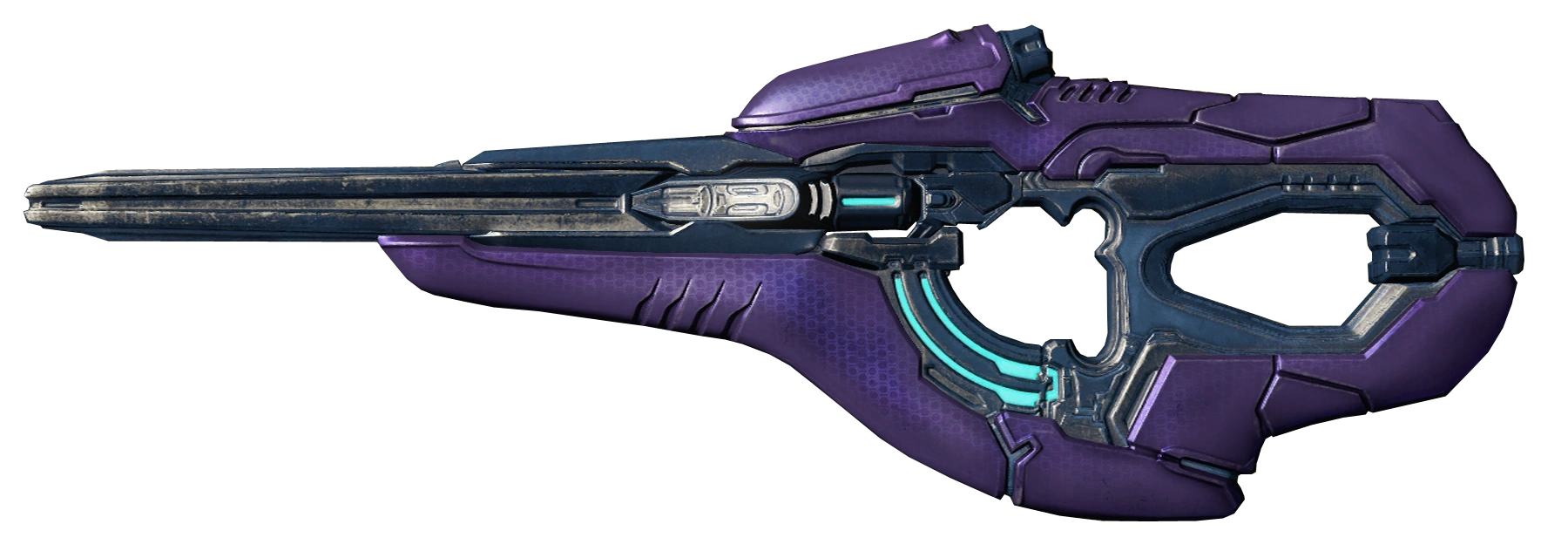
The Type-27 Combustion rifle is a project directly developed by the Exercitus Itium in response to the evolution and standardized use of armor by not only their own troops, but by other races utilizing armor as well. It works on the principle of a simple tilting-breechblock gas-operated rifle fed from a rotating cylinder affixed just below the rear sight post of the weapon. It fires a cartridge with the measurements of 8x24mm. The cylinder holds ten rounds, and it can be loaded three ways. Firstly, the slowest way, of which it was originally intended without much foresight, by loading each cartridge individually into the cylinder. Second, a rather crude way that troops in the field developed when loading each round individually proved slow and in some cases, fatal. It is to carry an extra cylinder on their person, which is fully loaded. By quickly field stripping the empty cylinder out of their rifle, they could quickly insert the next cylinder and reaffix the pin that held the cylinder assembly in place. Then there is the last way of loading. A ‘speed-loader’ was developed by the Exercitus after noticing such practices and their detriment. This speed loader quickly allows a soldier to remove the cylinder cap, guide all ten rounds into their respective places, and stow the loader. The latter is mainly used, however, in cases of short supply, the former see practice.
The Type-24 is an older weapon, developed as a field test, which became the sidearm of the Exercitus Itium. It fires, well, quite simply, plasma. It functions on an electrolaser principle. An emitter in the center of the weapon emits a super-hot laser, which ionizes the surrounding atmospheric gasses, inducing a short length of a plasma channel. The channel holds until it impacts its target, the gases violently separating and dissipating. Against lightly armored or unarmored targets, this can leave a good majority of the impact site covered in severe second, third, or even fourth-degree burns. Though, against targets with heavy and thick armor, it is rather ineffective.
The Type-61 is the primary melee weapon of the Exercitus Itium, and is perhaps the oldest piece of weaponry in its arsenal. The likeness of this weapon traces its roots back to the conquest of the Iti’Ni, and is expertly made to thrust, slash, or bash its target. One is issued to all personnel of the Exercitus, combat or noncombat, the highest Legatus to the lowliest Legionairre.
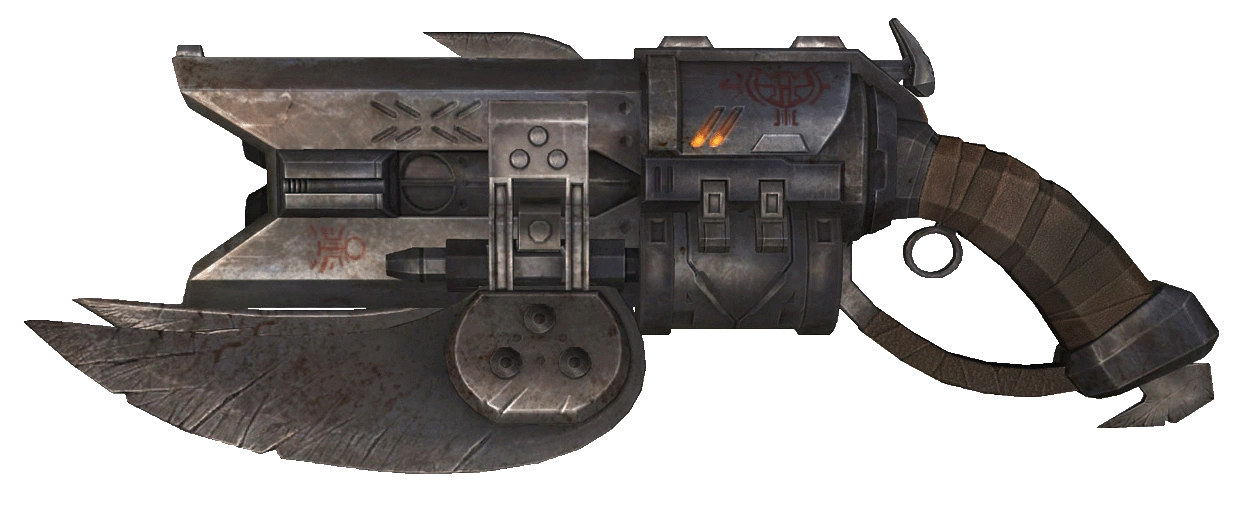
The Type-32 is a weapon engineered specifically for use by the Iti’Ni Auxiliary. It operates similarly to the Type-27, in that it is a gas-operated firearm firing a caseless projectile. Notably, it possesses a short barrel, denoting it as a carbine. Another modification, mainly to please the melee-inclined, is the permanently affixed double-bladed bayonet, which is fit to stab and slash the enemy as the user’s heart will most likely desire.
The Type-1 is the primary armor set for the Excercitus Itium, consisting of a jet black bodyglove undersuit, made of a stab-resistant and shrapnel-resistant fiber material that is generally environmentally sealable when coupled with the proper equipment to do so. Mounted atop that is ballistic plating of varying colors, consisting of extremely light alloys that are nonetheless protective, catching the odd rifle or pistol round, along with most shrapnel. This ballistic plating also has an additional layer above the traditional metal, consisting of a rather thin layer of extremely heat-resistant material, placed an inch above the ballistic plating itself. The theory behind this is that plasma or laser weaponry would strike the thin layer, burning it away and reducing the power of the shot in cases of lasers or straight dissipating the gasses in cases of plasma. An extremely stripped down version of this armor system is available for the Iti’Ni Auxiliary, with the system also forfeiting the bodyglove.
The Auxiliary of Iti’Ni are an indentured legion-strength unit of Iti’Ni troops that have either volunteered, been enlisted by slave masters as substitutes for their mandatory service in times of war, or have enlisted by their own free will to pay off debts. Either way, despite being second-class in the civilian world, this segregated unit is anything but. They are the shock troops, the spearhead of the forces, ruthless combatants that pierce enemy defenses when on the offense, or delay and bog down the enemy on the defense.
Government Type: Representative Democracy (Republican) The Itiumite system of government is a refined system of representative democracy, or republicanism, that is best described as a strong central body subscribed to by semi-autonomous provinces.
Leadership: The leadership of the Republic is split between three branches: At its head, an executive body consisting of a Consul which is generally the figurehead of the government, accompanied by his own retinue and cabinet of advisors. The most powerful branch is the legislative body, which consists of a non-elected upper house, the Senate, and an elected lower house, the Magistrate Assembly. Finally, is the branch that has no central leadership, known as the Courts. Generally each province has a High Court, each of which can rule a piece of legislation unlawful due to it violating the Itium Compact, upon which the legislation is sent before the Consul, who either refutes or passes the piece of legislation based upon his interpretation of the Compact.
Offworld Holdings: Though not particularly new at any rate to space travel, the Itiumites own very little in regards to offworld territory. Infact, their only offworld holdings are their three moons: Uiwei, the largest of the moons and barren of all atmosphere, a mere chunk of orange, rusty rock. Uinov, the “middle” moon of size, with an atmosphere that is extremely toxic to most carbon-based life, and extremely hot as a result of the very same gases which made it uninhabitable. And lastly, Feavis, the smallest moon, purple in color and the closest of all three to Itium, without an atmosphere. Each moon has had no attempts at colonization from the people of Itium, due to aforementioned uninhabitability. Rather, those with no atmosphere have each small outposts that serve to provide scientific data, among other things.
Persons of Importance: WIP
Species:
The Iti’Okh (pronounced Ishee’Ock) are digitigrade carbon-based lifeforms that are the primary inhabitants of the world known as Itium. Being carbon-based life, they operate in a similar fashion to others of kind. They generally breathe oxygen, though the natural mix they breathe generally consists of a majority nitrogen with a significant oxygen component, along with another component consisting of a mix of the elements known as the “noble gases”. Said gases are in stronger concentration on Itium than on Terra, which possesses a similar mixture of gases, but the mixture of gases on Itium are less than lethal to any beings that do breathe oxygen. Being omnivores, the Iti’Okh consume both the meat of animals, whether hunted or raised, along with the harvest of fruits and vegetables either gathered or grown. Their physiological traits include that of being rather tall, with males being an average of 6’8-7’4, and females an average of 6’3-6’7. As for weight, males are on average between 290-320 lbs, and females between 230-260 lbs. They possess a binary circulatory system that pumps indigo-colored blood. They have quadruple-hinged jaws, with an upper jaw lined with sharp teeth for tearing meat and fruits/vegetables. Four mandibles are below those, with arrays of sharp teeth which ‘grind’ the meat or fruits/vegetables into a fine consistency of a sort. In the rear of the mouth are more teeth, molars which then make sure the food is properly chewed and grinded down to be safely swallowed. Their eyes lack L cone cells, allowing them to see into the “infrabrown” range, though depriving them of the ability to perceive the color purple, rather it being identified as a darker shade of blue.
The Iti’Ni (pronounced Ishee’Nee) are plantigrade carbon-based lifeforms that are the minority sapient race of Itium. They breathe the same as the Iti’Okh. They are notorious carnivores, evolved from vicious predators that once preyed on the wildlife of Itium. They have red blood, pumped by a closed circulatory system. Males are generally a height of 7’3-8’2 when mature, with females being about the same. The dimorphism between the genders is little, also ensuring average weight for most of the Iti’Ni population to be 340-410 lbs.
Demography:
History: The people of Itium are an old sort. Possibly one of the oldest in Jalaryias, and some of the most sophisticated, some of the most complex. Millennia, even Epochs ago, the races that inhabit Itium had their humble beginnings. Aquatic life was all that dominated the surface of Itium, and land masses were few and far between. Eras came, and eras passed, and the first life took to the water, reptilians that became monstrous beings, or, alternatively, became small beings, mammals that were dwarfed by other life, driven into burrows.
The formation of the three moons is often attributed to the rise of the mammalian species of Itium, and scientific evidence points to such. Back long ago, impacts between large celestial bodies were common, but were catastrophic all the same. Two specific events within centuries of eachother formed both the largest and smallest moons of Itium, and single-handedly extinguished those predators that roamed the surface, leaving only those small, burrowing mammals to live.
Evolution came at a quicker pace, though none are sure why. Sapience came first to the Iti’Okh, millennia ago. Hunter gatherers, they were experts of pursuing prey, evading predators, and when all else failed, adapting to use their surroundings to survive. However, the need to adapt was not the only threat. The race now known as the Iti’Ni were once great predators, carnivorous beasts that killed and feasted. The Iti’Okh’s sapience, ability to adapt, and to evade saw the Iti’Ni develop the same, becoming sapient beings, albeit more savage than their counterpart.
Savagery gave way to technological adaptation. Fire, tools, agriculture, animal husbandry. It all served both populations to advance in leaps and bounds. Communities, towns, cities, and empires rose and fell over decades and centuries. Warring between these bodies on grounds of territory, of resources, of religion, and of culture were common, especially between the two races in general. But, despite the civil setbacks of warfare, the act of such only advances the prowess and technology of both races.
About a millennia ago, many of the Iti’Okh had been united under a single banner, a republic, while the Iti’Ni were still barbarians, living in tribes. Though the Iti’Ni were stronger, possessing the force to kill many troops themselves before perishing, they lacked the cunning, the tactics, or the numbers that the Iti’Okh had, and the disunited tribes were conquered over the course of a single century.
Technology progressed onwards, but Itium was not without strife. The subjugated Iti’Ni rebelled on many occasions, but each time their rebellion was put down. Now, in modernity, with the space age in full bloom and the people of Itium taking to the stars, the last rebellion was a century ago. And with that last bloody footnote, Itium looks to the future, reaching out after so long being reclusive.
Military: Exercitus aut. Itium The Armed Services of Itium are a formidable sort, heavily reminiscent of old military tradition of the Iti’Okh melded with the newest technology and tactics of questionable age.
The ground forces of Itium are best described as masters of discipline, men of strict tradition, armed with the latest weaponry available to them.
Legion: 10,000 men, commanded by a Legatus. Pilae: 5,000 men, commanded by a Pilus. Cohort: 1,000 men, commanded by a Cohortis. Tribuni: 500 men, commanded by a Tribune. Century: 100 men, commanded by a Centurion. Decan: 10 men, commanded by a Decanus.
WIP
The Type-27 Combustion rifle is a project directly developed by the Exercitus Itium in response to the evolution and standardized use of armor by not only their own troops, but by other races utilizing armor as well. It works on the principle of a simple tilting-breechblock gas-operated rifle fed from a rotating cylinder affixed just below the rear sight post of the weapon. It fires a cartridge with the measurements of 8x24mm. The cylinder holds ten rounds, and it can be loaded three ways. Firstly, the slowest way, of which it was originally intended without much foresight, by loading each cartridge individually into the cylinder. Second, a rather crude way that troops in the field developed when loading each round individually proved slow and in some cases, fatal. It is to carry an extra cylinder on their person, which is fully loaded. By quickly field stripping the empty cylinder out of their rifle, they could quickly insert the next cylinder and reaffix the pin that held the cylinder assembly in place. Then there is the last way of loading. A ‘speed-loader’ was developed by the Exercitus after noticing such practices and their detriment. This speed loader quickly allows a soldier to remove the cylinder cap, guide all ten rounds into their respective places, and stow the loader. The latter is mainly used, however, in cases of short supply, the former see practice.
The Type-24 is an older weapon, developed as a field test, which became the sidearm of the Exercitus Itium. It fires, well, quite simply, plasma. It functions on an electrolaser principle. An emitter in the center of the weapon emits a super-hot laser, which ionizes the surrounding atmospheric gasses, inducing a short length of a plasma channel. The channel holds until it impacts its target, the gases violently separating and dissipating. Against lightly armored or unarmored targets, this can leave a good majority of the impact site covered in severe second, third, or even fourth-degree burns. Though, against targets with heavy and thick armor, it is rather ineffective.
The Type-61 is the primary melee weapon of the Exercitus Itium, and is perhaps the oldest piece of weaponry in its arsenal. The likeness of this weapon traces its roots back to the conquest of the Iti’Ni, and is expertly made to thrust, slash, or bash its target. One is issued to all personnel of the Exercitus, combat or noncombat, the highest Legatus to the lowliest Legionairre.
The Type-32 is a weapon engineered specifically for use by the Iti’Ni Auxiliary. It operates similarly to the Type-27, in that it is a gas-operated firearm firing a caseless projectile. Notably, it possesses a short barrel, denoting it as a carbine. Another modification, mainly to please the melee-inclined, is the permanently affixed double-bladed bayonet, which is fit to stab and slash the enemy as the user’s heart will most likely desire.
The Type-1 is the primary armor set for the Excercitus Itium, consisting of a jet black bodyglove undersuit, made of a stab-resistant and shrapnel-resistant fiber material that is generally environmentally sealable when coupled with the proper equipment to do so. Mounted atop that is ballistic plating of varying colors, consisting of extremely light alloys that are nonetheless protective, catching the odd rifle or pistol round, along with most shrapnel. This ballistic plating also has an additional layer above the traditional metal, consisting of a rather thin layer of extremely heat-resistant material, placed an inch above the ballistic plating itself. The theory behind this is that plasma or laser weaponry would strike the thin layer, burning it away and reducing the power of the shot in cases of lasers or straight dissipating the gasses in cases of plasma. An extremely stripped down version of this armor system is available for the Iti’Ni Auxiliary, with the system also forfeiting the bodyglove.
The Auxiliary of Iti’Ni are an indentured legion-strength unit of Iti’Ni troops that have either volunteered, been enlisted by slave masters as substitutes for their mandatory service in times of war, or have enlisted by their own free will to pay off debts. Either way, despite being second-class in the civilian world, this segregated unit is anything but. They are the shock troops, the spearhead of the forces, ruthless combatants that pierce enemy defenses when on the offense, or delay and bog down the enemy on the defense.
 Member

 Gunther