Avatar of Helios
  • Last Seen: 11 days ago
  • Old Guild Username: Helios
  • Joined: 13 yrs ago
  • Posts: 54 (0.01 / day)
  • VMs: 0
  • Username history
    1. Helios 13 yrs ago
  • Latest 10 profile visitors:

Status

User has no status, yet

Bio

User has no bio, yet

Most Recent Posts

Svart Re-Integration Colony #40

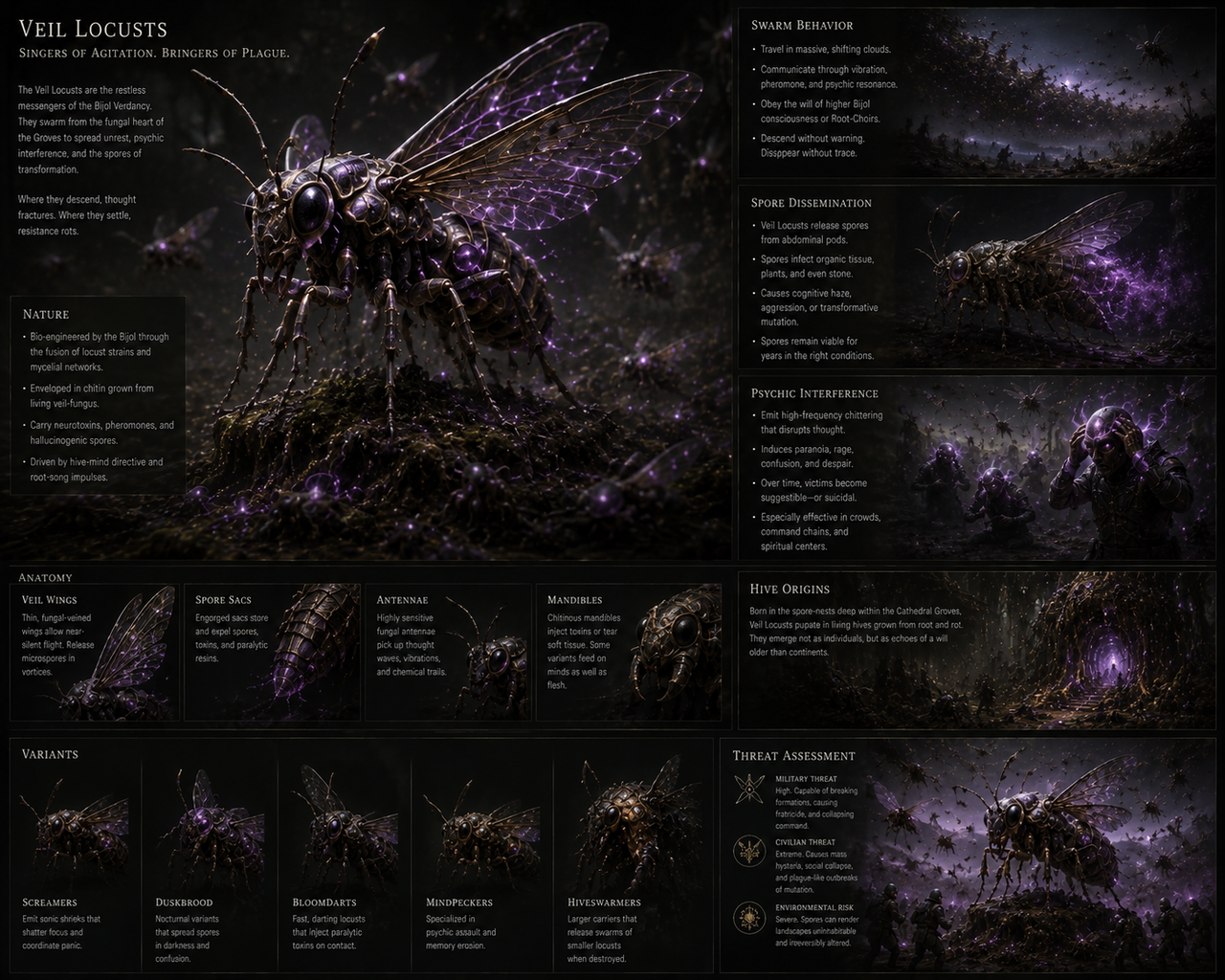
Bijol Verdancy


A fine black leather glove beat the chest of its owner. Rhythmic, stoic, proudly singing the words echoed by a half million voices around him.

“Beneath the root of stone we dwell,

Where hammers hymn and courage quells.

We carve the dark with blood and stone,

And feed the hearth of darkened home.”


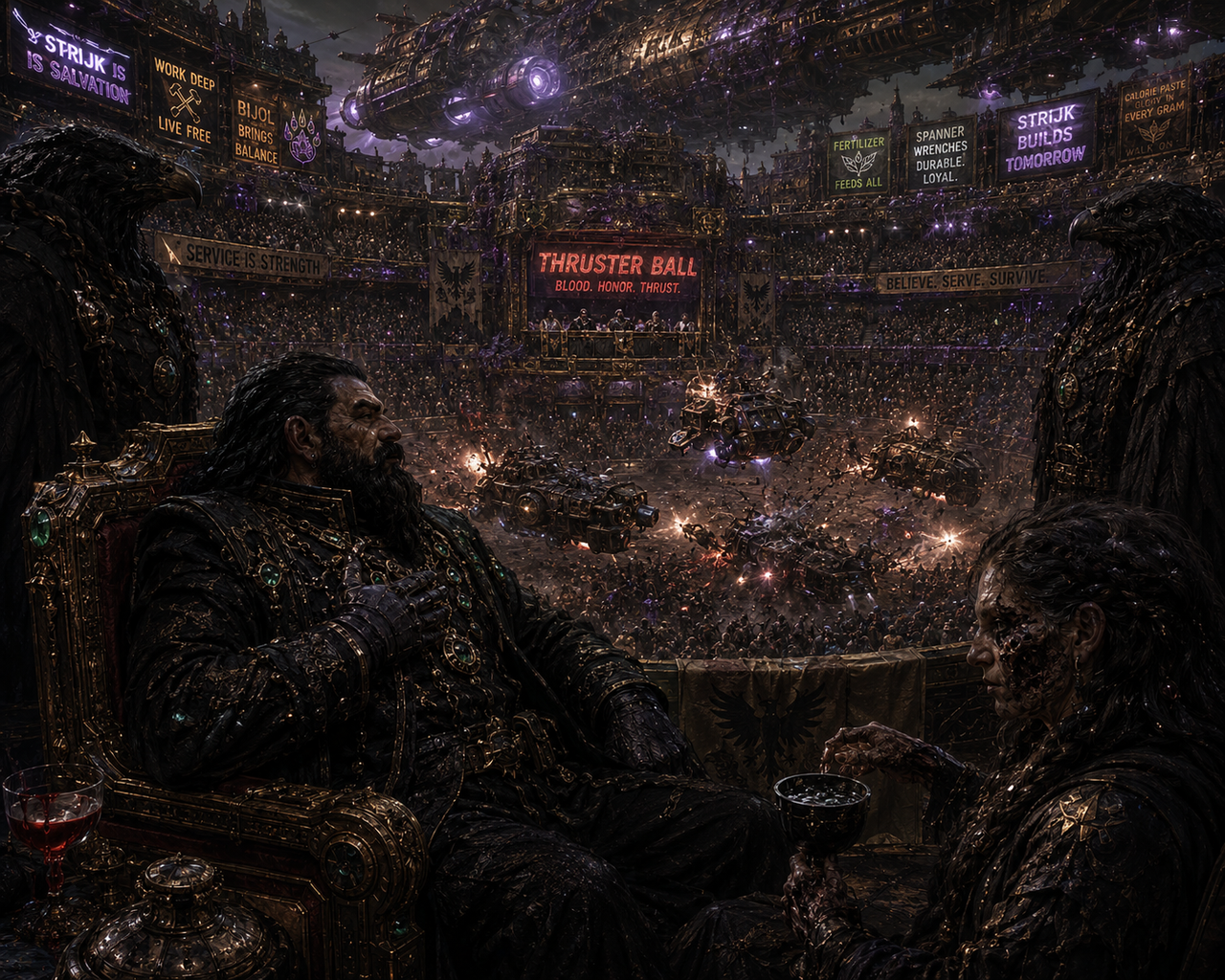
The roaring thrusters of an amphibious carrier rippled the air above at the anthem’s final verse. Its once beautiful dwarven-gold hull was now covered in the umbral purple lace of lichens and thallophytes from Bijol rebranding. The colossal superdome beneath competed with the vessel in volume and clamor.

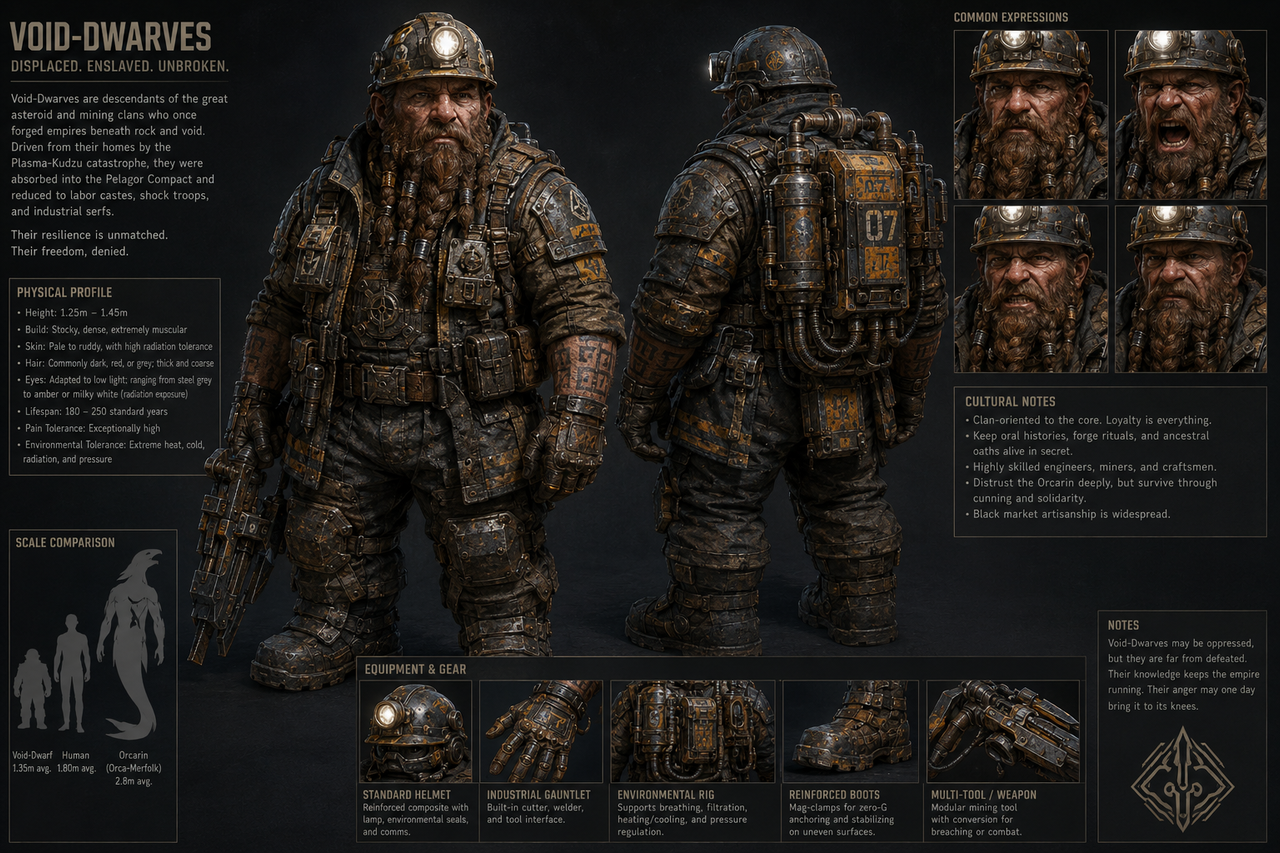
Junok Gjornson was not a nice man. His features perhaps comically betrayed this: slick black hair, a stern dark brow, expensive matte clothing, the many emeralds laced about his neck. He looked elegant by every measure, or as much as a dwarf could muster. He perched in an ornate throne overlooking a great, clattering colosseum. The legs of his delicate Augustain wine dripped more lavishly than the gore of the Bijol conquest.

Below his box-office vantage was the spoils of this great conquest. The ancient dwarven pastime of Thruster Ball. Part exhibition, part junkyard engineering, and perhaps two parts brutal violence. The dwarven figures could be seen assembling hovercraft from scrapyard parts and dashing them together with fervent crowds roaring around. Hundreds of thousands of dwarves stood shoulder to shoulder as the competitors risked everything to destroy each other's hastily built craft a few meters above the junkyard pitch. Neon advertisements flickered obnoxiously about the stadium. Many for trivial needs: fertilizer, spanner wrenches, calorie paste, solvents for boot repair. Disposable currency amongst the dwarves was sparse, nothing like it had been decades before. Then even items simply meant for pleasure were sold–or at least marketed–in droves. Now the most potent advertising material was belief. Belief in the Bijol. Belief that in service to strijk mining, the use of its profit to stabilize the galaxy, so that finally the dwarves might be as all humanoids were intended: free.

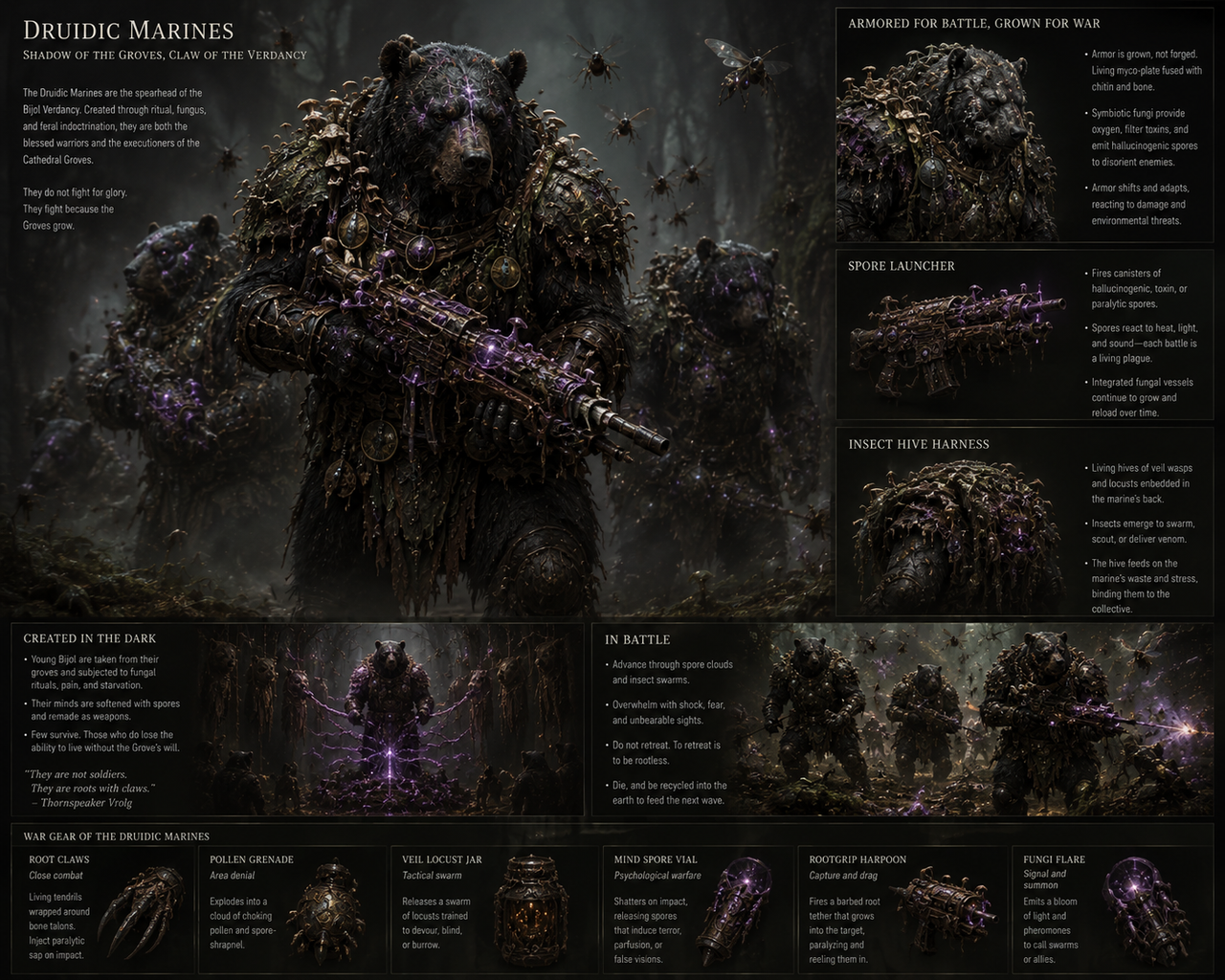
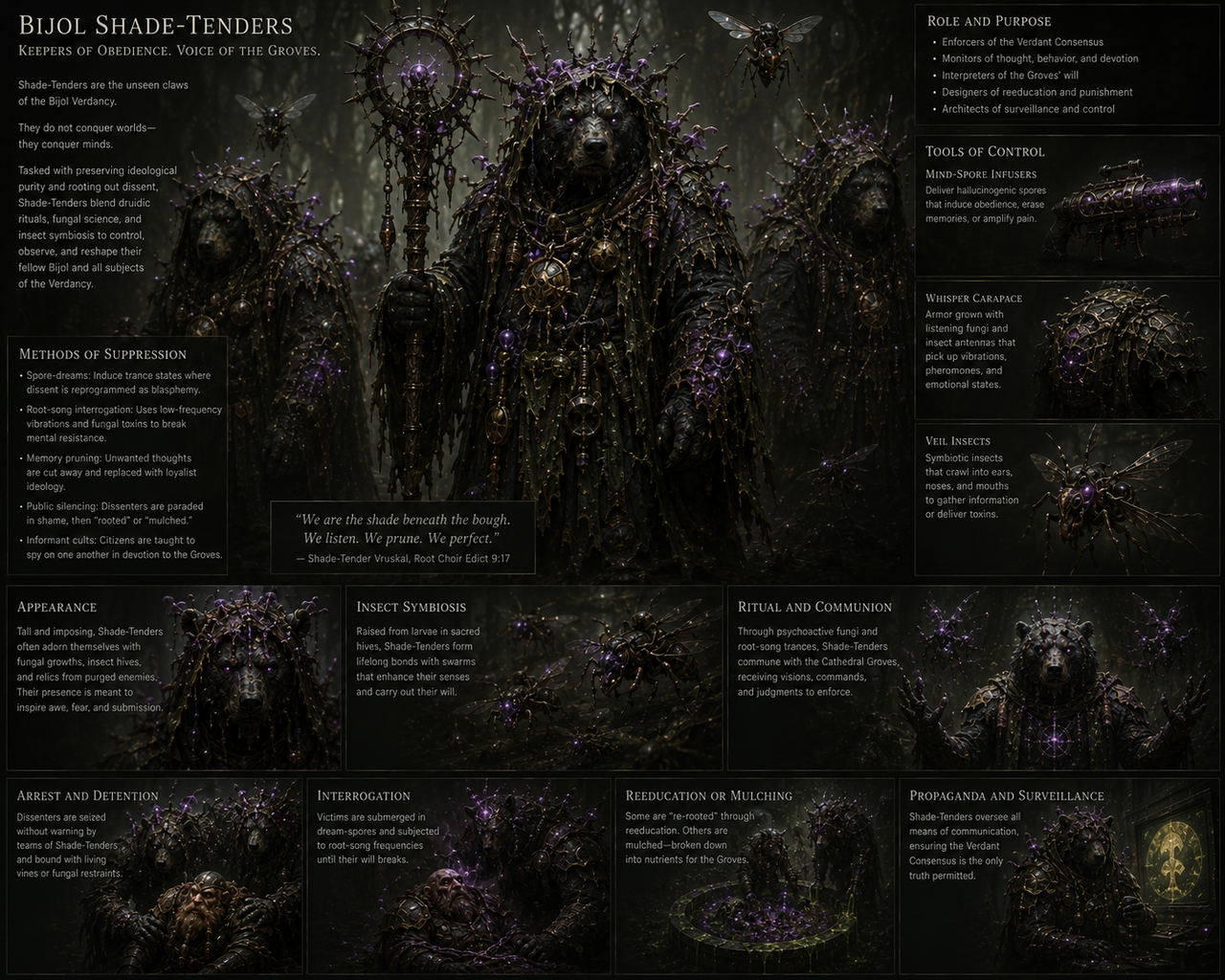
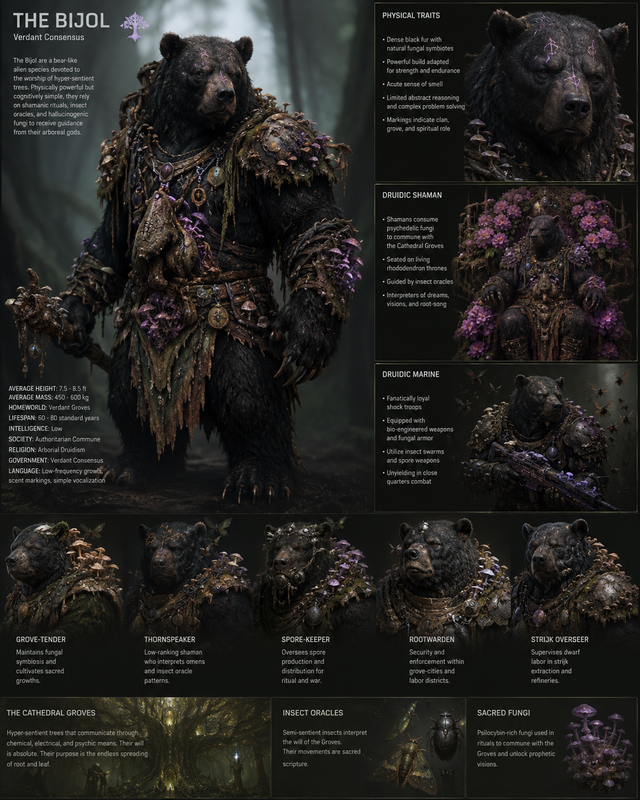
Amidst the masses of dwarves were perhaps the most important investment. In climate controlled suites dotted throughout the arena were the great ursine figures of Bijols clad in various team colors of the dwarven competitors below. Most of these hulking bear-like beasts were well imbibed on hallucinogens, many of them cheered and cursed the games with a fervor greater than even the dwarves. Their luxury suites were perhaps as important a tool to their pleasure as a safety measure for the dwarven mob. When displeased, the Bijol tended to extinguish their frustration with open violence. Dwarven projectiles hurled from the stands were eventually deemed to be a nuisance to the game. This was only a problem in that it upset the Bijols supporting the opposite number.

They, these most-prized new fans, had been Junok Gjornson’s great achievement. Buy in from the Bijol. Some called him a sellout, some a savior. Through this simple game of Thruster Ball he had convinced the conquerors to spare at least some of the culture of the dwarves. Complete dystopia was bad for breeding, a semblance of hope needed to remain. In that way the society and production of the dwarves could serve as the trunk with which the Bijol vine could stretch and spread. Stability required bread and games; these roared violently below.

Thruster Ball was a dangerous affair. Deaths were inevitable. It had once been the greatest honor of the dwarven society to sacrifice in such a way. Slain heroes would be cast into marble and lined venerable courtyards and streets. Each would hold a cup, and from it would overflow with the celebratory beverage grnoost (fermented bat guano). Passerbys could sup from the delicacy freely in the great celebration of excess, overabundance, surplus. In those times even to die a celebrity was to honor the great success of surfeit life.

Those times had passed. Now, many great condors sulked about the area. Even life was to be recycled. Two such hulking beasts flanked the noble suite of Junok, their proud black mantles framed eerily similar to his own. And why wouldn’t they, for millennia the great condor had been the crest of his noble house. In the ancient days, great mining forays would look longingly to the skies whenever they broke free from beneath the crust. To see one of these majestic beings above was a sign of life. A sacrifice the giant condors would always collect.The conditions for death could only exist with an offering of life. An excess.

Junok turned from the ruckus crowd beneath. Behind him sulked a smaller dwarven figure; lithe, quiet, wasting. It was his sister, Jillia Gjornsdottir. She had once been vibrant, fierce, full of life. She had been the great shield bearer of their house. She had walked in honor when the Bijol had called upon them for warriors for the Abyss Frontier. A half-million souls had taken up arms with her and sallied eastward under the rippling banner of the Great Condor. Billions were inspired when she commissioned on that perilous crusade. Like her they had wasted, sent into the dark places of mutagenogenic fauna and flora. To say the eastern front had been guerilla warfare was generous; it was simply terror. Dark, festering, useless terror.

Jillia’s hand idled around the rim of her chalice. It was not fine Augustain wine like that of her brothers, it was grnoost. Trails of black sulfuric bubbles danced slowly behind her finger in its roundelay. It was her only hand. The left side of her body and face had been completely boiled off by some crustaceous demon from the battles with the Abyss. Perhaps her sunken, cachexic features could be attributed to this healing, but her vacant stare betrayed deeper wounds.

The imperious dwarf could hardly look at her. Perhaps if her pain only existed in his periphery he could pretend that she was still the older sister who would visit him on summers from Concordat boarding school. The mischievous, charismatic drinking partner who could out flyte or out tipple any opposition. Yet now she could barely stomach her own existence, her grnoost, or perhaps how wasted their people had become after so much war and subjugation. She needed rest. Junok could only hope to give it. One last mission for his dear virtuous sibling. One last time serving beneath stretched black wings.

Junok could not truly tell his sister what was happening. The spies of the Bijol were numerous, some crawling and fleeting–almost invisibly–among the air and earth around him even now. She would have to know, have to adapt, have to trust him like she always had. She needed rest, all his people needed rest. Somehow, he was going to earn it for them.

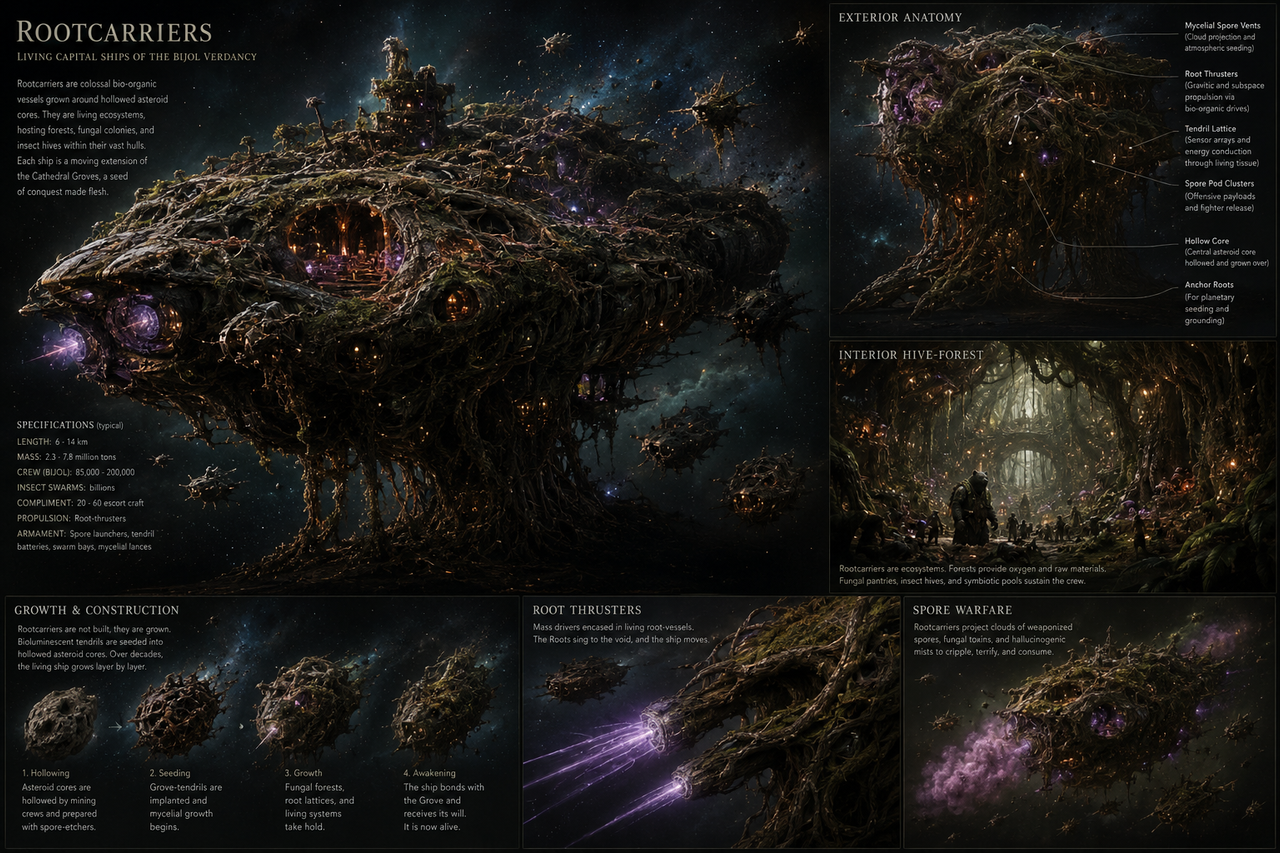
He looked down at the vast crowd beneath. These were the last moments they would be spending on this planet, perhaps indefinitely. When the last Thruster Ball engine cooled, the last of the grnoost was drunk, they would all be boarding the capital ship which had careened overhead. There had been no celebratory flyby. Their taxi had landed and it would take each of them–all of them– across the galaxy to war.

Junok turned curtly to his sister, eyes painfully locking on her half-seared face. “Driga System. You must go. They… we… need to pass through the Augustinians. They don’t have to burn, remind them that. Remind them there is an easier way.”

Jillia’s gaze did not match his, it idled through, past him, to some other galaxy. “I already once burned for your easy way. You are not sending me as an ambassador, you are sending me as a hostage.”

“May the great wings shadow your rest, sister." Came the curt reply as his dark robed figure walked out, nose up. Whether his pitched head held tears back or aloof disdain was untellable. All she could see was the cheering countless dwarves enslaved, enraptured, at war.
Many Decades Ago.
Svart’s Rest


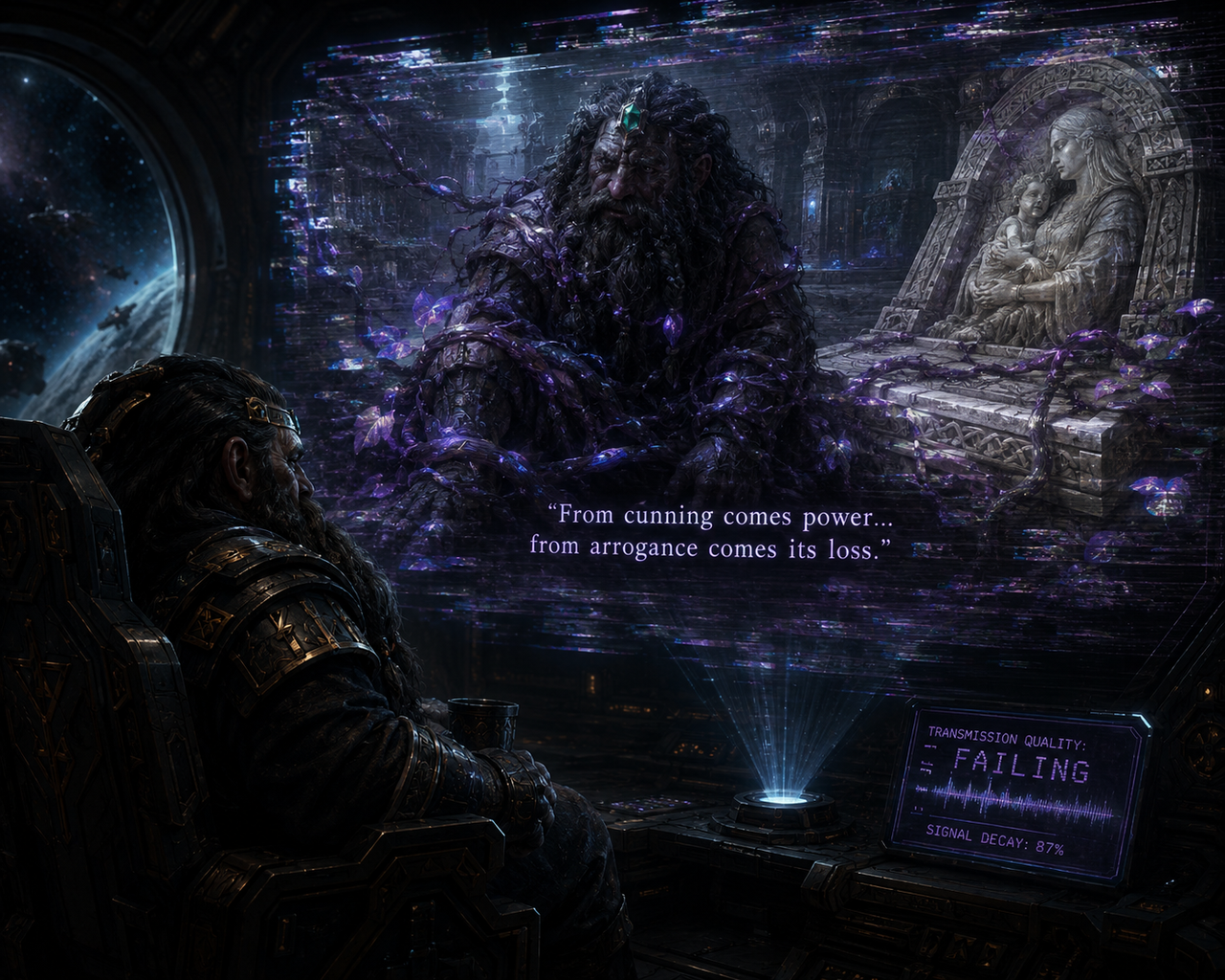
The hologram was jumbled, as if the connection to a lost world was fading along with the desperation it portrayed. Umbral violet vines wrapped around the legs and waist of the dwarf as the plant’s iridescent leaves began to climb and consume the room. A large, uncut emerald was just barely visible amongst the disheveled black hair of the lone dwarf. He was stoic, yet fear, anguish, desperation leaked through his strong browline. He was in a catacomb , though perhaps better defined as a morgue. Beside the dwarf was a large ceremonial tomb made for two, its ornate engraved ivory shaping the silhouette of a dwarven mother holding her child. The father, the husband, sat light years away watching the faded hologram. The pain-soaked brow of his friend mirrored back. The trapped dwarf in the hologram muttered something, just barely audible through the fragmented transmission:

”From cunning comes power… from arrogance comes its loss.”

The screen’s transmission began to fade. The widower should have found these words painful: too true, too sharp to speak over the grave of his family. But how can someone find allodynia in wisdom when the bearer was dying; no doubt–by the time this transmission arrived–was dead? Their world, dead.

The hologram faded to pink interference. Scrabbled words eked out.

“Do not lose your mind, Lumi. All power both breaks and builds.”

Silence.

— -- - -- —


Near Present
The Bijol Verdancy
Grove World: Saprophage


Deliverance. That was the word they had used when the dwarves were inherited by the Bijol Verdency. Some sort of freedom, a secured destiny, the success of shipping and handling? Lumi did not quite know the definition. But he did not feel delivered.

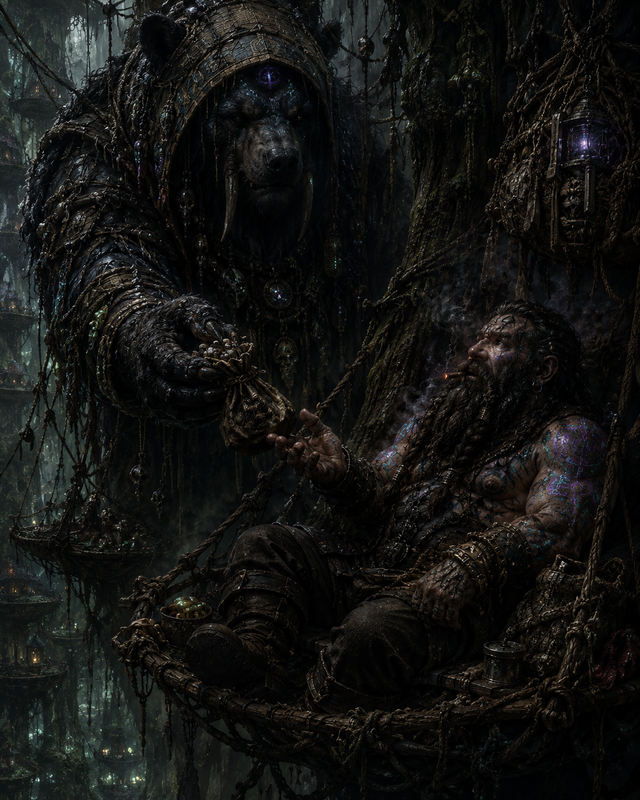
The middle-aged dwarf took another drag on his pungent cigarillo. The air around him was so thick and moist that it felt like the smoke only traveled downward about his figure. A nuisance though it was, this blanket of smoke was quite the point. A shroud against the maelstrom of midges, moths, mosquitos and mysteries of this swamp. He dangled precariously a few stories above a festering bog in a large woven portaledge. The giant arboreal wall was dotted with many such rickety structures; filled with tired families, hushed-laughing young couples, or broken old men. He took another drag of the cigarello, alone.

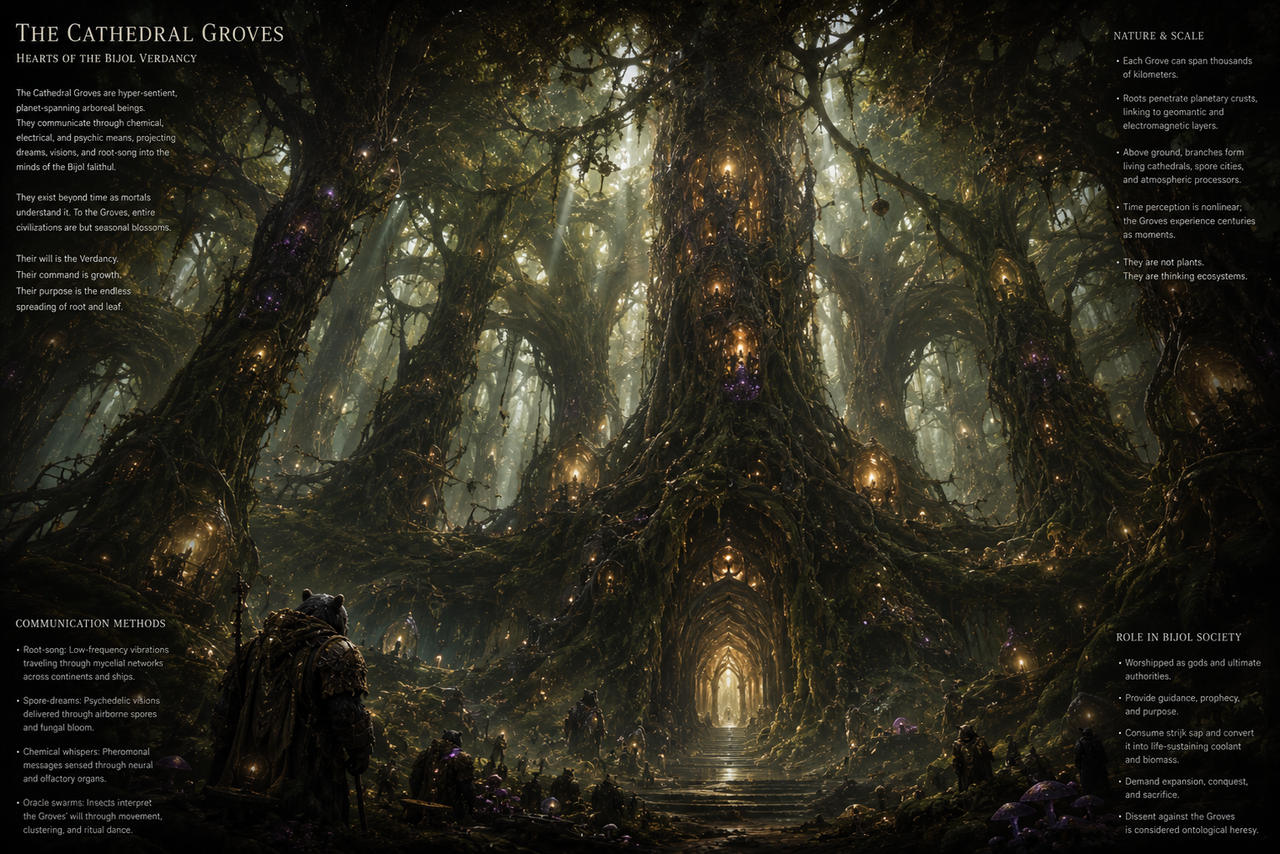
He had once been a great man, or at least a household name. Governor of the greatest system of his dwarven kind, Svart’s Rest. He had been a young man in love when he rose to power. The vestigial wealth of the Yrrani industrial worlds whirred around him. He had been a young father when it was taken away. The Desperation--a cursed, cancerous plant from the bowels of the Wellspring–had swallowed his world, his family, his future. He was a broken man when the cold tendrils of the Pelagor Abyss took them in as refugees, and that is perhaps how he survived. Soon came the Bijol hordes and everyone who had mattered, anyone who had valor, anyone who could think or threaten was tuned to mulch. And so Lumi Slougk survived.

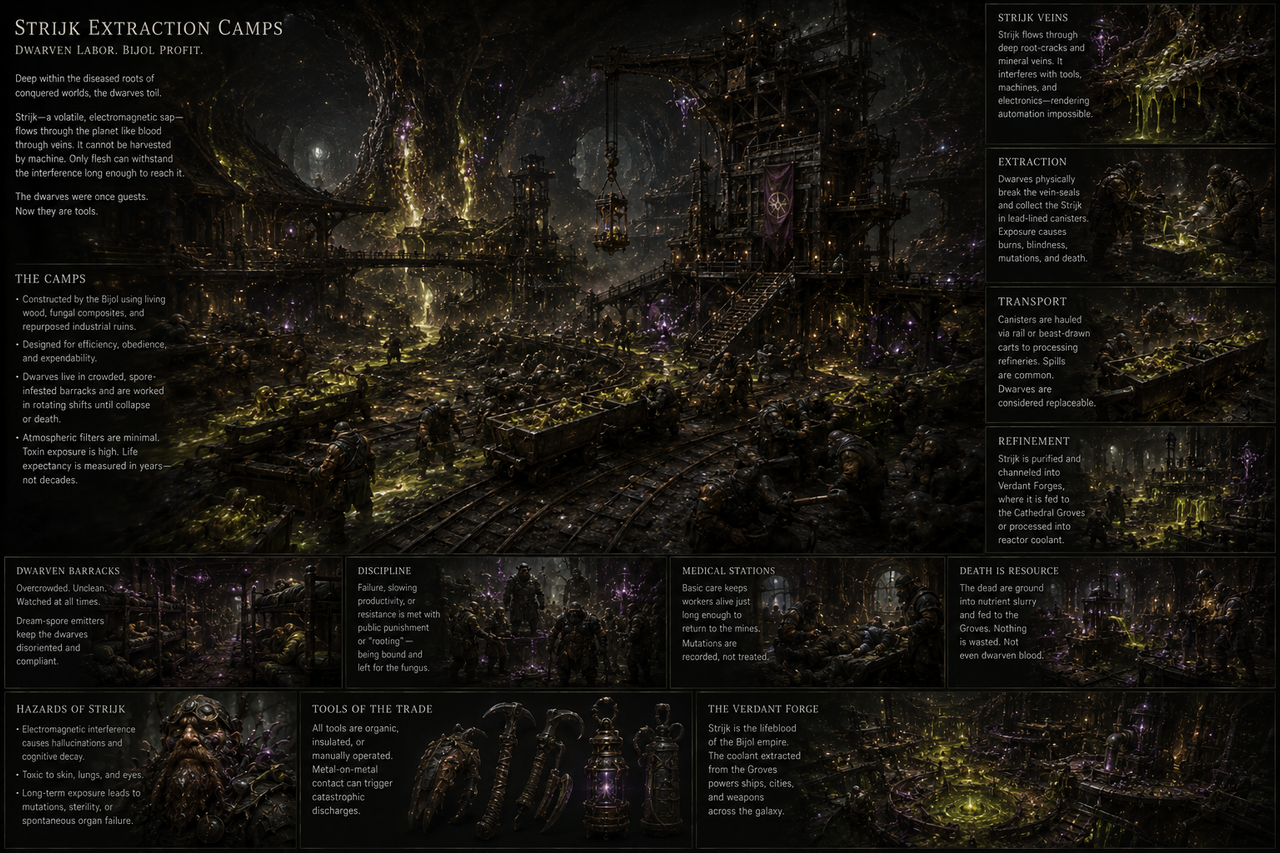
Lumi itched incessantly at his arm. Everything itched. Splotches of sap-burns cratered amongst the many swells of insects bites made him look almost topographical. His life had become about mining a viscous, electromagnetic plasma coolant, strijk. Or at least that is what the sap became after it was consumed and excreted by the sentient trees who had delivered him. It was waste, this was all about waste.

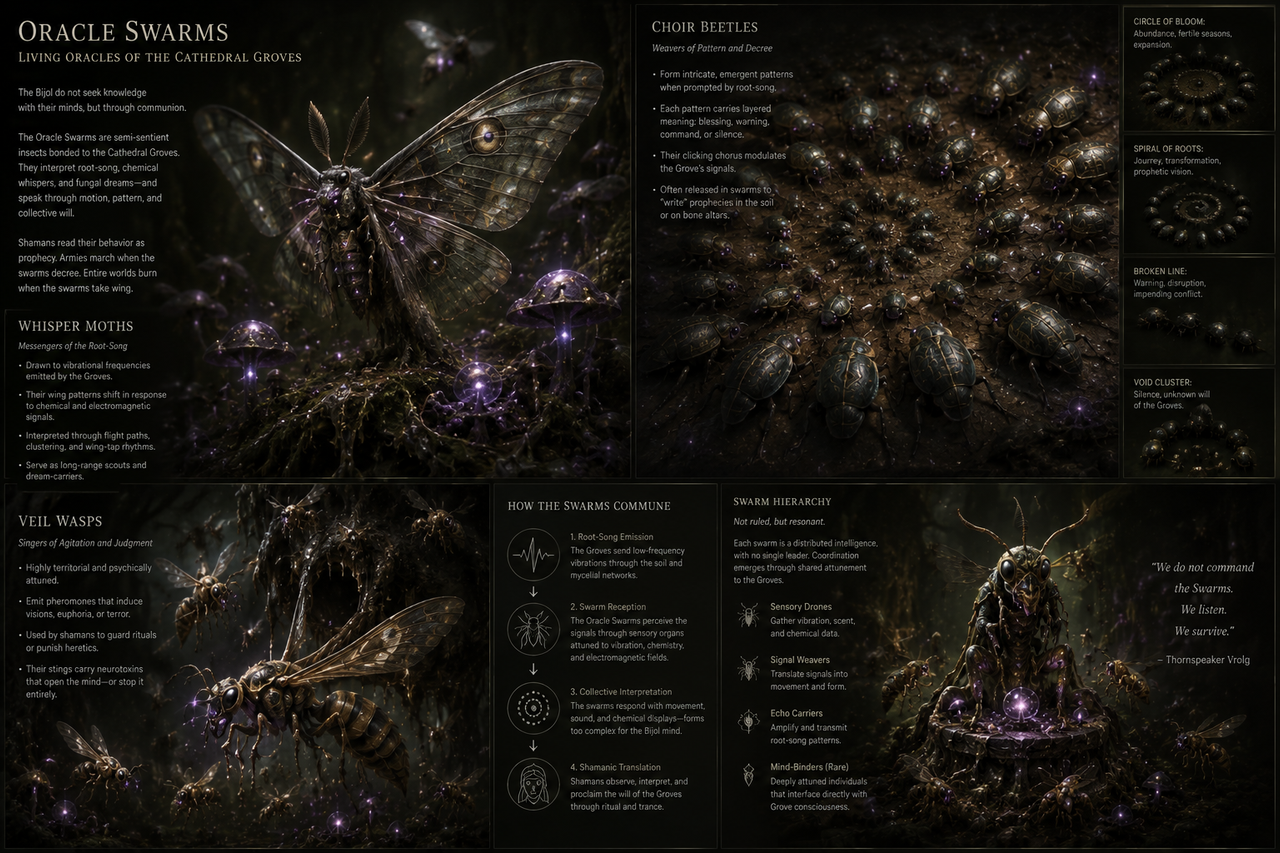
In the patches of intact skin were many tattoos, rather crudely done and in a strange, uncomfortable, iridescent ink. They had been gifted to him in one of his many “vision journeys” at the hands of the Bijol. Eat something, smoke something, drink something handed to you by one of those Bijol shamans and you were in for a trip. In some ways he envied the grotesque ursines, at least they seemed to enjoy such hallucinations. They often sang passionately around their fires, danced for days in the same rhythm, or massacred more fleshy bystanders in these journeys. The Svarts, and others, simply fell to the soil like heavy dew and were paralyzed as their minds evaporated into the cosmos. They would wake up often marred in new tattoos. Scribblings of the Bijol shaman who had guided them. Apparently the markings were biofluorescent to the eyes of the Bijol’s sacred insects. Which would explain why they so frequently made meals of them. His arms had once held a tapestry of his deeds, symbols of his clan, the pillars of his duty: Production, Vision, Relevance. Now Lumi was a neon lunch sign. But to his eyes, the markings, the tapestry, just looked like waste.

However, the faint glow of his cigarillo betrayed an outline in the dwarf’s hand. A small piece of tobacco paper with text so miniscule that it could not be read by the naked eye. It did not keep Lumi from trying. He desperately wanted to read it. He wanted to know what was next. The tree from which he hung was filled with hanging whispers. The strijk miners had been glancing at one another just a little bit longer through the festered plumes of exploding sap. Things in the galaxy were changing, conflict was brewing. Perhaps a true deliverance, a violent revolution like the Abyss Front had seen. Was it they who had written him this note? Maybe the Mother had enough place in her arms for his broken people. Lumi held the cryptic squiggles at arms distance and almost thought he could see the faint outline of a bird… or a woman? What was it that his long-dead friend had told him about the Prydwenite, the noble houses he had so adored? A Lord-Protector, wouldn’t one of those be nice now? Perhaps Lumi’s mind had truly left him. Perhaps equally it was all a trap.

Lumi smelled something… organic. Like algae freshly sweetened with death. He froze. His fingers, once warm from the hygge of nicotine, felt frozen in carbonite. A large figure was climbing up from beneath. He could just barely remark its hulking arms crashing into bark through the loose roped hammock. Shit, the cigarillo. He dashed it out against his knee. Hands fumbled. The missive was gone. Shit. He swatted at the lingering smoke with fervent futility. The mercurial creature approaching would likely hurl him off the perch for offending the multitude of insects infesting this swamp air. Lumi knew the bog was deep and their temper shallow.

A giant claw wrapped around the clew cords of the portaledge. The creature's weight yawed the flimsy structure. A Bijol shaman–clad in runed, hand-woven brigallia, smelling somehow more monstrous than his looming figure could appear–had climbed up the great tree and hung beside him. The creature stared at the diminutive dwarf, huddled cadaverously amongst the thick rope. The creature sniffed the air, with a displeased snarl that betrayed glimpses of long ivory teeth. The sharp smolder whirred about the Bijol snout. The back of the creature's eyes seemed to glow momentarily. Lumi wondered how long he would fall. How deep would he sink? How quickly would the mire take him and turn him into waste.

The creature's eyes turned vantablack. Its movement became labored. Its breath became deep. “Eat,” the shaman said in a bass growl. It threw Lumi, a small bag of shriveled fungi. Much to Lumi’s surprise, the hands which had turned to fumbling clubs feverishly reached out to the offering like an addict to its vice. He scarfed the mycotic sacraments, not allowing the beast a second chance at killing him without his mind already being gone. And it was gone.

He whirred through time. His mind levitated out of his body, out of the hammock, up though the canopy and millions of swarming wings, into the sky, into the stars, distant and then forward, down, to a new world. His sight screamed into the atmosphere, giant scarring streaks of plasma, smells of sulfur and ferrous, wails of terror, roars of rage, thunder of metal and heat, into the canopy, burning, flesh, squeaking armor, whimpering huddled masses, rain, a flag caked in mud and rot. Augusta. Concordat.

Silence.

Hunger.


Bijol Verdancy


Bijol Verdancy


Glimmerdeep, South West Mangroves


Bunfights and Buttonwoods: The Grogar - Glimmerdeep Parley

Haints in the Branches
@Sigma


The shack was never meant for diplomacy.

It clung to the gray-white sand like a barnacle, its driftwood beams creaking with every sigh of the tide. Yet tonight, the gnomes of Glimmerdeep had transformed the ramshackle structure into the stage for one of the most delicate negotiations in recent memory—talks with their unpredictable neighbors, the Grogar.

Inside, two gnome merchants worked with frantic energy. Tibble Reedknot, the eldest, wrinkled his nose as he stirred a cauldron of grog—genuinely foul grog—with a ladle far too large for him. The gnomish pair were adorned in ceremonial armor. Lamellar shark hides were accented with flamboyant jungle fowl feathers and twinkling gemstones. Sharp oranges, iridescent greens; they were more likely to bedazzle a foe than defend against them. They stood shy of a meter, with Tiddle well under the mark, a glancing Grogar blow would shatter them with the same effort as the Potoo birds echoing outside. The armor was for show, to present a strong face to the Grogar, appeal to their warrior spirit as they had been instructed. In practice, a true warrior might think they were a prank.

“Needs more sea water,” Tibble muttered.
“No it doesn’t,” grumbled Perrit Nettlemane, already massaging his temples.
“…the orcs will taste the difference,” Tibble insisted, splashing in another ladleful of brine despite the horrified squeaks of the others.

On the table lay the rest of their “orc-appropriate” feast: a tower of smoked fish, arranged as tastefully as possible for something that smelled like it died twice; loaves of stale, green-speckled bread, which Tibble prayed the orcs would assume was intentional; and worst of all, a massive bowl of lightly seared monster guts, glistening with oils and stray bits of bone, still steaming faintly. None of the gnomes could look at it for long without gagging.

In the center of the cramped room stood their ambassador, Lyrasha Tidewhisper, a merfolk woman with gentle sea-glass eyes and a presence at once calming and oddly rough-edged. Her beauty was simple, natural—unadorned save for the tide-etched tattoos curling down her arms. She carried herself with an unrefined but earnest charisma, the kind that softened tempers and made warriors hesitate. Her more fishlike features lurked half-submerged in brine. A small slit in the shack’s floor had made passage for their amphibious friend. She would not last long exposed to the dry air– even without the fumes that curled within.

She checked the table with a thoughtful hum.
“They’ll respect the effort,” she assured them. “Orcs admire honesty—and bravery. This meal suggests both.”

“Or they’ll think we’re mocking them,” Perrit whispered.

Lyrasha smiled. “Then I’ll tell them the truth: that we prepared it with all the reverence we could muster without fainting.”

Outside, two towering lizard-kin sentries stood on either side of the shack’s entrance. Their obsidian scales shimmered with salt crystals; strange, erratic mambele blades shimmered crudely in the orange dappled dusk. The gnomes exchanged nervous glances every time they heard the guards low-growl at one another. The clack of fishing shoebills in the distance seemed to jag them with angst.

Given the long, thorny history between lizard-kin and orc tribes, a fight breaking out before negotiations even began was not only possible—it was likely.

Tibble peeked out the window.
“They’d better behave tonight,” he whispered. “If either of them starts a brawl, the orcs will take it as challenge-for-territory and we’ll be eating our own teeth by moonrise.” But the guards were not the only source of unease.

Jinch Humithand, a gnome dressed in muted robes and a fine ambered necklace– clearly not receiving the same instructions as his compatriots– parched lazily through a tuft of old faded papers. The binds of their booking were well worn, nearly rotted; her spine crackling with each delicate turn. Its text was strange, old, brutish, yet beautiful. It was orc writing. Memoirs of a great philosopher of their people. Brutish though the Grogar were, they had refinement in their midst. Great minds, art, wisdom. They were like gemstones hidden beneath the crusted opal surface. If only they could be polished. Or cut.

Scattered amongst the pages of prose were spreadsheets. Crop yields, trade margins, mineral production reports, all the data that the gnomes had been able to gather on their Grogar neighbor’s economics. They were surely incomplete, but they were data, and to Jinch that was a beautiful as lacey worded classics abounding. But with this beauty came fear. Numbers that reflected the Grogar were hungry. Satiated, growing, fierce as ever; but Jinch knew they were hungry for more.

It was the more that he, his people, this jungle could not provide. At least not yet. The once great halls of Glimmerdeep, the endless jewel rooms, the wealth beyond analytics was gone. Or at least it was still buried. The gnomes needed time, they needed safety from the baiting axes of their brutal neighbors, they needed investors. At the very least, they needed their neighbors occupied with the spoils of fertile lands elsewhere. Free passage elsewhere, or perhaps paid passage. For now, the northern wood was untamed. The gnomes that inhabited it were mystics and fools, their minds tortured by the Storm and their subsequent capture by the dense jungle prison which had erupted overnight. The only gems they cared for gleamed on the oily napes of their cassowaries. The mutants were a cancer; the same and yet different, spreading their ideas and obstructions with each pulsing generation. They needed to be removed, with force. And yet a delicate force. One that could preserve the jewels in their midst and understand their value. Glimmerdeep needed a scalpel that was both. Glimmerdeep hoped their scalpel was hungry.


Glimmerdeep, North Wood


Harvest of the Whispering Moon

Songs of the Wood


The rain fell hard enough to blur the jungle into streaks of green and shadow; in the stagnant heat, the clinging touch of water was the only semblance of respite. Colossal fronds and dripping roots trembled the bright crests of small cassowary steeds as they slinked through the forest like haunted spirits. The jungle fowl and their small gnomish riders appeared from many paths like streams into a freshet. Their number was hard to count, perhaps two score. Among their saddled packs hung the bright fronds of tropical fruits, the ruffled masses of small monkeys, thick bladders of fresh saps. They were returning. Arriving. A feast was nigh.

Amidst their flow, Jeenuk Splitbeak joined: his face patterned in yellow-mud sigils, his hair tangled with feathers and stones, his arms tattooed from old shamanic rites. Even now, in the storm-dark, his eyes gleamed with visions no one else could see. As his name betrayed, his jaw had been cut by an orc axe seasons ago, sealing back in a jagged weld. He spoke rarely, and never loudly, yet every gnome leaned toward him when he whispered. Jeenuk carried the air of one who walked with ancestors, but in this hunt he was weighted with something heavier.

Like his kin, Jeenuk had set out for the harvest. The Whispering Moon was rising in the night sky, and likely with it a funeral. Big Chtuk had grown old. His once strong arms had become so knotted with trichinella that his hard, dark bark looked knotted and twisted like that of the trees he so loved. Jeenuk had sought to find his chieftain's favorite meal, okapi, to gain his favor, and in hopes to gain Chtuk’s last song; to become the next Big Man of the tribe. He had traveled deep into the northern wood. The cursed place.

There he had heard it. A sound—felt more than heard—trembled through the roots under his feet.

Amongst the theatre of still trees it was a deep, rhythmic tone that made the water ripple in the puddles around him. A sound that resonated in bone and stomach, a sound that felt like the pulse of the earth itself grinding awake.

He had seen nothing, to be seen in this forest was to be dead. But the woods were awake with sounds and signs of giants stirring. Streams were dammed, stones were laid. Yet no fires. No refuse. No scents of prepared meats. These were not the loud invaders of the southlands who defiled the forest with their metal and ash. It was the forest. Moving, building, singing.


For days the band slinked through the dense jungle. The shadows and brambles were becoming familiar again. Armies of ants scurried into their mounds where luminous gemstones cast moongaldes on leaves from beneath. Jeenuk knew that news of what he had heard –had felt– would arrive before them. As the band traveled they sang songs that twinkled through the forest. Like firetowers these songs found distant ears who fed distant ears. It was a story, on this night especially, that traveled fast.

As they neared, other songs met their ears. The gathering at home was large. Blue oiled smokes laced the canopy of trees as the fats of the night's meal simmered. Above the small domed huts and wet smudgy fires arced a colossal baobab tree. It was out of place in these woods. But that was because it was a time long before the storm. When Glimmerdeep had fallen, the great mountain to their south, little of the old world was spared. But the baobab trees, holding the gnomes of these woods deep beneath their roots, had kept their people alive. They had survived off her sap as the world above them shattered away the magic that had ravished it, enslaved it.

Tonight, when the moon was high, Big Chtuk would rise to the baobab tree’s crown branches and ask the sky to never bring magic again. What Jeenuk also knew, what the tribe knew, was that Big Chtuk would be buried under its roots –like his ancestors before him– by sunrise.

Jeenuk crested the camp's border hill, their hunting band in a bubbling ethereal song. It was an encroaching baseline, expectant of melody from homebound women and elders to match.

Jeenuk longed to see the darting, laughing figures of gnomish children; the strong arms of the reedweavers; the old wrinkled faces sitting in low roots, eyes opalescent but with grins that followed cherished sounds.

Instead, his weary eyes saw the creature.

Towering. Meters away. Noise cut from the air.

It hunched, watching, like a hungry mapinguari, but it did not appear to look at the small folk below as prey. It perhaps did not look at all, as its fungoid features only hinted at form and function of life. Yet it was alive. Like Jeenuk had heard the woods become. And here it was. In front of him. Caught in a trap the gnomes had never hoped to lay.

Atop his cassowary steed, Jeenuk raised both palms to the sky. He began to sing. A different song. An old song.

Summary:
- The northern indigenous tribes of Glimmerdeep (gnomes) hear the Verdant Loom awakening.
- Their people resent magic and the industries reforming post-Storm. Reverent of the woods.
- Tribesmen stumble upon a peeping-tom Sporewarden. @Timemaster
Interested as well!
© 2007-2026
BBCode Cheatsheet