He heard something very large slam against the door to his operations room once again. The impact was huge; he stumbled and grabbed the arms of his chair for support. That door was built to withstand a charging krogan, but by the sound of it this one wasn't a krogan. Still, Olan thought on the sound only for that split second. He had an escape route. He wasn't concerned.
The situation wasn't good. His two remaining drones were his only eyes on the field at this point - hardly enough to keep an eye on everyone. That number was about to drop to one. He tapped a button on the interface on his arm and the drone sped behind a group of the enemy. It made beeping noises, the same sort used on detonation devices to indicate when an explosion was about to happen. It was enough to spook the lot of them and throw them into momentary disarray; disarray, Olan hoped, that would buy someone time to pick them off.
But this wasn't enough. Olan had tried everything he could, but there were no turrets, no combat drones, no doors he could use his magic to open up. He reassessed the situation yet again, searching for a way to-
And there it was. His last drone's sensors picked up a passing transport, just large enough to work. It wasn't ideal, and it wasn't armored, but it would work. But could he manage to take control of the transport in time?
He would manage it in time.
"Fall back thirty meters," the volus said over the commlink. He gasped for breath, as Volus often must between sentences, quietly wishing the air wasn't so hard to breathe. "In forty seconds you will see a transport. Get on."
He didn't mention there was a driver on board the transport that would surely resist. He didn't mention that it wasn't armored, wasn't going to stand up to any serious firepower; they'd just have to get on and get out fast. But they'd manage that, too. They had to.
Olan worked very fast. It wasn't long before he had wrested control of the transport from its pilot. It was cruising into position, so his digital map showed. Everything was going according to plan.
The banging behind Olan got louder and louder, but he knew he still had time. Whatever was out there wasn't enough to break that door down, not in the seconds he needed. The little transport arrived at its destination...
...and the door burst open, hitting the floor with a sharp BANG! His ears rang, and as he swiveled about in his chair to see what had managed to get inside. There they were: a batarian and two humans, one of them clearly a demolitions expert, with smoke rising from around them and guns pointed at the Volus. He had no time to escape. He was trapped.
"I surrender," Olan said slowly, his hands on his belt. "Don't shoot."
It was dark. Then again, it was always dark on Omega.
Of course, Olan wasn't there to see that it was dark personally. As always, he was relaxing in the comfort of his operations room, well away from any possible danger. That wasn't to say he wasn't participating; Olan was a professional. He had three spy drones flitting about the market, peering about for any signs of trouble.
Still, the others seemed a bit too jumpy. Raya, as usual, seemed like she was itching for a fight; Daro and the human seemed particularly twitchy. Haze, thankfully, was already scoping the area out on a rooftop. An extra pair of eyes never hurt.
But, Olan thought to himself, I am the one in control.
"'Lights out' procedures are prepped." Olan took a deep breath between each short sentence. He had to catch his breath so often. Volus problems. "Have your nightvision ready. At the first sign of hostility, I will enact those procedures."
It wasn't a difficult task, really, and it could buy the team several seconds. The hacker was also having worms search for any other useful tech to interface with in the market, but he didn't need to tell the team that. If he found something useful, he'd just use it. The only reason he mentioned the 'Lights out' procedure was because they'd need to know how to react to take advantage of it.
Silently, the Volus checked his drones' sensors again. He wanted to be aware of whatever Jek was bringing to the party.
I like to reserve Characters for "final-draft" applications. If there are any errors then it can be corrected as I find it. Otherwise posting it here in OOC I'm considering it as a sort of move towards peer-review.
Realm: The People of Oumaoro Race: The Oracles, Humans Location:
Backstory-History
History is not simply a series of facts nor merely a matter of the strong overcoming the weak. Two opposing stories often are both true and no people, however weak, are truly powerless. Those bound to a single, absolute truth have no understanding of what or why history is.
- Oracle Omauoi
Legends and myths may only be stories to those that call themselves civilized, but they are as much a part of history as the books the civilized hold so dear.
The pale, beautiful, serpentine creatures known as the Oracles have dwelt far beneath the earth since times immemorial. Legend says that when the dwarves, the Vishput, first found them, they believed them to be nothing more than strange cave animals. So, the dwarves captured these gentle beings and butchered them, savoring their soft, sweet flesh. When the first Oracle spoke to them in the words of their own language, the gluttonous people were themselves speechless. That Oracle had learned to speak the language of the Empire of Visha in the span of a fortnight.
There were many more Oracles in that bygone era. The Vishput, however, did not appreciate the cleverness of their species. They saw the Oracles as a threat, as an infestation that had to be burned away before it could bring total destruction to their world. And so that is what they did: the Vishput found where the peaceful Oracles made their homes and set about murdering a great many of them. Yet the Oracles did not fight back: they let the dwarves have their way, and when the petty destroyers finally saw the passivity of the creatures, they had already slain so many that the caverns were flowing with blood that went up to their knees, so the legend goes.
The Oracles did not hate the Vishput for this.
The blind creatures were enslaved by the Vishput, but not as mere laborers or soldiers. Some were kept as pets in zoos or in the courts of Visha princes. The species was recognized for its keen intellect, however, a shrewd nature that equaled or perhaps even surpassed that of the ancient dwarven peoples. So, in an odd twist of fate, the same creatures that were often seen as pets to those very princes would be offering their sagely advice to their owners, and a great many still were kept in the Stone Library of Samra Raj as lorekeepers and scribes. Those Oracles were tasked with recording history, teaching it (under Vishput supervision) to others, and maintaining the purity of the records. They were punished terribly for any damage done to the archives, for allowing any falsehoods - falsehoods in the eyes of the Empire's rulers - to enter the Stone Books, and for any measure of disobedience. Execution or dismemberment was often the means by which justice was dispensed, and the remains of the guilty would find themselves in the guts of wealthy families of the Empire.
And still the Oracles did not hate the Vishput.
It is here that the memories of the past become murky waters. As the Empire of Visha fell, some say the Oracles stood by their masters to the last hour, still bound by their gentle nature and unwillingness to harm. A greater number say the Oracles rose up violently like others did, devouring the foul Visha for their wicked ways in an ironic sort of revenge. A few say the Oracles did nothing of import in this time. Most Oracles, however, say the story is quite different: they saw the dark times that would befall the Vishput and sought to bring that end about more hastily. They say that seeds of discord were planted by their kind, that whispers in the ears of princes were used to light the fires of jealousy and paranoia, which helped bring the final days of the Empire to fruition.
That is, at least, what the stories say. The stories say more: the Vishput blamed the Oracles for some great tragedy, and so the gentle creatures were slain by the hundreds wherever they could be found by those vile builders of empires. Those in the Stone Library managed to survive, but only a sparse few outside of Samra Raj were able to escape death. Those Oracles have long since withered in their old age and passed away in distant lands.
The fall of the Empire was absolute. The gentle Oracles kept the doors to their great libraries sealed until the violence stopped. When they opened the door, they saw a city in ruin, a place full of ghosts and terrible memories. So, they gathered as many of the countless Stone Books as they could and left the city, traveling south into the wet marshlands of what is now called Oumaoro ("The Watery Place" in the Oracles' ancient language).
The city the Oracles found was in terrible disrepair. It was not as large as most other cities, was of very little significance, and was one of the first places to be abandoned in the wake of the troubles. Much of its surface half had been devoured by the swamp - including its great dam - and many parts of the underground were flooded or collapsed. This, however, was exactly what made it so attractive to the Oracles. The amphibious beings turned the watery ruins into their new home and filled its underground pools with their eggs.
For a time, there was peace there. The earth soon spawned a new threat to their existence, however: the Shishkarat. The little creatures would come and try to kill them from time to time, but centuries of being punished by the Vishput had taken away the utter passivity in the Oracles. The young ones fought back, using their massive jaws and their whip-like tails to drive back the vicious Shishkarat. It was a terrible thing to them still: they had no desire to fight, and even despite their efforts their numbers slowly dwindled. They needed help.
Humans came, having heard hearing stories from adventurers of great, pale dragons that lived beneath the swamps. They met the Oracles in their subterranean home, marveling at their size, their beauty, and their kindness. The Oracles let them take whatever they wished from the city and the surrounding land and allowed them to settle wherever they wished. It quickly became clear to both parties that they could help one another: the humans had trouble fending off creatures in the wetlands while the Oracles could maneuver through the waters with ease. Conversely, the Oracles were hard pressed to fend of the seemingly endless Shishkarat attacks whereas the humans, while not well adapted to tunnels, could wield weapons and wear armor that allowed them to defend the Oracles from the endless waves of monsters. A symbiotic relationship was quickly formed.
Years went on. The humans of the territory and the Oracles shared much with each other. The humans came to respect the Oracles and revere them as great seers and teachers. The humans managed to make the decaying city, now called Oumal, inhabitable. They lived above the ground while the Oracles lived below, and soon they did not need the Oracles to help them protect themselves from the threats in the marsh.
From this city and the settlements that sprouted around it was the nation of Oumaoro born. They did not call it a kingdom, nor a republic, nor any of those other terms; it remains simply the Watery Place, as the place where they have built their city, as their home. At the heart of this storm-ridden land is the Flooded Temple in Oumal, the place where the Oracles still record history in the Stone Books. It is the Oracles that are appealed to for counsel by those that lead the people of the marsh, and it is the humans that march the shadowed halls beneath the earth, seeking out those threats to their benefactors.
That is, at least, what the stories say.
Government
There is no unifying central government for the people of Oumaoro. There is, however, a pact of non-aggression and general cooperation that is shared between the people of this wet region. They govern themselves as they will. Most have a plutocratic form of governance, though a couple are in truth independent fiefdoms ruled by men claiming noble birthright.
All the townships look to the Oracles for guidance. The Oracles, while not rulers of this land, hold great sway over the people and provide sagely advice to help them expand and protect themselves. If the Oracles were to say the time for war had come, then war would likely be waged; if they were to say they had a vision of a great hero coming from the east, then chances are someone would be sent to find this great hero.
In times of great danger, however, Oumaoro's people will choose someone to lead them, often approaching the Oracles for guidance. The Oracles have chosen different sorts of people in the past: nobles, adventurers, peasants, beggars, and thieves have all led a confederacy of Oumaoro people before thanks to such insight. Those the Oracles choose are often either well prepared to do their job or quickly grow into the position.
In the end, however, the various townships are independent of each other and of the Oracles, choosing to work together rather than being forced to by ancient laws.
The Oracles themselves have a strange connection to one another. They hold councils over different matters, both the young and the old being allowed to participate, and make most decisions as a group. Humans are allowed to participate in these councils, and they have sometimes swayed the Oracles to take courses of action they would not have considered. Oracles who disagree with the group often acquiesce to the group's will, but sometimes choose to follow a different course of action on their own... which is one of the reasons some Oracles become travelers. The Oracles, like their human allies, will often choose one among them to lead them in times of trouble, and they also choose someone to be the chief adviser to the humans of Oumaoro.
There is no political treachery between the Oracles themselves. They do not plot the downfall of their kin, nor do they try to gain power over the others. While there are a rare few wicked Oracles that have existed, these beings often become travelers and try to exert power over lesser beings around the world.
The Oracles
There are few Oracles now, and though their numbers no longer shrink, they do not seem to be growing. There cannot be more than a hundred of them left in existence, and the people of Oumaoro bemoan the day when the species disappears from the world entirely.
Summarizing the Oracles is not an easy task. They are often known to be great, magnificent white creatures, like pale, eyeless dragons that dwell in the water and move with serpentine grace. They are eyeless, and yet somehow are able to move throughout the world around them. The Oracles say this is because they make sounds with their throats that let them listen to the vibrations of their surroundings, but legends claim that it must be magic. But perhaps what makes Oracles unique are these two qualities: they do not eat past their egg-laying age and they shrink as they grow older.
Oracles begin as eggs in the bottom of the sacred birthing pools in the subterranean half of Oumal. These eggs absorb whatever drifts down to them, and the more they absorb the larger they'll grow, but they can survive without such sustenance.
An Oracle is largest on the day it hatches, usually between thirty-five and forty feet long - gargantuan compared to most creatures in the world to say the least. These young Oracles are like great, swimming lizards in this form with tiny limbs that are dwarfed by the rest of their body. It is also during this time of youth that Oracles lay their eggs in the sacred pools; after that, they will never eat again.
Oracles shrink. Over their long lives - three hundred years long, to be exact - they slowly become smaller and smaller until they are the size of a man. When they are man-sized, they begin standing upright on their legs and can carry things in their hands, but they are at this point so old and frail that warfare is an impossibility for them. Finally, as they near death, Oracles will submerge themselves into their sacred birthing pools where they will feed their unborn children with their own bodies.
Interestingly, there are no males or females among the Oracles. They are genderless: every member of the species is capable of laying eggs and may fertilize the eggs of any other member of its species. This is confusing to other races.
Oracles are highly intelligent creatures. They are highly curious and inquisitive and are always happy to tell or listen to a story. Oracles of different ages set out into the world to discover new things, and this is a cause for their inability to grow as a species. Being so peaceful, many of these would-be adventurers are slain in the open world either by the harshness of the wild or the cruelty of man.
Some Oracles are taken into the courts of distant rulers where they become sages and teachers. This sort of position is amiable to them, but they often return home before they die so they may join their children in the sacred pools.
The species is dedicated to the preservation of the Stone Books, an ever-expanding volume of stone tablets on which the history of the world is etched. They are also willing to write almost anything into stone so long as someone is willing to tell a story. To them, a simple wives' tale has as much historical merit as the recording of a great war. This, too, has been a source of much confusion and anger; many a noble has come to the Oracles to have his legend carved into stone only to be forced to wait for a simple fishmonger to finish telling the Oracles his own story.
The humans of the land do not worship the Oracles as gods, but they do revere them as higher-than-human beings. They often come to the sacred pools to pray alongside the Oracles for guidance and wisdom, to meditate, and to watch the birth of their young. The Oracles often tell their visitors stories of the past, some of them tales of ancient kings, others of the common adventures of children in the woods. These qualities, along with their inherent kindness, their abhorrence for bloodshed, and their largely non-judgmental perspective makes them well-loved by the people of Oumaoro.
That's fine by me! What do you suppose your peoples' stance is towards the Xiang at present?
The Commonwealth is fairly split on the matter. Torvell, for the most part, see Xiang as a harsh lot of conquerors and advises the dwarves to not associate with them. Some of the dwarven Merchant Princes feel the same way, most feel neutral on the matter ("As if their crude machines could breach our walls anyway!"), and some see them as a good potential ally to be worked with... But making a proper ally of them would either mean finding a way to dazzle them with dwarven splendor (doubtful - Xiang has a larger, more powerful empire with beautiful buildings) or to find a way to get someone whose interests align with the Commonwealth's onto the throne.
Crowned Prince Amglam Forisen is part of the last group. He thinks such a large and potentially dangerous neighbor should be turned toward another direction before things get out of hand and is more than willing to engage in diplomatic talks. If you can't kill the tiger, you lure it to someone else's home.
...I just realized that I COMPLETELY forgot to fill in the Economy section.
Let me add that today.
@Inlaa The deity shares a common mythological origin with the Ospain Pantheon, and their version of her is located Here. Working off those names, her name in Jura is Surana, and they believe the moon is her consort (named Juran). She is sometimes referred to by name, but more often she is called "the Goddess" or "Mother Light."
@The Omnipotent Sphere, @Aristo, I decided to include elements of your nations in my backstory - namely, Xiang's military conquests and the religion of Jura. Let me know if what I've done is okay with you. I can remove what I wrote if necessary.
I have made a custom trait and a custom flaw. They're included in the nation sheet, but I'll list them here as well:
Kingdom Trait: Brutal politics - Assassination is more than just a means to an end in the Commonwealth, but an honored tradition. The dwarves of Ogdaren have turned this practice into an art, and when it comes to making someone very, very dead, their assassins-for-hire are the best around. Of course, some of these master assassins are willing to work for foreigners...
Flaw: Here Be Dragons! - No, seriously. Though they've been greatly reduced in number, a few dragons still live in the mountains around the Commonwealth's cities, and they're not the friendly kind of dragons. Nobody knows if they're intelligent or not; anyone stupid enough to try talking to them has been burnt to a crisp and eaten. They raid villages, attack caravans on rare occasions, and mostly just fly off with ranch animals. They're a right menace. While they're not as devastating as a severe bandit problem, they're far harder - almost impossible - to get rid of.
Let me know if this trait and flaw are accepted.
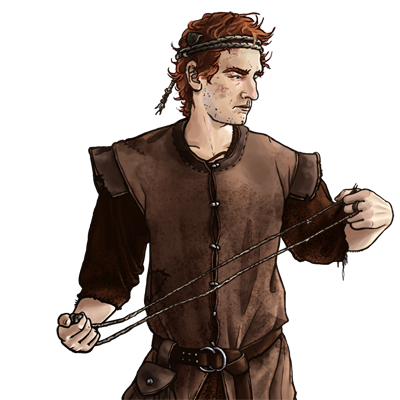
EDIT: Removed a holdover about magic from the app (WHOOPS) and included a picture for commoners.
Location:
Name: The Ogdaren-Torvelli Commonwealth Flag:
Capital and Major Settlements: Ogdaren and Torvell are two distinct city-states, one dwarven and one human, located in the mountainous region known as The Daggers. While the dwarves have built a massive fortress in the mountains themselves, the humans of Torvell have settled in the foothills, enjoying the privilege of being the main "gateway" to Ogdaren. A third city, the dwarven port city of Kaloch, is a vassal to Ogdaren and serves as the coastal entryway into this dwarven realm. Beyond those foothills lie rural ranching lands populated by both dwarves and humans.
Ogdaren - An impregnable fortress-city dug into a mountain in the mountain range known as the Daggers. The populace is chiefly dwarven, though some humans and a rare few half-dwarves (derogatorily called "Halfmen") are among the populace. Its outer walls protect the ranches and vinyards this place is famous for. It has a rather simple tunnel network that caravans sometimes use. This tunnel network allows quicker passage through the mountains and also connects it to the port city of Kaloth.
Torvell - A walled, hilly human city at the base of the mountain. Streams of water from the mountain peaks flow together to form a river which sidles between the hills and down toward the sparse forest below.
Kaloth - A rather poor port city known for its pubs and for being a mercenary hub. It has a higher crime rate than the other two cities in the Commonwealth. It is part of a tunnel network that connects it directly to the capital city of Ogdaren, allowing quicker trade and an escape route that can be collapsed if necessary.
Ruler and Royal Family: The bourgeois wield great power in the Commonwealth, but power ultimately rests in the hands of a number of Merchant Princes. These Merchant Princes elect a Crowned Prince, who by law must be "of dwarven blood," to rule the Commonwealth for thirty years. The Crowned Prince may be reelected as many times as the Merchant Princes wish to choose him.
Amglam Forisen is the current Crowned Prince. He has ruled the Commonwealth for forty-five years and is busily trying to shove his two unmarried daughters, Joane and Danae, at any dwarf of influence outside of his realm. This is proving difficult as there are few influential dwarves outside of the Commonwealth and Danae has an unhealthy preference for human men, a taboo fetish to be sure. His three sons - Ulrich, Angden, and Lorig - are currently married to the daughters of Merchant Princes throughout the realm. He used to have five siblings, but two of them have had mysterious "accidents" after trying to sweep the family's holdings out from under him. The remainder are his twin brothers, Holgrim and Halgrim, and his sister, Eglise.
Amglam has managed to maintain control over the Merchant Princes through a complex web of blackmail, threats, and bribery. If it were not for that, he would not have been reelected.
People/s: Dwarves are the majority race in the Commonwealth, representing roughly seventy percent of the population. The rest are humans; any non-humans, non-dwarves in the Commonwealth are too few in number to matter in a census. (Unless you count the Halfmen, but they're only arguably people. They would make up three percent of the population if they counted. Most of them are bastards.)
The dwarven population is not originally from the continent, arriving generations ago as colonists. They have lived here for hundreds of years, however.
The human population shares a lot of heritage with the people of Jura, though some of their old traditions are slowly adapting to the changing political climate. Some have blood of the first peoples to live on the continent in them, and a few others have the foreign blood of the Xiang empire.
Kingdom Traits:
A breaker of webs - Your agents are many, and as such they combat the spy network with great efficiency. Brutal politics - Assassination is more than just a means to an end in the Commonwealth, but an honored tradition. The dwarves of Ogdaren have turned this practice into an art, and when it comes to making someone very, very dead, their assassins-for-hire are the best around. Of course, some of these master assassins are willing to work for foreigners... Schools - Your people are taught in schools. Some folks are literate. Developed infrastructure - Your roads are well-built, your villages have wells, watchtowers, and even walls sometimes. Armies and caravans pass rather quickly through your lands.
Military Traits: Good equipment - Many of your soldiers have access to good equipment, which means that they'll fight with better armor and arms. However if you take this trait along with the trait 'Big armies' you get a modifier making less soldiers have the same good armor and weapons. Show of war - Songs are sung, crests and sigils are adorning the shields, tabards, flags, and even painted on faces. The morale in such moments is extremely strong. Awe-inspiring fortifications - Your castles and keeps are known for its' beauty, but most of all its' security as they stands tall and imposing, as a big challenge for the world. The kingdom's forts are highly valued strategic positions which reinforce certain regions and protect it from the foe.
Trade Traits: Rich with ores - After successful expeditions into your mountains, you've discovered numerous veins of rich ores and still to this day you're making profit from them. Important trade routes (COSTS 2 POINTS) - Many roads vital to international trade go through your country. Merchant guildmasters bow and pay tariffs to you, coin circulates through your demesne like blood. Ancient merchant families - Your merchant families are old, all having haggled with kings and queens of old. Through them you can get access to many other markets and places. The Merchant families and guilds are extremely powerful, almost as powerful as your vassals, or even more. Black market - There is some very interesting wares that can be purchased in your domain, if you find the right person and have good coin. And even for Your Majesty's unspoken approval, they can give a share.
Flaws: Here Be Dragons! - No, seriously. Though they've been greatly reduced in number, a few dragons still live in the mountains around the Commonwealth's cities, and they're not the friendly kind of dragons. Nobody knows if they're intelligent or not; anyone stupid enough to try talking to them has been burnt to a crisp and eaten. They raid villages, attack caravans on rare occasions, and mostly just fly off with ranch animals. They're a right menace. While they're not as devastating as a severe bandit problem, they're far harder - almost impossible - to get rid of. Sellswords - Often mercenary companies form the backbone of your army, which is not a very good thing considering that they are only loyal to their purse. Corruption (+1 point) - There is clientelism, bribery, and other disgusting things in your government. Your closest advisors take a slice of the tax money for themselves and possess too much power, fighting over the kingdom like petty children. Overly powerful merchant guilds (+1 point) - These ones can become an annoyance if you get on their bad side. They can even try and assassinate you if they consider you dangerous or a liability.
Culture: The dwarves of the Commonwealth worship Bruen, the god of writing, law and trade. They tout him as the father of the dwarven race, though non-dwarven sects of the religion often disagree. The dwarves use a runic writing system based around this religion, though they also practice the writing system common to the Seyan kingdoms.
The people of Torvell largely worship the same goddess - Surana, Mother Light - that the people of Jura do, but there is a growing cult to Bruen among them as years as the weaker partner in a Dwarven alliance have changed their culture. Some humans believe this to be a serious concern; others say that Bruen and the Goddess are not so different and may, perhaps, be the same deity viewed from different lights. Do not both seek to illuminate the darkness? Simply because one does so with words and another with light does not mean they must be opposed. Some claim that Bruen was a prophet of Jura; others claim the opposite is true. Either way, there is a definite religious shift happening in Torvell, though the ranchers beyond the cities still largely worship the Goddess.
As trade comes first and foremost in the Commonwealth, the studies of mathematics, writing and foreign cultures comes first and foremost. Astronomy, calligraphy and cartography are highly valued as well, and are the subject of several higher education institutes (which, of course, are by and large only accessible to those with wealthy backgrounds). Thus, among the populations of Torvell and Ogdaren, literacy is rather high (roughly 50-60%). The port city of Kaloch is comparably uneducated (roughly 20-30% literate); fishing and hard labor come before schooling there. The ranchers are similarly educated to the people of Kaloch.
Politics within the Commonwealth are some of the deadliest within the world. There is even a saying based around this: "Never dine with a dwarf Prince," a saying invented two hundred or so years ago when a dwarven Prince invited all his enemies to a feast and poisoned all of them. Great disputes are sometimes settled by duels, but assassinations, poisoned wine and strange "accidents" are much more common. Even the duels often have a dash of devilry to them; duelists have a habit of poisoning their swords and axes, the better to assure their victory. Such dirty politics may be the reason why dwarves are so resistant to poison.
Thankfully, most disputes do not require such overt acts of murder. Most are settled in the courts or with bribes and blackmail. Some Princes are prone to kidnapping the family of their rivals and using them as leverage to make another Prince vote in a way that is favorable to them. Wealthy families have adapted to this over time; kidnapping is not as traumatic to the people of the Commonwealth as it is for other peoples, and some view being kidnapped as a sort of vacation from the drudgery of day-to-day life. There is a sort of formal air to it, and the prisoners are often given reasonable quarters and a servant to assist them. Nevertheless, angering a rival may lead to the summary execution of these souls in gilded cages.
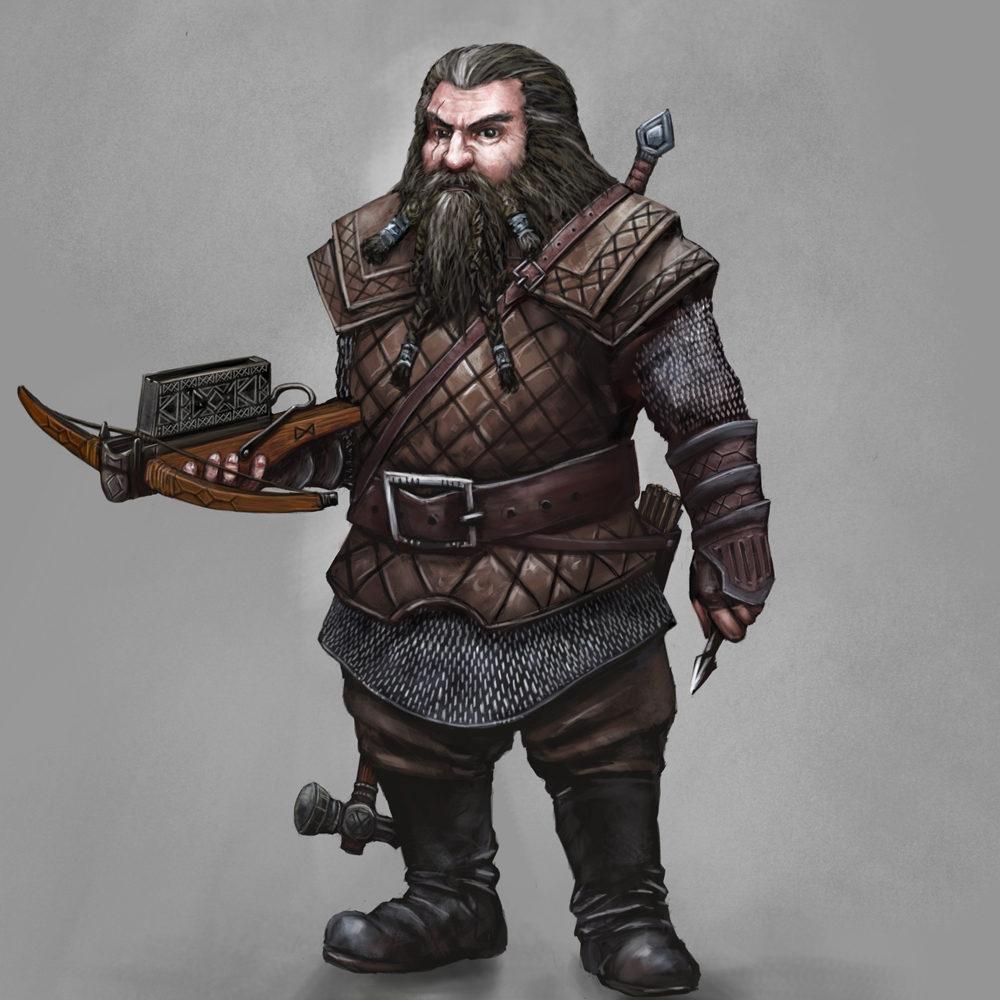
Assassins are honored members of dwarven society. These individuals do not dress in black leather and wear clothes that belong to men of the night; rather, they dress like ordinary citizens of the Commonwealth, the better to blend in with the people and go unnoticed. They are trained in the use of poison, explosives, and various forms of weaponry, especially the crossbow. Some are trained in runic or illusion magics. While their identities are secret, stories of an assassin's endeavors are spun everywhere, and it's a well known fact that the Merchant Princes employ assassins regularly. Still, some of these assassins tire of their work and become adventurers - a profession just as honored among the dwarven people, and one that lets the former assassin be adored by the public.
Military: The first defensive advantage of the Commonwealth is its natural barriers. With mountainous terrain and an ocean as natural barriers, most invaders would be hard pressed to find a good foothold. Furthermore, dwarven stonework being what it is, the walls that protect the three cities of the Commonwealth are mighty and firm. Even more damning for any would-be conquerors: there are enough vineyards and mushroom farms behind the walls to keep the defenders sustained for a long time.
The real weakness lies in the defenders. While the troops are well-equipped to hold the walls for a long time, most of the professional soldiers are mercenaries whose loyalties lie with their coinpurse and their families, not to the Crowned Prince. Assassins-for-hire are also plentiful. Invading forces, therefore, might be able to exploit this lack of unity in the professional ranks and turn some of them against the city itself.
Still, the mercenaries and militiamen of the Commonwealth are not to be underestimated. Dwarven crossbowmen are said to be equipped with good crossbows, and human militia mixed with dwarven Houseguards - those who protect the wealthy merchant houses - make for a sturdy frontline. Ogdaren cavalry are also very unique: rather than riding horses into battle, they ride mountain boars that are much more maneuverable in the rough terrain of the Commonwealth than other nations' mounts.
The Commonwealth typically has drummers relaying orders to the rest of the army, making them pivotal to keeping the troops organized. The result is a smoothly-functioning fighting force... and often dead drummers. The enemies of the Commonwealth have learned to go for the drummers in the past. Both dwarves and humans serve in this role, though they are usually children. In particularly trying times, children as young as eight years old have been struck dead by a nasty shot from a bow thanks to being unfortunate enough to hold a drum. While they live, however, these children are heralded as heroes and mascots by their companies; they eat well and are introduced to mead at a far earlier age than their mothers would have wanted.
For particularly large battles, actual bands of military musicians actually attend the scene, playing intense battle music as the armies clash. (Sample music.)
Between their sturdy walls and seasoned mercenary soldiers coupled with burning oil and ballistae, this merchant's realm is well prepared for a siege or an assault on their walls. The ranchers beyond the walls, however, would be at risk, as would any outlying villages...
Caravans originating from the Commonwealth typically have crossbowmen and spearmen in their employ as guards.
Economy: Glittering gold, bounties of crystals and gems - these are the lifeblood of the Commonwealth. While much of Ogdaren's wealth was lost to the old dragon attacks, they still find plenty of rich ores in their mines. Iron, copper, tin, gold, silver... precious stones of all sorts... The Daggers hold such treasures that draw greedy hearts to Ogdaren, hearts that come with fat coinpurses.
Just as important as these rich ore deposits are the trade routes. If gold is the blood of the Commonwealth, then the trade routes are the veins through which the blood flows. As the dwarves have sole control of the tunnel through the Daggers, they can charge hefty tariffs of anyone that wants to move goods through them rather than skirt around the edges of the mountains. Trying to cross over the mountains is, perhaps, even more dangerous than that; there be dragons in those sharp peaks, and they do not take kindly to strangers. Thus, most who can afford passage through the mountains will choose that rather than take the longer route.
The brewers and wineries of the Commonwealth also provide some income, as do their ranches, but they are not a substantial source of income. Still, the grapes used in dwarven wine are of good quality and make for sweet, flavorful drinks. Many of these goods are largely amongst the people, but some are crated and traded in foreign lands.
There is a thriving black market in the Commonwealth, and it holds considerable sway in Kaloth. While the government does not officially endorse the trade of illegal goods and substances, they do little, if anything to actually stop it, and instead take bribes and taxes from those that run the black market. The agreement is simple: so long as the Crowned Prince receives his due, the black market is allowed to do business with only the occasional mock arrest. Such dirty deals have allowed the black market to grow over the last century.
Reputation:
Dwarf lords can't be trusted. They'll smile to your face while stabbing you in the back. Dwarven walls like dwarven men: they're tougher than they seem. They say the dwarves of Ogdaren can sniff out gold. Their miners always seem to find new veins. You can sell furs at high prices in Ogdaren. If you really need someone killed, you hire a dwarven assassin. They say you can buy anything in Ogdaren... Anything.
History: Long ago, dwarves arrived on the Seyan continent as colonists. They were not aggressive, and indeed claimed a part of the land that nobody else really wanted: the cold, northernmost mountains. People thought them a queer lot for choosing such an inhospitable place to live, but they nevertheless eked out a fair living there, building their home into the mountain itself. This city was named Ogdaren.
Ogdaren prospered due to a mixture of luck and dwarven ingenuity. Ingenuity led to the creation of tunnels that revolutionized trade in the region: they dug through the mountains themselves, making a clear and direct path from one side of the mountain range to the other. They built strong walls around those tunnels so that trying to take them by force would be difficult. Their luck was equally wondrous: they found rich veins of gold and gems in the mountains and used these resources to gain leverage on their neighbors. One could pass through the Daggers - the mountain range the Ogdaren dwarves called home, named for their sharp peaks - but they would have to pay for such passage.
And so it came to be that the merchants of Ogdaren attracted the wrath of dragons. Such wealth was held by the dwarves that dragons came and plundered it, stealing their precious gold as well as their livestock, burning their vinyards and their villages, making a mockery of their mighty walls. The dwarves were hard-pressed to win such a battle, and so they used their remaining wealth to hire adventurers to deal with the draconic threat. Many dragons were slain, but the dwarves of Ogdaren have never quite recovered their previous wealth since then.
Eventually, a large number of faithful to the Goddess of Light decided to build new townships - one of these townships was named Torvell - near the dwarven mountains, having had small differences in faith that led them to leave their homeland, Jura. They benefited from being close to the Daggers, built on both sides of the mountains, and enjoyed some prosperity, even if they initially did not get along well with the dwarves. The people of Ogdaren soon reconciled with these humans, however. The fledgling Kingdom of Torvell was formed.
The Commonwealth between these city-states was formed after a war with the Xiang Dynasty went very badly for the people of Torvell, which was a kingdom at the time. Torvell was the only one of these cities to not be conquered by this attack, and then only because they had built their city on the northern side of the mountains. Fearing a second war would be even more disastrous, the Torvelli people turned to their dwarven neighbors for assistance and formed a union with them, disbanding the kingdom and becoming a joint republic at the request of the Merchant Princes of Ogdaren.
Since then, the Commonwealth has expanded slightly, chasing out some natives near the shore and building a small but growing port city. The city, Kaloth, has typical dwarven walls for a defense and a tunnel network connecting it to Ogdaren. The Commonwealth may neighbor some dangerous states, and the dwarves may not be popular thanks to their splotchy history of assassination and intrigue, but they are nevertheless firm in their belief that their walls can weather any assault.
Misc: The bear is a favorite animal of the Commonwealth and is depicted in a great many of their works of art. They also have a fascination with keeping bears as pets and wearing bearskin cloaks.
Dwarves have three names: a given name, a last name, and a family name. Family names are carefully hidden from outsiders, and dwarves never introduce themselves to anyone but family with it. Their last name is usually a reference to their father. For example, Amglam Forisen's last name, Forisen, means "Son of Fori." His family name, which is unknown to outsiders, is a reference to the history of the family.
Is this still recruiting? I've gotten to page 4 of the OOC and am really interested.
I'm looking at copy-pasting a nation I haven't used yet for this. It's a Venetian-Scandinavian dwarf republic, basically. Its focus is on trade, assassination, mercenary armies and standing behind really big walls.
EDIT: And can I see the most recently updated map?
Also going to be gone most of today, but I'll definitely have my first post up either tonight or tomorrow morning. I've gotten some of the post done, but I've been having trouble deciding exactly where I want Olan to be during the fallout.
I don't know if I'll have time to make a post today, as I'll be gone all day (Saturday's my board game / tabletop RPG night), so I'll probably end up posting tomorrow.
I'm working on a joint post as well, though it might not be done for a while.