Oh, I forgot to add: the technological level here is what I'd call "Fall of the Roman Empire" level tech, but you're a small village so don't expect to have ballistae and siege towers and things like that. Also, in case this wasn't hammered home, the culture is meant to come across as very Irish (with a smattering of other things).
Shorticus Member
Filthy Trickster

- Last Seen: 10 yrs ago
- Joined: 10 yrs ago
- Posts: 1645 (0.43 / day)
- VMs: 1
-
Username history
- Shorticus 10 yrs ago
Status
User has no status, yet
Bio
User has no bio, yet
Most Recent Posts
You had no choice in the matter. None of the clan did: when High King Harlaus declared your clan traitors and oathbreakers, it was seen as an act of mercy that he outlawed your clan. It did not matter that it was the deeds of but a few that damned your clan; it did not matter that the High King himself had usurped his throne from the good king who came before him. No: all that mattered was his verdict.
Your clan could have simply dissolved. You could have become part of another clan, one strong and prestigious enough to weather the wrath of the High King. Some of you did, in fact. Yet for most of you, separating from the clan was simply unimaginable. How could you abandon those you've known since you were a babe? They are your kith, your kin, your family, and the bonds between you are stronger than even the threat of death. To sever those bonds is to sever a part of yourself.
So, the clan came to a difficult decision, and in the dead of night you all left Urland, that place which your ancestors' ancestors called home. You began the long journey south, traveling far over the mountains. You searched for a place which you could call your own.
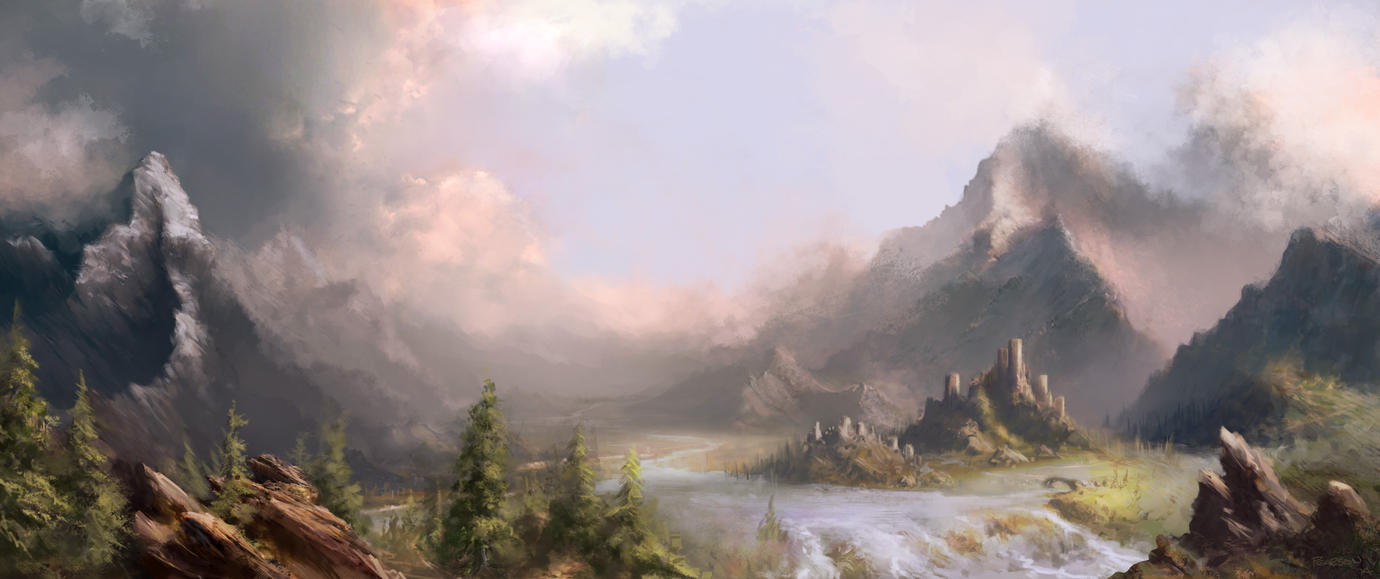
And in the end, you've finally found such a place. It is a vast, beautiful valley surrounded by mountains with a pure and mighty river running through its midst. The trees stand tall and proud, and the game is bountiful, and the fruits are fresh. The god-talkers have communed with the gods and found this is the place which will serve as your home.
But your clan was not the only clan banished by the High King, and this strange, beautiful land is dangerous, too. You have seen strange things moving in the night, and eyes of crimson and a feral jade. You've heard strange music, too, and what's more, you don't know anything about the place you now call home. But you have weapons, you have the gods, and you have your family. When your clan stands together, there is nothing you cannot defeat.
So ends your exodus, yet the journey has just begun. Alongside the others in the Lodge, you must lead the clan to prosperity and see it through the dark times. Together, you must tame this land and become...
Masters of the Hidden Valley.

Okay, so what the crap was all that stuff above about anyway?
Firstly, let me just admit that I was heavily inspired by a certain video game called King of Dragon Pass. Some of the mechanics and decisions I made were inspired by threads presently being run by the players DeltaV and Frengo as well. Credit's due where credit is due.
Masters of the Hidden Valley is a different sort of NRP, mostly because you're going to be working together with your fellow players, not against each other. You and your fellow players are all members of the chief political body of any Urlundi clan, a group called "The Council." Chosen by a mixture of religious rite and electoral procedure, you and the others of the Lodge are
Let's get some bullet points out of the way:
- This roleplay is about teamwork. This is built into the mechanics, the story, the themes, and even the character creation system.
- The odds are stacked against you in this roleplay. In fact, there is a very real possibility that your clan will die out. It's not my goal to wipe you out, but you need to be prepared for the bad end. It can happen.
- You are not playing mighty conquerors, nor do you have a grand army at your fingertips. You are a small clan of maybe one thousand people at most, and you need to worry just as much about feeding yourselves as you do about protecting yourselves.
- This means that some threats will simply be too dangerous for you to tackle. You need to be able to judge when that is the case, because if you fail, that could bring about the end of our story.
- Finally, you should take some time trying to immerse yourself into the mindset of one of these clansmen. There will be inklings of what the culture is like peppered in throughout the roleplay. You won't get a huge infodump, but what information you are given you should read.
- The reason this is so important is that your clan's magic and your people's faith in you as a member of the Lodge both depend on how well you balance the needs of the present and to adhere to tradition. Tradition is everything to a clan: if your ancestors would disapprove of your deeds, then surely the clan is doomed.
- There are dice involved in this roleplay, but I'll be doing all the dice rolling behind the scenes. This means that even situations which seem impossible to fail have a chance of failure. So, before you undertake any kind of dangerous task, be certain you're prepared to deal with the consequences.
Now, you might be a bit alarmed by the bit about ancestors. "Ancestors!" you might say. "But that means infodump! I thought you said there wasn't going to be a huge infodump!"
"And there won't be," I'd answer. You see, it's not going to be an info dump because the first part of this roleplay is creating your clan's history together.
That's right: everyone who gets picked to play in this roleplay will get a chance to decide what the history of your clan is. Think of it as a roleplay before the roleplay, albeit briefer: you'll get to choose things such as who your clan fought for in the past, what god and what spirit animals they call their patron, how the clan was born, and more. This will be done via a voting process, and anyone whose decision did not get picked one round gets counted as having an extra vote the next round, that way nobody's voice is ever completely drowned out.
Hopefully I still have your interest piqued. Let's get to the actual mechanics that will be involved in this roleplay.
Turns and Seasons
Turns in this roleplay will advance once a week, namely every Saturday (exact time not yet determined). Each player can take one action in a given turn, though they may roleplay as much as they please during the week so long as they don't flood the IC and make it hard for others to read. Collaboratives are encouraged for this reason.
There are six seasons in the Hidden Valley: Rain, Fire, Ash, Harvest, Pale, and Moon. You might refer to them OOCly as Spring, a really long Summer, Autumn, and then a really long Winter. There are 60 days to each season for a total of 360 days. Each turn takes up 30 days, and so each season is split into "Rising" and "Waning." I.E. the Pale season is split into Rising Pale and Waning Pale, each of which is a turn that takes place over a week.
The important thing to remember is there are six seasons, each of which is split up into 2 turns, giving us a total of 12 turns, and 12 turns = 12 weeks of play. This means you only need to be able to post once a week, or perhaps twice.
Besides that, keep in mind what happens in each season: if you're attacking other clans in the Rain season, you're depriving your clan of the labor it needs to make enough food to stay alive. And if you don't have enough folks around during harvest time... Well, your crops won't magically harvest themselves.
Characters
You're going to create a character for this roleplay, obviously. Your character is a member of the Council, and one of you will be chosen by me to be Chief. Don't worry about competing for Chiefdom; I'm not going to tell you how I choose Chief. Just make characters you think you'll enjoy playing.
Something to note is that the people on the Council aren't all rich and wealthy and powerful. Some may be warriors, sure, and some may be wealthy farmers or important sages and magicians. Some, however, are just well-to-do shepherds who have a lot of friends or youths who show promise as potential leaders. You can write someone from practically any walk of life and have them be a part of the Council.
If you want to apply to join this game, make a character application now. However, be ready to change your character once we finish making the clan in the first IC. Your backstory and traits ought to be written to work with your clan and with the other players in the roleplay. You want a balanced group of leaders on the Clan Council, after all.
Below is the code for the character sheet. PLEASE use this format when applying:
Traits
Traits are how we're going to define characters. Your traits decide a lot about you: what you're good at, what people think of you, how famous you are... things like that. They're descriptive in nature, and they're helpful for using as a baseline for writing your character's story, and having a trait or lacking it may change the outcome of a battle, course of action, adventure, or event.
EXAMPLES: Let's say you're a Master Builder. If you oversee construction efforts, they'll be easier for you to conduct than someone else. And if you have a trait that makes you a better fighter but one that makes you a weak leader, your go-to option in battles should be to pick up your sword and start hacking at the enemy, not trying to rally the warriors. Why would they listen to you, after all? You're a weak leader.
Traits are purchased with 7 points at character creation. If there's traits you want but you don't have enough points to spend, you can always purchase negative traits. Positive traits have blue numbers at the end (+#), and negative traits have red numbers (-#).
In the hider below are a list of traits. More may come later. Again, I want to thank DeltaV because his trait system (which was based on someone else's trait system) is what I based my trait system off of.
If you take a trait, you are expected to roleplay that trait. In other words: act reckless if you take Reckless. Put that Theatric trait to good use if you take it. Etc.
I may add more traits before the roleplay itself starts.
The Deities
I'll just cover this section later. All you need to know is, uh... There's twelve of them.
Okay, you ALSO need to know they don't walk among us or anything, but they can be interacted with on a personal level. Namely: you can actually, through certain rituals, embark on quests your deities once embarked on in ancient times. These are called "Heroquests," and while they're arduous undertakings with a great deal of risk involved, they can be a source of magical boons for the clan. You shouldn't be embarking on any in your first couple years in the Hidden Valley, but you should keep them in mind.
Urlandi Culture
I promised I wouldn't give you an infodump about this, and I will stay true to that promise. However, there are a few rules of thumb to keep in mind when you're writing your character and participating in this roleplay:
- Honor the Gods. Earning their favor is a good thing, and earning their ire can bring terrible luck upon us.
- Tradition is everything. Remember always what your ancestors did; balance the needs of the now with the ways of the ancestors. Such brings good fortune to the clan.
- Blood demands compensation. Whether you demand more blood or something else is up to you. Cattle, gold and silver, magical artifacts or sufficient quantities of food can be sufficient to end a blood feud.
- Be neither overgenerous nor stingy. There are times when you should give unto your neighbors that which belongs to you or to the clan, the better to solidify relations with them. But there is a difference between generosity and surrendering all you have. Also remember that you can always offer reciprocal gifts in answer to a stranger's gifts: such honors you both.
- Heed the people. Those who have chosen you to serve on the Council can through violence or through appeal remove you from it as well. While such a thing would be a disgrace to the religious rites that put you on the Council, you nevertheless should do your best to keep situations from reaching that point.
- If you cannot protect your herd, you deserve to lose it. While murdering a man is a crime, attacking his clan in a raid to take his herd, his silver, or his land is perfectly just, and warriors who die protecting their fields need not have their deaths compensated. But remember, too, that if you pressure another clan too hard, you may start a blood feud, and who knows what powers they may turn to in seeking your destruction...
Finally, you should know the basic social structure:
The Chief - This man or woman leads the clan and is chosen from among the Council.
The Council - You are a member of this. You are the governing body of the clan. Each member of the Council may come from any other walk of life and often represents that group of people on the clan ring.
God-Talkers - These are the priests of the clan. They search for omens and tell us what the gods want from us each year. Philosophers find themselves lumped into this category even though they cannot speak with the gods.
Gallocmen - These are the professional warriors of the clan. Combat is their sole profession: they do not farm or sow or herd sheep. They only adventure, patrol, and fight. Some consider themselves to be fine poets, too.
Craftsmen - These are the merchants and tradesmen of the clan. Blacksmiths, traders, artists, bakers: they all belong to this category.
Landsman - These are the landed peasantry, and they can be very wealthy folk indeed. A great many kerns typically work for a single landsman. They often have some basic administrative experience.
Hunters - These are the woodsmen of the clan. They are skilled trackers and are adept at catching game, often through use of either a spear, bow, or sling. They make good skirmishers in times of war and patrol the woods to ensure nobody encroaches on our land.
Kerns - These are the peasantry at large, those clansmen who work the fields, tend the cattle, and also serve as the footsoldiers alongside the elite Gallocmen in times of war. They do whatever needs doing.
Thralls - These are those unfortunate souls who have been captured in raids or made slaves due to their crimes. They alone are not allowed to serve on the Council, but they may one day earn their freedom and become members of the clan.

Okay, so that's a TON of info. I know. But who all is interested in this?
I'm going to be honest: I don't expect to see a lot of interest in this. However, if I do get enough good applications - 5 acceptable applications at least - I'll go ahead and start the first IC thread.
I plan for this to take a long time, so keep that in mind. This won't be a rushed roleplay, and it'll be slow to a lot of players. I'll only be updating turns once a week, as I said, and it doesn't matter how quickly folks post. Keep that in mind.
If you're interested, please let me know!
I REALLY wish I had the time to participate in this. There's so many roles that look / sound fun to play.
I'll just say that if I find time, I'll come back and give this another look. But I'm too busy as of right now.
I'll just say that if I find time, I'll come back and give this another look. But I'm too busy as of right now.
I rewrote the middle section of my new post two different times and didn't like it. It was originally a lengthy scene with dialogue and such. I decided it would work better as a sort of "Yeah, this happened" section.
Bittersweet
The morning sun crept back into the air. If the sun could think, it most surely would have mourned.
The first gleaming rays kissed a broken city and red dunes covered in the dead. Some were from Los Pueblos Unidos. Some were militiamen. Some were soldiers sent by the Security Council to protect the town. Before them lay smoking heaps of wreckage and the lifeless bodies of the invading army that had beset the Hopi Nation.
Diane leaned on her rifle, staring across that deathly valley. The wind tossed sand over those brave men and women on both sides who'd sacrificed themselves for this... this...
"We won," said someone behind her. Diane turned her head and saw the tired, smiling face of a young man. Diane didn't know his name. He was wrong, though: it wasn't victory to have your own city pummeled into dust by cannon fire. It wasn't victory to lose so many people, nor to have to kill so many people. And it wasn't victory for your best friend to...
Diane turned away from him. She looked out over the rubble that remained of the wall and back at the field of bodies.
"Yes," she answered. "We won."
The victory wasn't complete, however. The Huachua had taken over five towns in the Hopi nation and destroyed another two, and they had fortified their positions well. There were rumors that more of these invaders were coming, too; and although most of northern Arizona was still securely in Hopi hands, the Huachua threat showed weaknesses in the League and in the border defenses.
There was considerable debate among the Security Council over how best to deal with the threat. The prevailing attitudes were to either strike back as hard as possible against the Huachua or to enter negotiations immediately. Secretary General Bigishie presented a plan that truly embraced "big stick" diplomacy: he suggested taking the army and surrounding the captured towns, besieging them for a few days, then approaching the Huachua for negotiations. Presumably, the threat of facing the combined strength of the Council Guard, the militia, and the national armies would be enough to pressure the Huachua into revealing what they wanted and into surrender. After much debate, the plan was approved.
Good news arrived from the north. First, the expedition sent north finally returned, and it bore the fruits of successful negotiation: heaps of grains were loaded onto horse-drawn wagons, and word was that Gottesland was open to consistent trade.
The sudden influx of food supplies was exactly what was needed to begin the process of securing the Free People of New Mexico's membership in the League. The process was far from over; there were still details that needed to be hammered out. However, being able to offer both an immediate and consistent supply of rations meant that the prospect of inducting all of New Mexico into the League was suddenly a very real possibility.
A caravan was assembled once more, this one with spare fuel for the trip back to the League, laden with metals and coal for trade with Gottesland. Their orders were very explicit: do not let the Gotteslanders confiscate the vehicles. Bring back more food. The Council hoped this would begin a good, steady relationship of trade. They did not know about the revolution happening in the land they were starting trade with.
A considerable force was arrayed around the occupied town of Kayenta. The Navajo and Hopi Nations provided most of the manpower, their soldiers stationed behind sandbags to provide them some protection from the superior weapons of the Huachua. There was a general hullabaloo as reinforcements came in. Occasional spurts of rifle fire came from the town toward the encamped soldiers around Kayenta, but these merely interspersed long stretches of silence and waiting. Nothing much was happening. There was a standstill and a large, empty field between the town and the surrounding army.
A truck started rolling out from the larger army, a white flag of truce held aloft. Inside were a few soldiers, yes, and an officer as well, but also Ambassador Sabrina Wallace. The fifty five year old woman sat in the back of the truck with her suitcase on her lap. She defined calm: she was composed, sat with poise, and didn't show a hint of nervousness. Her confidence had already infected the others in the vehicle, veterans and greenhorns alike. They exuded airs that could make a grizzly bear think they were in charge.
The truck stopped short of the town, and out stepped Ambassador Wallace. She brushed her gray hair back and stepped on forward, escorted by five Council Guardsmen. It was then that someone called out from behind the walls, "What do you want?" At least a dozen visible guns, probably many more unseen, were pointing down at the small group standing in the open.
"We're here to negotiate," the Ambassador called back crisply. "Take us to your leader."
While I'll never buy into the "bards are the worst" idea and would point at clerics as the best min-maxer class in 3.5, I'll just go ahead and say that's an AWESOME story.
Now that I've thought about it more, I once got a DM to kill me out of spite.
Okay. Once upon a time I'd made a Fighter in 3.5 whose specialty was chucking javelins. He had all the necessary stuff: brutal throw, adamantine weapons, the Master Thrower PRC... He wasn't the strongest character ever made, but he had a tremendous wallop with those deathsticks of his. His Strength score was pretty absurd, too.
Anyway, my GM was getting annoyed with him. He started creating encounters that would counter him specifically. You know: Protection From Arrows (because magic stuff was actually rare, even though adamantine wasn't), monsters with Deflect Arrows, etc. I was okay with this. It was my fault for making a one trick pony character. I guess my GM thought he had me beat.
We're not more than level 7 or 8 when my GM decides it's time to whip out a lich. It's obvious that he intends this guy to be a badass: he's tough, he's got minions to support him, he's got a Staff of Seriously Bad Magic Dude in his hand, an Ioun Stone floating around his head... the guy was a spook. And the truth is we didn't have much of a counter: our monk was a monk, our rogue was a rogue whose sneak attacks would do nothing, our wizard was... Frankly, our wizard sucked and was already out of spells by this fight, and the DM NPC had been balefully polymorphed and we made no attempt to turn her back into a human which is probably why we were getting punished with a lich fight at level 7/8.
Anyway, I assessed the situation. I was lucky and got a really high initiative roll, and as the guy always marching in front, I was able to start closing in. I didn't even try chucking javelins because the DM had made it EXTREMELY VERY CLEAR that the lich had SUPER TOUGH BONES which SUPER REDUCED PIERCING DAMAGE. It was laid on pretty thick.
Anyway, turn 1 goes by. I spent it closing in. The monk and rogue are dealing with the Lich's minions. The wizard gets paralyzed by the Lich and some other bad stuff happens. But then it's my turn again.
I look at my DM and say this:
"I grapple the lich."
My DM blinked. "What?"
"I grapple the lich."
"Why?"
"Because he can't cast spells." I left out the part about Silent Spell and Still Spell letting you cast while in that situation because I correctly assumed my DM wasn't that savvy with the system, and I didn't want him retroactively saying "Oh, he has Silent Spell and Still Spell." But I grappled the Lich, and the Lich's BAB and STR were abysmal, so even though his touch stuff (being a lich) would normally be AWFUL to deal with, I pinned him. And that's all I did: I kept him pinned and unable to cast spells.
A few rounds later, the monk decides to jump in on this, having cleared out the minions. The rogue decides he wants to join the grapple as well. Pretty soon the Lich is being grappled by all three of us at once and is getting punched in the ribcage and pelvis every round. Did I mention the monk had some sort of holy handwraps which gave her +2d6 damage vs. evil or something? So, yeah. Lich got killed before ever doing more than paralyzing a single member of the party.
The session ended. The next session came around, and one of the first things that happened is my character got chucked off a 10,000 foot high bridge and died. Such is the wrath of the DM. (I didn't have any potions of featherfall or anything because YRRRRR LOW MAGIC SETTING in which we have a wizard and liches are thrown at us.)
Okay, that's what I needed to know. So paper doesn't need to be invented. Thanks!
Sorry about the late reply there. I've got one last exam on Monday and I've been studying for it... and I've been given control over another roleplay which is going to need a reboot, so I've been discussing that with my Co-GMs. Not the happiest of times.
Anyway, I figured I'd leave plenty of time for Steve to say a few things to Raptora as they arrive at the hangar, but either way: I think they can both effectively arrive there whenever the plot demands them. I.E. if Hellis wants to move things forward now, I'd say "they're there."
Anyway, I figured I'd leave plenty of time for Steve to say a few things to Raptora as they arrive at the hangar, but either way: I think they can both effectively arrive there whenever the plot demands them. I.E. if Hellis wants to move things forward now, I'd say "they're there."
Jessica couldn't help but be offended.
"A collar?" she asked as she stood in her room, staring at the thing on her bed. "A collar?" Part of her understood that surely Mr. Merlovich didn't intend any sort of offense by presenting this, but that didn't help much. She figured a collar meant a lot of things:
Jessica certainly wasn't a cat, and she didn't think she was awful. She also didn't consider herself less than human, but rather a sentient biological entity with intelligence equivalent to that of above-standard humans and also a lot more kickassness. Really, how many humans could claim to have such awesome teeth? And finally, she definitely did not consider herself owned by Mr. Merlovich or anyone else for that matter. No. Jessica was Jessica, and Jessica was a free genetically-enhanced clone with raptor DNA.
The tall woman rubbed her forehead for not the last time as she tried to decide what to do about this. Raptora's instincts told her to go straight to the source and start a conversation with Mr. Merlovich (or eat him; but she ignored that part of her instincts). He seemed reasonable, and he had what seemed like infinite wealth, so the chances were good that he'd make the change for her. In fact -
And that was when the sirens started to shriek. Jessica was glad for once not to be in her raptor form. She knew that would have hurt in her raptor form.
Jessica started bolting for the door, then quickly stopped, grabbed the collar, and slapped it on about her neck. She immediately felt a pang of regret for doing so, reminded distinctly of the mind-controlling collar Capitão Caos had used to turn her into a mindless battle slave. It also reminded her of the electric death switches built into this collars. She sincerely hoped this new collar had neither of those abilities.
She had already transformed into her raptor form and started dashing down the hall when she first spotted a very confused looking Steve. It took her a couple microseconds to remember who he was: Steve, the stitched fellow whose reduced reaction times and child-like responses seemed to suggest he possessed some sort of mental disability. Another couple microseconds later and Jessica observed just why he was confused: he was messing with his own Slight Heroics logo communicator, trying to figure out how it worked. He wasn't succeeding.
Always the helpful woman, Raptora jumped in front of him and started to explain, "Don't worry about that just yet. Just follow me to-" And that was when she started to see that same shock and fear spread across his face as earlier.
The information clicked. He's afraid of me, Jessica understood. Somehow, that hit her harder than any punch.
The raptor's form shivered and shook, and her body twisted and bent like before. She popped back a moment later in her human form, holding her hand out and smiling encouragingly.
"I'm sorry," she said. "I'm Jessica. Come on. I know where to go; I memorized the map."
With that, Jessica started leading Steve off to the hangar, pushing unhappy thoughts out of her head. She focused on the superheroism she was about to take part in, and it was going to be awesome.
"A collar?" she asked as she stood in her room, staring at the thing on her bed. "A collar?" Part of her understood that surely Mr. Merlovich didn't intend any sort of offense by presenting this, but that didn't help much. She figured a collar meant a lot of things:
- 1. It implied ownership.
- 2. It suggested the wearer was less than human.
- 3. Cats wear collars. Cats are awful.
Jessica certainly wasn't a cat, and she didn't think she was awful. She also didn't consider herself less than human, but rather a sentient biological entity with intelligence equivalent to that of above-standard humans and also a lot more kickassness. Really, how many humans could claim to have such awesome teeth? And finally, she definitely did not consider herself owned by Mr. Merlovich or anyone else for that matter. No. Jessica was Jessica, and Jessica was a free genetically-enhanced clone with raptor DNA.
The tall woman rubbed her forehead for not the last time as she tried to decide what to do about this. Raptora's instincts told her to go straight to the source and start a conversation with Mr. Merlovich (or eat him; but she ignored that part of her instincts). He seemed reasonable, and he had what seemed like infinite wealth, so the chances were good that he'd make the change for her. In fact -
And that was when the sirens started to shriek. Jessica was glad for once not to be in her raptor form. She knew that would have hurt in her raptor form.
Jessica started bolting for the door, then quickly stopped, grabbed the collar, and slapped it on about her neck. She immediately felt a pang of regret for doing so, reminded distinctly of the mind-controlling collar Capitão Caos had used to turn her into a mindless battle slave. It also reminded her of the electric death switches built into this collars. She sincerely hoped this new collar had neither of those abilities.
She had already transformed into her raptor form and started dashing down the hall when she first spotted a very confused looking Steve. It took her a couple microseconds to remember who he was: Steve, the stitched fellow whose reduced reaction times and child-like responses seemed to suggest he possessed some sort of mental disability. Another couple microseconds later and Jessica observed just why he was confused: he was messing with his own Slight Heroics logo communicator, trying to figure out how it worked. He wasn't succeeding.
Always the helpful woman, Raptora jumped in front of him and started to explain, "Don't worry about that just yet. Just follow me to-" And that was when she started to see that same shock and fear spread across his face as earlier.
The information clicked. He's afraid of me, Jessica understood. Somehow, that hit her harder than any punch.
The raptor's form shivered and shook, and her body twisted and bent like before. She popped back a moment later in her human form, holding her hand out and smiling encouragingly.
"I'm sorry," she said. "I'm Jessica. Come on. I know where to go; I memorized the map."
With that, Jessica started leading Steve off to the hangar, pushing unhappy thoughts out of her head. She focused on the superheroism she was about to take part in, and it was going to be awesome.
It would be nice if we point out in our posts how knowledge is moving around the world, because technological advances, especially sciences like math, herbology, medecine, philosophy, theology and astronomy are constantly moving around the world. The written word is so powerful, and libraries should be a big concern as we near the end of the history-writing!
I'm only bringing this up again because this part directly concerns our roleplay, to which I'd love to make a note and ask a question.
The note: this is something I've been discussing with a couple folks for the upcoming third century: the trade of ideas, philosophical and scientific and religious, throughout the eastern region. There's actually quite a lot that ought to be going on soon, and an event that I'm planning to write up should create a general connectivity between folks in this part of the world. (Note: this doesn't mean "friendly meetings between everyone" necessarily, just "exposure to other civilizations to drive RP onward.")
The question: I notice you mentioning libraries, and that implies books. On paper-making and books and the ancient versions of the printing press: do any of these exist yet? I was going to have Zaqir invent paper-making in the third century, but if paper-making already exists that's not a big deal.
© 2007-2026