Alrighty, got the gist of a history section up. Should probably embellish the details of the ruling family and shift between dynasties.
Slamurai
 Member

- Last Seen: 5 mos ago
- Old Guild Username: Aristocrap
- Joined: 12 yrs ago
- Posts: 2239 (0.49 / day)
- VMs: 7
-
Username history
- Slamurai 6 yrs ago
- █████████ 7 yrs ago
- ██████ 12 yrs ago
-
Latest 10 profile visitors:
-
Most recent →
 AP Ottovan
Status
Recent Statuses
7 yrs ago
Not my own words, but: "Enjoy memes and have a good time online, but develop a solid sense of self-worth that is rooted in a reality that doesn't disappear when the battery charge is empty."
4
likes
7 yrs ago
The spam. It hurts.
1
like
7 yrs ago
Yeah, and you're under arrest, pal.
1
like
Bio
User has no bio, yet
Most Recent Posts
Aw man, if only we could be Capellan.
@Rae ZerJust my history section, on my end. But I wager my vassals could be written up with the information provided.
Hm, I'll wait around and see what input Thrashy offers. I'm just about done with my sheet; all's left is the locations and history. May throw in some additions to other sections as well.
I have a question regarding terrain and the original map - Although a large swathe of land in my region is forested according to the image, would it be alright to revise that in the NS and write it as largely plains?
My plan was to have the ethnic peoples of the Xiang originate off-continent and arrive some thousand years ago; what we could call the setting's early antiquity. Since then, numerous dynasties have expanded westward from the shoreline, either driving out or subjugating those in the way. Haven't decided whether the expansions have been peaceful or more like conquests. In any case, the current Xiang Dynasty has ruled for a generation or two.
@The Omnipotent SphereLooks to be working now.
@Sadko I didn't see your NS earlier, but I really it. Getting a big Gormenghast vibe from it--are you a fan perhaps?
Also, quick question: is there anyone who would like to ally with Öspa? Although Öspa usually likes to maintain its neutrality, it has been known to make strategic marriage alliances from time to time. I would be open to having the Queen Dowager, the mother of King Enní, be from a marriage alliance with one of our other nations. Any takers?
Given our proximity I think it's only realistic that there be some intermingling between our peoples. I could see rich trade and cultural exchanges going on between us.

Location:

"The Great Xiang" / The Xiang Dynasty
Capital and Major Settlements:
Xinjing, Capital of the Xiang Dynasty
Ruler and Royal Family:
Queen Regnant Zhou Cheng (28)
Prince Hai Min (Infant), son of Zhou Cheng and deceased King, Hai Zan
Prince Hai Jun (Infant), son of Zhou Cheng and deceased King, Hai Zan
Lady Yi (67), mother of Zhou Cheng
People/s: The ethnicity of the majority of peoples inhabiting the Xiang Dynasty and of its fore-bearers refer to themselves as Huaren. Huaren can be roughly interpreted as illustrious people. The Huaren are not native to the continent of Seyan; rather, they were first seen along its eastern shores some thousand years ago, in the ages of antiquity. Since that time, they built up a kingdom of their own, and with each new dynasty came new expansions westward.
Kingdom Traits:
-A Web of Whispers
-Wondrous Beauty
-Developed Infrastructure
-Schools
Military Traits:
-Knowledge of War
-Good Equipment
-Trained Troops
-Massive Ships
-Sieging Genius
Trade Traits:
-Agriculture
-Industry
Flaws:
-Arguable Claims
-Not a Flawless Family (2)
-We Came, We Saw, We Conquered (Custom, +1) - The Huaren have fought and repelled a number of tribes and communities from the territory they currently control. Their dynasties have conquered large pockets of land, and this has been a point of contention for many minor groups of people forced to live on the periphery of their lands. While alone, they present hardly a threat; combined, these communities may prove to be a thorn in the side of the Xiang.
Culture: The Xiang Dynasty has replaced many of the feudal elements of its fore-bearers with a merit-central basis. The government is propped up by an "intellectual class" selected through examinations and personal recommendation. This civil structure aims to reduce the distortions in power caused by privilege of birth and instead ensure that positions are fulfilled by those most qualified for them. As such, there is heavy emphasis on education.
The Xiang is considered by many to mark the greatest era of cultural prosperity the Huaren have seen. The territory is home to a vibrant, cosmopolitan society, hosting frequent contact with neighboring peoples. Art and literature are widely-respected talents, and study in poetry composition is required for civil examinations. Women have gained a substantial degree of footing in regards to social status and rights. Greater opportunities for economic independence, marital equality, education and employment for woman have evened the balance of power between genders.
Religion in the Xiang Dynasty consists of folk beliefs and large numbers of deities; some are believed to be divine, others are great historical figures elevated from humanity to godhood. The afterlife runs parallel to the earthly world, and operates much like a reflection. Deceased are buried alongside elaborate rituals and buried with necessities needed in the heavenly world. Alongside traditional folk religion, Huaren recognize philosophical belief systems analogous to Buddhism and Daoism.
Military:


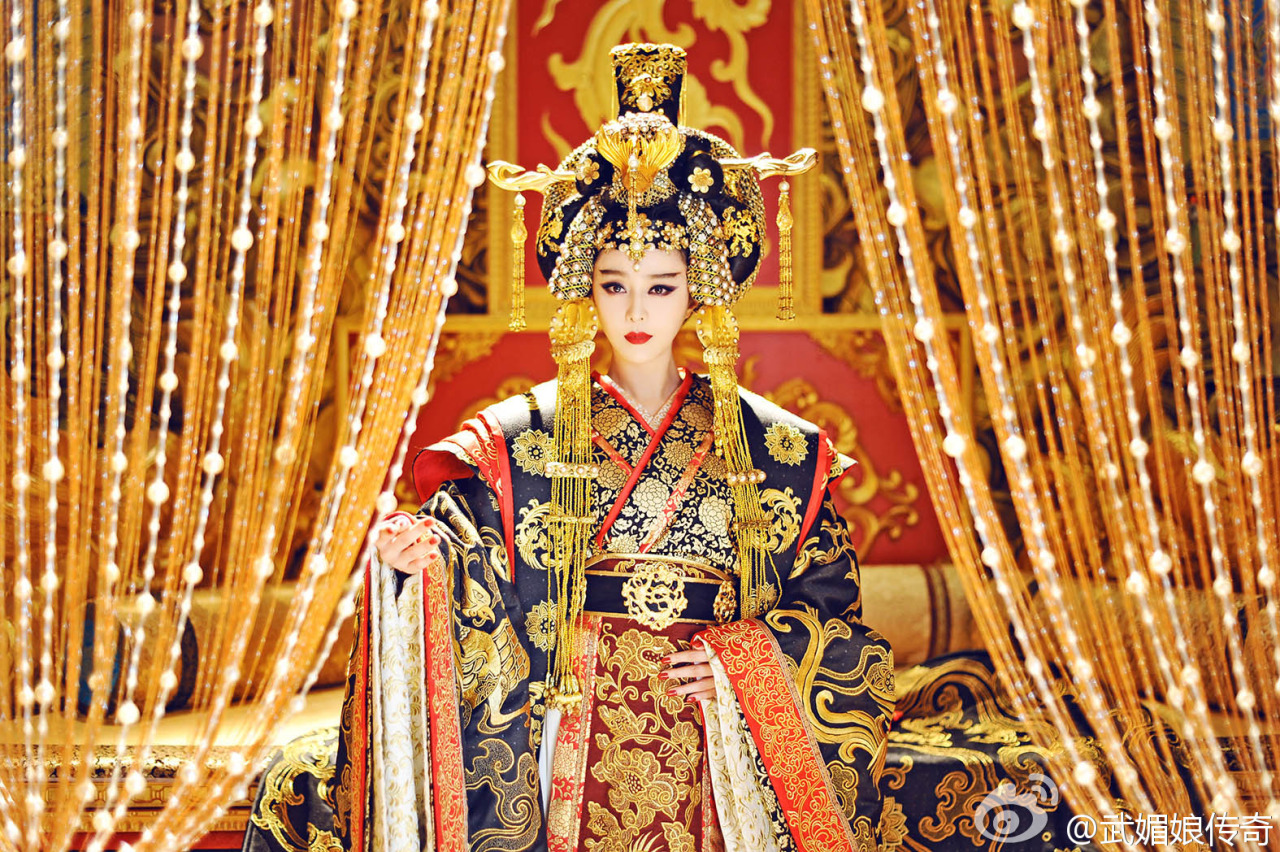
The Xiang military enjoys a considerable amount of competency, thanks to the experiences of previous dynasties and the academies it maintains. Campaigns against indigenous threats along the dynasty's frontier have kept its soldiers' abilities fresh and tested. Conquests launched by previous Huaren administrations have given the military great knowledge of siege warfare, and its engines are as effective as they are imposing.
Historically, Huaren armies have been comprised of large numbers of cavalry. This is due to the wide plains that comprise of most of Huaren territory. Early Huaren dynasties were enthusiastic for aggressive strategies and mounted charges from heavily-equipped cataphracts. Nowadays, there is greater emphasis on versatility, and many horsemen carry bows in addition to lances and swords, in the style of tribes conquered by the Huaren.
In spite of the Huaren cavalry's fame, infantry is not neglected. Xiang administration has adopted large contingents of well-equipped infantry. Footsoldiers are distinguished between marching infantry, armed with spears, polearms and shields, and archers. In some cases, infantry is mounted for travel and dismounted prior to doing battle. In theory, all infantry is recommended to be equipped with bows for greater adaptability - in practice, this is not always the case.
Economy: The Xiang Dynasty is open to trade from all over Seyan, and its economy enjoys the flow of goods that connect it to foreign nations. It is a source of many unique goods that cannot be found elsewhere. Huaren silks, laquerware and porcelain are coveted by many, and horses, jewelry, metal goods, textiles, firs, spices, medicines, perfumes, tea and salt are also exported frequently. At the same time, increased contact with foreigners has led to climbing demands for imported products.
The Xiang enjoys rich agricultural opportunities presented by its soil. The country is not wanting for crops and farming is a key facet of the average peasant's life. Meats commonly consumed by the Huaren are chicken, lamb, and pork, along with more exotic tastes - sea otter and bear being a few. Beef is discouraged, on the account of bovines being valuable working animals. Seafood is regularly consumed as a staple along the coastline, and jellyfish, oysters, squid, crabs, shrimp and pufferfish are oft-eaten creatures.
Industrial developments reached a new height during the early reign of the Xiang. Crafts like textiles, ceramics, paper making, tea-leaf processing, and metallurgy have become increasingly pronounced. Huaren metallurgy is famed for its intricacies and the quality of products. Salt mining is another well-regarded industry.
Reputation:
- Exotic goods, culture
- Strong industrial and agricultural focus
- Rich history - many dynasties, conquests, etc.
- Fearsome ships, siege engines and military inventions
History: The Huaren originated off-continent and migrated to Seyan sometime in its early-mid antiquity. At this time, they established a small, coastal kingdom and largely kept to themselves. They focused on consolidating their resources and developing infrastructure, laying the groundwork for rising as a greater power. Minor skirmishes with indigenous people were frequent, although the Huaren developed weaponry and techniques that helped to fend off their enemies. Eventually, they took the fight to these tribes, driving them either westward or north. With each subsequent victory, the Huaren acquired more territory for itself.
This pattern continued for several centuries and saw the balance of power shift between different ruling families and administrations. Continued expansions toward the mountains brought them into contact with other great powers. Over time, they built relations with these neighbors, namely the Kingdoms of Öspa and Lucrum. The current Xiang is the ninth major dynasty of the Huaren people, and is one of the most progressive. After the Heilong Rebellion, the Lu Dynasty was defeated and the Xiang rose up in its place.
The Xiang has further developed ties with its neighbors, and has attempted to make amends with some of the peoples displaced by former dynasties. Still, some northern tribes continue to resist the Huaren. Its current monarch, the widowed Queen Regnant Zhou Cheng hopes to facilitate greater prosperity and growth within Huaren territory, while establishing her nation as one of the foremost on Seyan.
Misc:
Vassals of the Xiang Dynasty
House Beiling
Ruled by Beiling Shin, Chancellor of Xiaoming. The Chancellor is an intellectual man of 35, best known for being a descendant of the illustrious Beiling Lei, who wrote the famous book The Principles of Power a hundred years ago. Shin is married to Mei, 32, and they have a daughter called Im, who is 12 years old.
The Beilings have been one of the greater families of the Huaren people for a long time. Indeed, they once served the realm as the ruling dynasty. Their sway over politics is great, but they have shown no aspiration for resuming leadership and are loyal to the Xiang.
House Mailan
Ruled by Mailan Han, Chancellor of Shurpei. The Chancellor is a stalwart man of 45 and has previously been a general of renown in the royal army. His wife died while giving birth to his third child, Jiang, ten years ago. Apart from this son he has two daughters; Fen, 25, and Shu, 18.
The Mailans have only recently become a political force in the realm, but they already had a strong relation to the army thanks to Han’s previous career. Some say the former general has a mindset differing from the ruling dynasty; that he is hateful of the people previously inhabiting Huaren lands, but the family haven’t yet given cause for suspicion and has thus far been loyal to the Xiang.
© 2007-2026