August 9th In the Empire of Violette, a new drydock capable of producing a warship of up to 7,000 tons is finished.
August 10th In the Itheraen Republic they issue the Return Proclamation, allowing any Tyro-Redanian to return to Itherae as a full fledged citizen. Additionally, Itherae has taken in over 300,000 Seronan refugees, causing an imminent food shortage that if not solved by 1901 could have serious economic repercussions.
August 11th In the Imperium of Hiron, the Imperial Arms Model 1 rifle, while satisfactory, is delayed in hopes of finding a resolution to it's jamming problem.
August 12th The Tyro-Redanian Empire issues it's Tyro-Redanian Ultimatum. They have given the Itheraen Republic three days to respond.
The Tyro-Redanian Ultimatum
ARTICLE 1: Formally and Publicly halt all transactions, actions and acts within or beyond the Tyro-Redanian Empire designed to damage the integrity, stability and peace of the Empire as well as encourage the unwarranted movement of her peoples from one state to another.
ARTICLE 2: Halt any public, formal and subversive involvement with the Itheraen populated regions of the Tyro-Redanian Empire and denounce any and all territorial claims to the Tyro-Redanian Empire.
ARTICLE 3: Suppress through all means of the Itheraen government's power sedition, propaganda and publications inciting dislike or hatred of the Tyro-Redanian Empire and the questioning of her territorial integrity.
ARTICLE 4: Dissolve the Itheraen nationalist movement Triple I and any other such subversive or otherwise movements involved in the spread of anti-Tyrian nationalist sentiment.
ARTICLE 5: Accept the involvement and movement of Tyro-Redanian representatives in Itherae to oversee the suppression of anti-Tyrian sentiment. Upon concluding the ultimatum, Vincent Schuerer would inform the Itheraen government that a reply was expected no later then 48 hours after receival before a formal state of war would exist between the Tyro-Redanian Empire and the Republic of Itherae in the face of the latter's subversive actions against the former. Should the deadline be reached, Vincent Schuerer has received orders to leave the Tyro-Redanian embassy in Itherae with all staff and return to the Empire.
August 13th
The Foreign Office of the Empire of Violette responds to the Ultimatum in force, showing unwavering support for the Itheraens.
In the Empire of Oslad, a new drydock capable of producing a warship of up to 7,000 tons is finished.
The President of Itherae formally rejects the Tyro-Redanian Ultimatum. The deadline was listed as August 15th.
Parnand Automobile de Violette unveils it's first, for sale, automobile. The Parnand Simple is a simple four wheeled device with room for two riders in an open carriage. Powered by a low watt electric battery, the device costs $1,451 and is considered a "toy" by Veletian's wealthy elite in Confluence. Parnand Automobile de Violette will sell nearly sixteen by the end of the month.
The Parnand Simple, 1900
August 3rd
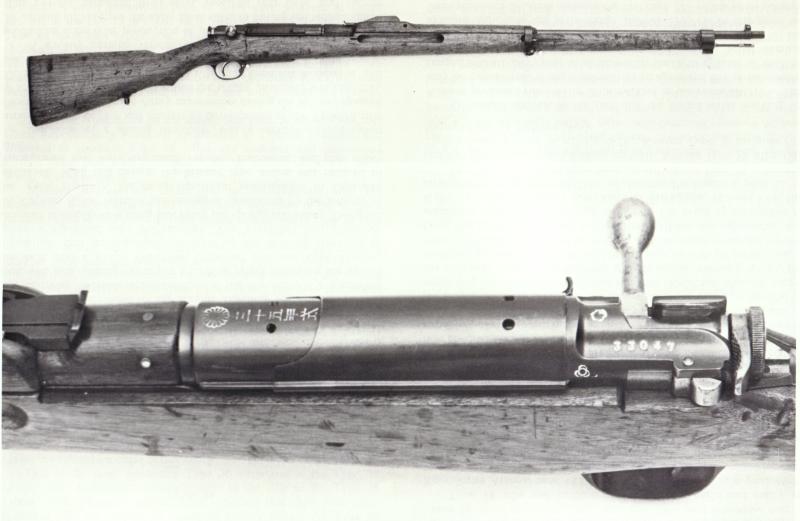
Imperial Arms in the Imperium of Hiron finishes and submits it's design on August 3rd, 1900 to the Bureau of Production and Design in Senryu. The Imperial Arms Model 1 was a bolt action rifle with similarities to the Otto.88's sleek long barrel design. It had an effective range up to 550 meters and utilizes smokeless 7.62x45mm ammunition. In a day of field testing, the rifle is found to be 4.16 kilograms with a smooth transition bolt, but after 300 to 400 rounds, the bolt action is prone to creating a stove pipe jam when the case is ejected. Beyond this, the rifle is considered to be superior to any Continental design.
Imperial Arms Model 1 Rifle, 1900
The Imperium Requests a Design Competition: Type of Weapon: Rifle Companies Involved: Imperial Arms [6] Design Requests: The Imperium seeks a high muzzle velocity bolt-action rifle that equals or surpasses modern Continental 1899 rifles. The rifle will make use of smokeless powder 7.62mm ammunition and be designed to use iron sights as a base, with a rail on top to mount optics. The rifle should have an effective firing range of at least 500m with iron sights, and up to 800m and beyond with optics. The feed system should be a five-round stripper clip. Ideally, the rifle should be cheap and easy to maintain, but highly effective. Weight should not exceed 4.2 kg.
- [Event: The Imperium of Hiron may Press into Production or Delay for Potential Improvements (6 Months). This requires an IC Response.]
August 7th
The Resettlement Act of 1900 ends with nearly 360,000 Radenan and Zellonians alike are resettled from the western edge of the Tsardom to the eastern edge. These men, women and children eagerly get to work on their new lives in the "Settumese Side." While costly, this is expected to help foster the growth of otherwise untapped industries in the far reaches of the Radenan wildlands. - [Event: Tsardom of Radena gains 450 Tons of Rubber, 12,000 Tons of Coal and 660 Tons of Precious Metals.]
August 8th
Just a week after the introduction of the Parnand Simple, Johan Jost of the Kalpian owned Leikarp Co., known for it's tremendously sized bicycles releases the Jostwagen. The Jostwagen costs $990 and works in similar operation to the Parnand, except it sits much higher on thin wheels designed from farthing bicycles. Powered by an electric motor, it's considered "a damned good time," for how much it costs. The Leikap Mayor purchases two on the same day.
Johan Jost and the Mayor of Leikap, Eduard Vuth take a ride on a Jostwagen, 1900.
A shipment of 200,000 Kirov.86 arrive in Senryu, Hiron. These began to be sent out to equip the Hironese Army, which before had been severely lacking due to a lack of industrial capacity to build it's own rifles.
Drawing of the Radenan Kirov.86
As the Second Liubeth Conference continued on, Osladian Stojan Brodszky and Zellonian King James Conrad tussled briefly over war reparations for Zellonia. The Osladians were only minutely interested in the issue, as the war had been effectively nullin it's overall cost, while the Zellonians themselves fought to death over the issue.
July 11th
South Serranthians begin a new uprising against the Veletian colonial government in an attack on a Veletian patrol along the Saad River. Five Veletian garrison officers were decapitated. From there, the rebels moved northward up the river. These attacks are rare, and isolated away from city centers such as Dordogne, but prevalent among the heavily jungled areas where Veletian colonial troops cannot readily access. - [Event: Requires an IC Response from the Empire of Violette.]
Vivienne Gracieux, Magnate of Gracieux S.A again brought the issue of the Zellonian Navy up, citing concerns that if Zellonia were allowed to keep it's navy, a second Zello-Osladian War would simply around the corner. She argued that if the Zellonian Navy were temporarily "requisitioned" by the Veletians, they could de-escalate and slowly return the Zellonian Navy back to Zellonia as time went on. With no legitimate alternative, the Osladians and Kalpians agreed.
July 12th
The Xiang Delegation arrives in Yujin. The Warlords of Xiang--mostly lawless soldiers living a pseudo-military junta, were mostly immune to military intervention due to political corruption within the House of Lords. They arrived and demanded a payment of $7,500,000 from Grand Prince Yezhuan to maintain the existing borders and to "promote the security of the Xiangese-Meung border for 1900." - [Event: Requires an IC Response from the Grand Kingdom of Meung.]
July 15th
A Kalpian cruise liner, the Gutermuth, broke the Veletian record for the first time with an average speed of 22.42 knots (41.52 km/h; 25.80 mph).
July 17th
The Gutermuth, the same Kalpian ship that broke a speed record days earlier, arrives in Senryu to begin the Kalpian Military Mission. Carrying 179 officers of the Kalpian Republican Army, the officers have been instructed to begin modernizing the small Hironese Army. In exchange, the Kalpians are given a sum of $3,000,000.
July 21st-July 30th
Intense training regimes are enacted by both elements of the Hironese and Kalpian governments. Lightning quick changes that are intended to shock the small and poorly trained Hironese Army. - [Event: +2% Training for the Hironese Army.]
The second week of the Liubeth Conference begins with Minister Augustin Batteux, Foreign Minister of Violette beginning the proceedings by explaining that Zellonia's course of action directly correlated to what a nation would do after 25 years of successful naval expansion, though he be no means condoned the actions.
June 23rd
Zhivko Litvak, Head of Osladian Security Bureau took most of the second day of deliberations by explaining that the Strait, under Osladian control, would be a significantly more politically stable zone and that even if Zellonia had taken control of the Strait, it's ability to enforce such tariffs would have been nearly non-existent. The day long discussions wore every member of the delegation out, lasting from 9 AM to nearly 8 at night. At the end, few wished to hear the word "strait" for the rest of the conference.
June 24th
Moses Carroll, Naval Advisor to the 1st Zellonian Fleet opened the third day with a speech promising that the "Future of the Zellonian Navy" would not only protect Zellonian shores, but Marnish ones as well. Lothar Lieberenz, Junior Minister of the Department of Security commented that it wasn't the Zellonian Navy that invaded Marnland, it was the Army. The joke seemed to unsettle the Marnish Foreign Minister.
June 25th
The next day involved discussions pertaining almost entirely the Zellonian Royal Navy. Ekkehard Sitz, Advisor to the Kalpian Army made it known that if the Zellonian Royal Navy were left unscathed, it might rile the Zellonians to wars in the future. Sitz recommended the navy be made piecemeal to the Marns, Kalpians and Osladians. Commodore Éloi Delannoy, Commodore of the Marine Nationale fought him tooth and nail for nearly three hours, citing it would be like taking one warlord's sword to give it to another. To bolster the ruined Zellonian economy, the ships should be sold.
June 26th
Lubos Yankovic, the Osladian Minister of Production & Supply brought a new issue to the table near the end of the week: war crimes. While the Nervinton Massacre was a poignant memory, Yankovic instead gave a dull speech on how war itself was a risky endeavor.
The second half of the day saw Karl Ball, Aide to the Zellonian Foreign Minister discuss the future of the Memoital Commonwealth, citing their bravery and strength in the conflict as one of the first bright spots.
June 27th
Marzell Gutermuth, Adjutant General of the Kalpian Navy returned to the subject of the Zellonian Navy, pointing out that the only surefire way to remove the Zellonian's "thirst for war" was to remove their means to do so. Lieutenant General Lucian Laclan, Lieutenant General of the Gendarmerie Nationale made it known that other nations had made such complaints about the Kalpian Army and that blame should be placed on King James Conrad and not the men he ordered to war. Incessant arguing ended the conference early that day.
June 28th
Kazimir Benda, Advisor to Osladian Naval Minister Carrano joined Adjurant General Gutermuth by insisting that no Zellonian promises of peace would endure, but rather only the dissolution of it's naval forces. With tensions high, introverted Bernard Casey, Adjutant General of the Royal Zellonian Army instead turned the conversation back to the Memoital Commonwealth, citing documents that the Memoital head of state, Prince Bernard, was accepting of the idea of joining the Kingdom of Zellonia.
June 29th
Poldi Wolanski, Armaments Minister of the Kalpian Republic was first to the podium. At 71 years old, many wondered to themselves what a man responsible for building weapons of war had to say. He gave the finest speech of the entire conference, dismissing claims of the Zellonian Navy's dissolution or political intrigue regarding the Marns or Memoitals. Instead, he spent nearly an hour speaking on the importance of building rifles and battleships to maintain peace, not to wage war. He asked that the Zellonians and Osladians alike focus their attention on talks of the long peace, not the short one. Only a few Osladians remained seated during the applause.
June 30th
The Empress of Violette herself, Empress Tsirina, took the stage to briefly discuss Zellonia's ruined economy and the desire for the Kalpians and Osladians to seek war reparations. As a mediation, Violette promised loans in any amount Zellonia might be required to pay, so that the Kalpians and Osladians were not left out.
Nicholai Dolgorukov, Osladian Ambassador to Liubeth allegedly had a private discussion with several Kalpian ministers regarding propaganda to remove any mention of the Nervinton Massacre in any Continental school books--outside of Zellonia--in the future. Press were not allowed in the room, and it's outcome was never determined.
Chester Walton, Aide to King James Conrad led the discussion on the Marnish Kingdom for the day--a topic that was quickly growing tiresome to everyone but the Marns. Walton arrived with a letter from King James Conrad himself that promised full cooperation with any of the political requests made by the Marns for the remainder of the conference.
The Second Liubeth Conference in Liubeth, Kalpia is set to start. The Empire of Violette aims to bring an end to the Zello-Osladian War, though international observers are hopeful that they can finally negotiate an end to a terrible war.
Dignitaries on the first day of the Second Liubeth Conference.
The Conference begins with a rousing speech from the Osladian Minister of Security, Srdjan Orlovy on the issue at head. "We have come, once again, to resolve the issue of sovereignty in the straits of water between two empires." With agreements from all sides and only hushed mumbles from the Zellonian side of the table, the conference begins. Kent Benson, the Zellonian Minister of Military Production brings to the table the future of the Memoital Commonwealth, citing their strength and loyalty in the war and as well as an official invitation to the Marnish Kingdom, who joins via Foreign Minister Sven Nidling.
Hanke Weber, Assistant to President Reimund Braun of Kalpia presents a letter from the Kalpian Parliament indicating it's interest in reparations for the cost of the war as well as possibilities of discussing the long term peace. Why no interest in war crimes is brought up, considering the loss of 3,000 Kalpian prisoners of wars at the hands of Zellonians, few can tell.
Lastly, Thierre Carré, Aide of the Foreign Minister of the Empire of Violette offers up "the demilitarization of the Zello-Osladian Strait, and the need to address the atrocities committed during the conduct of the war." The mention of war crimes draws cold stares from the Osladian delegation.
In the closing hours of the agenda, the Osladians managed to press as a claimant the question of the Zellonian Navy, something few paid attention to.
June 20th
On the first day of the Conference, Aaron Reeves, Junior Economics Minister of Zellonia personally met with the Marnish Foreign Minister before the conference started for the day and offered his condolences on the the "Great Mistake" the Royal Army took in invading Marnish land.
Kalpian Economist Edmund Feldt offered up a written report: "The Cost of War in the North Sea," detailing not only the loss of Kalpian, Zellonian and Osladian life but the cost of labor in the war and the strain on the already fragile Kalpian economy. Estienne Rodin, Military Advisor to the Gendarmerie Nationale spent his allotted time arguing for a demilitarized zone in Zellonia, the "ZDZ" as it were called, citing Zellonian foreign ambitions as a reason why.
June 21st
On the second day of the conference, Niko Shklovsky, Head of Osladian National Finances & Banks continued to pressure the other nations on the importance of a "freely owned" Osladian strait, by which of course he meant "Osladian owned." Caleb Newman, Economic Advisor to King James gave a presentation on planned reforms for 1901 to increase trade relations with the Marnish Kingdom as a "mutual promise to rebuild a nation deeply affected by a war in which it had no part."
Second Liubeth Conference, Day 2, June 21st, 1900
While inspiring, the Kalpian Minister of the Interior Metody Wojda refuted Newman, underscoring some of the progress when Wojda attacked the Zellonians for trying brutish war time tactics and making a promise only in defeat, saying: "You apologize because you have lost, something no one does in victory."
In the Empire of Violette, budgetary issues are momentarily set aside, with the People's Assembly devoting $5,000,000 in employing over 7,200 workers to build a new drydock in Eastern Violette. The expectation is that in the Summer of 1901 it will be building the newest ships of the Veletian Navy.
June 12th
The Minister of War of the Grand Kingdom of Meung Mei Feng, by Imperial Decree, has been ordered to accelerate the pace of much needed military reforms and the creation of an Army General Staff to oversee and monitor the pace of developments. A solid core of ten ''New Model Regiments'' trained to the Veletian standard has been made the goal by the end of the year. These New Model Regiments will form the basis for the modern Meung Imperial Army and an example for future progressive reform.
Meung soldiers, trained by Veletians, train in the field, 1900
June 12th
The Imperium of Hiron complete a blueprint design of a new 700 ton destroyer, the Tsukiko-class. It is an ambitious project with a top speed of 28 knots.
June 13th
The Second Liubeth Conference finishes, with the Zellonian Article of Capitulation being submitted to the Zellonian delegation for signing. In an unsurprising move of incompetence, the document was sent over to the Zellonian delegation without having ever been signed by Osladian or Kalpian delegates.
I. Zellonian Armed Naval Vessels are forbidden from entering the naval area between the Fringe and Zellic Peninsulas, and in a naval area 100 kms east from the Fringe Peninsula for a period of 25 years. II. Monetary or Material Reparations equivalent to the value of the Osladian and Kalpian ships sunk or damaged directly or indirectly by Zellonian naval vessels during the war. To be paid annually, starting in the month of August for five years to Kalpia and Oslad, or in a single payment by selling their ships to a Oslad , Kalpia or to a third party. III. Zellonia officially renounces all claims for the straits and officially recognizes Osladian ownership over both straits. IV. A demilitarized zone will be established on both the Frange Peninsula and Zellic Peninsula , all fortifications there are to be destroyed and any further construction of any kind of fortifications will be strictly prohibited for a period of 25 years. V. Zellonia will pledge to not tresspass the Marnish Kingdom territories, along with a demilitarized zone with a length of 10km to the south of the Marnish-Zellonian Border for a period of 25 years. VI. Upon violation or lack of fulfillment of these articles both Oslad and Kalpia will be justified to intervene on Zellonia. A grace period of two months will be given to Zellonia to adhere to this articles.
June 14th
Legislation passes in the People's Assembly in Confluence regarding the Pinnacle Programme were deemed to be unjust. This piece of legislation fixes the quandary that imposed harsher restrictions on Thecian workers, and in blinding speed the People's Assembly brought to discussion, voted on and passed the Thecian Amendment. Reports in cities Gillemille, Lorre and Rosèmere later that day with the drop of the morning newspaper reported protests and rioting, but it wasn't Thecians, it was Veletians.
June 15th
The Battle of Grodz begins in the Karumi War. The Karumi 16th Army, now a veteran force of 175,000 men threatens to bring a swift end to the war by shipping an additional 50,000 men to the front. The Itheraen Volunteer Corps, fighting on the right flank of Grodz, gave the Karumi hell.
Karumi soldiers marching to the front, June 1900
June 16th
A deal between the Tsardom of Radena and the Imperium of Hiron is finalized. 200,000 Kirov.86 rifles are sold to the Hironese in exchange for $2,000,000 and blueprints for a 700 ton destroyer. The rifles are expected to arrive in Hiron at the beginning of August.
June 17th
In the Kalpian Republic, Filasio Chemicals expands it's industrial base to Tarist.
June 18th
The Zello-Osladian War has halted it's bloodshed, an 11 month long affair marred by tactical inefficiencies, strategic errors and needless bloodshed. With the Second Liubeth Conference stalled by a Zellonian delegation that refuses to cede it's right to the sea, King James Conrad implores both the Tsardom of Radena and the Empire of Violette to mediate against the harsh terms of the Kalpian and Osladian administrations.
The Zellonians have always been borne of the sea. Nearly 75% of their economy is dependent on overseas and coastal shipping. If unchanged, the Zellonian economy--already crippled by 11 months of war--will effectively grind to dust. Three of every four Zeels that passes hands in Zellonia does so after crossing some body of water.
The Flotte Cotê d'Or arrives in Mufat, Sypia. A partial representation, with a light cruiser captained by Commodore Jean-Pierre Beaubois in escort of two destroyers to "protect Veletian interests." The Sypian government welcomes the Commodore while his ships dock first at Mufat.
June 2nd-June 3rd
350 women and children in Wietr, Serona are shot and killed for "funding and facilitating rebellion against Karumi soldiers during wartime." The pictures, horrific and gruesome, make headlines in Kalpia, Oslad, Tyria and Violette. Little mention is made of the incident in Radena.
June 4th
Seven additional submarines are finished in the Imperium of Hiron. They are added to an already growing fleet of ships.
June 5th
The Liubeth Conference ends without any meaningful resolution. Osladian diplomats leave enraged when at every turn Kalpians turn their demands against the Osladians and Zellonians defend themselves: "with a certain zeal that their own soldiers lacked," President Reimund Braun commented. The Zello-Osladian War continues with King James leaving and declaring "a continuation of hostilities starting on June 6th."
June 6th
The ZRN Destroyer finishes it's working up, joining the Zellonian 1st Fleet out of Vorl.
June 7th
The Mayor of Aleir, Violette, Eduard Muer, is shot and killed by Thecian nationalist Pavlos Kountouriotis in his home at 7:45 at night. Muer, a proponent of Veletian working rights, signed the Workers Rights Appropriation Bill in 1891 in Aleir, removing the rights of Thecians to join Veletian Labor Unions in Aleir.
June 8th
After heavy political pressure at home, the Kingdom of Zellonia officially capitulates to the Empire of Oslad, Kalpian Republic and Marnish Kingdom. Negotiations begin in Liubeth, Kalpia, with King James refusing to attend and instead sending a personal delegation.
June 9th
The armored cruiser SMS Kaiser Reinhard arrives in Murat, Sypia from the Tyro-Redanian Empire. Captain Nicolas Heimsoth, with orders from the Dual Monarchy, immediately orders the 72 marines on board to disembark. Sailors from the nearby Veletian destroyers watch as Tyrian marines escort Captain Heimsoth into the city. The presence of an immense warship with 10" guns in the harbor is enough to warrant King Maratax's celebration. A Pro-Tyrian administration is installed, and a Sypian guard personally hands the Veletian commodore Jean-Pierre Beaubois an order to set sail within 48 hours or be interned. - [Event: The Tyro-Redanian Empire and Empire of Violette suffer -1 Relations to Hostile.]
Tyro-Redanian armored cruiser SMS Kaiser Reinhard, pictured 1900
June 10th
A road between the cities of Phlies and Thespo is finished in the Republic of Itherae.
Having existed under the thrall of the Seljuk Empire for nearly three hundred years, the Sypians were an islander tribal kingdom dating back to 2,000 B.C.E. The bloated and corrupt bureaucracy of the Seljuk realized that continued maintenance of the Sypians was simply too expensive. Even the famed naval base at Murat was considered expendable. On May 23rd, 1900 the Sypian situation finally reached a tipping point, with the final Seljuk administrators fleeing on loaned civilian vessels and the Sypian Kingdom proclaiming its own independence.
The Sypian Kingdom, 1900
The Great Powers of the Continent however understood at even an initial glance that the Sypian state under King Maratax was weak at best, with only a tenuous hold. A major presence could easily sway a more willing administration into place. The opportunity however, would close quickly. - [Open Event: Any nation may select to do one of the following: * Dispatch a Destroyer Squadron: By sending three destroyers, our nation shows support for a Sypian regime that supports our interests without appearing too militaristic in nation. There is a low chance of succeeding with an equally low chance of raising tensions.] * Dispatch an Armored Cruiser: An armored cruiser carrying supplies and munitions to the Sypian people will help turn them to our cause fairly quickly. With a significant war vessel docked at Murat, there is a higher chance of succeeding as well as creating tension.] * Dispatch a Pre-Dreadnought: By sending one of our most powerful warships, we nearly guarantee that the Sypians will see our point of war, there is an equally high chance that if we don't pull this off, we come off looking as the aggressors.] - [PM the Moderator: [Which Decision You've Selected - Name of Ship(s). - Captain in Charge.]
May 24th-30th
In the Empire of Tara, the Imperial Eyes are instructed to foment minor disquiet and raids across the border from Meung to Settumese Tara. With the assets from Project Halder, the Imperial General Staff and the Foreign Office expect this to be a relatively trivial operation; Eyes assets under the command of Mr. Enlai Fuhua, the local SIO and of Meung extraction himself - the better to blend into the area - have been operating in the area for a while as a result of the project, and the ramshackle nature of the Meung state makes their job easier, or so runs Imperial thinking.
During the last week of July, the Imperial Eyes insert themselves into the local Meung community at the border, establishing a presence there to begin implementing their operations, installing themselves to begin gaining intelligence on military garrisons in the area.
May 31st
The Karumi War takes a dark turn as Fetrograd's capture opens the Karumi 16th Army into a full forced march to the South. The Itheraen Volunteer Corps escape East at the last moment, but the Seronan land opened to Itheraen trade has now been sealed shut.
In the Cotê d'Or, a Serranthian colony held in low regard by the Empire of Violette, Veletian born d'Or nationalist Gare Ladnier announces his candidacy for the head of the Association de Commerce d'Or et Serranthia Nord. While not usually suspect, as Ladnier fits the requirement of being a college educated Veletian, Ladnier has--in the past--advocated for self-determination for the d'Or and many of his contemporaries believe that if elected, he may further divide Veletian interests in the region toward d'Orians instead. The election is slated for October 12th. His challenger, Philip Sumer, is a distant relative of Empress Tsirine, made possible only through marriage of his parents into the Famille Royale in the 1890's. Sumer is a long shot to win, though his plea for government "intervention" remains unanswered.
May 16th
The Liubeth Conference begins in Liubeth, Kalpia following the acceptance of a ceasefire in the Zello-Osladian War. Delegations from Zellonia and the Osladian Empire are sent, a dozen men from each country. The delegations are expected to take around two weeks, with Continental nations universally hopeful that a peace can be brokered. "A dolly of a war over a short strip of sea that has cost millions of dollars and thousands of lives" was the general outlook of the war thus far.
May 17th-May 22nd
The Tyro-Redanian Empire and the Republic of Itherae agree to stage war games. It has been deemed acceptable by the Imperial Minister of the Army Dominik Kuhler, in a bid to both improve the effectiveness of our armed forces and relations with neighboring Itherae, to authorize the carrying out of military exercises with elements of our own army and the Itheraen Army. As well as overseeing a joint-training program, Several mock war games will also oversee the two armies attempting to defeat one another in mock battles over set objectives.
Over the next week, the Tyro-Redanians are summarily outmatched time and time again by the Itheraen Army. From squad level engagements up to division level maneuvers, Itheraen officers shown brazen skill and insight that seems to baffle senior level Tyro-Redanian commanders. Multilingual battalions within the Empire are revealed to have difficulty in communicating with one another, thus slowing down their effectiveness.
- [Event: The Republic of Itherae wins War Games against the Tyro-Redanian Empire. Itheraen Army receives +15% Morale. Tyro-Redanian Army receives -7% Morale.]
1. Osladian Empire - None 2. Kalpian Republic - - Increased Stability by 1. (August, 1899) 3. Empire of Tara - None 4. Tyro-Redanian Empire - Increased Die Roll of Action by 1 (October, 1899) 5. Empire of Violette - Increased Stability by 1. (October, 1899)
- 1. For your Political Clout actions to take effect, you must post IC. - 2. Whomever posts first has precedence. [Example: Nation A declares war on Nation B. Nation C signs Defensive Alliance with Nation B. If Nation A posts first, this means Nation C cannot effectively sign said alliance and be 'called to arms.' - 3. Once your orders are sent, they cannot be altered or canceled. - 4. Declaring War without an Event or Cassus belli incurs -2 Stability.] - 5. All Actions/Events are open to interpretation by the GM.
I. Clout 1. A Turn represents 3 months (Jan-March, April-June, July-September, October-December) 2. Every Turn a nation has 4 Clout. 3. Clout can be used on the following: - Colonization / Imperialization: Advance your culture in the world. - Economics: Strengthen your own industry. - Politics: Pass laws, appoint ministers, generals, admirals and stabilize the government. - Army [or] Navy: Bolster a section of your armed forces. - Foreign Affairs: The pen is mightier than the sword. - Home Front: Listen to the people, or shut them up. 4. So at the start of a turn, you select where you'd like to spend your political clout. - If you spend 1 Clout on a single action, you roll 1d6. - If you spend 2 Clout on a single action, you roll 1d6 and receive a +1 on that roll. - If you spend 3 Clout on a single action, you roll 1d6, receive +2 you lose 1 Stability. 5. If you get a 7 you may receive an Innovation.
Results occur on a 1d6. 1 is an abysmal failure and 6 is a resounding success.
6. When you use Clout, give an example of what you're hoping to accomplish. (IE: Foreign Affairs: hope to achieve an alliance with Nation X, or Colonization: Set up a minor colony in Settumu.)
II. Great Power Status
There are 5 Great Powers in The World as We Know It. [Every 10,000 Active Duty soldiers = 1 Point] + [Number Pre-Dreadnoughts multiplied by 25] + [-1 Point for every $1,000,000 of Debt.] + [1 Point for every 1,000,000 Population] + [Number of Colonies multiplied by 20] + [1 Point for every Infrastructure].
Great Power Privileges: Once per Year, a Great Power may use one of the following: - May call a Conference for other nations to attend. - Increase Stability by 1. - Increase any die roll by 1 [Before it's rolled]. (Can be used to achieve an Innovation or Major Success). - Increase/Decrease Relations by 1 with a non-Great Power nation. - Mobilize or Demobilize without the use 1 Clout.
III. Designing Weapons of War
During the game, a nation may require new weapons of war. They may do this by using 1 Clout to Request a Design Competition. [Only 1 Clout can be used].
Request a Design Competition [Only 1 Clout can be used]. * Please use the Following Form: - Type of Weapon: [Rifle], [Machine Gun], [Field Gun] [Naval Ship (Specify Class)] - Companies Involved: [Name of Company] [Skill of Category], [etc, etc] - Design Requests: [What general specifications are hoped to gain with this design]
Design Process: - After you submit a Design process. 1d12 is rolled for a "Prototype Design" to emerge. This is added to the Company's Skill and Private Companies will submit always theirs 2 months faster. - Each design will be randomly named and have an approximated design strength of 1 to 6 + [Skill of the Company] - If you select the Design of a Company who developed a Weapon initially higher than their Skill, they will gain +1 Skill.
IV. Building a Fleet
Design a Ship (Use the following form below) [Requires 1 Clout]
- Name of Minelayer Class: [Name Here] - Intended Ships in Class: [Ship 1 Name Here], [Ship 2 Name Here], [etc] - Displacement (in Tons): [Tons Here. Starting Maximum is 400 Tons.] - Hull & Fittings: [-125 Tons.] [Can be altered with future Naval Advancements.] - Machinery: [-35 Tons.] [Can be altered with future Naval Advancements.] - Naval Range: [Coastal. +15 Tons.] [Short. No Change] [Long. -18 Tons.] - Speed: [Base Speed is 15 knots. +1 Speed is in increments of 12 Tons. +1 = -12. +2 = -24, etc] - Engine Focus: [Reliable. -4 Tons]. [Speed. -3 Tons]. [Normal. No change.] - Mines: [6 Mines. -6 Tons.] [12 Mines. -13 Tons.] [16 Mines. -17 Tons.] - Accommodations: [Cramped. +5 Tons] [Normal. No Change.] [Luxurious. -6 Tons] - Main Guns: - 2' Single Gun [-2 Tons] - 2' Double Gun [-6 Tons] [Requires Double Gun Technology] - 3' Single Gun [-3 Tons] - 3' Double Gun [-9 Tons] [Requires Double Gun Technology] - 4' Single Gun [-4 Tons] - 4' Single Gun [-12 Tons] [Requires Double Gun Technology] Main Gun Ammunition: - 2' Shells [-1 Ton per 10 Shells] - 3' Shells [-1 Ton per 8 Shells] - 4' Shells [-1 Ton per 3 Shells] Fire Control Stations: - 1 Station Per Caliber of Guns (2', 3', etc) [-10 Tons] Cost: [Tons Actually Used x $80 = Ending Cost]
- Name of Destroyer Class: [Name Here] - Intended Ships in Class: [Ship 1 Name Here], [Ship 2 Name Here], [etc] - Displacement (in Tons): [Tons Here. Starting Maximum is 600 Tons.] - Hull & Fittings: [-175 Tons.] [Can be altered with future Naval Advancements.] - Machinery: [-105 Tons.] [Can be altered with future Naval Advancements.] - Naval Range: [Coastal. +24 Tons.] [Short. No Change] [Long. -27 Tons.] - Colonial Service: [No.] [Yes. -35 Tons.] - Speed: [Base Speed is 16 knots. +1 Speed is in increments of 19 Tons. +1 = -18. +2 = -36, etc] - Engine Focus: [Reliable. -28 Tons]. [Speed. -24 Tons]. [Normal. No change.] - Mines: [0 Mines.] [6 Mines. -6 Tons.] [12 Mines. -13 Tons.] [16 Mines. -17 Tons.] [24 Mines. -30 Tons.] - Accommodations: [Cramped. +29 Tons] [Normal. No Change.] [Luxurious. -18 Tons] - Main Guns: - 2' Single Gun [-2 Tons] - 2' Double Gun [-6 Tons] [Requires Double Gun Technology] - 3' Single Gun [-3 Tons] - 3' Double Gun [-9 Tons] [Requires Double Gun Technology] - 4' Single Gun [-4 Tons] - 4' Double Gun [-12 Tons] [Requires Double Gun Technology] - 5' Single Gun [-8 Tons] - 5' Double Gun [-20 Tons] [Requires Double Gun Technology] Main Gun Ammunition: - 2' Shells [-1 Ton per 10 Shells] - 3' Shells [-1 Ton per 8 Shells] - 4' Shells [-1 Ton per 3 Shells] - 5' Shells [-1 Ton per 2 Shells] Torpedoes - Port Swivel Mount [1x Tube] - [-18 Tons] - Port Swivel Mount [2x Tubes] - [-38 Tons] - Port Swivel Mount [3x Tubes] - [-58 Tons] - Starboard Swivel Mount [1x Tube] - [-18 Tons] - Starboard Swivel Mount [2x Tubes] - [-38 Tons] - Starboard Swivel Mount [3x Tubes] - [-58 Tons] - Centerline Swivel Mount [1x Tube] - [-18 Tons] [Can rotate Starboard or Port] - Centerline Swivel Mount [2x Tubes] - [-38 Tons] [Can rotate Starboard or Port] - Centerline Swivel Mount [3x Tubes] - [-58 Tons] [Can rotate Starboard or Port] Fire Control Stations: - 1 Station Per Caliber of Guns (2', 3', torpedoes, etc) [-16 Tons] Cost: [Tons Actually Used x $80 = Ending Cost]
*By definition a light cruiser must be between 2,000 and 8,000 tons and have a minimum speed of 17 knots* - Name of Light Cruiser Class: [Name Here] - Intended Ships in Class: [Ship 1 Name Here], [Ship 2 Name Here], [etc] - Displacement (in Tons): [Tons Here. Minimum is 2,000. Starting maximum is 5,000 Tons.] - Hull & Fittings: [-1,120 Tons.] [Can be altered with future Naval Advancements.] - Machinery: [-430 Tons.] [Can be altered with future Naval Advancements.] - Naval Range: [Coastal. +320 Tons.] [Short. No Change] [Long. -460 Tons.] - Colonial Service: [No.] [Yes. -350 Tons.] - Belt Armor: [Belt armor is a layer of heavy metal armor plated onto or within the outer hulls of warships] - 0" [0 Tons] - .5" [-73 Tons] - 1" [-143 Tons] - 1.5" [-217 Tons] - 2.0" [-283 Tons] [-1 ton to +1 Speed. So it becomes -29 tons, -58 tons, -87 tons, etc] - 2.5" [-315 Tons] - 3.0" [-449 Tons] [-2 tons to +1 Speed. So it becomes -30 tons, -60 tons, -90 tons, etc] - Deck Armor: - 0" [0 Tons] - .5" [-190 Tons] - 1" [-384 Tons] - 1.5" [-580 Tons] - 2.0" [-714 Tons] - Turrets: - .5 [-16 Tons/Gun] - 1" [-38 Tons/Gun] - 1.5" [-58 Tons/Gun] - 2" [-81 Tons/Guns] - Speed: [Base Speed is 17 knots. +1 Speed is in increments of 28 Tons. +1 = -28. +2 = -56, etc] - Engine Focus: [Reliable. -41 Tons]. [Speed. -24 Tons]. [Normal. No change.] - Mines: [0 Mines.] [6 Mines. -6 Tons.] [12 Mines. -13 Tons.] [16 Mines. -17 Tons.] [24 Mines. -30 Tons.] [48 Mines. -60 Tons.] - Accommodations: [Cramped. +314 Tons] [Normal. No Change.] [Luxurious. -465 Tons] - Main Guns: - 2' Single Gun [-2 Tons] - 2' Double Gun [-6 Tons] [Requires Double Gun Technology] - 3' Single Gun [-3 Tons] - 3' Double Gun [-9 Tons] [Requires Double Gun Technology] - 4' Single Gun [-4 Tons] - 4' Double Gun [-12 Tons] [Requires Double Gun Technology] - 5' Single Gun [-8 Tons] - 5' Double Gun [-20 Tons] [Requires Double Gun Technology] Main Gun Ammunition: - 2' Shells [-1 Ton per 10 Shells] - 3' Shells [-1 Ton per 8 Shells] - 4' Shells [-1 Ton per 3 Shells] - 5' Shells [-1 Ton per 2 Shells] Torpedoes - Port Swivel Mount [1x Tube] - [-18 Tons] - Port Swivel Mount [2x Tubes] - [-38 Tons] - Port Swivel Mount [3x Tubes] - [-58 Tons] - Starboard Swivel Mount [1x Tube] - [-18 Tons] - Starboard Swivel Mount [2x Tubes] - [-38 Tons] - Starboard Swivel Mount [3x Tubes] - [-58 Tons] - Centerline Swivel Mount [1x Tube] - [-18 Tons] [Can rotate Starboard or Port] - Centerline Swivel Mount [2x Tubes] - [-38 Tons] [Can rotate Starboard or Port] - Centerline Swivel Mount [3x Tubes] - [-58 Tons] [Can rotate Starboard or Port] Fire Control Stations: - 1 Station Per Caliber of Guns (2', 3', torpedoes, etc) [-44 Tons]
V. Mobilization
There are three stages: Demobilized, Partial Mobilization and Full Mobilization.
1 Political Clout in Army must be used to move from [Demobilized] to either of the two forms of Mobilization as well going from Mobilized to Demobilized.
Demobilized is a state where your Active Duty and Reservists are at their local garrisons distributed throughout the nation. In this state, you may only control your Active Duty soldiers. You may not give orders to Reservists.
Partial Mobilization calls up your Active Duty soldiers into a coherent force. They receive a bonus to military operations and you may give orders to Reservists.
Full Mobilization calls up your Reservists, turning them into Active Duty soldiers.
VI. Civilian Industry
Each Civilian Industry is listed in the following way: Name of the Company [Skill of the Company], (Category of the Company) and [Status of the Company] - Example: Imperial & Royal Railways [1] (Railways) [Nationalized]
An Industry can only build the units of the category it's in.
Civilian industries are either Private or Nationalized.
Private Industries generate work based on requirement. - Every Turn, your Private Industries perform according to the number of the Global Economy Roll.
National Industries generate work when ordered to.
Each Armaments Industry is listed in the following way: Name of the Company [Skill of the Company], (Category of the Company) and [Status of the Company] - Example: Guntherson & Co [1] (Small Arms) [Nationalized]
An Industry can only build the units of the category it's in.
Armaments industries are either Private or Nationalized.
Private Companies fulfill Production Orders using Economic Clout. - Creating a Private Company: Every turn, roll 1d100 then subtract Global Economy Roll and 1 for every -$500,000 debt you have. Once you accumulate 400 points, you may spend 1 Clout to generate a Private Company based on demand or spend 2 Clout to pick the starting category and Skill 2. - They receive a +5% Production Bonus based on their Skill. - They receive a +/-10% Production Penalty based on the Global Economy Roll. - When they fulfill an order, there is a 1d20 chance of their skill increasing on a roll of 12+ with Skill and Global Economy Modifiers. On a roll of 18-20, a Private company will add an additional Category to its repertoire.
Nationalized Companies fulfill Production Orders using Economic Clout. - Creating a National Company: Spend $7,500,000. Begins Skill 1. May pick the category. - They receive 0% Production Bonus based on their Skill. - They receive +/-5% Production Bonus based on the Global Economy Roll. - When they fulfill an order, there is a 1d20 chance of their skill increasing on a roll of 16+ with Skill and Global Economy Modifiers. - To add an additional category to it's repertoire is [$X0,000,000 with X being the current Skill of the company.] - To add a Skill level to the company is [X,000,000+$10,000,000 with X being the current Skill of the company.]
Armaments Categories: [Small Arms] [Field Guns] [Machine guns*] * Requires that Technology or an Export License.
I. Given the difficulties in managing an immense war, especially between player nations. War will be delegated by Random Number Generators buoyed by modifiers such as your Army and Navy's Training, Supply and Morale.
II. Waging war will occur in the following timeline.
I. Create Armies & Fleets based on Theaters.
Create Armies: When war is declared, the GM will alert you of which Available Theaters and Potential Theaters you have. From these Theaters you must create an army in which Available Theater.
Available Theaters: A theater of war where soldiers can actively be deployed to fight.
Potential Theaters: A theater of war that can be opened by spending the appropriate Military Points. This could be a naval invasion, or attacking a colony.
II. Assign Commanders: When war is declared, you will have to select from your available General Staff which commanders will command which army/fleet.
Theater Objectives: Once a commander has been appointed, you may assign a theater objective that your armies will attempt to fulfill.
IV. Military Points: At the beginning of a war, you begin with 15 Military Points. Great Powers begin with 20 Military Points. Military points are spent on the following. Each Month you gain 4 Military Points. Each Month, your nation will have 3 Issues/Crises/Decisions.
V. Military Points Timeliness: If a month is completed before your IC response is posted, the event is simply skipped.
Opening Potential Theaters
Addressing Commander Issues
Addressing Military Crises
[b][u]Theater Command[/u][/b]
- [b]Army/Fleet Name #1[/b]: [Army Name Here]
- [b]Commander[/b]: [Name of Commander Here]
* [b]Commander's Loyalty[/b]: [Loyalty Here]
* [b]Commander's Trait[/b]: [Trait Here]
* [b]Commander's Weakness[/b]: [Weakness Here]
* [b]Army/Navy Objective Here[/b]: [Objective Here]
* [b]Army Composition[/b]:
* Army: [Division Name Here] - [Number of Men Here] - [Number & Type of Weaponry Here]
- [b]TOTAL[/b]: [Total Here]
* Navy: [Ship Name Here] - [Ship Type] - [Ship Class] - [Maximum Speed]
- [b]TOTAL[/b]: [Total Here]
Supplying your Troops I. All Colonial Troops and Overseas Troop (during war), require Supplies. II. These Supplies can only be sent via Convoys. III. Convoys are sent via Merchant Ships. A Merchant Ship is a 3,000 ton ship. 1 Merchant Ship can send 1,000 tons a week. IV. While at Peace, you must simply assign Convoys to keep your colonial ships supplied. V. While at War you must send Convoys.
Convoy Form (You may fill out as many of these as necessary) 1. [b]Name of Convoy[/b]: (Convoy 513, Task Force Y, etc) 2. [b]Number of Convoys Attached[/b]: [The more convoys, the easier it is to find.] 3. [b]Total Tonnage[/b]: [Number of Convoys x 3,000] 4. [b]Supplies / Soldiers[/b]: [Determine how many are sending Supplies (1,000 Supplies per Ship) and if any, are carrying Soldiers. A Merchant Ship carrying soldiers can carry 1,500 soldiers and zero supplies.] 5. [b]Start Date of Convoy[/b]: [Start Date Here. Arrival time depends on distance. Inquire as to distance if necessary. Supplies are updated at the beginning of every week, and can be stockpiled.] 6. [b]City of Departure[/b]: [Where is the Convoy Leaving From] 7. [b]City of Arrival[/b]: [Where the Convoy is Arriving] 8. [b]Ships Assigned for Defense[/b] - [Name of Ship] - [Ship Type] - [Ship-class] - [Maximum Speed] [b]TOTAL SHIPS[/b] [X DN] [X DDs] [X CLs] [X CA]
The Continent, May, 1900
Global Economy Roll 3 (-1 to Kapian Market Deregulation Act)
May 8th to May 14th
Empire of Oslad (15 Military Points) - Establish the Osladian Supply Corps (7 Military Points): [+5,000 free Supplies/Week]. - Operation Hanhault (7 Military Points): [Launch a Major Offensive that lasts 45 days. +25% Morale. +5% Training during that time.] - Marnish Aid (7 Military Points): Divert troops to the Marnlands. [25% Chance Marnish Kingdom becomes Pro-Osladian.]
Kalpian Republic (16 Military Points) - Request Supplies from the Osladians (10 Military Points): [50% Chance that Oslads hand over -10,675 Supplies]. - Form an Allied Army (16 Military Points): [Forms the Kalpo-Osladian Army with shared control. +20% Morale. +12% Training for available forces.]
Kingdom of Zellonia (19 Military Points) - Request Additional Forces from Memoital: (13 Military Points): [50% Chance that Memoital sends additional forces.] - Establish Defensive Line: (10 Military Points): [Establishes defensive front for April.]
Osladian Empire
336,000 Supplies [-114,000/Week]
Kalpian Republic
2,300 Supplies [-10,675/Week]
May 8th
Five submarines are finished from local shipyards in the Imperium of Hiron. The Hironese submarines included many features that submarines of Continental design also displayed. There was a conning tower from which the boat and her weapons could be directed. Also, she had all the necessary ballast and trim tanks to make precise changes in depth and attitude underwater. Her crew was six men and maximum diving depth was 75 feet.
For armament, she had a reloadable 18 inch (457 mm) torpedo tube with three torpedoes and an 8.425-inch (214.0 mm) pneumatic dynamite gun in the bow (the dynamite gun's projectiles were called "aerial torpedoes"). They had both an internal combustion engine (specifically, a 4-stroke Osladian Otto gasoline engine of 45 bhp (34 kW)) for running on the surface and an Senryu-99 electric motor of 50 shp (37 kW) for submerged operation, with one shaft. A 66-cell Exide battery powered the electric motor when submerged. This allowed speeds of 6 knots (11 km/h; 6.9 mph) surfaced and 5.5 knots (10.2 km/h; 6.3 mph) submerged. Surfaced range was 200 nmi (370 km; 230 mi) at 6 kn (11 km/h; 6.9 mph), while submerged range was 30 nmi (56 km; 35 mi) at 5.5 kn (10.2 km/h; 6.3 mph). There is significant variation in references as to the vessel's horsepower and speed, for example the Register of Ships of the Hironese Navy. Navy gives horsepower figures of 45 bhp (34 kW) surfaced and 75 shp (56 kW) submerged, with 8 knots (15 km/h; 9.2 mph) surfaced and 5 knots (9.3 km/h; 5.8 mph) submerged.
Unfortunately, Submarine 6, so called because they were unnamed, was accidentally rammed by a civilian ship that had been cut loose from it's mooring. With her stern punctured, the ship sunk right there at the dock. She was written off later that day. The remaining four submarines begin working up, their sailors taking them out for basic sailing operations.
Another seven submarines are finishing the final touches in drydocks in Senryu.
The unnamed submarine, nicknamed "The First Loss." Photo taken 3 hours before the incident, May, 1900
- [Event: Imperium of Hiron may allow 5 Submarines to Finish Working Up or Press into Service.]
May 9th
At the annual convention of the Itheraen Pharmaceutical Association in Itherae, the first organization of pharmacy schools was created. The Itheraen Conference on Pharmaceutical Facilities later was renamed the Itheraen Association of Colleges of Pharmacy.
With difficulties during the Zello-Osladian War, the Kalpian government has decided to take several liberties in establishing new rail lines in Kalpia to ensure that getting supplies to the ports allows for the greatest efficiency. Minister of Economics Detlev Jost Rapp personally penned the Rapp Act, which commissioned the contracts for the Kalpian National Railways to begin construct on the Start Hub, which would connect much of the nation in a singular rail network. The Rapp Act was fille with nonsensical bureaucracy, not slowing the process but irrevocably increasing it's cost. A task considered to cost about $4,000,000 was now going to cost the Kalpians nearly $11,500,000 with an expectation to finish in early 1901. The passing of the Rapp Act meant that the Kalpian rail system would get passed that much quicker from the decision earlier in the month.
May 10th
Monrutaine Steel, that monolith of Taran business, has stagnated. It makes steel by the ton, by the great gross of tons, but its equipment is old, its methods outdated, its practices byzantine with the weight of Tradition. Inefficiency is rampant, and only the corporation’s great size has enabled it to keep up with demand thus far.
With new shipbuilding programmes in the pipeline and more and more steel being ordered by GLT Industries, the Company Board, spearheaded by the Director of Production Sir Gilbert Holles-Malet, meets in Rigour and votes on sweeping changes, modernizing blast furnaces, tweaking chemical formulae to produce newer, better, harder steels at lower costs, streamlining the process from start to finish and cutting out the institutional deadwood which has crept in since the company’s founding. With GLT Industries now requiring additional steel for it's rail construction, Monrutaine Steel has expanded an additional two foundries just outside of Rigour.
Its blast furnaces are improved with regenerative heat exchangers and rigged for continuous production rather than batch processing. Most of its Bessemer converters are also replaced by Siemens open-hearth regenerative furnaces, which are – if not faster – much more easily controllable, allowing for better production of different steel grades and more exotic alloys, and also less expensive, slashing fuel costs dramatically due to their regeneration process. Less finicky equipment and streamlined processes mean far fewer men are necessary; the company lays off thousands of workers, both to amortize the enormous cost of modernization and to reduce unnecessary pay packets in the future. All is not lost for the displaced steelworkers, however – GLT Industries is driving its railway tracks forward at breakneck pace, and there is an almost-insatiable demand for navvies to work the new railways. Steelmen, strong-thewed from heavy labour and a meat and beer-rich diet, are ideal for the gruelling job of clearing the way, installing the sleepers and laying the steel track itself. - [Event: The Empire of Tara company Monrutaine Steel increases by +1.]
May 10th
At sea, the Zellonians maintained a narrow superiority due to a fragmented command between the Kalpians and Osladians. On land, the Zellonians attempted to push back. The Marnish Offensive had failed and 20,000 Marnish soldiers now pressed hard in the North against the entrenched Zellonians. They conducted no offensive, instead slowly mobilizing and perhaps hoping that the Osladians and Kalpians could finish what they started. In Vorl, King James visited the people there, soldier and civilians alike. The mere presence of King James himself boosted the morale of the soldiers there.
Zellonian soldiers cheer King James, Vorl, 1900
He offered no speech, but instead met personally with soldiers at the front. He stayed for three days before retiring east to Zeel, his advisors concerned the filthy Kalpians may attempt to assassinate the King once they realized how close he was to the front. - [Event: Zellonian Army receives +15% Morale for 6 months.]
May 11th
The Zellonian theater, for the first time in ten months, is quiet. Neither the Osladians nor Kalpians prompt an offensive, and the Zellonians begin to believe that the two forces have begun a rapid spiral into chaos, as no new supplies have arrived in nearly three weeks. On the Kalpo-Osladian side, negotiations for a single united command finally begin to finalize. The Kalpo-Osladian Allied Army begins basic integration practices, with a single unified supply chain and a single two tier command hierarchy.
May 12th
Negotiations between the Tyro-Redanian Empire and the Imperium of Hiron begin over new naval blueprints. The Redanian embassy, who had only lackluster communication with Aetoria, ended up handing over $9,500,000 to the Hironese in exchange for the blueprints. - [Event: Tyro-Redanian Empire gains 600 Ton Destroyer. Imperium of Hiron gains $9,500,000.]
May 13th
Zellonian Foreign Ambassador Ben Tarnish arrives in Confluence, Violette. Ben Tarnish, a former cruiser captain, was selected by King James to "sell Zellonian steel for Veletian crowns." He espouses the possibility of Zellonian shipyards construction Veletian ships at a premium. The Veletians, while considered a Great Power who might not enjoy having their weapons of war built by a much smaller power, realize that while more costly, Zellonian shipbuilding was effective. - [Event: Empire of Violette receives Zellonian Shipbuilding Invitation (Any Veletian ship built by Zellonia increases Veletian Naval Training by 2% for 5 years).]
May 14th
Political negotiations in Liubeth, Kalpia begin with the Zellonian foreign ambassador, requesting a ceasefire in the Zello-Osladian War. The ceasefire request is given a one week timeline. If the Zellonians do not agree to a ceasefire by May 21st, the Kalpians and Osladians will continue the war. - [Event: The Kingdom of Zellonia must Accept or RejectTemporary Ceasefire Request (by May 21st).]

 FortunesFaded
 Spiffy
 Scrawl Banditta