This is RP is closed & invite only. Anyone is welcome to read along!
[OOC] Beneath a Black Sun
- Post-Apocalyptic
- Horror
- Fantasy
- 18+
- Advanced
- Medieval
- Small Group
- GM Sleepy Tani
Join Status:
Full
GM

Sleepy Tani Needs A Nap
Member
Seen
1 day ago

.
“What comes is not war, nor judgment, nor ruin. It is endurance.”
—Attributed to the Prime Seat, final record before the eclipse
B E N E A T H . A . B L A C K . S U N
“What comes is not war, nor judgment, nor ruin. It is endurance.”
—Attributed to the Prime Seat, final record before the eclipse
____________________________________________________________________________________
—————————————————————————————————————————————————————
—————————————————————————————————————————————————————
 .
.  .
. 
______________________________________________________________________________________________
——————————————————————————————————————————————
——————————————————————————————————————————————
T H E . A G E . O F . E N D L E S S . D A R K .
as preserved in fractured records, disputed by survivors
Over a century has passed since anyone felt the sun’s warm embrace in Umbrael. On a day that should have been ordinary, the sky betrayed the world— a permanent eclipse swallowed the light, plunging the land into an endless, suffocating twilight. From that shadowed veil came nightmares: hulking manbats, towering bearwolves, and twisted horrors no mind should conceive, spawned by an arctician whose name has been lost to fear and legend. Had it not been for a single, miraculous grace, humanity itself would have been erased, leaving nothing but whispers and bones.
Before the dark, magic had been mankind’s greatest triumph. Arcane academies rose beside marble towers, and generations of mages were taught to bend flame, wind, and light to their will. Sorcery once shaped nations. Yet when the eclipse fell, magic failed. Spells unraveled against the monsters, passing through flesh that did not obey the old rules of the world. Incantations that once leveled armies now barely slowed the beasts that stalked the night. One by one, academies fell silent, abandoned, destroyed, or sealed away, until magic became a relic of a brighter age, remembered more in history than in practice.
Historians and scholars claim the light did not vanish, it was driven downward, buried deep beneath the earth alongside something far older than mankind. There, entombed beneath stone and silence, it became known as moonlite. In a single, impossible instant, the silver that suffused the land transformed, yielding a metal that gleamed of its own accord, pure and keen enough to cleave through the fiends that now haunted the world. Where magic faltered, moonlite endured. It did more than illuminate; it guided. It traced a path through the dark for those who survived, a fragile promise that the light had not truly abandoned them—only adapted.
From this silvered dawn, strongholds arose, spires and bastions carved from resilience itself. Humanity endured in scattered pockets, clinging to order and courage even as the world beyond their walls writhed and shifted in shadow. Moonlite blades replaced spellbooks. Forgemasters eclipsed mages. Those who still practiced the arcane were regarded with skepticism, their art unreliable at best and dangerous at worst. No living soul remembers the sun’s touch, yet an unspoken sense of change pulses through the air, as though Umbrael itself is holding its breath. Whispers pass between scholars and sentries alike, of sealed places, of ancient truths best left undisturbed.
Among these bastions, the Kingdom of Moonreach stands. Its people are tempered by darkness, and its king, strange, enduring, relentless, has guided them toward prosperity against odds that should have crushed them long ago.
Now, a summons echoes across the kingdom.
The king calls for his strongest, his sharpest, his most cunning, though the nature of the task remains veiled in careful words and deliberate silence. He speaks of relics to be recovered, of long-buried threats to be confronted for the good of all mankind. Warriors, scholars, hunters, and thieves will gather, moonlite gleaming in their hands, driven by the promise of reward and the unyielding need to believe their actions still matter in a world that has forgotten the sun.
The shadows watch as they answer the call. The air hums with expectation. And far beneath the Earth, something ancient stirs— its prison thinning with every step taken in the king’s name. Umbrael waits, balanced on a knife’s edge, unaware that the next chapter of humanity’s struggle against the dark may also be the moment it finally wakes.
____________________________________________________________________________
T H E . A G E . O F . A N S W E R I N G . L I G H T .
as recorded in scattered annals, contested by scholars
Long before the eclipse, before moonlite gleamed in the dark, the world of Umbrael was governed by a different certainty: that magic answered when called. It was not a miracle nor a mystery, but a discipline— studied, refined, and passed from one generation to the next. The arcane was understood as a force woven into the fabric of the world itself, neither benevolent nor cruel, but responsive to will, knowledge, and restraint.
In those days, sorcery was not feared, nor was it wild. Magical academies stood beside royal courts and trade capitals, their towers as common on the horizon as keeps and cathedrals. Institutes of arcane study welcomed students from every corner of the world, elves and humans, dwarves and others whose names have since faded from record. Not all were born with equal aptitude, yet magic was not reserved for the gifted alone. Anyone, it was said, could learn to shape it with sufficient discipline, patience, and sacrifice. Talent determined how swiftly one advanced; dedication determined how far.
Magic shaped the world into its golden height. Cities rose where barren land once lay, sustained by woven wards and conjured abundance. Kingdoms prospered, or collapsed, at the hands of sorcerers whose power could turn the tide of war, mend broken lands, or unravel dynasties. Yet for all its potential, magic did not rule unchecked. The existence of the an elite group of mages ensured that power remained measured, that ambition did not eclipse balance. No academy taught without their sanction. No great work endured without their scrutiny.
They were known as the Sixfold Veil.
The Sixfold were not rulers, nor priests, nor conquerors. They did not sit thrones or command armies, yet kings bent and councils listened when they spoke. They were the apex of understanding, six mages whose mastery crossed beyond spellcraft into truth. Race, bloodline, and nation held no meaning among them. Only clarity, restraint, and comprehension mattered. When a mage’s understanding of the arcane reached a threshold no teacher could guide them beyond, the Veil took notice. If deemed worthy, a Seat was offered— not as a reward, but as a burden.
Each Seat represented not a school, but a principle, a law by which reality itself abided. Through these principles, the Sixfold governed magic not by decree, but by example. Their presence alone was enough to temper excess, to remind the world that power carried consequence. It is said that during the height of their influence, magical disasters were rarer than famine, and wars of sorcery ended before they truly began.
Among the academies sanctioned by the Sixfold, none was more revered than the High Arcanum of Vael Tiras, where the Veil themselves convened and taught. It was there that the most promising minds of the age were shaped, and it was there that an arctician, whose name has since been stricken from record, rose with unsettling speed. His grasp of cold and void, of preservation and stasis, surpassed even his peers, and his theories stretched the boundaries of accepted arcane law.
Whispers followed him through marble halls and echoing chambers. Some claimed he saw patterns in magic others could not. Others said the arcane itself bent more readily to his will. In the final years before the eclipse, rumors spread, quiet, dangerous rumors, that the Sixfold debated the creation of an seventh seat. Not a principle newly discovered, but one newly understood.
Then, without explanation, the arctician vanished.
No farewell was given. No sanction was issued. The Sixfold neither condemned nor pursued him, and the academies were instructed to speak his name no longer. Within a handful of years, the sky darkened. The eclipse fell. And the Age of Answering Light came to a sudden, irreversible end.
Scholars still argue whether the arctician’s departure was coincidence or catalyst. Whether the Sixfold foresaw the coming dark, or whether they helped shape the last defenses against it. What is known is this: magic answered freely in those days, because the world was listening.
And when the Sixfold Veil fell silent, the world did too.
——————————————————————————————————————————————
R A C E S . O F . U M B R A E L
——————————————————————————————————————————————
 ................................................................. | . | T H E . H I G H . E L V E S High elves were once the foremost architects of the Age of Answering Light, founding academies, libraries, and arcane courts across Umbrael. When magic failed after the eclipse, they were among the first to abandon spellcraft entirely, declaring it unreliable, dangerous, and obsolete. Rather than cling to a dying art, they turned their mastery toward moonlite, studying its resonance, forging techniques, and martial applications with scholarly precision. Today, high elves are widely regarded as the finest instructors of moonlite combat, training elite guards, wardens, and noble houses in disciplined moonlite-blade traditions. Their cities gleam with moonlite inlaid into armor, crowns, and jewelry, worn as both protection and status, proof of stability in an unstable world. Modern high elven culture prizes visible prosperity, controlled strength, and public order, believing survival itself is the highest form of wisdom. Magic is remembered politely, taught nowhere, and spoken of like a beautiful language no longer spoken aloud. |
——————————————————————————————————————————————
 ................................................................. | . | T H E . D R O W Drow trace their origins to deep cities carved beneath Umbrael long before the eclipse, where secrecy, trade, and adaptation were necessities rather than virtues. When moonlite became humanity’s salvation, drow forges moved swiftly to replicate it, experimenting with alloys, luminous salts, and false silver capable of mimicking its glow. These creations, known politely as dusksteel and less politely as grave-silver, flood border markets and desperate settlements, sold to those unable to afford true moonlite. Though inferior, such weapons still cut monsters better than bare iron, earning drow merchants both profit than suspicion. Their underground strongholds remain vital trade arteries, supplying tools, information, and mercenaries to surface bastions. In the current age, drow are most commonly encountered as traders, smugglers, tunnel-guides, or brokers of rare materials, thriving in the spaces between trust and necessity, where truth is flexible and survival is the only honest currency left to anyone. |
——————————————————————————————————————————————
 ................................................................. | . | T H E . A F F L I C T E D The Afflicted are descendants of twenty elven arcanists who ventured into the deepest reaches of eclipse shadow during the final year of the Age of Answering Light. The darkness did not kill them, but rewrote their bodies and magic, leaving them cold-blooded, long-lived, and marked by black-and-red eyes and red markings. This transformation is hereditary, passing unchanged to their children regardless of mixed blood. Neither fully living nor truly dead, they survive on residual arcane energy, blood, and endure wounds that would fell others. Feared as monster-kin and blamed for ill fortune, most Afflicted live as nomads, traveling between strongholds as guides, relic-seekers, couriers, or discreet mercenaries. In cities, they hide their eyes behind tinted lenses or heavy veils, trading anonymity for safety. Few realize their bodies still answer to true magic, even when the world itself has forgotten how to listen again. |
——————————————————————————————————————————————
 ................................................................. | . | T H E . D W A R V E S Dwarves are believed to have been born of the deepest caverns, shaped by stone long before sunlight became memory. When the eclipse fell, most retreated downward, delving far below even the tunnels the Drow consider dangerous. Entire holds vanished behind sealed gates, and in the centuries since, sightings have become so rare that many surface scholars argue the race is extinct. This is untrue. Dwarves endure in vast fortified cities carved around moonlite veins, growing wealthy through careful mining and secretive trade conducted by masked envoys. Their weapons and vault-forged alloys rival any craft known above. Yet their isolation is not born solely of caution. Rumors persist of a war fought in the lightless depths, against things that claw upward from deeper dark. Whatever the truth, dwarves no longer walk openly beneath the sky, guarding their borders, their riches, and their silence forever. |
——————————————————————————————————————————————
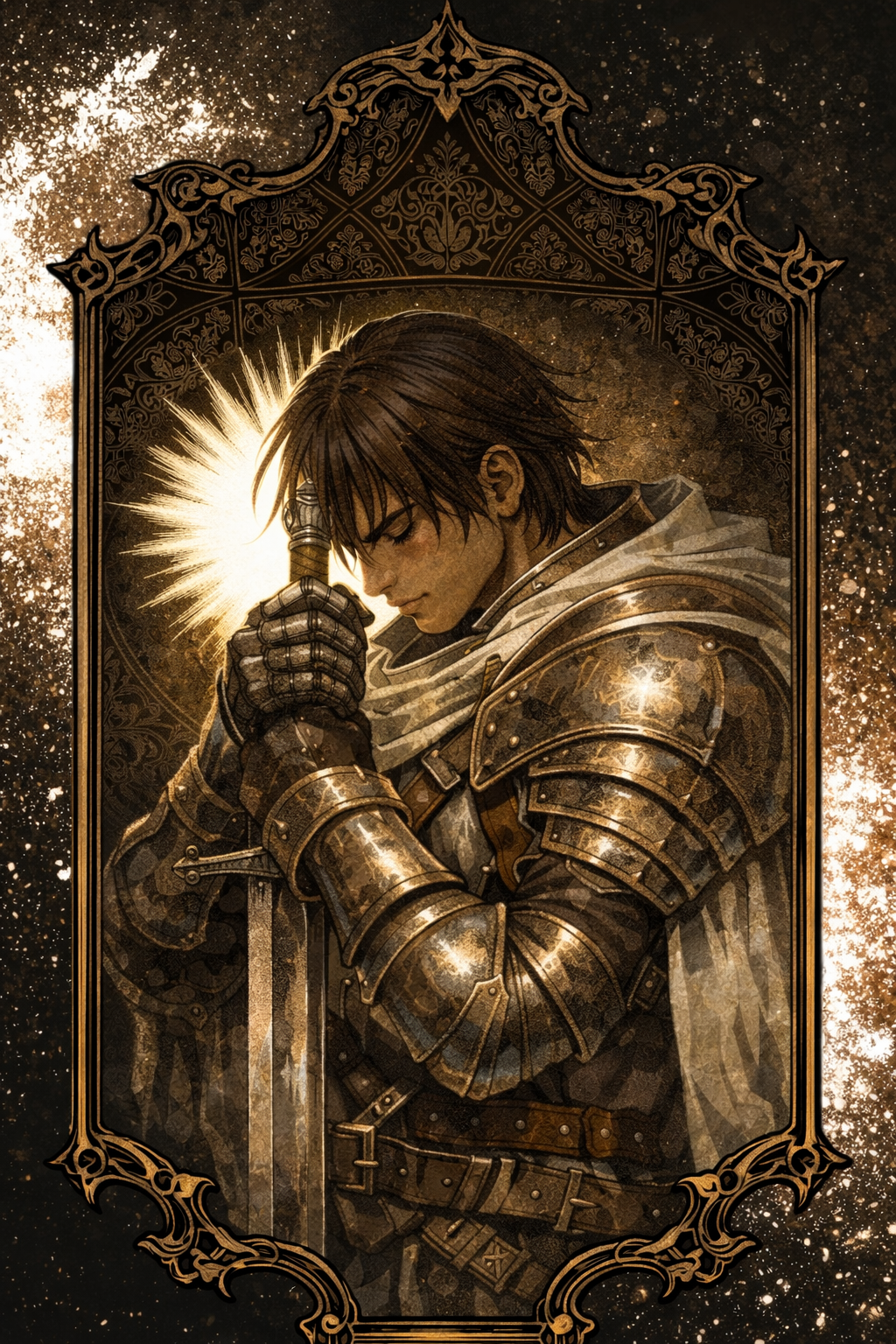 ................................................................. | . | T H E . H U M A N S Humans are the most numerous and adaptable people of Umbrael, building their civilizations atop whatever ruins remain stable enough to hold walls. Before the eclipse, humanity produced kings, merchants, generals, and mages in equal measure, though their short lives lent urgency to every ambition. When magic failed, humans turned to moonlite with relentless practicality, perfecting its mining, forging, and mass deployment into weapons and defenses. Today, most strongholds are human-founded, ruled by councils or hardened monarchs who measure success in years survived. Humans dominate trade routes, exploration companies, and mercenary orders, serving as the connective tissue between isolated civilizations. They are admired for endurance, criticized for recklessness, and feared for how quickly they adapt to new horrors. In the current age, most humans expect neither salvation nor justice, only another day of borrowed breath beneath an unmoving sky that never forgives them fully. |
——————————————————————————————————————————————

4x Like

© 2007-2026