Avatar of Qia

Status

Recent Statuses

1 mo ago
idk man they're not really assuming anything? It's a personal status and not anything towards you. If it doesn't resonate with you, it's pretty easy to just scroll past it.
11 likes
2 mos ago
In that kind of belting Celine Dion mood :)
2 likes
2 mos ago
Good God it is pissing rain right now.
3 likes
2 mos ago
Well yes more so yourself than anyone else lol. Can't really control circumstances outside yourself anyhow. Sometimes I just forget.
2 mos ago
The more you try to control things, the less control you actually have.
3 likes

Bio

✦ ✦ ✦

Qia / Weasel

writer · psychology/philosophy nerd

✦ ✦ ✦


👋 Oh hi there <3


Welcome to my little corner of the guild! I go by Qia or Weasel. Either is equally valid. I've been roleplaying since my early college years, primarily across Tumblr (currently inactive) and right here. Storytelling is one of my favourite creative outlets, and I have a particular fondness for digging into the psychology behind every character I build which is also, admittedly, the most practical application of my degree to date. Whoops? ╮ (. ❛ ᴗ ❛.) ╭


📖 The Writing Stuff


📌 A Few Important Notes


I'm in my early 30s and strongly prefer that any writing partners be close to my age.


As for 1x1 partners, I'm open to it, though I'm not actively searching. It really comes down to familiarity with you and your writing, and whether there's something that genuinely interests us both. If that sounds like it could be you, feel free to reach out!


Curious about my writing style or the characters I play? Feel free to browse the roleplays listed in my signature.


Questions, comments, or just a hello? Don't be a stranger. My inbox is open but please don't be a freak, ok? No stupid or weird stuff.
ദ്ദി(˵ •̀ ᴗ - ˵ ) ✧

Most Recent Posts


............ #94260e ....|..... outfit .....|..... rafael's place-> pine ridge sheriff's station ..............

Heritage Antiques sat closed and dark behind him by the time Rafael reached Main Street properly, the festival's noise rising to meet him before he'd gone more than a few steps. He had expected this in the abstract, as one expects the weather to be forecast days in advance. The actual experience of it, however, was quite…different.

Sound usually arrived first, layered and indiscriminate, this time involving a dozen separate conversations bleeding into each other. A hammer striking wood somewhere to his left, and a child shrieking with what he hoped was delight rather than distress. Beneath that, the bass thrum of a generator powering something he couldn't see, and the distant, tinny music from the speaker that had been crackling all morning, now playing something with a banjo in it that sounded older than it probably was.

Then came smell. Smell always arrived second.

There was fried dough, heavy with the oiliness of cheap cooking fat, and hay from somewhere, a decorative bale probably dragged in from one of the outlying farms to lend the whole affair an air of rustic authenticity that Pine Ridge had never actually possessed to him. There was also candle wax from a vendor's stall, though no candles were lit yet that he could see; the scent seemed residual and baked into whatever display they were setting up. And beneath all of it, most important of all, were coffee and cinnamon, two smells Rafael didn't mind as much, his attention tuning into them like a radio finding a frequency its listener liked. The coffee was fresh, roasted recently, the kind of dark roast that suggested someone in this town actually cared about what they were selling. He made a mental note of the direction it came from for later.

Then, of course, there were the sights. Main Street had transformed into something he barely recognized despite having watched it change, slowly and then all at once, for over a century. Banners snapped overhead in colours far too bright for the gray morning and garlands of fabric leaves wound around lampposts that, in his memory, had once been simply lampposts. Shame.

He kept on walking.

Near a truck decorated within an inch of its structural integrity, a young woman with dark hair stood with one hand braced against her hip. Her expression fell somewhere between exasperation and resignation. Still, the two younger men before her were doing an admirable job of looking elsewhere: one studying the sky as though it might offer answers, while the other examined his own shoes with intense fascination.

"...if he shows his face again before noon, I swear to God I’m gonna—"

Rafael didn't catch the rest and didn't particularly try to. Whatever had caused her irritation seemed minor enough either way that he suspected it would resolve itself shortly without requiring his attention. Hopefully.

He continued toward the far end of Main Street, where the festival noise thinned slightly as though the street itself understood that certain establishments preferred to be left in peace. The Pine Ridge Sheriff's Station sat beside the Municipal Building, squat and brick, its construction dating to a period when function had clearly been prioritized over form. The door chimed softly when he pushed it open, and inside, the station smelled of old coffee and paper. And dust. Lots of dust that tended to accumulate in buildings where nothing much happened most days.

Well, nothing much except for the disappearances.

Rafael avoided looking at the board he knew was there, and his eyes instead landed on the person behind the front desk. The officer there was older—late fifties or early sixties. Rafael was always slightly off with human age—and he recognized him by sight. William Gibbons. The name had taken a moment to retrieve, but it was there now, slotted into place in the vast mental catalogue of faces Rafael had accumulated across the decades. Gibbons had been in Pine Ridge for as long as Rafael could remember, which in practical terms meant as long as Rafael had bothered to pay attention. He had watched the man's hair go from brown to gray, and the lines around his eyes deepen into wrinkles.

The old man looked up from whatever paperwork had been holding his attention, offering a nod as Rafael approached. "Mr. Fontenelle." He set his pen down.

"Gibbons," Rafael replied. "I need to file something for extended hours. This weekend only and in case anyone wanders in looking for souvenirs after the fact." A tourist with a handful of hours in a small town was a creature of impulse, and impulse, properly directed, could be very good for business. Rafael had learned that much across the years.

"Sure thing." Gibbons reached beneath the counter without needing to look, producing a form that he slid across the desk along with a pen. "Dates and hours there. I'll get Sheriff Sarkar to sign off once he has a moment."

"Appreciated," Rafael said, and took the pen. The form required very little of him. Business name. Hours requested. Dates. He filled each line, the motion automatic enough that it left the rest of his attention free to go where it wanted.

And yet still he did not look at the board.

"Busy morning," Gibbons offered then, leaning back in his chair with the creak of old springs. "Half the town's out there setting up. Other half's already asking questions about the mine tours." He shook his head with mild resignation. "Funny thing to make a tourist attraction out of that place, if you ask me."

"Mmm," Rafael said, which was not agreement exactly and not disagreement either. He turned the form over and filled in the remaining lines on the back.

"Suppose it's good for business though," Gibbons added. "Sure does bring people in, and Lord knows this town could use it."

Rafael set the pen down and slid the form back across the desk without comment.
Could Pine Ridge use it? Perhaps. He had heard variations of that sentiment across several decades now, each time applied to whatever idea the town had latched onto in its perpetual search for salvation. In the nineties, it had been the restoration of a few of the old storefronts, a project that had brought in grant money and out-of-town contractors and, for a brief, shining moment, the sense that Pine Ridge was finally turning a corner. In the early two-thousands, it had been the ski trail on the mountain's eastern slope, a venture that had collapsed when the first winter proved too mild for snow and too harsh for the investors who had banked on it.

And then, most notably, before all those things in 1987 when the mountain had swallowed half the town whole and the town had decided to endure rather than reinvent itself. That, perhaps, had been its most pathetic decision of all. To survive, but not to change. To persist, but not to grow.

But it wasn't Gibbons's style to look at it that way, Rafael figured. The man was a pragmatist, a creature of paperwork and procedure.

"Lots of history in those mines," he continued, pulling the form toward him. "Suppose people are just curious about that sort of thing. You know how it is."

"Yes," Rafael said, a bit of weariness in his voice. "I suppose they are."

He turned toward the door. And then, as though the decision had already been made somewhere below conscious thought, he stopped. Because the board was to his left, and, for some reason, he couldn't look away.

"Yeah," Gibbons said, apparently taking notice of his gaze. The older man had risen from his chair, moving with the slow deliberation of someone whose joints had begun to protest the passage of time, and now stood beside Rafael, following his line of sight to the board."That board's been up there longer than I've been working this desk. You'd think a town this small wouldn't have so many dang–" He stopped himself, shook his head, a rueful twist to his mouth. "Well. Some of them go back a good long way. Before my time, even. Before anyone's time who's still around to remember."

He could feel all of it, every detail, every small sensory input, and yet he was somewhere else entirely. A different century entirely.

"Six years old…" Rafael said, very quietly. He was not speaking to Gibbons. He was not speaking to anyone. Not anyone here. "Light brown skin…dark eyes. Scar above the left eyebrow." A pause. "Last seen close to home…a long time ago."

"Hm? Sorry, didn't quite catch that," Gibbons said, touching the side of his head with an apologetic expression."These old ears of mine."

The silence that followed lasted approximately three seconds.

"It's nothing."


interactions ....|.... gibbons (npc) ............... mentions ....|.... harper, dev ............... collabs ....|.... none


............ #fcb04d ....|..... outfit .....|..... main street ..............

The bags were done.
Harper stepped back and assessed her work with the critical eye of someone who had, at some point in the last forty minutes, become entirely too invested in the aesthetic integrity of a Halloween display. The tallest bags stood at the back like a neat orange wall, shortest at the front so even the tiniest goblins could reach without assistance. Colours were loosely grouped, and the Boone Garage logo faced outward on every single one, because if she was going to do something, she was going to do it properly.

And it looked good. In fact, it looked, if she was being objective about it, fucking excellent.

She became aware, at approximately the same moment, that she was also fucking starving.

Not hungry. Starving. The specific variety of emptiness that arrived when you'd been up since early, argued with your employer about stupid pumpkins, walked the length of Main Street in the cold, and then spent the better part of an hour sorting candy by weight and colour without eating any of it. Which, now that Harper thought about it, seemed like a significant oversight on her part and the kind of oversight that honestly made her question her basic survival instincts. Even if it was just candy.

Her eyes drifted to the nearest bag. Then to the Tootsie Rolls she'd tucked into the front pocket of it for easy access. She glanced around. Nobody was watching. Warren had disappeared by now, and Caleb and Mason were still pretending to be busy somewhere behind her, she was sure. So, she moved without really giving it much thought.

"I'll replace it," she said quietly to herself, her fingers finding the waxy paper within. She pulled one out, the wrapper crinkling as she peeled it open and took the first bite. It was…

It was perfect.

She was unwrapping her second one — the vanilla, which was objectively the best flavour and she would die on that hill — when Caleb appeared at her elbow.

"Busted," he said, although Harper didn’t even flinch. Instead, she finished chewing, swallowed, and turned to face him with a mild expression of inquiry.

"Busted doing what?"

Caleb smiled. "Stealing candy from the goodie bags."

"Actually no, this is…quality testing. Yeah, quality testing. Can’t exactly hand out bags to kids without making sure it’s at the standard, you know." She paused. "This one meets the standard, by the way. In case you were wondering."

Caleb huffed something that might have been a laugh before he leaned against the side of the truck, crossing his arms. Harper noticed that the tension from earlier had eased somewhat on his shoulders. That was good. She’d definitely take that as a win.

"The display looks good," he said, nodding toward the truck bed. "Warren’s going to be happy."

"Warren better be happy. I didn't spend forty minutes arranging lollipops by colour for him to be anything less than ecstatic."She popped the rest of the Tootsie Roll into her mouth and spoke around it. "Did he tell you to check on me or something before he left?"

Caleb shook his head. "Nah. It’s just that, umm… well…" He rubbed the back of his neck, a gesture that was so Caleb-like in its awkwardness. "Did you mean any of that stuff? About Jesse?"

Ahh. There it was. His true purpose here.

"Honestly?" Harper said."Probably not. That's more the moon talking than anything else." Three days out and her patience was running about thirty percent shorter than usual, which was just a fact of life she had learned to account for. "Jesse's not worth the calories."

Caleb looked mildly relieved, and the tension in his shoulders eased another notch.

"What I am serious about," she added, "is the fact that I have not eaten an actual meal today and I am currently stealing candy from literal babies. So if anyone needs me, I think I'll be finding actual food before I make any decisions I'll regret. Although…" There was no way the diner wouldn’t be packed with people. Her stomach growled in protest at the very thought of dealing with that.

As if reading her mind, Caleb waved his hands around vaguely. "There might be a few food stalls set up already. Might be able to get something small?"

"Now that," Harper said, pointing at him, "is a good idea, my young Padawan."

Caleb made a face.

"What? You’ve been talking about it for the past two weeks, come on now."

"Considering it. I've been considering it."

"Sure." Harper's grin was wide and unrepentant. She turned, already walking backward toward the food stalls, her voice carrying over.

"May the force be with you."

As for her own costume? Well, time would tell.


interactions ....|.... caleb (npc) ............... mentions ....|.... warren ............... collabs ....|.... none
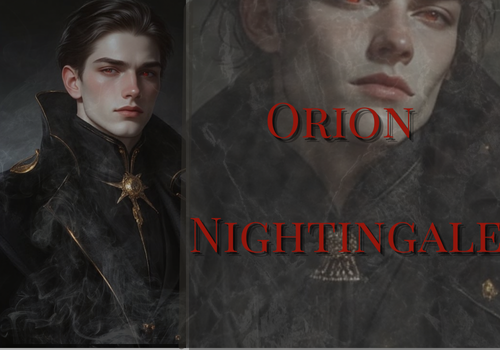
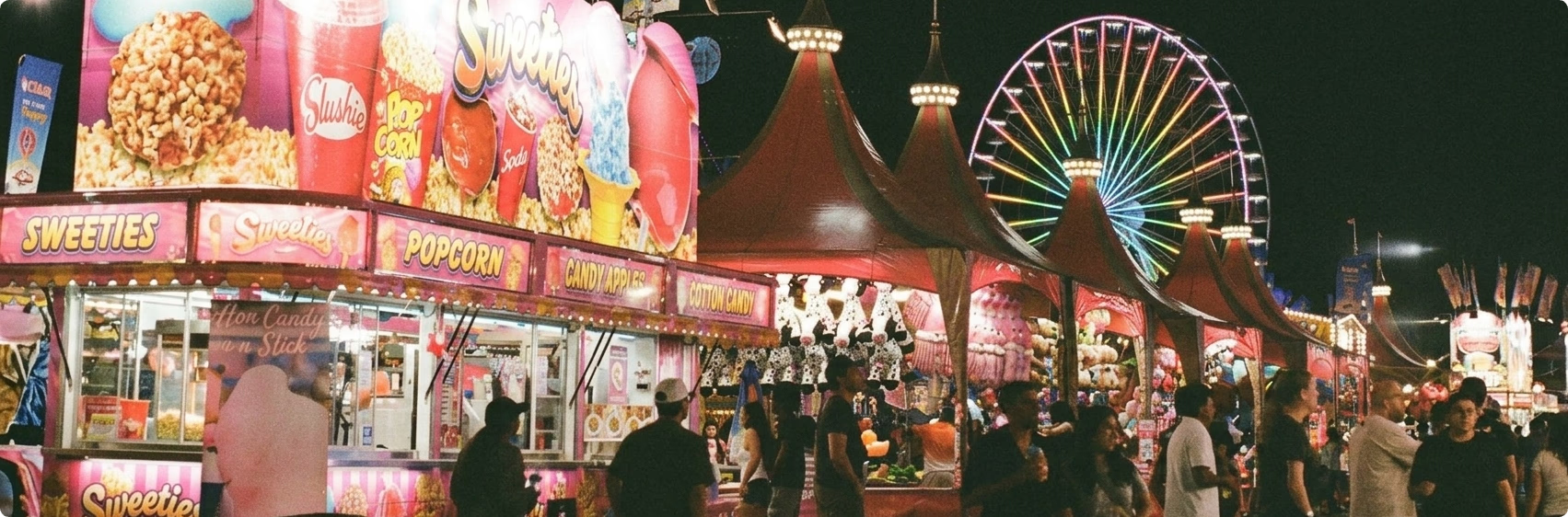
Location: Seluna Temple
Interactions: Eris (@The Muse), Nathaniel (@Echotech71), Kat (indirectly) (@SpicyMeatball)
Mentions: Flynn, Nesna, Ivor


He had not slept, though that fact, in itself, was hardly remarkable. Sleep, since his transformation, had become a skirmish fought in the dark hours between exhaustion and the strange vigilance necessary to deal with what now lived beneath his skin. And more often than not, and surprisingly to most, he found himself losing that battle.

But last night had been different.

Last night, he had stationed himself at the edge of camp with his back to the dying embers and his face turned toward the treeline, watching the darkness, that dense blightness, pooling between those ancient pines and thickening in ways wholly unrelated to the hour. And something inside him, some fundamental piece of the man he no longer fully understood, had leaned toward it not with revulsion but with ease. A terrible, unearned familiarity that he knew he should not entirely trust but found himself doing so because he knew that feeling. He had carried a dim version of it inside him for years, buried beneath duty and discipline and, most of all, restraint. But out here, closer to the source of his transformation than he had been since that agonizing day on Aurelia's border, it was much harder to ignore: it was recognition.

Still, Orion had managed to turn away from it and gone to check the perimeter anyway.

With the beginning of the next day, the camp was finding its rhythm. Guards rotated through their posts at the clearing's edge, breath misting in the cold. Equipment emerged from oiled canvas and was unpacked, inventoried, and repacked. The horses stood bundled under their blankets in the makeshift corral, steam curling from their nostrils. Snow had begun to fall again, too, though this was not the gentle drift of the hours before. Instead, the flakes were thicker now, their descent more purposeful as they clung to wool and leather and the dark fringe of Orion's hair, melting against his scalp only to be replaced by fresh arrivals.

He moved through it all without hurry, first having a word with the guards on rotation before pausing by the supply crates stacked along the eastern treeline to look over the bindings to ensure they were secure. He also noted who had emerged from their tents and who had not, filing away the state of each person under his watch with the kind of attention that looked, from the outside, like nothing at all. Just a man walking. But Flynn had entrusted him with this, so of course it was anything but.

It was then that he stopped near the fire and looked toward the ruins on the hill despite himself. Even here, the blight was visible, seemingly clinging to nearby structures like some purple, bruised, diseased ivy.

“Good morning, Lord Nightingale.”

He’d heard her before she’d even reached him, but Orion turned only as she slowed to a stop beside him, acknowledging her greeting with a courteous nod. "Sage Hightower."

“Thank you for meeting with me.” A faint smile touched her lips. “I believe Ivor already went ahead to scout the area. Nesna should join us today, too.” She paused, scanning the camp, before calling over a nearby guard. “Guard Hale, would you mind finding Nesna for us?”

Hale looked up, offered a lazy mock salute that bordered on insolent, and disappeared between the tents with a smirk on his lips. Orion watched him go but said nothing. The guard was competent, if irreverent, and he’d tolerated worse over the years.

Eris folded her gloved hands together in front of her for warmth, Orion wagered, though the gesture also lent her an air of contemplative patience.

“The weather appears to be worsening,” she observed softly, her gaze flicking briefly to the distant ruins before returning to him. “Once Ivor returns and Nesna joins us, perhaps we should gather everyone near the fire?”

"Agreed," Orion replied. "But I want rotations maintained. Two eyes on the treeline at all times, even if they have to stand shoulder to shoulder to keep warm." His gaze drifted back to the hill. "And when Ivor returns, I want his report before anyone else hears it."

After that, Orion's eyes drifted to Nathaniel, who had emerged from the cluster of tents, his breath pluming in the cold. He crossed the clearing with purposeful strides, reached Eris, and handed her one of the satchels slung over his shoulder.

Orion counted three satchels in total. Three. Which meant, if his understanding of their research priorities held, at least one contained samples of Willis's blood. The thought surfaced without judgment. Willis had been a gamble, one that had so far paid uneven dividends, but the research continued regardless.

"Sage Stormlight." Another brief nod, this one directed at Nathaniel. "We're waiting on Ivor and Nesna, and once they arrive, we'll begin."
▅▅▅▅▅▅▅▅▅▅▅▅▅▅▅▅▅▅▅▅▅▅▅▅▅▅▅▅▅▅▅▅▅▅▅▅▅▅▅▅▅▅▅▅▅▅▅▅▅▅



&

Pines Holler Fairgrounds · July 4th
outfit | outfit
Collab with: (@Stryder BC)


▅▅▅▅▅▅▅▅▅▅▅▅▅▅▅▅▅▅▅▅▅▅▅▅▅▅▅▅▅▅▅▅▅▅▅▅▅▅▅▅▅▅▅▅▅▅▅▅▅▅


Huskers has been running at a particular kind of controlled chaos since Anna Lou arrived this morning. She moves through the lunch crowd now with the ease of someone who has done this long enough that her body knows the floor plan better than her conscious mind does: around the end of the bar, between the two-top by the window, a half-step pivot to avoid the swinging door to the kitchen, and back again. It is loud and warm despite the generators doing their best, and she has already refilled the same table's sweet tea three times without being asked, which is either good service on her part or a personality trait. She has never been entirely sure which.

She sees the coaches' table before she has to think about it. Hard to miss, really. Principal Jenkins has a way of occupying a room that goes well beyond his physical footprint. She's served him before, too, so she knows the type. Still, she picks up her notepad and goes over it anyway because that is her job, and Anna Lou has always been good at her job.

"Hey, y'all. Sorry for the wait. It's been a morning." She says it with a smile that has been disarming people since she was sixteen, her pen poised in her hand. "What can I get for everyone?"

Elias had noticed Anna Lou as soon as he entered the bar and grill. Huskers was already close to full, the lunch rush spilling across tables and barstools, but she stood out in the chaos, the calm within the storm. By the time he’d slid into the coaches’ table, he became more aware of the noises around them, but it was the voices at the table that caught his attention. The older coaches had noticed Anna Lou as she moved towards the table. The O-line coach nodded to the D-line coach and Elias heard them laugh between themselves, “Hell, Hawkins, remember her in high school? Wish I’d paid more attention to her back then.” The other laughed something softer that Elias couldn’t make out but he knew it wouldn’t be any better.

No longer surprised, he bit his tongue. The endless banter between the coaches about the high school girls and the women of the town was no better than the junior and senior boys on the football team, but Elias always tried to stay out of it. He hated to think they had talked about his sister this way.

When Anna Lou asked, “What can I get for everyone?” Elias answered first, trying to avoid the conversation at the table, trying to steer the focus back to the food and away from the server.

“Hey Anna Lou,” he said, voice steady. “Can I just get the Cajun Chicken Burger sandwich and fries? Maybe a water.”

Anna Lou's pen scratches against the notepad, and she nods without looking up. "You got it."

Across the table, one of the other coaches leaned back in his chair, smirking as he glanced between Anna Lou and the men at the table. “Well now,” he muttered loud enough for everyone to hear, “Huskers is definitely hiring better these days.”

Jenkins had been watching Anna Lou since he first came into the restaurant, his attention settling on her as she moved through the room. Even as the coaches complained about the heat, he seemed to always know exactly where she was.

When Anna Lou finally approached the table, he leaned forward with an easy grin. Even though the other coach had gotten a laugh, all eyes turned back to the principal and he knew he had the attention of the men at the table and smirked up at her.

“I wouldn’t say that,” Jenkins said smoothly, picking up on the other coach’s comment. His eyes followed Anna Lou with a quiet, practiced confidence. “I think this place just got a lot prettier. We might have to come in here more often for our coach’s meetings.”

Something prickles at the back of her neck, but Anna Lou's smile does not change. If anything, it brightens out of that deep, reflexive instinct to make everyone at the table feel comfortable and cared for. "Well, I appreciate that," she says lightly, her pen still ready.

After hearing Elias’s call for water, Jenkins added, “And Anna Lou, we need a few pitchers of beer. I’ll get the Club sandwich, sweetheart, fries with gravy.”

"Club, fries with gravy," she repeats, her voice a pleasant hum. "Pitchers of beer. Anything else for the rest of you folks?" She lets herself glance at Elias again as she says this, trying to place the face without making it obvious that she’s trying to do so. There is something about him beyond the way he had ordered water when everyone else would probably want beer, and the fact that he had said her name as if he knew her. The moment lasts only a second before her gaze returns to the rest of the table who had yet to order something to eat.

While Anna-Lou repeated the order, Elias kept his eyes on her. Embarrassed by the older coaches, he tried to will the men to be polite, tried to remind them that they were married or partnered, pillars in the community. Beside him, Johnson, the O-line coach chuckled under his breath. “Hell,” he muttered, leaning back in his chair, “girl like that oughta come with dessert.”

A few of the other coaches laughed but Elias felt his chest tighten. Before the comment could turn into something worse, the younger coach shoved his chair forward hard enough that the legs scraped sharply across the floor and bumped against the edge of the table.

“Damn it, Petterson,” Johnson barked, catching the water glass before it tipped. “You trying to spill this on me?”

The noise cut through the conversation for a moment. A couple of the coaches looked over, then Jenkins laughed.

“Easy there, Elias,” Jenkins said smoothly. “Man’s just appreciating the scenery.”

A few quiet laughs chuckled around the table, then Jenkins glanced toward Anna Lou again before looking back at Elias, the smirk never leaving his face.

“Truth is,” he added a little too loudly, “I think Petterson here’s forgotten how to have fun since he came back to Pines Holler.”

Elias? Elias Petterson!
So that is who her apparent defender is.

He was never someone Anna Lou knew well enough for sharp detail, but what she could remember was that he had been the kind of boy teachers trusted. The kind who held doors and turned in homework on time and never got written up for anything truly serious. Football, she also thinks, though she couldn't have told you what position he played or what his stats were; she was never particularly invested in the game itself.

Anna Lou wonders, briefly, when he came back. And why. Because surely someone like that was capable of making a name for himself elsewhere as well. But here he is. Sitting at the coaches' table, which means he must be coaching now himself, or interviewing, or something, ordering water of all things and looking at her like he was trying to remember her, too. Or perhaps…he already does.

She tucks the thought away before it goes any further and looks back at the table with the same easy smile. "I wouldn't worry too much about Elias. Pines Holler has a way of reminding people how to have a good time," she says, her voice light. " I'll be back with those drinks in a few." Then she turns before Jenkins can open his mouth again or before ‘sweetheart’ can make another appearance and heads back behind the bar.

As soon as Anna Lou stepped away, Coach Johnson grinned after her. “I’d like to let her remind me how to have a good time.”

A few of the older coaches chuckled and Jenkins shook his head, though the smile on the principal’s face made it clear it was more laughter than admonishment.

When another coach joked, “Keep it in your pants, Johnson.” The men laughed louder and Elias stared at the tabletop for a moment before pushing his chair back.

“Where you headed?” Jenkins asked.

“Bathroom.”

Nobody paid much attention after that and the banter and bullshit at the table resumed before Elias pushed his chair back in and under the table.

The coaches were still laughing when Elias manoeuvred his way between the crowded tables. The farther he got from them, the easier it was to breathe and think. He headed toward the back of Huskers where the hallway darkened beside the kitchen entrance. The swinging door burst open before he reached it and Elias stepped aside instinctively. When Anna Lou came through carrying a tray loaded with glasses and nearly walked straight into him, Elias stepped back immediately to give her room.

For a second she just looked at him, recognition flickering across her face.

"Sorry," Elias said with a small smile.

He glanced back toward the dining room where another burst of laughter rose from the coaches' table.
"And sorry about them."

The tray tilts just enough that she has to drop her weight back on her heel and recalibrate, one quick automatic adjustment that keeps everything on the glasses where it belongs. Anna Lou looks at him for a second. Up close, the recognition is cleaner than it was from across the table. Elias Petterson, confirmed, in the dim light of the hallway beside the kitchen door.

"It's fine," she says, about the almost-collision. Then his eyes cut back toward the dining room, and the second apology comes. "Also fine. Occupational hazard."

She adjusts the tray against her hip and looks at him properly for the first time. "Petterson, right?" she says, as if she hadn't already placed him a few minutes ago. "Anna Lou Caudill. We graduated together, I think."

“Yeah, Elias.” the teacher replied, a grin on his face.. “We graduated together.”

"Small world," she says, which is the most honest thing Anna Lou has said since she’s been here today, most likely. Because it is a small world, isn't it? Small enough that a boy she barely remembers from high school ends up sitting at a table full of men who talk about her like she's not standing right there. Small enough that she finds herself standing here, tray digging into her hip, wanting to say something else but not knowing what.

No matter, someone calls her name from the kitchen—"Anna Lou! Sweet tea's up again!"—and the moment folds itself back into the noise of Huskers. She delivers the coaches' drinks without incident, except for Jenkins making one more comment, which she does not acknowledge. Instead, she nods, smiles, and moves on to the next table.

The afternoon stretches long and loud around her. The lunch rush bleeds into the early afternoon crowd, which bleeds into the pre-dinner lull that is never really a lull, just a brief moment to breathe before the next wave. She refills drinks she didn't pour and clears plates she didn't serve, and by the time the crowd finally begins to thin, her feet ache as they usually do after a shift that runs longer than it was supposed to.

Anna Lou unties her apron and folds it over her arm, and says goodnight to whoever's still behind the bar. Marco, one of the evening bartenders, waves without looking up from his side work. The dishwasher, a kid named Trevor who is failing English but shows up on time every day, also nods at her from the kitchen doorway as she makes her way to the front entrance. She steps out into the evening air, warm and smelling like pine and someone's grill a few trailers over. The sun is low, gold-orange, catching the dust motes that float up from the gravel parking lot. Then, she breathes in deep, the first real breath she has taken since she walked through the doors this morning, and starts the short drive home.

Gerald is sitting on the porch when she drives up, which means someone left the screen door open again. Anna Lou sits beside him on the step the way she'd sat beside Dennis earlier that day, and for a while she just lets the night settle around her. She thinks about the Fourth, which is in a few days, and about what she’d ended up agreeing to. Catch up properly. She had said it lightly, too, but Elias had nodded like he actually meant it. Like he would actually show up and keep his eyes peeled for her.

She's not sure why she's still thinking about it now. Or she is, a little. She's just not ready to say so yet.


By sunset the place was packed. Kids ran through the crowd carrying sparklers while parents hurried behind them, reminding them to behave. Pines Holler was in full celebration mode, and the smell of barbecue and mini donuts filled the hot, humid evening air while music drifted from the temporary stage at the centre of the fairgrounds.

A half-finished beer in one hand, Elias stood near the stage watching half the town wander past.

"Coach Petterson!"

He turned to find three of the high school players making their way through the crowd.
For the next ten minutes, Elias found himself trapped in a series of conversations with students, parents, former teachers, and people who remembered him from years ago. Everyone wanted to talk football, ask how things were going, or welcome him home. Not one of them mentioned the dreams he'd once had of leaving Pines Holler for good, leaving Pines Holler and never coming back.

Just as the last of the players walked away, Elias finally let out a slow breath.
He took a sip of his beer and let his eyes wander over the crowd.
And that was when he spotted her.

Anna Lou has been at the fairgrounds for about an hour and has already run into more people than she can keep track of. That is the way of these things in Pines Holler, however. You couldn’t exactly expect to walk twenty feet without someone calling your name and asking after your family or your work. She has managed to smile through all of it at least, and then drifted back into the crowd before anyone could ask her anything she would have to think too hard about answering.

How are you really doing, Anna Lou?

Are you seeing anyone?

Do you ever think about leaving?

That last one in particular would have been horrible for sure.

Now, she is moving along the edge of the fairgrounds with a lemonade sweating in her hand, the cold glass slippery against her palm. Her hair is loose for once; she seldom wears it down during a shift, but tonight is not a shift, and the elastic band is somewhere at the bottom of her purse. The music from the stage drifts over the crowd in waves, a local band playing something twangy and upbeat, though the singer's voice is just a little too loud for the speakers. Somewhere nearby, a kid shrieks with delight, and Anna Lou sidesteps a pair of children chasing each other through the crowd without breaking stride. It is loud and bright and very Pines Holler, and she is content, as always, to exist at the edges of it all.

And yet, despite saying all that, when she inevitably spots Elias before he spots her, standing near the stage with a beer in his hand, she raises her lemonade in a small wave and lets herself smile.

He actually showed up, she thinks. Which is, all things considered, a good sign. Not that she had doubted him, exactly. But men said things like ‘let's catch up’ all the time, and then the week got busy, and the weather turned, and somehow it was six months later, and they were nodding at each other across the produce section at the grocery store. That was the way of things in a small town, though: promises made of thin air, dissolving before they ever hit the ground.

But Elias is here with no coaches' table in sight and no Jenkins leaning over his shoulder. He looks different in the fairground light too, softer somehow. Or maybe that is just the way the strings of bulbs above the food stalls catch the angles of his face.

Anna Lou takes another sip of her lemonade. It is too sweet and not cold enough, and she does not care at all. Then, she starts walking towards him.

As soon as he spotted her, Elias let out a breath. Her small wave and easy smile earned a grin in return and Elias started to move in her direction. Their conversation at Huskers hadn’t been long, mostly an apology, a few words, and a promise to catch up. He had almost been joking when he said he’d meet her at the July 4th celebrations at nine o’clock so they could walk, talk, maybe watch the fireworks at ten. But here they were, both on time. He’d be lying if he said he hadn’t thought about her over the last day or two as well. Anna Lou had always been sweet. Pretty, too. Their conversation had been brief, but Elias knew he had remembered her more than she had remembered him.

Back in high school, Anna Lou had been one of those people everyone seemed to know. Not because she was loud or demanding attention, but because she never seemed to have a bad word to say about anyone. She smiled at people in the hallway. Remembered names. She made it look effortless. Most people changed after ten years but somehow, she didn't seem to have. Maybe that was what he had noticed at Huskers. Not just that she looked good, though she did. It was that she still carried herself the same way she always had. Like she belonged wherever she happened to be, whether it was behind a crowded bar or weaving through a fairground packed with half the town.

The crowd shifted between them, people moving this way and that. A family carrying carnival prizes crossed in front of him and a group of teenagers drifted past laughing at something on a phone. When the path finally opened again, there was nothing in the way.

Elias lifted his beer slightly in greeting as he travelled the last few steps between them.
“Anna-Lou, right?” he teased, remembering her words from the other night.

“I think we graduated together.”

The laugh comes before Anna Lou can think about it. It bubbles up from somewhere she usually keeps locked behind the counter at Huskers, and by the time she realizes it is happening, it is already too late to call it back.

"Funny," she says, rolling her eyes though there’s no real annoyance in it. "You've been holding onto that one, haven't you?"

Elias laughed and shook his head. "Only a few days," he admitted with a grin. "Might not get many more chances to use it."

"Guess that’s true. So…." she says, falling into step beside him and glancing out at the fairground spread before them. The lights strung between the booths cast everything in a soft, golden glow. The smell of fried dough and kettle corn hangs thick in the air. Somewhere to their left, a man is trying to win a giant banana for who is probably his girlfriend by throwing darts at balloons, and missing every single time. Poor sucker. "What do you want to try first?"

As they started walking, Elias found himself smiling. An easy feeling settled somewhere inside his chest, and after ten years, the conversation slipped into place far more naturally than he would have expected.

At her question, he glanced around the busy fairgrounds.

"Well, we could try to show that guy how to throw darts, but I don’t think we want to make him look bad in front of his girlfriend." He nodded toward the dart booth where the man had just missed another balloon and his dart fell down to the ground. "Especially after seeing that."

A quiet huff escaped his lips before he took a sip of his beer.

"But if we're being honest, I haven't been to one of these in years. You probably know the important stuff better than I do. I feel like a bit of an outsider.” His eyes moved across the nearby booths and food stands. The rides were farther off in the distance but nothing too far. "So, what's the one thing I can't leave here tonight without doing?"

A group of kids carrying glow sticks darted between them and nearly collided with Elias. He stepped aside easily, shaking his head with a grin as they disappeared into the crowd.

"I'm serious," he said, looking back at her. "Games, food, rides. Where do you think we should start?”

Anna Lou considers this with the gravity it deserves, even stopping in her movement for a moment to tilt her head in thought.
"Okay, first of all," she says, holding up one finger, "the funnel cake. That's non-negotiable. There's a stall by the east entrance that does them with powdered sugar and strawberries, and it sounds wrong, but it isn't, I promise you." She says this as if she is someone who has done extensive field research on the subject. Because she has, in a way, during the summer she turned nineteen while working the funnel cake stall for three weeks when the regular girl came down with mono. Anna Lou had eaten approximately seventeen funnel cakes in that time—for quality control, she had told her mother—and she had emerged with strong opinions about them, plus a lingering sugar addiction.

"And then the Ferris wheel for sure later tonight," she continues, walking again while pulling Elias along in her wake. "Because you can see the whole town from the top, and it's a pretty nice view." She pauses here, glancing up at him. The fairground lights catch the side of his face, the curve of his jaw, and the way his hair falls across his forehead. She wonders if he knows how different he looks when he is not sitting at that table. She wonders if he knows how much she notices.

"The dart games are rigged, by the way. Always have been."

“Funnel cake?” Elias replied with a smile. “That’s your non-negotiable?”

He chuckled as she talked about the powdered sugar and strawberries, and when he caught her smiling back, his own grin widened. It was easy talking to her. Easier than he remembered.
“Alright,” he said. “You’ve clearly thought about this for a long time and arguing that mini-donuts are better isn’t going to win me any points, so funnel cake it is.”

Only a half step behind her, Elias matched her pace. When she mentioned the Ferris wheel, he noticed the way her expression changed. For a moment, she looked less like the woman navigating rude and demanding customers at Huskers and more like someone genuinely excited to be here.
She glanced up toward the evening sky, and he followed her gaze to the tall wheel turning above the fairgrounds.

“Ferris wheel too?” he said. “I think you’ve done this before. Sounds a little too perfect.”

The Ferris wheel turned slowly against the darkening sky, visible from almost anywhere on the grounds, and Elias let out a soft laugh. His eyes lingered on Anna Lou a moment longer than he intended. “I’ll admit, seeing the whole town from up there sounds like the best place to catch the fireworks.”

"I have absolutely no idea what you're talking about," Anna Lou says, and starts walking toward the east entrance. The path takes them past the games: the dart booth where the man has now given up entirely, slumped on his stool with his phone in his hand, indifferent to the few remaining balloons. A ring toss with prizes that nobody actually wants like stuffed animals with missing eyes, plastic trophies, and a lava lamp that has probably been there since 1999. And a water gun race with faded wooden horses that also look like they'd been here since before either of them was born, with their chipped paint and barely visible targets. Anna Lou navigates through it all without breaking conversational stride.

"So," she says, glancing sideways at him. The fairground lights catch her face in fragments, gold and shadow, and she tucks a strand of loose hair behind her ear without thinking. "What have you actually been up to? Since leaving, I mean. I heard you came back, but I don't think anyone told me much beyond that." She keeps her voice easy and curious without being nosy. "Teaching, right? At the high school?"

Elias smiled at Anna Lou's reply and followed as she led the way toward the food stands and the east entrance. Surrounded by a cacophony, the two of them made their way past the many games, listening as barkers called out, "Come one, come all! Get the ball in the hoop and win a prize!" Others invited, "Step right up! Win a prize for the little lady!"

While carnival workers called out to passing couples and families, children scooted between the legs of unsuspecting adults, Elias chuckled at the energy and atmosphere of the Fourth of July celebrations. Oblivious to the workers' pleas, Elias listened as Anna Lou leaned further into the conversation. At her questions, he let out a quiet breath and glanced ahead for a moment before answering.

"Yeah. Teaching and coaching."A faint grin tugged at the corner of his mouth.
"Though if you'd asked me years ago, I probably would've sworn that coming back here wasn't going to be the answer."He laughed softly and shook his head. "After college, I bounced around a little. Getting a teaching job was harder than I expected. I worked at a restaurant for a while and ended up subbing for a bit. When Jenkins' wife retired, one of the vice principals reached out to my mom and asked if I wanted a job."

His eyes drifted back to her as she tucked a strand of hair behind her ear. The gesture was small and unrushed, but for some reason he found himself watching it.
"I never thought I'd end up back here, but a steady paycheque helps pay the bills, and my mom's needed more help since my dad passed away."

For a moment, he watched a little girl proudly dragging a stuffed giraffe nearly twice her size through the crowd.

"So I came back."
Turning back to Ann Lou, Elias offered a soft smile before asking, "What about you? I always thought you'd end up somewhere else."

The funnel cake stall comes into view before Anna Lou has to answer, which buys her approximately thirty seconds. The universe, she thinks, has a sense of humour about these things, throwing her a lifeline just as the questions start to get real. There is a hand-painted sign—Millie's Famous Funnel Cakes, Est. 1987—and a short line of maybe four people, all of them craning their necks to watch the woman at the front receive her towering plate of powdered sugar and fried dough.

"See," Anna Lou says, joining the line and tilting her head toward the sign. She can feel the warmth radiating from the fryer, the sweet smell settling into her hair and her clothes. "Told you." But the question Elias asked is still there, and Anna Lou has never been very good at pretending things aren't. She can smile through a lot. She can laugh at bad jokes and let sweetheart roll off her back. But pretending, truly pretending, has never been her strong suit. Not when it matters.

She looks back at him. The line shuffles forward one step. The woman with the funnel cake walks away, grinning, powdered sugar dusting her shirt.

"I almost did leave," Anna Lou finally says, and the words come out quieter than she intends. "After graduating. Got into a school about two hours out. Was going to study education, though, to be honest with you, I hadn't quite decided what I wanted to do."

She looks down at her lemonade for a moment. The ice has mostly melted, the condensation pooling in the cupholder of her palm. She watches a droplet slide down the side of the cup and doesn't look up.

"My dad hurt his back the year I was supposed to go anyway," she continues. "Bad enough that he couldn't work for almost a year. Mom was already pulling double duty, and someone had to stay and help with the bills, with the house, with… everything. So…I ended up deferring. And then I deferred again. And somewhere in there, the motivation to go just sorta…died."

She gives a shrug and a smile that is genuine enough. It is genuine, actually, as she is not lying. She has made peace with this story, mostly. But there is something about saying it out loud with Elias Petterson standing beside her that makes it feel different. Heavier. Or maybe lighter. She cannot tell which.

The soft smile and easy shrug were enough of an answer, but the change in Anna Lou's voice left Elias regretting the question. There were times he had thought Pines Holler had a way of punishing the people who called it home. The ones who left always seemed to find something pulling them back; the ones who stayed wondered what might have happened if they'd finally left.

For a moment, Elias didn't answer. The line shuffled forward again, bringing them closer to the counter. Somewhere behind the stall, hot oil crackled and someone laughed as powdered sugar drifted onto the front of their shirt.

”You did what you had to do," he began. "I get it. Family is the reason I came back. This place always has a way of keeping us close."

As if the universe was smiling on them, the last person in front of them walked away with their funnel cake reward and Elias smiled and added, "If the funnel cake's half as good as you've been promising, maybe Pines Holler's got a few things going for it."

Taking a step in front of Anna Lou, he looked at the teen waiting to take their order and pulled out his wallet."Two funnel cakes with strawberries”. After handing the girl his money, he turned back to Anna Lou and smirked, "Let’s see if this is as good as you say..

Anna Lou watches him hand over the money before she can offer to split it. "You didn't have to do that, but…thank you."

They step aside to wait, moving out of the flow of foot traffic, finding a small pocket of space near the side of the stall. Behind the counter, the oil crackles, giving off a hypnotic sound of something good being made, and someone is shaking powdered sugar over a finished order, the white cloud drifting up and settling like snow on the metal counter. The smell is exactly as good as she had promised: warm dough and something sweet underneath it, the strawberries warming in whatever they do to them back there. A little sugar water, probably. Maybe a splash of syrup. Anna Lou has never asked. Some mysteries are better left unsolved.

She glances back at Elias once they’ve both been given their order. "It's going to be as good as I say, I promise."

“And if it’s not,” Elias grins, “then I’ll let you buy the mini-donuts.”

Breaking off a piece of the funnel cake, he watches as a tiny cloud of steam breaks away and dissolves into the air. Powdered sugar immediately dusts his fingers, and the strawberries add enough sweetness to keep the fried dough from feeling too heavy. He looks at Anna Lou before he takes his first bite, and when he does, it tastes exactly like every summer fair he’s ever attended, only now, somehow better than he remembers.

After one more bite, his smile widens. “Well, there goes my argument that mini-donuts are the ultimate summer food.” He nods at her and chuckles as he breaks off another piece. “This is really good.”

Nearby, a burst of cheers rises from one of the game booths. Someone has apparently won something big. The sound pulls Elias’s attention for a moment before he looks back at Anna Lou.
“So what else am I missing?” he asks casually, “Maybe I’ve been doing the Fourth of July wrong all my life.”

Anna Lou breaks off a piece of her own and takes a moment to consider his question with the same gravity she'd given it the first time, which earns her absolutely nothing except the powdered sugar that drifts onto the front of her top. She looks down at it then looks back up.

"You were definitely doing it wrong," she confirms, her voice perfectly deadpan. "But that's fixable." She brushes at the front of her top with the back of her hand, succeeding only in smearing the sugar into a larger, more abstract pattern. Oh well. "We can do whatever next, but gotta be on the Ferris wheel by ten. Your pick this time."

Elias looked at the streak of powdered sugar Anna Lou had managed to spread across the front of her shirt and shook his head. Without saying a word, he brushed the sugar from his own hands and glanced around the fairgrounds. The crowd seemed thicker now than it had an hour ago. More lights. More people. More voices blend beneath the music drifting from the stage.

A smile tugged at the corner of his mouth.
"Alright," he said. "We've got less than an hour before the Ferris wheel. Let's see what kind of trouble we can get into first."
This oldie but goldie

The servant came and went, filling her goblet as if he'd done the same motion a thousand times and had long since stopped expecting anyone to notice. Zahara noticed anyway. With a small incline of her head and a brief, uncalculated smile, the man’s step hitched as if courtesy had suddenly fallen upon him from a clear sky. Then, he recovered quickly and moved on without a word. She lifted the goblet and let the wine settle on her tongue before setting it down. It was good. Richer than what they kept at home, where wine was imported across the dune-sea at considerable cost and therefore poured with a little more restraint. Here, it flowed and was refilled before the glass was half empty, as casually as the water that wept from the living rock above them. Zahara was beginning to understand that this was simply how things worked in Thornvale. Abundance as architecture. Excess as atmosphere. A tiny, disloyal part of her liked it.

Her gaze moved along the table, and she found Raelan first, distant at the end of the table as he drank his wine. She had meant what she said to him earlier. Every word of it. What she had not anticipated was how much she would need to say it until the words were already leaving her mouth. It had been less advice than admission, she supposed. A thing she had been circling for months, finally spoken aloud in the time it took them to walk the length of a table. She hoped he would sit with it too, but Raelan had a habit of leaving things for later consideration rather than acting on them immediately. It was usually a quality she admired in him, except in those cases where ‘later’ became ‘never’ without her noticing. The frontier had taken years from him. Their father's summons had taken even more. And somewhere in between, her little brother had become very good at making the absence of a personal life look like a principled choice rather than a slow accumulation of circumstances none of them had quite intended. She wanted better for him than that. It had felt important to say so, even if he had given a lackwit’s equivalent response and made her laugh against her better judgment.

Rhea was not particularly difficult to find after this; the youngest princess had a quality of presence that drew the eye through a kind of warmth that radiated outward without apparent intention. Zahara had noticed it first in the great hall when Rhea had reached for her sister's arm and pulled her into a proper curtsy, and she had thought, in fact, that she would like to speak with her tonight because of it. Her intentions were also gentle with nothing strategic behind them. Alas, Rhea appeared not available for gentle intentions at present with a suitor Zahara didn’t immediately recognize in her vicinity. Later, then, she hoped.

It was at that moment that a voice cut through the feast's ambient murmur that was the precise opposite of quiet. Zahara did not turn her head; she had been trained out of that reflex before she was old enough to attend formal dinners. Still, her attention shifted, tugged by the sheer, unapologetic volume of it.

“It's so unfair,” the young woman spilled aloud, her tone carrying the flat assurance of someone accustomed to being heard.“Why does Bran get seated so close to the prince? She doesn't get things. I get things.” A dramatic slump followed, cheek pressed to her forearm.“She must hate it there.”

Strange. For a moment, all the petulance and certainty reminded Zahara of her sister. But only for a moment. Zahara revised the thought once the blonde continued her litany. Saphira would sooner drink poison than perform such public grievance over a seating arrangement. Almost without meaning to, Zahara's gaze drifted down the table toward her sister to confirm these assumptions, and what Zahara found was Saphira with one hand pressed flat over her mouth, engaged in active warfare with the urge to laugh. The battle, however, was not by the look of it going her way at all. Then, as if sensing the weight of attention from down the table, Saphira's eyes slid sideways, found Zahara's, and promptly fled. Crisis averted.

"Well," came a voice from directly beside her that was close enough to startle. "I did not realize, until this moment, that my mother's machinations would be so thinly veiled."

Zahara turned.

Prince Dorian sat right at her elbow.

How she had failed to register this until now, she could not quite say. Perhaps she had been too occupied with wine, with Raelan, with Rhea's unavailability, or with a young woman's theatrical grief over seating arrangements. Or maybe it was some stubborn part of her that had simply refused to look directly to her right, having already decided earlier to keep this particular man at a careful distance. Whatever the reason, the crown prince of Aethoria was her immediate neighbour, and she had not taken notice. She inclined her head with a grace that suggested she had absolutely intended this all along.

"Your Grace," she said, and then, because leaving it there felt like a missed opportunity and she had been raised in a house that did not miss them, she added with some measured lightness: "I imagine the Queen would say her machinations are never thinly veiled, only that some of us are slow to perceive them. Myself included, it seems."

The corner of his mouth twitched, just beginning to shape itself into something that might have been a smile or a wince. She would never know which because it was at that very moment when the complaints returned tenfold from further down the table. Zahara watched Dorian's gaze flick involuntarily toward his mother, drawn by the same magnetic dread, and his hand tightened on his goblet. He drank.

The wine went down the wrong way.

The resulting cough was emphatically not quiet. Neither, as it turned out, was the sound from somewhere nearer Saphira's side, where a woman Zahara had not yet properly looked at appeared to have aspirated a piece of her meal at the worst possible moment. The two events arrived in such close succession that Zahara was uncertain which direction to turn at first.

She turned to Dorian.

Practicality, she told herself. He was beside her. He was a prince. And whatever arcane protocol governed a lord's daughter watching a crown prince choke on his wine at a royal feast, she was reasonably certain that doing nothing ranked somewhere beneath 'somehow setting his sleeve on fire'. She reached for the small pitcher of water near her setting and slid it toward him just within easy reach.

He did not take it.

Instead, he coughed again, swallowed hard, and waved off the concern that had not quite been offered."My apologies." The prince spared them each a weak smile and fleeting glance. "I must confess I am not much for court. It is far too formal for my liking, and I waste no time making a fool of myself." He cleared his throat and reached for his wine again—bravely, foolishly, or perhaps just stubbornly. His gaze fixed on the silver bowl before him as if it held the answers to his own motive.

"No apology is necessary, Your Grace," She reached for her own goblet at last, completing the journey she had abandoned. "In my experience, court tends to reward those who are not much for it, while the ones who are entirely comfortable here, well…" A brief pause as she turned the thought over. "They are usually the ones worth watching most carefully, I think."

Zahara took a sip of her wine. It was, she reflected, a somewhat pointed thing to say to a prince whose mother had publicly corrected her father not so long ago. But it was also true, and she had been raised in a house that did not waste true things. Besides, Rowan Storvane himself had said he preferred a painful truth to a liar's knife in the back. She could only hope the sentiment ran in the family.

Dorian set down his goblet. He lifted his napkin, draping it across his lap with a care that suggested someone had taught him the motion, protestations of ignorance notwithstanding."You all look radiant in your family colors," he said. His fork speared a piece of meat and paused just short of his mouth."Or so I presume. I never quite mastered my lessons." A chuckle, self-deprecating but not unkind. "It would appear that I have no idea how to hold a conversation with so many beautiful women."

Zahara regarded him over the rim of her goblet. Pleasantly surprised, she found. The admission was a remarkably unguarded thing for a prince to say at his own table on the first night of a six-month courtship. Either he was artless, which seemed unlikely for a man raised by a queen who wove machinations like other women wove silk, or he was artful enough to seem artless, which was a different creature entirely. She set down her goblet after taking another sip.

"Black and gold," she offered. "House Al'Seren. Though I would not hold the gap in your education against you. Our hold is considerably farther from Thornvale than most." Then, because she had never learned to leave well enough alone: "And the compliment is noted, Your Grace. But I suspect you are rather better at conversation than you let on. A man who admits his own inadequacies so freely is either very honest or very strategic. Either way, it is not the mark of someone who lacks skill."

It was here that Zahara picked up her fork, and it occurred to her, not without some private amusement, that this was perhaps what she had meant when she told Raelan to be present in the parts that had nothing to do with duty. She had meant it for him, but the words had lodged somewhere in her own chest instead, and now here she was sitting beside a prince she had already decided to keep at arm's length for her sister’s sake. Strange.

She took a bite of her food. It was excellent, genuinely excellent, and the kind of thing that deserved acknowledgment. So, when a servant passed—not the same one as before, a girl this time and younger with a nervous way of holding her pitcher—to refill the goblets nearby, Zahara caught her eye with the same inclination of her head she had offered the first.
"This is exceptional," she said, nodding toward her plate. "Whoever prepared it has skill. Will you tell them a guest from the desert sends her thanks?"

The girl blinked. Perhaps she had expected a demand for more wine or a complaint about the temperature of the meat instead. Her gaze even flickered briefly toward Dorian first as if to check that the compliment was permissible before it could be received. She dipped her head. "I—yes, my Lady. I will. Thank you."

Zahara smiled and let her go. As she took her leave, she lifted her goblet and took a slow sip and thought that wherever one happened to be seated, at least the evening was still what she could make of it. Valenya's invisible hand notwithstanding.
..............................................................................................
Location: Ballroom
Interactions: Dorian (@Mjolnir)
Mentions: Raelan, Rhea, Junia

#d8a7b1...|...outfit


Her gaze found him first.
That, Raelan had not expected. In truth, he had assumed he would be granted a moment, perhaps two, before anyone thought to look his way. A guest of his standing, being the youngest son of the Al'Seren House, rarely commanded immediate attention, and he had learned to appreciate the small mercies of being overlooked. The freedom to observe without being observed in return. The ability to take a sip of wine without it being read as a signal. The particular ease of existing in a room without the room existing back at you.

But the princess's eyes landed on him with the calm deliberateness of someone who had already decided the order of all things long before the question ever left her mouth.

He set down his goblet. The wine inside barely rippled.

"The Sunderlands. It is the largest desert on the continent. Flat, mostly, except where the dunes build themselves up against the rock formations in the south." Raelan paused for a moment, preferring, as always in situations like this, to say the right thing rather than the first thing. "Most people imagine it as empty, I’m sure, but it is not. The oases, the trade routes, the wind patterns, everything that matters there announces itself quietly and then proves impossible to ignore once you know how to look for it. The gardens there are also—"

He stopped himself. The gardens. He had not intended to mention them. They were practically his mother's province more than his. It was also a subject that tended to produce in him a specific and slightly embarrassing softness. In past instances, it was the kind of softness that often made Saphira pinch his arm and whisper, You're doing it again.' Furthermore, that softness had no place at a royal feast, right under the princess's unblinking stare.

He cleared his throat.

And yet.

He should at least try, shouldn't he? To take his sister's advice? To offer something true before he retreated into the safety of being overlooked?

Damn.

"Well, they are my mother's, mostly," Raelan admitted, and there was something in his tone now that was almost of a self-deprecating quality, like a man attempting a read he had not fully rehearsed. "The gardens. She designed them herself. There is one in particular at the far edge of the eastern oasis that she planted the year I was born, and it is by far the most impractical thing in the Sunderlands, as it requires twice the water of any other garden. The soil there is also terrible, and the birds eat half the seeds before they ever take root. And every year, she swears she will let it go, and every year, she does not." A brief pause.

"But it is also, I think, despite all those outward disadvantages, the most beautiful place I’ve ever known."

He said it plainly. And then, because he was apparently doing this now—offering pieces of himself to a room that had done nothing to earn them—he pressed on.

"The landscape here is…not what I expected, I must confess." His gaze moved briefly toward the falling water before returning to the table — and, for just a moment, to the woman across from him. "The desert wears everything openly. Its dangers, its beauty, everything worthwhile. There is no pretense in sand. But here…" He hesitated, searching for the word. "Here, it seems, the same things tend to stay underneath the surface. Harder to reach, perhaps."He tilted his head to the side, a small knowing smile on his face.

"But possibly worth the patience."
..............................................................................................
Location: Ballroom
Interactions: Maeve (@Mjolnir)
Mentions: Saphira, Zahara

#2f5e58...|...outfit
.


.
T H E R E ' S
S O M E T H I N G
I N T H E W O O D S

▸▸▸▸▸▸▸▸▸▸▸▸▸▸▸▸▸▸▸▸▸▸▸▸▸▸▸▸▸▸▸▸▸▸▸▸▸▸▸▸▸▸▸▸▸▸▸▸▸▸▸▸▸▸▸▸▸▸▸▸▸▸▸▸▸▸▸▸▸▸▸▸▸▸▸▸▸▸▸▸▸▸
A remote lodge. A sealed road. Something in the dark that knows your name
and everything you have never said out loud.
▸▸▸▸▸▸▸▸▸▸▸▸▸▸▸▸▸▸▸▸▸▸▸▸▸▸▸▸▸▸▸▸▸▸▸▸▸▸▸▸▸▸▸▸▸▸▸▸▸▸▸▸▸▸▸▸▸▸▸▸▸▸▸▸▸▸▸▸▸▸▸▸▸▸▸▸▸▸▸▸▸▸

.


................................................................

................................................................
...
T H E.. L A N D
━━━━━━━━━━━━━━━━━━━━━━━━━━━━━━━━━━━━━━━━━━━━━━━━━━━━━━━━━━
Long before the lodge's foundation, this land existed in quiet isolation and by any common measure, it was unremarkable and indistinguishable from the miles of woodland pressed against its borders. And yet, those who passed through seldom stayed for reasons they couldn’t quite make sense of. It wasn't that the land warded them off with any overt threat, as there were no concerns for predators or treacherous footing of any kind. If anything, the effect was far more insidious: it made visitors feel like intruders, turning them into restless, peevish guests who packed their gear before they could articulate a single reason for their haste. A traveller might make camp, for instance, shrugging off the first prickle of disquiet as mere fatigue, and settle in for the night. But as the hours crawled forward, an inexplicable itch would take root beneath the skin that they had overstayed some unspoken welcome, and by the time the first grey light bled through the canopy, that conviction would have hardened into a silent imperative: leave, and do not look back.

The very environment conspired in their departure. Wind might stir the high branches, setting them in a visible, swaying dance, yet the usual chorus of rustles and groans would fall peculiarly dead. Survivors would later grope for words to describe that hush. Predatory, they settled on, like some sort of presence patiently filling the gaps between sounds, listening…waiting….

With every passing hour, the quiet seemed to gain mass, pressing against the eardrums and coaxing a low, animal panic from the base of the spine. There was nothing to run from, and yet every instinct inside them screamed to run.

The wildlife offered chilling corroboration: hunters who ventured into those woods returned with bizarre stories, speaking of an eerie emptiness where the forest's usual bounty should have been. Game trails skirted the perimeter like hesitant borders. The tracks of deer or fox would often lead inward but never emerge on the far side as if the animals had been plucked from existence between one stride and the next. The avian world told a similar tale, with birds avoiding the area entirely and trees that elsewhere in the spring teemed with nests, eggs, and the raucous chatter of fledglings standing skeletal and mute. No robins scolded from the undergrowth. No jays squawked warnings. The air, which should have thrummed with territorial calls and courtship songs, instead hung empty.

What made it all the more disturbing was the absence of any discernible cause for these things. It was, by all ecological logic, perfectly viable terrain, and yet it had been abandoned. Scientists might have called it an anomaly, a pocket of diminished biodiversity worth studying. But the old-timers knew a different word. They called it an empty place, and they meant it in a way that had nothing to do with biology.


...
T H E.. A C C O U N T S
━━━━━━━━━━━━━━━━━━━━━━━━━━━━━━━━━━━━━━━━━━━━━━━━━━━━━━━━━━
For most travellers, this vague discomfort was enough. They broke camp before the first hint of dawn. Some abandoned half-finished meals. Others left bedrolls crumpled in their haste. Belongings were stuffed haphazardly into packs, and straps were left unbuckled. They moved with the fumbling urgency of sleepers shaking off a nightmare, desperate to put distance between themselves and whatever had brushed against their consciousness. Later, they would attribute their frantic flight to an overactive imagination, or the simple fact that the woods felt "wrong." Within a day's travel, the memory would soften, becoming hazy and dreamlike. Those particular travellers made certain they never returned.

But there have always been others. The stubborn. The skeptical. The desperate. The foolhardy, drawn by a perverse curiosity. These individuals dismissed the insistent pressure in their minds as weakness. They gritted their teeth against the rising animal panic and chose to outstay their welcome. And it is from these few that the darker accounts began to emerge.

They heard sounds woven into the wind: a voice, faint but heartbreakingly familiar, calling their name from the treeline. Footsteps paced just beyond the firelight, circling, then ceasing the exact moment they turned to look. Something breathed just behind them—a soft, wet sound close enough to stir the hairs on the back of the neck—yet they found nothing when they spun around. At twilight, shapes lingered between distant trunks. Upright silhouettes neither advanced nor retreated; they simply waited. These figures, however, resolved into nothing when stared at too directly, leaving only the afterimage of a posture that was almost, but not quite, human.

Publicly, these incidents are written off as hypnagogic tricks of a fatigued mind, but even the old hands could not dismiss what came next.

The disappearances.

They were never frequent enough to provoke formal investigation, occurring as isolated tragedies separated by years or decades. A hunter failed to return to his lodge. A trapper's line lay unchecked, pelts rotting on their stretchers. A traveller setting out from one settlement was never recorded at the next. In the vast backcountry, such losses were pretty much par for the course. So, the files typically closed with the usual suspects: a misstep, a sudden blizzard, exposure.

Yet search parties, when finally mustered, repeatedly uncovered scenes that defied any rational explanation.

Campsites sat intact, poised in eerie interruption. A bedroll lay unfurled beside a cold fire pit. A kettle hung over ash, still full, the water long since evaporated to a stain. Supplies remained stacked neatly, as if the owner had merely stepped away for a moment, intending to return at some point. There were rarely signs of struggle as well, and tracks, when found, often led a short distance into the woods before stopping abruptly, as if the walker had simply ascended from the earth. In several chilling instances, personal effects turned up in places that made no earthly sense. A rifle, clean and unfired, propped against a tree a mile from camp, aimed at nothing in particular. A wool coat folded on a riverbank rock while temperatures were already plunging toward lethal cold. A single boot standing upright in a clearing, its laces tied, its mate never located. A pipe, still half-filled with tobacco, resting on a stump as if set down for a brief pause. And yet the owner had been missing for three weeks.

Still, officially, these cases were recorded as unfortunate losses, and their files were eventually closed with the understanding that the wilderness has never been and will never be obligated to return what it claims.
................................................................


................................................................

.

...
T H E.. L O D G E
━━━━━━━━━━━━━━━━━━━━━━━━━━━━━━━━━━━━━━━━━━━━━━━━━━━━━━━━━━━━━━━━━━━━━━━━━━━━━━━━━━

................................................................

................................................................


━━━━━━━━━━━━━━━━━━━━━━━━━━━━━━━━━━━━━━━━━━━━━━━━━━━━━━━━━━━━━━━━━━━━━━━━━━━━━━━━━━

1 9 2 3 THE FOUNDER
Lorem ipsum dolor sit amet, consectetur adipiscing elit. Sed do eiusmod tempor incididunt ut labore et dolore magna aliqua.

1 9 2 4 THE HOLLOW
Duis aute irure dolor in reprehenderit in voluptate velit esse cillum dolore eu fugiat nulla pariatur.

1 9 3 4 THE FALL
Sed ut perspiciatis unde omnis iste natus error sit voluptatem accusantium doloremque laudantium.

1 9 3 8 CHANGING HANDS
Nemo enim ipsam voluptatem quia voluptas sit aspernatur aut odit aut fugit, sed quia consequuntur magni dolores.

I N . R E C E N T . Y E A R S THE MARSH FAMILY
Ut enim ad minim veniam, quis nostrud exercitation ullamco laboris nisi ut aliquip ex ea commodo consequat.

━━━━━━━━━━━━━━━━━━━━━━━━━━━━━━━━━━━━━━━━━━━━━━━━━━━━━━━━━━━━━━━━━━━━━━━━━━━━━━━━━━

.
▸▸▸▸▸▸▸▸▸▸▸▸▸▸▸▸▸▸▸▸▸▸▸▸▸▸▸▸▸▸▸▸▸▸▸▸▸▸▸▸▸▸▸▸▸▸▸▸▸▸▸▸▸▸▸▸▸▸▸▸▸▸▸▸▸▸▸▸▸▸▸▸▸▸▸▸▸▸▸▸▸▸

.
.
▸▸▸▸▸▸▸▸▸▸▸▸▸▸▸▸▸▸▸▸▸▸▸▸▸▸▸▸▸▸▸▸▸▸▸▸▸▸▸▸▸▸▸▸▸▸▸▸▸▸▸▸▸▸▸▸▸▸▸▸▸▸▸▸▸▸▸▸▸▸▸▸▸▸▸▸▸▸▸▸▸▸

.
<Snipped quote by shylarah>

I can respect that, and I appreciate you taking the time to respond. Do you think that the GM giving resources to help find faceclaims when requiring RL FCs would be beneficial to you, or people who have the same train of thought? Not asking that to try and persuade, but just genuine curiosity.

@IAmTheIsland I agree that deadlines can be a double edged sword kinda thing. If one were to just let life direct the pace of an RP, what are your thoughts on going in that direction? I imagine it can be difficult to trust people will return or to keep plots going (especially in sandbox style) if people are disappearing for months unless you are writing with people you know well - which makes us end up in the `clique hole`. I also agree that I myself would like more feedback on why sheets are being denied. I try to give feedback k as a GM when I deny a sheet, but I feel most others refrain because it can - more often than not - be seen as offensive.

@Qia Case by case for character caps is something that I can and do vibe with. That being said, it can sometimes look like you aren't holding peopke to the same standards and rub others the wrong way because you're 'letting someone break the rules.' Have you seen something similar and/or do you have any thoughts on navigating that? As someone who's been on the site for 10+ years, there are certain writers that I know and am more willing to be a bit more lenient with, but I never want someone to feel like they are being treated different, simply because I do not know them. I can also attest to your thoughts on a praise system; I've seen them do both good and bad. Kinda feel like a well rounded praise system starts with the GM team - you cannot raise this writer, and not the next. Even if it's something like `great post!`, I feel like it is important to acknowledge everyone, and if the GM doesn't set that standard than others will be way less likely to follow.

@Ruby Haven't heard anyone compare RP hunting to relationships, but I can say that I wholeheartedly agree with that analogy. One of my biggest pet peeves lately has been feeling like I'm putting in a shit ton of effort, and getting.... way less than what I put in. Which I know you can't expect everyone to be you and all that jazz, but it does bum me when I'm excited as hell and that isn't being reciprocated. Not sure if I've articulated that point like I want, but don't want to ramble.

I've always heard that SoL can be intimidating, though as someone who's mostly done SoL for nearly half my life, I've been fortunate enough to not have that experience. Is there anything particular that is keeping you from joining SoL specifically, and if so, how would you like to see GMs approach those things?

@Deadline When you say formatting flair, are you more referring to cells, scroll bars and intense coding like that - or just any and all BBcode a turn off for you? As someone who likes to make things pretty, I can agree that it can be a lot of unwanted, added pressure to make an aesthetic post every time, but I've always been curious where people draw the line on aesthetics.

@Azure Bubbles I myself have fallen into the slump where I don't feel like posting for a bit. What is a good deadline length that allows for downtime, but also keeps the RP moving somewhat consistently in your opinion? On the topic of OOC discussion, do you think OOC works better on site, or through a discord? I know people mostly use Discord now, but I've found that it can backfire sometimes.


Well, for my part, I think there's always going to be some degree of contextual judgment involved in GMing, and I think most writers understand that on some level. Like, a GM who's been writing with someone for years has context that a newer member simply doesn't have yet. The perception issue is the tricky part though and I think you're right but also that transparency helps here. If a writer knows why a certain exception is being made rather than just seeing that it is, it's a lot harder to read it as favouritism. Personally I haven't run into this in a way that's caused real friction beyond like the odd jokey comment here and there but nothing that actually affected the IC experience is what I mean. Maybe I've just been lucky with the GMs I've had.

Edit:
<Snipped quote by Sugar and Spite>

I don't have much to add that hasn't already been mentioned/addressed/responded to, but one thing I will say that usually tells me a lot about a person both in the moment and in future consideration in roleplays is how do they conduct themselves after getting rejected? Playing the victim card seldom does you any favors. If you were rejected from a roleplay, it was probably for good reasons. Moaning about it won't help your case. Sometimes there was a reason or maybe that reason was simply because you weren't a good fit for said roleplay.

This isn't directed at anyone specific but if you feel it is, then maybe it does apply to you.

My point being is GMs have final say. Now whatever that say takes the shape of is entirely in their hands. I've been around the block way too many times to see friend groups torn apart because of situations like these. I've seen people get butthurt because they weren't given a satisfactory answer for why they were rejected. Drama began, shit stirred, etc etc.

My opinion about deadlines and face claims won't come as any surprise. I love em. Deadlines help keep people motivated (or at least reminded that they don't have long to get their shit done). Face Claims come down to a personal preference. Some people love them (me) and some don't (apparently Mole). And yes, sometimes they are purely for aesthetic purposes but I don't think that's a bad idea, now is it? We love pretty things and in certain genre of roleplays, pretty people will be a main focus and I think that's okay.

As for the gm thing, I will stand firm on my earlier statement that GMs should always have the final say. If some players don't like it, well not to be too blunt, but they can eat rocks. Sure, being collaborative is important and should always be the priority but at the end of the day, gms are the ones making the rp, they're the ones driving the story forward. They should, of course, take the players who join and invest into consideration (their characters, arcs for characters, ideas they might have), but unless it's sandbox or sandbox-lite, the GMs having the final say is ultimately what will decide what scenes get established where. And sometimes, there's a big disrespect for that, as well as a general lack of respect for the deadlines that a gm will put forth.

Waiting until the last minute without any sort of communication is not fonz cool, my dude.

Anyway, that's a lot more that i thought i would say but that's my two cents.

PS: Great thread. Hope it keeps being productive.


The rejection point is one I find really interesting because while I've personally been lucky enough to never experience it myself. The worst I've gotten is a "fix such and such on your sheet" but I've witnessed it happen to others and even from the outside it's hard not to feel for the person a little. You put real time and creative energy into a sheet and then it just doesn’t work out, you know? That’s bound to hurt a little regardless of the reason. That said, I do agree how someone handles that moment says a lot and that GMs have final say full stop. I think where it gets complicated is less about the authority itself and more about how it's communicated. So again…transparency.

But hey wtf do I know I've never been a GM haha


#a04535 ....|..... outfit ............... #737e62 ....|..... outfit ............... harv's diner


The diner smelled like coffee and something cinnamon before Hazel had even gotten her coat off. She paused just inside the door, still holding the handle, taking stock of the space the way she always did in those first quiet minutes before the day truly began. The chairs were still up on most of the tables. The windows were dark in the early morning, the street outside reduced to the occasional blur of headlights passing slowly through. The coffee machine was running (Harv must have come in earlier than usual), and on the counter beside the register sat a small ceramic jack-o-lantern she was pretty certain had not been there yesterday, its painted smile slightly lopsided. Oh, Harv, she thought, with a small, reluctant smile.

She hung her coat on the hook by the back and tied her hair up with an elastic she kept around her wrist, pulling the dark strands into a quick ponytail. It was only when reaching for her apron on its usual peg that Hazel noticed the note. It was sitting on top of something orange.

Just for today. Halloween rules. – H

She lifted the note. Underneath it sat an apron that was orange, naturally, and printed across the front in large, friendly letters were the words WITCH BETTER HAVE MY COFFEE with a small cartoonish witch cat at the top.

Hazel looked at it for a long moment. Then she looked around the empty diner as though checking for witnesses. Then she put it on.

"Halloween rules," she said to nobody, donning the cute but somewhat silly thing. "Sure."

The next thing, and the first thing Hazel always did without thinking, was the coffee. She crossed to the machine to check the water level out of habit and adjusted the filter even though it didn't really need adjusting. The smell of it was already doing its work in the room, and she found that comforting in a way she hadn't expected when she'd first walked in here. Back then, she'd been three days out of Denver with two bags in the back of her car and a crick in her neck from sleeping in the front seat. She'd sat in the back booth with a cup of black coffee she didn't really want just to have something to hold onto. And the smell of fresh coffee in an ordinary diner had felt like the most normal thing she'd encountered in longer than she'd wanted to think about at the time. Like proof that normal mixed with some sense of peace still existed somewhere, even if she wasn't entirely part of it.

She wasn't sure she was entirely part of it yet now, either, if she was being honest. But the coffee still helped.

From there, it was the counter, which was quickly wiped down. The salt and pepper shakers came next before the sugar caddies, restocked from the box Harv usually kept under the register. Then there were the menus, wiped and stacked, though half the regulars didn't need them anymore and probably hadn't for years. Old Carl could recite the entire lunch specials board from memory. Dottie always ordered the same club sandwich, extra pickles, no tomato. But you never knew, you know? Tourists came through more often than the locals liked to admit, and around Halloween, the trickle was sure to become a steady stream, she figured.

The chairs came down next one at a time as Hazel continued to work her way around the room methodically, and as she set the last chair down at the table by the window, the one with the best view of Main Street, she straightened up and looked outside. The street was just beginning to consider being awake. Main Street had been blocked off to traffic, which gave the whole thing the quality of a stage being set with the townspeople moving through it with purpose, carrying things, arranging things, and occasionally arguing about where things should go. Hay bales and pumpkins were appearing in clusters along the storefronts, and farther down, she could see tables being unfolded and arranged, with someone directing the effort. An area near the far end of the street had been sectioned off with rope and stakes, empty for now with just the outline of something that would presumably make more sense later. A stage, maybe, or some kind of judging area from the looks of it. Finally, outside the library, a group of volunteers were hauling what appeared to be black fabric and plywood through the front doors, and there, closer than the rest, was Warren Boone. Hard to miss, really, at the best of times and particularly unmissable when he was in the middle of directing two other men in the positioning of a truck bed full of candy bags, pumpkins and who knew what else.

Hazel smiled despite herself. Halloween, where she came from, had been a much simpler proposition and consisted of a bowl of candy on the front table with not too much in it for the trick-or-treaters. She'd learned to buy a little extra on the side as well, tucked away in her bag and transferred to the kitchen cupboard when she got home from work. At the end of the night, when the door was done being answered, she'd slip this remainder into a bag and leave it outside on the step for any family that still had little ones out past nine who hadn't gotten enough yet. It had been a small thing. Hardly worth mentioning, but Hazel had looked forward to it every year anyway.

She turned away from the window and reached for the coffee pot, refilling her own mug from the batch she'd started twenty minutes ago. Maybe, she thought, I'll give out a little extra this year, too.
There was no one to account for anymore after all.

Eventually, the diner filled up gradually, then all at once. The first few customers came in ones and twos, the early regulars who wanted their coffee before the festival chaos properly descended on Main Street. Old Carl shuffled to his usual spot by the window, not even glancing at the menu. Dottie followed three minutes later, complaining about the slight chill in the air. A man in a Carhartt jacket sat at the counter and ordered just toast, nothing else, and ate it like he was late for something. Who knows. It didn’t really matter because Hazel moved through it all on autopilot the way she'd learned to in the weeks since she'd started, refilling drinks without being asked while remembering things like who took sugar and who didn't.

Outside the windows, the setup continued. More and more people appeared, carrying ladders and streamers and what looked like a six-foot-tall cardboard skeleton. The energy of it drifted through the glass in a way that made the diner feel slightly more alive than usual. A woman in a witch hat came in and ordered eggs over easy, the hat's brim bumping the doorframe on her way to a booth. Two men in matching flannel sat in the corner and talked about something involving the petting zoo. And by the time an older gentleman at the end of the counter was settling his bill with a handful of crumpled ones, the place had pretty much found its rhythm.

It was when Hazel was refilling the corner booth's coffee (third refill for the flannel men, both still on their first cup because they talked a lot more than they drank) that the bell above the door announced one Sutton Lockwood.

Hazel had Sutton's order ready before the woman had made it three steps through the door.

"Morning, Sutton," she said, sliding the carrier across the counter. The rest of their interaction happened pretty quickly after that, ending with Sutton’s request to charge her double tomorrow. Hazel waved her off before she'd finished the sentence. "Go," she said. "We'll sort it tomorrow."

The moment the words left her mouth, Hazel was already turning back toward the counter, reaching for the coffee pot out of habit. The bell chimed once behind her as the door swung open — or closed, she wasn't paying attention — and she stood there for a while with the counter rag in her hand, not really wiping anything and in her own head. She tried to imagine what it would be like working for someone like Mayor Holt. He'd been in twice since she'd started, and he'd tipped well both times. More than well, actually. So you know…he was nice enough from what she could tell, especially with organizing all of this Halloween stuff. The permits alone, along with the sheer number of people who apparently needed to be told where to put a hay bale, seemed like one bad headache after another. So, she didn't envy Sutton the logistics of it, however good the view from the mayor's office might be.

Unbeknownst to Hazel, Harlan lingered just outside the diner, door still propped with his left leg as he watched Sutton scurry off down the road with enough speed that she might be trying to reverse time itself so she could be on time. But last time he checked, humans couldn’t run eighty-eight miles an hour, especially not in shoes like those. His fingers strummed against the cool metal that framed the glass door, eyes narrowing as his brows furrowed. He couldn’t think of a single person in town who would be up in arms about their star employee oversleeping for once in their life, but he supposed if there was ever someone to be an ass about it…it’d be Samuel Holt.

It sat uneasily in Harlan’s chest in the same way undercooked chicken or too much alcohol lingered heavy and precarious in his stomach, where one quick movement could disturb the balance. There was something fearful in the girl’s eyes, like being late was more detrimental to her than just losing her job. He didn’t know how long the Lockwood girl had been working under the Mayor, but it was a while… long enough that he didn’t remember what it was like beforehand. Maybe he was looking for something where there was nothing to be found, or maybe he was overthinking. Both were possible. But the thought still nagged at the back of his mind, if only because he knew the Mayor, and the type of man he truly was… Something to bother Warren about later, if nothing else.

Harlan shook his head and went to enter a second time, but caught Corina Anders climbing out of her car after being dropped off by her husband. So instead he waited patiently, holding the door open for her as she climbed the steps and headed inside for her shift. She looked up at him with a warm smile, gently squeezing his upper arm as she drifted past. "Thank you, Harlan."

He nodded his head toward her once, sparing her a faint, lopsided smile that tugged upwards just on one side. Harlan gave her plenty of space before he stepped in after her, easing the door closed gently behind him. He weaved around an older gentleman paying at the cash register, giving him a firm pat to the shoulder as he passed. Then, at the far end of the counter, tucked away in the corner, forgotten and mostly out of sight, sat a white porcelain coffee mug waiting just for him. His calloused hands pressed against the edge of the counter as he swung his leg around the stool and slowly lowered himself to sit on the cracked leather seat.

He tested the temperature of the mug with the back of his fingers after noting the lack of steam curling from the dark liquid and sighed. Harlan waited patiently until Hazel didn’t seem busy, then he waved two fingers toward her to get her attention. "Hey, sorry…" He sighed, flashing her a sad attempt at a smile. "My brother stole my fucking truck and—" He shook his head, waving off the thought before he finished. "Can I get a fresh cup, please?"

Hazel had still been thinking about the kinds of pressures of small-town life when the draft from the open door finally stopped. It was Corina's hum of what might have been sarcastic concern that snapped her attention back to the present.

"Harv," Corina said, drawing the word out like it explained everything as she pointed at Hazel's apron. And it did, really. It explained all of it.

"Halloween rules," Hazel confirmed with a smile. It was probably the closest thing to a joke she'd made in company since arriving in Pine Ridge.

As if taking notice of this, Corina blinked once. Then she laughed and shook her head as she tied on her own plain white apron. The other woman seemed neither surprised nor disappointed by any of Harv’s antics, going on to say something about a commotion not far from here on her way past (apparently, there had been some kind of disagreement? Who knows). Either way, when Hazel turned, she found that table four needed refilling, and that the older gentleman at the register was having some difficulty with his card. And even by the time she had a moment, she had somehow acquired three more things that needed doing first.

It was somewhere in the middle of all of that that two fingers appeared at the edge of her peripheral vision, raised to get her attention.

Hazel was there in a moment to fulfill Harlan’s request, coffee pot in hand. The cold mug got set aside without comment, and a fresh one took its place. Steam rose immediately as she poured, dark and fragrant, filling the space between them.

"Don't apologize," she said simply, not looking at him yet. Her attention instead was on the pour, making sure to stop just shy of the rim of the mug. "The coffee was just early today." She set the coffee pot down and leaned against the counter across from him, arms crossed loosely, the witch cat on her apron sitting slightly askew. "Sounds like your brother's having a good time at least."

Harlan rested his left arm against the edge of the counter as he reached out with his other hand for the sugar shaker. He gave a small sprinkle to the steaming black liquid in front of him before sparing a glance over his shoulder and out the diner window where he saw the top of his truck glint in the sunlight. And beside it, stood a tall, broad-shouldered man with the telltale nappy hair that could only belong to Warren. Harlan scoffed and slid the glass sugar container back to where it belonged next to the napkin dispenser. "Yeah, well…" He lifted his spoon and slipped it into his coffee, metal softly clinking against porcelain as he stirred. "Warren could have fun in a blackout. He’s easily amused." While his words were delivered dry and annoyed, there was still a warm fondness behind the way the corner of his mouth curled into a faint smile that said he could talk shit because Warren was his brother, but no one else could.

"Sounds exhausting, but at least someone is, I guess." Hazel replied. She straightened up and retrieved the coffee pot, more out of habit than need, and cast another glance out the window at the top of the truck catching the morning light. "So what's the plan for you today then?" she asked, nodding toward the window. "Besides getting your truck stolen for the greater good."

His shoulders lifted in a single shrug. "I don’t have work… Probably means I’ll get roped into helping someone set up." While Harlan might have sounded annoyed or indifferent, in reality, he didn’t mind all that much. Even if they didn’t ask for his help, the moment he saw someone struggling with a booth or a heavy crate, he’d be there… Like he always was.

"Mmhm, sounds about right for a day like today," Hazel said before casting a glance at the room to take a quick stock of her clientele. The woman in the witch hat was still working through her eggs, her attention fixed on something outside the window. Old Carl had fallen asleep on his stool, chin tucked into his chest, his empty coffee cup still within reach. Dottie was reading a paperback with a cover so creased it might have been older than Hazel if not Dottie herself. Normal. Ordinary. A diner full of people who belonged here in ways she was still trying to find for herself.

"It's going to be one of those strange mornings for the both of us, I think."

"Whole town’s acting weird," he commented plainly as he lifted the spoon from his mug, licked it off, and set it aside on his napkin. "Halloween’s usually trick-or-treating and a little more traffic to the Apothecary. Nothing like this." Harlan slipped two fingers through the handle of the mug, lifted it in a general gesture toward the town beyond the diner, before bringing it to his lips and taking a small sip. He shrugged his shoulders, not really understanding why they were going through all the effort. Pine Ridge was better without obnoxious tourists traipsing about the place. Festivals weren’t terrible; he just wasn’t overly fond of the pretense behind them.

The Apothecary. Hazel had been in once, just to look around. She'd bought a small amethyst from the woman who ran it, too. Something about a calming effect, which had seemed optimistic at the time and still did, if she was being honest. It was in her apron pocket right now, sitting beside her order pad and a spare pen. She’d almost thrown it out a dozen times, but she hadn’t. Might as well use what she could, right?

"Can't say I don't get it," Hazel said, which was as close to agreeing with someone about tourists as she was willing to go, given that she was, technically, one of them. "But I'll admit I'm a little curious to see what this place has to offer. First Halloween here and all. So… looking forward to it… a little?" The last word came out higher than she'd intended, teetering into question territory. Just agree with him, her old reflex whispered. Tell him you hate festivals too. Make him comfortable.

But she didn't hate festivals. She couldn’t know that yet. And something about starting all over again in this town made Hazel want to be honest, even if honesty felt clumsy and foreign.

Still…

"Sorry…" she added, almost automatically, forcing herself not to look away and at least being successful there. "Back where I'm from… Halloween’s a small thing, too. Bowl of candy, porch light on sort of thing. People are actually… excited here? About something. And it’s just, uhh… kinda nice… I guess?"

Harlan had leaned forward, knees spread so they didn’t press uncomfortably into the side of the counter as he rested his forearms against the short overhang. His calloused and work-worn hands wrapped around the mug, thumb brushing the brim of the porcelain. "Why are you apologizing?" he asked, looking at her from beneath his prominent brow and the dampness that still clung to his unkempt hair. His gaze drifted back over toward the window, out to his brother directing and laughing, to the unreasonable number of pumpkins, and to the prospect of their small town finding a reason to celebrate.

"I get it. I don’t mind new traditions," he offered, looking back up at Hazel for a moment before taking another drink of his coffee. "I just like Pine Ridge the way it is… small and remote." Harlan shrugged, rocking his head from right to left with a weak, lopsided smile. "There’s a difference between the occasional new face passing through and deciding to stay versus actively seeking tourism."

A few seats further down the counter, Carl had snored loud enough to startle himself awake and catch the tail end of their conversation. "That’s just ‘cause you’re grumpy and antisocial," he offered with a wheezy laugh and a toothy smile that made his eyes squint until they were nearly closed.

Harlan snorted into the mug as he went to take a drink. "Who asked you, old man?" he replied, and though his tone was flat and dry, fondness still sparked behind his eyes and in the subtle creasing of his faint crow’s feet.

Carl laughed himself into a small coughing fit, but his grin never shone brighter as he clutched his chest with one hand while wagging a finger at Harlan with the other. "I don't gotta be asked. I'm a damn volunteer, boy," he managed between hacks before he dissolved into another round of coughing that made Dottie look up from her paperback with a long-suffering sigh.

Meanwhile, Hazel watched the whole interaction and felt something loosen in her chest that she hadn't realized was tight. It was a strange thing to see, these two men, separated by decades, insulting each other with the ease of people who belonged to each other. Not by blood, maybe, but by time.

She’d never had that, at least not in a way that had lasted.

She'd had friends once, good ones she thought. People who would remember her birthday and call her at random times just to check in. But somewhere along the way, the calls got less frequent, and the plans kept falling through. And she'd told herself it was just life, just everyone getting busy, just the natural way things thinned out when you got older. It was easier than examining why, specifically, her world had gotten so small without her noticing until it already was.

"Habit," she said then, answering Harlan’s earlier question at last. It was insufficient and too honest all at once, and yet it was also the truest answer she was willing to give. True enough that it sat heavy on her tongue, and Hazel had to look away when she said it. With the coffee pot, she moved to refill Carl's mug without being asked, mostly to give herself somewhere to look.

"So, it sounds like you're not a big fan of change," she said after a while, which came out slightly more pointed than Hazel had intended. She softened it quickly with a small shrug. "Not that there’s anything wrong with that."

Harlan shrugged, his gaze falling to the last remnants of black liquid that rested at the bottom of his mug. His thumb tapped against the porcelain handle. "Not really," he replied simply, without any explanation, before lifting his coffee and drinking what remained. There was a time when he didn’t mind the world changing around him. Hell, there were parts of it he actively sought to change and looked forward to. But once the carpet was pulled out from under him, he found it difficult to look at things the same way. Routine became the foundation for his life. Things were better, easier when they were predictable, and it was that predictability that kept him in one piece. He couldn’t afford to fall apart a second time.

He set the empty mug back down with a deep sigh that was the closest glimpse anyone ever got to what he was actually thinking. His arms crossed loosely, forearms pressed to the edge of the counter as he looked back over toward Carl, then out the diner window. A faint smile tugged at the corner of his mouth as he watched his brother laugh and joke with others in passing. An ache that always lived dormant in his chest constricted a little tighter at the sight. Harlan could hardly remember being like that anymore. It was like a fever dream where he could no longer tell what was real or a fantasy. He used to laugh once, smile once.

His only saving grace was that eventually people just stopped asking. He didn’t know if it was Warren’s doing. He didn’t care. He knew what was said after he left a room, the whispers they shared about the Boone brothers and how their names were on everyone’s tongue when they were young, and the pity that always followed whenever Harlan was mentioned. It had been eighteen years and it never changed; their sympathy just grew heavier and harder to ignore. But… at least they stopped asking.

She watched him set the empty mug down, the sigh that followed seeming more like something that had been sitting in his chest and had found its way out, whether he intended it to or not. His gaze drifted to Carl, then out the window to where Warren was. Something moved across Harlan's face at the sight of his brother. Something that came and went so quickly that Hazel almost missed it. Almost. But she had spent enough years watching faces for information that other people didn't intend to give directly. That was the thing about living with a person whose moods seemed to shift like sudden bad weather: you learned to read the sky before the rain ever started and hoped whatever you did would allow you to survive the eventual downpour.

Even so, in the end, Hazel still chose to look away before he could catch her looking.

A moment or two passed before Harlan sighed and pushed off the counter. He stood up slowly, leg swinging around the stool as his hand dipped into his back pocket. After fishing out the old, worn leather wallet, he flipped it open and grabbed a twenty-dollar bill. His coffee wasn’t more than five bucks, but he didn’t give it much thought. Perhaps because it was a holiday, or maybe because Hazel didn’t ask, he felt a little more generous than normal. He set the bill on the counter and slid it toward her. "Happy Halloween. Hope the festival doesn’t disappoint."

Hazel looked at the twenty, then at him. Her instinct was to say that, while it was no 100 dollar bill, it was still too much. But she caught herself. "Oh, yeah, thanks a lot. And you too."

He lightly rapped his knuckles against the counter twice, offered the best smile he could—which was little more than a tug at the corner of his mouth—then made his way toward the exit. As he passed Carl, he gave the man a soft pat and a squeeze to the shoulder before slipping out the door with the soft chime of the bell.

Hazel watched Harlan go through the window, the diner already feeling quieter without him even though it was still half-full. A family of four had settled into a booth near the back, the youngest drawing on a placemat with a red crayon, tongue poking out in concentration, and the woman in the witch hat had finally finished her eggs. Normal sounds. Normal patterns of daily life here. But the absence of Harlan’s stillness was somehow bigger than his presence had been. Sure, his brother took up way more physically and possibly emotionally, but there was something solid and fixed about Harlan Boone that added to his perceived reliability, she supposed. The young woman felt a small, unwelcome pull of envy at that, followed almost immediately by guilt for feeling it. She didn’t know about his life. Didn’t know him, really, beyond the surface details of his calloused hands and the fact that people in the diner seemed to appreciate him. Carl clearly did.

But she envied it anyway. The having of a self so established that change felt like something to be defended against rather than fled toward. She had spent the last however many days becoming someone new in a town that didn’t know the difference, and every morning she put on the uniform, the apron, and the name ‘Hazel’ like a costume, waiting to see if it would fit any better than it had the day before. It hasn’t quite happened yet, but perhaps one day it will.

The twenty-dollar bill sat on the counter. Hazel picked it up and tucked it into her apron pocket. Then, she wiped down the stretch of counter near Carl without particular purpose and, after a moment, spoke what was really on her mind: "You seem to know Mr. Boone pretty well."

Carl wheezed into his coffee mug clutched between hands worn by life and years of manual labor. His grin pulled wide, creasing the wrinkles along his face with amusement. "Mr. Boone?" he mused as he set down his half-drunk cup with a soft clink. "He’s been gone ‘bout twenty years now." His hand raised, grabbing the bill of his old stained baseball hat, lifting it so he could scratch at his patchy white hair. "Used to work with Wyatt Boone. Known those boys their whole life."

Dottie looked up from her weathered paperback, readers barely hanging onto the tip of her nose. Her smile was gentle, with warm eyes, and wispy gray hair that framed her face. "Harlan? Oh, he might not talk much, but he’s a sweet boy," she beamed like a grandmother proud of every young face that wandered into the diner—younger than her anyway.

Hazel smiled at that. Harlan was probably pushing forty, but to Dottie, anyone under seventy was apparently still a kid.

Then Dottie sighed softly, like a sudden memory had stolen her light. Her head shook softly as she lifted back up her book and flipped the page. The older woman’s gaze lifted a short while after, looking over the top of her glasses toward Hazel. "It’s just sad," she lamented.

Hazel glanced over at her. "What is?"

"Dottie," Carl drawled, turning slightly on his stool so his left arm rested against the counter as he looked back at the woman. "You know better than to gossip, y’old busy body."

Dottie scoffed, letting her hand fall to the table with a soft thud, book still held loosely in her fingers. "It’s not gossip when everyone knows… Like that sciatica of yours that you keep trying to hide."

Carl’s face reddened and contorted before he wagged a finger at her. "This is why you’re alone, woman."

Without sparing him a glance, Dottie lifted back up her book, entirely unbothered like this was something that happened every other day, and was just part of the town’s charm. "Should I cancel backgammon then?" Carl just huffed and spun back around, taking a sip of his coffee because he had no response… and no, he didn’t want to cancel backgammon.

Hazel watched the two of them with an expression she was fairly certain gave her away entirely. She pressed her lips together and looked down at the counter, only looking back up when she felt ready to.

"So," she said, directing this carefully at Dottie rather than Carl, "what is it that everyone knows?"

Dottie looked up, resting her book on the table in front of her, then pushed her glasses farther up the bridge of her nose. "Girls have been sweet on those Boone boys since they were in high school. For as long as anyone can remember, Harlan was dating the eldest McCoy girl. Oh, what was her name?" She muttered under her breath and snapped her fingers, trying to remember the girl’s name before waving it off dismissively. It wasn’t important. "That was back when he was a lot more like his brother," Dottie added with a sad smile that said if she thought hard enough, she could almost remember it.

Hazel blinked, picturing Warren out the window, who was booming and alive in every visible way. Then, she tried to overlay that image onto the man who had just left. It didn't quite fit. At least not anymore.

"Sometime after Harlan graduated,” Dottie continued, "their daddy passed and—Oh, I don’t know—three or so months later that McCoy girl skipped town." There was a heavy silence that settled between them for a moment. Carl’s attention fell to his coffee, focusing on drinking what remained rather than meeting anyone’s gaze, while Dottie’s frail hands scooped back up her book and folded the cover back to keep her hands busy. "People speculate, but no one knows why…"

"Heard he was fixin’ to propose," Carl added as he set his mug back down and gently pushed it away.

Dottie rolled her eyes and shook her head. "People don’t just leave in the middle of the night because of marriage proposals, Carl."

"Ah, hell. I don’t know." Carl threw up his hands exasperated. "I’m just saying’ what I heard."

"At any rate," Dottie continued, redirecting the conversation back on track. Because while she might feed the gossip mill, she didn’t put stock in hypotheticals or theories. She only shared what she knew to be fact and left the why’s and what for’s for everyone else to ponder or worry over. "He’s never quite been the same."

"Well, can you blame him?" Carl added, leaning to the side as he tried to fish out his wallet with a frustrated grunt. "Best thing that girl can do now is stay away. I don’t think anyone is keen on seeing her again… her sister included," he concluded as he pulled out a twenty to settle his bill along with a generous tip.

Hazel was quiet as she listened along, keeping herself moving and busy with different tasks. She returned the coffee pot to its warmer, the handle clicking into place. She adjusted the napkin dispenser by an eighth of an inch. She straightened the sugar caddies even though they were already straight. Standing still just felt like it would give too much away. She had asked a simple question, and yet the answer had unfolded like a map of a country with a rich history she hadn't known existed.

A girl who left in the middle of the night. Just gone. No explanation offered. No goodbye left behind for the people who loved her. A father in the ground—passed, Dottie had said, such a soft word for something that clearly hadn't been. And Harlan Boone spending the better part of his adult years becoming smaller than whoever he'd been before, building his whole life around the kind of predictability that couldn't leave without warning.

Hazel thought about the fact that he always sat at the same stool if he could and ordered the same coffee, black with extra sugar that was completely optional. She had labelled all of that as the comfortable predictability of a regular, the kind she'd come to rely on in her weeks at the diner. But she understood it differently now. It wasn't just a habit. It was someone who had learned the very hard way that the things you built your life around could disappear overnight and had decided, consciously or not, that the only defence against that was to need as little as possible that was different from the usual.

Hazel wiped the same stretch of counter twice without noticing, the rag moving in slow arcs. It had long since lost any trace of a spill, but her hand kept going as if the motion itself might scrub away the thoughts that had settled into her chest.

Best thing that girl can do now is stay away.

Her hand paused on the counter.

She thought about Denver. About the life she'd left behind without a word. About the people who probably still speculated about that and told stories over coffee in some other diner somewhere.

Soleil Villanueva? Oh, she just up and left one day. No one knows why.

She wondered if anyone there had said, ‘best thing she can do is stay away.’

She wondered if they were right.

"So no one really knows why, huh?" Hazel asked, the question coming out softer than she intended. She didn't look at Dottie or Carl. Instead, she looked at her hands on the counter, the rag still paused in its movement. "Why she left, I mean. If… maybe… maybe she had good reason to?" She could feel Dottie's gaze on her, gentle but curious. Carl's too, though his was a little heavier.

"Oh, some people know," Carl spoke through a tired grunt as he pushed off the counter and got to his feet, quiet pops radiating from his old joints. "But good luck getting Charlie or the Boones to talk about it." He grabbed his coat from where it lay across the stool beside him and started pulling it on, one sleeve at a time.

Hazel watched him pull his coat on, sleeve by sleeve, the pops of his joints punctuating each small victory over age. "Fair enough," she said, which was as close to ‘I understand’ as she was willing to get out loud. She didn't push further either. She had already said more than she meant to, even if neither Carl nor Dottie knew that.

She picked up Carl’s mug and his twenty without making a production of it. "I'll get you your change."

Carl waved a hand, already halfway to the door. "Keep it. You earned it putting up with us old folk." His hand found the door handle without looking, and the bell chimed as he stepped out into the morning. Through the window, she saw him pause on the sidewalk and squint up at the sky, checking the weather, maybe, or just giving his eyes a moment to adjust. Then he turned in the direction of his next destination, hands in his coat pockets, his gait slow but certain.

Hazel set the empty mug in the wash bin beneath the counter and folded the twenty into her apron pocket next to the amethyst and her dwindling order pad.

"It's a kind thing," Dottie said then, her voice soft and measured. Hazel turned to look at her. The older woman had closed her book again, one hand resting on the cover, her thumb running lightly along the edge of the pages. The smile on her face seemed just as gentle as she was. "Giving people the benefit of the doubt. Most don't even bother." She paused, her thumb still moving along the page without turning it. Her eyes were on Hazel now, warm but searching.

"Though I'll say this much. Harlan’s a good man. Always has been."

Then she turned the page and went back to her book.


interactions ....|.... none ............... mentions ....|.... warren & charlie ............... collabs ....|.... @Mjolnir
It's no big surprise that the role-playing scene has shifted drastically in the last few years. People have more real life responsibilities, AI can make finding a face-claim difficult, etc.

The purpose of this thread is honestly just to gather feedback from the RPG community on what rules and guidelines people like to see when they consider joining a roleplay now.

For example - do we prefer posting deadlines? Do we still prefer real life faceclaims? How many characters do we enjoy handling per RP? What genres are more popular now? As GMs, how are we going about making sure writers stay interested and engaged without coming across as overbearing or annoying?

I just want to hear what makes you interested in a Roleplay (outside of engaging plots) and what makes you go "oh, nuh-uh"?


okk so let's go from the start I guess?

1. Posting deadlines are something I'll always advocate for but soft ones specifically. Life happens to everyone and a GM who understands that will always retain writers longer than one who doesn't imo.

2. Character count is something I think should be flexible on a per-writer basis with a cap of two being a solid default, but a GM who knows their players well enough to trust certain writers with three or four is fine as well.

3. Face claims are honestly not something I feel strongly about either way. I think all of them have merit and the right choice really depends on what the RP is going for aesthetically.

4. For genre, I've personally noticed a real uptick in superhero and slice of life RPs lately, though I love a good horror but I also know it's one of the hardest to sustain.

5. GM engagement is the big one for me, and the one I have the most complicated feelings about. The things that have worked best in my experience are having a Discord with low-pressure spaces so like…as one example, having celebratory reactions when someone posts. Plotting with individual writers in DMs so they feel personally invested in upcoming story beats is also something I think gets underutilized, which is unfortunate because if you know something exciting is coming specifically for your character, you want to post pretty much. Public praise for good writing goes a long way too, though it's worth being thoughtful about how that's structured. And on that note, I've seen recognition systems that had genuinely wonderful intentions but ended up reinforcing a pecking order rather than celebrating the whole community, and it can do more damage to morale than no recognition system at all. And it's not about scrapping the idea entirely as...that would defeat the entire purpose of me bringing it up in the first place, lol but maybe have things in a way where everyone feels like their contributions are visible.

Anyway, those are my thoughts. Interested to see what everyone else thinks.


............ #94260e ....|..... outfit .....|..... rafael's place ..............

The cocoa tea took twenty minutes to make properly, and Rafael Fontenelle had not rushed a single one of them in over a hundred years. He stood at the small stove in the kitchen above Heritage Antiques, sleeves rolled to his elbows and bare feet cold on the linoleum. If yuh cyah make it right, he thought as he recalled his mother's exact words, doh call it cocoa tea. She had been pretty adamant on that point. You could add cinnamon or a strip of orange peel. You could even use milk, water, or a combination of both, but the cacao had to be roasted properly, and the stirring had to be one direction only, and if you rushed it, you might as well drink hot water and pretend. She, however, had not been a woman who tolerated pretense in her kitchen. That was perhaps the only lesson from childhood that had survived every other loss.

The kitchen was small enough that three steps in any direction brought him to a wall. Rafael didn't mind the confines, nevertheless, as he had never needed much room. Two centuries of accumulation had filled every available surface with things that had no particular order to them: a ceramic bowl he'd had since Trinidad, glazed a colour the local potter no longer made, sat beside a pocket watch that had belonged to a gold rush prospector who never came back for it, beside a folded map of the Black Hills that was technically his own property and technically older than the tourism board that now printed newer versions of it. There was also a bundle of dried sage hung from a nail above the stove, tied with twine that had gone grey with age. A single coffee mug—chipped, unremarkable, the one he reached for every morning—sat upside down on a rag beside the sink. He poured the tea into that same cup and took a sip, the heat moving through him in a way that had nothing to do with temperature. His nerves, after his transformation, seemed to register warmth differently and were more of a remembered sensation rather than a current one. But the flavour was real. The bitterness of the cacao. The sweetness of the milk. The bit of cinnamon on his tongue. That, at least, had never faded.

He took the cup and moved to the sitting room, settling into the leather Chesterfield. The book he'd left open on the side table the night before was exactly where he'd placed it. It was a collection of essays published in Port of Spain in 1847, the pages soft with age and handling. He picked it up without looking at it and found his page by feel.

Meanwhile, the town was setting up outside. He could hear it through the old timber walls. Voices carrying on the cold morning air. The hollow thud of something wooden being unloaded from a truck bed. The distant crackle of a speaker being tested, a brief burst of music, then silence, then music again. Pine Ridge had done Halloween before. Small things. Porch lights and children in costumes, and the saloon doing more business than usual. He had watched that version of it for decades without much interest. But this, the sheer volume of it, was quite different. He wasn't sure yet what he thought about different, but he supposed that eventually he’d make up his mind one way or another.

He read for a while. The essays were familiar enough that his eyes moved across the pages without demanding much of him, which was partly the point. The author, a man named Álvarez, had been possessed of strong opinions about colonial governance and about the particular violence of having one's homeland described by people who had never set foot in it. He had been a difficult man, by all accounts, petty in his feuds and vindictive when crossed. But he had been right about enough things that Rafael had, in 1848, forgiven him his flaws. And he agreed with most of it today. Most. Not all. In his twenties, it was easier to believe in absolutes. In his two-hundred-and-tenth year, on the other hand, he had come to understand that most was often the best anyone could honestly claim, and that anyone who told you otherwise was either selling something or lying to themselves.

He still thought of Trinidad every so often, but he was not sure he was still of it in the way Álvarez meant. The island existed in him the way his mother's voice existed in him, in that it was foundational and yet, at the same time, entirely out of reach. He could remember the exact pitch of her laughter and the way she pronounced certain words with a softness that had no equivalent in English. But he could not have it. Not anymore. Just the same, he could not go back to a place and find it the way he’d left it after so many years. He could only go back and find out how much had changed without him. And Rafael had not been back. He could not go back. He wished he could go back.

The author, apparently unbothered by such complications, went on to describe Port of Spain in the dry season, like the heat settling heavily over the city in the late afternoon and the smell of the sea coming in off the Gulf of Paria when the wind shifted just enough to carry it inland. Rafael had not thought about that smell in years. He sat with the book open in his lap and did not turn the page.

The thing about memory, he had learned across two centuries, was that it did not diminish the way people assumed it would. They said time healed things. They said distance helped. What they did not say, because most of them, in fairness, did not live long enough to find out, was that memory past a certain point stopped being something that happened to you and became something you carried. Permanently and without the option of setting it down. The smell of the Gulf of Paria was still in him as precisely as it had been in his childhood years, along with his mother's kitchen and the weight of humidity against his skin in the rainy season. Along with the sound of his infant sibling crying in the next room, the cry he had learned to distinguish from hunger or discomfort or the simple, unexplained distress of being very small in a very large world.

Outside, something crashed—a wooden panel, by the sound of it, hitting the ground with the splintering crack of cheap construction—and a collective groan rose from the street below, followed immediately by laughter.

Rafael blinked.

The sitting room came back into focus, and he looked down at the cup in his hand and found it empty. That happened occasionally, time passing him by without him accounting for it. He had never really decided whether that was a quality of his vampirism or simply of himself. Perhaps there was no longer a meaningful difference between the two, and Rafael Fontenelle and the vampire had merged so completely across the decades that trying to separate them was like trying to separate the cacao from the tea. You could do it, in theory, but you would surely ruin both in the process.

He unfolded himself from the Chesterfield and carried the cup back to the kitchen, running cold water over it in the sink before washing it properly. Through the window above the sink, he could see a narrow strip of Main Street between the buildings opposite. Strangers mostly. A woman with a child on her shoulders was pointing at something out of his sightline. Two men were consulting a map with expressions suggesting it was not helping. And then, at the edge of his vision, a flash of red hair moving quickly down the road, there and gone before he could try and place it.

Rafael set the cup down on the rag beside the sink and stood at the window for a moment longer than he meant to before going to grab his coat.


interactions ....|.... none ............... mentions ....|.... arabella (indirectly) ............... collabs ....|.... none
© 2007-2026
BBCode Cheatsheet