From Toddlers to Adolescence
A Guide to the Creation and Development of Childhood Characters
Introduction
Why am I writing this?As a author of many children characters, it drives me nuts to not only see children so poorly portrayed in fictional writing, but also the stigma that has now taken rise because of it. Specifically in a roleplay scenario, I've seen many cases where GMs will not allow a player to use a child character. While, there are many circumstances that can lead to this, including the fact that the story just might not allow for a child character.
i.e. A story about a group of soldiers after returning home from war, and the focus of the story is on the soldiers.In these situations, children may be present in the story, but not necessarily heard. They are just background fluff, in most cases. I'm not saying that's bad. Don't get me wrong. Some stories just don't fit children characters. That's alright. Then there are others who simply don't want children characters because they don't fit the story they don't want to tell because the story they want to tell doesn't include an unrealistic child that carries a gun, swears like a sailor, and/or brings emotional trash to the story. (By that, I mean that the character is usually over the top and doesn't really benefit the story or show any promise of character development.)

So, those are really the two things I want to write this article around. One, that the stigma against children characters is uncalled for, specifically if you have a good writer than knows how to write one. You can usually even tell by a person's Character Sheet, how much they've really thought their character through, and it's a very tell-tell sign in those addressing children. Children can bring a wonderful perspective to any story. Even stories that are more adult-oriented can often benefit from at least the prospective of one child.
Second, I want to address the obvious setbacks in many writers that cause unrealistic children. If you want to write an adult, in a child's body, then go write an adult. But if you want to write a child, then get ready for some work. As adults, and even teenagers, we have a very different mindset from children, and we can often see them in a very upside down way. However, while we're being honest with ourselves here, most of us know when we read our writing on children that it comes across weird, but for the sake of "adding that extra cuteness" or "Provoking some feeling from the innocence of a child", we cut corners and go over the top. I'll be blunt here. It's sloppy and it's bad writing. Heck, this can even be seen in some adult characters. The overly-badass marine and the secretary/stripper/catwoman-esque chick that is irresistible. (Let a man have his fantasies.)
What this article is NOT.This is not a hate-fest against Anime. (Even though it's a major factor in the fight for realistic child characters. Stupid Anime. Stupid Cookie Cutter Children, that are usually just adults in child bodies or emotional annoyances. There. I got that out of my system.) I don't hate anime. I watch it myself, but sometimes, I just have to cringe.
This is also not an article about babies and teenagers. If your character is between 0-2 or 3 years old, you better be writing a character sheet for a parent, not a child. I mean, what are you really going to bring to a story other than sucking your thumb, crying a lot, and maybe trying to walk. Perhaps a few words. That's it. I'm sure there might be some special situations where this might happen if your roleplay is essentially just playing house and you're basically just... I'm not even sure. Good luck with that. (It's like playing 'THE GAME'. You always lose.) Then, teenagers. Most of us easily remember our teen years. Those are pretty easy to write. I'm pretty sure a majority of the characters created on this site are teenagers. I'm not going to talk about them. No, instead this will focus on the 3/4 - 12 age range.
We know those feels, Josh. We know those feels.
Dialogue, The Voice of a Child.
This may be just me, but if I'm reading a story that has a kid who is speaking in a way that seems too advanced, I assume that I'm either reading a parody, the child speaking is a genius, or it's some half-human/half-vampire creature in a certain teen vampire romance novel. If it's none of the preceding, or not intentional, then you need to make sure the child speaking sounds like a child.
Children do not usually have a very advanced vocabulary and even the words that they do use are smaller. However, while this is true, even children at the age of 3 are able to hold conversation, while not always completely discernible. Often, it helps to speak, but not in a complex speaking pattern. It's important that the child's way of speaking matches their age or level of education.
This means using a vocabulary that is specific to the child's age – not the same as you, the writer. You didn't sound the same when you were five or three, and neither should the children in your stories. When writing dialogue for your child characters, try to think of children you've encountered in real life or on television. Think about how they form sentences and the level of words they use. A little research, if you're unfamiliar with children, can go a very long way.
And remember, not all children are the same. Just because some children might not say their 'R's, doesn't mean all children of that age can't. 3 year olds might ask 'Why?' a lot, while a 10 year old might not particularly care and instead be on their own thought pattern like, 'When is dinner?'.
Have fun with it. Children speak in all different ways, and can say some pretty clever and funny things and are always looking at things a bit different. They also speak to one another much different than they would speak to an adult, or an adult that they might not know. However, be careful with overplaying the childishness. Be selective and remember that fiction is merely real-life with form and well-defined boundaries.
Finally, Kids, for all their wonder and joy, are often terrible communicators. They get too wrapped up in the moment, or hold back too much out of sheer apathy. They have an entire way of speaking that adults just don't, one that goes way beyond slang and shows a whole way of relating to the world. Here are some helpful tips from Simon P. Clark to writing dialogue for children. Remember, this might not always been right on the nose. The best way to learn to talk like a child, is to talk to a child.
1. Hesitate, ponder, and cut in. Remember the energy and passion that children never bother to hide. If they’re talking they’re talking at once.
2. Don't use slang unless you know it lasts. I think it’s safe to say that ‘cool’ has proved its worth, and that ‘groovy’ has died a sad death.
3. Watch out for names, and replace them when you can. Adults respect and use names, but children have a fantastic range of filler words – mate, dude, man, etc, etc.
4. Contract. Constantly and wherever you can, make things shorter. Don’t, won’t, can’t, innit?
5. Relate to others as they are. Adults might treat others as equals, but children just don't. Strangers don’t get the same treatment as family, and adults aren't the same as friends. Show this.
6. Don't notice boring things. And don't forget your senses. When children talk about something, do they describe it the same way as adults? Or do they see the better parts, the brighter colours?
7. Break rules only if you need to. Making children speak in painfully ungrammatical sentences as a lazy way of showing that they’re - look! - children is a cheat that doesn't work. If it fits a character, go for it, but children’s dialogue doesn't just equal double negatives and saying ‘ain't’
8. Be wary of sarcasm. The idea of a teenager dripping with disdain and sarcasm for every adult remark is flat, dull, and pointless. Adults are more sarcastic than children. Children are much more direct, even with their anger.
9. Learn. Read other books by children’s authors and look at the way speech patterns work. Philip Pullman’s fantastic at this – His Dark Materials' Will and Lyra are natural, unforced, genuine characters.
10. Ask. If you’re not sure, find a child and ask them. If you want honest criticism, there’s nothing better. Just be ready. Children can be SO MEAN.
Monkey See, Monkey Do. Mannerism of a Child
Once you've mastered dialogue, you have to attack mannerisms. There are, quite simply, things kids like and do not like doing. For example: children under five are very prone to tantrums. Consistently writing a child who is quiet, never complains, and always does what they are told, leads me to hope that you have some brilliant subplot about them being a robot or similar being. Otherwise, something is wrong. Kids will throw tantrums, they will protest against things they don't like, from complaints against different foods on their plate touching, to their gloves don't let them touch the snow, and everything in between.
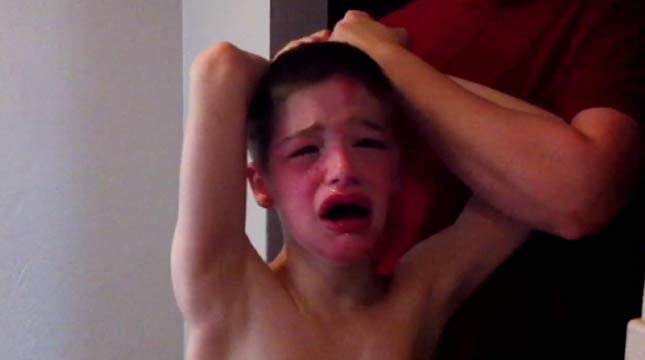
Kids also play, even if it's not the forefront of the story or scene. If a child is in the room, it isn't likely that they are just standing in the background quietly. They play with toys or friends, they play pretend, they make noise, they knock into things or knock things over, they scream and they sometimes cry. The presence of a child can rarely go unnoticed, especially by a parent. Even when a child may not be the point of focus, if you make them present in the scene, be sure to acknowledge them more than once with a mention (even if it is a small one).
The final check in the behavior of children is physical action. In a normal situation, children do not outrun cars. They don't cook three course meals on their own. They don't jump off buildings and turn out okay or lift things twice their weight. Unless your child is a superhero, in which case you can feel free to make them jump off as many buildings as your heart desires.
The Giggles. The only way children would giggle as much as some people think they do, is if they were high. Don't get me wrong. Children giggle, but not at every thing. Children might giggle at someone falling down, but they might also make a lot of other different noises as well. Shriek, shout, chatter, belly laughs, etc.
The 3 I's of thinking like a Child
A Child is as Multi-Faceted as any other character. The expression of these “facets” will differ in many cases to those of an adult, but they will nevertheless possess common roots in the reality we all share. Their interpretation of the world around them may at times be unique, but it’s the same world your adult characters inhabit.
Child characters are not adults, but they deserve to be represented with the same degree of honesty.
Childhood can be a terrifying, confusing place — even for a child with a stable background. Don’t fudge it. Be prepared to revisit those childhood nightmares and ask yourself,
Did they ever really go away?IntelligenceSimilar to vocabulary and how your young character speaks, the age of your character should have some sort of effect on how much they know. Think of what you knew at that age (the age of your characters), especially when dealing with character's thoughts in narration and conclusions your young character may draw from the words and actions of others. While a three year old may notice that their parents are acting differently, a three year old may not be able to discern exactly why that is. On that same thread, try not to dumb down your character either. A ten year old may be more attuned to the actions of their parents than you might think. An eleven year old wouldn't be completely clueless about more “adult” topics like sex or even drugs. When deciding on what your young character should and shouldn't know, try to draw from real life and your past experience of a child that age. It'll help your story be much more realistic and believable.
Children aren’t stupid. In fact you can have a pretty good conversation with a small child and be surprised what they say. But children haven’t learnt as much as adults and their knowledge grows as they do. Intelligence however isn’t just what they know but how they apply it.
ImpulsivenessChildren are more impulsive than adults. We learn through making mistakes and children are still learning (aren’t we all). So children are more likely to display impulsive behaviour. This involves saying exactly what they think. Small children of 5/6 don’t really have a dam, they just say what pops into their head.
InnocenceDepending on the age of your child character and the life they have led, they will be more innocent to your adult characters. This does not mean they think that everything is nice and fuzzy but that they aren’t aware of a lot of the evils of the world. You have to be careful how you play innocence, for example I bet most 9/10 year old know exactly what sex is. So think carefully about how you portray this!
A child is most probably not going to ask "Mommy, why are your eyes wet?" when they see their mother crying. They've cried themselves since the day they were born; they know full well that tears mean distress. They might be confused the first time they encounter someone crying tears of happiness, since a person is showing all the signs of distress and yet there's clearly nothing to be distressed about.
Likewise, a child is not going to see an adult in pain and ask, "Daddy, why are you acting funny?" Aside from the fact that children are freaked out by things that start acting in strange and erratic ways (ESPECIALLY things they've generally come to trust as safe), even the youngest child knows pain and how people act when they're in it - they have, after all, been in pain themselves.
Another case of this is children being completely unfrightened by severe injury or deformity because of their innocence. Just being around other people gives the child a general template of what a healthy or well-formed person should look like. A child's survival instincts will usually steer them away from anyone who does not fit the template. These instincts are so powerful that some small children are terrified by even small deviances from the template - some have been known to cry in terror when someone puts on a hat or a pair of glasses.
Sometimes a child will be portrayed as intelligent enough to pull off a relatively sophisticated con or prank, yet can't figure out why their victim would be angry or upset about it. To pull off a con of any kind requires you to have a relatively good comprehension of human behavior. Furthermore, the whole point of a con (eg, tricking little Sally into turning loose of her dolly) is getting someone to do something they would never do under other circumstances.
Children are naive, this does NOT mean stupid. They have less world experience and have no independence so they haven’t really seen everything in the world. This makes them naive to other cultures other people. How naive they are depends on their age, personality and background.
Children who are completely fearless in their ignorance and innocence, blissfully frocking into situations where grown adults would wet their pants in terror. This is Hogwash. Children are just as fearful as adults are, if not more, because they haven't learned the not everything that makes a loud or strange noise, or crawls out from under the bed, won't hurt them. Although children are more impulsive and get get themselves into more danger than adults, they still have survival instincts.
As a general rule, children:
Are more impulsive.
Are less likely to consider the consequences of an action.
Have a limited ability to put others before themselves.
Have a smaller world - breaking a crayon IS serious business.
Are more credulous because they don't have as much knowledge of how the world does and doesn't work as older people do.
Tend to find slapstick and toilet humor funnier than adults.
When a child in a story uses advanced vocabulary, when they're perfectly behaved, when they jump off buildings and land unscathed, the reader will take it as a sign that the kid is not normal. They'll read the rest of your story through that lens, constantly expecting the big secret to be revealed, and probably grow hopelessly confused. And, because they're so very confused, they'll miss the actual point and plot of your story, which leaves you, the writer, at a disadvantage. It is to your benefit to make children as realistic as possible. And if you're ever stuck, just get up from your computer and look around. Children are everywhere, I promise.
As a last note, writing completely from a child’s point of view can rob the work of necessary perspective.
Try to allow for adult exposition etc. (for example, have my narrator looking back from a future place, slipping the odd insight in here and there — though there are other methods.)
Remember!
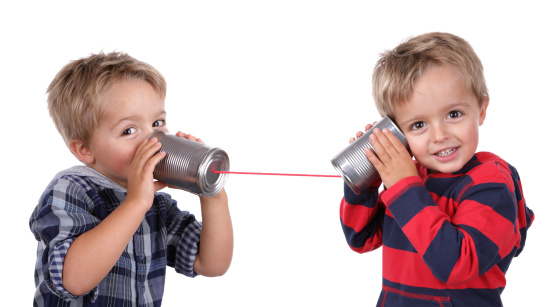
This is a child!

This is NOT a child!

May continue to edit this later, but this is a good solid start. I thoroughly hope you find this insightful and take up the challenge of writing a child character. I know I love it!
ImpaqtReferenced Sources:
LinkageLinkageLinkageLinkageLinkageLinkage