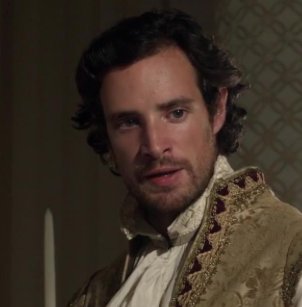
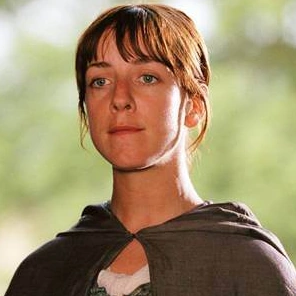
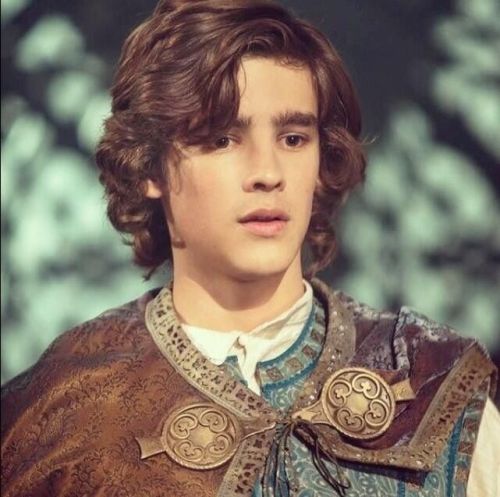
Lord Artys Arryn, Lord of the Eyrie, Defender of the Vale, Warden of the East and Keeper of the Gates of the Moon.
The recent history of House Arryn can be said to begin with Lord Timett Arryn, father of the reigning Lord Artys. Timett was a war chief of the Burned Men, one of the mountain clans of the Vale operating out of the Mountains of the Moon. He was a relative of House Arryn through his mother, Janyce Waynwood, a fiercely strong and independent woman who was believed to have been abducted by the Burned Men. Janyce had actually run off with one of the Burned Men, with whom she had an illicit relationship, to avoid being married off to a lordling against her will. Timett was raised in the custom of the tribe and never told of his mother's ancestry, that he would not be burdened by it and have difficultly becoming accepted by his clansmen.
Timett's lineage became of importance when the young and sickly Robert Arryn, called 'Sweetrobin', passed away of his frailty towards the end of the year 300 AC. Timett became embroiled in a plot between his mother Janyce and Bronze Yohn Royce, a powerful vassal of House Arryn, to name Timett the Lord of the Eyrie ahead of Harrold Hardyng, to take over the Vale in support of Queen Daenarys. Timett was taken by his mother in secret to Runestone, the seat of House Royce, during the initial chaos that followed Robert's passing. There, he was introduced to and made to wed a young woman by the name of Sansa Stark, a lady of the North who had been living in secret with Petyr Baelish, the power behind the throne of both Robert Arryn and Harrold Hardyng. Sansa's betrayal of Petyr to join with Lord Royce had delayed Harrold's ascension; the 'Young Falcon', as he was known, had been meant to be wed to Sansa instead of Timett. Timett and Sansa's marriage occurred in the light of the Seven, a Faith to whom the two were also converted in the same ceremony. The other Vale lords in attendance at Runestone, among them the members of the so-called "Lord's Declarant" who had long opposed the machinations of Petyr Baelish, named Timett 'the Lord Timett Arryn', calling him the rightful Defender of the Vale and pledging to install him as Lord Paramount of the Vale of Arryn, under Queen Daenarys.
The ensuing civil war could have been an enormously bloody and prolonged affair, were it not for Timett's support from both the mountain clans and Queen Daenarys. The fierce warriors of the mountain tribes harried the lands of those houses loyal to Lord Harrold, their constant raids preventing them from amassing much of their potential strength and delaying their efforts to field an army large enough to march on Runestone. The Eyrie itself, a castle entirely impregnable to a conventional army, fell victim once again to the same weakness that had been its downfall in Aegon's Conquest: an aerial attack. The Queen and her dragons made short work of Lord Harrold and his retainers in the Eyrie, burning the would-be Defender of the Vale alive before a single major battle could be fought. Lord Petyr Baelish, the instigator of the Vale's troubles, was dealt with in the earliest days of the war, coming to Runestone shortly after Sansa's flight to attempt to plead his case and join Sansa and Timett's side in the conflict. Timett refused him, and instead gave his new wife justice for her fallen father: the removal of Petyr Baelish's head from his body was the war's first casualty. With Harrold and Petyr fallen, Queen Daenarys and King Aegon triumphant in the south and the loyalists of Lord Timett growing each day, those who had refused to call a mountain clansmen 'my lord' were quickly forced to bite their tongues and swear fealty to the new Lord of the Eyrie, whether they liked it or not.
Predictably, most of them didn't like it. Even those lords that had sided with Timett against Harrold and Petyr did not want an uneducated and uncooth mountain clansman as their overlord, whether he had joined the Faith of the Seven or not. Worse yet, Lord Timett made radical reforms in the Vale following his ascension, working alongside his wife Sansa to reorganize the hill tribes into petty lordships more akin to the better respected mountain clans of the North. The proud Andal lords of the Vale considered the affront a step too far, and within barely a year of his ascension, the Lord Timett was assassinated, his exact killer forever unknown. Thankfully, Timett and Sansa had shared a bed long enough to produce a single infant son: Artys Arryn, named after the legendary founder of House Arryn centuries ago. Sansa Stark would rule the Vale as regent in the young lord's stead, doing her best to keep the peace in her adopted kingdom and prevent the mountain lords and Vale lords from going to open war. Keenly trained in diplomacy and intrigue by the late Lord Baelish, Sansa proved a talented regent, and worked tirelessly to maintain the loyalty of the Andal houses, working in tandem with her stepmother Janyce, who was able to convince her own adopted people, the mountain clans, to assimilate to the feudal system of Westeros and prevent their falling back into the old ways.
When Lord Artys Arryn began to rule in his own name, at the young age of 14, he continued Sansa and Janyce's policies of reconciliation. The son and heir of a hated lord who divided his people, Lord Artys saw his destiny as being to unite the Vale as his namesake had done in ages past: but through diplomacy, rather than war. Artys became a seasoned diplomat, settling land disputes between the mountain lords and the Vale lords and even managing to arrange a few marriages between the two, helping to assimilate and to bond by blood the tribal societies of the Vale's fringes into mainstream politics and culture. Both the more barbaric practices of the mountain lords and the most discriminatory policies of the Vale lords were put an end to, and peace and understanding gradually came to rule the day. The divide between the Vale's two societies continues on to the present day, however, and tensions still exist between those most uppity of the Andal lords and those of the First Men most stuck in their old, war-like ways. Lord Artys, ever the pacifist, is weary of the potential for war to once against sunder the Seven Kingdoms, fearing that it might tear open old wounds in his native Vale that he has spent the whole of his adult life attempting to mend.
House Targaryen - House Arryn under Lord Artys has been careful to avoid becoming involved in the dispute between Rhaegon and Jon, cautioning peace and reconciliation between the two rival brothers. Having no blood ties to either claimant, House Arryn is set to be a neutral power in the coming war, unless the prospect of a tantalizing marriage and an assurance of the unity of the Vale can be given to the cautious Lord Artys to sway him from his pacifism.
House Stark - Lord Artys is the son of a lady of Winterfell, Lady Sansa, who was also the woman who personally raised him from the day of his birth until her unfortunate passing a mere two years ago. Lord Artys has nothing but positive opinions of the Starks, and seeks to emulate both their fair-handed dispensation of justice and the deftness with which they have managed to keep their culturally disparate kingdom in one piece.
House Melcolm - Loyal bannermen of Lord Artys, with whom House Arryn has forged a close alliance via the marriage of Artys' eldest daughter, Aemma, to the ruling lord of House Melcom, Eustace. In exchange for this generous match, Eustace's own eldest sister was married to the son and heir of a mountain lord: one of very few marriages yet arranged between the lords of the Vale and the newly ennobled petty lords of the mountains. Artys considers the pair of matches to be among his greatest successes as lord.
The kingdom's politics have been dominated by distrust and disdain between two solitudes since the last great war. The reigning lord seeks to put the divisions of the old days in the past, while his heir is aggravating them with calls for purity and the revocation of the rival peoples' powers and privileges. Meanwhile, another great war awaits on a rapidly approaching horizon, with the potential to further inflame old passions—or, maybe, to help assuage them.
 Member