Avatar of Theodorable

Status

User has no status, yet

Bio

User has no bio, yet

Most Recent Posts

Age of Imperialism 2.0: TURN 4| January, 1920 (Week 7) (Turn 4, Part 6 of 12)


Friday, February 26th
CENTRAN: A diplomat named György Andrássy in the Second Boletarian Republic releases his Treatise called The New Nation. A political documentation on Western Centran politics and the inevitable rise of the Second Boletarian Republic as the greatest nation the world has ever seen will inevitably inflate Boletarian nationalism. The book is intended to be published in every bookstop in Boletaria and even Prime Minister Lodzinki has an early copy.
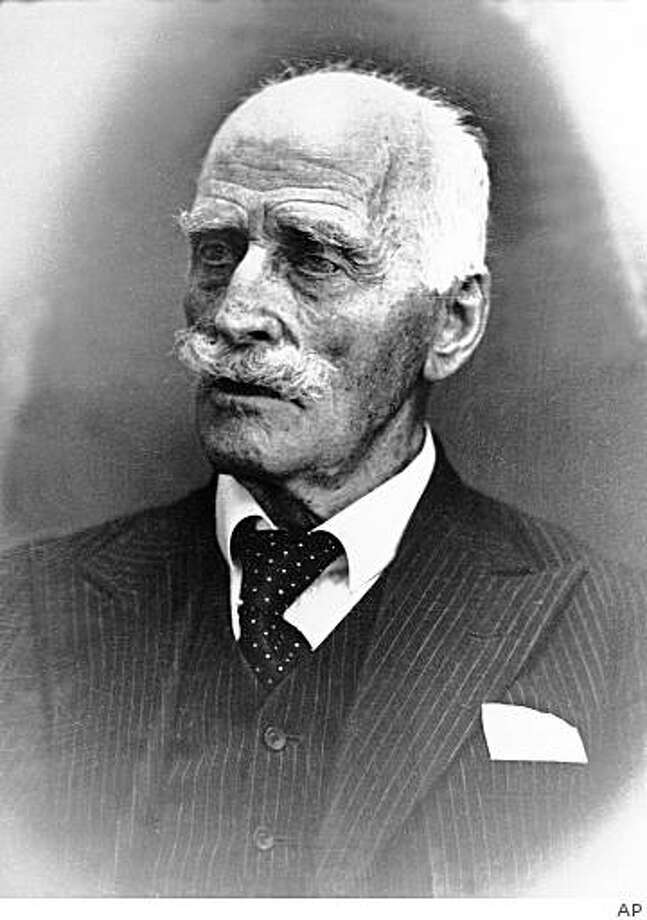

György Andrássy, circa 1921


Saturday, February 27th
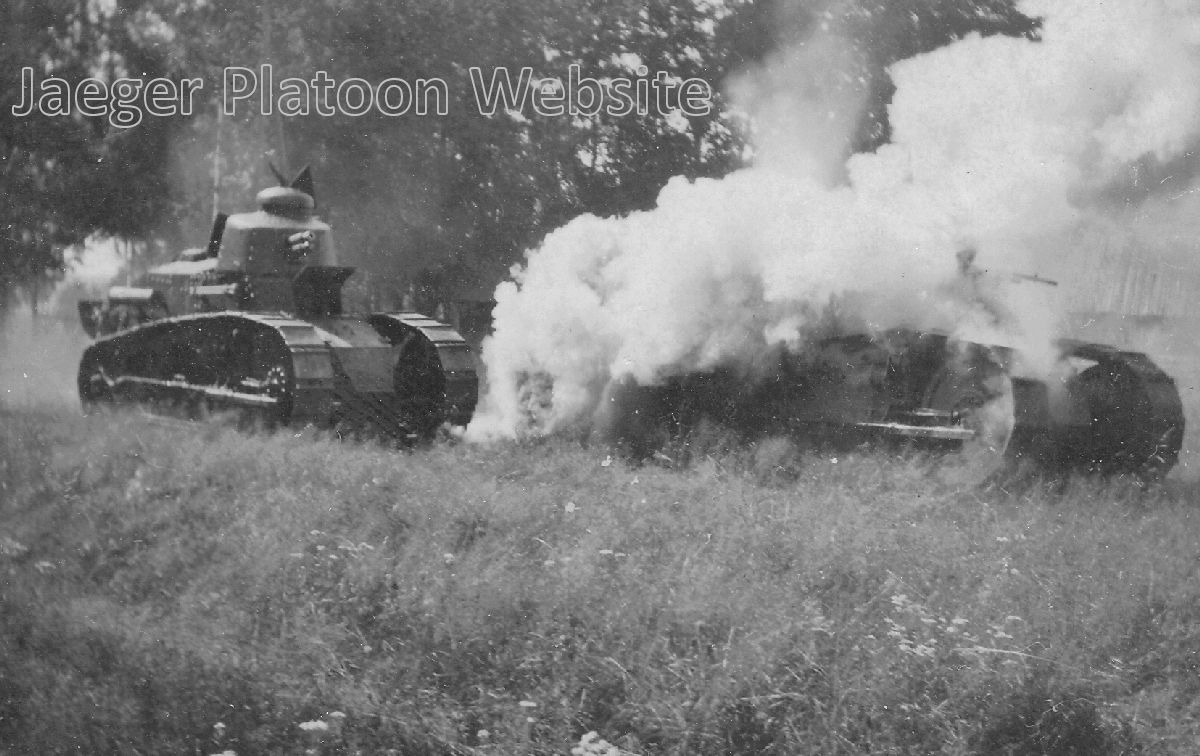
I Imperial Corps of the Osladian Empire conducts maneuvers on the border of the Hurzland. These maneuvers, mostly armor maneuvers with the new O-265 Strovna and Mulnya-205 tankettes are half military and half political. Pro-Osladians in the outskirts of Hurzlandian towns crowd the dusty roads and wave Osladian flags as the tanks pass. Osladian tankers, considered the best in the world, wave from their cupolas as they pass by.


I Imperial Corps before maneuvers


Sunday, February 28th
FARESIA: The 30,000+ soldiers of I Infantry Corps of the Imperial Republic of Fuso finishes establishing it's garrison throughout the city. Equally distributed, the city of Wuwei is a bastion of life in the Yuxiang territory. Held together by a fragile supply chain to the west, the city slowly started to turn about. Fusan soldiers patrol by day and night. Crime is handled with ruthless efficiency.


Wuwei, February 1920


MARCH

Monday, March 1st
Off the coast of the Kingdom of Soroya the destroyer Snellius, while on coastal patrol, strikes a mine left over from the Terrible War at 1157 hours. By 1213 the ship's bow is dipping beneath the waves and she's listing to port. The captain reluctantly orders abandon ship and the 119 men are rescued at 1321 by the Rotte, who was also on patrol just up the coast.


Snellius sinking, approximately 1218, March 1st, 1921


Tuesday, March 2nd
Sitting on a mostly inactive tectonic plate, both the Republic of Kalpia and the Republic of Soreno had been wary of earthquakes for decades. The Mistburn Quake lasted only minutes, but the destruction it wrought was visible from Mistburn to Soreno. Hundreds were dead. Thousands wounded. The Hazgurk Factory Complex in northern Kalpia was torn asunder, with 1,200 workers trapped inside.
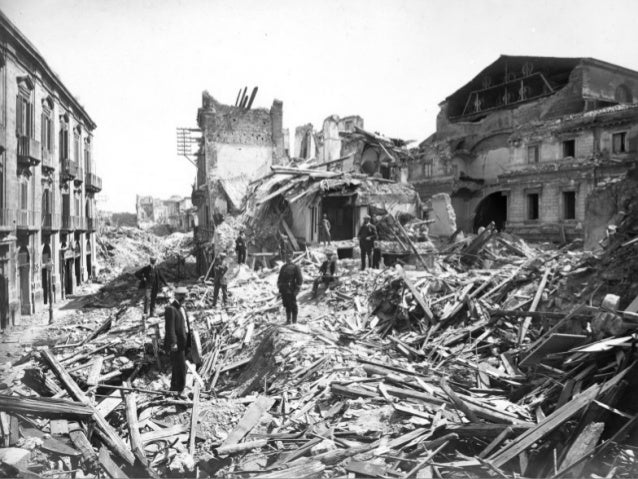

North Mistburn, 1921


Wednesday, March 3rd
The nation of Aydina, stuck straight between the growing Grand Survaek Empire and the Empire of Mille-Sessau pledges that that it will not join the Tervasan League (further threatening Sessau) and draw membership of the Tervasan League of other Tervasan states if Survaek promises not to further increase the size of the Survaekom Imperial Army.

Thursday, March 4th
Civilians from the outskirts of Wuwei are admitted to see General Tujoki in the I Infantry Corps headquarters in Wuwei. They inform him that huge Yuxiang Clique soldiers are headed not to Wuwei, but around it, in a huge encirclement. Given that for reasons unknown General Tujoki never ordered scouts abroad or a frontline stretching beyond the perimeter of Wuwei, he was completely oblivious to this.
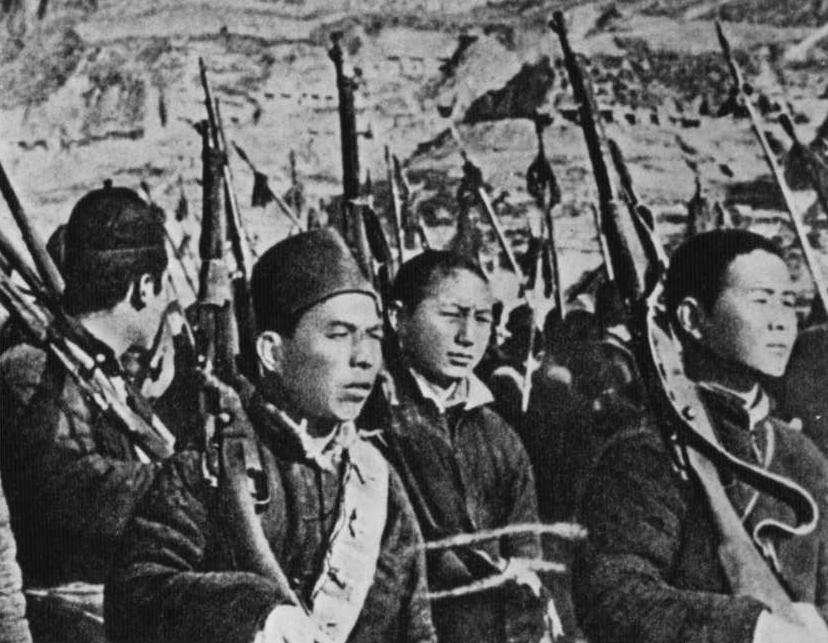

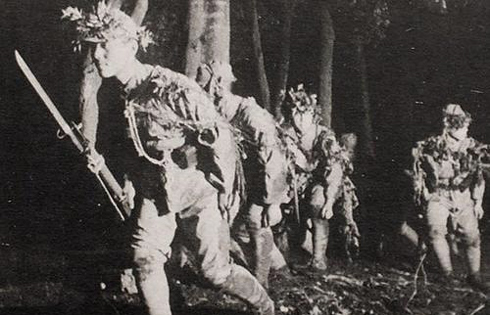
Marching Yuxiang Clique soldiers, March 1921
Post IC. :)
Age of Imperialism 2.0: TURN 4| January, 1920 (Week 7) (Turn 4, Part 6 of 12)


Friday, February 19th
A convoy from the Kingdom of Soroya sets sail from Sikea. Convoy Fleet Hond was headed by Captain Charlie Aptroot and consisted of the Omlandia, Overijssel and Zutphen. The vessels were expected to reach the Imperial Republic of Fuso by the end of the week and were carrying 30,000 mortars, machine guns and light equipment.

Saturday, February 20th
The Kalpian 2nd Fleet reached the Chaegonian colony of Siragusa. A tropical resort; it's home to 900,000. The majority of those inhabiting it are Faresians, with less than 250,000 of them actually native Chaegonians. The 2nd Fleet overlooks the harbor while troop ships unload the 1st Expeditionary Army under newly appointed General Seldivo Diorubvo. The 2,000 strong army disembarks alongside 20 Athihk K.18-II armored cars.

General Diorubvo and his guard enter the Colonial Town Hall and are at first met admirably. The Siragusan governor, Joni Tiamazzi was a careerist, a subservient to the Chaegon Empire. He was jailed as a possible dissident, and by the end of the day the Kalpian flag flew over the colony of Siragusa. Kalpian armored cars were stationed in the square, and a garrison near the harbor was set up.


Kalpian troops enter Siragusa. February, 1921


Sunday, February 21st
Operation Silhouette nears it's end, with Ferrereian reserves nearly depleted. The Korenians commit the majority of their air force to achieving air superiority. A patrol of 3 Strzelec-1F's are jumped by eleven Sinier F.130's and all shot down at the loss of only a single F.130. Later that day, the entire Siratramakt Air Field in western Ferrareia is called to their planes.


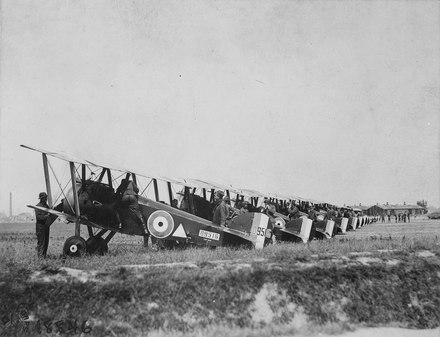
Strzelec-1F fighters preparing to take off. February, 1921


Monday, February 22nd
FARESIA: The I Infantry Corps under General Tujoki enter Wuwei. The city is mostly desolate, with only a meager Yuxiang Clique garrison of 3,000 men whom surrendered almost instantly. The town is passive. The Qingstao there are apathetic to whomever rules, though they certainly seem aware at the hospitality of the Fusans, as opposed to the Yuxiang, who are bloodthirsty and ruthless. The city of Wuwei contains about 1,200,000 inhabitants. Tujoki begins garrisoning the city.

Tuesday, February 23rd
Heavy storms batter the Taranian coast, stopping the Empire of Chaegon's Operation Brown in it's tracks. The advance halted doesn't make it any easier on the troops for either side, as the trench lines become hallways of mud and water. Amateur meteorology estimates the rain to last up to the end of the week.

Wednesday, February 24th
Operation Silhouette ends, with over 55,000 casualties from the Ferrareian army and the Republic of Korenia maintaining it's position with a third of Ferrareia in its grasp. Reinforcements from supporting nations begin to seep in, and the trench lines are hastily reinforced in anticipation of a new offensive as soon as the men are ready. The world watches on, and in Herada, Prime Minister Bradel gave a speech outlining the future fate of Ferrareia, adding that it will be added to the Korenian Republic territory to help strengthen the once beset nation.

Thursday, February 25th
The Halbert Expedition of the Kingdom of Soroya, expected to have already reached the Faresian island, hasn't yet send word back to Sikea. Instead, a Kalpian diplomat from the Faresian colony there arrives in Sikea to announce a Kalpian search party conducting a cartography expedition saw the destroyed ships of the Soroyan expedition on the sharp rocks of the small island. The Kalpian diplomat regretted not having a formal name for the budding Soroyan colony purposes of condolence.
I'm back! Post up soon!
Age of Imperialism 2.0: TURN 4| January, 1920 (Week 6) (Turn 4, Part 6 of 12)


Friday, February 12th
The Kingdom of Soroya had a long and tenured history of colonization. The first nation to establish a non-Centran colony in 1634, Soroyan ships and explorers paved the way for the Serranthian coastal missions and the first diplomats to Faresia. The Halbert Expedition was the intended colonization of a North Faresian island, and it left on February 10th from Sikea and headed northeast toward the Faresian archipelago.

Saturday, February 13th
Operation Silhouette continues in the Ferro-Korenian War. The Ferrareians continue to push hard at the front and in the air. But as the barbaric offensive of men continued, they started to thin. The operational effectiveness wavered, and a bulge had formed in the line. A patrol of five Strzelec-1F's was grounded when three of the five planes were seen unfit for combat. The Ferrareian general maintains that one more week would break the Korenians completely, or bleed the Ferrareians dry.

Sunday, February 14th
A convoy of seventeen ships sets sail from Rabentrop harbor in the Republic of Kalpia. The Kalpian 2nd Fleet is comprised of three light cruisers and four destroyers escorting ten troops ships. They sail along the peninsula then head east toward Faresia.


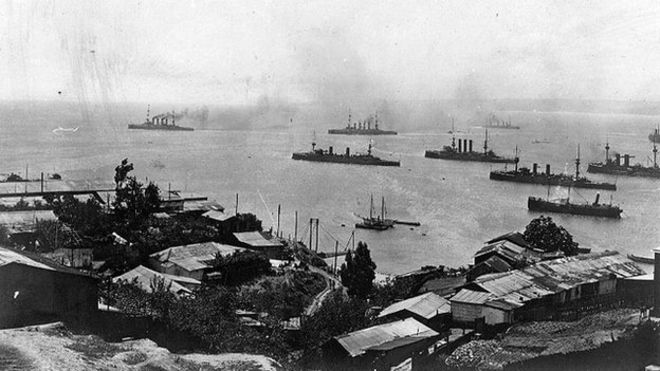
Kalpian 2nd Fleet sets sail from Rabentrop. February, 1921


Monday, February 15th
Forty thousand men of the Imperial Guard of the Chaegon Empire reach the Izzi Line. They are well equipped, some of them with the new Chekov bolt-action. They dig in with much higher spirits than the days before where Pozzoulli artillery had them pinned to their foxholes. The sun is shining. Though cold, the snows have started to dissipate and both sides feel the inevitability of another offensive. Another push.

Strange as it may be, the aerial reconnaissance of the Chaegonians dissipated around this time. The casual drum of aircraft engines faded, and the Pozzoulli front line became worried.

Tuesday, February 16th
The Brown Offensive starts. This time by the Chaegon Empire. With three times as many soldiers manning the line as the Pozzoullians, they have the reserves to maintain the defensive line as well as an offensive line. The attack begin in the East, centered around the town of Sarat. There the Rolling Stove tanks were gathered. They were some of the first over the trenches. One was lost in the initial move forward, as it's radiator--not used to the rocky ground and dusty conditions of Tarania--finally gave out. It was abandoned and it's two crewmen joined the offensive as infantrymen.


Chaegonian Imperial Guard beginning the Brown Offensive. February, 1921


The Pozzoullians were well dug in with excellent equipment. They offered mortar fire and heavy machine guns, many of which were silenced by the 200 plus guns of the Chaegon Imperial Armada. During the initial three hours of the assault, two Pozzoullian infantrymen, hiding in their trench, threw an impromptu molotov cocktail on a Rolling Stove. The tank's crewmembers, trapped inside, burned to death within minutes.

Wednesday, February 17th
The Kalpians land three convoys in northeast Faresia. Their goal? A colonization mission on one of the many archipelago's in the land. They find the area moderately inhabited. Named the "Oclardth Colony," it's obviously too early to see if the colony will survive, but within the first eight hours an infirmary, impromptu dock and an administration building is set up. Kalpian population is 436. Estimated native population in the tropical grave is unknown.

Thursday, February 18th
A trio of Zellonian submarines leave port to conduct naval exercises off the coast.

Po-Chaegonian War: The Brown Offensive, named so after the dusty and dirty conditions of Tarania's highlands, continues. General Corrado Gabrielle orders a general retreat, intending to shorten the front so that his soldiers can fight on parity with the Chaegonians. The Pozzoullians take hellish casualties, with the Chaegonians relentlessly pursuing them, breaking a trench line and repeating the process. The Rolling Stoves, though poorly coordinated, are nearly impervious to all firearms except a lucky artillery shell or a molotov cocktail. By February 18th, Gabrielle's 1st Pozzoullian Army had fallen back six miles in the East, while fighting to maintain the Izzi Line in the west.


WEEK'S LOSSES
-- Chaegon Empire
* 6,991 Regulars
* 6,431 Rifle I (BM-2)
* 601 Rifle I (Chekov Rifle)
* 6,411 Equipment I

-- Duchy of Pozzoulli
* 4,753 Regulars
* 4,911 Rifle I (Gazzari-98)
* 2,311 Equipment I
* 6 Artillery I (Cannone-76)
Age of Imperialism 2.0: TURN 4| January, 1920 (Week 5) (Turn 4, Part 5 of 12)


Friday, February 5th
General Tujoki's I Infantry Corps resumes marching toward Wuwei. After three miles in light rain and poor conditions, Tujoki sends units from the Runner's Company to scout the surrounding terrain. With the weather deteriorating once again, I Infantry Corps will be stuck. Instead, Tujoki orders his men to set up camp on high ground with fires to stay warm. The men are relieved, and all across the western plains small fires light up as men escape the cold.

Throughout the night, Ki-Yuxiang, whose own scouts saw the beleaguered Fusan troops, ordered his men forward for an assault. 55,000 in all, they came forward quietly along hills and ridge lines, the rain pattering off their wool jackets. General Ki-Yuxiang ordered all helmets stowed, so the rain might not tink-tink-tink off their helmets. When finally they were close enough, the company commanders gave the order to fire at will and the Yuxiang forces opened fired, mostly bolt-action rifles and sporadic Zurrandt-12 machine guns. The Fusans did not return fire. Ordered forward, the Yuxiang forces found the tents uninhabited, the supply crates empty.


Fusan forces under Tujoki moving around the overconfident Yuxiang offensive


Tujoki, who understood that the Yuxiang would be tracking his every move across the border, ordered the tents and camp fires up as a ruse. With the tents in place, he ordered his men back to the periphery and up along the north and south tree lines. When the Yuxiang concentrated their forces, the sighted in Type 9a 37mm Cavalry Gun's opened fire. The pincer move started minutes after. The Yuxiang forces, raiders, scavengers and militiamen, were not fit for fighting. They offered some brief counter fire then started a wild retreat back to the east. Tujoki closed the circle, and by dawn, had captured 24,000 men and most of their equipment.

The Battle of Wuwei had been a stellar victory.

Saturday, February 6th
The Ferro-Korenian War maintains a static front, but with the weather clearing up, the battle for the skies returns. During the morning of February 6th, a pair of Sinier S.130's and a single Strzelec-1F engage in combat. No planes are shot down.

Sunday, February 7th
Prime Minister Bradel of the Korenian Republic makes an appeal to the Osladian Empire, sending a pair of delegates to discuss the arrangement of further weapons of war that might help turn the tide of battle. While without any money, Bradel requests a running debt of 20,000,000 Korenian krachts be allowed that may be paid off after the war's fruitful conclusion.

Monday, February 8th
General Johann Constantin Bosianu of the Ferrareian 7th Army, with the nominal command of the Mobile Corps under him, prepares an offensive on the right flank to break through the Korenian line. Nicknamed Operation Silhouette, the army entails an offensive made by 55,000 men after an intensive three day air campaign to achieve air superiority for better reconnaissance.


Ferrareian J2's, 3 days before Operation Silhouette


Tuesday, February 9th
The first day of Operation Silhouette commences, with five Strzelec-1F fighters taking off from snowy airfields across the Ferro-Korenian border. They're met by five Sinier F.130's and a brief dogfight ensues where two of the F.130's are shot down.

Wednesday, February 10th
A second day of fighting occurs, where over the course of eighteen sorties, six Strzelec-1F and nine Sinier F.130's are shot down. The Ferrareians Air Force not only has a better aircraft, sent to them by the Boletarians, but now outnumber the Korenian Air Force.

Thursday, February 11th
Operation Silhouette begins. XII Corps (55,000 Regulars / 65 Artillery I / 3 Terrible War Tanks) begin their offensive after a two hour long artillery barrage. The Gothpat 105mm proves resoundingly more lethal than the Korenian's Gambio K.19, but is difficult to master. During the two hour barrage, 14 of the 65 guns run too hot and pause firing to cool down. The offensive begins.

The Korenians, who have significantly more tanks than the Korenians, learn that tanks are currently unfit for defensive operations. With 12 of their 20 Osladian bought O-26's in range, the Korenians are unable to stop the incoming J2's. Instead, artillery guns are taken from their position in order to fire at the low sitting tanks. Two of the J2's are destroyed after advancing only 1.2 kilometers, while 5 of the Korenian O-26's succumb to the fire of the Gothpat 105's.


Osladian O-26 during Operation Silhouette


WEEKLY LOSSES
-- Imperial Republic of Fuso
* -1,109 Regulars
* -1,099 Rifle I (Taijima Type 44r)
* -391 Equipment I
* -1 Artillery I ( Type 9a 37mm Cavalry Gun)
* +21,964 Rifle I (Mako Type 1899 Rifle)
* +24,215 Prisoners of War


Bigger: i.imgur.com/IfSzGm1.jpg


The World, 1921
Age of Imperialism 2.0: TURN 4| January, 1920 (Week 5) (Turn 4, Part 5 of 12)


JANUARY

Friday, January 29th
In a special message to the people of Korenia, Prime Minister Bradel gives his "For the Future of Centran" speech. With the front stagnating to deteriorating weather, poor military technology and lack of informed military commands, Bradel rouses the people for war by inciting a revolution against Soroyarism in Centran and abroad. With the Korenian Army stalled out after it's week long offensive, Bradel promises increased industrial efficiency in Korenian factories and asks for a plea across all Centran for any military equipment that might help turn the tide.


The front line in the Ferro-Korenian War. January, 1921


While the snowfalls in Centran had largely dissipated, the snow present was thick and debilitating. Ferrareians and Korenians shivered in their trenches with intermittent artillery snapping them awake. In the trenches the snow melted and turn to a vapid slush, creeping into the soldiers boots and to their feet. Until the weather subsided on the ground, the battle would continue to be waged in the sky, but an overhanging of low clouds kept even the skies clear.

Saturday, January 30th
The Second Boletarian Republic requests another design, putting Osika Aeronautics and it's contemporary rival Lovric against one another in a contest for a tactical bomber. Osika, which had originally been slated to lose the race for a prototype close air support, has had the full backing of the Boletarian government since. Lovric hopes to win over hearts and minds in the near future with an anticipated unveiling at the March 15th, 1922 testing date.


Osika Aeronautics design team, circa 1920


Sunday, January 31st
30 tanks and tankettes that were purchased from the Osladians finally reach the Republic of Kalpia. They are immediately put to use for training and examination purposes.


Osladian Molyna-200 tanks, delivered to Kalpia in 1921


FEBRUARY

Monday, February 1st
CENTRAN: Cryptographers from the Empire of Zellonia create the Z Code. An intentionally ambiguous and ever changing military code, it was immediately put into place to allow for movement of their beleaguered navy without being detected by outside forces.

FARESIA: Under General Tujoki Namabashi, I Infantry Corps, nicknamed "Emperor's Finest," deploy from the eastern Fusan border into Yuxiang territory. Sloping hills turn into rugged and flat plans. The untested infantrymen of I Corps march in column formation, with General Tujoki and his headquarters in the front. There is no opposition and after two and a half miles they make camp.

Tuesday, February 2nd
CENTRAN: The Sesso-Survaekom Summit has it's first major meeting, discussing the recent creation of the Tervasan League. The diplomats of the Tervasan League outline it's first mandate: to ensure the continued independence of the member states in opposition to growing Sesso-Survaekom hegemony in the area. Survaekom and Sessauan diplomats countered.

FARESIA: I Infantry Corps resumes it's march toward Wuwei in the Yuxiang Clique. Bright skies and sunny weather have the Fusan troops in great spirits. After a long, hard day of marching they find nothing and make camp again. Storm clouds come in late in the evening that turns into rain. The trodden path, a discernible trail where wagons and horses went, turned into mud within hours.

Wednesday, February 3rd
CENTRAN: The Empire of Vornehm opens it's Deutscher Alpenverein, a school for training infantrymen in the rugged North Centran Mountains. The Gebirgsjäger will be considered some of the most accomplished and experienced in the world.

FARESIA: Fusan's I Corps gets under way, but makes less than two miles in slushy mud. Having advanced only 12 miles into Yuxiang Clique, General Tujoki orders a halt to the march until the weather clears up.

Thursday, February 4th
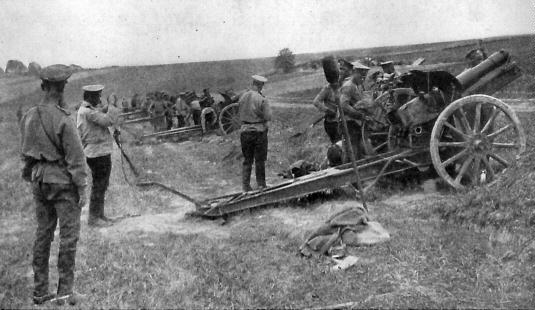
The Osladian Empire conducts military exercises in South Centran. This training adds uniformity and experience to an already accomplished army.


Osladian Army on maneuvers, circa 1921
@Mardox What he said.
Age of Imperialism 2.0: TURN 4| January, 1920 (Week 3) (Turn 4, Part 4 of 12)


Friday, January 22nd
The Yuxiang Clique, with over 45 million people, was a ruthless dictatorship just east of the Imperial Republic of Fuso. A landlocked state stuck under the Yuxiang Regime, refugees often made their way over the border into Fuso when they could, or Qingstao if they had no other choice. A landlocked power that had neither the capacity nor the inclination to wade into the Dominion, turned it's eyes instead West to the coast. Ki-Yuxiang, the Warlord of the Yuxiang Clique, was a former Dominion army general who saw the opportunity of the Qingstao Fallout of 1909 and seized a huge slew of former Qingstao territory.


Yuxiang Clique soldiers pose for a photo, January 1921


With an army of 170,000 in the summer and only 100,000 or so in the winter, Ki-Yuxiang understood that nerves were lessened in the winter. "An army of summer soldiers," a Fusan general once commented. During the summer, many of the soldiers went home to tend their farms. Then was the time to strike. With two infantry divisions, Ki-Yuxiang ordered his men to cross the Fusan border during the night of January 22nd and into the countryside. With rudimentary uniforms and a plethora of various weapons, the Yuxiang Clique was an army only in name. The Fusan eastern provinces, which (like the majority of the country) was not garrisoned, put up no defense. For 40,000 Fusan civilians, it was wanton slaughter.

Ki-Yuxiang knew the Fusan Army would mobilize, and so by the morning of the 23rd, the Yuxiang soldiers had long gone, taking back off into the Clique highlands across the Fusan border.

Saturday, January 23rd
The Battle of Larakt goes quiet, with only intermittent artillery barrages on either side. Tthe battle settled into a static line of trenches just northeast of the Ferrareian capital. The Jentinks, Terrible War tanks donated by Soroya, were unfortunately not being put to good use due to inexperienced Ferrereian military command. Along the trench line, which ran through the Larakt National Forest, the Jentinks were stationed among the trees. Their 37mm cannon not withstanding, they were simply subpar artillery guns.

During Saturday, January 23rd, sighted in Korenian artillery managed a direct hit against one of the J2's, knocking it out of action.


J2 next to another knocked out J2, 1921


Sunday, January 24th
The Sesso-Survaekom Summit begins. To discuss possible dismantling of the Tervasan League and future Sesso-Survaekom cooperation, diplomats met in Aville to discuss the possibilities of these two events.


Sesso-Survaekom Summit. From left to right Sessauan diplomat, Survaekom diplomat, Ardenoisian diplomot, Samovian diplomat & Aydinian diplomat


Monday, January 25th
While the Battle of Larakt stagnated on the ground, in the air it only intensified. Regular patrols of Korenian Sinier F.130 fighters and Ferrareian Strzelec-1F fighters met over the battle lines almost daily. While the Korenians held a numerical advantage, the Strzelec-1F was found to be a slightly superior fighter in terms of overall combat effectiveness. In the evening of Monday, January 25th 8 Sinier F.130's pounced on 4 Strzelec-1F's just a few miles north of Larakta. The battle lasted only minutes, but in the end 3 of the Strzelec-1F's were shot down, and 4 of the Sinier F.130's met the same fate.


Korenian pilot about to take off in his Sinier F.130, circa 1921


Tuesday, January 26th
The Grand Survaek Empire begins mass production on it's new tankette, the SA-20. Like the former experimental SA-17, the hull of the SA-20 is made of framework of steel “angle iron” beams, upon which armored plates (6 to 12 mm/0.24-0.47 in thick), are riveted. The driver (on the left) has good visibility through an armored shutter and bullet-proof glass. To his immediate right is placed, in a fixed position, a light Zurrandt-12 machine-gun, fired using an open cable. The offset turret is placed on the right hand side, the gunner standing behind another Zurrandt-16 (.30 caliber) machine-gun well protected by an armored mantlet and fitted in a ball mount. The turret itself is limited in size, and the Zurrandt-16 is shorter in order to serve in tanks. Normal provision is 3700 rounds.


Survaekom SA-20 tankette, circa 1921


The engine is a six-cylinder, water-cooled Taevir-6 totaling 3.4 liters (211.6 cu in), producing 55 bhp (41 kW) at 2500 rpm, for a 14 bhp/ton ratio. Max speed is 45 km/h (28 mph) on flat terrain and road, which is far better than the former tankette, as was the operational range. However, this engine, which sits on the rear part of the fighting compartment, is not compartmented, and the cooling system used the commander and driver hatches for draft, which can cause many problems during their active life. The engine is served by a semi-automatic Terk-12 transmission and a 4-forward/1-reverse speed gearbox. The suspension and drivetrain are brand new and the most successful feature of this model, with four large wheels sprung by leaf springs. There is just one return roller at the middle, and the drive sprocket and idler wheel are placed at the extremes. The tracks are composed of moderately small soft metal links, with a total ground pressure of only 0.5 kg/cm2. It is capable to cross a 1.5 m (4.92 ft) wide ditch, climb a 50-60 cm (1.64-1.96 in) high obstacle or ford a stream 80 cm (2.62 ft) deep.

Wednesday, January 27th
The Second Boletarian Republic purchases a production license for a Sessauan half ton truck. The Sessauan version, called the STT-1, will be slightly modified for smoother Boletarian roads and called the SKT.1

Thursday, January 28th
Pozzouli's K Force convoy unloads at Izzi. 10,000 soldiers and their equipment, as well as a half squadron of ten armored cars, an artillery battery and several aircraft are taken off at the harbor to reinforce an otherwise quiet front in the Po-Chaegonian War. With all eyes on Korenia, the forgotten Chaegonian and Pozzoullian soldiers continue hiding in their trenches, waiting for the next big offensive.


LOSSES
-- Republic of Ferreraia
* 3 Osika Strzelec-1F Fighters
* 1,432 Regulars (1,521 Rifle I | 1,501 Equipment I)
* 2 Artillery I (Gothpat 105mm)
* Terrible War Tank (Soroyan Jentink)
-- Republic of Korenia
* 4 Sinier F.130 Fighters
* 2 Artillery I (Gambio K.19)
* 2,311 Regulars (2,421 Rifle I | 1,842 Equipment I)
-- Grand Survaek Empire
* 1 Light Trainer I (Unknown)
Age of Imperialism 2.0: TURN 4| January, 1920 (Week 3) (Turn 4, Part 3 of 12)


Thursday, January 15th
Survaekom designer and naval engineer Rahşan Ecevit finishes his development on the Surv-Vyaer Model 17 Spotting Glass. Installed in the fire control center of the up and coming Imperial-class Dreadnought, it will functionally increase the spotting range for it's main armament by up to 5,000 meters.

Friday, January 16th
The Republic of Kalpia negotiates with the Osladian Empire and purchases 20 O-265 Strovna and 10 Mulnya-20 tankettes from them for testing. The Osladians, who have quickly become at the forefront of armored technology, gained another customer as Kalpian engineers test the equipment and find it quite satisfactory; robust and quick, much like similar Kalpian armored cars.

Saturday, January 17th
In the early morning hours, 12 Sessauan Sinier F.130 fighter planes started their props on the Ferro-Korenian border. The aircraft, Sessauan made, carried the black fist of the Korenian Republic on it's side. The planes took off, one by one into the early morning light while 200,000 Korenian soldiers and 20 Strovna Interwar tanks rushed over the border. The Ferreraian soldiers, mostly at nominal garrisons in major cities, were called to the front via runner.


Osladian made O-26's in the Korenian Army advancing across the Ferreraian border, 1921


The Ferro-Korenian War had begun. The Korenians, who completely surprised the Ferreraian Military Command, who largely believed the Korenians were blowing hot smoke, immediately moved to cut Ferreraia in half across it's center. Larakta, the Ferreraian capital was in the south, while the majority of the population lay in the north. Cut the nation in half, and she would fall.

Sunday, January 18th
After hours of deliberation, Osladian and Mille-Sessauan delegates agree to Oslad's purchase of the two Terrible War era and Ardeneux-class destroyers Bearn and Calibre. The two destroyers, although dated, would bolster a fledgling Osladian brown water navy and pad the pockets of a very poor Sessauan nation.


Mille-Sessauan Ardeneaux-class destroyer Calibre, circa 1921


Monday, January 19th
A Ferreraian patrol of 4 Osika Strzelec-1F fighters come across 5 Sinier F.130 fighter planes and engage in a tenacious dogfight for control of the skies around southern. After 20 minutes of combat, 3 Sinier F.130's were shot down to only 1 Strzelec-1F lost.


Ferreraian and Korenian planes battle for the sky, 1921


Wednesday, January 20th
Trench lines, hastily built by the Ferreraian 20th Army northeast of Larakt are bombarded by Korenian artillery. The Battle of Larakt had started. Outnumbered and outgunned, the Ferreraian's begin counter artillery operations with their new Gothpat 105mm artillery pieces.


Ferreraian Gothpat 105mm's, called Big 5's by Korenian soldiers, bomb Korenian positions at Larakt


Thursday January 21st
A pair of Sinier F.130's jump a wandering Strzelec-1F fighter. The 1F dazzles, dipping and twisting. It manages to jump on the tail of one of the F.130's and peppers it with two Zurrandt-12 machine guns in the nose. The F.130 quivers, smokes, then heads toward the ground. The second F.130 fills the Strzelec-1F with bullets and it follows the first plane, careening into the earth.


LOSSES
-- Republic of Ferrerai
* 2 Osika Strzelec-1F Fighters
* 3,532 Regulars (3,585 Rifle I | 3,576 Equipment I)
* 14 Artillery I (Gambio-K19)
-- Republic of Korenia
* 4 Sinier F.130 Fighters
* 16 Artillery I (Gothpat 105mm)
* 9,754 Regulars (10,053 Rifle I | 9,532 Equipment I)
-- Grand Survaek Empire
* 2 Light Trainer I (Unknown)
* 1 Pilot
© 2007-2026
BBCode Cheatsheet