Avatar of Theodorable

Status

User has no status, yet

Bio

User has no bio, yet

Most Recent Posts

SALUTE TO THE FALLEN


Late October


October 16th
  • The Machinengunnen-10 machine gun was based on the successful Havka gun of the Empire of Saurilia, at least on paper. After creating the Hadukken company outright in 1910, the company took the design of the Havka gun and improved it, reducing its weight by lightening and simplifying the action and substituting components made with high strength alloys. The MG-10 was unique in that it was not created by government ordinance but rather by sheer will and testament of private designers. The initial batches--240 of them--reached the Blutlander Army just as tensions with neighboring Tyro-Antari reached a new high.
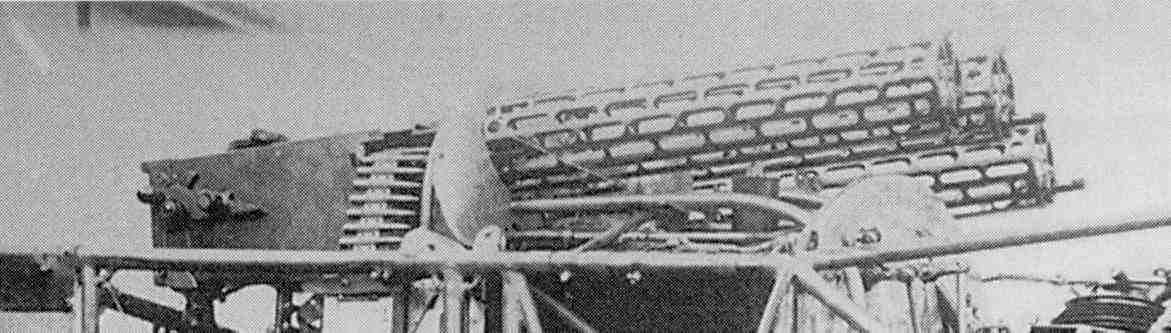

    Triple MG-10's with air cooling slits on a Hadukken test site, 1910


October 17th
  • In the Republic of Staratia, Ferdi and Leopold Industries finish their initial designs on the LF-75mm Cannon. With a completed blueprint, Ferdi and Leopold only needed the go-ahead for production to begin. I is a thoroughly conventional gun, being a modernized version of Ferdi's earlier LF-72mm gun, but fails to incorporate any recoil system other than a partially effective spade brake, and fires a 12-pound projectile. Ferdi and Leopold Industries could build these for a price of $4,800 a piece and a maximum of 47 pieces a month at their Ferdinand Plant in Northern Staratia.


    Blueprints of the LF-75mm written in Mathiu Leopold's native Antarian


October 18th
The Kaiserliche und Königliche Luftfahrtruppen or K.u.K. Luftfahrtruppen is established in the Tyro-Antarian Empire. The Imperial and Royal Aviation Corps, it's based at the National Flight Academy at Ipswich and officially graduates twenty men--many of them from lowly ranked infantry brigades with high aptitudes and brazen attitudes into the the Jagdfliegerkompanie.1, the 1st Fighter Squadron.

The men are eager for war, but the Tyro-Antarian Empire must first decide the fate of the Kaiserliche und Königliche Luftfahrtruppen or K.u.K. Luftfahrtruppen

Fate of the Imperial and Royal Aviation Corps
-- Attach it to the Imperial Army: The IRAC will exist as an extension of the Imperial Army, acting to aid in maintaining the supremacy of ground forces and devoting research in that particular direction.


Proposed symbol of the Imperial Army's Aviation Corp


-- Attach it to the Imperial Navy: The IRAC will become a joint naval organization, blossoming into theories of naval aviation, though with squadrons--for now--still able to conduct over land operations.


Proposed symbol for the Naval Aviation Corps


-- The IRAC Will Exist Independently: The Imperial and Royal Aviation Corps will be a standalone organization that will develop technologies at it's own pace, have it's own command staff and operational strategies and tactics.


Proposed symbol for the Independent Aviation Corps


October 19th
After several days of deliberation, despite efforts to put a Zellonian fleet together to strengthen Leylon and relieve Surayanna, a fleet is still not dispatched. Zellonian Naval Bureau admits that due to paperwork errors and fleet logistics in an admiral being appointed of an established fleet. General Matthew raged, citing Zellonian bureaucracy as the reason why Zellonian colonists were dying while the Zellonian fleet sorted out paperwork.
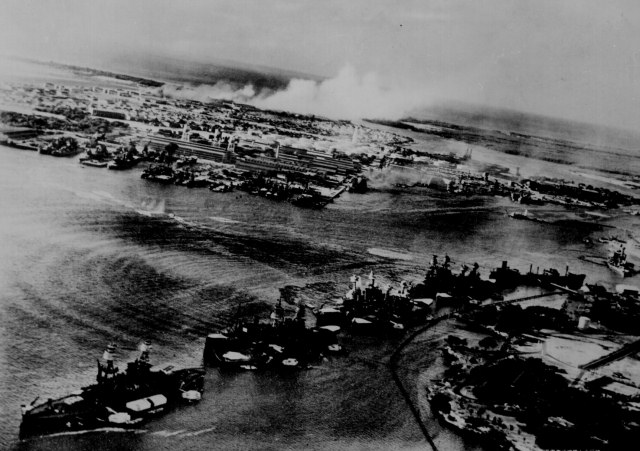

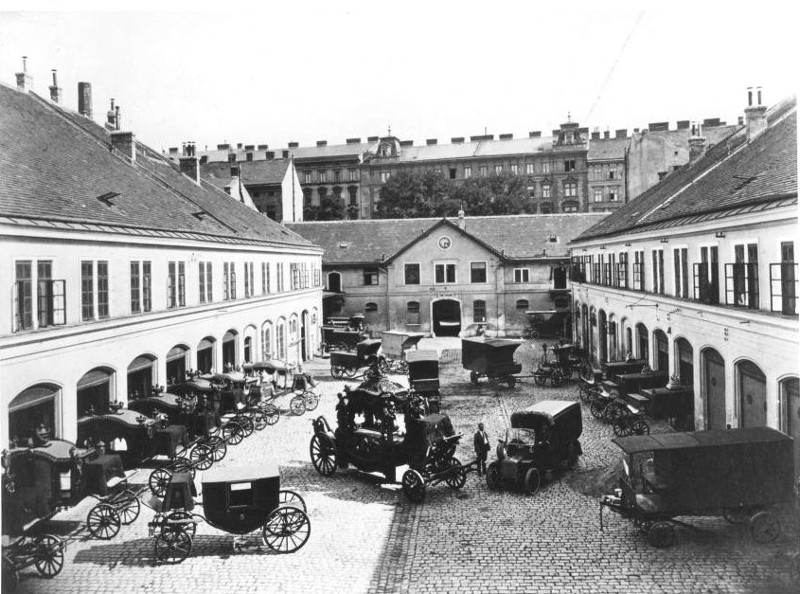
An unnamed Zellonian military harbor, circa 1906


October 20th
On October 20th, word reaches of the Surayannan Attacks that occurred a week earlier. The Surayannan rebels, declaring themselves the Oiuirati, seized the military garrison of Zellonian Surayanna--seizing the stockpile of ZLR-012 rifles and a handful of grenades. The Surayannans however flee the Oiuirati, despising them almost as much as the Zellonians who landed only weeks ago.


Oiuirati soldiers, circa 1910


The Oiuirati control over twenty percent of the island, with enclaves situated on the coast home to coast watchers--constantly on the look out for Zellonian ships--and hidden bases where the Oiuirati strike out at night to attack Surayannans at their own will.

October 21st-October 31st
The last week and a half of October, 1910 was encapsulated in a small piece of rural land in the Meung Dominion. The Xianese Republic, under the guise of President Wan-Yen's idea of a "free and broad minded, modern nation," was now fighting for it's life. It was victory or as General Chi Haotian wrote in his journal: "We will either match as victors, or kneel as servants."

The 1st NRA Army marched east, with the very same General Chi Haotian leading them. Their objective was the city of Dading. General Chi Haotian anticipated a tough battle for the major trading hub, with freshly mobilized Dominion troops dug in and waiting. The march itself was grueling, with very little in the way of paved roads and a populace that was apathetic to who was ruling them. It was poverty either way.


Soldiers of the 1st NRA receiving news from home, October, 1910

After six days march, the 1st NRA Army reaches the city of Dading, a home of almost thirty-one million people. Without defenses, General Haotian is shocked. Wilder still is that there is no army protecting the great swathe of land. On the last day of October, General Haotian and the 184th Infantry Regiment become the first to enter the city of Dading. It's provincial governor had fled northeast toward Dominion controlled territory. Immediately after, General Haotian wrote back to President Wan-Yen on the capture of the primitive industrial complex deep in the heart of the city. The Wutang First Complex is tooled for mosaics and glassware but with a few rudimentary changes could have rifles or even large artillery pieces churned out starting in December.


BUDGETS
- STARATIA
- TYRO-ANTARI
- JOURAN
- ZELLONIA
- XIAN
- SAURILIA
- SELJUK
SALUTE TO THE FALLEN


October 1st to 15th, 1910


Tyro-Antarian Empire: The Carlsburg Report is released on October 4th. It discovers, contrary to two eye witness testimony and several botched location reports of the involved regiment, that the Tyro-Antarian soldiers did cross illegally into Jouran territory and: "..attempted to apprehend two dozen Jouranian criminals known for entering Tyro-Antarian territory and ruthlessly attacking sovereign citizens. The report has concluded the men acted according to their training and will furthermore be acquitted of any pending charges."
[Tyro-Antarian Empire gains 2 Prestige]

Kingdom of Jouran: The Carlsburg Report was simultaneously released in neighboring Jouran and the reaction was pandemonium. In the capital, a Tyro-Antarian industrialist, Joachim Ulder, was attacked in the street, pulled from his carriage and brutally beaten. Those responsible were swiftly rounded up, but the mood was foul. Discussions on the incessant killing of Jouran citizens by soldiers of the Tyro-Antarian Empire, a long time source of oppression in the nation. Jouran's official response was pending.


Aftermath of the release of the Carlsburg Report, Jouran, 1910


Empire of Saurilia: Denouncing the Republic of Kavonia, Saurilian military attaché's warned the nation of it's partial mobilization of forces over an incident that had long died months ago. In respond, former general and current president President Miklos Oscar scoffed at the issue on August 6th. On August 9th however, he ordered the demobilization of the Kavonian National Army.

Seljuk Empire: While still dealing with the Karalian Uprising, the artillery barrage was renewed in early October--until ammunition as a whole was exhausted. While hesitant, General Hassan Mahmed realized that Karalia would not fall for several more weeks, even months, and so he ordered preparations for a general assault at the end of the month. The troops went about preparing for the inevitable attack, hoping they would at least fair better than their Saurilian allies.
SALUTE TO THE FALLEN


August, 1910


  • Tyro-Antarian Empire
    With the Troubles of July behind them, the Tyro-Antarian Empire decided--with an overwhelming majority--to pass the Civil Suppressions Act in mid August.. This act was delegated to the local authorities, giving them the power to enforce acting legislation on riot suppression and civil disobedience and enacting new legislature to "root out dissidence where it exists, and stamp out the flame of radicalism before it spreads."


    The Tyro-Antarian Diet, 1910

    With success on the act still uncertain, attention of the Tyro-Antarian Empire turned toward industrialization. The Tyro-Antarian Empire was falling behind it's cultural neighbor Blutland. With the Tyro-Antarian Diet still in session, several prominent--and backed by industrialists--politicians brought forth the idea of a "Tyro-Antarian rail through every city center." The idea had merit, as rails eased the movement of goods, soldiers and even ideas across the country. The more frugal politicians promised to shut the idea down before it ever saw the ink of a parliament bill. So expensive would this bill be that it could very well force the still fledgling industrial economy into a recession.

    DECISION: A Rail Through Every Town (Always available)
    -- Immediately spends $450,000,000 a month for twelve months.
    -- Rails grows by +6% a month for twelve months.

  • Empire of Saurilia
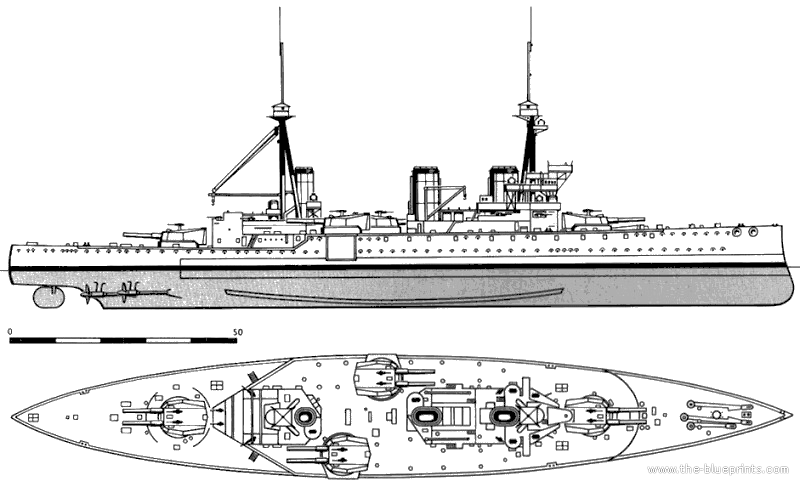
    The concept seemed logical enough. Battleships were heavily gunned and heavily armored, but too slow to hunt down smaller, faster warships such as cruisers. On the other hands, cruisers lacked the firepower and protection of the battlewagons. So why not combine the two into a battleship-sized vessel armed with the big, long-range guns of a battlewagon, but with the speed of a cruiser? They could use their speed and firepower to chase down lighter enemy warships and commerce raiders. If they encountered enemy battleships, their superior speed would enable them to escape.

    The Kriger-class was designed with an armament that could achieve parity with the Blutlander Blutlandia-class, but achieve nearly ten more knots an hour. This unmatched speed could make a Kriger-class battlecruiser an excellent commerce raider as well as a fast acting ship capable of matching an enemy's superior force.


    The Kriger-class battlecruiser design, 1910


    Republic of Staratia
    The West had long been a neglected region of the Staratian sphere of influence. With the quiet Samyet people in the North and a Dominion neighbor that had it's own troubles to contend with, Staratian eyes rarely turned so far from the Continent. August 29th was the day that changed all that. The Sublai Khanates, a wildland of familial tribes and provincial governments that bore power from the strength of one's army, had recently been united into a single--barely manageable government called The First Khanate.

    On August 29th, 1,300 mounted raiders--using a mosh posh of different rifles--crossed the Staratian frontier and attacked several villages. Their intent was not claiming jewels or prizes. The Khanate raiders simply sought to destroy. A day later, on the 30th, another 900 crossed the border and attacked a merchant convoy destined for the Meung Dominion. Of the 56 men and women in the caravan, there were no survivors.


    Khanate raiders crossing into Staratia, August, 1910


With no active military presence, thousands of refugees from the West started flocking to the East--many on foot--most in carriages and on horseback. The Khanate raiders ran amuck. For now.

SALUTE TO THE FALLEN


The Sultanate of the Seljuk (August 19th, 1910)

Foreign Ambassador to the Seljuk Empire Maximilian Mann had been at his station for less than a month than he was called upon. His contemporary, the Foreign Ambassador to the Kingdom of Blutland, Temel Balkan, was similarly a new face to the realm of Continental politics. Educated at the University of Wreslou, he was an attendant of Continental politics and spoke fluent Zellonian, Blutlander and Antarian. He joked that he once tried to learn Tyrian, but that four languages (three including Seljukii) was plenty enough for one lifetime.


Side portrait of Temel Balkan, 1906


The meeting was brief, in fact, so brief that it comprised entirely of Balkan calling Ambassador Mann in, unfolding a letter from the Sultan's Bureau and handing it over to the Blutlander ambassador. It read:

FROM THE FOREIGN BUREAU OF THE SULTAN OF THE EMPIRE OF THE SELJUKS

The twenty-third Sultan of the Empire of the Seljuks bids the King of the Blutland well. Enclosed here are twelve imperial documents dating as far back as 1461 regarding the current ownership of the island of Dilsen, known to the Seljuks as Tapsây. These documents provide proof of former ownership of the aforementioned island to the Empire of the Seljuks. The Sultan of the Empire of the Seljuks issues this ultimatum for the Kingdom of Blutland as follows:

Article I. The island of Tapsây, known in Blutlander as Dilsen, will be rightfully returned to the Empire of the Seljuks no later than September 1st, 1910.

Article II. The Kingdom of Blutland will rightfully acknowledge all citizens currently living on the island Tapsây, known in Blutlander as Dilsen, as citizens of the Empire of the Seljuks. Any who wish to remain citizens of the Kingdom of Blutland will be given until September 1st to return to the Kingdom of Blutland and will be allowed to do so after control of the island has been returned to the Empire of the Seljuks until 1920.

Article III. The Kingdom of Blutland will legally acknowledge the exchange of the island back to the Empire of the Seljuks.


Twenty-third Sultan of the Empire of the Seljuks, Abdu Hamdas


The ambassador of Blutland was informed he had until August 20th to given a response.
SALUTE TO THE FALLEN


Meung Civil War, 1910


August 9th, 1910
Meung Civil War: The Xianese 1st Army has sallied to the South under General Chi Haotian. With almost it's entirety sent along the coastal paths and utilizing natural choke points, it's poised to strike out toward the city of Dading, a hub for trade between Southwest Faresia and the Meung Dominion. The Dominion itself meanwhile, continues to mobilize--a process prolonged mostly due to poor infrastructure. The basic posts have been manned, with elements of the 1st, 15th, 22nd and 55th armies continuing to mobilize.

The Meung's fates continues to be in poor health, as the commander of the 15th Army based out of the army garrison at Sungiao was late to his assembly area and when the guards checked on him, found him dead in his sleep. Similarly, the General of the 22nd Army--when arriving to the assembly area south of Tieli was found to be drunk and high on opiates. Elements of the Imperial Security Agency took him away, and he was replaced with a junior commander--Zhu Peng, barely thirty years old. The War Department of the Dominion sends out a post indicating all mobilization must be completed for offensive operations by August 20th.


Fortune smiles on the Xian, if not for the day, when the Meung Dominion commander Tan Lun arrives in the army camp of the 1st Army and officially defects to the Xian. While not a senior officer in the Imperial Army, he has exclusive knowledge of the geography and terrain of the Dominion, which General Chi Haotian can utilize to his advantage if necessary. The defection of Tan Lun also offers up the opportunity of his services at $500,000 a month.


Meung defector Tan Lun (seated, front left) and several compatriots, 1910


August 11th
The 1st Armed Battalion of the Empire of Saurilia begins a breakout toward Seljuk lines out of the Karalian capital. During the early morning hours, they come across fifteen Seljuk soldiers, remnants of the 99th Rifleman Platoon. During the meet up, they inform the Saurilians of the impending artillery barrage. The firefight intensifies and during fighting in the mid-afternoon, General Sjorn is shot in the back. Though not killed, it's assumed he'll die within the next day if not given proper care. The remnants of the 1st Armed Battalion and the 99th Rifleman Platoon begin their break out attempt.

August 12th
During the early morning hours of August 12th, 55 of the 70 Seljuk field guns open up. The artillery barrage, lasting five and a half hours displaces over 750 shells across the Karalian city. The 99th Rifleman Platoon and the 1st Armed Battalion emerged from the city within minutes of the barrage starting. The news was dire:

-- Out of 40 men, the 99th Rifleman Platoon reported it's platoon sergeant killed, 29 killed and 3 wounded.
-- Out of 10,000 men, the 1st Armed Battalion reported General Sjorn had passed away, and a total casualty rating of 3,192 dead, 1,099 wounded.

General Mahmed of the Seljuk 2nd Army immediately orders the medical unit and Engineer Corps to tend to the wounded and give whatever aid they can. He passes word on to command--via messenger--that General Sjorn of the 1st Armed Battalion had died and requested word on what to do with the body. Word would not reach the capital, Hamdas, for several days.

August 14th
48,000 M1902 Schutze rifles--the most popular and common in the world--are finished and sent, via horse carriage--to outstanding Tyro-Antarian military units throughout the empire. With over 900,000 rifles at their disposal now, the Tyro-Antarian Army is becoming quite the military force.

August 15th
In the heart of the Continent, the Troubles--so called due to their ubiquity, have subsided. The people, mostly too tired and ignorant to continue fretting over an issue the rest of the world has already forgotten, have for the moment returned home. Wreslou, in August bloom, beckons travelers and merchants from as far as Seljuk and Zellonia to the cool breezes and night life.


A look at modern Tyro-Antarian life, Wreslou, 1910


Not all have forgotten however, and the Diet met on August 15th to an emergency meeting to discuss the inevitability of future conflict. In the absence of the Emperor King, the Diet decides that before midnight they will have made a decision as to the future of Tyro-Antarian relations. A slim minority wished to pass the Civil Suppression Act, a bill that would give the local police and military garrisons the legal authority to stop future rebellions in their infancy. Others however believed the troubles to be at their end, long forgotten and wanted the issue dropped immediately.

SALUTE TO THE FALLEN


August, 1910


August 8th
The Kingdom of Samgola welcomes the Zellonian delegation to their capital of Kamrun. The King was absent, away on diplomatic matters to the south against the Fairun Tribes. Instead, the Zellonian diplomats are met by Prince Moustapha Niasse, Heir to the Kingdom of Samgola. They eat a hearty breakfast and begin negotiations. The first is that the Samgolans will enter the Zellonian sphere of influence. Prince Niasse, eager to learn the Continental ways accepts this without reproach. They tour the city further--though it is hot, humid and muggy--before negotiating further in the day.

During the second round of negotiations, the Zellonians inform Prince Niasse that they will be guaranteeing the independence of Samgola from potential future aggression. This however ends negotiation as Prince Niasse become angry. "Samgola is an independent nation and needs no justification from foreign powers!" The Zellonian delegation was returned to their rooms and on August 9th would return to the new Zellonian Embassy there in the city of Kamrun.


The flag of the Kingdom of Samgola


Samgola's inclusion in the Republic of Zellonia's Greater Economic Zone would take time, but introducing another 900,000 farmers, 350,000 bureaucrats and 700,000 workers would help bolster a Zellonian economy held afloat by colonial endeavors. Within days, entrepreneurs from Zell were filling out "Overstay Visas" to enter the Samgolan nation and get to work on expanding their basic, almost entirely pre-industrial economy. The fast acting Zellonians caused a reaction in the international community, where the Republic of Estalia and the Empire of Sessau both ordered their foreign embassies to recognize Samgolan sovereignty.


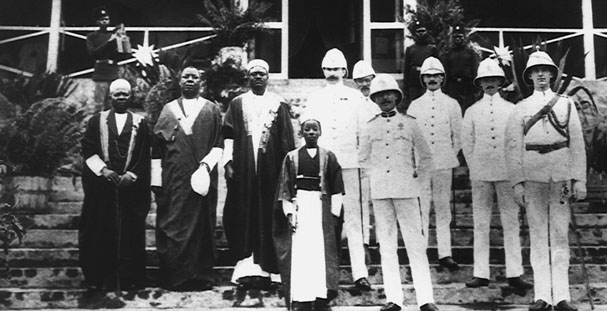
Zellonian and Samgolan delegations, photograph taken August 8th, 1910


Zellonia's Day in the Sun however was marred by the explanation from the Zellonian Overseas Department (ZOD) that investigators had begun their initial observations on the raid in Leylon, south of the new Republic of Xian but that 2,000 Zellonian refugees were flocking to Leylon as reports of attacks from the natives on the island colony of Surayanna reached word of the Zellonian Overseas Department at the capital of Leylon, Sumak.


Surayannan refugee boats left after the Crisis on August 8th, 1910
SALUTE TO THE FALLEN


August, 1910


August 1st
Karalian Uprising: The Seljuk 2nd Army begins preparations for an artillery bombardment of the Karalian city to take place on August 12th. General Mahmed sends out the 90th Riflemen Platoon into the city with orders to get into contact with the Saurilians there and warn them of the impending attack. The 90th, led by platoon sergeant Murad Hapsyy, departed from the Seljuk lines early in the morning of August 1st.


Seljuk 90th Rifleman Platoon, photograph circa 1909


August 2nd-August 4th
During the early hours of the 2nd, the Zellonian colony of Leylon came under heavy attack by non-uniformed soldiers. The colony, which had no military garrison to speak of was ransacked. Several homes were burned and in the three days of raiding, 173 Zellonian nationals were killed--though the majority indirectly. Almost everything of value was taken, several Ellis automobiles (most with less than 50 miles on them), gold watches, hunting rifles. If it wasn't bolted down, the soldiers took it.

The Zellonian colonial governor Matthew Hepbridge sent a report back to the Zellonian Overseas Department (ZOD) indicating that it appeared that the non-uniformed soldiers were those belonging to the Republic of Xian, who had unfortunately just signed a treaty with the Zellonians.

August 5th
After days of negotiating, the Seljuk Empire and the Tyro-Antarian Empire sign the Bader-Bey Pact (1910) in Wreslou, Tyro. The treaty, signed between Ambassador to Tyro-Antari Janus Bey and Tyro-Antarian ambassador Klaus Bader was conducted as a backroom negotiation and much attention was given to keeping it's contents mostly secret.

BADER-BEY PACT (August, 1910)
Article I. The Empire of the Seljuk officially recognize the sovereignty of the Tyro-Antarian state's Dual Monarchy as well as the sovereignty of the current reigning monarch and his lineage until at least August, 1920.

Article II. [Enclosed. -1 Support (Seljuk Empire)]

Artivle III. [Enclosed. -1 Support (Seljuk Empire)]

Article IV. [Enclosed. -1 Support (Seljuk Empire)]

[X] Ambassador to the Tyro-Antarian Empire, Janus Bey, Representative of the Imperial Government of the Sultan of Seljuk
[X] Klaus Bader, Foreign Ambassador to the Seljuk Empire


August 6th
The 1st Army begins moving out from Fumen. With over 174,000 men under a single command, they make less than three miles a day suffering along unpaved roads and forced to march three abreast. So long and errant was this single army formation, one witness reported: "For eight hours I worked my fields and for eight hours men marched past waving the six starred flag." The lack of infrastructure in the region made maneuvers on such a large scale difficult, but if nothing else, one man rose to acclaim all on his own. General Chi Haotian (24/Offensive Minded/Risk Taker).

The 1st Army bore witness to the spectacle of the land they claimed. The Western Provinces were an agrarian paradise, with even the biggest cities failing to stake their claim so firmly as the Meung coastal enclaves. Still, with the support of their people--the Xian Army was bolstered considerably. [Army Spirit +8%]


Xian citizens, 1910


August 7th
On August 7th, four Fusanese built Xian owned destroyers and a nationally built Light Cruiser depart from the Xianese port city of Min, destined for Blutland. Fortunes were nearly halved for both the Xianese treasuries and the Blutland Royal Navy when ships of the Meung Dominion Navy sent eight destroyers to intercept the fleet with orders to sink the ships at any cost. Fortunately, the Dominion ships were forced to turn back with orders to support army maneuver operations along the coast. The Xianese sailors watched--literally sweating--from the decks of their own ships as the Meung closed and finally swung around in a wide circle back toward their own ports.


Xianese Hǔ-class Destroyer, circa 1910
SALUTE TO THE FALLEN


July, 1910


July 19th
The Seljuk Empire foreign office calls in Foreign Ambassador Klaus Bader. There, the Seljuk diplomat Janus Bey immediately requested "the return of those dissidents of the Karalian provinces so that they may not add to the chaos of Antari nationalism." While it was apparent the Seljuk Empire similarly wished for the return of the Karalian rebels to bring them to justice, freeing up ten thousand refugees would help Tyro-Antari turn inward. Furthermore, Ambassador Janus Bey informs Bader that military forces will be moved to the Tyro-Seljuk border to enforce customs laws and ensure Antarian nationalism is kept on it's own side of the Tymar River.

July 20th-July 26th
Karalian Uprising: The Second Battle of Karalia heats up when the Karalians press the attack, emerging in force to attack not the Market District, but rather the single street that allowed the 1st Armed Battalion an open supply line. Given that General Sjorn had made no distinction or troops in reserve, the almost week long firefight ended with the Karalians closing up the street--lining soldiers in the buildings and patrolling the streets in anticipation of a counterattack. The Seljuk Empire maintains it's two divisions around the city, and catches a handful of soldiers attempting to flee northeast to the Tyro-Antarian border.


July 27th
The Republic of Zellonia dispatches three auxiliary merchants from it's shores. Their destination, the brand new Republic of Xian in Faresia. Carrying almost 30,000 ZLR-012 rifles to help the fledgling Republic in it's fight against the Meung Dominion. The ships are not expected to reach the far flung Faresian republic until early September, given the distance. Refueling stops are planned in Southern Serranthia and Eastern Faresia.

July 28th
A vote is brought to bear in the Empire of Saurilia over a new bill. The exact nature of the legislature is mostly unknown and a fight breaks out in the Parliament regarding the poor paperwork handled. So confused and distorted was the Saurilian Parliament, few even recalled the name of the proposed legislature. The Chief Deputy of the Parliament dropped the bill and called the house to order.

July 30th
A vote begins in Saurilian owned Tsungmao, a coastal city on the edge of the Meung Dominion. The vote is intended to discover the will of the people. It's estimated to finish around the time of the Saurilian Queen's birthday. The event is marred by disaster from day one, when Saurilians realize that the citizens present--formerly citizens of a two hundred year old monarchy, barely have any understanding of even the basic politics of voting ballots. "Voter" turnout is expected to be less than 5%, and the Governor of Saurilian Tsungmao, Herbert Maus, sends a formal complaint to the Saurilian Colonial Department citing: the aggravated situation is thus exacerbated by the Queen's Government's insistence on forcing democracy down the throat of a people who have long understood and embraced autocracy. In a city where the colonial police forces are still learning the laws, the government still filing its paperwork, and the military cleaning its rifles, these grand standing parades of 'democracy' do not help."


Nations may now post their August Productions.
SALUTE TO THE FALLEN


July 18th, 1910
The Serranthian Strait: Blutlander coast watchers on the Eastern Side of the Strait watch six vessels from the Empire of Saurilia enter the straits, headed south through the Strait toward the Faresian Sea. The message was relayed via wireless telegraphy to Blutlandic Serranthia, to the 4th Army, which would send the message back to Blutland itself. The vessels identified were: 1 auxiliary, 1 destroyer, 2 light cruisers, 1 battleship. Given Saurilia's distance, the Blutlanders assume the fleet must have left over three weeks ago.


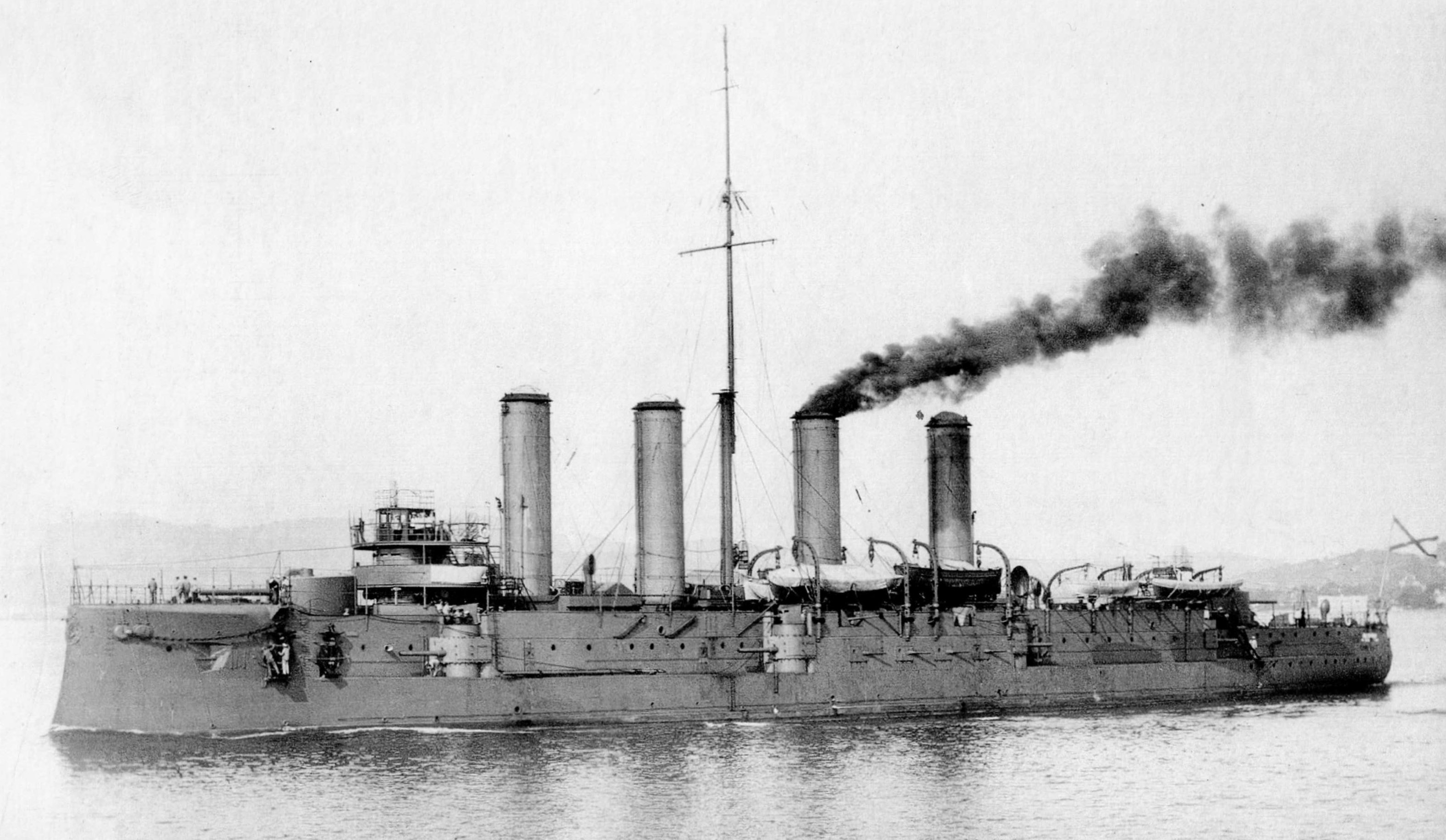
Saurilian battleship identified by Blutlander coast watchers


Meung Civil War: While the Imperial White Army continues to mobilize--a fact that may take nearly two months considering Meung's lack of infrastructure--the Emperor and the General order local garrisons mobilized and sent to their garrisons to maintain order. The garrisons, maintained by regional governors privy to bribes and corruption, are poorly maintained. Village garrisons are made up of young boys and old men, many of them have a myriad of M1902 Schutze, Otto Mark II and even ZLR-012 rifles. The Zellonian ZLR-012 cartridged the Estalian .303, as opposed to the 8mm of the Schutze and Otto Mark II. This different ammunition made maintaining the rifle a logistical pain.

Karalian Uprising: The Second Battle of Karalia continues. The First Armed Battalion, given orders to hold position--find the rebels intensifying fire and utilizing hit and run tactics to keep the soldiers on edge. A few hundred civilians, fearful of fleeing, seek the Saurilians for aid, who take them in. The unfortunate side is that soldiers here are tied up caring for these civilians. During the battle, several rifles are collected from deceased Karalian soldiers and given to General Sjorn in the Market District. Along with his command staff, they determine these Otto Mark II rifles, manufactured in the Kingdom of Blutland, are relatively new and were sent very recently.


© 2007-2026
BBCode Cheatsheet