That awkward moment when a kingdom is larger than an empire.
Empires are different from kingdoms in that empires are mostly heterogeneous in cultural makeup, while kingdoms are homogeneous. Mille-Sessau just earned the nickname "The Little Empire, or "Le Petit Empire".
Official Government Name: Empire of Mille-Sessau Head of State: Empress Amelia Alessandra, 32 Capital City: D'amiens National Language: Sessauan (71.33%), Millean (22.55%) Basic Demographics: With a land area of 93,028 square km, Mille-Sessau is a landlocked country on the continent. It measures about 250 km from north to south and 524 km from east to west.
Most of the country has an elevation of less than 200 m. Although Sessau has several moderately high ranges of mountains, those reaching heights of 300 m or more cover less than 2% of the country. The highest point in the country is Sombé (1,014 m) in the Terrê Mountains northeast of D'amiens. The lowest spot is 77.6 m above sea level, located in the south of Sessau, near Clemé.
The major rivers in the country are the Fahreau and Misza. The Fahreau also flows through parts of neighboring countries. It is navigable within Sessau for 418 kilometers. The Misze River is navigable for 444 km in the country. Less important rivers include the Kenneau along the Northern border, the Rigel, the Brazier, and the Lacan along the Eastern border. Sessau has three major lakes. Lake Delannoy, the largest, is 78 km long and from 3 to 14 km wide, with an area of 592 square km. Sessauan often refer to it as the Sessauan Sea. It is Central Continents largest freshwater lake and an important recreation area. Its shallow waters offer good summer swimming, and in winter its frozen surface provides excellent opportunities for winter sports. Smaller bodies of water are Lake Geiger (26 square km) in Mehmet County and Lake Jaubert, and the artificial Lake Misza.
The country's best natural resource is fertile land, although soil quality varies greatly. About 70% of the country's total territory is suitable for agriculture; of this portion, 72% is arable land. Sessau lacks extensive domestic sources of energy and raw materials needed for industrial development.
|Geographical Location of Country:| Indicated by the number 9 on the appropriate geographical map. |Country Size:| Unknown. |Cities:| The capital city of Spazano is a bountiful bastion of tourism and trade, with nearly fourteen million people within the city limits. Towering skyscrapers and wandering zeppelins pockmark the streets and skies respectively. Spazano is home to many foreign nations, due to the islandic nature of Etelia's Golden Home Island, where extradition laws do not exist. The port city of Tizzuni is home to the Etelian Royal Fleet, a sanctimonious paper tiger of armored dreadnoughts whose history knows all corners of the earth.
|Natural Resources:| Colonial holdings supply poppy seeds, agricultural and horticultural goods, as well as salt, sugar, tobacco, spices. The Golden Home Island has stores of bauxite, coal and timber.
People & Culture:
|Population:| 41,500,000 million people (Golden Home Island), 61,000,000 (Colonial) |Demographics:| [Under Construction.]
Inevitably. I usually take breaks in between RPs to try and figure out new and refreshing takes on different nation/faction RPs. I'll invite you to the next one!
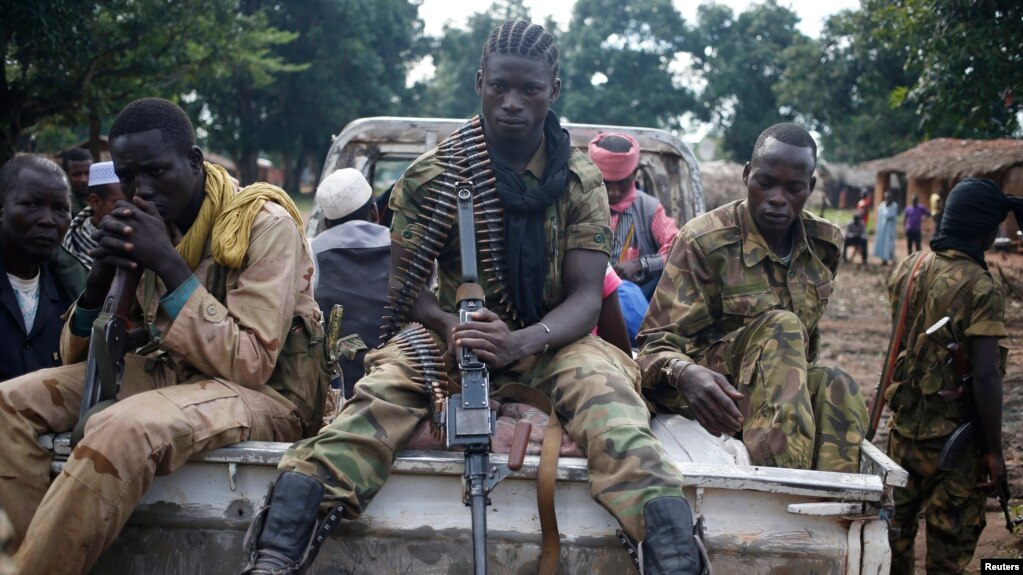
Seventeen soldiers of the Samgolan Army are killed in a three day long firefight in the province of Ziwa. The Islamic Army has allegedly changed tactics, instead of utilizing hit and run tactics are now mounting singular offensives where Samgolan soldiers are weakest. A new leader, Mahmoud Al-Nasar has been identified by Samgolan Army High Command (SAHC) in Kamidye, an eighteen year old whose fighter supported Rubusana and the People's Front and whose mother was killed only months ago. In mid-February, the Mattunde Firefight ended with nearly 75 Islamic Army fighters converging on a patrol of 21 Samgolan soldiers. Only 4 escaped.
Mahmoud Al-Nasar, center, reputed new leader of the Islamic Army, February 1995
The Islamic Army now controls two of the six states of Ziwa, Odyassam and Kolodam. The population there exists entirely under Islamic Army law--a semi-feudalistic and patriarchal system of government, run by Mahmoud Al-Nasar. Samgolan Army units of the 4th "Onige" Division have now pulled back. Without firm leadership, continued forays using the Community Policing and Deescalating Lawlessness protocol into Odyassam and Kolodam are now considered "suicide missions" by the Samgolan Army. [-2% Approval for the Bureau of Defense.]
New Democratic Alliance Seeks Donors for Next Years Election
The New Democratic Alliance is now shopping for potential contributors to their political agenda. Among their decision to ramp up the political agenda to prepare for the next election was Regional Seat #12 in Pabba, Makumbe. The National Assembly member there, a new delegate of the Samgolan Technocratic Union had allegedly been under the eyes of a potential financial investigation regarding fraudulent payments to the Samgolan Tax Bureau.
A supporter of the New Democratic Alliance called the Party Headquarters in Kamidye with some exciting news.
- Publish the Tax Fraud: Any form of corruption in Samgola cannot be tolerated. Mr. Ngawana must be brought to the limelight and his fraudulent behavior revealed. It may be total coincidence that we have overwhelming support in this territory. - [75% that David Ngawana steps down and a Special Election awards the N.D.A 1 M.N.A. Seat.]
- Sweep it Under the Rug: Samgola needs strong leadership. We will let the Samgolan Technocratic Union know of what has transpired and pray that the S.T.U. can conduct their own internal investigation. - [S.T.U. must pay N.D.A. an amount negotiated between the two parties.]
A Fair Deal Act Preamble: An Act which seeks to empower the working men and women of Samgola, assuring security and a fair deal for all at work.
Article 1: Concerning Minimum Wage Regulation The nation and government will change it's policy on minimum wage regulation as determined by Law 86 from it's current policy of no provision to one of legally enforcing a minimum wage at a level considered a "living wage" above the poverty line. [Equality]
Office of the Speaker Bill Preamble: The purpose of this bill is to oversee the creation of the role of Speaker within the National Assembly. The Speaker shall preside over the debates of the National Assembly, assuring proper conduct and order is maintained during debates and may punish members who break the rules of conduct and order if necessary. Should this bill be passed into law, Article 2 of the Governmental Oversight Act will be rendered obsolete and in all means replaced by the Office of the Speaker Bill.
Article 1: Concerning the role and function of the Speaker The Speaker's primary function is to preside over the National Assembly during debate and is responsible for maintaining discipline and order. He or she rules on all points of order and objections raised by members when it is believed that common decency and conduct has been breached. In order to maintain orderly debate within the National Assembly, the Speaker may call to order the Assembly if it is felt that there is a disruption or breach of order. Should members refuse to follow the instructions of the Speaker, a member may be punished with a reprimand or more seriously dismissal from the Assembly for the remainder of the day's debate and session. In the case of grave disobedience by a member of the Assembly, the Speaker may call to a vote by the Assembly a motion to temporarily suspend the offending member for a maximum of four months time. Should grave disorder afflict the National Assembly and it is believed by the Speaker that no further progress might be made in the current sitting, the Speaker may immediately adjourn the entire sitting. Should the Speaker call upon this power however they must be able to adequately explain and justify their actions in post.
In addition to maintaining discipline, the Speaker must ensure that debates proceed smoothly. If the Speaker finds that a member is making irrelevant remarks, is tediously repetitive, or is otherwise attempting to delay proceedings, he or she may order the member to end the speech. The Speaker is also charged with assuring proper democratic governance as well as protecting the interests of all parties and members assembled in the National Assembly, should the Speaker feel that there has not been sufficient debate before a vote is called and members of the National Assembly identify that they wish to contribute to the debate, the Speaker may temporarily delay a call to vote. At which point the onus will lie on the signifying members to add to the debate within one week's time of the delay. Should the member require more time to fully contribute, they may apply to the speaker for an extension of time up to a maximum of one month. Should the Speaker feel that the signifying members are merely attempting to delay proceedings he or she may refuse the member this right.
Finally, the Speaker continues to represent his or her constituency in the National Assembly.
Article 2: Concerning the election of the Speaker The position of Speaker will be held by an MNA elected from among their own ranks. The National Assembly will elect a Speaker at the beginning of a new term after a general election, or after the death or resignation of the current Speaker. Once elected, a Speaker continues in office until the next election unless he or she resigns prior to this. Alternatively a vote of no confidence may be held for the removal of the current Speaker prior to elections provided there is sufficient evidence of a breach of the Speaker's neutrality within the National Assembly in regards to their efforts to keep order and to assure full representation. The Speaker's votes or speeches (unless they themselves breach good conduct) do not represent sufficient evidence for a vote of no confidence.
During the election for Speaker, a member may nominate themselves for the position of Speaker or be nominated by others with the consent of the nominee. Each member may nominate no more than one candidate. With the nominated individuals, a ballot will be held in the National Assembly to determine who will be elected to fulfill the role of Speaker. In the event of a tie or no clear majority, then the individual with the fewest votes is eliminated, as are any other candidates who receive less than five percent of the votes cast. The Assembly continues to vote, for several rounds if necessary, until one member receives the requisite majority.
Article 3: Concerning the partisanship of the Speaker The Speaker is required to perform his or her office impartially and free of any partisan thought, they are not however required to resign from party membership upon taking or leaving office. If it believed that the Speaker is not performing his office impartially as is his or hers duty, a vote of no confidence as described in Article 2 can be held. In accordance with their impartiality, the Speaker may make speeches to the National Assembly though they are expected to do so only when expressing the direct concerns of their constituents or when performing their duties as Speaker. The Speaker may also cast a vote as any other National Assembly member when required, though theirs must be the last vote on any issue.
SEZ Establishment Act Overview: As the people of Samgola have demanded, they want jobs and they want it now. It has been also shown that Special economic zones do help in inviting foreign investors and investment. One which Samgola is desperately in need of. Article 1. Establish several Special Economic Zones in Kamidye to help boost foreign investment into the country. (The establishment of the SEZ's would be handled by the Cabinet of Trade & Finance) [Competition]
Election Fairness Act Preamble: This act will make the National Assembly’s members be more evenly divided between the regions. So that focus doesn’t stay to the cities and distributed across the country. It further changes the way in which the President is decided, using just a simple majority in a single round election rather than a dual system.
Article 1. The state would adopt a system in which equal representation, regardless of region population is implemented to decide how many seats are given.[Political]
Article 2. The election for the Presidency will no longer be held in a two round draft, instead whichever president receives the most votes shall become the President.
The Hervit government's budget for 1994-1995 is passed, with only the Nationalist Party of Samgola abstaining from a vote. The budget reallocated spending in nearly twenty billion dollars worth of funds, eliminating the funds for Nigerian Aid as well as bringing an abrupt end to Task Force Europa--a task force of fourteen different nations totaling nearly 11,000 soldiers. By January 5th, 1995--half of them had already left via Kamidye International Airport.
Funding for the Education for the Disabled was removed entirely, as was significant funding for the Samgolan Disability Program, which catered to physical disabilities for war veterans and the elderly. The national debt had now increased to $249,000,000,000, and economists in Kamidye were now suggesting that failure to pay off the debt might have significant future impact.
The New Democratic Alliance is Announced
Considered an untenable position after a trio of scandals that literally saw the resignation of President Samuel Bassong, those liberals still hopeful of a party that might cater to their views--outside the more extremist left positions of Labour Front, found new hope in the New Democratic Alliance, a coming together of those politicians left unscathed by the Gaza Scandal, Operation Dragon and the fall of the Democratic Alliance for Reform. While they would be without a political voice until the September, 1996 elections, it was of the opinion of many that those original voters that catered to the whims of the Liberty Coalition would undoubtedly return to support freedom and generosity in the next election. [N.D.A. gains +3% Liberal Voter in Selected Provinces.]
Explosion in Kamidye Kills 17, 55 Wounded
A car bomb rocked the downtown market of Kamidye, killing 17 and leaving 55 in critical condition. Kamidye Federal Police were on the scene in minutes as were emergency services. The car bomb was not home made but military grade, although no immediate suspects were discovered. What, if anything, to come of it, was to be soon seen. [+2.00% to Crime Wave crisis.]
Photo of the Kamidye Market Bombing, 1995
A Fair Deal Act Preamble: An Act which seeks to empower the working men and women of Samgola, assuring security and a fair deal for all at work.
Article 1: Concerning Minimum Wage Regulation The nation and government will change it's policy on minimum wage regulation as determined by Law 86 from it's current policy of no provision to one of legally enforcing a minimum wage at a level considered a "living wage" above the poverty line. [Equality]
Office of the Speaker Bill Preamble: The purpose of this bill is to oversee the creation of the role of Speaker within the National Assembly. The Speaker shall preside over the debates of the National Assembly, assuring proper conduct and order is maintained during debates and may punish members who break the rules of conduct and order if necessary. Should this bill be passed into law, Article 2 of the Governmental Oversight Act will be rendered obsolete and in all means replaced by the Office of the Speaker Bill.
Article 1: Concerning the role and function of the Speaker The Speaker's primary function is to preside over the National Assembly during debate and is responsible for maintaining discipline and order. He or she rules on all points of order and objections raised by members when it is believed that common decency and conduct has been breached. In order to maintain orderly debate within the National Assembly, the Speaker may call to order the Assembly if it is felt that there is a disruption or breach of order. Should members refuse to follow the instructions of the Speaker, a member may be punished with a reprimand or more seriously dismissal from the Assembly for the remainder of the day's debate and session. In the case of grave disobedience by a member of the Assembly, the Speaker may call to a vote by the Assembly a motion to temporarily suspend the offending member for a maximum of four months time. Should grave disorder afflict the National Assembly and it is believed by the Speaker that no further progress might be made in the current sitting, the Speaker may immediately adjourn the entire sitting. Should the Speaker call upon this power however they must be able to adequately explain and justify their actions in post.
In addition to maintaining discipline, the Speaker must ensure that debates proceed smoothly. If the Speaker finds that a member is making irrelevant remarks, is tediously repetitive, or is otherwise attempting to delay proceedings, he or she may order the member to end the speech. The Speaker is also charged with assuring proper democratic governance as well as protecting the interests of all parties and members assembled in the National Assembly, should the Speaker feel that there has not been sufficient debate before a vote is called and members of the National Assembly identify that they wish to contribute to the debate, the Speaker may temporarily delay a call to vote. At which point the onus will lie on the signifying members to add to the debate within one week's time of the delay. Should the member require more time to fully contribute, they may apply to the speaker for an extension of time up to a maximum of one month. Should the Speaker feel that the signifying members are merely attempting to delay proceedings he or she may refuse the member this right.
Finally, the Speaker continues to represent his or her constituency in the National Assembly.
Article 2: Concerning the election of the Speaker The position of Speaker will be held by an MNA elected from among their own ranks. The National Assembly will elect a Speaker at the beginning of a new term after a general election, or after the death or resignation of the current Speaker. Once elected, a Speaker continues in office until the next election unless he or she resigns prior to this. Alternatively a vote of no confidence may be held for the removal of the current Speaker prior to elections provided there is sufficient evidence of a breach of the Speaker's neutrality within the National Assembly in regards to their efforts to keep order and to assure full representation. The Speaker's votes or speeches (unless they themselves breach good conduct) do not represent sufficient evidence for a vote of no confidence.
During the election for Speaker, a member may nominate themselves for the position of Speaker or be nominated by others with the consent of the nominee. Each member may nominate no more than one candidate. With the nominated individuals, a ballot will be held in the National Assembly to determine who will be elected to fulfill the role of Speaker. In the event of a tie or no clear majority, then the individual with the fewest votes is eliminated, as are any other candidates who receive less than five percent of the votes cast. The Assembly continues to vote, for several rounds if necessary, until one member receives the requisite majority.
Article 3: Concerning the partisanship of the Speaker The Speaker is required to perform his or her office impartially and free of any partisan thought, they are not however required to resign from party membership upon taking or leaving office. If it believed that the Speaker is not performing his office impartially as is his or hers duty, a vote of no confidence as described in Article 2 can be held. In accordance with their impartiality, the Speaker may make speeches to the National Assembly though they are expected to do so only when expressing the direct concerns of their constituents or when performing their duties as Speaker. The Speaker may also cast a vote as any other National Assembly member when required, though theirs must be the last vote on any issue.
SEZ Establishment Act Overview: As the people of Samgola have demanded, they want jobs and they want it now. It has been also shown that Special economic zones do help in inviting foreign investors and investment. One which Samgola is desperately in need of. Article 1. Establish several Special Economic Zones in Kamidye to help boost foreign investment into the country. (The establishment of the SEZ's would be handled by the Cabinet of Trade & Finance) [Competition]
Election Fairness Act Preamble: This act will make the National Assembly’s members be more evenly divided between the regions. So that focus doesn’t stay to the cities and distributed across the country. It further changes the way in which the President is decided, using just a simple majority in a single round election rather than a dual system.
Article 1. The state would adopt a system in which equal representation, regardless of region population is implemented to decide how many seats are given.[Political]
Article 2. The election for the Presidency will no longer be held in a two round draft, instead whichever president receives the most votes shall become the President.
1. Unemployment: At its simplest this is a count of the percentage of your population who aren't in gainful employment. Adjusted to omit those citizens who are not actively seeking work for one reason or another. * Current: 8.73%
2. Homelessness: Homelessness is a situation where a significant number of a nation's citizens can no longer afford a house and are forced to live on the streets, upsetting the poor, the liberals, and the middle class. Homeless is caused by high rates of Poverty and Unemployment. * Current: 5.57%
3. Crime Wave: Crime is the violation of the laws of a country. There are two categories of crime waves; ordinary Crime Wave and Violent Crime Wave. Ordinary Crime is general, non-violent violations of the law, such as car crime, theft, fraud, and other similar crimes. Violent Crime is crime that involves physical assault, such as mugging, rape, and homicide. * Current: 12.66%
Every 24 hours, a month passes. Currently: January, 1995 (Turn 5) December begins at 4:00 P.M. CST, 3/26/2018]
The Budget Goes to a Vote President Jasura Hervit saw his Cabinet Proposal pass along party lines and immediately cost the 1994-1995 Budget to a Vote. The hope here was that a quick passage of the laws, appropriating nearly four billion dollars in funds would rectify the sinking Samgolan ship and provide new hope for an administration that was just finding it's legs. With less than a month to pass a budget before an imminent government shutdown, approval for the Hervit Administration dropped 1%. "More of the same," local voters reported, citing similar concerns with the Bassong Administration last year.
Rumors abound that those not indicted in the Liberty Coalition might put some of their members together into a single political party to represent the liberal minority of Samgola. President Hervit's cabinet was now free to get to work.
A Fair Deal Act Preamble: An Act which seeks to empower the working men and women of Samgola, assuring security and a fair deal for all at work.
Article 1: Concerning Minimum Wage Regulation The nation and government will change it's policy on minimum wage regulation as determined by Law 86 from it's current policy of no provision to one of legally enforcing a minimum wage at a level considered a "living wage" above the poverty line. [Equality]
Office of the Speaker Bill Preamble: The purpose of this bill is to oversee the creation of the role of Speaker within the National Assembly. The Speaker shall preside over the debates of the National Assembly, assuring proper conduct and order is maintained during debates and may punish members who break the rules of conduct and order if necessary. Should this bill be passed into law, Article 2 of the Governmental Oversight Act will be rendered obsolete and in all means replaced by the Office of the Speaker Bill.
Article 1: Concerning the role and function of the Speaker The Speaker's primary function is to preside over the National Assembly during debate and is responsible for maintaining discipline and order. He or she rules on all points of order and objections raised by members when it is believed that common decency and conduct has been breached. In order to maintain orderly debate within the National Assembly, the Speaker may call to order the Assembly if it is felt that there is a disruption or breach of order. Should members refuse to follow the instructions of the Speaker, a member may be punished with a reprimand or more seriously dismissal from the Assembly for the remainder of the day's debate and session. In the case of grave disobedience by a member of the Assembly, the Speaker may call to a vote by the Assembly a motion to temporarily suspend the offending member for a maximum of four months time. Should grave disorder afflict the National Assembly and it is believed by the Speaker that no further progress might be made in the current sitting, the Speaker may immediately adjourn the entire sitting. Should the Speaker call upon this power however they must be able to adequately explain and justify their actions in post.
In addition to maintaining discipline, the Speaker must ensure that debates proceed smoothly. If the Speaker finds that a member is making irrelevant remarks, is tediously repetitive, or is otherwise attempting to delay proceedings, he or she may order the member to end the speech. The Speaker is also charged with assuring proper democratic governance as well as protecting the interests of all parties and members assembled in the National Assembly, should the Speaker feel that there has not been sufficient debate before a vote is called and members of the National Assembly identify that they wish to contribute to the debate, the Speaker may temporarily delay a call to vote. At which point the onus will lie on the signifying members to add to the debate within one week's time of the delay. Should the member require more time to fully contribute, they may apply to the speaker for an extension of time up to a maximum of one month. Should the Speaker feel that the signifying members are merely attempting to delay proceedings he or she may refuse the member this right.
Finally, the Speaker continues to represent his or her constituency in the National Assembly.
Article 2: Concerning the election of the Speaker The position of Speaker will be held by an MNA elected from among their own ranks. The National Assembly will elect a Speaker at the beginning of a new term after a general election, or after the death or resignation of the current Speaker. Once elected, a Speaker continues in office until the next election unless he or she resigns prior to this. Alternatively a vote of no confidence may be held for the removal of the current Speaker prior to elections provided there is sufficient evidence of a breach of the Speaker's neutrality within the National Assembly in regards to their efforts to keep order and to assure full representation. The Speaker's votes or speeches (unless they themselves breach good conduct) do not represent sufficient evidence for a vote of no confidence.
During the election for Speaker, a member may nominate themselves for the position of Speaker or be nominated by others with the consent of the nominee. Each member may nominate no more than one candidate. With the nominated individuals, a ballot will be held in the National Assembly to determine who will be elected to fulfill the role of Speaker. In the event of a tie or no clear majority, then the individual with the fewest votes is eliminated, as are any other candidates who receive less than five percent of the votes cast. The Assembly continues to vote, for several rounds if necessary, until one member receives the requisite majority.
Article 3: Concerning the partisanship of the Speaker The Speaker is required to perform his or her office impartially and free of any partisan thought, they are not however required to resign from party membership upon taking or leaving office. If it believed that the Speaker is not performing his office impartially as is his or hers duty, a vote of no confidence as described in Article 2 can be held. In accordance with their impartiality, the Speaker may make speeches to the National Assembly though they are expected to do so only when expressing the direct concerns of their constituents or when performing their duties as Speaker. The Speaker may also cast a vote as any other National Assembly member when required, though theirs must be the last vote on any issue.
SEZ Establishment Act Overview: As the people of Samgola have demanded, they want jobs and they want it now. It has been also shown that Special economic zones do help in inviting foreign investors and investment. One which Samgola is desperately in need of. Article 1. Establish several Special Economic Zones in Kamidye to help boost foreign investment into the country. (The establishment of the SEZ's would be handled by the Cabinet of Trade & Finance) [Competition]
Election Fairness Act Preamble: This act will make the National Assembly’s members be more evenly divided between the regions. So that focus doesn’t stay to the cities and distributed across the country. It further changes the way in which the President is decided, using just a simple majority in a single round election rather than a dual system.
Article 1. The state would adopt a system in which equal representation, regardless of region population is implemented to decide how many seats are given.[Political]
Article 2. The election for the Presidency will no longer be held in a two round draft, instead whichever president receives the most votes shall become the President.
1. Unemployment: At its simplest this is a count of the percentage of your population who aren't in gainful employment. Adjusted to omit those citizens who are not actively seeking work for one reason or another. * Current: 11.55%
2. Homelessness: Homelessness is a situation where a significant number of a nation's citizens can no longer afford a house and are forced to live on the streets, upsetting the poor, the liberals, and the middle class. Homeless is caused by high rates of Poverty and Unemployment. * Current: 5.57%
3. Crime Wave: Crime is the violation of the laws of a country. There are two categories of crime waves; ordinary Crime Wave and Violent Crime Wave. Ordinary Crime is general, non-violent violations of the law, such as car crime, theft, fraud, and other similar crimes. Violent Crime is crime that involves physical assault, such as mugging, rape, and homicide. * Current: 10.66%
Every 24 hours, a month passes. Currently: December, 1994 (Turn 4) December begins at 4:00 P.M. CST, 3/24/2018]

 FortunesFaded
 Spiffy
 Scrawl Banditta