Ok then, we can have hand-carried railguns, but they will not be as powerful as tank mounted railguns.
Of course they don't. That was the whole point. They are just another alternate design for guns. Both firearms and railguns have its set of advantages and disadvantages.
Yeah no, we do not have Hand Carried railguns. The compact power source has not been found, yet.
It was found in the modern world already. It's called compact carbon-nanotube based hydrogen fuel cells. Also by pure scaling off from the tank-mounted railguns we already should have the power source to feed 1-10kJ range railguns with relative ease. Also we already have powered exoskeletons so that's another nail in the coffin for the lack of compact power sources.
@MetalLoverDid you read the discussion we had about railguns? Since they could be very much a future plausibility would you allow hand-carried railguns? They would be potentially better than standard guns but far from as OP as they are presented in games and movies. Basically think of an alternative to firearms. Both having their advantages and disadvantages. There are already existing and real concepts to solve the issue with having a sufficiently compact power source.
Basically think of a different assault rifle or sniper gun and that's pretty much what a railgun are.
Actually, reading it up. A compact carbon-nanotube based fuel cell is the best solution for the power source issue. It can effectively store 100 times more than Li-ion batteries so that means you can indeed jack up plenty of megajoules of charge into less than a kilogram. So yeah, railgun rifles can be pretty much a reality for this RP. Again, if you think about some kind of superweapon which shoots through everything then you played too much videogames. In effect you just gave yourself a gun which while performs somewhat better than firearms but its real advantages are elsewhere. More ammo, almost arbitrarily adjustable projectile speeds (you need a tiny bullet accelerated to hypersonic velocities? You got it!), better rate of fire (basically only limited by the speed which the rail can slide forward then back) and more evenly distributed recoil (which would require to change the design of guns drastically). If the design is tried and proven like such a future setting then I suppose cost won't be that much in comparison (still many times more expensive than a simple gun) and it'll be reliable like any firearm (or perhaps even more). So yeah, I am actually now thinking of giving railguns to my infantry.Well, probably not to all of them.
Like you said, power supply is the problem. An infantry railgun would need to have a massive backpack to be of any use, and if you want it to be a super-death murder kill I-shoot-and-one-slug-goes-through-twelve-people, then you'd probably need a robot to carry the power with you (aside from the robot carrying the generator so that you are capable of reloading). And of course, if you go for the latter, you've basically got something closer to a turret that has to be set up. The main problem with railguns is that they have extremely limited "ammunition", and have to constantly be resupplied with new batteries. If you build a force around railguns that doesn't have a couple nuclear generators driving along with it, you lose your supply lines and all your weapons are worthless. So far, the smallest thing we can mount railguns on is the Zumwalt.
Obviously, at this point, it's possible to mount them on tanks. The real question is whether or not that's even a slightly good idea. Artillery? Sure, longer range. Tanks? Well, the shell is probably going to go straight through the tank. Which actually isn't all that useful. Long range, explosive payloads are the best way to go with railguns. Unless you're on a ship. In which case throw railguns everywhere and rain a hailstorm of shells upon your enemy at six times the speed of found from a hundred kilometers away.
Explosives in general are way too sensitive for railgun acceleration. I mean 2.5-3 km/s? That's almost the velocity the actual chemical blows up at and you reach this in practically an instant. Actually, that's the whole point. The projectile would practically behave like an explosive thus penetrating the target AND doing widespread damage. A 3.4kg projectile accelerated to 2.5 km/s is almost like 3.4 kg of TNT. And yeah, batteries would be kind of the "ammo" for railguns and generally it'd be more complex than regular guns. Would it worth? It may in certain situations. The inert bullets are way lighter than cartridges so unless the batteries are too cumbersome (which it probably won't because over thousands of times more powerful weapons are mounted on tanks and thus it would scale down reasonably here, think of a 1-2 kilograms at the absolute worst) it actually saves a ton of weight or allow the soldier to carry much more ammo. The point is that railguns won't be retardedly more powerful than regular guns. They can be made more affordable in sense of logistics. The fact they accelerate the projectile through entire length makes their recoil lower than what firearms have at the same power (which allows you to field somewhat more powerful guns that can be handled the same). As for recharging, yeah, that's an issue. solar panels or other field alternatives may help when you are cut off from supplies but that's it. Guns also run out of ammo so this isn't anything new. Actually mechanised units may use the engine of their own vehicle like a generator to recharge their weapons. This combined with the more plentiful ammo would actually make railguns worthwhile in combat. As I said, the point isn't to make some awesome super gun that can take down anything in its way. That's Hollywood. You'd never be able to handle the recoil of such gun. Reality is something only 20-50% more powerful than conventional firearms and its real advantages come from more complex reasons.
MBT armor plating has probably advanced to the point where conventional cannons are wholly ineffective against it.
M1A3 is the new T-54/55 of 2050.
Railguns aren't THAT much more effective, actually. Multi-stage cannons and/or liquid propellant can easily make up for the difference. Heck, even going for 150mm range guns would be cutting close to that level. Actually, conventional cannons have a lot of advantages over railguns so long we don't get to unrealistic stupid high levels of power. Mounting railguns would basically limit a tank to be a one-trick pony which uses the same method to engage all kinds of targets. Meanwhile conventional cannons can use various sensitive/intelligent munitions, gun-launched missiles and actual complex ammunition. Albeit this versatility comes at the cost of ammo. Once the rail erosion issue is solved the Railgun is actually a much more economical weapon on the long run. We are 35 years in the future so I suppose the very least people solved this much.
Speaking of which, technically the setting would also support railgun rifles, too. Railgun components scale down relatively well and your only concern is the power source. I think compact enough batteries with solar panels and other alternatives for charging are doable. Personal laers are possible, too. But well, they would be pretty poor in this aspect. I made calculations assuming a 100kW pulse laser weapon with the spot diameter of 5cm against human targets. It works rather well against unarmored enemies but once I put it against any sorts of body armor material you won't even burn that through a millimeter. So your only chance is hoping the armor wasn't treated to block radiation and the bleedthrough is sufficient to harm whoever is inside that suit. That's a 100kW system (my anti-missile defense if you wonder, wanted to test how it'd fare in anti-infantry role) You'd be happy to have a 1-5kW handheld laser rifle with your infantry.
EDIT: But yeah, M1 Abrams or Leopard 2 would be pretty much the T-54/55 of the setting if not worse. At first I wanted to say T-72 but those tanks at least have the potential to put up a fight.
Oh well, seeing how most nations use railguns on their tanks, I followed suit with my Bocskai IIIs. It actually even fits the tank's hi-tech profile. While the Toldi IV is more of a tried&proven type conventional tank which in spite of that is more expensive.
Name: Regni Novum Hungaricum, Kingdom of Neo Hungaria, Az Új Magyar Királyság Type of Government: Constitutional Monarchy Territories:Check out in the link Territory Claims: Hungary, Bosnia & Herzegovina, Croatia, Macedonia, Montenegro, Romania, Serbia, Slovakia, Slovenia, bits of Austria and Ukraine Population: 83,234,202 (according to the 2049 census) Demographics: 48.8% Hungarian, 34.1% Slavish, 4.7% Germanic, 12.4% Other Religion: 59.7% Christian, 12.6% Muslim, 6.8% Hindi/Buddhist, 3.2% Other and 17.7% Atheist
Fictional History
Starting from the recession in 2008 Hungary gradually became discontent with the European Union which eventually peaked in 2018 when suddenly the ultranationalist Hungarian Unity Novation party won the elections. Lead by Charles Esterhazy they soon left the union just before introducing the new currency and began to work on a new independent and strong country. This overall hurt the Hungarian international relations but the reforms also managed to fix the countless issues and inequalities which baned the country for decades. On the other hand Hungary gradually turned into something closer to a dictatorship lead by the HUN party. This incurred the disapproval of the other nations but given the current worldwide situation nobody had time to deal with Hungary. Then the war broke out, or more like a chaotic combination of several different wars which is now referred as World War III. China, EU, Russia, USA and countless more nations found themselves locked in the most destructive war of all history. All but Hungary which retained their neutrality through the whole time. As the war died down many nations were in ruins, a situation the Hungarian leadership immediately abused. Through the decades they were improving their military and in just a few months prior to the official end of World War III the Hungarian armies finally took action. In the name of correcting the injustice of Trianon they conquered all the neighboring countries at rapid pace, meeting only minimal resistance. By the peace talks in 2031 Hungary had already became as large as it used to be during WW1 if not even greater. Abusing the chaotic atmosphere Hungary even used this occasion to declare the legitimacy of their new nation, called Neo Hungaria. Inviting the current Duke of Croy (Reinhard), the last known descendant from House Árpád, to be Hungary's king they created the Kingdom of Neo Hungaria.
The first decade of the Kingdom was a troubled one, the ethnical-national friction was the source of various uprisings which the radical political party throttled with sheer might and resulted in bloodbaths. Yet gradually things were changing after the retirement of Reinhard and coronation of his son Mathias III. Unlike his father Mathias was a skilled politician and his reign brought stability. He promoted multiculturalism and a national identity which acknowledged everyone in the country regardless of their tongue or ethnicity as Hungarian. As such he turned around the ongoing nationalist propaganda and extended it to people who previously were viewed as the oppressed. This change eventually resulted in the current face of Neo Hungaria.
Politics/Society
As its name suggests Neo Hungaria is a monarchy ruled by their king. The current regent is Mathias III, aged 42. He's the son of the late king Reinhard von Croy and direct descendant of the Arpád Dynasty. He was born in Belgium but spent most of his life in Hungary and later adopted the name Korona Mátyás (Mathias Crown). The main decision-making body of Neo Hungaria is the Parliament which is mostly dominated by the right-wing Hungarian Unity Novation (HUN) party albeit their authority is far less absolute compared to the past. In every four years the members of the Parliament are decided by vote although the system isn't completely clean. Hungarian is the the country's official language albeit given the large diversity of ethnicities and nationalities within Neo Hungaria they also support schools in other languages and people can do administrative duties in up to 11 tongues. Multiculturalism is prevalent albeit Hungarians subtly still enjoy some preferential treatment.
Economy
Neo Hungaria remained neutral through the entire length of WW3 which allowed them to survive these years relatively intact. Their neighbors were not so lucky and as Neo Hungaria conquered them it also had an impact on their economy. Their conquest was fueled by nationalist propaganda about restoring Hungary of the past yet in effect it also bore strategic importance. Many of the old kingdom's richest agricultural fields and allocation of natural resources were held by foreign countries. Reparations and war-waging costs were expensive but turned out to be rewarding on the long run. With these Neo Hungaria became an economic powerhouse compared to the rest of Europe. They have rich mountains abundant in materials, oil fields and excellent farmlands. Due to the latter they also invested considerable effort in producing various biofuels thus allowing them to be close to self-sufficient. Export of food and materials is one of their largest source of income.
Even prior to WW3 Hungary was keeping pace with other nations when it came to science and technology. This only accelerated after the formation of Neo Hungaria. The nation's economy multiplied more than tenfold and this had a drastic impact on technology and industry. Nowadays Neo Hungaria is one of the most developed nations in the world. In spite of their size compared to the various superpowers, Neo Hungaria is one of the top producers of carbon-nanotubes and other nanoconstructed chemicals.
Military
Ever since its conception Neo Hungaria put emphasis on their military and with a good reason. Even after its numerous territorial acquisitions Neo Hungaria was surrounded by giant nations that threatened their existence. As such compared to its neighbors Neo Hungaria is more militarized and their military expenses (along with R&D) reach as high as 21% of their budget. Along with the technological and industrial boom, Neo Hungaria also devoted great resources into arming their forces with only national products. This resulted in a temporarily setback as the industry for making weapons was yet to be finished but by the 2040s this idea became a reality.
Military by numbers Active Soldiers: 712,000 Reserves: 2,888,000 (their status is unusual and more passive than in other armies) Military Police: 432,124 Tanks: 4,218 (~60% being the Bocskai III-V2) Military Land Vehicles Total: 52,812 (this includes everything, tanks, AFVs, SPGs, supply trucks, etc) Fighters: 628 (practically all of them are 6th generation craft or even 6.5th generation) Drone Aircraft: 4284 (not counting the portable UAVs carried by vehicles and infantry) Aircraft Total: 8372 Warships: 32 (including anything at destroyer size or above save for aircraft carriers) Aircraft Carriers: 6 Submarines: 60 Naval Vessels Total: 420
Infantry:
Neo Hungaria's infantry is known for their high quality equipment. Manufactured by FÉG-ARMY they wear advanced protective suit made of CNT and other nanomaterials to offer considerable and full-body protection (including against radiation and chemical attacks) while the sensors and helmet offers enhanced information feed and situational awareness on the battlefield. Their current standard armament is the FÉG-K42 guns, one of the first mass-produced railgun carbines in the world. It fires the then standardized 4x16mm "dart" projectiles at the velocity of around 1500m/s and adjustable rate of fire usually ranging between 120 to 15000 RPM depending on how each mode is programmed. Power source is a compact CNT-supercapacitor with the nominal energy content of 4 kWh which is theoretically enough for over 5000 shots thus in general the only limiting factor the amount of ammo of which a railgun infantry can carry 4 times more. This added with the range and accuracy of the 4mm dart can give a considerable advantage for soldiers on the field. The downsides are obviously that the electronic systems need care and require their own line in logistics. Recharging is done at specialized stations, connection ports of military vehicles or even by solar panels and other hand devices like the "solar mat" which is a foil-like device that can be spread out on a surface to gather solar energy. Regardless for Neo Hungaria that mostly focuses on defense and asymmetric warfare their equipment are ideal for the purpose.
Tanks:
Name: Bocskai III-V2 Classification: Stealth-Capable Light Battle Tank Manufacturer: FÉG-ARMY Rollout Date: 2044 (original), 2047 (current variation) Crew: 3 Length: 7m (~10m with the gun forward) Width: 3.4 m Height: 2.6 m Weight: 18.2 metric tons (22.6 tons with extra armor kits) Armor: CNT-BNT composite modular armor Engine: FÉG TURBO-2000C Multi-Fuel Turbine Engine (2222hp/1657kW) Maximum Speed: 145 km/h, up to 90 km/h offroad Maximum Range: 1700 km Main Armament: FÉG-SL47 Adaptive Railgun (Supports projectiles between the diameters of 12-120mm, intelligent auto-loader and feed mechanism, 16 Mj capacitor) Secondary Weapon: Csepel-Manfréd Modular Remote Controlled Weapon System (various loadouts) Active Protections: FÉG PL-100 laser defense system (100kW), Smoke grenade launchers, FÉG ORS-4B anti-missile package (includes targeting jammers and anti-projectile launcher ports linked to complex sensors)
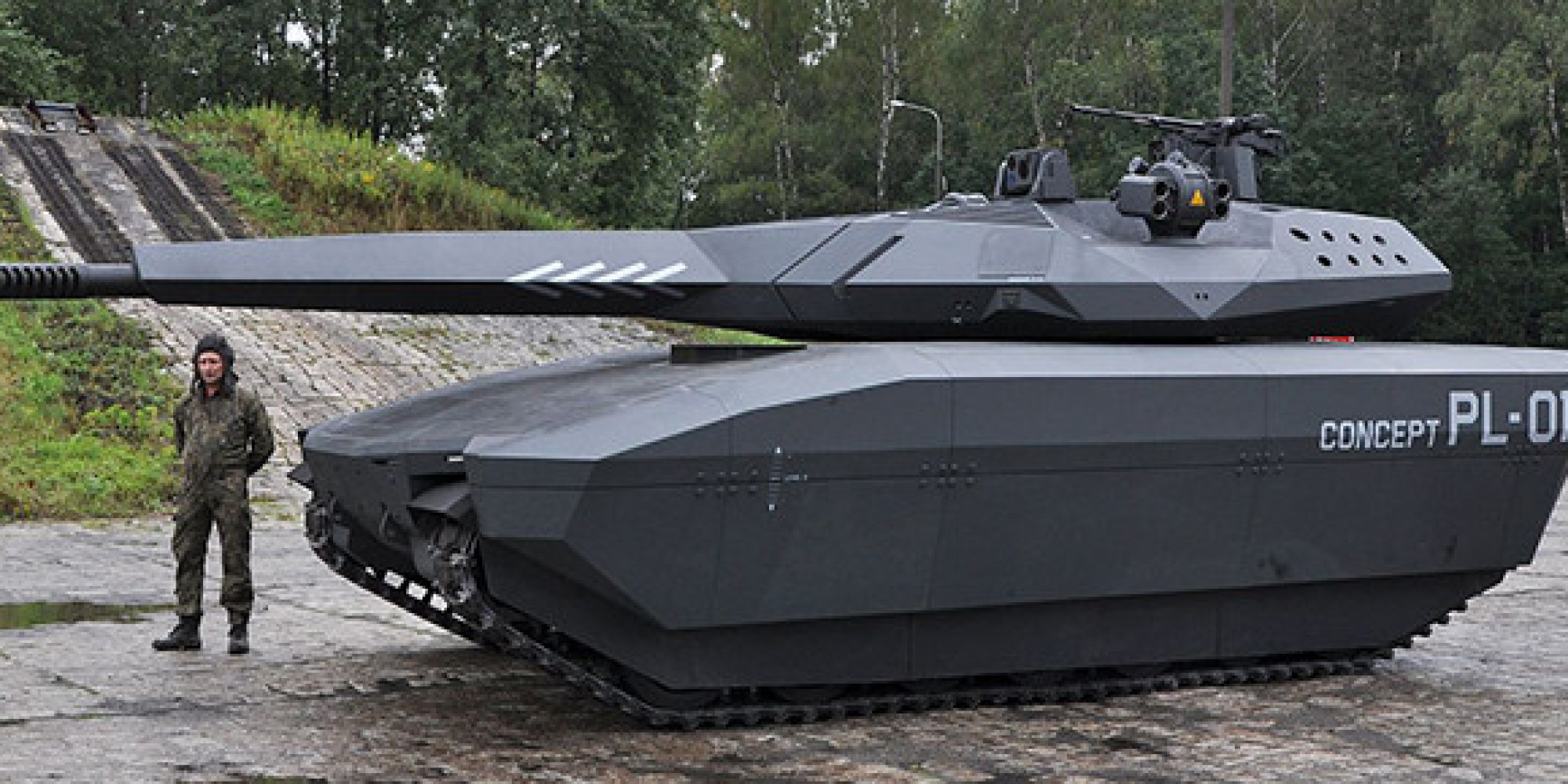
Light and advanced tank and the chief fighting vehicle employed by the Royal Hungarian Army. Its predecessor the Bocskai Tank was just a license-built version of the Polish PL-01. But following this subsequent versions constantly upgraded the tank to the extend that the Bocskai III tank is practically a whole different vehicle. The most notable difference is the new full-CNT chassis which improved protection while also decreasing weight, making the tank incredibly light and easy to transport. Though without dense heavy metal frame the armor only offers limited protection against APFSDS rounds. Another focus was on the tank's stealth. The Bocskai III uses the 3rd generation of the PL-01's thermal and radar stealth system and in standard combat situations and from sufficient distance this makes the vehicle practically undetectable. Newest addition is the Bocskai III's active camouflage system which by using the CNT's electronic properties can allow the tank to literally change colors, thus mimicking the surroundings. While this is obviously nowhere close to invisibility it works rather well from standard engagement distances. The Bocskai III also has the latest generation of passive and active protection systems which by the second variation includes a PL-100 laser point defense. Not to replace anti-missile defenses the laser works the best against distant or slow-moving explosive warheads. In dire situations it can also act as an anti-infatry platform with its rapid pulses. The tank's main armament is of course a railgun developed specially for the V2 model. The problem with railgun systems is the lack of versatility. The insensitive projectile doesn't allow much variation and the diameter is required to be the same. FÉG circumvents this issue by introducing the adaptive railgun concept. Its rail system can change its diameter thus allowing to shoot projectiles with varying size. Be it a solid 120mm bunker buster slug or a 20mm hypervelocity dart the weapon can handle it all. This is supported by a versatile and modular autoloader complex which can feed the system with multiple types of ammunition. The end result is a surprisingly versatile system which redefines the purpose of railguns. It can use CNT-reinforced tantalite slugs to act as explosive warheads. Can rapidly fire 12x48mm slugs with almost 0.1MJ energy each at 600-3000RPM like a devastating superheavy machinegun. Or unload the classic hypervelocity dart against armor. The possibilities are great and the limit is only within the imagination of Hungary's engineers. The only setback is that the new adaptive railgun alone costs almost as much as the rest of the tank, raising production cost twice to the original. In spite of that the Royal Hungarian Army upgraded all of their Bocskai III tanks to the V2 model by 2050.
Name: Toldi IVe Classification: Main Battle Tank Manufacturer: MAVAG Rollout Date: 2041 (original), 2048 (current variation) Crew: 3 Length: 7.45m (~12m with the gun forward) Width: 3.6 m Height: 3.2 m Weight: 48.8 metric tons Armor: Laminate Honeycomb Composite Modular Armor Powerplant: MAVAG W16SH-3600 Liquid-cooled Turbodiesel Engine (2222hp/1657kW) Maximum Speed: 100 km/h, up to 64 km/h offroad Main Armament: MAVAG 160mm L/60 Gun (30 RPM with autoloader, 48 ammo stored in 8 magazines) Co-Axial Gun: FÉG-M41G 4mm Railgun (shooting 4mm tungsten darts at 2000 m/s, with up to 9000 RPM) Secondary Weapon: Csepel-Manfréd Modular Remote Controlled Weapon System (various loadouts) Active Protections: Smoke grenade launchers, laser/radar warning and jammers, FÉG ORS-5 defense system (incorporates various sensors while having the combination of explosive, projectile and laser based interceptors)
While the Bocskai tanks are innovative, cheap and effective in warfare, there are several situation where the army requires a typical MBT for the job. As such Neo Hungaria developed the Toldi IV main battle tank. Named after a Hungarian knight famous for his strength and valor the Toldi IV is an advanced fighting vehicle with the latest weaponry and protection. Before railguns gained popularity 140-150mm systems dominated the battlefields. In some aspect cannons are still superior and more versatile so for the frontline tank MAVAG reintroduced the cannon, a 160mm multi-stage liquid propellant using tank gun. Its size allows to fire powerful explosive rounds and launching various missiles. Rumors say it's even capable of launching tactical nuclear warheads. Neo Hungary also developed their own unique armor system which is relatively light while offers great degree of protection. Tough and enduring, its microscopic BN honeycomb plates being immune to the "multiple hit problem" ceramic panels suffered. The armor was also made with the future possibility of irradiated environments and directed energy weapons in mind. Of course the Toldi IV also features the latest electronics, sensors and countermeasures with the E-variant debuting with the FÉG ORS-5 system with coverage and response time far better than most contemporary systems. All of these together makes the Toldi IVe a powerful but expensive tank when compared to the Bocskai III-V2.
Drone Craft:
Name: LEG-142 "Kuvik" (current version: Block 6) Classification: Stealth Attack Drone, Unmanned Magnetoaerodynamic Craft Developer: MÁL/FÉG-ARMY Collaboration Production Date: 2043 Diameter: 3.49 m Armor: 12.9mm CNT-composite Empty Weight: 425 kg Standard Weight: 885 kg Propulsion: MÁL MLM-04b Magnetoaerodynamic Drive (286 kW) Powered by: MEHM EC-E14 Hypercapacitor Fuel Cell (400 kWh) Top Speed: Mach 0.6 Fixed Armament: FÉG-M41R 4mm Railgun (Turret-mounted, 1600m/s, max 18000 RPM, 600 ammo) Internal Payload Options: - LER-4 "Véreb" Short-Range Air-to-Air Missile x 4 - LFR-16 "Égbivaly" Anti-Armor Missile x 4 - LFR-08 "Zajos Dongó" Cluster Missile x 2 - IB-21 50kg Guided Bombs x 8 - LR-11K "Tűzvész" 55mm Rocket Pod x 1 (18 missiles) - or the combination of the above
The Kuvik is a small yet rather compact VTOL capable drone aircraft which focuses on close air support. It uses by then advanced magnetic propulsion system and effectively works like a mixture of helicopter and classical aircraft thus effectively replaced the former. It's equipped with a sophisticated AI that can follow its directives and continue fighting even in heavy radio/GPS jamming. Although for accountability it's preferable if the drone craft is remote controlled. In addition the Kuvik also features advanced stealth, including radar, thermal imaging and to a limited extend even visual camouflage (a system similar to what Botond III Tanks have). This combined with the drone's already tiny size makes the vehicle extremely difficult to spot thus the Kuvik earns increasing reputation for covert missions. The Kuvik is a Hungarian word describing a family of small-bodied ownls that hunt at night. Local folklore also associate the Kuvik's sound with death.
Name: LEG-149AX "Uhu" Classification: Unmanned Magnetocraft, Attack Drone Rollout Date: 2045 (technically the test prototype was flying in 2040) Diameter: 12.84 m Armor: 20mm CNT-composite Standard Weight: 9.88 metric tons Propulsuion: MÁL MLM-01j Magnetoaerodynamic Drive (4824 kW) Powered by: MEHM EC-H23 Hypercapacitor Fuel Cell (8200 kWh) Top Speed: Mach 0.8 Armament: - FÉG-M41R 4mm Railgun (turret mounted, 1800 m/s, maximum 18000 RPM, 2400 ammo) - FÉG PL-100 Laser (100kW) x 2 - MTA KVSEB-900 Radiological Weapon (900 kW accelerator/collider, energy output depends on settings) Internal Payload Options: - LER-4 "Véreb" Short-Range Air-to-Air Missile x 12 (3 per hardpoint) - LFR-16 "Égbivaly" Anti-Armor Missile x 12 (3 per hardpoint) - LFR-08 "Zajos Dongó" Cluster Missile x 4 (1 per hardpoint) - IB-21 50kg Guided Bombs x 20 (5 per hardpoint) - LR-11A "Tűzvész" 55mm Rocket Pod x 4 (24 missiles per pod) - or the combination of the above
Uhu is a the big brother of the Kuvik dronecraft, developed to provide heavier fire support and overall greater capabilities. It features the same stealth system as the Kuvik albeit its size and larger radiation signature makes it easier to spot. Before being issued for the military the machine (classified as "Bagoly" at the time) was a test craft for various electromagnetic propulsion designs and future dronecrafts. It also served as testbed for directed energy weapons and their behavior in adverse conditions. But after a few years it became apparent the military needs a larger drone to truly substitute attack helicopters in their role. As such they proposed a more streamlined version of the Bagoly, designated as the Uhu. The large dronecraft can carry much more payload and has extensive active protection systems. In addition because of the nature of the magnetoaerodynamic drive it was easy to integrate a collider type particle accelerator and use a redesigned version of the test-type directed energy weapon in combat. Compared to most lasers this sports greater range and power, though obviously it's ineffective against properly armored targets. On the other hand it's a versatile system that can be used as a particle accelerator gun, laser, x-ray emitter and even gamma laser. As such even though it cannot burn through armor the high-energy radiation can be used to disable electronic equipment or (more rarely) to kill infantry. The gamma ray laser emits sufficient radiation to send humans into coma and kill them via major organ failure within hours or even minutes. The radiological weapon can potentially also used to intercept missiles, even large ICBMs. The Uhu is a versatile but also relatively expensive vehicle. The use of radiological weapons is also currently a secret in fear of international response. For the latter reason the Uhu is equipped by multiple self-destruct mechanisms to prevent the recovery of the wreckage. Uhu is a Hungarian word for a species of large-bodied owls. Their naming represents the dronecraft's relation to the LEG-142 (Kuvik) in size.
Your right, your "accepted" you can move your app to the character section and you can post in the IC. Just make sure to finish your history some time
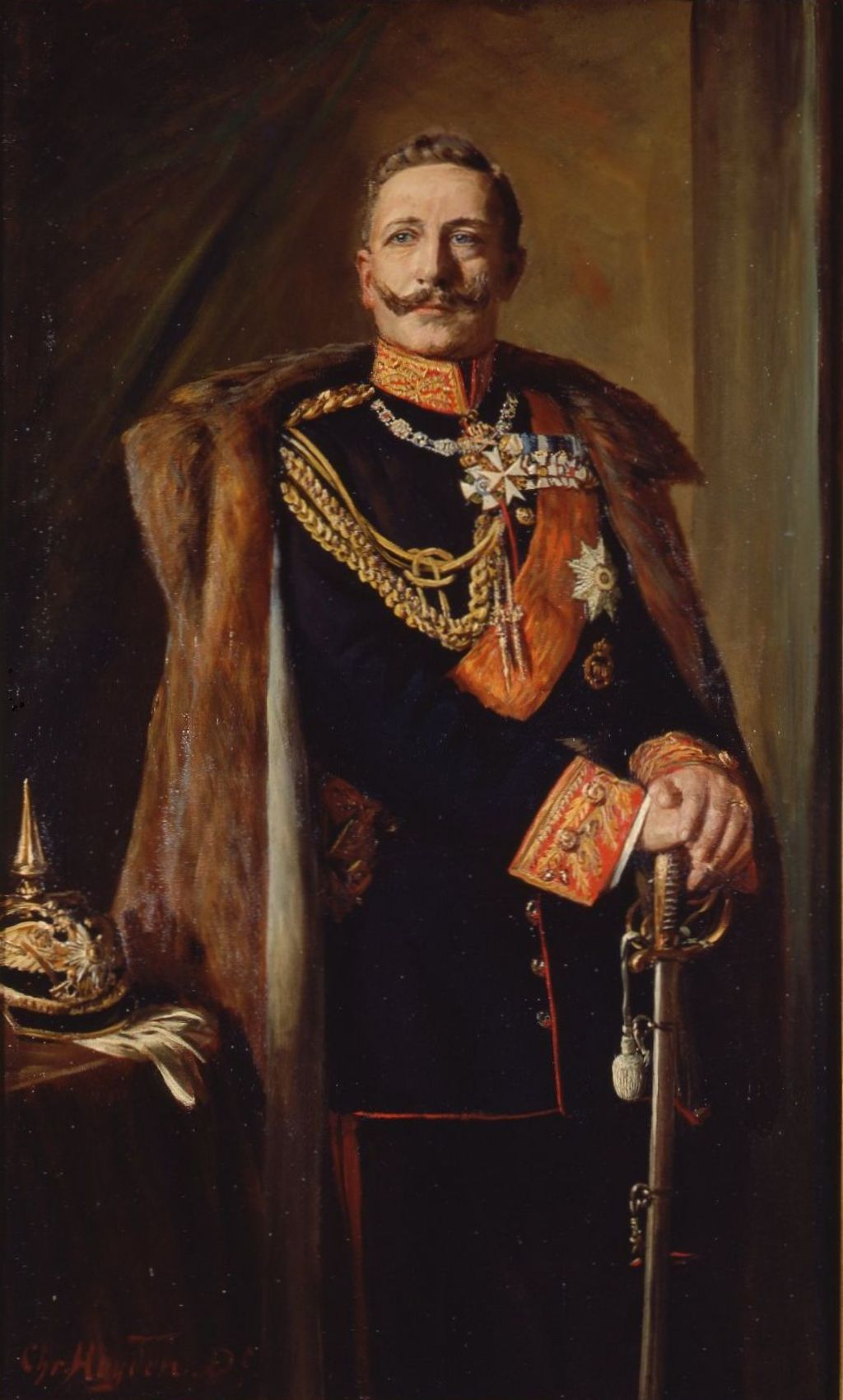
I will finish my history in a few days. It's just the RP ses to be so fast paced for now. Once I find an exquisite and fabolously mustached picture for my king I get to post right away.
 Member

 salamimike
 Durandals