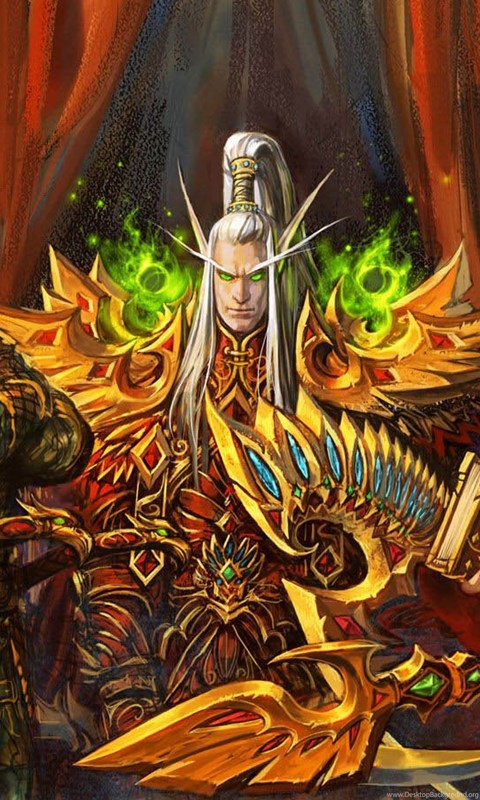
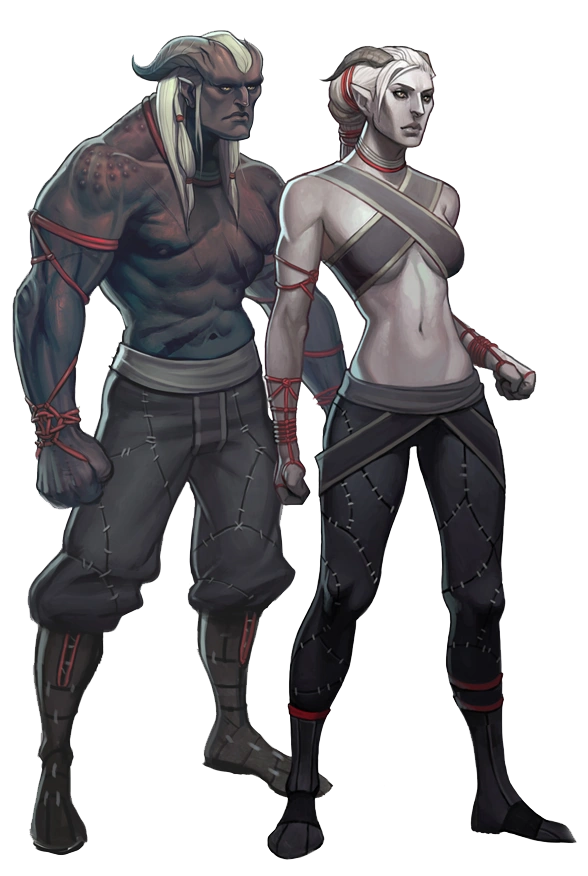
There are still holes to fill in my sheet but I basically satisfied the requirements for the Friday app. @Skepic
Name: Fenizia Dominiqua dell'Dio (Phoenix Dominion of the Sun, often abbreviated as Fenizia/Fenice) Government: Constitutional Monarchy (transforming into a theocratic-military junta) Head of the State: Maestralto Vettorio da Vigo (regent) Dominant Species: Calavenyr (Sun Elves) Population: 55 million
Previously a great power Fenice had significant ambitions with influence in several portions of the Othea. Their momentum came to an abrupt halt when the supervolcano Vesvius erupted, covering most of the main islands in a thick layer of ash. Losing their capital and nearly the entire royal family Fenice is at the brink of collapse yet still intent on retaining their former status.
History
TBA
Territory
WIP
Fenice is an empire with its domain stretching across the globe. Their mainland Fenizia consists of three islands: Albator, Falcola and Yelinor. Used to be an abundant land with nearly 90% of the Dominion's population the supervolcano reduced most of these into borderline unlivable wastelands. Even the neighboring island of Giazol bathed in dense ash, although its inhabitants of hardy trolls managed to survive. Even after the catastrophe Fenice retained considerable control over the Verronto Sea with a couple of territories held near the shores. As far as the Western continent goes Fenice has two major holdings in Firoir (North) and Kazatrea (South), the latter currently being the largest agricultural region of the entire Dominion.
Demographics
Fenice is an empire ruled by the Sun Elves. Their magical prowess and overall positive attitude defines the nation. Only a decade ago they made up the majority of the Dominion but after the catastrophe they are forced into a minority rule of only 47% of the population. The second most common race are the humans, of course. Forest elves also compose a respectable portion of around 5%. Trolls suffered great loses during the disaster but thanks to their fertility and massive government aid their numbers are steadily growing back, their strength and resilience finds great use within the Ashlands. With colonies nearly everywhere it could be said that Fenice has minorities of nearly every species from Othea.
Fenice has a state religion and it's called Dionism, named after the Sun. It celebrates the Sun and views it as an abstract meaning for all that is good in life. Dionists are taught to revel in the daylight and despise darkness. This of course goes beyond just celebrating the day, to a Dionist the Sun symbolizes enlightenment, revelation, cleanse and purity. They also view fire as an extension of the Sun and respect it accordingly. Although they similarly accept other sources of light. While in theory religious freedom is allowed (since the 18th century) in practice Fenice offers considerable benefits to Dionists and has various restrictions on the temples of other faiths. That being said Dionism is flexible and accepting of other dieties. In order to quickly assimilate other beliefs they allow these religions to be part of Dionism. They retain their traditions while also adopting Dionist system, gradually becoming similar to the main Dionist faith. As such there are dozens of sub-variants to Dionism, even a type that outright denies the existence of god. This so-called Atheist-Dionism is gaining traction among various Fenician thinkers. Altogether it can be said that over 95% of the empire is practicing some form of Dionism. The leader of this faith has the title of Genitrix and always assumed by a woman. As the symbolical Mother of all Dionist she commands considerable influence and growing sway over the politics.
Government
Fenice is technically a Republican Dominion, a form of democratic republic turned constitutional monarchy ruled by the Imperator. While the duty of the Imperator is somewhat ceremonial in effect he or she has almost complete control, only delegating his authority to various ministers and the Senate. The Senate itself is democratically elected although validated by the Imperator. In turn the Senate has the right to accept a new Imperator among the heirs. Unfortunatelly the current Imperator is only 10 years old, born not long before the catastrophe. Until Imperator Bonaccorso Dietto de Alberinis is of age (20 years) he's under the tutelage of Vettorio da Vigo, Maestralto (Grandmaster) of the Phoenix Order of Holy Knights (Ordine Sacro Fenicio). Thanks to that and the dire times the military is gaining steadily in influence, threatening to turn Fenice into a military dictatorship. Since Vettorio is a regent and not the Imperator the Senate is powerless against him.
Magic
Sun elves are gifted with magic from birth and thus magecraft is part of their everyday lives. Neglecting that the errant magic energies are bound to result in health complications and random accidents. Sun elves regularly channel their powers to some purpose and this lead to a fruitous industry of enchanted household items. Fenice used artificial lights run on Solarite centuries before the invention of lightbulbs and if you show them a lighter they might laugh at its flimsy design compared to their magical firestarters. This does not lead to technological leaps but does result in the average Fenician having more conveniences than others.
True to their religion Fenice is almost enamored by the element of fire. Also dubbed as the plasma element they excel in magically producing or controlling heat energy which can be channeled to various utilities, usually with Solarite as the medium. Fenician Blaze Masters are known for their dreadful destructive potential in battle although at home they are more often viewed as weirdos. In truth sun elves view magic as a tool, an utility. They view it as a gift and rejoice in its use yet don't feel particularly empowered by it. Thus Fenice had rather limited emerge of mighty magic users with agendas and delusions of grandeur. It is just not something in their culture.
Economy/Industry
Fenice used to be powerful merchant nation and its wealth lead to early industrialization. Yet unlike elsewhere Fenice approached industry in moderation, unwilling to sacrifice their beautiful landscape for more output. This didn't stop them to create massively successful industries and they certainly had less reservations from exploiting territories outside their mainlands. After light industry flourished Fenice focused their efforts on steel, became known not for the volume but the sheer quality of their production. Fenician metallurgy is still sought after in many parts of Othea. Given their overall obsession with fire and other energetic events they quickly adopted steam and gradually other types of engines. Turbines in particular are Fenician inventions, although the original required the cooperation of fire elementals to function. Of course magical enchantments in both the production and the function of the goods is standard in Fenice. Electricity itself was understood in Fenice but treated like a curiosity rather than something practical. It took decades of rapid development in the field for Fenice finally deciding to adopt electric devices and they only really began using lightbulbs in the last 10 years.
Of course in their recent history the event with the single greatest impact to their economy is the supervolcano catastrophe. Half their entire population dead, 80% of the mainland covered in ash. Even after massive restructuring Fenice only has 40% the industrial capacity compared to 1927. Fenice's once prosperous light industry is in ruins and since the government focuses on rebuilding their heavy industry first it continues to erode. Agriculture is restructuring but still insufficient to sustain as many as 55 million men. The treasury is bleeding away money at record rate and it's unknown if it could be stopped before the Dominion goes bankrupt. Yet outwardly Fenice maintains a strong front, presenting its best side.
Also referred as sun-metal it takes the form of faintly glowing crystal with the ever changing color of fire (when refined). Usually found in areas with volcanic activity Solarite has the capability to store light and heat radiation and also transfer it rapidly given the right impulses. It's a convenient energy medium and modulator material with plethora of potential uses. Fenice of course doesn't have monopoly over Solarite yet given their expertise and already extensive industry they hardly have any competitors in the field.
Nation Relations
As a major power with presence all around Othea Fenice often invokes polarizing opinions. Their ideologies are also strong enough to provoke this. Fenice views magic as an absolute good and evaluates others by their capacity to it. Their theocratic stance in the enlightened world is also somewhat controversial. They also used to be opponents to overindustrialization, although their stance weakened considerably. In addition several countries have territorial claims to the Dominion which of course provides tension if not outright hostilities. On the other hand making enemies also resulted in them making unlikely allies to which Fenice makes full use of.
- Volsinii Empire: Fenice abused the Volsinii civil war for territorial gains while also providing support to the elven side. The occupied territories were put under elven leadership and treated humans like secondary citizen. Both garnered resentment from the now human-dominated Volsinii. Although elvish elements still provide partisan support and many of their important people fled to Fenice.
- Hastur: The great empire shares many ideologies with Fenice yet the two nations focus more on their differences. This is partially thanks to Fenice's approach towards Hastur as a bounty, a land to exploit. After their near-collapse 10 years ago Hastur struck back and now provide non-stop trouble.
[to be continued...]
Military
Fenician military is sworn to protect three things: the emperor, the senate and the Dionist faith. While there's a state army in effect they are often split up between Fenician militant nobles who treat them like retainers. Thus even above these three the soldiers tend to be loyal to their Lord and his/her family. All lords own "castles" that are mobile fortresses while also acting as their living quarters while in action. These "fortresses of war" (rocca di guerra or roguerra in short) can take the shape of armored trains, air cruisers or most commonly giant naval vessels. This keeps Fenician army constantly on the move with a complex yet flexible line of logistics to maintain it. This is the natural evolution of their fighting style adopted for securing territories as the first priority while requiring relatively small active forces. Indeed the Fenician military focuses on quality of soldiers over the numbers, although recent events lead to a rapid expansion of their forces.
Infantry Fenician infantry unites the style of old and new. Their soldiers wear high-quality steel armor to protect the vital areas while altogether adopting modern equipment. This is partially due to their traditions and appearances but also because of the value in each soldier. They consider armoring up troops cheaper than training new ones.
- Carbina Modello 24 "Rombo": Self-loading carbine firing 6x60mm cartridges using a 24 round helical magazine hidden within the stock. The gun is relatively compact yet features a long barrel and has great accuracy thanks to the high velocity projectiles. Rombo carbines need proper care and do not tolerate amateurish handling. Their choice of magazine also forces soldiers to carry extra ammo in "quivers". The 6mm rounds are too light to propel grenades but Fenice developed a rocket assisted version that can reach over 100m. Like every service rifle the Rombo has a solar bayonet which is activated by the user's magic to create a semi-solid blade of searing light.
- Franchii 19M "Contesa": The most popular variant of Franchii's series of sporting pistols. It has a relative bullpup design allowing a longer barrel in a more compact package. It can accept various magazines available both in tubular and helical style. It's originally chambered in the long 5x40mm Franchi cartridge but can also accept the newer 5x30mm Auto cartridges more popular for military pistols. Due to its cost the 19M is mostly found with officers.
- Franchii 28M "Fulminare": A simplified and cheaper version of Franchii's sporting pistols, accepted for military service. It fires 5mm Auto rounds that are light but posses great velocity (for a pistol) and its helical magazine can hold 25 rounds.
- Scioppo Modello 29: Submachinegun chambered in 5mm Auto issued for assault troops. It has a top mounted helical magazine available in 50, 100 or even 200-round variants. The reinforced barrel and action allows sustained fire and the heavier variants can be considered ultralight machineguns designated for fire support alone.
- Revelioni L.Mtg.F. 21C: Belt or magazine fed light machinegun which uses helical chambering to allow phenomenal rate of fire. It can fire 1440-1800 rounds per minute but due to safety concerns it's limited to only semi-auto and 6-round burst. The underlying theory is that the rapid spray of 6 rounds allows more likelihood to cause damage but this also limits the gun's usefulness at close range or anti-air.
- Franchii Modelo 11: Heavy machinegun chambered in the same 6x60mm round as service rifles. It has a rather standard blowback mechanism and rugged design that allows 600RPM. Like its designation implies the M11 is a bit heavier than more modern machineguns, in the excess of 15kg without the tripod and ammo belts, thus more frequently seen in fortifications or as vehicular mounts.
- Lancirazzi Modello 32 "Pugilo": Versatile rocket projector used both as mortar and direct artillery. It launches a 60mm rocket that can reach 3km indirect and 400m in direct fire mode (though accurate hits are only guaranteed at 100m). Intended for fire support and to storm bunkers, the latter is accomplished by solarite-enhanced warheads (thermobarics). The launcher is light enough to be carried by one man and can be broken up into two pieces for easier transportation.
- Solancini Modelo 23 "Purgatio": Compact flamethrower containing volatile fuel and a solarite-assisted pumping system. The weapon is relatively heavy but effective in the right situations and has the reach up to 40 meters but most effective at 5 meters or less.
Armor Fenice has long cavalry traditions and this is continued after the development of tanks. Fenician armor development focused on mobility and versatility over protection and thus the concept of Cavarmato (roughly translated as "knight armor") was born. While standard vehicles play a significant role the frontline combat is taken by versatile walkers that can also fold their legs and traverse like a tracked vehicle. With speed, all-terrain capability and relatively modest weight these Cavarmati are rather popular in Fenice, allowing mobile fortresses to ferry them anywhere they want. Cavarmati like many other Fenician technology are imbued with magic. In this particular case the engine and machinery is inhabited by a living fire elemental which provides assistance in operating the vehicle. On the other hand fire elementals are temperamental creatures and only accept people worthy to be with them.
Name: Cavarmato Modello 1934 Genera C Height: 4.17m (maximum in walker mode), 2.5m (tracked mode) Length: 1.87m (walker mode), 2.95m (tracked mode) Weight: 7.2 metric tons Top Speed: 18 km/h (walker mode), 45km/h (tracked mode) Armor: 7-24mm Armament Options: 14mm Machinegun (60-round helical magazine) 30mm AT Gun (necked down 45mm case and uses elongated APCBC rounds) 60mm Howitzer (elongated shell, comparable to 75mm howitzers) Secondary Armament: Franchinii M11 or Revelioni L.Mtg.F. 21C Crew: 2 (knight and their paige)
Name: Imperium Quavarazium/Kvazsír Birodalom/Quavarazi Empire (in short just referred as Quavaraz/Kvazsíria) Capital: Levedium Head of the State: Imperator/Zoltán (currently: Absalon Jenw Levedicum) Dominant Species: Quavar/Kvazsár Population: est. 16 million Area: ~ 3.12 million square miles (8.08 million square kilometers)
Quavaraz is a large nation built on the heritage of the Aurelius Empire. The once prosperous empire imploded in a magic catastrophe that plague the inhabitants even after many centuries. Collecting the countless scattered survivor tribues Quavaraz was formed and presently they secure the Golden Road, the largest safe land route connecting the eastern and western portion of the continent. Quavarazi are considered harsh and hardy people who manage to survive under the constant threat of monsters.
HISTORY
The proper origins of Quavaraz are shrouded in many legends and mysteries but according to the most popular tale their history began with the Aurelius Empire, a legendary nation of magic. A prosperous realm in spite of their hostile and resource thin environment the Aureliei were revolutionary and thanks to their ambitions they were set on a path of steady growth. During their peak they nourished another golden age of magic, charming in practitioners from all across the world. Yet as quickly as they rose the Aurelius Empire fell even faster in the wake of another magic disaster. Nobody knows why it happened though almost everyone blames the arrogance of the Aurelei to think they could master magic. The magnitude of the blast wiped off the capital, scorched the empire and spread waves of mayhem even beyond their borders. While never a hospitable place the land turned into a toxic wasteland infested by monsters, seemingly hopeless for anyone to inhabit. Yet people are hardier than given credit for. Hundreds of years passed and those who remained within the country underwent a dramatic change. Humans, elves, orcs and other races all went through various magic mutations, countless tribes were formed and the land was a forbidden realm to most travelers. Quavari eventually came to prominence. They were descendants of the magically bred warrior servants once faithfully serving the Aurelei. Their tough builds became even wilder thanks to mutations although without proper leadership they were divided into countless tribes. They had to wait until the divine emergence of Almis of the Levedis tribe whose charisma and excellent leadership lead to the first ever united government in central Aurelia. Almis had uncanny foresight and unlike many other tribal leaders before him the government survived his passing and only began to prosper. Of course prospering is relative in a disaster-stricken land but the entity known as the Levedis Alliance rapidly expanded. Using the resting place of Almis as a foundation the capital of Levedium was created to provide admninistration to this new country. After finding scraps of the last Aurelian Imperator's holy raiment the ruler Gyulák Gyulája (meaning: First of the Gyula-s), Lehel Tehatom son of Tarhony, renamed his title Zoltán while declaring himself the new emperor. Since then the country is referred as the Quavarazi Empire.
GEOGRAPHY
Quavaraz, alternatively referred as Aurelia Magna, a huge land mostly dominated by savannas and magically hazardous deserts. Harsh terrain, haunting remains of dried up rivers and weird phenomenons that defy reason can be all expected for the brave who wish to travel through these lands. Monsters of great variety provide an ever present threat. Sandstorms could carry the poisonous particles from still corrupted lands to spell gruesome death on all exposed to them. This is the land of Quavaraz. Yet not all is about doom and at small patches life is blooming anew. Albeit slow but after several hundred years the land is gradually recovering. In addition Quavaraz took territories outside the afflicted zone of the magic catastrophe and now these provide a good bulk of the nation's foodstuffs to consume.
Society
Quavaraz is a diverse nation uniting a myriad of tribes and while there are constant efforts at strengthening the administration this feature did not change. Quavari are the first rate countrymen of the Empire. Bulky and huge, these horned black demi-monstrosities make up roughly 12.5% of the country's population even if their large bodies mean they actually consume the most food out of any race. Quavari naturally form the first class of their society, a warrior and leader caste which is responsible for creating this great nation. Underneath them are various lesser races of mutated people, generally adopting a slim and much more human-sized profile. Their collective name (which technically includes the Quavari and some races outside the nation) is the Tülkösnép which literally means "horned people" or alternative called the Ceranicus in the neo-Aurei language. They are the commoners and worker caste of the nation. While aren't prohibited to bear arms this is limited to self-defense or tiny militia forces. In addition as second class countrymen they are unable to advance to higher ranks of the administration and are literally prohibited to fight as anything but auxiliary to the main army. The third group is a tiny minority called the Hospicites/Hospitánsok AKA "guests". These are inhabitants from different country legally allowed to settle down in Quavaraz. While their numbers are small they are far from negligible and their total count approaches hundreds of thousands. They tend to be merchants, artisans or possess other important skills that positively impact the Empire's growth.
Founders and the strongest race of the Empire the Quavar are living in a martial culture. Built to be powerful a Quavar obviously values strength, often ready to prove their superiority. This is especially true to male members (Quavarus/Kvazsárom) whose almost implausible muscle bulk makes them easily stand out. Given this massive disparity it isn't that much of a surprise Quavars have a much more defined distinction of gender roles. Quavarus are aggressive and supposed to do the menial jobs, fighting and take the leadership. Quavara (female Quavari, also called Kvázsa) are calmer and more dexterous who take on jobs that are more demanding of knowledge and finesse. Quavara might rarely if ever lead a large community but they are equally valuable as assistants to their husbands and considered equals. This is not an ironclad rule but closer to a "common sense" to all Quavari. Thanks to the Quavarusi predominance of huge muscles their society also tends to view males of other races as rather effeminate in comparison, at times even mocking them.
Quavars themselves are also divided to castes, although these are closer to trends rather than rigid structures. Hwarum (masculine:Hwarus, feminine: Hwara, plur.: Hwaroi) are the warrior bloodlines. The most prominent line of Quavars known to produce first rate warriors. They have the highest presentation in the military and their political and social status makes them akin to nobility. Puavar (plur.: Puavari) are the religious caste. Their bloodline have shamanistic traditions and practically all of them are either with the Valrahu faith or highly learned wise men either employed by the government or serving in schools. Mavari are the shaper caste and they provide a great portion of magic users and craftsmen in general. Avari are the commoner caste that don't possess similarly prestiged bloodlines and consequently make up the majority of Quavari within the empire.
When talking about the Quavarazi/Kvazsír society in general it can be said that most of them live in a semi-nomadic state of affairs. Most locations in Aurelia aren't safe for permanent settlements and even if they could the fortifications and military assistance necessary means this is mostly limited to towns and other important places. As such the typical Quavarazi settlement is erected hastily and can be packed up just as quickly to avoid a horde of monsters or other incoming disasters. Fighting monsters and the cursed environment is part of their daily routine. As such while technically under the iron rule of Quavari the commoners still view these people as their saviors and shields from harm. They both fear and respect them for all the obvious reasons. With resources scarce the average Quavarazi is frugal, not wasting anything. They also have a culturally ingrained hatred of magic, the source of their present plight. As such Quavarazi have inherent hostility to all magic users but their own. They especially hate those who use magic for their own gain or try to rely on it to dominate their lessers. It's well-known that any foreign magic user without an escort and/or official papers could end up being targeted by the angry Quavarazian mob. Religion-wise the faith in the Sacred Wheel of Light dominates everywhere, its cross symbol representing both divine protection and reverence to the Divine Trio. In spite of this the Quavarazians are rather tolerant of other religions, accepting those gods as either their own by other names or divine spirits aiding the work of their true deities. Indeed, while the pantheon of the Father (Er), the Mother (Eny) and their Son (Arany/Ereny, consequently also the name of "gold" in common Quavarazian) is the official faith there are a myriad of local gods rooting from previous faiths of the inhabitants.
Valrahu/Vélrönkeny is the most proper name to their faith centering around the Sun Wheel and the trio consisting the Father, Mother and the Son. It combines the archaic words of "Valu" (light) and Rauhau (peace), roughly translating as "peace through the light". When spoken in common Quavarazian the word gets morphed into Vélrönkeny, which has no special meaning aside from sounding similar. The faith emerged from the combination of ancient shamanism and the re-discovery of old Aurelian religious texts. The chief members of the faith are of course the Puavari although the organization as a whole is staffed with all races. As explained before Valrahu believes in the trinity of deities and uses the sun wheel as their common symbol. Sun has divine significance in Quavaraz and its light considered the will and mercy of the Son, Arany.
Name: Fenizia Republiqua del Dio (Phoenix Republic of the Sun, alternatively Divine Republic of Fenice), Fenice for shorthand Common Demonym: Fenizian/Fenician Government Type: Federal Divine Republic (see below) Head of the State: Genitrix del Dio Grande Superior et Santissimo Dominant Species: Calavenyr (Sun Elves) Capital City: Fenizia Population: ~72 million Area: 1.336 million square km land, 0.136 million square km territorial waters
Fenice is a somewhat eccentric country ruled by the sun elves. Their state religion Dionism is well known and focuses on worshiping the Sun. Fenicians are almost infectiously vigorous and their enthusiasm might easily catch one off guard. While considered friendly they are also known to be ferocious fighters and lead several holy crusades in the past. Calavenyr (sun elves) have a long history of love-hate relationship with dark elves of Ylleria. Sometimes they were grave enemies, other times staunch allies. Currently the relations between Yllendyr and Fenice are quite positive thanks to the Dionist clergy signing an alliance to the Imperium.
History
TBA
Territory
The land of Fenice, alternatively referred as Ardensuo, is located somewhere at the edge of the temperate climate zone between 29 to 47 degrees latitude. A lush and abundant territory thanks to being in the delta of the river Rilucorsi. Weather wise the northernmost regions are more mediterranean while the southern edges are closer to oceanic climates. A small patch between the end of the river deltas and the ocean bays is also known to be a desert thanks to the mountains blocking rainclouds.
Demographics
The land of Ardensuo has many inhabitants albeit the sun elves (Calavenyr) are the most dominant. According to the census in YDC 4900 there are currently 100 million sun elves, about 45 million at home while 55 million is spread elsewhere through the Fifteen Dominions. Even in other countries the Calavenyr tend to form their own little circles based on Fenician culture. While this isn't necessarily paired with a sense of loyalty it can be said that practically every sun elf still considers Fenice their motherland. In spite of the Imperial effort to unite Calavenyr with the growing pan-elven culture it only had moderate successes so far. Make no mistake the Calavenyr does feel a kinship with other elves, there are little if any lingering hostilities from the past. Yet the divergence from the general elvish culture is so distant their complete integration feels like an impossible task. Given these circumstances it isn't surprising that Fenice has a very low Yllendyr population, maybe one and half million. This includes government officials, merchants, skilled workers, scientists and even those who serve in the Auxilia stationed in Fenice. Fluctuations in this number are considerable as most Yllendyr would not find the Fenician society comfortable. As a consequence there's also the popular Fenician view on the dark elves of Ylleria as stuck-up no-nonsense weirdos. Instead of them the second biggest elvish demographic in Fenice are the wood elves, roughly 4 million. They live in the autonomous body of Iontachyr which allows them to posses their own unique culture.
Aside from elves the second largest recognized population are the humans, a bit less than 16 million. Unlike most regions of the empire the humans are not considered slaves within Fenice, although they are definitely second class citizens at best. In spite of that the promise of freedom did charm humans from other regions to the country even if this slowed down considerably in the recent decades. Aside from wood elves there are two other races who manage to self-govern within Fenice. Zwölfberge is a region of twelve mountain city states ruled by dwarves. While formally part of Fenice they effectively can decide on their own laws so long it doesn't infringe on the guidelines laid out by Fenice or the Imperium. Of course dwarves also live outside Zwölfberge, especially in mining towns or cities. Traveling dwarven merchants are still a reoccurring sight in the country, too. Combining all these there are roughly 4 million dwarves total. The other autonomous region is Ithaké, a rough semi-desert environment dominated by the centaurs. These semi-nomadic people are hard to tame, sticking to their traditions even in this age. On the other hand they are not hostile to Fenician influence and currently 2 million of them exist in Ardensuo alone. Slavery is rare in Fenice, not entirely abolished. It is generally linked to special permits, including debt slaves who are forced to become servants until they could pay back to the owner. Yet there's one significant group whose enslavement is oft forgotten, kobolds and to a lesser extent the goblins. A weak and diminutive species sharing traits of both rats and lizards they were bound to be subjugated by a greater race. No census bothers to count the number of kobolds or goblins within Fenice but estimates are between 20 to 40 million.
Lastly but not least Fenice has some unique residents, fire elementals. Being embodiments of flames they are unable to speak and their existence could be destructive to most things around them. Yet through effort Fenice managed establish a line of communication with them and forge a deal. Since then fire elementals and sun elves live in relative harmony, although their societies rarely interact. Fenice effectively brought them out by offering them better ways to sustain themselves and giving them better habitats. Thanks to that the formerly scarce population of fire elementals grew massively, currently registering over 5000 specimen in just the country alone. Fire elementals of course help Fenice in return in various ways. They assist in magical and scientific research, moderate forges and turbines or even lend a few of their members as soldiers. In spite of the occasional "troubles" associated with fire elementals they overall had a positive effect on Fenice's growth.
Government/Society
To put it in brief the Fenician government is rather unique. At first glance it is a republic with long history. On the other hand it has monarchic ruler for life in the form of the Genitrix whose selection is done through the Violet Hall of Fenice's Dionist clergy, not the people. In a sense this is a dual system where the two sides have influences on different matters. Historically the Senate and the Violet Hall were engaging in non-stop power struggles. This dynamic relationship was solidified upon Yllendyr conquest. The secularist views of dark elves couldn't accept a pure theocratic leadership thus the Senate became the overall governor of the state. They manage the country while the Violet Hall with the Genitrix represents Fenice within the Imperial Court, although they still hold a limited authority over the Senate. Normally this would mean the Genitrix is Imperial Viceroy yet in effect this is a bit more complicated. Rather than Her Holiness the official viceroy is her aide and chief ambassador, appointed directly by the imperial government. This results in the funny situation of the viceroy of Fenice serving both the emperor and the Genitrix, of course with their loyalty swaying more towards the imperial side.
This is just the foreign politics portion, of course. Internally the so-called Divine Republic is a federation of numerous autonomous or semi-autonomous states. A group of such states form a Diocles and there are 12 of them including racial autonomies like Zwölfberge (dwarves), Ithaké (centaurs) and Iontachyr (wood elves). Each of the twelve diocleses divide into prefectures (Prefecturas) which of course contain various settlements and a local capital. Speaking of which the capital city Fenizia is also governing the Fenizia prefecture which has authority over the Ignis diocles. The 9 "normal" diocleses have fairly uniform atmosphere. Local differences like the dominant economy, neighbors and the demographics aside it is simple to harmonize laws through them. Racial autonomies on the other hand are like their own little countries. While Iontachyr is gradually adapting to sun elven and now also Yllendyr norms the other two races are far more on the stubborn side. Ithaké itself is the largest diocles and that is because there's barely anything on it. A semi-desert world where a lot of centaurs still live like nomads. As such there's no major push for them. Zwölfberge is the other way around with its highly developed cities and robust industries they can effectively ransom the government into giving them more freedom. Fenice is a complex country and perhaps because of this the Yllendyr chose to minimize their interference on Fenician politics.
Economy/Industry
Fenice's extensive mercantile traditions enabled it to achieve a relatively smooth transfer into the age of corporations and the free market. Unlike their government the Fenician economy is highly centralized and has been for centuries thanks to sitting on a nexus of well-navigable rivers that cross a good portion of the continent. Fenizia in particular is a mammoth of a city, deserving its title as capital with the population surpassing 5 million. Of course sustaining this through waterways alone would be insufficient and while reluctant at first Fenice is now building up a dense railway network. As for agriculture the country has a decent soil albeit not the best weather which results in highly variable production rates. This makes local farmers harder to compete with others on the market, especially when it comes to granary goods and other mass consumption products. On the other hand Fenice has a rich seed oil and sugar industry. Sugar beet and its products makes up some 16% of Fenice's income. As a curious note Ardensuo is actually a terrible land for growing cotton and as such they import raw cotton and often even cotton products from other dominions.
Industry-wise Fenice is quite developed. While not competitive in light industries, they made great advancements in heavy industries and technology. Zwölfberge might be not as abundant as the mountains of Vaurgemyr but they are the main producer of Gramasso (tungsten) and they have great expertise at alloy steels. Steam technology is another field that Fenice is proud of, especially turbines where they are considered the leader. The first gas turbine powerplant was made in Fenizia (although with the aid of fire elementals). Internal combustion engines are curiously neglected in Fenice, though. Speaking of engines Fenice has various steam car companies including the now famous Cizeo Ltd. which sold 500 vehicles just last year. Sun faith is powerful in Fenice thus when they had a chance to bring light into the period darkness they immediately jumped on the occasion. As such public lighting is widespread in Fenician cities and even towns, usually provided by local powerplants of various type.
Major Exports: Sugar, tungsten (and alloyed tools/parts), aluminum, turbines, fireworks, electric equipment Major Imports: Granary goods, cotton, textiles, steel, silver, rare materials
Magic
Like most elves the Calavenyr are born with magic. This does not mean everyone has the ability to become a competent mage but the most elementary spellcasting is almost like a second nature to them. Actually in case of the sun elves this goes beyond as their wild energies have to be periodically released otherwise it could impact their health. Devices to contain this errant power were developed early and nowadays technology which turns this errant magic energy into something more useful is fairly common in Calavenyr households. Magic sticks that can remotely light candles, tea boilers and so forth. Their capabilities are limited and often times replaceable by technological inventions of the time but regardless Calavenyr uses them.
True to their name the sun elves of course specialize in plasma magic with at average three quarter of their mages developing such powers. It goes beyond mere affinity, sun elves are obsessed with flames and the raw energy of this magic. To them plasma magic is often associated by their Sun religion, the Dionism. While less popular than plasma the sun elves can develop capabilities to manipulate different planes. Gas being the second most common as a complimentary to plasma while mind plane mages are always sought after for synergistic effects. Solid and liquid magic receive relatively limited attention, although thanks to Yllendyr influences there are three times as many liquid mages in Fenice than it used to be.
Sola Gladia, solblade, solar saber and many other names... they mean the same thing. They are essentially enchanted hilts that can project blades of searing plasma. The ultimate fire sword, you could say. They are the latest evolution of the sun elvish obsession to hit people with the power of their beloved sun. The hilt is somewhat heavy but since there's no physical blade its balance allows it to be swung at great speeds, almost as if the weapon would lack any momentum. Once activated the Solametta pushes out a blade of pure plasma yet normally the said plasma is merely hot rather than capable of causing major harm. It might burn your skin on direct contact but would never kill you. To be lethal you require velocity, the faster you get the hotter these blades could get. A well-executed swing can burn flesh and causes nearby organic compounds to combust. In effect this means the sword can cut through flesh and leave a cauterized mark behind. On the other hand while somewhat uncomfortable the Solametta would be ineffective against metal armor. Rather than cutting through the blade disperses like blowing dust to a hard surface. The solar blade can reform in a second yet such delay could still give an opportunity to counterattack. Speaking of metal contact, duels between a solar saber and a regular unenchanted sword can get fairly awkward. Formless plasma doesn't stop steel while steel won't really stop glowing hot gases, they pass through each other. In such cases no blocking or parrying is plausible. As such there are enchanted swords that remedy this or specially made Solamettae that can clash with regular blades and retain form. In spite of sounding fairly complicated the fundamental principle is fairly simple and based off the behavior of fire elementals. As such for 200 years now sun elves brandishing their solar blade are an increasingly common sight, even becoming the standard sidearm in Fenice to replace infantry sabers.
To be fair the OOC activity of the past gave only a faux sense of activity. The true activity are sheets and especially IC posts. In that aspect we indeed need to be more alive. Though yeah, not so dead here.
Young male centaur with dark brown hair and fur. He has an athletic slim physique, light by centaur standards but regardless powerful. His wild appearance is accompanied with a severe face, goatee and fu manchu style mustache. While average by centaur standards Iolaos is still considered somewhat towering to most races, approaching 7 feet.
Background:
Raised in the country to a low ranking family, Iolaos had little option aside from continuing in the footsteps of his shaman forebears. Sidestepping that he instead choose to enlist in the Yllendyr military. Initially thinking his magic potential would allow him to soar through the ranks but soon realized that shamans are an exception rather than the rule. Looking down on his ancestral art, Iolaos was forced to impress the superiors by other means. His intense drive soon earned him the top spot in his class and while officer training was out of question he went to enlist on further training to become a pathfinder. Careerist and eager to prove his worth, Iolaos was ready to test his strength on the battlefield. In spite of that he became a member of Squad 6, a place where the Imperium preferred to dump the dregs of his military. Determined as ever, Iolaos is now focusing his efforts to be reassigned to a more deserving place. Unfortunately he's right in the middle of war and caught in enemy territory which should delay his transfer considerably.
Personality:
TBA
Likes: being in the wild, books, challenges Dislikes: works that are beneath him, being kept in check Opinions on the Squad: A collection of rabble which he hopes to leave behind once his personal accomplishments shine through.
Abilities:
Iolaos is a capable soldier who placed on top of his class. He specializes in reconnaissance and finding his way through unknown lands. Thanks to his upbringing he excels at wilderness survival. As a runner type centaur Iolaos only has moderate superhuman strength but he's an incredibly fast runner, capable of matching if not surpassing the swiftest horses. He can also carry surprising amount of baggage although barring goblinoids and similar small species he can't really have people riding on him, not as if he'd allow it to begin with. His tall stature and large body can be also a drawback, though. He stands out and needs deeper trenches to be comfortably hiding in them. His large horse-like lower body also requires considerably more space to reasonably move.
Iolaos is also a novice shaman. He left Ithaké before fully mastering the art yet his knowledge is considerable. Shamans use mind magic though more importantly they work with spiritual beings as their medium. Rather than commanding fire, they make a pact with a fire spirit to do that, for example. This of course requires a healthy relationship with spirits and knowing one's limits, because otherwise these spirits either refuse to obey or even choose to punish the caster. [to be continued...]
Equipment:
Iolaos has his standard Yllendyr military equipment like his uniform, remade to fit centaurs wearing it. He also has his service rifle and cavalry pattern saber. Lastly the rifle comes with a knife bayonet that is also detachable and can be a general utility tool. [to be continued...]
Name: Vasilopolis di Fenizia, Fenice Common Demonym: Fenician Government: Elected Monarchy (but effectively a mercantile republic) Head of the State: Imperator/Imperatix (currently: Imperatrix Lucretia Feranova) Governing Body: Grande Bule (alternatively called the Senato) Language(s): Luxan (official), Fezzan (common tongue), Pygmi (dwarvish)
1.) Fenice 2.) 3.) 4.) 5.) 6.) 7.) 8.)
History
Fenice is used to be the capital of the late Lumeris Imperium, a sprawling and rich empire. It originally gained importance as a trade hub, letting most of the empire's goods flow through. As the city grew it accepted swarms of artisans and under the rule of Anasterian VII the empire's capital was moved from Luxopolis to Fenice. The following century saw an explosive growth for Fenice while the empire sank to the depths of decadence. The rich ports and abundant marketplaces were surrounded by luxurious mansions and pleasure districts. The golden city knew no bounds.
At least until the Great Flood struck. Capable of defeating famines, foreign nations and even monsters the great weep of the gods was found to be beyond even the empire's control. While sudden it did not find Fenice unprepared, sparring no resources the empire put their effort at the capital's survival. Pygmaioi (dwarves) who were present either as merchants or craftsmen were forcefully drafted into service and were unable to return home. And thus the once great city of Fenice migrated up to the mountains, even if in a reduced form. Subsequently Comenius III was forced to live in isolation, losing all control over his empire.
Gone the once glorious Lumeris Imperium and only Fenice remained.Though technically Comenius still retained his authority over the empire in reality nobody else was willing to obey him. Thanks to the rescue efforts Fenice was abundant in riches and hoarded up sufficient food to last for many years. During this period Fenice doubled their efforts on naval buildup, sending out fleets of trade ships immediately. As such while Fenice never regained their former glory they could capitalize on the plight of others to become the richest among the poor. The so-called "Silver Age of Fenice" lasted from 2AW (After Wrath) to either 86AW or 102AW, depending on your view. It ended after roughly a century when water levels reclined and scarcity trade was replaced by pure expansionism on the newly unclaimed lands.
Poor tribes, primitive nations and ruined civilizations suddenly found access to more land. In contrast most of the neighborhood of Fenice were lowlands which were still underwater and as a consequence they had very limited options to grow. This consequently caused a massive drop in their economy and overall influence, nearly bringing them to a crash. Regardless the century of mercantilism eroded all power the aristocracy owned and even the Imperator was forced to intermarry with the wealthiest families. This created a new government, one where the merchant elite became de facto royalty and the ruler was elected among them. Yet the sudden economic downturn also weakened the Great Families and in 102AW they were forced to sign the Golden Bill which among others heavily restricts the Imperator's power.
In spite of the revolutions and healthy growth though Fenice did not manage to retain their old influence and currently are regarded as a wealthy yet overall small nation. Their continued survival staked on diplomacy and thanks to their cultural heritage Fenice soon grew to be strong in this aspect. As such while not strongly committed to any factions they managed to broker their independence from the surrounding greater powers and maintain its shaky existence. These deals also gave Fenice the opportunity to travel the oceans unhindered thus you could see Fenician traders almost anywhere.
Fenice is also one of the few nations that has notable dwarven population. Withheld in the capital by force in order to assist the preparations against the flood, they found themselves stuck in Fenice. With their mine dwellings permanently underwater they had no choice but to establish a new clan in Fenice, the Katamonioi or otherwise known as the Storm Anvils. Initially they were viewed as inferior, even borderline slaves to the desperate imperial rule. Yet their skills and knowledge made them so invaluable the Katamonioi soon earned seats at the Senato and by now the only reason no dwarf sat on the Fenician throne is their isolation and perhaps their lack of royal blood. Katamon is a locked down district of the dwarves only accessible to others through written permission. Katamonioi has a significant influence and for centuries the great treasurer of Fenice is a dwarf named Menexinos Katamoni Oenopion.
I'll probably write up more about my islands and such but as far as the essentials goes, my sheet is complete.
Official Name: Das Grösses Mortereich aller Todestern (Gothic), Imperium Magni Morte (archaic Mortean), The Morte Empire Common Name: Morte Imperium, Mortereich, Morte Empire Government: Elective Centralized Totalitarian Monarchy (actually closer to a benign dictatorship) Dominant Species: Morte (100%) Capital: Silberdorf Systems Owned: 3 (Toderstern, Erzricht, Heissessen) Planets Owned: 2 (Mortis and Lichtfel with the rest being completely uninhabitable) Population: 15,569,242,144 (according to last year's census)
Territory Overview
Gate Code(s): N919 The Morte Imperium currently controls the central portion of the Stormlosweg Sector, a harsh irradiated nebula zone. The region used to host multiple intelligent species but due to the Cataclysm and the ensuring series of desperate wars for survival reduced this to only a few. By now Morteans are the most dominant among them. Aside from the 2 semi-habitable planets they own Morte established 16 major colony clusters of space habitats which provides home for nearly 75% of their men. Their homeworld is Mortis of the Toderstern star system. Yet the capital is moved to Silberdorf, a colony cluster found within the interstellar void and a special section of space free of radioactive gases. Silberdorf is the rich region within the Imperium, housing less than a percentage of the entire population.That being said Toderstern is still their most populous region and remains the keystone piece of their industry.
TBA
History
Morteans as a civilization are several hundred years old. Their beginning was also the end of their previous civilization. Pre-Mortean history only has fragmentary information and as such the details are unclear. According to the official Mortean records before the Calamity their home planet was called Lieberland, a lush green planet with a peaceful and prospering civilization. Whether this has any roots in reality or mere fabrication for propaganda purposes is uncertain and it is unlikely we'd ever know the truth. What we know that around seven centuries ago a neutron star violently detonated, its nova and dangerous fragments ruining star systems close by, including theirs. Realizing their impeding doom Lieberland made preparations and sealed themselves in bunkers. It was far from a perfect solution and many sections of the bunker either failed to shield them, malfunctioned or people died out of sheer starvation. Regardless they managed to survive, now naming themselves Morte. Some suggests that Morteans are not Lieberlanders proper but were part of an experiment to create a new race fit for their changed world. Of course information regarding this is practically nonexistent. Either way Lieberland (now Mortis) became a barely habitable death world, hostile for life. It took nearly a hundred years to build up their civilization and avert their grim fate. Many civilizations in neighboring star systems were far less lucky, either dying in the initial gamma ray burst or failing to survive in the changed environment. Those closest to the kilonova had their entire star system reduced to space dust. In spite of that the worst had yet to come for Morte.
During this point Morte operated under a democratic system with their elected government doing their best to get their civilization on their feet. Through their struggles Morte began to slowly prosper and even began exploring space. Of course rather than pure curiosity their objective was to seek resources to further benefit their home. Yet their renewed activity soon drew the eyes of Xi'kar, in particular the Great Tertax. Xi'kar were the most advanced civilization prior to the Cataclysm but being too close to the kilonova meant they lost their home and were forced to become nomads. Tertax in particular was a pirate leader and after doing reconnaissance he saw Mortis as his price. [to be continued...]
SOCIETY INFORMATION
Demographics
Until just recently the Morte Imperium was an isolated civilization within the Stormlosweg Sector. As such it is unsurprising that the one and only sapient species within the Empire are the Morteans. Morteans are humanoid creatures with blueish skin, red eyes that might glow in the dark, sharp teeth and slightly pointed ears. They are at average shorter in stature (~ 150 cm) due to malnutrition but at times they can grow above 2m in height. Due to the effects of radiation they have an alarmingly high percentage of mutations which sometimes can be very visible. Unlike humans the Mortean blood is colored cyan. Morteans have human-like body structure but there are considerable differences in their chemical makeup. Mortean bones are made of various bio-steels, enhancing their durability and tolerance to radiation. Though the not so amazing side effect is that Morteans can get stuck to sufficiently strong magnets. Their sharp teeth are capable of chewing through many things and it isn't impossible for a Morteans to chew on rocks and ores (though not the most nutritious choice for sure). Mortean stomachs are versatile and work by different reactions and this generally applies to their entire system. Toxins that could be lethal to humans may be even considered nutrients. In reverse the Morteans have a number of harmful and deadly toxins specific to their physiology. Biologically the Morteans can live for 200 years but in effect the mutations and awful living conditions reduce the average life expectancy to 40 years. Due to their relatively well-adopted physiology to their environment there's a popular theory that the Morteans were actually engineered this way. Due to the effect of radiation, birth defects and mutations are relatively common and according to statistics 27.4% of the children die at (or before) birth. For every Mortean death is a common experience which swayed their society into an unique direction. Morteans neither fear death nor welcome it. They accept death as a natural element of their lives and strive to serve their community during the short time they're given. In the eyes of others Morteans themselves do appear almost machine-like, having little in the way of personal goals and instead striving to complete their duties to the community as a whole. They have little in the ways of compassion or complex emotions and instead approach everything with cold logic.
Cultural Overview
Morteans are struggling to survive in a sector inhospitable for all life. This obviously shaped their thinking to extremes, becoming pragmatic and almost machine like in their behavior. They lack empathy and so long it can be logically justified Morte is capable of any cruelty. Mortean society is all about order and hierarchy. The lines of leadership are clearly defined and Morteans work together like cogs in a well-oiled automaton. Questioning the authority of your superiors is unheard of and everyone is under constant supervision of their peers to act like a respectable Morte. On the other hand incompetence is not tolerated and subordinates can and will file reports about any of their boss' misdeeds. Advancing through the leadership is possible but difficult and at times certain social groups could be outright class-like. Mortean citizens know and use money with their official currency being the Reichsmark. At the same time a lot of commodities are rationed which means each person only entitled to a limited amount during shortages. Thankfully many of these rations are leased during the recent decades of peace but people are aware the system can be reinstated on a moment's notice. The official language of the Mortereich is the Gothic. This effectively splits into two distinct languages. High Gothic is a borderline forgotten language used for ceremonial purposes. It strangely resembles Latin from ancient human civilization but the connection is unlikely. Low Gothic is the common language of Mortean, it resembles German. There are also 4 other major dialects and even more minority dialects within the population which can range from slight mutation to something that doesn't even sound like the same language.
Government Overview
The Mortean government is imperial, formed under necessity during the early centuries to fend off the Luxans and other crazy invaders. Initially it was a typical monarchic government with the rule of Karl von Metzel and his descendants. However this soon changed and for 400 years now the Kaiser is an elected title which currently only assumed for the length of 2 years. It's possible to get re-elected but no more than 4 times in a row (so a total of 10 years of rule). Since the title is elected technically anyone can become a Kaiser, provided they pass the rigorous selection process for the candidates. There are a few days of promotion and campaign followed by a quick election. There are no solid political parties, albeit siding with certain companies, organizations and social groups may provide benefits at the election. After appointed as the Kaiser he or she has absolute power to do anything for the good of the Empire. Yet the Kaiser is tightly monitored and after 2 years pass he or she is thoroughly evaluated and potentially punished for any misconduct (sometimes even executed). The Empire also have ministers and other political leaders with their own powers and responsibilities. Their conditions are similar to that of the Kaiser but to a lesser extend. In Morte everyone watches the other and ready to report wrongs straight back to the authorities. This complex relation of hierarchy and keen supervision what defines Morte social structure the most. In terms of foreign politics since every new civilization they've encountered in the Stormlosweg Sector became hostile it's practically non-existent. That being said while the government is paranoiac they don't reject the idea of coexisting with other species. As such the first ever Mortean expedition outside the Stormlosweg Sector is watched with great anticipation.
TECHNOLOGY INFORMATION
Tech Overview
After experiencing their paradise rapidly turning into a radioactive hell the Morteans doubled their efforts toward technology. Their first priorities were shielded homes and developing means to grow food in their changed environment. Over the centuries as Mortean society transformed their affinity towards technology only grew. Advanced medicine, gene engineering for special plants that grow in radioactive environments, robotics, self-improving computers and so on. The achievements of the Morteans were impressive. Due to their metallic bones development into electrogravitic systems began early and it is still their most popular form of artificial gravity. Over the time Morte also began experimenting with material sciences to the degree they can manipulate atoms and even design custom ultraheavy elements fit for special roles. This is in part inspired by reverse engineering the weird constructs of the DRVQ/Drovec. Yes, if anything Morte soon learned to utilize the technology of their hostile neighbors which eventually propelled them to become the dominant faction of Stormlosweg. For a long time the centermost portion of Stormlosweg was dominated by the Luxans with the hypergate sealed off until the last century. In addition Morte had limited reserves for Eltreum which they most used for jammers to fight back alien raids. As a result by galactic standards the Mortean FTL technology is fairly underdeveloped and they are only capable of gate travel very recently. In conclusion Morte is in possession in highly advanced technology albeit they tend to use it with some reservation, putting more faith in conventional and reliable designs over fancy experimental tools.
- Elektrokinetics: Using charge transfer instead of chemical change it is plausible to achieve even higher yields of power. Elektrokinetics are versatile ranging from power generation, car engines, artificial limbs and even guns and explosives. E-motors for example use liquid metallic fuel and violent electric discharges to power a relatively conventional engine. E-rockets are extremely compact and with the right apparatus can use almost anything as a propellant. Modern electrokinetics rarely need special fuel and instead rely on electrogravitic field generators to alter the composition of relatively common materials to serve their purposes. Of course electrokinetics are also effective at developing batteries and hypercapacitors thus making them the backbone of Mortean energy technology.
- Phased Plasma Technology: Rather than using the heat of plasma like most civilizations, Morteans use the properties of ultrahot plasma to achieve essentially a higher grade of electrokinetics. Plasma technology is power hungry and relatively unstable, unfit for common purposes. Plasma tech is employed when sheer power is required. Plasma Impulse Engines are the main drives of most starships while phased plasma explosives nearly rival nuclear weapons in firepower.
- Atomic Reactors: Mortean product combining nuclear reactors with plasma technology and advanced material science. Atomic reactors are extremely compact and could be fueled by any common material. Atomic reactors are widespread and could be miniaturized down to the size of a mere coin. Ultra small variants use extremely simplistic measures and serve as auxiliary power generators. Larger variants are much more versatile and thus expensive, only finding use in the industry or high end military vehicles (including starships). This leaves a niche for other alternatives as solar power or E-motors thus while an all atomic powered Imperium is promising it has yet to become a reality.
- Electrogravity: Reproducing the effects of gravity through electromagnetism. While not a perfect reproduction of gravity it jumpstarted Morte's space habitation efforts and in spite of developing gravity manipulation methods it is still the most dominant measure. Electrogravitcs are versatile as they could induce both electromagnetic and (to a limit) gravitic effects and thus they've found many applications. Electrogravitic field manipulation is a very common part of any Mortean technology as well as the basis of modern electrokinetic propulsion. More direct use of electrogravity includes hover mechanisms and forcefields.
- Duramaterials: Morte has advanced knowledge of metamaterials which is further pronounced by their sheer commonality. The largest family of them are the various duramaterials made for constructional purposes. Durasteel in particular is widespread and long replaced regular steel products. Duramesh is a tough plastic-like versatile material, though considerably weaker than durasteel. Aside from these the use of various duracomposites are also gaining ground, although on the expensive side for now.
- Nanolathe: By using forcefields as a 3D blueprint and inject nanoparticles it's possible to produce complex objects relatively quickly and without the usual upfront costs for acquiring the right machinery. Nanolathes are energy demanding processes but are highly popular and modified versions are even used for research purposes. That being said nanolathes can't replace all industrial processes or not without sacrificing quality. As such classic construction methods are still in use.
- Fold Drive: Morteans believed FTL travel is implauisble until they met the Karanesh pirates whose warp engines allowed them to be a menace for centuries. Reverse engineering and further refining this technology the Morte developed the foldspace drive, a device which allows apparent velocity faster than light through warping space-time. Unlike some other FTL measures fold travel occours in real space and navigators must be mindful of physical obstacles. This gives a degree of freedom and situational awareness albeit obviously an FTL vessel has gigantic turning radius thus maneuvering in regions like within star systems can be difficult if not impossible without precise calculations.
Industrial Overview
Having centuries of history on space faring Morte long began exploiting their system. While only a few planets could sustain any life Morte makes good use of every resource under their control. Rock planets and asteroids are strip mined by extensive automated installations, nebula gases gathered, solar collectors are commonplace and gas giants serve as powerful industrial bases. While their territories are almost tiny compared to more expansive empires their robust infrastructure means they might be a match for them regardless. The dense nebula also provides convenient fuel for their atomic reactors that are essential to power their huge nanolathe systems. Developed hundreds of years ago the nanolathe sprays tiny particles on shaped electromagnetic fields, allowing both fast and precise construction. Nanolathes are also versatile, capable of manufacturing a whole different product after adjusting their programs. Regardless their energy requirements limit them to places with plentiful power generation to be economical on the industrial scale. More conventional methods of construction are still frequently employed.
MILITARY INFORMATION
Military Overview
With almost a thousand years of constant warfare with outside aggressors Morte became a militaristic nation where soldiering is part of every citizen's duty. Just prior to reaching adulthood all Morteans regardless of gender receive combat training and discipline. The best of the trainees are offered to become part of the Reichswehrmacht which, given the overall better living conditions of soldiers, is an offer not many refuses. Even after the training adult Morteans are obliged to periodically refresh their soldiering skills and accept to be drafted in a moment of notice. This kind of social structure aided Morte to eventually triumph over their superior enemy, very much drowning them in numbers. On the other hand having a hundred years without war the Morte civilization faces the greatest crisis since their foundation: Peace and prosperous growth.
Mortean military technology is cheap and mass produced. They want reliability and numbers above almost everything. As such while their technology is advanced they opt for the more conservative uses. For example while hover technology is mature its cost and reliability makes it rarely used with combat vehicles. Similarly in favor of having more weapon systems for relatively low cost Mortean doctrines like to use manpower wherever it isn't a detriment. While many other civilizations would find means to keep soldiers away from dangerous missions the Morte side has volunteers and given their overpopulation issues there's no incentive to stop this anytime soon.
E-Gun: Weapon using electrokinetics instead of chemical reactions as driving force for a relatively conventional gun design. Elektrokinetics are more powerful and thanks to modern developments far more versatile compared to chemical propellants. Nowadays E-guns can just turn the back end of the projectile into a constant stream of spontaneous propellant, simplifying both logistics and the weapon's mechanism. In spite of this E-Guns are growing to become a niche weapon outclassed by other technologies for anything but firing explosive shells.
PASE Gun: Alternatively referred as the "Plasma Gun" its official name is Plasmaktiviertstaub Entlader (plasma activated powder discharger). This is a powerful albeit somewhat limited technology allowing to supercharge shaped durasteel dust projectiles into explosives for varying effects. Most commonly used for PASE rifles it makes each shot as powerful as an antiquated hand grenade.The system has some fairly specific weaknesses, though. The shaped dust projectile is extremely light (~ 1 milligram per shot for a common carbine) and act like an explosive shell. The problem is with the "fuse" which uses electric potential. That means special materials made to minimize electric interactions or forcefields without any electric component can harmlessly defuse PASE weapons. That being said the projectile still has a fair momentum so a sufficiently powerful shot can overcome this protection as well as there are hybrid cannons that can alter between both this and E-Gun properties called Phased Electrokinetic Cannons, or PEK for short.
Macro Particle Gun: Makropartikelngeschütz also called Massenlanz (Mass Lance) is a technology which generates a special hyperdense particle stream focused to an extremely thin beam for destructive effects. The said particle stream is unstable and would violently explode but generally only after sufficiently slowing down after penetrating the enemy defenses. This makes them ideal anti-armor weapons and the mainstay armaments of starships. Over the time these became more widespread, allowing them to be scaled down to man portable weapons or even warheads alongside upgrades that made it become far more versatile. Regardless they are still mainly a spaceborne weapon. While technically meaning the same in effect there's a distinction between Macro Particle Guns and Mass Lances. The latter is meant for extreme performance at reduced range and versatility while macro particle guns are fully functional guns with less dense beams but increased stability and full range of functions.
Duracomposite: While Durasteel variants are often fine enough to protect against simple weapons more nuanced armor designs require a new approach. Duracomposites as their name imply are not one material but a precise arrangement of various duramaterials to provide the best protection. This consequently also makes them more expensive. More advanced duracomposites are engineered to work with structural integrity fields and used mostly for starships.
G-Screen: Through advanced electrogravitic devices it is plausible to create layers of concentrated gravity. The shield system came as a byproduct of researching FTL drives and since then they are becoming increasingly widespread. While direct shielding is relatively common the more popular form is a deep layer that gets increasingly more powerful the closer you get to the source. Less like a hard barrier a Mortean starship shield acts like a ballistic gel. That being said Mortean shields are overall on the weak side and rather than stopping attacks they use shields in conjunction with their heavy armor to overcome attacks.
Army Overview
Irdishstreitkrafte der Mortereich (Surface Armed Forces of the Morte Imperium) is a virtual term describing three different military branches: Reichsheer (Imperial Army), Reichsgrenadierkrafte (Imperial Grenadier Force) and Volkswehr (People's Defense AKA Militia). Reichsheer is the main army of the Empire with roughly 300 million troops (mandated by the PAX Accords from IR521). This is their bare minimum and any loses are to be recovered within a week. As per the Morte attitude to recruitment, every Morte who passes the physical tests are considered "reserves" to the Heer thus in times of crisis this number can increase considerably. In the current "peacetime" days their purpose is defensive but they also form the numbers for every major invasion. Reichsgrenadierkrafte is effectively the "marines" of the Morte, they are elite highly mobile force constantly traveling aboard starships. They are the primary response of the Morte during peacetime and the spearhead of major assaults. Volkswehr is an institution rather than an outright military branch, used during crisis when the regular military isn't present or requires backup. By its nature the Volkswehr is poorly equipped if not forced to use improvised weapons but they can somewhat compensate this by their sheer numbers and fanaticism.
Morte ground combat doctrine focuses on massed infantry formations supported with a great deal of artillery. Morte likes fortifications and defensive combat as their wars frequently involved the other side as the primary aggressor. Armor is generally only what each army corps has assigned to them. It often provides fire support but there are pure armored forces for breakthrough and maneuvering combat. Air force is a bit of a maligned child in Mortean warfare. Both Reichsheer and Reichsgrenadierkrafte has aerial detachments that can be linked with any large force for support but usually their numbers alone are insufficient. This is often reinforced by space fighters from the Reichskriegsflotte but the different chain of command is a source of other issues. For a ruthless military Morte has a surprising lack of chemical weapons for two reasons. One, they love streamlining their logistics thus special shells are rare. Two, their chief opponents are the semi-robotic Dorvec and the mutant biotechnological Luxans which means chemical weapons are of little utility. In contrast their enemies love to employ chemical and biological weapons and thus before anything else the most essential equipment for Mortean soldiers are their gasmasks and environmental suits.
The backbone of the army, Mortean infantry are employed in massive numbers in every theater. The standard infantry has simplistic equipment only sufficient to defend against the environment and minor blast effects. They usually carry semi-automatic PASE carbines and suppressive fire is either created by volleys or specialized fireteams. Bayonets with monomolecular durasteel edge are also standard issue. In a sense Morte almost appears to be stuck in the doctrines of Mankind's WW1 era.
Specialists and elite troops often have access to body armor that can neutralize some hits by PASE guns and offer decent protection against both energy and kinetic weapons. Some armies also mix the slow firing but powerful PASE carbines with rapid-firing E-carbines that resemble futuristic assault rifles. In general though platoons or even companies rarely use expensive heavy equipment. Instead weapons companies attached to regiments carry the specialist, anti-armor and portable artillery options. Mortean doctrine focuses on mass infantry thus anything below regiment size does suffer.
Reichsgrenadiere are part of a different branch that are the marines. As boarding groups and expeditionary forces they can afford more advanced equipment and receive stronger focus on small unit based combat. They are often the primary force of planetary invasions and thus equipped accordingly. They have powered exoskeletons woven into their suits that reduces strain on strength and stamina while also giving slight boost to their agility. They of course wear decent body armors, better than what even veterans of the Reichsheer could afford. They also use Assault-type PASE Carbines that require more resources and maintenance but could lay down devastating suppressive fire from a single Grenadier. They also have breakthrough and boarding specialists called the Panzergrenadiers who wear slim and sealed power armors and which gives them extra protection and strength to carry equipment regular soldiers assign an entire fire team for. When this isn't enough they also have heavy power armored troops called the Reichsdragoner who are essentially compact vehicles and even possess rockets for limited flight/jump.
Lastly Volkswehr provides an emergency force to the Imperium. They have very limited gear, mostly just a cheap environmental suit/mask. They also of course tend to make use of military surplus like old model carbines or at times outright improvised weapons. Their skills are negligible, their equipment is crap but their enthusiasm to defend their home could make them surprisingly effective. Regardless they are considered fodder when in the presence of regular army and generally used as militia to hold off the enemy until military relief.
KVWz. 1088 Entrenching Tool: Kampfverschanzungswerkzeug typ 1088 is a short bladed bayonet made of durasteel and fitted with a micrometer edge. As its official name states it is intended to also work like a tool for fieldwork. Like most bayonets the KVWz. 1088 is detachable and can function a bit similar to a knife. That being said Morteans aren't shying away from melee combat and bayonet charges are a notable element of their doctrine.
Pistols: While rifles are supplied to all official soldiers, pistols are a different matter. These tend to be privately owned and bought off from Morte's thriving handgun market. Whether it uses PASE, E-Gun or other mechanism you can choose from a wide variety. If we just narrow it down to plasma weapons you can go from the "peashooter" category that uses a weakened charge to make it safe even up close and in unarmored combat to effective hand cannons that can blow up an entire building with their shot. The weapon choice is entirely up to the user's preferences and their respective "work environment". Pistols are rare among the common infantry though not impossible while officers and certain backline specialists are legally required to own a pistol for their own defense.
PGew. 223K PASE Carbine: Robust and relatively cheap weapon used by the infantry. It fires a ~850-microgram plasma activated dust projectile at hypervelocity which is usually designed to splatter and disperse in the body prior to detonation. This is a requirement for heavily damaging larger Luxan creatures while allowing to turn the body of the target into improvised shrapnel. PGew. 223K has a detachable E-capacitor for 100 shots while the internal container holds specially prepared durasteel dust sufficient for over 50,000 shots. To replace the container it requires special tools and generally not something the average soldier must do on the field. Full length variants named PGew. 223B and vehicular-use folding stock PGew. 223KS also exist. Reichsgrenadiers are issued with the StPGew 101C which is a compact full auto capable PASE assault carbine.
StEGew. 471 E-Carbine: Cheap carbine used for local security and special purposes. It lacks the explosive power of PASE carbines but capable of rapid-fire thus there are situations where such weapon is preferable. It fires 1-gram durasteel "nails" at hypervelocity that are intentionally weakened to break into numerous pieces upon jaw. They have respectable ammo capacity but regardless they are less convenient than PASE guns in an all out war scenario thus they're representing a niche. Due to their low collateral damage such weapons are growing popular for Reichsgrenadiers during boarding actions. Although a new much more powerful variant called StEGew. 488 is developed to fill in that role.
Handgranate A271: Classic handheld explosive issued to the grenade carrier of each platoon. The weapon has several variations with electrokinetic fragmentation warhead being the most common. Its special feature is the deployable handle made of durametal wire mesh that can expand or collapse on a button push. Grenades are considered wasteful to be issued to every infantryman but during special occasions like assaults entire regiments can carry several of these each. Reichsgrenadiers due to their elite status always carry grenades and they even have more modern variants that could use rocket motors for better range and precision.
PAGew. 342 PASE Machinegun: Leichtes PASE Autogewehr 342C is a portable gun firing a steady stream of plasma activated dust projectiles for fire suppression. Used at platoon scale this weapon could lay down massive destruction. Regular PASE rifles are incapable of rapid fire due to self-magnetization issues but the robust design of the PAGew. 342 solves that at the cost of weighing over twice that of a standard carbine. The gun has capacity to accept both infantry or grenadier grade E-caps of various type, its own heavy E-cap or even receive direct charge from outside sources. Its durasteel dust particle container is also quickly interchangeable to reduce idle time. Aside from infantry platoons the weapon is also popularly installed in vehicles (B variant) and the shortened K variant is the standard armament of the Panzergrenadiers whose exosuits can deal with the extra weight.
KPK 011 PASE Hand Cannon: Standard equipment of the Reichsdragoner which is essentially compact wrist mounted PASE cannon. It features 32 small projectors and a field containment chamber to allow great variety. It can unleash a massive torrent of mini pellets at rates up to 38400RPM or tone it down either by increasing the cooldown or through the projectors merging the individual pellets together prior to fire. Either way this results in increased firepower at the expense of firing rate. Some of the more unique modes include a "shotgun" that sends swarm of carbine strength pellets in a spray pattern every five seconds or the cannon mode that overcharges the projectors for a highly destructive ball of plasma. The so-called hand cannon is versatile and shows the full potential of Mortean PASE technology. Its high cost, complexity and terrifying energy demands keep this weapon almost exclusive to the Reichsdragoner, though.
These equipment are either issued on larger organizational level to specialists or only used on special occasions.
PGew. 227AX Scharschüssgrewehr: While every squad has a good shooter who might fulfill the sniper role, the true Mortean marksmen of the Reichsheer have a fairly unique responsibility.. They use heavily modified high spec PASE rifles that are not only accurate but have a myriad of options in order to correctly adjust the composition of the shot and its mechanisms. For example it is entirely likely that PGew. 227AX will shoot through obstacles and only detonate its PASE explosive at a designated position for maximal damage. Taking down targets behind cover is one of their main roles, a duty which is assisted by a group of 2-3 spotters with special sensory and communication equipment. In addition they are expected to deal with certain types of armor or target weak points of giant Luxan creatures. As such every company has a squad of marksmen armed with these specialized PASE rifles. Due to the weapon's complexity the PGew. 227AX needs extensive care and is unsuitable for the regular grunt's use.
Sprengkopfswerfer: An umbrella term for simple launch tubes, mostly used by infantry or modified from infantry gear. It literally means warhead thrower and it allows replacing mortars, AT and AA missile tubes with a singular system. This flexibility and the fact utilizing these is part of the soldiers' training means they can have massive quantity of tubes for any of the three roles, switching as necessary. Of course there are drawbacks and sacrifices. AA missiles sacrifice a lot of power for speed and range while AT variants go the opposite way and can be quite oversized. Mortar variants are closer to the AT type yet tend to be much cheaper and rely on simpler mechanisms. The most common variant is currently the SkW. 336C Blutfaust although the Luxan Wars also saw the rise of an unique variant the small caliber multi-tube SkW. 747 Fliegerfaust. The latter was mostly invented against light fliers like the insectoid swarms of the Luxans. SkW. 747 has 9 tubes that can be loaded with up to 3 stacks of mini rockets meaning it could fire 27 times before reloading.
Lanzewerfer: Also known as the Mass Lance Projector which focuses a tight beam of pre-charged macro particles in order to punch through heavy armor. The system is highly energy efficient but needs time to produce and compress sufficient quantity of particles while also suffering from relatively short range. Yet it's portable and thus the primary anti-tank weapon at the Morte's disposal. Huge variants known as Grössesmassenlanzewerfer also exist for special situations.
Infanterieverstarkerswaffe: For a while infantry had to carry towed weapon systems into battle which provided its own logistic issues. Replacing that IVW (abbreviation of their word for infantry support weapon) is effectively a self-propelled carriage equipped with its own engine sufficient to follow the infantry yet efficient enough to not require too much care. It can support various systems ranging from heavy machineguns, automatic E-cannons, portable macro particle cannons, light artillery and even AA batteries. Not to mention those that act like mules to carry surplus gear and other essentials. One might wonder why the Morte didn't fully automatize these yet the answer is obvious, they valued that above the worth of their soldiers. .
.
.
.
.
.
Mortean preference for defensive combat and infantry didn't prevent them from eventually developing an effective armored force. Neglected compared to their infantry the Mortean combat vehicles are usually minimalist in design, focusing on mass deployment rather than exceeding others in terms of individual performance. Armored transports are numerous and often feature firing points for letting the soldiers shoot out of them. Tanks are compact but relatively powerful and overall quite enduring. Fire support vehicles are dedicated to their specific role and require escort to remain effective. Notable Vehicles:
One of the oldest and most enduring vehicle designs of the Morte, the Löwe tank still enjoys great popularity. Yet while sharing many design elements its technology underwent a giant overhaul. The current baseline variant is called "Löwe 300" made for the vehicle's 300 year anniversary. Gone the plain durasteel frame and replaced with a new type of duracomposite, shaving off weight while improving its structure. This variant also features hybrid plasma"electrokinetic weaponry for increased versatility. In case of the main cannon this allows the tank to seamlessly switch between various anti-armor, anti-fortification, demolition and anti-personnel functions within seconds. It also has a list of sensors for scanning targets both in the surface and, considering the threat of Luxan burrowers, even underground. The tracks are also made from a semi-liquid duracomposite which can be quickly shaped back into form in case of track damage. Overall the Löwe 300 and its variants are quite formidable although also the product of a nations own strange doctrine. One of its most notable weakness is on the back which features the oversized E-motor to propel this increasingly powerhungry beast. In addition the tank cramps a lot of crew into a small place which fits Mortean doctrine but obviously impacts negatively their survival in case of penetrating hits.
Special fire support vehicle built upon the Löwe chassis. Self-propelled macro particle projectors were in use by Morte for quite a while but they only became widespread after the development of the original Feuergeist. It's been 180 years and 17 generations since then with the newest variant being incomparably better than the original yet the core element remained: marrying a reliable platform to a weapon system that provides it the best firepower. Feuergeist has reinforced front armor yet they aren't frontline vehicles. Their weaponry has a fixed forward firing arc and requires charging time during which it requires protection. Feuergeist can be useful for multiple occasions but its classic role is to defeat fortifications and destroy superheavy armor. The current variant uses a stripped down corvette grade mass lance that amusingly would render it a long ranged macro particle cannon by ground combat standards. It features modifications that enable the weapon to have a myriad of settings fit for countless purposes. It is possible to adjust the time and angle when the beam dissolves explosively, allowing to precisely detonate after penetration. The same settings can be also used to turn the projector into a shotgun, bleeding energy in its expanding cone of death. Things get downright nasty when SHMS (superheavy molecular strings) are involved which can spread out in a chaotic spiral, slicing up everything in their way.Thankfully SHMS are difficult to manufacture and thus Feuergeist units have very limited supplies of them.
.
.
Morte puts heavy emphasis on artillery support, utilizing them practically anywhere. Employing excessive firepower was the one factor Morte could rise above their opponents. In the broad sense even the common infantry and their PASE carbine are considered a form of artillery and their drill involves elements of that. Yet in effect artillery mostly covers two categories: grenade throwers and gun tubes. Grenade throwers as their name implies launch explosives at low velocity. Gun tubes on the other hand are powerful E-Guns firing programmable spevial shells up to hypervelocity ranges. Unlike a grenade thrower system like a mortar, your average gun tube system tends to launch its projectiles into the stratosphere and its primary destructive element becomes the application of its own kinetic energy. Gun tubes of course can also sport tremendous ranges, often capable of bombarding the enemy from the other side of the planet (although throw distances range between a few hundred to several thousand kilometers instead). Assault guns that focus on direct firepower belong to neither of these categories and generally don't form their own artillery units. Basically they are fire support attachments to other units.
Mortean artillery has a myriad of transport measures. Their mainline artillery alone has variants ranging from miniature IVW mounted pieces to towed and self-propelled variants to even giant trailers mounting gigantic gun tubes. While mobility is important their range and inherent design requirements made this a secondary concern. Gaussified E-Gun Tubes consume tons of energy, produce terrible recoil and need to do this while maintaining an acceptable rate of fire. With limited mobility and tendency to group them up for maximal effect, Mortean artillery positions would be perfect for counter battery fire. Yet the Morte soon learned to turn their weakness into their strength. They dense grids of point defenses, escort and G-Screen projectors to fortify their position. Indeed, from a distance the Mortean artillery batteries function like a fortress. Of course this could make them an inviting target to orbital bombardment but competent leaders know when to amass their tubes to one place.
The following list contains the most popular types of artillery types and calibers in the Morte arsenal.
8/4cm Kurzkanone: Small gun tube mounted on IVWs and used at battalion level. Its large bore tube launches a comparatively small 4cm shell to achieve performance similar to more decent gun tubes. It was designed as a replacement to the old 5cm tube to alleviate its crippling issues. While lacking throw weight the 40mm shell makes up in technology and sheer velocity. Its standard projectile mode is the Stinger which disperses 90% of the shell weight into extremely thin durasteel nails that leave flaming trails on impact and can decimate infantry in a wide area. As such the weapon is often nicknamed as the flaming carpet. Due to their density and overall velocity the nails can pierce through simple body armor, sandbags or foilage with ease. Solid shells with delayed E-detonator are also useful against light fortifications and armor without sufficient roof protection.
8cm Leichtkanone: Standard artillery utilized on the regimental level. The weapon is versatile and while towed and fixed variants enjoy the most popularity the Morte also adopted them for quite a few self propelled artillery variants. Since it does not rely on any trick for its performance the Leichtkanone is capable of fully utilizing every type of shell although cluster rounds are more preferred from larger guns.
13cm Kampfkanone: The workhorse heavy artillery of the Morte, often working in concert with their lighter cousins. Compared the the Leichtkanone the 13cm variant has better effective range, greater penetration and sufficient payload to deploy several to dozens of small individual shells if the need arises. Cluster rounds in particular are seen as a way to saturate theaters in shells at a rate unmatched by lighter tubes. This is seen as a situational benefit for either overwhelming point defenses or to quickly deal with multiple weaker targets.Of course heavy shells are also more destructive but for certain situations they could be even an overkill. Hence the Mortean dependence on light artillery as their main piece.
28/21cm Langeskanone: Special heavy pieces that accelerate their elongated shells at even greater velocities. In certain situations this could even render them as very short range anti-orbital defenses albeit their primary purpose is to break down the enemy's defenses while still being sufficiently light for vehicular transport.
36cm Mörserkanone: A strange grenade thrower and gun tube hybrid firing shells of both type and from diameters ranging from 160 to 360mm. This weapon system is rare yet has a well-deserved notoriety for smashing through everything in its way.
.
.
TBA
Navy Overview
The Reichskriegsflotte (Imperial Fleet) is the Reichswehr's special branch dealing with starships and generally the region of space. Like for any interstellar civilization an absurd majority of their territory is space thus the Imperial Fleet has a prominent role of securing it. Since the Mortean triumph in Lux the Imperium haven't faced any existential threats and enjoys a relative peace. Of course there are always Xi'kar pirates, Dorvec remnants or rouge Luxan raiders to worry about yet at their current strength the navy is way prepared to deal with them. In order to reduce maintenance problems the PAX Accords were signed which currently limits the Mortean navy to 250 warships. Consequently many old warships were phased out and mothballed over the time. Decommissioned ships are preserved and kept at various bases thus they could be reactivated fast upon a new crisis. Of course this doesn't account for the numerous support and escort ships that could accompany them, nor ships built for only local defense.
Mortean warships are built for endurance, relying on heavy armor and constant cannon fire. The typical Mortean war vessel is shaped like a slightly conical cylinder with the main engine cluster at the back and most firepower concentrated to several turrets of usually the macro particle cannon variety. In Mortean dictionary a warship is an independent combat starcraft capable of acting on their own. Starships in the smaller range are escorts that accompany the larger vessel for screening purposes as well as to satisfy special roles. Support ships are non-combat vessels that follow the fleets and perform anything from maintenance, transport, mining, manufacturing war materials or even provide hospital services. By the standards of most civilizations the Mortean ships tend to be on the smaller side with battleships often considered the size of other civilizations' cruisers if not destroyers. On the other hand Mortean warships classes are less diverse when it comes to sizes. Escorts are more fluctuating in scale and in rare cases it's difficult to distinguish the smallest escort ships from the largest starfighter classes.
When talking in context of the Mortean Navy the term warship has a more specific meaning, implying a sorts of capital vessel fit for independent actions. While most civilizations consider only the strongest and most decisive vessels of their capital ships, Mortean terminology for warships is far broader. Warships are versatile combat vessels capable of fulfilling multiple roles. Aside from their sheer combat capability they share functions like interstellar travel for expedient deployment and patrols, cargo holds for emergency war goods, extra rooms for troops and refugees, sensors and communication systems sufficient for all their equipment, hangar space for shuttles, recon and other special role smallcraft, internal production facilities for limited self-sustainment and so forth. Anything that is related to war should be within the capability of a Mortean warship, hence their name. Of course even warships do specialize and different kinds of warships have differing strengths and weaknesses, whether it comes to their combat or other roles. Though an old and not frequently used system nowadays the Morte does distinguish their warships with ratings. First rate are mainline battleships sporting a good array of powerful cannons. Second and third rate are consequently less powerful and usually where cruisers and outdated battleships are put into. Fourth to Sixth rate are reserved for patrol and skirmishing vessels that are either not present in major fleet engagement or support the main battleline from the sides. Unrated ships also exist that are difficult to classify could also exist. Zeroth rate was implemented to account for oddities like dreadnoughts. While unofficially this system has some use its rigidity made the ratings unsuitable for the navy by now and instead they use an algorythm for devising the predicted combat potential for the enemy vessel called CCS (Comprehensive Combat Score). For reference the average CCS value for an old Tanhauser-class battleship is around 724 and Kvasir-class assault cruisers worth 496 points.CCS only estimates potential firepower with only a few corrective factors yet its simplicity makes it a good asset when devising strategies.
Elbe-class Frigate: Sixth rate warship made for patrol and fighting pirates. It has respectable speed and fold drive performance along with capacity to send out two squadrons of starfighters. It has light armor and only has four Grade-10 MPC as its main armament. Its overall length is around 275m.
Schwarzhund-class Destroyer: Sixth rate warship utilizing speed and aggressive close range tactics in combat. As one of the smallest vessels the Shwarzhund is only 250 meters long and sports six Grade-15 mass lances in an unique triple axis layout. Its secondary weapons are about two dozen light Grade-1 mass lances for point defense along with the usual defensive equipment. Due to its offensive focus the Schwarzhund just barely classifies as a warship. Nearly all of the Schwarzhund-classes are mothballed as part of the PAX accords.
Quasar-class Attack Frigate: Fourth rate warship utilizing a trio of large Grade-50 MPC turrets and the overall length of 366m. It does fulfill a similar role as old cruisers. Attack Frigates are faster, more economical but lack the sheer firepower of cruisers. It also notably has decent hangar space, capable of holding up to 120 craft total. Unlike most larger warships the Quasar also has decent torpedo capacity and thanks to its modular design this feature can be upgraded at the cost of internal space.
Gram-class Protected Cruiser: Old type cruiser once utilized extensively for border patrol. It has four Grade-36 MPCs and a pair of Grade-64 mass lances, a weird combination which also resulted in a confusing doctrine. While better armored and have greater firepower than the Quasar the vessel is otherwise grossly outdated and all of them ended up being mothballed. 422 meters long overall.
Solomon-class Battlecarrier: 460 meters long unrated vessel specializing in carrying smallcraft. While utilizing strike craft as a way to supplement offensive firepower its complicated logistics made such attacks troublesome. While Mortean warships can launch fighters they lack munition reserves and craft maintenance facilities for continuous deployment. Solomon-class is the latest in the line of "battlecarriers" intent to solve this issue. With internal munitions factories, many dozen repair shops and modular equipment distribution systems it enables fighters to be sent out many times in a row and last through entire battles. As a consequence though the Solomon has relatively limited self-defense capabilities (eight Grade-35 mass lanxes) and only average fighter capacity, capable of holding 640 of them.
Kvasir-class Assault Cruiser: Third rate warship currently serving as the backbone of the reformed Mortean Battlefleet. Only 416 meters long and weighing below 5 million tons the Kvasir is considered nimble and cost efficient by Mortean standards. Even with the new duracomposites and armor schemes it lacks the protection of old battleships and tries to compensate with active defenses. The main armament of the Kvasir are four Grade-75 MPCs which could punch through most defenses albeit compared to battleships this results in considerably less volume of fire. On the other hand its modern design is modular and allows room for plenty of features, including a hangar with upwards 210 fighters.
Tanhauser-class Battleship: 546 meters long heavy battleship which used to dominate space battles. They are armed with no less than twelve Grade-60 MPCs along with formidable secondary batteries. Their heavy armor severely limits both their sub and superluminal performance and overall reduced their travel endurance considerably. They were designed to be pure battle vessels and were considered the pillars of Mortean offensives yet with the century of peace their outdated design and poor efficiency made such vessels unwieldly. Only a select few fleets retain examples of the Tanhauser with the rest being preserved in various orbital stations.
Grendel-class Dreadnought: Monstrous zeroth rate warship designed for breakthroughs and combating other super battleships. The vessel is 844m long and carries twenty four Grade-100 MPC batteries. Only a handful such behemoths were ever created and the last active Grendel is currently leading Toderstern's own defense fleet. Based off the Tanhauser this ship looks like its oversized cousin.
Sieglinde-class Star Dreadnought: Newly developed flagship class currently still in the prototype stage. It utilizes various new technologies like its giant solitary impulse engine, new diamond shaped hull with special surfaces and materials helping to deflect energy attacks and eight prototype mass lance arrays. The latter combines eight individual mass lance projectors and along with gravomagnetic field lenses it enables new and even more versatile combat utilities. With each projector considered Grade-50 and capable of firing independently this also eliminates the need for secondary batteries. Point defenses also utilize similar measures at small scale, creating a fairly dense envelope of AA fire. The Sieglinde is 764 meters long yet has twice as much free space as the Grendel-class, allowing it to be equipped for any mission. Its hangars can be expanded to hold the maximum of 3600 fighters. Officers estimate the CCS value of the Sieglinde around 9455, allowing it to take on an entire opposing flotilla and win. Unfortunately the Sieglinde proves to be too expensive for mass production.
.
.
Smaller combat vessels that are both weaker and less versatile than a fully fledged warship are colloquially referred as escorts. They are either incapable of independent action or can only perform a limited list of tasks. Many of them are specialists, designed for a specific role and act as force multipliers. Another large portion exists for screening and local patrol purposes. The smallest escorts are almost indistinguishable from the heaviest smallcraft like gunships in characteristics. Actually, gunships used to be escort vessels until improvements allowed such crafts to be serviced from carriers. In contrast the largest escort vessels are at times even superior in combat performance compared to the smallest warship classes. Their size is comparable and since they lack all-rounder characteristics they can dedicate more to combat essentials like weaponry and defensive systems. Some escort classes are outright engineered to hunt capital ships or provide considerable firepower. While they don't count in the official Mortean ship rating system they can be an important battle asset regardless.
Hansa-class Blockade Runner: A small barely 50m long vessel with only minimal armament. Can be used as advance recon, messenger and to carry important cargo or personnel. It sports impressive speed and electronic warfare capabilities along with decent FTL capability. As such some might classify this as a support vessel but due to its military capabilities it would more correctly belong to the escort class.
Aigil-class Gunboat: 42m long standard screening and small patrol ship specializing in point defense but also have room for minor cargo and passengers. Due to its outdated nature its primary role is often neglected and instead they found their way with the military police.
Lyngvi-class Torpedo Boat:60m long ship dedicated for delivering torpedo strikes. With gunships operating from carries became widespread the importance of ultralight torpedo ships became somewhat moot. While not decommissioned most variants were retrofitted into carrying missile packs, offering defensive utilities.
Farbauti-class Minelayer: Compact 105m long vessel designed for mine warfare. While other vessels can also deploy mines the Farbauti is outright designed for such role. Space mines in Mortean context are automatic suicide drones equipped with either propulsion to launch themselves towards the target like a missile or shoot the enemy with a powerful bomb-pumped energy weapon.
Begleiter-class Corvette: At the total length of 125 meters the Begleiter is a fairly standard escort vessel, occasionally referred as the "mini warship". In spite of being over 300 years old the long series of upgrades kept the ship a viable piece in any fleet. The current variant has modern engines, new front hull design and the unique 3 guns on the same axis setup like the Quasar-classes. The ship of course also has torpedo launchers and a minimal hangar for receiving recon, transport or messenger smallcraft.
Oldenburg-class Monitor: Antique ship class reactivated more recently. Monitors are strange vessels that often focus on a singular big gun above everything. The Oldenburg in particular still uses its E-Gun Battery which makes that an economical choice for orbital bombardment.
Sigar-class Weapon Ship At 150 meters of length the Sigar is an average vessel with a setup anything but the average. Sporting a massive Grade-100 Mass Lance that runs through the entire length of the hull. The weapon system was designed for more defensive combat. Of course the problem with a spinal mounted weapon is
Rasans-class Escort Carrier: 250m long carrier craft specializing to hangar space and launching strike craft. It has the capacity to hold up to 160 craft but lacks almost any other capability.
.
.
The Mortean Navy of course utilizes ship types that are neither escorts and especially no warships. One of the most important types are the support ships that can carry extra equipment, troops prior to planetfall, factory ship for manufacturing munitions and spare parts, etc. Another category are the local defense ships that often eschew fold drives or anything related to long travel, making them capable in their role while cheap. Defense ships are overall comparable to escorts in performance albeit there are a few exceptions. Lastly but not least planetary invasions demand manpower and equipment that needs to be transported to the said destination. While Reichsgrenadiers and other elites can easily be transported by just warships the bulk of the military is too large without dedicated transport vessels. The so-called assault transports differ from transport specialized support ships in many aspects. For starters an assault transport is still a combat ship and equipped with considerable defenses. Second, while regular ships haul cargo the assault transport has specialized containers that also act as drop pods. During landfall they release these containers for rapid deployment. Due to space limitations and other concerns the soldiers are placed tightly in stasis capsule during transport, sleeping through the travel and only be woken up shortly prior to deployment. This of course also dodges other issues the soldiers might have in such tightly confined spaces. There's a slight chance the subject does not survive the thwarting process but such loses are more than acceptable for the Mortean military.
In Mortean military lexicons smallcraft are small scale spaceships that are limited in capabilities and either have one or a few crews. Internally the difference between ships and smallcraft is that smallcraft needs to have all its maintenance done externally while small ships have walkable corridors and service tunnels along with dedicated maintenance staff to help. Combat focused smallcraft are also referred as strike craft and in exchange limited endurance they can achieve respectable firepower, even if only sufficient for a couple of passes. Strike craft thrive in flanking attacks and exploitation. They can also be used to strain the enemy point defenses.
Walküre-VII Fighter: The most notable space fighter utilized by the Morte. It lacks aerodynamic elements and made with easy storage in mind. The 16m long craft craft is about 90% weapons and engines, wasting no space for much else. It has a pair of rotating swiveling "arms" that hold giant capacitors along with a pair of mass lance projectors (4 total). It can also exchange either of the arms for missile pods or mini torpedoes, although deploying ordinance is more commonly the gunships' duty. The Walküre-VII is fast albeit not the most maneuverable. Rather than attempting dogfights it prefers to fight from moderate ranges and engage its targets in high energy passes.
Hummel-IX Gunship:28m long blocky strike craft made with firepower in mind. Its primary armament consists of 4 modular weapon bays at the centers which can range from rows of railguns, mass lances, missile pods or even space for stacks of bombs and torpedoes. Bombs differ from torpedoes in the fact they lack propulsion and instead rely on the speed the gunship possessed prior to the launch and subsequent breakaway. This means you can pack up to three times as many bombs in the same space as torpedoes while each having comparable firepower. Of course this means gunships can literally become bombers.
.
.
Posting my sheet here for now. I probably add it to the characters tab soon. There a few sections I might fill out later but I guess I've got most of the essentials down
@eemmttYour sheet is approved. Feel free to post it in the characters sheet. Although I'd suggest fixing the typos but it isn't essential. It's 99% readable even in this form.
 Member

 salamimike
 Durandals