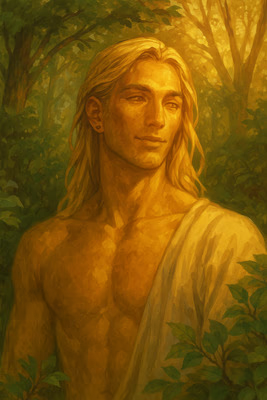
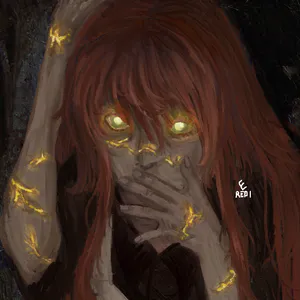
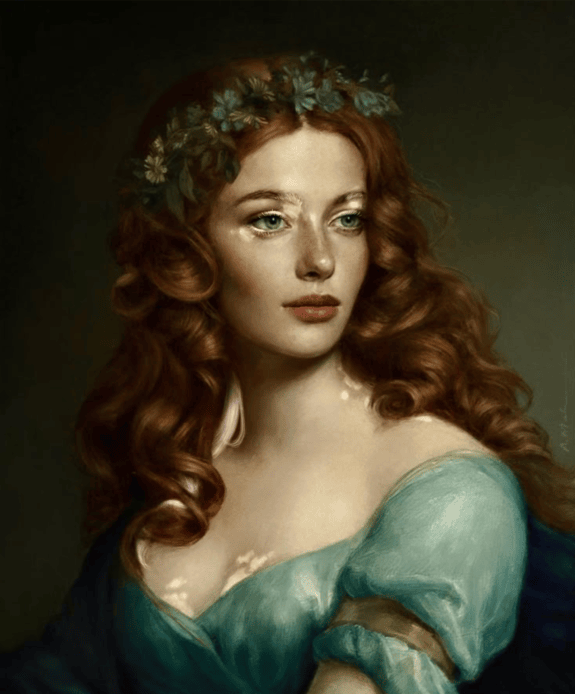
[hider=Name || Species || What they reign over][center][h1]What Humans Consider To Be Their Full Name
Divine Title[/h1]
[img]Optianal: Inspiration Images here. Use links if there's more than one.[/img]
[/center]
[color=#000000][b]Name:[/b][/color] [Often shorter than the name above. Humans like to add names to Gods.]
[color=#000000][b]Title:[/b][/color] ['God of Apples', 'Goddess of Lions', etc. Basically, what they're known for among humans.]
[color=#000000][b]Gender/Sex:[/b][/color] [Either, or. Whichever you prefer to be known.]
[color=#000000][b]Age:[/b][/color] [Can be ancient or young. They do not need to have been in the war, but if they were then remember that it was about 7000 years ago]
[color=#000000][b]Species:[/b][/color] [Can be almost anything from any culture, so long as they're not human. The only exceptions are Witches or Faeries (miniature winged humanoid kind), which have plot relevance.]
[color=#000000][b]Information:[/b][/color] [As much information as you feel capable of giving about the creature species, including abilities, strengths, and weaknesses. Whatever is listed here will be used as a guideline for your character, as well as the species as a whole. Other members will be allowed to use any species introduced, so if you don't specify something ahead of time then be prepared to collaborate on unspecified details.]

[color=#000000][b]Appearance:[/b][/color] [Regardless of images provided, I would like a written description as well. Since it was a matter of survival at one point, a lot of supernaturals have developed the ability to appear human in addition to their natural form. I am fine with these human appearances being a bit on the fantastical side though.]

[color=#000000][b]Personality:[/b][/color]

[color=#000000][b]History:[/b][/color] [I am okay with members choosing to use the Great Commanders in their characters' histories. Encourage it, even, since it really helps to establish the incredible influence their leadership had on monsters. Feel free to run ideas by me if you'd like and I will gladly help as best I can.]

[color=#000000][b]Mythical Significance:[/b][/color] [Are there any holidays or celebrations dedicated to this god or pseudo-mythologies you want to share?]
[color=#000000][b]Relationships:[/b][/color] [Eh, why not? Adds more interest and fun. Crushes? Enemies? All the gods should be presumed to already know [i]of[/i] each other in some way, even if they've never actually met or interacted with one another prior to this years festival. If there are any in particular of note feel free to add it here. Can be edited as needed as the roleplay continues.]
[color=#000000][b]Color:[/b][/color] [What html color do you want associated with your character when they speak? Try to pick a color not already being used.]
[color=#000000][b]Other:[/b][/color] [Anything extra? Please replace all 000000 with your character's color.][/hider]
[hider=Name || Human || Main job][center][img]Optianal: Inspiration Images here. Use links if there's more than one.[/img][/center]
[color=#000000][b]Name:[/b][/color]
[color=#000000][b]Rank:[/b][/color] [General jobs expected of them. Examples include Coordinators, Servers, Cooks, Cleaners, Gardeners, Laundry Attendants, etc. Can be more than one. Can be changed.]
[color=#000000][b]Gender/Sex:[/b][/color] [Either, or. Whichever you prefer to be known.]
[color=#000000][b]Age:[/b][/color]
[color=#000000][b]Appearance:[/b][/color] [Regardless of images provided, I would like a written description as well. As a human, they should have a realistic appearance. No impossible hair or eye colors please.]

[color=#000000][b]Personality:[/b][/color]

[color=#000000][b]History:[/b][/color] [Being chosen is considered an honor, but humans can also reject the call as well. In theory, all servants should be on the island willingly.]

[color=#000000][b]Beliefs/Perceptions:[/b][/color] [Are there any gods in particular that they worship more so than the others, or ones that they maybe dislike? "Doesn't believe in the gods" is NOT an option, as that would be just silly. The Gods literally walk amongst the people, at least as far as humans know.]
[color=#000000][b]Relationships:[/b][/color] [Eh, why not? Adds more interest and fun. Crushes? Enemies? At this point, all the humans have been training and working with one another for a while, so at the very least they are all kind of acquaintances, even if just barely. If there are any in particular of note feel free to add it here. Can be edited as needed as the roleplay continues.]
[color=#000000][b]Color:[/b][/color] [What html color do you want associated with your character when they speak? Try to pick a color not already being used.]
[color=#000000][b]Other:[/b][/color] [Anything extra? Please replace all 000000 with your character's color.][/hider]
Please either PM characters to me or post them in the OoC chat first for approval, thank you!
Name: Aeliana "Aelia" Elidi Title: Goddess of Rebirth, the Sun, Light & Fire Gender/Sex: Female Age: 10,291, at least that's what she says/remembers Species: Phoenix Information: A Phoenix' true form is that of a large fiery bird. They can engulf their entire body in flames, either in human or phoenix form, and possess an amazing amount of strength. They can carry an entire person in their talons and still be able to fly. Naturally, they have incredible control of the light and fire they emit, and are immune to burns. They are also immortal, being reborn again from the ashes each time one should die. This regeneration ability extends to incredible healing prowess: their tears have the ability to heal any wound with direct contact.
Perhaps due to their longevity, they are very rare and solitary. Most phoenixes throughout time tend to be the same ones. As a result, phoenixes tend to be largely independent. Even other phoenixes don't typically know of others of their kind. They rarely interact with each other and aren't a particularly familial creature, so new phoenix births are especially rare. Even supposed "new births" are hard to verify however, due to a phoenix's unique memory constitution. They have controllable amnesia and can make themselves forget memories as they so choose with each new rebirth. It's not perfect, as often times forgotten memories can be re-triggered, but if a memory becomes particularly old enough they can eventually succeed in forgetting it permanently.
In addition, Phoenixes are able to control the rate at which they will grow for each rebirth. They could mimic a human's lifespan if they wanted, or even grow quickly like a bird. Their growth rate instinctively slows dramatically upon adulthood. In fact, they are more likely to perish to an injury than they are to reach an old age. It could even be said that their best self-healing ability is to allow themselves to die to an injury so they can be reborn fully unharmed. However, this has naturally created a twisted sense of mortality in most phoenix.
Appearance: Aeliana’s human appearance very easily gives off the aura of a Goddess. She's slightly tall at 5'6", but her confidence sometimes makes her feel even taller than she actually is, especially within the memories of others. She is shapely with long legs accented by a short torso. Her skin is pale with a soft and healthy glow. She has bouncy orange and red hair that forms natural wavy curls that reach her mid back. Her droopy almond shaped eyes are a clear crystal blue that are rimmed by a startling set of long, dark eyelashes. She has a strong preference for red lipstick and white gowns or dresses accentuated with gold.
As a phoenix, she is large and imposing. She has a wingspan of roughly 7 meters (22 ft), and is over 3 meters (11 ft) tall. Coated in bright and fiery plumage, her feathers easily puts all other birds to shame. Her tail is especially long and resplendent; it most closely seems to resemble a mix of a widowbird, a greater bird-of-paradise, and a peacock, but with spatuletails spread throughout. In this form, she almost always seems to be made of flickering red and orange flames, but there are occasionally times where she might dim her fire enough that her feathers almost appear still.
Personality: Aeliana is, for all intents and purposes, a bit of an enigma. Even her fellow Gods have a hard time truly understanding her. However, that is entirely Aelia’s goal. She chooses to be unpredictable and capricious. If she acts odd enough, then she’ll be able to emotionally keep others at bay.
Upon first impression, she may come across as harsh and aloof. She has a perfectly practiced graceful air about her, naturally befitting of a God of course. Adorned in luxuries and wealth, she clearly seems to have a taste for the finer things in life. This lavish aire is all a carefully crafted part of her goddess persona.
But then she suddenly reveals a mysterious and mischievous streak. She is teasing and playful, with whimsical tales and riddles galore. She takes a bit of enjoyment out of this twisted game of messing with people's impression of her. She will purposely be withdrawn and act superior to others, only to suddenly toss an unexpected comment or do something strange or ill-fitting just to see others' reactions.
While she is an elaborate storyteller, she seems to constantly mix up the details. There are times when these holes seem unintentional; she has lived a long time after all, forgetting the details is to be expected. Most times though, it is deliberate. Is she lying? Trying to pull on someone’s leg? It's truly difficult to tell when she's being truthful about something.
She tends to change her interests often. Most assume it’s because she grows bored quite easily, but actually it is her attempt to run away from her sorrow. She moves from one interest to the other because nothing truly matters against the march of time. Despite this nihilism, she still misses those she has lost. Her strange attitude is likely an attempt to run from her past and present reality. She doesn't want to get too attached to something that'll just disappear from her life… again.
History: Aeliana's life is constantly one of a tragic cycle, but that's the norm for most of her kind. Aeliana is mostly unaware of her parents, she's not even entirely sure if she had any. She hardly even remembers her first couple of rebirths, with the earlier centuries of her life being rather blurred. What she does remember however, is the war, a time she has unfortunately attempted to—and failed—to forget.
She lived through the devastating genocide of mythical creatures such as herself. Through it, she had seen close friends and even lovers die before her very eyes. She was frequently separated from the "family" she had forged through the bloodshed. Since she was a phoenix, Aelia was always reborn after each of her deaths. The same could not be said for many of her companions. She has endured torture, abuse, kindness, and sorrow. Among these memories are Alucio. He was one of the Great Commanders of the war. He was also Aelia's lover. Hardly the romantic first meeting, they had met during the war, when Aelia was following under Ewan's army. She had gained Alucio's trust and respect during those times, and eventually they developed affection for one another.
Wars never allow for a happy ending though. While employed under Ewan, she was with his army when they became trapped by the humans and drowned. Ewan and the majority of his soldiers were killed, while the immortal survivor Aeliana was taken prisoner. She was held for many painful years as the humans experimented on her, determined to find a way to try to kill a phoenix and other similarly immortal creatures. By the time Aelia was finally rescued from her imprisonment, Zephyra and Otaktay had already been slain as well and the war was beginning to grow bleak. Even Alucio, who she had remembered as confident and strong, had had his spirit broken. He did not even have the faith left to keep fighting and save himself when the humans had finally cornered him and his army, no matter how much Aelia had begged.
After Alucio's death, the girl had officially lost the will to fight. She quietly disappeared from the war, wandering around aimlessly in search of something even she couldn't define. She has lived a thousand different lives, with a thousand different faces. There was even a time when she was raised by humans, as she tried to erase even the knowledge of being a phoenix from herself. So long as the memories stayed locked up, she could blend in and live a meaningful life as a human surely. But although her mind may have forgotten for a short time, her body still remembered. When humans realized she couldn't burn, her family turned on her and ended her short existence as a human.
Then began the time when humans worshiped her instead. Each life to pass her by has left the woman with a sense of dissatisfaction, leaving her unable to find a lasting sense of happiness.
Mythical Significance: Aeliana is often associated with the Renewing, a celebration of the end of the year as a new year replaces it. It is a week-long holiday, encompassing both the last day of the year and the first day of the year. Due to her status as a fire goddess, The Renewing occurs on the last day of Winter/first day of Spring. Since Aelia is associated most with the colors of white and gold, humans will often wear white and use gold decorations during the Renewing.
A funeral tradition of some kingdoms is to light the body of the deceased aflame, in the belief that the fire will release the soul so that they may be reborn. It is especially preferred for funerals of young children, and parents will often keep the ashes on them after in the hopes that the soul will be reborn into their next child.
As a Sun Goddess, she is closely associated with the Moon in stories. There are debates on if the Sun and Moon are siblings, enemies, lovers, or friends. Aelia's personal favorite interpretation is that they are Dance Partners.
Relationships:
☼ Antero ☼ Aeliana has a bit of a soft spot for Antero. They both went through some pretty hard times together, and it would be hard to pretend she didn't feel some sort of bond for them after all that. Whenever the pressure of her social mask feels too heavy, she likes to seek out Antero's quiet presence. She feels an unspoken understanding between them and is perfectly content to just... sit in silence near them. Don't be mistake though, once the mood passes she will go back to gently teasing them.
☼ Getsuy ☼ Aelia finds Getsuy to be a pitifully cursed existence. She recognizes that she is only able to view him as so due to her privileges as a phoenix, but just as she can't help her deathless nature he cannot help his own nature either. However, she kind of prefers to not be around him if possible. Not out of fear, but because she feels like she has to be the "responsible one" when he's near. Whenever she feels particularly forced into uptaking such a mantle though, she does so with the use of childish distractions. Her behavior may have contributed to stories of the wily trickster goddess who uses pranks to evade death.
☼ Morrigan ☼ She's heard word of Morrigan, but doesn't really know the Banshee all too personally. That being said, there are quite a few popular myths that suggest that Morrigan is her sister who helps lead her through the cycle of Rebirth. Aeliana obviously has to act accordingly. It's because of the humans watching, promise!
☼ Nieve ☼ If Aelia were to speak honestly, Nieve is someone she feels she has to keep safe. But Aelia would never be honest about that. Instead, she finds little excuses here and there to check on the fair selkie. For the most part, she finds her to be pretty capable in her own right, so visits can sometimes seem sparse. Still, Aeliana enjoys when those little moments pop up that show Nieve really is Murdock's niece.
Color: Red Gold - #EB5406 Other: She has quite an impressive collection of shoes, but she has a tendency to be barefoot.
I wanted to put credits for the images, only it turns out that they were all AI images. :/
尺ㄖ丂卄卂几 ㄖ千 ㄒ卄乇 山丨ㄥᗪ, ㄒ卄乇 几卂ᐯ乇乇ᗪ ㄒ尺卂ᐯ乇ㄥㄥ乇尺 God of Language, Music, Travel, & Wilderness
Name: Roshan Naveed Title: God of Language, Music, Travel, and Wilderness Gender/Sex: Male Age: 1,443 Species: Shadhavar Information: Shadhavars are rather elegant and peaceful creatures. In their true form, they bear a very similar appearance to gazelles, but are considerably taller. They tend to reach roughly six feet in height, and have white fur with an intricate golden pattern. Otherwise graceful in appearance, their eyes are rimmed by a black streak that travels down their cheeks in a way that resembles tear stains. From the center of their forehead protrudes a single long, delicately twisting horn with 42 strange holes. It is this horn that grants the Shadhavar their unique musical ability. When the wind blows and enters into the hollow point of the horn, it creates a musical sound more beautiful and alluring than a flute. This noise is so enchanting that attracts humans and animals alike, placing them in a calming trance.
The Shadhavars horn is especially hard despite being hollow. It’s comprised of a bony core at the center of the forehead, and is coated in a hard, keratinous sheath that continuously grows around it. The bony center will only grow until a certain point and then stop, but the keratin protein covering will continue growing throughout their entire life. This coating can be shaped and shed to help control its growth, however.
In his homeland, the Shadhavar horn is treated by humans as a valuable musical instrument that should be gifted to kings. As such, most were naturally hunted for this treasure. Shadhavars also value their horns as well, and upon death the horn is to be kept by a family member and eventually buried with that family member upon their death. It is believed that a part of their soul still lingers in the music their horn creates, and as such it is considered a tragedy should the horn by lost or stolen.
Appearance: The most noticeable thing about Roshan’s human appearance is that he is tall, extremely tall. At 6’8”, he easily towers over most crowds. He has a rounded, square chin with high cheekbones, giving his face a distinctively square-ish oval shape. His almond shaped green eyes are framed by a thick rim of dark and delicate eyelashes. Roshan has rather curly black hair that reaches just past his neck, although his hair is usually hidden by a headwear of some type. He prefers to have his bangs brush across his forehead to keep covered an almost star shaped scar. His tendency to wear headscarves and the like originally stemmed from his Shadhavarian culture, although now he wears them simply as a reminder of his old life and to help hide his old injury. He forces himself to wear elaborate fabrics and jewels, as he feels that better fits the appearance of a supposed God, but he'd much rather wear plain cotton button up shirts of some sort with formal pants or a long thawb. He has five strange flutes of various sizes on a string, which he usually wears as a necklace or tied against his waist.
Personality: Roshan tends to come across as cold and harsh at first. He can be rather blunt with his words and seemingly uncaring. He’s quick to remove himself from social situations, seeming as if he’d much rather be alone than with others. However, the truth of the matter is that Roshan is extremely shy. He gets very nervous around others, most especially if they’re human, and tends to blurt out the first thing that comes to mind. As a result, his socially awkward tendencies make him come across as rather rude. He’s much more relaxed around the other gods, but he tends to become tense whenever a human is nearby. He doesn’t seem the nervous type at all, but internally he is very wary and always looking for a way to escape. If left alone with other humans, he has a tendency to start panicking. When he panics, Roshan acts rashly and sometimes violently. He is strongly self preserving by nature, and will do anything to keep himself safe, even from a false threat. However, he is not without guilt in his cowardice, and as such he tends to have a rather low opinion of himself.
He’s a being of social anxiety and a creature of habit. He tends to be very detail oriented. Thus, it’s not unusual for him to start organizing random things, whether it be by size, color, or alphabetically. He feels the need to achieve a certain standard of perfection in every aspect of his work. If even the smallest mistake has been made, he has been known to completely scrap everything and start all over. This specific trait of his is what drives him to seek out a unique name for himself. He’s changed his title several times whenever he learns that another god and him share the same one. Over the years he has gone by the God of Deception, Gold, Hunting, and many other titles.
Roshan’s rather insecure in himself, and often tries to keep out of the other gods’ way. He’s uncomfortable with the idea of posing as a god and being worshiped, especially by humans. He doesn’t like being so noticeable and would prefer to blend quietly into the background, but he knows how important it is for the survival of all supernaturals. However, he tends to be mistake prone, often fumbling and breaking things in his nervousness. Because of his cold outward demeanor, most believe he breaks things on purpose out of boredom or frustration. He’s rather ill-adept at showing his emotions, and would much rather prefer to follow than lead.
History: Roshan is fairly young compared to many of the gods, which means that he did not participate in the Great War between man and monster. However, he was also not born within this country. He lived in a country far across the waters, where the supernatural creatures never discovered the idea of posing as gods. Instead, the humans began using these creatures as power sources or for their own personal needs. Many were hunted and killed, while others were enslaved. Many of the magical species of his land were nearing extinction.
Roshan’s family was no different. They had spent the majority of his childhood on the run, living within the wilderness. They were an unusually large group, large being described as 5 when the number of alive and free supernatural creatures was already harshly diminished. Roshan’s family consisted of his two parents, his sickly grandfather, his younger brother, and himself. Supposedly, his grandmother used to be with them as well, but she had been killed before little Roshan’s earliest memories. The only proof of her existence that the family had left was her horn.
His parents tried to give their sons a happy life, but it was not to be. As his grandfather got older, the man began to deteriorate both physically and mentally. Roshan still remembers hearing his parents nightly whispers, saying that the man was giving up because of the loss of his wife. Then one night, when the boy was only 16, a group of hunters had tracked the family’s camp down in the middle of the night. When they tried to flee, Roshan’s grandfather refused to go with them. No amount of begging and pleading could move him. Fearing that their children would be killed or captured if they wasted any more time, the family left without their grandfather. A few weeks later, Roshan’s parents somehow managed to retrieve his grandfather’s horn, the smell of human blood heavily clinging to them.
Only a few months had passed, when another group of hunters managed to find them. They were captured, their horns broken before they were thrown into cages. Despite being starved and beaten, trapped, and painfully stripped of his most crucial defense, Roshan was able to escape. However, the events that transpired can only be described as tragic.
His parents were already trying to find out how to best escape with their sons during the months that they were caged like animals. They had just set up a plan and were going to prepare it into motion the next night, but unfortunately the group of hunters found themselves peckish. They were running low on provisions and had little to hunt, so they opted for an easier method. Roshan has since been terrified of humans after his father’s murder.
The events left the family of three shaken, but made Roshan’s mother now only more determined to save her sons from the true monsters who had trapped them. The humans developed a particular liking to the woman after her husband’s death, one which she decided to use to her advantage. She let them believe they had broken her, coaxed them into underestimating her so that one night when they took her from their cage they were unprepared. She attacked the hunters, shouting for her sons to run. It was a night of chaos, a nightmare of which only Roshan had been able to survive.
He largely avoided humans since then. He traveled alone for nearly six or seven centuries, hoping to find some place far away from the monsters who took his family from him. His fear and desperation grew so large that when he was once again trapped by another group of hunters, he instead threw himself into the ocean. After many months thinking he was going to die in the salty waves, he was eventually washed up on the shores of a foreign land. Fortunately for him, the person who found Roshan’s unconscious body was a creature acting as a god. It was through them that he too eventually came to do the same.
Mythical Significance: Due to his association as the God of Travel, Roshan is considered the patron of merchants and refugees. However, through that same vein he is also considered the patron of thieves. Many villages have a ritual of beginning a long journey with a song as a way of wishing for safe travels.
As a God of the Wilderness, there is a superstition among hunters that before entering the wild you must pay your respect to Roshan, else he will seek revenge. Paying respects after is considered sometimes forgivable, but believed to carry a risk of failure to appease him.
As a God of Music, his horn has inspired the creation of similarly shaped instruments. The instrument is quite notorious for its difficulty in both creation and mastery.
He is most closely associated with the number 5 (the number of horns he has on his necklace) and the number 42 (the number of holes on each horn, including his own).
Relationships: None yet, but looking to add some! I would love in particular to add either someone that may have found him when he first awashed on shore and needed help adjusting, or someone that may have provided him with some sort of reason to attend the festival this year since he normal avoids these celebrations. Or both!
☼ Antero ☼ Roshan views Antero very highly. He considers them a mentor, even if there are times where their opinions don't entirely align. Roshan was raised to respect his elders and value their wisdom, and there are times where he considers them to be much like a psuedo-grandparent-like figure. Much like a grandchild that is eager to please, Roshan will often go out of his way to preform filial duties.
☼ Getsuy ☼ He is dangerous. Roshan can sense it deeply in his bones. He sees the same look in Getsuy's eyes as that of the hunters that imprisoned him and his family. Roshan normally has more camaraderie for his fellow Gods, but Getsuy is the exception. He doesn't trust him one bit. Any time he senses the Wendigo nearby, he has one of his horns prepped to play an enchanting tune.
☼ Morrigan ☼
☼ Nieve ☼ As the one who first found him when he arrived on this strange new land and helped him establish his role among the humans, Roshan holds a great deal of appreciation and respect for Nieve. Normally reserved and civil, he does worry a bit that she might dislike him at times. As such, he actually prefers it when she attempts to tease him, although his face doesn't really show it. It's those moments that make him think that maybe Nieve actually might consider him a friend as well.
Color: Sage Green - #848B79 Other: The smell of cooked meat makes Roshan incredibly nauseous, as it reminds him of the night his dad died. As such, he is a strict vegetarian.
Roshan has a very slight, undeterminable accent, as his original tongue is the language of his country and therefore unheard of in this new land. He donned the title of God of Language as an attempt to explain his accent, but now that very title has driven him to attempt to learn many more languages, so to uphold himself to an arbitrary standard. His broken horn has regrown over the centuries, but it has a slightly upward curve shape to it.
Name: Amaris Eckhart Rank: Supervisor/Coordinator/Host/All-rounder Gender/Sex: Male Age: 23 Appearance: Amaris is a decently tall young man with a very healthy build. He is fit and strong, with broad shoulders and a square jaw. He has vividly copper hair and growing stubble, along with a decent collection of freckles across his cheeks and back. He has very vibrant blue eyes with ever thoughtfully furrowing brows. He has several tattoos across his body. He has a dragonfly on his neck, a clock on his hands, and several different artistic murals on his chest and back. Most, if not all of his tattoos have some sort of God inspiration or motif attached to them.
Personality: Amaris is currently on a path of self-discovery. He’s not entirely sure who he is or what he wants out of life. He is at his core a confused young man, and that manifests itself in some rather confusing ways.
He tends to switch between his moods with no warning. He can be very jovial and welcoming, easily befriending those he comes across. When he's happy, he becomes rather cheerful and flirty, complimenting anyone and everyone and wanting to start a party. He can be very easy to talk to and honestly quite fun to be around.
But then he suddenly switches. He becomes rather grumpy, pushing company away and preferring to be alone. He can be a bit harsh when like this, as he will usually say hurtful things to others. He doesn't like being told what to do or manipulated.
He doesn't like anything that requires too much effort on his part, but luckily that usually also includes arguing. He may enjoy actively annoying others and bugging them, but he'd much rather walk away from an argument then be around someone he hates. He's more of a passive aggressive type as it is, and rarely acts outrightly aggressive or violent.
However, he has developed quite the anachronistic streak in recent years. All the other human servants believe him to be a responsible leader, but the truth is he would much rather break rules and sow chaos. Deep down, he knows it’s all attention seeking behavior, but he’ll never admit that out loud. He just keeps pushing the boundary, trying to see how far he can get away with things.
History: It took him a long time to realize it, but Amaris has always been burdened by expectations. His family was rather rich and a bit famous, they were the descendants of one of the first Chosens of the Gods you see. So his parents always expected nothing less than the best from him. They wanted perfect intellect, perfect manners, perfect strength. They gave him every opportunity to master every skill they could justify, but then always gave a reason why it was never good enough. As a result of all this, Amaris felt as if he were chasing after something he could never achieve.
After a while, he cracked. He gave up and stopped trying to please his parents. There was always some reason why he still wasn’t perfect enough for them, so why bother trying at all? His parents couldn't have been more furious with him. They retaliated against his rebellion with their own: ignorance. They began to pretend he didn’t exist. Even when he was sitting right at the table with them or hindering them in some way, they would react by not reacting to him at all. He has since gotten into some bad habits to try and get their attention by any means possible, but so far has had no success.
It had been over three years before they finally stopped ignoring Amaris, when he was selected to serve the Gods for the feast. Suddenly, they couldn't be more proud of their son. The attention felt empty to him though, and just infuriated him for some reason. He hadn’t even actually done anything this time, and now he was suddenly their “perfect son” again? Not because of skill or effort, but for sheer luck? In his spiral of anger, he concocted an idea as to how to get back at them. Somehow, some way, he was going to ruin the festival so badly that he becomes a scandal and will besmirch the Eckhart name. He would fail so hard that ignoring his existence wouldn’t even be an option; his presence would forever haunt them.
The first step of his plan? Act perfect.
During training, Amaris was at his absolute best. He was praised by the teachers and trainers, and quickly selected to become one of the Supervisors. He was placed in charge of organizing the other humans with the highest confidence in his abilities. He’s still on his best behavior for now…
Beliefs/Perceptions: Amaris may be an anarchist with a penchant for mischief and chaos now, but he used to be quite the devoted follower of the Gods. He was well read on many of Them, and would display his reverence of Them sincerely.
However, as he began to clash against his parents, his relationship with the Gods has also been affected. He’s found himself questioning how he feels about Them. Does he still care about Them? Should he still care about Them? But most of all, do They even care about him?
For most of his life he truly believed in the Gods’ affection for humans, and returned it with his own. But now? He’s just an insignificant human. Why would They care?
Relationships: None yet, but looking to add some! At this point he should be considered responsible and respectable by his fellow humans. He has taken great care to maintain positive relationships for his goal, even if these relationships are only superficial at best. Color: Velvet Maroon - #7E354D Other:The Eckhart family is open to having their Chosen of the God great-great-great-ancestor being claimed by a God character.
While it is Amaris' goal to get fired and kicked off the island by the Gods, it is my goal that he not. I would very much love if all his attempts fail, even better if the Gods actually like his antics.
Antero the Allsearer, the Soothsayer, the Great Chronicler God of Time, Fate, and Divination
Name: Antero Title: God of Fate, Time, and Divination Gender/Sex: Unknown, projects a masculine voice, but has been known to switch between the many millennia depending on the era and person it speaks to. Age: 12,001 years, though its true age is unknown to all but it. Species: Manakin Information: In all but the rarest of chances or perhaps the greatest example of causality, this creature arose when special minerals imbued with mana began to form a geometric web of thoughts and a consciousness. A soul was formed among the rock and learned and listened, finally gaining mastery over gravitational magic to allow itself to propel itself forward in the first time of its existence. As it is aware, it is a rare entity. Even among the monsters, its species was that of incredible rarity and scarcity. As far as it knows, after the war, it very well could be the last of its kind. They were especially hunted, as those of both monster and human alike desired their immense store of raw, magical power. Only the strongest could fend off the poachers... Appearance: Antero can take on many different shapes and forms, but they are all of inorganic nature. Its crystalline body is held aloft through gravitational magics, where it may levitate across the ground with graceful ease. In its "comfortable form", many graphite tendrils and spectral observers would float in an almost orbit-like configuration, like the orbits of planets around a star. When presenting itself to humans and other monsters, however, it will reshape itself into a more recognizable form of that of a humanoid. Its many surfaces shine with a polished reflectiveness, the centerpiece appearing as the "head", graphite-like tendrils forming pseudo arms. Finally, a halo of glowing mana crystal would orbit the head like a crown. All of this to ease communication and be of a more "pleasant" shape to human and monster alike, recognizing that its more natural form could and would make either creature uncomfortable.
Personality:Antero's voice echoes wisdom and thoughtfulness, but will often lack emotion in its voice. Though that is not to say it lacks emotion in itself. In fact, despite its incredibly cold appearance and very physical form, Antero is quite passionate about its fixations. Antero is a simple creature who seeks to observe, learn, and be ultimately left alone. It does not mind companionship, will not bristle with outright hostility, but belies the ever-evolving drama of the gods and humans alike with great distaste. Sees such things as unnecessary distractions and frustrations that could have been avoided altogether.
As such, Antero can seem to have a persistent, almost smug outward tone towards its peers. You can almost hear the "I told you so" behind every sentence, every word, as it patiently tries to lecture both gods and humans alike about what should have been done instead. Antero is not ignorant of the social nuances of relationships or culture; in fact, Antero is quite knowledgeable of the latter, but absolutely refuses to waste its time with double meanings and dramanomics. Ironic, as those who worship it always seem to have five thousand interpretations of its words.
Thus, to its godlike peers, Antero is a blunt creature with a trusting sense of superiority and smugness in its words. But to those who see past this exterior and develop true friendship, they will find a deep caring for all life, one who mourns the death of culture, gods, and people alike, and is well and truly exhausted by its long, long life.
History: When it first emerged from the rock, the great depths of long forgotten caves, it had already wandered the endless, maze-like caverns for generations. It mapped. It studied. It learned. Absorbing the mana below, it continued until one fateful day, it emerged into the land above. Before it, a world larger and teeming with more possibilities than it could have ever known from the dark depths of the caves. It wandered among the many forests, the great fields, the blowing deserts.
It wondered. It wandered. It learned.
It stared up at the stars with awe and studied them to predict the ever-changing heavens. It stared intently for a hundred years at a single piece of moss, growing upon a boulder, watching the life that developed all around. And then, among the violence of magma and rock, where it dutifully noted how the cooling would create new minerals, it met its first "cousin". A being, like it, made of minerals and mana, not carbon and water. Alucio The Cherufe, a creature of magma.
An annoyance.
A nuisance.
It's first friend.
And it continued to wander, now given a name. Antero held this name as an oddity, a curiosity. It wandered, it met with other creatures. Saw their cultures spread and grow. Asked questions, given answers. For a time, it was a curiosity to these creatures as much as they were to it. Humans, they eventually called themselves. At first, Antero could study them up close, live among them. Sometimes, it would disguise itself as an unassuming pile of rubble and observe for a hundred years. Othertimes, it would trade its knowledge for more, be invited into the towns and villages, teach, and in doing so, learn.
It was a fascinating time. An interesting time.
A painfully brief time.
Soon, it was not allowed into those towns. Creatures began to set upon each other with violence it had never witnessed. It was no stranger to the nature of violence. In the great chasms of the abyss to the peaks of exploding volcanoes, it had seen all manner of violence. Yet, creatures began to set upon each other with violence it had never seen. And soon, that violence was directed at itself. Ravenous magi, "Witches", they were called. Sought his accumulated power. Other monsters also desired his own "flesh" to empower themselves.
It fought. It killed. It wept.
The war had begun, and it elected to hide. Sequester itself atop the highest of peaks to avoid this horrible conflict altogether. It saw all of this as meaningless slaughter, a waste of precious life. A total destruction of history. But then, the first friend came. Alucio The Cherufe sought Antero, desired its wisdom, magic power, and its companionship in this war.
It hesitated. It agreed. It regretted.
The war was terrible. Uncountable lives lost. Many more spirits broken. It studied strategy and battles won and lost. It advised its friend on the course of action, trying to find a golden path through the many paths of destruction. Yet, as the war waged on, its predictions continued to come back to the same fate. It did not want to acknowledge this fate. For the first time in its life, it lied to itself about this fate, that it could be avoided. If just the right battle could be won, the right act of diplomacy, the right leader.
It could not save its friend.
Thus, as the inevitable drew near and Antero could no longer ignore it, it told its friend his final fate. To its shock, Alucio accepted his fate. He would die as he would, and Antero would escape the battle. If it was fated to lose its friend in life, it would preserve its friend in death. The memories would be the only way to save what was left. After the great defeat, it vowed to never forget any who were lost. Not monster, not human, not anyone. All would be preserved, so that this war would not be destruction in totality.
It fled. It hid. It mourned.
In the millennia following, Antero sequestered itself upon a tall mountain. It built a memorial there to honor the fallen and to quietly mourn. It would idly study the stars and feel adrift in the ever-flowing tides of fate. Never, in its many thousands of years of life, had it ever felt so alone.
And then, visitors. For the first time, humans had finally managed to reach the peak of their mountain. It prepared to flee, not wanting to end more of these pitiful creatures' lives, but instead, they prostrated themselves in worship upon finding him. They begged for aid, not caring or even knowing of the Great War, only seeing a divine being that could levitate the very rock around it. Confused, intrigued, and with much trepidation, it began to acknowledge these humans. It aided them, providing life-saving knowledge that avoided a famine. It predicted the times of rain and drought, allowing them to prepare, and as a result, their fledgling civilization in the valley below grew.
It divined. It lectured. It was worshipped.
And thus the farce began, and its myth grew.
Mythical Significance: Antero tried to explain the nature of its being, despising this "worship". But soon, it had little choice. The reemergence of the "monsters" pressured it into playing along. So, if it were forced to play the role, it would at least set the terms. Priests of its temple would pass down its "divine revelations" to the people below. Predictions of rain, of disaster, and so on were given, and the humans quickly began to venerate their god. But worship was kept at a tendril's length.
It created a temple of knowledge, wisdom, and study. Members of the Anterian Temple and its priests do not proselytize, and are, in fact, almost as shut in as their god. Instead, they act to only better their communities with knowledge and learning as well as direct them via their god's holy divination scrolls. Small temples would be built in the neighboring communities and would be satellites of Antero's Peak, a large fortress monastery atop a great mountain. The upper levels and the peak of the mountain are forbidden holy ground, where it is said the very god itself resides. The lower levels are where those who are picked for their wisdom and curiosity are sent to learn and study under the High Priests of the temple. Messengers would make the treacherous ascent to the very edge of the forbidden ground, where they would receive the divination of Antero.
Members of the Antero Temple of Divination are known to be somewhat reserved but generally knowledgeable and helpful towards others. They are fairly tolerant of other temples and ensure their practices do not interfere with others. They celebrate days of the Full Moon and New Moon, as days of fasting, reflection, and observance of the stars. These practices were never directly dictated by Antero, but merely reflective of its nature. It seems the god's passion for the stars has rubbed off on its followers.
Relationships: To be Determined Color: 1a98c3 Other: Antero knows that this disguise of gods will not last forever, but puts up the act under threat and fear of its fellow gods. Antero hates it and has tried time and time again to convince its peers that this will backfire in their faces, but to no success. Antero attends this festival out of obligation, not pleasure.
Name: Getsuy Title: God of Death, Decay, The Hunt, and Hunger Gender/Sex: He is a male but most people just refer to him as It. Age: Ancient, was around before the war began Species: Wendigo Information: The Wendigo is a creature of unquenchable hunger. Born from desperation and starvation, a human becomes a wendigo when they have no choice but to feast on the flesh of their own kin. The wendigo is a beast always on the cusp of starvation. Their metabolism is so quick that they must eat continuously or else lose themselves to the vicious hunger within. Because of this quick metabolism, they have a very impressive healing capability along with enhanced sense, strength, and agility. They have also developed a gift for voice mimicry so they can lure in more prey to forever fuel the hunger within. Wendigos are essentially immortal but not invulnerable. Despite their impressive healing capabilities, there are ways you can kill such a creature. Fire is found to be the best answer to a wendigo. The flames continuously burn away any new tissue that may arise from their healing factor and eventually the Wendigo dies of starvation as they burn off any proteins within them to continue healing.
Wendigos are very territorial. They refuse to share their territory with any other kind of hunter, let alone another Wendigo. When two wendigos encounter each other, it always results in a brutal fight to the death. Sometimes these fights can take a few days or even up to a week with the creatures hunting and stalking each other until one is slain by the other.
Thankfully, Wendigos are not always hunger driven. As they age and grow, they can learn to diminish their hunger to a degree, allowing humanity to once more peek through. However, it takes centuries for a Wendigo to finally sate their hunger in such a way and very few survive that long, usually dying in fights for territory. There are very few Wendigos in existence and even less that have any connection with their humanity.
Also, Wendigos reek of death. You can smell one coming to you from a distance.
Appearance: Getsuy was always the living embodiment of death. His feral form is a quadrupedal, emaciated beast that towers over normal humans. Grey skin pulled tight against bones and muscles, there is not an ounce of fat on his body. Sharp bone spikes run along his spine and end at the base of his tail. He is hairless except for the large mane that begins at the base of his skull and extends along his long neck. His face is that of a deer skull with sharp teeth and large antlers. His eyes glow silver, like the moon, and his voice is deep and raspy as if a voice calling out from within a grave.
Everywhere he went, people would flee. Just his very stench was enough to chase off any mortal that didn't wish to see him dead. Even during the war, his appearance meant the end for all dying or dead upon the battle field. However, as he grew older and reconnected with his humanity, he took a human like form. Gone was his quadrupedal posture, replaced with a bipedal one. He kept his claws on his hands, though his feet were reverted back to human. His unnaturally long arms and gaunt appearance could not be changed, a constant remind of the hunger that dwells within. And lastly, his deer skull remained as well, with his antlers rising out from the sides of his head. Though this appearance was far better than his primal visage, it was still uncomfortable to gaze upon. With his stench, glowing white eyes and skulked head, he was quite the being to see- and fear.
Personality: When he was young, Getsuy cared for no one or thing. All he knew was the constant hunger. As he grew older and developed more civilized thinking, only then did he begin to develop a real personality once again.
He's a loner. Not many can stand his stench, let alone try to communicate with him. He does not have the instinctual need to meet and befriend people. He does not want a family or kin. He simply wants to survive and eat. When he does speak, it is usually in short concise sentences.
He had lost his humanity long ago and even though there is a slight sliver of it within his soul, he cannot bring himself to understand human nature. They grieve for the dead. He would not grieve for food. They help each other and grow together. He is territorial and kills any of his kind he may find. They show compassion towards living things. All he sees is food. He understands that his thinking is different from those around him but he could not bring himself to care. On particular days where his hunger is lower than normal, you may find him more personable, though those days seem to be left behind long ago after the agreement he made to not hunt the larger, more intelligent magical species. Now he more lurks within the shadows, constantly on the lookout for those he could devour.
He is rarely seen within human civilization, only arriving upon a summon and usually the summon ends in disaster for any that might have called to him. He cannot find himself within civilization because when he looks upon those humans before him, all he sees are snacks and though he is better and more controlled, even one who spent a decade feasting on the finest meat will eventually turn to easy food if it is presented to them in such quantities.
History: Getsuy could not tell you what life was like before be transformed into the Wendigo. For a long time, all he ever knew was hunger. His territory was quickly dwindling with prey to feast upon and when the war began, he found himself in a particular situation. He could eat all he liked and people were too focused on surviving to stop him.
Feasting upon the bodies of the slain on those bloody grounds of the war, he acquired a name, Death's Shadow. Once he arrived upon the battlefield, it meant the end to all injured, dead, or dying. He would not stop, could not stop and the battlegrounds were an open buffet to him. He cared not who won. All he saw was food.
After years of devouring the fallen, he began to get a sense back within. The hunger wasn't sated but it was diminished. For the first time in decades, he could think once more on things other than what would feed him next. He recognized that the war would eventually come to an end so he had to find a way to cling to this meager shard of humanity. He took his time to learn what fed him better, spent his resources hunting down larger and larger prey. Eventually he found that magical beings were the ones who filled him the most. Perhaps it was the magic within them, or their sheer size; he could not possibly understand why just that they did. So that is what he began to hunt. After the war ended, he stopped hunting smaller prey completely and focused his attention on the larger, magical beings who would keep his hunger at bay.
Because of that meager link to civilization, he could finally be reasoned with, though his thoughts were still very primal. An agreement was met. He would not hunt the more powerful magical beings and keep to the smaller, less intelligent ones and he would not be hunted in return. Eating the smaller beings was not nearly as efficient for his hunger but he was cognitive enough to know that it was what had to be done. If he continued to hunt and feed on the more powerful magical beings, it would only be a matter of time before they gathered themselves and hunted him instead.
By the time he was cognitive enough to know what was happening around him, he discovered that he had acquired the unflattering name. He didn't personally care but the name stuck and when monsters began to take the title of gods, his title was thrust upon him. No one else wanted it and there had to be dark gods to counterbalance the good. After all, Death comes for us all.
Mythical Significance: There are stories told to the children of humans to keep them away from the dark and shadowy places. They were told that if they wandered off too far, Getsuy would capture them and devour them alive. Relationships: He is a lone wolf. He doesn't even have servants because of his tendency to devour them only a few days within his service. Color: A dark crimson red- #883d39 Other: Getsuy doesn't have a place of power or a temple. He roams aimlessly, constantly following the hunger within. He does, however, make an appearance within the realm of the gods whenever servants are assigned and presented. They have stopped giving him his own after the first decade or so of him devouring them but he still finds it interesting to see which humans would be assigned to who. Perhaps it is a remnant of his human nature making itself known from time to time but he can't help his curiosity.
Mór-ríoghan commonly known as Morrígan ━━━━━━━━━━━━━━━━━━━━ Female 𖤍 Banshee ━━━━━━━━━━━━━━━━━━━━ #7F00FF ━━━━━━━━━━━━━━━━━━━━ header img source uncloaked img source ━━━━━━━━━━━━━━━━━━━━
Species Physiology
The Weeping Woman, Reaper's Choir, Ghost of the Mound, banshee. Whatever you decide to call them, know that wherever they go, death follows. The scream that curdles from their mouth only means one thing - a reaper is knocking on your soul's door. They often normally appear as an elegant young woman, dressed in grey cloaks and hidden faces, but their true selves often signals your nearing end. Banshees are not causalities of dying, that is to say they aren't responsible, but rather they smell it on you. After all, death's stench is hard to ignore.
A banshee's close relationship with souls and death gifted them with terrifying abilities - a reason of their almost extinction. Their role as an eternal guide means they are immortal. So how do they die? Only by calling out their true soul name five times, can they die. In the past, Records of Souls kept a banshee's true name from their human days, so if a banshee desired eternal rest, they would be sent off in a grand celebration before hearing a choir, singing their death.
Besides immortality, banshees are bestowed with the gift of song - not a happy, joyful tune - one where a single note compels one to melancholy and harms the soul, and eventually, the listener's self-death. Known as 'The Last Ballad', requires a string instrument that a banshee begins to master at 'rebirth'. However, the great war caused all knowledge of this skill to be forgotten, leaving it to be a 'Lost Art'.
Lastly, the banshee's ability of precognition - an ability to see how and when someone died. In times past, banshees used this ability in their work of caring for those on death beds. During the war, banshees were used a prisoners of war specifically for this ability, letting humans become semi-immortal due to the evasion of their timely deaths. Banshees cannot use this on themselves, or other banshees. In fact, the ability to smell or sense death in themselves doesn't exist, as they're often told to embrace it instead.
Banshees are said to be made from human women with deep seated grudges before their deaths, however during the rebirth of their soul, their memories are wiped. Their numbers never grew past a small nation. Before the war, banshees were spread throughout the world, working hard to provide hospice and guide souls to the afterlife, as was their purpose. They were governed in through matriarchal council that monitored the banshees through ethics and laws. Now, only a few lucky remain, most opting to hide in the cradle of shadows, the council long disassembled. Since the mass disappearance of banshees, one could only guess their end and how miserable it would be - if they were unlucky, a banshee's song of death.
Mythical Significance
It is believed that you accumulate 'mor' (karma) doing good deeds or evil misgivings. At the end of your life, they say that Morrígan appears to guide them to the circle of reincarnation or eternal darkness depending one's mor.
When death happens, it is customary to mourn in red for five days straight, each day celebrated in significance to a person's birth, growth, identity, living and final memories. A wreath of blackthorns twigs is placed on the door of the mourning family, and they are to not have any visitors until the wreath is removed.
Morrígan doesn't have a organised religion or temple, mostly due to being lazy, however still has a large following spread far and wide across the nation. They simply call themselves 'reincarnators', discarding their human name in order to bring peace to those near death's door. Given their human limitations, they work with secret medicines to let people pass away painlessly, some reincarnators working as wandering apothecaries to heal the sick instead.
Relationships
Aelia ☼ Aelia was one of the first 'goddesses' she encountered as Morrígan began establishing her myth. As such, humans see them as sisters, given their shared reign over the reincarnation cycle. Morrígan's first instinct whenever she sees Aelia is to turn around and pretend she didn't see her - not that it ever works. Morrígan remains cordial, to a degree, for appearances sake.
Getsuy Morrígan recognises this primal being, someone far ancient and far closer to divinity than other 'gods'. The two are always engaged in a sort of cat-and-mouse game; whoever gets to the human first wins, essentially. On days of better clarity, Getsuy seems to use Morrígan as a beacon to lead him towards food. This greatly disturbs Morrígan, so she tends to avoid places and stenches where he may linger - except during the God's Feast, where interaction may be unavoidable.
Melion A fellow practitioner of the natural laws governing the world, Melion and Morrígan never share a word beyond the necessary. Humans retain the misinformation that they are related, given their dominion over life and death. Like the misunderstanding with Aelia, Morrígan doesn't bother to correct them with Melion. She remains civil in his presence and respects his work.
Nieve 𓆝 Another of Morrígan's colleagues. Morrígan and Nieve are well-acquainted with each other; there have been a few clashes between their followers as some humans have used their souls as tidebinding collaterals. Morrígan tends to keep Nieve at arms length though.
Other information
• Morrígan really enjoys the sweets that humans make, though she tries to hide that she has a sweet tooth.
Appearance
Clad in black, a face hidden in the tall shadows she casts. Standing at a height of 6'3''/192cm, she towers over most humans and other gods/goddesses. She gives off the vibe of a mysterious noble woman, no-one really knows her most defining features other than those who attend to her. They say she's a fair maiden and, sometimes, you could see violet eyes piercing through your soul.
When she's without her cloak, you can see her magnificent ram horns crested on top of her long black hair, which runs wildly in the wind. Pointed long ears, with her eyes that transition from violet to red when she's using an ability. Banshees are humanoid monsters, so her uncloaked self is really her true self. Morrígan can get away with hiding her horns and ears under the hood of her cloak, so many haven't had the pleasure of seeing her actual form.
Personality
If people were to describe Morrígan, it would be that she is a woman of little words. And they'd be right, for the wrong reasons. Morrígan is portrayed as the mysterious, serious and dutiful goddess of death. In reality, Morrígan is a homebody. Morrígan typically keeps to herself, completing her role as expected, but if there is a large gathering, she wants out. If it looks like she's not listening, well you'd be half-right. Interesting chatter is the only thing that wins Morrígan's ear.
In a series of misunderstandings, all of her few-worded answers and small gestures are taken as profound by the most asinine believers. When really, she doesn't want to expend energy more than necessary. When she believes it is necessary, well, you'd be running already.
History
'Birthed' during the last embers of the war, Morrígan only knew two things: silence and running. The last member of the Council, Aisling, was still alive. Aisling led the banshees into hiding, and since the Ciorcal Anam (place where banshees are 'born') and Schiehallion (central home of the banshees) was destroyed, they lived nomadically, living under the radar and rescuing scattered banshees - new and old. Of course they fought in the war, but when their numbers dwindled to a meagre few, the banshees chose self-preservation over righteousness.
Aisling was Morrígan's mentor, teaching her the ways of the banshee. Morrígan wasn't super interested, but ultimately learnt it all - who knew when their last days would be. Aisling taught Morrígan the way of the fist, techniques that were developed during the war. Since humans learnt that hearing was key in countering their 'Last Ballad' - to the point of self-mutilation - banshees had to learn how to fight them physically, using their precognition to predict their opponent's demise. Alas, not all things work out, which is why they still lost. If the banshee could not soul die - the Records of Souls being either lost, stolen or destroyed during the destruction of Schiehallion - they were taken in as prisoners of war, tortured and used until insanity.
When Aisling sought death, Morrígan did not object. After all, with so many deaths of your kin and being chased around, it takes a heavy toll on you. Morrígan delivered her name. No grand celebration. No choir. Just a simple, five times, calling. The moment Aisling's eyes closed, the remnants scattered, there was no leader, and Morrígan did not take up that mantle.
Many stories depict Morrígan to have existed since creation. In the right, or unfortunate, place she smelt the keen stench of death, her first in a long while since hiding. Since Aisling left her. It was a young child, bright eyed, looking at Morrígan straight in the eyes. At the time, Morrígan wasn't fully covered, so it was a wonder why the child didn't cry or run away. In typical faerie whimsy, Morrígan stayed with that orphan until her death, caring for her until the final breaths. The villagers saw what she did for that child. A benevolent goddess, they said, a gift descended from the heavens to guide us. Morrígan kept the ruse up to this day for reasons unknown.
The dogs of the sea, selkies, or seal folk, see the ocean as their playground and the land as a temporary retreat. They are playful by nature and are receptive to kindness. As such, they lived in pods, tight-knit communities of selkies who share deep ancestral history.
"An té a dhéanann fiacha, íocfaidh sé iad." He who makes debts will pay them, the pride of the selkies. Their ability, based on the core value and using the moon as their witness, selkies locked parties into contracts known as the 'tidebinding'. When someone broke the tidebinding, they were called 'saltforsaken', which is said that the sea will always remain your enemy as long as you lived, and the waves would chase you to the ends of the world to drown you in your broken promises.
Perhaps due to their deep sense of kinship and compassion, selkies were the ocean's diplomat, able to interpret multiple languages of the deep. Of course, they can't speak other languages naturally. In fact, early depictions of the selkie showed them using wild hand gestures to get the point across. Luckily, they're more sophisticated nowadays, with their school curriculum allowing them to study a wide array of tongues.
Selkies are masterful shapeshifters and were often confused for a mermaid, due to similar shape shifting abilities. How they shape shift is key - selkies possess a unique layer of fur, called seal-skin, which once taken off, allows them to assume a full human form - bare as the day they were born though. To don the seal-skin is to transform back into seal form. It is also the seal-skin that lets them live for eons, they say that their longevity is threaded into every piece of fur, which is why if they were stolen or dried out under the sun, a selkie ceased to be.
Mythical Significance
Humans honour Nieve's soul binding contract, and while they don't have the same power as her (or a selkie, as a matter of fact), they do something similar in accordance with human laws, where punishment is severe and contracts are not taken lightly. To sever or alter the terms, all parties of the contract must agree, or at least acquiesce.
In tribute of her pure looks and tidebindings, humans take it a step further and connect together in matrimony - which is called 'moonrite'. Moonrites are conducted in the coldest and darkest times of the year, either near the ocean or a large body of water. They work essentially the same as tidebindings, however they can be broken by only one party. This is called 'skinparting', in accordance to Nieve's religion, and has its own ritual that's done in the brightest time of the day.
Nieve's religion is called Nivenor, her followers called nivenari. Currently, no singular congregation exists, but nivenari, particularly the high ranking ones, are the humans who create tidebindings as a neutral third party. More honestly, a merchant's religion is commonly Nivenor, for obvious reasons, so more often than not, if you walk into a merchant's place, chances are they are nivenari and can tidebind or moonrite you.
Relationships
GODS
Aelia ☼ Being one of the oldest and someone who fought alongside her uncle, Nieve naturally looks up to Aelia. Whenever Aelia does a rare visit, Nieve gets ridiculously excited and starts yapping Aelia's ears off. Nieve pretty much idolises Aelia, even if she does a lot of funny things.
Getsuy tbd
Melion tbd
Morrígan 𖤍 They integrated with humans around the same time, give or take a few decades. Nieve tends to be irritated with Morrígan as they're both stubborn as each other when it comes to their job and stupid humans trading their souls via tidebindings. Morrígan doesn't seem to linger around Nieve, which Nieve is more than happy to oblige.
Roshan A conspirator in arms, Nieve came across an almost drowned shadhavar during one of her brief trips to the sea's edge. She taught him most of what she knew of how to be a 'god' and live among the humans. Since people already had immense trust in Nieve, they eventually came to recognise Roshan as another god. They purely have a business-only relationship, but sometimes Nieve finds it funny to rile him up in one way or another.
OTHER
Murdock Nieve's uncle from her mother's side. Due to her being born after the war and his disapperance, she doesn't really know how he is. Just that he was the best of the best, the bravest selkie who wanted victory for his kin. However, the stories of Murdock that she heard growing up is what eventually led her to walk on land.
Other information
• Contrary to popular belief, selkies can't sing as well as sirens or banshees. Nieve does have a lovely voice, but she tends to hum instead. She'll usually do it near the ocean edge. • Her seal-skin is hidden very well in a safe place, so it's very unlikely for a human to come across it. • Nieve herself will conduct moonrites between high-ranking humans (like royalty), as her powers guarantee peace and safety - mostly.
Appearance
Standing at a height of 5'6''/170cm, Nieve could pass for normal human, if it weren't for her looks. A blinding beauty, with honey flowing from her head, and dazzling blossom gems that spoke of a deep kindness. True to her selkie nature, her enchanting beauty is enough to steal your air in one glance. Nieve prefers to wear light fitting clothing with bright or neutral colours while in human form. She enjoys her jewellery, so you'll often see her don exquisite accessories, most brought to the surface from her pod.
During her official duties, she wears a specific ceremonial outfit, clad in white and covered eyes to represent purity. She doesn't really talk or show her seal form. In her own words, she looks like a drenched white dog.
Personality
If you were to pluck the brightest star from space, Nieve would be the manifestation of that star. Around her, the world is dazzling, which is why she took the risk of rising to the land after generations of staying hidden. She can get a little narcissistic about her looks; after all, who wouldn't? In fact, she was sharing her brightness with the world, so she believes. She still carries the personality of a selkie, although her good intentions can end up being a little misguided.
More than just a pretty face, Nieve's cunning match her looks. If you laid a contract riddled with loopholes, Nieve would just pitifully stare at it. No matter how hard you tried, you couldn't out-haggle her. Her street smarts were carefully crafted from the centuries she spent wandering markets before she became a 'goddess'.
Having a little bit of a rebellious streak in her, she tends to move at her own pace, whether it's her empty mind wandering or a strategic device, no one really knows. What she despises the most though, is tidebindings (oaths) being broken, especially by the most unscrupulous and ugly people. "An té a dhéanann fiacha, íocfaidh sé iad." She remembers her people's sworn oath. If she ever catches wind of saltforsaken (oath breakers), you best believe your end won't be pretty.
History
Born as one of many to selkie parents, as plentiful reproduction was encouraged to replenish the species, Nieve arrived in the world many centuries after the great war. Murdock, her maternal uncle, had disappeared, leaving the monsters to lose against the humans. The selkies split into numerous pods to increase their chances of survival, since they were still being hunted.
Many years passed, the sea being relatively quiet, and Nieve had fully grown. The selkies settlements weren't as numerous as they once were, but they were still abundant. Selkies come and go like the tide, eventually their seal-skin being ceremoniously dried out under the sun to grant them eternal peace. Their greatest secret to their long lives, and also their greatest weakness. There were many unsavoury things humans did to the selkies during the war. Things that Nieve would rather forget ever knowing.
Despite that, her curiousity got to the better of her. How were they afraid of powerless humans? Besides the witches, they were basically teethless. In the end, over a course of many, many years, Nieve would sneak out, much to the dismay of her family. Those dark stories of the war still kept her guarded, her seal-skin either kept on her person, or tucked away in a moist environment. She travelled to human markets and cities with a cloak. To most, she's just a slightly tall human woman. She cleverly crafted personalities each time she surfaced. Maybe went on a few adventures. Regardless of her kin's hatred of the humans, Nieve found them endearing.
Nieve would sometimes run a business with her power of tidebindings. After all, they were effective, and people rarely broke them. Maybe through the many centuries she spent amongst them, Nieve let her guard down a little. So, in a fit of rage, when a saltforsaken past by her, she let her hood fall free. Only after she punished them did she realise her mistake. A goddess among us, they praised her beauty, she was testing us all along. Now she's fairly stuck, tending to the humans as one would to sheep. Sometimes, you'll find a glimpse of her in markets. Other times, staring out into sea, longing for a visit to her pod. Instead, she ended picking up a lost looking and particularly drowned shadhavar.
20.06.25: Migrated CS 27.07.25: Re-organised relationships (added more - most are tbd) ............Updated Morrígan's relationship with Melion
Appearance Baron has an athletic build from his years of training and serving as a knight. He stands around 6'0 and weighs roughly 190 lbs. He has raven black hair that has strong waves and some lose curls in it. His hair tends to stay around mid-face-to-jaw length. Baron has a medium pale skin tone and has such dark brown eyes that it is hard to differentiate his iris from the color.
Other notable characteristics that Baron has is the scarring around his body from past wounds.
Personality Baron was naturally protective as a child along with stubborn and hard-headed in the metaphorical sense. This might have been what encouraged him to get into an academy for knights and serve in a local military force where his home town was. Along with the above traits, Baron is known to be dedicated, loyal, persistent, balanced, and someone that doesn't keep his mouth shut in what he believes in. He is known to be a quite observer and if he's speaking - he really thinks the words need to be heard even if no one listens.
History Baron grew up in a small village near a river but it wasn't too far away from a bigger establishment (a smaller city). He grew up on a farm with a handful of siblings and a loving mother and father. They were able to send Baron and his siblings to a local church ran school that allowed all the kids in the village to learn basic things - pronunciation, grammar, basic mathematics, etc... and then they were out of school around the fifth or sixth grade. However, Baron wanted to do more with his life. He might not have wished to be scholarly and focus on chemistry, biology, mathematics, or any of that like minded stuff. Baron wanted to move up in society, so he begged his parents to save money for him to go to an academy for knights. That's when his parents realized he truly wanted this and they did everything they could and luckily, Baron was able to ship-off to the local academy at fifteen. This was where his training started and he trained for the next four to five years.
After the academy, Baron went into serving the local and surrounding military services. This allowed him to get a variety of experience and worldly knowledge about plenty of things like beasts, vegetation, terrain, geographical knowledge, tracking, navigation, and more.
Beliefs/Perceptions
Baron is more keen on serving a god/goddess who is fair, just, true, and merciful. He would have a difficult time serving someone evil and cruel.
"An eye for an eye will make the whole world blind." - Mahatma Gandhi
"Don't sacrifice yourself too much, because if you sacrifice too much there's nothing else you can give and nobody will care for you," - Karl Lagerfeld
Relationships Currently none and currently serving no god/goddess.
Color #366563
Other
Skills: Swordsmanship and marksmanship Navigation Sparring Training individuals in knightly ways Geography Knowledge of regional flora and fauna (where he has traveled). Leadership Tracking Horsemanship Courtly etiquette Religious principles Knowledge of the code of chivalry Knowledge about weapons, ores, and armor. Jousting Heraldry Hunting Basic Literacy and numeracy Land management Campaign planning/tactical/strategic methods
God of Growth, Bounty, Renewal & Agriculture God of Growth, Bounty, Renewal & Agriculture
Name: Melion Title: God of Bounty Gender/Sex: Male Age: 6200~ Species: Melithir
Information: The Melithir is a solitary, hive-controlling monster of uncertain classification. Throughout all known history, only one has ever been alive at a time. Whether this is due to the rarity of its creation, some biological exclusivity, or a form of instinctual succession is a matter of speculation, even to the Melithir itself. Debates were as to whether the Melithir is a species at all or a singular, recurring phenomenon: one entity reborn throughout time in different forms and memories, always alone, always singular.
It is not born in the conventional sense, but rather grown deep beneath the earth, nested within the roots of forgotten groves or sun-warmed ruins where wild nature has overtaken civilization. Its chrysalis forms as a burial pod, woven of golden mycelium, flower-pulp, and crystallised nectar. At first glance, it appears to be nothing more than corrupted vegetation, something rotting and beautiful in equal measure. Once this cocoon reaches critical mass, often after a century of dormancy, it begins to emit a biological call, summoning pollinators to guard it. Bees, butterflies, wasps, and other nectar-seeking creatures answer this summons in swarms, orbiting the hidden chrysalis like a living veil. Though unaware of the purpose, they become erratic and territorial, bound unconsciously to its protection.
When the Melithir hatches, it is a soft, near-silent thing, fragile, speechless, and dependent. Yet even then, it establishes a seamless and absolute neural dominance over every pollinator within its range. The bond is not trained or coaxed, it simply is, like a natural order. These creatures act as extensions of its awareness, its will, and its needs. In this juvenile stage, the Melithir remains hidden beneath forest and ruin, guiding its swarm to deliver food, protect it from predators, and maintain the secluded haven in which it rests. This state may last for centuries.
Eventually, the creature’s mind and power mature. With time, it weaves for itself a humanoid body, serene and uncannily beautiful. The Melithir’s true body is humanoid, formed of waxen flesh with a texture like warm, polished nectar. It smells unmistakably floral, sweet and heady, like overripe clover or fermented honey. Its skin carries pale, bioluminescent striations beneath the surface, and its eyes are clear amber, flecked with darker golden rings.
Despite rumors, the Melithir does not physically contain creatures, nor does it birth them. It simply commands all pollinators within its domain with absolute authority. They are not domesticated. They are compelled, drawn to it by instinct, not fear. These creatures act as its extensions: scouts, defenders, weapons, and witnesses. As it endures through the ages, its control deepens, and its bond to the natural world around it strengthens. No known method of reproduction has been observed. Though it does seek companionship, no second Melithir has ever appeared while another still lives.
The Melithir’s dominion is defined by its Hive Control, a vast sensory network composed of bees and other pollinators through which it can perceive, communicate, and influence its surroundings. These creatures allow it to lead migrations, distribute seeds, or weaponize entire swarms in defense.
It is known to emit a powerful Pheromantic Aura, capable of deeply influencing the emotional state of nearby living beings. This subtle atmosphere can induce calm, euphoria, reverence, or in rare cases, visions and obedience. Many who encounter it find their fear replaced by admiration before they even recognize its presence.
In a living, fertile landscape, the Melithir is nearly untouchable. Its creatures form a vast surveillance net that makes ambush nearly impossible. It understands terrain intimately, and can pacify or confuse most would-be intruders with its pheromones. Even those who come with blades may hesitate to strike when wrapped in a sense of awe.
Hunting Melithir is, however, relatively easy with some knowledge. Covering one's senses with cloth to avoid its pheromones, as well as wearing thick protection to protect from its controlled swarms means that their physical, rather weak form, had no real protection. Combined with rumours that the golden sap that would be seen as its blood giving long life, often referred to as Mirelixir, Melithir, once found, didn’t often live long lives compared to what their lifespan could be. The oldest before Melion being roughly 400.
The Melithir is not without limits. In dry or barren terrain, deserts, frozen plains, stone-carved cities, its power is sharply reduced. Without flora or insects, it loses its eyes, its hands, its voice. Its physical form, while ageless, is still mortal. It wears no armor and possesses no innate physical might, relying instead on its control, environment, and loyal defenders.
Its final weakness lies in its mindset. The Melithir is focused on ensuring balance. It will not permit unnatural growth, nor excessive decay. It enforces a sense of ecological equilibrium that may seem cruel or indifferent to those who expect protection or healing. It may allow a forest to burn if it believes new life must rise from the ash. It does not mourn what it deems necessary.
Classification: Fae or Forest spirit Also known as: Hive-Fae, Hivelord/lady, Bloomwraith, Gilded Death, Sweetrot
Known Lairs: Thick woods, overgrown ruins, forgotten shrines, and glades Avoid any place where flowers bloom wildly out of season.
Description: A beautiful deceiver. The Melithir wears the shape of a golden-skinned youth. Its hair is often long and pale.
It walks barefoot, untouched by thorns or blood. Wherever it treads, life blooms too quickly. Bones found near such sites are often flower-covered, the armor around them rusted through but unbroken.
Observed Powers: Swarms: All manner of stinging and fluttering things obey its call. Not just bees but wasps, hornets, butterflies, and even biting gnats.
Sweet Death: It overwhelms a man’s will with some aura or scent. Witnesses speak of soldiers lowering weapons and kneeling in bliss before the insects consumed them alive.
Resources to gather following successful kill: Its blood, Mirelixir, is golden, thick, and glows faintly. Said to cure illness, extend life, and mend wounds that should never heal. Others swear it brings visions or fertility, depending on how it is distilled or ingested.
Appearance: Melion stands at just over six feet tall, his body graceful, but with an unsettling stillness. His physique is lean and androgynous, with softly defined musculature that evokes beauty more than strength.
His skin is smooth and seamless, the color of pale honey or polished amber. It carries a faint luster in the light, like hardened resin, and near the extremities, his fingertips, temples, and collar, it grows slightly translucent. Beneath these thin spots, a slow blue glow emits through vein-like filaments, mimicking a circulatory system of liquid light.
Melion’s face is symmetrical to the point of unease. His cheekbones are high and sculpted, his features narrow and elongated, almost elven in their delicacy. His nose is fine, his lips full but expressionless, and his jawline tapers smoothly. A soft crown of luminous strands that sprout from his scalp like gossamer filaments, glinting faintly like silken threads spun from light. They hang weightlessly around his head and shoulders, swaying without wind.
His eyes are his most unnatural trait. Large and clear, their irises are molten honey: translucent, golden, and softly radiant. They reflect light like the surface of syrup, and the pupils are faint, difficult to discern at a glance, giving the impression that he is always staring directly through you. He does not blink unless mimicking the act.
His hands and feet are slender, his fingers tipped with slightly pointed nails the same golden hue as his skin. If broken, his flesh fractures like wax, cracking rather than tearing, and exudes a slow-oozing sap that smells of crushed wildflowers.
From afar, Melion appears divine. Up close, he is uncanny. There is no flaw, no blemish, no pore. He is beauty refined into stillness.
Personality: Melion is warm. That’s the first word anyone would use. He speaks softly, smiles easily, and listens as though your words are the most important thing in the world. Around him, people tend to relax, even if they don’t know why. He has a way of making you feel like you belong, like everything about you has already been accepted without question.
He doesn’t interrupt. He doesn’t argue. He just is, calm, unhurried, constant. The kind of presence that makes rooms feel quieter. He tends to tilt his head when listening, as if trying to understand a language he’s only recently learned. And yet, there’s no mistaking his intelligence. He notices details others miss. He rarely forgets a name, and always remembers the smallest offering or kindness given to him.
At a glance, he seems deeply empathetic. Gentle with animals. Patient with awkward conversation. Affectionate in the smallest of gestures, a brush of fingers against a leaf, a brief lull in his voice to let bees land on his shoulder. He’s someone people find themselves wanting to impress, without knowing why.
But Melion is also… distant. Not cold, just removed. He doesn’t ask for company. He never seeks out interaction. He’s content to sit for hours on his own, watching trees sway or bees crawl along the grass. Some think he’s shy. Others think he’s meditative. The truth is harder to name.
Melion can be dangerous, but no one sees it. Not directly. He doesn’t raise his voice. He doesn’t lash out. But people have disappeared, poachers, desecrators, men who took too much from the land without giving back. The strange thing is that people still pray to him for help solving those disappearances.
He says very little. But when he laughs, it’s like honey warmed by fire. And most people never question anything else.
History: Melion was born in the quiet aftermath of ruin. He rose from the roots of an ancient tree split by fire, formed of sap and resin, ash and honeycomb. The war had ended long before he opened his eyes, long enough that the wounds it left on the land had begun to scar over. The world he emerged into was a quiet, broken thing. Forests were smaller. Rivers ran thinner. Bees, once thick as clouds, were rare and wandering.
He knew no name for himself then, and found no others like him.
For decades, he wandered the wounded woodlands in solitude. His touch mended the wild, sick trees, made meadows bloom again, and hives returned to slumbering hollows. His pollinators spread further, whispering of him in their silent, sacred language. Through them, he watched the world change. But though the land began to heal, the loneliness did not.
Then, one summer, a girl stumbled into his grove. Young, perhaps eight, no older, chasing dragonflies beyond her village's edge. She was afraid at first, as any child might be when stumbling into something strange. But she returned the next day, and the day after, always just a little braver.
She would talk to him. He would listen. In time, he answered. She brought questions, stories, wilted flowers, and drawings of bees. He showed her how to cup her hands without fear when they landed. He taught her the language of leaves, the meaning of old petals, and how to tell when a plant was lying.
She never asked what he was. She called him Melion, mispronounced from a word he'd once whispered to her by accident. He accepted the name.
Years passed. Her visits continued, growing less frequent but no less fond. He remained unchanged. She grew taller, louder, full of questions and opinions. She told him about her life, her siblings, the boys at school, the way adults laughed when she spoke of the man in the woods.
One day, she came to him crying. He was her friend, and she didn’t know who else would listen. No one believed her, not even her mother, about the golden man in the woods. She came to him crying, bruised and beaten.
Melion didn’t say a word. He only offered her the comfort of stillness, a shelter beneath blooming branches and watchful bees. She never saw the bodies. She came back weeks later, clutching a letter and unsure how to feel, because her tormentors were dead. He didn’t explain, she never asked, and still she returned.
She visited into her teens, and still in her twenties. Sometimes she came with laughter, other times with silence. She spoke of books and family, of life beyond the forest. And Melion listened. Always listening. The grove was fuller then, verdant, alive. It grew with her.
Eventually, when her hair had begun to grey, she brought him a gift: a hand-carved box filled with dried herbs and other things she had kept for him over the years. She said she had always known that he was not human. That she didn’t need to understand what he was to know he had protected her, healed the woods, and never asked for anything in return.
And then she said something he would never forget. That she knew what had happened to the boys. That she had suspected for years. And that she forgave him. Not because it was just, but because if anyone had hurt her children the way they hurt her, she would have done the same.
That was the last time she visited.
Melion found her grave months later. Packed earth near the edge of the grove where wildflowers now bloomed thick and untamed. He stood for a long time among them. The grave bloomed more with each visit. Foxglove. Clover. Milkweed. Poppies. A riot of color spread over the mound, woven through with humming wings and golden pollen. The land would know who she was.
Years passed. Then, one evening, her children visited the grave. They saw the flowers and they saw him, standing motionless in the grove’s light, untouched by time. They wept, not from fear, but from the slow relief of believing. They whispered his name, passed down in bedtime stories and broken memories.
And Melion remained, watching from the trees. As he always had.
Mythical Significance: Spring Festival - On the first Moon of Spring, rural villages and forest-bordering towns hold joyous, reverent, and quietly superstitious festivals. It is believed to honour a benevolent Forest God who restored the land, helped farmers grow crops, kept animals safe, and ensured the world was filled with beauty. It was whispered for a long time that they were called Melion, these rumours spread from a family whose matriarch had passed. It wasn’t confirmed until he attended his first Feast for the Gods where one mortal servant came back and spoke of Melion, confirming all their beliefs.
The celebration is quiet but heartfelt. Families gather to plant wildflower seeds near forest borders, children wear flower crowns woven from clover, milkweed, and foxglove, honey sweets are shared, bees are honoured and left offerings of pollen-dusted fruit, soft herbs and sweet water on old stones or tree stumps.
Relationships: Open to discussion!
▶ Getsuy ◀ To some, Getsuy is the end of all things, hunger incarnate, a gnawing darkness that devours without remorse. To Melion, he is as necessary as the sunlight. The Wendigo’s presence does not stir fear within Melion, nor revulsion. Instead, there is recognition. After all, the vines must die for new shoots to rise, and bones must feed the soil.
Getsuy sometimes finds his way to Melion’s grove, a place of peace where even his hunger quiets. Rarely do they speak. There is no need. He sits among the bees and blossoms, the predator still and watchful, the monster no longer monstrous. Melion does not disturb the silence. He offers no judgment, only warmth, stillness, and a soft understanding with a smile. The flowers bloom near Getsuy’s hooves, and the grove hums gently, as if recognizing something long buried.
There are whispers that trespassers near the grove vanish before crossing its edge. Melion knows who lingers at the boundary, but he does not stop him. Balance must be kept, and the hunger must be fed. At least this way, the flowers will bloom a beautiful red.
▶ Morrígan ◀ They are not friends, though the festival has bound their paths often enough to form something quieter: familiarity. Melion, god of bloom and bounty, and Morrígan, herald of the end, opposite ends of the cycle that even gods cannot escape.
Where he brings bees and blossoms, she carries silence and stillness. He has never feared her. She has never flinched at his light. Their conversations are rare, brief, and spare. Yet, beneath them, something ancient resonates, a rhythm not of words, but of purpose.
Once, they passed one another in the aftermath of a village wildfire. Melion stepped through soot and smoke, coaxing green shoots up through scorched earth while Morrigan sat beside the still warm bones. Neither intruded on the other. That was the only time they met beyond the festival.
Mortals have long mistaken them as twin aspects of a single force: the beginning and the end, birth and death, growth and decay. Shrines are built with both their sigils etched side by side, wreaths of blackthorn twined with foxglove. Melion never corrects it. Morrígan doesn’t bother to notice.
They are not a pairing. They are balance. And balance does not need understanding to endure.
Color: D1A054
Other: Melion cares not for pretending to be a God. He does his duty as is ingrained in him. He attends the feast to be with others who understand him better than humans. To speak and understand what others go through, to see the world through their eyes, even for just a month.
Favourite colours are green, purple, and red.
It may be obvious, but Melion actually is a vegetarian. He does not eat, harm, or use animals.
Name: Arinyra Venatore [ar-REE-NYE-rah ven-NAH-TOR-ray] Rank: Cook, Gardener Gender/Sex: Female Age: Thirty-three years old Appearance:With a face of pale fawn with a pink undertone and rosy tint from a face rash, Arinyra often covers up in robe-like garments to restrict sunlight from touching her fragile skin. She stands at an average 5'4"/165cm, blending with most of the workforce except for the one specific quirk of layering fabrics over herself.
Under the hood, her face is framed by dusty gold hair, tied up in a neat bun during work hours. She's a rather fit individual for a cook who is holed up in the back or garden, but her arms and legs hold most of the muscle mass for she formerly hunted in the forests of her home. Favoring clothes of earthy and cool forest tones, she does occasionally pick brighter spring pasture-like hues to suit the seasons and enjoys adorning herself in natural trinkets. When she does forego her layers of clothes to cover her skin, she wears simple dresses with a petticoat underneath to give volume and some warmth.
Her extermities are covered in bandages for the raw rashes she possessed from her autoimmune condition, which instill her with hives and blisters from the habitual itching she reluctantly does. The bandages can only do so much. Exhaustion clouds her dusky, languid visage, from the pressures of her work and the homesickness she feels for her family, darkening under her eyes from the lack of quality sleep she haplessly endures.
* The images on this profile are placeholders, I don't particularly like using AI images but boy oh boy, am I lazy to draw. it ain't stealin' if they already stole art to make it, hon hon hon ;o)
█ █
█ █
█ █
█ █
█ █
█ █
█ █
█ █
█ █
█ █
█ █
Personality: Generally cordial and warm towards her fellow coworkers, Arinyra is a pleasure to be in the kitchen and in the garden. She is open to casual chatter, listening to the latest gossip in order to happily share to those who have yet to hear of the news. However, the whole ordeal does not interest her in the slightest and it is only flavor to pepper into her daily social obligations to make work move by smoother. She isn't entirely certain if that does have any effect in the whole matter, but as long as she believe is, Arinyra is satisfied with just that much.
In honesty, she is a rather hardworking sort who prefers to be anywhere else but in the stuffy palace. The earthy and cooling mist scents of the forest truly calls to her as she likened hunting with a bow and arrow, stomping through soggy leaves and covered in mud to obscure her own scent. With that, she felt as if she was becoming part of the forest that truly sates her sense of adventure. Alas, she is strict to adhere to her obligations and does not have any qualms against abiding by them. All of it is work in the end, she has no complaints about being in the palace to attend to other duties.
Besides the personas most come to known, Arinyra is a rather wry yet insightful kind of woman. Perhaps it is due to her hunting instincts, she stays quiet and listens instead of simply observing the external. Secretive to a fault, she does not seem to openly confess her more stronger opinions - only opening up to them to those that she feels certain she could trust.
History: Born to a single mother who lived alone out in the woods in isolation, Arinyra was subjected to accusations of being a witch despite having no powers and yet appeared odd enough to stick out like a sore thumb. Due to her cutaneous porphyria that plagues her, she has always been covered in bandages by her mother to prevent her scratching through her flesh due to all the frequent itching. Despite the villagers at the base of the mountain despising her presence, she enjoyed toddling around regardless in the markets in her childhood.
Whenever Arinyra inquired about her father, her mother would simply claim that he was an odd, gruff hunter who visited often until he stopped. The little girl figured that he had passed during a hunt gone wrong, and even if her mother did not seem as if she was perturbed by his absence, she knew it in her heart that she was grieving. She grew precocious, understanding that if she wasn't there as a supportive force in her mother's life, she would only feel lonelier and abandoned in their little cabin in the woods. Therefore, young Arinyra took the mantle of being that presence for her ever-miniscule family of two.
During the teen years, she taught herself how to hunt from the other hunters that frequented the woods. They would exchange their knowledge for a night in the cabin with some food she learned to cook herself, and soon she would be hunting varmints and deer in the shadows of the tree canopy all by herself. Her mother would depend heavily on her during these times, having taken a horrid fall during one brutal winter during a mountain descent and limped with a cane for the rest of her life. Arinyra grew to be self-sufficent for the both of them, the starry-eyed child was snuffed down in the layers for she focused on her work around the home.
Life grew dreary and lonesome, her mother mostly spent time in a bed or on the porch to work on making little trinkets - an aspect of her day she still enjoyed in the mire of grueling work. In the mornings, she gathered around the mountains, tended to the herb farm, and cooked. And in the afternoons and nights, she hunted and butchered the meat in order salt and dry for the coming colder seasons. That was most of her life, sun up and sun down, until something changed. Scouted to tend to the Gods' every whim as one of their palace cooks, her mother would soon be brought out of the mountains and was promised that she could join society once again - only if Arinyra had agreed to work.
Of course, that wasn't really an argument to hold over herself. As much as she enjoyed her life in the forest, she truly did want her mother to rejoin society even if she couldn't follow. Tearfully, they went their separate ways and Arinyra smoothly worked through her training without much of a fuss and inevitably blended within the palace working class.
Beliefs/Perceptions: Arinyra does not hold any strong opinions of gods and goddess because she was just an average mountain hermit, but she does not seem to favor the Goddess of the Sun and Light - not particularly the goddess' fault, but only because the light burns her skin and cover her in rashes and blisters. Even she knows this, but what can you do with an aspect that literally harms her skin and make her sick?
The one god she did pray to before every outing was the God of Death and The Hunt, himself. She hoped that he staves away his hunger from taking her life and take the offering of her sacrificial venison instead. She also heard from other hunters that praying to the god of the hunt strengthened her during her own hunts. Obviously, it wasn't out of pure veneration, but out of simple fear as all humans feel facing near-death encounters up in the hazardous mountains.
For her harvests, she did take a portion from them and left them out with a small bowl of honey as offering to the God of Growth and Agriculture as gratitude for the food she grew in her garden, and hope for future good harvests. Like every other gods and goddesses, she doesn't worship with complete reverence. She simply follows traditions and mimic them from those that informed her of these rituals.
Name: Isander "Zan" Ashford ("eye-SAN-der") Rank: Servant (Gardener aspiration) Gender: Male Age: 17 Appearance: Zan stands at a shorter height of 5'7" with a lean physique and light complexion tanned from working the fields. He has short, medium brown hair with messy curls, brown eyes that appear amber in the sunlight, and a light blanket of freckles adorning his cheeks and nose. He has a youthful voice that embodies warmth and occasionally stammers when he's nervous.
Prior to joining the Chosen ones, his attire was consistent with commoners - fabrics of linen and cotton, clothing made for practicality and durability rather than fashion. As a servant to the Gods, his uniforms conform with the others serving in similar roles.
Personality: Isander is inherently friendly and optimistic, smiling often and choosing to believe the best in people. Full of good intentions, he can be brave to a fault - his courage often manifesting in split-second decisions that reflect his impulsiveness to do right by others. He is guided by a set of principles that encourage protecting those who can't protect themselves and offering aid to those who need it, even if it risks putting himself in harm's way. His high energy mixed with his anxiety has periodically led to some unfortunate outcomes, which only reinforces his resolve to always try his hardest.
History: Isander grew up in a small, insignificant farming village off the coast. He was the second oldest out of four siblings; however, when his oldest brother passed away a year ago pursuing the prestige of knighthood, Zan took on the role of the eldest surviving child. Losing his brother left a heavy burden on Zan, who was expected to somehow pick-up the mantle left behind.
That was when his future became unclear - his driving purpose had always been to take over responsibility of their farm once his father was no longer capable but, struggling to make ends meet, their land was already at risk without another source of income. It was from this weight on his shoulders that led him to pursue the once-in-a-lifetime chance to serve the Gods. Unfortunately for Zan, it had been a desperate act of folly and with so many competing for the distinction, his name was never called.
His determination led him to one last-ditch effort - he set off for the island on his own, following behind the carriages until he was able to blend in with those selected as they boarded the vessel to the Palace of the Gods. Whether through luck or divine intervention, Zan's presence wasn't questioned and his missing name off the manifest was assumed to be a simple clerical error.
Beliefs/Perceptions: Having lived his entire life in a community humbled by the Gods, Zan was raised at an early age to believe in their power and might. He was taught stories of their benevolence as well as the ones about their wrath.
With his family's livelihood based around agriculture, the deity they primarily prayed to was Melion, God of Bounty.
Despite being nearly an adult, he still carried around a childhood fear of Getsuy, the God of Death, who was often depicted as a devourer of flesh with a preference for the bones of children.
Relationships: N/A (open to adding) Color: Cactus Green [#227442] Other: N/A
Name: Mairin Einarr Rank: Server, generally, but will do anything needed of her. Gender/Sex: Female Age: 25 Appearance: Mairin stands at 5'6, with a healthy figure. Her eyes are a greyish blue, and her hair is a mousy brown -- with a single lock of white hair at the nape of her neck, where a spot of vitiligo connects with her scalp. Her skin is fair and has known various shades of tan, though she has several pure white vitiligo spots that remain constant; most notably on her hands, nape/back of her neck, knees, feet, and eyes (causing a few eyelashes and a few eyebrow hairs to be white). She usually tries to hide these spots, as people have always considered them an unlucky mark or the sign of a curse -- most often she wears long sleeves, long skirts/trousers, gloves, and keeps her hair down or wears high collars to hide the back of her neck. As the spots on her eyes are not always immediately noticeable, she can sometimes get away with people simply thinking the light is reflecting off her lashes, but it's not uncommon for her to wear a hood and keep her head down. Otherwise, her clothes consist of simple materials and dull colors to attract the least attention.
Personality: Quiet - Curious - Lonely - Observant - Hard-working - Gentle Mairin is a gentle soul who longs for connection but has grown used to being ostracized and rejected. She holds no ill will towards those who have treated her poorly -- after all, she half-believes the things they say about her. That said, she still always strives to be kind and to work hard, sometimes to an excess, as if attempting to make up for something. Inherently curious and observant, she's very good at reading a room and understanding social situations, despite rarely being allowed to participate, and she's particularly good at spotting the warning signs of aggression.
History: Mairin was born the oldest of three sisters, the second and third following two and three short years later. For a while, she had her family lived humbly but happily in a small town, nestled in the foothills of an ancient mountain range. Mairin adored the stars and animals, and could often be found sneaking off to the woods in search of wildlife or sneaking out of the house at night to stargaze. More than either of these however, she loved her sisters and parents.
When she was in her early teens, she noticed strange, white spots developing on her body. Others noticed as well, and the rumors began -- clearly she wasn't sick, showing no signs of illness or decrease in health. The spots wouldn't scrub off. No poultices or remedies made them fade. Perhaps she was cursed.
Other girls her age whispered and giggled when she passed, calling her a spotted calf. Who would ever marry such an ugly little thing?
Talk of a curse grew stronger as the town fell on hard times. Weather was bad for craps, livestock bred poorly, fewer children were born, travelers came seldom, sickness came often.
Gods-cursed, the townsfolk insisted Mairin was a sign. Marked by the gods. Ill-fated, ill-spotted.
Her parents began keeping her home, suggesting she avoid the market and offering to stay home with her while her younger siblings went out to play with their friends. Mairin grew resentful; she wasn't the cause of every misfortune. She couldn't help the strange, pale markings, and she'd done nothing to offend the gods. She resisted all claims of a curse.
Until one winter's night, in her fifteenth year.
She had slipped outside to watch the stars; in recent years she had found herself increasingly alone, often turning to the stars to talk and feel welcome. That night was just like any other as she slipped from her bedroom window, wandering a short ways away to one of her father's hilltop fields where a large boulder stood. She had barely been there for an hour when she began to hear distant cries from town and smelled smoke on the air. When she turned back there was a dark plume rising into the night sky and a haunting orange glow over the hillside; running back for fear her family's small barn had caught fire, she found the truth much worse.
Her family home was on fire. The blaze was fierce and overwhelming -- the entire home was engulfed by the time she reached it. Others townsfolk tried in vain to quell the flames and help those trapped inside... but it was pointless.
Her family died that night, swallowed by a fire no one could truly explain.
Wracked with grief, the pain was made worse as all blame fell on Mairin. She was cursed, the gods had done this. And for once, she believed the angry cries of the townsfolk.
Barely a week later, she was strongly encouraged to leave town.
Mairin has been wandering ever since, rarely settling anywhere for more than half a year. The title of Gods-cursed followed her from one town to the next as she became an easy target and convenient scapegoat for anything and everything that could be pinned on her presence. A small part of her still clung to the belief that she wasn't cursed, but the longer she lived and the more her pale spots grew, the less she believed.
Until the letter arrived.
Chosen. Chosen to attend the gods. Surely it was proof that she had been right all those years, that she wasn't cursed?
Hoping for answers or, if nothing else, the proof that she was no Gods-cursed soul, Mairin accepted and set course for the Palace of the Gods.
Beliefs/Perceptions: Mairin's feelings about the gods are... complicated. Her parents prayed to Melion as they were farmers, and she did as a child as well; ever since her spots appeared however, she slowly fell out of regular prayers and offerings to any god. How could they allow her to take the punishment of a curse they didn't give her? ...Or, if they had cursed her... why?
During her wanderings, Mairin has felt a kind of reverence for Roshan. As one who was often traveling and in the wilderness, she has sent him a few prayer-thoughts for guidance and protection.
As someone who adores the stars, she would perhaps still pray and worship any deity who presided over the stars and the night sky in particular -- but if one exists, she's failed to learn of them. If they do exist, she often thinks they must know her better than any other being in the universe.
Relationships: None that go beyond friendly acquaintance. After so many years of loneliness, Mairin struggles to connect despite wanting it very badly. She still fears that being at the festival won't completely free her of being thought of as Gods-cursed.
Color:color=#000000((If it won't show up well enough I'll be happy to pick something else! I simply think black suits her best lol))
Other: ✧ Mairin has a special fondness for anything considered "blemished" or marked in an "unappealing" way -- animals, people, objects, she could never bring herself to hate something that is unloved for something so superficial. ✧ Her favorite colors are black, crimson red, and navy blue. ✧ Mairin has only ever had one crush so far: a boy from her town when she was younger. It broke her little heart when he joined in with the other teens in mocking her newly-formed spots. ✧ Some of her favorite foods include fruits, sugar-powdered pastries (a rare treat), and venison stew like her mother used to make. ✧ She prefers to wear pants, as they're less likely than skirts to hitch up and reveal the markings on her legs. ✧ Mairin loves to dance and is rather good at it, but she really only knows the common/poor folk dances and nothing very formal.