I was excited when I saw the notification then D:
Ducksworth
 Member
Quack.
STATUS: Have you ever had a dream that you um you had your you could you’ll do you wants you you could do so you’ll do you could you you want you want them to do you so much you could do anything? 25 days ago
- Last Seen: 2 days ago
- Joined: 2 yrs ago
- Posts: 288 (0.42 / day)
- VMs: 0
-
Username history
- Ducksworth 1 yr ago
- ████████ 2 yrs ago
-
Latest 10 profile visitors:
-
Most recent →
 Stryder BC,
 tadcfnaf,
 Ohm,
Ohm,
 Lady Arya,
 esqueleto,
 BunniesOfDoom,
 eugalB,
 Alisdragon911,
 Eviledd1984,
 ChronicleMan
Status
Recent Statuses
25 days ago
Current
Have you ever had a dream that you um you had your you could you’ll do you wants you you could do so you’ll do you could you you want you want them to do you so much you could do anything?
7
likes
3 mos ago
I've just come out of an existential eldritch hysteria induced nap and running on 6,000 years of sleep
5
likes
9 mos ago
I tap refresh and wait and see, a flashing note, a reply for me. No new posts, just the same old screen, yet still I hope for what might've been.
7
likes
9 mos ago
"He who has felt the deepest grief is best able to experience supreme happiness."
2
likes
10 mos ago
Looking for a few people to help create a shared sci-fi universe. If that sounds fun, drop me a PM!
1
like
Bio
Hadn't updated this in a WHILE so I deleted it. I'm Ducksworth, or Duck, or Duckie. PM if you wanna know more, yeah?
Most Recent Posts
Aramis noticed Yumi’s shift before he truly saw it, the way her hands slowed, fingers curling into deliberate shapes, her movements turning almost ritualistic. She was settling into something careful, something measured, and he knew better than to break that rhythm. His own grip on the staff twitched once, a nervous impulse, before he forced it still and stepped back half a pace. If she was sharpening her focus, then he had to quiet his own.
The silence that followed wasn’t clean. The mist pressed in on all of them, curling low at his boots, sliding cool against his sleeves, tugging at the edges of his hood. It clung to his lashes when he blinked. It seemed to deaden the world, blurring the outlines of his companions until they were only shapes in grey. He glanced once at each of them, well, he would have if he could… Yumi still stood taut and still, but the others out of sight and out of his reach.
It was more than damp. The fog wasn’t natural. He could feel it in the way sound bent, in how it resisted his sight. His jaw clenched, breath hissing softly between his teeth. This damn mist.
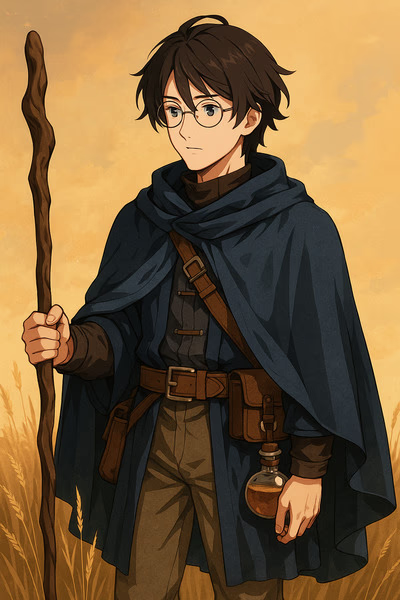
The thought carried a weight he hadn’t expected. He couldn’t cut it down. He couldn’t burn it away. But if he wanted to be anything more than a boy with a stick in hand, if he wanted to matter here, then he had to do what he could. He had to know it.
Aramis grounded himself, planting the butt of his staff against the stone until it hummed faintly beneath his palm. His breath came in deliberate rhythm, in through the nose, slow out through the mouth. He closed his eyes halfway, letting the edges of the world blur until there was only the mist before him.
He would have killed for his notes here, but this wasn’t a study desk. It was his memory and his senses that would have to serve. The scholar’s instinct prickled at the edges of his mind, reaching for every scrap of academia he’d poured hours over, every trace of arcana, every ink-stain of Alchemy... His thoughts folded into that familiar cadence of analysis, isolate, compare, conclude, even as he let a faint trickle of his own magic seep outward, brushing against the fog like fingertips on glass.
The staff’s hum deepened, just enough that he felt it in his wrist, a low vibration that steadied him further. He focused, funnelling all of it, mind, study, magic, into one effort.
“Come on,” he whispered solely to himself, voice barely more than breath. “Show me what you are.”
The silence that followed wasn’t clean. The mist pressed in on all of them, curling low at his boots, sliding cool against his sleeves, tugging at the edges of his hood. It clung to his lashes when he blinked. It seemed to deaden the world, blurring the outlines of his companions until they were only shapes in grey. He glanced once at each of them, well, he would have if he could… Yumi still stood taut and still, but the others out of sight and out of his reach.
It was more than damp. The fog wasn’t natural. He could feel it in the way sound bent, in how it resisted his sight. His jaw clenched, breath hissing softly between his teeth. This damn mist.
The thought carried a weight he hadn’t expected. He couldn’t cut it down. He couldn’t burn it away. But if he wanted to be anything more than a boy with a stick in hand, if he wanted to matter here, then he had to do what he could. He had to know it.
Aramis grounded himself, planting the butt of his staff against the stone until it hummed faintly beneath his palm. His breath came in deliberate rhythm, in through the nose, slow out through the mouth. He closed his eyes halfway, letting the edges of the world blur until there was only the mist before him.
He would have killed for his notes here, but this wasn’t a study desk. It was his memory and his senses that would have to serve. The scholar’s instinct prickled at the edges of his mind, reaching for every scrap of academia he’d poured hours over, every trace of arcana, every ink-stain of Alchemy... His thoughts folded into that familiar cadence of analysis, isolate, compare, conclude, even as he let a faint trickle of his own magic seep outward, brushing against the fog like fingertips on glass.
The staff’s hum deepened, just enough that he felt it in his wrist, a low vibration that steadied him further. He focused, funnelling all of it, mind, study, magic, into one effort.
“Come on,” he whispered solely to himself, voice barely more than breath. “Show me what you are.”
| Laughtrack History Jax Veynar was born aboard the Horizon’s Folly, a small fringe salvage hauler that worked the quiet trade between independent freeports and drifting hulks. The ship was family-run in the loosest sense: his parents, Merek and Sera, captained the operation, with a patchwork crew of blood relatives, old hands, and hangers-on filling out the ranks. Life aboard the Folly was rough but steady. Jax’s days were spent cataloguing scrap, hauling cables, and running errands, always underfoot but too young for EVA or demo work. His father made sure of it — “the black takes kids first.” For Jax, the Folly was simply home: cramped, noisy, but safe, and made brighter by his cousin Rynn’s stories and the games he shared with his friend Lio, another boy aboard. Everything changed when the Folly went after a military derelict adrift in contested space. The adults whispered arguments in the corridors, and Jax overheard one word that made Rynn go pale: munitions. Still, the gamble was too tempting. The Folly latched onto the wreck, and crews went out with torches and clamps. The first explosion came without warning. A charge bit too deep, or the wreck’s innards were already unstable — no one had time to say. The blast rippled through the derelict and into the Folly, crippling her. Alarms howled, bulkheads warped, and atmosphere vented in rushing streams. In the chaos, Jax was shoved into an escape pod. The launch sequence fired just as another shockwave struck the hull. The pod blasted free but was crippled by flying debris, its systems failing even as he tumbled clear. Through the viewport he saw the Folly limping away, lights stuttering across her battered frame. For a heartbeat he believed they would recover. Instead, the second detonation bloomed across the void, tearing the ship apart and scattering her crew into silence. | ____________________________________________________________ ◤ “Dead quiet out here..”  Full Name: Jax Veynar Age: 19 Homeworld: N/A Occupation: Salvage & Demolitions Specialist |
The pod’s life support was dead within hours. Hungry, cold, and terrified, Jax forced himself into a patched EVA suit and crawled out into the graveyard. He scavenged oxygen tanks from corpses, cracked open compartments with salvaged torches, and learned to use breaching charges to reach food and tools sealed away by twisted hulls. At first every detonation was terror, but survival left no room for fear. Each blast that opened a hatch became salvation. Explosives turned from monsters to lifelines.
Days blurred into weeks. He muttered to himself to fill the silence, naming tools and charges to keep track of them, building his own system in the haze of exhaustion. Explosions became punctuation marks — silent fireworks in the void, proof that he was still alive. When a scavenger crew finally picked up his jury-rigged distress beacon, they found a gaunt boy, frost-scarred and half-starved, grinning through his helmet as though the wreck around him was the punchline to a joke only he understood.
Rescue brought no easy future. At fourteen, he was too young to hire, too restless to stay put. He was left at Vanth Freeport in the Kuiper Belt, where lost kids slipped through the cracks. Jax drifted between stations and crews, taking whatever work he could find — sweeping hangars, hauling cargo, running errands. He pestered EVA hands with questions, lingered around demo crews, and scavenged scraps of knowledge wherever he could. Most wrote him off as a nuisance.
By seventeen, he was no longer just the wreck-kid. Crews began paying him for the jobs nobody else wanted — crawling into unstable hulks, wriggling through maintenance shafts, slapping charges onto bulkheads without hesitation. His small frame was an asset, and his nerve even more so. He was reckless, he was strange, but he always came back with something worth selling.
By nineteen, Jax had made a name for himself on the Belt fringe. Not trusted, not famous, but remembered. He was the wiry salvager who laughed through wrecks, muttered to himself on open comms, and treated explosives like playthings that always worked exactly as intended. With no ties to Sol, Jovians, or Centauri, he owed loyalty to no one but the job. All he needed was EVA gear, demo charges, and the chance to break something open. It was only a matter of time before a ship came along that could make use of the chaos he brought with him.
Days blurred into weeks. He muttered to himself to fill the silence, naming tools and charges to keep track of them, building his own system in the haze of exhaustion. Explosions became punctuation marks — silent fireworks in the void, proof that he was still alive. When a scavenger crew finally picked up his jury-rigged distress beacon, they found a gaunt boy, frost-scarred and half-starved, grinning through his helmet as though the wreck around him was the punchline to a joke only he understood.
Rescue brought no easy future. At fourteen, he was too young to hire, too restless to stay put. He was left at Vanth Freeport in the Kuiper Belt, where lost kids slipped through the cracks. Jax drifted between stations and crews, taking whatever work he could find — sweeping hangars, hauling cargo, running errands. He pestered EVA hands with questions, lingered around demo crews, and scavenged scraps of knowledge wherever he could. Most wrote him off as a nuisance.
By seventeen, he was no longer just the wreck-kid. Crews began paying him for the jobs nobody else wanted — crawling into unstable hulks, wriggling through maintenance shafts, slapping charges onto bulkheads without hesitation. His small frame was an asset, and his nerve even more so. He was reckless, he was strange, but he always came back with something worth selling.
By nineteen, Jax had made a name for himself on the Belt fringe. Not trusted, not famous, but remembered. He was the wiry salvager who laughed through wrecks, muttered to himself on open comms, and treated explosives like playthings that always worked exactly as intended. With no ties to Sol, Jovians, or Centauri, he owed loyalty to no one but the job. All he needed was EVA gear, demo charges, and the chance to break something open. It was only a matter of time before a ship came along that could make use of the chaos he brought with him.
Personality & Reputation
Jax Veynar is restless, manic, and rarely quiet. He cracks jokes where others grit their teeth, finding humor in corpses, vented hulls, and the silence of the black. He laughs too easily, talks too much, and treats explosions like fireworks. Some crewmates find his energy infectious, others think he’s unhinged, but nobody forgets him.
His element is the void, and he’s always the first to volunteer for EVA, whether it’s a dangerous breach or a trivial inspection. He treats the black like a stage, keeping a constant commentary over open comms without realising it: rambling stories, grim one-liners, bursts of cackling laughter. That habit is what earned him his nickname. After one especially noisy dive, a fellow spacer summed it up with, “Good, but I could’ve done without the laughtrack.” The name stuck, and Jax leaned into it.
But his obsession with charges and explosions doesn’t end at the airlock. On the Dullahan, Jax is just as comfortable manning the missile racks or climbing into a turret. To him, it’s all the same — breaching charge, cutting torch, or guided missile, it’s just another tool that makes something go bang. He delights in watching explosions bloom in vacuum, childlike in his awe even while laughing like a madman. Crewmates swear he looks happiest when his hands are on a firing grip or a detonator.
Reckless as he seems, he has a reputation for always bringing something back. Scrap from a wreck, gear pulled from a bulkhead, or even an injured crewmate — if Jax goes out, he returns with something in hand. That consistency, paired with his unnerving humor, has made his reputation a paradox: the half-mad salvage rat whose dives and detonations always deliver.
His element is the void, and he’s always the first to volunteer for EVA, whether it’s a dangerous breach or a trivial inspection. He treats the black like a stage, keeping a constant commentary over open comms without realising it: rambling stories, grim one-liners, bursts of cackling laughter. That habit is what earned him his nickname. After one especially noisy dive, a fellow spacer summed it up with, “Good, but I could’ve done without the laughtrack.” The name stuck, and Jax leaned into it.
But his obsession with charges and explosions doesn’t end at the airlock. On the Dullahan, Jax is just as comfortable manning the missile racks or climbing into a turret. To him, it’s all the same — breaching charge, cutting torch, or guided missile, it’s just another tool that makes something go bang. He delights in watching explosions bloom in vacuum, childlike in his awe even while laughing like a madman. Crewmates swear he looks happiest when his hands are on a firing grip or a detonator.
Reckless as he seems, he has a reputation for always bringing something back. Scrap from a wreck, gear pulled from a bulkhead, or even an injured crewmate — if Jax goes out, he returns with something in hand. That consistency, paired with his unnerving humor, has made his reputation a paradox: the half-mad salvage rat whose dives and detonations always deliver.
Appearance
Jax Veynar is nineteen but looks a few years older, the kind of wiry spacer who’s lived rough since childhood. He’s lean and restless, all sharp edges and nervous energy, never still for long. His hair is long enough to tie back but usually hangs loose, a dark, tangled mop that constantly falls into his eyes. He rarely bothers to cut it properly, just hacking it shorter with a knife when it gets in the way. His jaw carries a patchy stubble that he never quite grows into a beard, adding to his scruffy look.
The most striking marks on him are the scars from frostbite. His fingers are mottled and pale at the tips, with a few nails warped or missing entirely. His ears show the same damage, ragged around the edges from his weeks stranded in the wreck. He hides it poorly — gloves off, sleeves rolled up, he wears those scars like part of his kit.
His skin is pale from too many hours under artificial lights, and his build is wiry from years of salvage work, more agility than strength. A faint lattice of burns and old cuts mark his arms, earned from torches, charges, and wreck metal. A few rough tattoos add to the mess — stick-and-poke jobs from freeport backrooms, crude symbols and scrap-crew logos he collected during his drifting years. None are neat, but all mean something to him.
Jax dresses like he never expects to stay planetside. His boots are scuffed, his jacket burned at the cuffs, his trousers patched in more places than they’re whole. Belts and straps jangle with clamps, cutters, and pockets for charges. Even out of EVA he looks halfway suited for it, a man who always expects to step back into the black.
Despite the grime, there’s a glint in his grey eyes that makes him memorable — sharp, mischievous, and just a little unhinged, as though he sees a joke no one else does. When he grins, it’s wide and sudden, all teeth and laughter, the same expression he wore when they pulled him out of that wreck.
The most striking marks on him are the scars from frostbite. His fingers are mottled and pale at the tips, with a few nails warped or missing entirely. His ears show the same damage, ragged around the edges from his weeks stranded in the wreck. He hides it poorly — gloves off, sleeves rolled up, he wears those scars like part of his kit.
His skin is pale from too many hours under artificial lights, and his build is wiry from years of salvage work, more agility than strength. A faint lattice of burns and old cuts mark his arms, earned from torches, charges, and wreck metal. A few rough tattoos add to the mess — stick-and-poke jobs from freeport backrooms, crude symbols and scrap-crew logos he collected during his drifting years. None are neat, but all mean something to him.
Jax dresses like he never expects to stay planetside. His boots are scuffed, his jacket burned at the cuffs, his trousers patched in more places than they’re whole. Belts and straps jangle with clamps, cutters, and pockets for charges. Even out of EVA he looks halfway suited for it, a man who always expects to step back into the black.
Despite the grime, there’s a glint in his grey eyes that makes him memorable — sharp, mischievous, and just a little unhinged, as though he sees a joke no one else does. When he grins, it’s wide and sudden, all teeth and laughter, the same expression he wore when they pulled him out of that wreck.
Strengths & Limitations
Jax has carved a niche for himself as both a salvage hand and a demolitions man. He’s unnervingly comfortable in vacuum, thriving where most spacers freeze, and years of clawing through wrecks have given him instincts for EVA that few can match. What looks like reckless chaos is in fact hard-earned precision: his demo charges and torches always work, his turrets fire clean, and his salvage dives always turn up something. For all his chatter and laughter, he has an iron nerve in dangerous situations, the sort of spacer who can haul a crewmate out of a collapsing hull without losing his grin.
That same nerve, however, feeds into recklessness. Jax volunteers for every EVA, every boarding, every risky salvage job, even when it’s unnecessary. His dark humor unsettles as often as it entertains, and his habit of laughing at corpses or cackling through the comms can fray tempers fast. Physically he’s wiry and agile but lacks raw strength, and in close combat or drawn-out brawls he’s often overmatched. His training is self-taught, born of desperation rather than discipline, and it shows — to Federation or corporate crews he looks sloppy, dangerous, even amateur. Perhaps most telling, the weeks he spent alone in silence never really left him. If grounded too long, kept away from EVA or denied work, he grows restless and jittery, like a fuse burning too close to the powder.
That same nerve, however, feeds into recklessness. Jax volunteers for every EVA, every boarding, every risky salvage job, even when it’s unnecessary. His dark humor unsettles as often as it entertains, and his habit of laughing at corpses or cackling through the comms can fray tempers fast. Physically he’s wiry and agile but lacks raw strength, and in close combat or drawn-out brawls he’s often overmatched. His training is self-taught, born of desperation rather than discipline, and it shows — to Federation or corporate crews he looks sloppy, dangerous, even amateur. Perhaps most telling, the weeks he spent alone in silence never really left him. If grounded too long, kept away from EVA or denied work, he grows restless and jittery, like a fuse burning too close to the powder.
Miscellaneous
- Known As: “Laughtrack” - a nickname that stuck after a spacer quipped about his constant chatter over open comms.
- Convictions / Records: No formal criminal record, though his name has appeared on dockmaster warnings for “reckless use of explosives” and “failure to comply with port safety standards.”
- Cybernetics / Mods: None. Jax doesn’t trust them. He’ll happily strap himself into a patched EVA rig or cuddle up to a charge he’s duct-taped together, but the thought of wiring metal into his body makes his skin crawl. He claims machines break down faster than people — though his frost-scarred fingers might argue otherwise.
- Belongings: A battered, patched EVA suit he’s modified with hazard stripes and tally marks. His kit is a jumble of torches, clamps, and demo charges with extravagant names like the Bulkhead Overenergiser or the Popjack Special.
- Fun Facts:
- Talks and laughs to himself during EVA, often forgetting his comms are open.
- Always drags something back from a dive, whether it’s scrap, a tool, or a crewmate.
- Loves watching explosions in vacuum, comparing them to fireworks.
- Long hair often tied back with whatever cord or scrap is at hand.
- Bears several crude stick-and-poke tattoos picked up in freeports, mostly scrap-crew logos and rough symbols.

The garden had bloomed since last he visited, or perhaps it only seemed so in contrast to the grandeur of the ballroom. Out here, the air tasted less artificial, floral, green, tinged with the briny whisper of distant tides. The sky had softened into a velvet dusklight, and Melion sat quietly amid it all, draped in a gown of twilight hues, legs loosely crossed upon a low stone bench.
Around him, his companions fluttered with gentle purpose. Wings whispered through the air, bees heavy with pollen traced slow spirals between blooms, butterflies settled on petal and leaf. A small green beetle crawled up his wrist, paused, and flicked its wings open. Melion only smiled. There was no need to speak. This was communion. He had not come out here to be alone. That was not the nature of gardens. He had come to be still, and in stillness, others always came.
From one of his bees, hovering near a cluster of yellow yarrow, came the first tremor of awareness. Melion did not turn, but he felt the moment Getsuy passed through the ballroom, the pulse of tension, the shadow in the light. Hunger and bone. But not chaos. Not here.
He breathed in. Flowers and blood, salt and moss. And beneath it all, Getsuy’s strange scent, ancient, broken, heavy as wet fur, but tempered now, caught in restraint like a storm behind glass. Melion smiled faintly, not at the wendigo, but at a familiar presence finding its way back to peace.
“Please, my dear,” he said without turning, voice light as leaf-fall. “Come, sit and join me.”
And then, music. Soft at first, distant, but unmistakable. A horn’s gentle call threading through the garden like mist through boughs. Melion tilted his head, listening. The notes curled with presence. Another thread in the weave.
A bee, the same one that had first alerted him to Getsuy’s approach, drifted toward a corner of the ballroom where a masked servant arranged fresh blooms. She was quiet, methodical, mortal, yes, but not graceless. Melion felt the pause in her rhythm when she noticed the bee, heard her murmur a suggestion, soft as petals brushing petals.
"I think you'll find the garden a better place to fly around, little one. Ample place to fly too."
He smiled again. Not out of amusement, but out of interest. So few mortals ever spoke to his companions, fewer still with kindness. He filed the sensation away like a gardener marking the first sprout of something worth watching.
Then, more motion, brightness and mirth, the scent of sun-warmed silk and citrus. Aeliana. Through the bee’s eyes, he watched the phoenix sidle up beside the same gardener with all the casual intimacy of a flame curling into dry wood. Her voice purred with amusement, the shape of a tease forming already.
"Hello Wallflower, How interesting! Is it the new fashion to dress in bouquets?"
Melion did not interfere. He merely observed. She was light and fire, feathers and laughter. But beneath it, always watching. Always knowing. There was purpose there, but Melion didn’t mind. Instead, he exhaled slowly and leaned further back against the bench, letting the garden speak for him, as it always had.
“It’s calm here,” he murmured. “Don’t you think?”
With that, he fell quiet again, bees humming, music playing, the space beside him left open. Getsuy would choose whether to fill it.
“Would you like me to pull up to the steps, sir, or stop across the square?”
Vector sat back against the leather seat, gloved hand resting lightly on the strap of the bag beside him. The attaché case lay against his leg, its polished metal edges catching the faint gleam of sunlight slipping through the tinted windows. He tilted his head a fraction, considering. Across the square meant a quieter walk, less spectacle. But they’d asked them to arrive in costume, and anything less than directness could read as hesitation.
“The steps,” he answered at last, voice low and calm. “Let’s not waste time.”
“As you wish, sir.”
The Rolls slid forward, its movement so smooth it barely seemed to disturb the air. Outside, Paragon City was alive: pedestrians moving in streams along the pavement, the occasional drone whirring overhead, the distant murmur of morning traffic echoing between polished glass towers. Vector watched it all behind his aviators, but gave it no weight. Noise. Motion. Distractions.
His hero costume was inconspicuous enough that he could get away with wearing most of it as civilian attire. Everything but his poncho, mask, and weaponry were adorned, accented by his rayban aviators. The other components neatly tucked away with a leather bag and an attaché.
The chauffeur pulled the car to a precise halt, the hood gleaming beneath the shadow of Atlas’s great statue. A moment later, the rear door opened with mechanical smoothness, and Vector stepped out.
The air was mild, carrying the faint trace of cut grass from the Town Hall gardens. Vector adjusted his grip on the attaché, squared the line of his shoulders. His stride across the pavement was measured, each step unhurried, deliberate. Behind him, the Rolls whispered away, leaving no more than a ripple of curiosity among passersby.
He climbed the shallow steps, neither glancing at the suited officials drifting past nor the little cleaning drones puttering along their circuits. The statue loomed overhead, but Vector gave it no more attention than he had the traffic outside.
And then, as if it could never have been otherwise, he stepped into the lobby at precisely 09:00.
The space was bright, open, humming with the subdued energy of recruits who had beaten him inside. Colorful costumes, eager chatter, the barely-contained nerves of those who wanted to prove themselves. Vector set his bags down neatly by his side and took his place among them without fanfare. And no introduction.
Bernard’s familiar voice rolled across the lobby, welcoming them, inviting questions. Vector listened, still and unblinking behind the lenses of his aviators. When the pause came, he spoke.
“Two operational points,” he said, tone level, each word weighed and measured. “First, in civilian-dense environments, what is the standing protocol for escalation of force? At what threshold are we cleared to act without prior clearance? Second, communications. What systems are provided in terms of secure channels, tracking, or locators? Or are such provisions left to individual discretion?”
Vector sat back against the leather seat, gloved hand resting lightly on the strap of the bag beside him. The attaché case lay against his leg, its polished metal edges catching the faint gleam of sunlight slipping through the tinted windows. He tilted his head a fraction, considering. Across the square meant a quieter walk, less spectacle. But they’d asked them to arrive in costume, and anything less than directness could read as hesitation.
“The steps,” he answered at last, voice low and calm. “Let’s not waste time.”
“As you wish, sir.”
The Rolls slid forward, its movement so smooth it barely seemed to disturb the air. Outside, Paragon City was alive: pedestrians moving in streams along the pavement, the occasional drone whirring overhead, the distant murmur of morning traffic echoing between polished glass towers. Vector watched it all behind his aviators, but gave it no weight. Noise. Motion. Distractions.
His hero costume was inconspicuous enough that he could get away with wearing most of it as civilian attire. Everything but his poncho, mask, and weaponry were adorned, accented by his rayban aviators. The other components neatly tucked away with a leather bag and an attaché.
The chauffeur pulled the car to a precise halt, the hood gleaming beneath the shadow of Atlas’s great statue. A moment later, the rear door opened with mechanical smoothness, and Vector stepped out.
The air was mild, carrying the faint trace of cut grass from the Town Hall gardens. Vector adjusted his grip on the attaché, squared the line of his shoulders. His stride across the pavement was measured, each step unhurried, deliberate. Behind him, the Rolls whispered away, leaving no more than a ripple of curiosity among passersby.
He climbed the shallow steps, neither glancing at the suited officials drifting past nor the little cleaning drones puttering along their circuits. The statue loomed overhead, but Vector gave it no more attention than he had the traffic outside.
And then, as if it could never have been otherwise, he stepped into the lobby at precisely 09:00.
The space was bright, open, humming with the subdued energy of recruits who had beaten him inside. Colorful costumes, eager chatter, the barely-contained nerves of those who wanted to prove themselves. Vector set his bags down neatly by his side and took his place among them without fanfare. And no introduction.
Bernard’s familiar voice rolled across the lobby, welcoming them, inviting questions. Vector listened, still and unblinking behind the lenses of his aviators. When the pause came, he spoke.
“Two operational points,” he said, tone level, each word weighed and measured. “First, in civilian-dense environments, what is the standing protocol for escalation of force? At what threshold are we cleared to act without prior clearance? Second, communications. What systems are provided in terms of secure channels, tracking, or locators? Or are such provisions left to individual discretion?”
Hello, that's me, I am Ducksworth! Also, I have posted my CS in the CS tab! :D
The shards screamed out of the mist like knives of glass. Aramis yelped, nearly dropping his staff as he whipped it up in front of him, already bracing for the cut.
And then—shhk. A blur of silver and blue. Yumi spun ahead of him, her scythe and hair carving the water-blades into harmless spray. Droplets peppered his face, cool against the heat of his panic.
He froze, mouth open on the start of a spell he didn’t need anymore. Slowly, shakily, he let the breath out, forcing a laugh that came out too loud, too raw. “Oh—uh, Thanks! Good work, nearly lost it there..."
He gripped his staff tighter, knuckles white as he planted it against the wet stone. The urge to throw a barrier over the crouched woman and her beast tugged at him, but the armored soldier was already there, shielding them with the kind of certainty Aramis couldn’t fake. They didn’t need him—not yet.
But the hammer-swinging madman and the scythe-wielder? They were charging straight into the fog, into gods-knew-what. That was where things would break. That was where someone had to catch them.
Aramis shook himself like a dog after rain, shivering the last cling of sorrow from his shoulders. He licked dry lips, blinked stinging mist from his glasses, and muttered under his breath, "Alright, Endo. Time to earn your keep.”
He surged forward, boots splashing, cloak dragging heavy and sodden at his legs. The staff came up across his body—not elegant, not practiced, but ready.
He risked one glance back, voice cracking as he shouted to the figures holding the rear: "You’ve got them! I’ll cover the charge!”
And then he pushed into the mist after the others, heart pounding, lungs raw, fear and excitement tangled in his chest. Not leading, never leading. But ready, at least, to be the one they could count on when things went bad.
And then—shhk. A blur of silver and blue. Yumi spun ahead of him, her scythe and hair carving the water-blades into harmless spray. Droplets peppered his face, cool against the heat of his panic.
He froze, mouth open on the start of a spell he didn’t need anymore. Slowly, shakily, he let the breath out, forcing a laugh that came out too loud, too raw. “Oh—uh, Thanks! Good work, nearly lost it there..."
He gripped his staff tighter, knuckles white as he planted it against the wet stone. The urge to throw a barrier over the crouched woman and her beast tugged at him, but the armored soldier was already there, shielding them with the kind of certainty Aramis couldn’t fake. They didn’t need him—not yet.
But the hammer-swinging madman and the scythe-wielder? They were charging straight into the fog, into gods-knew-what. That was where things would break. That was where someone had to catch them.
Aramis shook himself like a dog after rain, shivering the last cling of sorrow from his shoulders. He licked dry lips, blinked stinging mist from his glasses, and muttered under his breath, "Alright, Endo. Time to earn your keep.”
He surged forward, boots splashing, cloak dragging heavy and sodden at his legs. The staff came up across his body—not elegant, not practiced, but ready.
He risked one glance back, voice cracking as he shouted to the figures holding the rear: "You’ve got them! I’ll cover the charge!”
And then he pushed into the mist after the others, heart pounding, lungs raw, fear and excitement tangled in his chest. Not leading, never leading. But ready, at least, to be the one they could count on when things went bad.
Colour me intrigued!
Branches tore at his sleeves as he ran, lungs burning, boots slipping on wet roots. The jungle closed in on every side, every breath thick with rot and blossom. His staff clutched in both hands knocked against vines and trunks as he stumbled through, more hindrance than help in his mad dash, but he refused to let go of it.
“Oh, good job, Aramis,” he panted, half to himself, half to the endless green. “First job, late! What a fantastic impression!”
A frond slapped across his face. He ducked, nearly lost his footing, and went skidding sideways before catching himself against a moss-slick trunk. His chest heaved, sweat dripping down his temples, the weight of his pack dragging at his shoulders. Still, his legs kept moving. Somewhere ahead there were voices, the memory of gunfire, and the pulse of something unnatural pulling at the air. He’d already fallen behind once, he couldn’t let it happen again.
“Simple!” he rasped, staff snagging on a root as he yanked it free. “Keep up with the professionals. Don’t screw it up, hah! Brilliant start.”
The trees broke at last, and the ruin loomed from the jungle floor like a carcass half-buried in vines. Stone ribs leaned inward, mist curling upward in slow, heavy breaths from the yawning stair that split the earth.
Aramis staggered to the lip of the stairs, bent double with his staff planted like a walking stick, gulping air like a drowning man. He lifted his head, caught the silhouettes of others already below, and with what little wind he had left, he shouted:
“I’m here! Sorry! Sorry I’m late!” His voice cracked on the last word, echoing sharp against the stone.
He lurched down the steps two at a time, nearly tripping as the mist thickened around him, and the moment his boots struck the water at the bottom, it hit him.
The sorrow. It pressed against his chest, soaked into his skin, wrapped around his ribs like iron bands. Whispers swelled in the haze, regrets not his own but too familiar. Goosebumps rippled across his arms, his breath catching as the air itself seemed to rot with grief. And then, recognition.
This weight was no stranger. He had carried it all his life, until he’d stopped noticing it was even there. Not home. Never home. Just a burden so constant it had become a second skin, one he’d dragged with him until the day he died.
His mouth twisted into a sharp, uneven laugh that startled even him. The sound cracked into a shiver, his shoulders jerking as if throwing off a winter chill. He steadied, chest heaving, eyes locking on the chamber that spread before him.
Water pooled ankle-deep, carved faces weeping endlessly into the rippling surface. At its heart stood the mage, mist wrapped close like a shroud. The others were already braced, grim and ready: rifle leveled, axe in hand, bat lifted, weapons drawn. Professionals, every one of them.
Aramis straightened, dragging in one last breath as his fingers tightened around the length of his staff. He had nearly lost it half a dozen times in the jungle, but now, braced in his hands, it felt steady. Certain.
He planted his boots, cloak settling heavy around him, and lifted the staff across his body in a defensive stance. His voice still carried that nervous edge, but it rang clear enough to reach his new companions.
“Aramis Endo,” he said. “Mage for hire. Ready to assist.”
“Oh, good job, Aramis,” he panted, half to himself, half to the endless green. “First job, late! What a fantastic impression!”
A frond slapped across his face. He ducked, nearly lost his footing, and went skidding sideways before catching himself against a moss-slick trunk. His chest heaved, sweat dripping down his temples, the weight of his pack dragging at his shoulders. Still, his legs kept moving. Somewhere ahead there were voices, the memory of gunfire, and the pulse of something unnatural pulling at the air. He’d already fallen behind once, he couldn’t let it happen again.
“Simple!” he rasped, staff snagging on a root as he yanked it free. “Keep up with the professionals. Don’t screw it up, hah! Brilliant start.”
The trees broke at last, and the ruin loomed from the jungle floor like a carcass half-buried in vines. Stone ribs leaned inward, mist curling upward in slow, heavy breaths from the yawning stair that split the earth.
Aramis staggered to the lip of the stairs, bent double with his staff planted like a walking stick, gulping air like a drowning man. He lifted his head, caught the silhouettes of others already below, and with what little wind he had left, he shouted:
“I’m here! Sorry! Sorry I’m late!” His voice cracked on the last word, echoing sharp against the stone.
He lurched down the steps two at a time, nearly tripping as the mist thickened around him, and the moment his boots struck the water at the bottom, it hit him.
The sorrow. It pressed against his chest, soaked into his skin, wrapped around his ribs like iron bands. Whispers swelled in the haze, regrets not his own but too familiar. Goosebumps rippled across his arms, his breath catching as the air itself seemed to rot with grief. And then, recognition.
This weight was no stranger. He had carried it all his life, until he’d stopped noticing it was even there. Not home. Never home. Just a burden so constant it had become a second skin, one he’d dragged with him until the day he died.
His mouth twisted into a sharp, uneven laugh that startled even him. The sound cracked into a shiver, his shoulders jerking as if throwing off a winter chill. He steadied, chest heaving, eyes locking on the chamber that spread before him.
Water pooled ankle-deep, carved faces weeping endlessly into the rippling surface. At its heart stood the mage, mist wrapped close like a shroud. The others were already braced, grim and ready: rifle leveled, axe in hand, bat lifted, weapons drawn. Professionals, every one of them.
Aramis straightened, dragging in one last breath as his fingers tightened around the length of his staff. He had nearly lost it half a dozen times in the jungle, but now, braced in his hands, it felt steady. Certain.
He planted his boots, cloak settling heavy around him, and lifted the staff across his body in a defensive stance. His voice still carried that nervous edge, but it rang clear enough to reach his new companions.
“Aramis Endo,” he said. “Mage for hire. Ready to assist.”
© 2007-2026