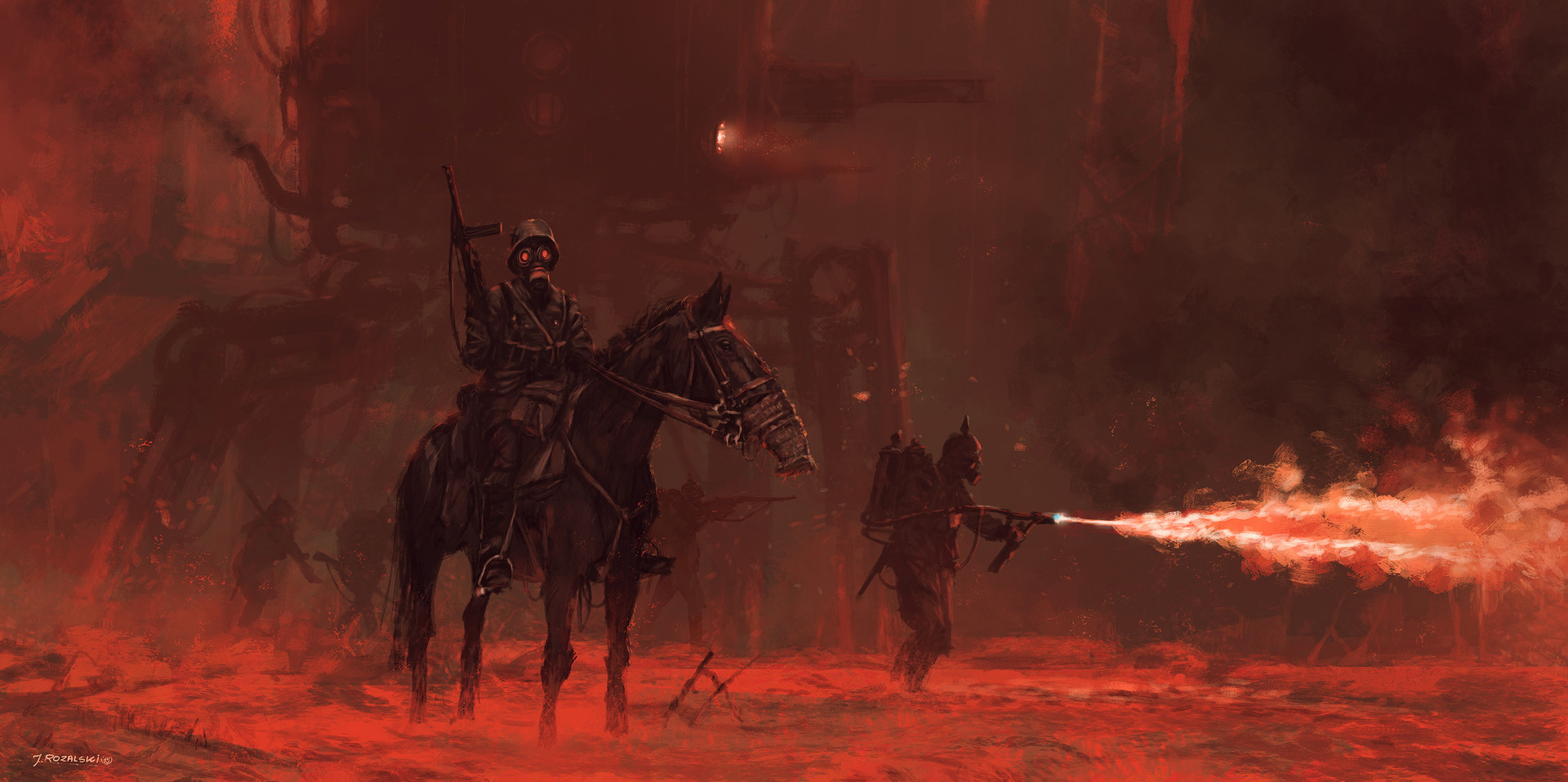
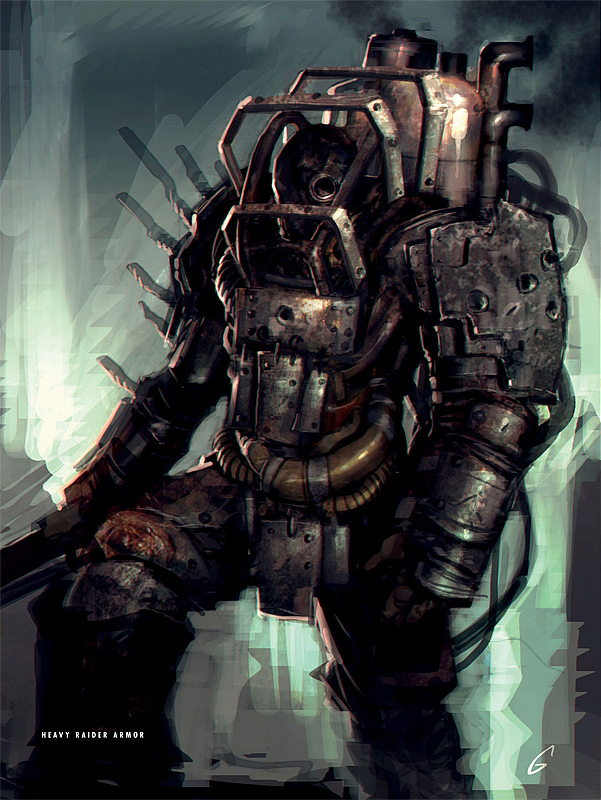
Okay, a little tangential side-scene posted. I have a longer, more to-the-point post in the works, but just wanted to throw something up to flesh out the world and keep things movin'.
His Immanence drew glittering silks more tightly around him as a chill wind blew down from the Godsfangs, a premonition of winter descending. Once he had read that seasons in ancient times had come in regular succession and for fixed periods upon the face of Azoth, in accordance with the relation of the stars to the sun. An old myth, probably. The invention of blasphemous astrologers.
Winter was never predictable, but always brutal here where the mountains ended and the river Tul began its lazy descent from flinty uplands to the paddies and fields around Nyssos, and if the cold fell now upon the Rainlands, taking crops and livestock with it, His Immanence did not foresee the young and embattled Shashul remaining much longer on his father's throne.
Not that he cared overmuch. Though the Servants of the Forge had for time out of mind served the Sashul in Nyssos- indeed, had long been the secret to their power- the emperors of late had been neglectful of the gods. Dagorvada's paranoia had extended to the devout, his patronage of the Servants had been half-hearted, his clerical appointees had proved imperial lapdogs, and his sacrifices few- leaving the gods displeased and ravenous.
Perhaps the gods would withdraw their protection the Salished Empire, and give it over to the rule of impious warlocks and devious slave lords. His Immanence Rael Amon, Master of the House of Sharp Edges and Foremost Placator of the Divine Hunger, was slightly surprised to find that, in his heart of hearts, he cared not whether the Empire lived or died.
For he knew the Servants would endure. The Cult of the Forge would spread still. The sacrifices that sustained the world would continue, even in secret if necessary, for the debased magic of the Dratha had never been and never would be equal to power of the gods.
A hoarse shout roused His Immanence from such reflections, and he looked down from the crumbling balcony on which he stood. In the cobbled square below him, the beardless acolytes practiced their sword cuts with lengths of bamboo, their eyes blindfolded. Oathmen walked among them, barking instructions. One of the boys had misplaced a swing and struck the acolyte next to him, who had shouted in pain. Amon watched as the Oathmen took the lad who had shouted by both arms and drag him screaming and struggling from the line of youths, who continued their synchronized exercises without pause.
A missplaced blow was a part of learning, but showing pain was not permitted in the House of Sharp Edges. The lad would have his tongue removed for the offence. A tongue was not much needed in the life of a Swordarm anyway.
"Your Immanence," said a low voice behind Amon, who turned, grey eyebrows raised.
"What is it?" he asked of the bowing servitor who approached him.
"A message, sent by bloodhawk for you," said the servitor, "from the Ashlands."
He presented Amon with a small, tightly bound scroll.
Amon unsealed it and read, turning from the balcony as he did so into the darkened hall behind it. He reread the note twice as he walked.
Around him, the walls of the dim passageway were lined with rows of swords, their edges gleaming in the gloom. There were hundreds of them, and His Immanence knew them all, and all their histories. Every few feet, a sword was set apart in a stone shrine etched with the fierce and hungry likenesses of the gods, the intricate metalwork of the blade illumined by guttering candles.
These were the foremost treasures of the House of Sharp Edges. Ghulbane, which had been wielded by the Swordarm Sasan in his battle with the Devourer of Agan Tul, Demon-Drinker, which had cut down the Gorelord Incarnate before the founding of the Empire.
Amon came to a shrine that had no sword set within it. He read his note again. It had been sent from some backwater with the barbarous name of Zar Yiin.
The disgusting heathen Khalul and that crafty serpent Issrun were not the only ones with eyes and ears across the civilized and half-civilized world. The Servants had their spies too, though they cared little for the movements of armies and the treacheries of lords and mages. The Servants of the Forge cared for loftier things than mere politics. They were concerned rather with the secrets and mysteries of their faith, and with recovering what belonged to the gods of the Forge.
Rarely was a Sword stolen from the Servants, for there were few who could wield such weapons without being wielded by them in turn. Rarer still was it that a Named Blade was taken. But this Sword had been, by some lowborn rake from the mountains no less, a man who dealt with godless wizards and aelg-men.
The mercenary Olms.
Long had His Immanence wished to bring back this missing treasure, Severian, which had for centuries been wielded by the Lord Headsman of the reigning Sashul. Long had he sought for the wretched thief Olms.
And now he knew Olms was in the Union, cavorting with sorcerers, heading north on some strange errand.
"Bring me Swordarm Malik," said Amon to the servitor, "and bring me the blessed sword Huntsman."
At the far end of the Gas Road lies the sinister and ancient citadel of Terminus Est, home of the Remnant. Behind the crumbling concrete and scrap metal walls rise endless flaming spires and smoke stacks, where oil is refined into fuel for the Remnant's war machines. Within the fortress lives the dour folk of that call themselves the Remnant, pureblood humans who consider themselves the rightful lords of the wasteland.
CULTURE
The Remnant is obsessed with genetic purity, and any sign of mutation is immediately stamped out. Citizens of the Remnant consider themselves the aristocracy of the new world, they protect their bloodline jealously, constantly raiding other settlements for children who are free of the taint of mutation. Pureblood captives become citizens themselves. Those who show signs of mutation they become slaves...or food.
The Remnant does not possess much technological sophistication, but it does enjoy the benefits of plentiful oil beneath its fortress of Terminus Est and the means to refine it. And sheer weight of numbers, since pureblood humans can breed with far fewer complications than many mutants and half-lives.
Outside their fortress, citizens are rarely seen without rebreathers or gas masks.[WIP]
RESROUCES
Oil & Gas Functioning Refineries Manpower
LEADERSHIP
Matters of importance are put up for a vote among the pureblood residents of Terminus Est. Imperators are elected by the assembly when the Remnant goes raiding or to war.
MILITARY
(Boast about your boiz and their cars, obviously based on motor pool make up and special shit rolls. Feel free to expand on it with whatever else you can think of, but vehicles are the main attraction here, word descriptions are fine if you can't find a picture to match)
Genetic Make Up Full Lives: Your clan is made up primarily of genetically pure and untainted humans. Certainly a rare sight in this day and age, you’ll draw more attention than you’d think. A temporary genetic fluke or something more permanent?(6)
Cultural Meta-Group Raiders: An unfortunate truth of the wastes is the prevalence of raider gangs. Savage and violent, they typically take more than they make but there are exceptions. Most don’t settle down in any place for too long, and tend to use up what they have quickly. Many treat the apocalypse as a sort of hedonistic paradise, murdering for fun, using homemade narcotics, and generally raping to their hearts content. (45)
Leadership Democracy/Consensus: A relative rarity in the post-apocalypse, the group has decided that no one individual holds all the power, but generally makes decisions based on everyones input. (74)
Cultural Quirks Death Cult: Unsurprisingly among the blighted folk of the wastes, some have taken to worshipping death, or the idea of a “Good death”. Perhaps it’s a mythical afterlife, a desire to see the world well and truly die, or simply a nihilistic belief that death is an inevitable constant in life, for whatever reason this group worships death itself.
X Distinctive Icon: A motif or symbol runs throughout the groups structures, clothes, and vehicles. Maybe it’s a specific animal or object, or maybe it’s something less specific like bullets or flames. (1) (70) (Rerolled due to RNGesus fuckery)
Distinctive Appearance Leathers: Never ride without your distinctive leather jackets and other assorted biker gear. Never.
Gas Masks: Never seen without their masks, they might have a single distinctive style or just whatever they find. In either case, it certainly makes for an imposing appearance in most situations. Maybe they only do it for that intimidation factor, maybe it’s because they live in a particularly nasty patch.
Jewelry: Somehow the group has gotten a hold of a sizeable amount of bling. Maybe it’s hand-made from scrap, or maybe it’s actual treasures from the old world. The group takes great pride in it. (68, 41, 77)
Unique/Exclusive Resource Guzzolene: Black gold. Everyone needs it, and it isn’t too rare to come by but not too many have the means to refine it. This group does, and it can be extremely lucrative. (1)
Equipment Quality Ramshackle: Armor is cobbled together, guns are hand tooled, and houses/clothes are generally not in the best state. Pretty standard for most people, unfortunately.(17)
Motor-Pool General Make Up Classics: Muscle Cars, roadsters, and trucks. The standard rides for most in the wasteland. Tough, reliable, and intimidating.(67)
Special Vehicle Shit Shiny and Chrome: The group takes exceptional care to polish their vehicles to a brilliant chrome shine. Blind your foes with your swag and the shiny paint seemingly correlates with higher skill among drivers. Choose to re-roll this or Black on Black if you get both.
Extra Armor: YExtra armor bolted onto the vehicles. No matter the type, they gain extra protection with minimal speed penalties. (2, 88)
Flagship Vehicle Destruction Vehicle: A huge construction vehicle re-outfitted for combat. Maybe a huge excavator, an armoured bulldozer, or a mini-Bagger 288.(14)
This is still very much a work in progress, particularly in the Personality department, but I have a decent idea of who my character is and who my people are. A lot of this is just my notes to myself.
I intend to finish this in the next couple of days, but until then, here's something for you guys to work with.
Name Bekter Ovan-Shar - Ovan Khan - of the House of Touman
A curiosity of the Yagar naming tradition is that the father’s name is used as a prefix to the given name, or in the case of girls, their mother’s name is used. As such, Bekter is the name of Ovan’s father. The “Shar” suffix, meaning “yellow”, is an honorific indicating his descent from the legendary Yellow Khan of two centuries past. Those close to him would simply call him Ovan.
Age 31
Race Human
Nationality Yagar tribes
North-east of the Godsfang Mountains lies a vast expanse of open, untamed land stretching for thousands of miles. Sometimes called the Land of Winds, due to the the harsh gales that whip across the open plains ceaselessly. Thunderstorms appear with startling suddenness, turn the ground to mud with torrential rain, and then end as abruptly as they started. Winter’s inevitable march shrouds the plains in frozen white, the biting cold a deathly trial for even the hardiest of beasts.
These are the Steppes, and their harsh conditions have forged a tenacious people: the horse nomads, some call them; barbarians, others say; the Yagar, they call themselves. Throughout the ages the names of the tribes have changed, as have their customs and faiths, but their nomadic way of life has remained true for as long as history has been written. They are the people of the horse and bow, hunters and herders, their children taught to ride from the moment they can walk and to shoot from the moment they can hold a bow. They enter and leave the tapestry of history as suddenly and unpredictably as the thunderstorms sweep the plains. Normally, the tribes turn their weapons against each other and feud over centuries-old transgressions, giving the settled kingdoms little more trouble than occasional raids into their border territories. But occasionally, a great figure emerges and unifies the tribes, and with newfound strength sets their eyes on the riches of the sedentary world. When they are weak, they are little more than a pest. But when they are strong, the tribes pose an existential threat to those who border the steppe, something the kingdoms felt dearly when the Yellow Horde of two centuries past emerged to subjugate all at the behest of their Yellow Khan. Such empires have never lasted, rotting from within with the tensions of power-lusting men and unrevenged grudges.
Military expeditions by the settled kingdoms into the steppes have only ever been partially successful at best: there are next to no settlements to pillage, no cities to capture, and the food is scarce. The tribes know this and simply pack up and retreat into the vastness of the steppes, goading invaders to pursue them, harassing them all the way and striking when they are tired and hungry. Many an over-eager would-be conqueror has lost his armies this way, and the kingdoms have learned that the best way to handle the nomads is to fight them with their own, pitting tribe against tribe through the use of cunning diplomacy to prevent them from uniting in the first place.
The Yellow Horde was a great confederation of tribes centered around the Shargal tribe and its legendary Yellow Khan, who united the tribes and brought them to bear against the settled kingdoms two centuries ago. They conquered the peripheral lands with bow and lance, and used captured engineers to tear down the walls of the great cities. Those who submitted willingly were spared. Those who resisted were often mercilessly slaughtered as examples to others. It was a time of misery for the kingdoms and of glory for the tribes.
In his later years, the Yellow Khan distanced himself from the task of administering his empire. His descendants would say that he dedicated himself to spiritual matters. Others whisper that he went mad, twisted delusions perverting his mind. When he unexpectedly died with no appointed heir, chaos ensued. The eldest son, Altan, was assassinated, some say by his younger twin brothers’ conspiracy. The descendants of Touman, first of the twins, would forever blame Zasag, the second twin, whose descendants would in turn point their finger at Touman.
Regardless of what actually happened, the younger sons would soon turn on each other and drag the empire into a long and bloody civil war that wrought pain and misery upon all the conquered lands. The conquered kingdoms rebelled and rose in coalition against the tribes, reclaiming their lands and driving the nomads back to the steppes. The Yellow Horde was no more, breaking once again up into myriad tribes. The Shargal tribe would forever be split in two: the Zasag tribe and the Touman tribe, whose mutual hatred burns hot still.
The Touman Tribe of today is but a shadow of the Yellow Horde of times past, yet it has still managed to remain one of the dominant tribes of the steppes, along with their bitter rival. Dagon IV, eager to extend his influence and to end the raids at his borders, set out to subjugate the steppe. The Zasag tribe was bribed with power and brought to bear against the Toumans, and with Dagon’s unholy blessing the once-proud tribe was hounded across the steppes until only a few remained. Those who survived have sought protection under the Scarred King, pledging their bows to his cause.
Their bitter rival, the Zasag Tribe, would wear painted masks of wood and bone in battle to frighten their enemies and in ritual to honor their god. After forsaking their faith for Dagon’s promised power, the designs of their masks have become increasingly perverse, as if to mimic the twisted, inhuman things they have become underneath their false faces, which they now wear at all times as if to hide away their true visage. It is whispered across the steppe that their transformation is not due to Dagon’s corrupting influence, but the result of a curse cast upon them by their vengeful god for their transgressions.
Occupation Khan of the Toumans
Religion and customs Polytheism, primarily the God of Earth; shamanism; ancestor worship
• The soul is said to come from the earth and reside in the blood, and as such many of the tribes worship the Earth as the principal deity, though the Sky and Fire are popular choices as well. Regardless of which a tribe prefers, the others will still have some significance in their beliefs.
• As the soul comes from the Earth, it should be returned to the Earth after death.
• Blood-sharing rite: the blood of two (some times more) people is mixed in a cup, and then drank in turn by the ones performing the rite. This creates a bond of blood, like that of family. The Yagar say that the soul resides in the blood, and so this ritual is like sharing your soul with someone else. This rite is also part of the traditional marriage ceremony.
• A barren plain lies in the middle of nowhere, entirely flat, with not a hill on the horizon. There grows a White Tree the height of a horse, its trunk crooked, its branches bare. When struck the tree bleeds black blood, called the Blood of the Earth, used for religious ritual. This is the holiest of sites for the Touman tribe.
• The Rite of the Khan is related to the blood-sharing rite. The Khan offers his blood, and thereby a part of his soul, to the soil of the White Tree, and in return he drinks the Blood of the Earth, taking a part of the very soul of the earth itself into him. This is said to give the Khan magical powers, allowing them to sometimes see things unseen to normal men. Certain herbs can be ingested to induce a trance-like state where these things are seen more clearly. With an offering of the Khan’s blood, he can borrow the power of some of these beings that reside at what is believed to be the border of life and death, sometimes with traumatic consequences for the channeler. It is said that old Khans are never truly sane.
Appearance Roughly human-looking
Personality • Lived a pretty carefree and adventurous youth, never expecting to claim Khanship of the tribe as both his older and younger brothers were favored over him for the position by their father the Khan. The mantle of responsibility forcibly thrust upon him has made Ovan a more serious person, but the adventurer's spirit lurks just beneath the surface still.
Biography
• The tribe is a remnant of the infamous Yellow Horde of centuries past, which united the tribes and swept the settled eastern kingdoms. Upon the death of the Yellow Khan, a civil war broke out over the succession and the Horde was fractured as a result, and the fractured tribes were driven back to the steppes. Two branches of the royal family formed new tribes and have been bitter rivals ever since. (Touman tribe/Zasag tribe)
• Dagon moves to subjugate the tribes near his borders. My rival tribe submits in exchange for corrupted power and are tasked with hunting down my defiant tribe to the last man, woman, and child. Weakened after engagements with Dagon’s armies, my tribe is no match for the Zasags and our rapidly diminishing numbers are hounded across the steppes, denied even the time to perform rites for their dead who are left to rot on the steppes.
• My father, the Khan is killed in a raid. My brothers and sisters are captured. My pregnant wife is mortally wounded. We escape and head to the plain of the sacred White Tree with a small cohort. My dying wife volunteers her life in sacrifice to the earth. She is fed a concoction to render her delirious, and in an attempt to save the child it is cut from her womb. Her blood seeps into the earth as she draws her last breath. The underdeveloped child is held in my arms; unmoving, unbreathing, void of life.
• The Ritual of Khans is performed, with the last remnants of my tribe as my witnesses. The blood of my wife and stillborn child is offered to the earth so that their souls can return to the soil. I give my blood to the soil, and in turn I drink the Blood of the Earth. I am made Khan of the Toumans.
• A rib is taken each from my dead wife and stillborn child to be made into an amulet.
• I take the remainder of my tribe and seek the Scarred King’s protection.
Possessions • Book of Grudges: A dusty leather-bound tome passed down since Touman’s time, written in the Yagar script. It is simultaneously a dramatic narrative of the tribe’s history as well as a detailed account of all wrongs committed against the House of Touman. It opens with a vivid retelling of the massacre at the grand assembly after the Yellow Khan’s death, in which Zasag’s assassins butchered Altan and his supporters.
• Bone Necklace: The tips of two human ribs attached to a string of horse hair. The ribs belonged to Ovan’s deceased wife and stillborn child, and serve as both a memento and a connection to their unrevenged spirits.
• Yagar Bow: The Yagar recurve bows – wood, horn, and sinew held together with animal glue – are claimed to be the finest in the world. The tribesmen, who train archery from a young age, are capable of shooting these heavy bows with great accuracy even from atop a galloping horse. Ovan’s current bow was a wedding gift from his wife’s father, who was a bowmaker famed for his skill, and as such this bow is of particularly fine quality.
• Hashad's Saber: This curved sword design of the desert nomads is beloved by the Yagar for how well suited it is to be used from horseback, so much so that it is often imitated by their own weaponsmiths. This particular specimen was a prize won in a bet with a prince of a desert tribe, its high quality workmanship, golden inlays, and intricate engravings a testament to its previous owner's wealth and status. Engraved on the bottom of the blade is the name "Hashad" in the script of the ancient desert kingdoms.
• Ulaan: The Yagar horse is a hardy breed accustomed to the temperamental weather and harsh winters of the steppes. Ovan’s steed is a red-coated mare with a white teardrop spot on her forehead.
Skills • Shooting • Riding • Slashing • Some shaman mojo magic • Playing the horse-head fiddle
Motivation • Ensuring the survival of the remainder of his tribe • Destroying the Zasags for their transgressions against the Toumans • Destroying Dagon for his transgressions against the Toumans
Something I wonder about is the geography of the region. In Vietmyke's sheet is described a desert region to the east. I imagined the steppes to be north of that, and sort of wrapping around the eastern and northern parts of the Godsfang Mountains, parts of it also bordering or being close to the kingdom of Aldebaran. Did you have any preconceptions about what a map might have looked like?
Accepted, awesome CS. I think I'll begin work on a map once we have all our characters join. Then I'll try to reconcile everything mentioned in the CSes.
Honestly, as far as the Singing Hive would be concerned there probably isn't any appreciable different between Archeos and the rest of the cities in the Drathan Union.
Makes sense to me. They would likely still know that the Silent King and his mutant lackey Qux are some of the more formidable dudes on the enemy side, but i guess that depends on how much intelligence they have about the Union, which might not be very much?
I'm working on my next post, will try to have it up by the weekend. PM me if anyone wants to talk over plots, etc, or stop by the pirate pad, which i try to check semi frequently!
I'm still working on this CS (bits like appearance/equipment/skills which I have planned out but not had the presence of mind to write up still missing and others needing some tweaking) but I thought it was worth just posting my progress so y'all know I'm not fading away!
Name: Elaeria Fendril Age: 153 (barely an adult in the eyes of her race)
Race: Elfin Seelie
Nationality/Nation description: Seelie Court of the Ghostlight Forest
The Seelie are split up into individual 'Courts' and adhere to a belief of belonging to a single nation, one that encompasses all land where Seelie live as well as everything in between. Within this grand 'nation' each group of Seelie operate a 'Court' which oversees the running of their particular surroundings. Most will be found in forests, mountains or caves where nature is abundant and far away from other races and civilizations as the Seelie are not overly fond of involving themselves in the struggles of less cultured nations. Within these enclaves they will adapt to leave as little a footprint on the environment as possible. As such it is often difficult to locate a Seelie settlement and most will stumble across the Courts by accident rather than by design.
The Seelie Court of the Ghostlight Forest, named for obvious reasons, is predominantly made up of Elfin Seelie who can be found in their greatest numbers in woodland areas. According to ancestral lore they are descended from the huntress Brindel Fendril whose name the leaders of the Ghostlight Forest court bear and to whom they can trace their ancestry directly. Within this Court, Brindel is honoured as a veritable deity even by those who do not claim direct ancestry due to her woodland craft which is still observed rigorously by the Elfin Seelie.
Now the Ghostlight Forest is almost empty of its Seelie caretakers. All but the very young and injured left to aid a Seelie Court within a country neighbouring Aldebaran threatened by the encroaching forces of the crazed Emperor. Now they remain to fight alongside those survivors of that Court, their homes destroyed and most of their clansmen dead from the crushing defeat they suffered in the initial defence. Even the Chief Fendril has been terribly wounded and many suspect that his days are numbered, looking to any potential successor. Naturally that would be his daughter, the only surviving clan member to bear the name Fendril. However, with exposure to heavily patriarchal practices in other races and the perilous situation which they face, many have begun to question whether such a young woman could lead the combined Courts better than a male.
Occupation: Chief's daughter/heiress
Religion: Ancestor worship
Unlike most other races, the Elfin Seelie do not practise a Monotheistic or Polytheistic religion. Rather, they turn to their long and meticulously recorded family histories for guidance. Prayers for guidance, protection and strength are offered to famous members of their dynasty or the most celebrated of deceased leaders from aeons past. Songs and dances are attributed to their ancestors and form an integral part of their worship; celebrating in the accomplishments of their ancestors and commemorating the feuds long since ended.
When the first leaf falls for Autumn the Elfin Seelie gather to toast their predecessors and many believe it is the time in which it is easiest to commune with their ancestors; seeking guidance and wisdom from those whose name echo down the aeons.
A consequence of this religious adherence to their ancestral lines, and to maintain their diversity, is the avoidance of all inter-marriage amongst the Elfin Seelie. Instead, to maintain their ancestral identity, they will take mates from other, compatible, races (often humans) but rarely will they choose a lifelong companion. As such the families of the Seelie will not mix and lines are only lost through infertility or premature death. The children will almost always show traits specifically of the Seelie rather than the other races but there are occasionally those born displaying traits of the mate's race; these children are disowned by the Seelie.
Appearance:
Personality: Despite her many years, Elaeria is young in age for her kind and this is partially reflected in her manner. She is cheerful in a manner only the young are capable, seemingly unperturbed by the horrors of war. Fond of celebration, dancing and singing with others given even half a chance, Elaeria is one who will take the spotlight at any festival. Her other love is of men. Specifically human men. She revels in their company but, as is common amongst her kind, has fleeting relationships as their lives differ so in length and experience. One should not be fooled by this carefree exterior, however. Raised to lead the Court from birth she has a mind for politics and is both cunning and strong-willed, the steel of her conviction something few could expect.
Biography:
Born to her Seelie father and human mother whom she knew only 'briefly', Elaeria was raised exclusively in the Court with an education fit for a leader. War and conflict were far away events, the Seelie not involving themselves in other conflicts unless requested by another Court to join their fight, but this was not a reason for relaxation in her father's eyes. As such she has been trained relentlessly in the art of hunting, both animals and sentient species. Constant training has left her with a lithe frame and toned body and she will be rarely found without her elaborately carved hunting spear, an heirloom from several generations past.
The spear had seen plenty of conflict before it came to Elaeria and has seen much since. When the Court responded to the plea for aid from another under threat from Dagon, Elaeria accompanied the warriors and most of the Court to battle. They arrived late to find most of the threatened Court dead or missing and instead evacuated those left and beat a fighting retreat from Dagon's forces, eventually meeting up with the Scarred King and his forces by sheer coincidence. Now Elaeria, and the Court, accompany the Scarred King, but the situation is fraught due to her father's wounded state. There are rumblings within the Court of choosing a more battle-hardened warrior to lead them during the conflict before allowing Elaeria to resume her father's position but few see this as nothing more than the power grab that it is.
Partly due to her status as the heiress of the Court, partly due to her natural charisma, Elaeria has a strong cohort of friends and companions of her generation who hunt and revel together. For decades she has built lasting connections with almost every family in the Court and so, whether by deliberate action or not, has ensured that any attempt to deprive her of right to lead the Court would not pass easily.
Equipment:
Skills:
Motivation:
<Snipped quote by Ashgan> Just letting y'all know I did just that. It's big, has tons of technically needless details, but fluff can be nice all the same. Hope y'all like it.
At the far end of the Gas Road lies the sinister and ancient citadel of Terminus Est, home of the Remnant. Behind the crumbling concrete and scrap metal walls rise endless flaming spires and smoke stacks, where oil is refined into fuel for the Remnant's war machines.
CULTURE
The Remnant is obsessed with genetic purity, and any sign of mutation is immediately stamped out. Citizens of the Remnant consider themselves the aristocracy of the new world, they protect their bloodline jealously, constantly raiding other settlements for children who are free of the taint of mutation. If captives are indeed found to be free from mutation, they become citizens themselves. If not, they become slaves...or food.
The Remnant does not possess much technological sophistication, but it does enjoy the benefits of plentiful gasoline and sheer weight of numbers, since pureblood humans can breed with far fewer complications than many mutants and half-lives.
Outside their fortress, citizens are rarely seen without rebreathers or gas masks. [WIP]
RESROUCES
(Basically your "economy", how and what do you produce? Think of your rare resource and equipment quality here)
LEADERSHIP
(Describe your "government" style as well as your leader/s and their flagship if you want here. Flagship can also be put in military)
MILITARY
(Boast about your boiz and their cars, obviously based on motor pool make up and special shit rolls. Feel free to expand on it with whatever else you can think of, but vehicles are the main attraction here, word descriptions are fine if you can't find a picture to match)
Genetic Make Up Full Lives: Your clan is made up primarily of genetically pure and untainted humans. Certainly a rare sight in this day and age, you’ll draw more attention than you’d think. A temporary genetic fluke or something more permanent?(6)
Cultural Meta-Group Raiders: An unfortunate truth of the wastes is the prevalence of raider gangs. Savage and violent, they typically take more than they make but there are exceptions. Most don’t settle down in any place for too long, and tend to use up what they have quickly. Many treat the apocalypse as a sort of hedonistic paradise, murdering for fun, using homemade narcotics, and generally raping to their hearts content. (45)
Leadership Democracy/Consensus: A relative rarity in the post-apocalypse, the group has decided that no one individual holds all the power, but generally makes decisions based on everyones input. (74)
Cultural Quirks Death Cult: Unsurprisingly among the blighted folk of the wastes, some have taken to worshipping death, or the idea of a “Good death”. Perhaps it’s a mythical afterlife, a desire to see the world well and truly die, or simply a nihilistic belief that death is an inevitable constant in life, for whatever reason this group worships death itself.
X Distinctive Icon: A motif or symbol runs throughout the groups structures, clothes, and vehicles. Maybe it’s a specific animal or object, or maybe it’s something less specific like bullets or flames. (1) (70) (Rerolled due to RNGesus fuckery)
Distinctive Appearance Leathers: Never ride without your distinctive leather jackets and other assorted biker gear. Never.
Gas Masks: Never seen without their masks, they might have a single distinctive style or just whatever they find. In either case, it certainly makes for an imposing appearance in most situations. Maybe they only do it for that intimidation factor, maybe it’s because they live in a particularly nasty patch.
Jewelry: Somehow the group has gotten a hold of a sizeable amount of bling. Maybe it’s hand-made from scrap, or maybe it’s actual treasures from the old world. The group takes great pride in it. (68, 41, 77)
Unique/Exclusive Resource Guzzolene: Black gold. Everyone needs it, and it isn’t too rare to come by but not too many have the means to refine it. This group does, and it can be extremely lucrative. (1)
Equipment Quality Ramshackle: Armor is cobbled together, guns are hand tooled, and houses/clothes are generally not in the best state. Pretty standard for most people, unfortunately.(17)
Motor-Pool General Make Up Classics: Muscle Cars, roadsters, and trucks. The standard rides for most in the wasteland. Tough, reliable, and intimidating.(67)
Special Vehicle Shit Shiny and Chrome: The group takes exceptional care to polish their vehicles to a brilliant chrome shine. Blind your foes with your swag and the shiny paint seemingly correlates with higher skill among drivers. Choose to re-roll this or Black on Black if you get both.
Extra Armor: YExtra armor bolted onto the vehicles. No matter the type, they gain extra protection with minimal speed penalties. (2, 88)
Flagship Vehicle Destruction Vehicle: A huge construction vehicle re-outfitted for combat. Maybe a huge excavator, an armoured bulldozer, or a mini-Bagger 288.(14)