Hank is a Moderator. They assist users and keep the forum running smoothly. They have power across all forums.
Avatar of Hank

Status

Recent Statuses

1 yr ago
Current It's alive!
4 likes
3 yrs ago
Quick everyone, PM Mahz with your wishlist for Guild updates and new features. The more the better. In fact, send him a PM about it every day. Make that every hour. Chop chop!
4 likes
3 yrs ago
Welcome back, Hecate!
5 likes
4 yrs ago
To all the homies in Florida -- stay safe out there. Now is not the time to wrangle an alligator and surf it down the flooded streets. I know, it's hard to resist the urge.
7 likes
4 yrs ago
Calling all ELDEN RING players: roleplayerguild.com/topics/…
4 likes

Bio

On the old version of the Guild I was the record holder for 'Most Infraction Points Without Being Permabanned'.

My primary roleplaying genres are fantasy and science fiction. Big fan of The Elder Scrolls, The Lord of the Rings, Warhammer 40,000, Mass Effect, Fallout and others.

Most Recent Posts


"Heresy is like a tree, its roots lie in the darkness whilst its leaves wave in the sun and to those who suspect nought, it has an attractive and pleasing appearance. Truly, you can prune away its branches, or even cut the tree to the ground, but it will grow up again ever the stronger and ever more comely. Yet all awhile the root grows thick and black, gnawing at the bitter soil, drawing its nourishment from the darkness, and growing even greater and more deeply entrenched. Such is the nature of heresy, and this is why it is so hard to destroy, for it must be eradicated leaf, branch, trunk and root. It must be exorcised utterly or it will return all the stronger, time and time again, until it is too great to destroy. Then we are doomed."
- Grandmaster Dauvignon


21st of Rain's Hand, 1431AF
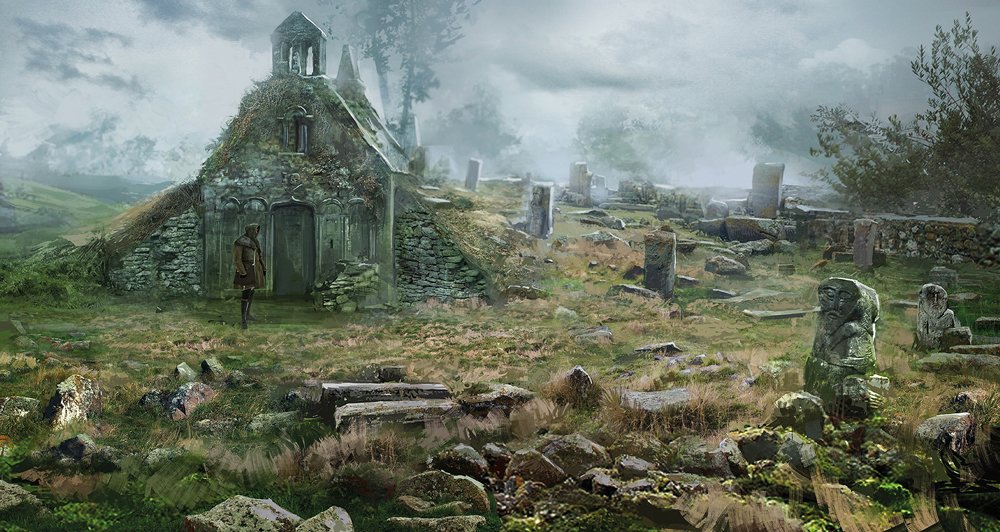
Beneath the High Cathedral of Maldoror


The long, dim corridor that stretched out before him starkly contrasted with the polished marble of the High Cathedral above. The walls were made of black rock, smeared with centuries of grime, and flickering torches illuminated its length only at great intervals. Gregor Ravenor Nykerius, inquisitor, resumed his march into the oppressive darkness after a brief pause to steel himself. His jaw worked and his balled fists clenched and unclenched while he walked. Gregor hadn't deigned to change his practical, leather apparel for this visit to the black cells, but he had pinned his inquisitorial badge to the lapels of his greatcoat for the occasion. He would do well to remind the Templars of his authority.

It had been years since he had last been in Maldoror. The great capital of Montgarde wasn't part of his assigned territory. Other inquisitors worked to root out the heresy in the bloated city, and Gregor was thankful for that. He had never much liked Maldoror -- the traitorous imperial court, the endless miles of crime-ridden slums at its edges, the holier-than-thou attitude of the insufferable ecclesiarchs... Gregor detested all of it. No, he operated further north, in the wetlands and forests that surrounded Couronnesbourg. That was a much more modest and agreeable city, and while its people were equally pious, they were humble. Gregor enjoyed protecting them, mostly from the ravenous monsters and wicked sorcerers that sought refuge in its dreary landscape every so often. Investigating his corrupt, fellow man was not his forte.

Alas, he had been recalled to the capital for a preposterous, detestable assignment. The church had captured another witch of some kind at the empire's borders, as they did every once in a while, and insisted that the heathen be given a chance at redemption by using their dark powers to fight the enemies of Montgarde. Gregor hated that line of thought. The Templars and their friends within the clergy always blathered on about the Matriarch's mercy, but Gregor was pretty sure the whole operation was designed to weaken the inquisition from within by forcing them to work with dangerous heretics and sorcerers. As long as the Emperor was in bed with the church, the inquisition was forced to cooperate. Gregor didn't believe any more, but if he did, he would most certainly not see this as a holy task performed for the Matriarch's favor. This is the Gravedigger's work, he bitterly thought to himself.

At long last, the corridor opened up into a large, circular chamber. Hundreds of candles flickered silently in the alcoves that lined the walls, interrupted by at least a dozen doors. Gregor had never been further into the dungeon than this, but he knew that those doors led to the actual black cells themselves. This was as far as visitors were permitted to go.

Four Templars waited there for him. A seated figure was in their midst, a hood of black cloth obscuring her face, but Gregor immediately knew that this was the witch that was supposed to accompany him. Gregor exhaled sharply through his nose and stepped forward. "Paladin Eritreas," he said, greeting the most senior of the Templars in short clipped tones. Gregor had met him before. Obviously, he didn't care for the older man. Eritreas returned the greeting with an unpleasant smile. "Inquisitor Nykerius," Eritreas replied in a sickly, honeyed cadence. "We are so pleased you've come. The Matriarch smiles upon you. You know what is expected of you?"

Gregor cleared his throat. "Yes, Eritreas. I know. Get on with it." The Templar raised his eyebrows, the smile never leaving his clean-shaven face, and shrugged. "As you wish." Eritreas reached out with a hand and pulled the black hood off of the witch's head. Black hair spilled over the woman's shoulders and Gregor met her eyes briefly. The enemy. He looked away, shifting his weight, and grunted uncomfortably. "This is Loka Meissa ar-Raqis," Eritreas continued. "We captured her near Kopt. As we understand it, she worships a false deity named the Peacock God. She is misguided, but... potent. Use her wisely." Eritreas tilted his head, his dark eyes seeking Gregor's. When the inquisitor returned the stare, seeing it full of schadenfreude, he muttered an oath under his breath. "Fine," he spat. "Leave me with her."

The four Templars bowed mockingly and retreated. Gregor stared at the ground for a while, processing his fuming indignation, before taking a deep breath and looking at Loka again. He took off his hat and held it in front of his chest, not unlike a man paying his respects at a funeral. My own funeral, Gregor thought. "So," he said eventually. "Tell me about yourself, Loka."

"Fuck the money," Maulakanth said to Cedric when Blood-Red Brynn managed to bring the fury of the locals upon them and got to his feet quickly. In the interest of fairness, the orc would have left his blades sheathed in an ordinary tavern brawl but these Bretons were quite clearly insistent on having them all killed. Maulakanth spotted knives, sickles and even a flanged mace in the hands of the enraged farmers and carpenters. This was going to be a good scrap, and a good opportunity to show everyone exactly who was the boss here.

He leapt over the table, past Cedric, and raised his hands up to grab the hilts of the swords slung diagonally across his back. The orichalcum weapons left their sheaths with an ominous rasp. The two swords were long and heavy, slightly curved in that typical Orcish fashion, with a jagged and irregular edge. Maulakanth bared his tusks at the Bretons and growled a deep, ululating purr in the depth of his chest. The brawl had already broken out around him in full force, but several of the locals hesitated for a few seconds. They looked at each other, finding courage in numbers, nodded, and charged at the orc. "Big mistake," Maulakanth sneered, and started laughing.

Everything went red as Maulakanth willingly gave in to the berserker's rage that always bubbled beneath the surface of his race. He could feel the spurned wrath of Malacanth give power to his limbs and the sulfuric rage of Mauloch lend weight to his strikes. Maulakanth bent his knees and arched his back, crouching slightly and lowering his center of gravity. The Bretons fell upon him like a wave, but the orc had become a rock in the surf. His blades moved and twirled with preternatural speed to deflect and parry multiple blows at once. The four Bretons surrounded him and hacked, slashed and smashed away -- to no avail. Maulakanth turned and pirouetted with all the grace of a dancer and his swords were everywhere. It was a beautiful defense, but the orcish bloodthirst singing in his veins demanded that he go on the offensive.

He roared, an ear-splitting, primal noise that made the Bretons flinch, ducked low and spun his swords around him, arms extended. The tips of his blades cut through thighs and abdomens alike, depending on the height of the Breton in question. Howling in pain and alarm, the four men stepped away, gingerly feeling their wounds. They had only suffered superficial cuts, but first blood was first blood. Maulakanth gave them no time to recover and rushed at one of the Bretons. The man panicked and lifted his dagger in an attempt to deflect the attack, but it was like trying to stop a sabre cat with a spoon.

The Breton ceased to be. Maulakanth's twin strikes were so vicious that the man fell to the floor in three pieces, slick with spurting blood. To the orc's surprise, one of the other Bretons used this opportunity, now that Maulakanth's back was momentarily turned, to stab him in it. Orc hide is tough and the blade was dull and of poor make, but it managed to nick Maulakanth and draw blood all the same. Maulakanth barely felt the pain, clouded as his mind was, and wheeled around at top speed. The Breton's little stab was repaid with a disgustingly strong thrust to the ribcage. Bone shattered as Maulakakanth's orichalcum blade ran the man through entirely. He barely had time to process what happened to him before his heart stopped and Maulakanth savagely kicked him off of his sword. "NEXT!" Maulakanth bellowed as he swung his blades around him with a flourish. His bare chest was flecked with blood, his eyes were wild and gore dripped from his swords. Truly, he was the Hand of Mauloch.

One half of this dynamic duo is Gregor Ravenor Nykerius, a high-born from a family with ties to the imperial court. His life was destined to be one of luxury and comfort. However, Gregor's austere nature made him walk away from all of that quite early. He desired a meaningful life, even if it was a hard one, and his position as his father's fourth son meant that there would be precious little responsibility to go around. Gregor was sent to the Academia, Montgarde's most prestigious educational institute, and there he was taught the art of war. His iron will and staunch puritanism caught the eye of more influential figures and strings were pulled to bring him to the front of Montgarde's war of conquest.

Gregor proved himself to be a capable commanding officer, fearless in the face of danger, and he was plucked from the front after a few months and reassigned to Montgarde's capital. "Guard duty," the letter said. It turned out to be a front for a highly secretive training program, carried out in the bowels of the capital city's sewers. Gregor was to become one of Montgarde's elite inquisitors, a member of a nameless organization whose existence was publicly denied by the Emperor.

He has served faithfully since and has seen many of the dangers that lurk in the empire's shadows. These things and the horrors associated with them have eroded his faith, over time, and he has recently become an apostate. While this isn't something he publicly talks about (due to it being a social no-no and a taboo) the Templars of the church have picked up on it, based on his behavior and disdain for the church, and are watching him like a hawk. Non-believers are a threat.

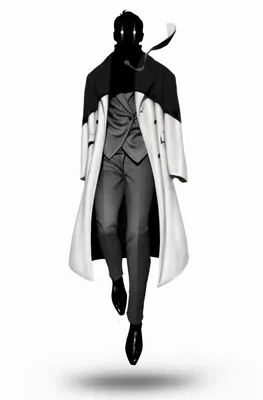
His appearance is striking but not particularly handsome. Gregor's face is sharp and angular, featuring high cheekbones, prominent, arched eyebrows, a thin, disdainful mouth and cold, hard eyes, the color of glacial ice. His jaw tapers off into a thin, narrow chin, and Gregor's black hair, swept back in a widow's peak, makes him look older than he is. Gregor wears strong, sturdy apparel that, while worn with age, still speaks of his high-born background; a leather greatcoat worn over black, woolen clothes, complete with iron-tipped boots and leather gloves. He wears a wide-brimmed, tall hat and carries his badge of office with him in an inner pocket. Last but not least is his weapon, a pale steel longsword from the rimefire forges of the Isle of Faces that shimmers in the dark.


The empire of Montgarde is a large, varied nation whose edges have continuously expanded due to the never-ending war of conquest being fought on its fringes. It extends all the way from the deep south, where the rain rarely falls on the sandy dunes, to the far northern snow-capped mountains -- and everything in between. Fields, forests, plains, tundra, rivers, lakes, cities. Montgarde has it all.

While its armies fight the enemy without, a small group of dedicated men and women combat the enemy within. Commanded by the Emperor and consecrated by the Faith, they are the watchers in the dark. No one escapes their scrutiny, be it low-born vagrant or wealthy, connected noble, and no monster is too dangerous for them to hunt. This is a story about two such remarkable individuals.

Locations

Maldoror is the capital city of Montgarde, located in the heart of its territory, and the largest city in the empire. Many noble houses and aristocratic families make their home in the city's center, and tens of thousands of poor peasants live in the slums that surround the city. The central setpiece of Maldoror is the Imperial Palace, home of the Emperor and the imperial court. It's rivaled by the church's High Cathedral. The black cells of the Templars, where they lock up all the heretics, are located beneath the Cathedral. The Academia is located near the Imperial Palace.

Irem Kopt, also known as the Labyrinth City, is a city located in the opal expanse. It is an ancient and little-understood city surrounded by a vast sandstone maze within the grey area of what the empire possesses and what it still desires. It is a strategic linchpin, guarding both the untrod lands to the south and holding a port beside the bay of drowned ghosts. Its people are a mishmash of cultures left from old invasions, and it has no official religion, instead supporting an indefinite number of competing cults and allowing the most effective to survive. Many have tried to take Kopt. But the only certainty in the desert is that no one holds the Labyrinth City for long.

Factions

The inquisition, commanded directly by the Emperor and consecrated by the Faith, exists to hunt down all of the threats that besiege the empire from within. This includes heretics (those who seek to undo the power of the Emperor), monsters, extremely dangerous criminals and foreign spies or assassins. The existence of the inquisition is publicly denied by the Emperor but the ruling aristocracy is well aware of their presence. Uneducated peasants know of the inquisition through folklore and scary, campfire stories, but many don't believe them. Inquisitors are mostly recruited from promising Academia students and officers of the Imperial Armies.

The inquisition is far from a unified front. Its individual members enjoy spectacular amounts of autonomy, both in how they carry out their work and in their ideologies and faith. Most inquisitors recognize that, while none are official, there are several factions within the inquisition.

Puritans are inquisitors whose principles align with the concept of puritanism, obviously – in Montgarde, this means a strict adherence to the rule of law. They do not use magic or overstep the bounds established by the manifold Imperial decrees that have been issued over the centuries or the nation's constitution. They are primarily witch-hunters, focusing on persecuting Abominations, sorcerers and other, obvious offenders of Imperial law, like murderers. Most of them are atheists that do not recognize the authority of the gods or the Imperial church. The current leaders of the inquisition are primarily puritans. Gregor Nykerius belongs to this faction.

Unorthodoxi are inquisitors who believe that working outside the boundaries of the law is allowed, and sometimes even necessary, in order to properly fulfill the prime objective – the eradication of the enemies of mankind. An oft repeated mantra of unorthodox inquisitors is 'the end justifies the means'. They freely (ab)use the power of magic, though often in secret, and operate with even greater independence than the average inquisitor. Some of them might not report back for years on end, or even leave Montgarde to pursue their enemies abroad. Puritans consider them dangerous. An unorthodoxus, in turn, might say that puritans are merely 'unorthodoxi waiting to happen'. They tackle the most dangerous creatures and warlocks with boundless enthousiasm, fearlessly risking their lives and their sanity for the cause. Some inquisitors derisively call them 'radicals' instead. They might still be believers of the Imperial church or privately worship different gods entirely.

Ecclesiasts are fervently religious inquisitors that align themselves closely with the Imperial church, and believe in the rule of the gods. They are a small but vocal minority within the inquisition that base their political clout on their cooperation with Templars and other religious groups within Montgarde. Ecclesiasts and puritans famously do not get along, but the ecclesiasts' greatest rivals are the dominants. They might employ magic but only if it's sanctioned by the Imperial church. Some of them become Templars eventually but most of them stay within the inquisition, as they have greater power within Montgardian law. They wish to usurp the puritan leadership. Paladin Eritreas was once an ecclesiast.

Dominants are also disdainfully irreverent of the rule of law and instead dedicate themselves entirely to the rule of the Emperor. They focus on persecuting the Emperor's political enemies within Montgarde. This includes regents and lords who seem too ambitious, republicans and zealous church officials. Their rivals are the ecclesiasts as their political goals completely oppose one another. Where a puritan might refuse an Emperor's command if it goes directly against the constitution – like the murder of innocents – a dominant will swing the sword without a second thought. Most dominants belong to noble families trying to curry political favor with the monarchy. Dominants might have unorthodox tendencies, but they are never ecclesiasts, and they look down on puritans for being ignorant of the great, political game.


The Templars are the militant branch of the imperial church, the Faith. Their official role is to protect churches, cathedrals and other ecclesiastical locations and officials, but their activities extend much further than that. The power of the Faith is built on the idea that everyone believes, so non-believers and apostates are seen as threats. The Templars keep tabs on such individuals and work to undermine their authority. The inquisition contains a disproportionate amount of atheists, leading a bitter rivalry between the two factions.
Had a busy weekend, but I'm getting my juju on now.
WOE

—Inscription on the plinth of a statue of the Silent King in the Reach


After war, there were casualties.

The Void Stalkers didn't inter their dead or honor their passing with rite or solemn speech. They didn't even write down their names. No, the Void Stalkers simply returned their dead warriors from whence their spirit came: out of the airlock and into the void.

Stripped of their armor and their weapons, the dead Stalkers were wrapped in a black death shroud and loaded into the airlock in batches of five. There they lay, side by side, until the vacuum of outer space snatched them away when the outer doors of the airlock opened. These proceedings were usually supervised by the respective Void-Master of the Chapter that the Marines belonged to, which meant that they were disposed of from various different ships. Gorseval couldn't possibly be in several places at once. The vast majority of the dead Void Stalkers were sent off into eternity without the presence of the Primarch they lived and died for.

Today, Gorseval attended the disposal of the dead of the First Chapter. They'd saved his life when they steered the Space Hulk away from its collision course with the Eclipse – it only made sense. There were precious few of them to send off, though, as most of their dead had been left behind in the Hulk. Unfortunate, but Balthasith had managed to put a positive spin on it.

“That ship will take them to places none of us will ever visit,” he'd said. “They'll see more of the galaxy than you or I.”

Gorseval stood in the hangar of the Event Horizon, watching the void burial from a distance, arms crossed. Asmodal flanked him, his Terminator armor covered in fresh dents and nicks but decidedly clean. The lighting in the hangar was dim and cast many opposing, soft shadows.

The somber mood of the Primarch seemed to cling to him like a cloak of darkness. He wasn't upset at the deaths of his Astartes, however. Gorseval was still wrestling with the fact that he would have likely died if it wasn't for the actions of the man standing next to him, and those that followed him into the Space Hulk. Asmodal was invaluable. That was insufferable.

“There would not have been anything left of me to send off, if it wasn't for you,” Gorseval eventually said quietly. He kept his black gaze fixed on the proceedings in front of him – Void Stalkers carried their dead brethren into the airlock in total silence – but Asmodal knew that he'd been spoken to. The white-haired Astartes exhaled deeply through his nose and smiled faintly, casting a sidelong glance at his King and Primarch.

Asmodal weighed his options in his mind and decided to reply with honesty. “You don't like that, do you?” he whispered. Gorseval's head turned sharply and he looked at Asmodal, his face unreadable.

“Don't presume to --” Gorseval began, but Asmodal chuckled and waved the reprimand away with his huge, armored hand. “It wasn't criticism,” Asmodal said. “You've always been like that. If it were possible to do everything by yourself, you would.” He paused and gauged Gorseval's reaction, but the Primarch said nothing, nor did he look away. Asmodal continued: “I'm not one of them. Your genetic sons, or those that you bent to your will in the Reach. I volunteered. Did you forget?”

Gorseval's frown deepened. “Of course not.”

It was a few seconds before Asmodal spoke again. “Good. I would follow you until the end of the light, where the stars thin out and the endless nothing begins. I would die for you, my Lord. The Reach was nothing before you came to us. But I do know who you are and what you're like,” he said and waited for Gorseval to respond.

The Primarch merely looked away. He felt a disturbance in the back of his mind, like a ripple from something that was happening far away. A faint image flashed in his mind's eye before the walls came back up and the connection was severed. There, it reverberated.

Dark disc slowly moving to cover a vast white sun. Thin crescent of white fire flickering at its edge.

“No, you don't,” Gorseval said bitterly. He uncrossed his arms and stalked away, leaving Asmodal behind, who was smart enough not to follow his Primarch.

A shadow of uncertainty flickered over his old face.


The Void Stalkers responded to the call to return to Ullanor Prime immediately. Gorseval was glad to leave Harkonnen IV behind him – the specter of his near-defeat had haunted him long enough. The great fleet of the XXth Legion left orbital grav-anchor and made their way to the system's jump-point. Gorseval sent a short telepathic ping to Lydia Magaera to let her know that he was departing the system and that he hoped to see her on Ullanor Prime.

One by one, the spaceships flitted into the Warp and out of the void.
@Mahz himself will have to fix that.
Hello?
Found myself with some downtime and wrote a short post to introduce Maulakanth.
© 2007-2026
BBCode Cheatsheet