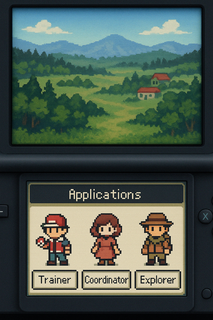
I understand that the current roles started above are: Trainer, coordinator, and explorer. If I had to focus on one based off from the general definition (which I know your definition might differ) I would have to focus on the one that would fit a scientific individual the best and that would possibly be explorer. Someone who wants to explore the world and learn about the environments and different types of pokemon. Though I feel like my idea could fit into the trainer role on the basis of learning to teach as well. What do you think?
Honestly, a scientist could work really well for any of the three roles. It all depends on what drives them.
As a Trainer, maybe they’re studying combat mechanics in the field, trying to understand the way Pokémon adapt through battle, or testing a theory on how emotional bonds affect performance. As a Coordinator, maybe they’re trying to quantify beauty, charisma, or the subtle language between Pokémon and audience.
And as an Explorer, the fit is probably the most natural. If you check the OOC, you’ll see that in this region, there are 22 magical brooches known as the Major Arcana, each tied to either a Gym Leader, a Contest Icon, or one of the Elite Four or Champion, except for one: a brooch that’s been lost to time. An Explorer with a scientific mind might be driven to study the origin of these artifacts, uncover their true nature, and follow the trail of the missing one.
So yeah, go wild with your idea. The role can absolutely bend to fit the character, as long as their motivation shines through.
To most citizens of Veluria, the Major Arcana are simply the greatest heroes of the region—Gym Leaders, Contest Icons, and the Emperor’s Royal Guard. Each member bears a legendary Brooch said to grant its wielder incredible powers tied to an ancient tarot motif. However, the true origin of the brooches is shrouded in mystery. No one remembers who created them—or why.
Originally formed around these relics, the Major Arcana once served an unknown purpose now lost to time. Over generations, they became figures of cultural, political, and military power—enforcing Imperial law, shaping public ideals, and dominating both battle and beauty.
Each Gym Leader and Contest Icon wields a unique Brooch linked to a Major Arcana card, and each operates out of a designated city. The cities themselves have become famous centers of tourism, training, and cultural rivalry.
The Elite Four and Champion reside in the Imperial Capital, ruling as the Emperor's Royal Guard.
---
Gym Leaders – The Swords of the Empire
The Gym Leaders wield Brooches with power over Pokémon combat. They form the outer wall of the Arcana Order—trial by battle, city by city.
Magician – Electric Type City: Voltisburg
Emperor – Steel Type City: Sibellen
Chariot – Fighting Type City: Kordastein
Strength – Normal Type City: Marefield
Justice – Psychic Type City: Delmaris
Death – Ghost Type City: Tenebrake Hollow
Devil – Dark Type City: Blightshore
Tower – Rock Type City: Cragspire
---
Contest Icons – The Faces of the Empire
The Icons wield Brooches designed for contest performance, artistic expression, and philosophical power. Their talents shape culture and policy through elegance, symbolism, and spectacle.
High Priestess – Intelligence Focus City: Sibellen
Empress – Constitution Focus City: Rosperia
Hierophant – Wisdom Focus City: Kordastein
Lovers – Charisma Focus City: Auralis
Hermit – Strength Focus City: Tenebrake Hollow
Wheel of Fortune – Dexterity Focus City: Voltisburg
Hanged Man – Inverting Perspectives City: Virelia Falls
Temperance – Balancing & Unity City: Noccellis
---
The Emperor’s Royal Guard – Elite Four & Champion
Their brooches are beyond tactical—they are mythic. The Champion and Elites are guardians of destiny, chosen not by victory alone, but by alignment with fate itself.
Star – Top Icon/ Elite 1 Moon – Elite 2 Sun – Elite 3 Judgement – Elite 4 World – Champion
Residence: Caelux Citadel – The Imperial Capital
---
“The brooches are only tokens. What they seal—or unleash—remains to be remembered.”
Yaay! I'm glad you're interested. Let me know if you have more details and ideas for your character! And about not knowing much about D&D, don't worry, I can walk you through everything in your Pokémon's statblock.
⚠️⚠️ The full guide is live, but I understand the mechanics might feel a bit overwhelming at first—so for now, think of them as suspended until everyone feels comfortable diving in. ⚠️⚠️
Introduction
This is a comprehensive guide on all the rules that determine the stat blocks for Pokémon.
***No need to get intimidated by it. You don’t have to memorize every detail, and you definitely don’t need to read the whole thing if you’d rather not.***
There’s an example stat block for an Ivysaur at the end of the guide—maybe just checking that will help you understand most of the system all at once.
In this game, Pokémon grow from level 1 to 20. A level 20 Pokémon is equivalent to level 100 in the traditional games. Each level matters, and every time a Pokémon grows stronger, it’s felt.
To know when your Pokémon is going to level up, simply divide it's normal evolving level by 5 and round up. For example, Bulbasaur evolves into Ivysaur at level 16. 15/6 = 3.2 -> rounded up: level 4.
There are a few pieces of information in the Pokémon stat block you'll want to pay attention to:
Attributes – These define your Pokémon’s strengths and weaknesses. They’re directly inspired by D&D’s ability scores, but here, they have different effects. Each attribute plays a role in battle, performance, or how your Pokémon interacts with the world.
HP – This is your Pokémon’s health. It tells you how much damage they can take before fainting. Tougher Pokémon with higher Constitution can endure more hits.
AC – Stands for Armor Class. It represents how hard it is to land a hit on your Pokémon, whether through physical or special attacks, depending on their defenses. You have a physical and a special one.
Moves – These are the actions your Pokémon can take — offensive strikes, tactical status effects, defensive maneuvers, or dazzling contest techniques. Each one costs 1 Charge to use. You can keep only 4 at a time.
Charges – This is your Pokémon’s stamina. It tells you how many actions they can take before needing a rest. Every move costs 1 Charge, and once they run out, they’re spent until they can recover.
Attributes
Every Pokémon has six attributes: Strength, Dexterity, Constitution, Intelligence, Wisdom, and Charisma. At level 1, each Pokémon gets 75 attribute points, and they earn 1 point every two levels.
Strength (STR) – This affects how hard your physical attacks hit. It's the primary attribute for calculating the damage of physical moves.
Dexterity (DEX) – Governs physical defense, accuracy, and initiative. This affects the Pokémon's physical AC (how hard it is to hit with physical attacks) and its Initiative (the order it acts in during combat).
Constitution (CON) – Directly affects your Pokémon’s HP. Most moves that cause conditions like poison, burn, or sleep require a Constitution saving throw to resist their effects.
Intelligence (INT) – Like Strength, but for special attacks. It determines the power and effectiveness of beams, blasts, and other special-based moves.
Wisdom (WIS) – Functions like Dexterity, but for resisting special attacks. It determines your Pokémon’s special AC—how hard it is to hit with special moves like Psychic or Flamethrower.
Charisma (CHA) – Directly influences Contests. A high-Charisma Pokémon will perform better overall (see Contest rules for more details). Charisma also affects the accuracy of status moves (in the same way Strength does for physical attacks and Intelligence for special ones), and governs happiness-based evolution. The higher the Charisma, the easier it is to form a deep bond—and evolve through it.
Modifiers
Each attribute a Pokémon has (Strength, Dexterity, etc.) comes with a modifier. This modifier is what’s actually added to rolls—like damage, saves, accuracy, or AC. The higher the attribute, the better the modifier. The table below shows how that works:
If your Ivysaur has a Constitution score of 14, for example, that’s a +2 modifier—which means it gets 2 extra HP per level.
Different Pokémon fill different roles in battle, and how you allocate their stats will define the way they move, strike, support, and survive. Below are some general build archetypes to help you think about how your Pokémon might function in your team. These aren't hard rules—just starting points. Every bond is unique.
Tank – A Pokémon built to take hits and keep standing. High Constitution gives them the raw HP to last. Pair it with high Dexterity to shrug off physical blows, or Wisdom to endure special attacks.
Physical Striker – This one hits hard and fast. A high Strength stat powers up physical attacks, while Dexterity helps them go early in the turn order and land precise blows.
Special Striker – Similar to the physical variant, but focused on beams, pulses, and elemental blasts. Intelligence boosts damage, and pairing it with Wisdom improves survivability against opposing specials.
Speedster / Glass Cannon – High Dexterity and Strength or Intelligence, but low Constitution. They hit first, and they hit hard—but they can't take much in return.
Disruptor / Status Specialist – Focused on conditions rather than damage. Charisma improves accuracy of status moves and contest potential, while Wisdom or Dexterity can help them survive long enough to sabotage the field.
Support / Healer – These Pokémon often prioritize Charisma and Wisdom, especially if they're buffing allies or soothing them mid-battle. They're not front-liners—but they keep front-liners standing.
Contest Performer – Outside battle, this build thrives on stage. High Charisma is essential, but certain contest styles may also benefit from Dexterity, Intelligence, or even Wisdom, depending on the routine.
Balanced All-Rounder – Some Pokémon are simply good at everything—solid Constitution, decent offense on either side, and the flexibility to adapt mid-fight. Not flashy, but reliable.
Evasion-Based Scout – High Dexterity and Wisdom, built to never get hit in the first place. These Pokémon weave through danger and can be perfect for Explorers or hit-and-run tactics.
Proficiency Bonus
This is a basic modifier that increases as your Pokémon levels up. It represents overall skill, training, and experience. You’ll use it in a few important places—like when calculating AC, or when determining the DC (Difficulty Class) for a move that forces a target to resist.
Don’t worry about calculating this yourself— in the Stat Blocks the Proficiency Bonus will already be included wherever it applies.
HP
Your Pokémon’s HP shows how much damage they can take before fainting. The tougher the Pokémon, the more hits they can survive—and that’s reflected in their Constitution modifier.
The formula is simple:
HP = 5 × Level + (Constitution Modifier × Level)
So if your Pokémon is level 10 with a +2 Constitution modifier, their HP would be:
5 × 10 = 50 +2 × 10 = 20 Total: 70 HP
This means every level matters, and Constitution really shapes a Pokémon’s durability. A high-CON Pokémon will always outlast a fragile one at the same level.
AC's
AC is how hard it is to hit your Pokémon during battle. There are two types of AC: one for physical attacks, and another for special attacks.
The formulas are:
Physical AC = 8 + Proficiency Bonus + Dexterity Modifier Special AC = 8 + Proficiency Bonus + Wisdom Modifier
Physical AC is used when your Pokémon is being targeted by physical moves—things like Tackle, Bite, or Close Combat. Special AC comes into play when facing moves like Flamethrower, Psybeam, or Thunderbolt.
If your Pokémon is especially agile or perceptive, they’ll be harder to land a hit on. High Dexterity means they’re good at dodging physical blows; high Wisdom means they can read and react to incoming special attacks.
Moves
Each Pokémon can know up to 4 moves at a time. These are the actions they can take in battle—whether they’re attacking, supporting allies, weakening enemies, or enhancing themselves.
Every move will have its own description: what it does, what kind of damage it deals (if any), and whether it requires a saving throw or affects AC. All of that will be listed clearly in the move’s entry.
There are four types of moves in the Veluria system:
Physical Attacks – These are close-range strikes like Tackle, Brick Break, or Play Rough. They add your Pokémon’s Strength modifier to the damage, and are checked against the target’s Physical AC (DEX-based).
Special Attacks – These include elemental blasts, beams, or pulses—like Flamethrower, Shadow Ball, or Thunderbolt. They add your Intelligence modifier to damage and go against the target’s Special AC (WIS-based).
Self-Inflicting Status Moves – These are buffs or debuffs your Pokémon applies to themselves. Things like Swords Dance, Agility, or Iron Defense. They don’t require any rolls and are usually modified by Charisma.
Status Moves (Targeted) – These apply conditions or stat changes to other Pokémon, like Growl, Confuse Ray, or Toxic. They’re powered by Charisma as well, and might require the target to make a saving throw—usually a Constitution or Wisdom save, depending on the effect.
All of this will already be written into the move itself on your stat block, so don’t worry about memorizing it. Just focus on what your Pokémon does best—and how they do it.
The damage of moves is also affected by your Pokémon’s level tier. As they grow stronger, their attacks hit harder. This multiplier is already factored into move damage in GM-provided stat blocks, but here's how it works:
Charges represent how many actions your Pokémon can take between rests. Every time your Pokémon uses a move, it spends 1 Charge. Once they run out, they’ll need to rest—either at a Pokémon Center, at camp, or through some other downtime—before they can act again.
All moves cost 1 Charge. No exceptions. Whether it’s an attack, a buff, or a debuff, it still costs one.
Pokémon start with 6 Charges at level 1, and gain +2 Charges every 3 levels. That means more seasoned Pokémon can stay in battle longer and do more before tiring out.
If a Pokémon runs out of Charges, it is considered incapacitated—it can no longer take actions in combat until it has rested and recovered. It isn’t fainted, but it’s spent, too exhausted to keep going. Keeping an eye on your Charges is just as important as managing HP.
Resting and Managing Resources
As mentioned earlier, not every moment calls for the full stat block. Smaller scenes—like chasing off a flock of low-level Pokémon, having a quick race, or letting a partner Pokémon help in a light moment—don’t require rolling or detailed mechanics. In those cases, just mark off a single used Charge, and move on with the story.
But when the stakes rise—battles against other Trainers, Gym matches, contests, or dangerous wild encounters—you’ll need to be more careful. Resources matter. HP and Charges don’t come back on their own.
A full night’s rest restores 5 + Constitution modifier HP, and 2 Charges. It helps, but it’s slow. Pushing your team day after day will wear them down.
Sending a Pokémon to a Pokémon Center will restore it completely—HP, Charges, status effects, everything. But it takes 1 hour of in-game time. And time matters. If you’re not careful, you might miss your contest, your train, or your moment.
This system rewards planning, pacing, and knowing when to hold back. A powerful Pokémon that’s out of Charges is just as helpless as a fainted one.
Example Stat Block
Ivysaur – Level 4
Type: Grass/Poison
HP: 36 Charges: 8 Proficiency Bonus: +2
AC (Physical): 11 AC (Special): 9
Special Ability:Overgrow – When Ivysaur has less than 1/3 of its HP, all Grass-type offensive moves deal +50% damage.
Attributes (Total: 77 points) STR 12 (+1) DEX 12 (+1) CON 18 (+4) INT 10 (+0) WIS 8 (–1) CHA 15 (+2)
Moves: Each move costs 1 Charge to use.
Razor Leaf – Physical Attack – Grass-type A flurry of sharp-edged leaves is launched at the target. Damage: 1d6 +1 Targets: Physical AC
Acid Spray – Special Attack – Poison-type Ivysaur spits a stream of corrosive poison. Damage: 1d6 +0 Targets: Special AC On hit, the target’s Physical AC is reduced by -1 for 2 turns.
Leech Seed – Status Move (Targeted) Ivysaur plants a draining seed in the target. DC: 12 Constitution save On failure, the target takes 2 damage at the end of each of their turns for 3 rounds. Ivysaur regains 1 HP at each tick.
Growth – Status Move (Self-inflicted) Ivysaur focuses and absorbs sunlight. Gain +1 to Strength and Intelligence for the next 3 turns.
AC (Special): 9 (8 + Proficiency + WIS modifier = 8 + 2 –1)
Special Ability:Overgrow – When Ivysaur has less than 1/3 of its HP, all Grass-type offensive moves deal +50% damage.
Attributes (Total: 77 points) STR 12 (+1) DEX 12 (+1) CON 18 (+4) INT 10 (+0) WIS 8 (–1) CHA 15 (+2)
(75 points is where all Pokémon start. They get +1 every two levels, so at level 4 he has 77 points total.)
Moves: Each move costs 1 Charge to use.
Razor Leaf – Physical Attack – Grass-type A flurry of sharp-edged leaves is launched at the target. Damage: 1d6 +1 (STR) Targets: Physical AC If Ivysaur has less than 12 HP, this move deals +50% damage (Overgrow).
Acid Spray – Special Attack – Poison-type Ivysaur spits a stream of corrosive poison. Damage: 1d6 +0 (INT) Targets: Special AC On hit, the target’s Physical AC is reduced by -1 for 2 turns.
Leech Seed – Status Move (Targeted) Ivysaur plants a draining seed in the target. DC: 12 Constitution save (Calculated as 8 + Proficiency [+2] + CHA [+2]) On failure, the target takes 2 damage at the end of each of their turns for 3 rounds. Ivysaur regains 1 HP at each tick.
Growth – Status Move (Self-inflicted) Ivysaur focuses and absorbs sunlight. Gain +1 to Strength and Intelligence for the next 3 turns. No roll required.
Hey! I’ve got 3 spots open for a Pokémon campaign with a twist.
This game will be set in an original region and use light D&D-inspired mechanics to handle Pokémon battles, moves, and special encounters. It’s a story-focused, character-driven adventure with just enough dice to spice up the big moments.
You’ll choose one of three roles: Trainer, Coordinator, or Explorer—each with their own goals, paths, and ways to interact with the world.
Want to build a party, uncover a mystery, and fight for something bigger?
This is a tabletop-style campaign. We’ll be using D&D-inspired mechanics to handle Pokémon moves, stats, and structured encounters. Every Pokémon will have a custom creature-style stat block, including things like HP, AC, Speed, Abilities, and signature Moves—built for quick use and flavorful play.
I’ll be managing all stat tracking behind the scenes (level-ups, evolutions, move changes, etc.), so you can focus on playing your character.
When do we roll dice? Only when it matters. • Gym battles, • Contests, • Fights against major villains or threats. Everything else—like minor wild encounters, roleplay scenes, or exploration—is handled narratively to keep the story flowing.
The goal is to keep the pacing tight and the mechanics fun, not overwhelming. You’ll get tactical depth when it counts, and cinematic storytelling the rest of the time.
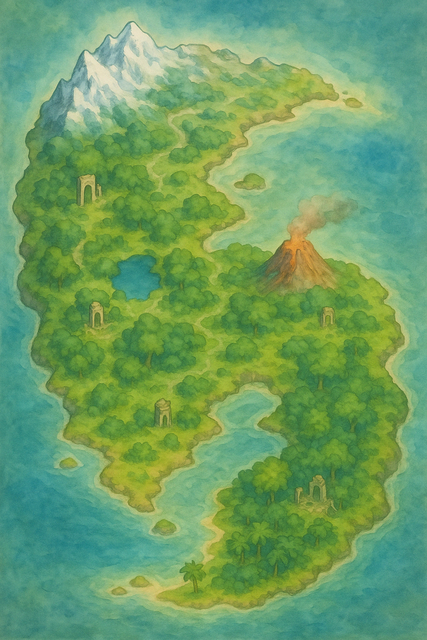
Welcome to Veluria — a different kind of Pokémon region.
Here, kids don't set out at ten with a rucksack and a dream. In Veluria, all young trainers pursue a compulsory education plan, coming out at twenty after years of demanding, multi-faceted training.
Students are taught an extensive range of abilities—some with applications in everyday life, others specially specific to Pokémon. They learn survival techniques, ecological science, healing methods, Pokémon behavior and health, battle theory, ethics, engineering, agriculture, etc. Each is taught not only in classrooms, but in the outdoors too—through forests, labs, mountain camps, battlefields.
Other graduates continue their studies in such academic disciplines as Poké-medicine, cryptozoology, elementary physics, aura studies, or ancient civilization studies. Others become Rangers, Habitat Restoration Architects, or Conservation or Competitive Battling specialists with special permits.
Veluria doesn't hurry its youth. It sharpens them.
- - -
I’m looking for three players for this campaign—one to fill each role: a Trainer, a Coordinator, and an Explorer.
You don’t need to feel boxed in. Your character doesn’t have to be freshly graduated—but they can be.
In this region, there exists an enigmatic organization known as the Major Arcana, operating under the authority of the Imperial Family. Each member wields a magical brooch—an amulet embodying one of the Major Arcana:
Eight of them serve as Gym Leaders. Eight are the icons of the Contest Halls. Five form the Elite Four and the Champion, collectively known as the Emperor’s Royal Guard.
But one brooch is missing, lost to history, or hidden for a reason.
Even tho, I'm looking for three players, each for a specific role don’t feel locked into standard archetypes.
The Trainer is someone striving to conquer every Gym, to face the Elite Four, and ultimately to challenge for the title of Champion—becoming the Emperor’s newest sword and shield. But maybe...
You are a retired policeman, now middle-aged, haunted by your days in service, seeing the gym challenge as a path to redemption—and a way to protect the future...
...or a former academic dropout, who once studied battle theory but never touched a Poké Ball—until now...
...or a bright-eyed prodigy from a remote island, who fights with instinct and improvisation, their bond with Pokémon forged without formal education.
The Coordinator seeks to dazzle the Contest Circuit, rise to the rank of Top Coordinator, and earn the right to wield the Star Arcana, ascending directly into the elite 4 ranks. But maybe...
You are a glamorous drag performer, blending art, illusion, and fierce battle style into breathtaking contests—trailblazing and unapologetic...
...or a reclusive older woman, once a contest legend, now coming out of retirement for one last shot at the Star Arcana...
...or a grizzled biker with a love for sparkle and showmanship, proving that beauty and brawn aren’t mutually exclusive.
The Explorer is driven by curiosity, chasing whispers and ruins scattered across Veluria. They seek the truth of the Major Arcana’s origin—and the secret of the missing brooch. But maybe...
You are a young single mother and former construction worker, drawn to ruins by strange dreams—dragging her toddler and her partner along in a heavily modified van...
...or a scholar of ancient languages, excommunicated from the academic world for “unethical” theories about the Arcana...
...or a blind seer, guided by the hum of lost magic, following instincts and cryptic visions, not maps.
The examples above are just inspiration—jumping-off points.
You can absolutely create a Trainer, Coordinator, or Explorer with any kind of backstory. Even something more classic, like a small-town kid with big dreams, or an Ash Ketchum-type setting off into the world.
When it comes to choosing players, I’ll be looking for characters with strong stories—people who feel real, alive, and driven. I’ll also be considering how well the characters fit together, because at the campaign’s starting point, all three will already know each other. They’re more than acquaintances and have a reason to journey across Veluria side by side.
But don’t stress too much about that yet. That’s a future-us problem.
For now, just focus on building the best Trainer, Coordinator, or Explorer you can imagine. The kind of character you’d want to follow through a whole region.
Alright, now for the “boring” part—mechanics.
⚠️⚠️ the mechanics guide is live, but I'm suspending it until further notice, because I think this might be driving potential players away ⚠️⚠️
For Pokémon stats and battles, the game will shift into a light tabletop mode. Each Pokémon will have a small creature-style stat block, inspired by D&D (the system I’m most familiar with). I’ll be handling evolution tracking and updating stat blocks as needed—you won’t need to worry about the numbers behind the curtain.
Here’s the important bit: most of the time, you won’t even touch the mechanics. Stumbled into a flock of wild Pidgey? No need to roll dice— we'll just narrate it out. But when you step into a Gym, hit the Contest stage, or face down villains? Oh yeah, we’re breaking out the stat blocks. That’s where the randomness kicks in to keep things tense, wild, and unpredictable.
Just enough crunch to spice things up—never enough to bog you down (hopefully)
Alright, so if you’ve read all of this and want to join the journey through Veluria, here’s the application form. When you fill it out, focus on what your character wants to do, and how where they came from informs that.
Why do they want to be Champion? Maybe it’s out of loyalty to the Imperial Family. Maybe they’re chasing glory, trying to prove something to themselves or the world, fulfilling a promise, or even running from something darker. Whatever it is, give them purpose. Make them feel alive.
[b]Name:[/b] [i](Your character's full name, or nickname if that's their identity)[/i]
[b]Age:[/b] [i](Minimum 20 years old — Veluria doesn’t rush its future champions)[/i]
[b]About:[/b] [i]Tell me your character’s story. Who are they? Where did they come from? What drives them to walk this path? Why do they fight, dazzle, or seek? Make me want to follow them through Veluria, page after page.[/i]
[b]Ideal Team:[/b] [i]What six Pokémon would your character dream of calling partners when they finally stand complete? Include typings, vibes, or themes if you want.
[b]Ace Pokémon:[/b] [i]Their signature partner — the heartbeat of their team. Describe the bond, the role in battle, the synergy. Why this one? What story do they share?[/i]
[b]Posting Frequency:[/b] [i]How frequently can you post?[/i]
Guides on the Major Arcana and the Mechanical Side of Pokémon coming soon in the posts below.
Hogwarts University of Witchcraft and Wizardry Office of Admissions Hogwarts Castle
Dear ------,
We are pleased to inform you that you have been accepted into Hogwarts University of Witchcraft and Wizardry. After reviewing your application and magical aptitude, our Admissions Committee is confident that you will be a valuable addition to our academic community.
At Hogwarts University, you will embark on a journey to further hone your magical skills, deepen your understanding of the wizarding world, and prepare for a successful career in your chosen field. Our esteemed faculty, comprised of experienced witches, wizards, and magical creatures, is dedicated to guiding you on this path of discovery.
As an incoming student, you will be assigned a House that best aligns with your qualities and character. The Sorting Ceremony will take place during orientation, where you will join a community that will support you through both your academic and personal pursuits.
Your courses will be tailored to provide a well-rounded magical education, including but not limited to Advanced Potion-Making, Magical Theory, Dark Arts Defense, Magical Creatures Studies, and Enchanted Artifact Engineering. We also offer a wide range of extracurricular activities, from Quidditch to the Dueling Club, ensuring that you can explore all aspects of magical life.
Please review the enclosed Welcome Packet, which includes information on tuition, required materials, and the schedule for orientation. Our campus offers various resources to help you settle in, and our house prefects and advisors will be available to assist you throughout your time with us.
We eagerly anticipate your arrival and are thrilled to welcome you to the Hogwarts University family. Should you have any questions before the start of term, feel free to reach out to the Office of Admissions.
Congratulations once again, and welcome to Hogwarts University!
Yours sincerely, Minerva McGonagall Headmistress Hogwarts University of Witchcraft and Wizardry
I’m looking for a partner to join me in a role-playing adventure set in a modern-day Hogwarts. This is an alternate universe where Hogwarts has always been a university, and we’re in 2024—with smartphones, social media, and all things tech mixing with magic. I'll be playing a student, but if you’d like to play a professor or staff member, that’s great too!
This will be an MxM game, and while I’m a male myself in real life, I don’t mind what your real-life gender is. Romance will definitely be a part of the story, but it won’t be the only focus. There’s so much to explore—from classes on new spells to the mysteries of the magical world. Smut scenes are optional for me, and I’d prefer they not be central to the plot.
I’m flexible about posting frequencies and totally understand that real life comes first. Open communication is all I ask for.

 Guardian Angel Haruki