Avatar of Theodorable

Status

User has no status, yet

Bio

User has no bio, yet

Most Recent Posts

Age of Imperialism 2.0: TURN 1 | Summer 1920 (July) (Turn 2, Part 1 of 3)


July 2nd: The Republic of Kalpia continues to thrives and grow. The masses are put back to work, and, due to it's immense natural resources and location as a central hub of trade on the Peninsula, sees growth unfettered by nations involved in The Terrible War. The Kalpian Parliament, after meeting and discussing twenty-four hours prior, decide to outlaw the Kalpian Socialist Union. The people, those who supported the socialist policies of the KSU, were incensed. Along the "Kalpian Arm," such as in Brimburg, several minor politicians climb to their soapbox to discuss the unconstitutional banning of a political party.

July 4th: The Grand Survaek Empire reopens the Royal Sajjir Academy. The Academy, having stood for millennia before the Terrible War, has returned to being a great place of learning. It immediately begins the admissions process, receiving applications from nations such as Mille-Sessau, Veria, Laevatia and even as far north as the Chaegon Empire and Republic of Kalpia.


Foedinei coast, near where the Sajjir Royal Academy sits, 1920


July 7th: The Saiyako Automotive Industries is nationalized by the Imperial Republic of Fuso. The premier automobile manufacturer in the nation. Owning several factories itself, the companies owner Shimazu Tadayoshi reported himself honored to be so valued to the government.

July 8th: The Empire of Vornehm unveils their new 85mm mortar. A considerable step up from their 73mm war called the chucker, it's seven pounds heavier and requires a full three man time. In testing however, it's range is thirty percent further and it's explosive capabilities are much larger. Similarly, the first Gewehr-20 rifles start rolling off the assembly lines and sent to the Vornehm Imperial Army armories to be assigned to local garrisons.


Vornehm 85mm mortar prototype


July 9th: The Republic of Kalpia begin testing new designs for a high speed armored car capable of sustaining infantry assaults and breakthroughs. The prototype put the armored car designers of the Nomeo Automotive Industries in awe. The prototype designer used high grade petrol to fuel the six cylinder engine, and during its test trials the engine caught fire. The test driver escaped, but the fire burned most of the car to the ground. After the burnt out wreck was analyzed, an explosive charge was set underneath it to remove any evidence of it's existence.


Wreckage of the Kalpian armored car prototype


July 10th: Chief Designer Nenad Unkovic of the Osladian Empire had been heralded as the savior of an empire for his design of the O-26 tank that nearly pushed the Free Boletarian Army out of the homelands. His new found success led him to become what Osladians called the father of new warfare for his insistence that armored vehicles could push through enemy formation and destroy them. With success at his back, Nenad began drinking. When not designing new weapons of war (most of which were failures anyway), he had a drink in his hand. For Nenad, business and pleasure were one and the same. Many of his colleagues often alleged he was drunk at the state bureau, and others still said when drunk enough, he would dispel state secrets to anyone in ear shot. On the 10th of July, when Nenad did not arrive to work, his colleagues immediately alerted the municipalities.

They searched his home and there too he was absent. He was found in a ditch just outside of his neighborhood. Alive, but hungover. He was apprehended for questioning, and that was when things turned south for Nenad Unkovic. Fearful of his life, he confessed. So drunk was he, that he admitted he'd told several seemingly overly interested men (and one very masculine looking woman) about an upcoming design: an armored vehicle much smaller than the O-26, but faster. A two-man crew instead of a five man one. When asked the official government designation of the prototype, Nenad could not answer. Even at the hands of the DSSS, he said the bureau had never named the project. When asked on the whereabouts of the data he'd left the office with, he said he simply lost it. They dragged him out into the yard and Nenad got to see what it looked like from the other side of a Dragomov M96.

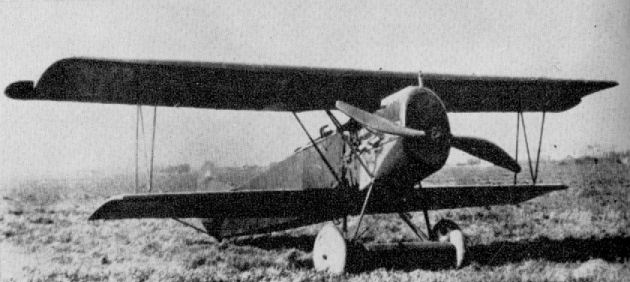
July 14th: Formal training begins for the pilots of the Boletarian Air Force. While unremarkable from the outside, the force was undergoing intense modernization and onlookers watched from hills as pilots took off in their Osika Widow-1 trainers, taking it through the paces to prepare themselves for flying the quicker, more robust Strzelec-1F fighter.


Boletarian pilots train in the Widok-1, here shown learning how to fly in formation.


July 17th: The Empire of Zellonia negotiates a deal to produce 500 of the Republic of Kalpia's armored car model Athihk K.18-II. This version has replaced the front facing 7.7mm machine gun with a 20mm gun capable of eight rounds per minute, with the machine gun being moved to a rear mount. Production immediately begins on the model, now called the Zellik Model II by the Royal Zellonian Army.


Athihk K.18-II, the upgunned version features a front facing 20mm gun seen here with Zellonian Royal Army camoflauge


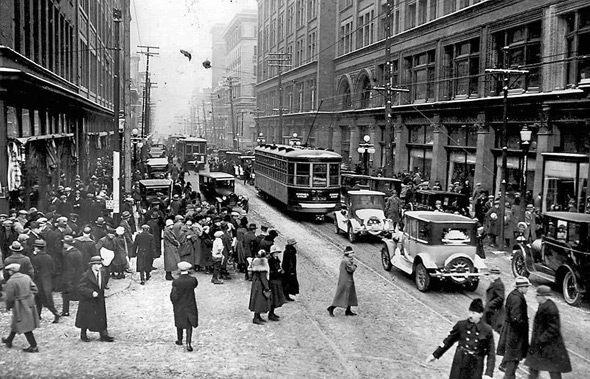
July 21st: An explosion rocked the Satarino Munitions Factory in the Korenian Republic. The destruction of Herada's primary ammunition manufacturer forced the return of Minister Bradel, who used the explosion as a tool to implement martial law. A pair of Oslaian O-26 tanks parked outside the front of the Parliament Building turned their turrets on the gathered crowd there, threatening them with death. Korenian soldiers marched the streets, and at seven-thirty in the evening martial law began. Anyone outside after such time was accused of dissidence and sedition and rounded up for questioning.
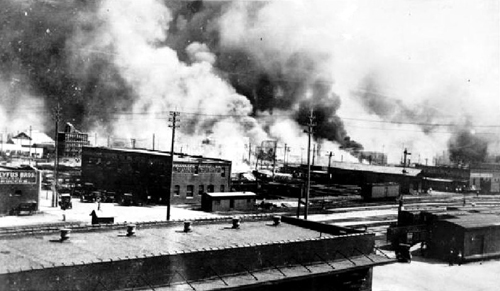

A photograph taken in East Herada, Korenian Republic, July 21st, 1920


Month's Losses (July, 1920)
  • Second Boletarian Republic
    • 3 Novice Pilots
    • 3 Light Trainers (Osika Widow-1 | 3 Crash Landings)


LEDGERS NEEDED
-- S0up
-- Voltus_Ventus
-- The Grey Warden
-- Mardox
Age of Imperialism 2.0: TURN 1 | Summer 1920 (June) (Turn 1, Part 3 of 3)


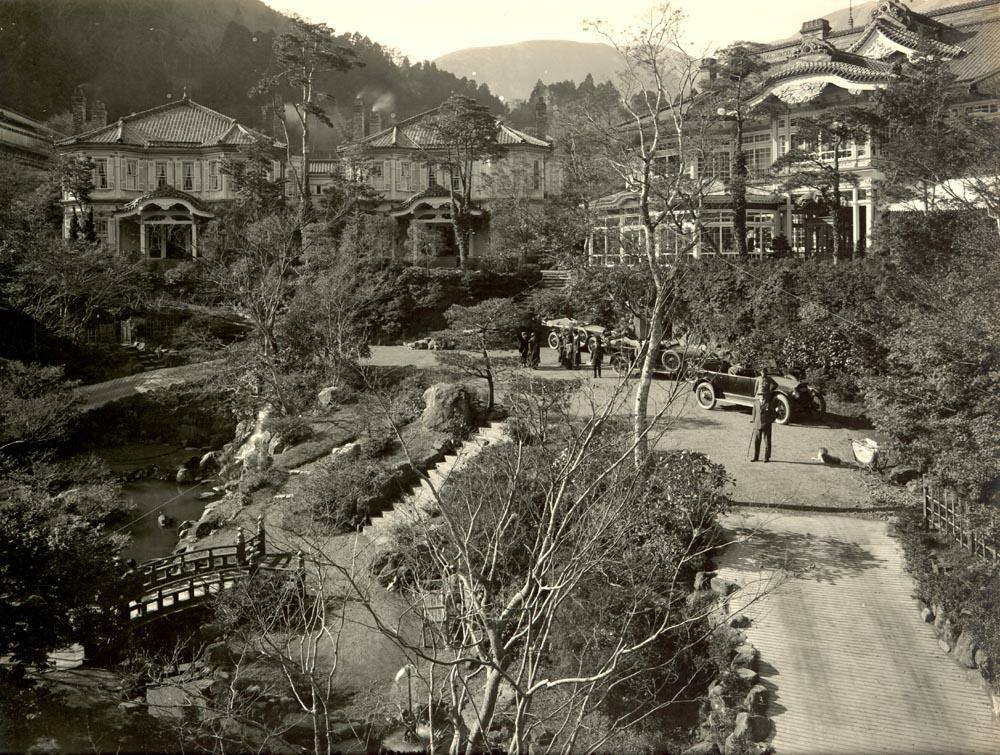
June 2nd: The city of Sakaan, the normally jubilant and quiet capital of the Glorious Nation of Nioda awoke to rumblings and shouts. With a population of just under 30,000,000, the total gross production of foods, fruits and salts amounted to less than enough to feed half the population. Rotten cabbage became the weapon of choice, pelting wandering Sakaan District Police officers and attacking already empty stalls of food. The crowd continued to gain momentum, and they headed toward northern Sakaan, their aimless measure of hunger turning to a bastion of the wealthy elite: the Kujiya Hotel.


The Kujiya Hotel, Sakaan, Nioda. May 31st, 1920. Two days before it was burned to the ground


They wasted little time to setting it alight. The structure, which had been erected in 1687, burned for days and would not fully be put out by local Sakaan firefighters until June 8th. The crowd by then had been dispersed, more by their own hunger than any action by the Sakaan government.

June 3rd: Foreign Councilor Yvael Hurdu of the Grand Survaek Empire is admitted to see the Dignitary of the Grand Duchy of Eissenheim's Joachim hans Ulrich. After a brief fifteen minute conversation where Hurdu, who obviously had no idea why he was sent besides continuing to repeat that Eissenheim was "a necessary partner for Survaekom economic and strategic security," Ulrich allegedly smashed a bottle on the ground and had Hurdu escorted out "for fear of broken glass." In a communique to the Grand Duke himself, Ulrich said "If he'd mention strategic security one more time I was likely to have the man shot."

June 4th: Brian Kerchek, a former admiral of the Empire of Zellonia is admitted to see Youssef Amrani, the Foreign Diplomat to the Diyarbakir. In Kerchek's report back to the Zellonian Emperor, the conclusion was thus: "While Amrani was excited to be visited by diplomats from the Zellonic Isle, he was reportedly upset that a nation that fought alongside the Survaekom aggressors had the audacity to visit a nation that broke free from the yolk of Survaekom aggression."

June 6th: The Honnerian Republic reluctantly admitted Carver Wellington to speak to Jacques Droulez, the Honnerian Minister of Affairs, but had little to say, speaking mostly of his visit as a favor to his father, a member of the Zellonian Parliament. With nothing to offer, Droulez escorted Wellington out and saw him off.

June 9th: A teenage boy named Jerzy Józefiak is shot and killed while climbing the stairs of the Korenian Parliament. Ordered back by armed military police twice, he clambered to the second to the top stair and looked back at the gathered crowd. Then he climbed the final step. He was shot and killed, shot six times in the chest. His body, lost in the ensuing swarm of bodies that became the June 9th Riots, is a relic to the Age of Democracy, so called by Korenian dissidents in the wake of Bradel's ascent to power. Bradel, awat at his personal villa in Northern Korenia, was allegedly alerted to the event but has not been seen since he dismissed the Korenian Parliament until the fall.

June 10th: Sekigahara Tosu, the weathered diplomat of the Republic of Fuso was surprised at the scruffy edged photo that Li Xiu set in front of him. "It sometimes takes the reminder of a thousand bristling spikes that even the porcupine is no less lethal than the lion." It was a photo, snapped by a young and budding photographer on the Qingstao coast at the arrival of the Soroyan fleet. They had stayed for less than 48 hours before being recalled. "Soroyan battleships, you see," Xiu told Tosu. While it wasn't true (there had been no battleships in the Soroyan fleet), Xiu was a man of diplomacy, not war. Tosu was offered tea and rice cakes, dry and brittle compared to their Fusan counterparts. They talked for days, and at last Xiu sent a proper document to Tosu for him to overlook:


June 12th: Deputy Foreign Minister Huj Veliu of the Grand Survaek Empire is admitted to see the Laevatian Prime Minister himself, Conrad von Morthendt. Conrad expressed his sympathies in a weak and inept government that disallowed participation in "that sporting war," presumably referring to the Terrible War. Morthendt reported interest in an alliance and the strengthening of the Tervasan continent, but only if the Grand Survaek Empire were interested in discontinuing it's alliances in North Centran.


A city street in Akmene, the capital of the Kingdom of Laevatia


June 15th: The Survaekom diplomat is intercepted on board his ship in the Verian harbor of Oi and sent back, threatened with arrest if he returns.

June 18th: The Empire of Chaegon has colonized Satabo Island off the east coast of Serranthia. The Satabian's numbered only 700,000 and were mostly cut off from the world since the 1867 Soroyan Trade Mission that saw the creation of a single factory complex. The new colony was the first of Chaegon's in Serranthia, and saw an excess of praise back on the mainland.


THE WORLD (bigger map): i.imgur.com/qnjLQwC.jpg


We are awaiting @Voltus_Ventus to send his ledger to advance the turn to Season 2 of 1920.
Age of Imperialism 2.0: TURN 1 | Spring, 1920 (May) (Turn 1, Part 3 of 3)


UPDATE: Heavy spring showers batter the North Centran and Zellonian coasts. Neeland experiences it's early summer wet season. In Serranthia, heavy dust storms kick up and down the coast.

May 1st: The Korenian riots faltered by the sound of gunshots. Korenian military police dispatched the rioters at the tips of bayonets. They dispersed. On the first night of May, Herada was quiet. Prime Minister Zdzisław Bradel demanded law be instated under any circumstances. Furthermore, Foreign Secretary Stanisław Dunin-Karwicki was sent via rail through Tangaria and Loremia to Oslograd to meet with the Osladian Tsar of the Osladian Empire. Dunin-Karwicki carried with him the promise of 5,000,000 dollars and eyed several of Oslad's O-26 tanks, powerful weapons that nearly won them the war.

Korenia, with barely a dozen manufacturing plants, had neither the military ingenuity nor the industrial muscle to conjure up such weapons of war and instead Bradel sent Dunin-Karwicki, a straight nosed and thin shouldered man, to negotiate the purchase of however many tanks the Osladian Emperor might be willing to negotiate for such a sum of money. Dunin-Karwicki was not to return empty handed under any circumstances.


The Herada Parliament Building, May 1920


May 4th: The First Minister of Kalpia Aclen Bomanot Siquiouquio stepped off the train at Toruń Main Station in Barczewo, Principality of Soreno. With an uneventful turn of events in neutral Montevredo, he was glad to be greeted by Mendel Balberyszski, who in his 92nd year many assumed would have long retired. They took a car ride through the desolate, sloping hills of Barczewo's smoggy coastal lands to the city proper where Siquiouquio was greeted with great report by twenty-eight year Prince Regent Aleksander Grad. Siquiouquio noticed the fire in Prince Grad's eyes, and was met with an equally fiery rhetoric about Kalpo-Sorenan relations. Prince Grad recommended that Kalpia and Sorenan become closer, and they spoke long into the night about local and international issues. Minister Aclen Bomanot Siquiouquio left Barczewo and returned home two days later.

May 6th: While negotiations are ongoing, word reaches Prime Minister Bradel of Republic of Korenia that the Tsar of the Osladian Empire will be lending 5,000 Dragomov M96 rifles to his cause to better outfit his troops. The deal is hotly contested and many Centrist Korenian politicians accuse Bradel of warmongering. Instead, he says: "I am merely modernizing the oldest defense of the Korenian Republic, the shield that has long kept Korenia from the annals of subjugation!" The newly outfitted troops are the 121st Rifle Regiment, a crack unit of Northern Korenians who hail from the harsh mountain terrain.

May 8th: The Zellonian Royal Army slashes funding, sending over ten thousand men to reservist status. The legislation enacted since the Treaty of Parma required that no more than forty-thousand men could serve, given the circumstances of their post war status. While the nation itself thrummed itself at the idea, there was little doubt that as one of the defeated powers that anything but strict adherence to the treaty would cause more problems, problems Zellonia desperately didn't need.

May 10th: "There'll be no Soroyan naval bases so long as a Romanow sits on the throne," Romanowan diplomat Avgust Olegovich Sharapov commented to the Romanow Major, the nation's leading newspaper. "They might send the whole fleet after it gets finished in Faresia, but if the thin eyed bastards scared them off, I don't think we'll have much of a problem!" He said, drawing laughter from the crowd and raising his cane to point to a nearby coastal shore battery, a 1909 piece that probably hadn't fired since it was first built. "God be damned they think they can ply their trade anywhere they can fit a battleship."

May 13th: The Markovnian Minister of Affairs Juozas Karvelis accepts the Mutual Pact of Free Trade with the Kalpian Republic and accepts their generous offer of 50,000,000 Mariats (5,000,000 Consumer Goods). The Markovnian Republic announces a new era of friendship with the newly formed Kalpian nation.

May 15th: A strange man is found lurking near the military headquarters of the Boletarian 6th Army, several miles outside of Wrenclaw in the Second Boletarian Republic. Initially assumed to be a beggar or vagabond, when several Boletarian military police attempt to apprehend him, he flees. He returns several nights later, and in a shoot out in an alley adjacent to the headquarters, the man shoots and kills two military police officers who chase after him. He isn't seen again. The army increases it's security detail around the base.

May 16th: Dunin-Karwicki returns to the Korenian Republic as a mixed bag. He returns and within hours Prime Minister Bradel informs the nation of it's purchase of 30 Osladian O-26 Strovna tanks, Terrible War tanks weighing in at twenty tons with five different machine gun emplacements over its hull. The O-26's would be used for "security purposes" only Bradel proposed. Later that morning, Bradel appointed Colonel Zyta Gilowska to the newly formed Korenian 1st Armored Brigade. A careerist and sycophant, Gilowska was an indomitable yes man.


The Osladian O-26 Strovna

Age of Imperialism 2.0: TURN 1 | Spring, 1920 (April) (Turn ,1 Part 2 of 3)


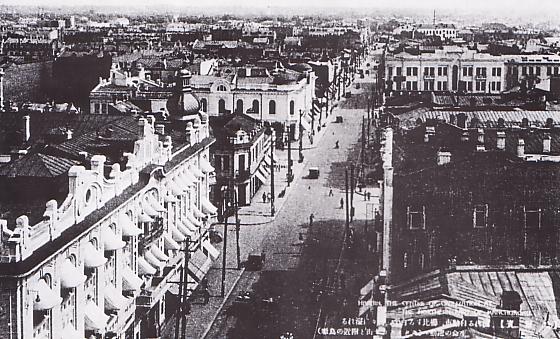
April 1st: The capital of Grobina in the Markovnian Republic was a bustling city in southwest Markovnia. Industry was booming, but only in Grobina was life comparative to the industrialized nations of Athos & Stule, Soroya and Ostruznica. Kalpian First Minister Aclen Bomanot Siquiouquio stepped off the train at Grobina and was met with a Markovnian security detail to the State House, where he met Minister of Affairs Juozas Karvelis. Karvelis showed Siquiouquio the magnificent paintings from famous Markovnian artists of the Great Era. While Karvelis was excited that Siquiouquio brought tidings from the recently re-established Kalpia state, he was disappointed the meeting was ultimately hollow and without purpose. Karvelis' bid Siquiouquio farewell. Siquioquio returned to the station and boarded a train for Savado, the seaside capital of the Kingdom of Montevedro.


Grobina, April 1920


April 4th: The United Kingdoms of Athos & Stules released a statement to the press that it would be guaranteeing the independence of the Free City of Suvre in Northwest Centran, Aydina in Tervasa and the Loremian Republic in Western Centran. All three's governments praised the strength and courage of the Dual-Monarchy and their decision to maintain the new borders and sovereignty of the states. Boletarian news pressed admonished the decision to maintain the Suvre's neutrality, stating: "Suvre is a city propped up by the Dual Monarchy's fear of a strong Boletarian nation.." The Athos & Stulian embassy in Byrnis met with a small protest, and Athosian diplomat William Kinsberg complained: "Those Survaekom boys sure took their time dispersing those dissidents."

April 9th: The Soro-Qing Debacle was the attempted, and by Qing standards, forced measure of diplomacy between the Kingdom of Soroya and the Qingstao Dominion in Eastern Faresia. The embassy, which had lain mostly decadent since the beginning of The Terrible War, was reinvigorated with life at the beginning of April for renewed negotiations with the great Faresian nation. The Soroyan diplomat promptly requested a trade city within Qingstao lands. Foreign Junior Diplomat Chen Qiufa--Senior Diplomat Li Xiu was on leave in North Qingstao--had the Soroyan diplomat removed under threat of arrest for "making judicious demands against the Thousand Heaven's Empire." The diplomat was on a train back to New Eiland later that evening.


Meung, Prominent coastal city in eastern Qingstao, 1920


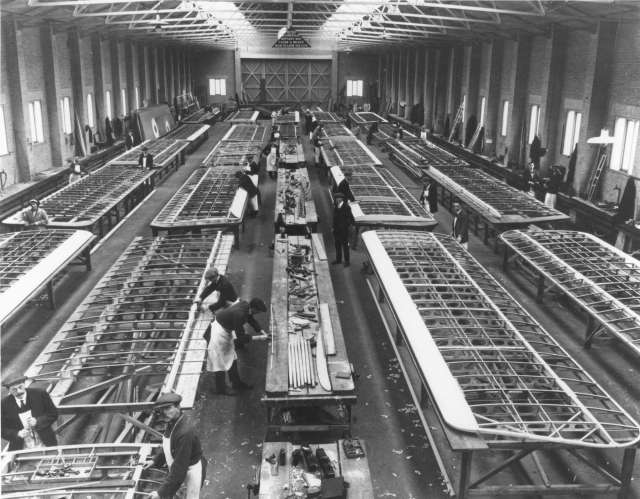
April 15th: The Živković Automotive Engineering company was reopened in the Commonwealth of Ostruznica. A prominent development firm with a half dozen factories at its peak, half of the board was killed when their train was bombed by Zellonian bombers during the Great War. Eight weeks later the fighting in Ostruznica had ended, and plans were put into play to reactive the company. Several new factories are planned to retool their equipment to begin producing domestic automobiles, and anticipation is high for the new 1921 model to hit early next year, as automobiles are a long time tradition and luxury of the modern Ostruznican people.


Inside a typical Živković Automotive Engineering (ZAE) factory, circa 1920


April 23rd-28th: The Korenian Republic had long been held as a place of stoicism and tradition. A neutral party during The Terrible War, Prime Minister Michał Grażyński led the nation through with a resolution lacking in even more prominent nations. He successfully mitigated involvement by denying Osladian military access at the threat of invasion, and staved off further attempts by sly Soroyan diplomats to join the war effort. On April 23rd, Prime Minister Grażyński was laid to rest, having passed away in his sleep at the age of seventy-one.

Deputy Minister Zdzisław Bradel, per the regulations of the Korenian Grand Constitution was allotted twenty-four hours before assuming office, allowing the Korenian Parliament to meet to discuss any problems. Bradel, a former military officer and sworn in during The Terrible War, was not well liked. An advocate for joining the Osladians against the Great Powers, he was made Deputy Minister by Grażyński as a stopgap to appease the war hawks in his State Party. Bradel did not wait twenty-four hours, and on the morning of the 23rd entered the Parliament Building with a half dozen Korenian military police. The Korenian Parliament was dismissed, and several more prominent Centrist's were placed on house arrest. He delivered a very succinct message to the press:

"The people of Korenia have suffered. They have weathered neutrality, and banality. They have disgraced themselves by falling behind in the merits of industry, science and reason. Under Grażyński we have met peace and married mediocrity. Korenian nationality has suffered, as vagrants of the Terrible War invade from the borderlands. Tangarians steal our women! Athosians steal our jobs! Yet Korenia will not long linger in the shadows. Fate has placed me at your head, and Bradel is a name that will be remembered."

-- Prime Minister Zdzisław Bradel


The streets came alive. By the morning of the 24th, thousands of Korenians of all sorts invaded the streets, swarming the parliament building. Offices were ransacked, cars overturned. Several dozen murders, many of them inadvertent, were committed in the mass of bodies and impulsive behavior. The change "LONG LIVE GRAZYNSKI" carried through the night. Bradel, from the Parliament Building ordered a general alert for the Herada Militia. On the morning of the 25th and for the remainder of the week, the world rushed to the morning paper to see the various headlines for Korenia: "PRIME MINISTER PROMISES STRENGTH," "TWO RIOTERS SHOT IN FRONT OF STATE BUILDING"


Korenian streets, April 24th-28th


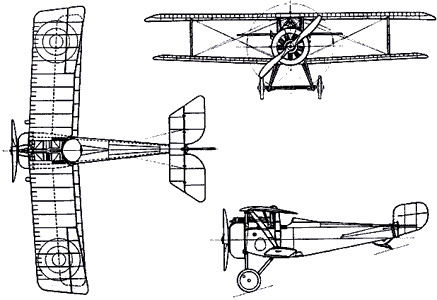
April 30th: Near the end of the month, Osika Aeronautics, located in Wrenclaw of the Second Boletarian Republic, revealed a prototype fighter dubbed the Strzelec-1F. A robust fighter, it was powered by an Osika 2Ha 9-cylinder rotary engine capable of 82 kW (110 hp). Armed with a pair of nose mounted Soroyan Zallandt-12 machine guns, it boasted double the firepower of the Zima-16, Osika's Terrible War model plane.

Taken to the air, it reached a maximum speed of 177 kilometers an hour, but was marred by a long takeoff time, needing a straight and smooth runway. The fuel tank was capable of only three hundred mile round trips, which meant that in a case of aerial warfare, it's average fighting time was only twelve minutes. Leading Boletarian pilot Lieutenant Stanisław Lorentz commented: "The plane is an arrow in the sky, deadly with it's machine guns, but it burns through fuel like a Tangarian burns through vodka."


Boletarian aviators inspecting the Strzelec-1F prototype, 1920


Heads up for those involved: I will be using photos of Nazi Germany's wehrmacht military to represent the post-war advancements of Vornehm's armed forces. I will NOT be using any images which contain Nazi symbols such as Swastikas or other flags. Just wanted those involved to be informed just in case.


You're awesome.

Age of Imperialism 2.0: TURN 1 | Spring, 1920 (March) (Turn 1, Part 1 of 3)


MARCH

March 4th: The Osladian Empire begins efforts to mechanize it's stretched agriculture in the wake of the Terrible War. With one in five men killed or wounded, the once majestic Osladian Empire, stretching over 261,000 kilometers, now stands at less than 100,000 square kilometers. The former Osladian Empire has now considerably shrunk, and it's many generals are now eyeing other opportunities in which to expand. The beleaguered and now non-existent Osladian Navy eyes the Romanow Islands, while those hungry for land and industry urge the Emperor to quickly send troops into the Hurzland.

March 12th: First Minister Aclen Bomanot Siquiouquio of the Kalpian Republic first visited Pardua, the capital of the Kingdom of Boccia, a mercantile minded nation that strove to maintain it's neutrality in the Terrible War. Siquiouquio was met by Boccian Minister of Foreign Affairs Giovanni Tio, who lunched with him on an otherwise sunny day. Tio informed Siquiouquio that Boccia is enthusiastic that relations have normalized with Kalpia. First Minister Siquiouquio leaves with no assurances, and only a reminder from his aid that Boccia supported the Kalpian Socialist Union during the war. First Minister Siquiouquio boards a train for Grobina, the capital of the Markovnian Republic.


Seaside view of Pardua, capital of the Kingdom of Boccia, circa 1920


March 14th: The Imperial Republic of Fuso spends several billion dollars to feed their war weary populace. Government dollars are used to help get those whose jobs were destroyed in the war back into war, and over 3,500,000 refugees return from neighboring Tiam, Kuala Pemang and Sumara. The people rejoice, celebrating the administration for their courage in helping the nation. The government nationalizes several run down factories and order them to open to help get those effected back to work.

March 17th: The Class of 1920 at the Oslograd Imperial Aviation Academy graduates. Among them are 100 pilots, qualified for flight in the Osladian Air Corps. Many of them are assigned to the Grigorovich M-16, a Terrible War era biplane with a single front mounted 12.7mm machine gun. While the meager Osladian Air Corps was doubled in size, the loss of Imperial industry, a third of which resided in the former territories of the empire, saw that it simply did not have enough planes for every pilot. Similarly, they had no training aircraft in which to train.


Osladian Grigorovich M-16 fighter (Aircraft No. 31 of 1st Imperial Wing, 1919)


March 21st: The Steinhaeuser Firearms of the Empire of Vornehm unveils a new rifle. The Gewehr-20 is a modest upgrade from it's Terrible War predecessor. The rifle fires six rounds with a fluid action and a fixable bayonet at the end. Lighter by half a pound, Vornehm soldiers were given several prototypes to play with, but were not assured by their NCO's when any mass production would begin. Several military observers from the Commonwealth of Ostruznica, the Second Republic of Boletaria and even the Kingdom of Soroya attended to watch several Vornehm sharpshooters demonstrate the new precision of the rifle.


Vornehm soldiers demonstrating the bayonet on the Gewehr-20

<Snipped quote by Ryu>

Yeah you are right. I think it is a mistake on Theo's part


I'll PM you, Ryu.
[RESEARCH01] Research

At the beginning of a turn you have two options:
-- Research: You may research three different technologies, (two if you're Faresian). Cannot be the same research trees.
-- Military Theory: You may sacrifice one of your research technologies for +5 Army, Navy or Air Force Experience.
-- Double: All UNITS (Rifle, Artillery, Ships, Armor, Aircraft with a Roman Numeral require 2 Research to research.

RESEARCH CATEGORIES
-- Where you see a Unit followed by a I, it means it is the first possible. If you research that unit type again, you will unlock a more advanced version II. Once you unlock a I, you cannot research the next for 4 Turns.
-- Once you unlock a Tech it cannot be researched again.


ADMINISTRATION
  • Overseas Territory (Requires at least 1 Colony)
    • Colonial Administration (I): By sending out updated legislatures in the wake of the Terrible War, we can better squeeze more resources from our colonies.
      -- [+20% Agriculture, 20% Industry, -1 Loyalty for [Select Colony].
    • Military Governors: By implementing military governors, we can increase the amount of colonial recruiting power we have.
      -- [Decreases Peacetime Army Modifier by 10 for every Populated Colony]


  • Research & Development
    • Research Bureau: A national research bureau in the wake of the Terrible War is absolutely necessary for the betterment of our forces.
      [Requires Two Research]
    • Design Expansion: Increasing the limits of our design team will lead to more fruitful research expansion.
      [Requires Two Research and Research Bureau]
    • Revolutionary Thinker: Without his ideas, we would have fallen behind. Luckily, he appeared when he did.
      [Requires Two Research and Design Expansion]
    • Department of Research & Development: A new bureau designed with utilization the newest technologies available.
      [Requires Two Research and Revolutionary Thinker]
    • Major Breakthrough: Right on the brink, and it appeared to us, just like that!
      [Requires Two Research and Department of Research & Development. Allows a nation to research +1 Research per turn.]


ECONOMICS
  • National Debt I: Though it pains us to do it, we must create a national debt in order for our nation to grow
    [May go up to 10,000,000 Consumer Goods in debt at 20% interest.]
    [Every level of this tech increases the debt ceiling by 10,000,000 Consumer Goods.]
    [If Interest is not paid off within 3 Years the nation goes Bankrupt.]


AVIATION
  • Pilots
    • Flying Clubs: By making flying a more social construct, we will ensure that there are more pilots available to enter into our flying academies.
      -- [When you use Train Pilots, it creates 110 Pilots.]
    • Aviation Academy: A state run program to run future pilots is never a bad thing.
      -- [When you use Train Pilots, it creates 120 Pilots.]
    • National Aviation Industry: By sponsoring a pioneering aviation company, we set ourselves on a course for success.
      -- [Receive 1 Aviation Design Company. Requires Two Research.]


NAVAL
  • Shipbuilding
    • Nationalize Shipbuilders: By nationalizing a company to suit our needs, we can begin gearing up for shipbuilding.
      -- [Receive 1 Naval Design Company. Requires Two Research.]
    • Drydocks: Drydocks are protected from bombing and will allow us to build in peace.
      -- [May build Drydocks. They are Dockyards but less vulnerable to bombing. They run at 0.05/Year]


  • Screening Vessels
    • Minelayer I: A vessel smaller than a destroyer, it is used to mine coastal areas and protect shipping convoys.
      -- (Requires Naval Design Company. Requires Two Research)
      -- (1 Minelayer can lay 25 Mines/Season)
    • Submarine I: Submersible weapons of war that are excellent at attacking enemy shipping.
      -- (Requires Naval Design Company. Requires Two Research)
    • Destroyer I: A light screening vessel that is equipped with power anti-submarine weapons.
      -- (Requires Naval Design Company. Requires Two Research)
    • Light Cruiser I: A powerful and well armed cruiser that can rove convoy lanes and protect international shipping.
      -- (Requires Naval Design Company. Requires Two Research)
    • Heavy Cruiser I: A much heavier and well armed cruiser.
      -- (Requires Naval Design Company, Two Research and Light Cruiser I)


  • Capital Ships
    • Dreadnought I: The premier type of naval ship. The dreadnought's design had two revolutionary features: an "all-big-gun" armament scheme, with more heavy-calibre guns than previous ships, and steam turbine propulsion.
      -- (Requires Naval Design Company. Requires Two Research)
    • Battlecruiser I: A battlecruiser, was a large capital ship built in the first half of the 20th century. They were similar in size and cost to a battleship, and typically carried the same kind of heavy guns, but generally carried less armour and were faster.
      -- (Requires Naval Design Company. Requires Two Research and Heavy Cruiser I)
    • Battleship I: A battleship is a large armored warship with a main battery consisting of heavy caliber guns.
      -- (Requires Naval Design Company. Requires Two Research and Dreadnought I)
    • Super Battleship I: The heaviest type of battleship.
      -- (Requires Naval Design Company. Requires Two Research and Battleship II)
    • Carrier I: An aircraft carrier is a warship that serves as a seagoing airbase, equipped with a full-length flight deck and facilities for carrying, arming, deploying, and recovering aircraft.
      -- (Requires Naval Design Company. Requires Two Research and Naval Aviation Theory)
    • Escort Carrier I: A smaller carrier. They were typically half the length and a third the displacement of larger fleet carriers. While they were slower, carried fewer planes and were less well armed and armored, escort carriers were cheaper and could be built quickly, which was their principal advantage.
      -- (Requires Naval Design Company. Requires Two Research and Carrier II)


Enhancements
-- Enhancements are technologies, that when researched, become attached to a particular ship class. This means they can be researched multiple times across ship classes.

  • SUBMARINES
    • Improved Torpedo I: An improved ship to ship torpedo will increase the lethality of our submarines.
    • Improved Engine: While forever slow, a stronger engine will allow our submarines to escape danger quicker.
    • Modernization: By refitting and modernizing our ships, we increase their ability to serve in the fleet. [Requires Two Research. +1 Experience Point may be used on Ship Class. Ship Class must be 5 Years Old.]


  • DESTROYERS
    • Fire Control System I: An updated fire control system will allow our FCS team to put out dangers much faster on board.
    • Portable Torpedo Tubes: By placing torpedo tubes onto our destroyers, we give them the opportunity to take on much heavier opponents.
    • Additional Naval Gun: An additional naval gun will make our destroyers much more capable in ship to ship conflicts.
    • Optics: Higher quality optics will allow our ships to see the enemy before they see us.
    • Anti-Air Battery: Increasing the defensive capabilities our or aircraft carriers is a necessity.
    • Modernization: By refitting and modernizing our ships, we increase their ability to serve in the fleet. [Requires Two Research. +1 Experience Point may be used on Ship Class. Ship Class must be 5 Years Old.]


  • LIGHT CRUISERS
    • Fire Control System I: An updated fire control system will allow our FCS team to put out dangers much faster on board.
    • Optics: Higher quality optics will allow our ships to see the enemy before they see us.
    • Portable Torpedo Tubes: By placing torpedo tubes onto our destroyers, we give them the opportunity to take on much heavier opponents.
    • Seaplane Scout: The inclusion of a catapult and a single seaplane scout will increase the ability of this ship to spot other warships.
    • Anti-Air Battery: Increasing the defensive capabilities our or aircraft carriers is a necessity.
    • Modernization: By refitting and modernizing our ships, we increase their ability to serve in the fleet. [Requires Two Research. +1 Experience Point may be used on Ship Class. Ship Class must be 5 Years Old.]


  • HEAVY CRUISERS/BATTLECRUISERS
    • Fire Control System I: An updated fire control system will allow our FCS team to put out dangers much faster on board.
    • Seaplane Scout: The inclusion of a catapult and a single seaplane scout will increase the ability of this ship to spot other warships.
    • Thickened Belt Armor: Extra armor along the belt line will increase the protection of our heavy cruisers at the expense of speed.
    • Main Battery Upgrade: By adding larger guns, we increase the penetrating power of our main cannons.
    • Optics: Higher quality optics will allow our ships to see the enemy before they see us.
    • Anti-Air Battery: Increasing the defensive capabilities our or aircraft carriers is a necessity.
    • Modernization: By refitting and modernizing our ships, we increase their ability to serve in the fleet. [Requires Two Research. +1 Experience Point may be used on Ship Class. Ship Class must be 5 Years Old.]


  • DREADNOUGHTS
    • Fire Control System I: An updated fire control system will allow our FCS team to put out dangers much faster on board.
    • Triple Gun Mount: By adding a third gun into one of the mounts, we can significantly increase the firepower of our battleship at the expense of speed.
    • Armament Refit: By adding larger guns, we increase the penetrating power of our main cannons.
    • Optics: Higher quality optics will allow our ships to see the enemy before they see us.
    • Thickened Belt Armor: Extra armor along the belt line will increase the protection of our heavy cruisers at the expense of speed.
    • Anti-Air Battery: Increasing the defensive capabilities our or aircraft carriers is a necessity.
    • Modernization: By refitting and modernizing our ships, we increase their ability to serve in the fleet. [Requires Two Research. +1 Experience Point may be used on Ship Class.][


  • CARRIERS
    • Fire Control System I: An updated fire control system will allow our FCS team to put out dangers much faster on board.
    • Optics: Higher quality optics will allow our ships to see the enemy before they see us
    • Anti-Air Battery: Increasing the defensive capabilities our or aircraft carriers is a necessity.
    • Modernization: By refitting and modernizing our ships, we increase their ability to serve in the fleet. [Requires Two Research. +1 Experience Point may be used on Ship Class.][


  • Industry
    • National Industry (I): We must endorse the growth of our automotive industry if we are to head into the future.
      -- [Receive 1 Armor Design Company. Requires Two Research.]
    • Assembly Line(II): Utilizing new technology we can convert our factories to build weapons of war much quicker.
      -- [Truck I, Halftrack I, Tankette I, Light Tank I, Medium Tank I Starts at +10%/Optimization]
    • Mass Production (III): By retooling our factories, we can pump out even larger amounts of weapons of war than previously.
      -- [When 50% or more of your factories produce one Unit, the Maximum Optimization is increased by 20%].
    • Truck I: (Requires Armor Design Company): Unarmored but capable of moving up to twelve men at a time up to 30 kilometers an hour or moving armaments to the front.
      -- [Requires Two Research.]
    • Halftrack I: (Requires Armor Design Company & Truck V): Slightly armored and a true all terrain vehicle, these are capable of traversing any terrain.
      -- [Requires Two Research.]
    • Modernization I: By modernizing our factories, we can increase our product efficiency, but must retool much of our industry to do so.
      -- [+5 Unity. Requires Two Research. Cannot use 50% of Factories the turn this tech is researched.]


  • Structural Engineering
    • Reinforced Bunkers (I): New concrete and defensive works adds to the long term defensive abilities of our fortresses.
      -- [Land Forts have improved firepower]
    • Coastal Battery(I): Designing new and improved coastal batteries will help keep our shores safe. [Coastal Forts have improved firepower]
    • Anti-Aircraft Battery (I): We must be able to protect ourselves, even from the ground! [Allows the building of Anti-Aircraft Batteries.]


  • Agriculture
    • Farming Mechanization: By implementing modern tools, we can increase our yearly harvests. [+5% Agriculture]
    • Agricultural Development: The development of our farmland is necessary to promote growth in the country. [Requires Farming Mechanization. +5% Agriculture]


  • Rearmament
    • Recruitment Centers: We must begin filling the army once again. By utilizing propaganda and building these recruitment centers, we can recruit from all corners of the nation. [Peacetime Army Modifier drops to 320]
    • Basic Conscription Law: By passing this legislation, we can require the enlistment of any men between the ages of 18 and 35.
      -- [Peacetime Army Modifier drops to 275, -5 Unity, Max 50 Unity. Requires Recruitment Centers]
    • One Year Draft: By instituting a draft, the amount of men we can recruit a much larger army than previously.
      -- [Peacetime Army Modifier drops to 230, -5 Unity, Max 40 Unity. Requires Basic Conscription]
    • Conscription by Service: If required, we may enlist any man between the age of 17 to 40 into the army.
      -- [Peacetime Army Modifier drops to 200, -5 Unity, Max 30 Unity. Requires One Year Draft.]
    • All Adults Serve: We must recruit all worthy adults into the army.
      [Peacetime Army Modifier drops to 150, -10 Unity, Max 20 Unity. Requires Conscription by Service.]
    • Scrape the Barrel: If he can hold a rifle, he'll be put on the frontline. [Peacetime Army Modifier drops to 100]
    [-10 Unity, Max 10 Unity]


  • Soldiering
    • Rifle II: A more modern rifle will allow our soldier to hold the edge up on the enemy.
      -- [Requires Two Research]
    • Equipment II: Better equipment such as mortars, machine guns and medical equipment will increase the overall effectiveness of the average soldier.
      -- [Requires Two Research]
    • Artillery I: A standardized barrel, a greater velocity and a higher caliber will make our artillery that much more effective.
      -- [Requires Armor Design Company and Two Research]
    • Anti-Tank Gun I: Destroying the enemy's tanks is this unit's top priority. They are easily concealed and movable by infantry.
      -- [Requires Armor Design Company, Interwar Tank and Two Research]


  • Special Forces
    • Marines I: Charged with assaulting enemy coastal positions, these expertly trained soldiers require twice as long to train.
      -- (Requires Equipment III)
      -- (Allows Training to Train 5,000 Marines)
    • Paratroopers I: Experimental troops designed to jump out of planes to assault enemy positions from the air.
      -- (Requires Equipment III)
      -- (Allows Training to Train 5,000 Paratroopers)
    • Mountaineers I: Soldiers who are trained to fight in the harsh mountain climates.
      -- (Requires Equipment II)
      -- (Allows Training to Train 5,000 Mountaineers)


  • Military Command
    • Localized Garrisons: With garrisons placed in strategically important areas, we will ensure we increase our armies ability to respond to threats. [Army Mobilization Time decreases by 8 Days.]


  • Armor
    • Interwar Tank (Requires Armor Design Company and Armored Car II): A powerful armored vehicle on treads with machine guns or main gun used to exploit armor breakthroughs.
    • Armored Car I: (Requires Armor Design Company): An armored car is a powerful addition to infantry attacks, offering great reconnaissance and maneuverability.
    • Tankette I: (Requires Armor Design Company and Interwar Tank): Modestly armed, but easy to produce, tankettes weigh in between 2 and 6 tons.
    • Light Tank I: (Requires Armor Design Company and Tankette II): Used for fast flanking attacks and infantry support, light tanks have great maneuverability.
    • Medium Tank I: (Requires Armor Design Company and Light Tank II): Well armed and armored, these tanks are the meat and potatoes of any armored force.
    • Heavy Tank I: (Requires Armor Design Company and Medium Tank II): These are breakthrough tanks designed to carry a punch.


  • Armor Variants (When Researched, select an existing Tank that your nation possesses to create the variant).
    • Tank Destroyer I: By creating a variant of one of our existing designs by upgunning it with a frontal, non traversing turret, we make a formidable tank destroyer.
      -- (Requires Armor Design Company, Anti-Tank Gun II and Medium Tank I):
    • Self-Propelled Gun: By adding a large cannon, we can incorporate our armored assault into our infantry support weapons.
      -- (Requires Armor Design Company, Artillery II and Medium Tank I):
    • Self-Propelled Anti-Air I: By installing a fast firing and mobile turret capable of felling aircraft, we create a powerful SPAA unit.
      -- -- (Requires Armor Design Company, Anti-Aircraft Batteries and Medium Tank I)


  • Army Doctrines
    • Officer Academy I: Establishing a reputable academy for new age military officers will put us on the cutting edge of the wars ahead. [Generals recruited start at Skill I. Requires Two Research.]
    • Military High Command: A competent military command is necessary for cohesion of military force. [Grants bonus to Communications in combat]
    • Grand Battlefront I: The Terrible War taught us a great many things, one of which is the use of the grand battlefront [+10 Infantry Assault] [Requires Two Research]
    • Concentration of Force I: [Requires Grand Battlefront I] By pressing forward at one flank, we can force the issue and perhaps breakthrough. [+5 Artillery Assault]
    • Defensive Works I: [Requires Grand Battlefront I] Defense wins, so says the Terrible War. By working with our engineers, we can increase our defensive fortifications to withstand any enemy assault. [+5 Infantry Defense]
    • Spearhead Doctrine I: By focusing in on a single axis of attack, we may utilize our forces to overrun the enemy and breakthrough.
      -- [+5 Armor Assault, Requires Grant Battlefront III]
    • Combined Arms: Utilizing armor, infantry and air assault forces, we can smash through our enemy with combined arms!
      -- [+5 Armor Assault, +5 Infantry Assault, +5 Close Air Support Assault, Requires Spearhead Doctrine II]


  • Air Force Doctrines
    • Naval Aviation Theory: The idea that our navy can be aided by aviation is a new idea, and one not to be taken lightly. [Requires Two Research]
    • Air Superiority I: Our fighters will need complete air superiority and these training techniques will aid in fighter interception techniques [Fighters have +5 Interception]
    • Close Air Support I: The ability of our close air support fighters to attack enemy ground formations is enhanced by these training techniques. [CAS have +5 Assault]
    • Bomber Interception I: Interceptors are required to take down enemy bombers before they target our infrastructure. [Fighters have +5 Interception]
    • Bomber Command I: Bombers working in formations have a higher success rate. A centralized bomber command can support this. [Bombers have +5 Accuracy]


  • Navy Doctrines
    • Grand Battle Fleet: Allows for Fleet of up to 20 vessels.
    • Sea Lane Interdiction: Light Cruisers, Heavy Cruisers, Battlecruisers have +10% Efficiency
    • Convoy Raiding: Submarines have +15% Efficiency.
    • Undersea Positioning: The utilization of submarines for attacking shipping is normal, but attacking capital ships requires additional training. [Allows Submarines to target better Capital Ships.]


  • Domestic Issues
    • State Run Industry: By nationalizing several factories, we see job growth and increased factory optimization. [+3 Unity]
    • State Propaganda: A state run propaganda industry will turn public opinion in our favor. [+5 Unity. Requires State Run Industry.]


  • Espionage
    • Intelligence Agency: By establishing a credible intelligence gathering agency, we may begin to poke our nose where it doesn't belong. (May recruit Spies).
    • Secret Police: The establishment of a political bureau to police internal affairs is necessary to the betterment of the state. (Enemy Spies have -5% Success).
    • Double Agent: An agent who the enemy believes is working for them, is actually working for us. (Requires Intelligence Agency. Once a nation has sent 10 spies to you, you may send the equivalent of 5 spies in their nation.)
    • Encryption I: By creating an encrypting for our military, we can disguise our movements to the enemy.
    • Decryption I: By studying the enemies ciphers, we can break their code and learn their movements
    • Deceptive Operations: By creating a sub-unit of command that is full of false information, we can create a deceptive operation to fool the enemy. (Requires Intelligence Agency. May use Deceptive Operation tactic once in a war)


  • Light Air
    • Interwar Fighter (Requires Aviation Design Company): A single seater aircraft with synchronized gear and forward facing machine guns.
    • Light Trainer I (Requires Aviation Design Company): A double seater aircraft used to train novice pilots.
    • Fighter Plane I (Requires Aviation Design Company and Interwar Fighter): A fighter plane is capable of fighting enemy aircraft and shooting down enemy bombers.
    • Naval Fighter I (Requires Aviation Design Company, Naval Aviation Theory and Interwar Fighter)
    • Close Air Support I (Requires Aviation Design Company): A close air support plane is a small winged aircraft that can take out concentrations of enemies on the ground.
    • Torpedo Bomber I (Requires Aviation Design Company, Naval Aviation Theory and Interwar Fighter)


  • Heavy Air
    • Heavy Trainer I: A heavy trainer is used to train pilots as bomber pilots.
      -- (Requires Aviation Design Company)
    • Transport Plane I: A transport plane can carry paratroopers or supplies to the front.
      -- (Requires Aviation Design Company)
    • Strategic Bomber I (Requires Aviation Design Company): A strategic bomber is capable of attacking enemy fortifications and industry.
    • Tactical Bomber I (Requires Aviation Design Company): A tactical bomber is capable of attacking enemy positions.
    • Naval Bomber I (Requires Aviation Design Company): While torpedo bombers launch from carriers, the larger naval bomber launches from airfields on the show to attack enemy shipping.


AGE OF IMPERIALISM 2.0
TURN 1 | Spring, 1920


EXAMPLE LEDGER

Take the following, fill it out, PM it to me. Get IC. Have fun.

[b]NATION NAME HERE[/color][/b] ([i]RPGuild NAME HERE[/i])
-- [b]HISTORICAL TRAIT HERE[/b]: [DEFINITION HERE]
-- [b]TRAIT 1 HERE[/b]: [DEFINITION HERE]
-- [b]TRAIT 2 HERE[/b]: [DEFINITION HERE]
-- [b]TRAIT 3 HERE[/b]: [DEFINITION HERE]
[b]POPULATION[/b]: [FILL OUT]
[b]UNITY[/b]: OVERALL (25+/-MODIFIERS) [Max [UNITY HERE] Factory Optimization]
[b]INFLUENCE[/b]: [FILL OUT] (+X/Season)
[b]AGRICULTURE[/b]: [FILL OUT]
[b]FACTORIES[/b]: [FILL OUT]
[b]DOCKYARDS[/b]: [FILL OUT]
[b]CONVOYS/ESCORTS[/b]: [FILL OUT]/[FILL OUT].
[b]SPIES[/b]: 0
[b]EXPERIENCE[/b]: [[FILL OUT] ARMY | [FILL OUT] NAVY | [FILL OUT] AIR FORCE]
[b]COLONIES/CULTURES[/b]
-- [FILL OUT]
[b]CONSUMER GOODS[/b]: [FILL OUT]
[b]RESEARCH[/b]:
-- [b]RESEARCH NAME[/b]: [RESEARCH DEFINITION]. [RESEARCH EFFECT].
[b]DESIGN COMPANY[/b]:
-- [b]COMPANY NAME[/b]: [COMPANY TYPE]. [STANDING BONUS].


----------------------------------------------------
ACTIONS

If you are building, use this format

[[b]BUILD [UNIT HERE][/b]] - [UNIT/PER SEASON] x [FACTORIES USED] = [TOTAL SEASONAL PRODUCTION] + [CURRENT OPTIMIZATION/MAX OPTIMIZATION] = THIS TURN'S PRODUCTION.

* The First time you begin building something, it starts at 0% Optimization and increases 5% every Season.
* If at ANY time the amount of factories RISES or DROPS, the Optimization drops 5% for every 1 Factory that was added/dropped that Season.
* VERY IMPORTANT: Consumer Goods: 3,000,000/Season. (-1 Unity for every 1,000,000 Population without Consumer Goods)

EXAMPLE:

[Build Rifle I: - [2,000/Season] x [6 Factories] = 12,000/Season + 5%/45% Factory Optimization = 12,600* This Season. (if Simplicity is 1, for example: add 10% = 13,860.)

* This would be the second month of production. First month would have 0% Optimization.
* SIMPLICITY stats add bonus production. They add +10% AFTER optimization. So if any UNIT you produce has 1 Simplicity, it adds 10%, 2 Simplicity adds +20%.
* VERY IMPORTANT: You cannot PRODUCE any NEW UNIT until after you have RESEARCHED IT (This doesn't count already existing units, planes, ships) (Begin production Turn after) and have a DESIGN COMPANY to produce it.
* VERY VERY IMPORTANT: You cannot build any unit until you have a Design Company to go with it. Even Naval and Air units.

--------------------

If you're building a ship, use this

[[b]BUILD [UNIT HERE]][/b]] - [DESIGN COMPANY USED] - [UNIT/PER YEAR or SEASON] x [DOCKYARDS USED] = [TOTAL SEASONAL/YEARLY PRODUCTION]

EXAMPLE:

[BUILD LIGHT CRUISER I] - [S&W Shipbuilding] - [0.33/PER YEAR] x [3 USED] = [0.99 PRODUCTION] = 1 Light Cruiser/Year (Finishes 1st of next Year).

--------------------

If you're using Influence, just show the FULL ability and the math:

Armor Design Company (8 Influence): This will allow you to appoint a new design company for your Army. These companies provide bonuses to the armor you build. Armor Design Companies are required to unlock Armor Technology. (Max 3)

10 Influence - 8 = Remaining 2 Influence.

--------------------

If you're Researching, be thorough with the full research, POST THE ENTIRE DEFINITION/EFFECTS:
-- Centran/Tervasan Nations can Research 3
-- Faresian Nations can Research 2.

EXAMPLE:
Nationalize Shipbuilders: By nationalizing a company to suit our needs, we can begin gearing up for shipbuilding.
-- [Receive 1 Naval Design Company. Requires Two Research.]

Research:
-- Destroyer I (This is a unit so it's 2 Research) (2)
-- Air Superiority (1)

--------------------

If you're Training, show full Province count:

[b]TRAIN[/b]
[u]NATION NAME[/u] (X Provinces)
-- [b]Province 1[/b]: Train _________
-- [b]Province 2[/b]: Train _________


Example:

Train
HONNERIA (2 Provinces)
-- Madrik: Train 10,000 Men
-- Harik: Train 100 Pilots

------------------

Reserves/Calling Up:

If you want to move men to reserve, just state it as an action:
-- "Move 15,000 men to Reservists"

HAVE FUN


CURRENT MAP: i.imgur.com/bDOIsup.jpg

© 2007-2026
BBCode Cheatsheet