@Mardox They did, that's why they are where they are now, since you refused to give battle to the Pozzoullian Navy, they have free reign and can shoot anywhere near the coast they want.
Age of Imperialism 2.0: TURN 1 | Fall 1920 (October) (Turn 3, Part 1 of 3)
October 1st: The Second Boletarian Republic puts out a design contract for a close air support fighter. Both national industries Osika Aeronautics, already riding the coattails of a success fighter from earlier in the year begin working on a design, while the Lovric Aviation Company (LAC) also receive a bid for the contract and start work on their own prototype. LAC, a former aviation designer that began with gliders and trainers, hopes to one up Osika to earn some time in the national spotlight of the new nation.
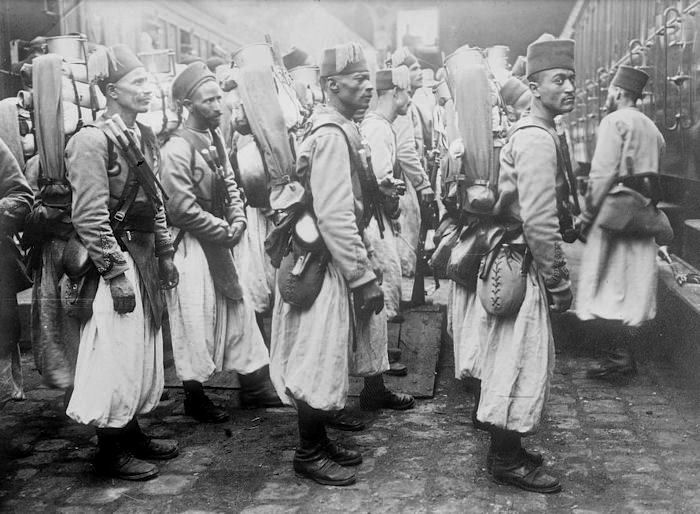
October 4th: The Republic of Kalpia colonizes in Western Serranthia. The people there are lackadaisical, nomadic and more interested in tribal feud than colonial administration. The Kalpian regime is docile at first, and the people seem grateful at shipments of food and the pending education that seems to go with it. Within a month, the Kalpian Colonial Regiment is established by 2,500 Serranthian men who feel the military is a good (or necessary) career path. The regiment is lead by a Kalpian Captain who drills them when necessary.
Kalpian Colonial Regiment, Formation Day, October 4th, 1920
October 6th: A convoy of fourteen convoys arrive in northern Pozzoulli. With well wishes from Kalpia, the ambassador in the Kalpian embassy and the Duke Aosta of Pozzoulli meet. "These," he says, "are the tools of democracy. To let Tarania fall is treason, though we admit our own involvement is impossible at this time." Among the convoy are 10 Ailshint L40 reconnaissance planes, 72 Athiht K-18 armored cars, 40 Athiht K-18.II armored cars and 5,000 mortars and machine guns.
Ailshint L40 scout plane, circa 1919
October 7th: The Empire of Chaegon begins gearing up its factories. While militarily unprepared, the industrial capacity of Chaegon was unmatched only by the United Kingdom of Athos & Stule in the east. Factories begin producing major weapons of war.
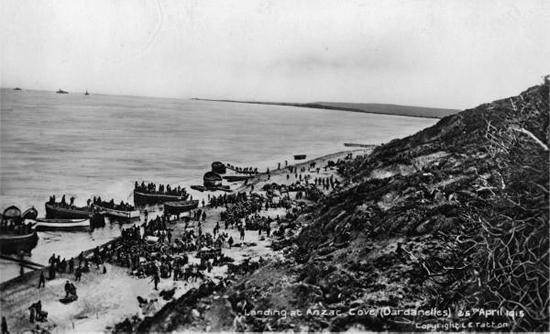
October 8th: The 1st Pozzoullian Army begins landing on the southern shore of Tarania. The beaches, initially held by the Chaegonian Imperial Guard, are quickly taken when the guard retreats after heavy bombardment from the Pozzoullian 1st Fleet. The army, under General Gabriele, marches into the Taranian capital of Kodcz later on and find an empty Chaegonian garrison. They continue to move north until they find the renewed defensive line of the Imperial Guard of Chaegon.
1st Pozzoullian Army landing on Taranian beaches, October 8th-13th, 1920
October 9th: The Osladian Empire accepts a contract bid from it's only armor design bureau. They unveil the Mulnya-201. Called Mulyna or “tracker”, the Mulnya-201 as it was first known, had learned a great deal from the Soroyan Jentink. The design was made by Professor S. Karakov, under the supervision of the Imperial Tank & Armor Bureau. The general layout was kept unchanged. Driver was at the front, with a fully revolving turret with the main armament and commander cupola behind him, engine at the rear and steering tail, but to improve speed the main concern was to redesign completely the suspension. At the same time Hondeveld-Beukelaar Co. in Soroya was working on the next generation of the Jentink with the same consideration, giving it a coil spring suspension. The first model to test these new suspensions was the Mulyna-201, delivered in April, 1920. It was equipped with a Kalpian licence-built engine by CMB Factory derived from the Terk-10 truck engine. Many problems were detected in trials which led to modifications to the design in order to improve defects such as the failing suspensions, bad maneuverability and its ineptitude to cross even 1.5 m (4.92 ft) wide trenches.
Mulnya-201 tankette prototype, notice lack of weaponry
The first Mulnya-201 prototype was delivered and tested in mid-May 1920 before a composite commission, which included the head of the state. It still showed some deficiencies, notably on rough terrain. It proved its inability to cross 2 m (6.56 ft) wide trenches and was stuck in those beyond 1.2 m (3.94 ft) deep. But on usual flat terrain speed was considered enough and other advantages combined led to the first order of tanks, with a production scheduled to start in February 1921 at the Sarenk Factory, later renamed Anton factory. The first were quickly found to have many manufacturing issues. Ball bearings and carburetors had to be imported.
October 15th: The front is established, as the Pozzoullian 1st Army runs into the Imperial Guard fifteen kilometers north of the Taranian capital. After some initially probing, they find the Imperial Guard has entrenched themselves in the hills of the Taranian highlands and General Gabriele awaits further orders from high command.
Po-Chaegonian War, 1920-current
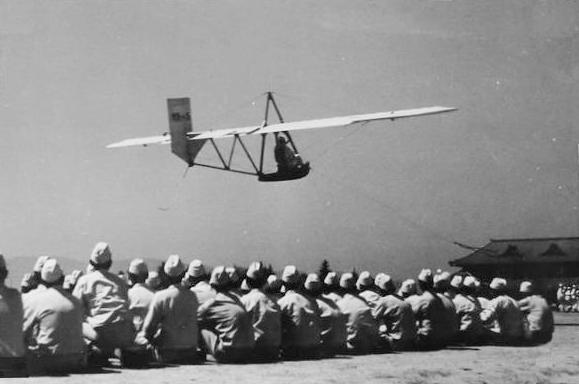
October 21st: The Imperial Republic of Fuso opens the Najin Flying Club, where budding aviators can go to fulfill the growing hobby of flight. Restricted to mostly gliders and antiquated prop flyers, it is nonetheless becoming a national pastime to fly along the Fusan coast on a warm, sunny afternoon.
An instructor of the Najin Flying Club watched by fellow enthusiasts, circa 1920
October 28rd: The Second Boletarian Republic requests a bid for an armored car for it's developing armies. The venerable Rosiak Engineering Ltd and National Arms Factory companies both take on the contract and expect to have prototypes within a few months.
-- Request Aircraft Design (0 Influence) [Requires Aviation Company] * May select one of the following: fighter trainer, single engine fighter, scout plane, dive bomber, naval fighter, torpedo bomber, two engine bomber, four engine bomber, reconaissance plane, bomber trainer. * In order of preference: Firepower, Protection, Maneuverability, Range, Speed, Climb Rate, Engines, Simplicity (1 Most Important, 8 Least Important)
-- Request Ship Design (0 Influence) [Requires Naval Company] * May select one of the following: submarine, destroyer, light cruiser, heavy cruiser, dreadnought, battleship, escort carrier, carrier. * In order of preference: Firepower, Armor, Maneuverability, Range, Speed, Simplicity (1 Most Important, 8 Least Important)
-- Request Armor Design (0 Influence) [Requires Armor Company] * May select tonnage between armored car, tankette, light tank, medium tank, heavy tank, tank destroyer or self-propelled gun. (Maximum intervals of 10, starting at 10). * In order of preference: Primary Armament, Armor, Survivability, Maneuverability, Speed, Engine, Simplicity (1 Most Important, 8 Least Important)
Every nation will be allotted the following for free: -- 1 Free Aviation Company -- 1 Free Armor Company -- 1 Free Naval Company.
When you use the above abilities, every one of your companies (minimum of 1, maximum of 10) will submit a design based on those preferences atop the bonus of the company. You make then select one of the prototypes. This means when you Research a new unit type, you don't name it, as you don't have one mocked up.
This should make it easier on everybody by 1. Randomizing Unit Development 2. People Don't Have to Name Their Shit. Also, FREE COMPANIES.
All Turn 3 dossiers have been sent out except.. maybe Lone's?!
Age of Imperialism 2.0: TURN 1 | Fall 1920 (September) (Turn 2, Part 3 of 3)
September 1st: The Duchy of Pozzouli sends a declaration of war to the Chaegon Empire over the recently annexed Kingdom of Tarania. Tarania, a longtime friend and trading partner of Pozzouli, was linked through blood; though this was not the sole reason for the declaration. "A point must be made of democracy," the Duke of Pozzouli, Duke Aosta proclaimed in the Pozzoulian Senate. "Today it is Tarania, tomorrow it is us." A general mobilization occurs, with the Pozzoulian Army reporting to their garrisons within hours.
September 2nd: Pozzoulian submarine P-16 smashes into P-26 in the harbor, as the entire submarine fleet is ordered out at once. All hands on P-16 are lost, and the half submerged wreck halts the remainder of the Pozzoulian fleet for two days as naval barges move in to clear the wreckage. Pozzoulian Army officers were seen first distressed on the harbor's edge, then shaking their head at the incompetence of the navy.
Pozzoulian Submarines P-16, P-19, P-24 and P-25 hours before departing
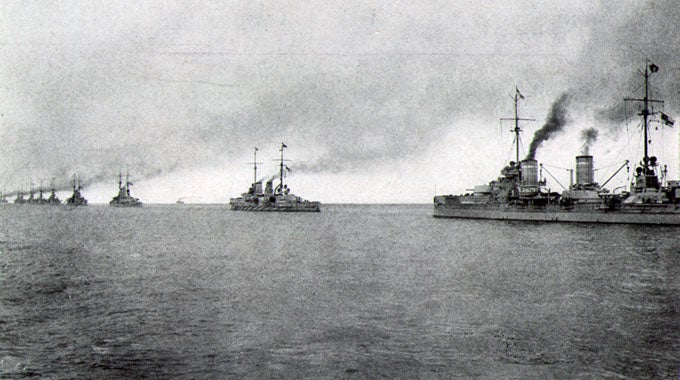
September 7th: The Pozzoulian 1st Fleet under Admiral Leonetto Amadei sets sail from northern Pozzouli toward Chaegon aboard his flagship the Temperanza.
Pozzoulian 1st Fleet sails for Chaegon
September 9th: The Pozzoulian 1st Army under General Corrado Gabriele prepares for combat operations, but never boards their escorts and convoys.
September 11th: Flying in via aircraft, diplomats and security agents land at Sarenk, Romanow Islands and commence short but intense negotiations begin. By the end of the day the worried Romanow diplomat relented. Without the backing of any nation besides a worried Soroya, the Romanow Head of State, Duke Lukyan IV, was forced to accept complete annexation or face war. The threat of war, many believed in Romanow and Oslad alike, was a bluff. It was a bluff that Duke Lukyan IV could not endeavor to risk.
September 16th: While cruising along the Chaegonian coast, the Pozzoulian 1st Fleet spots a pair of cruisers and a dozen destroyers steaming up the coast. They give chase but due to the Temperanza's slow speed, they quickly lose sight of the enemy fleet, and turn about to continue raking the coast for enemy fleets.
September 19th: During the night, the Chaegonian submarine Nestico sinks the Pozzoulian destroyer San Pio while it refuels with a tanker off the tip of Tarania and slips away while under threat of depth charges.
September 22nd: The Taranian Free Army rises up in northeast Tarania along the Kudjian Mountain Range. The TFA supports a free Tarania but makes up a surprisingly small minority, most of whom seek to be part of a larger power. While striking several towns on the outskirts of Tarania, they capture many guards who are--surprisingly to the TFA partisans--low on ammunition and mostly poorly equipped. The response from the Chaegonian Army is minimal.
Taranian partisans, captured Chaegonian soldier on far right
Age of Imperialism 2.0: TURN 1 | Summer 1920 (August) (Turn 2, Part 2 of 3)
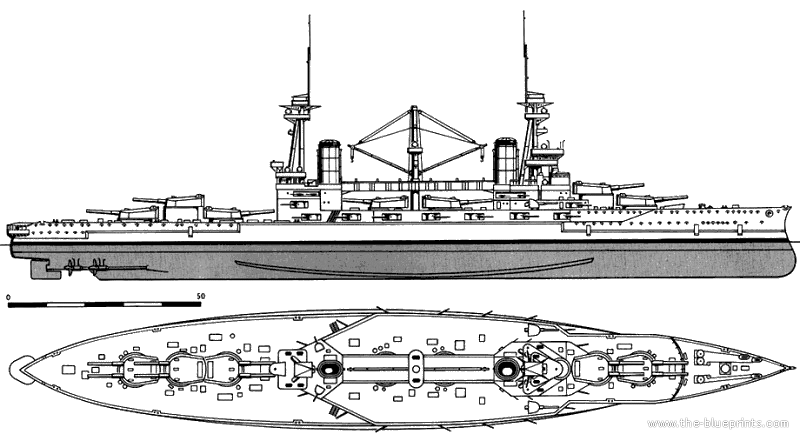
August 3rd: The Grand Survaek Empire lays down the hull of a dreadnought in it's Byrnian Surv-Vyaez Arms Bureau Shipyards. The Imperial-class exemplified itself with excellent service during the Terrible War. A source of pride for the Survaekom, already the Survaekom Wind was being touted as the future of the Empire.
Displacement: 27,850 long tons (28,300 t) (load) 30,860 long tons (31,360 t) (deep load)
Armament: 7 × twin BL 12-inch Surv-K guns 20 × single 6-inch Surv-H guns 10 × single 3 in (76 mm) guns 3 × 21 in (533 mm) torpedo tubes
Armour: Belt: 9 in (229 mm) Deck: 1–2.5 in (25–64 mm) Barbettes: 2–9 in (51–229 mm) Turrets: 8–12 in (203–305 mm) Conning tower: 12 in (305 mm) Bulkheads: 2.5–6 in (64–152 mm)
Blueprints of the Survaekom Wind, the Imperial-class Dreadnought slated for 1921
August 6th: Continuing training, the Second Boletarian Republic incurs more losses as novice pilots learn the ropes of taking off, landing and formation flying. While casualties are an inevitability, it's a reminder that those that do survive will come out much better off. By the end of August, the remaining pilots will graduate as fully fledged flyers of the Boletarian Air Force.
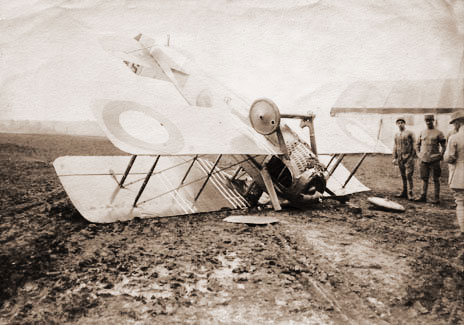
Fellow Boletarian aviators inspect the the crash of a Widok-1, pilot's fate unknown
August 3rd: The Kingdom of Soroya officially decrees the existence of the Treaty of Sikea. With the Terrible War over, Soroya believes that all nations should downgrade their naval capabilities in order to lessen militaristic intent in the world. The Treaty would be as such:
1. The Kingdom of Soroya, a major colonial power may keep no more than 8 Dreadnoughts on station. Soroya currently has 7. 2. Other signatories may possess no more than 25% of their naval nation's efficiency in dreadnoughts (Your Nation's Dockyards/4. Rounded Down). 3. If at least five Major Nations sign the Treaty of Sikea, these nations will exert extra political influence for their decision to help maintain peace in the world (+1 Influence/Turn. +5 Unity). 4. If at least five Major Nations sign the Treaty of Sikea, nations that do not sign generate 0 Influence for 4 Seasons. 5. If at least five Major Nations do not sign the Treaty of Sikea, those nations that signed suffer -5 Unity and -4 Influence. 6. The Treaty of Sikea will expire in 1941.
Every nation, especially naval minded nations such as the Grand Survaek Empire, Zellonian Empire and Tsardom of Ventius had the largest questions about the treaty, as diplomats were sent within hours of receiving the telegrams.
August 11th: The Empire of Chaegon marches 30,000 men south into the Kingdom of Tarania, a long held puppet since even before the Terrible War. These men, 5,000 of whom did not even have rifles, were marched to the Taranian capital of Kodcz and held the King, King Zeg of Tarania hostage for sixteen hours until he forcefully filled the paperwork to sign his state into becoming a Chaegonian protectorate and extension of the empire. The Duchy of Pozzouli is incensed and immediately expels the Chaegonian embassy there. Montevedro condemns Chaegonian aggression in the region.
August 18th: The Kingdom of Soroya unveils a new prototype, the Lux, a tankette that is a moderate step up from it's Jentink tank that allowed it success in the Terrible War. The tankette concept was a typical interwar product, born in the fertile mind of Soroyan Engineer Major Giffard Pieter Claude Bijleveld (born 1868), who had already worked on the tactical development of tanks during The Terrible War. He never stopped theorizing about future tank warfare and, eventually, built in his own garage a very small tank with various commercially available parts. This concept of a one-man tankette was a complete rethinking of tank design, in complete overhang of previous concepts. This concept of a very economical and small tank was ensuring that the average infantryman could be protected when assaulting a static line of defense (typically protected by rifle and machine-gun fire). As a tank with a new, well-adapted light suspension, it was very fast and could be equipped with largely available automobile engines (a Kujdt-12 for the first one). The tracks were furnished by the Soroyan Manufacturing Inc traction Co, and the axle came from a Kalpian truck. It was to be protected only on the sides from small arms fire, but the main structure was made of wood.
New Soroyan tankette protoype Lux
This tankette was seen mostly as a self-propelled skirmisher, an auxiliary transport and scout. First shown to the War Office. The War Office, in turn, contracted Bijleveld to built 4 models in record time in March 1920, for a new live demonstration and more tests, followed by eight improved “Little Luxes” to form an active evaluation unit. Despite an initial interest, no large scale order was placed yet. The idea was indeed dropped after it clearly demonstrated that a single man couldn’t effectively steer and fire at the same time. Later on, a single Lux was rebuilt to accommodate a two-men crew. In June, the Soroyan Armor Department also took the idea seriously, releasing a two man tankette rolling on Kalpian tracks on August 7th, 1920.
August 27th: The Duchy of Pozzouli demands that Taranian independence be recognized once again by the Empire of Chaegon or face severe political and economic sanctions and possibly intervention.
Month's Losses
Second Boletarian Republic
Novice Pilots: 1
Light Trainer (Osika Widow-1): 2
Signatories of the Treaty of Sikea (1920 [1/5] -- Empire of Chaegon

 FortunesFaded,
 Spiffy,
 Scrawl Banditta