Avatar of Theodorable

Status

User has no status, yet

Bio

User has no bio, yet

Most Recent Posts


Sultanate of the Seljuk


To His Most Royal Majesty King Richard Stuart II, of the Empire of Gilbradia,

As among the most eminent nations in the land, the Sultan of the Seljuk sends his regards to His Most Royal Majesty and hopes health and wellness among his family and subjects. The Sultanate sends tidings at a dire time for the Hazibiki Seljukii, and requires the assistance of the forever honorable Gilbradian Empire. The Terkavians have sought bloodshed and disorder at a time of rebuilding and peace giving. The Seljuk has long stood the test of time as a domain of diversity and tolerance, and the Taverkians wish now to upset this tenuous peace. The Gilbradians have forever maintained military integrity in the fields of discipline and overall skill, and the Sultan of the Seljuk, as well as the Chief of the Army Saruhan Nalband wish it that the Gilbradians might deem it prudent to dispatch no less than one dozen military advisers to aid the currently mobilizing Seljuk Grand Army in dispatching the Takervian rabble.

Gilbradian service to the Sultanate endeavor could see the following ends met: Gilbradian access to Seljuk ports for no less than ten years, as well as a trade agreement following the end of hostilities with the Takervian uprising. We will diligently await your reply.

Signed, Foreign Ambassador to the Empire of Gilbradia, Pavasha Muhmet
Turn 3 is up. Updating everyone's Ledgers now, and also adding the National Decision's!
THE AGE OF NATIONS


TURN 3. October, 1815 to March, 1816.


October
October 3rd
The Zeelian Kaiser James Conrad formally invited the members of the Diet of Palovia to the Zeelian Palace to discuss things and ease tensions. On the third of October the Diet arrived, a light snow falling across the plaintive fields. The Diet--lower level Palovian nobles--supped and dined with the Kaiser for eight long hours, discussing everything but Palovia. Those Zeelians standing guard had grown tired, and at the changing of said guards the Palovians struck. Several men rushed the guards and the other half dozen charged the Kaiser. His subdued guards watched on while Palovian nationalist and writer Laurent Kavocz drew the Kaiser's own sword and ran him through with it. The Palovians fled, ten of the twelve escaping while two of the men were shot and killed inside the palace.
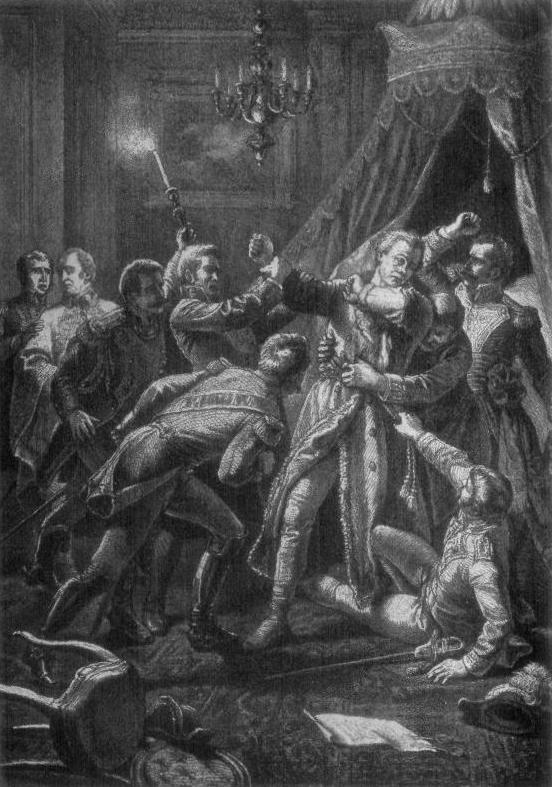

Assassination of Kaiser James Conrad, 1815


October 4th
The Zeelian Empire sees Zachary Conrad appointed to the throne as Kaiser Regent. Not old enough to rule until his eighteenth birthday, the Zeelian government appoints a seven man council to rule in his stead until he is old enough.
[Zeelian Empire may only take 2 Actions per turn until 1818.]

October 19th
Marshal Bartjan Visser, one of the Tyrant's most trusted aides during the war, is found hiding in Ovelius. A charming, effeminate and suave young man, Visser was nicknamed the "Conqueror of Hearts" for his ability to woo women with the same efficiency that Cato destroyed armies. Among this however, Visser had commanded the massacre of thousands of Dallin and Azrekan troops in the Meribou Bog during the War and was seen as one of the world's first "war criminals."

October 25th
After a brief military tribunal, where a consensus of guilt is established, Marshal Visser is taken outside the Palace of Justice in Ovelius and instructed to stand before a firing squad. His last words were, "Kavikiun sa vakian." Translated from Civitan: Luck, not destiny."


Execution of Marshal Visser, October, 1815


November
November 4th
Gioachino Rossini's opera buffa The Barber of Tetrino premières at the Teatro Marco in Marsie, Plebina.

November 16th
Horst Heindl departs from the Vornehm port of Wichendorf to begin the Serranthian Expedition. Aboard the sloop Schutzen, he curves around the Azrekan coast toward the Serranthian continent.

December
December 4th
While reigning with a regency council, the Zeelian inventor Michel Horthun revealed the Hortun, the world's first steam powered locomotive. The train's first trip pulled ten tons of iron and twenty-one passengers (all in the same train car) 6.1 miles from a local mine to the city center of Savom.


Horthun, circa 1815


December 7th
The Azrekan passenger ship Savoya runs aground off the coast of Western Serranthia, with 140 lives lost in the botched rescue that takes weeks, leading to a minor scandal in the Azrekan government.
[+1 Unrest in Balden, Azreka]

December 12th
Horst Heindl lands on the coast of Serranthia at the outlet of a great river. A settlement of forty sailors and cartographers is established there, titled Groß-Friedrichsburg. Horst Heindl continues to move inward along the newly named Weinde river.

January
January 16th
350 Dallin volunteers set sail from the Madeiran port of Portimao toward Takervia. With permission from their monarch, they intend to join the Takervian Second Uprising currently on going in Seljuk.

February
February 16th
The Principality of Mutecci and the Kingdom of Sevola merge their thrones with the death of Muteccian Prince Reynault Savoia, married to Queen Sebastian de Nolo of Sevola. His death--as awarded in a secret will--grants full control of the de Nolo dynasty to the Muteccian Principality.


Principality of Mutecci and Kingdom of Sevola, circa 1816


The Kingdoms of Sevola & Mutecci reigns over 4,700,000 citizens and bolstered a strong diplomatic position within the Lavarattian group of nations.

March
March 4th
A Dallin meteorologist Ovio Maarkham dubs 1816 the Year Without a Summer. Evidence from the Civitan volcano explosion in Faresia last years seems to have effected global temperatures, dropping them by 1.5 degrees over the entire globe. Heavy snowfalls batter Nostra, Vornehm, Dallin, Azreka and even Gilbradia and Zeelia. The sulfur from this eruption reflected the sun's rays and caused severe global cooling, catastrophic in some locations.

March 19th
The Kingdom of Azreka Armory of Saxor unveils its Musket Model 1816. Easily manufactured, with only 27 separate pieces, the M/16 can be replicated in any armory with similar working parts. The weapon itself weighed less than ten pounds and it was predicted that a trained infantryman could fire four rounds a minute.
[+5% Preparation to Azrekan Army for next 3 turns.]


Azrekan Model 1816
I'm not sure if I need to respond to the Avila Incident with the Kingdom of Batifegale. Spectre mentions it in his IC post, but didn't use a turn action to make a national decision.


If he uses the National Decision, you'll receive an event. Otherwise you're good. Great post!

Age of Nations
WORLD EVENT
The Second Takervian Uprising (May, 1815-)


The Sultanate of the Seljuk had only recently been nicknamed the "Wounded Animal of the World," a dying empire held together by the stitching of tradition. Far enough away from the Continent to be out of the way, but close enough to influence affairs there, the Seljuk had forever been a nebulous anomaly. The War never reached the Seljuk, save for a failed expedition by the Tyrant that cost a brief thousand soldiers, Seljuk life continued on unabated. It was life after the war that took the most dire turn for the Seljuk, and the Takervian minority there. During the War, the Tyrant Cato appealed largely the various minorities present to rise up and shake off the shackles of empire. The uprising was championed by the Takervians. The military oppression that came in it's wake was brutal, unforgiving and largely forgotten while Cato ravaged the Continent proper. Ten thousand Takervians lost their life in a futile uprising that went mostly undocumented.

The Takervians did not forget however. On May 16th, 1815, 1,200 Takervians raided the local garrison and killed it's small detachment there. The Takervians declared an insurrection of independence against the Seljuks under the leadership of 71 year old Kava Tavasha, a Takervian nationalist dating back to the 1770's. Kava Tavasha served in the Seljuk Army during the initial Takervian Uprising of 1811, but was exempted from service for fear of compromised combat performance. He wrote in his journal: "It surprises me still the overlords do not send dogs to kill other dogs. It would be, as the Continentals say, killing two birds with one stone." The Second Takervian Uprising was--in essence--an experiment in nationalism.


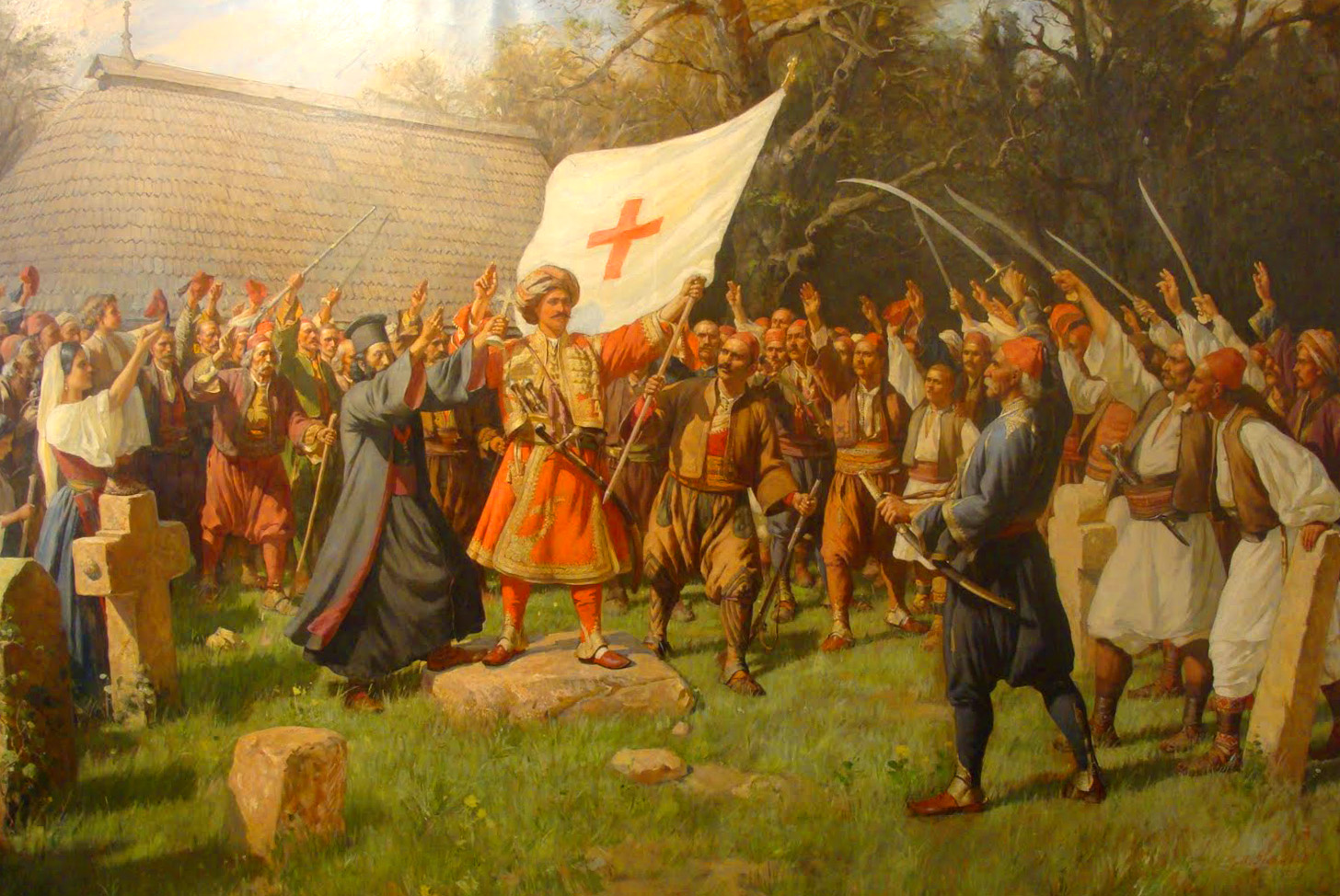
Kava Tavasha speaking to his followers in Tavolo, Seljuk, now Takervia, 1815


The Seljuk Grand Army was a multinational force with heavy conscription. The Sultanate and the Chief of the Army, Saruhan Nalband collaborated on the morning of May 17th and agreed that a mobilization of the army to put down a local revolt would be too costly and given the poor infrastructure of the Sultanate, too time consuming. The revolt had taken hold of the city of Tavolo in Takervia, a city barely over 25,000. The garrison there was 350 soldiers and Chief of the Army Nalband believed that the forces of the Takervia region could handle the insurgency. On May 19th, the 24th Infantry Regiment (2,000 Soldiers, 4 Cannon) of the Seljuk Grand Army under Deli Husrev Pasha, stationed in Saymeçin, received a message from Chief of the Army Nalband to move on Tavolo and: "put down the revolution expeditiously."

The Battle of Tavolo (1815) took place on May 24th when Deli Husrev Pasha's 24th Regiment, still in marching formation, was caught unawares sixteen miles outside of Tavolo. Expecting a disunited and undisciplined army, they found over 1,500 well armed soldiers marching against them. Deli ordered the four cannon--the one asset that the Takervians did not possess--into position and loaded with "wide shot," a leather canister filled with lead balls. The Takervians offered no respite. The Takervians suffered heavy casualties in their first charge and were turned back by a sickening barrage of musket fire. The second charge however, led by 71 year old Kava Tavasha himself, took the guns after savage hand to hand fighting, with the most of the artillery officers surrendering and leaving their guard to fend for themselves. The remainder of the 24th Regiment retreated. Deli Husrev Pasha himself was taken prisoner.


The Takervians charge the guns of the Seljuk 24th Regiment, May, 1815


The Seljuk Army--up to October--remained demobilized. The Chief of the Army was powerless without the command of the Sultan, and the Sultan was a brooding and paranoid leader. His authority, which lay tenuously on the result of the last great victory understood that allowing a second Takervian victory would see his command undone. The Continent, and the Great Powers looked on with some interest, as the future of the Takervians might speak to the Palovians, or the Kinnerians along the western coast of the Continent.
Waiting on a few others. @Polybius

I believe that @Lone Wanderer has dropped out. Veldlands will thus by an NPC.

INNOVATIONS

Updated To: Turn 4


INDUSTRIES


Industries are essential to the development of your nation. When innovations become reality, your industries will sprout and must be maintained or fostered to grow. Without them, you will lose any technological edge you possess.

Turn 2 is up.

PM me your orders or attach them to the end of your IC!


The Sultanate of the Seljuk (May, 1815)

So far from the Continent, and yet often considered among it. The Seljuk were both the minority and the majority, encompassing over 13 million inhabitants, of which over seven million were "exacted citizens," or the jaziya. Bordering the Kingdom of Tangary to the northwest and the Principality of the Tanube and the "Southern Mullahs" within the Desert Corridor, the Empire of the Seljuk's was the gateway from the Continent to the less sophisticated world. Better still, it was a diverse world of New Faith, Old Faith and the Foreign Faith, the Habika--the majority of whom were adherents to the third. With over thirty different cultures declared under the rule of Sultan Ahmid Kaffa IV, the Seljuk Empire was undoubtedly the most diverse in the world.


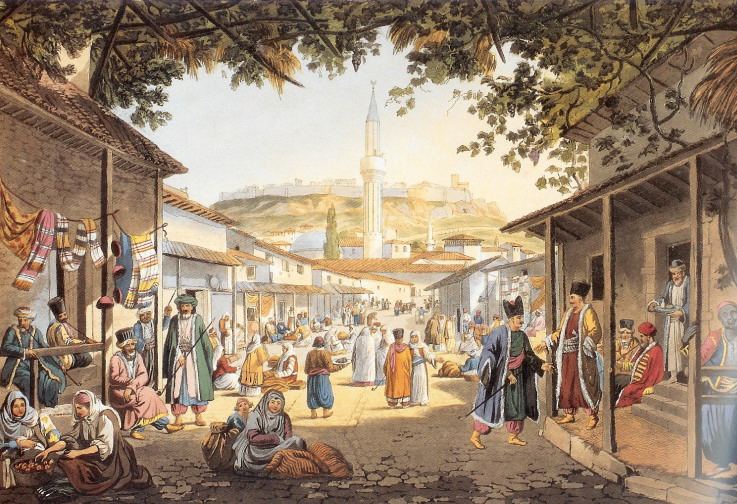
A Seljuk bazaar, circa 1815


While the threat of republicanism and liberalism reached the Seljuk, it's chief adversary was the rural and agrarian lifestyle of the majority of the Seljuk citizens. While these ideas became prevalent during the Tyrant's reign in several cities lashed to the coast of the Inner Sea, they failed to bolster similar support in the rural and distant villages and fiefs. Unlike the Continental monarchies, the Sultanate had little qualms about literally whipping the idea of democracy from the bared backs of it's citizens. The furnishing of absolute monarchism would continue unabated from the late 1790's up to the current with only a few thousand dissidents sacrificed on Seljuk swords.


Seljuk life outside the urban cities, 1800's


For Tamaydin Ozkul, life was no different before, during or after The War. A farmer with six acres, he plowed the fields season after season to bring his goods to the bazaar at Kudal. Twice a year, he made the journey, wagering to sell his goods, return home with a little coin in his pocket. It was in early 1815 he purchased a luxury item known to most Continentals--a worn pair of leather soled shoes. Crossing the rugged country without the threat of a sharp rock gashing one's foot felt kingly to Tamaydin, but he dared not voice such a thought. Instead, he tucked them away under his cot and let sleep take him. There woulds be much farming to be done the next morning.


Traditional Seljuk farmers, circa 1800's


<Snipped quote by The Nexerus>

The timetable affects me because I work 40+ hours a week and can't always find time to write. It's just such a rapid pace for nation RP's but it's no big deal really. Thanks for clarifying the national decision thing.


If you can't post, just PM me your actions and you're good to go.
© 2007-2026
BBCode Cheatsheet