Age of Nations
Turn 5: March, 1817 to October, 1817
The
Second Terkavian Uprising had it's fiercest growth in the home province of Terkavia, but sympathizers began to make themselves known in neighboring provinces. Rioters and dissidents grew bolder with each passing day that the Terkavians roamed free. Gilfray de Nauvé, a native born Azrekan and Terkavian sympathizer, had long become obsessed with Terkavian culture--even so much as to move to the Seljuk Empire from Azreka itself. He brandished himself one of the founding fathers of the "Friends of Terkavia" movement. He gave a speech in the coastal city of Sezrit:
“Give me the papers of the kneeling Terkavians to the sultans and the traitors in every village across the nation to burn them. Every place and every village that betrays our nation and it’s long battle to freedom, I will smash it, burn it and destroy it! FIRE AND AXE TO THE ONES WHO FALL ON THEIR KNEES AND THE TRAITORS! Fight for Faith and Fatherland! The time has come, O Terkavs. Long ago the people of the Continent, fighting for their own rights and liberties, invited us to imitation ... The enlightened peoples of the Continent are occupied in restoring the same well-being, and, full of gratitude for the benefactions of our forefathers towards them, desire the liberation of Terkavia. We, seemingly worthy of ancestral virtue and of the present century, are hopeful that we will achieve their defense and help. Many of these freedom-lovers want to come and fight alongside us ... Who then hinders your manly arms? Our cowardly enemy is sick and weak. Our generals are experienced, and all our fellow countrymen are full of enthusiasm. Unite, then, O brave and magnanimous Terkavs! Let national phalanxes be formed, let patriotic legions appear and you will see those old giants of despotism fall themselves, before our triumphant banners.” Gilfray de Nauvé, circa 1810's
de Nauvé considered himself "
a Terkav in all but blood," and circulated the pamphlet
FUR SAZIRKA, TERKAVIA, or
For Freedom, Terkavia in the neighboring cities. On October 25th, 750 members of the "Friends of Terkavia" swarmed the governor's palace in Sezrit and sacked the building, though the governor himself had vacated for the day. The smoke plumes were seen as far as the harbor, where disembarking Gilbradian troops were present.
With issues over the
Vahterpää still fresh in the mind of the Marns, King Benedict IV demanded that if an apology wasn't issue within the year that the Marns may pursue an embargo against the continental nation. Reportedly, several Aontan advisers were admitted to the Marn national council during the ongoing investigation of the
Vahterpää. King Benedict IV convened his war council, though without admission of any foreign delegates present. Vornehm military advisers believe that King Benedict IV, a young and brash king, might go to war to save face over the loss of the
Vahterpää, a loss inflicted by a trade policy that his people were wholly against.
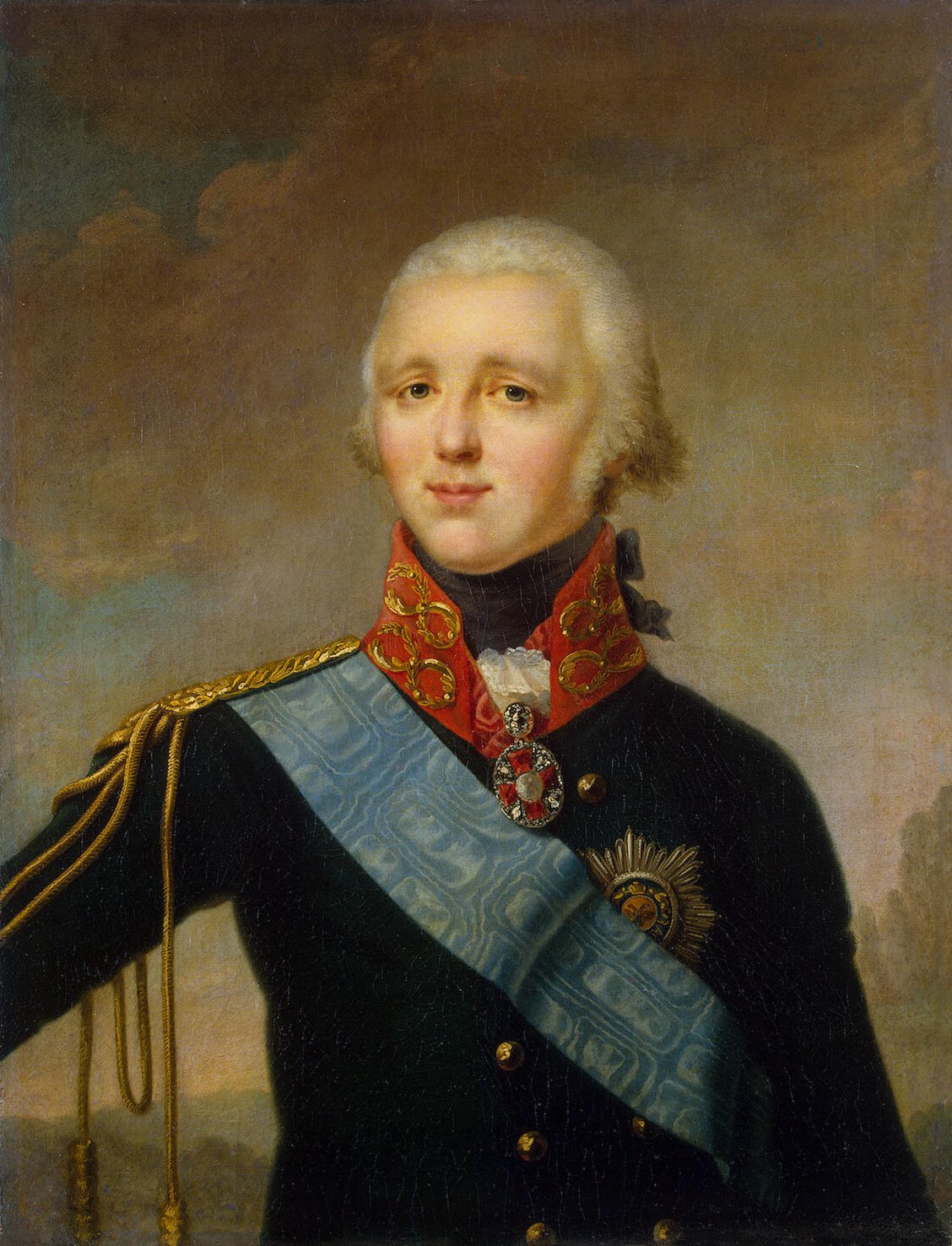 King Benedict IV in Marnish military regalia
On November 1st, war reached the Continent. The Kingdom of Dallin declared war on the Kingdom of Madeira. The Dallini king, wishing to strengthen his own position, found little friends--Kalpian, Civitan and Veldanic delegates denounced the Dallini as warmongers. The Dallini Army mobilized immediately, but would not be prepared for offensive operations until the November 18th. While the Dallini Army mobilized, the Madeirans scrambled to get their act together, moving to intercept any Dallini forces that might be coming through the St. Kerramore Mountains; the natural divide between the two nations.
 Modern day image where the Dallii Army allegedly passed along the River Peja, circa 1817
On December 1st, the Dallini Army passed through the St. Kerramore Mountains just along the Batigefalé border, far from where any Madeiran troops had moved to intercept. The Dallini Army marched for sixteen straight days through the Sao Pass where the River Peja carved a path through the mountains. After passing through, unseen--with only casualties of the heavy winter conditions--the Dallini Army turned north into the open field. Ahead, the city of Portimao. The plan to cut Madeira in half was close at hand. The Dallini Army was faced with a minor crisis; the River Peja served as a natural obstacle to reaching Portimao in the north. Scout borne riders constantly roaming the flanks returned with news that the Dallini Army had not moved entirely unmolested. The Madeiran Army was moving--though piecemeal--to defend Peja.
General Dellius Arius decided under the cover of darkness, he would lead I and II Corps across the River Peja, south of the town town of the river's namesake. Where the river broadened into the River Marles and flowed south into Batifegalé, General Arius fabricated wooden pontoons and set about the task of moving 62,000 men and 30 cannons across the frigid, frozen December water.
 Battle of Peja (1817)
The morning of the 2nd, the Madeiran Army awoke to find that the Dallini Army was on
their bank of the river. General Miguel Ricardo de Álava y Esquivel, the commander of the Madeiran Artillery Corps maneuvered II Corps to form a bridgehead south of Peja and engage the enemy. While Dallini's
I Corps (32,000 men, 15 cannons) and
II Corps (32,000 men, 15 cannons) had successfully crossed in the twelve hour time frame--their supply wagons and ammunition carts had not. They would be fighting with limited ammunition and shot for their cannon. The force they opposed was the Madeiran
II Corps (40,000 soldiers). The
Battle of Peja began around nine A.M. on the morning of December 2nd, 1817.
General Miguel Ricardo de Álava y Esquivel was an experienced commander--the best in Madeira. He was not a commander of men however, but rather of artillery. His presence was due to the absence of Marshal Felix, Duke of Beja, the Chief of Staff of the Madeiran Army, who had returned to Portimao under illness. General Esquivel ordered his troops abroad and forward into a short, broad line, poised to fire. Historians of the age refer to Dallini bravery--or stupidity--in declaring war in October, forcing a harsh winter campaign that claimed a great many lives. The Dallini lined up, pulling their artillery into range to focus on the infantry.
Three volleys--two from the Dallini and one from the Madeirans--were exchanged, and the Madeirans charged, using the short thin line as a form of meat shield to close the distance. The ensuing melee was a brutal, desperate affair in four inch deep snow. So close was the battle many Dallini artillerymen were forced to the fray. The combat exhausted men's arms and spirits, and at 4 PM the Madeirans retired north to the walled city of Peja, the Dallini General Arius deciding not yet to pursue on the whims of collecting the dead and allowing his ammunition cart and supply train to cross the river.
 Charge of the Madeirans at Peja, 1817
At the end of the day, the Madeirans suffered 12,000 dead and the Dallini 2,800 with a single cannon lost to conditions of snow and ice in the rugged, mountainous terrain. The losses of the Dallini Army in total had lost 5,300 men and 1,100 cavalry due to attrition in the St. Kerramore Mountains, and yet now their enemy was pressed to the walls of the city of Peja--the last obstacle to the sister city of Beja. Dallini Army units formed at the base of the city's south wall while secondary and tertiary Madeiran Army units flocked into the city.
In Azreka, an additional two regiments of cavalry were formed, while military and economic advisers were sent to Odrius to help keep the Dallini competitive in the war. Long time friends and cultural cousins, Dallini and Azrekan cooperation was at an all time high, though Azrekan advisers reported back to their monarch the questionable quality of the Dallini war councils.
The Gilbradian Army was becoming more involved in the Seljuk Empire. Firstly, they received new uniforms for fighting in the hot deserts of the East. The new, thin materials were easier to breathe in and not made of thick cotton that was suitable in the cool climate of Gilbradia and the Continent. With the 22nd Regiment now being supported by an additional 4,000 troops of the 37th and 18th Regiments, the fresh faced soldiers showed up to an exotic world that many of them had never before known.
 Gilbradian Seljuk uniforms, 1817
Cersin was considered the
Doorway to the East by Continentral traders. A mash of West and East, it was an exorbitant departure from the bleak, often rain peaked plains of Manfield and Blackridge. So alluring was the city that in the first ninety days, the Gilbradian Foreign Office signed off on over 120 court martials for soldiers who had gone AWOL or simply took leave and never returned. [
Empire of Gilbradia] loses 120 Soldiers]
 Governor's Palace, Port Cersin, 1817
Still souring the tastes of Batifegaléan Empire's dazzling birthday of the reigning monarch Queen Mariana Varejão-Medellin II were the Dallini. The poor behavior and outcome of the event had turned the mood in Aldius for the worst, where Batifegaléans were being targeted out of anger, and in response the province's mood was tense. Several shops closed down. A Dallini protestor, speaking out against the violence was beat nearly to death and left for dead--but whether by native Batifegaléans or fellow Dallini's was uncertain.
In Zeelia, the Zeelian Imperial Army was reorganized under General Falkand and began training. For nearly five months, Zeelian infantrymen marched and fired and trained. The Zeelian Army was nicknamed "Falkand's Army" given how much care he put into it's development. Foreign military observers reported back to their own respective governments the competency of the Zeelian Army. The average Continental riflemen could fire three shots per minute during a concentrated volley. The Zeelians could fire five shots per minute.
 General Falkand overseeing troops in Evecope, 1817
General Falkand himself, having never seen combat, wrote in his memoirs: "
Never have I felt so alive as to command men. Zeelia may yet return to her roots as the greatest power the world has ever seen. And if I am to lead her, then the Faith wills it, and if I am not--so too, the Faith wills it." [
General Falkand gains +12% Momentum and +7% Experience]
[DO NOT POST UNTIL
THIS LINE DISAPPEARS]

 FortunesFaded
 Spiffy
 Scrawl Banditta