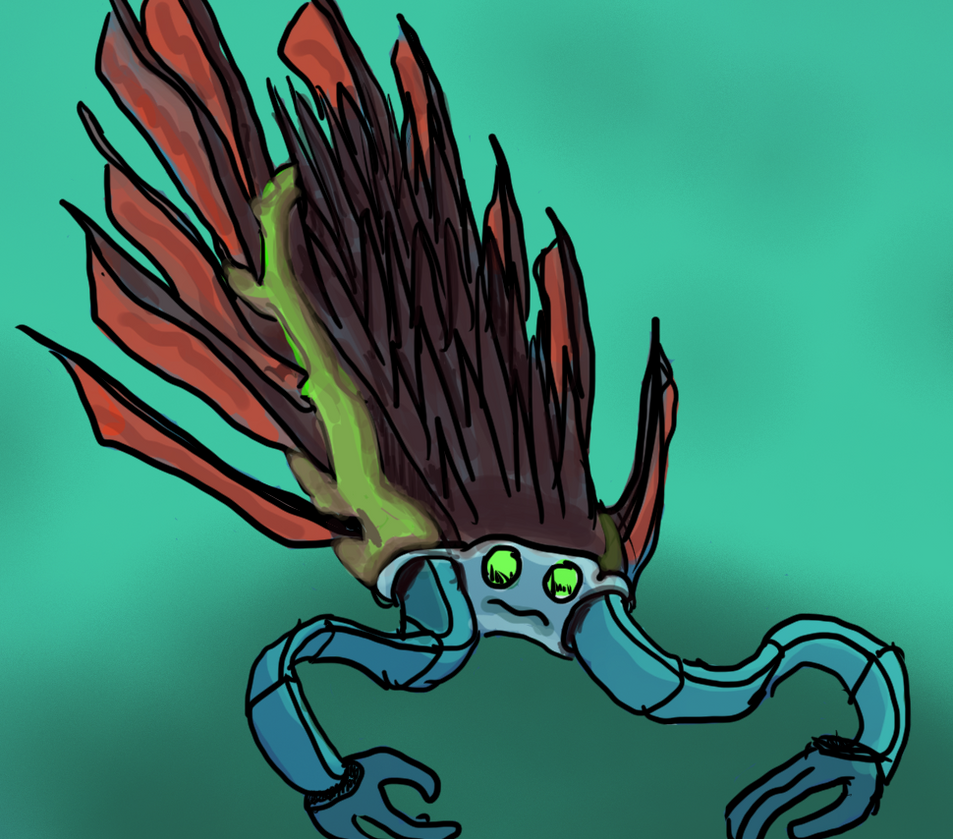
Located on the world of Long Step in orbit of a K-class star located over 1550 light years from Sol, the Tikali thrive.
The Tikali are mostly sea faring creatures who developed over the ages to the state they currently are in now. That is as one of the most advanced beings in the known galaxy. And from origins grotesque and dirty- from the salty swamps of hardgrowth which had been the incubators of civilizations on the Murk for millennia. The Tikalian canon stretches on for a span of ages before they ever grabbed ahold of the rocket or paddled their way to the stars when networks of floating cities ran by elite families were the norm. The development of steel happened less than a century before space travel, of which came more about due to their innovations in chemical warfare than anything else as their world became ever more interconnected in the thousand years leading up to the launching of the first rockets and the eventually information revolution which radically destroyed over ten thousand years of entrenched clans within a century as the Tikali shifted to a deeply molecular existence and became one of the few beings to happen upon a system of FTL in the known universe.
With all that known of them, let us dive in.
The Long Stepis a world with multiple continents and blood red plants which has lower gravity than earth and less air pressure than Earth with sprawling planes of magenta bacteria. The Murk shifts in color over the seasons, from Violet to Magenta and back. The white hard growths of the salty teal swamps would allow for the depth of time to enable the Tikali to spend millennia killing each other over very ridiculous reasons when they weren’t digging out canals and overpopulating massive rafts of hard growth to expand their agricultural output in a fashion akin to the Aztec Chinampa. The Murk has all matter of critters, such as the segmented bolo-worms well known for their 2-way gut systems slinking or flying about or the floods of eusocial invertebrates who dwell in the mega organisms on the ocean floor who absorb the dead. The agriculture of the Tikali is diverse, such as their cultivation of gametes for food or the cultivation of growing building material or the cultivation of all matter of sea critters they farm on a regular basis with the drilling of canals. All matter of indigenous engineering being employed to sustain quite massive Tikali populations in large trade networks would create the vast infrastructure systems which numerous self-contained clan elites used to rule their Tikali.
Some of these societies were deeply coastal based while others were obsessed with inland expansion and the creation of canals, with massive canal networks and watermills used to transport uphill to mineral rich regions.
The Ancient History of the Tikali[Prehistory (aquaculture, agriculture, regular hardgrowth use, settlements all over, the clan system’s roots are very deep…)
The depths of time speak of the long phasing into existence of the teal seas and the growth which emerged from it, a many tikali mythologies always believed in the growth of continents from the hard growth, of which numerous tikali cultures had gained an impressive affinity towards with a few exceptions who instead relied only on the vines of the fruitkelp and stone for building material or just used the skeletons of other creatures instead of hardgrowth. Obsidian also was a common material in the southern cultures due to the sheer volcanism which their environments had (the impurity of the water being only a minor detriment to the stupid resilience of the Tikali’s water filtration.
[Murk Era (written symbolic, advanced static settlements, the elite clans form, the all-clan forms) 0-5700 PE
The Murk era say the rise of the early elitist clans which numerous clans would for millennia on end claim descent of, at least where this system of elite clans prominated. In other parts of the world, you saw systems of clans as well, but none so strange as the all-clan which was a singular clan of clans, to which instead of a clan ruling others you had a cooperative of multiple clan leaders who consisted a clan in of themselves to convene and make decisions. The all-clan system was an anomaly, of course. Usually you saw clan units who just unilaterally ruled other clans as their clans had all the weapons and wealth. Such stratification usually meant you ended up with clan bubbles being specialized in small, but incredibly centralized units who traded off their clans regularly. Such system of clan trading was absent in other parts of the world, where clans were much more autonomous still.
The murk era saw the advent of written language, made from imprints and carving as the Tikali simply didn’t have fire, not like they needed it when you can etch the records and keep them safe in sediment. Such sediment records allowed for so much info to be stored from the Murk era.
Tikali social structure is highly informed by the purses which their females lay and the inconsistency of gender in their society, as males turn to females biologically and back, practically seasonally. The genders aren’t male and female. They are Summer and Winter, for the dimorphism is much more when you are a male or female. An effect of this is that matriarchy or patriarchy as we think of it is way stranger, with no real agreement of which sex is better anywhere, the winter gendered usually think they are superior for not letting heat affect their mating choices, but those of the summer gender know that mating is always better when it is warm. It is scientifically proven. Such arguments go on to this day.
The Tikali have all matter of hand interplay, their retractable spring arms ensure that.
[Hardgrowth Era (Refined growth constructs, the development of the floating city, the development of massive canal networks, collapse of the all-clan, domination of the elite clans, the peculiars rise and fall) 5700-7000 PE
Methodologies working with hard growth started to improve drastically around this period of time, for the hardgrowth was very easily modified and strengthened using amultiple materials with the hardgrowth as the core. It was not a easy thing to figure out, as while such augmentation had been done before it was rarely ever practical. However, after millennia of artificial selection and the use of fire finally catching on in land forges or lava forges you start seeing push daggers in common use by the Tikali who for millennia used teeth filled sticks to kill their enemies. The push daggers ripped through quite a bit, enabling the peculiars who loved their push daggers and spent a thousand years chopping folk up and making all matter of spear filled complexes to ward of the flying demons they insisted existed. Peculiar social structure was clan based, but much more rigidly hierarchal with incredibly centralized clan deferment and clan allocation strictly controlled.
The Peculiars used the massive sloppy serpents, whose niche was akin to a whale shark for transport across the oceans on a regular basis, controlling their herds of sloppy serpents that they mutilated, modified and augmented through sheer pain so that a single sloppy serpent could transport dozens of Tikali. All of which meant a system that broke sooner than it bent, and sure enough it broke, but not before destabilizing the old clan system and ensuring the new clan system would come in and adopt quite a bit of the Peculiar clan traits.
[Pyre Era (Sophisticated chemistry, advanced machinery, fire, ocean depth exploration, radio equivalent systems [wired], the pyre civilization, the new clans, nihilism, mass extinction waves cause a collapse around 10000 PE) 7000 PE – 11000 PE
A new era dawned with more advancements in the field of pyroturgy, which was viewed quite superstitiously for quite some time as fire was inane a substance. Metal working was normal by this point, everyone used push daggers and all matter of new, devastating means of murder and the pyre civilization’s mastery of chemical weaponry simply blindsided everyone as they instated the system of new clans and used vacuum bombs to wipe out massive floating city complexes.
These Pyres were an industrious folk, making rusty cities and using whatever they could get their hands on in a quite delusional, petty system of worship of the Ambrosia which they fed their slain foes to on a regular basis. The Pyres were rivaled by large coalitions of the New Clans, who mixed all matter of traits to ensure the perfections of the clan system in their minds, that is the combination of the All-clan with the elite clans and the system of the peculiars into a dynamic system which the Pyre struggled with even with their advancements. The Pyre crumbled eventually, an industrial society overwhelmed by pre-industrial societies.
Still, the Pyre’s legacy lived on as the new clans used Pyre tech to their own benefit in the centuries leading to the nihilism age and the mass extinctions which followed from how they were acidifying their own oceans and killing themselves off in seeming mass suicides, an event which took a thousand years to recover from. Other parts of the world survived this and these less destructive parks of the world would have a renaissance which saw the birth of an information network across the whole planet made by many clans seeking common infrastructural unity, to which the radio gave them. The steel era came just a few centuries later.
[Steel Era (Advanced metal working, rocketworks, amphibious transport networks, wireless information flow, the decline of the clans, a shocking large of massive wars (no WW2 equivalent, just waves of civil wars over the centuries and numerous social conflicts due to the systems being too connected, reciprocalism)) 11000 PE
– 12500 PE
With the Pyre’s advancements, widespread and the development of a radio system spreading the advancements to all Tikali societies, the flow of knowledge which formed made launched the Tikali to a space faring species with numerous competition clans stumbling over each other to make space craft in the asinine belief that they had relatives out there waiting to see them or that there were spirits who wanted to go back home and the rockets would allow for that. Needless to say, the reasoning Tikali had for space travel was based around superstitions more than some notion of conquest or even exploration, it just started to become that by sheer accident as they found their whole star system void of any of that, causing quite a bit of disillusionment and waves of upheavals against the entrenched clan system that had pretty much completely fallen out of favor by this point. Still, it would be centuries of such upheaval until the molecular system came to replace it and the pop drive’s sudden, inexplicable invention by Tikali who had the molecular system basically radically shifted their whole kind whose who world was already collapsing in on itself from the horrid pollution and constant need to filter everything just to survive the acidification of their own water.
[Stellar Era (The pop drive, formal spacecraft, weather manipulation, the moleculars, the genocide, the silent imperium) 12500 PE – 13500 PE
And that leaves us to the modern history, yay!
In the case someone uses them for an RP, this is all up in the air for them. Just want them primitive? Use an earlier time period or something.
On the Tikali homeworld of Long Step, there is a absence of polar caps due to the greenhouse effect, leading to a more carbon rich environment than on Earth. Their world has more homogenous temperature than earth, but there is still amazing amounts of variation thanks to the nutrition poor soils demanding a diversification of methods for attaining foods.
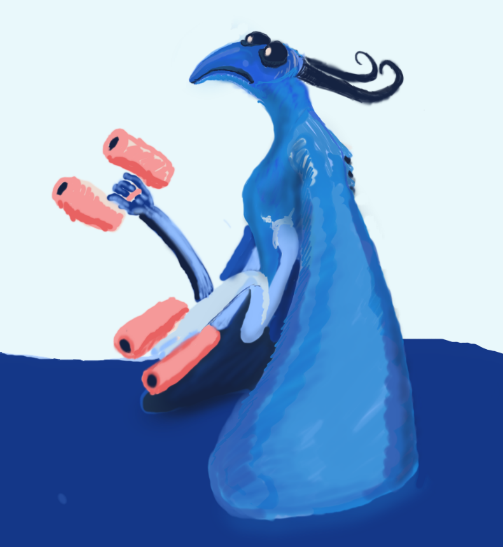
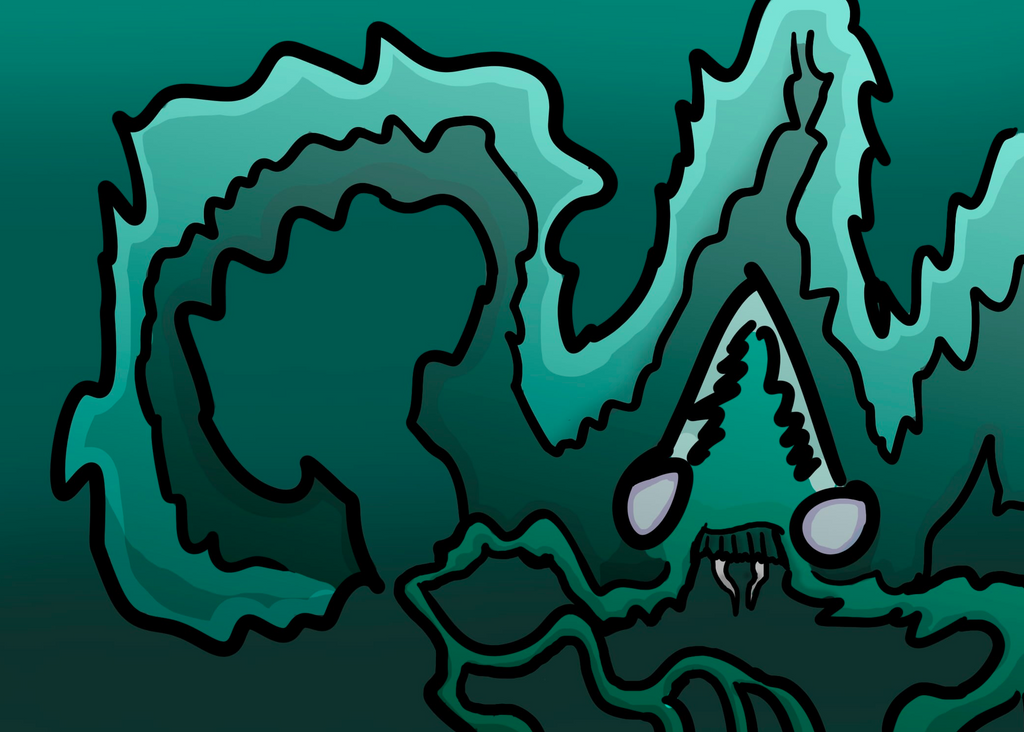
The Tikali themselves are a fresh water creature that has numerous spikey tendrils that flare up in certain situations, with control over verticals or horizontal spoke flaring. Their movement stiffens when the spikes flare, for obvious reasons. These barb-like spikes are long and flowing normally. They can "walk" using the verticals spikes through a swiveling motion on land, clumsily, but good enough that they have been able to achieve a somewhat amphibious niche over their evolution and eventually became intelligent due to a chaotic mess of pressures and mating selection on intelligence instead of barbs- such pressures leading to the sapient modern Tikali.
The modern Tikali spent much more time as a Stone Age species, but this was deceptive as they achieved much greater developments in textiles and stone craft to the point where they were making crystal shotguns, gun powder, pump based transport systems and whatnot before they even had automation, which they had before jumping to iron tools and rapidly just kept advancing from there, going from a agricultural society to a space faring one within a century.
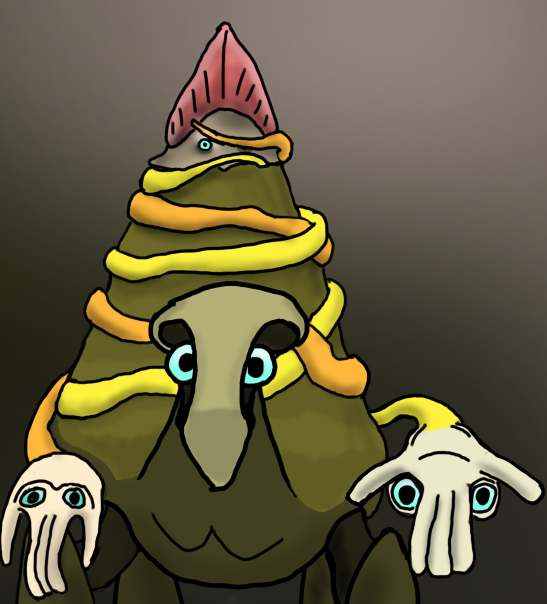
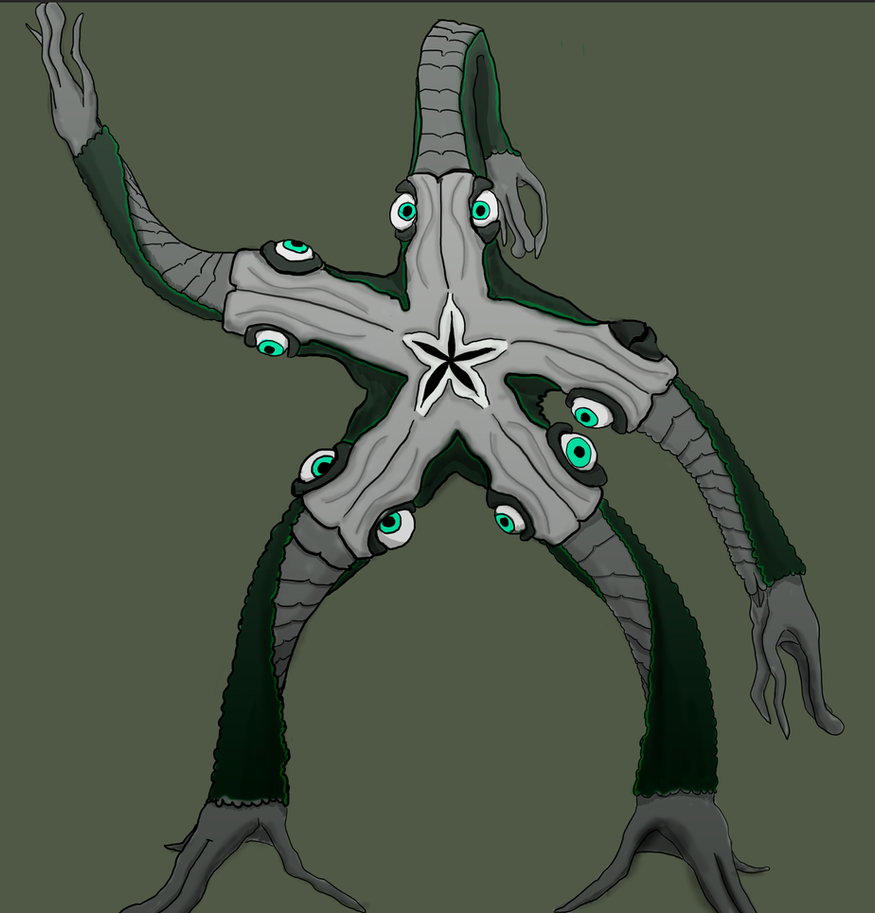
The Tikali are a species with multiple sub-species of highly varied coloration, size and physique. All of which tend to be around 6-11 feet in length, have eight spinefins, retractable arms, four eyes and a mouth flap. The Tikali have a flat beak beneath the he mouth flap along with molars. The Tikali have cilla across their hide and back, while their sides have the pointy spine fins which play a amazing versatility of purposes both naturally and in their society.
The Tikali in regards to gender dimorphism seem to have longer barbs for males than females, the males tend to be of similar size though they do tend to be a bit smaller (though this is often hidden by the longer barbs). There is variance in colors and the males tend to have more vibrant colors, but that isn't culturally universal- there are Tikali subspecies with the opposite situation. The Tikali are peculiar in how their species never seemed to have any census on if they are a neutral, patriarchal or matriarchal species and this isn't helped by their means of reproduction that can have things go both ways much more easily. The poisonous hair Tikali have is not poisonous to their young, and so the baby Tikali often will hide in the hair of their care takers. This habit they extend very liberally.
The Tikali subspecies include the smaller, paler Tidal Tikali, the Murk Tikali, who are larger and like more salty, swam pier environments, the Long Tikali known for their long grappling reach and most peculiarly, the gender flipping Seasonals who aren't even believed to be of the same species due to the peculiar trait they have of seasonally changing their biological sex.
Primarily their kind has rapid copulation and egg bearing of purses that the males or females will ornament themselves with for transport. The egg ornaments feature prominently as a symbol of fertility, even symbolically for this reason. The Tikali tend to practice systems of opt-in parenting with their clan groups which can number in their primitive cultures in the hundreds. Who parents varies highly.
The Tikali lack a sense of territoriality like we do. Land ownership as a concept seems to just not make sense to them. The Tikali understand owning objects and living things, but they can't understand properly owning a house. This is because the Tikali tend to coinhabit places, even ones their fellow Tikali built. If you do not steal objects owned by other Tikali, you are good.
You can easily see this with their floating modular towns which have no real property ownership, but may the chains forbid you take from a clan outside your own!
The second major tenet of the Tikali is that they don't understand good and evil. Their moral systems come in two shapes. A monomorality and a reciprocal morality that shows their ideals of justice and law much more clearly than anything else ever could. As the Tikali has "noble" behavior, and a absence of it. Noble traits Carry a lot, but the common metric is that you either have the traits or you don't, and if you don't have the traits you are in big trouble. In effect, they have ideals more than defined traits for both good and evil. They don't frame their moral system that way and find our way of doing it clunky at times.
The Tikali also have a reciprocal moral system among some of their cultures that can get rather absurd as the idea is any transgressions done must be done back in order to correct the problem. The implications of this are quite staggering- it basically means there are Tikali who believe rapists should be raped themselves, Tikali who think people caught stealing should have stuff stolen from them in return, Tikali who if you scam, think you now must suffer from a scam and so on. Kill tons of their kind, they believe they must kill a similar amount in return. This attitude infests the silent imperium.
The Tikali are shockingly adaptable with their design, and have used technology to make themselves able to slide about on land more effectively (they tend to prefer winter seasons due to snow having more friction, for one).
Their grappler arms are the most notable feature, more so than their spine fins they use as paddles or walkers or their barbs hair that both kills and protects.
These grappling arms are pressure based, and are remarkably compressible for the spring-like launch the Tikali can give them. They can also expand and retract their arms at other rates. These arms are developed from a proboscis used to catch prey, punch or stab rivals, hold onto rocks or grab stuff in general and diversified highly in its role over many generations, less flexible hands are known to be on the close relatives of the Tikali.
The Tikali hand is able to manipulate the environment around them to remarkable precision, to the point where they became able to make complex tools and from there make civilization as their psychology became more and more sapient.
Their fingers tend to be able to shift from being parallel to perpendicular to each other. They lack joints, but these fingers make up for that by having incredibly effective muscles they harden with resistance.
The spines specialized over many, many millions of years as did the arms with multiple families in soft arm / hard spines and vice versa.
Another creature in the same phyla of the Tikali?
The Tikali had amphibious traits for millions of years, their whole class is like that in fact. This class lived in colder areas and so is known for having quasi-mammalian traits, namely their radiation of internal body heat and their hairiness. The Tikali generally thrived everywhere of course, Tikali in warmer regions actually would shave themselves and in very cold regions pack on the dead animals. Tikali clothing generally covers their barb-like hairs, with holes sometimes in them for their babies to hide inside (Tikali cultures vary with this- some of them had a specialized care taker while others expected care takers to be everyone. The argument goes on to this day. You'll never hear the end of it. Ever.)
The Tikali have two biological sexes and a very subjective sense of gender, much more so than what you see with humans in agricultural times (though technological humans are much more like how the Tikali always were). This is made worse by the high variance in Tikali, as the Tikali have a lot of plasticity in their genetics. Big and small, numerous colors, which sex gets the longer hair (or if neither do) and so on all factoring into things. It's a mess. However they always have 10 spinefins, 4 eyes, barbs, 2 retractable arms and 4 fingers on each arm. Tikali counting is base 18 or base 8 as some of their cultures count both their spinefins and fingers.
Tikali reproduction itself is done through a docking process, and is incredibly touch intensive as the males literally sweat their sperm, though this requires intense stimuli explaining why unlike say, coral spewing their sperm in the water they need contact heavy sex. The females soak it, the more the better. This system has the drawback that unlike humans, blocking sperm transfer removes the pleasure. However, since female Tikali have egg purses that they can ornament anywhere (be it on a spine fin of another Tikali or somewhere safe) or just leave to some animal to eat it doesn't really make much difference other than needing more food for a bit. The Tikali are technically a K-type, the purses gestate for just a few weeks before developing separately from the mother Tikali as a egg that the baby eats its way out of. Egg purse skins of various species are fed to young Tikali in some cultures, as they give more nutrition. Older Tikali still eat egg purse skins. It's like milk for them.
The Tikali notoriously are claimed "to eat anything"- rotten foods rich in bacteria are a frequent delicacy for them, for instance. That betrays their scavenger roots, as much as the veil of predation and massive aquaculture networks in recent times is placed.
 SkyeOfStars
 Legend
 Kaithe Dame
 Not a Sayan