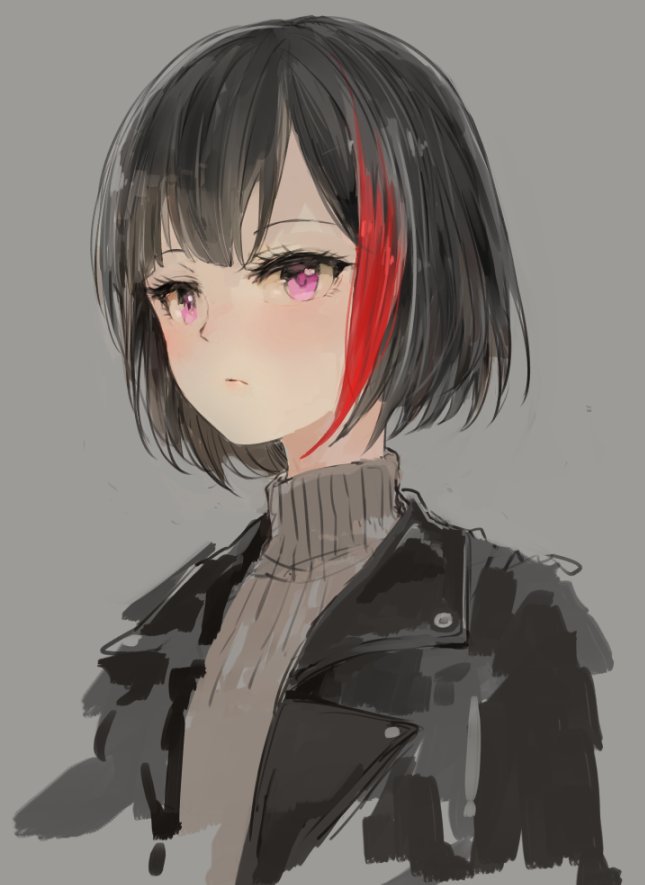
She had not yet gotten used to looking at Blur. It wasn’t the sight of the mech that unsettled her, nor the looming size—despite that it was, comparatively, among New Anchorage’s smaller models. It was the very act of looking.
Being in the cockpit was a singular experience for Eli. It was unifying. Calming, yet, bittersweet. For a brief, precious time, it brought harmony to a dissonance within her that was harsh, and ever-present, and yet it was something she had only come to recognize since she’d become a pilot. It had simultaneously revealed and treated a crippling flaw in her psyche, and though she didn’t pretend to understand Polaris Shifts as the settlement’s doctors did, she knew herself well enough to see that she was beginning to lean on her synchronization like a crutch.
That feeling of unity, that relief. It was the closest she’d ever come to feeling…real.
Looking at Blur was like looking into a strange, arcane mirror. Was it showing her who she was, really, or what she wished to be? How long would it be until she lost sight of which side of that mirror she was on. Until she didn’t know whether she was the watcher, or the reflection?
Eli blinked.
Why had she come here?
"You know I didn't mean to zap you-"
Right. Moore.
Saying that she trusted him was a…generous stretch. He was a mess, with next to no experience—not that she was one to judge—and he was, more often than not, entirely incompetent both in and out of the cockpit. But he was also well-meaning, and genuine, and she had seen first-hand his potential as a pilot.
And he was a fellow native. That was most important. He had a personal stake in the well-being of New Anchorage, and if she couldn’t yet trust him to do what was best for his home simply for the sake of it, she could trust him to care for sake of his daughter.
He was meddling with one of the mechanics, a man she didn’t quite recognize, who didn’t seem to appreciate his ‘assistance.’ As she drew closer though, it sounded like they were amicable, perhaps even friends. That was good, she didn’t have to feel as embarrassed for him if the man already knew what to expect.
“Moore,” she said stiffly, nodding towards the hangar's thoroughfare. “Can we have a word?”
Dean Yukimura's speech seemed to strike a chord with some of the students, who were undaunted by the challenge, and perhaps even emboldened to meet it. Others still looked entirely unfazed, and while most of them were assumedly upper-classmen, it was clear that even a few of the first-years had hardly heard a word the man had said.
Kana had heard every word, and she was harrowed. As the Dean's eyes swept through the assembly, lingering upon the faces of the first-years, she could have sworn their eyes met. She could have sworn they met, and that she saw utter disgust in them. In that moment she felt unbelievably cold, and mortally terrified.
It's like he knows you don't belong here. You're not brave. You're not tenacious. And being humble is not the same as being pathetic.
Her eyes fell to her lap, to the bag, where her fingers were wound up so tightly they were starting to ache. What was she thinking? Ishin expected greatness. Ishin expected perfection. Her father had known she wasn't cut out for this, he'd known coming here would be a mistake. You can't pull blood from a stone. That was what he'd said. Sitting here now, she felt like a stone about to shake itself apart, and she was certain there'd be no blood in the rubble.
"Soar Skyward."
You're better off six feet deep.
Do not start crying again.
"—That's the class I’m in!"
Kana jolted, scooting back in her seat as Shun stood up to leave. Class? What class? The freshman class? She looked around, and found that the auditorium had practically emptied of all but the first-years, and already most of them were splitting up to either side of the room.
Oh god. Oh no. She'd missed something important.
"…And you, Kana-san?"
Kana turned to Nadeshiko, finding no comfort in the girl's monochrome face, despite the rather gentle look she wore. "Ah…uhm…"
Say you aren't sure. Say you weren't paying attention because you were about to vomit. She's being polite. She's nice. She's not gonna care that it only took you an hour to fuck up.
"…Yes. I mean—ah—I am. I am also in that class."
She bowed her head again, like it was a reflex, or a tick, and got up quickly, nearly bumping Shun and losing hold of her bag in the process. She mumbled an apology anyway, standing aside so that the both of them could get out, before making her way to the right-most group of students. Lingering at the back, she listened to group mumbling amongst themselves, trying to parse out exactly what she'd walked into. When she heard the words "1A" she sighed with relief. Somehow, she'd stumbled into where she was meant to be. That didn't stop the shaking, though. Even clutching the bag close, her fingers continued to shake, and her knees felt like…well…she'd have said "jelly," but a quick glance at Nadeshiko had her worrying if that would be offensive.
Kana wouldn’t pretend like she understood the boy’s explanation. But that was alright; family matters were…personal. Sometimes extremely so, and least of all places was it hers to judge. Not only that, but the way he spoke, with that distinctive twang in his voice, had her revisiting a few of his words in her head. His accent, coupled with his looks, reminded her of Kagoshima. More exactly, of the Okinawan sailors she’d meet at the fish markets every now and again. She had half a mind to ask him about it, but then, he seemed to be fidgeting with his own confidence, and she doubted she could muster up enough herself to ask anyway.
Nadeshiko introduced herself, and while Kana was thankful to have the conversation refocused, she might have preferred if things had just fizzled out from there. Did she have to introduce herself now as well? It seemed the polite thing to do, but then again the Okinawan boy hadn’t. The Okinawan boy had also brought a pineapple with him to the auditorium, though, so perhaps she shouldn’t have been taking social cues from him.
“I’m Kana,” she said, and then, unable to stop herself, she added: “Higamura Kana. It's nice to meet you.”
She sat there, surprisingly composed, screaming internally.
That’s not your name. That’s not even kind-of your name. These are the first people you’ve met in years that don’t want to spit on you, or throw you out, and you’ve lied to them. Great. Awesome. That’s going to pan out fantastically. You idiot freak.
Kana bowed her head politely. “I’m looking forward to…ah...learning…with you both.”
There were so many more people than she’d expected. Outside, the size of the crowd had been understandable; every year of students were mingled together, rushing through the courtyard and down the halls. But she’d thought—even hoped—that with them being divided by year, the groups would have been more manageably-sized. Now the seats were starting to fill towards the back, though, and people had begun sitting closer in her row.
A boy scooted past her, and she nearly jumped out of her skin. For all her worrying over the auditorium, she hadn’t even been paying attention to it, like her vision had blurred. Reflexively she rubbed her face, worried she might have just sprung another leak, but thankfully not. Just the idea that she might start crying again here was enough to make her palms ache.
“N-no, it’s not. I don’t think.” she answered, when the boy asked after the seat between her and the jelly-girl. She regretted that, in retrospect. It might have been easier to claim she was saving it for someone, and pray she could get through the ceremonies with a little space beside her.
As he rounded up beside her she noticed the bag in his arms, and a fruity smell touched her nose. She reeled a bit, trying to parse out what exactly he had in there, and then found herself instead wondering why he had it.
Before she could think better of it, she was leaning out to steal a peek into the bag. Her brow flattened.
“Is…that a pineapple…?” she asked, mouse-like, yet the sound of her own voice still made her cringe.
Have to work late tonight, won’t be back ‘til morning. Money on the counter for dinner. I know you’re gonna buy junk food so if you save me something chocolate I won’t tell dad.
Game night tomorrow, no cheating this time~
Loves. -Mom Kana didn’t realize her hands were shaking until the letter had nearly trembled out of them. She folded the paper by its years-old creases, with all the delicacy with which one might handle glass, or a baby, or a baby made of glass, and stuck it into her pocket. She’d done some Olympic-grade mental gymnastics to avoid calling it a lucky charm, but she still carried it with her anyway. Not for luck, she said, just motivation.
The world passed by through the train window, a world that was only tangentially familiar to her. She had been to Hokkaido before, when she was very young, but despite that the vibrant countryside had stuck with her, she felt like a stranger. That feeling, ironically, was more than just tangentially familiar. In Kagoshima, even in passing through Aomori, that sense of misplacement seemed to linger around her like a bad odor, repulsing the passersby at the station that glanced her way. The eyes she met were strangers’ eyes, detached and indifferent, but she could not help seeing reminders in them.
This is wrong.
Don’t do this.
In a stop between Aomori and Hokkaido, she’d spotted her mother’s face on a wanted poster. She was different, but not unrecognizable, and Kana suspected they’d touched the images up a bit to make them darker, rougher, more imposing. Every few months or so there’d be another story, another name—or a cluster of names. A call to action. They’d get letters at their home in Kagoshima from people looking for answers, demanding justice, or just coping with their grief. She’d see snippets from news articles, or blog posts from witnesses, and occasionally there’d be a picture of her mother there just like the one in the station.
It was easy to see the similarities between them, even in the faint reflection of the window. She could cut and dye her hair, she could dress however she wanted, but it was always her mother’s eyes looking back at her. Often—just like now—those eyes would blur, and the world would melt into a haze.
Dammit.
Kana rubbed her face, sniffling. Her cheeks were wet, her throat was tight.
Your eyes are gonna be red all day now, she thought angrily, as if she could will the tears away. God you’re such a stupid crybaby. You can’t just do this every time you…ugh. Get yourself together. It’s gross, and embarrassing. Stop.
Traversing Sapporo was easy enough. She’d spent the last few years navigating the maze-like slums of Kagoshima’s harbor, and before that she’d had to learn how to find her way around small, no-name towns in the dark. The cold snaked through her sleeves, prickled her skin with the precursor to numbness. It was pleasant, the cold. The winters in Goshogawara were a fond, if distant memory, and it seemed Hokkaido would be similar.
You knew it would be similar. You wanted it to be similar.
She wished she could have appreciated Ishin Academy more when she finally came to it. It was so grand in the brochures and the pictures online, so refined. That all held true, of course, but she couldn’t bring herself to admire any of it through the utter mass of a crowd funneling into the courtyard. Clusters of students and faculty were scattered, some standing idly, chatting, while others motioned those who were more mobile towards the auditorium. So many people, so many strangers. So many eyes.
Kana clutched her duffel bag tight, and kept her head low as she fell in with the students making their way inside. Again the would-be wonders of Ishin’s halls escaped her. Even with her eyes glued to the floor, she couldn’t so much as appreciate the tiling through her own panic.
Get a grip, seriously. Just don’t make a scene, and everything will be fine. They’re all nervous, just like you.
But they didn’t look all nervous. Sure, some of them seemed antsy, but perhaps that was just eagerness. For the most part, wherever she looked she saw confidence. She saw strength. She saw burgeoning heroes ready to embrace their destinies. And yet she felt none of that. Why? She’d taken the same tests, passed the same evaluations. She was here, wearing the same uniform they were, and yet she still felt like an imposter, like at any moment someone might notice her and say, “Hold on, you shouldn’t be here.”“This is wrong.”“Don’t do this.”
“I’m sorry,” Kana muttered, bowing her head as she turned away from the frontmost rows of seats, nearly bumping into a few of the students behind her. She made her way to the back, where only a smattering of people had decided to lay claim to the furthest seats, and placed herself at the end of the row.
There. Now she could bolt and it wouldn’t be an inconvenience to anyone. At any moment she could just get up and walk out. She could get right back on that train, and it’d be like she never left Kagoshima at all. It would be easy. No one would even notice.
You would.
Kana set the bag in her lap, and pretended it was an anchor. She couldn’t leave now. She wouldn’t. She’d come to Ishin to become a hero, and even if that was idiotic, even if it wasn’t her destiny, something compelled her to try.
Kana is an unimposing presence. She stands just short of average, with the meager build of someone nourished on cheap food and scrap meals. Her sense of fashion is a flawless marriage between “punk” and “homeless,” complete with the high-necked, needlessly-belted boots and the I-can’t-believe-it’s-not-garbage leather jacket. The things she can control though, like her hair and hygiene, she keeps in line. It’s hard enough for her to make friends without smelling like someone who only occasionally has hot water.
She has been told, often and unkindly, that she resembles her mother. She inherited her mirror-bright eyes and severe countenance, but the mannerisms—the unbowed stature, the habitual brow-cocking and cracking of finger-bones—these were learned, and to the people affected by her mother's terrible crimes, they evoke chilling, uncanny memories.
She was a kind, gentle woman. She had sharp, severe eyes, she gave warm hugs, she spoke softly even when she was upset. The people in their neighborhood liked her, people at her work liked her; she went out of her way for strangers that she’d never see again, because it was the right thing to do. She taught Kana that good people put others before themselves, that sacrifice was the foundation of heroism.
She was eleven when she learned that her mother was not a hero.
The months after she disappeared were blurry. Her father was brought in for questioning so many times that they practically lived at the police station for weeks. Reporters dogged them at their house, at the store, they even came to Kana’s school before she was pulled out. The few times that Kana was able to watch TV, she saw their names on the news. They were talking about her mother, and they were saying terrible things, calling her names, telling lies. They said she was a villain.
They left Goshogawara in a panic. People had begun coming to their house, people who claimed her mother had hurt them, or someone they loved. They came during the day, sometimes they came at night; Kana would see them through her window, pacing in their driveway or coming up to their door. They wanted answers, but Kana didn’t understand the questions. They’d knock for hours. When she and her father finally left, their was graffiti on the house, and the mailbox was smashed over.
It didn’t matter where they went. The news was fresh, the names were publicized. For a while there was no true anonymity, only the brief silence of temporary homes, and the confused sense of humiliation that followed them like a bad odor. They wound up across the country, living in a seedy span of Kagoshima before they found respite, and it had been over a year by then.
Things were almost worse once everything had settled down. They were practically out of money, and ostracized by a community of strangers who wanted nothing to do with them. Kana’s father found work stevedoring in the port at night, and while it was enough to put food on the table, they lived meagerly.
Against her father’s insistence, Kana began experimenting with her Quirk again, as she had once done under the caring, cautious tutelage of her mother. It was a fearful thing, and painful, but it was also all she had left of her. In the dead of night, muted beneath the monolith groans of the ships moored in the nearby harbor, she would grit her teeth and let the aching burn of her Quirk flood through her. Mother had always told her not to be afraid of pain, but it was hard. It hurt. She kept on though, in secret, because she would have wanted her to, and even if honoring the would-be wishes of a villain seemed wrong, and guilty, Kana felt compelled. She wouldn’t deny the things her mother had done, but a part of her couldn’t let the kind memories go.
She made her desire to be a hero known, and her father fought tooth and nail to quell it. The reasons were plenty, and strong, but they were all things that Kana had already faced herself, and though they scared her, they didn’t scare her enough. When it became clear she wouldn’t be deterred, her father tried to get her to look elsewhere, perhaps overseas, where the family’s shame was unknown, and where it wouldn’t resurface again. Kana wouldn’t consider it. The shame was grave, and demoralizing, but it wasn’t what scared her either. She was what scared her.
Ishin Academy’s reputation was universally brutal, the students it accepted became heroes without exception, not villains. There she could be forged into something good, something people didn’t fear or revile, something she could be proud of.
Something the mother she remembered could be proud of.
Character Development & Conceptualization
Kana is a walking identity crisis, and an embodiment of the phrase “the sins of the father.” An inability to reconcile her mother’s gruesome villainy with the fond and gentle memories she has of her, has left Kana perpetually anxious about her own fate. The optimist in her is sure that she can make something good out of herself despite, but the pessimist is convinced that she’s doomed to follow in her mother's footsteps. Can she be a hero? Is it even right for her to try? In a world full of people trying to live up to the legacies of their parents, Kana is desperate to leave her's behind.
I wanted Kana’s struggle with heroism to be something she can’t avoid, something that’s constantly looking her in the face and asking her “is this really what you want?” So I baked it into her Quirk. “No Pain, No Gain” has and is still molding Kana’s perception of what it means to be a hero. To her, being a hero is all about sacrifice; the hero suffers so that others don’t, period. At the same time, she has to live with a Quirk that will eventually evolve into something horrific, something that would reward selfishness and sadism. Every time she activates it, she has to choose between taking the easy path to power, or the hard one. She has to choose to suffer for people who don’t want her, who hate her, even, and that’s not an easy choice to make on a hero’s constant and demanding schedule.
Excitedly, I don’t know where I want Kana to end up. Does she maintain her ideals of heroism, and put the well-being of others—even those who despise her—ahead of herself, or does she follow the path of her mother, and give in to her Quirk’s sadistic temptations of power? Ultimately this depends on her time at Ishin Academy with her fellow students, and their shared growth as would-be heroes.
Abilities & Talents
Quirk Type
Emitter
Quirk Description
Dubbed No Pain, No Gain, Kana’s Quirk, inherited from her mother, allows her to enhance her physical attributes in correlation with her own pain. Activation inflicts her with a dull yet constant ache, which gradually worsens with prolonged use, raising her strength, speed, and even durability to potentially drastic degrees as a fight carries on.
Kana’s minimal conditioning has limited the Quirk’s usefulness. As well, deactivating No Pain, No Gain “resets” her heightened abilities, but does not immediately alleviate her, making it extremely difficult to weave in and out of using.
Her mother’s mastery of the Quirk allowed her to fuel No Pain, No Gain with the pain felt by those near her, especially pain that she herself had inflicted. While Kana currently does not possess this ability, she dreads that she one day might, as it conflicts outright with her entire philosophy of heroism.
Other Talents & Attributes
Minimalist: When you don’t know whether your next meal is coming today, or the day after tomorrow, you pick up some frugal sensibilities. Living off scraps in Kagoshima’s briny harbor has taught Kana how to pinch pennies like a professional, which could come in handy with Ishin Academy’s “your time, your dime” policies. She doesn’t indulge much, if ever, and may occasionally sneak leftovers home with her.
Scrappy: Expectedly, school was a nightmare for Kana, and while most of her peers steered clear of her, the braver kids—often ones with Quirks who saw her as an opportunity to play hero—steered right into her. She can play rough, and she can absolutely play unfair, and while she’s much better nowadays at turning the other cheek, there’s still a short, childish temper buried beneath those layers of anxiety.
Academically Lacking: A strong sense of determination and the gumption to study on weekends aren’t always enough. A combination of a spotty schooling schedule, a lack of funds for tutors, and just not really being all there up in the headspace, have rendered Kana a middling academic, especially compared to the scholarly elites at Ishin Academy.
Kana is an unimposing presence. She stands just short of average, with the meager build of someone nourished on cheap food and scrap meals. Her sense of fashion is a flawless marriage between “punk” and “homeless,” complete with the high-necked, needlessly-belted boots and the I-can’t-believe-it’s-not-garbage leather jacket. The things she can control though, like her hair and hygiene, she keeps in line. It’s hard enough for her to make friends without smelling like someone who only occasionally has hot water.
She has been told, often and unkindly, that she resembles her mother. She inherited her mirror-bright eyes and severe countenance, but the mannerisms—the unbowed stature, the habitual brow-cocking and cracking of finger-bones—these were learned, and to the people affected by her mother's terrible crimes, they evoke chilling, uncanny memories.
She was a kind, gentle woman. She had sharp, severe eyes, she gave warm hugs, she spoke softly even when she was upset. The people in their neighborhood liked her, people at her work liked her; she went out of her way for strangers that she’d never see again, because it was the right thing to do. She taught Kana that good people put others before themselves, that sacrifice was the foundation of heroism.
She was eleven when she learned that her mother was not a hero.
The months after she disappeared were blurry. Her father was brought in for questioning so many times that they practically lived at the police station for weeks. Reporters dogged them at their house, at the store, they even came to Kana’s school before she was pulled out. The few times that Kana was able to watch TV, she saw their names on the news. They were talking about her mother, and they were saying terrible things, calling her names, telling lies. They said she was a villain.
They left Goshogawara in a panic. People had begun coming to their house, people who claimed her mother had hurt them, or someone they loved. They came during the day, sometimes they came at night; Kana would see them through her window, pacing in their driveway or coming up to their door. They wanted answers, but Kana didn’t understand the questions. They’d knock for hours. When she and her father finally left, their was graffiti on the house, and the mailbox was smashed over.
It didn’t matter where they went. The news was fresh, the names were publicized. For a while there was no true anonymity, only the brief silence of temporary homes, and the confused sense of humiliation that followed them like a bad odor. They wound up across the country, living in a seedy span of Kagoshima before they found respite, and it had been over a year by then.
Things were almost worse once everything had settled down. They were practically out of money, and ostracized by a community of strangers who wanted nothing to do with them. Kana’s father found work stevedoring in the port at night, and while it was enough to put food on the table, they lived meagerly.
Against her father’s insistence, Kana began experimenting with her Quirk again, as she had once done under the caring, cautious tutelage of her mother. It was a fearful thing, and painful, but it was also all she had left of her. In the dead of night, muted beneath the monolith groans of the ships moored in the nearby harbor, she would grit her teeth and let the aching burn of her Quirk flood through her. Mother had always told her not to be afraid of pain, but it was hard. It hurt. She kept on though, in secret, because she would have wanted her to, and even if honoring the would-be wishes of a villain seemed wrong, and guilty, Kana felt compelled. She wouldn’t deny the things her mother had done, but a part of her couldn’t let the kind memories go.
She made her desire to be a hero known, and her father fought tooth and nail to quell it. The reasons were plenty, and strong, but they were all things that Kana had already faced herself, and though they scared her, they didn’t scare her enough. When it became clear she wouldn’t be deterred, her father tried to get her to look elsewhere, perhaps overseas, where the family’s shame was unknown, and where it wouldn’t resurface again. Kana wouldn’t consider it. The shame was grave, and demoralizing, but it wasn’t what scared her either. She was what scared her.
Ishin Academy’s reputation was universally brutal, the students it accepted became heroes without exception, not villains. There she could be forged into something good, something people didn’t fear or revile, something she could be proud of.
Something the mother she remembered could be proud of.
Character Development & Conceptualization
Kana is a walking identity crisis, and an embodiment of the phrase “the sins of the father.” An inability to reconcile her mother’s gruesome villainy with the fond and gentle memories she has of her, has left Kana perpetually anxious about her own fate. The optimist in her is sure that she can make something good out of herself despite, but the pessimist is convinced that she’s doomed to follow in her mother's footsteps. Can she be a hero? Is it even right for her to try? In a world full of people trying to live up to the legacies of their parents, Kana is desperate to leave her's behind.
I wanted Kana’s struggle with heroism to be something she can’t avoid, something that’s constantly looking her in the face and asking her “is this really what you want?” So I baked it into her Quirk. “No Pain, No Gain” has and is still molding Kana’s perception of what it means to be a hero. To her, being a hero is all about sacrifice; the hero suffers so that others don’t, period. At the same time, she has to live with a Quirk that will eventually evolve into something horrific, something that would reward selfishness and sadism. Every time she activates it, she has to choose between taking the easy path to power, or the hard one. She has to choose to suffer for people who don’t want her, who hate her, even, and that’s not an easy choice to make on a hero’s constant and demanding schedule.
Excitedly, I don’t know where I want Kana to end up. Does she maintain her ideals of heroism, and put the well-being of others—even those who despise her—ahead of herself, or does she follow the path of her mother, and give in to her Quirk’s sadistic temptations of power? Ultimately this depends on her time at Ishin Academy with her fellow students, and their shared growth as would-be heroes.
Abilities & Talents
Quirk Type
Emitter
Quirk Description
Dubbed No Pain, No Gain, Kana’s Quirk, inherited from her mother, allows her to enhance her physical attributes in correlation with her own pain. Activation inflicts her with a dull yet constant ache, which gradually worsens with prolonged use, raising her strength, speed, and even durability to potentially drastic degrees as a fight carries on.
Kana’s minimal conditioning has limited the Quirk’s usefulness. As well, deactivating No Pain, No Gain “resets” her heightened abilities, but does not immediately alleviate her, making it extremely difficult to weave in and out of using.
Her mother’s mastery of the Quirk allowed her to fuel No Pain, No Gain with the pain felt by those near her, especially pain that she herself had inflicted. While Kana currently does not possess this ability, she dreads that she one day might, as it conflicts outright with her entire philosophy of heroism.
Other Talents & Attributes
Minimalist: When you don’t know whether your next meal is coming today, or the day after tomorrow, you pick up some frugal sensibilities. Living off scraps in Kagoshima’s briny harbor has taught Kana how to pinch pennies like a professional, which could come in handy with Ishin Academy’s “your time, your dime” policies. She doesn’t indulge much, if ever, and may occasionally sneak leftovers home with her.
Scrappy: Expectedly, school was a nightmare for Kana, and while most of her peers steered clear of her, the braver kids—often ones with Quirks who saw her as an opportunity to play hero—steered right into her. She can play rough, and she can absolutely play unfair, and while she’s much better nowadays at turning the other cheek, there’s still a short, childish temper buried beneath those layers of anxiety.
Academically Lacking: A strong sense of determination and the gumption to study on weekends aren’t always enough. A combination of a spotty schooling schedule, a lack of funds for tutors, and just not really being all there up in the headspace, have rendered Kana a middling academic, especially compared to the scholarly elites at Ishin Academy.
Sybil looked around the rest of the meal hall one last time, struggling to hide how desperate she was for literally anyone else to make an offer, before she reiterated to herself: Stomach over discomfort. So, with a scoff at the noble boy’s folding, she made the short, haughty stride to his table.
Rather than sit, she placed a boot up on the bench and snatched up the bowl, heedless to the little that spilled over. The spoon she flicked aside, then angled the cusp to her lips and drank. Cold, gritty, tasteless, like swallowing a mouthful of chicken spit. She didn’t care. Food was fuel she could burn before having to burn…well, herself, she supposed.
She’d gulped down half the bowl when the perfumed little shit decided to be smart with her. Sybil lowered it briefly, just long enough to stare him down—not that he had the guts to look her in the eyes. Coward. He had his nose pasted to the parchment on the table, though it didn’t seem to her like he was making much progress. On instinct she tilted her head to get a better look at the words, but that didn’t do much for her considering she wasn’t particularly literate. She’d had to learn how to read and sign her name when she turned her father over, and she recognized the names of a few towns and cities on the roads, but nobody in the old band had been known for their linguistic expertise.
Which was all to say that she wanted to bean him with the bowl, or snatch the paper up and blow her nose in it, but she didn’t. When Daumm wanted something, and someone gave it to him, he—usually—didn’t bully them for it, he went easier on them. Of course, that only ever went for the people in the band. Everyone else got their heap of bullying whether they gave him what he wanted or not. But, as she’d been trying to convince herself, the Blackwardens were essentially her new band.
So instead she finished drinking down the soup. Eventually Thomas did speak up again, and she ignored him until she was finished. When the bowl was practically empty, she dropped it back onto the table, spit out a chunk of vegetable stuck between her teeth, then leveled her eyes at him again, though he still had his head down. The longer she stood there, the more she realized that, even though he was sitting, they were still practically at-eyes with one another. Not a good look.
“Me?” She asked, sitting down with her back to him, elbows propped up on the table. “Sure. I’ve handled plenty of shit whether I was ready for it or not. You, though…I dunno. Unless you’re gonna read the monsters and marauders to death, I’d be worried. But I’m not. Worried. About me.”
Sybil couldn’t help staring up at it. It rose so high that the torchlight didn’t reach the top, and the light piece dangling from a chain, arrayed with a dozen candles, didn’t either. It was just…black, up there, and no one could say with absolute certainty whether there was stone above, or just nothing. She’d seen all manner of southron creatures emerge from darkness like that, some she could kill, some she could outrun, and some she just didn’t stand a chance against. Obviously nothing was going to drop out of the ceiling in a Blackwarden castle, but, still, it begged attention from someone who’d only ever seen the low ceilings of roadside inns, and commandeered farmsteads.
It was also a better sight than the rest of the meal hall.
Sparsely populated as it was, Sybil hadn’t had much issue pinning the other initiates. Anyone who wasn’t bussing plates, peppering food, or who didn’t have spine-bending hunches and brows low enough to make a Neanderthal jealous, seemed like a safe bet. She counted two, maybe three, but she was also shit with math. It hadn’t quite settled with her yet whether she was meant to think of them as companions or competition, nor did she know which she’d have preferred. Competition? Sure. Kick some ass, she could do that. Easy. Ass-kick was her middle name, which was particularly impressive since she didn’t even have a last name.
But companions? Her kneejerk reaction was along the lines of “gross,” especially considering one of the initiates looked like she’d been hurled out of a swamp orphanage, and the other looked like nobility. That skeeved her out a bit. She’d robbed plenty of nobles—most indirectly, through their couriers or trade routes—had she ever lined her pockets with his family’s gold? Was that something to feel bad about?
Fuck the nobles. That’s what her father had always said, but she still thought it anyway. She might have been a piece a of shit, but that meant she could recognize other pieces of shit. Or, she thought reluctantly, she was being presumptuous, and this was precisely the sort of thinking she was trying to get away from. And sure, maybe. But fuck the nobles.
Sybil gnawed clean the last bone on her plate and finally brought her eyes down from the ceiling. On their way into the Vólkerben someone had remarked on it being their first time in a castle—fellow initiate or other passerby, she didn’t remember. In response, Sybil mentioned that she’d been in a castle once, much smaller, poorly guarded, more like a fort, really, when she thought about it. She’d found the minor lord of the property on the shitter, heard the fear drop right out of his guts. Now she was sitting alone. Alone, and still hungry.
She got up and headed for the little cove the cook inhabited, leaving her sword propped up against the table. Among bandits, or at least in her father’s band, the only people who left their things unattended were the ones who weren’t afraid they’d be stolen. Here, well, that wasn’t really a worry, but in her mind it was still a power move. In her mind she was also an even six-foot, and the maids swooned when she passed by. Someone had to think highly of her, might as well be herself.
“Garçon,” she said with as much pomp as she could muster, slapping the iron plate down onto the cook’s table. “Your finest…I dunno, something with a bone in it. The closer it has to a pulse, the better. Really just, just the bloodiest—”
“You got your share,” the cook said grimly.
Sybil blinked, eyes flicking to the rest of the food he was preparing. He noticed, and his demeanor didn’t lighten any at the implication.
“Ain’t meal hours. You get what was prepped for you, this is for later—for the real wardens. You want more? Maybe there’s someone you could steal it from.”
The twist in his words was…unsubtle. She licked her teeth to bite off whatever nasty and ill-minded retort was bubbling up in her throat, and merely huffed out “fine,” before turning to the rest of the feasting hall.
“Okay,” she called out, arms wide. “Who’s feeling charitable today?”
Her eyes swept the room, searching not only her fellow initiates, but even the veterans. If it was worth doing, it was worth overdoing, and she’d be underdoing if she left out the grizzled old bastards just because they outranked her—or could kick her ass.
She walked by the tables, swallowing down the taste of distaste at interacting with people. People she didn’t know or cared to know. Stomach over discomfort. Growing up as she did might have taught her a lot of unsavory things, but it had also instilled in her the value of a good meal.
“Doesn’t have to be charity, if the word offends you,” she said with faux-amicability. “You’re just as welcome to call it ‘self-preservation,’ hm? How’s that? Anyone feel like doing themselves a favor?”

 Lemons
 RPM
RPM Supermaxx
 Zeus23
 Yankee
 Raijinslayer
 SkyeOfStars
 Not a Sayan