Title: The Nobly Heroic Man of Our Times, The Master of Darkness Fighting Back Against a Tragic World
Gender: Male
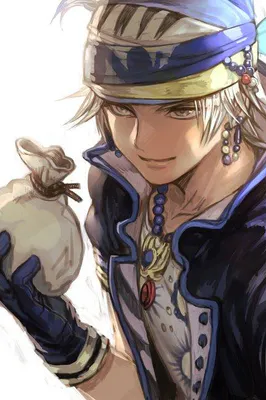
Age: 25
Personality: An immature man still suffering from middle-school syndrome. The self proclaimed ‘Master of Darkness’ who considers himself a criminal genius. In truth, he’s little more than a petty thief who steals purely for his own entertainment.
A flamboyant and excessive idiot who considers himself a charming trickster, he at least has a talent with getting along well with ‘Pokemon’. Though he’s generally a selfish person who prioritises his own entertainment, he’ll stick by his partners with absolute loyalty.
History: The scion of a rich household who always felt constrained by the various formalities and expectations placed upon him. A prestigious family with enormous connections in the business world, they always considered him a disappointment. His constant acting-out caused them to continuously send him away from the household, an arrangement that suits both parties. It seems the only reason he hasn’t been disinherited is that the family doesn’t consider the controversy worth it.
Kojiro competed in various competitions across the country, failing to win most of them. Though, rather than simply losing, he was usually disqualified for cheating, often when he had a good chance of winning from competing normally.
Magic Circuit Switch: The feeling of being flung through the air at a dangerous velocity.
Quantity of Magic Circuits: B
Quality of Magic Circuits: C
Origin: Flight
Elemental Affinity: Air
Skills: Knowledge of rare and valuable Pokemon, Decent ability at building and maintaining machines.
Equipment: Credit Card, Various Clothes, Pokeballs.
Several mystic codes in the form of Koban coins.
Exceptional Benefit: Concealed: One who competed in regional tournaments under disguise for no reason other than a misguided sense of his own genius trickery.
Source: Classical Mythology Region: Greece Birth and Death Dates: The end of the Age of Heroes
Likes: Hector, Freedom, The sky Dislikes: Helen, Waiting Talents: Sitting around looking pretty, Being abducted Natural Enemy: Helen of Sparta
When Helen was abducted by Paris, Aphrodite’s rivals Athena and Hera, jealous and wishing to sabotage Aphrodite’s promised reward, replaced the woman with a construct of air, a false Helen. It was this fake that Paris took to his home city, leaving the real Helen to be secreted in Egypt by Hermes.
An illusion who nonetheless lived, with her own mind and will. Possessing the memories of Helen, she was a perfect imitation - though such a thing was needless to fool the people of Troy, who had never before met the original.
Though many of the ordinary people of Troy treated her with nothing more than hatred and resentment for her role in causing the war, and others simply lusted after her, Troy was the only place she ever truly ‘existed’. Her implanted memories meant little to her, so that city became her home, uncomfortable as it was.
In this sense, one can consider her ‘Helen of Troy’ rather than ‘Helen of Sparta’.
While she came to resent Paris, she struck up a genuine friendship with Hector, as well as several of the Trojan women. The circumstances of Hector’s death hardened her,
After Troy fell, she managed to convince Menelaus to grant her mercy, and he dragged her from the burning city. But the purpose of her existence had come to an end, and she dissipated into the air when their boat landed in Egypt, where the real Helen was waiting.
A being consumed by resentments. A fake infinitely envious of the ‘original’. Not simply just a copy, but a sort of scapegoat, one who was created to allow Helen to remain innocent while she was consumed by the sin of betrayal. A villainess who originally hid her hatred in aid of imitation of the original.
Now that the deception is no longer necessary, she is free to be ‘herself’. Though the self is a false construction, it is still a distinct entity; it still developed feelings of its own.
Detesting the original for its weaknesses, and by extension the things the original loved, the fake is happy to act in a way that destroys the reputation of the original.
She desires to strike out as her own person, disconnecting herself from the original entirely. Though the face that she wears makes that near-impossible.
Parameters:
Strength: C Endurance: D Agility: A Mana: B Luck: C
Class Skills:
Mad Enhancement: E
The class skill that characterises a Berserker, sacrificing one’s mental capacities in exchange for a boost to physical parameters. In Helen’s case, she’s unsuitable for the class, so receives this skill at a minimal rank.
Parameters are not boosted, and the normal ability to think is retained. Rather, one simply becomes a little more ‘solid’, and one’s anger is amplified at all times.
Personal Skills:
Eidolon: -
The nature of one’s being as an artificial human, fashioned by Hera and Athena from the air itself. A living and breathing being that is nonetheless an illusory copy. A perfect imitation, but an imitation nonetheless. Similar to the technique of projection, though utilised on a greater scale by the gods.
Crafted to be the perfect double of Helen, her appearance will remain unchanged no matter the circumstances, and no matter how much she might want to alter herself to distinguish herself from the original. In addition, her appearance is a conceptual illusion that will ‘always be perceived as Helen.’
A body that, beneath the perfect surface, is incomplete and hollow. A container with far greater capacity than anything comparable, an empty vessel of sorts.
An existence similar to a wraith, able to be summoned as a Servant despite not being part of the Throne of Heroes.
Grace of God: A++
A skill denoting the god-given beauty of royalty. A perfect recreation of the appearance of the original Helen, able to fool even the most discerning of observers, such as the shrewd Paris.
A beauty that blunts the swords of any aggressors. A form of mental interference that dulls any killing intent towards Helen, as it did towards Menelaus at the fall of Troy. Even if one is completely resolved to kill her, looking upon her body will shake that resolve to its core.
Though violent intent towards her is greatly reduced, desire to possess her or similar is amplified.
Naturally, the more of her body that is visible, the stronger the effect.
Pankration: A
The hand-to-hand combat technique developed by the Greek heroes of previous generations.
A skill of heroes, based around utilising one’s own body as a weapon. For Helen, this is perhaps a natural extension of using her beauty to gain an advantage in combat.
Derived from an imitation of Helen’s memories, growing up training with her brothers in Sparta. Training in arms from the finest warriors of Sparta has naturally resulted in a strong capacity for this martial art.
It seems her interactions with Theseus also somehow honed this skill.
Noble Phantasm
???
Constantine Cosmo
'Stray Dog of Athens'
Gender: Male
Age: 28
Alignment: Chaotic Good
Rank: Count (A Spellcaster with no particular talent as a magus. Not a formal rank.)
Objective for the Grail: He has no wish for a wish-granting device, either for himself or for humanity. Wishing to ‘improve humanity’ without them making an effort for it would be meaningless, and he has no personal desires. Rather, he participates in the war purely to encounter the shining examples of humanity that went on to become heroic spirits.
Command Seal: Three dog heads, joining together at the neck.
A completely irreverent, shameless man. ‘Social taboos’ have no meaning for him, and he acts with the intention to irritate and shock people out of their complacent ways of thinking. The type of person constantly judging others based on their words and actions, while standing beneath judgment himself.
Someone who takes pride in near-absolute self-sufficiency, though he does not truly care for himself as the greatest priority. His true goal is the improvement of humanity, or even the improvement of individuals, even if his methods are antagonistic. Though he is a constant critic of humans, he has no particular hatred for them, unless they fall below a certain standard to ‘people who have failed as humans’.
The comparison to a ‘stray dog without a master’ is apt. Though, if someone were to impress him enough with their morality and intellect, it is possible that he’d pledge himself to serve them.
A child who never knew his parents. A wretched youth who was abandoned and sold as chattel. At an early age, he ran away from his captors, living by himself in the woods for a time.
It was here that he encountered that man. His teacher, his master. Though his memories of this time are fuzzy, he was taken in by that man and looked after. Gradually progressing from a feral child to one able to understand human society, even if he could not accept being a part of it.
That man was the head of the Kerykes family, a branch of Magi utilising the Eleusinian Mysteries.
Even though Constantine had little talent for magecraft. Even though he lacked the mentality of a Magus. Even though he was little more than an experiment, that man still taught Constantine a number of things. His affection for Constantine grew to exceed even his affection for his own heir…
Well, it was an inevitability, then, that when he passed on his crest to his heir, Constantine was cast out from the house. He’d been prepared for such an eventuality, and after all, he could take care of himself. Holding no resentment for that man’s heir, he simply departed without looking back, intending to travel the world to help humanity improve itself, while himself remaining apart from human society.
Magic Circuit Switch: The release of cold steel against his neck.
Circuit Quality: D
Circuit Quantity: D
Origin: Shamelessness
Affinity: Earth
Attribute: Reinforcement
Cynicism
A philosophy rooted in the three ideals of self-sufficiency, austerity and shamelessness. Utilising human reason to determine natural virtue and live accordingly, without reliance on others or objects, and without considering their judgments.
Rejecting human society while not withdrawing from it; remaining near humans to guard virtue and critique their hypocrisies. With this, one becomes a being neither of nature nor of humanity.
Truly, a doglike way of thinking.
In keeping with the prioritisation of one’s ability to survive alone, utilising as few tools of human civilisation as possible, with no sense of shame or embarrassment, the human body and the human mind become the essential domain of the cynic.
Rejecting attachments to the constructs of human civilisation, both tools and concepts such as shame, to become closer to nature. Consequently, the strength of one’s body also increases beyond the limits of a human.
Eleusinian Mysteries
Rituals that were undergone by Herakles in preparation for entering the underworld to retrieve Cerberus as his final labour, similarly undergone by Constantine.
A purification of the soul by release from material concerns; catharsis via ritual enactments of Persephone’s crossing through the underworld. Naturally, this purification is more achievable for one who follows the philosophy of the cynic.
Its function is to elevate one’s existence to the point where ‘survival in an underworld’ becomes possible, reinforcing one’s Force of Providence. In this sense, Constantine’s ability to avoid mortal danger and continue living is greatly heightened.
Beast Enhancement: Imitation Cerberus
Utilising one’s Reinforcement Attribute, it is possible to elevate one’s existence as a ‘doglike being’ due to one’s cynicism further. Similarly, as a ‘being who can exist in the underworld’, it is possible to draw on the concept of the guard-dog of Hades, Cerberus.
Aconite, as a substance originating from Cerberus, and as an aid to transformation, is utilised as a catalyst, and becomes integrated into the body as an imitation of Cerberus’ venom.
Along with one’s physical capabilities, the senses of hearing and smell are also greatly enhanced. Drawing on Cerberus’ three heads completely is impossible for one of Constantine’s skill, but it is possible to conceptually transform one’s hands into ‘mouths’, as both a method of ‘tearing’ and of delivering venom.
Mystic Code: Nameless Club
An olive-wood club modelled after that of Herakles, a symbol of the cynics. In its very nature, it is a transgression; carrying a weapon within city limits. Similarly, a weapon that Herakles used to conquer various beasts, as a hero conquering nature.
The sole tool, sole possession of Constantine. Nonetheless, it is still in many ways ‘the simplest possible tool’, as well a product of nature, straddling the same line between mankind and nature that Constantine does.
A tool that facilitates the crossing of boundaries, whether between beast and man, the boundaries and taboos of human society, or a Magus’ bounded fields.
Other Skills and Resources:
There is not a single thing beyond his staff that Constantine owns. Even the clothes on his back can comfortably be discarded at any point.
Any skill that involves the use of ‘human tools’ that requires any kind of training beyond its apparent use from examination is absent from Constantine’s abilities.
His ability to ‘survive’ harsh conditions and perilous situations is top-notch.
In order to achieve self-sufficiency, his body and mind are trained to the peak of human ability. Perception, intuition and knowledge of various aspects of both the human and natural world are all at high levels. Athletic ability and the martial art of greek boxing are also also excellent.
Source: Classical Mythology Region: Greece Birth and Death Dates: The end of the Age of Heroes
Likes: Hector, Freedom, The sky Dislikes: Helen, Waiting Talents: Sitting around looking pretty, Being abducted Natural Enemy: Helen of Sparta
When Helen was abducted by Paris, Aphrodite’s rivals Athena and Hera, jealous and wishing to sabotage Aphrodite’s promised reward, replaced the woman with a construct of air, a false Helen. It was this fake that Paris took to his home city, leaving the real Helen to be secreted in Egypt by Hermes.
An illusion who nonetheless lived, with her own mind and will. Possessing the memories of Helen, she was a perfect imitation - though such a thing was needless to fool the people of Troy, who had never before met the original.
Though many of the ordinary people of Troy treated her with nothing more than hatred and resentment for her role in causing the war, and others simply lusted after her, Troy was the only place she ever truly ‘existed’. Her implanted memories meant little to her, so that city became her home, uncomfortable as it was.
In this sense, one can consider her ‘Helen of Troy’ rather than ‘Helen of Sparta’.
While she came to resent Paris, she struck up a genuine friendship with Hector, as well as several of the Trojan women. The circumstances of Hector’s death hardened her,
After Troy fell, she managed to convince Menelaus to grant her mercy, and he dragged her from the burning city. But the purpose of her existence had come to an end, and she dissipated into the air when their boat landed in Egypt, where the real Helen was waiting.
A being consumed by resentments. A fake infinitely envious of the ‘original’. Not simply just a copy, but a sort of scapegoat, one who was created to allow Helen to remain innocent while she was consumed by the sin of betrayal. A villainess who originally hid her hatred in aid of imitation of the original.
Now that the deception is no longer necessary, she is free to be ‘herself’. Though the self is a false construction, it is still a distinct entity; it still developed feelings of its own.
Detesting the original for its weaknesses, and by extension the things the original loved, the fake is happy to act in a way that destroys the reputation of the original.
She desires to strike out as her own person, disconnecting herself from the original entirely. Though the face that she wears makes that near-impossible.
Parameters:
Strength: C Endurance: D Agility: A Mana: B Luck: C
Class Skills:
Mad Enhancement: E
The class skill that characterises a Berserker, sacrificing one’s mental capacities in exchange for a boost to physical parameters. In Helen’s case, she’s unsuitable for the class, so receives this skill at a minimal rank.
Parameters are not boosted, and the normal ability to think is retained. Rather, one simply becomes a little more ‘solid’, and one’s anger is amplified at all times.
Personal Skills:
Eidolon: -
The nature of one’s being as an artificial human, fashioned by Hera and Athena from the air itself. A living and breathing being that is nonetheless an illusory copy. A perfect imitation, but an imitation nonetheless. Similar to the technique of projection, though utilised on a greater scale by the gods.
Crafted to be the perfect double of Helen, her appearance will remain unchanged no matter the circumstances, and no matter how much she might want to alter herself to distinguish herself from the original. In addition, her appearance is a conceptual illusion that will ‘always be perceived as Helen.’
A body that, beneath the perfect surface, is incomplete and hollow. A container with far greater capacity than anything comparable, an empty vessel of sorts.
An existence similar to a wraith, able to be summoned as a Servant despite not being part of the Throne of Heroes.
Grace of God: A++
A skill denoting the god-given beauty of royalty. A perfect recreation of the appearance of the original Helen, able to fool even the most discerning of observers, such as the shrewd Paris.
A beauty that blunts the swords of any aggressors. A form of mental interference that dulls any killing intent towards Helen, as it did towards Menelaus at the fall of Troy. Even if one is completely resolved to kill her, looking upon her body will shake that resolve to its core.
Though violent intent towards her is greatly reduced, desire to possess her or similar is amplified.
Naturally, the more of her body that is visible, the stronger the effect.
Pankration: A
The hand-to-hand combat technique developed by the Greek heroes of previous generations.
A skill of heroes, based around utilising one’s own body as a weapon. For Helen, this is perhaps a natural extension of using her beauty to gain an advantage in combat.
Derived from an imitation of Helen’s memories, growing up training with her brothers in Sparta. Training in arms from the finest warriors of Sparta has naturally resulted in a strong capacity for this martial art.
It seems her interactions with Theseus also somehow honed this skill.
Leaving was difficult. Going from the safety of those walls to an outside where death lurked was terrifying. In Troilus’ short life, he had never really known fear, the kind of creeping terror that death could appear at any time. The absolute terror of warfare had been something he hadn’t understood up to this point, sheltered as he had been by the absolute defence of Troy’s walls.
To think that that terror had been experienced by his family as they went to fight the invaders each day was saddening. How much fear had they been hiding as they talked and played with him? Why hadn’t he seen it at the time?
That terror was suffocating now.
And yet, he felt safe. There was something about Gin - his words, his demeanor, his very aura - that made it seem that he could accomplish anything. And if Gin could accomplish anything, Troilus could too.
It was an inspiring feeling, one that reminded him of how his brothers had been.
Even though Hector was the best big brother, the strongest fighter, the greatest hero of Troy. Even though he was a shining man who stood out as an exceptional person, whether on the battlefield or rallying the citizens of Troy-
Well, he wasn’t all that ‘cool’. A hero who rarely acted like a hero, one who never cared about how much his weapons shone or how poorly he was perceived by others. Well, even if it was out of necessity…
Nobody could hope to take Hector’s place as the ‘best’ - but if it came down to who was ‘coolest’, then perhaps Gin could be that person.
Certainly, Troilus wasn’t worried that Gin could calm the riots going on. He didn’t exactly understand, but Gin had told him he didn’t need to get involved, and that was enough for him. These were Gin’s people, and it was his responsibility to defend them. Even though Troilus wanted to help, he probably didn’t need to. Of course, fighting to defend your own city was the most heroic thing there was. Yes, this was something Gin had to do, to become a hero.
Well, Troilus needed that too, but shouldn’t he go through training before that?
Without paying much attention, Troilus wandered into the room, running slightly to catch up with Gin. He looked around with the absent minded curiosity of a child, his attention plucking on various aspects of the room, and the people within it. There was no hostility or wariness in his eyes towards any of Gin’s friends - after all, if they were friends with Gin, they couldn’t be bad people, could they?
He stayed close to Gin, hovering close behind him. Since he was here to observe, he held back his questions. After all, it seemed like there was a serious discussion going on, so his curiosity about this strange building could wait. Instead, he simply smiled and waved at the only person in the room who seemed to be a similar age to him, offering no explanation for his presence, clearly that of a Servant.
Troilus sat huddled in the middle of the central keep, trying to distract himself with the scattered toys surrounding him. It was difficult to remain calm, knowing what was stalking Fuyuki, the darkness outside of those walls. But this place was somewhere the war didn’t exist, a place that repelled such things. The walls of Troy, that had repelled over a decade of assault from those forces, would surely hold against the dangers this war had to offer.
But still, he couldn’t shake the fear that gnawed at him. Even after Troilus’ own death, how many of his brothers had that man killed? How many of his friends, people he saw every day in the city streets, had met their ends at the point of his spear? There were names he knew, names he could put to faces and names he couldn’t. Too many to process. The masses of people that he’d killed, corpses enough to stain a river with blood-
“▂▂▃▃▅▅▅▅ — — ! !”
He was here.
Pleading with him was impossible. Death cannot be reasoned with.
Running from him was impossible. Death cannot be outrun.
Fighting him was impossible. Death cannot be outfought.
The only thing he could do was hide behind those walls that had repelled him before, and hope. Troilus curled into a ball, and whimpered.
Troilus trudged forwards, sniffling. It was impossible to derive any happiness from the tragic events of the day. For a child who’d lived his life sheltered by those who loved him, he had never seen such devastation, death and destruction on such a terrifying scale.
For him, warfare had been something that happened outside the city, out of view. Even when besieged by the enemy, they’d been out of view, hidden from him by Troy’s walls. He’d seen the results, now and then - brothers, cousins, uncles, dragged back into safety, wounded and dying. But even that had been uncommon, in Troilus’ world.
Something passed him. He felt the wind whip past him as something sped through the nearby city streets with dizzying rapidity.
Troilus froze.
That level of speed could only belong to a single person. That man. The fastest among Heroic Spirits, a man with unmatchable swiftness. One who was ‘the fastest’. One who couldn’t be outrun, under any circumstances.
No, that was impossible. It couldn’t be that man. If it was him, Troilus would already be dead. In Troilus’ world, that man meant nothing less than death itself. He remembered-
Hiding in the temple of Apollo, praying for a help that never arrived. A shadow, falling over him as he sobbed in pain and terror, and-
Troilus turned around. He saw that man’s world, descending on the fire. No matter how great the fire was, it didn’t matter.
A hero who could do nothing but destroy. A hero who had never truly saved anyone, who had only fought and slain others. A typhoon of slaughter, a comet prophesying absolute devastation. Of course, his method of ‘saving people’ would mean their annihilation. A man who had perverted a shield with the purpose of defending into a weapon causing utter ruin.
Yes, that man was truly death incarnate.
Running wouldn’t do any good, but Troilus ran anyway.
The fire worsened. As the horn blasted, the flames leapt higher, and only continued to grow in strength, in pure power and terror.
Had they failed?
It wasn’t long until the fire grew once more, into something truly horrifying. A lake of black fire, one that reached out towards Troilus, one that’s fumes licked at the mind. The horrifying faces that stared into his eyes, radiating hatred.
Was this what the others had felt, as Troy burned? He couldn’t stay here. He couldn’t die here, not under any circumstances. Even if they’d failed, that remained true.
Certainly, Troilus had failed. These weren’t the actions of a hero, but of a scared child. He turned around, and began to flee the fire, moving faster than before.
He’d seen the fire. The smoke, and the burning, the people crying out in despair.
He had to help. After all, that’s what a hero would do. He knew what would happen if he didn’t.
And, after all, he had his horse now!
A mechanical horse, one made of wood and metal, gears gleaming as they reflected the fire. Rather than moving on its own, he pedalled, moving the intricate machinery to drive along the tire treads. Though he couldn’t get it to full speed with it now, not while avoiding the flames. That was important, he knew.
Even though he had a place to be, he couldn’t go there immediately. There were people to save, and to do that, he had to stop every so often. To lift people out of perilous situations. To guide people to safety.
He could call himself a hero now, a knight on horseback riding in to help others. Except-
There were people he hadn’t saved. There were people he couldn’t save. He wasn’t strong enough, wasn’t fast enough to save everyone. Troilus moved forwards, tears clouding his eyes.
Baba was watching, so he couldn’t falter now. She would be there soon enough, to help the people he couldn’t.
Troilus considered Lancer’s words for a moment. The bag was weird, but he dismissed it with the same casual innocence as Lancer. Though the two had come to an agreement, a friendship made possible by their childish personalities, the matter of what game to play remained.
It didn’t take long to come up with something.
Without warning, his hand darted forwards, striking out at his companion with an open palm.
A level of speed and power that had the capability to destroy a normal human. Strength and agility worthy of the nature of a heroic spirit; any onlooker would see nothing but a blur, and perhaps feel the wind, stirred by the strike, whip past them. Even though it lacked technique beyond the flailing of a child, even though there was no thought or strategy behind it, it was a blow that could shake the earth, break through steel. Something no ordinary human could stand against, something no ordinary human could reach.
...Not an attack.
“Tag, you’re it!”
A simple playground game, one that had existed for countless years. Even among the children of Troy, there had been people who played such a game. Well, the young prince had been more than a little sheltered, so he hadn’t been able to join in too often. But now he had someone he could play with, on an even playing level.
To use such a level of speed and power for the purposes of a harmless game… Servants truly were ridiculous.
As soon as his declaration of ‘it’ was finished, Troilus began to run back the way he had come from, in the vague direction of his home. He wasn’t moving at his full speed, since this was just a game, after all. If he was caught, the consequences were simply becoming ‘it’.
There was really no doubt in Troilus’ eyes as he took the other boy’s hand. After all, if he wanted to hurt him, he would have just attacked, wouldn’t he? The innocent assumption of a child who had never known any hardship, any enemies, all the way until his death.
Well, in this case it was fine, at least. It was lucky that one of the nastier Servants hadn’t found him, but Troilus was nothing if not lucky.
“I’m Tr- uh, Gatekeeper,” He said, grinning in return. “What’s in the bag?” He asked, looking down at it with curiosity. Though it was a little strange, it wasn’t enough to make Troilus suspicious, or scared.
All thoughts of investigating the lights in the sky had already left his head, now that he seemed to have a new friend to play with. And a Servant, too - even if that meant he was meant to be an enemy, it didn’t have to be like that. Since they were both heroes, that meant they could be better friends, didn’t it?
“Hey, Baba!” He said, communicating to his Master. “I found a friend, so I’ll be playing with him for a while.” A thought occurred to him, and he continued. “Oh, I wasn’t supposed to leave, was I? Uh, Sorry!” He spoke, lamely. It was an apology without much sincerity, the instinctual reaction of a child who simply didn’t want to get in trouble, without any real regret. He could only hope that Baba didn’t get too mad, but what was done was done.

 ManyThings
 Not a Sayan


