2. Head of State & Age: The High Emperor Henrich Von Burgghusen
3. Political Alignment during the Most Atrocious War: Pact Nation
4. Culture: In Vornheim, it would be normal to see men and women walking about in dull and distasteful, to other nations, outfits of gray, woolen clothing. It was a normal thing to be seen in such outfit, and also normal for the beards of men to be a symbol of honor and pride, especially amongst the eldest of the nation. Within this land of mixed blood though, there are a multitude of tradition and a slew of different faces to adorn this great land of serenity.
The nation eats a typical meal of potatoes, greens, and many different meats, the national cuisine in fact is roasted cow legs, grilled potatoes, and fresh lettuce, it is called “Königs Essen” and it is eaten nation wide by rich and pauper, if they can afford the ingredients, alike. Speaking of paupers, they make up a majority of the nation’s working force and is often the first to be conscripted from. Most of the time, they are not treated very well and still do not hold as many rights as the rich and privileged do. In fact, they barely have rights to protect them during work, yet they are expected the High Emperor’s word as law.
The Empire is modeled after old feudal kingdoms, from where it originated, and the old land holds a strict hereditary model, lineage of princes’ and their fathers dating back ages upon ages ago. That said, little has changed over the years, a stubborn and ignorant people to change, arrogant that these things would help them in social structure. Even the paupers are besieging to change, testing things that their families had been in for centuries would be strange and dangerous for if they grew too powerful they would be seen as a threat to the Emperor’s rule, often they would never be heard from again.
Accepted. Please PM me your Round 1 Draft. Because you are not the first to go, please send a list, in order of priority, of the 3 traits you want most, in case the first (or second) that you want, is already taken. Thank you.
2. Head of State & Age: King Alcides Narváez (Age 32)
3. Political Alignment during the Most Atrocious War: Neutral Nation.
4. Culture:
The Kingdom of Hermasia has a culture and history all of its own, being an independent and neutral nation for most of its history. During its history, there have been many threats to its sovereignty but those were fended off sometimes by military strength, sometimes thanks to diplomacy and sometimes by pure luck. This sovereignty has led to the existence of a very nationalistic society, that tends to remain somewhat isolated from outside currents, not totally of course because then Hermasia would no longer be a country. For the most part, the power in the country is retained by the King and the royal family, who are the symbols of unity in Hermasia, often making appearances on military parades or the like.
In culture, Hermasia is like a vault of old times with new times. One good example of this would be the mix between the traditional red and black dresses of the women, and the more modern white dresses. That ends up with a very traditionally adorned dress that the women dress daily, but that still is modern enough for use outside the country. Music is more of the same and while traditions and festivals are deeply rooted in Hermasia, modernity has also taken its toll as cars and factories, have changed the clean landscape of the kingdom.
History wise, Hermasia has a long history of knights and lords, who valiantly fought off invaders and married ladies from other countries. This tradition has now devolved into an aristocracy that follows the king like their ancestors always did. Castles and other relics of the past, that would otherwise be forgotten and unused, are still in use in Hermasia with many aristocrats clinging to traditions of olds and forming their little retinues around themselves. Even if they no longer have any power.
When it became clear that war was coming to the continent, Hermasia made a clear decision to remain neutral in those foreign affairs. Even if it hurt the position of Hermasia, the king would not sacrifice the blood of his people for a war that he knew would cause great pain and change the world forever. After all, Hermasia had retained most of its custom and core values from long ago, there was no need to risk it for some foreign cause.
Now that the war is over, Hermasia continues to stands proudly on its area of the world has escaped from the brutality and cruelty that the war had brought to the countries that were part of it. But even as the world changes around them, Hermasia doesn't and while they take from outside what the seem necessary. The country is, after all, a relics on its own right.
Accepted. Please PM me your Round 1 & Round Draft draft from the Pact Nation Historical Draft and the Defeated Nation Historical Draft. Because you are not the first to go, please send a list, in order of priority, of the 3 traits you want most, in case the first (or second) that you want, is already taken. Thank you.
3. Political Alignment during the Most Atrocious War: Pact Nation
4. Culture: Vivia is a land of a multitude of peoples and immigrants, whose roots begin centuries ago as a colony. Despite having first essentially purged most of the rebellious natives combined with the spread of smallpox, these natives were in fact integrated deeply into society in what became an overall rejection of those across the ocean to the East. More immigrants flooded into the individual colonies of Vivia, seeking wealth, prosperity, enlightenment, or reprieve from oppression. Blood eventually mixed with blood, ethnic groups with ethnic groups, resulting in the hodgepodge of peoples that is known as a "Vivian."
Of course, there are always those that are opposed to racial mixing, but the primary population is distinctly Vivian in culture, though there are of course different geographical flavors of Vivian. Easterners are often seen as enterprising, hard-working folk accustomed to factory labor and inventions, while Westerners are perhaps the artists of the nation, devising new songs, dances, and all other artwork. Midwestern and Southerners are renowned for their ability to grow crops and jury-rig solutions to problems.
Eventually though, Vivia decided to unify and break away from its mother country, deciding to adopt a moniker more befitting of the native blood that runs through it.
(In OOC terms, Vivia is essentially a blend of many Native American cultures with North European culture as well as some southern European culture, modeled on the United States of our world. Its government too should essentially be a Federal Republic.)
Accepted. Please PM me your Round 1 & Round Draft draft from the [b][color=lightblue]Pact Nation Historical Draft[/b][/color].
Nationbuilding - Early 20th Century - Political - Advanced
Finally, the War is over. Called by those who lived it, The Most Atrocious War was the single most devastating conflict humanity has ever seen. Spanning four of the five continents and claiming the lives of nearly seven and a half million men, women and child, the war has ruined economies, nations and cultures. There are few, if any, who were not affected by it's reach. Whether directly or indirectly, the Most Atrocious War has irrevocably altered human history. The armistice arrived just days ago, and now rebuilding the world is at the hands of those leaders who lead their nations to victory. The nations ascribed to the Pact of Unity nearly collapsed in the Winter of 1915, but saw victory rendered on January 2nd, 1919.
In this RP, you will represent a Head of State from either a Pact Nation, a Defeated Power or a Neutral Nation. This is not to say which way your nation will go, but rather it's fate in the Most Atrocious War (1913-1919). Among the relevant game mechanics in this RP will be your nation's functional government, it's military and world economics.
OOC Information
1. Nation Name: What is the political name of your nation.
2. Head of State & Age: Who is the current leader of your nation, as well as their age.
3. Political Alignment during the Most Atrocious War: Your may will have been a Pact Nation, a Defeated Power or a Neutral Nation. - A Pact Nation begins with more Prestige, but will only participate in the Victorious Nation Draft before the game, meaning that they will begin at the top but are not guaranteed to keep it. [0/4 Nations Total] - A Defeated Nation lost terribly during the war, beginning with very little Prestige but is at the top of the Defeated Nation Draft. [0/3 Nations Total] - A Neutral Nation remains in the middle and can go either way during the game. They can draft 1 from Pact Nation Draft and 1 from Defeated Nation Draft and will suffer a -25% GDP Modifier Roll to indicate their lesser status as a neutral power.
4. Culture: Describe, in whatever details appeals to you, the styles of dress, favored foods, art, music, and other facets of your nation. The more detail, the better.
1.0 The following are randomized and will be dealt to you with a + or - modifier based on what type of nation you are playing.
1.1 Population
1.2 Industry
1.3 Post War Military
1.4 Geography
1.5 GDP Per Capita
1.0 This draft is used to fabricate the history of the Most Atrocious War. There is a draft order below, generated based on which nations have joined. There are two rounds.
Defeated Nation Draft [Begins the game with 30 Prestige.] 1. Colonial Ambitions: During the War, our hopes for an colonial empire were dashed. We, however, have not forgotten. [Begins the game with 2 Claims on 2 Foreign Colonies.] 2. Lost Territory: Following the war, territory that was rightfully ours was stolen, and let it be known, we will get it back. [Begins the game with claims on 2 Neighboring Nations.] 3. Ruined Industry: With the War in our home territory, much of our industry was ruined. We must rebuild. [+20% Industry Growth/Year, -1% Per Year.] 4. Lessons from the War: During the war, we were educated quite handily in how to conduct war and in the next war, we will be the ones on the victorious side. [Begin the game with +50 Military Experience.] 5. A Nation Rebuilding: Before the war, we were among the teetering titans, a Great Power. We stand in the aftermath a beleaguered and battered country, but one with hopes for a better tomorrow. [Begins with +25% Population. +10% Population Growth and +25% Manpower Modifier] 6. An Experienced Arms Industry: We learned much about conducting warfare and designing newer and more powerful weapons of war. [+25% Armaments Industry Size OR 25% Shipbuilding Industry Size. AND +25% Aviation Industry Size OR +25% Automobile Industry Size. -25% Goods Demand.] 7. Impending Political Coup: With a rising new political party in our nation poised to take control, our future leaders are poised to take the future by the reigns. [Political Coup in 1d6 Years. +5% GDP Per Capita Growth/Year for 5 Years after Coup. -1% Dissent/Year for 5 Years after Coup.]
Pact Nation Draft [Begins the game with 125 Prestige.] 1. A Generation Forgotten: An entire generation of men--and boys--was lost on the battlefield. Let us not never forget this. [-10% Population Modifier. -50% Manpower Modifier.] 2. Stolen Victory: We fought on the winning side and yet our grievances for joining the war were ignored. This victory has been a hollow one and the people will not forget. [Begins the game with .5 Fascist Growth.] 3. Nearly Bankrupt: While we won, it nearly cost us everything. We nearly bankrupted the entire nation by borrowing from others. [Begins with $650,000,000 in National Loans from the nation who takes the Primed for Collapse Trait.] [Cannot be taken with Primed for Collapse.] 4. Primed for Collapse: Our industry became known as the Salesman of the Dead, as it churned out rifles, bullets and grenades and anything else that could send a man to meet his maker. Without a war on, how much longer can our industry hold up for? [+250% GDP Per Capita Modifier. 1d100 for Total Economic Collapse every Turn, Economic Collapse occurs on 95+. Every Month Roll receives a +1 Modifier.] 5. The Stagnating Empire: While we were victorious, we stand as hypocrites for defending freedom while not offering it ourselves. [Begin the game with 1d10 Colonies. Each Colony begins with 1d6 Yearly Tension Growth.] 6. The Post War Economy: We gave everything we had. Our nation now suffers from a lack of resources and skilled workers. [-5% GDP Growth/Year. -5% Population Growth.] 7. Civil War: Near the end of the war our regime fell apart, and now our government is fighting for it's life. Brother against brother. [+25% GDP Modifier. Begins the game in Civil War.] [If you take this Trait, you do not need to take another one.] 9. An Obsolete Army: Our army fought and bled and died from 1913 to 1919 and at it's end we were left with an army barely capable of standing on it's own fight. [Military Experience Gain is cut in half until 1929.] 10. Disarmament: Immediately following the end of the war, our nation voted to disarm and return to a more civilian economy. [-25% Armaments Industry Size, -25% Shipbuilding Industry Size, -25% Aviation Industry Size. +25% Goods Demand.]]
The Life and Times of Hélder Roque Hélder Roque was born in 1880, in Almeida, Survia. Son to a tailor and a seamstress, Roque did poorly in primary school and at age thirteen began working alongside his father and mother in their homely shop that was run out of the backroom of their small home. In 1897, at the age of seventeen, Roque was given permission from his father to join the Corpo de Voluntários de Almeida, a youth infantry unit out of Almeida. From 1897 to 1898 he was trained and drilled as a volunteer rifleman. The Survians, who used the KR.91 rifle, were not well equipped. The Corpo de Voluntários de Almeida (CVA) were given twenty rounds of ammunition a week, and their KR.91 rifles were all hand me down's.
On October 16th, 1899 Roque and the rest of the CVA, approximately 800 men were given brand new Kalpian KR.99 rifles. They trained for two weeks before on November 3rd, were shipped off to Survian Madasta off the Northern coast of Serranthia. Stationed at Fort Almeida, they were told to be on "high alert" for possible dissent in the colony. On December 17th, the natives of Madasta, named Heffans, attacked the fort and nearly overran the soldiers there.
Hélder Roque in Heffa, 1899, notice the Aetorian Cross
On December 26th, the Tyro-Redanian navy showed up and forced the Heffans to surrender after a short bombardment. Roque was one of one hundred and fifty survvors. Given the new flag flying over the capital, Roque was interned for three weeks and then promptly allowed to return to Survia or to enlist in the Tyrian-Nordserranthia Korps, a landswehr unit reserved for colonials. Roque denied the offer and was given the Aetorian Cross after several eyewitnesses corroborated his heroic actions during the Siege of Fort Almeida and on December 29th, was on a ship back to Almeida.
On January 1st, 1900, Roque was promoted to Segundo-cabo and made executive of 10th Squadito, 1st Regimento de Almeida nº 1, a reserve unit stationed in Almeida. For twelve months, Roque marched and trained and lived life under the sweating Almeidan sun. On November 14th, 1900, Roque--for nearly a year without reprieve or absence--was promoted to Cabo-adjunto and given command of 10th Squadito, 1st Regimento de Almeida nº 1. 10th Squadito was not the best, nor was it the worst, but rather decidedly average.
10th Squadito, December, 1900
Roque was similarly not an exceptional commander, nor a particular drag. While he had been lauded for winning the second highest medal of valour in the "Empire," several of his men openly asked Roque's loyalties, as they assumed he won the cross fighting for the Empire. Not much of a showboater, Roque simply pulled the Aetorian Cross from his locker and stashed it away.
[All IC player posts following this post will take place between February 15th and February 28th.]
February 8th
In Glavnya, the Radenan Foreign Ministry received the Meung ambassador and was given the Peyung Request. The Meung ambassador, at the behest of Grand Prinze Yezhuan, requests that any Meung citizens in Radenan Far Eastern territories be given the opportunity to move back into Meung if they so please. This accounted for nearly 5,000,000 Radenan citizens. Given the recent sale of Wenshou to Radena, the Meung ambassador made this as a "move of good faith for Meung-Radenan relations." In exchange, the Grand Kingdom of Meung would sign a Non-Aggression Pact lasting 5 years.
- Accept the Peyung Request: Given that the Meung wish to see former citizens of theirs returned, we see nothing wrong with those who wish to return to their homeland to return. It is, after all, their right. * Non-Aggression Pact between Radenan Tsardom and Grand Kingdom of Meung lasting to 1906. * Radena loses between 850,000 and 5,000,000 population to Meung.
- Refuse the Peyung Request: Meung will not steal rightful citizens of the Tsardom. * Relations between the Grand Kingdom of Meung and Radenan Tsardom become Tense.
February 9th
The Hironese battleship Aiyuu finishes its construction, which had summarily been delayed a month. The Aiyuu is the sixth ship of the Taizen-class battleships. With the completion of the Aiyuu, the Imperium now has the second largest navy in the world.
February 10th
Invitations to the Rigour Conference are received and expected to begin on February 15th in earnest. Zellonia, as a special guest, hopes to prove it's worth on the international stage less than a year after the end of the Zello-Osladian War.
February 11th
Excavating the ruins of the Machaemenid Empire acropolis, at the city of the ancient city of Salum in Madasta, Tyrian archaeologist Georges Machtzen discovered a tomb that had been unopened for 2200 years. The skeleton inside was "strewn about the head and neck" with "a mass of finely-wrought and artistic gems and jewels". Most of these would later end up in the Aetorian Museum, and while there were no clues to identify the person in the tomb, coins inside the bronze sarcophagus dated from as late as 332 BC, shortly before the end of the Machaemenid era. - [Tyro-Redanian Empire gains +2 Prestige.]
February 12th
The census of Itherae was completed and the population was officially certified as 12,230,148 people.
In the Crowned Survian Republic, 6,800 soldiers of the Survian Estada (Survian Army) board the merchant ship Estrella de Bissao in Almeida. The Estrella will set sail on February 13th for the Survian West Marans, a trip that will take nearly fifteen weeks. The Estrella will be escorted by the destroyer Algouda, an Alfonso Costa-class destroyer laid down and built in 1899 in the Tsardom of Radena.
Soldiers of the Survian Estada boarding Estrella de Bissao, February, 1901
February 13th
The Rigour Conference is slated to begin on February 15th and the first foreign diplomats begin to arrive in Rigour, Tara in expectation of what become one of the most important political conferences in history.
February 14th
In an important meeting of the Zellonian Advisory Parliament, members of Parliament Connor Fair of the Conservative Party and Harry Matmuth of the Nationalist Party begin a Vote of No Confidence in the Parliament. The Vote of No Confidence, after an hour of tense votes came out to be 23 For, 7 Against, with all Memoital Members of Parliament subsequently voting in favor. In his speech, MAP Connor Fair said the following: "It has come to the attention of this Parliament and every Zellonian everywhere, that Zellonia cannot heed it's current course. A vote of no confidence has been cast, and it is now in the hands of the Monarch to do what is necessary; to step down and let a new government form, lest the mistakes of yesterday and today follow us into tomorrow."
- King James Steps Down: The people have spoken. It is time to relinquish legislative powers to the Zellonian Parliament * Kingdom of Zellonia moves from Absolute Monarchy to Constitutional Monarchy. * An Election will be held on March 5th, 1901. * -12% Chance of Memoital Revolt.
- I am The State: Zellonia's ancient laws will be honored. There will be no change. * May choose to Dismiss Traitorous MAPs (-5% Approval) or Arrest Traitorous MAPs (-12% Approval, +5 Military Loyalty) * Zellonia has +1 on all Characters played at Rigour Conference. * +5% Chance of Memoital Revolt * +5 Prestige
1.1 Your nation's government will determine the possibilities of your nation. Your nation's political makeup will determine it's feasibility for change, either through Factions or Political Parties. An Absolute Monarchy will have no elections, whereas a Constitutional Monarchy might have elections. The upside to not having said elections is that by allowing them into the constitution, you considerably increase your nation's morale, all the while losing some semblance of control over your nation's foreign, domestic and economy policies.
1.2 There are currently three types of governments in The World as We Know It. Absolute Monarchy, Constitutional Monarchy and Republic.
1.3 A Republic is a democratically elected government, and it's system of legislative actions and limitations is the most varied.
A Republic can not Appoint an Administration.
A Republic can have Elections.
A Republic can have all types of Political Composition available.
1.4 A Constitutional Monarchy is a limited type of monarchy, where the monarchy is governed or constrained by the constitution.
A Republic can Appoint an Administration.
A Republic can have Elections or not.
A Republic can have all types of Political Composition available.
1.5 An Absolute Monarchy is a type of monarchy where the leader controls all aspects of political and legislative action.
A Republic can Appoint an Administration.
A Republic can not Elections.
A Republic can have all types of Political Composition available.
1.6 Political Composition is the arrangement of political seats in a nation's legislative branch. They are Ruling Party, Appointed, Per Region and Per Population.
1.7 Ruling Party As the name implies, this option restricts the seats in the upper house to members with similar ideologies to the ruling party. Combined with a government type that allows party appointment, this allows a player extreme flexibility in determining the ruling party and the scope of available political action.
1.8 Appointed This reform limits upper house participation to the propertied rich. This has obvious implications for the composition of the house; namely, the ideologies represented will be only those of the privileged few. That said, in a country with a large number of wealthy elite, you can expect a highly conservative/reactionary house if this reform is selected, whilst a country with a relatively large number of impoverished may be quite liberal. Either way, this can be an excellent option if you wish to buck the trend of the broader population.
1.9 Per Region This reform assigns sixty seats per major provincial region. This gives more weight to smaller or less-populated states.
2.0 Per Population This reform allows assigns seats based on the population of a district. This is the prime reform for a player who wishes to have an upper house that is representative of his national voting population.
EXAMPLE - Crowned Republic of Survia * Government: Constitutional Monarchy * Political Composition: Per Region (3 Regions x 60 = 180 Seats in the Legislature)
5.0 Diplomacy
5.1 Throughout The World as We Know It, diplomacy with Minor Nations will inevitably occur. During the game, you will want to conduct diplomacy. You may, Three times per turn, conduct diplomacy. There are two types of Diplomatic Actions: Active and Reactive.
5.2 Active Diplomacy creates a positive relationship with Minor Nations. It costs one of the three actions, and could thus be conducted up to three times per year.
5.3 Reactive Diplomacy creates a negative relationship with Minor Nations for other Player Nations. It cost two of three actions, and could thus only be conducted once a year.
5.4 The Diplomatic Matrix is simple, with each Player Nation embodying a corresponding color. - Empire of Tara - Empire of Violette
[All IC player posts following this post will take place between February 8th and February 28th.]
I. Running a Nation
X. Contracts A. A Contract is handed out from your government and is a military requirement that you seek to fulfill. For example, you can put out a Contract for a new Rifle, a new Battleship, a new Field Gun, etc.
B. Contract Form 1. [b]Contract For[/b]: [Bolt-Action Rifle], [Field Gun], [Heavy Field Gun], [Submarine], [Destroyer], [Protected Cruiser], [Armored Cruiser], [Battleship] 2. [b]Requested Design Specifications[/b]: 3. [b]Intended Number to Purchase[/b]: 4. [b]Deadline[/b]:
February 1st
The Phoenix Budget in redacted by King James Conrad of the Kingdom of Zellonia. An unsettling piece of legislature that pulled hundreds of thousands of tons of raw materials off the market overnight. Approval of King James Conrad had dipped to nearly one in three by the time he pulled the legislation back. He gave no grand speech. His attendance in Parliament had been meager. The resolve of Zellonia had burned to a quiet candlelight, and upon his exiting--two political figures called a clandestine meeting of the Advisory Parliament in Zeel. They had no powers, representing their cities and districts as mere puppets to the whims of the Throne of Zellonia & Memoital Commonwealth. Instead, the two men, fifty-seven year old Connor Fair and fourty-nine year old Harry Matmuth, lorded over nearly two dozen other MAPs (Members of the Advisory Parliament) and saw to it that on February 14th at the next convening of Parliament, a Vote of No Confidence would be called on King James, and if he did not relent to relinquishing legislative powers to the Advisory Parliament, they would walk out of their posts. Not for him, but for Zellonia.
The political ideologies in Zellonia in February, 1901
The body of Empress Liliana a was transported from the city of Rigour to Orison, her place of birth, on board her personal yacht, HMY Kingson.
February 2nd
The funeral of Empress Liliana took place at St Davids's Chapel in Orison Castle after her body was transported from Rigour to Orison. The day before, the funeral procession had brought her from the Malcom's House to Rigour. Present at her funeral were the monarchs of the Zellonia, Tyro-Redania, Survia and Itherae. According to contemporary accounts, the noise of the cannon firing at her funeral was not heard on the outskirts of Rigour, "yet it was heard loudly at a number of villages in an approximate ring around 150 kilometres from the source."
Invitations from Rigour Castle are sent out to the nations of Tyria, Radena, Violette and Kalpia. Given Violette's current political crisis, an extension is sent to King James Conrad instead.
Zellonia's rightful place in the sun is finally here. Under my reign, Zellonia may once again join the Great Powers in discussing, shaping and leading the world. Given it's importance, who represents Zellonia there may be a deciding factor. However, with the people upset over the Burned Budget, perhaps my place is here, in Zeel. - King James Conrad will Attend the Rigour Conference: May use King James Conrad at the Rigour Conference, receives +1 on first 3 Character Cards played. - Minister of Foreign Affairs, Charles Alexzander will Attend: Conference is conducted as normal for Zellonia.
February 3rd
The Worker Safety Regulation Law, signed the day before on February 3rd, is effectively passed into governance in the Itheraen Royal Senate after receiving Queen Athena's signature. Although the poor were excited at the prospect, time would tell on it's effectiveness in the factories.
February 4th
Taran architect and inventor Carl Smith discovered and patented the rechargeable nickel–iron battery system and made plans to market it commercially, but would soon come into conflict with Zellonian inventor Ernst Waldemar Jungner, who had filed a patent in Zeel only two weeks earlier (January 22) for a process using nickel-iron storage cells. The technologies would later be superseded by improvements on Jungner's nickel–cadmium battery.
February 5th
"War! War! War!"
Pro-War protests break out in Furuu, as one of the mothers of the slain diplomats riles members of the local factory she works at into action. Holding a fistful of "Death to Xiang" propaganda posters, the protesters rip them to shreds: "This is not war," they chant over. $350,000 in damages is accrued after a fire breaks out that burns half the day. For every one man screaming "Blood for blood," another two more screamed "Only Hironese blood flows." At 7:30 PM a scuffle broke out, with sixteen injured and twenty-eight arrested. Elements of the Hidden Arm reported to the Furuu Prefect that they may have reason to believe "alternative elements" had a hand in starting the protests.
- [Imperium of Hiron suffers -2% Approval.]
February 6th
The Military Reformation Act is voted on and passed in the Serene Empire of Tara, calling for an additional 50,000 soldiers to be trained by the end of the year as well as an additional 67,000 reservists. The Conservatives, who held a 136 seat majority over both the Rigourist and Whig parties was mostly anti-interventionist but understood that in the coming years a larger, more professional army might be better understood. General Order Number 1 was also issued by Secretary of War Malcolm Mathis as one of his first acts of business under the authority of the new Military Reformation Act. The traditional practice of "permanent" appointments to staff departments was eliminated, and required that staff officers to be rotated out after four years so that others could gain experience.
February 7th
Kalpian immunologist Paul Muhlenhuth published his paper A Method for Investigation of Different Types of Blood, Especially for the Differential Diagnosis of Human Blood. In an understatement about the significance of his findings, Muhlenhuth commented as an aside, "It is noteworthy... that, after drying blood samples from men, horses and cattle on a board for four weeks and dissolving them in physiological NaCl solution, I was able to identify the human blood at once using my serum— a fact that should be of particular importance for forensic medicine." As an author would note more than a century later, "With these few words, Muhlenhuth announced the world that he had found the Holy Grail of serology: a definitive test for the presence of human blood."
[All IC player posts following this post will take place between February 1st and February 28th.]
I. Running a Nation
X. Contracts A. A Contract is handed out from your government and is a military requirement that you seek to fulfill. For example, you can put out a Contract for a new Rifle, a new Battleship, a new Field Gun, etc.
B. Contract Form 1. [b]Contract For[/b]: [Bolt-Action Rifle], [Field Gun], [Heavy Field Gun], [Submarine], [Destroyer], [Protected Cruiser], [Armored Cruiser], [Battleship] 2. [b]Requested Design Specifications[/b]: 3. [b]Intended Number to Purchase[/b]: 4. [b]Deadline[/b]:
The Multi-Continental Railroad Expands
Started in 1899, the Multi-Continental Railroad was the token dream of Tsar Pyotr II. Expected to traverse nearly 13,000 miles in total--from Glavnya to Tougata, the MCR was an engineering feat alleged to be one of the greatest in modern history. With nearly three years under its belt, the rail now stretched over 700 miles from the capital of Glavnya to Sloslia, and from there on to the sister city of Sloboda. Passing through the Dachne Marshes, another 280 miles of track would take it to the industrial hub of Dachne, and from there it was rough terrain. The Multi-Continental Railroad employed over 30,000 workers and 1,100 engineers in total.
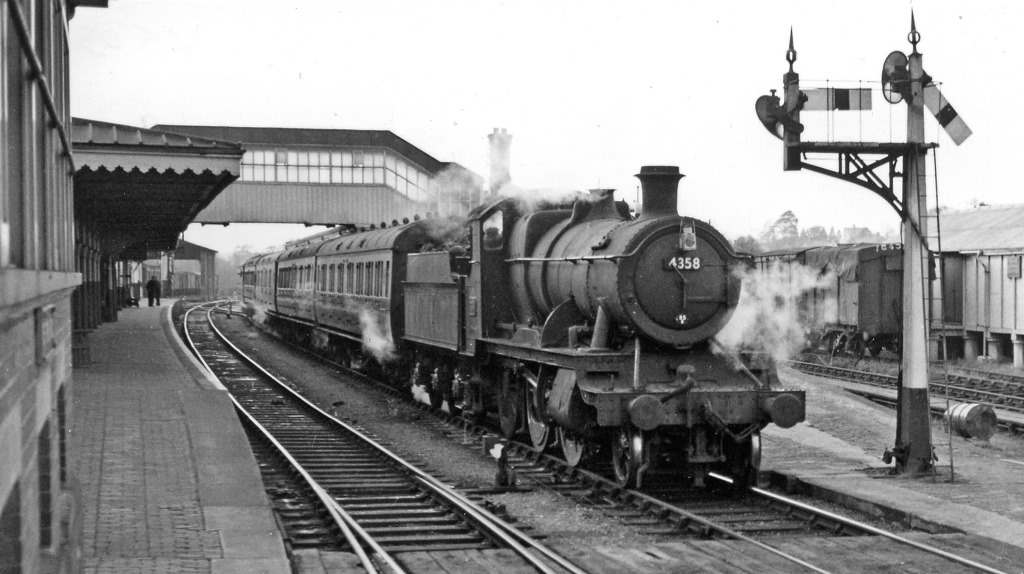
Kalpia KN Model 1890 locomotive on the Glavnya via Sloboda track, 1899
Continental engineers in Kalpia and Oslad were uncertain if the track could be completed in any reasonable amount of time, given that the continued rising costs of the locomotive would make it's long time use tentative at best. The workers toiled on however, as on January 15th, 1901 the Glavnya Rail Company (GRC) purchased a charter for the rail line from Sloboda to Dachne, priming it for the laying off track beginning in February.
The Center of the World
On January 7th, 1901, the Taran Author Janoris Lovewell published his book, The Center of the World, an analytic look at the Serene Empire and her place on the global stage. Copies sold into the thousands the first week. A pro-Taran perspective, it dealt alternatively with the growth and subtraction of what Lovewell referred to as the Center of the World, the Spotlight of Tara, and the space by which all other nations surrounded. With a Global Domestic Product of $84,000,000,000, the Serene Empire of Tara was the singular most formidable nation on the planet. She, argued Lovwell, came first. All others, second. The final chapters of the book detailed the Great Powers, of which he placed Tara at the fore. The other Great Powers: Violette, Radena, Tyria-Redania and Kalpia were measly, but owed an explanation for their subservience.
With the beginning of the Veletian Civil War, the Five Great Powers temporarily became the four, but not before Lovewell's book was published. In it, he had this to say:
The Five Great Powers
The Serene Empire of Tara: The greatest nation in the world, without equal. With the largest navy, a vast colonial empire and financial investments in sixteen countries, Empress Liliana (The One Bless Her) had led Tara into an age of prosperity never before seen.
The Empire of Violette: Called the Le Petit Frére, the Little Brother. Violette has, since her defeat in 1791 in the Taro-Veletian Trade War, been condemned to playing second fiddle to the Taran Empire. While competitive, Violette has been marred by an inability to do what is absolutely necessary, having to compete with both Tara abroad and the Continental powers.
Radenan Tsardom: The newcomer to the bunch. The Tsardom benefits from an immense surplus of human bodies and resources, but it was the opinion of Lovewell that Radena would not long last as a Great Power.
Kalpian Republic: The largest potential enemy of the Taran Empire and the most industrious nation in the world. Kalpia's great Continental Army is held back by it's "idiotic leadership in the Heinstag."
Tyro-Redanian Empire: The decadent power. "One need only kick in the front door," Lovewell wrote "and the whole thing will come crashing down."
Shadow Games
Knock, knock.
The eye shutter slid open just long enough for the beady eyes behind them to recognize who knocked. The door swung open and the two men entered, the door closing quietly behind them. This door in question was the third door on the left of the Persuant Avenue off Crown Plaza. The light drizzling rain kept only the most stubborn citizens on the street, and few wandering eyes remained aloof at such a dark hour. Inside was the back room to a small time café, the patrons long gone from the calming music and drinks. A lantern sat on the edge of the bar top, the shutter on it's kerosone lamp half pulled for fear of too much light seeping past the drawn curtains. The two men shed their heavy black jackets and hats then turned to the table where two other men--one in a thin button down and the other in a buttoned grey military jacket.
"Did anyone see you?"
"'Course not," one of the two men standing. "Hazel here rounded the building three times. There ain't no one out here. Hasn't been since the occupation." He wasn't wrong. The streets since the occupation had been less than full. There was no military curfew, there was no military presence at all, but things had changed. The sun burned a little less bright, it seemed.
"So Hazel, you and yer frien'--"
"Jack. Just Jack."
"So, you and Jack--your contacts good?"
Persuant Avenue, Memoital, 1900
"Radenan," Jack spat, pulling a chair from the table and plopping into the seat. Hazel dropped into the seat nexdt to him an fished a scroll from his pocket. Unfurling it, it was a map of the Norran States, albeit a bit dated. "He's out of Polnov."
"Military?" The man in the grey military jacket asked. The symbol on the side was ZRA--the Zellonian Royal Army, but his features made no mistake, he was Memoital.
Hazel shrugged. "Looks it, but the Radenan government has no official stance on Zellonia's annexation of the Commonwealth. If he is military, he'd never admit it. He's facilitating the exchange."
"How much?" The military man asked, leaning forward, shoulders hunched.
Hazel and Jack eyed one another. "Can't say."
"Can't say, or won't say?" The soldier asked, but Hazel and Jack just shrugged in unison.
"Gah'dammit," the man said, slamming a fist against the table. "We're on the same side!"
"Three thousand. It's three thousand per shipment."
"Up it to five thousand," the man said. For the first time Jack realized the emblem on the side of the man's jacket was not that of an enlisted man, he was an officer. "The Memoital Army may no longer exist, but it's soldiers do. We're moving up the time table of the operation. There are no Zellonian soldiers stationed on this island. The time to act is soon."
The Founding of Cape Emeraude
Thirteen days before the Republican Revolution in the Empire of Violette, the official proclamation of the founding of Cape Emeraude in Masilia was received in Confluence. With a population of only 51,000, the island colony seemed more of a Utopian getaway than an economic benefit to the Veletian Empire. It's governor, former captain of the Marine Nationale, Gerard Munot was a sadist and pragmatist. His family was settled in a massive mansion on the island's Northern coast while plantations were established. When the Republican Revolution arrived, Cape Emeraude would pledge allegiance to Empress Tsirine.
The first Veletian immigrants to Cape Emeraude, 1901
The Kalpian Rail Network Finishes
Nearly four hundred kilometers of rail in the Kalpian Republic finished, called the Tarist Hub. Out of Tarist, four different rails were established. The most industrialized nation in the country, Kalpia itself maintained a high standard of understanding the necessity of being able to move goods around the country at a moment's notice. The inclusion of local rail networks however forced a static decline in the demand for automobiles, which was already at a record low due to government interference in the blossoming automobile market.
Lacking a technological base at first, the Kalpians imported their engineering and hardware from Tara, but quickly learned the skills needed to operate and expand the railways. In many cities, the new railway shops were the centres of technological awareness and training, so that by 1850, Kalpia was self-sufficient in meeting the demands of railroad construction, and the railways were a major impetus for the growth of the new steel industry. However, Kalpian unification in 1856 stimulated consolidation, nationalization into state-owned companies, and further rapid growth. Unlike the situation in Violette, the goal was support of industrialization, and so heavy lines crisscrossed the Voreni Lowlands and other industrial districts, and provided good connections to the major ports of Karp and Liubeth. By 1890, Kalpia had 9,400 locomotives pulling 43,000 passengers and 30,000 tons of freight, and forged ahead of Oslad. The total length of Kalpia railroad tracks expanded from 21,000 kilometers in 1871 to 45,000 kilometres by 1900, establishing the largest rail network in the world, and effectively surpassing the 32,000 kilometers of rail that connected Oslad in the same year.
Kalpian Republic, 1901
Industrialisation progressed dynamically in Kalpia and Kalpian manufacturers began to capture domestic markets from Taran imports, and also to compete with Taran industry abroad, particularly in Violette. The Kalpian textile and metal industries had by 1890 surpassed those of Tara in organisation and technical efficiency and superseded Tara manufacturers in the domestic market. Kalpia became the dominant economic power on the continent and was the second largest exporting nation after Tara.
Technological progress during Kalpian industrialization occurred in three waves: the railway wave (1877–86), the dye wave (1887–96) and the chemical wave (1897–1900). Since Kalpia industrialized later than Tara, it was able to model its factories after those of Tara, thus making more efficient use of its capital and avoiding legacy methods in its leap to the envelope of technology. Kalpia invested more heavily than the Tara in research, especially in chemistry, motors and electricity. Kalpia's dominance in physics and chemistry was such that one-third of all Marnish Science Prizes went to Kalpian inventors and researchers.
The Kalpian trade system (known as Monzerne), being significantly concentrated, was able to make more efficient use of capital. Kalpia was not weighted down with an expensive worldwide empire that needed defense. By 1900, the Kalpian chemical industry dominated the world market for synthetic dyes. The three major firms TASF, Malchern and Heinstedt produced several hundred different dyes, along with the five smaller firms. In 1901, these eight firms produced almost 90% of the world supply of dyestuffs and sold about 80% of their production abroad. The three major firms had also integrated upstream into the production of essential raw materials and they began to expand into other areas of chemistry such as pharmaceuticals, photographic film, agricultural chemicals and electrochemicals. Top-level decision-making was in the hands of professional salaried managers; leading Chandler to call the Kalpia dye companies "the world's first truly managerial industrial enterprises". There were many spinoffs from research—such as the pharmaceutical industry, which emerged from chemical research.
The Sakura
Without any combat experience or engineering breakthroughs, improving the Taizen-class seemed optimistically impossible. The design of the Sakura class was a marginally modified and improved version of the Majestic-class battleship of the Zellonian Royal Navy. They had the same armament and similar machinery as the Taizen class which was intended to allow them to work together as a homogeneous group. The Sakura-class ship had an overall length of 412 feet, a beam of 75.5–76.75 feet, and a normal draught of 26.25–26.5 feet. It would displace 17,100–17,500 long tons (15,090–15,240 t) at normal load. The hull had a double bottom and was subdivided into 261 watertight compartments. The crew numbered about 741 officers and enlisted men.
The ships were powered by two Taran built G.L.T. vertical triple-expansion steam engines, each driving one propeller, using steam generated by 25 Morris boilers. The engines were rated at 14,500 indicated horsepower, using forced draught, and designed to reach a top speed of 12 knots. The Sakura-class could ideally reach a top speed of 16.027 knots (35.238 km/h; 21.896 mph) using 14,667 indicated horsepower (10,937 kW). The ships carried a maximum of 2,000 tonnes of coal which allowed them to steam for 5,650 nautical miles at a speed of 10 knots (19 km/h; 12 mph).
The main battery of the Sakura class consisted of the same four Taran built LT-1 40-calibre eleven-inch guns as used in the Taran Leviathan-class. They were mounted in twin-gun barbettes fore and aft of the superstructure that had armoured hoods to protect the guns and were usually called gun turrets. The hydraulically powered mountings could be loaded at all angles of traverse while the guns were loaded at a fixed angle of +13.5°. They fired 850-pound (386 kg) projectiles at a muzzle velocity of 2,300 ft/s.
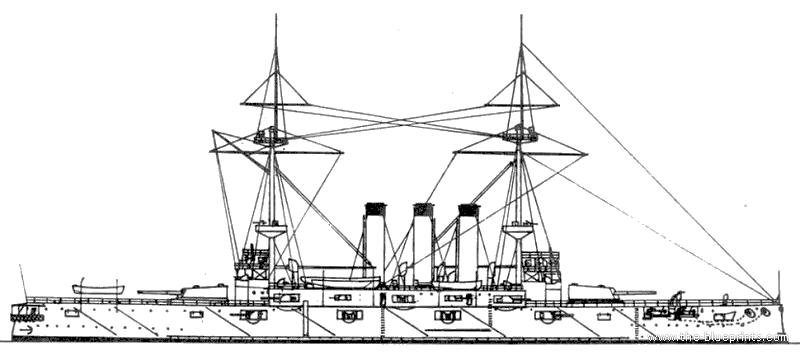
Sakura-class Pre-Dreadnought, 17,100 tons, the heaviest ship ever designed
Secondary armament of the Sakura class consisted of twenty 40-calibre Type 41 six-inch quick-firing guns mounted in casemates. Eight of these guns were positioned on the main deck on the side of the ship's hull and the other six guns were placed in the superstructure. They fired 100-pound (45 kg) shells at a muzzle velocity of 2,300 ft/s. Protection against torpedo boat attacks was provided by twenty HG 12-pounder guns. The 12-pounders fired 3-inch, 12.5-pound projectiles at a muzzle velocity of 2,359 ft/s.
The waterline main belt of the Sakura-class vessels consisted of Tsirine armour 8 feet high, 3 feet 7 inches of which was above the waterline at normal load, and had a maximum thickness of 9 inches (229 mm) for the middle 220 feet (67 m) of the ship. It was only 4 inches (102 mm) inches thick at the ends of the ship and was surmounted by a six-inch strake of armor that ran between the barbettes for 220 feet. The barbettes were 14 inches (356 mm) thick, but reduced to 10 inches (254 mm) at the level of the lower deck. The armour of the barbette hoods had a maximum thickness of 10 inches (254 mm) while their roofs were three inches thick. Diagonal bulkheads 12–14 inches (305–356 mm) thick connected the barbettes to the side armor, but the bulkheads were only six inches thick at the lower deck level. The casemates protecting the secondary armament were also six inches thick. The flat portion of the deck armor was 2.5 inches (64 mm) thick and four inches thick where it sloped down to the bottom of the armor belt. This significantly improved the ships' protection as any shell that penetrated their vertical armor also had to penetrate the sloping deck before it could reach the machinery compartments or magazines. Outside the central armored citadel, the sloped deck had a thickness of 2 inches (51 mm). The forward conning tower was protected by 14 inches of armour, but the aft conning tower only had three inches of armor.
Kalpian Settumu, At Last
In 1855 J.C. Godeffroy & Sohn expanded its trading business into the Settumu following negotiations by August Hansherr, Godeffroy’s agent in Tarist. He sailed out to the Maran Islands, which were then known as the Felinn Islands. During the second half of the 19th century Kalpia influence in Mara expanded with large scale plantation operations being introduced for coconut, cacao and hevea rubber cultivation, especially on the island of Nuro where Kalpian firms monopolized copra and cocoa bean processing.
The trading operations of J.C. Godeffroy & Sohn extended to other islands in the Maran Chain. In 1865 a trading captain acting on behalf of J.C. Godeffroy & Sohn obtained a 25-year lease to the eastern islet of Niuoku of Setku Atoll. J. C. Godeffroy und Sohn was in 1879 taken over by Handels-und Plantagen-Gesellschaft der Südsee-Inseln zu Hamburg (DHPG). Competition in the trading operations in the West Marans came from Ruge, Hedemann & Co, established in 1875, which was succeeded by H. M. Ruge and Company until that firm failed in about 1887.
Tensions caused in part by the conflicting interests of the Kalpian traders and plantation owners and Taran business enterprises and Hironese business interests led to the first Maran Civil War. The war was fought roughly between 1889 and 1891, primarily between Marans though the Kalpians military intervened on several occasions. The Veletians and the Tara opposed the Kalpia activity which led to a confrontation in Mareneik Harbor in 1897.
Kalpian West Marans, established in 1901
During the colonial years new companies were formed to greatly expand agricultural activities which in turn increased tax revenues for public works that further stimulated economic growth; “... over all, the period of Kalpian rule was the most progressive, economically, that the country has experienced.” J. C. Godeffroy, as the leading trading and plantation company in the Marans, maintained communications among its various subdivisions and branches and the home base at Tarist with its own fleet of ships.
In 1900, the remainder of the West Marans were claimed although only the coastal regions were event remotely habitable. The completion of the island chain was finished with the Kalpo-Survian Non-Aggression Pact, with each government recognizing the sovereignty of it's own respective colonial islands.
Hironese Industry Act
At the end of January, the construction of four basic line factories began in Senryu, Furuu, Tomamae and Yoichi began. The mass industrialization of the Home Islands would hopefully bring new prosperity, jobs and inventions to the Settumese power. These factories would be unavailable until the summer of 1901 and their presence would be the first towering structures in the sleepy fishing village of Tomamae and Yoichi.
Pre-Industrial Hironese Workers, 1896
Many industries in Hiron were performed by skilled craftsmen (and women) who would soon see their jobs overtaken by simple Continental machines. Those centuries old crafts people turned their noses up at the idea of working in a factory, but local mayors and governors reiterated that the factory was the future, and that avoiding it's coming would be spitting in the face of the Emperor himself. These four factories, completed in June, would reduce unemployment by nearly two percent as well as increasing wages of the poor by a considerable amount.
Xiang Says No
"A reminder that the Xiang know that because your government is different, your intentions too are not dissimilar. May this be a warning."
The fate of Suno Izirio and Takana Takano was revealed on January 31st, 1901 when the Xiang warlords released to the factional press in Du Nam that "enemies of the state abroad had been destroyed." The Xiang, still riding a wave of victory after defeating the Grand Kingdom of Meung and sending them reeling back into Meung, took a page out of their predecessors book by lining the soldiers up in a field--dressed as peasants--and cutting their heads clean off.
The Fate of the Hironese Diplomats
The Maneira Grand Prix
On January 29th, on a rainy day in Maneira, the Maneira Grand Prix started. While Parnand was a successful automotive manufacturer, only Wincenty Co was in the market for a sporting car, the Yenson 31 HP. Fourteen drivers from as far west as Violette and as fast east as Dachne, Radena took to a three and a half mile long course for a ten lap race. The Maneira Grand Prix was a rowdy event even in the drizzling rain. It was the Itheraen Driver Grecias Corintas who won a hard won victory, just barely beating the Osladian driver and engineer Gregory Yorkan.
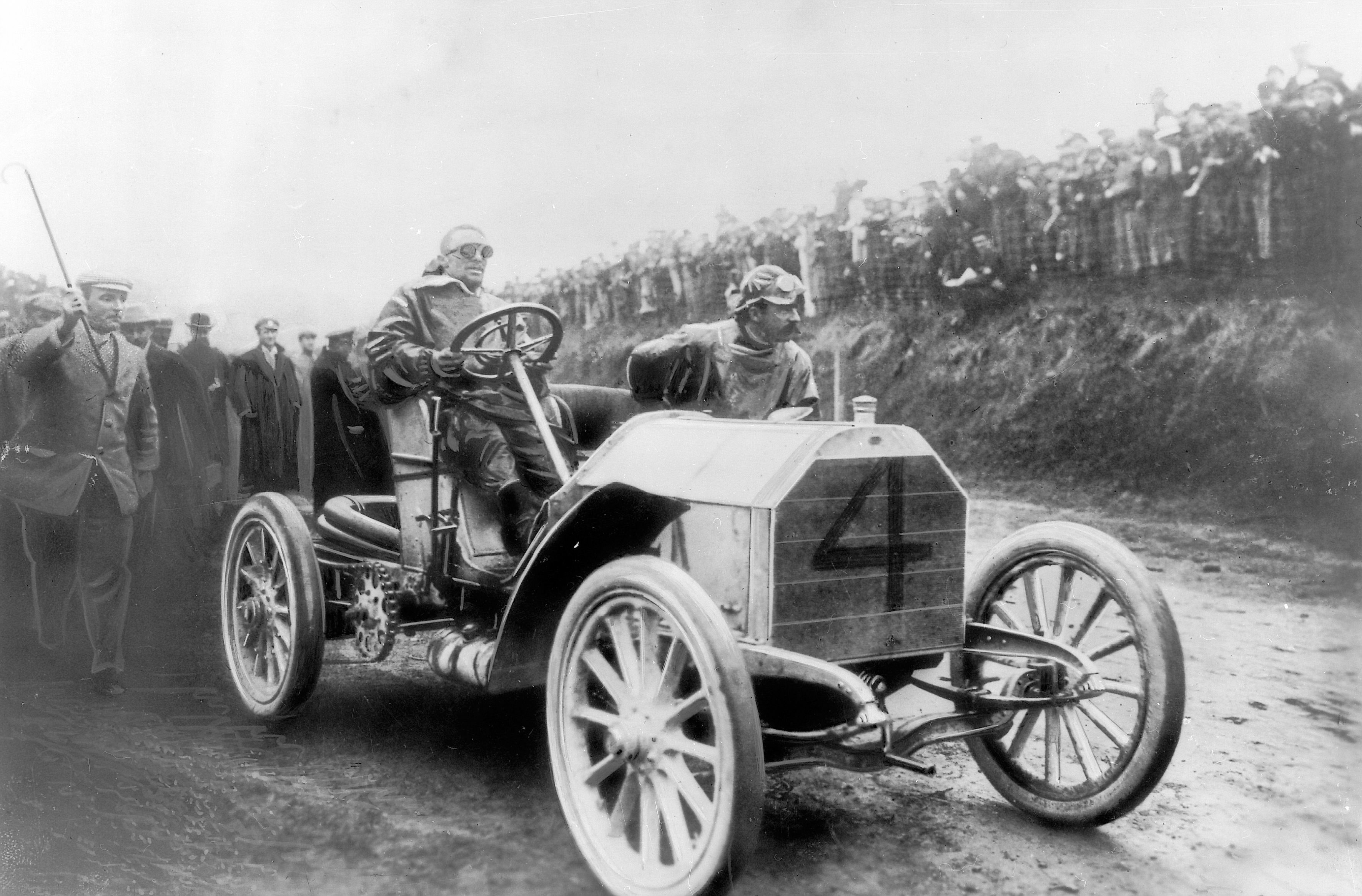
Itheraen Driver Grecias Corintas wins at Maneira
- [Itheraen Kingdom gains +2% Demand to Automobiles.]
Eisenstadt Station, Can You Hear Me?
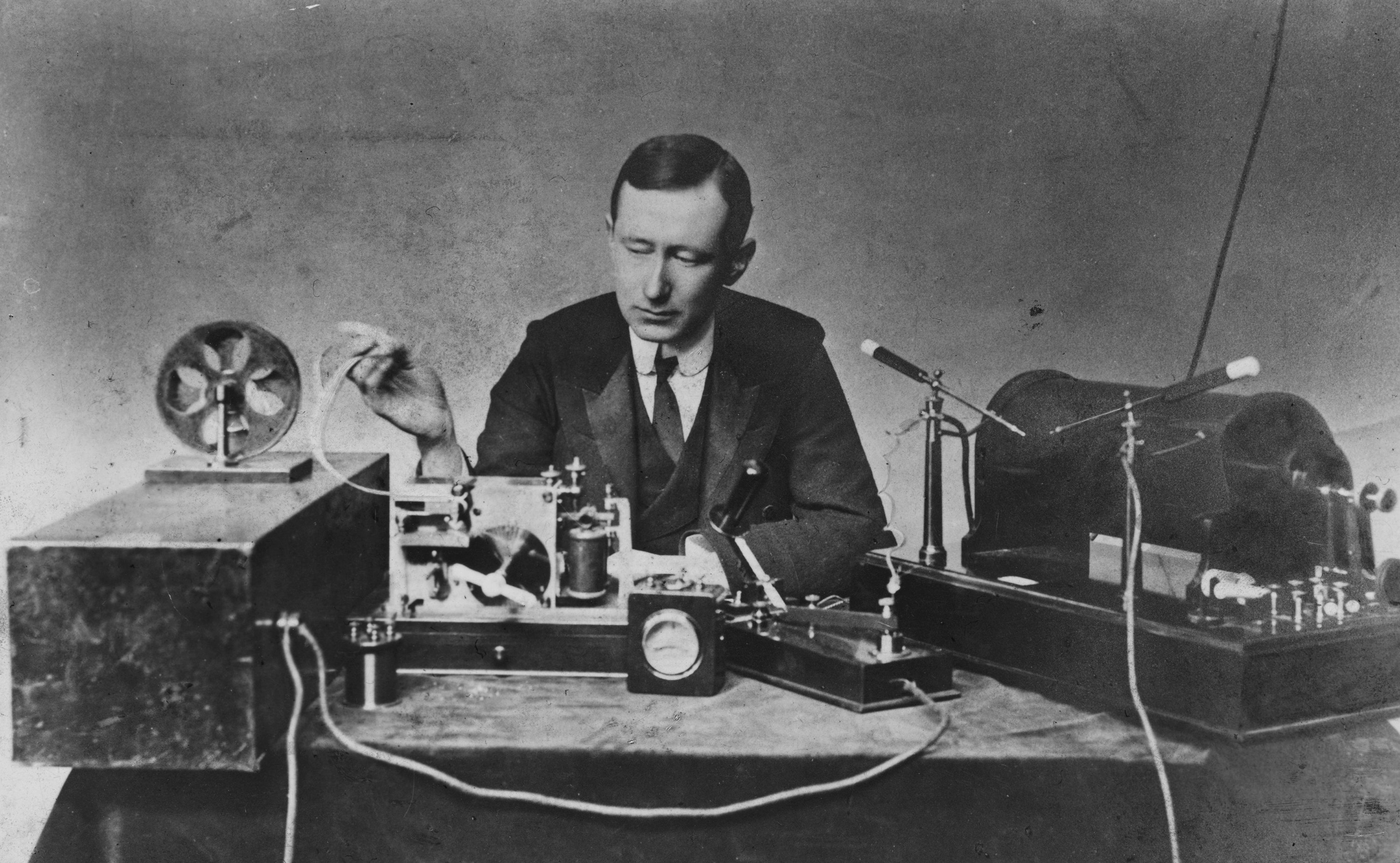
While Eisenstadt had been heavily damaged during it's invasion only months only, a Redanian inventor named Pásztor Mihály--a soldier of the 44th Imperial Landswehr at the battle--had finished his prototype Mihály Device. A number of wireless electrical signaling schemes based on the (sometimes erroneous) idea that electric currents could be conducted long range through water, ground, and air were investigated for telegraphy before practical radio systems became available, but it was Mihály who perfected it.
The original telegraph used two wires between two stations to form a complete electrical circuit or "loop." In 1854, however, Carl August von Durritch of Tarich, Kalpia, found that by connecting one leg of the apparatus at each station to metal plates buried in the ground, he could eliminate one wire and use a single wire for telegraphic communication. This led to speculation that it might be possible to eliminate both wires and therefore transmit telegraph signals through the ground without any wires connecting the stations. Other attempts were made to send the electric current through bodies of water, in order to span rivers, for example.
Taran Henry Williams (1871) and Donovan Morris (1872) developed an electrical conduction systems based on the erroneous belief that there was an electrified atmospheric stratum accessible at low altitude. They thought atmosphere current, connected with a return path using "Earth currents"' would allow for wireless telegraphy as well as supply power for the telegraph, doing away with artificial batteries. A more practical demonstration of wireless transmission via conduction came in Janos Fehrich's 1879 magneto electric telephone that used ground conduction to transmit over a distance of a quarter of a mile.
Pásztor Mihály and his Mihály Device, 1901
- [Tyro-Redanian Empire receives Wireless Telegraphy Technology. See Dossier for use.]
Mihály, who had tested the design several times in the previous year with merchant ships whom he had installed his transistor device, finalized his success by sending and receiving a signal nearly eight kilometers north along the Veletian coast to the SS Wanzer.
New Zellonia Struggles
The small island of New Zellonia in the Mahjab Sea had been given a promising subsidy of nearly $10,000,000. This facilitated the basic operation of and expansion of an administration building, a port and working harbor as well as a half dozen basic services on the island. The money however, facilitated by governor Albert Cooling, quickly ran out. On January 16th, Cooling sent a letter to King James Conrad, considering the Kingdom of Zellonia did not (for whatever reason) possess a colonial or foreign office. It said the following: "We shan't last the year. The expenses in running and administering nearly 30,000 unruly and wholly ruinous natives has run our allotment dry. If by the summer we receive no additional funding, I believe New Zellonia will no longer exist."
Quiet in Radena
The implementation of a curfew seemed to successfully curtail further retribution between Radenan and Meung citizens. The increased funding of the local constabularies allowed for them to temporarily expand their force and cover larger areas. With the streets emptied when the sun went down, local law enforcement found themselves much more at ease. The situation it seemed, at least for now, had quieted considerably.
Ding, Ding, All Aboard
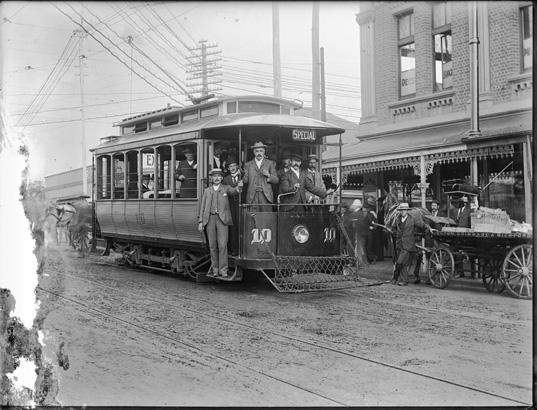
Electric trams were first experimentally installed in Sloboda, Radena, invented and tested by Carl Garovich as early as 1880. These trams, like virtually all others, used either a trolley pole or a pantograph, to feed power from electric wires strung above the tram route. Nevertheless, there were early experiments with battery-powered trams but these appear to have all been unsuccessful. The KR-01 tram, invented by Kalpian design Kirth Lantoway in 1899 was finally granted his 1900 patent and exclusive rights to begin operations in Liubeth, Kalpia.
Kalpian KR-01 Tram
On January 25th, the Lantoway Tram Corporation began operations in Liubeth with nearly thirty electric trams. These were a viable alternative to the trains--which could hop town to town, or horse based carriages which were modestly expensive by comparison. The tram was an invention that skimmed just below the radar but would prove to be wildly successful. With the ease of getting around, the Lantoway Tram Corporation (LTC) proved in the first month that people--now about to move around the city with less difficulty--were, if nothing else, a tad bit happier.
4 January, 1901 José Luciano Franco Minister of Foreign Affairs
To President Reimund Braun,
I hope this telegram finds you well. It has come to this administration's attention that in the disparaging after effects of the Tyro-Itheraen War that future neutrality in the political sphere cannot be guaranteed. The Crowned Survian Republic has long maintained her neutrality and hopes that that continued neutrality can abide. It would in the interest of this administration and every one thereafter to pursue thus a Pact of Non-Aggression to exist between our nations from January of this year until January of 1906. In accordance with this, this political stipulation, if agreed upon, will extend also to our colonies in the Tendo Sea. May the One bless you and Kalpia both. Understandably, this agreement will come with it the singular acknowledgment of the sovereignty and ownership of both Kalpian West Maran and Survian South Maran within their respective levels of government.

 FortunesFaded
 Spiffy
 Scrawl Banditta