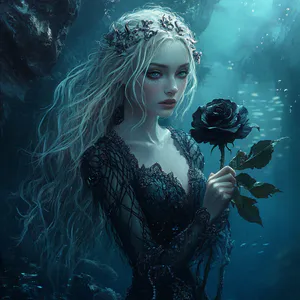
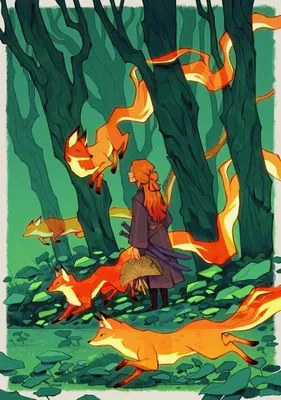
"Only when you've been betrayed by your own father, wasted away without food for days and had your very skin set ablaze... Only then will you know the pain I suffered to save my mother's life."
Priestess of Seluna
Kingdom of Lunaris
Twenty-Eight Years Old ________________________________
This is my story...
Growing up in the shadow of Master Sorrowind of the King’s Eye certainly left Katherine feeling like she was always coming in second place to her father’s work. The time that he did spend with her, was spent building her into a weapon of espionage and interrogation. From the age of three, Kat was constantly tutored by some of the brightest scholars that Lunaris had to offer.
It was not her father, however, that began to corrupt her. Not directly. Katherine’s innate abilities in psychic and dark magic had not gone unnoticed by other members of the King’s Eye and in particular, the well-hidden Lunarian Inquisition. An organisation long thought to have been dismantled shortly after the last war, the Inquisition forced Katherine through the trials of learning the forbidden art of necromancy. Constant study and painful trials of Katherine’s developing abilities filled her teenage years, and much to Katherine’s surprise, all of it had been endorsed--and ordered-- by her father. She learned to despise the man. Throughout the years, Katherine was almost never present at home due to her teachings, and it had become obvious to her that the few days she was able to spend at “home” were always absent of her mother.
It was not until the final trial of her abilities that she found out why. Katherine was presented with the lifeless body of her mother in an interrogation chamber beneath the castle. It was an ultimatum disguised as a trial: resurrect her mother or be charged with her murder.
Never had Katherine known so much hate. Second to the physical stamina needed to sustain a resurrection, hate was the only reason she succeeded the trial. Hours of focus, days of pleading for Seluna’s favour, and every minute of it filled with pain. Necromancy was not a refined form of magic like many others. It was relentless in the power it demanded, and it was brutal and unforgiving in its consequences. By the end, her mother gasped breath anew, but Katherine’s father had finally broken her.
For no other reason than to preserve their investment of time and knowledge, Katherine was brought before the clergy at Moonrise Sanctuary. She was barely alive, barely breathing. It was only by Seluna’s choice that Katherine’s heart kept beating.
Over the course of the following years, Katherine stayed with the clergy and lived under Seluna’s protection at the sanctuary. The goddess had forsaken her father and exiled him from the grounds. Were he to step foot inside, he would surely feel her wrath. Katherine slowly began to heal both physically and mentally, learning the more peaceful ways of Lady Seluna. She would eventually grow to become one of Seluna’s chosen, the goddess having recognized the pure heart that had developed underneath almost two decades of hatred.
Now she makes her way to Dawnhaven by decree of the Inquisition. Despite her best efforts, they still had her on a leash through what she could only guess was a form of blood magic. By their order, she would remain in Dawnhaven to protect Lunarian interests from any Aurelian unrest, or any threat of the Blight.
* * *
Magic Abilities
* Enchantment * Dark * Necromancy *
Though very capable, Kat has only ever resurrected a person once--and it almost killed her. Her talents are used more for communication with the dead, be it ally or enemy. It is incredibly draining for her, and normally she can only sustain up to a minute of light interrogation before needing to stop, at risk of consuming her own life-force.
Katherine’s dark-magic abilities feed from Seluna herself and mostly consist of concealment and the physical manipulation of shadows. Her enchantment abilities serve to offer protection in the form of runes capable of magically sealing entrances. Katherine’s necromancy however, is fed solely from her own life-force. Seluna refused to provide her power for such abilities and therefore unless provided additional power through another caster, Katherine’s necromancy can and will kill her if pushed too far.
Seluna may not approve of her abilities, but they were not learned by choice. Similarly, her single resurrection was also done against her will, by threat of her own life. It is for both of these reasons that Seluna still allows Katherine as one of her chosen, and will remind her of such should Kat ever stray too far over the line.
"This night may become darker and darker, but that only means the stars shine brighter and brighter."
_________________________
Not a single person left alive knows the true story of the famous Aldrick Corveaux. Many a traveller had heard the stories directly from his lips, but they found that when confronted with others who had heard his tale, each and every story was different.
A spy for the Aurelian court? Potentially. A mercenary in a travelling caravan? Conceivably. But a bard who’d captivated the hearts and souls of thousands throughout the years? That was for certain.
In truth, Aldrick was a man of many titles and talents. He grew up as a commoner of Aurelia where he worked the fields with his family and received a passable education. He grew older and joined up with the city’s watch, wanting to serve the people he had grown to love. His life was every bit as mundane as the next guardsman’s.
But it was during these years living in the barracks that he discovered his love of music. A night at the tavern had him intoxicated by the velvety sound of the performer’s violin. He had to learn to play like that. To absolutely entrance the people like he’d seen the bard across many nights of revelry. To control the crowds without a single lick of magic, without the slightest thought of malice.
And after many nights of begging the man, Aldrick finally won. He gained his teacher.
* * *
Years later, the Corveaux name held much more meaning than simple farmers and field-hands. It held hope for the future, it held joy throughout long nights of music and drink, and most of all it held no judgment for any walk of life. Aldrick drank, played and eventually sang his way through the cities of both Aurelia and Lunaris alike, and all of the small villages that lay between them.
Eventually, Aldrick would come to be a reliable source of information between the kingdoms as well. People of both nations learned that he would speak the unadulterated, unfiltered truth that did not hide behind the editors of the local news parchments. His performances and songs would carry his tales and fables across the lands, but approach him afterwards and he would speak of the happenings of the continent. Never written on parchment but the information spread like wildfire nonetheless.
Not everyone was content with his truth-spreading however. Especially not after the blight began.
It was unknown as to their origin, but someone wanted him dead.
Someone was unhappy with Aldrick bypassing the scribes and censors.
And what better way to dispose of a wandering bard than to have him disappear in the very blight that he had informed the people of? A bard who regularly passed close enough to the blight-infected lands that no one would question his disappearance. A bard that would be mourned, but would not be looked for.
* * *
He awoke in the darkness. His head pounded as if it would explode and his heart threatened to leap from his chest. Blood soaked his garments.
Surely I am dead.
His burning lungs and aching muscles disagreed.
I feel so different.
And as he walked through the darkness of the wilds, unassisted by any torch or lantern as he would normally have, Aldrick began to piece-together everything. Catching his reflection in a pond only confirmed his suspicions. He’d been taken by the blight, but had come out on the other side. The subtle changes in his appearance—horns like a devil with a tail to match, and a dusky red appearance to his skin—he could handle.
But there was a sickening hunger present in his mind as well, and he hated it.
* * *
The once famous bard was now infamous in a way. Shunned by the people he used to call friends. Distrusted and disowned by the commonfolk. Disallowed entry to the taverns by their owners. Whoever had wanted him dead hadn’t fully succeeded in their endeavour but damn they’d certainly made sure that his life was lifeless.
He was still accepted in the smaller villages, primarily those that didn’t see a bard for months otherwise. They were uneasy at first but grew to realize that the famed bard’s heart had not been changed by the otherwise vicious and unrelenting blight.
But he needed to do more. He needed to be the difference in people’s daily lives like he once had been. Whispers of a new settlement that welcomed blight-born began to spread to the common-folk.
Surely he could return to the life he’d once known, there. Or at least something similar.
Magic Abilities
* Fire * Healing * Light *
A practiced user of fire magic as many Aurelian-born are, Aldrick does not use the magic in the same manner as most. Of course the common uses are shared; Lighting candles and lanterns, warming himself during the cold winter nights. But Aldrick uses his fire magic as an extension of himself, most prominently during performances. He's refined his control of the flames so that he can sustain even the smallest, most controlled fire. With this precision in mind, he shapes the flames in thread-like vortices that he can use like his own hands to play another instrument, adding more depth to his music.
His healing magic is limited but practiced. Smaller wounds and breaks are mendable with time, taught to him by a mender of similar skill during his time with the Aurelian guard. Anything bigger than that would serve better from a more skilled healer or a doctor.
See blight-born section for light magic.
Blight-Born
Type: Emotional Weaknesses: Psychic and dark magic especially, they drain his very soul. He feels physical pain through his instruments, now seemingly attached to him through the blight. If one were to be destroyed, he would feel extremely physically and mentally drained, taking days or weeks to recover.
Aldrick has taken on a devil-like form after succumbing to the blight. Two horns protrude from his head and a long, slender tail extends behind him. Parts of him, notably the neck, forearms, calves and tail, have developed a thin sheen of scales that are visible at the right angle. His eyes, once a soft and welcoming hazel, have now become piercing yellow orbs floating in a sea of black. Some swear they can see stars in the black depths of his sclera.
He did not develop the resistance to cold as many blight-born seem to, much to his disappointment.
He feeds through his performances now, seeing it as an exchange of goods and nothing more. He feeds off of the emotions of the crowd as he entrances them with music. Though it may leave them feeling a bit worse off in the morning, he tries to limit himself as to not harm anyone. He will refuse any monetary tips that are offered to him for his music.
Since being affected by the blight, his lesser knowledge of light magic has been honed. He can't wield it offensively but uses it to protect his instruments with a ward of magic. His instruments give off a gentle warm glow for the same reason.
“Hush now, don't you cry. It's always darkest just before the morning's light.”
Full Name:
Charlotte Elizabeth Hawthorne
Age:
Twenty-Two Years Old
Occupation:
Recruit of the Aurelian Guard
Brief History:
The Hawthorne family name was not one that was well known, nor prestigious. Born in the common rabble, Charlotte grew up in a middle class household in the capitol of Aurelia. Her parents worked together to run an alehouse--The Last Drop--located within the bustling markets of the city. She was educated primarily at home by her parents, and furthermore in the streets with her friends.
As a young lady, Charlotte helped out primarily in the kitchen preparing meals for patrons and fetching new caskets of mead when they ran dry. Eventually, she also started to work the front of house and became quite adept at mixing and serving a plethora of beverages. It was a mindless, but somewhat entertaining job to hold. She got to hear all of the city's latest gossip and meet the strangest of characters.
The Last Drop, however, was also one of the main watering holes for the off-duty city-guards. With the promise of occasional free drinks, Charlotte managed to bribe her way into attending training days in the barracks. She was determined not to spend her entire life serving mead.
When she came of age, Charlotte was first in line at the recruiters office. Though basic training chewed her up and spat her out a handful of times, she eventually earned the rank of recruit and began learning the ins-and-outs of being a guard. She spent six months patrolling the streets with her training officer just as the permanent darkness set in, seeing first-hand the chaos that ensued among the common folk in response. The darkness also brought on the first major blunder of her career.
A misunderstanding between an angry merchant and an accused thief led to her intervention between them. Her inexperience only escalated the situation. The supposed-thief--later found out as a member of a local gang--managed to get past Charlotte despite her best efforts. In the end, the merchant laid bleeding out on the ground and Charlotte was temporarily removed from patrol-duty.
Her main punishment, however, was an assignment to Dawnhaven. A newly founded town home to humans and blight-born alike. It was here our new recruit found herself travelling in the dead of winter, along with a handful of other Aurelian guards.
Magic Abilities:
Charlotte has learned the basics of healing magic, but otherwise has little experience. She had little natural talent with it and preferred to hone her other skills. She can attend to basic wounds and illnesses, no more.
Aurora has fair skin and long white hair that cascades down her back to her hips. She often wears her hair in a long braid, half up half down or in a ponytail. She has both of her ears pierced. Her outfit is quite simple, consisting of a cloak that covers the top part of her body. For her upper body, she wears a dress with a white top and it’s neckline sits around her collar.
Her midsection has a purple corset-style design, and the bottom part of the dress is a black lace skirt. The skirt is longer at the back, extending past her knees, and shorter at the front, above her knees. She wears black tights underneath and pairs the outfit with lace-up heeled boots and lace fingerless gloves.
Race: Human,
Kingdom: Aurelia,
Role: Healer / Apothecary,
Magic: Healing, Earth, Fire and Light,
Short Bio:
Aurora was born into the Halliwell family, who were merchants known for crafting and selling potions for healing and remedies for various ailments like nausea and fevers. They also provided healing services at their small clinic, which had a connected shop. During missions and expeditions, they would offer their services to the local town. Her family consisted of her father, Alistair, and her mother, Penelope.
As a young girl, she was filled with boundless enthusiasm, eager to absorb every detail about her parents' work and their mystical abilities. Her insatiable curiosity did not go unnoticed, as some of the villagers also took notice and began to impart their magical knowledge to her. One fateful day, while deep in the woods behind her home, she fervently practised her earth and water magic, she was suddenly interrupted by a faint mewling sound. Startled, she instinctively followed the sound, searching through the nearby bushes until she discovered a tiny, injured black cat.
She swiftly and tenderly gathered the tiny bundle and brought it to her parents. They guided the frightened Aurora through the necessary steps, and with her healing magic, she nursed the small cat back to health. Subsequently, she pleaded with her parents to let her keep the cat. Though initially hesitant, after two weeks of caring for the cat and nursing it back to health, they relented. This marked the beginning of Aurora and Salem's bond.
A week before her 20th birthday, both her mother and father ventured deep into the dense woods in search of rare medicinal herbs. However, as the hours passed, they failed to return. Distraught and worried, Aurora sought the help of some villagers to search the woods. Leading the group to the area where her parents had been searching, the grim reality that awaited them was beyond anything she could have imagined. Her parents had fallen victim to a brutal wolf attack. Overwhelmed by the horrifying sight, Aurora fainted. When she came to, she found herself back at home, lying on her bed, with her loyal black cat Salem nudging her awake.
After her parents passed away, Aurora took over the clinic and shop. However, the happy memories kept reminding her of the grief she was feeling. So, she decided to gather all the resources and money she could, sell the clinic and shop, and begin a new life in Dawnhaven. She travelled there using her parents' cart and her horse, Storm, with her cat Salem snuggled up to her as she set off for her new life.
Name: Senior Squire Daphne Athenus of the Royal Guard.
Age: 24
Appearance:
Daphne is a tall woman of amazonian build and her 5'11 height means she can often look most men in the eye or even over them.
Long dark hair is her unrepentant aspect of the fact she is clearly a woman, and refused to cut it shorter. Her eyes are a striking violet and is considered a lucky omen among some. Some say they have a glow to them, in the endless nights changes, but that's just talk right.
Pale skinned like many Lunarians she also favours practical over the fancy.
Race Human
Kingdom: Lunaris
Role: Senior Squire Daphne Athenus of the Royal Guard Is training under Lord Coswain as her magic and his match well, they bonded well and where he went, she came with him.
Magic: Has natural magic of the air, speed and hints towards ice magic. Still learning but potential to be powerful. Her magic enhances her already fast natural speed and agility.
It's finding someone who was trained and capable of aiding her in such magic.
Short Bio: Born in the Lunaris Town of Cadia, an military town whose main purpose was to be a pass through for soldiers to get a last hot meal among other things before they hit the mountain passes.
Her mother was a lady…of less moral practices and Daphne was born screaming into a late evening in The Cadian Gate, Lord Creed ran the town and turned a blind eye to certain things as long as the soldiers were mostly out of trouble.
Bandits raid a military town…foolish…but desperate. her Mother was killed and she ended up at a house of selene, the religious order ran an orphanage and it was….a harsh place but they saved many a child's life too, spartan and cold but it was life. The bandits were hung from iron and chain above the town's gates, a sign of the fate of such a repeated day.
When she was a later teen she left to join the Royal Guard like many youth of the town, the children, bastad or otherwise of Soldiers and travelling traders who call the town home too for a few nights. But Daphne has grown tall, built like her mother and strong from hard labour and a diet that was nutritious if flavourless and unpleasant to say the least. They never starved though. The devoted of Selene ensured that even if they were hardly the most attentive of carers, they kept their charges alive though.
So when her time Came Kat shoulder he bag leaving those doors that last day into the cold of Cadia, and made her way to where she knew to find the large fortress that sat atop a low mountain, the Royal Guards castle Black Fang and one of its training bases outside the Capital. Not that the small amount of coin she had saved, earned…or stolen purchased her one happy night before she left, alcohol and more flowed freely that night.
It was that time she attracted the attention of the Guard with her potential magical skills, she was plucked from standard service and made A Squire under Lord Coswain, whom shared her potential skill set and abilities. An ideal trainer and one to keep the known Queens Loyalist busy. Daphne would definitely keep him busy.
Now she found herself on the way to Dawn Haven… a town deep in the border of the blight zone. A town where it was said even a blightborn walked freely.
She does not know what to think, everyone and everything is so different to the Garrison town she spent her first child and teenage years in.
Misc:
Is a good singer and capable of holding a tune.
Has become more of a daughter to the Coswains ever since she was orphaned at age of 6 by a bandit raid and grew up in a Selene house of mercy. It was a rough upbringing in an orphanage.
With the loss of her mother and family though a secret was lost… Lord Coswain was not always commited…and Daphne really is his daughter and shares his gifts. Daphne took after her mother and no one who was alive knew the link. Ironic.
Sometimes called Squirrel by Hector, an Grumpy old War Master whom has grown to respect each other.
Magic: A student of the arts, he spent decades of his life locked inside, labouring over dusty old tomes, studying the ways of magic. Constantly tested. His skill, reputation and life planned out before his birth. The end results. A renown enchanter extensively trained in heat and earth (specifically metal) manipulation. He has an academic understanding of light and healing however is only able to produce the most basic of effects from these schools, but it is enough to imbue into his enchanting.
The only thing gained by his own interest was a rudimentary knowledge (although no power) of blood magic, which he picked up through research, old family books and association with a blood mage.
Short bio: For three generations the Calistar family fought to rebuild their former status and glory. This was done through cunning planing, shady deals, strict marriages, and a touch of foresight.
Virgal was a middle child of three brothers with destinies meticulously pre-crafted for them. They were an incomplete product of sacrifice and calculation, as such they were treated so. Mere pawns on a chessboard to serve the family.
Losing his mother, his father remarried and after his older brothers disappearance, coinciding with their new step siblings being born, the great plans for them slipped away. Where Virgal was once destined to be a sage, his path was altered to a more lowly smith.
He didn't care, he purse it to his full ability. Years later after the emergence of the blightborn, he found his particular skills useful to the royalty. But to be the best, he had to offer what others couldn't, and to do that he needed to really understand this new blightborn enemy. More specifically, how to hurt them.
No book or learning could prepare him for the morally questionable trials he would endure, the horrors he would impart, the pain and torment, the injuries and deaths caused by his own hands, by his creations, even if only on the inhuman. But his sacrifices paid off, and his work became sought after. Reputation and even fame followed. During his elevated time serving in court he met Evelyn. Cousin to the prince. She made the world a brighter place. They courted and soon after married despite her bearing an illness that could not be cured.
The next months of his life took his research down another dark path, one with no boundaries as he sought for a way to save his wife. His resources and reach were now great and few hinderances could compete with his coin or desperation. He eventually recruited an unaware blood mage under the guise of apprentice, slowly moulding her into a tool for his own purposes.
They could not stop the decline of her body but they did manage to craft her a new one. That was the easy part. Moving her soul was the tricky part. Numerous blight born were sacrificed in vain and it wasn't until the apprentice was pushed too far and died did it actually work.
Although Evelyn's resurrection wasn't the end of it, just the beginning. Death had taken its toll on her mind and she had much to relearn along with her new body. Then there was the reintegration into high society. All this was cut short however with the coming of the endless night.
Eventually despite their best efforts they were forced to flee to a more welcoming place. Dawnhaven.
"The blight has made the complexities of nature clear. We are always either in a state of consumption or decay. Taking or giving."
**Blight-born traits:** Type: Classical, he needs blood to survive, while he can drink it, he craves raw flesh.
Abilities: Blood is the not only the fuel for his existence but most of his abilities too. He is a thief not only by occupation but the title now speaks for his existence. Vellion is still very much learning the limits of his blight given powers.
• Tracking. Vellion can track the source of recently ingested blood. • Insight. Blood grants all manner of small insights into the creature from which it came. • Tools. His own blood can be spilled and shaped to make temporary tools. To make anything of strength uses up a significant amount of blood.
• Material. If blood is his tools than flesh is his material. Obviously harder to obtain and he can store less of it. • Builder. Vellion can use consumed flesh to alter his own body. To patch injuries, to change his appearance, add muscle or wear the face of the deceased. These of course are not permanent and require blood to maintain.
• Thought skimming. For reasons unknown, some have proven highly resistant or even immune to this ability. But when it works it allows him to skim the surface thoughts of his target, and push/pull on existing emotions. This is slow delicate work. Close proximity, maintaining eye contact, expending blood mana or recently ingesting the targets blood are ways to strengthen this ability. • Mental bond. With familiarity and shared blood, he can set up a small telepathic link with a subject.
Weaknesses: While the blight has given him a second life, new abilities and made him an exponentially better hunter, it is not without its drawbacks as all things come with a cost.
• True state: He died, horrendously. Torn apart and partially eaten alive by other blight born creatures. It was in this state that his second life began. Half devoured and deceased. Flesh torn open. Parts missing. Bones exposed. A truly vile appearance accompanied by excruciating pain. Without fresh flesh and blood mana to shape it, he returns to this non-dexterous zombie like creature. • The hunger: It is always there, that craving, that want, that need. A desire to sate a hole that cannot be filled. He will feel forever disconnected, empty... hungry.
All these things work to expose him for the monster he is, to undo his magic and drive him back to his true state. • The Sun: Direct sunlight burns up his disguise and blood mana while dampening all of his abilities. • Water: Natural running water has a similar or slightly stronger effect on his external re-crafted flesh. Trying to wash it away, undo it, return him to his deathly visage. • Fire: Flames damages the false flesh quite easily and is hardest to repair.
Bio:
In the still silence of some deep unnamed forest, a young street rat turned ranger sat alone in the dirt, blanketed by the cold darkness of the endless night sky. His only companions, a barrage of inescapable thoughts and a deathly hunger that hung deep in the pit of his stomach. The only thing worse than the endless ache of his hollow stomach was the emotionally turmoil raging in his soul, vivid uninvited memories relentlessly creeping into his head, assailing his clouded mind, tormenting him from the not-so-distant past.
"Boss, the horses are ready."
The words continued to echo out in his skull, bringing with them intrusive memories and images. Unwanted faces, crawling out from the dark recesses of his muddled mind, staring at him, judging him. Ghosts of the past. He remembered those words vividly, they after all, marked the beginning of the end. He now hated the way they sounded, the way they were spoken. He despised the confident child-like young man behind them, foolish and carefree. He hated the shameful ignorance that he wore, a fragile veil fashioned into a facade of happiness. So oblivious to the horrors that soon awaited him and all those around him. He hated that person so much. For that person was he. Most of all he hated himself for daring to hope, for having dreams, for surviving and for what he must now do to keep surviving.
That fateful morning, so near yet so distant, was where it all began, or perhaps, better put, where it all ended... When measured by the passage of time, it was surely not that long ago. But it all seemed so distant and foreign now, for so much had happened, so much had changed. In his memories it like he was watching someone else, a stranger, a curious creature he didn't know or understand. He had heard the warnings, they all had. But what hunter hadn't? The whispers of danger, giant monsters and blight born... but as always, they just shrugged them off with a laugh and another beer. Oh how he remembered that false sense of invincibility they all had.
While some of the crew where there because they loved the hunt, others the thrill of adventure, or some simply the final spoils. He was there because he loved her...
The one who took him from the gutters, the one who gave him hope, gave him purpose. The one who spoke of owning the streets he once slept on. The one who made him part of a family. The one who saved him. Even if she never truly noticed him, he would follow her anywhere. But she was gone now, they all where. Dylon, Rezith even Allifar. They had all followed her and now they were all dead. It happened so fast, so brutally, so violently. From out of nowhere, the sudden cries, the screaming, the blood. The neighing horses, the heavy thud of falling bodies. Steel shimmering as weapons were drawn only to be dropped a moment later. The blood. So much blood.
It's fair to say that Velion and fate had never been on the best of terms. Fate having cursed him with a whoring mother, an absent father and a cruel hard life of self reliance on the streets. Yet when Lena walked into his life, naively he thought things were going to change. That fate might just let him be, that maybe his fortune was finally changing. How wrong he had been. Now he sees it for what it was. That brief dash of happiness in a life of pain and struggling, it was not a reprieve, it was all a ruse, yet another sick joke, a cruel twist of fates making. Giving with one hand so she could take it away with the other. Fate would be laughing at him now. Amused and marvelling at her own antics. All at Vellion's expense.
Perhaps that's why the blight chose only him and no others, maybe that's why he was the only one left of the group. Because it knew that he knew true pain, true loneliness and deathly hunger. He had chewed on dirt and roots for nourishment, he had stolen, fought and clawed for survival. He of all of them would do what ever it took. This painful empty truth sheltered him from none of the horrific self loathing that consumed him as he stumbled around in the dark, blind and deaf, silently weeping, trying to sate his undying appetite. Crawling in the dirt, clawing blindly for anything edible around him. He could resist the hunger no more. It was all consuming, maddening urge.
Deep down, he knew the blindness and deafness was self inflicted. Thanks to the blight, he could end it any time. But he didn't want to. He didn't dare hear the noises, the chewing, the crunching. He couldn't bare witness the site, any of it. He distanced himself to the act of eating, not wanting to know what.... who he was eating. Fate had taken them away, now only food remained.
He survived when no others did and now he lived now in a constant state of either consumption or decay, and he was so terribly hungry. So blindly, with silent tears streaming down his face, full of self loathing and disgust, he continued to do the unimaginable, until he felt some semblance of being whole.
Aliseth Greylan Kain
28 | Male | Lunaris | Royal guard | Human
Magic: While not a trained mage, he has had small bouts of strength and fortitude that he can only attribute to latent magic. He is yet to understand and control these. Also, a recent attack from a particularly nasty blight-born not only muddled his memory but has left him with traces of the monsters psychic abilities.
Short Bio: He came to Dawnhaven as a royal guard, he remembers that much. He remembers his mentor and close friend Abel dying at the hands or teeth of a brutal (yet handsome, amazingly charismatic, intelligent and deep) blight-born in defence of the princess. He never got his revenge, barely surviving himself. The monster getting away. Azireth's mind and memory has not been right since the attack.
Misc: Bad bouts of amnesia with possibility of false memories. Trying to rediscover who he is/was.
Valgo
37 | Male | Lunaris | Stablehand | Human
Magic: A master of air, a student of illusion. He is more than just a manipulator of wind, throwing powerful blasts and erecting protective barriers. He is attuned to the very air around him, every vibration in it, every scent floating through it, it's density, it's temperature. It is not a sixth sense but more an extension of all others, of himself.
He can control sounds, silencing, distorting, copying, or even recreating them from nothing. It is from these later abilities that he delved into illusions to add visual figments and detail to the sounds and forces he could already create.
Short Bio: Valgo was born in a small village on the far edge of Lunaris territory, deep in the wilds. The land was harsh, its winters brutal, but it made its denizens strong and this was no exception for Valgo. Son of no one, Valgo was destined for nothing. Despite this he rose to reputation and respect among his people. Taking multiple mates and siring many children. His clan was one of the forgotten ones, deemed uncivilised and wild. They spoke little of the common tongue, participated in strange sacrificial ceremonies and worshipped unknown gods.
Unlike everyone else, they embraced the blight upon its arrival. Their leader being one of the first to turn. They sacrifice people to it, use it in rituals and revere those who turned and survived. While their numbers dwindled, their strength grew. Survival of the fittest. Soon they were leaving their sacred territory and attacking other villages and tribes. Not all in the clan liked this new direction.
Valgo believed in his own strength and the might of his self honed magic. He refused the blight and would not risk death for power despite how much he was pushed to. He watched as those around him, some his own children, succumb to the temptations and pressure. Dying in the trials, becoming monsters or pointlessly falling to the newly turned.
While he cared little for most his children, as was the way of his tribe, he did have one particular favourite. His youngest, a daughter to one of the völvur. A woman who was not his mate but enticed him with whispers of destiny and fate. She is the one who passed on their tribal secrets of illusion magic. He favoured their child above all others. As was the völva's dying wish, he took the young child and fled to the civilised world.
He traveled far, putting a great distance between himself and his home land. For his daughter he had to let go of his old ways and this meant forgoing violence as he learnt about this new world. After a time he realised he was not fit to raise her in this environment so foreign to him and her best chance was with someone else. Eventually he found good people he trusted to take care of her while he himself return to the border or civilisation and the wilds, waiting.
Misc: * He once was in a raid against Ivor's village where his brother died. * His second son had become a powerful blightborn with Magic's that surpassed his own. His ideals of blight born supremacy is strong and he holds much spite for his fleeing father and long lost sister. * Valgo has a sparrow hawk named Rogh who helps him work the stables. Since grain is becoming a precious commodity, Rogh keeps the vermin away from it.
✧ Height – 5’9” ✧ Build – Athletic/Slight Hourglass ✧ Eye Color – Glowing Lavender ✧ Hair Color – Snow White
B I O G R A P H Y “Though I am still young, I feel my story might stretch on longer than most would be interested in hearing. But I am nonetheless happy to share it.
Before I speak on myself, I feel obliged to recount a few salient parts of my family history. My mother was always fond of saying that we were, all things considered, of excellent stock. That is to say, both sides of my family are, for the most part, minor nobility in some form or another. I could recount a long family history, but I will only trouble you with what is absolutely necessary. My father’s side once had the better titles, while my mother’s family still actually held land. But it really matters little in the end, because beyond matters of pride, I’m descended from long, long lines of younger children on both sides. My father’s family—the Tamera family—once had full titles to large swathes of woods in the southeast of the Kingdom. They bore the privilege of providing royal lumber, before one of our grandfathers some generations back sold off most of it, and then saw it divided more and more across subsequent generations. My mother’s side —the Cerathur family—never had so much in the way of titled land, but they did well with it for some time.
Although my mother was in poor health for much of her pregnancy with me, I think, all things considered, that I enjoyed auspicious circumstances. My father was an oldest son and my mother the oldest daughter, and the only living child of her generation across her maternal line. And for what it mattered, I was the only grandchild by blood across both sides. For once, it seemed we might have seen a consolidation of inheritances rather than a division. As I understand it, I can remember more of my early childhood than most others. My mother’s family still had some amount of money in those days, so I would go so far as to say those first years of my life were a charmed existence. Even after my younger brother was born, I still gather I was the favourite child, swooned over by two entire families as one of only two grandchildren, and on my mother’s side, one of only two great-grandchildren. Though in hindsight, this was terribly unkind, I distinctly recall being elevated over my younger brother, considered to be a bright and promising young girl. I had numerous relatives grooming me to be an excellent young lady and, though there were even then bumps in the road, I understand that I did quite well overall.
So I suppose the question is, what ultimately became of this charmed existence? I must confess that I cannot rightly claim to know why exactly things fell apart, as it eventually became increasingly difficult for me to learn anything useful. But I do gather that there were several factors involved. On one hand, one of my great grandmothers on my mother’s side, with whom we lived on the family estate, passed away when I was quite young, perhaps four. I bear few direct memories of her, but she was highly regarded across my family, even into my father’s family. As I understand it, she acted as the functional matriarch of my mother’s family, and kept everyone behaved and sensible. So it turns out, my grandparent’s generation on my mother’s side may be prone towards rapacity and spite. I gather there was no small amount of resentment, especially on my grandfather’s part, that my father did not have both a title and money to match it, not to mention their significant personal differences. On the other hand, it seemed the larger part of my father’s direct family ended up either subsumed into my mother’s or scattered to the winds. My father’s younger brother, as it happened, ended up married to my mother’s younger sister. My paternal grandparents and maternal grandparents failed to find one another agreeable, so I rarely ended up seeing the former as a result.
I suppose in a way, the good feelings after those marriages wore off, as did my novelty. And with this happening simultaneously to my grandparents’ generation’s apparent failure to be sensible with the respectable, but still very finite sum they held, I suppose the good times were destined to end eventually. At this point, I recognize this story seems quite typical. Minor nobility, lords, ladies, and so forth, do wax and wane in their prosperity. And what greater trope is there than that of the “poor noble?” But if that were all, I like to imagine I would have ended up on a different path.
My father would often travel to Lunaris, for he had taken up work as a local magistrate in order to ensure we could remain comfortable. Sometimes, these trips lasted for quite a while. But then, I think when I was perhaps ten or eleven, he never returned. Usually we received routine word from him by carrier pigeon, but on that trip, word never even arrived that he had made it to Lunaris. I wouldn’t feel right claiming that I know exactly what happened to him, but what I can say is that my mother and my mother’s family spoke quite poorly of him for some time around this, and then my mother announced her plans to remarry less than two years thereafter, despite being well cared-for by the family. I used to lay awake at night wondering what had happened, but I have, a decade on, resolved that there isn’t much more to be said. I never did get to actually see my father’s funeral, because I don’t think there was ever going to be one.
But I will do my best not to dwell on the grim parts. After all, I’m still here, aren’t I?
Mother remarried when I was twelve. The man she married had two children of his own, both of whom were older than myself. Mother spoke often of my brother and I “at last” having a “proper father figure” in our lives around this time, especially as it became apparent that we—well, I in particular—were not adjusting so well to this new familial arrangement. I, probably in no small part because, out of my brother and I, I was the most reminiscent of our father, had already fallen from being most favoured at this point. But what surprised me most was, for how fixated my maternal family had long been on blood ties, the warm reception my stepbrothers received, and the further cooling of their regard for me. Looking back, I could recount certain specific instances where I noticed that I was losing my family’s esteem, but at the time, it felt altogether sudden, as if I had suddenly become entirely unacceptable.
I had grown up with strict figures in my life, so I had thought. My father was always quite diligent on matters of posture, diction, and so forth. So too had my great grandmother been, so much so that I distinctly recall, even at the extremely young age that I had been while she lived, she often corrected my speaking without hesitation. But I suppose these were more so matters of culture rather than exertion of authority. My stepfather was at once austere, authoritative, and plainly imperious. I realize, thinking of it, that for how much my mother spoke of him replacing my father, there was some measure in which the intent was that my father’s influence—that is, the part of me which came from my father—needed to be subsumed and replaced as well. Change is hard! And change one does not understand is even harder! Even more so is it hard when one is a child who has long taken pride in a great many things and was once even praised for some of them, only to then be criticized intensely for the same things. Where once I was well-spoken, now I was being rude for speaking too much. Where I was once well-dressed and well-composed, now I was being messy and improper for overadorning myself. So on and so forth, these criticisms which even now I fail to precisely understand went.
Now, upon reaching this point, I must confess that I will for some time now be speaking not only with indignation but also with a fair amount of embarrassment, as my response to stress in those days was perhaps also improper. For any young noble of any rapport to be found with caches of—if I may avoid being too rude—excessively dashing effigies, alongside some other even less proper things, is of course going to evoke rather severe responses from their caretakers. Let me say that I, even understanding the sort of position a caretaker might be in, I felt the response was altogether entirely too severe. I grant that this may have been due to a variety of factors, such as how, as I have recounted, I had already fallen well out of favour by the time my problematic vices were uncovered, and due to the precise nature of what was uncovered—both in terms of content and that I had included in my diary some, let us say, novel stories—but even so, I could never help but feel that the implication that I were some kind of uncontrolled animal, and how I was given a treatment to match, was entirely too much.
Let me clarify my circumstances thusly: I was sequestered in my room for the majority of time that I was neither learning, doing some sort of other necessary task, or being berated—the latter of which took far more time out of my normal day than one might expect. Anything that I wrote for any purposes, anything that I did for any purposes—all faced enduring scrutiny from my mother and stepfather together. I often found myself being interrogated long into the night over perceived implications of impropriety within my own studies! And perish the thought that I might see much of any friend, for what acquaintances I had made in this time, I was often either forbidden from engaging with them or placed under intense supervision, lest some sort of impropriety arise. Increasingly, I failed to understand how I had misstepped when I was berated or inquisitioned, but when I earnestly confessed my confusion, I found even more…more harsh treatment. Indeed, when I failed to anticipate what I had done wrong, I was placed under the light of being a chronic liar—a fact which eventually trained me out of my natural expression of nervousness: a smile. I attribute these inquisitions to my difficulty expressing strong emotion, though I cannot solely attribute it there, as I was once praised as an even-tempered, even-keeled child.
So let me, at this point, dispose with mourning myself, or, rather, sounding like I am. Being that I had never properly untrained myself to avoid such an undignified response to stress as I had developed, I indeed had periods where I, being so stressed as I was, failed to remain sensible. And as one might imagine, though I had gotten good enough at hiding things that I produced no direct evidence, there was still an inkling, I gather, that I had some source of stress relief keeping me from snapping. Three years hence, I had gotten sloppy. Actually, I had gotten brazen—more so than sloppy. After all, when one is always under scrutiny no matter what, why bother trying to avoid it at all? I kept some of my favourite creations and pictures inside a locked box, hid the key in my pillow, and hid the box in my mattress
I don’t know how they found it, but they did, and it wouldn’t take any stretch of the imagination for someone to guess what finding such a thing would entail, especially in the circumstances. I remember that night vividly. It was my brother’s twelfth birthday, as I recall. We had enjoyed a feast and, for what it was worth, it seemed the night had gone well enough. But as we all retired, something I had mentioned about hoping to meet a friend had, I suppose, evoked suspicion. I had planned to take a hot bath that night—one of the few pleasant experiences I still got to enjoy with any frequency. I had just settled into the water and wet my hair when my stepfather and mother knocked on the door, and my stepfather roared about a “box in the floorboards,” demanding I unlock it for them. When I asked to finish my bath so we could speak, they barged in, holding the very same box. As I rushed to cover myself, my stepfather yelled, commanding me to rise and explain myself. Only after my mother affirmed my protestation that I be allowed to dress myself did they relent, if however briefly.
I pulled on my nightgown. And then, by impulse, I felt the need to get out. I had thought of this scenario—ones like it, anyway—countless times in my head. I had imagined, perhaps foolishly, that I could have gotten away without such a damning proof of my failures to be revealed before I could find some way to go on, study to become a sage, and find someone sensible and quiet, far from my decaying relations and the ever-grim prospects at home. But that foolish dream had gotten the better of me, and, when backed against a corner, I did something perhaps foolish, certainly impulsive. I did something I’d only rarely genuinely considered, and never believed I’d actually do. I ran. In only my shift, with still-wet hair, I quietly opened the window and crawled out, closing it behind me. I…struggle to explain how I managed to climb down the side of the mansion and get over the wall, for I have never been so athletic as this, but I suppose some strength possessed me. For I ran and leapt in ways unlike myself, looking only to get further away. I on some account did not even register the temperature until I felt that my hair had frozen.
But I kept running. My bare feet felt like death and then like nothing in the snow banks. I couldn’t feel my face or anything else, really. But I kept on, until I could barely bring myself to trudge. If I hadn’t seen the blight—that rot seeping out of the ground in a growing patch that we had some time ago heard about—my body surely would have been found frozen and mangled by starving wolves or some other beasts trying to survive winter—if it were indeed found at all. And there it was: the blight. If my nose had any feeling, perhaps it would have burned, as my lungs did. I could see it, and then I could see very little at all. I felt this draw, as if the rot were beckoning me. If the blight took me, after all, then my funeral would not have me to grace it. I was hopelessly lost, and ultimately had no real wish to be found. I remember my dying thoughts. I felt warm, if only for a moment. I felt safe, as if nobody would ever find me. Because if they did, they would surely not live to tell the tale.
I awoke feeling comfortable, rested, and entirely unlike I had ever felt before. As I slowly rose, I felt strange, unbalanced, and my sight was entirely foreign to me. Both I and my mother had come to rely upon spectacles—expensive as they were—and yet mine sat in the snow. When I reached for them, I realized that I could see in a way I had not been able to for years. Mind you, I cannot see terribly well even now, but my vision has remained stagnantly mediocre ever since that day. And as I reached for my spectacles, I saw my blackened hand and recoiled backwards, falling onto my back. Then I felt it—alien appendages—what I would learn were my wings and tail. When I blinked, I felt lashes collide and stick in the frost, ways they never had before. As I again reached for my spectacles, I found they granted me little help, and sat in my field of vision incomprehensibly. At last, I felt my face properly, and realized something really had changed irrevocably.
Sometimes I wonder if I am indeed in a dream, some sort of nightmare, or the afterlife, for how much I struggle to maintain constancy across my two alien forms. The creature I once was bears little resemblance, in terms of sensation, to what I have become.
But no matter, I sat up, breathing in the toxic air, and yet feeling no pain, no harm, and scarcely even feeling particularly cold. I held my hand to my head, recoiling again when I made sudden and unexpected contact with those changed ears of mine, and then scratched my head. To my horror, clumps of hair fell out as my fingers made contact, and I held them in my hand only to realize that my hand indeed looked as if it were dying. But having heard of the blight-born, I think it was that moment where I realized properly what must have been happening—or rather, what had all but already happened. I carefully rose and stumbled around the rotten woods until I found a poisoned puddle and got a glimpse—however imperfect—of what I truly was. I was, in truth, one of those men made demons by the blight.
How does one confront this feeling? Already alienated as I had been, now there was no returning even if I wanted to. I felt that I was seeing something in that puddle that nobody was ever meant to see—something unholy, meant to be confined to after death. This deep sensation of unease set deeper into me when I realized that I was seeing my reflection in a dark puddle, illuminated only by the moon’s kindly light. Truly, there was no denying what I had become. So the blight saw it unfit to allow me a death in dignity, I said to myself. Wondering then what else there was, I could only imagine that I owed to myself the opportunity to see what other indignities awaited my memory when it became apparent that the winter had taken me. I felt my wings, and knew suddenly that I had control over appendages no human has ever been graced with in our age. I flew—quite clumsily—as high as I could sustain, and saw the path forward. Shrouded by the night, I began to gather my surroundings and get a vague sense of where I had come from.
It took no time at all to arrive home. I landed on the roof, as carefully as I could, and clung tightly there so as to avoid being seen. I admit, now, that the impulse which drove me there was less so specifically that I wanted to see what had happened and more so that I needed something from my former home—something which I had never before and will nevermore go without. I was given a soft lamb-doll of sorts—I suppose it’s more of a little blanket—but in any case, its “wool” is in fact silk, and stroking this silk has, as long as I can remember, been the deepest source of comfort I have ever found. I needed comfort. Needed it more desperately than anything else. More than I had ever needed anything in my life or had ever before conceived of needed anything. As I was flying back that day, I felt my soul wretch for how it longed for some comfort, and the grim thoughts of funeral were replaced by the screaming of a child in need of warmth.
I waited until everyone went to sleep that night, and crept in through the same window I had escaped from. I snuck as quietly as I could, picking up my beloved toys and the few other most prized belongings of mine that I could gather, and I left through the window again. This time, I realized I had nowhere else to turn, and crawled along the roof until I recalled how my ancestors had, after a major storm damaged the roof, neglected to refurbish a section of the uppermost floor and instead sealed it off, for there was no need for the extra space or trouble in cleaning it. I pried a window open while my tail wrapped tightly around my toys, and found the space as empty and desolate as I’d imagined it to be when I’d first learned of it.
I have no idea how long I sat in there, motionless except for my fingers stroking the silk waves of my lamb-blanket’s wool. I stared at a point on the wall for such a period without blinking that I finally felt myself blinking out tears as I remembered to blink. That’s when I found that I cried—well I call it tar, but it’s not quite as thick, I suppose.
But it was after some time of this that I realized how hungry I was. And suddenly, it was all I could think about. I felt myself craving all sorts of things—all sorts of meats. And as my mind wracked through every dish I’d ever eaten, the meats got juicier, less cooked, and then at last, I recalled the times I had hurt a finger and put it in my mouth. Dear Seluna, thinking about that first hunger makes my insides burn as if I had never before eaten, just like that first time. I needed blood. Even as I wrestled with myself over such an insane notion, I could feel myself compelled towards the window, needing to go out and find some blood—any blood! Like some sort of horrid bat or bird, I leapt from the window and flew into the woods, scouring the landscape for anything I could possibly find. Still, recalling this animalistic urge, I cannot help but feel monstrous for having done it. I scoured the countryside until I found a fox, and in movements which I had never before made, I felt compelled to snap its neck and drain it of blood. And like an insatiable creature, I discarded it and immediately began to clamour for more. It blurred together, all in a messy haze, as I felt overcome by this hunger and rampaged across the countryside, licking any blood I spilled off of the snow itself, even.
I have no idea how long I was like this for, but when I at last felt sane, like I was no longer starving and going mad, I collapsed and slept. When I awoke, I felt cooler, more collected, yet still hungry. It was then when I realized I had changed in other ways as well—that my teeth demanded this life of me. But rather than spreading carcasses all over the place, I felt it only decent to be more discerning, and so I began to try and hunt reindeer instead. I got kicked no small amount of times, but found myself crawling up and clamouring for more, until I finally managed to get a good bite in and drink. Oh, how the warm, live blood felt so much better than even the freshly dead stuff! But I, even then, even as shattered as I was, had some sense left! I mourn the little beasts I have killed, for I have no wish to be some rampaging beast of the woods! I only drank sensibly from the reindeer, and always let go before they seemed to grow weak.
But now, one might imagine, I looked the part of a monster. I felt myself splattered with animal blood—sticky with the entire result of my maddened feast. Now, I at last considered propriety again. And it was at this point that I contemplated what I could even do. I had failed to die. I had failed to be human. What could I avoid failing to do? Could I ever bear a semblance of the future I might have had?
Obviously not, but what I did have was freedom. When I at last returned to the family home and snuck into my stolen quarters, I overheard, as I contemplated how I might find my way to a decent bath, my mother and grandmother speaking. My hearing, as I found when I gingerly pressed my ear to one of the chimney, was good enough that I heard it in excellent detail. I would, indeed, enjoy a small, private funeral. And so, in death, there was truly nothing more to be expected of me. A ghost, after all, cannot be held to her living expectations. And ghost I became.
I found a routine, creeping around my own home at late hours or when my kin were away, slowly stealing things from my room, which my mother had left entirely untouched out of grief. Though I regretted how she accused the few servants we could still afford of stealing, I realize there was little that could be done about it. I became a ghost, haunting my own home, and slowly but surely, I even nicked things from my mother and stepfather. Like a bird retreating to its nest, I made off with jewelry and all sorts of other beautiful things—inheritances which I would never enjoy, but that I decided should be rended from the hands of those who had, in a way, stolen mine. Time became nonsense to me, as I knew only sleep and activity. I learned and changed, fiddled with my appearance once I stole a mirror, and stole as many books as I could get away with, but I ultimately often found myself sitting up during the waking hours of the household, listening for the voices of my younger brother, and our little half-brother.
I could say nothing, but hearing the sound of speech reminded me—if only for a moment—that I was still something that had been human. That I was not some ghostly apparition or some animal that had snuck into a place, but someone who was born in this house, raised in this house, and had as much of a right to be there as everyone else. I heard my brother through the chimney once, saying my old name—the one my coffin took with it. For I remind you now that “Nesna” is not my old name but the moniker I have earned, for what was I but Belonging to the Dead? In any case, in these precious moments I cherished my humanity, and dreamt of what I might have been.
Longing, though, is an insufficient emotion. I found myself reminding myself that I had the freedom to cry, to smile, and to feel whatever I wanted or needed to. But in truth, the only feeling I have most often needed is peace. Peace is a quiet, gentle feeling. And I have come to love it more than I have loved any feeling in the world. Perhaps a second life of quiet contemplation is a sort of afterlife, but I am no longer in that old home for a simple reason.
My time there, just like everyone else’s, was made to end. When news of the sun’s plight came, my relations, I recall, at first laughed. Our ancestors—indeed, my great grandfather who, when my family last left our ancestral seat, still lived and may still live—fought the Aurelians and still bear them no love, so how delicious was it that they might have at last lost the patron who kept them able to swat us around? I remember at first thinking that, in light of how research into the blight had begun a number of years prior, there might yet be something changing more in the world. In truth, though, nothing did at that point. What ultimately changed was when the blight began encroaching on us. Having already lost much of our estate to it, I was not surprised to learn that the final response of my relatives was utter spite. Over the course of a month, they gutted the property in preparation to move to Lunaris. When I at last heard talk of busting open the confines of my little space to be certain that there was nothing else to pilfer, I realized I needed to leave.
Having overheard my grandfather’s bitter complaints over the King’s decisions around my sort over the years, I knew if I ever wanted to hear another person’s voice that I would need to make my way to Dawnhaven. I have nothing but what I have carried here with me, but if nothing else, I beg that you might take my earring collection, sell it, and use the money for this cause of sanctuary, and that you grant it to me. To see a person’s face makes me weak with relief. I never imagined that I would miss eye contact.”
B L I G H T - B O R N Nesna has been permanently altered by the blight, resembling her former self in appearance only superficially. Though her face has changed little except insofar she has transitioned from youth to adulthood, her complexion is pallid and grey, rendering her appearance corpselike. As can be seen when she blushes, however, her lips are not black from any sort of makeup, but rather because her blood is black as well. On her face, her eyes have lost their pupils and duplicated, resulting in two pairs of eyes which glow a weak, haunted purple, with her second, smaller pair sitting parallel to her nose on either cheek. Her lashes have grown thicker, duplicating in layers and occasionally show beads of thick black liquid—which, much like her lips, is not makeup, but rather comes from her, for just as her blood is black and viscous, so too are her tears, saliva, mucus, and every other fluid which comes from it. Indeed, when she opens her mouth to speak, even before her teeth, what is most obvious is how the interior of her mouth is pitch-black and how her molasses-like saliva seems to form gossamer strands between her teeth. Over the years, her teeth have become stained grey by this same dark interior, but, looking past her otherwise normal front two teeth, more changes in her mouth reveal themselves. Her secondary incisors form smaller fangs, while her canines extend much like those of many other blight-born. And behind these sharpened teeth are no premolars or molars, but rather dual paired rows of sharp teeth not unlike her secondary incisors. Even could Nesna still keep normal human food down, she could scarcely chew it effectively.
Due in part to her black blood, her large, batlike wings appear entirely black, as do her arms and legs past the elbows and knees. Where her wings meet her body near the top of her lumbar, on her lower ribcage, the black fades into her pale skin, with dark veins creeping outwards, making her wings superficially look as if they might be rooting themselves into her back. Similarly, her hands and feet appear entirely black, as do the lower parts of her forearms and calves, then fading into her normal pale-grey complexion as they near the next joints, with black veins creeping further only to fade into her knee and elbow joints, almost giving the appearance of socks and gloves which have started to meld into her. What most obviously disproves this notion, other than how she maintains normal, if not heightened sensitivity in these extremities, is that her nails still grow all the same. Strangely enough, they remain quite normal in the sea of inky black, being entirely unremarkable other than being unusually healthy-looking for nails sitting on beds which seem as if they’d long died. When allowed to grow past the nail bed and left unpainted, their ends appear strong and pearly-white.
Atop her head sit horns, which Nesna, having once attempted to remove them, knows have no bony core to them, instead simply growing upwards as fast as her hair used to no matter what is done. Though their thickness and position makes them inconvenient to file down at the best of times, Nesna has made a point of coaxing them into their current shape and filing them to keep them a consistent shape and size, lest they become unwieldy and too inconvenient. While her horns take the show, Nesna has found that the rest of her scalp is not to be underestimated. Her hair is not only snow-white and just as shiny, but shockingly fine, soft, smooth, and cool to the touch—altogether an unusual texture for hair, much unlike the dark, thicker hair she once bore. Despite its other properties, it is unexpectedly strong, holding up much better than would be expected for hair of its density. When she was younger, Nesna had maintained shorter hair, but this changed hair of hers grows quickly and more densely, by her estimation ending up with at least twice as much hair on her head after any amount of time, and so Nesna has become accustomed to wearing her hair long, cutting it haphazardly only as absolutely necessary for practicality and vanity.
Poking past her hair are Nesna’s ears, which have not only lengthened to points but grown. They are quite sensitive, both to sound and to the touch, enough so that Nesna has not found it comfortable to sleep on her side ever since her mutation and, much to her chagrin, has not been able to tolerate wearing even the smallest from her once-beloved earring collection. Beyond this, Nesna’s ears seem to have developed more muscle behind them, such that they move slightly in response to sounds and have otherwise become quite expressive—often much more so than her face. Lastly, while she most often keeps it buried underneath her clothes, Nesna possesses a long tail ending in a spade shape—not unlike some old depictions of demons. When it can be seen, directly or indirectly, it is apparent that Nesna’s control over it is much less than any other appendage of hers, as when it is not curled and anchored firmly around one of her legs, it often fidgets and arcs like the tail of a nervous cat.
Type: “Classical” Abilities: Beyond abilities such as flight and enhanced hearing clearly bestowed by her changed form, Nesna enjoys other changes which are less obvious. Nesna is shockingly resilient. Blunt-force trauma is of much less concern to her than one might expect; indeed, Nesna has found that she can handle crashing into things mid-flight without much lasting discomfort. Alongside this, though her skin is no less vulnerable to being pierced than before her mutation, the black-blood running through her does not so readily bleed as normal blood might, making a death by a thousand cuts a poor choice in taking her down. Those who come into prolonged contact with her blood can expect themselves to feel increasingly heavy and anaemic. While no less uncomfortable than going days without eating, Nesna can withstand longer without blood than many similarly blood-reliant blight-born can sustain before experiencing genuine ill effects. Beyond this, when not overexerting herself, Nesna has impressive stamina—able to go through a full day of moderate exertion without feeling any more tired than when she began. Lastly, Nesna has found her already-extant affinity for magic greatly bolstered—a fact which she places immense pride in. Weaknesses: Nesna is rather sluggish for a blight-born, largely incapable of reacting at the same blinding speed that many of her fellow blight-born might move at, and arguably less reactive than even some normal humans. Although she can fly much faster than any person can walk, her speed is anything but supernatural—if a pigeon is putting in the same effort as her, she will be entirely outpaced. Nesna is certainly stronger than her build would suggest, but less so than most comparable blight-born. Most notably of all, though, Nesna is sensitive not only to the sun, but to bright lights and the heat as well; most logs around the average fireside would be too close for her. Contrary to what might be expected for someone even more confined to the night than the average blight-born, Nesna’s night vision is not what one might expect for a blight-born, though this is less so an expression of her struggling with the dark and more that Nesna has overall middling vision—she has four eyes, and none of them work exceptionally well. Lastly, Nesna is, much more so than the average person, prone to choking on herself, resulting in her suddenly doubled over and sputtering with a terrible-sounding wet cough.
Beyond these more overt struggles, Nesna also faces less obvious physical challenges. Her joints are prone to aching, and can often be heard to crackle and pop, especially after a bout of inactivity. Likewise, Nesna’s limitations are much less flexible than they are for many others. If she overexerts herself, she can reasonably expect to crash as soon as she reaches the next lull in activity.
__________________________________________ 24 | Blightborn | Maid for the Royal Residence __________________________________________ Kingdom: Lunaris __________________________________________ Magic Specialty: Water, Air(Minor), Necromancy(Limited theoretical knowledge) __________________________________________
✧ Height – 5’4” ✧ Build – Hourglass ✧ Eye Color – Cerulean ✧ Hair Color – Cerulean (Dyed black with soot)
B I O G R A P H Y ‘If you’re reading this, I ask that you pass this on to my mother-in-law, Virginia Lume, born Sala. I only wish that I might confess my truth and leave some fragment of my story, some testament to the searing beauty I have seen and lost, to those who remain. If I am survived by neither, then go ahead, burn this, throw it away, but I pray that you might do so only after you have read it. This will be the last of my voice—the only whispers that I ask survive beyond my grave, if only for a little while.
May fate offer you a kindness that it has taken from me. May her hand be gentle to you. May you look gently on me as I write. Thank you. Thank you ten thousand times for reading my last grasps at life, and for giving me the mercy of your compassion. If only for a moment, I ask you to give me this.
If you do not know me, I will introduce myself for the last time. My name was Ramona Lume, born Vicario. I was born and raised in a village two days’ travel to the southeast of the capital. For so many years, it was only me and my father. My mother died when she brought me into this world. It is that burden that I first knew, from the moment I took my first breath. My father was a dedicated follower of Seluna—to her, he devoted his life, even before he officially took up the cloth when I was young.
Let me tell you about this life: To be a member of the clergy is to bring the entire family into that world. I remember lighting the candles at our little temple as a little girl. I remember the soft robes, the quiet encouragements, and the long prayers. In another world, perhaps I would have joined my father in the cloth. Perhaps it would have been for the best. But I will never know this different world. I live in this one. I did study as if I were bound for the cloth. How could I not? I learned as my father did. It was the temple that taught us, and it was at the temple that I spent most of my time, for there was nowhere else to go but to follow my father there.
I admit, though, that this was not my entire life. I just never have understood how to go around without any particular purpose or direction, as a child can. I had my share of fun when I was little, definitely. Could I have had more friends? Could I have laughed more, played more in the mud, wrestled in the snow more, and so on? I probably could have. But I like to imagine that, even if I am probably not a person who has a happy spirit, my early years had as much joy as they did anything else. And I think that’s enough. It would feel wrong to ask for more.
But now, I want to write about something that I feel more strongly about than anything else. Love. I have always known the love of family. But even though I mourn that lost love, the love that leaves the biggest gaping hole in my heart is that which I shared with my dear Nico.
We had first met when we were both around 12. If only I had known! But we were young—too young to understand such things! It was only when we were sixteen that we became friends. How I loved his company. We would speak for hours and hours about everything under the sun and moon. I learned later that he hoped to impress me, so he would sneak around the temple and read in order to make more conversation! He knew before I did what love meant. How silly I was, to not see that my best friend’s gaze was motivated by love as much as it was by the warmth of friendship!
I still remember when he confessed his feelings. It was around the Spring Equinox when he said it to me. He had tried so hard to invite me fishing—it must have taken months! But it was there, by the seaside, as he was reeling in a crab no less, that he asked if I wanted to go with him. Of course I did! And of course, foolish as I was, I failed to understand what he had hoped for. I wish I could write about the funny story of our time dancing around the fire, locking eyes at sunset, and my foolishness being revealed as he leaned in for a kiss, while I blushed and giggled until realizing it was serious. I wish I could write about that perfect first embrace, but what I can write about instead, I think, is in a way just as beautiful.
You see, it was around when the blight first settled our lands that we began our journey together. And it was at that same time that my time with my father ended. We did not know, in those days, how the blight would come to poison us all. I was saved only because I had chosen to sleep rather than help at the altar that day. The blight settled in on our temple. My father and the dear old ladies who oversaw the upkeep of the temple were some of the first victims of the blight in the kingdom, as I understand it. And one of those old ladies was Nico’s grand-aunt.
Nico and I had always shared in our grief before. Like most people in the world, we never were strangers to the hardships of life. Even more, I had grown up without a mother, and he without a father. We bonded in those shared bitter tastes on our lips, wondering about what could have been, fantasizing about kinder worlds. What was meant to be a day of dancing, for us, was a day of mourning. Our first “I love yous” and promises of devotion were sputtered out through hot tears of grief. I remember telling him while I leaned on his shoulder, as his quiet tears melted into my scalp. As his mother and my grandmother pulled us away to do funerals for our loved ones, I remember feeling that the comfort was no longer the same. How the comfort of family had been poisoned by the depths of need for a single person!
Behind those tears, my eyes and his were set on each other despite everything else. How many times did we sneak out into the woods, intent on laying with one another, before kisses became quiet embraces and warm naps. For this, my only regret is that I came to use him as a crutch. I grieved and wept as he stoically comforted me, and he so often saw no room to share his own grief. If I had been wiser, I would have understood myself better and been my best from the beginning. But here I reveal a truth of my life. I do not, in my heart of hearts, feel I have any worship left to give Seluna. I am a wellspring of blind exaltation, which bubbles up only in the face of the object of my worship: Nico.
I was always going to cling to him, wherever he was. But his roots went deeper than mine, and I always wonder if it is my fault, in the end, that he never got to say goodbye to his mother. I needed to leave our hometown. He always told me he did too. Sages, we said we’d become, and we’d move his mother into a better house up in the capital, where we’d be passionate academics. I see how the academies denied me. I always have known why. I know the magic of water well, but who in Lunaris cannot do water magic? Nico, my dear Nico, though he would contest me, is the true gem that went unpolished. He could weave and weave illusions. He showed me so often what his mind had conjured, intent on every detail.
If only I had known that his art was fleeting and would escape me so soon, I would have cherished every second of it. But I was too busy gazing into his eyes, drinking the passion as he spoke of the challenges of light and perspective, of colour and darkness. And yet, this light was snuffed, and so we were in the capital together, newly married and without prospects. Maybe we should have returned home. But what was there to return to? The blight slowly crept across the land. Any day, home could have been gone forever.
So we fashioned new dreams. Dreams of hospitality, of community, of building family that we had always known so little of. Cooking is a way I’ve always tried to connect to my ancestors with. The flavours whisper memories into your ear if you only listen. We wanted to share our love, to find warmth in those we could. Lunaris has always been the more sickly of the two kingdoms. A warm soup to nurse aching hearts and heat frozen bones is a greater blessing than most, if you ask me. From great academics to simple cooks, we pulled our dreams closer to our station and chased them just as eagerly as we always had.
Sharing a dream, sharing a purpose, all of that is something that, when mixed with love, is the most powerful elixir of them all. Oh how I loved to drink it! I worked as a maid, first for a local magistrate, then for an advisor to the King, and then in the palace itself. When my fingers ached, cramped, and bled from scrubbing boiling water into grime, I could only close my eyes and drink that potion of dreams like I had never sipped on anything before. I could see it all so vividly. We would lay exhausted in our little bed, in our cramped little room, and we would whisper about our future while embraced so tightly that the winds of winter could never have broken us apart.
In a different life, maybe I’d have the clarity to look back and see how the ugly purple bruises on my knees, my aching back, and my throbbing fingers were all signs of the hardest days of my life yet. But for me, I would go back to it without a doubt in my mind. I sit awake at night, remembering those days, for even if I just felt Nico’s lips on mine once in the morning and once before we went to sleep, covered in dried sweat and the stink of a day too hard to wash away, it was always a good day all the same. What I would sacrifice if only to know his lips pressed to mine again, I could never write in my right mind.
Love is madness. I hate being sane.
So let me tell you about my terrible return to sanity, now. One part of our dream was always to convince Nico’s mother to move in with us. She had stayed in her little cottage, a ways out of town, since we’d left for the capital. But even on that little hill, the blight was encroaching. When the sun finally left for good, we were able to convince her to come. We had scrimped and saved and could get a whole second room! She would take the bedroom, and we would take the floor of the main room. And from our little shack, we’d work harder than ever as she looked for some work to keep herself busy. Maybe one day, if Nico felt he was ready, we could have had children. A large family, smiling together through the hard times and good times all the same, sharing love and kindness with one another, passing on stories and sharing food—I wanted all of this so badly.
But Nico was right. We needed to find our security first. So we stayed careful, avoided surprises, and saw the apothecary to be certain about it. And yet, what I wouldn’t give to selfishly have a piece of him to hug called a child. I will never know what kind of mother I’d be, though. I couldn’t bear to know any child but one shared with my beloved.
We set out to help Virginia move. Little did I know that I would fall asleep in Nico’s arms for the very last time, that first night we spent camped by the side of the road. The blight had moved in on us in the night. I awoke. He didn’t.
I couldn’t bring myself to move for a day. I just stayed in his arms. I needed so badly for it to all just be the cruelest dream I’d ever dreamt. But I’ve never woken up. My heart was breathless. And if I could only have endured a thousand years of lashings in order to have another day with him, I would accept immediately. I cannot begin to describe how horrible a cold, dead hug is. My soul floats behind me when I walk, ripped out by the thorns of the death of love. Whenever I close my eyes, I still see him. I never want to see anything else.’
[ink splotches render a section illegible, if anything was indeed written there at all]
‘Love is like a poison. It’s the sweetest poison you’ll ever taste. You’ll want nothing else but more of it. I would drink it and bleed from my guts until the end of time if I was only allowed to. When you close your eyes, you enjoy the sweetest of dreams. And one day, you will open your eyes, and the love is gone, replaced with an empty bedside. I want to go back to being blind and deaf. I want to drown. I want to burn in it. I wish that Nico’s corpse reached back for me and strangled me so that I could have joined him. I wish he would have killed me and ripped my entrails from my body in the woods, as a skeleton animated by loving hatred. If I could only snap my wrist off and animate my hand into writing every gruesome exaltation for what I would rather to this soul-snapping shattered illusion of reality without my beloved, I would rip my own hand off and command her to do it. I would grow a new one and do it all again. I would gouge out my eyes if I knew they would not grow back, so that the remaining blackness could be filled only with visions of he who I have lost.
I will go to my grave gripping this cruelly sweet, thorn-coated rose of adoration. I will blaspheme in his name to the foul gods who allowed him to be taken from my arms. I make love to the dead with the passion of the living, for my heart screams that he must only live or bring me into death with him
If it were not that I had to do him the final act of seeing his funeral done, I would have set myself on fire that very vile morning. I wish I did. But I can’t. I can’t leave my love’s deeds undone. I can’t leave our dreams undone. I can’t march into death and face him if his mother is not cared for until I am ripped from this world like he was. I want so badly just to see him again. I want his touch again. It hurts just to remember the faintest shadow of his kiss, of his fingers grazing my cheek, of his eyes feeling my body. And I want it to hurt more. I want to feel it even more. Every burning moment of painful love reminds me why I am here. Our deed must be done, so we can love as beasts in the land of the dead with clear consciences.
So I did something I had never before wanted to do. I volunteered to go to Dawnhaven and be the maid and a cook for the Princess, insisting only that half of my wage-and-a-half be left to dear Virginia, who granted me the only kindness any world has ever given me: my love. I will rip my fingers off to clean the grates in the floor. I will bleed, sob, and wheeze as long as I can, so that the burning love can consume all that I have to give it. I will build our home when all is done. I will make it all perfect, just as we dreamt. I will die there and give it to someone who understands, some other pairing who drinks the poison of love so greedily as I do and always will. This is my vow. This is my oath. I will be the maid of all, cleaning the cruelness of the world and sweeping together the shattered dreams of a bitter perfection that I will not taste until the grave. I will fill my food with the salt of tears and the poison of love and devotion, until my death leaves hunger to return. I will never again give anything less than the total devotion that I NEED in order to stab my love through to the other side of the veil and pierce my beloved’s heart once more, so his blood and mine can marry again.
Let all who oppose the innately divine calling of love be pierced and flain into the beautiful marital bed upon which the immaculate monsters of adoration lay. They know not how it is a mercy next to the all-consuming awe of the poison.
One day I will die, and you will read what I write in horror. It is horror, for my love is horrible in how it hurts like lightning to be so full to bursting and unable to ever again find a rod to strike.
I love you Nico. I love you so much that I hate all life that there ever has been and will be. Let my last breaths be broken, bloody whisperings of my love.’
B L I G H T - B O R N Ramona, more so than most, has fought viciously against the tide of her transformation. Locked in a continuous struggle with her own body, it is hard to say what a fully-transformed Ramona would ultimately look like. For her wrestling with the forces of change, Ramona remains largely human in appearance. The cerulean glow of her eyes is smothered by a thick mourning veil, while she keeps her hair blacker even than it was before her transformation with the routine application of soot to stain it black. Ramona has always been tight-lipped, even for a maid, but her transformation has pushed her even further in this respect. Her voice sounds gravelly, raspy, almost as if she is hovering on the brink of the cold, its cadence further exacerbated by how she opens her mouth as little as possible when speaking, in order to hide how her teeth—all of them—have transformed and multiplied from human teeth to densely packed conical teeth.
Even in her free time, Ramona is generally entirely clothed from the neck down, in addition to her veil. By ensuring as little of her skin as possible is shown, Ramona disguises another unavoidable feature of herself: her pallid skin. Ramona appears ever-slick with sweat, even in the coldest of temperatures. Like the skin of an amphibian, her skin is perfectly smooth, incredibly soft, and must remain moist. For this reason, Ramona refuses even to sleep without several layers of clothing, and wears a hair cover to bed, lest she leave a mark on the fabric pillow. Ramona shakes herself awake numerous times during the night, tossing and turning to ensure her pillow is flipped and its sides never become too damp so as to suggest anything other than what a cold-sweat from stress—her last ditch excuse—might produce.
And in these wee hours of the night, Ramona faithfully slips out to relieve herself, though her time is spent on other things than mere biology as well. Several times each week, she runs her With a bit of steaming-hot water and her very own pocket knife, Ramona brings her blade right in front of each ear, severing and cauterizing tiny mole-sized stubs, as if it were simply a normal routine. Then, reaching behind herself, she finds another nub, right at the base of her tailbone, and severs it, cauterizing that wound too. Finally, she takes her knife to her hands, to cut back the webbing that has begun to form between her fingers. After wrapping her hands in freshly-washed bandages, she returns to bed, as if nothing had happened, destroying the evidence by eating the removed parts of herself as she walks back. Without fail, Ramona undertakes this gruesome endeavour to ensure her struggle against being discovered for what she has become is not made all the more difficult.
Type: “Classical” Abilities: Ramona has seen a similar increase in strength to other blightborn, and a lesser, although still notable, increase in speed. To her unending frustration, Ramona has a truly formidable regeneration factor, not unlike those of some salamanders. Although she regularly cuts away her transforming flesh, it faithfully regenerates as if it were growing for the first time. When Ramona was first cutting away her webbing, she sliced off one of her pinkies. Within a month, it was regrown and indistinguishable from the lost digit. Similarly, her amphibian-like skin, even without gills, allows her to passively breathe without inhaling or exhaling, both on land and in water. When she sleeps, Ramona can sometimes fail entirely to breathe for extended periods of time, with no ill-effects. As a creature so devoted to water, and one bearing some resemblance to the salamander, Ramona may be seen on occasion to steam from her nostrils, like a dragon’s nostrils might smoke, for she can spit boiling water and steam as a dragon does fire and smoke. Finally, she has found an ability to sense movement with uncanny ability. Although her ability to do so varies by the material she’s standing on, Ramona can often feel people’s steps even through her shoes, able to sense the intensity of the step and around where it’s coming from, especially if she knows the people well. Weaknesses: Owing to her skin and regeneration abilities, Ramona runs warm and has a lesser cold-tolerance to most blightborn. She is extremely vulnerable to dehydration, requiring a great deal to drink over the course of a day. In fact, it is her thirst which wakes her up for her relief most nights, rather than her bladder. Beyond this, Ramona’s transformation has made her appear allergy-prone, being rather intolerant of pollutants in the air and water, which makes wearing cloth over her mouth while sweeping all the more necessary lest she worry people for appearing sicker than she already can often come off as. For her continued use of soot to keep her hair black, Ramona often finds herself itchy and uncomfortable even before beginning her day’s work.
Short Bio: Desmond was born the first and only child of the Wathen family. A family that was once among the nobility of Lunaris but had been brought low by their actions and stripped of their title and lands. But this would not be the end for the family as sometime after their fall from grace. The family had come back as merchants and founded a trade company. Which almost failed thanks to Desmond's grandfather but, thanks to his father. The trade company would survive and even start thriving again.
Desmond is someone you would not expect from the sole child of a merchant family. Mainly thanks to his parents and not wanting Desmond to become his grandfather. Desmond was taught to be an honest man and be fair in his dealings with people. Among other positive traits and this upbringing would have an effect on him. Shaping him into the man he is today and after his father died due to illness. The family business became his though, and he would get help from his mother with running the trade company.
Now Desmond has received a request from the princess to come to Dawnhaven to help with setting up trade between the settlement and the rest of Lunaris. A request that he accepted, and he has relocated to the still-developing town. Setting up a trading post along with a place of his to call home. Now aware that he has competition in Dawnhaven from an Aurelian merchant. Still, Desmond seeks to establish himself in Dawnhaven and help the town grow. In any way that he can.
Misc: Despite being a merchant, Desmond knows how to fight with both magic and mace.
Also, despite his reservations, Desonmd's mother has decided to come with him to Dawnhaven and aid her son.(NPC)
Like with Ayel, Desmond has brought with him workers and staff to manage his business, build a trading post and build housing for them.
Desmond has a pet owl named Silver, who he rescued from a baby as she was the sole survivor of her nest from an attack. Though their relationship is more companions than pet and owner and while he has tried to release her back into the wild. Silver always comes back to him.
Name: Kale Grall
Age: 24
Appearance:
Race: Human
Kingdom: Aurelia
Role: Aurelian Guard
Magic: Light and Healing magic
Short Bio: Kale was born to a commoner family on the outskirts of Aurelia, where they mainly sustained themselves by hunting and trading with merchants who occasionally came to a village his family lived nearby. Things were simple, and Kale was taught by his parents on how to hunt and use a bow. He was content with things and loved his parents. Then, one day, change would everything.
One night, when he was fourteen and coming back with his family from a hunt. They encountered a girl named Auina around the same age as Kale, running barefoot through the forest. When they reached her, it turned out that she had been kidnapped by a group of bandits who were hoping to ransom her to her noble father but managed to escape. Kale and his family decide to take her back to their cabin and discuss what to do when the bandits reach the cabin. A fight ensured, and Kale was ordered to take Auina back to the village. Kale was hesitant to leave his parents behind now, but his parents were stern in their order, and Kale, with a heavy heart, obeyed. Taking Auina away from that cabin and into the village.
There, Kale, with Auina in tow tried to get help, but soon, the bandits showed up, and Kale managed to fight a bit, yelling Auina to run, shooting three of the bandits with arrows. Before a bandit slashed him across the face with a sword and before the bandits could finish the job. An arrow hit the bandit right in the head, and he dropped to the ground. The remaining bandits turned only to see the sight of rushing men in armor as they were cut down.
These guards were not the villagers' guards but a group of men belonging to Auina's father who were resting in the village in their speech for Auina. Only to wake up and be alert by Auina. Now safe and but soon became aware that the bandits had killed his parents. Auina's father, Henry Wycrest, thanks for saving his daughter and for the sacrifice he and his family made. Henry offered to take him back home to his estate and live with them and help to raise the boy. Kale, with his parents dead and not knowing who else would be willing to take care of him, Kale accepted the offer and went to live with the Wycrests.
Now, living with nobility, it was a challenge for him to adjust. More so when dealing with other nobles outside of the Wycrest family. Who had been surprisingly patient with him and tried to help him the best way that they could. Well, most of them, at least. He was given a proper education, learned how to fight with both bow and blade, and the ability to learn magic. Kale started to adjust but always felt like an outcast.
As the years passed, Kale was unsure of what to do with his life, he tried several things, but nothing seemed right to him. It was only when he heard of Dawnhaven that the wheels in his mind started to move as he learned of its purpose. After thinking about it for some time, and with the backing of Henry. Kale decided to head to Dawnhaven and work there as a guard. Hoping that helping to make that place safe could help him with figuring out what to do with his life.
Misc: While mainly a bow user, Kale does know how to fight with a sword but only uses it when needed.
Kale still maintains contact with the Wycrests, mainly Henry and Auina.
✧ Height – 5’4” ✧ Build – Hourglass ✧ Eye Color – Grey ✧ Hair Color – Grey/White
B I O G R A P H Y How many in this world can be said to have a second chance at life? How few are those who have received the blessing of being in the right time, the right place, to be so loved, and so cherished that those around them might refuse to see them go so soon? Not many are so lucky…
Ꭰ Ꮵ Ꮈ Ꮝ Ꭹ Ꭹ Ꮆ Ꭿ Ꭸ Ꮢ Ꭲ
It is said that the Anigilohi clan bears ancestral ties to a clan whose very name is all that survives in the memory Anigadusi’i—The Hill Folk. It is said, then, that the Anikutani were a clan who exercised hegemonic control over the clerical and spiritual positions of the Anigadusi’i, and were corrupt, and were corrupted by it. In those long ago days, the Anigadusi’i threw the guilty Anikutani down from their highland home and cursed their memories forevermore. Though the Anigadusi’i have long since cast these painful days into the fire, and pulled from that fire the Anigilohi, Anikutani blood still runs through the veins of the Anigilohi—the clan who adopts those with no clan left. How it does has been intentionally forgotten by the Anigadusi’i, but it runs all the same.
And every so often, someone else, someone from another people of Aurelia who did not see fit to cast those memories and the people who made them into the fire, pulls at these ashes and tries to make something out of them.
Such is the case with the tragedy of Ajilvsgi “Evanthia”, the daughter of Wadulisi “Meliton” and Siyana Namalya. Although it can never be said that her life was smooth or certain, for her father’s kin expected him to go off and join her mother’s kin, and her mother’s kin just the opposite, as was their way, and for how Ajilvsgi showed potential for the rare art of enchantment from a young age—potential which her parents sought to encourage, and which she sought to pursue—only for her to be turned down at every step of the way when searching for a master from whom she could learn, Ajilvsgi had once been faced with a very different life than what would befall her.
It happened that her mother could find little grounding in Aurelia, for she was of Lunarian blood, and that Ajilvsgi was adopted into her father’s clan, the Anigilohi. The Ajilvsgi of those days was growing into a confident, happy, optimistic young woman—one slowly finding her place in the world and coming to appreciate it.
That was, until the dream of enchantment resurfaced in the form of Lord Calistar. He had, when she and her parents had originally sought an apprenticeship for her with him, turned her down. And yet, five years later, he came asking for her to come to his house and study under him, insisting that she should do so. Of course, how could one refuse such an opportunity, even so late? Ajilvsgi had, after all, already been doing her best to learn to use her potential for enchantment to the best of her abilities, but without someone to guide her, five years of doing her level best had not amounted to much. So off Ajilvsgi went to study under him.
Scarcely could she, or indeed could her parents or her clan, have imagined that the reason for the change in circumstances was not from Lord Calistar being older and now ready for an apprentice, but for how he sought to dredge up an ancient past—one which Ajilvsgi herself scarcely knew of until confronted with a meticulously-crafted family tree, compiled from records plucked from across Aurelia. How could anyone respond to one’s dreams being pierced by such a truth, that the one one aspired to learn a precious art from instead intended to draw out some ancient potential for evil that lurked within? Ajilvsgi bargained, pleaded, and eventually resolved that she would try her best, understanding that it was Lord Calistar’s hope to use this dark art only to help his ailing wife, if only so that she could learn enchantment as well from such a skilled master.
And so it began. Before this, Ajilvsgi had rendered her name as Anthia for Aurelians. But recognizing her potential, her willingness to “help”, and to make it better suited to a noble student, so Lord Calister reasoned, Ajilvsgi received the name Evanthia, for she was not only one who would bloom, but one who would bloom well.
Indeed, she did bloom well. Blood magic is scarcely a simple art—in all respects, it is dangerous and volatile. For this and for many other reasons, it has long been a forbidden art. Yet, as one could imagine, Evanthia took to the dark art as one who had such a potential deep within her bones would be expected to. She was at once a ready, efficient student, and a miserable bearer of a burden which tore at her from within and without. And of course, it never did help that Blood magic was never meant to be a means to heal.
Lord Calistar was never so narrow-minded as to allow himself to be hemmed in by the gods’ lack of imagination, of course.
So Evanthia propped Evelyn up, siphoning from herself to give to the ever-ailing, ever unhealable wife of her teacher. The gift of life was to be given by any means, and so many a night, like family, Evanthia, the Lord, and the Lady found themselves sharing the same room, as Evanthia laid slumped against the bed, Lord Calistar fanned his student, and Lady Calistar scolded her husband for convincing the poor girl to sacrifice another shard of her life for her.
Evanthia could never offer enough. Only the best blood for Lady Calistar, using Evanthia as a conduit, would do. And Evanthia, day after day, tried her hardest to be that conduit, to do the chores Lord Calistar asked in exchange for sharing his enchantment talents. The young student could hardly keep up. Smoking tobacco every moment she was away from Evelyn, drinking coffee like water, Ajilvsgi, barely more than a child, surely not an adult, held on for dear life, even has her bones ached, even as the blood pooled and clung to scars which now felt native to her hands, hoping only to cling to that precious approval Lord Calistar lavished on his student at every moment she could inspire a day’s more life within his beloved.
But blood magic was never meant for this. It is against its nature. It does not give, only take. And how it has taken again. For when it could not keep Evelyn’s body longer, Lord Calistar flew into a frenzy, and created something new. With Evanthia’s help, he fashioned an enchanted body, a precious heart to house a soul for as long as it needed, a warm touch—a simulation of Evelyn, made to become the real thing.
As Winter Solstice approached, the attempts grew more desperate. The workshop’s floor was irreparably stained with blood—blood from Evanthia, from blightborn, from all sorts, but never from Evelyn. For that blood was precious. For that blood was irreplaceable. And if Solstice were allowed to pass without bringing Evelyn’s soul into its new body? There would be no use anyway. A little push was all Evanthia needed. A little bit more blood. The ritual demanded more.
Evanthia was never really given a choice in the end. But the ritual got more. And Virgal got what he wanted, didn’t he? Never mind that Evanthia’s body needed to be cremated before her family could see the runes hidden beneath her sleeves, or markings that she could not have made with her own knife…
“W H O A M I” “Eve, my sweet Evelyn. My wife, my better half. You want to know who you are?
You are a noble lady first and foremost, beauty, elegance and grace of an enviable level. Your external beauty, as great as it is, does not compare to the internal. You are passionate and thoughtful. Imaginative and with the keenest eye for detail and fashion I have ever seen. You are a trend setter, not a follower and you have never been afraid to break the rules when it comes to matters of the heart.
You are strong and independent, even when you were ill you didn't let people cause a fuss over you. Not much anyway.
Of all the curves on your body my favourite will always your Smile.”
How many can be so lucky to be so loved? Even if they can’t remember quite what it feels like, or how they’re meant to feel about it at all.
S I M U L A C R U M Only a few months ago, few could have imagined what Virgal’s beloved was hiding beneath her skin. Or rather, what was said to be her skin. But it is uncomfortably clear, as the ravages of a journey with insufficient blood have revealed, that she is anything but the human he proclaimed her to be. Can a human’s face crack? Can it reveal, past half-rotten, inhuman tissue, an interior of heated metal? It cannot, for what Evelyn is, or perhaps what is said to be Evelyn, is an unholy sheathing of magnolia twisted to resemble skin, covering enchanted metal forced to obey a vile union of enchantment and blood-magic runes. There is something human in that artificial core, or at least trying to be. But that’s likely all the humanity left in Virgal’s masterpiece.
Abilities: Evelyn, on a good day, is everything that one might expect from a forbidden construct of steel. She does not tire. She does not ache. She does not grow sick, nor is she troubled by most sources of discomfort at all. Were she to cease breathing, she would only become cold for that the little oil fire that keeps her skin a pleasant warmth would be extinguished. She has the strength that something made with absolute intentions towards perfection would be apt to bear. She has absolute control over her movements, if she should so choose, even when those appendages should be detached from her, by choice or otherwise. The bindings of life, of mortality, hold no sway over her, in such ways that she is perhaps freer from death than even the blightborn.
Weaknesses: Or so one had hoped. A skin made of flowers is easy for the darkness to conquer. For the cold to conquer. The facade of humanity is ever-harder to cling to. And so it seems, all of this magnificence was wrapped up in the gift of magic Aelios had provided—a gift she offers no longer. Evelyn holds that facade of humanity tightly, as tightly as she can. But only Virgal knows how to put the mask back on when it slips. If her magnolia skin cannot feel the light, then it demands magic. And to keep enough magic to sustain them, Evelyn needs blood. The core demands it. Seluna laughs at this mockery, saying, “And who are you to defy my sister? Since you have been so flippant with life, now enjoy the trappings of undeath, as the blightborn do!” If only the blood did not stir little flashes of lives forgotten when it comes time to refresh the foliage.
Arthur Dyad Vorlein Titles: Sword Demon of Durnatel Age: 49 Appearance: imgur.com/a/Ojwvq6r Currently the swordsmen is disguised as another dressed exclusively in various shades of purple and golden ornaments. His long hair dyed dark blue and loosely tied with a strip of white cloth. His famed sword rebound with a gold and blue sheath colored by crushed lapis power. imgur.com/a/GP0URg2 (Usually looks like this with longer hair)
Race:Blightborn
Blight-Born Traits: Perhaps due to his pre-existent strength at the time of transformation Arthur’s blighted form is enormously powerful even amongst his kind, possessing enormous strength and speed combined with lightning quick reactions . Extreme regenerative factors make him capable of regrowing an entire limb in a matter of days to weeks while finding the limb and simply re-attaching the limb can make it functional again in a matter of hours.
However his defiance of heaven has not gone unnoticed, Arthur is prone to ravenous hunger for living blood and flesh, the succulent taste of muscle, the rich flavor of human organs. In addition to his extreme weakness to the sun’s rays, wounds inflicted by the magic of Aelios take far longer to heal than ordinary wounds. A limb severed by a sun enchanted sword takes weeks to months to regrow. Hallowed ground triggers a rejection effect upon him, preventing entry. Should it be forced Arthur’s power would be greatly weakened both in speed or strength.
Kingdom: Lunaris (pretends to be aurelian)
Role: Scout
Magic: “Qi or Battle Spirit”: A specialized form of wind magic which uses one’s own body as a channel and catalyst, shrouding it in an invisible layer of compressed wind. A versatile technique which may be used for both offense and defense. It provides passive enhancement to the user’s speed and strength, making him ignore the effects of air resistance aswell as providing cushioning or deflection effects against incoming strikes such as arrows. This form of magic may be used offensively by expanding the wind layer to generate great shockwaves to either strike or give oneself a temporary “boost” akin to a jet system.
“NIght Swordsmanship”: Greatest art and true inheritance of a dear master, culminating multiple lifetimes of labour. A style fitting for the dangerous world of bushinhood. Interweaving dark, wind magic and illusion magic, it regroups a multitude of techniques allowing practitioners of this style to project a dense dark fog hiding themselves from sight, mask their blade in dark shadows and illusion, Enhance the cutting power and speed of their blades, send out ranged slashes of both shadow and wind, locate nearby foes by the motion of air currents and so on.
The pinnacle of the style is demonstrated in 14 ultimate techniques: each cut a dance of light and shadow, illusion or reality. Employing all 3 in combination to create illusions of radiant moonlight and crescent shaped blades serving as distractions while shrouding one’s blade in shadow and wind. Accelerating to its limits to deliver devastating strikes sundering all before while launching multiple air slashes with each cut. Making every technique incredibly dangerous.
"Short" Bio: “The pure blade cuts sharper than any other.” Young Arthur was born the youngest of 4 children around the border of the two kingdoms to a humble farming family, life was harsh but the people were close knit. They farmed during summer, extracting from the land whatever they could and hunted during winter.
Occasionally Aurelian raiders would come by but they would flee into the mountains before returning to rebuild. Even from a young age arthur was a quarrelsome one, always feuding with some other youth over some pointless things like a stick or even a loaf of bread. Occasionally the radiant knights of Seluna would come through to plunge deep into Aurelia, their radiant armors imprinting deep into his mind. He would dream to join them but fate would have different plans for the future sword demon.
When he turned 10 a particularly bad raid burned their village’s winter supply hoard hidden below the local chapel, when the village threatened to starve his parents revealed to him the existence of a private stash far in the woods with enough supplies to last their family until next spring or even further. That night, he and his older sister Alune were taken into the woods and never seen from again but they were not alone, many children disappeared during that winter, sometimes older women vanished too. The adults claimed that fairies had ferried them away but no one has seen a fairy since.
The two children would struggle for days before Alune finally expired from the cold and frost, giving what little she had to Arthur. He would stumble in the dark forest begging seluna for guidance until stumbling upon the remains of a campfire over which still hung a cauldron of half eaten stew. Starved and exhausted, the kid didn't care anymore as he devoured the stew before falling sleep by the fire.
When the future wanderer awoke again he was met with a stern man many times scarred sitting on a fallen log as a deer cooked upon a roaring flame. The fierce youth apologized profusely with his conduct last night yet the man said nothing, Arthur begged the stranger to take him wherever he was as long as it was away from here. Still the man said nothing, only hacking off a chunk of meat and tossing it to the kid. “Eat” he would say in a gruff voice. After which the strong man gestured at the log he was sitting on, making a chopping motion. Arthur understood but frowned when the man only tossed him a strange singled-edge sword. That was no wood cutting tool but a weapon of war. How was he supposed to cut such a thick log with that? When he looked at his savior, he met only closed eyes and a man asleep.
Thus Arthur went to work but made little progress, the blade was sharp sinking deep into the log with each strike but he struggled fiercely to pull it out. After hours he had only cut a small pile of firewood. The huge man look at his struggles and laughed slightly before slicing the thick log in a casual cut. The next day Arthur awoke to strange whistling noises at early dawn, when he came out to investigate he saw his savior dual wielding two swords similar to the one he was given yesterday but one large beyond his imagination. The man moved nimbly across the snowy forest cutting down trees left and right in radiant bursts of moonlight. When the swordsman noticed Arthur he simply tossed him his smaller blade and gestured for him to come. Eventually the kid asked his savior what he was and in his typical fashion the man responded with: “Bushin”, meaning “Path seeker” or simply “Seeker”
Later the young man would learn that Bushins were religious warrior monks belonging to an ancient religious cult known as the Parallax Ascetic Order. They regrouped men and women tired of the constant state of war and seeking a way for mankind to rise above their condition.Most members would spend decades in seclusion or travel.Seeking the elevation of their mind through deep meditation, Seeking perfection in the martial arts and so on. Believing that if one amongst their order achieves ascension, they may stand as a shining pillar of humanity which will go on to inspire countless more.
Over time the two would become inseparable like father and son. The man named Zornhau was a fierce warrior known as the sword saint of Eladia. Having emerged from seclusion decades ago and carving a bloody swath across northern Lunaris by way of 12 sacred techniques. Countless men fell under his blade in his quest for supremacy both common and noble until a mage cursed him to eternal silence. Making him unable to both speak and write so that his art dies with him. Each word the man wrote would fade away and each time he spoke it was at the cost of paralyzing agony.
The two travelled together all over lunaria, the younger acting as the older’s mouthpiece, learning to interpret his strange hand signals into words. Vorlein’s natural talent for swordsmanship made Zornhau see hope for the first time after his curse. He would teach Arthur all aspects of his craft through intense practice and a few words squeezed out here and there, noted down by the latter on a tome called the treatise of moonlight.
Zornhau died aged 82 after being struck by a poisoned needle when the pair were near Tamerai when they were beset upon by mountain bandits too well trained for such rabble. The father son duo fought them off but it was too late. The poison used was known as the Eightbound Heart Lock, a rare and expensive kind which corrupts the blood and was hard to heal even for skilled healers, not counting they where in lunaris, a nation not known for their restorative prowess. In his dying breath Grandmaster Zornhau transmitted his final wishes to Arthur: To fulfill what he never could: Seek ascension, walk his own path.
Arthur would leave Lunaris a year after his master’s death, inheriting his famed monoshinzhao and katana, magnus opus of Zornhau’s fallen brother: Krumpau. Two Enchanted blades both lightweight and strong, never dulling or breaking no matter how much they were used.
In the following decades Arthur wandered around Aurelia blade in hand, seeking the meaning of his master’s last words. He went to the free city of Xarlara where he earned a reputation as a fierce sellsword who never backed down from a fight. Spending all his pay in fine clothes, food or women before going out to search for employment again. There he would expand his master’s moonlight techniques to 14
Like many of his kin, the blightborn’s appearance would prove an opportunity as there was good pay to be made exterminating those demons. Travelling across the border to Durnatel he would participate in many quelling operations against the blight either independently with bounty hunter teams or as part of military expeditions. But no matter how much they hunted the blight’s progression could not be stopped, villages close to it fell, its inhabitants either died or were reborn as those… things which turned on their fellow men.
Arthur died five years after the blight’s first appearance aged 44. In the months preceding there had been tales of a great beast around Gevaudan, a town near durantel. A Monstrosity so strong no hunter could defeat, a creature with eight heads and eight legs it was said who spat acid or flame. A large reward was placed upon it leading to a large-scale blight suppression attempt undertaken by multiple mercenary teams which later became known as the disaster of Gevaudan. Vorlein was amongst the first teams to encounter the beast at the edge of the blight around the village of Genoese. In truth, the reports were beyond exaggerated, the creature was no mere beast but rather a man. Heavily corrupted by the blight with his flesh twisted into horrid distortions. Maws scattered across its body while flailing tentacles surrounded its frame. Its frame having grown to twice the size and many times the thickness of even the biggest man Arthur ever knew.
Upon seeing the hunting party The Best of Gevaudan fell upon them with a blighted fury few could match instantly killing 2 before they could even draw their weapons so fast it was. Those who remained fought with all their might yet it no harm was done for the monster could not be slain. Every wound inflicted on it healed in moments, before long only Arthur was left. He channeled the true moon strikes one after the other to suppress the creature.
The two clashed from first night into true night: two swords under heaven against piercing tendrils until at last exhaustion took him. The creature’s tendrils pierced his flesh multiple times and left him to bleed out upon blighted soil. As the wanderer lay dying, he laughed, a hearty laugh to end it all, even as the blood choked his lungs Vorlein did not stop. For at that moment, he understood purity, ironic isn't it. Didnt matter, he was weak and the weak died. Such was the way of the wanderer. He thought the beast would devour him as it is common for these creatures but the strangest of things happened next. The monster would look upon his broken body and spoke: A single word from a dozen cavernous maws as the roar of waves upon rocky shores: Bushin. Before leaving into the blight.
When Arthur awoke again he felt.. different, changed but he cared not. What if he became a monster? For his path, what's 20 years devoted to the sword? Now with deathless flesh even a hundred years would be a meagre price. When the others found the remains of his expedition force they came face to face with the lone swordsmen now fully changed by the blight, thorn clothing exposing pallid, scarless flesh. They charged fourth intending to give their comrade a dignified death but Vorlein slew them all without mercy, devouring their succulent flesh one bite at a time. For the blight was no curse, no,but rather a Blessing given to the worthy. The brave few who would not go quiet into the old night so what right did the weak have in robbing them of that?
Soon, tales of a sword demon began to spread around western lunaris near the blight touched areas. A pale monster who reaped the lives of men as easily as grass, to those it would spare the beast would leave crippled. Hunting parties were sent out to slay the creature but these returned either crippled or vanished from the earth. The beast would appear and disappear as it pleased, reaching as far south as Aurelia and as far north as Durnatel. No one knew what its true goals are but to him it didn't matter.
When the sun extinguished itself and dawnhaven was founded, Arthur Dyad Vorlein decided to go seeking refuge as tales of a sword demon already spread far and wide in lunaris, drawing in all manners of hunters. He made too many enemies in his pursuit of excellence and now needed safe harbor to digest his many findings obtained from travel and ponder upon the nature of blight.
Misc: -To make entrance into Dawnheaven Easier Arthur has disguised himself as an Aurelian wanderer named Cull Farrion of Xalara. -Despite what rumors say He is no butcher, but rather a man living with a code in spite of societal discrimination towards his kind. To any asking He would speak reason, should they refused to hear it only then would Arthur use violence. “To return like with like” he would say. To those seeking him as prey he kills without mercy. Should foes lack conviction yet insist on challenging him the wanderer would take a “blood toll” usually consisting of a finger and tell them to stop seeking him for the next time shall be their deaths.
-unlike most blight born who only drinks blood, this one has developed a taste for human flesh especially the heart which he finds tastiest, usually eating them either raw or prepared in a dish of some sort. An art of which he is no slouch in. -He knows quite a few non magical healing methods, a necessity from his days of travel.
"If I managed to find a wife with a face like this, you can imagine how great my personality is."
Karl is a hairy, stout, burly man whose face is covered by smile-lines and wrinkles. He has blue eyes and unkempt black hair that comes down to his neck. Although accustomed to the cold of Lunaris’ countryside, he is rarely seen without his thick, fur-laden armour. Though primarily made of leather (and perhaps some sort of scale?), it appears as strong as any metal.
Karl carries trophies from his kills, which are most noticeable in the aforementioned furs, as well as the necklace of teeth, claws and talons which he keeps around his neck. He allows people to speculate as to which animals these trophies come from, even encouraging some of the more fantastical rumours that they are pieces of wyverns, manticores, and other magical beasts thought to be fictional or long-extinct.
Race: "I am what I am."
Human
Kingdom: "I am ambivalent towards my country, but I love its people."
Lunaris. While he does not hold a great deal of loyalty to either kingdom, he finds the people of his frigid homeland far less pretentious.
Role: "One trick of the trade is that if you're good enough at taking people in dead, they're much more likely to agree to being brought in alive. I'm a great negotiator, are I not?"
Hunter. Karl does not differentiate between his jobs hunting outlaws, Blightborn, or magical beasts. However, he is among the best at tracking them down and ending them--once and for all.
Karl is considered especially gifted at hunting down blightborn beasts, and has taken several contracts from the royal family to do so.
Magic: "Some mages think they can outsmart me. Maybe. I've yet to meet one who can outsmart an axe to the skull."
Try as Karl might, his magical proficiency is highly limited. Though he may admit to using some divination magic, it is hard to tell where spellcraft ends and skill begins. Like many northerners, he has the ability to partially insulate himself from extreme weather, but this is so commonplace as to be practically mundane.
Rather than allow this lack of proficiency to stop him, he has attempted to spin this weakness into an advantage. The strange materials composing Karl’s weapons and armour can blunt and block spells, and he has made a study of how to kill magic users before their arcane trickery comes into play. From this, he has earned the nickname “Magebane”--a title he relishes as an intimidation tactic. Most of this gear was made for him by his patrons, or was taken from defeated targets. Of course, Karl will gladly spin a tale about how the scales of the mighty Ice Wyvern block spells--or some other such nonsense.
Karl knows a few protective charms that ward against the Blight, though prefers to have others cast them on him. Relying solely on his own charms often ends with him falling ill, with symptoms resembling the early stages of Blight corruption.
There is one exception to Karl's lack of magical proficiency. Through a crude approximation of more complex ice spells, Karl has the ability to create ice-carved weapons from water (or more commonly, snow) he comes into contact with. Unlike the truly masterful ice mages, he cannot conjure ice from the air or send forth frozen winds, or even conjure daggers of ice capable of piercing flesh. What he can do is dip his hand into a pile of snow and pull out an icicle large enough to smash someone over the head with, or turn a snowball into a shotput, or create a crude sheet of ice large enough to use as a shield--at least before it gets blasted apart by a novice wizard hurling magic missiles. Karl can't craft anything more advanced than a club, but he seems to be able to keep these crude objects together and reform them when they shatter. Of course, this ability doesn't help all that much when he's not in the frozen north, and steel weapons will hold up better under pressure than hastily-conjured ice.
Short Bio:
So you want to know about Karl, yes?
Come, sit, sit. No need to be nervous.
Yes, your confusion I understand, I am maybe not what you expected? Not the seven-foot-tall behemoth who subsists solely on the blood of the blighted?
No, I am a man like any other. Since the Blight first emerged, I have lived on its frontiers. Learning. Hunting. Just living. It is a rough life.
My family is from the north. Far north, in the lands claimed by the Blight. When I was a boy, I lived in Old Ivargrod; a city by our standards, but likely no more than a large town to yours. In the lands yet further north, there were great beasts who would occasionally come down to savage our fair city, and it was my parents’ job to slay them. I joined my father Boris and mother Natascha on my first hunt when I was fourteen. I have been hunting ever since.
Things did not change much after this. When I was twenty-seven, I met Katerina, and within a few years we were married. And a few years after that, she was with child.
Unfortunately, it was at the tail end of Katerina’s pregnancy that signs of Blight began to appear around Ivargrod. And when the time came to evacuate... well, Katerina did not survive the birth.
My dear daughter, my little Katherine, is all I have left of my late wife. To carry on her memory, I will make the world as safe for our daughter as I can. I will continue working for the royals if I must, hunting down the strongest beasts and Blightspawn that the world can throw at me.
Misc: Karl’s other skills include: Leather working, Butchery, Dog and wolf breeding, Drinking large quantities of alcohol, Whittling and woodworking, Falconry (though he typically prefers to use ravens), Crossbowmanship, and slow-roasting wild boar.
Katherine Karlovich of Ivargrod Race: Human Kingdom: Lunaris Age: 8
"My doggies think you're very nice."
Description: Katherine appears to be a mostly unremarkable child. She has raven black hair and eyes, and pale skin dotted with freckles from her time spent playing outside.
Katherine (sometimes called “Katie”) enjoys reading, playing with what few children of her own age she can find, and playing with her father's dogs. She seems to talk to said dogs at length, as though they were people.
Karl remarks that she has an even better grasp on dog-training than he does.
Old Bess Age: 12 Race: Dog
"Bark."
Description: Bess’ fur is black, though has greyed in several places, most prominently around her muzzle. She is a mix of various hunting breeds (as well as a bit of wolfdog), safely qualifying her as a mutt. She doesn't do much hunting herself anymore, though is the mother or grandmother of most of the hunting dogs that Karl uses.
Usually, she can be found cuddled up with her mate, One-Eyed Jack.
One-Eyed Jack Age: 13 Race: Dog
"Grrrr..."
Description: Jack is a scarred, gnarled, nasty old dog with golden-brown fur. His left eye was torn out by a wolf, and his right eye is clouded with age.
In his prime, Jack was capable of tearing apart fully-grown wolves with little intervention. Even now, most other dogs shy away from his old, scarred maw. While his youthful vigor is gone, he seems to have a sixth sense for danger despite being nearly deaf and blind. Usually, he and Bess can be found cuddled up on Karl’s porch. He is ambivalent to most people, aside from Karl and Katherine.
Blight-Born Traits: Anastasia's body rotted from the inside out and reached homeostasis in a half-alive, fungal state. Various types of fungi sprout from her body and they crave nutrients. To maintain her (literal) composure she must absorb the nutrients from the Earth— most notably the dead. As a consequence of being grown from psychrophilic fungi, her body has adapted to exist within the extreme cold. On the flip side however, hot and dry conditions can physically damage her body if she is exposed for too long.
Fungus will obey her will. While combatively there's only so much you can do with a mushroom, Anastasia has developed unique ways to protect herself. A cloud of spores may erupt from the pores in her skin, and any who come into contact will be digging mushrooms from their clothes and body. To breathe them in would be inviting a week of bedridden sickness as they grow within your lungs.
Kingdom: Anastasia was native to Lunaris, but ever since her "rebirth" she's stuck to the outskirts of Dawnhaven.
Role: "Gravetender," Anastasia roams the outskirts of the blight and uses her fungi to rapidly decompose any corpses she comes across. This is to prevent the rise of any potential blight-born so that others may be spared of her fate.
Short Bio: Anastasia had humble beginnings in Lunaris. Her family owned a bakery and were devout worshippers of Selune, despite living near the outskirts of the kingdom. They were not notable for anything outside of their bread, cakes and pastries. Not one member of her family was notable for their magic, or excelled in the military, or did anything exceptional that would bring them fame outside of the warm food they baked for town. Back then, everything was so simple and homely.
One fateful day Anastasia went out to collect some firewood for their oven. Her only mistake was being unfortunate enough to cross paths with a wild dog, but sometimes that was just life— unfair and cruel. By the time she was caught, she was so far from home that not a single person heard her cries for help. Even her Goddess didn’t answer her pleas. She was mauled to death, all because she was in the wrong place at the wrong time.
Days later, Anastasia walked the Earth again. After the mind-numbing pain, a dulled and hunger took its place. It was only then that she had an opportunity to examine her new form. Her body was almost entirely overtaken by fungus. It grew in her skin like freckles, sprouted over her hair like a cap, and with each breath she could feel grainy spores and growths in her lungs. If this had happened to her randomly one morning, she’d collapse from sheer terror— and yet, as she looked at herself in the purple tinted water at her feet, she felt oddly calm. This marked the tragic beginning of her new life.
It wouldn't be wise for her to return home. Even if she wasn't well educated on the Blight, she knew what she'd become. If she were to go back to her family, she'd be killed. Swift and simple, and they'd only grieve for the girl she once was— not who she had become. So, as far as her family or anyone else from her home was concerned, Anastasia had mysteriously vanished that night, never to return.
It’s been a year since then. Her relationship with her Goddess was finicky at best (because what loving Goddess would allow such a fate to become a loyal follower?), but her relationship with death had blossomed into something unholy. It was a sanctity that needed to be safeguarded, lest the dead rise as she did. Something to respect and allow to pass when it was truly time. Though she eventually found a home within the newly founded Dawnhaven, a place where (most) people treated her with respect, she still felt as though her fate was utterly sacrilegious. Forsaken by her Goddess and loathed by none greater than herself, Anastasia spends her days tending to the unfortunate souls like her to assure they don’t receive the same curse.
Misc: Given what caused her untimely demise, she has a striking fear of dogs and wolves. While the sight of one won't immediately send her into a panic, she cannot concentrate and can hardly breathe when one's in her vicinity.