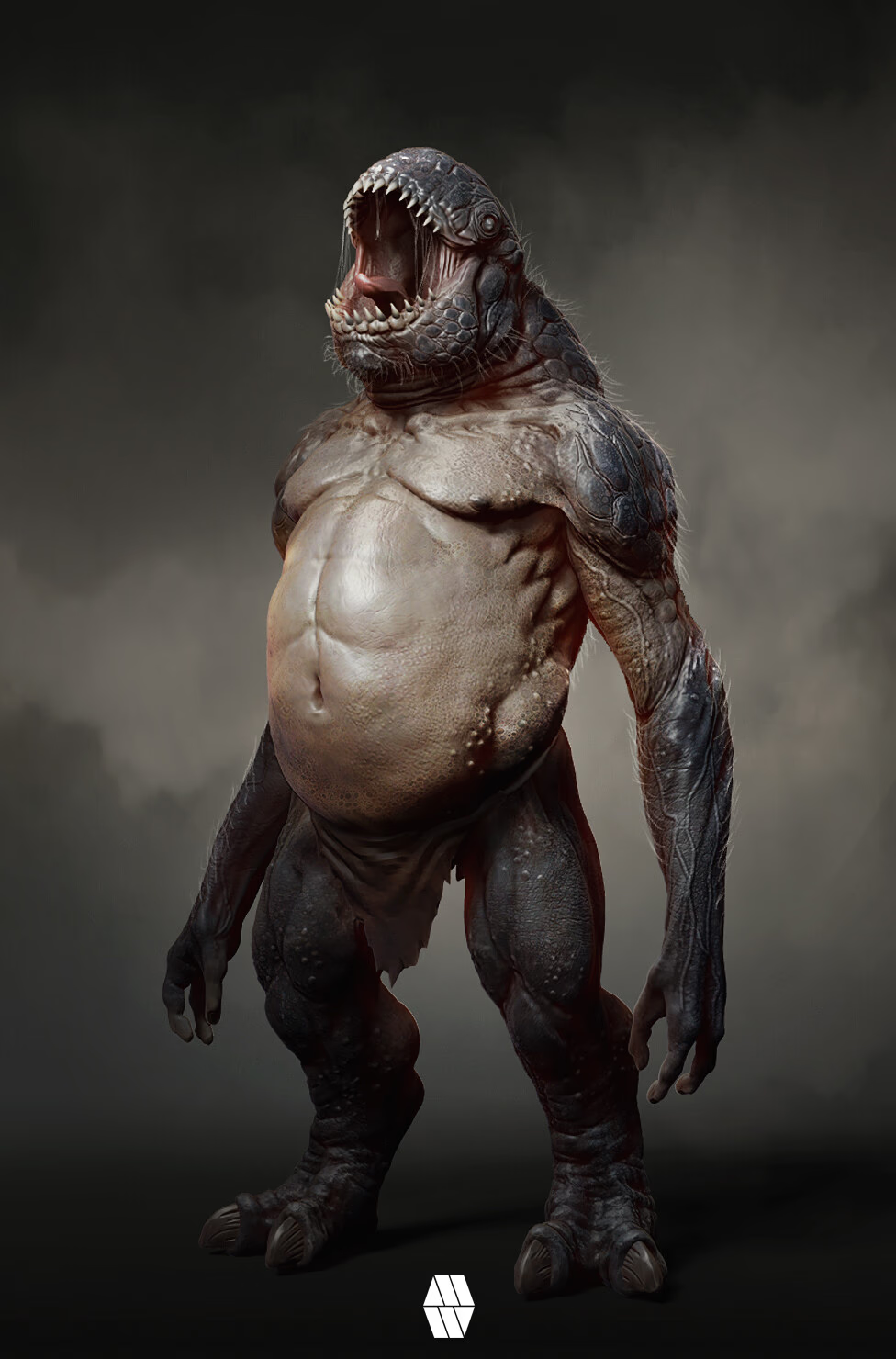
Demographics: The Mycend are a race of sentient fungi beings born from the aftermath of the Storm. They are not creatures of flesh, but of dense mycelial tissue shaped into humanoid and bestial forms. Their bodies are flexible and often damp to the touch, with outer layers that grow like bark or moss depending on strain and environment.
Each Mycend contains a core node, a thick knot of mycelium that functions as both heart and brain. This node links them to the greater network beneath the soil, a vast fungal lattice that connects every Mycend within range. Through this connection, they share impulses, emotion, and instinct, forming a hive consciousness that unites them. Yet they retain individuality, capable of personal thought, curiosity, and dissent, though never fully severed from the collective will.
Mycend do not reproduce sexually. Spores from mature members germinate in nutrient-rich decay. The new “child” Mycend often inherits faint impressions from the surrounding network echoes of memory, behavior, and instinct. They do not sleep but go through periods of dormancy wherein they root themselves in to draw moisture and ambient nutrients.
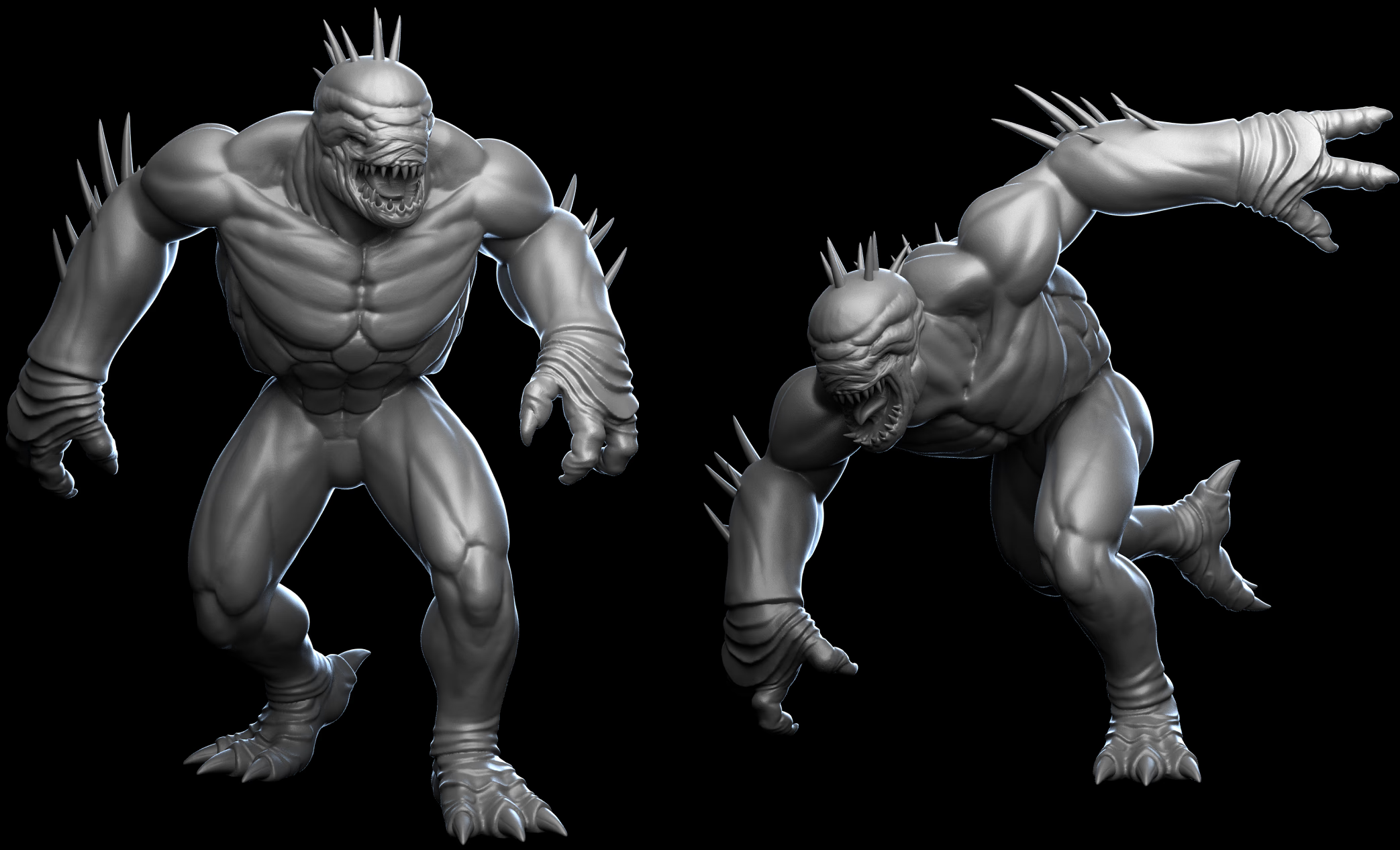
The Cantors are the architects and cultivators of Mycend society. Their role is to sing to the fungal sprawl. D deep, rhythmic resonance made through vibrating internal air sacs that influence the growth and direction of surrounding mycelium. These songs guide spores to form tunnels, living structures and nutrient lines. A Cantor’s voice is unique to its strain, allowing local colonies to maintain individuality while still serving the greater hive.
Physically, Cantors are tall and reed-like, their bodies ribbed with hollow conduits that act as natural instruments.
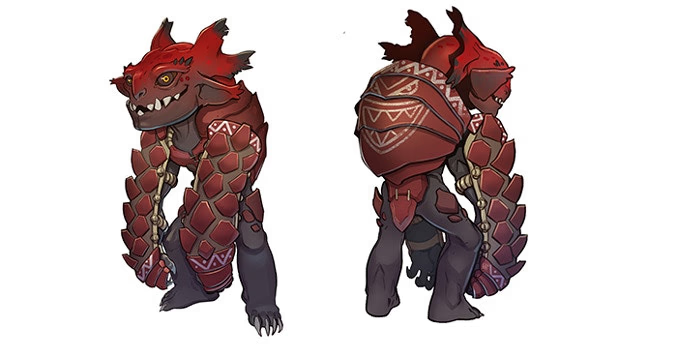
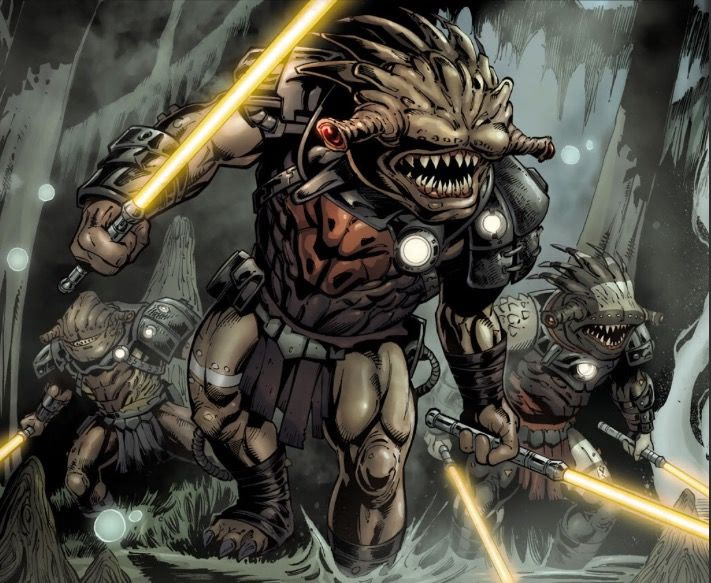
Huskborn are the defenders, soldiers and physical workers of the Mycend Collective. They are broad, thick-stalked, and layered in hardened chitinous plates cultivated from symbiotic bacterial colonies. These bacteria form a living crust that create a resinous film, protecting them from blunt force trauma or fire (to a degree). Huskborn aren’t the sharpest tools in the shed but they are loyal to the Collective’s will, responding instantly to the telepathic pulses of the Mycend network.
Reclaimers are small, fragile, and weirdly purposeful. They emerge from deep inside the hive, only when death is near. Drawn to decay, they dissolve into a spore-mist that consumes corpses, integrating neural remnants into their own mycelium. Once the process is complete, the Reclaimer speaks through the dead, a mimicry of the corpse’s voice and memories, lasting only a few hours before the host collapses into compost.
To the Mycend, this is sacred. The act of reclamation returns knowledge and experience to the hive, ensuring nothing of the world is ever truly lost.
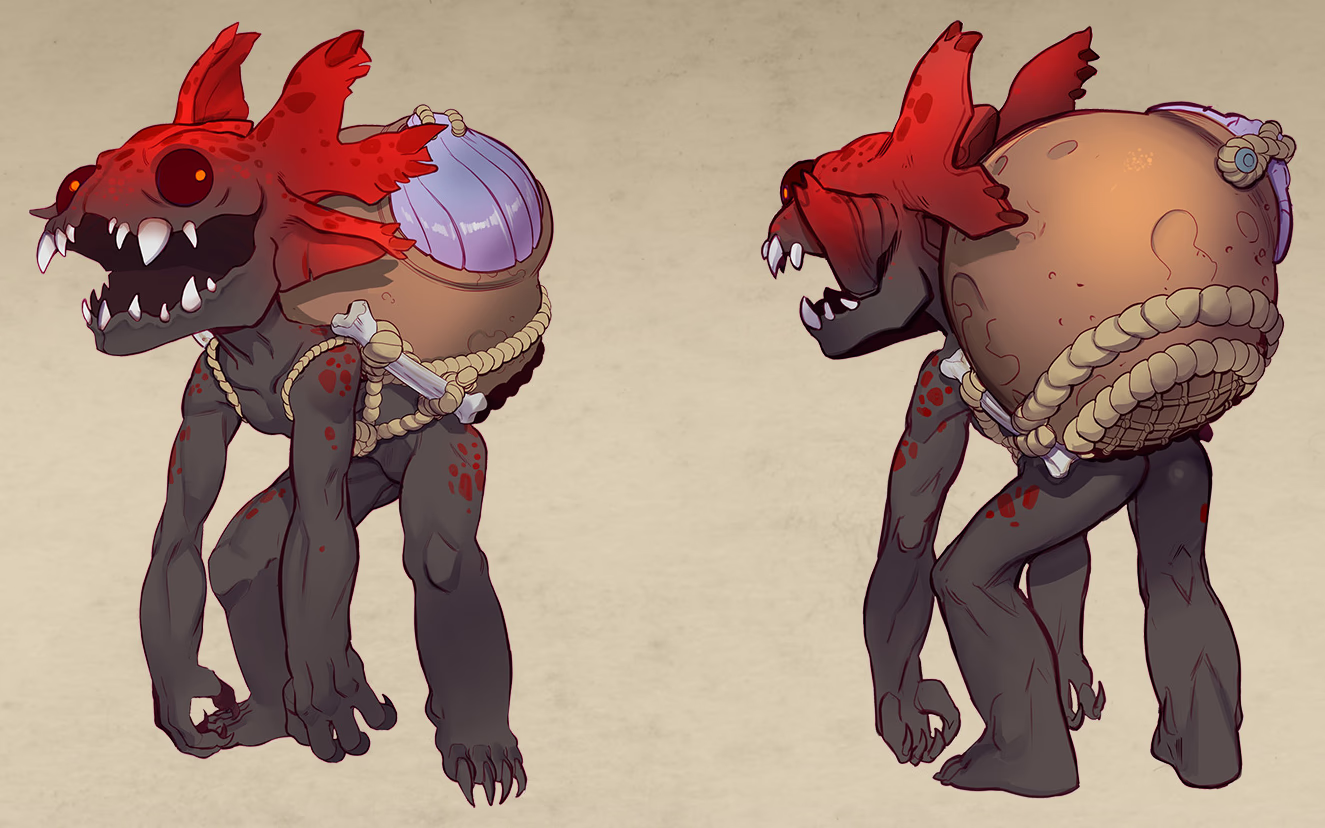
The Sporewardens are the scouting limb of the Collective. Slim with four legs instead of arms. They are able to sprint on all fours or weave through terrain at high speeds, similar to a warhorse. Their outer tissue is thin and dry compared to other strains, allowing flexibility but making them fragile. Beneath that surface lies a dense core of compressed spores and gas pockets that keep them light and buoyant.
Sporewardens serve two vital purposes: to explore and to expand. They range far from the colony to scout new ground and locate areas rich enough for the Mycend to root in. Once a new site is chosen, they release a controlled burst of spores, seeding the land.
When cornered or dying, a Sporewarden can trigger a full-body rupture. Detonating its spore core in a burst that spreads millions of spores across a wide radius. The explosion is like a choking bloom of green-gray mist that blinds, suffocates, and roots itself in any fertile matter it touches. Those spores may grow into new Mycend if the environment allows, or become nutrient beds for future colonies.
Sporewardens rarely have a full mind of their own. Their minds are tuned to the hum of the collective, but prolonged time away dulls that connection, leaving them twitchy, impulsive, and feral. Some never return, becoming rogue fungi that operate on primal instinct, spreading the Mycend wherever they go.
Juvenile Mycend. Small, rootlike creatures that crawl and cling rather than walk. They form bonds with mature Mycend and learn by absorbing minor impulses through contact. In many colonies, Threadlings perform cleaning or maintenance duties until they mature into a chosen strain.
The Remembrants are a strain of Mycend that grow from the remains of the dead, whether Mycend, beast, or humanoid. They are not mobile, and rarely sentient in the conventional sense. Instead, they root deeply into corpses and absorb residual chemical and neural traces, converting them into faint electrical pulses that ripple through the network. These pulses are interpreted by other Mycend as “echoes”, fragments of emotion or instinct that once belonged to the dead.
Physically, Remembrants look like clusters of pale, thin stalked fungi crowned with translucent caps that shimmer. When the wind passes over them, they hum softly.
Population:
Normal population size, just below 1 million connected organisms.
---
Description of Claimed Territory: The Mycend rule the Verdant Loom, a single, vast forest where trunks wear living growths and crowns host entire fungal cities. They live on the ground but as well, on branches and in the high hollows of tall trees, their galleries and spore-towers woven into the uppermost layers of the woods. From the ground the forest looks green and in constant motion and if one goes deep in the fores and looks up into the canopy and they'll find bridges, platforms of thickened caps, and entire neighborhoods blooming on limbs and crowns.
The Verdant Loom is one great colony split into many visible groves, each grove centered on a Prime Voice that governs its immediate network, yet every grove remains threaded into the same mycelial web. Light, rain, and air carry scent and signal, so messages and impulses pass quickly.
History: The Mycend trace their origin to the aftermath of the Storm, that single night when the world of Aule was broken and remade. When the skies tore apart and the old powers vanished, the magic that once pulsed through the land bled into the soil, seeping into everything that grew. In the depths of the forests, vast colonies of fungi absorbed the lingering remnants of that dying magic. Where others perished, the spores adapted. Over the decades that followed, that once-mindless sprawl began to think. From countless filaments and spores, a new consciousness emerged. Slow, deliberate, and curious. The Mycend were born not as individuals, but as fragments of a single vast organism learning to understand itself. The first Cantors gave the collective a voice, and the first colonies began to take form among the roots and fallen trunks of the reborn forests. Though they know nothing of the old kingdoms or the gods of stone and flesh, the Mycend hold one truth sacred: that all things die so new life can begin again. The Storm, to them, was not destruction but transformation, the world’s great renewal, and their genesis.
Culture and Society: The Mycend live by the teachings of the Cycle of Rebirth. The belief that all things, from the smallest spore to the greatest god, are bound to an endless rhythm of birth, growth, decay, and renewal. To them, death is not an ending but a transformation, a shedding of one form so another may rise. Even the Storm, in their history, was not destruction but the world’s final shedding, the death that birthed life anew.
They do not build monuments or temples, their faith is woven into their lives. Every fallen tree, every corpse reclaimed by fungus is seen as part of the Cycle. Rituals among the Mycend are loud, music made by Cantors who keep the spiritual and physical balance of the colony.
The Mycend are naturally curious, drawn to understanding what makes the world what it is. They explore and observe, spreading slowly but surely, seeing new life as part of the same great Cycle. Violence, while not unknown to them, is never their first answer but when the Cycle demands it, they fight not out of the need of violence but necessity, knowing that even in death, they serve the renewal of all things.
Governance and Politics:
Every Mycend is tied into the mycelial web, the constant hum of the Mycelial Collective. The web carries impulse, memory, and consensus across distance. It unites thought, so all Mycend share instincts.
Each settlement each colony is organized around a single controlling node known as the Prime Voice. The Prime Voice is the visible point of authority for that colony. When The Prime Voice issues a directive, it drowns out smaller, local impulses; a colony follows its Voice as long as the Voice remains connected to the Collective and the colony accepts it.
How a Prime Voice is formed.
A Prime Voice is not a crown or an election in the human sense. It is a functional evolution. A particularly large, old, or densely woven node grows a thicker knot, its signals stronger and clearer. Over time the network draws more threads toward that node; the node’s resonance guides growth and behavior in a large radius. The colony recognizes that node as The Prime Voice because its commands are effective, its guidance produces growth, and because the Collective amplifies its pulses. In practice this looks like deference: impulses that once scattered tighten their rhythm around the Voice’s beat. Occasionally two nodes contend; the stronger, clearer resonance becomes The Prime Voice, or the colony fractures into two smaller groves.
Powers and limits.
The Prime Voice can: direct resource flows, order defensive measures, assign cultivation tasks, call Sporewardens to scout, and command Huskborn in battle. It can override individual Mycend impulses inside its colony. Its authority is operational, the Voice’s orders are followed because they are encoded in the colony’s living structure and because the network physically responds.
A Prime Voice is not absolute. Its power depends on two things: connection and legitimacy. If the Collective feeds the Voice and the colony’s mycelium supports it, the Voice’s commands propagate quickly and obediently. If the web is thin due to distance, damage, or environmental disruption the Voice’s control frays. If the Voice makes harmful or unproductive commands repeatedly, neighboring nodes and the Collective will dampen its signal; dissent grows and the colony may split or replace its Prime Voice.
Technology:
Architecture and settlement. Mycend cities grow among the trees, sticking to trunks and spreading through canopy networks of woven mycelium. Their homes are living chambers shaped by growth patterns, with walls that move and hum on their own. Bridges pulse faintly with slow sapflow, drawing strength from their roots below. Platforms are made from thick, fibrous growths that can bear a lot of weight, and the upper groves glow softly from colonies of light-producing spores.
Materials and crafts. Resin and hardened fungi form the backbone of Mycend workmanship. They shape these through controlled growth, compression, and fermentation. Each Cantor learns to listen to how material lives, a skill of touch, scent, and rhythm. Pigments come from cultivated molds for art.
Tools and weapons. Mycend arms and implements are grown, light yet durable, shaped through grafting and guided strain. Blades and hooks are grown along ridges of hardened resin, while hafts are made from flexible cords. Armor is layered from bark-flesh and hardened plates, fitted like carapace. Each weapon or tool carries the memory of its Cantor and continues to grow faintly throughout its life.
Medicine. The Mycend do not heal as other creatures do, they regrow. When wounded, their bodies create new fungal tissue to replace the damaged tissue, sprouting pale strands that knit together into living flesh. This process is not instant, nor without risk. Unchecked growth can twist or rot, so the Cantors tend to the wounded with song, guiding the regeneration into harmony. Their chants set the pace of growth, their touch directs where new tissue should spread, and their knowledge ensures the balance is kept.
They brew salves from rich molds and cultivate curative colonies that release cleansing vapors or sealing threads over open wounds. Nutrition itself is medicine; the Mycend consume fermented pulp and root fungi to replenish what has been lost, their bodies absorbing the spores needed to renew their form.
Military Overview: The Mycend have little concept of warfare as other races know it. Conflict, when it occurs, is seen as a disturbance in the natural rhythm, something to be corrected rather than pursued. Their only organized defenders are the Huskborn, towering fungal brutes bred to protect the colonies from beasts and wandering predators that stalk the forests.
Claimed Territory: The Northern Mountain ranges of the continent once were a cohesive whole. Stretching to the tip of the south and ranging all the way to the staggering monoliths of the Stor Sten. Then the great dragons attacked and crumbled much of it, leaving the lush woodlands barren and infertile to all but hardy scrubs. Then the Storm hit, and its wuthering gales turned mountains that once eclipsed the world in their shadows to pebbles. Its once solid landmass drowned in endless rain, turning a country into a dozen dozen peninsulas and islands that scattered across the sea. These days the mountains that remain scrape the clouds, but have no claim to their former heights of glory, but the people who live within them still lay claim to their ancestral homelands. Even if they have to build a few more boats then they would like.
On the plus side, they like fishing. Strange.
History: It is said that the Northern Dwarves were the first to be hit by that cataclysmic storm eons ago. In the age of the last great king, DRAK GNORRISON, when he rallied the great armies of the underworld empire to march upon elder dragons that had long terrorised our people and the world at large. It is said when the King's last roar of defiance matched the deathknell screams of the wyrm Dödare did they both echo the first howling winds of the Storm.
So the records say, for the world has changed. Long has the empire fallen to ruin with knowledge to never be reclaimed. We who were born of stone have become entwined with it in body and soul, and there will no longer be a great king. Merely hollow shells that reverberate the last expulsion of rage. Baying for blood and vengeance from an enemy that has no form, spitting out grudges and oaths that cannot be fulfilled.
Once proud and noble, the Northern dwarves are more barbarians now. Tossing aside their grand histories of grand machines and powerful runic magics to embrace drink and axe, wading into battles unasked and slaughtering a grand toll before they fall or disappear. Always seeking a greater and greater foe.
The modern day dwarf has lost much of the rage of their ancestors, enough to look out at the great world and see others rise. Perhaps with an eye bloodshot with anger, or one that gleams with the old riches of their holds and the cataloged knowledge of how they once plundered the under earth's riches
Culture: Simple is the life of a Dwarf. One spent in battle, drinking, or some combination of the two or preparing for such. Respect is earned from the biggest things slain or the highest quality ales, and few in between. There are still builders, and cobblers and farmers and all the things that a society needs to function. They are not ostracized or outcast, but the type of folk that find solace in such tasks tend to not be the kind that prefer to reside with the wider society, and the wider society in kind are content to thank them for their work and let them go about their soft ways.
Governance and Politics: The average dwarf has little care for political Concerns. The king handles mostly everything and all follow his order. Even the few scattered clan heads rarely do anything beyond voice the occasional concern of the people, concerns that are usually valid enough to be acted upon by the King.
Technology: If there is one facet of the Northern Dwarves that never quite faded, was their craftsmanship. Sure they lack the grand forges of yesteryear, but metal and stone are theirs to craft. And they prefer the more simple things now. No longer do they build golems that border on magic with only gears, or great war machines. Now they have a good axe and sturdy armor, for those who wear such things.
Though, they have not neglected such basic things like agriculture or medicine. No dwarf wants to be hungry or miss something over the sniffles. Even if their plantations tend to have a more unusual underground tint or food have a touch more gravel then the softer races might find acceptable.
Military Overview: In truth Stenrester has no properly organized military. Most dwarves like to fight, are well trained, and are in general tenacious bastards. They are quick to organize when called, and fight like brothers with a lifetime side by side.
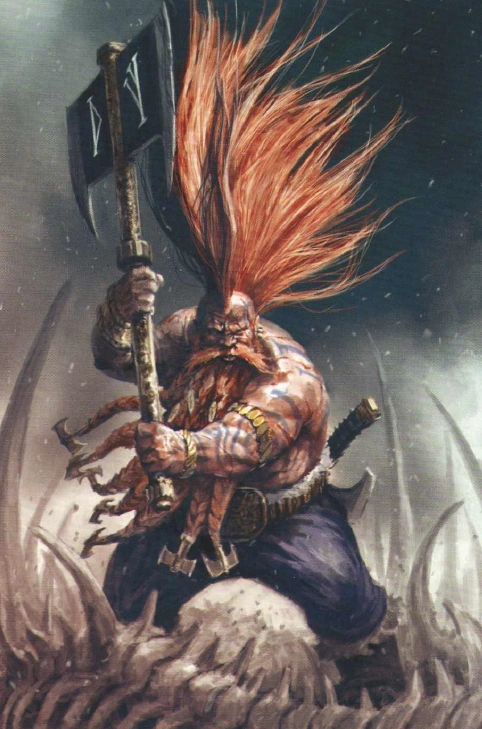
That speaking, the average ‘soldier’ has but the strength of arm and a sturdy axe, hammer, pick, or some other weapon. They are barechested with towering hair and stylized beards. Yet this is not the pure detriment that would plague the softer races for a dwarf is literally harder. Skin like stone and bones like iron with breath that chills the air. They are hardly impervious, but many a blade and claw has found itself chipped with only scratches to tell of its wound.
On the other side, the few dwarves who go and wear things like plate are juggernauts on the battlefield. They are as close to a walking fortress as a footsoldier can be, slow, unstoppable, and with voices like avalanches. Few are those who wear such armor, many see it as cowardly and balk at the thought. After all, this is a people who had to have a kingly decree issued to wear pants to battle much less proper armor. No, outside of the Kings Mountainclad elites and the strange smith trying out their work or dwarves who are truly out to make sure something is killed, the most one would see is decorative bands of metal or leathers.
It would be a chore of great foolishness to truly rouse the dwarves of Stenrester to true war. To stoke the old flames to such a degree would be enough for them to prove once more why they were once lauded as the lords of war and machine, even if their old constructs are lost and the new ones are barely an ember. It is still an ember from a fire that once singed the world.
Additional: Deep within the northern wastes lies the frozen death, Dodar Kalla. The last spawn of Dödare, that terrible dragon whose breath froze the seas and mere presence caused the permafrost that, to this day, leaves much of the north a wasteland. She is vengeance, seeking blood in much the same way the Northern Dwarves do, only hers is focused. Year after year does she raid our border, generation after generation does the King head into the endless blizzards that surround her den and fight for days only to fall to her fury.
Dodar Kalla is the blight of the north, yet it has been an age since a king has fought her and an age since she attacked. For the last king fell ill at a young age and carried the marks for his whole life, ultimately becoming a scholar king that cooled the simmering heat of the dwarven soul instead of a warrior like his lineage. Now the realm is left in an uncertain limbo, for none can expect what she will do next but all know that our King will stand ready to repel it.
Demographics: 98% human Free population: 89% Slave population: 11%
Population: 3.6 million
---
Description of Claimed Territory: Much of Ördûn’s western territory is arid or outright deserts, with lush greenery around oasis and rivers, while the eastern lands are almost entirely steppe, with a thin band of prairie close to the northern mountain range.
History: Ördûn as it is now is a mere shadow of the splendor of its past self, battered and devastated by the Storm, and almost completely broken. Yet, in the ancient capital of Unar, the embers of the empire survived. The first Shor-Khârai, the High Dragon Lord, took power by force of arms and began a grand campaign to reunite the unrecognizable Ördûni heartlands through diplomacy and, most often, at the point of the sword. It took three generations to subjugate once again the tribes and cities of Ördûn under the banner of the new order, the order of the Dragon Lords.
Culture and Society: The great golden cities of Ördûn thrive on mineral wealth extracted from the earth by thousands of captive labourers, as well as the trade of spices, silks, gemstones and slaves, and countless other valuable commodities, while the pastoral nomadic tribes of the East frequently raid nearby regions for captives and riches.
The Dragon Cult is one of the most powerful entities in the empire, second only in authority to the Dragon Lords themselves. The worship of Oran-Shor, the Sun Dragon, is present throughout the country and greatly influences politics and everyday life alike. According to Ördûni religious beliefs, the Storm was caused by Oran-Shor out of anger and disgust for humanity’s weakness, and was only stopped by his wife, the Moon Goddess, who pleaded for the life of humans and a second chance for them. The cult of the Moon Goddess is very popular among the lower classes of the empire as a benevolent guardian deity.
---
Governance and Politics: The empire is ruled by the Shor-Khârai as an absolute monarch. The old feudal system which existed before the storm was done away with, and a centralized bureaucracy took its place. Instead of independent feudal lords, the nobility is now a pyramidal bureaucracy with the Dragon Lords at its very top ruling over governors and administrators.
While noble titles may be granted by the Shor-Khârai, the title of Dragon Lord is restricted to a select few families in the empire. Ördûni aristocratic hierarchy is as follows: Shor-Khârai: The High Dragon Lord, ruler of Ördûn. Shor-Khâr: Dragon Lord, heads of noble families and individuals of great importance and power. Shor-Khârin: Lesser Dragon Lords, often city governors or commanders of specific military branches. Khârai: Great lords of significant importance, but who are not part of the Dragon families. Khâr: Lords of middling status, who perform all kinds of administrative work and management of smaller estates. Khârin: Petty nobles with little power and authority of their own. Many are junior military officers, small estates owners, or form their own bands of adventuring warriors.
Technology: Ördûn is on par with the other advanced peoples of the world, possessing advanced metallurgy and ships capable of sailing the ocean coasts. The architectural prowess of Ördûn’s palaces, temples and high walls are a testament to their stonecraft engineering.
Dragonfire is perhaps Ördûn's most well-kept secret; this extremely flammable compound is produced in small quantities by Dragon Cult alchemists through a process known only to them. This viscous substance is almost impossible to put out once lit on fire and only the most deserving of Ördûn's warriors are granted the honor of wielding it for war.
Military Overview: It is military might that allowed the Dragon Lords to take power, and through it Ördûn rose from its own ashes. The Golden Host and the Bikhaan Horde are the two strong hands of Ördûni armies, as the former constitutes a hard core of well-equipped disciplined soldiers clad in glimmering bronze, while the latter provides skilled horsemen and hardy light infantry.
Dragon Legion: The Dragon Legion is a semi-professional force which garrisons cities, forts and outposts, and forms the core of Ürôni armies. Although their equipment is standardized, the cost falls to each legionary. As such, every Ördûni household is required to provide equipment for a number of legionaries according to their wealth. A rich merchant could be required to pay for dozens of soldiers, while several poor farmers may pool their limited wealth to equip a single legionary.
Legionaries lead normal civilian lives and are required to train for a minimum number of days per year. This allows the Dragon Legion to maintain only a small number of troops to police Ördûn’s territory and enforce the rule of the Dragon Lords in times of peace, while being able to quickly enlarge several times over should the need arise.
Urd Shor-Mairan: Medium infantry. Scale armor, spears, swords and shields. Kâtal Shor-Mairan: Crossbowmen. Scale armor, crossbows and swords. Innas Shor-Mairan: Medium cavalry. Scale armor, spears, swords and shields.
Temple Warriors: The Temple Warriors are the Dragon Cult’s own soldiers, charged with the defense of temples and called upon in times of war in Oran-Shor’s name. While few in numbers, their fanatical zeal inspires their allies and unsettles their foes, and the Cult’s power and influence grants them access to the highest grades of arms and armor.
Inurai Arunan-Mairan: Medium infantry. Scale armor, greatswords. Ûraian Arunan-Mairan: Medium infantry. Scale armour, swords, dragonfire bombs.
Golden Guard: They are the elite bodyguards of the Dragon Lords, professional soldiers who dedicate their life to service and martial valor. In battle, they act as decisive reserves and trump cards, combining great skill with the best equipment that money can buy.
Urdai Mairanai: Heavy infantry. Heavy scale armor, pikes, swords. Urd-othiai Mairanai: Heavy infantry. Heavy scale armor, halberds, swords. Ura-kâtal Mairanai: Archers. Scale armor, longbows, swords. Innas Mairanai: Heavy cavalry. Plate armor, lances, battleaxes.
Bikhaan Horde: The vassal Bikhaan tribes of eastern Ördûn possess the best riders in the empire and provide valuable auxiliaries in the form of horse archers and vast regiments of light footmen.
Urd Bikhaanan Mairan: Light infantry. Spears, shields, javelins, various sidearms. Kâtal Bikhaanan Mairan: Archers. Short bows, various sidearms. Innas Bikhaanan Mairan: Light cavalry. Spears, shields, various sidearms. Innas Kâtal Bikhaanan Mairan: Light horse archers. Recurve bows, various sidearms. Innas Bikhaanan Khâran Mairan: Medium horse archers. Lamellar armor, recurve bows, swords.
Government Form: The Aris Alk Shasot or Lordships of Shasot is an elective monarchy where the many Ari of the realm's many underground cities convene and elect a grand lord to rule over the vast domains of the Shasot. Due to the Lordships being quite desperately separated by caves and under continents. The life of many of them even being widely different resulting in different cultures ruling over different small kingdoms and city states. Stretched over several nations
Demographics: 92% Dugar: Children of darkness it is said that during the cataclysm many fled to the underground to hide from it. But instead many became buried and they found out even in the underground the storm wrecked itself as canyons would be carved and in that madness it changed then. The Dugar were born elves turned into different beings in the underground by the storm and by their environment. Their skin became obsidian colored, but also rougher and coarsers, taller than most at three meters,their heads can turn 180 degrees and they see quite well in darkness with night being day for them in their vision.
8% Oajai: Like the children of darkness Oajai were also jailed to the underground and the cataclysm changed then too. But unlike the Dugar the Oajai are of unknown origin found primarily in the southern mountains they are a race of giant sapient spiders the size of a horse all the while they maintain minds of man. Once on occasion it is known that an Oajai may be born a Dugar, Oajai hybrid making many believe both are related. Something that both peoples come to believe.
Population:
4.9 million divided between
Chwuq 2.4 million
Na’el 1.5 million
Dulojav 800 thousand
---
Description of Claimed Territory: Up to you. Try to match the map or not?
History: When the storm hit many fled underground some sought safety of underground shelters built by those with means as subjects or as those men and women with means. While others fled to caves instead the storm was said to tear a hole through the underground and create canyons close then and open great underground caves those caught by it were said to die by in droves but thanks to being unable to flee anywhere they were mutated by its power without much hope many were said to pray to any being that could help then those who fled were eaten by it and spit out in a different underground. Many were said to pray to any being for help and across the caves only one was said to answer it and called the storm to cease.
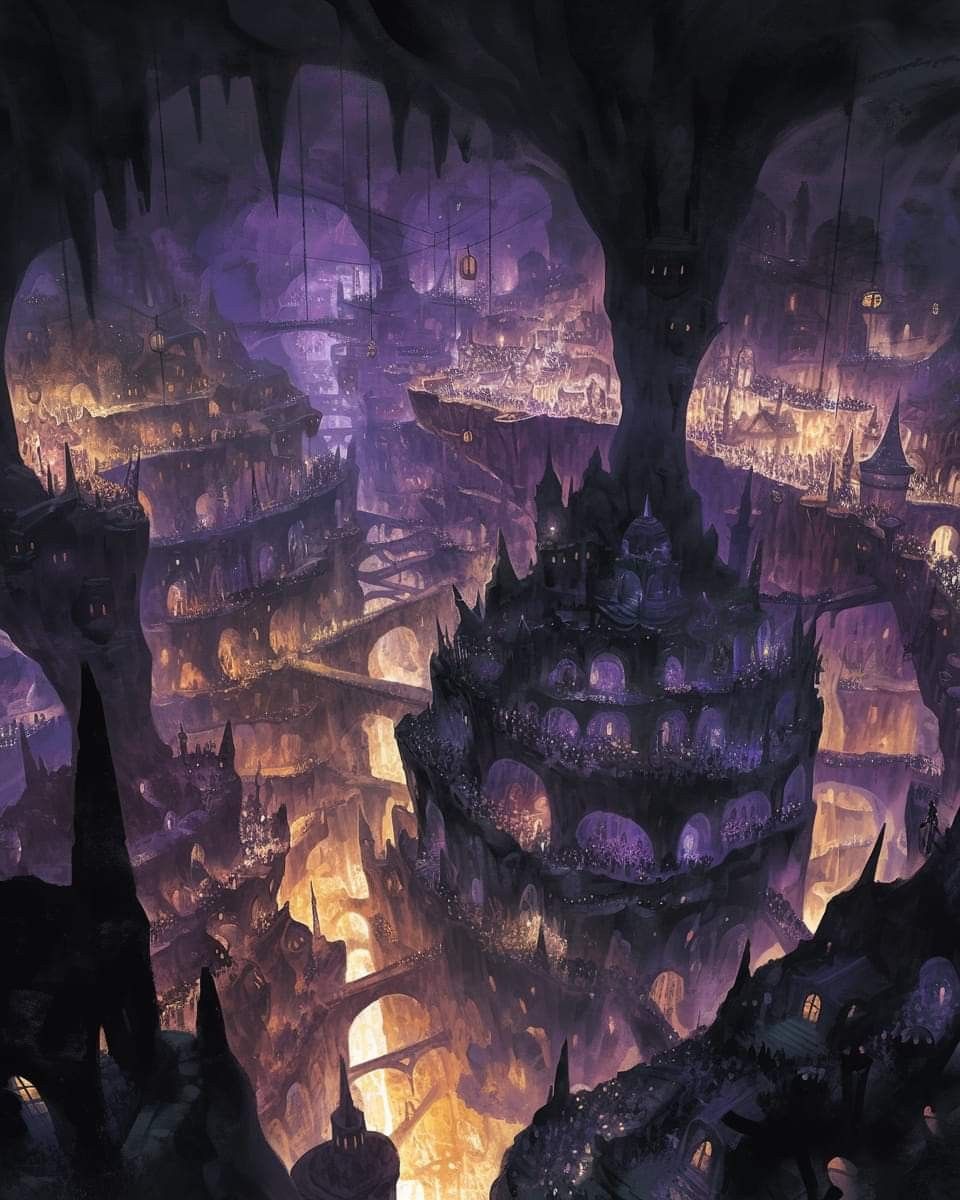
In the aftermath the survivors found themselves in a different environment caused by the storm. The underground was expanded and some areas became large abysses or giant sprawling cave networks. While some were barren, others had life of their own in the form of giant mushrooms, strange animals and bioluminescent plants. For a long time it is said that survivors build their homes in the great underground unknown to the ongoings of the surface with some believing it all to be dead and blasted. All the while they worshiped the deity that answered their prayers Nal’var. Mother of darkness and widely believed to be the goddess that saved them from certain death and thanks to missionaries and grand crusades by ambitious men her word was spread through the underground.
At first the first towns were carved into the cave walls and in places where mushroom trees existed the new homes were made of its wood.
Over time these towns would evolve into petty kingdoms and city states the exploration and mining expanded some into great cities and soon enough the tunnels and passages led to other caves as new cities and towns were built by those seeking new lives in other regions spreading over the underground into the lands beyond. In some of this kingdoms war became a practice amongst this tunnels for resources and supremacy of kings, lords, the bourgeoisie or the priests that ruled these cities. During these expeditions the Oajai were found just like the Dugar they were separated by caves and changed by the storm and with it made their settlements underground during these expeditions the southern cities of Dulojav were founded the newest and furthest of the expansions.
The surface for a long time became a mystery until tunnels and mining operations led back to the surface under mountains, hills and plains the Dugar and Oajai found the surface recovering just as the underground and over time fortresses were built in the surface at the entrance tunnels that led to the great bellow and with it the beginnings of trade between surface and the underground spawned together with conflicts in some cases.
But soon times changed when the great council began in the year 305 A.S the priests of Nal’var of the city of Dulshadar and the cities of Orao, Niksa and Uaee gathered to foment the creation of a new body to lead the the peoples of Dugar to prosperity. The lordships of Shasot was soon born named after the great continent underground the crusades, conquests and memberships of the lordships succeeded in uniting the clans near Chwuq the northern mountains and while others remained independent the Aris alk Shasot became the the dominant power in its lands under the wise leadership of Tali’na first queen and while succeeded by five others ever since the Aris continue to prosper under its current election of Ari into positions of rulership peace reigns but still tension boils under the coalition that was born many years ago.
Culture and Society: The region that encompasses the Shasot is incredibly varied culturally south and north having many distinctions and even the concentrations of Chwuq and Na’el are equally diverse. In the lands of Chwuq in the far cold north where surface fortresses and underground cities lay many of the clans were divided and with it warfare was quite common resulting in the forging of bigger kingdoms when the Aris Alk Shasot was formed the region became a heartland of sorts for many as peace prevailed while many still migrated outwards. Generally more spiritual than other lands that make the Shasot the region also is famous for being militaristic to a larger degree. While religious festivals and arenas are common to find in the region of Chwuq, the cuisine is said to be salty with the usage of salt in their culinary not only that but also heavy usage of meat.
The lands of Na’el is said to be a land of emigrants, the underground lands of Na’el are massive allowing for large agricultural regions thanks to that it has resulted in the rise of a feudal aristocracy of sorts. The region was consolidated by noble queens and lords, the agriculture and more untamed wild resulted in a caste system of sorts unlike the Chwuq the people of Na’el while spiritual put more importance in communalism and in a tribe celebrations generally go in hand with the birth of family members or the passing. Together with the rise of a new generation all under the protection of their lords. closer to the lands of Chwuq many customs there also make way to Na’el thanks in part to the trade routes that exist underground. Culinarily speaking the land of Na’el is famous for the making of decadent and delicious foods in part of the use of trade and the usage of vegetables, mushrooms and glowberries of the underground. The voyages to the surface also are found with suspicion thanks in part to conflicts with surface powers. Like Dulojav the land also slowly became a home for Oajai and the land has a growing spider silk usage in their fashion.
To the great south lies Dulojav more isolated from its siblings yet still brought to the fold the land became a refuge of the more unorthodox of their kin. More explorers of the surface and the unknown and in some ways heretical in the worship of spirits. In the voyage to the southern caves they found the Oajai the lands were their home and thanks to the arrival of the Dugar the lands began to change. Mining, exploration, expansion and coexistence resulted in the creation of the culture that inhabits the lands. Merchants and traders but also freedom seekers the cities rarely ruled by one single ruler. Same for a lack of religiosity especially as the surface fortresses and settlements increased the region became linked to surface trade. Consequently the people of Dulojav instead of speaking a dialect of the language of Dugar they began to diverge into a different language. In festivities it is said that carnalism and expression are common in celebration of the day of migrations, arrival and the day the storm passed. Materialism runs in the lands instead of religiosity to the tension of the Shasots council. Despite these differences the people of Dulojav still see the north with siblinghood. Being a land of textile, spider silk and colours and spices that flow to entice many. Culinary the lands of Dulojav thanks to access to many ingredients, and the lands own food production it resulted in a very spicy mix that is said to cause many mouths to catch fire.
The main religion that dominates the society is the worship of the goddess Nal’var the Mother of darkness and believed to be the being that protected them during the ravaging of the storm. The cult is dominated by matriarchs who oversee and rule over regions helping priests and delegating the paths of the faith in their region. Occasionally they gather to discuss matters of importance in the holy city of Niksa to debate theological matters of importance. AS for the many followers the religion is one of spiritual embrace and worship with sacrifices of wine and grain in altars and chants of prayer to her for protection and guidance. Dedicating their lives to the being that was responsible for saving them. She was the mother of darkness, the one who ruled over the underground as the only and sole queen.
---
Governance and Politics: The government that rules the underground is one of an elective monarchy albeit more of an elective confederacy. Thanks in part to the disconnected and often quite diverse spread of the Shasot the government had to accompany this, initially being more centralised as its power spread and its centralisation diminished to accommodate the many peoples it began to rule. Initially any Ari could vote but due to the sheer amount of Aris in the Shasot the role was passed to elector Aris that should vote in regions best interest. Taxes are generally funneled to the great ruler of the Shasot the great lord. Not only is he or her bestowed the taxes of the realm but also the right to call arms of its members in defense of the realm. Over the years one dynasty was the sole holder of the title but after its dying off another dynasty came to hold the title and now it also died with a third dynasty possibly beginning to rise.
Technology and Magic: The Shasot are quite advanced as a society but unique in specialisation having to adapt to the underground and from its environment they learned to carve great cities out of stone, advanced metallurgy from its many metals and locating rare metals across its chasms. Their ability to work and farm in these lands is also quite remarkable knowing where to plant due to the underground conditions. They also are considered good alchemists and metal workers thanks to the conditions and strangeness of their environment. They learned how to use the land's resources to the best of their ability from rocks and what they do to oils and powders.
Military Overview: (This is the space to talk about any offensive/defensive capabilities you have. Keep it in touch with the post-apocalyptical world they came from. After all, everything was pretty much erased.)
Centuries ago, the gnome jewel-city of Glimmerdeep stood as a heart of world trade — a radiant metropolis built atop veins of sentient gemstones known as Heartshards. These stones powered everything: floating caravans, crystal beacons, and magical forges that sang when struck. Then came the Storm — a cataclysm that severed magic from the world. The Heartshards dimmed overnight. Rainforests erupted from the earth, swallowing the great mountain metropolis of Glimmerdeep in a matter of hours.
Many of the surviving clans did so by setting adrift into the Northern ocean via large rafts forged from the skeletons of their once great city. Generations later, the merchant families of the League of Seven Ledges have returned, guided by explorers and profit-hunters. They found their once-shining homeland transformed into a tangled wilderness filled with danger and strange life — the gems of their lost riches festering beneath moss and root. Through a series of tepid alliances with the merfolk, lizardkin, and mutants who now steward their once great homeland, the League is seeking to reestablish their hold on this once verdant land and return its glory through industry in the absence of magic.
Culture and Society
Modern halflings are a people of commerce, cunning, and conviviality. Decades of exile turned them into master negotiators and wandering traders. Every halfling carries a ledger as proudly as a warrior bears a blade. In the jungle however, this cheerful pragmatism has hardened. Expeditions live in caravan-trees — elevated encampments built on massive roots — and society is divided into Merchant Clans, each named after one of the ancient gemstones: Rubyroot, Opalcrest, Sapphirevine, etc.
Their culture prizes adaptability: some halflings have even adopted the customs of the native peoples: painted faces, the taming of cassowaries and wood fowl, shamanistic rituals with qurestiobale yields. Yet tension brews — many traditionalists see these jungle-born mutants and their primalism as an obstruction to the progress and restoration of the Glimmerdeep.
The League of Seven Ledges rules by contractual oligarchy — seven merchant houses form the governing council, each controlling a vital aspect of trade: spice, gem, timber, alchemy, beasts, crustaceans, and stone. Every major decision must be signed and sealed by at least four ledges, creating a delicate balance of influence and infighting.
In the jungle territories, however, governance is far less stable. The League has signed Fragile Accords with local powers: The Cassowary Clans — mutant halfling nomads who guard the inner ruins and trade exotic jungle produce.
The Mirebound Chorus — merfolk cultists who claim to hear the “drowned heartbeat” of the old magic beneath the swamps.
The Saurak Tribes — lizardkin swamp-lords offering protection in exchange for metal tools and salt.
Each alliance could fracture with a single misstep, and the League’s envoys often act more like gamblers than governors.
Technology
Without magic, the halflings have turned to clever mechanics and biochemical innovation. Their small caravans run on sulfurous steams and fungal fermentation; their lamps glow with bioluminescent algae in delicate suspended aquariums. Jungle beasts slip their small riders swiftly through the dense terrain. Complex traps keep the great monsters of the forest and bog at bay. With their diminutive size and hostile environment, these intricate traps are often the only source of meat hungry fingers; though many are lucky to find the slime of mollusks or crunch of insect carapaces as an elusive treat. While they yearn for a mind scratching solution to all challenges, the sufferings of jungle life often make the traditions of subsistence more practical.
Military Overview
The halflings maintain a mercantile militia known as the Gilded Wardens, trained more for defense and intimidation than conquest. Their forces rely on speed, terrain mastery, and psychological warfare — bright banners, loud horns, and dazzling gemstone mirrors that flash through the canopy. Each clan funds its own trade-guards and artifact hunters, often leading to skirmishes over discovered ruins or gem caches.
Their allies contribute irregular troops and are the main function of raiding parties, their semi-autonomy and mercurial interests serving as half-legitimate political deniability:
for shock and scouting. Their shamans may not find many converts, but they certainly make for harrowing bedtime stories.
who strike amphibiously from the cool depths of seas and rivers.
who serve as more conventional brutes and raiders. Their cold blooded rationality often leading to practical yet undesirable outcomes for captives and their homelands.
Though fragile, the combined host is unpredictable and formidable — a coalition held together by coin, necessity, and their own incentives for restoring Glimmerdeep’s lost glory.
Government Form: Kratocracy. Before the storm, the elvish society of Tacenie had reached such heights of magical supremacy that living in an essentially post scarcity society had eroded most forms of hierarchy since it was no longer needed to sustain society. When Tacenie fell however, this meant that no authority was recognized except the one you could force on others with the threat of violence. Now, authorities rest in the hands of petty tyrants who come and go with a Supreme Tyrant maintaining loose dominion over all of Nur Tacenie.
The Tacenian elves maintain a similar dominion over their thralls, though since most races are far less long lived than them (and far less prone to violent conflicts), they often elect to designate a person's lineage as their proxy for rulership, though these families are often reminded that they only rule by the whim of their elven masters.
Demographics: Tacenian Elves used to be immortal magically attuned 'demigods' by their own claim, but the storm put an end to this. They are still by most norms superhuman in most aspects, retaining the magical alterations they made to their bodies a long time ago giving them superior strength, speed, intellect, agelessness, health, regeneration and other things. Another unfortunate alteration that was common before the storm was infertility, as in their hedonistic lifestyle it was considered simpler to keep the possibility of conception at 'off' until they were sure they wanted to procreate. Thus the legacy of Tacenie is doomed to die as its members perish in battle or from a form of cancer that magic would have trivially cured before it all went wrong.
Population:
-60.000 Tacenian elves. -1.100.000 Thralls of all species, mostly humans.
---
Description of Claimed Territory: Large swats of lands above Ordun and the bottom left Aris enclave?
History: The elves of Urionmar had begun as a land of warrior-mages, fighting for its survival and glory until such a point as where they felt they stood above all others with the terrible powers they commanded, which had reached the point where food, clothing, housing, anything they could want really, could be provided with magic. From then Urionmar turned inward, leaving the land itself behind as they took to the skies in their flying city of Tacenie. For many years the elves who had conquered mortality itself lived in hedonistic pleasure, that is until the storm.
When the storm came, Tacenie fell. Millions died that day and those left would struggle to survive in its ruins, fighting for scraps of food and dying to starvation. Magic had given them everything and without it, the most basic things like agriculture had been forgotten long ago. They tried to rebuild but simply put, every Tacenian had been born a lord and refused to lower themselves to do base manual labor, they all judged themselves too good for such things! It was all work for... others. Even before the storm had completely subsided, the remaining Tacenian, still blessed with superhuman bodies and a martial culture, began braving it to find thralls who could do the labor they couldn't or wouldn't do.
When the storm finally ended, the surviving Tacenians had taken a liking in ruling over others and decided to ride out into the world. For some it was about the dream of rebuilding their decadent lifestyles, for some it was about never needing to ever have to serve others ever again as they were forced to do during the storm, while for a few the thrill of battle, conquest and domination proved a far more intoxicating lifestyle than the hedonism of the previous era had ever been.
Thus was reborn new 'Nur' Tacenie.
Culture and Society: The easy life of the previous age of magic muddled what Urionic culture looked like, but one thing that was perhaps surprisingly retained and even strengthened was its martial aspect. Simply put, when an elf can have anything it wishes with a magic command, the only competition that remained was not material, but martial. Pride, status and social standing went to those who would fight and win. Magic may create more wondrous crafts than any experienced hands might, but to best another elf could only be achieved through one's expertise! Plus, with physical magical enhancement, everyone had the potential.
Conversely, another trait that this lifestyle maintained was the taboo about killing other elves. Being without end, an elven life thus had infinite value! The act of killing an immortal was and even now is supremely rare. In the olden days, another reason was that it was seen as poor sportsmanship: if you vanquished an enemy in a duel then it was only fair to allow him to learn from his mistake, if you didn't it was an admition that you feared he would best you next time. Today, it's also another thing... Tacenians fear death. Against other species they may seem like they embrace it because they are too prideful to surrender, but between each other, to show mercy on those you vanquished is a silent promise that should the tables turn, you will receive the same mercy.
The legions of thralls the Tacenians command also have their own societies and culture, but they all have in common how they must live under the boot of their overlords. They deal with this differently, some see the Tacenians as gods, others as their feudal lieges, it mostly depends on what Tyrant rules over them. While some have quirks that demand special considerations from their thralls, most are distant and simply expect tributes to be delivered to their palaces and castles.
---
Governance and Politics: No warrior can tyrannize a nation alone. At the highest spheres of power, the Supreme Tyrant rules from his throne in the ruins of Fallen Tacenie by coalition based on what rights and privileges he can insure for those loyal to him. Back in the days of the storm when they were mostly closed to the world, it meant balancing the feuds and egos of an army of vainglorious warriors, but now it is widely seen as a much simpler solution to bargain with the various Tyrants with the resources of Tacenie's neighbors rather than its own, so the role of Supreme Tyrant is in great part that of supreme warlord, with the longevity of its rule based on how much land, thralls and riches he can give to his supporters.
Underneath him are the individual tyrants, elves that rule over others with ties of friendship and common interests. The former might seem curious, but an elf who finds his Tyrant too... well, tyrannical, will often defect to one he finds more agreeable. Tacenians are in constant competition with one another, but since to kill another immortal is the ultimate taboo, in victory or defeat it is often the case that nothing is personal. Said Tyrant will often rule from a palace where he will live with his more social warriors serve as his companion and retinue, though there are always some warriors who dislike the company of their own and will live as petty tyrants of thrall settlements, often enjoying the social aspect of being the most powerful person in a given area. Some tyrants likewise rule over others and are called Overtyrants.
Under the elven tyrants are the thralls who are ruled either by elven warriors or by their own leaders serving as proxies for the tyrants. These will often be warriors themselves due to the preference of the Tyrants, but their main duty is actually to produce tributes and goods for their masters so said Chosens have great incentive in setting up structures that maximize productivity since they are not immortals and thus their elven masters rarely allow a thrall to live if they displease them.
Technology: Tacenie warriors fight with weapons and armor made from Tacenie steel, a magically enhanced metal with properties that make it vastly superior to all others but that can no longer be made and exists in a now very finite quantity. The ruins of Tacenie are being dug up around the clock to find the vast quantities of personal arms the population had, but every year there is less and less rubble to be explored and these weapons are often jealously protected by Tyrants who are hesitant to give replacements to their warriors when their old and overused weapons and armor eventually chip and break.
Otherwise the technology levels found in Tacenie land varies widely from places to places depending on the skills of the thralls that inhabit the lands. While others inovate, Tacenians rely on pillaging and enslaving their neighbors to bring innovations, and then again the only thing they care about often is exotic luxury goods that only benefit them while the thralls sometimes live like iron age peasants.
Military Overview: The military structure of Nur Tacenie is mostly feudal: The Supreme Tyrant who is the guarantor of elven lives against outsiders will defend his underlings for if he doesn't he is sure to be deposed by someone who promises he will. He thus calls on the subject Tyrant with the promises of plunder and the threat of punishment to come to his aid with his warriors and warband of aspirant thralls.
The core of a Tacenie Warband are the Brotherhoods, extremely skillful elves equipped with Tacenie steel weapons and armor who will often initially stay in reserve to enter the melee at a critical moment to break the enemy. A brotherhood is formed by a Tyrant and his warriors who know each other's fighting style completely and who excel at covering each other's weaknesses.
The main fighting force of any warband however are Aspirants and the Chosens that lead them. Chosens being the proxies of the elves ruling over the conquered people, they are tasked to educate a levy in the ways of war. Failure to deliver an appropriately trained and equipped levy often result in a Chosen being killed and a new one chosen from the aspiring men he brought with him.
Tactically a Tacenie warband is a blunt instrument, it has significant focus on melee and often lacks the discipline to execute complex tactics, but it remains a fearsome adversary due to its warriors being individually extremely trained with sky high moral. The thralls are after all dubbed aspirants since they aspire to the many benefits gained by distinguishing themselves in the eyes of their elven masters for should they succeed, a share of the plunder, luxuries, concubines and the chance to become Chosen and rule their town or village is open to them.
Another trait that is often underestimated is the autonomy of the individual tyrants and their ability to make the most of said autonomy. A Tacenie brotherhood is often seen as just a bunch of tough, but also mindless vainglorious warriors, but nothing could be further from the truth. Tyrants are the veterans of hundreds of battles and through this experience have come to show the ability to 'feel' the flow of battle, what unit is strong, and which one is about to break. They may be a bunch of frenzied warmongers, but in the middle of a battle they tend to find themselves at the exact place where a bunch of frenzied warmongers can do the most damage.
---
Additional Info: (Anything else you want to include that there isn't a spot for up there.)
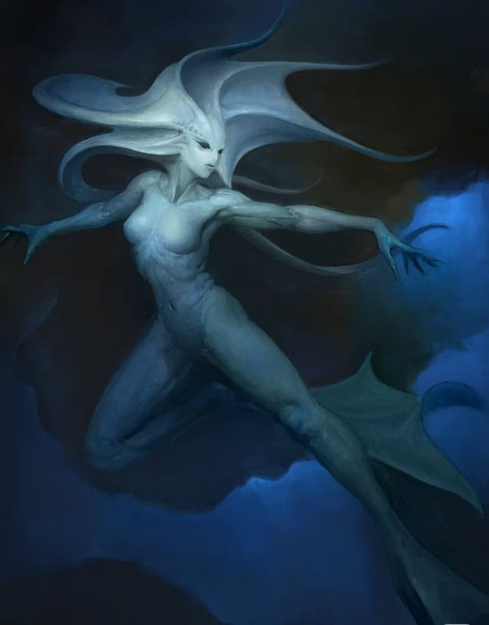
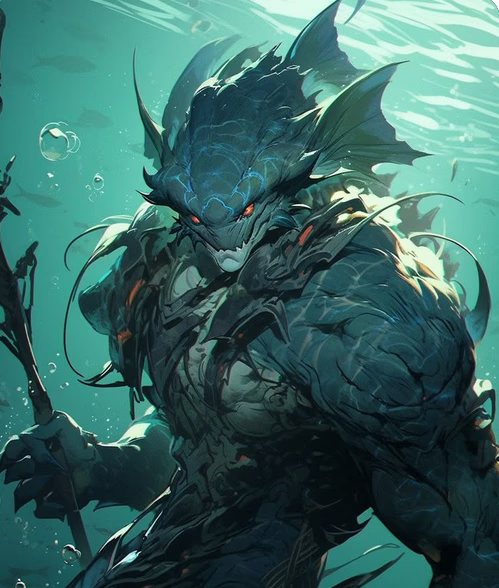
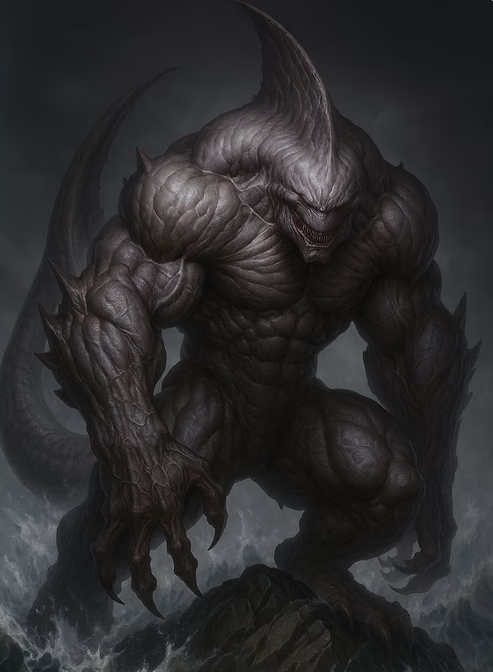
Grogar, a collective term for several connected subspecies of savage merfolk that had long left the need of the depths for life on the surface of Aule.
Population: 3.4 million
---
Description of Claimed Territory: The Eastern territories are mostly steppes and a pristine coastline. further north are prairies close to the mountain range. The Western Territories are filled with grassy hills, forests, and marshes.
History: Even before the Great Storm, the Grogar were a race that had long plagued the world of Aule. Little is known of their origin, other than tales and legends of their great ascension from the depths of Aule many centuries ago. They were once a breed of Merfolk that sought greater prospects on land, and through what could be described as both miraculous and horrendous mutations, the Grogar evolved past sealife. The tales say this was both a gift and a curse granted to them by their patron goddess, the Deep Mother. The Grogar could finally walk on land, but had become monstrous and savage beasts, now recognized for the monsters that they had become, pillaging and raid all in their path.
Regardless if the legends are true, the fact remains that the Grogar have continued to be a persistent threat to the kingdoms of Aule. After the Great Storm however, the Grogar thrived in the chaos, rampaging throughout the broken and remade Aule. The Clans, now cemented both the east and west, revel in warfare amongst themselves and raiding neighboring settlements that rose from the ashes of the Storm.
Culture and Society: Looking from the surface and listening from tales, the Grogar are seen as a people of pure savagery, and for a number of clans, that isn't far from the case but if one looks closer, they can see a people more diverse in thought then previously realized. There is however one prevailing principle among them, that Strength and skill above all else are the most valued traits to the Grogar.
Among the Grogar, only the strongest and cunning of them all are given the privilege to lead the Clans or die. Religion in the Clans is a messy affair, many clans still adhere to Cult of the Deep Mother, the mother of all of the depths of Aule. Other Clans, however, have renounced the Deep Mother for other gods that better suit their desires, this among other things, leading to many great conflicts among the clans.
---
Governance and Politics: Each of the Grogar Clans are ruled by their respective Warlord, the Warlord's rule is absolute, their word and blade law. If a Warlord were to meet an unfortunate fate, the selection process of succession often is done so in two ways. If the Warlord was slain in a duel against his opponent, the challenger would then by right, become the new Warlord. If the Warlord were to die of natural causes, or slain in battle, the new Warlord would then be decided in a grand fighting tournament, the best warriors of the Clan would gather to battle in fierce arena combat for the right to rule the Clan.
Technology and Magic: The Grogar, as commonly stated, are a broken people prone to infighting. Such inter-clan warfare, especially after the Great Storm, had led to varying levels of technological development. Some clans had little means of metalwork, while other, more powerful clans had means to properly equip and arm their armies. An encounter with a Grogar raiding party or warband was often a game of chance on survival.
Magic had a presence among the Grogar, those born with the ability to control magic became Shamans or Seers. The more evolved High Grogar often found themselves in such positions as they once were more attuned with magic. Although Magic has been lost to Aule, the Grogar still look to their spiritual leaders for guidance and leadership
Military Overview: The armies of the Grogar Clans as a whole are a rather disorganized rabble. No two clans are ever the same in strength, numbers, tactics or equipment. Some are nothing more than brigands, waiting to stalk for prey. Others are pirates sailing the coastlines for loot and slaves to score. And only the most powerful of the Clans possess what can be described as a proper horde, sizeable enough to threaten entire cities or regions.
Regardless, the Grogar organize their warriror into Warbands, said Warbands vastly differ depending on function or numbers. From simple scouting missions, raiding and looting, or absolute slaughter of a hated enemy or conquer settlements for the clan. The Clans have also tamed a wide host of monsters used as war beasts, beasts of burden and shock troops.
---
Additional Info: (Anything else you want to include that there isn't a spot for up there.) ```