 Member

 xVampire3go
 Lord Zee
 Neziul
 Vec
Vec CitrusArms
 Not a Sayan
 Rekkuza


🎭 Lionel of the Juggling Turn 🎲
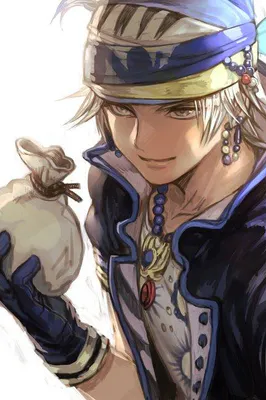
The boy’s name was Lionel, once spoken softly by a tired mother, now carried a little differently on his tongue. He stumbled forward out of the shimmer of color and sound, feet touching earth, breath stopping as the world settled. When he turned back, expecting ribbons of light or laughter, there was only a house. A plain thing. Wattle walls, a low roof, smoke curling from a hole in the top. The Carnival was gone as if it had never been.
A few startled yelps cut through the air. Someone gasped. Someone else dropped a basket. Eyes fixed on him, as villagers took in the strange boy who had appeared where no boy had stood before. Lionel froze, heart thudding, hands half-raised in a reflex he no longer quite needed. He felt taller than he remembered, lighter too, as if the ground was politely asking him to stay rather than demanding it. Then the moment broke.
A trader laughed nervously and shook his head. Another voice muttered about tricks and wandering spirits. Life, relentless and incurious, surged back into motion. People stepped around him, not away, just around, carts creaking, voices overlapping, the smells of animals, sweat, smoke and food. Lionel of the Juggling Turn let himself be carried with them, slipping into the flow.
As he walked, he became aware of himself in pieces. His scars, once clumsy marks of childhood, were gone, replaced by smooth skin that still remembered them. His reflection flickered in a polished bowl on a trader’s stall, not alien, not perfect, just better, like a story told by someone who loved it.
The feeling in his chest, warm and bright, pulsed in time with music that wasn’t there. He smiled without quite meaning to. People met his eyes and held them a second longer than they should have. A woman haggling over dried fruit laughed at nothing at all. Two children stopped arguing and stared at him, then at each other, then ran off grinning as if they had shared a secret. By the time he reached the center of the village, no one was watching him anymore.
He was just another figure among many, another child, another curiosity soon forgotten. Lionel of the Juggling Turn rested a hand against his chest, steadying himself and thought of doors that were not doors, of games that mattered because they were played, of laughter that chose you back. Somewhere, far away and very close, the Carnival breathed. And Lionel, newly fae, took his first steps into the world, ready to ask a simple question that could change everything.
Lionel of the Juggling Turn did not notice the sadness at first. Amid the noise of voices and the clatter of trade, something tugged at him, a dull ache that did not belong to him. It was heavier than the small worries he brushed past every moment, heavier than hunger or irritation or fatigue. This was deeper. Hollow. It made his chest tighten in answer.
He slowed, then turned, letting the feeling guide him. It was not a sound or a sight but a pressure, pulling him the way a scent pulls a hunting hound. Each step sharpened it. The warmth he carried from the Carnival dimmed slightly, focusing, narrowing in on a single source. Lionel of the Juggling Turn followed, weaving between people, past stacked baskets and tethered animals, his path growing clearer with every breath.
The crowd thinned near the edge of the village. There, beside a low fence and a heap of discarded tools, sat a woman with her face buried in her hands. Her shoulders shook in small, broken motions. The sadness rolled off her in waves, so strong it made Lionel stop a few steps away as if he had reached the edge of something fragile.
He watched her for a moment, uncertain. This was not a game. There was no laughter here, no thrill of risk, no spark of challenge. And yet, the pull was undeniable. He felt, instinctively, that leaving would be wrong in a way he could not explain.
Lionel approached slowly, careful not to startle her. He crouched slightly so his shadow would not loom and spoke gently, his voice still carrying the softness of a child, though steadier now. “Hey,” he said, sincere, “what’s wrong?”
The woman looked up sharply when he spoke, eyes red and unfocused. For a moment she seemed confused, as if she hadn’t expected anyone to notice her at all. Then her expression hardened, embarrassment and grief tangling together. “You shouldn’t be here,” she said, waving a hand at him without looking directly. “Go on now. Find your parents. This isn’t a place for children.”
Lionel hesitated, then nodded as if he understood, taking a step back. But he didn’t leave. Instead, he bent down and scooped up three small stones from the dirt, testing their weight in his palms. The woman frowned, watching despite herself. “I said go,” she muttered, her voice thinner now, less certain.
Without a word, Lionel tossed one stone into the air, then another, then the third. They arced clumsily at first, almost dropping, before settling into an uneven rhythm. It was not graceful. It was messy, exaggerated, clearly on purpose. His tongue stuck out in concentration, brows furrowed as if this were the most serious task in the world.
He pushed it too far. One stone slipped, bounced off his forehead with a dull clack and fell to the ground. Lionel froze, eyes wide, then slowly crossed them as if trying to look at the spot it had struck. He wobbled in place, knees bending, arms flailing in an overly dramatic attempt to stay upright.
A sound escaped the woman before she could stop it. A short laugh, sharp and surprised, like something breaking through ice. She clapped a hand over her mouth, startled by herself, then let out another breath that was almost a chuckle. The tension in her shoulders eased just a bit.
Lionel grinned, rubbing his head and giving her an exaggerated bow. The sadness did not vanish, not entirely, but it loosened. For the first time since he had followed the ache to her side, the pull inside him softened, as if he had taken the first right step. As the laughter faded, Lionel tilted his head and looked up at her again, eyes bright but steady now. “So,” he said gently, as if the word itself were a second attempt at the question. “What really happened?” He did not press, did not rush. He simply waited, hands folded behind his back like a child expecting a story, not a confession.
She looked away toward the road beyond the village, where wagons sometimes came and sometimes never did. “A caravan,” she said quietly. “My husband went with it. Our child too. Traders, guards, families, all of them heading east.” Her fingers curled into her sleeves. “They were attacked. Slavers. That’s what the survivors said.” Her voice cracked at the word. “The chief told me it’s too dangerous. Said we can’t spare people. That they’re probably already gone.”
Lionel frowned, not in sorrow but in thought, like someone rearranging pieces in his mind. “That doesn’t sound very fun,” he said at last, plainly. He took a step closer, lowering his voice as if sharing a secret. “I could bring them back. Your child. Your husband. d I’m very good at finding people who don’t want to be found.” She snapped her gaze back to him, disbelief flaring hot through the grief. “You’re a child,” she said sharply. “This isn’t a story. You can’t fix this with tricks.” Her hands trembled now, anger and hope crashing together in equal measure. “Don’t play with me.”
“I won’t,” Lionel replied and for the first time there was something ancient behind his smile. “But I will play with you.” He gestured between them, then down at the ground. “A game. Just one. If you win, I go and bring them back. No songs, no stories, no lies.” Her laugh was bitter, hollow. “And if you win?” she asked, already knowing there would be a cost.
Lionel’s grin returned, softer this time. “Then you talk,” he said. “You tell people about Alechior's Carnival. About the games. About the joy you can find when the world says no.” He shrugged, as if it were nothing at all. “That’s it. No blood. No pain. Just words, spread where they’re needed.”
Silence stretched between them. The village sounds crept back in around the edges, footsteps, barter, distant voices. At last, the woman wiped her eyes and looked down at him, really looked. “What kind of game?” she asked. Lionel crouched and picked up three small pebbles from the dirt, smooth enough to roll but plain enough to mean nothing on their own. He held them out on his palm. “We keep it simple,” he said. “Chance only. No clever hands, no tricks.”
He closed his fist around them, shook once, then hid his hands behind his back. “Left or right. Three times. Best of three wins.” As he spoke, the air around them subtly shifted. Sounds dulled, colors sharpened. It felt like standing just inside a warm tent while the world continued outside, slightly muted. The Carnival, thin as breath, had taken notice.
The woman hesitated, then pointed. “Left.” Lionel opened his hand. Empty. He opened the other. A pebble rested there, pale and unassuming. For a heartbeat nothing happened, then the boundary settled fully. The ground seemed firmer, the air brighter, as if the space itself had agreed to watch. Lionel blinked, then laughed once, light and honest.
“You win the first,” he said. “Good start.” They reset. Lionel gathered the stones again, rolling them between his fingers before hiding his hands once more. She closed her eyes, breathed and pointed again. Lionel opened his hand. A pebble lay there. This time, when he smiled, it carried something sharper. “Mine,” he said simply. The space hummed, approving.
The final round lingered longer than the others. Lionel felt the pull of it in his chest, the way the Carnival always leaned closer at the edge of a decision. He shook the stones and hid his hands but this time he felt oddly hollow, like something was already slipping loose. The woman stared at him, then at his hands, then laughed softly, almost to herself. She pointed.
Lionel opened his hand. Empty. The other followed, revealing the last pebble. For a moment, nothing happened. Then the air pressed inward, gently but firmly, sealing the result. The Carnival withdrew its attention as quickly as it had given it, leaving only the echo of certainty behind.
Lionel’s smile did not fade but it changed. Somewhere deep in his mind, a pressure bloomed, sudden and unavoidable. A thought, no, a need, looping endlessly. Find them. Find them. It was not a command spoken aloud, but a tune he could not stop hearing, like a song remembered too late at night, just as sleep was almost within reach.
He straightened, breath steady despite the pulse behind his eyes. The impulse did not hurt but it would not be ignored. It threaded through him, tied to the woman’s win, bound by the game’s simple rules. He nodded once, solemn now. “Alright,” he said. “You’ve won.”
The woman stared at him, hope and fear colliding on her face. The space around them felt normal again, the village noise rushing back in, but Lionel remained still, listening to that quiet, relentless melody in his head. He looked up at her, eyes bright with promise. “I’m going to bring them back,” he said, as if stating the most obvious thing in the world. The woman blinked, the moment catching up to her all at once.
She shook her head, half laughing, half crying and waved her hands in front of her. “No, no, it’s fine,” she said quickly. “You’ve done enough already. I shouldn’t have dragged you into this. It was just a game. You’re just a child, I don’t expect you to fix what grown folk couldn’t.” Her voice softened, trying to undo the weight of what had just settled.
Lionel stepped closer, close enough that she finally noticed how still he was. Not scared. Not unsure. Just focused. “No,” he said, gently but firmly, cutting her off mid-sentence. “It was not just a game.” His smile was gone now, replaced by something calm and unyielding. “You played with a Fae. The Carnival watched. That means it binds.”
She opened her mouth again, but Lionel continued before she could speak. “I will find them,” he said. There was no pride in it, no bravado. Just fact. “Dead or alive. The game does not care which, only that the promise is kept.” For the first time, the woman felt a chill run through her, not fear of him, but awe at the certainty in his voice.
Her hands trembled as she pointed down the dirt road leading away from the village. “The caravan,” she said quietly. “They were last seen near the trade path, by the split stones. That’s where the slavers were spotted.” Saying it aloud made it real again.
Lionel nodded once, committing the words to memory. He did not say goodbye. He turned and ran, small feet striking the ground faster than they should have, already following the pull in his chest like a hound on a scent. Behind him, the woman watched until he vanished from sight, only then realizing that the game had already begun moving the world on her behalf.
The trade path ended in silence. The stones there were old and split down the middle like broken teeth, half-swallowed by dirt and weeds. Lionel slowed as he reached them. Something had happened here. The ground was scuffed, churned where feet had scrambled, where weight had been dragged instead of carried.
Even without knowing why, his skin prickled. He crouched, small hands brushing over the dirt. He did not know how to track. No lessons, no tricks, no names for signs. But his eyes caught things that felt obvious once seen. A line pressed too deep into the soil, like a cart wheel forced off the path. Threads of cloth snagged on thorny brush, fluttering faintly in the wind.
Lionel leaned closer, head tilted, letting his gaze soften instead of narrowing. Footprints overlapped, some light, some heavy. Too many for a normal caravan. Some prints walked calmly. Others dug in, heels biting deep, toes skidding forward. Fear left marks, he realized, even if he did not have words for it. He stood and followed the direction the ground seemed to pull him toward. Every few steps, he stopped, scanning ahead, then back, then to the sides.
A broken branch pointed the way it had been forced aside. Flattened grass told him which way bodies had passed more than once. His eyes picked up differences in color, damp earth against dry, fresh disturbance against old stillness.
The further he went, the clearer it became. The tracks veered off the trade path and into rougher land. Lionel felt the tug in his chest tighten, the same rhythm as before, steady and insistent. This was right. This was forward. He did not question it. Without meaning to, he began to hum under his breath, a soft tune with no words, keeping time with his steps. He followed the marks left behind, not as a hunter, not as a warrior, but as something new, guided by sharper sight and a promise that refused to loosen its grip.
The tracks ended too cleanly. One step they were there, pressed into dirt and crushed leaves, the next the ground lay untouched, smooth as if nothing had ever passed through. Lionel stopped short, heart thudding. The light dimmed beneath the canopy, shadows growing thick and uneven as dusk crept in. His eyes searched the ground again, slower now but there was nothing left to follow.
Something tightened in his chest instead. Not fear. Not exactly. A hollow ache, like laughter cut short. The lack of merriment pressed against him from all sides, heavier than the dark. He drew in a breath and let the feeling guide him, turning his head slightly. There. A pull, faint but sure, tugging him away from the path and deeper into the trees.
He moved carefully, branches brushing his shoulders. The forest smelled of damp earth and old leaves, but beneath it lingered something sour. Sweat. Fear. The sadness grew stronger with every pace. Lionel dropped low as the trees thinned. Ahead, a faint glow flickered between trunks, firelight wavering against rough shapes. He crawled the last few steps and pressed himself behind a fallen log, peering through splintered wood. A makeshift camp lay before him. A fire burned at its center, fed with snapped branches and half-dried logs.
Around it moved men with clubs and sharpened sticks, their shadows long and warped across the ground. There were about ten of them, laughing too loud, voices sharp and careless.
Beyond them, tied with thick rope, were the captives. Four children huddled together, eyes wide and faces streaked with dirt and tears. Two adult men sat slumped nearby, wrists bound behind them, shoulders sagging with exhaustion with multiple visible bruises on their faces. The sadness Lionel felt slammed into him all at once, suffocating.
He stayed still, breath shallow, heart racing. The camp was real. The game was real. And somewhere inside him, beneath the fear, the promise stirred again, steady and unyielding, urging him not to turn away. Lionel stayed crouched behind the log, watching the rhythm of the camp. Who moved where. Who laughed loudest. Who kept their eyes on the captives and who didn’t. Ten slavers, all armed, all alert enough that a straight charge would end with him broken on the ground.
He was stronger than a human, faster too, but not invincible. Not like this. Not against numbers. He pressed his lips together, thinking. Games, not blades. Chance, not force. Alechior’s lesson stirred faintly in his mind, half memory, half instinct. This was not a problem to be solved with strength. It was one to be played. Still, the how refused to come, and the sadness in his chest pulsed impatiently, urging him to hurry.
Then the air shifted.
It was subtle at first, a warmth brushing his skin, like sunlight through leaves that were not there. The forest around him seemed to lean inward, branches creaking. Between two trees, wood and vine curled together, an archway. No light spilled through it, yet it was unmistakable. The Carnival was near.
The familiar feeling washed over him in a wave. Laughter remembered. Music half-heard. That deep, impossible happiness that drowned out fear. Lionel let out a slow breath, shoulders loosening despite himself. He had not called for the gate, not consciously, but the game had already begun. A plan clicked into place. He would not fight them. He would invite them. A distraction, loud enough, tempting enough, to draw eyes and feet. A moment of curiosity, of greed, of mockery. All he needed was one step across that threshold.
Let the Carnival do the rest.
Even if it only took a few of them, it would be enough. Confusion would spread. Ropes could be cut. Children could run. Lionel’s fingers curled into the bark beneath him as he steadied himself. This was what he was meant for. He glanced once more at the captives, then at the slavers and finally at the archway, humming softly to itself behind him. A grin tugged at his lips. Time to make a game out of monsters.
Lionel rose from his hiding place and stepped into the open without haste, like a child who had wandered somewhere he should not be. He scooped a handful of stones from the ground and began to toss them lazily into the air, one after another, humming a tune that did not belong to the forest. The notes were wrong for the night, too bright, too playful. One of the stones vanished mid-arc, swallowed by nothing at all, only to drop back into his palm a heartbeat later. He smiled as if this were the most ordinary thing in the world.
A shout went up from the camp. Then another. Spears lifted. Clubs were hefted. Five of the slavers turned as one, eyes narrowing at the sight of a lone boy juggling rocks where no boy should be. Lionel let one stone slip, letting it bonk him squarely on the forehead. He staggered back dramatically and laughed, rubbing his head as though it truly hurt.
“See?” he called, voice carrying. “Not even sharp! You can try if you want.”
Curiosity beat caution. It always did. The first slaver stepped forward, then another, drawn by the sound, by the strangeness of it. Lionel backed away as they advanced, each step slow, leading them not away from the camp but sideways, toward the archway that now stood fully formed between the trees. Leaves rustled though there was no wind. The air shimmered faintly, warm and inviting.
“What kind of trick is this?” one of them barked, but there was laughter in his voice now, rough and eager. Lionel shrugged and tossed a stone through the archway. It vanished with a soft, musical chime, like a bell rung far away. The sound made the men pause, then grin. One of them stepped through without thinking, swatting at the air as though expecting resistance.
He laughed as he disappeared. The others followed, one by one, drawn in by mockery, by bravado, by the need to prove there was nothing to fear. Five slavers crossed the threshold, their shapes swallowed by twisting light and shadow, their voices fading into something louder, stranger, threaded with distant music. The archway pulsed.
Behind Lionel, the remaining five slavers cursed and spread out, circling the camp, searching the tree line for threats that were no longer there. Their attention was everywhere except where it mattered. Ropes lay forgotten. The captives breathed shallow and fast, eyes wide. Lionel slipped back into the shadows, heart hammering, the echo of laughter ringing faintly in his ears.
The game was in motion now, and the Carnival had taken its first move. Lionel moved low and fast, his steps light enough that the dry leaves barely made a sound beneath his feet. The slavers were distracted, their backs turned as they argued and shouted to one another, trying to make sense of what had just happened. The campfire cracked and popped, throwing long shadows across the ground. Lionel slipped between them.
He reached the first set of ropes and did not hesitate. His fingers closed around the twisted fibers and pulled. Where mortal hands, especially a child's, would have struggled, the cords parted with a soft, dull snap. The child nearest him gasped, a sharp intake of breath that Lionel stilled with a quick shake of his head and a finger to his lips. He smiled, small and reassuring.
One by one, the bindings fell away. The captives were stiff, cramped, shaking but they moved when Lionel urged them, silent as they could manage. He guided them toward the treeline, keeping his body between them and the camp, listening to the slavers’ footsteps as they drew closer, suspicion finally blooming into alarm. A shout rang out behind him.
A spear thudded into the dirt where he had stood a moment earlier. Lionel pushed the last freed slave forward, all but throwing them into the cover of the forest. “Run,” he whispered fiercely, the word sharp with command. “Run to the village. Do not stop. Do not look back.”
The forest swallowed them. Branches bent aside, shadows closing like a curtain. The moment the last figure vanished into the trees, Lionel turned, meeting the slavers’ furious stares with a grin that was far too calm for a boy in his position. Then he bolted, not toward the village but deeper into the forest, laughter trailing behind him like a challenge.
By the time the slavers reached the edge of the camp, there was nothing left but snapped ropes, fading footprints and the unsettling sense that something very important had just slipped through their fingers.
A few hours later, the village lights came into view, small fires and lamps glowing like scattered stars against the dark. The freed slaves stumbled toward them, half-running, half-falling, driven by fear and hope in equal measure. They did not look back, just as Lionel had told them, though more than once one of them nearly did, a sob catching in their throat before the village gates pulled them onward. Lionel followed at a distance, never close enough to be seen, never far enough to lose them.
He moved through the brush like a shadow stitched to their heels, eyes sharp, ears tuned for pursuit. Each time one of them faltered, he felt it, a tug in his chest and urged them forward with a soft whistle or the crack of a branch in the right direction. No slavers came. The forest stayed quiet.
When the villagers cried out and rushed to meet the returnees, Lionel stopped at the edge of the trees. He watched as hands grabbed shoulders, as names were shouted and answered, as tears flowed freely now that safety had a shape and a sound. The woman was there, he could feel her before he saw her, the hollow ache in her chest rushing outward in a sudden, overwhelming wave of relief.
The moment she found her husband and child, something settled inside Lionel. Not snapped, not closed but clicked into place, like the final note of a song resolving at last. The pull in his mind eased. The promise was kept.
Warmth spread through him, starting behind his ribs and blooming outward. It was not loud joy, not laughter or spectacle, but a deep, quiet happiness that soaked into his bones. The Carnival answered, approving, pleased. Somewhere unseen, the game marked itself complete.
Lionel smiled to himself from the treeline, turned away from the village lights, and vanished back into the dark, already listening for the next place where merriment was missing.