
 LustForDecay
The Concordat

Righteous Concordat of Heavenly Peace

Society
Governance
A simple explanation of the Concordat government is that elected councils or congresses from the local level elect another layer repeatedly till you reach the Holy Congress as major legislature and the Anointed Synod as executive council. In simplification it loses much, but the description of the Concordat as a religious, nested democracy or republic is not totally inaccurate.
Officially and formally the ‘Righteous Concordat of Heavenly Peace’ in long form, and the ‘Righteous Concordat’ in official short form but most commonly just referred to as the Concordat even by its own peoples.
The Concordat is structured around a vast number of councils and communities interconnected through committees and conclaves connecting them in a vast system. These groups are elected by the distinct communities they represent, often giving additional influence to recognized minorities or special groups in a rather complex network. These communities form larger associations and congresses which all lead to the ‘Holy Congress of All-Righteous Followers of the Heavenly Peace’, referred to often as just the Congress, or Holy Congress depending. From there a rotating selection of speakers for the Congress are selected as are notable positions in the formal executive committee, the ‘Anointed Synod of the Servants of Heavenly Peace’ or the Synod or Anointed Synod. It is the Synod that is seen as the executive and primary leadership especially outside the Concordat, although the frequent elections and resignations and recalls of the Congress and many lower bodies create a great churn in the body politic that seems very odd to many outsiders used to more stately systems.
Much of the Concordat is actually managed primarily on the ‘local’ level with a few exceptions, the local level primarily defined by the extent of material expansion of settlement- a star system is often the case especially in the more developed regions where not only planetary usage but also extensive work and habitation in habitats throughout the system. Exceptions to this are primarily the result of integrations and expansions, that being the integration of extant systems or the expansion over an already settled area. This has resulted in some integrated Republics above the local level that function as semi-autonomous interstellar regions- although these have been changed and integrated in the past into the broader system as times have changed.
Faith and Ideology
Faith and Ideology have deep roots in the Concordat, both foundational across the centuries. Faith is often the most apparent given the iconography and language of the Concordat. Really there is no singular religion of the Concordat- what there is instead is a series of religions and movements, old and new, ones that have only developed after the collapse and under Concordat rule and adaptations of older faiths in line with more modern expectations and values. All the recognized faiths that are officially included in the Concordat system have some basic trends, anti-hierarchic organization, reverence of science and progress, ànd broad all-sapient appeal. This in many ways leaves open vast differences between recognized faiths, understanding one another as fellow travelers.
While this seems rather permissive to some, this is fairly clear that faiths that don’t match but are not repugnant to them are allowed to exist- but only in private. No channels or network is provided for them to communicate, no aid except the individual actions and choices of its followers, no grand events or ceremonies, no temples built. Only the actions of a significant population protect these faiths, the Concordat rather than crush them is content to strangle and let them either adapt or slowly fade away to be forgotten as time passes.
Ideology has a strong impact as well, rather than explaining the world, this is the political program of what to do in the world. Similarly the Concordat is filled with a multitude of currents and ideas both now and throughout its history. Much is influenced by the ever present faiths of the Concordat- but some remain apart, even if far from popular in the intensely religious society that forms the basis of the Concordat.
Main Demographics
Although minor populations do exist of numerous species and peoples throughout Concordat space, much of the population is made of the following.
Humanity
There are roughly eight major groups of Humans and Human-descendants in the Concordat, likely as a result of their rather widespread population dispersal and the vast changes often present between such dispersed groups with access to high technology. Only five of these groups consider themselves part of the greater Human species or group at this point in the Concordat, which is the main part of the basis that the Concordat uses to determine such.
Baseline
Generic term for a variety of humans who accumulate without major difference from the general capabilities or appearance of the majority of humanity and the assumed human source. They generally make up a small but notable minority of the Human population in the Concordat, significant populations often being of the more recent integration compared to other Human groups.
Claderans
Hailing originally from the world of Cladera their early industrial civilization was discovered by the Yrrani Empire and uplifted with some augmentation. Augmentation by Yrrani included a series of modifications that resulted in a vast range of colorful hair and skin, some marginal improvements to heavy metal adaptations and several adaptations to survival in environments toxic to baseline humanity. Claderans have a notably reduced natural lifespan without extensive medical intervention, rarely living to half a century, however these adaptations seem to also have reduced the detriments of aging relative to baseline humans, a Claderan of forty years often is far more physically and mentally flexible than a baseline human. It is unknown what the original purpose of many of these augmentations were for however Claderan populations became a regional sensation to have around during the later stages of Empire in the local region.
The Claderans were some of the first portions of Humanity that were integrated into the Concordat, and although great aid was established to attempt to increase the lifespan of the Claderan peoples, results were fairly minimal until the Human augmentation boom two centuries after the foundation of the Concordat with the inclusion of the eventual Voidfolk and Kenhera groups.
Skallamites
Originally discovered by the Yrrani in the aftermath of a minor planetary nuclear exchange the Yrrani were welcomed as saviours and liberators, making the imposition of Imperial rule quite easy. Augmentation of the population of Skallam began a few decades later with attempts to make further experimentation of notable mutations in the Skallamite population. The program continued secretly to the major population for several decades longer until a final uplift included the entire population establishing mass mental psionic augmentations that while successful left much to be desired. Nonetheless many Skallamites were kept as notable servants during the Empire, particularly as overseers of certain populations in no small part due to their outward appearance vastly similar to baseline human populations.
After the Empire most Skallamites remained on the homeworld of Skallam itself along with the Soulings, although a number integrated into other human populations throughout knownspace. Skallam itself was integrated into the Concordat roughly a century and a half ago after a short period of negotiations with the prior Autonomous Collective of Skallam.
Voidfolk
The Voidfolk are a human group descended from the population of the Scyrana System, Scyranus Major in particular. The Yrrani encountered the Scyrana System while the local human population had been extensively settled across the system although they had not developed any faster than light technology or artificial gravity. The system was in the midst of a political split where the main world of Scyranus Major was feuding with its ex-colonies across the system, primarily in various habitats and stations. The Voidfolk descend from those ex-colonies who accepted Subjugation under the Yrrani while Scyranus Major fought and was annihilated.
The Voidfolk would take augmentation although the exact cause or timeline is unknown in the modern day, extensively modified for better survival in microgravity conditions, notable external features as a lack of any hair, greater flexibility in limbs and prehensile feet. They would be rediscovered by a Kenhera exploration vessel, their populations primarily living in vast voidfaring vessels and would be integrated into the Concordat several years after their discovery.
Kenhera
The Kenhera’s exact origins are unknown but it is assumed to be either from Yrrani experimentation or from human cultures seeking organic-machine synthesis on their own. What is known is that by the end of the Yrrani Empire the Kenhera were a nomadic series of fleets, exchanging information and technical assistance for resources as they plied trade routes. Many of these convoys kept in contact with each other even as some accepted association with the Concordat. It was during an expansionary period of Concordat history roughly two centuries after the founding following the Yrrani collapse that most of the Kenhera trade routes were subsumed and later the Kenhera were integrated as well.
Physically there is no singular general appearance one can give for the Kenhera, as while they are biologically of Human stock, they practice extensive biological and mechanical augmentation on an individual level. It is one of their core beliefs as a primarily sociocultural group that the individual must create their own form and development. Often older Kenhera can reach ages further than many baseline humans although few would even recognize the general shape of these older Kenhera as anything close to baseline humanity. Some Kenhera remain roughly similar to baseline humans with minimal cybernetics but the majority will replace most of their body over time.
Post-Humanity
Three groups who consider themselves descended from humanity but not part of the human species or grouping
Axologol

Descendants of a group of Baseline Humans trapped in a novel dimension, either as an experiment or an abandoned exploration team, by an unknown group or individual of Yranni Imperial operations and only freed during the great unrest of the Empire’s collapse, the Axologol found themselves greatly altered by the energies and conditions of the Dimension they found themselves put in, their bodies reminiscent of human form but often vastly different, no longer being entirely formed of regular matter. This was actually a cause of great issue for the Axologol who could no longer reproduce without the vast and strange energies of that permeated their dimension until replication of conditions by the Concordat allowed for both easier living and the continuation of their people
The Axologol often appear not entirely similar to each other but generally have a greatly skeletal physical appearance, an almost total lack of melanin necessitating special care under stellar radiation particularly as well as notable psionic and pseudo-psionic capabilities.
Clanlings
The ‘failed’ experiment of creating a gestalt intelligence by Yrrani in times past, rather than being an intelligence capable of vast communication and work instead the similar to human bodies were linked in only a short ranged psionic link that that also failed to propagate beyond 5-9 bodies. The resulting subjects were dumped on a marginally habitable world and told to be worthy of a return and then promptly forgotten about until their rediscovery by Concordat exploration teams.
Clanlings generally are very capable in each ‘family’, as the gestalt groups are called, being capable of working together vastly better than even highly trained individuals of baseline humans. However this psionic link is both blessing and curse as the disruption from the death of more than one body in relatively quick succession results in the essential incapacitation of the rest of the gestalt family from the backlash.
Clanlings are also notable for being able to survive for long periods of time or possible immortality, even if not invincible in any sense. Rather by chaining connection with younger bodies and being exceedingly careful over the long lifespan as the psionic link that makes up the basis of the Clanling mind can be maintained even as individual bodies age and die. No current limit to this has been found chronologically but it may simply be too soon to tell.
Soullings
Another ‘failed’ experiment, the attempt was a further modification of Skallamites by a later team seeking to make an energy based psionic organism that would be beyond Skallamite capabilities. While successful on creating an energy based psionic organism, the Soullings were fairly disconnected from rather material reality, had difficulty interacting or manipulating physical matter, and were generally considered too distractible. They were released into the atmosphere of Skallam itself and considered a failure of approach. It took some time for both some measure of contact and connection to be maintained by the Skallamites, although they had been integrated with the rest of Skallam before the expansion of the Concordat to the world of Skallam itself.
Xenos
Species alien in biology and manner to the strangely widespread population of Humanity.
Eekrtch
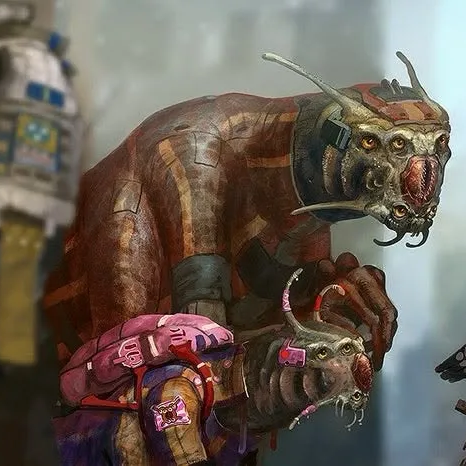
The Eekrtch are one of the founding members of the Concordat, notable for their particular introduction of heavily anti-authoritarian and anti-hierarchical thought in the early Concordat due to their experiences under the Yrrani Empire. While somewhat physically imposing compared to baseline humans, the Eekrtch evolved on a significantly lower gravity world than standard, resulting in a rather brittle and weak constitution. Many take up augmentation to make up for this especially after centuries of Concordat development but much of their natural biology suffers under high-gravity conditions still.
Ckoru
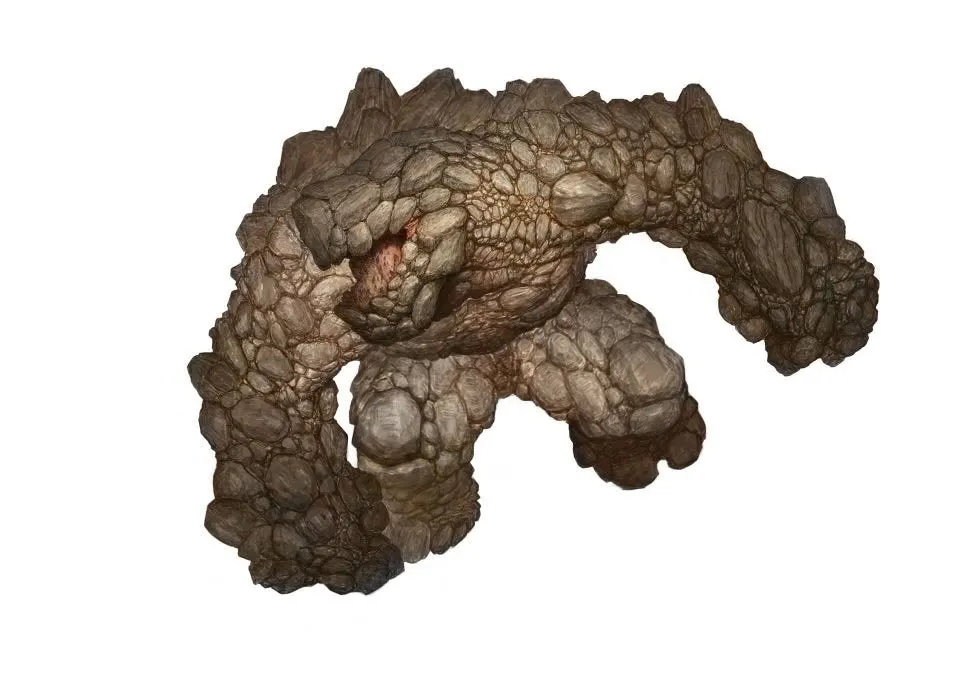
A species rediscovered after the fall of the Yrrani Empire by the expanding Concordat, the Ckoru were thought to have been killed during the Yrrani civil war as their space habitats were crashed into the military positions of some faction of Yrrani by another faction. Their worlds were also heavily bombarded due to the suspicion of their tunnels being used as a storage point. As a result many thought them extinct if it wasn’t for an apparently lost colonyship surviving- the fate of the rest of their species had brought them much despair.
Over the course of their membership of the Concordat several other pockets of the Ckoru were found, each time to their great joy. The Ckoru are notably not capable of sensing light, instead relying on a developed ecolocation system and vibrational sensing.
Valassag
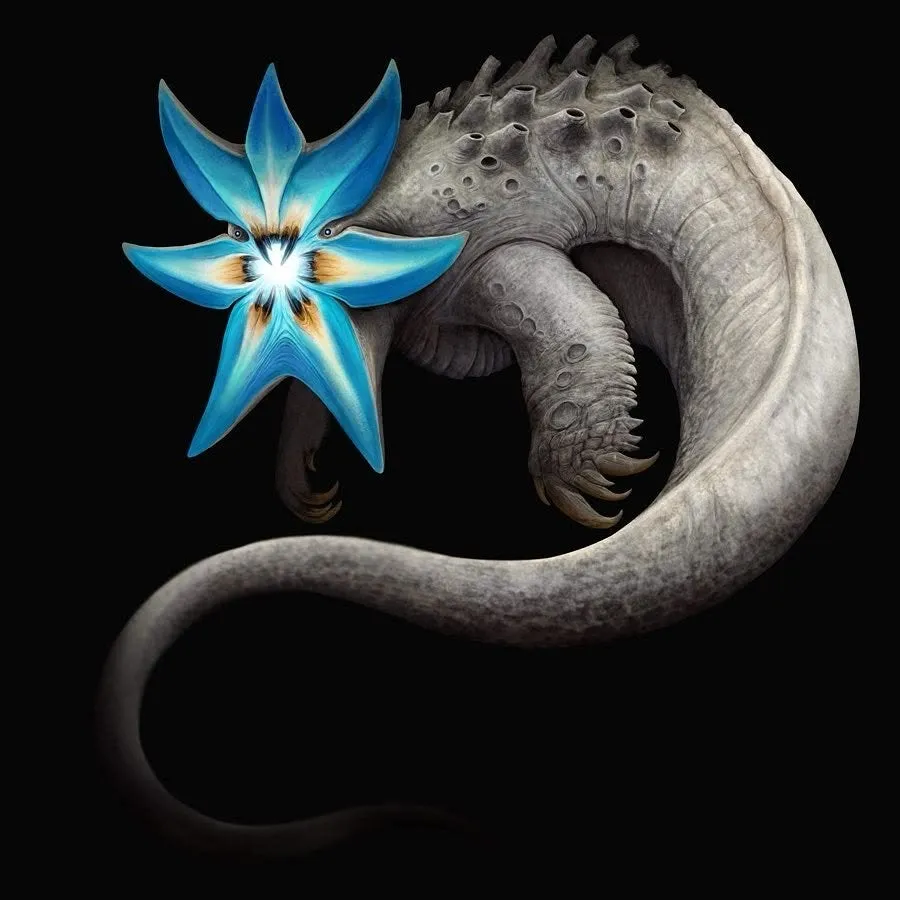
While intelligent long before the Yrrani, it was only with their arrival and subjugation of the Valassag aquatic giants that the Valassag managed to advance beyond their limited means. Physically the Valassag had little technic ability, having to rely upon their natural capabilities even if they could conceive the use of much, they had little means to accomplish any delicate or precise work. The Valassag grew a vast civilization under the dominion of the Yrrani but one that was ultimately more fragile than they realized.
The chaos of the hundred years and the collapse of the Empire devastated the civilization of the Valassag and brought their species to a grave despair. Many sought reasons why and the answers found were numerous, whether true or false, material or spiritual. It is a large portion of the Valassag that found an answer in founding the Concordat and its religious message of faith and reason- something that aided their civilization to recover with the aid of others.
Hremarti
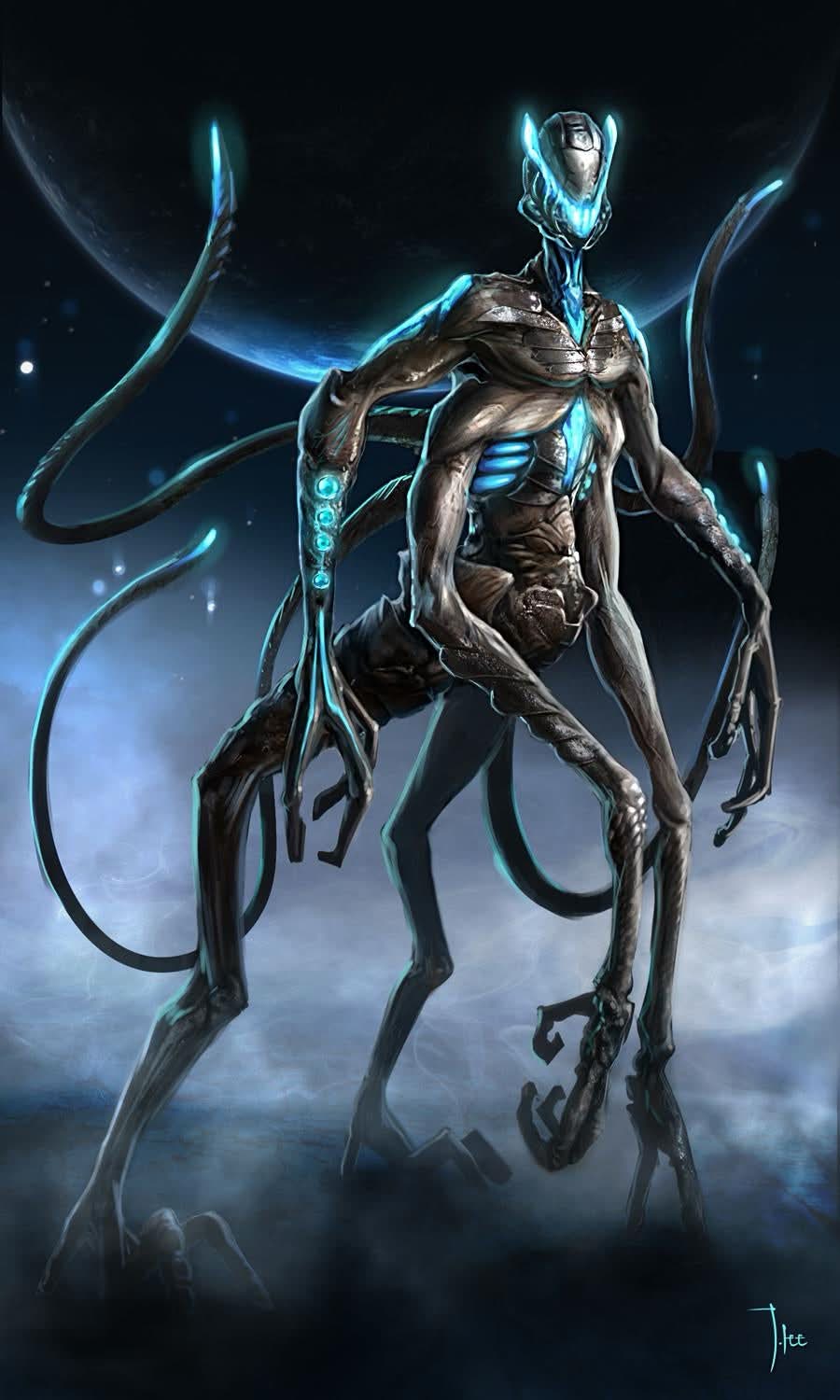
One of the founding members of the Concordat the Hremarti are notable for the loss of their homeworld not through the actions of the Yrrani but due to their inaction; a rogue planetoid coming into their homesystem and disrupted planetary orbits leading to the slow circling of the home planet into the local star. The Yrrani found this an excellent opportunity for scientific observation and while the local Hremarti fled their slowly doomed world the Yrrani diverted effort primarily to scientific observation stations in the planetary crust to give greater information of what various forces were doing in the cataclysmic event.
The Hremarti are also notable for a bioluminescent pattern on their bodies and a shiny exoskeleton that was of great use on their mostly dark original homeworld. Hremarti have excellent eyesight and hearing compared to many species, particularly in lowlight conditions.
Dranolara - Digital
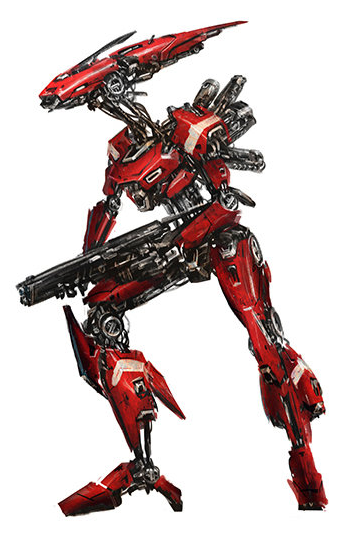
The Dranolara were created by the Dranolara- meant to be a mechanical continuation of their species and the two are often separated into the digital and organic respectively; they served as a last hope of continuation by the remnants of an annihilated civilization in the twilight of the Yrrani Empire. The hope was for them to live on and grow in strength far enough outside the usual places to gain revenge on the Empire for their destruction. They were contacted by outsiders roughly a century after the fall of Yrrani Empire, soon coming into conflict with an expanding Concordat they would eventually fight to a cease fire favoring the Concordat and subsequently integrated after a few years of associated status.
Dranolara machine intellects are made in a specific form, rather than being a broader digital intelligence capable of many formats. Evidently a design choice by the Dranolara before them seeking a closer descendant to their own existences. This has in some ways limited them, but in others provides a great deal of advantages to not having their core intellect and sense of self so malleable.
Tseleoti
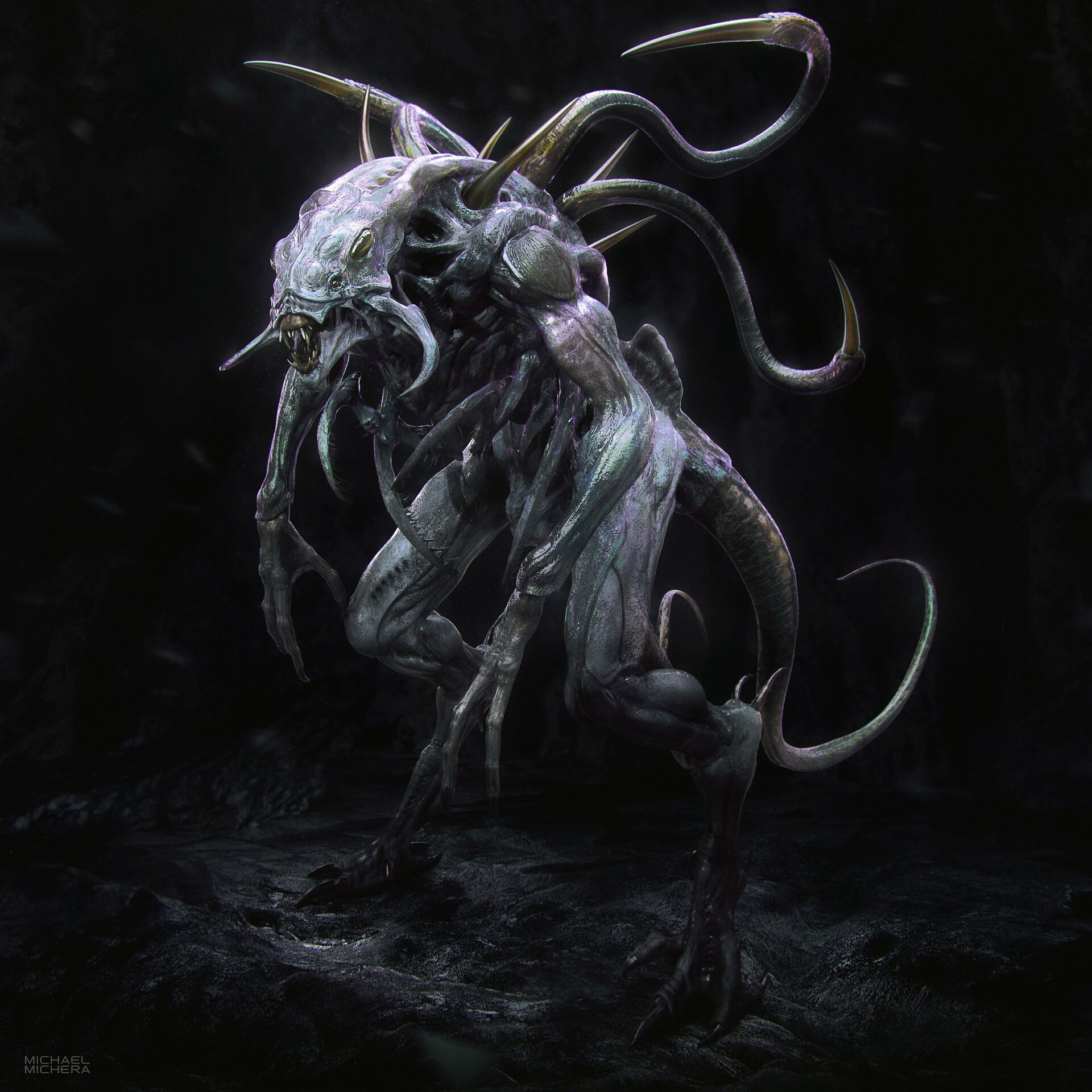
The Tseleoti are an unusual case of a biological caste species with a rather tumultuous history involving it heavily in their society. Pre-contact Tseleoti society was split between the Free Societies and the Queendoms, biologically a Queen of the Tseleoti is slightly more intelligent according to records but also notably has extensive and paranoid planning as well as significant pheromonal control over nearby Tseleoti of other biological castes. Reproduction wise most biological castes could reproduce but often with far greater difficulty than the vast numbers the Queen caste could with ease. The primary split was between states ruled by these Queens either as monarchies or oligarchies and the Free Societies which maintained republican or democratic societies that often prevented the creation of and killed Queen casted Tseleoti on sight. As this conflict grew in prominence during an industrialized age the war was long and very terrible, ending with mass chemical warfare breaking the Queendoms.
It was then that contact with the Yrrani Empire began with a brief subjugation where the Tseleoti were initially treated as most subjugation species before the value of the pheromonal weakness was discovered. The Yrrani then promptly mass used produced pheromones to force mass loyalty among the Tseleoti creating vast slave armies to throw at inconvenient problems, in the process practically destroying any Tseleoti sense of society.
The first of the new societies of Tseleoti came about after the End of the Empire, in some places reverting to vast primitivism while in others integrating with other species societies and attempting to rebuild their own and understand their original history. One of those societies was the early Concordat which integrated a group of Tseleoti and eventually managed to develop a gene therapy to prevent the compulsion on non-Queen castes of the Tseleoti populations, something they help promulgate every time they integrate another pocket of Tseleoti in their expansions and explorations.
Peltolar
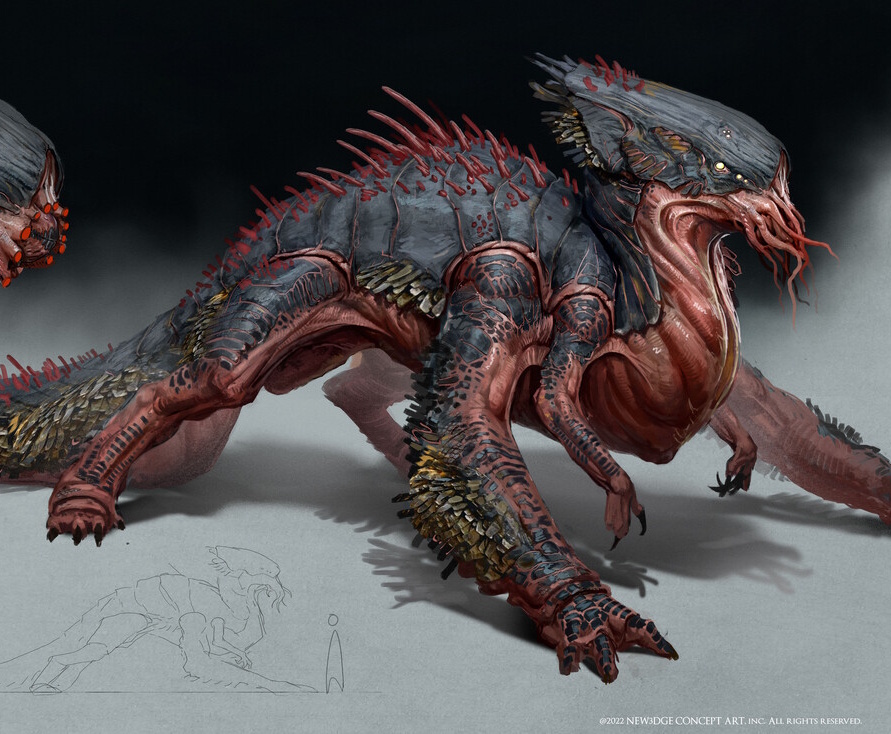
Subjugated by the Yrrani in the Peltolar prehistory, they have survived primarily as a small population imported to some worlds but mostly a growing one on their original planet. Not particularly notable under the Yrrani Empire except as a more common usage of them as brute soldiers, it was only after the fall of the Empire that many Peltolar were noticed by the newly freed civilizations as having excellent spatial awareness making them particularly adept in maneuvering in three dimensions. Somewhat of a holdover on their evolutionary history many Peltolar now found great use in design work and piloting of vessels.
The Concordat began to incorporate small groups of Peltolar as it came across them but only truly gained a large population upon the rediscovery of their home planet which had a rather bad technological regression due to a lack of extensive infrastructure or civilizational knowledge as much had been kept by the Yrrani in automated systems or managed by imported individuals rather than leave the Peltolar self-sufficient. Those systems were destroyed in the final collapse of the Yrrani Empire leaving the burgeoning civilization to collapse away from an interstellar state.
Zenovatlius
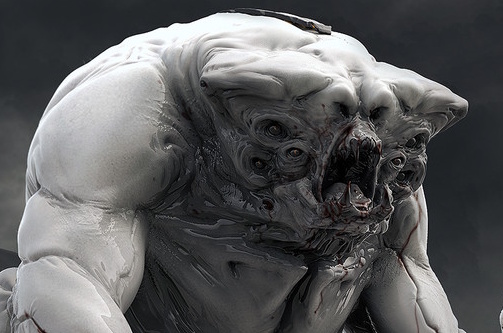
Rather massive beings the Zenovatlius were a semiaquatic pacifistic civilization that was subjugated by the Yrrani Empire with some ease. Discovering the roots of their pacifism as considering violence ‘immature’ due to a stage of development in their maturation cycle with high aggression before vastly decreasing as they age and grow. The Yrrani augmented select populations with forced regression to a high aggression state in adulthood through the usage of injections using these populations as shock troopers and often in many cases bloodsport.
This was a great shame to the Zenovatlius and their continued use during the Empire was quietly hated but never forcibly opposed as by then they knew what would await them if they should attempt such broadly as a civilization. Only in the collapse did the Zenovatlius find some peace although their pacifism had been greatly tempered by rule of the Yrrani, some populations had broken with the traditions of their greater civilization even and began the post Yrrani period as warlords on some worlds.
The main Zenovatlius civilization would be one of the founding members of the Concordat, contributing much to the religious and philosophical basis of the growing power.
Rheteno
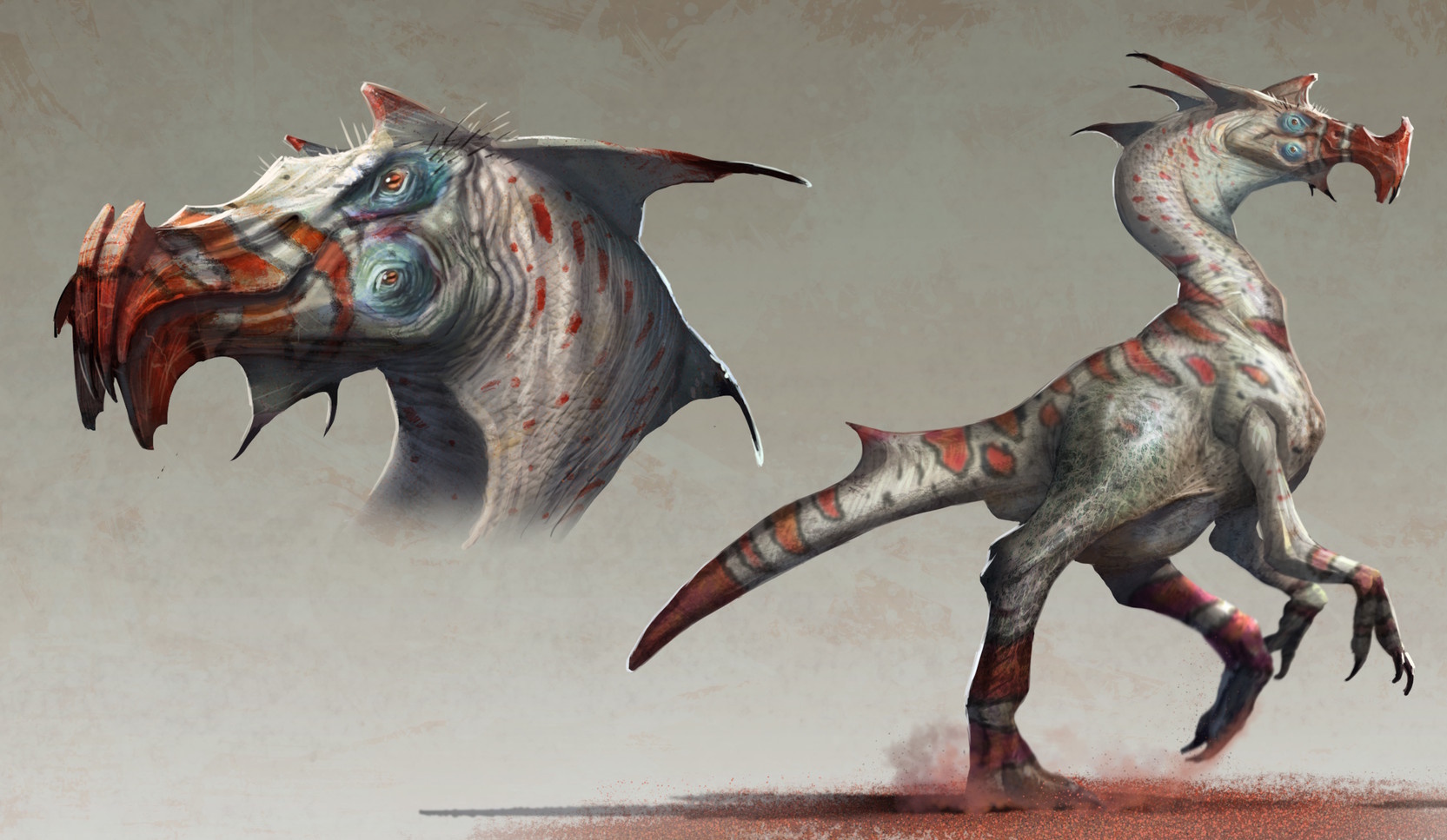
While not particularly notable during the Empire, the Rheteno managed to do well in its aftermath. A strong Kingdom and then Empire was prevalent during the first two and then later two centuries after the collapse of the Yrrani following first the expansion of a majority Rheteno state and latter imperial period where the state expanded to subjugate several worlds less developed than the stable central Rheteno-majority regions.
It is during the later part of the imperial period when the Rheteno came into conflict with the expanding Concordat roughly four centuries after the fall of the Yrrani, a series of wars erupting on the borders lead to a conflagration that ended after the fourth war with the occupation and dismantlement of the Empire and its aristocracy. Some Rheteno nobles escaped or founded colonies further afield with their power or fled to regions that held them positively but the vast majority found themselves equal to their ‘lessers’ in new systems of the Concordat.
Military
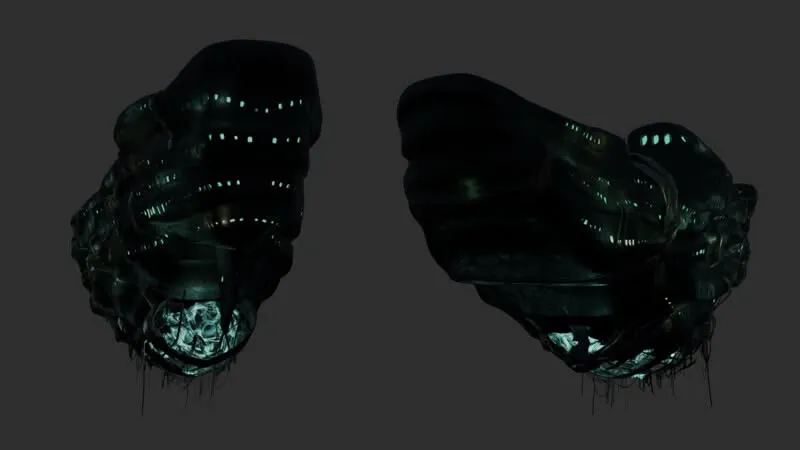
Fundamentally the military of the Concordat is founded on two notable aspects, material over manpower in equipment, and the biomechanical nature of their ships. On the first, doctrine supports the usage of drones, shells, electronic disruption, and every dirty trick they can think of to reduce casualties and make the effectiveness of each soldier go further. On the second, is that some of the larger ships actually shift over to the manpower side of the doctrine due to their intelligent nature. Concordat ships are still plainly constructed, it should be noted, but this is a construction that may rely more on some parts being grown and grafted together rather than a purely mechanical method.
Star Navy
System patrol ships
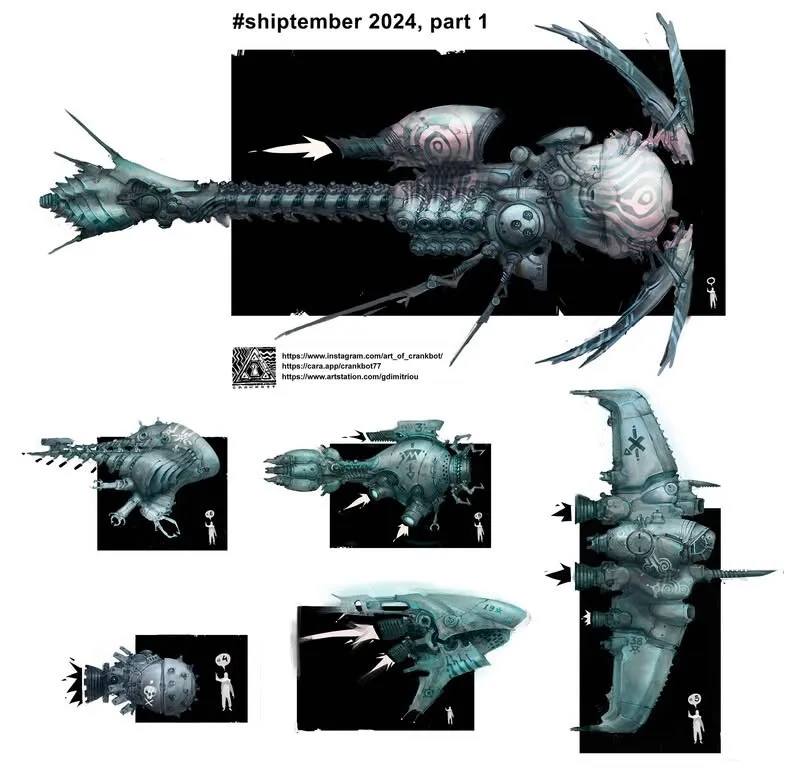
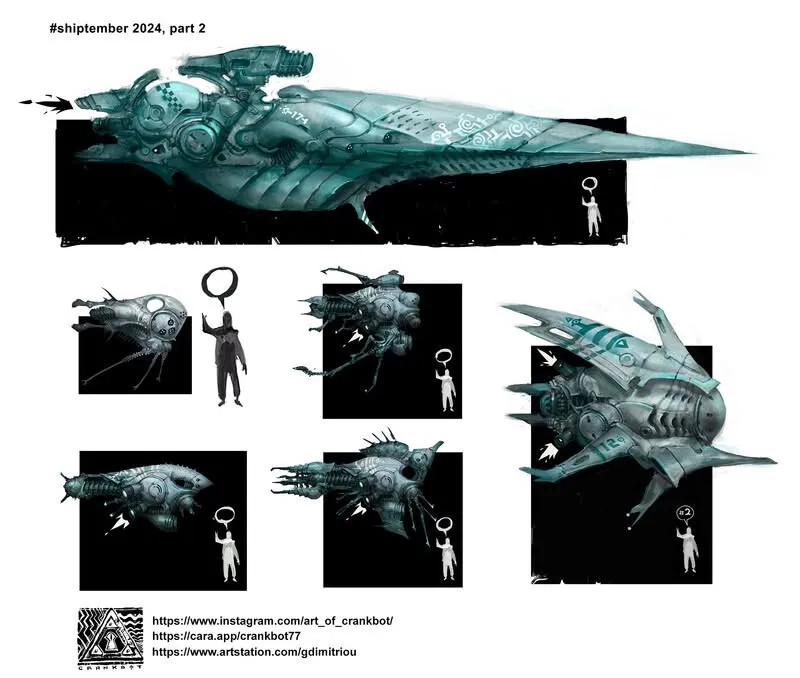
Faith Type Drone Controller
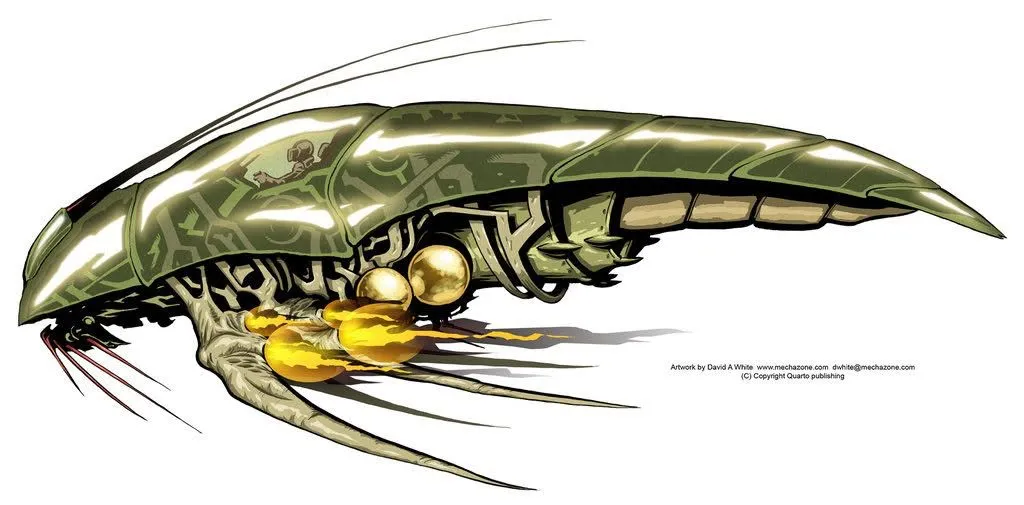
Belief Type Attack Drone
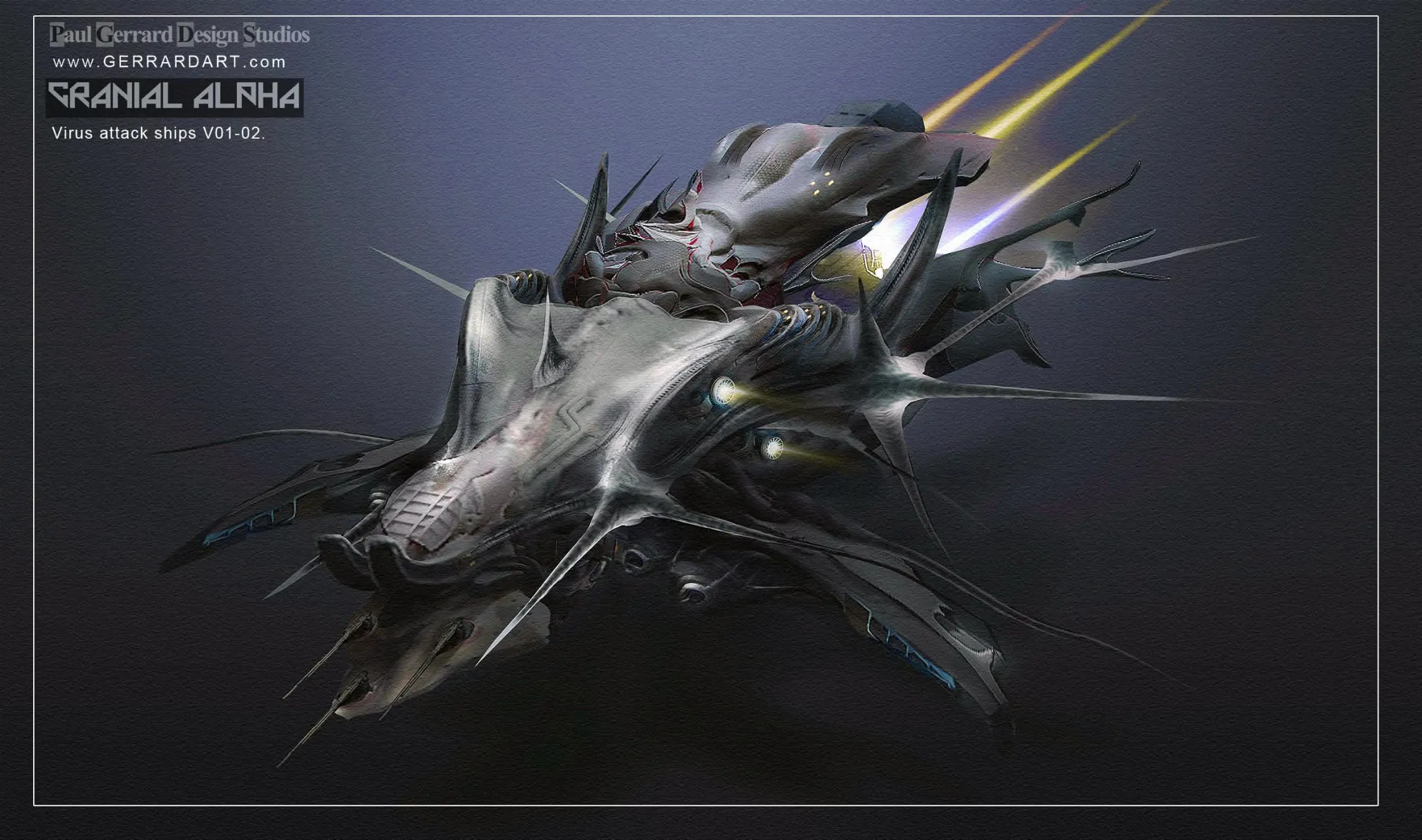
Martyr Class Corvette
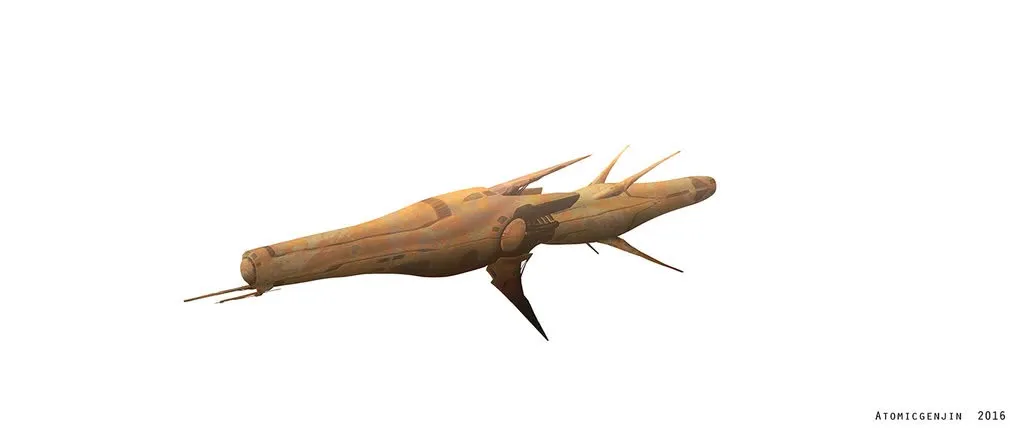
Saint Class Destroyer
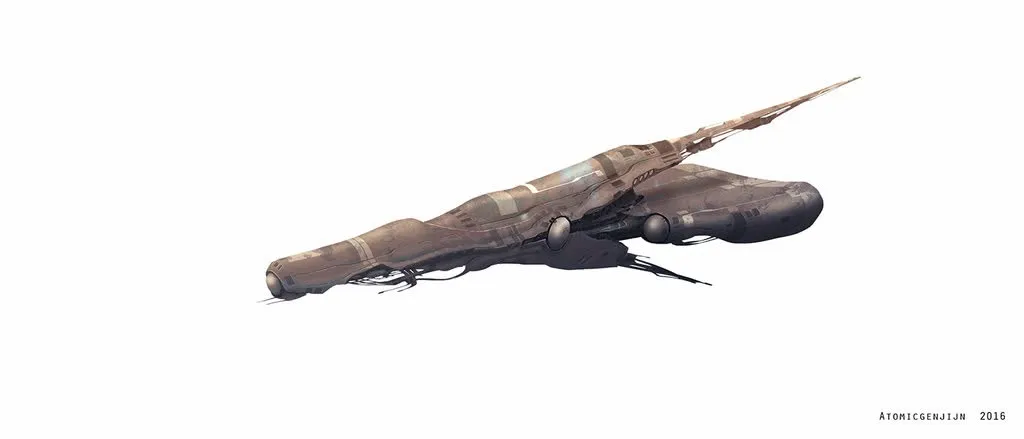
Prophet Class Light Cruiser
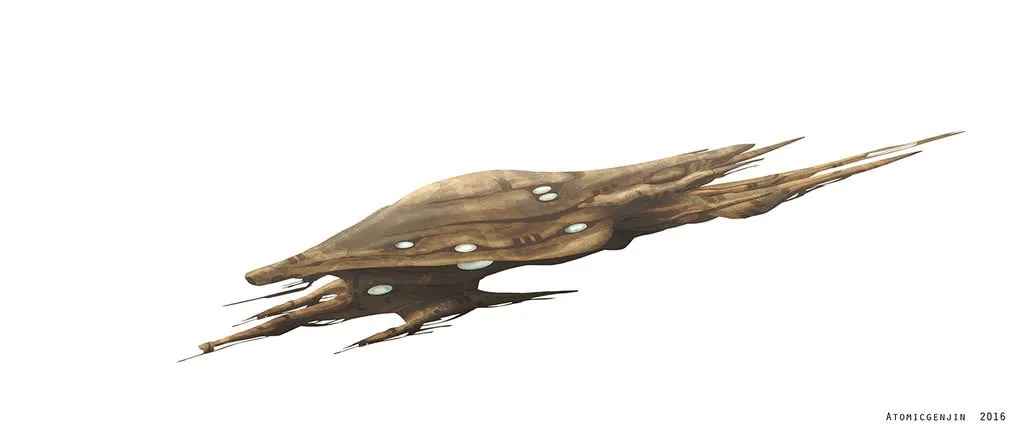
Augur Class Heavy Cruiser
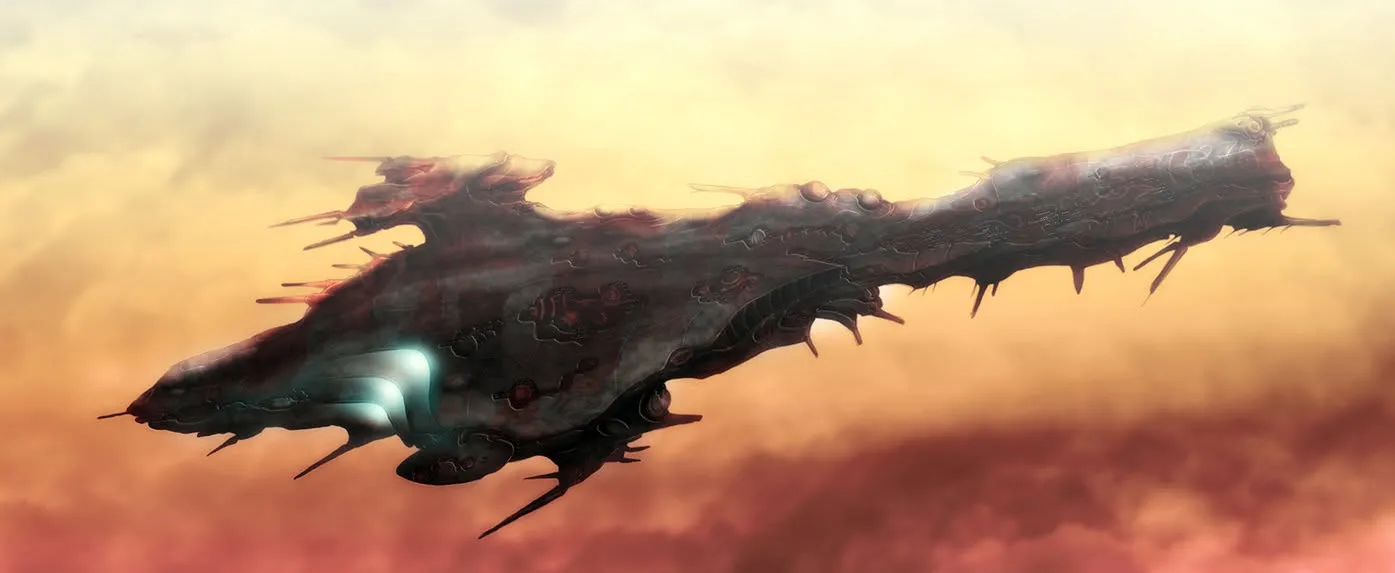
Synod Class Battleship
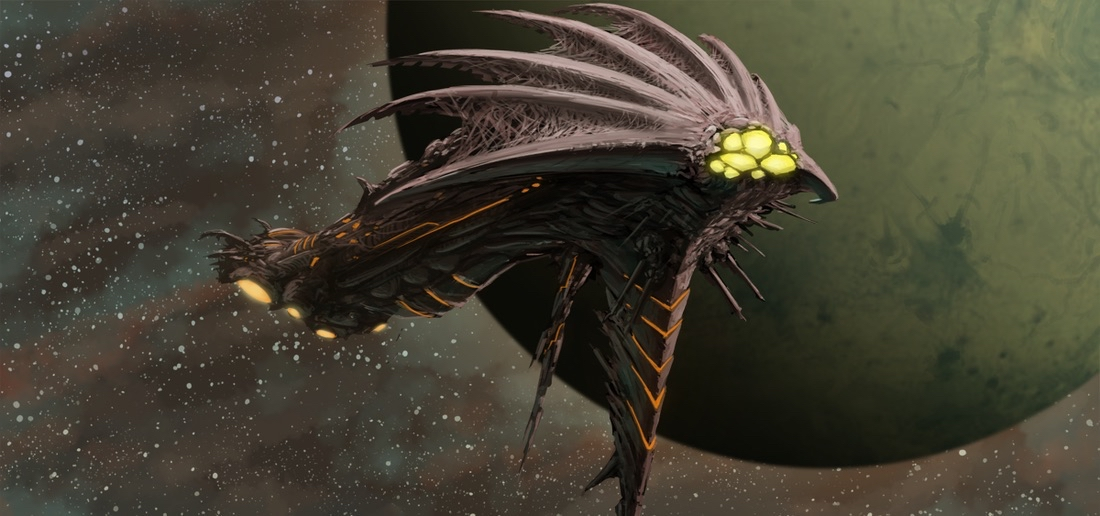
Congress Class Fleet Carrier
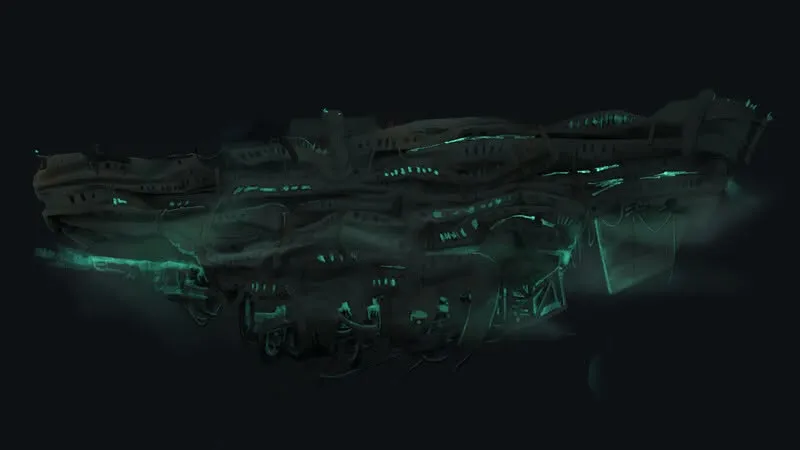
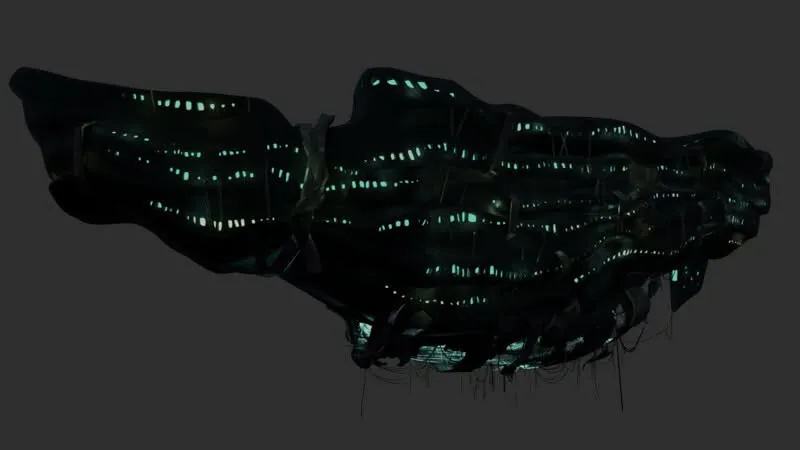
Army
The Army of the Concordat is notable in several aspects, firstly being entirely volunteer based, rather smaller in official numbers than most would recognize although that doesn’t account for various training and military adjacent organizations internal to the Concordat that often serve as reserve forces in case of necessary broader mobilization. This is not to say that the Army is small, rather that it is smaller than one might expect from a large power, often making broad usage of drones and many force multipliers rather than numbers alone. The Concordat doctrine of material over manpower is most apparent in Army operations where the vast multitudes of species of the Concordat can be seen directing drone forces and leading heavily armed pushes against hostile positions. Another factor often forgotten by hostile military planners is that the Concordat Army is often the first into civilian population centers, and also one of the main initial points for liberatory and integration operations. A number of regimes have found their previously oppressed serviles startlingly well armed and assisted thanks to the Concordat Army.
History
0-21: Formation of the Concordat
The Concordat as an organized system doesn't officially come into being until the 21st year after collapse of the Yrrani- however before then the devastated civilizations of the Eekrtch, Valassag, Zenovatlius and Hremarti banded together desperately trading and exchanging what they could, aided in no small part by a notable nomadic trade convoy through the region.
21-87: First Period of Heavenly Peace
An era of primarily internal development and limited expansion. The First Period of Heavenly Peace is also known as the Post-Collapse, a time when the Concordat began the redevelopment of its many peoples and conditions, expanding from ideology and faith to practice strongly across its worlds. It is also a period that includes the incorporation of Tseleoti and Claderan Humans into the Concordat as well as a blossoming of varieties of ideological and religious thought within the Concordat framework.
37 - First Tseleoti Integration
54 - Integration of Cladera
87-97: Decade without Righteous Paths
Famously or Infamously the Decade without Righteous Paths was a tumultuous time in the history of Concordat democracy where the power of recall was used extensively due to disagreements in organization between the now established delegate system and the ongoing population changes as a result of the expansion and changes of the Concordat from a Post-Collapse society to one that was quite a bit more developed and had more complex internal politics. Famously three times the Holy Congress had enough delegates recalled for new elections to fail to achieve Quorum. The end of this period is the result of both greater exhaustion and reforms to the system of democratic councils to better represent minority groups and their needs against majority wishes.
97-102: Five Years of Righteous Peace
A rather short period, one often glossed over in popular retellings, but vital for the changes that would promulgate before the Dranolara War. These five years would see the greater unification of the Concordat as well as a vast expansion of industrial capacity to all communities under its banner. This would help greatly prepare the Concordat for the shock of the Dranolara War as well as set up for the policies of the Second Period of Heavenly Peace. This period was thought at the time to be a proper continuation of the First Period of Heavenly Peace, but later times would be notated separately- of course at the time the first period was simply called the Heavenly Peace.
102 - Discovery of the Dranolara
102-105: Dranolara War
The discovery of the Dranolara came in 102 After Empire, where the Dranolara Military Command seized control of the exploration vessel Venture in the Black. This allowed the usage of their maps to start a first strike intended to capture many space based industrial assets across Concordat space that was less successful than intended, but far more successful than wished by Concordat defensive planners. Ultimately stretching out for three years the Dranolara would surrender after seeing victory as an impossibility due to the occupation and capture of much of the rogue planet bases the Dranolara had long operated from. Being synthetic life forms was initiating some manner of debate in the Synod but was eventually decided to be integrated as any other lifeform especially under the influence of vigorous argumentation of the Ckoru against biochauvinism.
105-302: Second Period of Heavenly Peace
Long noted as one of the longest and most successful periods in the History of the Concordat, some refer to this period as the Concordat’s golden age. This combines a rather vigorous expansionary tradition with rather intensive development in many systems and in the voids between stars that have seen some stations created. While hardly entirely without conflict, it nonetheless marks a time period wherein the Concordat had no real dire threats or major conflicts beyond what the growing power might classify as localized events. This was especially relevant with the vast expansion of internal developments beyond rather standardized planetary focused developments into migratory caravans connecting various cultures across the great union as well as various larger projects. This included a rather vast expansion of production and resources in advanced automated fields driven in part by advancements from the Dranolara as well as the Kenhera.
183 - Rediscovery of Peltolar Homesystem
203 - Incorporation of the Kenhera and Voidlings
302-398: Period of Righteous Liberation
The series of numerous wars of liberation was in major part driven by a gradual change in attitude due to the vast individual prosperity granted by the enormous system wide gathering and mining efforts as well as the numerous stellar swarms powering them. The Concordat always had a strong ideological basis for conflict with many powers that developed in the aftermath of the Yrrani Empire, its strong anti-hierarchical and anti-authoritarian tendencies internally present even if in times of weakness focused far less on external forces. With a combination of religion and ideology, a pseudo-moral justification of prosperity, and finally the vast resources to back it- the result came in a vast series of conflicts and backed revolutions across the near Concordat regions. This resulted in many states a turn away from the Concordat and a repression of aligned groups, something that was not taken well. The resulting invasions would create the future attitude in foreign policy from the Concordat- the most unacceptable systems opposed directly while the more acceptable aligned closer to Concordat values and standards, often with an end of integration.
323 - Skallam Incorporated
398-417: Great Holy War of Liberation
An ultimate capstone to the Period of Righteous Liberation in some views and a completely different focus in others. The Great Holy War of Liberation (sometimes referred to as the Second or the First depending on how it’s counted) was a large conflict between the Concordat and the Rheteno Empire (actually it’s official name translated somewhat differently but was and is referred to as such) which resulted in the Empire’s complete destruction as an independent entity. Starting from a series of border skirmishes as the Concordat expanded into the near reaches of their territory. These skirmishes escalated after the death of shipmind Disciple of the Holy Futurity along with her crew after an ambush by Rheteno aligned mercenaries. The escalation to full war would follow after tense and fruitless negotiations, while the war itself would escalate gradually until the general Concordat population was unwilling to accept a lesser peace especially after the first liberations of Rheteno subjugated worlds. This war would see the collapse of the Rheteno Empire and the vast majority of the Empire incorporated into the Concordat, something that would help spark the Third Period of Heavenly Peace due to the extensive requirements of both rebuilding former imperial worlds as well as general exhaustion of the most aggressive factions at least until the discovery of Tar Yrra.
417 - Incorporation of the Last Rheteno Imperial World
417-450: Third Period of Heavenly Peace
Characterized both by the incorporation and liberation of countless communities previously of the Rheteno Empire and a renewed support for peaceable exploration and expansion due in part to exhaustion from prior conflicts as well as due to greater opportunity allowed by the incorporation of previously Imperial territories. The vast liberation of a multitude of species, including the most numerous being Rheteno themselves, provided a multitude of cultural and social changes and viewpoints that were eagerly adopted and shared across the Concordat. This coincided with a vast revitalization of many worlds previously belonging to the Rheteno Empire, a part of the complete focus on anti-hierarchical changes not just socially or politically but economically as well.
450 - Rediscovery of Tar Yrra
450-496: Reclamation Wars
Rather massively ending the Third Period of Heavenly Peace with the cataclysmic conflicts that it sparked. The Reclamation Wars started not only mass conflicts between great powers seeking to claim and break through to Tar Yrra but also numerous conflicts for position and power in the region- a world which may have been overlooked now could serve as a vital route to the glories and horrors waiting to be unleashed in the sealed site of Tar Yrra. Notably the Reclamation Wars took grave focus of military force from the Concordat, fleets flooding the region to combat other galactic powers and seize strategic opportunities. The Concordat is stuck in an odd position with various factions having very different views of what should be done both in the general situation as well as if the Concordat should actually defeat its opponents. The conflicts served in many ways to bury these concerns due to both the grave difficulty in both the defenses of Tar Yrra as well as combating other powers in their own attempts at access.
496 - Armistice of Jarilla
496-Present: Modern Interwar
In the Modern Period after the Armistice that served to end the bloody destruction of the last Reclamation War there exists a general tension. Although in part attention turned away from the immediate conflict, to rebuilding, to incorporating new territories completely; there remains a strong belief that this is merely a period of rearming. The core issue remains unresolved and the freedoms and faiths across the galaxy remain under threat as long as the possibility of great and evil powers may claim the mantle of dominance of the Yrrani through whatever wonders and horrors remain on their throne world. Fleets have been regrown and assembled, armies recruited, even as the Concordat pushes forward seeking allies- even if it must seek to build movements against the great empires from the ground up to secure the galaxy and the faiths against such evils.

