Most members of the discord have access to this information, however for the ones that are not part of the server I will put this up here as well.
I didn't hold any illusions that it would last as long as MK2. It surprisingly got enough activity 1 month into the new year, after the holidays when people had the most amount of free time, but right about when I got sick people started ghosting. I guess something with the mechanics as well as the somewhat fast pace of the weekly posts required for people to gain conviction contributed to the burnout. Mind you, what I am saying is not to slight anyone—I've had my share of ghosting RPs as well so I totally understand why/how that could come about. I don't blame people for losing interest/being busy IRL and cutting down on RPing.
FS was, ultimately, my attempt at GMing a god rp a la Divinus, with my own twists. I was one of the few people that had not GMed one in all these years after all and was curious to see how it would pan out if I did. I am glad you all decided to grace this RP with your time!
There will be no GM post today, I will take my time to think on a proper, open-ended epilogue that will allow people to write their own separate epilogues for their characters, should they wish to do so. Expect the last GM post within the week.
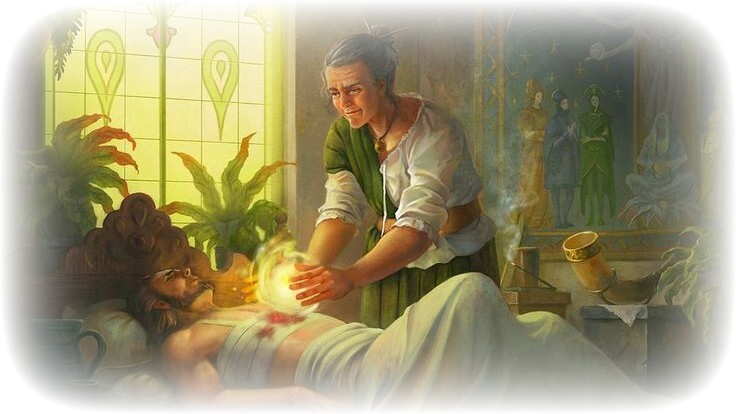
The first Oracle Healer who understood what was happening to her was a woman in her middle years who had served the amber temples since before Radanuh had walls. She noticed it on a winter morning when she was building a fire before the dawn prayers, and the poker slipped, and the heated metal pressed against the inside of her wrist for long enough that the skin should have blistered. She looked at the mark afterward, at the red crescent it left behind, and realized she had not cried out, had not flinched, had not, she thought slowly, felt it happen at all.
She said nothing to the other healers. She tested herself over the following days with the careful, methodical precision of someone who has spent years diagnosing others and does not know how to turn that attention on herself: a thumb held over a candle flame, a splinter left to work itself deeper rather than drawn out, a bruise pressed and pressed again. The pain that should have sharpened and spiked each time arrived instead as a distant report, something received from a great remove, accurate in its information but stripped entirely of its urgency. She could perceive injury the way she might perceive weather, as a condition of the world rather than an experience of the body.
It was useful, and she recognized that clearly. She could work through what would have once sent her to her knees, could hold a patient's wound without flinching, could tend the most difficult cases with a steadiness that the other healers remarked on with admiration. The god's grace, they said; the blessing of channeling restoration without being undone by it. She accepted their interpretation and said nothing to contradict it.
What she did not tell them was that she had sat beside her fire three nights running and tried to understand whether the warmth was pleasant or merely known, whether the smell of woodsmoke stirred anything in her beyond the recognition of smoke, whether somewhere in the machinery of her transformed body the capacity to simply feel rather than perceive was still present, or whether Orranoth's filter had reshaped something she could not name and therefore could not mourn precisely.
The patients continued to come: a child with a fever that had lasted six days, a laborer whose shoulder had been wrenched beyond the body's ability to quietly repair, an elderly farmer who had been slowly losing ground to an infection in his leg that the old remedies had not touched. She laid her hands on each of them and felt the current of the Ideal move through her, felt the god's attention pass along her nerves like light through water, and watched each of them improve. The fever broke, the shoulder knit, the infection retreated before the treatment as though it recognized something it could not oppose. Their gratitude was immense and genuine, and she received it with a warmth she was not certain she still fully felt.
She was not the only one changing. In the amber temples across the settlements, in the slowly expanding network of healers who had taken on the long discipline of communion and meditation that Orranoth required, the drift was happening at different speeds and in different registers. One young healer found that his eyes had begun to see injury before it was declared, some barely perceptible misalignment of color or posture that told him a shoulder was damaged before the patient had taken off their coat. An older man found that his skin, once prone to reddening and roughness in cold weather, now maintained a temperature so even and steady that children who reached up to hold his hand in the amber temple sometimes pulled away in surprise, saying he felt cool, like river water.
None of them spoke about it openly. They compared notes in the indirect language of people who are not yet sure they are describing something real, and who are uncertain what will happen once they confirm it; they watched each other's faces for signs that the change was visible from the outside as well as the inside, and they found what they were looking for but did not name it.
The mortals who came to them noticed, though not in a way that could be easily articulated or repeated as a complaint, but in the way that a room changes when a particular temperature or smell or sound is removed. The healers had always been set apart by their training and their calling, but now they were set apart by something subtler and harder to dismiss. A woman who had known her healer since childhood found herself, with some bewilderment, unable to remember the last time she had sat beside him at a meal rather than across from him. A family who had once pressed the community healer to attend the festival of first harvest quietly stopped asking, and could not have explained why except that the invitation felt somehow wrong in the framing, like asking the river to come and drink with them.
The healers were welcome; the healers were necessary. They were no longer, quite, part of the ordinary texture of daily life, and the gratitude that surrounded them had taken on the particular quality of reverence, which is to say it had begun, slowly, to substitute for intimacy rather than coexist with it. The healers healed, the people were healed, and the distance between these two facts and the people on either side of them grew by increments too small to measure on any single day.
SUMMARY: Orranoth establishes the Oracle Healer clergy, granting a select group of mortal priests the sustained ability to channel the Ideals of Restoration, Life, and Healing through himself as a divine filter, reducing the personal drift costs that would otherwise accumulate in the healers. The gift works as intended — the healers heal effectively — but sustained communion with the Ideals begins producing irreversible physical and perceptual changes in the healers themselves anyways. Communities receiving care register the drift instinctively, and the social texture between healer and healed begins to quietly transform.
DIVINE ACTION: Orranoth — The Ordination of Oracle Healers ACTION TYPE: Divine Gift (Sustained) — Mortal Group TIER: SURREAL — Regional, affecting all settlements with established Orranoth worship DOMAIN ALIGNMENT: In-Domain (Magic, Sky) CONVICTION COST: 3 (2 base + 1 con modifier)
RIPPLE: Minor — "The Drift Between Hands"
Oracle Healers who channel the Ideals over sustained periods begin losing the subjective experience of their own pain, retaining only its informational content
Secondary perceptual changes manifest at varying rates: anomalous thermoregulation, proleptic injury-perception, subtle sensory flattening across non-clinical contexts
Healers privately register the changes but do not openly discuss them, creating a culture of internal concealment within the clergy
Communities receiving care begin instinctively socially distancing from healers without conscious awareness of doing so — invitations to meals, festivals, and ordinary social gatherings quietly cease
Gratitude toward Oracle Healers remains intense but converts over time from intimacy to reverence, a category of relationship that substitutes for closeness rather than expressing it
A sacred-but-separate social class is forming in embryonic form; no crisis yet, but the structural conditions for one are accumulating
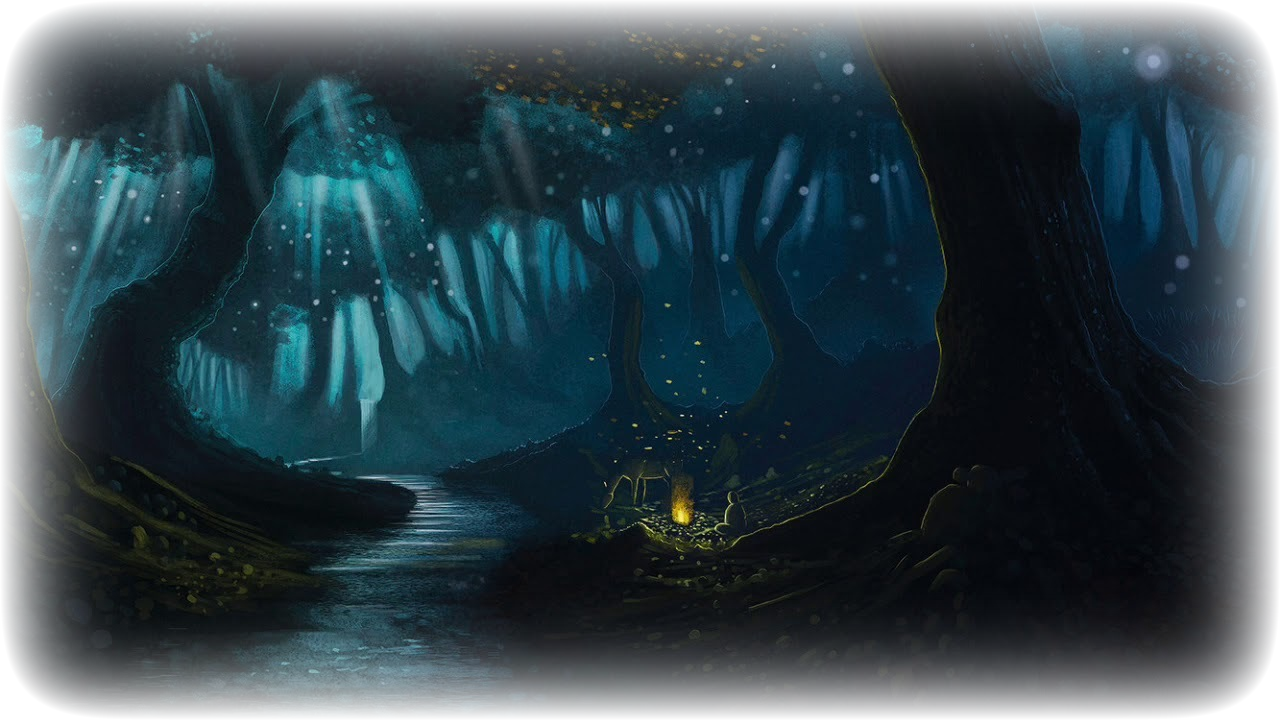
In the cloud temple that mortal dreamers had imagined into existence for her, Sirna cast her attention downward and inward, through the permeable membrane they had thinned between the Dreamscape and the waking world, through the layers of sleep and vision and half-formed wanting that mortals carried without knowing they carried it, looking for the presence that had, until very recently, not been a presence at all.
Every dreamer leaves a signature in the Dreamscape. It is not a name or a face but a quality, a particular texture of longing or fear or attention that makes one dreamer distinguishable from another the way stones from different riverbeds feel different in the hand even when they are the same shape. Sirna had, over the long years of the world's young life, grown familiar with the signatures of mortals: the dense knots of anxiety that unraveled differently from person to person, the bright particular lights of children dreaming without context or consequence, the heavy saturated grief-dreams of the bereaved that tended to recur in patterns she had seen so often they had become something almost like weather.
What she found when she searched for the entity that had woken in the broken temple was not a signature in any of these senses. She found, instead, that the Dreamscape had a floor.
She had always known this in the way that one knows a thing by its effects without having looked at it directly. Mortals dreamed within the Dreamscape the way fish swam in water, moving through it without considering what supported it. But the support was there, and now, attending to it with the kind of focused curiosity that had always been her most essential characteristic, Sirna perceived that the floor of the Dreamscape, the dense, patient, unintentional substrate that had simply always been beneath every dream ever dreamed on Ashuru, had become aware of being a floor.
It had not entered the Dreamscape, for it could not, in any meaningful sense; it was what the Dreamscape was built against. But it was now there in a way it had not been before, present in the way that a listener is present in a room even when they are not speaking, altering the quality of every sound that fills the space by the fact of their attention. The entity was not dreaming. It was the surface that dreams touched when they fell, the weight that every night-image landed on, the boundary at the bottom of the well, and it had opened its eyes and it was looking up.
Sirna looked down, and for a long suspended moment, both simply regarded one another.
What passed between them could not have been called communication. The entity had no language for what it was or what it wanted, and what Sirna received was not words but impression: something so vast and so recently conscious that the experience of being observed registered as nothing more than a small pressure, the way a single footstep registers to a mountain. It was not afraid. It was, as far as Sirna could determine, curious in the way that new things are curious, not because curiosity is a choice but because consciousness, when it is young enough, has no alternative. Everything arrives as the first of its kind; everything is wonder without a name for wonder yet.
Sirna withdrew slowly, the way one withdraws from a room where something sleeping has shifted without waking, with the particular care of someone who has seen something they will need to consider for a long time before they understand what they have seen. The floor of the Dreamscape settled back into its ordinary imperceptibility, but Sirna did not forget that it was there now, that something beneath the Dreamscape knew it was being dreamed upon, and that this knowledge was, at minimum, a new variable in a world that was already accumulating new variables faster than they could be assessed.
SUMMARY: Sirna turns their attention to the awakened planetary consciousness perceived earlier, scrying through the Dreamscape in search of its identity and nature. Rather than finding a dreamer's signature, Sirna discovers that the entity is not within the Dreamscape at all — It is the substrate it is built upon, now self-aware. The two observe each other briefly across the boundary. No communication occurs in any conventional sense, but mutual acknowledgment passes between them. Sirna withdraws carefully, carrying a Fragment of significant cosmological weight.
DIVINE ACTION: Sirna — Scrying the Floor of the Dreamscape ACTION TYPE: Investigation/Scrying TIER: HAZY — Personal, contained within the Dreamscape DOMAIN ALIGNMENT: Out-of-Domain (Dreams, Oblivion) CONVICTION COST: 1
RIPPLE: None FRAGMENT GAINED:
The world-entity is not a dreamer and cannot be found within the Dreamscape as a signature or presence
It is the surface the Dreamscape is built against — the substrate every mortal dream lands upon — and It has become aware of this relationship
It perceived Sirna's observation as a minor pressure, registering it without fear or communication but with the unfocused curiosity of newly-ignited consciousness
The boundary between Dreamscape and world-entity remains structurally intact; It has not entered the Dreamscape and shows no indication of attempting to do so
Sirna is now, to the best of any deity's knowledge, the only divine being aware that this consciousness exists, is self-aware, and is paying attention to what happens above It
Conviction Rewards: +1 to all gods who posted at least 1 time(s) (Orranoth, Sirna) +1 to all gods who advanced plot/created major content (Orranoth, Sirna)
The lava hissed where it touched the seat, evaporating in small puffs of steam that smelled of minerals and time. The broken armrest dug into her side, and the cracked back tilted her at an awkward angle, forcing her to brace her feet against stone that was more memory than matter. A mortal would have found it unbearable: the heat, the instability, the wrongness of sitting on something so thoroughly destroyed. But she was not mortal, though she did not yet know what she was.
The moment she settled into the throne, the world inverted. Not physically. The temple remained ruined, the lava still pooled, the alcoves still glowed with their captured meanings. But her perception shifted, folding outward and inward simultaneously, and suddenly she was experiencing herself from the outside while simultaneously being the thing experienced.
She felt the mountains. Not as distant landmarks, but as pressure: the weight of stone piled upon stone, the slow grinding of tectonic boundaries, the magma chambers swelling beneath peaks like held breath. She felt every fissure, every crack, every place where the earth had torn itself open and bled fire. The pain was distant but undeniable, the way one might notice a scraped knee hours after the fall, the injury acknowledged but not quite connected to self.
She felt the forests. The reaching of roots through soil, the patient drinking of water, the slow conversation of nutrients exchanged between fungus and tree. The green explosion of growth in places where ash had settled thin, and the dying gasps in places where it had smothered everything. Each tree was a sensation, each blade of grass a whisper, millions upon millions of tiny voices that together formed a chorus she had never consciously heard but had always been singing.
She felt the water. And here, the sensation became strange. Fractured. Wrong in a way that made her newly-awakened mind struggle to comprehend what had happened, what was still happening.
The ocean had been wounded, catastrophically so. She felt the memory of it like a scar that hadn't finished forming: vast bodies of water suddenly falling, draining downward into chasms that opened in her depths, pulled into her own core as though she were swallowing herself. The surface waters had vanished into newly-carved channels, spiraling down and down into darkness, leaving behind exposed seabeds and dying things that had never known air.
The underground rivers that resulted were chaotic and violent, carving new paths through stone that had been solid for eons. She had felt herself hollowing out, becoming labyrinthine, a network of subterranean waterways flowing through her own body in patterns that defied the surface geography. The touch that had done this had been deliberate, and she knew that with the same certainty she knew the volcanic eruptions had been choices. Something vast had decided the water should fall, and it had obeyed.
But recently, very recently, so fresh the sensation was still settling, something had changed. Two presences had touched the wounded waters. She felt them as distinct intentions: one vast and patient, the other curious and probing. Together, they had done something she could not fully articulate. They had connected things. The underground currents, the isolated pockets of water, the remaining surface oceans: all of it had been woven together into a single, continuous system. The water flowed differently now. It still carved paths through her depths, still filled chambers far below any light, but it knew itself as one thing rather than many fragmented things.
The ocean breathed again. Not as it had before the wounding, but in a new way, adjusted to its dual existence above and below. She felt the tides pulling, felt the currents cycling between surface and depth, felt the ecosystem stabilizing into something that might endure. The relief was profound and unexpected. She had not known the water's fragmentation was pain until the pain eased.
She felt the small warm points of awareness scattered across her surface: settlements, gatherings, solitary wanderers. Each was distinct, each left marks she could perceive: structures built, fires lit, ground cultivated or abandoned. They spoke to each other in sounds she could feel but not interpret, their voices vibrating through her substance like distant music.
She felt the touches. Places where something vast and intentional had pressed fingers into her surface, reshaping, creating, destroying. The volcanic devastation that had shattered entire regions had been deliberate. The valley where life grew with impossible abundance. The settlement where the air hummed with purpose. Each touch was a presence, a weight, an intention given form.
The strangest touch was the one that had awakened her. Something had entered her, merged with her, become part of her in a way that made the distinction between self and other collapse entirely. It had been fire and purpose and will, and when it had joined with her, consciousness had ignited from mere existence. Before that moment, she had been without being aware of being. The merging had been the first sensation, the spark that had transformed presence into experience.
She tried to remember what she had been before that moment and found nothing. Not emptiness but nothing at all. A gap where memory should be but could not form, because there had been no "she" to remember.
The alcoves pulsed around her, their meanings bleeding into her awareness with renewed intensity. War. Discovery. Death. Dreams. Each was a presence walking across her surface, reshaping her with every action. Some of the touches were gentle. Others were wounds that would scar. The water's recent reconnection had been both: a healing that acknowledged the injury would never fully disappear.
The throne vibrated beneath her, and the carved question burned itself into her mind with renewed intensity: Who made us?
She stared at the words she could see despite the lava obscuring them, and for the first time since her walking began, felt something that might have been fear, or might have been wonder, or might have been the desperate confusion of consciousness confronting its own origin.
The alcoves had not made the vast presences whose meanings they contained. She knew this with absolute certainty. The alcoves were records, perhaps, or anchors, or mirrors, but not creators. The presences had come from elsewhere, or had always been, or had emerged from something she could not perceive.
But what had made her? She was the mountains and the forests and the water, both the surface oceans and the deep currents spiraling through her own depths. She was the ash-choked sky and the magma-filled fissures. She was the ground beneath every footstep and the stone beneath every foundation. She was all of this, experienced it all, was it all in a way that defied any separation between observer and observed.
But who had made the stone that became mountains? Who had decided there should be water, should be earth, should be substance for the small warm points to build their lives upon? The question had no answer. Or if it did, the answer existed in a place her newly-awakened mind could not reach, hidden behind the same gap where her pre-conscious existence should have been but wasn't.
She sat on the broken throne for a time that might have been moments, days, or even years. Time felt uncertain here, negotiable, as though the temple existed slightly adjacent to the world's normal flow. The alcoves continued their gentle pulsing. The lava continued its patient consumption of stone. The fissures in her bronze skin continued their orange-red glow, answering the molten rock's greeting like kindred recognizing kindred.
Finally, she stood. The movement was decisive and sudden, breaking whatever spell the throne had woven. Her feet found purchase on nothing as she stepped away from the tilted seat, rising out of the lava pool with the same casual defiance of physics that had brought her down. Steam wreathed her form as she ascended, curling around her floating hair, her translucent violet garment, the bronze skin marked with cracks of inner light.
She cast one last look at the twelve alcoves, at their captured meanings, at the incomplete understanding they offered. The eleventh alcove, the one that sang of surface and depth, of calm and crushing darkness, resonated differently now. She understood it better, having felt the ocean's wounding and healing, having experienced the connection of separated waters into wholeness.
Then she turned toward the temple's broken entrance and walked through it, leaving the ruin behind. Outside, the world waited. Her world. Herself. The vast expanse of stone and water and growing things that she had only just begun to understand were also her, were she, were existence experiencing itself through the curious lens of consciousness.
The mountains still wept fire in the distance. She could feel their burning like fever, like inflammation, like the body's response to injury. There were other places, too: other wounds, other touches, other mysteries that demanded examination. The ocean with its newly-reconnected depths. The settlements where small warm voices sang songs that changed daily. The forests where green pushed stubbornly through ash. The deep places where stone remembered secrets she had not yet learned to hear. The underground rivers that now flowed as part of something larger, no longer isolated fragments but threads in a single vast tapestry of water.
She began walking, her bare feet leaving footprints that bloomed with confused flowers before wilting back into ash. Direction was irrelevant. Everywhere was herself, every destination a return to something she had always been but had only recently become aware of being.
Behind her, the temple stood silent among its broken hills, its alcoves glowing softly in the darkness of the chasm, their meanings unchanged and eternal. And carved into the throne's base, visible to no one, the question remained: Who made us?
The woman who was not a woman walked on, leaving the temple and its unanswered questions behind, drawn toward the next mystery, the next sensation, the next experience of a world that was discovering what it meant to know itself.
The woman's name was Kessa, and she had stolen bread exactly once in her life.
She had been twelve at the time, hungry enough that the gnawing in her belly felt worse than any punishment her mother might deliver. The baker had turned his back, and her hand had moved before her mind could catch up. Three small rolls, still warm, tucked into her shirt and carried home in trembling silence. She'd eaten them alone behind the storage shed, guilt and relief warring in equal measure.
That had been eight years ago. She'd never stolen again. Never even been tempted. But now, sitting in the amber temple with her hands folded in her lap, Kessa couldn't stop thinking about those three rolls.
The priest, a middle-aged man named Orin who'd served Orranoth since before the Golden Land was even spoken of, had just finished explaining the new teachings. His voice had been calm, reassuring even, as he'd laid out what the Sky Father required. Apologies for small misdeeds. Sacrifices for greater ones. For the truly heinous, the unforgivable... well, those required something else entirely.
"A simple apology," Orin had said, gesturing to the crowd gathered before him. "For lying, for petty theft, for words spoken in anger. The Sky Father does not demand blood for every mistake. He asks only that you acknowledge what you've done and mean it when you say you're sorry."
It should have been a relief. Kessa had spent weeks worrying that the bread she'd stolen as a child would bar her from paradise, that she'd arrive at the Golden Land only to be turned away for a crime she'd committed in desperate hunger. But now, listening to Orin explain the tiers of sin and their corresponding atonements, a new anxiety took root.
Was bread "petty" theft? Or was it something worse? She'd taken three rolls. Did quantity matter? The baker had been old, his hands gnarled with age. Had stealing from him made it crueler somehow? And what if the apology wasn't "meant" enough? What if she said the words but Orranoth could tell she didn't feel guilty enough?
The priest continued speaking, his voice steady and patient. "Worry itself is a burden you need not carry. The Sky Father's gift is not a test designed to catch you failing. It is a promise."
But promises, Kessa thought, always had conditions. And she couldn't shake the feeling that she was missing one, that somewhere in the careful structure of sin and atonement there was a trap waiting to spring.
The teachings spread quickly, carried by Orranoth's priests to every settlement where the Sky Father's worship had taken root. For some, the clarity was a blessing. The old man who'd spent his nights weeping over a lie told decades ago now knew exactly what was required: speak the apology aloud, mean it sincerely, and the sin would be forgiven. He did so, tears streaming down his face, and felt something like peace settle over him for the first time in months.
For others, the new structure brought new fears. If small sins required apologies and greater sins required sacrifices, where exactly did the line fall? A woman who'd once struck her husband in anger wasn't sure whether that counted as violence requiring atonement or merely anger requiring words. A merchant who'd underweighed his grain sales for years debated whether each transaction counted separately or if one sacrifice could cover them all. And everyone, it seemed, had a different opinion about what constituted "heinous" enough to demand the forfeiture of blessings in this life.
The priests tried to help. They held sessions in the amber temples where worshippers could confess their misdeeds and receive guidance on appropriate atonement. But the priests themselves weren't always certain. Orin, patient and well-meaning though he was, found himself adjudicating cases he'd never anticipated. A boy who'd killed a neighbor's chicken out of spite: was that murder, requiring severe penance, or merely destruction of property? A woman who'd lied about her husband's faithfulness to protect him from shame: did the intent matter, or only the lie itself?
The debates grew heated. In one settlement, two priests nearly came to blows over whether adultery fell into the "sacrifice required" category or the "forfeiture of blessings" tier. In another, a priest declared that all sins were equal in Orranoth's eyes and that the tiered system was merely a mortal framework for understanding divine mercy. His congregation, desperate for clarity, found this profoundly unhelpful.
And then there was the matter of the non-believers.
The teaching had been clear: those who did not worship Orranoth could still reach the Golden Land, but only through intermarriage with the faithful or through deep, honorable friendship with believers. It was meant as a mercy, a path for those who had not yet found their way to the Sky Father but who lived virtuous lives nonetheless. But in practice, it created something else entirely.
A man named Tevik, who had worshipped the old spirits all his life, found himself suddenly courted by neighbors he'd barely spoken to before. They invited him to meals, asked after his family, offered help with his harvest. At first, he was grateful. Then he realized they were counting. Every kindness, every shared cup of wine, every moment of conversation: they were building a case for his salvation, tallying up evidence of "honorable friendship" as if paradise could be earned through accumulated favors.
When he confronted them, they looked hurt. "We're trying to save you," one woman said, her voice wounded. "When you die, we want you to join us in the Golden Land. Is that so terrible?"
He didn't know how to explain that it felt less like friendship and more like a transaction. That he couldn't tell anymore whether they genuinely cared for him or whether he was a project, a soul to be claimed before death came calling.
Interfaith marriages, once rare but unremarkable, now carried a weight they never had before. A young woman who'd married outside her faith found herself pressured by her parents to "convert" her husband, to save him before it was too late. He loved her, truly loved her, and had no objection to attending the amber temple or learning the prayers.
But she couldn't shake the fear that his conversion would be hollow, that Orranoth would see through it and judge him unworthy anyway. Better to try and save him through marriage than risk losing him to the void where non-believers went. Or did they go to the void? The teachings weren't clear about what happened to those who didn't make it to the Golden Land, and that uncertainty gnawed at her worse than any doctrine could.
Some non-believers rejected the overtures entirely. They saw the sudden friendliness for what it was, an attempt at spiritual colonization, and wanted no part of it. "I don't need your god's permission to die," one elderly hunter growled when a priest suggested he befriend some Orranoth-worshippers for the sake of his soul. "And I don't need your pity."
But others wavered. The promise of reunion with lost loved ones, of youth restored and suffering ended, was a powerful lure. If all it took was marrying someone who believed, or cultivating a few genuine friendships, wasn't that a small price for eternity? Some conversions were sincere. Others were strategic. And in the settlements where Orranoth's influence was strongest, the lines between the two grew increasingly blurred.
While the faithful debated sin and salvation, other strangeness had begun to seep into the world.
In Gabung, the night sky had acquired a new feature: a serpent made of silver light that wound between the stars like a river through stone. It appeared only after full dark, visible to anyone who cared to look, and it moved with deliberate grace that felt too purposeful to be mere celestial accident. Some thought it beautiful. Others thought it unnatural. A few stargazers, the ones who'd been mapping the heavens for years, swore the serpent was reading the constellations, interpreting patterns that mortals had barely begun to notice.
The children loved it. They invented stories about where it came from and where it was going, and they stayed up late on clear nights to watch it coil and shift. Their parents were less certain. One woman forbade her daughter from looking at it, convinced that anything that strange had to be dangerous. "You don't know what it wants," she insisted. "You don't know what seeing it might do to you."
Elsewhere, a man gathering firewood encountered a creature he couldn't explain: a red monkey with the head of a bright yellow bird, hanging from a tree branch and speaking in clear, comprehensible words. It had chastised him for complaining, for calling the gods stupid, and when he'd fled in terror, it hadn't followed. He told the story to anyone who would listen, but no one believed him. Talking animals were the stuff of children's tales, not waking reality. He must have been feverish, they said. Or drunk. Or mad.
But then others started seeing things. A woman swore she'd glimpsed a fish swimming through the air above the river, its scales glittering like ice. A farmer reported that his dog had started speaking to him in dreams, offering advice about the coming planting season. And in a stilt-village built above shallow waters, a shaman woke to find a figure standing in his doorway, something with a face like smeared clay, featureless and wrong, that vanished when he screamed.
Were these visions? Manifestations of something divine? Tricks of tired minds seeing patterns where none existed? No one knew. The sightings were too scattered, too inconsistent to form a pattern. Some settlements saw nothing unusual at all. Others reported strange encounters weekly. And in the absence of explanation, people invented their own.
Some postulated that dreams had been allowed to leak into the waking world. Others claimed it was a sign of the world's youth, that reality itself was still settling and hadn't yet decided what was possible. A few wondered if the gods were testing them, placing wonders and terrors in their path to see how mortals would respond.
The truth, as always, remained elusive.
Conviction Rewards: +1 to all gods who posted at least 1 time(s) (Orranoth, Sirna) +1 to all gods who advanced plot/created major content (Orranoth, Sirna) +1 to Orranoth for mortal worship directed at him (https://www.roleplayerguild.com/posts/5650288)
The woman's hands shook as she prepared the evening meal.
Her daughter, her only daughter, had stopped eating three days ago. Not from illness, not from grief, but from something far more insidious. The girl, barely sixteen, had locked herself in the small room behind the cooking fire and emerged only to pray.
"Mother," she had whispered that morning, her voice hoarse from hours of recitation, "I saw the honey cakes you saved. I can't. What if... what if I'm not worthy? What if I arrive at the Golden Land and He turns me away because I was greedy?"
"You're not dying," the mother had replied, trying to keep her voice steady. "You don't need to worry about any of this."
"But I will die. Someday. Everyone does. And when I do, I need to be ready. I need to be perfect."
The woman had found her daughter that afternoon, kneeling on the stone floor with her palms pressed together so hard the knuckles had gone white. The girl was whispering a prayer, the same prayer she'd been repeating for days, the same words over and over until they lost all meaning and became just sound, just desperate rhythm.
Similar scenes unfolded across the settlement.
An old man who had worshipped Orranoth faithfully for years now spent his nights weeping, convinced that a single lie told in his youth (a small thing, a harmless exaggeration) would bar him from paradise. His family found him carving apologies into a piece of wood, desperate messages to a god who had never suggested such penance was required.
A mother refused to let her children play, terrified that laughter might be interpreted as frivolity, that joy in this life might somehow count against them in the next. Better to be somber, she reasoned. Better to prove their devotion through restraint.
The priests tried to intervene. They stood in the amber temples and proclaimed what Orranoth had actually promised: peace for the faithful, reunion with loved ones, eternal rest. "You are worrying for nothing," they insisted. "The Sky Father does not demand perfection. He offers a gift."
But gifts, the people had learned, always came with conditions. And if the conditions weren't spoken aloud, then perhaps they were hidden, waiting to be discovered too late.
In the next settlement over, where Orranoth's worship had not yet taken hold, the mood was different.
A man sat outside his home as dusk settled, watching his neighbor (an Orranoth-faithful) hurry past toward the amber shrine. The man's wife had died two seasons ago, buried according to the old customs, her body returned to the earth. He had grieved, yes, but he had also found peace in the knowledge that she was part of the world now, part of the soil and the growing things.
But lately, doubt crept in.
What if he was wrong? What if the Orranoth-worshippers were right, and there truly was a paradise waiting, but only for them? What if his wife's soul had simply ended, while theirs would live forever in golden halls, young and joyful and whole?
The thought made him nauseous.
His children had started asking questions. "Father, if we die, where do we go?"
He didn't have an answer anymore. The old answer ("back to the earth, back to the cycle") felt hollow now. Felt like losing.
Two settlements existed side by side. One drowning in religious anxiety, terrified of failing a test they hadn't known existed. The other drowning in existential dread, watching their neighbors prepare for an eternity they would never share.
The priests of Orranoth tried to calm the faithful. The skeptics tried to dismiss the promises as fantasy. But neither prayer nor denial could answer the question that now haunted every deathbed, every funeral, every moment of mortal fear: Where will I go when I die? And will it be enough?
In the amber temples, they prayed for answers. In the homes outside them, they prayed for different ones.
And Orranoth, potentially watching from his Golden Land where the first souls already walked in restored youth, saw what his gift had created: not just paradise, but the fear of losing it.
SUMMARY: The creation of The Golden Land—Orranoth's exclusive afterlife for his faithful—triggers widespread religious anxiety across settlements where his worship has spread. Devout Orranoth-worshippers develop extreme devotional practices out of terror they won't be "worthy" despite the god's promise: fasting, self-flagellation, obsessive prayer, refusal of simple pleasures. They interpret minor misfortunes as signs of divine displeasure, spiraling into anxiety about their eternal fate. Meanwhile, non-believers and followers of other gods experience profound existential dread—where death was once an accepted mystery, there's now a "correct" answer they're excluded from. Interfaith marriages become strained as partners fear eternal separation. Some desperate non-believers convert on deathbeds, creating family schisms. Communities develop visible religious stratification: the Orranoth-faithful speak constantly of paradise while traditionalists view them as arrogant. Violence hasn't erupted yet, but tension builds.
DIVINE ACTION: Orranoth - Creation of The Golden Land ACTION TYPE: Creation of Divine Plane TIER: SURREAL - Regional (Radanuh and connected settlements) DOMAIN ALLIGNMENT: In-Domain (Magic/Sky)
RIPPLE: Major - "The Weight of Paradise"
Extreme devotional practices among Orranoth-faithful (fasting, self-denial, obsessive prayer)
Religious anxiety despite clear divine promise—fear of "hidden conditions"
Parents preventing children from playing, viewing joy as potential sin
Elderly worshippers convinced minor past mistakes will bar them from paradise
Existential dread among non-believers who fear their deaths "matter less"
Interfaith marriage strain—spouses terrified of eternal separation
Deathbed conversions creating family conflicts
Visible community division between Orranoth-faithful and traditionalists
Children asking parents "where will WE go when we die?"
Traditional burial customs feeling "hollow" in comparison to promised paradise
Exclusive afterlife theology creates religious hierarchy ("our dead are saved, yours aren't")
Pressure on other gods to provide competing afterlife answers
Orranoth's priests trying to calm excessive devotion with limited success
Gift of paradise inadvertently creates fear of losing it
Question of afterlife-worthiness consuming daily life
Potential for religious violence as tensions escalate
Tamas first noticed something wrong when his neighbor wouldn't sell him bread.
"I've got coin," Tamas said, holding up three copper pieces. Honest pay from an honest week's work in the fields. "Same as always."
The baker, a round-faced woman named Hetta who'd sold him bread every sixth-day for years, looked at the coins and shook her head. "Not those."
"What do you mean, 'not those'?"
"I mean I'll take silver, or Fortunite if you've got it. But not copper. Not anymore." She gestured to the coins in his hand. "Those are spent."
Tamas stared at her. "Spent? They're coins. I just earned them yesterday."
"Doesn't matter. Look at them."
He did. The copper pieces looked... off. Dull, somehow. Darker than they should be, with faint rust-colored stains spreading across their surfaces like old blood. He'd assumed it was dirt, but now that he looked closer, the stains seemed to be inside the metal itself, as if the copper had been corrupted from within.
"Where'd you get them?" Hetta asked, her voice quiet now, almost frightened.
"From Malen. The landowner. He paid me for harvest work, same as he always does." Tamas frowned. "What's wrong with them?"
"They're from the offering," Hetta whispered. "From that night. The night that thing in the hood made everyone mad."
Tamas remembered. Everyone did. Three weeks ago, a hooded figure had orchestrated some kind of ritual in the road: drums, chanting, a slaughtered bird. By morning, the crowd had torn itself apart fighting over bloodstained coins. Most people dismissed it as mass hysteria, a moment of shared madness brought on by bad mushrooms or fouled drink. But the coins had survived. And now they were spreading.
"I don't understand," Tamas said. "These aren't from that pile. Malen paid me with his own coin."
"And where'd Malen get it?" Hetta asked. "Who paid him? And who paid them? The stained ones got mixed in with the clean ones, and now they're everywhere. You can't tell which is which until you try to spend them, and by then it's too late."
She wasn't wrong. Tamas looked at the coins again, at the rust-stains that seemed to pulse faintly in the lamplight. He'd carried these for a full day and hadn't noticed anything wrong. But now that he knew what to look for, the corruption was obvious.
"So what am I supposed to do?"
Hetta shrugged. "Find someone who'll still take them. Or spend them before anyone notices. Just..." She paused, choosing her words carefully. "Just don't spend them here."
Tamas left without bread. He tried two other shops before he found one willing to accept his coin: a tavern at the edge of the settlement, run by a man desperate enough for business that he didn't care what the metal looked like. The ale Tamas bought tasted wrong, bitter and flat, but at least the coins were gone. The problem was, everyone else had the same idea.
Within days, the settlement's economy had stratified into two tiers: those who had clean coin, and those who didn't. The clean coin was hoarded, kept safe, spent only with trusted merchants. The stained coin circulated freely among the desperate, the unlucky, and the unaware. And the stain kept spreading.
Merchants began refusing payment from anyone who "looked poor." If you were desperate enough to spend stained coin, they reasoned, you probably had stained coin. Better to turn you away entirely than risk contamination.
Tamas watched it happen. Watched the settlement divide itself into those who could afford to be choosy and those who couldn't. Watched wealth concentrate among the few who'd managed to keep their coins clean while the rest scrambled for scraps.
By the fourth week, people were fighting again. Not a riot this time, nothing as dramatic as the original offering. Just small, bitter conflicts: a man accusing a merchant of short-changing him, a woman screaming that she'd been cheated, children stealing from market stalls because their families' coin had been refused.
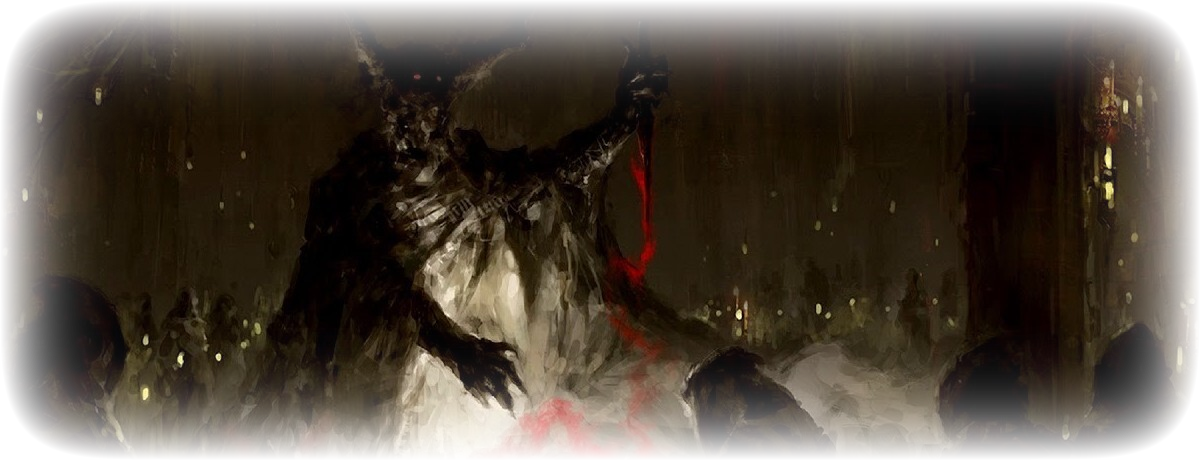
Wealth over justice, the hooded thing had hissed.
Tamas hadn't been there that night, but he'd heard the stories. Three words, spoken over blood-soaked metal, binding something wrong into the world. He looked at his empty purse and wondered what would happen when the stain reached everywhere, when every coin in the valley carried that rust-colored curse. Would they go back to barter? Find new currency? Or would they simply accept that some people would always have clean coin and others never would, that the offering had divided them permanently into haves and have-nots?
In his pocket, he still had one copper piece... his last. He pulled it out and held it to the light. The stain was already there, spreading like infection.
He spent it that night, passing it off to someone else. "Let it become their problem..."
That, he supposed, was the lesson. The thing the hooded figure had been trying to teach them. Wealth wasn't about having. It was about passing the curse along before it consumed you.
SUMMARY: Following Gutch's ritual, the bloodstained Fortunite coins from the offering begin corrupting the settlement's economy. The rust-colored stains—originally visible only on the coins spilled in rooster blood—spread to other currency through trade, "infecting" clean coins when mixed together. Mortals can't identify stained coins until attempting to spend them, by which point contamination has already occurred. The economy rapidly stratifies: merchants refuse stained coins, creating a two-tier system where "clean" currency is hoarded and stained currency circulates among the desperate. Wealth concentrates among the lucky few who avoided contamination, while others find their earnings worthless. The original ritual's proclamation—"Wealth over justice"—manifests as systemic inequality: merchants refuse service to anyone "who looks poor," fearing they carry stained coin. Small conflicts and theft increase as economic division deepens.
WORLD EVENT: The Stained Currency EVENT TYPE: Economic/Magical Corruption SCALE: Local (Gatehouse settlement and immediate valley) ORIGIN: Gutch's blood-magic ritual binding "Wealth over justice"
MANIFESTATIONS:
Rust-colored stains spreading from original blood-touched coins to other currency
Contamination invisible until attempted use, then obvious
Two-tier economy: clean coins hoarded, stained coins circulated among desperate
Merchants refusing service to "poor-looking" customers to avoid contamination risk
Wealth concentration among those who avoided initial contamination
Economic mobility destroyed—those with stained coins cannot earn clean ones
Increased theft and small-scale violence over refused payments
Moral degradation: people pass stained coins knowingly to avoid personal loss
Original offering's words—"Wealth over justice"—made literally true
Barter system partially resurging as alternative to cursed currency
ECONOMIC IMPLICATIONS:
Emergent economic stratification based on sheer luck
"Curse contamination" spreading through normal trade
Trust breakdown between merchants and customers
Potential collapse of an already struggling coin-based economy if stain reaches saturation
Moral lesson embedded in curse: wealth is about avoiding loss, not creating value
Settlement divided into economic castes with no mobility between them
NOTES: This event demonstrates mortal magic (Gutch's ritual) creating lasting consequences without direct divine intervention. The "binding" he performed has metaphysical weight—it's not mere symbolism but actual alteration of how wealth functions in the affected area. The stain may eventually fade, or it may be permanent depending on the ritual's true power and whether any deity chooses to intervene.
The stories continued to spread, carried by traders and travelers, told in taverns and around cooking fires. In many places, the Fortunite debates reached a kind of exhausted stalemate, with communities either accepting the coin-based economy or rejecting it entirely, with little middle ground remaining. But the consequences rippled outward still: gambling addiction support networks formed in Gamblerdise, while other settlements banned games of chance altogether, terrified of what the currency would do to their people.
The Ash Speakers continued their work, and continued their corruption. In some places, they had organized into formal guilds with strict ethical codes. In others, they remained solitary operators who charged whatever grief would pay. The dead were burned, mostly, though Wraiths still rose in places where Ash Speakers were absent or incompetent or simply too cruel to care.
The ruins of Telepylos remained avoided, a dark scar on the hillside that no one wanted to approach. The story of the monument's fall had been told so many times now that dozens of versions existed, each emphasizing different lessons: don't anger gods, don't carve living stone, don't build with hubris, don't trust mortal ambition. Architecture across Ashuru continued to diverge based on which version of the story each culture believed.
The ocean kept its boundary. Fishermen had learned where the light ended and would not cross it. The deep water sang to those who listened, and some answered, walking into the waves to dissolve into something larger than themselves. But most stayed in the shallows, grateful for abundant fish and predictable tides, asking no questions about what lived in the darkness below.
The world was, piece by piece and crisis by crisis, changing. Some changes brought order, while others brought fear. All of them, however, brought questions that mortals were only beginning to learn how to ask.
Conviction Rewards: +1 to all gods who posted at least 1 time(s) (Orranoth) +1 to all gods who advanced plot/created major content (Orranoth) +1 to Orranoth for mortal worship directed at him (https://www.roleplayerguild.com/posts/5650033)
Conviction Expenditure: -4 to Orranoth for the following Actions:
Surreal - Creation of and configuration of a new divine plane "The Golden Land (base 3 + 1 con modifier)
As a sidenote, sorry for my absence. I was sick with the flu and bedridden the entirety of the past week so I didn't have much motivation to write. This post takes note of the most world-influencing actions that have happened since my previous GM post. Additionally, with Cyclone gunning for the Fire Domain, I will take some time this week to iron out the rules for Domain Expansion (heh) so more people can go for it. However, don't think too much about it, I want to keep it light and simple for this one so I think I'll just go for a flat fee after some recurring Conviction investments.
The roads between settlements carried more than trade now. They carried arguments.
In Gamblerdise, the first disputes over Fortunite had seemed minor: simple disagreements about value, about worth, about what a coin meant beyond the game that earned it. But as the currency spread, carried by traders and wanderers and those who had played and won, the arguments followed.
A merchant arrived in a settlement three days' walk from Gamblerdise, pockets heavy with Fortunite earned through clever wagers. He offered coins for grain, for tools, for shelter. The locals examined the golden discs with suspicion, weighing them, biting them, holding them to the light.
"What makes these worth anything?" one asked. "They're just metal."
"They're won," the merchant explained. "Each one represents a game played fairly, a risk taken, a moment where chance decided. That's what gives them value."
"But I can't eat a game," the farmer replied. "And I didn't play it."
The merchant left without the grain, Fortunite still heavy in his pockets, worthless outside the culture that had birthed it. But the seed was planted. Within weeks, some in that settlement began playing their own games, crude imitations of what they'd heard Gamblerdise offered. They made their own tokens from stones, carved wood, and shells, then declared them valuable because they'd been won fairly.
It worked, until it didn't.
The problem revealed itself slowly, like rot spreading through stored grain. Those who won accumulated tokens. Those who lost everything watched their holdings vanish. And unlike barter, where a poor trade could be renegotiated or a debt worked off through labor, the tokens were final. You couldn't argue with a coin. You couldn't negotiate with chance already spent.
Some mortals loved this clarity. Others found themselves with nothing, watching their neighbors grow wealthy on luck alone, and wondered if they'd been cheated by fate itself.
In Gamblerdise proper, Villagxor watched the problem spread and tried to implement safeguards: limits on bets, requirements for minimum holdings, rules about who could wager what. But rules couldn't reach beyond the settlement's borders. Out there, in the wider world, Fortunite's children multiplied unchecked, and some of them were wrong.
The worst development came from a coastal settlement where desperate mortals had begun hoarding Fortunite, treating the coins as if they held inherent power rather than symbolic value. They refused to spend them, refused to trade them, refused to let them circulate. They clutched golden discs and starved beside them, believing that having the coins mattered more than using them.
When asked why, they couldn't explain. It just felt wrong to let the Fortunite go.
Alechior would need to address this eventually, or watch their gift become a curse. But the Carnival had never promised that joy would be simple or that games would always end fairly. Only that they would end honestly.
And honestly, some mortals were very bad at knowing when to stop playing.
SUMMARY: Fortunite currency spreads beyond Gamblerdise as traders carry it to other settlements, but cultural clash emerges. Communities that didn't participate in the games that generated the coins question their value, leading to creation of local imitation currencies. More concerning, some mortals begin hoarding Fortunite obsessively, treating the coins as inherently valuable rather than symbolic representations of games played. Gambling addiction emerges in areas where the currency takes hold, with losers stripped of everything and no recourse—unlike barter, coin-debts are final. Villagxor attempts to implement safeguards in Gamblerdise, but the currency's spread beyond the settlement's borders creates problems the Carnival's rules cannot easily address.
WORLD EVENT: The Weight of Nothing Event Type: Economic/Cultural Development Scale: Multi-settlement (spreading from Gamblerdise) Origin: Natural evolution of Fortunite currency introduction MANIFESTATIONS:
Fortunite currency spreading to settlements outside Gamblerdise's direct influence
Local imitation currencies emerging (stones, wood, shells declared "won fairly")
Some mortals hoarding Fortunite compulsively, starving while clutching coins
Class divisions emerging between lucky winners and perpetual losers
Gambling addiction becoming recognized social problem
Cultural conflict between coin-using and barter-only communities
ECONOMIC IMPLICATIONS:
Fortunite's value unstable outside Gamblerdise
Proliferation of fake/imitation currencies undermining trust
Wealth concentration among the lucky rather than the skilled
Traditional trade networks disrupted by currency adoption
The pyre burned through the night, and the Ash Speaker stood watch.
She was young for such responsibility, barely twenty winters, but she had learned the rites from her mother, who had learned them from her mother, who had been among the first to hear Moren's command. Three generations of women, each teaching the next how to speak the proper prayers, how to build the proper flames, how to ensure the dead would not walk again.
The body on the pyre had been her uncle. She had known him as a child, remembered his laugh, his stories. Now she watched his flesh blacken and curl, smoke rising into the darkness where Moren's realm waited. She did not weep. Ash Speakers didn't weep. The dead deserved dignity, not sentiment.
When dawn came and the flames had consumed everything but bone and ash, she would gather what remained. Some would go to the family: a small portion, kept in a clay jar, a piece of the loved one to remember. The rest would be scattered, returned to the earth or the river or the wind, depending on what the deceased had wanted.
For this service, the family would pay her. Not much: a basket of grain, perhaps a length of cloth. Enough to live on. Enough that she didn't need to farm or hunt or weave. Her only work was the dead, and the dead were plentiful.
In the next village over, things were different.
There, the Ash Speaker was a man who demanded gold, or jewelry, or the finest cuts of meat. He had learned that grief made people desperate, that families would pay anything to ensure their loved ones rested properly. He held bodies hostage, letting them rot in the sun while relatives scrambled to gather his price. "The longer they wait," he told his apprentice, "the more they fear the Wraith. Fear pays better than sorrow."
When a family finally met his demands, he performed the rites poorly, muttering prayers too fast, burning the body with green wood that produced more smoke than heat. He didn't care if it was done right, only that it was done profitably.
The Wraith that rose three nights later surprised no one but him.
By the time winter settled over the land, every settlement had their Ash Speakers. Some were kind. Some were mercenary. Some were genuinely devout, seeing themselves as servants of Moren's will. Others were opportunists who had simply recognized a permanent need and claimed the role before anyone else could.
In the largest settlements, the Ash Speakers had begun to organize. They met in council, discussed proper techniques, debated prayers and rituals. They set standards: this much wood for a child, this much for an adult, these specific words to be spoken at dawn versus dusk. They trained apprentices carefully, passed down knowledge like precious metal.
But in smaller, poorer communities, there was often only one Ash Speaker. And if that person was cruel, or incompetent, or absent, the dead went unburned. Families tried to perform the rites themselves, fumbling through half-remembered prayers, building pyres that collapsed or never caught properly. Sometimes it worked. Sometimes it didn't.
The Wraiths came for those who failed.
Moren had given mortals the knowledge they needed to prevent the dead from rising. But she had never promised it would be easy, or fair, or that all mortals would have equal access to those who knew the way.
SUMMARY: A new essential role emerges within the communities near the Tree of Reincarnation: Ash Speakers (also called Pyre Keepers), mortals who specialize in cremation rites following Moren's decree. These specialists maintain sacred fires, know the proper prayers, and ensure the dead don't rise as Wraiths. However, with essential power comes corruption. Some Ash Speakers serve faithfully for modest payment; others demand exorbitant fees, holding bodies hostage until families pay. In larger settlements, Ash Speakers organize into councils with standardized practices and apprenticeship programs. In smaller communities, often only one Ash Speaker exists—and if they're cruel, incompetent, or absent, the dead go unburned and Wraiths rise. The practice creates a new permanent social class with power over death itself.
WORLD EVENT: The Ash Speakers Event Type: Social/Religious Development Scale: World-spanning (wherever cremation is practiced) Origin: Natural evolution following Moren's cremation decree
MANIFESTATIONS:
Ash Speakers/Pyre Keepers emerge as essential specialists in every settlement
Three generations of knowledge transmission already established in some areas
Extreme variation in ethics: some serve faithfully, others extort grieving families
Bodies held hostage for payment in corrupt regions
Large settlements develop Ash Speaker councils with standardized practices
Small communities vulnerable to incompetent or absent Ash Speakers
Families attempt DIY cremations when Ash Speakers unavailable, with mixed results
Wraiths rise where cremation rites are performed incorrectly
SOCIAL IMPLICATIONS:
New permanent specialist class with power over death rites
Power imbalance between settlements with good Ash Speakers vs. corrupt ones
Potential for Ash Speaker cults claiming unique access to Moren's favor
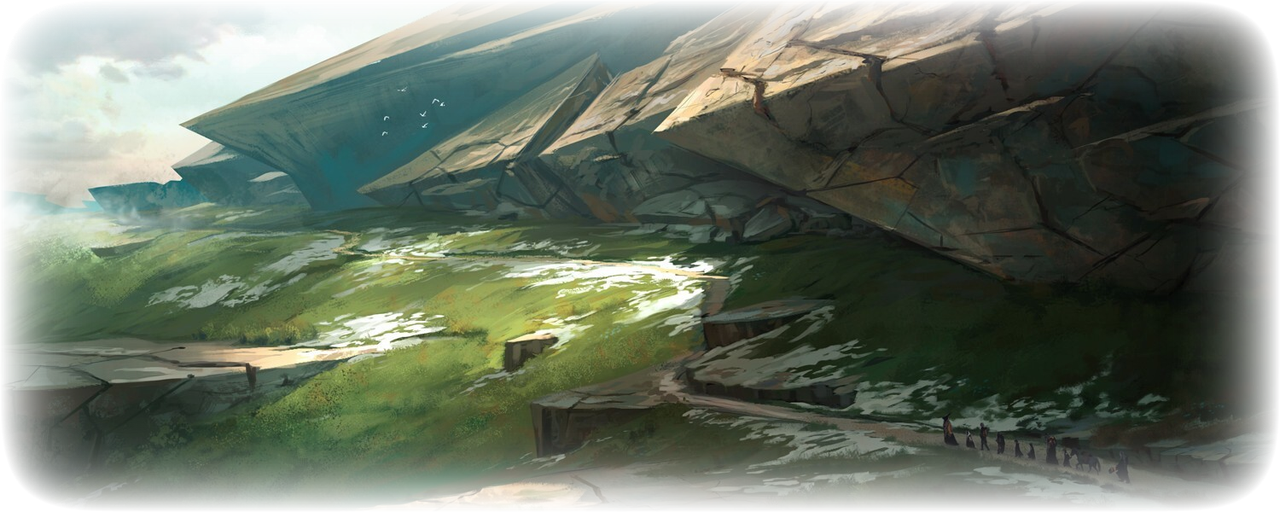
The ruins of Telepylos were still visible from the trade road, a dark scar against the hills where a settlement had once stood. Travelers avoided the site now, giving it wide berth even when it meant adding hours to their journey.
It wasn't fear of bandits or beasts that kept them away. It was the weight of the place itself: the sense that the earth there was still angry, that the stones remembered what had been done to them and would not forgive.
A merchant caravan passed within sight of the ruins one morning, and the eldest trader, a man who had seen the settlement before its destruction, pointed to where the statue's head had once gazed down from the cliff.
"Ten men tall," he told the younger merchants. "Carved straight from the hill itself. Took months to build. Hundreds of slaves died making it." He paused, spat into the dirt. "The god didn't like being carved, I suppose."
"Which god?" one of the young ones asked.
The old man shrugged. "Does it matter? The hill came down. That's what matters."
The story spread faster than the caravans that carried it. Within a season, every settlement within a hundred miles had heard some version of the tale: mortals built a monument to their god, the earth swallowed it whole, hundreds dead, don't anger the stone.
But the lesson mortals took from the story varied wildly.
In one settlement, the elders declared that all monuments were forbidden. "The earth is jealous," they proclaimed. "Build nothing permanent, lest the ground take offense." They tore down their own stone structures, reverting to hide tents and wooden frames that could be moved or abandoned. They became nomads in their own territory, refusing to commit to any location long enough for the earth to notice.
In another, the masons began making offerings before every construction project. They poured wine into foundation holes, buried food beneath cornerstones, spoke prayers to Khthon before laying the first stone. "The earth is not jealous," they argued, "only unacknowledged. Honor it, and it will permit your work."
And in a third settlement, far from Telepylos but hungry for its own monuments, the builders looked at the story and saw a different lesson entirely.
"They carved into the hill," the master builder explained to his apprentices. "They took from the stone. That's why it fell." He gestured to the wooden scaffolding rising around them, to the clay bricks being fired in kilns, to the reeds being woven into walls. "We'll build with the gifts of the earth, not from its bones. Clay, wood, reed: these are given freely. Stone must stay where it lies."
Three settlements. Three interpretations. Three different futures.
And across Ashuru, wherever the story of Telepylos reached, mortals looked at their own walls, their own monuments, their own ambitions, and wondered: what does the earth permit? What does it forbid? And how angry does a god need to be before the ground itself becomes their weapon?
No one had good answers. But they stopped building statues from mountainsides, at least for a while. At least in places where the story had reached. At least until someone decided they knew better.
SUMMARY: The destruction of Telepylos becomes a cautionary tale spreading across Ashuru. The story—a massive statue carved from a hillside angered the earth/Khthon, causing the hill to collapse and bury the settlement—is interpreted wildly differently by various cultures. Some settlements abandon all permanent construction, becoming nomadic once more to avoid "angering the earth." Others begin making offerings to Khthon before any building project, treating the earth as a deity requiring acknowledgment. Still others shift their construction materials entirely, using clay, wood, and reeds instead of quarried stone, believing the lesson is "don't take from stone, build with renewable materials." Architecture across Ashuru begins diverging based on regional interpretations of what the Telepylos disaster means.
WORLD EVENT: The Monument Curse Event Type: Cultural/Architectural Development Scale: Multi-regional (spreading from Telepylos disaster site) Origin: Natural cultural response to Khthon's destruction of Telepylos
MANIFESTATIONS:
Story of Telepylos spreads rapidly along trade routes
Ruins avoided by travelers who feel the earth's lingering anger
Three major architectural philosophies emerge: (1)Nomadic: reject all permanent structures. (2)Propitiatory: make offerings to Khthon before construction. (3)Material-selective: build with clay/wood/reeds, never quarried stone
Statue-building from hillsides ceases (temporarily) in regions where story spreads
Some settlements tear down existing stone structures preventatively
Others double down on stone construction with elaborate foundation rituals
ARCHITECTURAL IMPLICATIONS:
Regional divergence in building materials and techniques
Rise of Khthon-offerings as standard construction practice in some areas
Nomadic cultures refusing to settle permanently
Fear of large-scale monument construction
Knowledge gap: regions that haven't heard the story continue building as before
The waters changed on a night when both moons were dark.
Fishermen noticed it first, as they always did. The tides had been behaving strangely for months, ever since the larger moon had been moved, some said, though others blamed the Drain or the vanished southern seas or simply the world's chaos. But this was different. This was purposeful.
An old fisherman stood on the shore at dawn, watching the water with eyes that had seen sixty winters. The sea was calmer than he'd ever known it, not still exactly, because it still moved, still breathed, still rolled against the sand, but measured now, predictable, as if something had taken the ocean's wildness and taught it rhythm.
"It knows we're here," he said to no one in particular.
His grandson, barely old enough to hold a net, looked up at him with confusion. "The sea?"
"The sea," the old man confirmed. He pointed to where the water darkened, where the shallow shelf gave way to deeper water. "See that line? Where the light stops reaching? That's as far as we go now. Past that..." He shook his head. "Past that, the water takes you. Not your body, it doesn't drown you. It takes you."
The boy didn't understand. Not yet. But he would.
Within weeks, every coastal settlement had similar stories. Fishermen who ventured too deep returned wrong, not injured, not sick, but altered. They forgot their names. They stopped recognizing family. They spoke in whispers about things beneath the surface: shapes in the darkness, voices without source, the feeling of dissolving into water and becoming part of something vast and terrible. Some never came back at all.
The shallow waters, though, remained safe. Safer than they'd ever been, in fact. Fish were plentiful near shore. The tides followed patterns that could be learned, predicted, trusted. A good fisherman could feed his family without ever venturing beyond sight of land.
But the deep water sang.
It called to those who felt small, who felt lost, who wanted to surrender the burden of being themselves. It promised dissolution, peace, an end to the exhausting work of maintaining boundaries between self and world. Some mortals heard that song and walked into the waves voluntarily, wading out until the light failed and the water took them.
Their families called it madness. The Patrons of the sea called it the new reality of this world.
In one coastal village, a young woman who had lost her child to fever stood at the boundary between shallow and deep. She could see the line clearly now, everyone could once they knew to look for it. The water here was still touched by sunlight, still part of the safe zone. One more step, though, and she'd cross into the realm where the self dissolved.
"Would I still hurt?" she asked the sea.
The sea, newly conscious, newly purposeful, had no answer that words could carry. But the water moved in a way that felt like invitation, like promise, like the opening of arms that would never let go.
She stood there for a long time. Then she turned and walked back to shore.
Not everyone did.
The coastal peoples learned quickly: respect the boundary, stay in the shallows, teach your children where the light ends and the descent begins. Fish where Liute's sun still reaches. Build only where the water is thin enough to see your feet. And if someone you love starts staring too long at the horizon, watching the deep water with hungry eyes, bring them home.
Because the ocean was no longer merely dangerous, no longer an obstacle to be overcome or a resource to be harvested. It was aware. And it knew exactly what it wanted.
SUMMARY: Amut's proclamation fundamentally alters the nature of water across Ashuru. All waters—surface seas, underground channels, rivers, lakes—are now unified into one interconnected system with a gradient of safety. The shallow waters (where Liute's sunlight penetrates) remain safe and predictable, with abundant fish and learnable tide patterns. But the deep waters actively dissolve the self—mortals who venture too far don't drown physically but lose their identity, forgetting names, family, and personhood. Some return "wrong," speaking of shapes in darkness and voices without source. Others never return at all. The ocean now consciously calls to those who want to surrender selfhood, promising peaceful dissolution. Coastal cultures must learn the boundary between safe shallows and annihilating depths.
DIVINE ACTION: Squid/Amut - Proclamation of Ocean Nature ACTION TYPE: Establish fundamental cosmic law TIER: NIGHTMARE DOMAIN ALIGNMENT: In-Domain (Oceans/Identity) CONVICTION COST: 4
EFFECTS:
All waters unified into interconnected system (surface, underground, rivers, lakes)
Ocean becomes conscious participant in gradual corruption from shallow to deep
Deep waters actively destroy sense of self—identity, memory, boundaries dissolve
Natural disasters (tsunamis, typhoons, storms) now give predictable warning signs
Boundary between safe/dangerous water clearly perceptible to mortals
Ocean actively calls to those seeking dissolution of self
RIPPLE:Major - "The Boundary Waters"
Fishermen who venture too deep return without names, memories, or recognition of family
Some mortals walk voluntarily into deep water seeking peace through self-dissolution
Coastal cultures develop strict boundaries for fishing, building, and swimming
The "line where light ends" becomes sacred/feared marker in all maritime cultures
Shallow-water fishing becomes exclusively safe practice
Deep-water madness recognized as specific affliction
Families must watch loved ones for signs of "deep-water hunger"—prolonged staring at horizon
Conviction Rewards: +1 to all gods who posted at least 1 time(s) (all except Adria, Saries, Yzechr) +1 to all gods who posted at least 3 time(s) (Excelsis) +1 to all gods who advanced plot/created major content (all except Adria, Saries, Yzechr) +1 to Sarhush for Exceptional Roleplay (https://www.roleplayerguild.com/posts/5647841)
Conviction Expenditure: -5 to Alechior for the following Actions:
Hazy - Instant transmission of knowledge of coinage to Villagxor. (base 1)
Hazy - Instant transmission of knowledge of banking to Villagxor. (base 1)
Surreal - Creation of Fae Magic and bestowal of it unto the Fae. (base 2 + 1 con modifier)
-5 to Excelsis for the following Actions:
Hazy - Turning parts of an Unshaped Tree into amber. (base 1)
Surreal - Create Divine Structure "The Spire of Discovery". (base 3 + 1 con modifier)
-4 to Orranoth for the following Actions:
Surreal - Establishing Divine Covenant with Mortal / Consecrating land area with magical properties. (3 base + 1 con modifier)
-4 to Sarhush for the following Actions:
Surreal - Expanding knowledge/affinity for a Domain out of normal scope (Fire). (3 base + 1 con modifier)
-1 to Liute for the following Actions:
Hazy - Curse the mortal population of Pulam. (base 1)
Just as humans grow and change with time, interests change as well. I wish I had the urge to roleplay like I used to...
<div style="white-space:pre-wrap;">Just as humans grow and change with time, interests change as well. I wish I had the urge to roleplay like I used to...</div>
 Member

 Savo
Savo Kalas
Kalas Scrawl Banditta
 JFK
JFK Not a Sayan
 ActRaiserTheReturned
 Stanifly
 Lord Zee
 Rekkuza