God Concept:
The Great and Imperishable
Sarhush, Bestower of the Mes, Whose Word Shapes Cities and Chains Kings, the First King and Last Unbowed, Binder of Crowns, would tell you that his demesne is
Civilization and
Kingship. Detractors and fiends might castigate him as only a lord of filth, oppression, and tyranny; Sarhush cares little for their impotent clamoring.
The strong will do as they please and the weak must suffer their decrees and do as they must: this is the self-evident and immutable way of the world, and it is Sarhush's philosophy. To obey his sage counsel and wise decrees is to rule with an iron fist and to realize your own greatness; to defy him is to invite the divine right of rule to fall upon one of your rivals who is not so feeble!
Appearance:
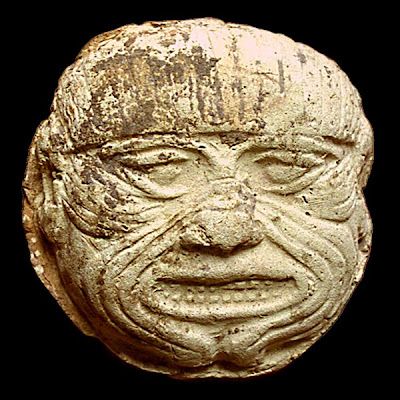
The likeness of Sarhush will often reflect the stature of the being that he addresses, but he is always a daunting figure of mighty and regal frame. His garb is kingly, his face harsh and like it has been carved from stone, and his eyes are cold and pitiless. He rarely smiles, and if ever he does, it is a terrible and fearsome thing to behold.
There is a stench that clings to him always. He reeks of sweat, filth, and smoke, and this odor is both overpowering and inescapable. At times a trace of fine perfume or incense rises through it, but only in discord, for it is never strong enough to conquer the stink of civilization that surrounds him.
Nature itself is offensive and exists to be subjugated and destroyed by mortal toil. The worthless expanses of wilderness and forest must be cultivated and turned to settlements and farmland, and every last tree should be felled and then burnt for fuel or shaped into timber buildings.
The vast majority of beings are nearly worthless, but fortunately it is much easier to mold them into something more useful than to tame the land itself. There is a rare spark of greatness and ambition that dwells in the hearts of a few beings, and those that are such endowed are in a position to dominate and mobilize their lessers in such a way as to achieve greatness and civilization. This subjugation is not only the prerogative of natural rulers, it is their very purpose in life. Sarhush is like the bellow of a forge; it is his desire to find and kindle such sparks into great forgefires, that upon the anvil of life can the world itself be wrought and shaped to a better form. Sarhush wants to observe and occasionally aid the great rulers of history, for under his tutelage they may erect great monuments. Their names will become legends, and through their prestige will Sarhush's own grow.
Few things are more anathema than spineless, collective, or timid leadership; even the anarchy and disorganization of nature is preferable to a society that finds itself in such a backwards state of affairs. But it is not Sarhush's way to personally purge the poisons of democracy, kindness, or feeble rulership wherever these weeds spring up. To do so in a direct way would be a refutation of his own philosophy, that the strong should naturally arise to dominate their lessers; moreover, fighting with mortals is something that he views as wholly beneath him. But he is not entirely beyond placing his thumb on the scale. Those who embody his views and emulate his attitudes can win his approval easily enough, and then he will bless their righteous claim to rule.
This blessing could take many forms, including mere counsel and the explicit acknowledgement and approval of Sarhush. Among the prominent of Sarhush's gifts would the endowment of one or several
Mes upon a worthy recipient. The
Mes are physical objects fashioned from the lived memories of Sarhush himself, a form of knowledge and firsthand understanding made manifest. To merely hold a Me in one's hand is to understand the knowledge contained within, and moreover, to witness just a glimpse of the power and might of Sarhush's divinity. For this reason the bestowal of a Me is a two-edged blade; with it comes wisdom and power, but also rivals, for the Me are as coveted as any crown and they will draw thieves and rival claimants like honey attracts flies.
Screams filled the air. There were so many that they melded together as one soothing drone, like the hum of insects at dusk. The sounds of swords clashing occasionally punctuating that melody as the sacking of the city went on. Through the metallic reek of blood, a musty and ripe odor cut through. The warlord turned to see his patron Sarhush emerge from a narrow alleyway. "I congratulate you on this victory,
Great King," the god himself purred. "Savor the sweetness of this triumph, but do not grow fond of it and find yourself wanting for its taste again. It would be best if a rebellion such as this never happens again, if such a wasteful act was unthinkable for the rest of living memory."
The world seemed to constrict as the warlord contemplated these wise words. Gone with the sounds of battle; there was only the warlord and his divine patron. But then he finally answered Sarhush, "Yes, your words ring true, but how would the prudent king achieve this? My mere law or decree can prevent a thing forevermore."
Sarhush shrugged. "Words and laws are but wind, as you say. If I were in your place, I would command my army to spend three days razing this place. In the center of the ruin, I would erect a great obelisk in commemoration and celebration! The priests can engrave it with the story of how this place defied you, and of how on this occasion, you offered no mercy to the conquered. Let it speak to their fates in grisly detail! In a thousand years all that you know and have seen may be as dust, but that monument of stone will remain, your triumph will be remembered, would-be rebels will know what it means to defy their lord, and all shall tremble at the utterance of your name."
 Member
 Lord Zee
 Vec
Vec JFK
JFK Fetzen
 Thayr
Thayr BingTheWing