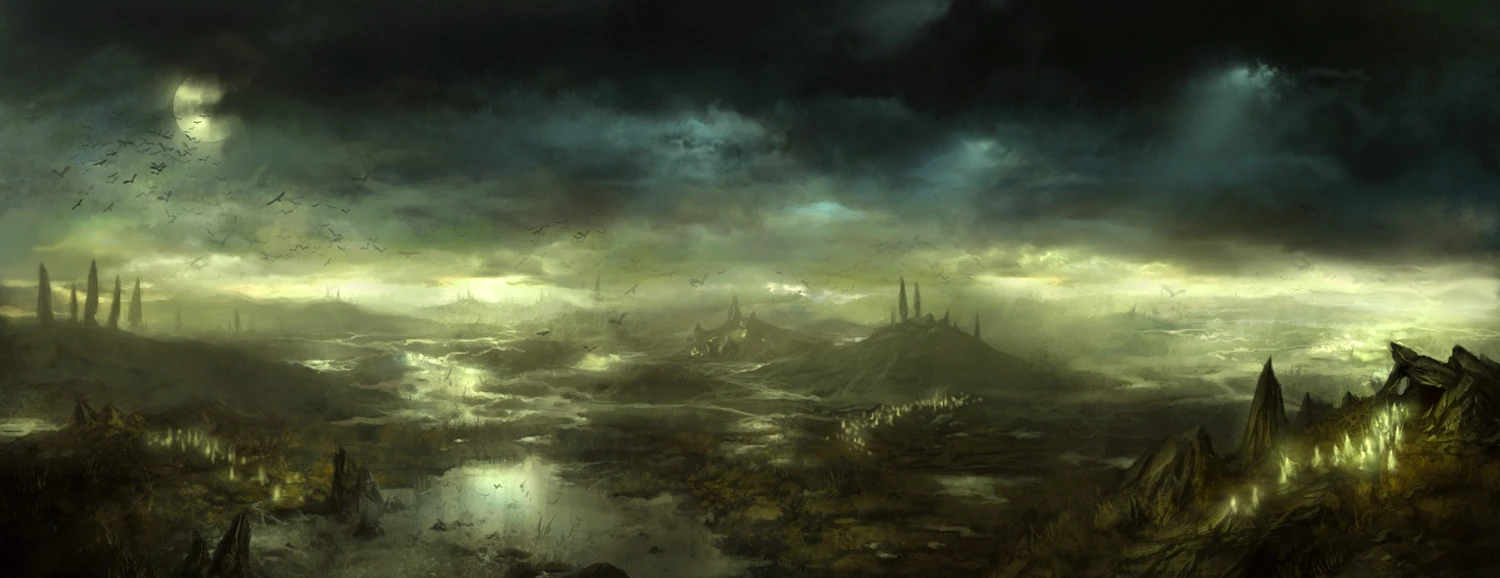
So could I make a mage who acts as a fence who deals in artifacts and antiques that could potentially be cursed or not? And, could my mage's magic be employed in breaking curses on things, so he'd mainly be doing rituals and exocrism-type magics?
@Flagg So what do you consider low fantasy then, out of curiousity?
Magic should mostly be 'off screen' and alluded to rather than a fact of life. More like supernatural elements in a good horror story where you suspect things are not quite right but you don't see the monster. The first season of true detective, maybe with the magic dialed up another knotch.
I've always been interested in this setting but never tried my hand at it. Would a wizard operating as a fence/black market for criminals while maintaining an artifact/antique shop be acceptable?
Yep. But a wizard in this setting wouldnt be someone who throws fireballs out of their hands. Magic would be more subdued and indirect.
Are you still searching for additional RPers? I'm new to these forums, but by no means new to RPing, or even Nation RPing. If you're still accepting, I'd be very interested.
If it's too late, I understand, and would still be interested in coming on later if you have need of an addition later on.
No were still open for business. Feel free to make a sheet.
Hi folks- the new first post in the Character tab has currently very disorganized and incomplete, but greatly expanded setting details. Theres SO MUCH to add and I'm happy to add it, so if you want me to make an entry for anything post it here with a write up and I'll plop it in. Also, if you see an empty entry heading you have a write up for or would like to write up, or if you'd like to expand anything that's already there, post here and I'll add it.
Will eventually organize the post into sections that make more sense, but for now- happy reading! Hopefully this will be a helpful reference for everyone.
Old Ones: Who or what these ancients were is mysterious, for they destroyed themselves in ages so distant there remain only confused myths and legends. Some tell of a race of gods descended from the stars, others of kingdoms of devils that dwell still in the wastelands and in the many hells below the earth. Azoth is strewn with the ruins of these advanced and strange peoples.
Ichor: Some scholars claim that our world has been cursed, impregnated by demons, and that Ichor is the seed of fallen gods and ancient monsters, seeping up from some vast, accursed womb. A black, viscous fluid with dangerous mutagenic properties in its unrefined state, Ichor is most frequently found among the ruins of the Old Ones. Refined Ichor in liquid and crystal form has an immense variety of uses, from powering archeo-tech to use as a key ingredient to many potions and spells. Some sorcerers despise the use of Ichor in magic as amateurish, but its effectiveness is undeniable. Warlocks among the beastkin are known to ingest raw Ichor, thus vastly increasing their power, though with often unpredictable results for themselves...
Broken Lander Gods & Myths:
Yorvengaand (Yorven) The blade by the hearth.
Yorven is a warrior and sun god, often depicted as a strong male figure in glorious gleaming armour, often coloured like gold or brass, with fire burning from under his helmet. The only element of darkness about him is a black cape he wears that is said to be made of smoke. Yorvengaand is considered a "Bright God". A more benevolent counterpart of the "Red Gods". His followers often regard worshippers of the Gore Lord as rivals if not outright enemies as Yorven values honour and skill in combat over bloodshed. As a result his followers will try to follow his tenants and ethics to win his favour.
"Remember this, you are a shield before you are a sword. A man is only as great as what he fights for." - A Yorvengaand worshiper to the warriors under his training.
Within his tales Yorvengaand is always looking to slay a cruel monster or rushing to the aid of those in need. He vaules life and is thought of a defender of the weak, showing his blessings to those in dire need or fighting in defense of others. If his devoutees wish to pray to Yorven they must write out their prayer on a piece of parchment or wood and burn it, allowing the smoke to find him. Otherwise they must call on his name in the heat of battle or he may not hear them.
He is the fire of battle. The fire in each warrior's heart. He is the fire of home each should seek to return to and lay their sword down.
Kaviken The fox who runs wild.
A trickster spirit, often depicted as a fox with white or ice blue fur with red eyes. He is often shown wearing the skull of a wolf or larger fox as a mask. Kaviken's mind is unknowable to the sane man. He is neither good, nor evil but wild. His moods may swing him towards acting kindly and aiding travelers one day and send him on a savage hunt another. The one thing he can be relied upon to do is keep his more threatening tricks aimed at adults.
Kaviken is the patron spirit of children, being one himself among the other gods, and will always act kindly to the very young. Children will leave milk out for him at night in the hope the trickster will share his treats with them. Pregnant women will leave offerings out that the fox will bless their unborn babe and their house. Whether Kaviken actually answers these prayers is unknown though most shrug him off as a bed time story.
The only thing close to proof of him are stories from the deep forests of the isles where it is said those who have committed acts of violence against children have been found dead, their flesh savaged and looks of horror on their faces!
"The fox! The fox hunts me still! The eyes, the fangs! Every night he hunts me!" - Bergold the witch. Suspected killer of two women, five men and seven children. Took her own life in a fit of madness before the jarl's judgement could be served.
If you worship the fox do not hunt his kind on your lands, it invites bad luck.
Zasha The maiden of the fields.
All lands know at least one goddess of fertility and Zasha is one of the most prolific in The Broken Lands. She is thought to appear as a woman of other worldly beauty, always appearing in the distance, often obscured by summer rains. One thing all these wittnesses claim, she wears a flowing gown of white and sports a crown of curled horns. Whether it's an actual crown or something sprouting from her head is unclear. Many of the male gods have tried to win her favour and take her for their wife but all have failed so far.
"See you put a bit of everything you want her blessing in a stone circle... and then you do a little dance, like this see. No you don't sacrifice it! No blood, she hates that!" - A drunk druid of Zasha.
Harkon Lord of the Night Sky & the Keeper of the Dead
Ylwan Wife of Harkon, Queen of Blood & Sorcery
Meroe
The drowned goddess, the wife of sailors
The tale of Yorven, Ormen and Grom, and the tragedy that befell the race of gods at the beginning of time, is well known to the northlanders. A lesser known story, mostly told in hushed voices among superstitious seafolk, continues the tragedy even farther, for it is said that Ormen was wed to Meroe; a pale, morose goddess who was the only one besides Ormen’s own brother who could feel any love for the lord of death. It is unclear if she existed outside of Grom’s family or if she is a sibling of some kind, but everyone agrees that, when her husband was struck down to preserve mankind, she tied her foot to a rock and hurled it – and herself – into the roiling seas out of grief. But a goddess is not so easily slain, is she? She did not drown in the tides as was her want, and sank to the very bottom of the lightless abyss. Perhaps it is something she found there, or simply the nature of spending eternity chained to the tenebrous bedrock of the ocean, but they say that Meroe went… mad, madness borne from something more than simple grief. A madness so profound it changed her into something divine – no more.
Sailors beware when they hear an eerie chant over the biting wind and sloshing waves, for to be called to Meroe’s realm is worse than death. If at all possible, a prisoner or slave is gladly sent to the depths as sacrifice to appease the mistress of the sea and superstition holds that those who do will sail smoother waters. Listen in at a portside tavern and you might hear some men claim they have seen her pale blue face beneath the water, just besides their ship, following, beckoning, smiling invitingly. It is a vicious trap.
In her great house at the bottom of the sea, on a vast plateau that sunlight has not caressed since the dawn of time, Meroe collects the drowned of the world, men and women both, denying them the afterlife they deserve. Women are fortunate, for they are merely made handmaidens to herself and her inhuman children, but woe unto the men who must wed her and join her miserable harem. Miserable because here, in the darkest, coldest halls on Azoth, Meroe reveals her true face: a grotesque monstrosity said to be so horrifying it would make even the most black hearted sea reavers weep with terror. Miserable because here, they must lay with her and father her children. All hope, all happiness dies in the wake of Meroe’s ever growing brood.
None can say if the tale is true or not, but few are willing to risk being mistaken in disbelieving it, and so perpetuate the myth from one generation to the next. Sailormen do tell of many outlandish creatures they have seen on their maritime voyages, creatures so strange and repulsive that they might very well be Meroe’s dreaded children.
Better to throw a slave overboard and make sure you are spared, no?
Yorven, Ormen, Grom and the Beginning This is not the only story expalining the creation of the world in Azoth but it is a common one in the Crooked Isles.
In the beginning their were the gods who lived in their grand hold. Among them were spirits, demons and monsters who were so normal to the first gods. And there was man, who was weak, and small. Who was food and slave both to the things that made the grand hold their home.
King of these gods was Grom The Vast. He who was most powerful and strongest of all the gods! He was a tyrant and a warlord who loved to wage bloody war through the nothingness that was then creation.
Grom had two sons who each could almost rival him in power. Their names were Yorvengaand and Ormengaand. One born of fire, one born of ice. One made of mother's life, one of father's death. Oh what princes they were!
But Grom was a jealous and cruel god and he envied his sons, for he saw them as a threat. So when they became men among the gods and recieved the tools of their futures on their nameday, as all men do form their fathers, he played a cruel trick upon them.
To Yorvengaand who was light and warmth and loved all of life he gave the sword. A cruel weapon that unlike the axe or bow had no purpose but death. And he pushed this gentle hearted boy into the rings of the warriors and laughed as he was bloodied by cruel hands and blades, weeping as he was forced to shed blood.
To Ormengaand he gave the scythe of the farmer. The tool of the harvest and those that make that which gives life. To Ormen who was the blizzard given life, who brought nothiong but death in his wake and looked on all with cold eyes. How Grom laughed as his deathly son looked on his fields as they froze and wasted to nothing.
After suffering his cruelty for so long the young gods rebelled, leading an army of their own to overthrow their cruel father. In the end it came down to the three and with his fiery sword Yorven cleaved Grom's head from his shoulders, sending it spinning into creation. It was here that Ormen took his scythe to it and brought life in his own way. Grom's eyes overflowed and became the seas, his teeth the mountains, his hair the trees and his skin the soil.
The gods gave this world to the tiny thing called man as a reward for supporting them in the war for the grand hold (heaven to the northmen) in the promise that they would pay hamage to the gods who helped free them and in return those that lived their life true would return to the grand hold and feast with the young gods as equals. The dark things that fought alongside Grom were struck down and scattered becoming the monsters and red things of the world now.
The chaining of Ormengaand For a time the gods walked the world and worked with men to make it grand, some say this was the time of the Old Ones. Yet it was not to last. For Ormengaand was a lord of death by nature despite his deeds and noble heart. Wherever he went ice followed and all met death before his endless cold. In time he threatened to end all of man's world. So came the sad time when the gods were forced to come together and imprison him.
With the help of Kaviken the trickster they lured him to the deep north and wrapped Ormengaand in chains made by the forge god. Yet even that was not enough! Ormengaand cursed them for cowards and traitors as he traded blows with his brother... until he saw the carnage he had wrought. With a heavy heart he submitted to the chains and asked of Yrven "If I am to be felled I beg it be by your hand, brother, for the love we share let my end come by a warm hand."
So with a cry of great anguish Yorven drove Ormen's grat scythe into his brother's heart. Yet that did not kill him, for a son of Grom is not so easily slain. Ormengaand yet lives, slumbering at the heart of his endless storm in the frozen north. Sleeping, waiting with one baleful eye open.
It is said that should the Red Gods ever be victorious then Yorvengaand will be the last thing to fall tot hem in battle and his last breath falling will be what finally wakes Ormengaand from his sleep. With a rage only love can bring Ormen will break free from his chains and sweep the world clean of demons once they have done so of all else. Only then, once all else is dead will Ormen be free to walk the world, finally able to breathe easy knowing he cannot spread any more death. What he will do with that world is known only to him.
Worship Oremngaand is not actively worshiped in most places (Though some view him as a god of winter and not just death in certain parts of the world). He is still respected as a god among the northmen though the name Ormen does appear in many of their curses.
His most common symbol is that of a single red eye or a scythe.
Major Deities
Yngvild The Goddess of Life and Rejuvenation, worshipped during the warmer spring and summer months. To Yngvild they ask for the blessing of life, birth, and enough food to survive the coming winters. Yngvild usually serves as the patron God for those who remain safe at home, farmers, mothers and children. Yngvild is often portrayed as a beautiful woman with long blonde hair, blues eyes, and a heroic smile.
Folkmar The God of Death and Battle. Folkmar is portrayed as a hulking Broken Hammer warrior, part human, part skeleton. It is not surprising that there is a deity to reflect that harsh reality of the North where many children do not survive their youth, and every day brings new dangers and enemies. Warriors and those who are nearing the end of their life will turn to Folkmar for favour and guidance.
Minor Deities
Asfrid Goddess of Brewers and Cooks. Portrayed as a large woman with a jolly smile, Asfrid is a popular figure amongst taverns and inns throughout the North.
Ulfheid Goddess of the hunt. Popular among any and all who hunt the tundra, deep forest, or the oceans for food.
Starri God of Tradesmen. The work of tradesmen and women within the Broken Hammer is held in high regard. Masons, Carpenters, Blacksmiths, etc. All of these skilled persons are required for the Broken Hammer to survive their hostile homeland. "Strong shelters and strong weapons make for a strong people" - As the old saying goes.
Red Gods: Azoth is a world filled with lurking spirits, mysterious intelligences, powerful beasts and haunted sites of power. Some of these- out of vanity or ambition or for other, more inscrutable motives- have set themselves up as gods. Many of these monsters and spirits are bloodthirsty, warlike, and feuding, often devouring each other when they become strong enough to do so. They grant their followers boons in exchange for blood sacrifices. The gods and demons making up the Red Pantheon are innumerable- it is not really known if they are all even one kind of thing...some are corporeal, others not- and most peoples and tribes who follow the pantheon worship one or a select few of the deities, though some worship the Pantheon as a whole, which they take to be symbolic of the fundamental nature of the cosmos- one of constant battle and unending appetite. Some of the red gods communicate and interact frequently with their devotees, while others remain aloof, answering prayers and rewarding sacrifices only occasionally and indirectly. Likewise, while some of the gods are tied to one specific holy site, others roam the world freely, manifesting themselves wheresoever they please.
They are frequently sought out by the ambitious or the desperate, who seek to create pacts with them in exchange for material gain, victory on the battlefield, success in love, magical power, or other boons. Some of the more commonly known and worshiped red gods include:
Jadas, the Scorpion Mother, depicted frequently as half-scorpion, half woman and often taken as the patron of pirates and slavers. She is not associated with any holy site, and it is a subject of debate among scholars whether or not she is merely the name given to a range of demonic activity.
The Gore Lord, a powerful spirit often invoked by warriors. His holy site is known as the Blood Spring. It is a pilgrimage site for many beastkin.
The Mountain Wisdoms are monstrous crones said to lurk high in the Godsfang Mountains, often sought out by those seeking hidden knowledge.
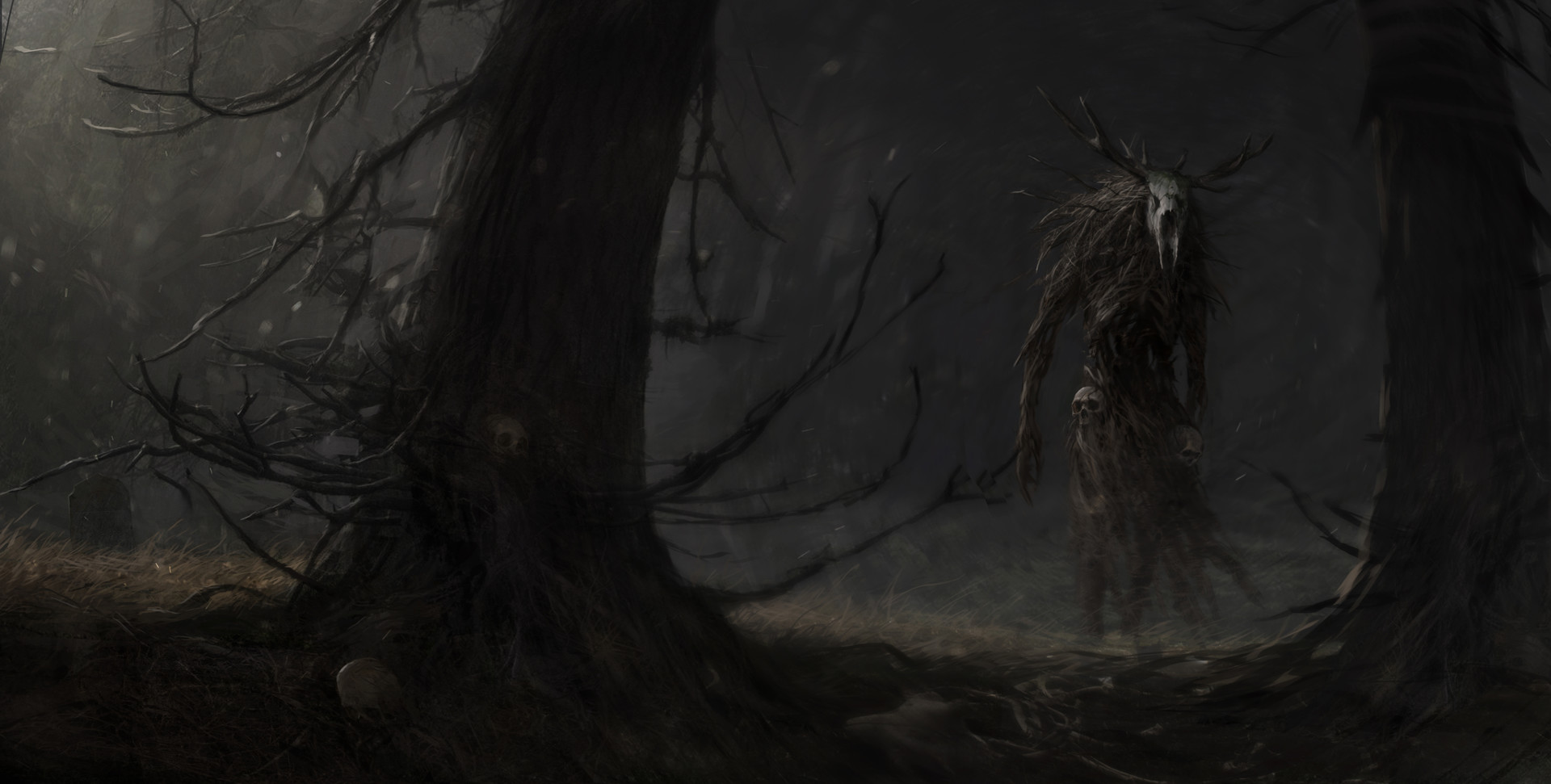
Horned Huntsman, a legendary beast often depicted as a wolf with prominent horns and a great spear. Feeds only on warm flesh and blood, and so do his servants. Said to prowl the Witchwood, where his main shrine lies. He is the patron of cannibals and hunters.
Pale Men:
Before the world was, before the sun and moon were set upon their eternal courses, before the firmament was jeweled with stars, before all gods and heroes, She Was, coiled at the heart of nothingness.
- Excerpt from the Oracles of the Mother
All travelers know that the mountains of the North are, like rotted teeth, riddled with caves and tunnels and the secret places of the Old Ones, deep chambers where the sky is never seen and the only light is the pale glow of fungus.
It is in these forsaken places that the Pale Men dwell. Human once, perhaps, or aelg or some other manling creature. Now they are turned strange, a league of the twisted and forgotten.
The tales tell of the Bone Priests, who preached the word of a nameless goddess more ancient than any other, and led the men of the Strong Elk Clan North, to find her hidden palaces and awaken Her. The legends are confused and conflicting. Some say Yorven intervened and cursed the Strong Elk for serving alien gods, but these are not the only stories of what happened in the North.
What is certain is that only the hardiest beasts and fiercest sons of men now dare to dwell in the North, amidst the Pale Men, who on moonless nights emerge from their warrens in endless numbers to hunt. With preternatural speed, they swarm over any surface and use teeth and claws and primitive axes to fell their prey. Trolls, beastkin, giants, wolves and bears- all seek shelter when the bone-curdling shrieks of the Pale Men are heard.
It has happened that the Pale Men have struck south at the Broken Lands, most recently under the rule of High King Yorvenson Brightflame, the Stonefoot's great-great grandfather, who rallied the clans and pushed the devouring hordes back North in the War of the New Moon. It is generally agreed, among the Broken Landers, that it takes a particularly powerful Bone Priest to unite and lead the Pale Men south.
Pale Queens What are these monsters that dwell beneath the Earth? Do they serve the Pale Men, or do the Pale Men serve them?
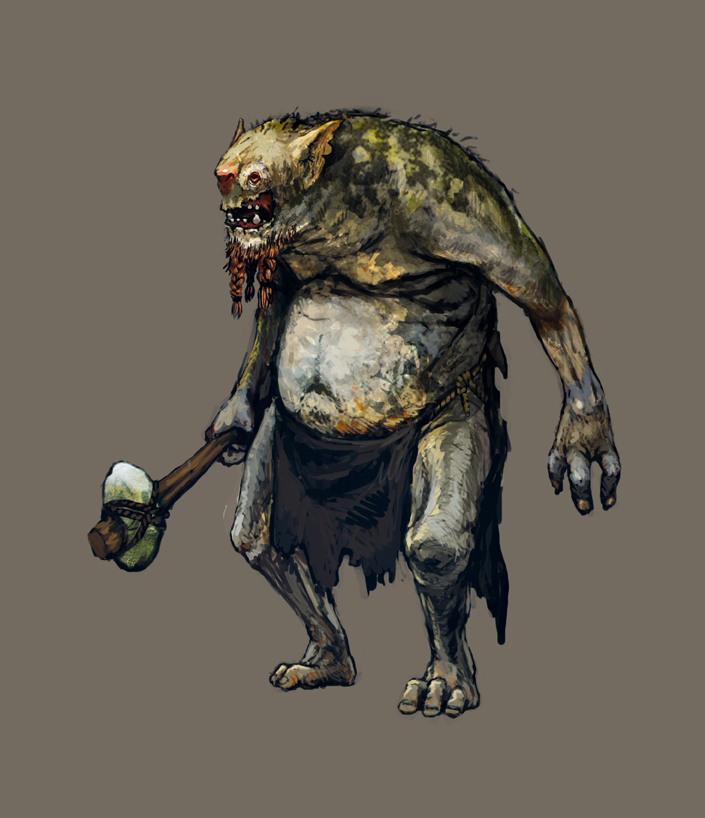
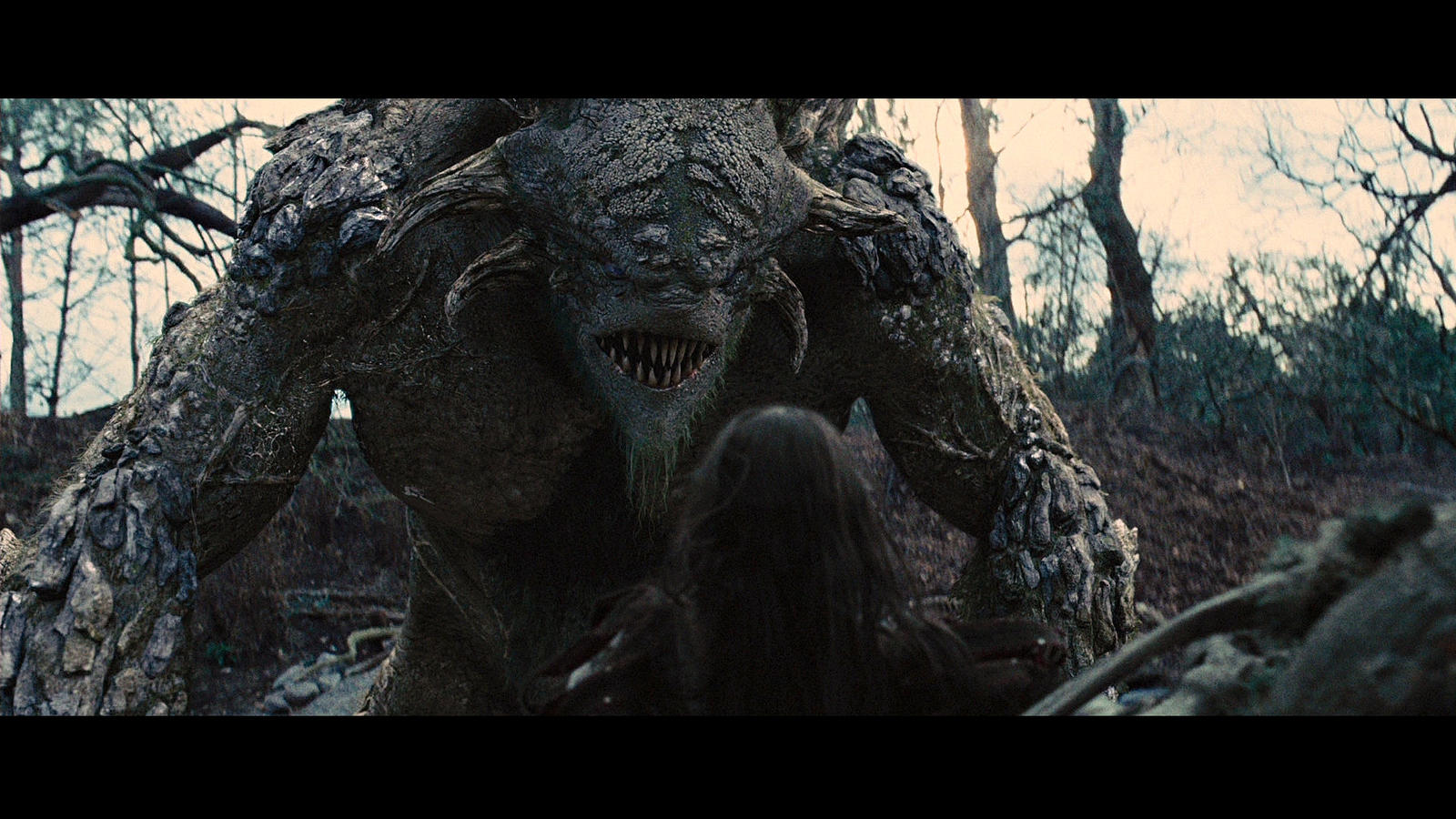
Trolls: A catchall term for particularly dangerous breeds of semi-sentient mutants taller and stronger than men, but smaller than giants. Trolls of all varieties are hardy, omnivorous creatures that have adapted to almost every environment, and are particularly plentiful in the Broken Lands. Some breeds are solitary, but many live in rudimentary tribes and coordinate hunting and raising of young. Some societies, such as certain beastkin tribes, the slavers of the Drathan Union, and the northern Shattered Moon Clan, domesticate trolls and use them in war and hard labor.
Beastkin & Trollkin: Abhumans and mutants warped by prolonged exposure to unrefined Ichor, the Beastkin are everywhere the scourge of civilization and are almost universally despised. Violent tribes roam the vast Azothi wildernesses, haunting especially the ruins of the Old Ones. They are frequently led by wizards, warlords, and the occasional red god. They come in an immense variety of shapes and sizes, most vaguely humanoid, and are used by some- especially the Dratha- as slaves or mercenaries.
Occasionally a warlord or sorcerer-priest will unite several tribes and pose a significant danger to more civilized peoples. Trollkin are yet more dangerous: the result of breeding experiments by Drathan wizards looking for an easily mass produced, obedient soldier. Trollkin are strong, viscious humanoid mutants, with cunning minds geared only to violence. They are used in the wars of the Drathan cities, but many have gone feral and formed tribes (often lording over the lesser beastkin) of their own.
Beastkin are far less common in the Broken Lands and are practically unknown across most of the Crooked Isles. Harsh winters, the fierce native wildlife (and humans), and the depredations of the Pale Men make it a particularly difficult land to infest.
Dawnstar Mountains
The Splinters
The Gravemire: a large region of boggy hill-land to the south of the low mountains of the Splinters. Hot springs and geysers keep the waters of the extensive swampland perpetually warm, even in the brutal northern winter, giving the Mire a fecund ecosystem capable of supporting many species of dangerous predators, including trolls, ichor-toads, and the man-eating swamp gaan, smaller cousins of the ferocious gaan lizards of the southern deserts.
Kingsport
Sepulchrave & the Fanghall
Bog Childer, "Boglings" Abhumans- often speculated to be related to harpies- not much larger than human children, the boglings have been mutated by millenia of exposure to Ichor springs in the Gravemire. Feral bog-childer tribes prowl the swamplands of the Mire for carrion and easy prey, using rudimentary weapons as well as their talons to hunt. The Shattered Moon Clan have long used and bred (the females are grotesque bog-queens) domesticated Childer as slaves, servants and fodder-soldiers in battle, and regard them with affectionate contempt. Other Clans find the use of hundreds of chittering slave-fodder in battle unmanful, but the Shattered Moon has no such scruples.
A common rite of passage in the Clan is to throw an aspiring warrior, unarmed, into a fighting pit filled with half-starved boglings. Many a Shattered Moon thane, therefore, bears plenty of the tell-tale talon-scars and bitemarks from the Childer, but it is quite rare to come across a Shattered Moon warrior without at least one of the vile little monsters cringing at his side, awaiting his bidding.
Every few decades, boglings will become fashionable as pets or servants among the wizards of the Union, and the Shattered Moon will sell cages full of the creatures to the Southrons at huge profit, though they fare poorly in the harsh Ashlands where the Drathans dwell.
Harpies: WIP
Hargraven: WIP
Giants: WIP
Forge Cult: WIP
The Dratha: An ethno-cultural subgroup of abhumans, the Dratha are a bloodline of sorcerers who engage in careful eugenics to ensure the purity of their race. Few in number, a Dratha is known by his or her black eyes, pale skin and intricate, curling tattoos in ancient script. They have a natural affinity for magic, and are famous for their magical academies, their skill at enchanting and their legendary arrogance and disdain for custom and piety. They venerate the memory of their founder, Othman Dratha, who in popular lore is said to have used cunning and treachery to steal the secrets of magic from the god of the moon (some legends say he ate the moon-deity's heart). Few Dratha believe such superstitious nonsense, but tales of Othman's ruthlessness and ambition illustrate the guiding tenets of Drathan society. While there are Dratha living throughout Azoth, they are most common in the powerful confederation of city states known as the Drathan Union.
Located throughout the Ashlands, Cinderlands, and the Red Desert the Union is governed by the (often fractious) Congress of Masters, a coalition of extremely powerful mages hailing from the Great Houses of the Dratha. Magical inquiry thrives among the elite denizens of the Union, which is home to many of the most celebrated libraries and arcanums in known world. All forms of magic, including necromancy, blood magic, and the other branches of dark arts are permitted and indeed actively studied in the Union.
Excluded from the exclusively Drathan ruling caste, the humans who form the vast majority of the Union population are deprived any of political participation, though the Masters are generally laissez-faire rulers, interested more in their arcane pursuits than actually governing and disinterested in the religion, mores or associations of their subjects. Most subjects of the Union are fishermen and grub-farmers toiling in the ashen mudflats along the Bay of Teeth, though there is a strong middle class of artisans and a plutocratic circle of merchants families who appreciate the protection and low taxes afforded by the Masters.
Militarily, the Union relies on Broken Lander, aelg, and beastkin mercenaries as well as hordes of slave-mutants purpose-bred for war by the Masters.
Aelg: A race of broad-shouldered abhumans with pointed ears, sharp fangs, olive skin and brutish faces, the aelg live in nomadic tribes as reavers, slavers and hunters indigenous to the mountains, deserts and ashlands of the south. The aelg are renowned as trackers, huntsmen and warriors, and their society- often derided as brutish by more stationary peoples- is united by a sophisticated monotheism and highly intricate oral traditions going back thousands of years. Some aelgmen tribes have migrated to the Broken Lands over time, though the history of their integration with human society is varied.
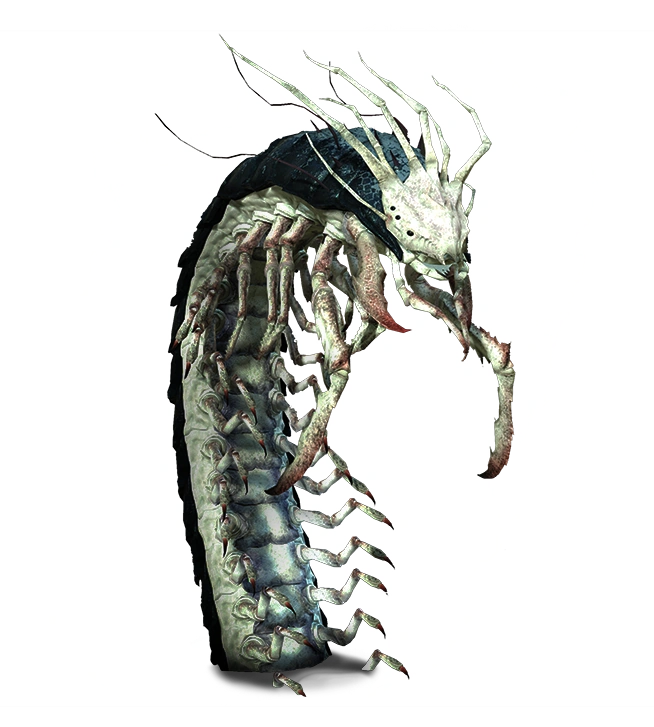
Aboriginals, the Nyr'kiin: sentient insectoids that come in a variety of phenotypes, the Aboriginals are among the oldest races of Azoth. Individually sentient, Aboriginals are psychologically scarred by the ancient memory of the unity of their species under the long lost Hive Mothers, destroyed eons ago but now worshiped as gods by many Aboriginals today. They are extremely susceptible to collectivist politics and demagogues, which many scholars theorize is a result of the psychic trauma caused by the ancient deaths of their Queens. Aboriginals are hyper-sensitive to psychic phenomena and magic, able to detect its use from some distance away. Stronger than humans, they make excellent soldiers, workers and slaves. Most members of the species can lay eggs and reproduce sexually or asexually, but scholars believe that in ancient times the Aboriginals reproduced like ants and bees through the Hive Mothers. Aboriginal larvae are known to many as nyrworms, and take 1-3 years to reach maturity. They are considered a delicacy by Drathan wizards.
Aboriginals are common in the Ashlands of the South, where many live in vast hives that are mere shadows of their former glory, though others live in smaller nests and large populations can be found in the Bug Districts of human cities. The hives live mostly in peace with the Drathan Union, exporting their own kind to the wizard-lords as slaves in exchange for delicacies and luxury goods produced only by the wizards.
Nyr'kiin are non-existent in the Broken Lands, where freezing nights and harsh winters make life intolerable to them, and they were wiped out of the Salished Empire many centuries ago by the genocidal holy wars of Shashul Davguld II the Bug-Burner.
But the stars foretold victory...do the heavens lie?! - last words of Savin daz Vo, killed in a duel with a rival Drathan Lord
Months Previous, in the Ashlands of the Drathan Union...
It was not yet evening, but the sun had slipped below the top of the canyon, leaving the rocky vale in premature dusk. It was not quite quiet here, amid the looming red rock cliffs and ash-sands. A raven was cawing hoarsely somewhere ahead, and cinereous newts croaked at one another as they dug for tiger crabs and beetles. In the distance, echoing faintly down the canyon, could be heard drums and the shouted call-and-response prayers of a Salished battalion on the march.
The scout was fiddling with the clasp on his cloak when he sauntered past the juniper tree, his thoughts circling a particularly dark-skinned camp-follower who'd caught his eye the night before last.
His gaze wandered lazily over the boulder fields rising to meet canyon walls to either side of him, but he barely saw them. He'd already decided there was nothing in this endless rock maze. He'd been down enough of its blind alleys and dead ends to know. No campfire remains, no man-scat, no sign the Union heathens and sellswords were holed up here hiding or waiting to strike. A necessary waste of time, scouting up here. He was more likely to be killed by a wolf-scorpion or nyr'kiin bandits than Drathan hirelings.
He thought this, oblivious to the man with the knife who had just emerged from behind the twisted trunk of the juniper.
In a single motion, the man had his hand over the Rainlander's mouth and sank his knife into him just below the chin. The boy half-turned towards his killer, bewildered, terrified as he realized this was it, this was the end, and grabbed the man's arm as he choked out the last few seconds of his brief life.
Daigon lowered the scout gently to the gray soil and closed his staring eyes. He drew an odd, swirling shape on the corpse's forehead in blood, and watched, his face expressionless, as rivulets of scarlet dripped from his design down the face and forehead of the dead body.
He stood, wiping blood from his blade and his hands on the scout's cloak. Men emerged silently from the boulders and trees around him, nearly a hundred of them. They were Broken Landers, mostly, with a few aelgmen, Ashlanders, Varyonese and even Rainlanders mixed in. All wore ash-stained linens beneath light lamellar of chitin and bone. Some had shields painted with the moon-and-star sigil of the Drathan Union, but most bore the cracked orb of the Shattered Moon Clan.
Daigon eyed his soldiers, the Coward's Men, for a moment, before nodding down the canyon, towards the direction of the Salished drums.
-
Feed the gods or be eaten. - From the Precepts of the Forge, Salished holy text
The Salished battalion dragged a long line of prisoners in its wake, shackled and miserable as they plodded up the Dust Way. Union soldiers, subjects and hirelings of every race from man to aelg to beastkin, even some unlucky Nyr'kiin. Many had likely been slaves of the Dratha or Varyonese merchant lords before the Salished took them; now they were being led East, to harsher masters. The warriors and the virgins would doubtless be fed to the Sacred Forges, offerings to the Rainlanders' insatiable gods.
The Shashul's soldiers marched before their living plunder in perfect order, spear tips and scale armor glittering in the red light of the Ashland gloaming. A Forge Priest, gaunt and bald, his robes as crimson as the setting sun, was borne before the main body of troops in a backwards-facing palanquin. He shouted praises to the many gods he served as they marched, and the men shouted their drilled replies in pious unison.
The road on which they marched was a straight line through flat country, the ashen plains thick with thorny bramble and obsidian boulders. To the south rose a line of red sandstone cliffs, the rockface cleft in places by slot canyons.
It was from one of these canyons that the first arrows started flying. The priest on his moveable throne was the first to die, the call-and-response ending abruptly amid shouted commands from the Salished officers.
Their discipline and speed was impressive. In less than a minute, the shield wall had formed, facing the cliffs. Unfortunately, the threat was not only from the canyons. The Coward's Men burst from the bramble and boulders on the opposite side of the road, screaming in barbarous tongues to the gods of the Broken Lands.
The Salished fought well for men unprepared and surrounded, but not well enough. Their phalanx could not leave the level ground of the road, could not back up into their now-rioting line of prisoners. The Coward's Men broke their formation and then broke them in a melee of Rainlander scimitars against northern axes.
When it was over, Daigon- his face streaked with gore and warpaint, his black hair plastered with sweat to his skull- stood over the Salished commander, a bearded man in gilded scale armor. He lay sprawled on his back, unwounded.
"The war is over, the war is over," he was repeating, in broken Drathan, "We are at peace, we are at peace."
Daigon cocked his head to one side, "Peace?" he asked in Salizi. His voice was a soft rasp, the sound of cloth on rusted iron.
"Your Congress- your paymasters and the Shashul, blessed be his name. They signed an armistice. We are permitted these prisoners."
"Are you?" asked Daigon, looking at the line of captives, whose chains his men were busy unlocking. His angular face was creased by the faintest suggestion of a smirk, "Well, I guess that makes me a bandit then."
"I do not understand," said the officer, "surely you are a soldier, with honor?"
Daigon turned from the commander to one of his men, "Tie him up, their officers go for a thousand teeth at Zar Dratha."
"COWARD!" shouted a voice, thick with the accent of the Broken Lands. One of the prisoners, a big northman rubbing wrists made raw by his shackles approached Daigon without the slightest trace of fear.
"You're the Coward, aren't you?"
Daigon didn't speak, just stood there, axe held loosely in his hand, pale eyes watching the newcomer. One of his men moved to stop the recently freed norseman but Daigon shook his head.
"I am Dirk- of Clan Varvudda!" said the prisoner, "Hireling for the Dratha, same as you, 'fore I was captured at Pike Pines."
Daigon still didn't speak, and Dirk of the Varvudda stopped and faltered slightly, suddenly unsure of himself.
"Er, look," he said, "I ain't your kin, nor your friend. I've crossed axes with Cowards Men enough times down here, before this war put us on the same side, and the Varvudda are no brothers with Shattered Moon... but you've done me a good turn here. I was food for the Forges, sure enough, and your lads've set me loose from that. So...you ought to know, if you don't: the Stonefoot's dead."
Daigon raised an eyebrow. "Is that so?" he asked.
"Aye, Coward, the High King is dead."
"Thank you, Dirk of Clan Varvudda," said Daigon in his quiet, dangerous voice, "Thank you very much indeed."
Is a occult detective, Cthuluian investigator type, workable for this setting?
I think so!
Also very interested! Currently thinking a parish priest who hears God telling him to exact holy vengeance on drug dealers and the like - hope that meshes with the feel you're going for?
Thematically it does! Just shoot for a fleshed out character, not a zealous caricature of a religious person (one of my pet peeves). Like he can convince himself vigilante justice is the only godly option left, but I'm not sure about literally hearing voices.