I have been writing as a hobby for longer than you have been alive. I have been a regular member and roleplayer of no less than fourteen different online forums during that time (including the old RPG), fivesix eight of which no longer exist.
I was previously a regular on the Homestuck forums, but I became so sick of thread turnover there that I asked around and eventually found the Guild. Since joining, I have exclusively only participated in Advanced RPs. Before Mahz gave NRPs their own subforum, I used to be an NRP regular in the Advanced Subforum. I am a Guildfall survivor, and know/regularly write with a few others.
If you ask anybody who has written with me in previous RPs, they should tell you that I have a generally open schedule, I post regularly and in a timely fashion, and I never drop an RP once I join unless the thread dies. Some of them may tell you that I have extensive expertise within the realms of Biology, Psychology, and Physics, which I will make no effort to validate since there is no way I can provide hard proof of aforementioned alleged expertise to anybody over the internet (though I am happy to try and answer any questions you send my way).
My favorite fandom is the Myst franchise, which seemingly nobody other than me has ever heard of.
I was a Contest Moderator for the Writing Contests Subforum for just a little bit over two years. I wrote the Moderation Policy for that subforum and I ran a contest called the Twelve Labours; you can still go there and see all of them and the entries people wrote for them in the Contests Section and the Victory Archives.
I have been quadruple secret banned from the guild discord. That is not a joke.
Skyfarer: Captain's Edition --- The Ineffable Confluence
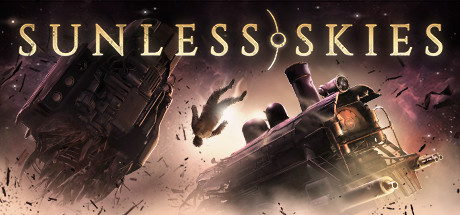
For any fans of Fallen London/Sunless Sea out there, there is a play-by-post, discord-based roleplay starting over there based on Failbetter Game's Skyfarer tabletop system.
A familiarity with either Fallen London/the Sunless 'verse is recommended, but familiarity with Sunless Skies - which is still in early access - is not.
Once there, head to the #the-ineffable-confluence-ooc channel and check pinned messages for instructions on how to join.
But what is the roleplay actually about?!?
The roleplay itself is something of a test-platform for the Captain's Edition ruleset for Skyfarer. There is a planned overarching plot, but as it is set across the entirety of the Sunless Skies 'verse, it is initially unknown to your Captain. It is recommended that you join if you are a fan of Fallen London and want an opportunity to try out roleplay in the setting, rather than out of specific interest in the overall plot of the RP.
Captain's edition is simply an extension off of the vanilla Skyfarer rulebook, which allows roleplayers to participate in Skyfarer in the role of Locomotive Captain. Captain's Edition features extended rules that address ways Captains can approach challenges in the Sunless Skies through the use of their crew and their locomotive. No core mechanics of Skyfarer are reworked or edited in any way - Captain's Edition simply adds to them without changing them. It is still possible to create ordinary Crew characters while using Captain's Edition, and it is entirely possible to have a roleplay with both a Captain character and Crew characters under them that are controlled by regular participating roleplayers as opposed to just the GM.
Your Captain
Your character is the Captain of their own (presumably) fine locomotive. As any zailor could tell you, any (successful) captain is an exceptional individual indeed. When filling out all the tedious paperwork and identification for your captain, use the normal character sheet and advance your Captain four times. Although your captain may start with higher maximum tenacity using their advancements, they always start the roleplay with an empty pool rather than having the usual starting two.
Note that since your Captain's profession shall (one prays) always be that of the Captain of the locomotive, they are only permitted secondary profession rolls whenever they perform an action and are personally placed In Danger, in which case they may attempt to roll again to try and get a result higher than their accumulated Peril. The highest roll is then used to determine success or failure of the action. Read more about Captains and Perilous Situations below.
Your Crew
As the Captain of a locomotive, you control a (questionably) competent crew of various backgrounds and qualities. They shall be your companions, confidantes, lackeys, minions, and should worst come to worst - either your scapegoats or bullet catchers. At the outset of your journey you will start with a number of crew equal to the crew capacity of your locomotive minus 3 (there was a bit of a tiff concerning staffing just the other day).
Whenever your Captain is out and about, you may choose to have them accompanied by a number of their crew, (ostensibly) to help keep up morale. You may leave as many as you like back at the locomotive, or otherwise instruct them to meander and malinger about locally to whatever extent you think is wise. Crew are (usually) discrete and sensitive to your needs - unless you so otherwise state, they will usually hover around in the background of the scene, out of sight and mind until they are needed. This can manifest in various ways. Perhaps they are all leaning against a wall just outside the door of the study you are examining, or have become curiously fascinated with the features of a handsome potted plant in the corner. Generally speaking they are always within shouting distance but cannot overhear conversation carried out at a regular and reasonable volume.
As Captain, you are free to personalize your crew however you see fit - you can even treat them as fully fleshed-out independent characters of their own, if you like. A word of warning to the wise: Do not grow over-attached to any of them.
As you journey across the merciless skies, a thousand deaths await you - and will befall your crew. You will have to look for opportunities to sign on replacements over time to replenish the fallen. As the story unfolds and as the personal dynamics of your Captaincy are made manifest, there will be events which may influence your crew, affecting their morale, loyalty, and well-being. Crew will usually follow you to the bitter end under normal circumstances, but do not take them for granted and treat them as faceless, mindless automatons and cannon fodder. You just might come to regret it.
Crew Actions
Your Captain's qualities rub off to an extent on their crew. Whenever you like, your Captain may have a crew member make their roll for them in performing various actions. Crew members undertaking such actions are not as competent as your Captain and receive a penalty according to which stat governs the action's outcome. For your Captain's highest stat they receive a -1 penalty, -2 for the next highest, -3 for next-to-last, and -4 for their lowest stat. If your Captain has tied stat values, use the lowest penalty (-3 if you are tied for your lowest stat, -2 if they have three tied stats, and so on). You can also dedicate more crew to the task, reducing the penalty by 1 for each crew member assigned to the action - although additional crew typically do not convey a bonus to the action unless otherwise stated.
Whenever a Captain has their crew perform an action in their stead, any Conditions resulting from the action will usually be applied to the crew members involved rather than the Captain. Conditions applied to crew are typically none of your business and beyond your discretion to take interest in, and so will usually be converted directly into Peril or Tenacity after the fact. Because your crew are not quite so gracious as your Captain, they generate an additional point of peril per crew member should they fail at the action, and generate one less point of tenacity at the same rate. Using fewer crew members therefore decreases the chance of success, but will reduce the penalty for failure and increase the reward for success.
Peril & Danger
Perilous situations work somewhat differently for you as a Captain, so long as you have your (hopefully) loyal crew at your back. Each time your Captain is In Danger, they permanently lose a crew member if any are accompanying them. Their peril then decreases by 1 regardless of success or failure of the accompanying action (this is in addition to vanilla Peril gains for failed actions, so it is still possible to gain Peril despite this). If you choose to have your Captain placed In Danger without risking the life of your crew, it is still not the end! Your Captain will usually sustain a Wound or have their Nightmares increased. Having three wounds or Nightmares will kill your Captain.
There are also certain events - usually events concerning the morale or state of your crew - wherein you cannot have crew perform actions for you at all. Additionally, if you leave crew hanging around the locomotive or elsewhere as you travel, you may need to have them take remote actions as events unfold for them while you are away. Their action rolls are calculated the same as if you were substituting them for one of your own actions. If they are placed In Danger, you lose them permanently, your Peril decreases by 1, and life for your Captain will go on. Do note, losing all of the crew safeguarding your locomotive in any circumstance where you feel guarding it is necessary can result in uniquely bad things happening for you. Weigh the risk of being stranded in the High Wilderness carefully when deciding how many crew to take out with you. Note though, that crew tasked specifically with guarding the locomotive get a bonus of 1 to every action they must roll for. They are particularly determined not to die while guarding their one and only method of escape.
Your Locomotive
Your Captain might be of a particular nature, or affiliated with certain group of interest which might normally dictate what kind of locomotive they might make use of. However, feel free to make use of any locomotive seen in the actual game Sunless Skies, including non-player locomotives such as marauders, dreadnoughts, and so forth. The only exceptions to this are large ships and constructs such as the Berrenger and the Parzifal.
Regardless of what locomotive you choose to make use of, note that their stats and functionality do not correspond to what they would be normally in Sunless Skies. The Atlani Outrider and the Moloch Liner are no longer the best ships in the game by default, so do not pick them for that reason. Ship actions and combat are otherwise identical in mechanics to vanilla Skyfarer.
Locomotive Stats
Your locomotive has four stats: Crew Quarters, Cargo Spaces, Secure Compartments, and Auxiliaries. After filling out your locomotive sheet normally, assign a priority value to each of these four categories between 0 and 3 (with 3 being most important). Assign each number only once.
Crew Quarters define how much space your locomotive has for Crew members in it. You have free berths equal to four times its assigned priority value, up to a maximum of 12 Crew members.
Cargo Spaces are secure areas of your locomotive's hold where items of interest can be securely stored without risking damage to them. You have open hold equal to four times its assigned priority value, up to a maximum of 12 Cargo Spaces.
Secured Compartments are chambers in your locomotive which are secreted away and unlikely to be found even when subjected to close scrutiny by, say, port authorities and customs inspectors. As an added bonus, Secured Compartments are sturdy enough to contain even the most spectacularly violent of guests. Usually. You have hidden compartments equal to twice its assigned priority value, up to a maximum of 6 Secured Compartments.
Auxiliaries are customized integral assemblies of the locomotive that serve a particular purpose, such a mining rigs, assaying devices, and canneries as seen in Sunless Skies. You can have a number of Auxiliaries equal to its assigned priority value, up to a maximum of three.
Locomotive Weaponry & Specialized Equipment
Each class of locomotive may have two weapons. This list is provided for inspiration, but note that most Captain's Edition roleplays will not be focusing strenuously upon the overall quality of shipboard weaponry beyond making note of the functional nature of the weapons themselves (whether they behave like rockets, shotguns, etcetera). For this reason, you are free to indicate the presence of weapons seen in Sunless Skies that might not otherwise be available to the player, such as Dreadnought's tracking mount. Some creative leeway is allowed pertaining to the nature of the weapons allowed, but they should usually be limited to a munitions-reliant system rather than something arcane.
Each Locomotive should also have its own scout. Describing a scout for your locomotive is completely optional, but your scout will act as an extra trait for your locomotive, lending bonuses or penalties to certain action checks whenever they are used for scouting purposes. Scouts, although they may be varied in form, are nonetheless uniform in their functionality.
Last but not least, your locomotive is permitted to have one unique augmentation installed onboard. This augment takes up space if you decide to have one, and subtracts from your Locomotive's core stats. It costs either half of two of your locomotive's non-zero core stats, rounded up, or else the entirety of one core stat with a priority value of 2 or greater. You may also use your locomotive's weapon slots for this purpose. A single weapon slot can take the place of one of two core stats, or half of a single core stat's value with a priority of 2 or greater. You may also use both weapon slots to store an augment without sacrificing any of your locomotive's core stats.
Augments can do very nearly anything you like, within reason according to the context of the setting itself - in many ways, an augment might be comparable to a more powerful or functional Auxiliary device capable of serving multiple roles. Like most things in Skyfarer, a good Augment is a device with both benefits and drawbacks to its use. An example of an Augment might be an Unclear Pulse Device, used by a Douser locomotive to extinguish all nearby light sources and shut down electrical devices - useful for Dousers who abhore the Law of Light, but which can occasionally backfire on them since it might disrupt or damage their own equipment or even items contained in their cargo hold.
Name:The Recondite Horologist
A Fastidious and PerspicaciousLocomotive Captain, and a Senior Horologist of the Royal Horological Office.
Integrities:
They Will Always Stop to Check On All the Times.
They will always be on time.
They hate anything that is either too early or too late.
Tenacity: 0/6
Core Stats:
Iron: 1
Mirrors: 3
Veils: 0
Hearts: 1
Locomotive Name:Kalachakra
A made-to-order and horometricalPellinore class locomotive.
Core Stats:
Crew Quarters: 2 (8 Crew, 5 at the start due to starting rules for Captains)
Cargo Spaces: 3 (12 Cargo)
Secured Compartments: 0
Auxiliaries: 1
Auxiliary System:
An Hour Furnace - This miraculous violation of workplace safety and ethics guidelines is capable of refining, seasoning, and fulgerating hours, converting any kind of Hours product into another - although, poetically, it also requires hours to accelerate its otherwise infuriatingly slow processing time. (Converts two barrels of hours into one barrel of another kind on-demand.)
Scout:
A Particularly Unshakable Artifact - The Kalachakra's 'scout,' insomuch as it can even be called one, is an antique brass chronographic carriage-clock. It is usually sent out on expeditions by way of throwing it out the nearest porthole. When it invariably returns (as an otherworldly artifact how it accomplishes this is too abjectly depressing to discuss in polite company), its readings, departure and arrival trajectories can be used to locate nearby sites of interest. It is probably evil and counting down to the end of the universe, but until then it is terribly useful.
Weaponry:
Empty
Empty
Augment:A Full-Scale Hour-Loom
Not satisfied with the utility of a mere Ravelling Jack, the Recondite Horologist set aside a chunk of their department's stipend for several years and spent several long evenings shouting excitedly over the departmental telephone to have a Pellinore retrofitted to house and - on demand - deploy a full-sized hour loom for use in examining and repairing the wefts in time that plague Albion. The Hour Loom can use hours - seasoned, unrefined, or otherwise - to ravel wefts in time...and, though the Recondite Horologist will firmly insist otherwise, it might be able to unravel time as well. Beyond that, the Hour Loom possesses all the nominal functions a device of its nature might be expected to possess. Although it has replaced both of the Kalachakra's weapons, its ravelling arms should make anything but a Scorn-Fluke hesitate to get too close...
"Whoso ascends and anoints the carmot throne with the light of truth shall be the rightwise master of the numinous islands, and their will shall be as providence amongst mortalkind."
In ancient bygone times, the Caelrumoste archipelago was controlled by a magically adept species of Naga called the Rashommai, thought to be distant biological relatives to the mainland ancient Ashammai Medusa. Not much is known of their society beyond the accepted hypothesis that they were particularly skilled alchemists, and that culturally they were known for their expertise in ritual magecraft.
Much like the ancient Ashammai who brought ruin upon themselves through forbidden magical experimentation, the Rashommai regime is thought to have been annihilated from backlash resulting due to a fault in an attempt at epic ritual magic. No official records or archaeological remnants exist that suggest such an event occured, and the theory derives entirely from oral tradition and storytelling passed down through hundreds of successive generations.
According to the legends, the Rashommai had devised a ritual which would grant one amongst them with the Will To Power, providence made manifest through the desires and thoughts of the bearer. However, the ritual required at its core a mote of unfettered, elemental truth - which the Naga varyingly either misidentified, corrupted, misused, or were simply unable to ever procure. When they attempted their ritual, the very fabric of creation abjured them from the face of the world as a consequence of their botched ritual, leaving only the lesser species, the minorities and the slaves of the Rashommai regime to inherit the archipelago.
So the stories go.
Over the millennia since, the people of Caelrumoste have generally been disparate and in conflict with one another, precluded from achieving any kind of harmonious unity due to separation by the ocean and the difficulty in traversing it. What few journeys were made in those times were ultimately enterprises of greed and conquest. Each island in the archipelago served as home not only to different species, but different races of each of those species in turn, and each with its own cultures and traditions. The only common theme shared between the disparate peoples of the archipelago was the same legend of the throne of carmot, to be anointed with truth and from which all the islands of Caelrumoste would be ruled.
This single legend, shared by the people of every island, would eventually serve to unite them. On the central island of Apocea, a prospector by the name of Mannet was digging at the peak of Mt. Mandjet, and discovered that buried under just a scant meter of sediment lay the mountain's crown, a cast and molded peak made from the lustrous alchemical metal, carmot. Word and rumor spread like flame, and soon every mand, women, and child on every island knew that the mythical throne of carmot lay upon the island of Apocea.
There came to be a great gathering of the islanders upon Mandjet's crown, which they cleared and cleaned to reveal the true throne atop the mountain. In the radiance of that throne, the sorcerer Tiencamot, heeding the word of the legends of old, plucked a shard of Ammacre straight from his heart. The people atop the crown of the mountain each anointed the Ammacre heartshard with a measure of their lifeblood, which was then offered unto the throne alongside their joint avowals of unity. Presented with an offering of unfettered truth, the carmot throne was thus anointed and Tiencamot did ascend to become the first King of all of Caelrumoste.
So the stories go.
No true written record of Caelrumoste's formation exists in the present day. Accounts, letters, and documents from that time describe King Tiencamot and his rule, along with references to the various tribal authorities of the surrounding islands, but little of it remains undamaged and reliable. Modern historians theorize that Tiencamot may simply have been either a peace-broker or else a conqueror who succeeded in uniting the islands either by means of wealth or wit of force. The legendary Mt. Mandjet has been identified by reference to these same documents, now known as Mt. Mesek, and bears no trace of the alleged carmot throne leading many historians to speculate that the legend of that meeting was exactly that - a legend. A few have even gone so far as to suggest the tale was deliberately fabricated in order to shore up Tiencamot's early rule, justifying the unification and his rule over the archipelago by dint of divine authority.
Since those days, the Kingdom of Caelrumoste has lived through what some might call an unremarkable interlude. Seemingly isolated from the remainder of the world by the ocean and its currents, its troubles were largely internal by nature, disputes arising amongst the island populations - oppressive taxation and crushing poverty, rebellion and famine, plague and ruin. A few of the islands have even suffered cataclysms brought on by the overmining of native Ammacre crystal.
In modern modern times, Caelrumoste had finally developed more effective seafaring methods and improved means of construction, enabling them to build some of their first truly seaworthy vessels. This induced a surge of production amongst the islands as a veritable fleet was created in order to better connect the islands and the people between them, but this fervor ultimately had come too soon and the people had acted too quickly. Seizing opportunity, many of the islands again rebelled, attempting to conquer the smaller realms of Caelrumoste piecemeal through the use of new naval craft. While the loss of life from these wars was minimal, many more people were ultimately displaced or driven to exile by them, and many of their early seafaring craft went into exile with them - giving rise to the constant piracy that has plagued the islands since.
In the last century of Caelrumoste's history, the island had in fact been hampered primarily by pervasive, organized piracy efforts. Attempts to quell the rampant piracy were rendered more difficult due to contemporaneous efforts to reach and chart the ports of the mainland continent, resulting in the loss of an extended portion of Caelrumoste's commercial fleet from inclimate weather and foreign hostility which created confusion both as to the source the pirate raids as well as whether pirates had even been responsible for many of the losses. The first half of the century was spent simply locating and eradicating elements of the pirate threat locally while making initial diplomatic contact with the mainland powers. However, during this same period the archipelago nonetheless became wealthier and highly developed due to the successful efforts of several powerful, mage-sponsored merchant guilds which were able to more easily communicate with each other than had been possible in the past. Following their example, the royal family elected to sponsor the creation of official arcane enclaves upon each of Caelrumoste's islands, where magecraft could be pursued and utilized in the furtherance of Caelrumoste's prosperity.
This proved to be a mistake.
The presence of the royal enclaves and the availability of funding with which court-sponsored could now utilize for various purposes led to some of the first efforts to excavate millenia-old Rashommai ruins, where previously no productive mage had the time or resources necessary to invest in such a prolonged and expensive endeavor. Aided further by their interconnection with one another, the enclaves unearthed ancient arcane secrets which were then widely shared between them. Advanced, sophisticated magical knowledge and theory became widely distributed throughout Caelrumoste, and at the behest of the royal enclaves many small, independent schools of magical study were established throughout the islands with the intention of making essential, basic spellcraft available to the common populace.
While this led to the rapid development of comprehensive magical archives within Caelrumoste along with the publishing of several prominent magical treatises, tomes, and monograms, this period of sponsorship and rapid development within and without the mages enclaves ultimately gave rise to a group of powerful mages who would come to be known as The Adversaries.
The Adversaries were a group of some of the most skilled and powerful mages in Caelrumoste, all of whom held positions of some authority within royal enclaves and who held official positions within the King's court on Apocea. Each also had access to the royal Ammacre reserves, and each possessed a robust, expert knowledge of magecraft. The Adversaries, realizing their unique position and the opportunity it afforded them, began to conspire and scheme with each other in order to usurp the throne of Caelrumoste and assume rule over the land. Although The Adversaries were able to unite with one another under this common goal, they predictably fell apart when each of them in turn decided that they alone should rule. The Adversaries spent years embroiled in secretive shadow-wars with one another, constantly maneuvering themselves and their affairs politically in order to gain an upper-hand in the coming conflict.
It is not known which of The Adversaries made their move first, but when they did the others immediately followed suit. What followed was the thirty-years war, alternatively referred to as the Cursed Days. The conflict began with the King falling ill to a magical disease, and ferocious, bestial summoned entities with the ability to shapeshift massacring and replacing the royal guard. They were immediately discovered by several courtiers who had became magically enthralled to another Adversary and were able to immediately discern their true nature. The palace grounds then collapsed into a massive sinkhole as numerous earth elementals arose and besieged the survivors, and then the corpses all began to reanimate...
In the chaos that followed, The Adversaries each attempted to seize control of Caelrumoste's military apparatus by means of impersonating various members of the now-defunct court's hierarchy, from the king to his personal advisers to his heirs to extended family members. As magical plague, summoned minions, reanimated dead, and mind-controlled servitors spread across the islands, The Adversaries each attempting to locate and eliminate each other while usurping what remained of Caelrumoste's standing army. Generals and commanding officers would receive contradictory orders from the same authorities, and be instructed to simultaneously relieve and to siege the same settlements, or to eliminate or support the same group of arcane assets. When the military finally began to ignore such dispatches, The Adversaries began to control and impersonate what remained of the military hierarchy as well. The royal enclaves were all sieged in turn, left intact but forcing their occupants to flee, starve, or perish. Hundreds of thousands of commoners died as a result of bloody combat between magical servitors or at the hands of paranoid soldiery who did not know who or what to trust. Cities and towns became isolated and mistrustful, militarizing themselves and becoming onto their own city-states in an attempt to stave off the disaster that had befallen the rest of the kingdom.
The conflict between The Adversaries went on seemingly without any possibility for respite for over twenty years. It was not until seven years ago when the conflict finally reached a turning point: One of the Adversaries was finally ran aground by the forces of another, their bases of power and their resources stolen. They determined that if they could not be victorious, they would deny victory to the others. They willingly gave themselves up to the common people and revealed the existence of The Adversaries and their schemes.
Having identified the source of their strife, the people and what remained of the military banded together and in a single coordinated effort, surrounded and either seized or destroyed what remained of the royal Ammacre reserves along with every noteworthy Ammacre mine on record throughout the entire kingdom. They then patiently waited for The Adversaries to run out of Ammacre with which to fuel their arcane rituals and weapons of choice. A scant few years later, the magical horrors that had plagued the land subsided, then vanished. The people organized mage-hunter squads to divine and scry the locations of The Adversaries using crucial intelligence provided by the turncoat, managing to capture, execute or kill several of them before the remainder went into hiding.
The war was not yet over - conflict would persist for several years as the people of Caelrumoste reorganized and recovered, as individual Adversaries came across forgotten Ammacre deposits or contrived methods to steal spare shards. Entire towns would go dark whenever an Adversary managed to scrape together enough Ammacre to mount an attack. The people only redoubled their efforts in response, sending surveyors out into the wild to find and secure every last node and vein of Ammacre throughout the islands - and finally, at some point, The Adversaries were unable to acquire more.
Over the last two years, Caelrumoste has rebuilt and endeavored to track down the remaining Adversaries. A Regent has been informally chosen to preside over the islands as they recover, until such time as a proper chain of succession can be reestablished. The Cursed Times officially came to a close several weeks ago, the one-year anniversary of the last known major attack by an Adversary.
The people of Caelrumoste live in perpetual fear of the return of The Adversaries, many of whom remain at large and have sworn to stop at nothing to conquer the archipelago. In response, a drastic resolution has been reached: The complete removal of all native Ammacre from the country, to the extent it is safe to remove it from the lands without invoking cataclysm, so as to make the land unappealing and adversarial to the presence of not only The Adversaries, but mages in general.
Caelrumoste is presently overseen by a secular Regency, which theoretically wields the full sovereign authority of a ruling monarch. The Regent proper, Irlvu Mountebank, is little more than an overt dictator who rules by wit of force, but who at least nominally acts in the best interest of Caelrumoste as a whole. His authority in practice is derived from a long, thorough, and secure chain of command which can effortlessly replace him in the event of his untimely demise. Despite the tyrannical nature of his position and rule, Irlvu has a considerable degree of popular support amongst the general populace and the regional governors of the archipelago due to his extensive involvement in the securing of Caelrumoste's Ammacre reserves and the capture of several Adversaries. He is something of a household name in Caelrumoste as a result, and very few individuals have the heart to actually refuse any request he might make of them. He is widely known to have spoken as to his distaste for ruling over the archipelago, and excepts to surrender his status as soon as Caelrumoste can achieve a renascent state of legitimacy that can stand on its own without him having to shore itself up.
In practice, a small number of experienced, surviving veterans of the Cursed Days occupy each major city in the archipelago, training new militia, keeping the peace, and acting as direct-proxies-by-correspondence to the Regent proper. However, these veterans are few and far between, spread over far too much space and too few in number to effectuate a cohesive or reliable presence. By and large, Caelrumoste society has split and centralized by island into individual regions, centered upon larger cities. Individual settlements are largely self-governed, with the Regency operating on a policy of 'Don't make us come over there.'
Maying (Human) Humans form a tentative majority between the various islands of the Caelrumoste Archipelago. Their demonym is derived from a derogatory trend that emerged during the early divisive period falling the fall of the Naga Empire; most other species between the islands possessing less externally apparent racial distinction between each other relative to those of Humans, who all possessed varying skin tones and facial features by island. Each separate island race was commonly mistaken as its own species rather than all being Human, a misconception only reinforced by each separate island population of Humans using different languages and possessing different cultures and aesthetics. Once it became common knowledge that each race was in fact part of the same Human species, the archipelago natives looked down upon them as changelings who could change the color of their skin, being best-known for their relatively short lifespans. Modern Maying Humans have since interbred to the extent that most Humans in Caelrumoste possess similar physical traits and characteristics, with reduced racial distinctiveness between individual islands (although these Human races are still notably present and in many cases dominant upon particular islands). Apocean Mayings are noted for their darker, bronze skin coloration, their drawn and narrow facial features, and copper-brown, wavy hair.
Barwhett (Elf) The Barwhett are one of the dominant and only native race of elves to the Caelrumoste archipelago. Having resided on Ganlt, the Easternmost island of the archipelago, the Barwhett elves acclimatized during the divisive period of history after the fall of the Naga Empire to an environment that had fallen into cataclysm - resulting in a lineage of nomadic, ashen-skinned elves known for traveling under cover of dust storms. Unlike many other elven races, their features are inherently spotty, blotchy, and prone to developing sores, and they have shortened overall lifespans as a result of having physiology adapted to living more comfortably in the turbulent and chaotic environment of voidlands. They have a heightened immune response that affords them enhanced resilience to disease, but which also renders them vulnerable to particularly crippling allergic reactions, particularly to 'sweet' foods. Being culturally nomadic and insular, individual families habitually organize themselves into extended clans that move between private lodgings around the archipelago seasonally, and in modern times this has given rise to the caricature of the unhelpfully expeditious merchant elf. Barwhett elves, as an extension of their cultural mobility, often employ themselves as vendors, stall-merchants, and small business owners but tend to move around quickly from place to place, making them frequent targets of blame for crime-waves or deals gone sour. Their insular nature and the specificity of their dietary requirements also makes catering to their needs difficult, and their population suffered the most out of all of the species due to their inability to move freely during the Cursed Times.
Largraun (Dwarf) The Largraun are a race of dwarves native to the Volwerdandt volcanic chain of the Caelrumoste archipelago. They possess uncharacteristically weak cave-adaptation due to the volcanic nature of their islands rendering subterranean living riskier in addition to the high overall content of luminescent mineral Ammacre upon the chain, which they used culturally as a light source for thousands of years. Also due to the turbulent nature of their home environment, they are unusually known (amongst Dwarves) for their coastal settlements. Since ancient times, they have exploited natural lava flows and shifting tides in order to create massive pillars of cast obsidian which they use as aggrandized stilts, upon which they build great towns and cities using fired clay. The Largraun dwarves are culturally known for their art, particularly in the form of their ubiquitous carved-obsidian and Ammacre idols (now considered contraband), and they are particularly held in high-esteem for their cultural practice of glass-working. Theirs was also the first species upon the Caelrumoste archipelago to make peace and establish trade relations with the native Refik seafolk, and consequently the first species to establish a stable mode of seagoing travel between the islands of the archipelago.
Sarmtymske (Dwarf) A race of dwarves native to the Western cluster of the Irrvulnor islands off the coast of Apocea, the Sarmtymske possess a unique adaptation to the darkened, shadow-dominated jungles and ravines of the islands in the form of a thin chemical membrane along the surface of their eyes which responds to different variations of low-light exposure, affording them two separate senses of sight dependent upon the climate of where they reside, being particularly sensitive to the concentration of oxygen and methane in the air. Underground, they possess full cave-adaptation equal to that of deep dwarves, being easily blinded by most light sources. When passing into the high-oxygen and low-methane environment of the Irrvulnor jungle ravines, their eyes secrete a thin chemical barrier that affords them the equivalent of mild cave-adaptation usually seen in Mountain dwarves, possessing greater tolerance for light sources. Unlike most other races of dwarf however, the Sarmtymske 'visual' range does not adapt to variations in light levels over time, and strictly switches only between the two different forms of adaptation, and cannot ever adapt to true above-ground light conditions, making life in well-lit areas particularly or amongst other races difficult for them and vice-versa. In modern times they are known for their fashion sense due to the ubiquity of tinted glasses and face-masks adorned while commuting on the surface, and also for their cultivation of highly biomineralized fungi. Historically, the Irrvulnor jungle ravines have been threatened with flooding due to the invasive machinations of Refik seafolk who would infiltrate the waters and swamps of the ravines to wage open war with the dwarves, and the two races harbor a long-smoldering animosity for each other.
Ambucane (Beastfolk) Thought to be the descendants of conquered and domesticated dragons during the era of the Naga empire, the Ambucane of the Southwestern Pelc islands lived as opportunistic ambush predators who rested in states of torpor for weeks waiting for prey to wander close. The Ambucane are long cold-blooded serpents with six limbs, capable of burrowing in sand, ash, and dirt. They have poor light-based vision, but make up for it with excellent thermal vision, enhanced olfactory nerves, and sensitivity to seismic vibrations. They are more than three and a half meters in length from the tip of their snout to the end of their tail, and pound for pound they are the strongest living beings in Caelrumoste. They habitually lived in centralized dens that serviced a dozen or more Ambucane over an area of a hundred kilometers, built around naturally occurring thermal baths. Ambucane would traditionally consume rocks to help them digest their prey, and upon returning to their den, regurgitate the contents of their stomach as a putrefied morass of fluids into a clay urn which all of the Ambucane would then feed from, relying on the sheer toxicity of their own guts to keep the rancid mess free of any contaminants other than their own. Due to their slow metabolisms, they are extremely long-lived, and there are a few Ambucane of note who have allegedly been alive since the beginning of King Tiencamot's rule (although this is widely decried as fabrication). Ambucane are extremely languid and slothful, and despite possessing unmatched strength can only exhibit it in brief bursts due to their metabolism. They are thought to have been originally enslaved by the Naga empire and used as beasts of burden and as burrowers for excavation, and contemporaneously they form a close second majority behind the native Mayling population in the Caelrumoste archipelago. As a people, they suffered the greatest losses of any species during the Cursed Days, as their inability to move quickly and their tendency to congregate in massive dens made them easy targets for The Adversaries and their schemes. Due to the massive dieoff in their population, Ambucane culture has all but disintegrated and their prior tradition of living together in massive dens has fallen into disfavor. Consequently, modern Ambucane live in diverse conditions and amongst many other species working as burrowers and laborers.
Refik (Seafolk) The Refik are amphibious sea-serpents capable of breathing air, with large, adapted pectoral fins ending in grasping, claw-like extremities near their tips - resembling to a degree the wings of bats. Although the Refik can breath air, they are not able to do so for extended periods of time, and if they spend too long out of the water they can perish due to oxygen toxicity. Originally preying upon the various islanders of Caelrumoste, once fortified coastal settlements began to spring up with neither the Seafolk nor the islanders possessing any reliable means of waging war with each other, they grudgingly began to tolerate each other’s' presence, leading eventually to exchanges of goods and services between each other and culminating in the modern-day presence of Refik coral dens amongst every coastal city and port in Caelrumoste, where they act as shipwrights, fishermen, sea-tenders, sailors, architects, merchants, and more - adopting many of the trappings of civilized life in the process. Although most Caelrumoste Refik are 'civilized,' insofar as such as distinction goes, it is not unheard of for Refik sirens to lure unwary islanders to their doom using their innate ability to mimic the voices of land-dwelling creatures. The Refik are even common sights further inland, where they have been known to grow massive coral dams amidst rivers connecting to the sea, from which they can venture out onto land. They and the Sarmtymske dwarves have a historic hatred for one another due to many perilous wars fought in the crushing darkness of the inland ravine marshelands of the Irrvulnor jungles.
The culture of Caelrumoste has always been diverse and highly disparate due in part to the historical difficulty in traveling between the islands. Many of its species are highly insular and mistrustful, and it is only in more recent times that they have come together as a unified society. Cultural practices, traditions, architecture, the arts, the dominant spoken language, religion, and philosophical trends all vary uniquely between each island in the archipelago. The central island of Apocea, however, has served as a melting pot for each of the island species and their practices over the ages, with a blend of all of them mixed together with accommodation and compromise.
The various species of Caelrumoste are highly polarized, but intermingle and interact with each other on a daily basis to the extent that race riots are unheard of. Intermarriage between the species is possible but extremely rare; amongst the Humanoid groups interspecies couplings involving dwarves results in frequent miscarriages for reasons that evade most physicians, and the unique physiology of Barwhett elves often yields sterile offspring with substantial, crippling deformities that rarely live beyond early infancy. Interspecies unions are publicly viewed as doomed and counterproductive, and so the only instances of species sharing the same living space tends to arise amongst tenements and slums, with families and clans almost universally consisting of a single species. Ghettos and slums, where they occur, are largely multicultural with no distinct species-lines.
The people of Caelrumoste are, generally speaking, learned and well-educated due to the prior widespread implementation of the magical enclaves, which were open to the public in many senses and provided public access to libraries. The prior drive and focus upon magical experimentation and research created a great demand for scribes, language-teachers, and craftmages led to the kingdom creating subsidies and sponsoring the employment of educators who could provide cheap education to the masses on the theory that it might eventually lead to a more intelligent and productive workforce, and the spread of magical industries and additional modern infrastructure also encouraged the spread of basic literacy amongst the remaining population. As many as two in five people throughout the islands are literate, capable of reading and writing with various levels of proficiency in various languages. There are also a large number of skilled laborers with specialized, trained skills, despite the losses brought on during the Cursed Days. The Cursed Days themselves did not result in a significant downturn in educational practices or inspire much in the way of intellectualism due to the widespread implementation of formally written contracts and contractual relationships, but did give rise to a significant fear and hatred for mages and magic in general, to the extent that all mages must wear armbands in public and can be expected to be thrown out of most public establishments, though there have been few lynches...so far.
The most marked distinction in the arrangement of the lands is the diversification of crop, particularly those of common cereals as the various species all possess different dietary requirements and drastically different traditional preferences which also require different climates altogether. Local greenhouses are common throughout Apocea, and most towns and cities host public vivariums where private rooms can be rented for the growth of personal gardens according to various conditions. Outside of these enclosed environments farming and agriculture is defined largely by latitude and proximity to the coastline in order to accommodate the approximate requirements for certain plant species, but after the development of reliable sea-travel and the rapid diversification of the central island Apocea became akin to a breadcasket, dependent at least partly upon internal trade from the other islands to maintain its supply of exotic foodstuffs and cuisine. Due to this very diversity and the difficulty in growing certain crop, the frequent famines that occurred during The Cursed Days were greatly exacerbated, with Barwhett elves and the Ambucane perishing in droves due to mass starvation in the absence of specialized crops and adequate sources of meat. Even in the wake of the Cursed Days, the availability of most foods, even common cereals, is scarce and famine is frequent although fewer die from it. This has consequentially resulted in the uprooting and exodus of many families and clans from Apocea back to their native islands, seeking more promising climates for their preferred crop. It has also resulted in extreme instances of culinary experimentation and fraud, with street vendors serving 'mystery broth' promised to be viable for every species.
The arts have suffered greatly as a result of the Cursed Days, particularly amongst the Largraun and Sarmtymske dwarven populations who would frequently use Ammacre crystals in their crafts. Culturally all of the islands took a great shine to the traditional obsidian and gemstone totems made by the Largraun and the fashion of the Sarmtymske, but these very same items became known as the tools and items of mages, who found it popular to make artifacts and arcane devices out of many of the same. More than one Adversary is even suspected of having temporarily regained power through use of stockpiled religious idols with embedded Ammacre gems. Materials craftwork has suffered greatly as a result, and in its marked absence there has been a substantial upswing in the prominence of tavern and street music, poetry, and public theater. Many other traditional artforms such as pottery, sculpting, painting, and more have declined notably.
The religions of the Caelrumoste islands are all widely accepted as being loose analogues of each other, all generally describing in broad strokes the same essential story. In the beginning, there was but the Ocean and the Sky. They loved each other but could not ever touch. In order to be with each other, the Sky conjured great and fierce winds while the Ocean danced and swayed to create tides, and between them created a great vortex made of sea and sky. The Sky cast Divine Light down from the heavens through the vortex and seeded the Ocean with life. In time, the Ocean swelled and burst, a great mass arising from its form and bursting open with flame and power, giving birth to chaos. The fires scattered across the world to become the spark of life within all beings and creatures, but the scars of the Ocean's birthing remained in the form of the Numinous Islands - Caelrumoste, literally translated to mean 'Cradle of Fugue' in the ancient tongue. Somewhere upon the islands, there remains the site where the Divine Light of the Heavens touched the earth, where chaos was conceived, known as the Carmot Throne, and it is there where the union of the Sea, the Sky, and Chaos itself converge and may be evoked. The figures of this mythical story vary in name, actions, character, and nature, as do the details of the story itself, but most parties would be able to agree on this vague summary. Anything more concrete or detailed invariably spawns diatribes, death threats, melodramatic monologues, accusations of blasphemy, and threats of holy war.
Curiously, during The Cursed Days, the Adversaries all made a point of eliminating all religious temples, shrines, and palces of worship dedicated to the varying island religions. Neither the turncoat nor the few captured Adversaries revealed why, even under intensive interrogation, and the topic is a matter of some speculation and rumor amongst the masses. Religious artifacts and relics are rare due to their frequent destruction during The Cursed Days, with what little remained either being confiscated by the Regency for safe keeping, destroyed under suspicion of use in magecraft, smuggled out of the country, or else kept in private collections. Such valuable antiques are quite literally priceless as a result, at least within the Caelrumoste archipelago. Despite the crippling of each official religious institution amongst the islands, their organizations have been making a strong comeback due to their oral traditions and their frequent use in poetry and theater in the newly burgeoning verbal artistic renascence.
The architecture featured in Apocea is largely schizophrenic, with dwellings and places of business built according to particular traditional aesthetics, renovated and refurbished dozens of times, and then either merged with or separated from additional structures over time. However, as a trend, the practical and hardy use of fired-clay favored by the Largraun dwarves has proven itself reliable over the ages, the thermal baths of the Ambucane are commonplace, and the presence of glass-covered greenhouses and vivariums are nearly omnipresent. Contemporary Apocean architecture therefore tends to consist predominantly of structures with foundations and inner walls of fired clay, subsequently covered with temporary exterior walls and coverings or with more permanent if out-of-place restructed segments. Most buildings make use of wood-and-thatch solid windows, but traditionally each individual dwelling features at least one glass window-sill, where it is not uncommon for people to hang and advertise marks of their profession, religion, affiliation, and gruesome threats towards potential thieves. Waterways, aqueducts, and public baths are commonplace in order to cater to both the Ambucane and Refik populations, as are foot-and-carriage bridges along with ferries.
Land Area: 10 (13-3) Land Fertility: 7 (3+4) (Swapped with Magical Sophistication) Development: 12 (7+5) Land Power: 3 (10-7) Naval Power: 8 (2+6) Economy: 14 Magical Reserves: 14 Magical Sophistication: 18 (Swapped with Land Fertility)
Cthonic Virtue - (This trait is entirely beneficial) The people of Caelrumoste went far, far out of their way to dowse for and identify every single last noteworthy source of naive Ammacre across the entire archipelago, from the depths of the Irrvulnor jungle caverns to the heights of Apocea's mountains. Advanced dowsing methods and the desperate, frenzied pursuit of new studies in scrying and divination have allowed for the reliable, accurate, and precise location of even the most secluded and secretive of Ammacre troves.
Dormant Infrastructure Caelrumoste had been in the middle of an early renaissance when The Cursed Days came. The Adversaries went out of their way to avoid damaging the infrastructure present in Caelrumoste, but very simply too many people responsible for managing and operating most of it were killed or died of related causes. What remains of Caelrumoste's development has been left to gently and silently rot in the aftermath of the war. The infrastructure is decayed and esoteric, but with sufficient resources, investment, and training of the population, most of it could be readily refurbished and put back to use to tremendous potential effect. However, most of it also exists on top of optimal sites and real estate, meaning that in many instances it will either have to be entirely demolished and cleared away if it cannot be restored or if the site needs to be repurposed.
Divided but Unconquered Caelrumoste presently has what would most politely be referred to as an interim government which in reality is little more than a large band of thugs with delusions of morality. Most of the archipelago is split into self-governing regions of varying efficacy and interconnectedness. There is no centralized authority of note, and communication and travel between regions is difficult for most. However, the people are now largely unified in purpose and sentiment following The Cursed Days, joined together through their trials and hardships where before there was great resentment and animosity. Some old wounds remain, but the people will not be welcoming any invaders as liberators anytime soon, and generally it is easy to rally them together for a greater purpose or enterprise.
Have you considered putting this in the Arena Roleplay Subforum? I realize not all the events are strictly combat-oriented, but they cater pretty specifically to your premise if nothing else and they have several roleplayers experienced with this sort of thing.
If you do not feel like having the whole thread moved, you might also consider just posting a connected interest check there.
If you do not mind him being tracked by either another hunter or Theron for another meeting, do let me know, I am sure there would be no shortage of added questions they would have, @Terminal.
Either Theron or somebody else works. If you want to collab something again that's fine, or alternatively just have them set out on the path and I'll lead them in the right direction.
If Intellitron is looking for something for Theron to do while they are pumping Golemeth for information, here's a suggestion if you are up for it. Tracy has distinct traces in the parts-per-million of refined Plutonium-239 in the fabric of his clothes and duffel bag, and given that most of their leads came from his line of questioning it is probably not too big a leap of logic for them to want to question him in turn. Especially since he likely knows a lot he was not saying.
The best part being, Theron is already geared to track Tracy down, given the normal trace amounts of background Plutonium are so low - even in Night City - that all he has to do is go back to where he last met Tracy and he could probably trace him all over town.
When the Legion expanded into New Vegas after their crushing victory at the second battle for Hoover Dam, Courer Six - Legate Six's actions in the Mojave had profoundly altered the disposition of the Wasteland Super-Mutants and Nightkin. The 'state' of Utobithia had dissolved after Legate Six persuaded Tabitha to leave peacefully, with many of its members leaving to eventually rejoin with the Jacobstown Mutants. The leader of the Cult of Antler, Captain Davison, had likewise been persuaded to peacefully leave the Reppconn headquarters once it had been revealed the shipment of stealth boys sent there by mistake had been returned. Unable to track the shipment any further, he and his Nightkin returned to Jacobstown as well.
When Legate Six reached Jabostown itself, they willingly assisted Doc Henry in curing the Nightkin of their Schizophenia via the rediscovery and analysis of the Stealth Boy MK. II, and convinced the leader of the Jacobstown Nightkin, Keene, to remain there with his people.
When the Legion expanded into New Vegas after their crushing victory at the second battle for Hoover Dam, they thus encountered very little resistance or troubles involving Super Mutants or the Night Kin. Marcus and Keene, despite their misgivings concerning the Legion and its modus operandi, would ultimately weigh whether to resettle or bargain with it due in part to the efforts of Legate Six. In the end, Marcus and Keene elected to willingly submit to the Legion, becoming a subject, dissolute settlement obligated to pay taxes and tithes in exchange for Legion protection. Their willing subjugation was only possible in light of the assistance of Legate Six, and only because the Legion had not encountered any problems with super mutants elsewhere in New Vegas. The single most influential factor, however, was the simple fact that Marcus recognized that Caesar would not live forever - and decided that the long-term benefits of working with the Legion temporarily would far outweigh the detriments.
Despite that, the Legion's discriminatory outlook towards Mutants saw them affixing the Jacobstown Mutants with a much heftier tithe than normal, as well as a stipulation requiring the mandatory auxiliary service of a certain quota of Mutants every year. Further, although Caesar was willing to tolerate the existence of the Jacobstown mutants, he found their proximity to his new, glorious Nova Roma to be distasteful - seeing a way to kill two birds with one stone, he therefore granted the Jacobstown Mutants a dispensation of land where they could peacefully resettle within Legion territory.
Zion Canyon. The same Zion Canyon where a certain nigh-mythical figure manifest in the Burned Man was rumored to reside. The same Zion Canyon the White Legs, a Legion auxiliary tribe, had been driven from in humiliation and defeat by the warlike tribes, the Dead Horses and the Sorrows.
Not anticipating Caesar's intent that the Mutants and tribes should grind away at each other, Marcus and Keene accepted the dispensation as an unforeseen opportunity. Under the protection of the Legion and thanks to some supply relief from the Boomers at Nellis Air Force Base, the Jacobstown Mutants were able to make the journey to Zion Canyon without incident, and at the specific recommendation of the Legion occupied Three Marys, where the White Legs had previously resided. Marcus and Keene, upon their arrival and initial settlement, optimistically named their Mutant colony the New Unity.
The Mutants and the tribes of Zion shortly came into conflict when the tribes learned of the Mutants' subject status under the Legion. Although the New Unity had several advantages over the tribes - their physical strength and resilience, their heavy ordinance, the Nightkin and their stealthboys - they remained largely outnumbered in unfamiliar territory. The tribals took to erecting traps to maim and kill mutants out on patrol or who became too bold, and the Nightkin found their favored stealth tactics countered by the sharper hearing and senses of tribal trackers. Compensating in turn, the mutants began to litter their territory in Zion canyon with barrels filled with radioactive waste, helpfully provided to them on-request by the Legion, eager to dispose of the hazardous materials - and taking further advantage of heightened wasteland security throughout Legion territory, the New Unity broadcast messages and instructions throughout the Midwest instructing mutants everywhere to flock to Zion canyon, while mutant Legion auxiliaries and scouts were able to peacefully negotiate with a number of wasteland mutant bands, convincing them to join as well. The mutant presence in Zion canyon steadily began to grow despite the casualties inflicted by the tribals, and as more and more mutants arrived they brought with them more fixtures of their culture - centaurs, gore-bags, heavy weapons, rebar, and repurposed scrap. As the Nightkin continued to prove themselves of greater and greater use to the Legion as auxiliaries, the Bull saw fit to supply the New Unity with a portion of its bountiful cache of stealthboys, normally reserved for use by Frumentarii, and assigned slaves to help clear portions of the Western entrance into Zion Canyon, enabling more regular overland travel between it and the remainder of the Legion's territory. The tribals of Zion canyon found themselves less able to infiltrate into mutant territory, and also saw themselves being pushed further and further back by the constant influx of mutants and their deformed pets - and were also taken aback when the land itself began to betray them, becoming twisted and unwholesome as radiation seeped into the waters and plants of the canyon. Though it seemed at first the Mutants finally had the upper hand in their battle for the Canyon over the tribals, the conflict was again turned on its head as the tribals began to acquire more and more of the very same heavy ordinance the mutants themselves were so prone to use, either stolen or else claimed as spoils of war. Under the instruction of the Burned Man, the tribals were able to make limited use of the heavy weapons - limited, but to great effect. This proved to be but the first of many new methods employed by the tribals in safeguarding what remained of their home.
Now with news of Caesar's death arriving at Zion, it remains to be seen how the conflict will unfold, given that Marcus and Keene would not otherwise care to battle with the tribals were it not for officers of the Legion breathing down their necks...
The New Unity is a hierarchy predicated upon seniority. By dint of being one of the oldest super mutants remaining in the West, and being one of the few to have personally served in the Master's army, Marcus is widely accepted as the de-facto leader of the New Unity. However, the Nightkin, particularly those who joined the Jacobstown mutants along with Keene and Davison, insist that the Nightkin have rightful seniority over any lesser caste of mutant, as in the First Unity they served as the Master's elite soldiers and tacticians, having access to the best technology and being responsible for coordinating and managing their lessers - on top of being individually more intelligent than any regular mutant. At least, in theory...
The Nightkin are substantially fewer in number than the super mutants, and even though they have convinced some to see things their way they still lack true parity with the authority Marcus wields. Keene, however, holds status as Marcus' unofficial equal - nearly all of the Nightkin in Zion Canyon and serving the Legion as auxiliaries listen to him, and would follow him in nearly any decision he makes. The implicit threat of Keene defying Marcus' orders or attempting to further divide the mutants ensures that Marcus affords the Nightkin leader a healthy amount of attention and respect.
Marcus and Keene are orbited by a number of noteworthy mutant personalities, those few diamonds in the rough amongst mutant-kind who have retained their intellect, their charisma, or who are simply strong and vicious enough to command a following. They all operate within semi-independent bands, but have a firm grasp of the big picture and largely follow orders and direction from Marcus and Keene. However, the mutants who follow these beacons of personality typically must be corralled, intimidated, persuaded, or incentivized into doing anything, and when their leader falls they typically squabble amongst each other or gravitate towards other cliques.
The mutant hierarchy is thus loose and informal, held together by a small number of highly competent leaders commanding a larger morass of otherwise undisciplined and aimless violence. This system has its benefits and drawbacks; the absence of anything resembling bureaucracy and the reduced number of rungs and hoops in the chain of authority means that when something needs to get done, it usually gets done immediately and with excessive enthusiasm, and under direction individual mutant bands are nearly peerless forces both in combat and productivity - but this same compression of authority means that the mutant hierarchy is rife with critical points of failure, and the death of one or two individuals of importance can send the entire Second Unity into chaos as it attempts to restructure itself and reach a new equilibrium.
-Marcus, Founder of Jacobstown, Leader of the New Unity. Marcus is interested in peaceful coexistence between mutants and humans, and in uniting mutant-kind once more. He has a firm moral code and believes that mutants must strive to be better than how the people of the wasteland view them. He accepted subjection to the Legion content with the knowledge that it would inevitably disintegrate with Caesar's death, and intending to use it protection and resources to gather together more mutants where they could be slowly civilized and rehabilitated. As one of the oldest Mutants left in the wasteland to have served under the Master, he is a figure of authority for most Super Mutants and even Nightkin. He deeply regrets the conflict between the Zion New Unity and the tribals led by the Burned Man, and seeks to make peace with them in the wake of Caesar's death. He also abhors the Legion's practice of slavery, and intends to establish a railroad movement to emancipate slaves from the remaining Legion splinter-states. This agenda is not strictly benevolent in design - Marcus fully recognizes and intends that such a movement will serve to endear humans to the New Unity, affording them legitimacy and improving the outlook of mutants in the wasteland. Within Zion Canyon, his word is nearly law amongst mutants. Some may grumble and complain, but even the most divisive and rebellious amongst them, including the Nightkin and their leaders, recognize his merit and the worth of having him as a unifying figure for all mutants.
-Keene, Leader of the Nightkin Keene agrees with Marcus on several matters. He agrees that all mutants should be united, and he agrees that mutants should be better than how they are generally perceived by humans. However, unlike Marcus, Keene has no problem with the Legion's practice of slavery and even approves of the mutants independently adopting it. He views humans as inferior beings, and them serving mutants as slaves suits him just fine. Keene agrees with Marcus that conflict should be avoided where there is no clear benefit, and admits that the conflict with the Zion tribals is was originally pointless and done only at the Legion's behest. However, he is firmly convinced that true peace with the tribals is impossible, and that in the end either the mutants or the tribals must leave the canyon or be destroyed. Keene's authority is not as universal as Marcus', but it is far more widespread and subtle. His Nightkin who served in the Legion as auxiliaries made many distant contacts, scouted various surrounding lands, and uncovered many secrets not known by others, and it is thought that he retains many contacts with local remnants of the Frumentarii. Keene would not be likely to defy Marcus openly, as Keene respects Marcus despite their differences and acknowledges his status as the leader of the New Unity mutants, but not defying Marcus openly does not mean he does not defy Marcus at all...
-Captain Davison, Leader of the Horns of Mammon The cure for mutant Schizophrenia, when administered to Davison and his band of Antler-worshiping Nightkin, proved effective up until the Nightkin discovered religious scripture in the form of editions of the King James Bible within the ruins of Zion Canyon, courtesy of the New Canaanites. Even worse, most of Davison's Nightkin retained the necessary intelligence and curiosity both to read and to be interested in reading, and worst of all, enough remnants of their eccentric and erratic behavior remained so as to transform their prior delusional obsession with Antler into a full-fledged cult, inspired by the stories of the New Testament. Davison's schizophrenic perception of Antler has since neatly sidestepped into a delusional pseudo-religious fervor. Obsessed with the precept of Unification as envisioned both by the Master and now by Marcus, Davison has not only made it his mission to cut down all opposition to mutant Unification and superiority, but also to rain torment and suffering upon those who would selfishly abandon others. Both humans and mutants number among his victims, and he is something of an unwelcome wildcard amidst the New Unity - albeit, a wildcard that has serviced to quash open dissent more than once...
[More to Come]
The Mutants of Zion Canyon do not have much resembling an internalized economy. They do not even operate by barter and trade amongst themselves; and the mutant population at large is paradoxically both tyrannical and communal. Mutants will readily and eagerly steal from one another if not deterred from doing so by their commanders, but also generally have difficulty internalizing the concept of personal property and readily share their possessions with other mutants amongst their own clique.
The mutants' ferocious strength and their willingness to get their hands dirty sees that their more skilled members have access to a diverse - if gruesome - array of scraps, technical components, weaponry, ammunition, and more - all either salvaged or else looted, with more always coming in as mutants arrive in Zion. Although the New Unity is flush with a variety of resources as a result, the low number of intelligent technicians and specialists - and their clumsy fingers - means that complex assembled mechanical and electronic devices are rare. Moreover, anything of nominal value to civilized people is relatively worthless to most mutants, and only their charismatic leaders are typically savvy enough to trade with outsiders as a result.
Super Mutants value heavy industrial materials, hazardous substances, and heavy ordinance bulky enough for them to reliably work with. They readily move and utilize mass quantities of sheet metal, concrete, rebar, wood, acid, and nuclear material. Common weapons and weapon components amongst mutants include miniguns, machine guns, carbines, heavy rifles, missile launchers, and grenade launchers. Mutans highly disfavor the use of caps, and favor food, particularly meat. Finally, due to looting and not using various items of value due to their nature, super mutants typically carry a diverse array of random high-value tech and junk items - All perfectly usable, as long as you're willing to wipe a little viscera off of it first.
Although Nightkin are largely more intelligent than most mutants, they nevertheless value many of the same things for mostly the same reasons, although they are typically slightly more willing to accept caps and significantly more willing to accept tech and electronic components for trade. They are willing to kill in exchange for stealth boys, but on the flipside are willing to kill you for yours. They are also, universally, more receptive to the arcane notion of 'alternative' arrangements.
And then there is Wrangler, who sells Wind-Brahmin for 20k a pop and single-handedly makes up 99% of the Zion Canyon's GDP.
There are two cult-like Mutant cliques amongst the Zion New Unity which bear mentioning - the Horns of Mammon, a Nightkin Cult inspired by passages from the New Testament, and the Indigo Children, Mutants who have curiously adopted or chosen to mimic aspects of the Zion tribals' ways of life and their ritualistic practices.
The Horns of Mammon is derived from Captain Davison's original Cult of Antler, inspired by passages from the New Testament of the King James Bible, and rooted in nostalgic reverence of the Master's original ideals combined with obsessive fixation with the success of the New Unity. The Horns of Mammon are Nightkin who deliver the retribution of their god - The Master - upon both insubordinate mutants as well as humans working to divide them. The Horns of Mammon individually identify as vengeance accompanying unjust enrichment - those who selfishly seek wealth or power at the expense of others, especially at the expense of families or organizations, are anathema and are going to get exactly what is coming to them. They are known for burning their victims alive, and placing their corpses on display, ritualistically impaled upon barbs and horns, with various items of worth scattered around the base - these are placed both as much as a trap as a symbolic warning, as these valuables are typically booby-trapped by mines or bear-traps. Although they will just as readily target mutants as humans, they are presently seen as more useful than not, as they generally only target those mutants who are genuine risks of creating substantial dissent amongst the New Unity.
The Horns of Mammon are noted for their use of tactics that inspire fear and dread in the enemy. Inspired by Zion Canyon's Shishkebabs, the Horns make use of bumper swords modified with flamer components to make mutant-sized flaming blades. They also make use of thermal lances, where they can get their hands on them. Their only dedicated ranged weapons of choice are flamers and incinerators. They disdain explosives beyond using them to trap their totems, and they make prolific use of molotov cocktails over grenades.
The Indigo Children are seemingly ordinary super mutants from the wasteland that, since their introduction to Zion Canyon, have begun to emulate the rituals and practices of the tribes led by the Burned Man. They habitually engage in stealth (poorly) despite not being Nightkin, adorn their bodies with ritual paint and marks, stack cairns, concoct ritual substances and chems (mostly ineffective given their physiology) and even carve personalized war-clubs from driftwood or, in extreme cases, steel girders. They have adopted similar social customs, are more tightly-knit than other mutant cliques, and have particular traditions concerning the handling of the dead, particular in regards to burial or, more commonly, their consumption. They seem inexplicably familiar with the landscape of Zion canyon, serving as scouts and guides for other mutant cliques. They also create their own local totems, etching, and drawings to warn and intimidate the Zion tribals. A few rare cases amongst the Indigo Children, exceptionally clever for standard second-generation super mutants, have even been noted to tamper and interfere with the totems and signs of Dead Horse and Sorrow scouts, throwing off their ability to track and guide.
The Indigo Children and their ideals are not widely understood amongst the mutants of the New Unity, but seeing as they cause comparatively little trouble they are largely tolerated.
The New Unity mutants have very little in the way of sophisticated technology, but thankfully also require little of it. Their optimized physiology grants them complete immunity to radiation, and a resilience to various toxins commonly found in the canyon - though this benefit cuts both ways, since this same chemical resistance also prevents most of the benefits conferred by derived pharmaceutical substances. They do not require clean water to drink, they possess enhanced cellular regeneration that allows them to heal from injuries more quickly, and although they require prodigious amounts of meat the wildlife of Zion Canyon is already appropriately calibrated for their size. The only technology the mutants 'require' is that necessary to maintain their heavy weapons, and basic electronic and junk tech components necessary to maintain stealth boys. The only other substance of reliable value to mutants are stimpacks and their derived chems.
The one boon the Legion has seen fit to grant the New Unity mutants unironically with nearly no strings attached has been regular shipments of stealth boys, as the Nightkin have been the most regular auxiliaries amongst the Legion and best-adapted to their use. Although these shipments undoubtedly have ceased with Caesar's death, the New Zion mutants nonetheless sit on a substantial stockpile of the devices.
Having worked with the Boomers of Nellis Air Force base prior to the second battle of Hoover Dam as part of a secretive arrangement, the Super Mutants have a stockpile of grenade launchers and ammunition for them, as well as a number of rockets and launchers.
Mutants favor heavy weapons not only because their prodigious strength favors their use, but also out of necessity, as few standard weapons are designed to accomodate for a mutant's massive grip and fingers. The original Jacobstown mutants, and those who came after, brought with them an armory's worth of heavy weapons and munitions, including light machine guns, miniguns, heavy carbines and rifles, flamers, and incinerators.
The New Unity mutants have been graciously accepting shipments of nuclear waste and material from the various territories of the region, using Zion Canyon as a dumping ground. The Legion was reasonably observant in examining everything they shipped to Zion for more useful tech components, but due to an aversion to chems and a susceptibility to ionizing radiation understandably missed a few items of note. The New Zion mutants consequently are in possession of a number of rare reactor and tech components that might otherwise only be found in power plants or military facilities.
@Wampower and I are reserving a joint claim to Zion, specifically writing for transplanted Jacobstown Mutants and the New Canaan Tribes under Joshua Graham.
I personally have been pondering how exactly to proceed, and figured it might be best to lead briefly with a secondary character already mentioned.
Congratulations then, @13org. As for myself, I intend to post something this weekend, for anyone interested in dealing with the Intellitron Corporation. If not, well, then this notification obviously does not apply to you!
If there was any particular aspect of Tracy's interrogation of Golemeth that Intelligron was particularly keen to revisit and delve into, let me know.
I have been writing as a hobby for longer than you have been alive. I have been a regular member and roleplayer of no less than fourteen different online forums during that time (including the old RPG), [s]five[/s] [s]six[/s] eight of which no longer exist.
I was previously a regular on the Homestuck forums, but I became so sick of thread turnover there that I asked around and eventually found the Guild. Since joining, I have exclusively only participated in Advanced RPs. Before Mahz gave NRPs their own subforum, I used to be an NRP regular in the Advanced Subforum. I am a Guildfall survivor, and know/regularly write with a few others.
If you ask anybody who has written with me in previous RPs, they should tell you that I have a generally open schedule, I post regularly and in a timely fashion, and I never drop an RP once I join unless the thread dies. Some of them may tell you that I have extensive expertise within the realms of Biology, Psychology, and Physics, which I will make no effort to validate since there is no way I can provide hard proof of aforementioned alleged expertise to anybody over the internet (though I am happy to try and answer any questions you send my way).
My favorite fandom is the Myst franchise, which seemingly nobody other than me has ever heard of.
I was a Contest Moderator for the Writing Contests Subforum for just a little bit over two years. I wrote the Moderation Policy for that subforum and I ran a contest called the Twelve Labours; you can still go there and see all of them and the entries people wrote for them in the [url=https://www.roleplayerguild.com/forums/45-writing-contests]Contests Section[/url] and the [url=https://www.roleplayerguild.com/topics/79562-the-twelve-labours-victory-archive/ooc]Victory Archives.[/url]
I have been quadruple secret banned from the guild discord. That is not a joke.
<div style="white-space:pre-wrap;">I have been writing as a hobby for longer than you have been alive. I have been a regular member and roleplayer of no less than fourteen different online forums during that time (including the old RPG), <span class="bb-s">five</span> <span class="bb-s">six</span> eight of which no longer exist.<br><br>I was previously a regular on the Homestuck forums, but I became so sick of thread turnover there that I asked around and eventually found the Guild. Since joining, I have exclusively only participated in Advanced RPs. Before Mahz gave NRPs their own subforum, I used to be an NRP regular in the Advanced Subforum. I am a Guildfall survivor, and know/regularly write with a few others.<br><br>If you ask anybody who has written with me in previous RPs, they should tell you that I have a generally open schedule, I post regularly and in a timely fashion, and I never drop an RP once I join unless the thread dies. Some of them may tell you that I have extensive expertise within the realms of Biology, Psychology, and Physics, which I will make no effort to validate since there is no way I can provide hard proof of aforementioned alleged expertise to anybody over the internet (though I am happy to try and answer any questions you send my way).<br><br>My favorite fandom is the Myst franchise, which seemingly nobody other than me has ever heard of.<br><br>I was a Contest Moderator for the Writing Contests Subforum for just a little bit over two years. I wrote the Moderation Policy for that subforum and I ran a contest called the Twelve Labours; you can still go there and see all of them and the entries people wrote for them in the <a href="https://www.roleplayerguild.com/forums/45-writing-contests">Contests Section</a> and the <a href="https://www.roleplayerguild.com/topics/79562-the-twelve-labours-victory-archive/ooc">Victory Archives.</a><br><br>I have been quadruple secret banned from the guild discord. That is not a joke.</div>