The original interest check can be found here.
TokyoPewPew
 Member
rpguilder (derogatory)
STATUS: the virgin "complains that all the current games don't appeal to him" vs. the chad "launches the games he wants to see in the world" 3 mos ago
- Last Seen: 1 hr ago
- Joined: 3 yrs ago
- Posts: 290 (0.31 / day)
- VMs: 12
-
Username history
- TokyoPewPew 3 yrs ago
-
Latest 10 profile visitors:
-
Most recent →
 Mole,
ZwagXerathYT,
Mole,
ZwagXerathYT,
 CabbageAngel,
vue2026,
CabbageAngel,
vue2026,
 WardenCelestine,
 evierose,
 Festive,
 Cherrytree,
 N3v3rM0r3,
 RPM
RPM
Status
Recent Statuses
3 mos ago
Current
the virgin "complains that all the current games don't appeal to him" vs. the chad "launches the games he wants to see in the world"
8
likes
4 mos ago
Isn't this like your fourth "forevermore" in the last three months?
3
likes
7 mos ago
The only people who get upset at you for setting and enforcing boundaries are the ones who were most looking forward to trampling them.
9
likes
8 mos ago
Advanced rpers and not fucking posting—name a more iconic duo
6
likes
10 mos ago
RIP Charlie "It's Worth It to Have Some Gun Deaths Every Year So We Can Have the 2nd Amendment" Kirk. It was an honor not to give a fuck, just like you would've wanted. 🥰
10
likes
Bio

Most Recent Posts

────────────────────────────────•⋅⊰༻༒︎༺⊱⋅•──────────────────────────────────
𝕳ow very foolish she'd been. How changelessly, irredeemably foolish. To think she would come to this place and not make herself look silly—that she would generate for her name, her family, her progeny, anything but embarrassment and shame, like she always did—why? Why did she choose to become a soldier? Why not the comfortable solitude of the priory, or the squirrelish busywork of a barrister when father had laid her options bare? Better yet, why not go off into the countryside and have no one but herself to answer to, curl up in a tavern somewhere and rot? Just what had she thought would happen coming to this place with all its etiquettes, its uniformities, pleasantries, rules? What, exactly?
Deep and stately and many-cornered was this hall down which she'd been herded, its farthest reaches flickering with lamp and brazier which were not kissed first by the sunlight, streaming down through the stained-glass windows, between the pillars of a nearby cloister. But worst of all were the eyes; the roving, judging eyes of her peers, yes, but painted eyes as well, nailed to every wall, transfixed upon her every vulnerability, her every weakness and mistake. Eyes framed in painted teak and guarded by dusty glass, eyes abutted by bald, liver-spotted foreheads, by powdered wigs, by mutton-chop moustaches, by turkey-gizzard chins and decorative gorgets......In the hundred years this school had stood it seemed one painter or another had immortalized the unapproving glare of every headmaster, every donor, every visiting adjudant-commandant to ever grace its lecture halls with their loquaciousness, its many and spacious benches with their highfalutin bottoms......Some of these brushstroke ghosts were of long-dead men, others of the recently retired, or of the still-in-service; most stared out from frames barely larger than a dinnerplate, but some from canvases the size of a dressing mirror, a few particularly lauded figures taking up half the walls to which their likenesses were crucified by nail and wire. Some wore anachronistic armor, some court dress, some a simple sacksuit cut for the rigors of the desk and the chalkboard. But despite all these disparities, they did share one commonality: not one of these figures had smiled for his portrait. Imperiousness and rigidity and fatherly dissatisfaction, yes—each of these moods was accounted-for across the walls of this hazy corridor—but not one of these dead men looked down on her with pride. Not one with love.
Real or imagined, emanating from eyes of jelly or eyes of oil, soon these scrutinies, far more than the greasy smoke guttering from the braziers, were tightening her chest, stealing her breath, and Hloþhilde for the time could no longer bear to exist as the others existed, walking down this hallway, beneath its portraits and over its carpets, past its banners and tapestries, the way a dutiful salmon swims a fixed current, follows the curves and swells of a river it is powerless to divert. A trespasser was she to this place—a pretender to all its disciplines and trades—and the longer she stood there gawking up at the paintings and breaking beneath their deafening, roaring, silent judgment was the sooner someone would have her pegged for an impostor, and she had to get away, she had to find a place where she could breathe again, if she could only breathe again......
There—a staircase—she knew not where it led but it mattered not, not if it got her away from that woman and the other first-years and most of all those nasty, terrible paintings. Hloþhilde climbed until she'd long escaped those purviews. She climbed until it was not the loud noises and the louder disdain which yawned her up but the inviting calm of derelict classrooms, of an empty landing (replete with chairs by the northern window, for sneaking in an inbetween-classes nap, or chat, or study session), of the balustrade and the precious, impalpable view it afforded over the hall and its gathering procession. Then, when the slightest sound betrayed that one of those classrooms may have been less uninhabited than it first appeared, or when an awe-stricken peer, in wonderment of the paintings, the chandeliers, the tapestries, let wander his gaze a bit too high, a bit too near to her hiding place, she receded even deeper into the cheerless second story, finding her refuge behind a bookcase, a suit of armor, or whatsoever stood great enough of height and breadth to mask her passage. All the while Hloþhilde told herself she'd been stupid for coming here, stupid for thinking she could make it as far as the front gate without looking the idiot. It was warmer here, the heat from the braziers, the lamps, the candles all rising up between the rafters, morning sunlight pouring through those northern windows in stiff, scintillating beams. But here was silence (or near enough to it, as the dense stone floors swallowed up all the noises issuant from below, reducing them to distant, muted echoes), and solitude, and so here she sat to collect herself, unconcerned with the sweat once more rising up through her skin, the dark wool itching and chafing......She had not been crying when driven to this place, but somehow there were tears at her cheeks, sprung forth from eyes hot with rage, with loathing; hot with shame......
Of course, worse than the feeling of having humiliated herself in front of the academy's aide and a few of her peers was the still-more-foolish feeling of having so viciously overreacted; of finding her composure, returning to her senses, and realizing just how small of a snake she had managed to nurture into a dragon, capable of devouring all her joys, all her peace. It was thus, over a number of minutes no one cared enough to count, that the young apprentice restored herself to her feet, restored the breath to her chest, serenity once more befalling the seas of her mind after the squalls had taken their turn. And there she stood, emerged unharmed like always; like always, more disquieted by the worry itself than by whatsoever had caused it. Is this how she would behave the first time a musket, a lance, a cannon was leveled her way? she wondered—she would curl up somewhere, heaving and gripping and waiting for it to be over? If all these professors and headmasters even let her step foot on a battlefield, that is—if she did not first humiliate herself beyond all possible pity, earning herself an unceremonious ousting through that very same door whence she'd just toddled, unprepared. Undeserving.
Then again, perhaps that was not so bad an outcome—to quietly depart before she'd made an impression among her teachers, made a friend or two, and tricked any number of these people into believing in her, like she always did. Hellie and father would be furious—how they'd shout and sigh—but better to have it over with sooner than late—better to uproot now, before she could disappoint them by yielding no fruits despite their most efforted cultivations, no? To let them down sooner, gentler, before their hopes had soared too high, grown too weighty. Moreover, did they not also share in the blame?—for ever thinking she could overcome her own nature?—(as if anyone truly could, in the end......)
Hloþhilde peered down nervously over the banister, lest someone should have chosen that exact moment to let his eyes wander up toward the second floor. Let them wonder what her purpose had been in the alcoves and corners of this place, she resolved; exploring without a chaperone, scrambling to find the privy, aught was better than the truth. She gave a hearty sniffle, and with the hem of her sleeve hurried to mop the last of the tears from her face, those detestable, bitter little beads somehow blacker than the fabric into which they soon soaked, and vanished. Then, the strangling of a scream; the smothering. It was the very same look she'd worn at so many of father's soirées, deep into the night when the music was too loud, and the cravats had come off, and the men roved chop-licking through the grasses of the party, the wine having doused all their temperances (inflamed all their hungers). A weary, practiced look, as frayed with use as a childhood doll, popped at the seams, button eyes rolled beneath the bed, dog-chewed, but for all its abuses and ugliness still dearly cherished......Hloþhilde thought she might, at the least, make it down the stairs before this artifice of hers did falter—that it should be the sight of her fellow students which spurned her back into place, or the stirrings of the ceremony—Hellie, watching hopeful and proud from the loges—but, no—remained standing watch over the hall, like its most rigid and implacable halberdiers, were those paintings. Still measuring her with their gazes. Still dissatisfied by what they found in her; only, their judgment had alchemized somewhat. No longer did she feel to have disappointed this stately audience via self-inflicted error and faux pas. Now they rather seemed to ask, in their silent, looming way, whether this was the farthest her courage could carry her. If she had nothing better to offer them than a whelp-like whimper of submission......It maddened her how they looked down on her. Like a bellows did they stir and feed a rage in her belly, and yet what was to be done for it? She could not so much as enter this place without resistance; not one person, neither peer nor professor, could she address without some girlish foolness leaking from her mouth. Some of the paintings hung far enough down the wall to observe in detail, and so Hloþhilde did, daring even to run a finger over one or two, baptizing her hand in the holy dusts and cobwebs settled on the glass as if in the hopes of stealing away with a mote of their majesty. Ingomar, the Wolfenspear, dreamlike upon his destrier, 'neath his eagle-crested helm, blade-fanged; Headmaster v. Bracken, by far the more urbane figure with his thicket of a mustache and his slicks of ash-brown hair, his imperial nose and moody brow. Other, greater portraits imposed from well beyond Hloþhilde's reach, nailed high upon the eaves that they might judge all who passed beneath their gilt frames; for instance, the massive Sixth Prince of Laachtalia, 580, a handsome man in impressive armor, wearing for his sash and baldric a white-and-scarlet flag, lion-rampant and laurel wreaths on plain field, draped mid-flutter over his august person; another of curled, white wig (the artist having taken pains to capture the powder sprinkled across his shoulders), and long, aristocratic face, and droll expression, simply titled, via burnished bronze plaque, Our Founder. These figures, each and all, in their turns had mounted enormous difficulties in their quests to win power, to level their enemies; to unite their people under tribe or nation or even a brotherly pursuit of the arts and sciences. Hloþhilde, in her glaring inadequacy, questioned what each of them had had that she so lacked. Whether it was something innate to the blood, and thus impossible for one as small as her to earn through even the most immense exertions of studiousness and grit. And was her father, despite all his ambitions, destined to resent his station forever, no matter how he yearned and vied, because the world had cut him from a lesser bolt?—and, inversely, had all the kings and heroes of history risen to greatness because they were born with that very greatness already imbued in their marrow? Standing there beneath all the shadows of those massive men, all their immortal phantoms pinned to the academy walls, to the young, lost Hloþhilde it seemed painfully so.
Nonetheless, though each and all of these paintings stirred in her a vicious guilt, a vicious shame, not one of these was the one to truly rouse her heart. That, compared to some of its neighbors upon the wall, was a modest thing, ovular, and framed in simple stained wood; its title more ostentatious than its contents by half: Hródda, Queen of the Vedatanii, After the Breaking of the Siege at Uxantium, boasting only a few feets' breadth at its widest point, and nestled, almost demurely, between two other portraits far more grandiose than itself.
Hloþhilde knew her histories well enough to recognize the scene, even without the title plaque's mnemonic assistance. In the background stood the smolders of the sacred Witchtimber, and in the fore the wreckage of the besieged town cut thereof, its wattles trampled, its palisades loosened and leaned-over from the blood-loosened earth, or splintered or burned. The subject walked a field strewn with the standards of her enemy, scarlet, each depicting an eight-spoked, eight-bladed circle (simultaneously sun and wheel), some scorched, others tattered, all of them forlorn and shattered at her feet. Hródda "Hard-law" had, by all accounts, defeated the Nhirishmen; she'd triumphed. So why did every vivid, stark, expertly-stroked detail—from the dreary color of the smoke-strangled afternoon sky percolating through the immense firmament, to the ruin at the titular queen's feet, to her stumbling posture and dazed, desolate expression—speak of forsakenment, of devastation, of ruin? And her cloak, not cut and ribboned from her shoulders but torn, her brooch dislodged amidst the maze of blood and limbs strewn over the ravaged ground, and so her cloak draped and dragging; and her sandals, one lost shortly behind her, the other barely clinging on by an unsnapped strap or two, and her tunic-dress, also not sliced, also ripped, as if they were not swords and spears she'd barely fended off with all her ferocity but fingernails, the rape and reaving of her womanhood. And the trophy impaled upon the tip of her sword—too weak was she to lift it and so while she staggered forth she dragged it along with her, grip feeble around the hilt of bronze, the faceless head obscured by its own braids of black hair drawn over its face, snagged on the wet dust. Hródda's thigh bled on one side, her breast bruised and exposed on the other, the coppery-golden hair seeming feral with matting and knots. Her every muscle seemed to strain and labor against the weight of the sword, the weight of the broken armor, or her own crumpled body. Such movement captured in the stillness of the image; such a rhapsody of rage, of terror, of the bitter coldness of her victory. Truly, the apocalypse had come for Uxantium, and at first Hloþhilde wondered why anyone would go on in such a state, fighting through the pain of every every break, every cut and every burn, and to reunite with what—houses razed, families slaughtered, kin and foe made equal by their terrored, wounded bleating, the empty pleasure of gloating over the dead? It was when she decided the "why" didn't matter, however, that Hloþhilde understood. The queen's victory had cost her everything that day—everything perhaps but her pride, according to the artist. But she endured. She continued. And she suffered. Not to find anything of value among the embers, not to save some final vestige from the flames, but because that is simply what a queen does. What a warrior does.
Steered then by impulse to have it once more between her hands—to see how the mornlight snagged upon the buffed steel, the polished silver—she opened the box again. The locket and the chape and the pommel all engraved with the same motif, of raspberry vines twisting, grasping across their surfaces; the gentle curl of the quillons, and the comforting swell of the grip; the smell of fresh leather emanating from the frog and scabbard; though she had not yet been afforded the chance to wear it, already it brought her some comfort to touch her hand along the joined metals, and even just to have it in view. A token of her family's—no, her sister's faith in her. Did it not deserve, as noted by the Signore di Vicquerno in the foreword to his Comprensioni sull'Arte del Combattimento Singolo, to "be drawn only in service of the King, the preservation of Life, or the defence of Honour"? Shouldst the interwoven metals in the hilt, steel-on-silver, not ripen with a most distinguished patina, darkening and dulling where the sweat of her hand had tarnished it, and her years of carry and practice had worn them fresh again, on and on until it was formed to her hand and storied and perfect? And shouldst the blade not notch upon the edges of other steels, and scratch where it had worn through to the locket from so many drawings and sheathings, and stain grey with blood wheresoever she had carelessly nicked herself, and shouldst it not be born anew by scouring cloth and whetting-stone? Would it not be a terrible shame to hang it from a nail and relegate it to a wall ornament (if a winsome one)—or worse yet, to shove it away in drawer or wardrobe, too beautiful to throw away while too ignominious, too stark a reminder of this painful day to display proudly in the room?
Hloþhilde turned her gaze upward, meeting once more the gazes of Ingomar the Wolfenspear, and Headmaster von Bracken; and Duke Tælman van Barbroek, and Emperor Vernholf III, and all the rest of them, their expressions fixed in their pitilessness. She snapped shut the box, clicked her way down the stony stair, and filed in along with the rest of the students, sardine-like, in their search for their respective sections. She knew her answer.
At the end of the first hall opened up several crossroads of cobblestone, a great many doors, stairs, and forking corridors leading this way and that, each a vein which together formed the circulatory system of the school, flowing with students and faculty, rich with their wisdoms. But following wordlessly where the others went, Hloþhilde needed not travel so far, nor so deftly navigate; for at the northwest corner of the cloister had five professors sequestered their broods. At first overwhelmed and awestruck by the sight of her nine-and-forty peers all gathered in one place (it was, she realized, not so many people as it sounded—the rarity of the opportunity afforded to her, the exclusivity of her place, all beginning at last to strike her), she meandered between the herds of eight students or ten, meaning to overhear which section was her section, and which imposing man was her professor, the elusive Herr Schöst. Those teachers who had once attended and graduated this school wore proudly their couleurs, their bright caps, cloaks, and ribbons bearing no small resemblance to those worn by the ruffians out by the gatehouse. Those who'd seen action—actually stood a theatre, and orchestrated movements and actions thereon—preferred their medals, their parade helms. Their staunch hairstyles and thick, virile facial hair, streaked with grey, looked so very grand beneath a brim of polished leather, above a collar of steel. It brought Hloþhilde no great surprise to learn, through her eavesdropping, that none of these men were to be her tutor for the next three years. ("Morning, chaps. Is this Section C, then?" "No, friend, Section B—I reckon yours to be that one there," and so forth.) In fact, only fitting, thought she, with jaded ease, that she should fall in with their own most irregular misfit.
Unlike the four by whom he seemed so beleaguered, his patience so quietly tested—their standing at perfect parade-rest in their military fineries, all preening and flaunting—the man sat upon the balustrade, his walnut-headed cane propped beside; his clothing dark and roomy, his ringleted hair reeking of négligence. But most of all his demeanor, a bittering thing, seeming to poison the moods of any who stood too near, producing around himself, allelopathically, a certain perimeter of solitude. He watched her awhile, ere something else caught his curiosity.
Hloþhilde was choosing for herself such a distance that she should not attract this man's (enduring) attention, while likewise not straying too far from his orbit as to seem wayward or lost, when a voice—feminine and clarion-sweet—addressed her. And there, just beside her in Schöst's erratic little flock, stood the one to whom that voice belonged, shorter than her, golden-haired, and resting nonchalantly her slender hand where soon her hilt would go—an effortless, nay, ingrained posture. Indeed, that hand seemed less comfortable without the sword than with, falling where there was no pommel to catch it.
"T'would seem you're the tenth." Confidently, declaringly this girl spoke, unconcerned with being heard for the chatter resounding all about her, in every direction, as other classmates too made fast acquaintances, or recalled distant encounters of their own.
Hloþhilde, nonetheless, startled at the address. "Pardon me?"
"I've been counting," said the blonde. "Ten to a class, and you're the tenth. Herr Schöst, ja?"
"Um—I—" (taking a moment to muster all that lordly poise Hellie had spoke of)—"I have the right place, then?"
Suddenly robbed of one hand, and pulled in close thereby, Hloþhilde stumbled forth. Squealing delightedly, the blonde girl had snatched away with it, and had then both of her own hands clasped around it; but not to shake or to squeeze, as if it was, rather, something more precious merely to own, to possess, like a porcelain doll, too brittle by far to play with. "Wunderbar!" exclaimed this girl. "I have so dearly wanted another friend to sit beside. I've already met Giselmina, of course—she's the one sitting nearer to Herr Professor, with the birthmark on her chin—pretty, isn't she?—"
While the blonde prattled, Hloþhilde's eye wandered the field of helms and pinned-up hairstyles afore of her. Besides the aforementioned Giselmina, perfect and statuesque in her aloofness beside the veined marble pillar, there were the seven young gentlemen to be her classmates: there were paler boys and some more sun-bronzed ones, fairhaired boys and black; thin and aristocratic-wristed, or oxen and strong. But besides her fellow young gentlemen were their environs; already, there on the first day of September, had the aspens and honey locusts shading the cloister gilded at the tips, even their greener leaves slightly yellowed in the mornlight, summer's tenderness giving way to brittle, conflagrant autumn. Like a dandruff had the first leaves been shaken from the twigs, still damp underfoot. And overhead, a few threadbare clouds drifted across a sky deeply, fathomlessly blue. The sun had crested; the day had come.
"Oh, but where are my manners?" the girl was saying. "I'm Agalind. Agalind von Einsbück. And you, my new friend, are too tall to be Merovisch—too elegant for a Lóðyrian—and that accent—no, no, let me guess—you're a Märzener!"
Hloþhilde, for her part, had judged Agalind to hail from a place not so far from Ansbourg whatever. The same duchy; perhaps even the same county. Her accent, her boldness, her hair of burnished sunfire, her eyes of glacial grey—but Hloþhilde was being watched, and measured, and worse than that, correctly. Agalind's clear, grey, dangerously sincere eyes had a keenness to them now and that made them so very uncomfortable to stand beneath, the way stained-glass windows captured and trapped the noontime heat; and the taller girl had the sudden urge to be elsewhere. Anywhere but there being browsed like a museum hall, admired like its many exhibits. But where could she go?—particularly with a herald arriving through the far door, and announcing everyone to full attention; with the dour Mr. Schöst reaching for his cane, steeling with grim determination, struggling to his mangled feet.
"Hloþhilde," she whispered, accepting then and there that she was trapped beside this person, boisterous and cocksure. For the length of the ceremony, and for the next three years. "Hloþhilde du Guillarmes. Uh, my sister calls me Tilly."
She cursed viciously whatever urge had just caused her to volunteer that information. Still, the girl seemed terribly pleased with this answer.
"Well, Tilly," said Agalind, exuberant in her triumph, latching (of course) to the pet-name like barnacles to a keel, "let us become fast friends, ja?"
Deep and stately and many-cornered was this hall down which she'd been herded, its farthest reaches flickering with lamp and brazier which were not kissed first by the sunlight, streaming down through the stained-glass windows, between the pillars of a nearby cloister. But worst of all were the eyes; the roving, judging eyes of her peers, yes, but painted eyes as well, nailed to every wall, transfixed upon her every vulnerability, her every weakness and mistake. Eyes framed in painted teak and guarded by dusty glass, eyes abutted by bald, liver-spotted foreheads, by powdered wigs, by mutton-chop moustaches, by turkey-gizzard chins and decorative gorgets......In the hundred years this school had stood it seemed one painter or another had immortalized the unapproving glare of every headmaster, every donor, every visiting adjudant-commandant to ever grace its lecture halls with their loquaciousness, its many and spacious benches with their highfalutin bottoms......Some of these brushstroke ghosts were of long-dead men, others of the recently retired, or of the still-in-service; most stared out from frames barely larger than a dinnerplate, but some from canvases the size of a dressing mirror, a few particularly lauded figures taking up half the walls to which their likenesses were crucified by nail and wire. Some wore anachronistic armor, some court dress, some a simple sacksuit cut for the rigors of the desk and the chalkboard. But despite all these disparities, they did share one commonality: not one of these figures had smiled for his portrait. Imperiousness and rigidity and fatherly dissatisfaction, yes—each of these moods was accounted-for across the walls of this hazy corridor—but not one of these dead men looked down on her with pride. Not one with love.
Real or imagined, emanating from eyes of jelly or eyes of oil, soon these scrutinies, far more than the greasy smoke guttering from the braziers, were tightening her chest, stealing her breath, and Hloþhilde for the time could no longer bear to exist as the others existed, walking down this hallway, beneath its portraits and over its carpets, past its banners and tapestries, the way a dutiful salmon swims a fixed current, follows the curves and swells of a river it is powerless to divert. A trespasser was she to this place—a pretender to all its disciplines and trades—and the longer she stood there gawking up at the paintings and breaking beneath their deafening, roaring, silent judgment was the sooner someone would have her pegged for an impostor, and she had to get away, she had to find a place where she could breathe again, if she could only breathe again......
There—a staircase—she knew not where it led but it mattered not, not if it got her away from that woman and the other first-years and most of all those nasty, terrible paintings. Hloþhilde climbed until she'd long escaped those purviews. She climbed until it was not the loud noises and the louder disdain which yawned her up but the inviting calm of derelict classrooms, of an empty landing (replete with chairs by the northern window, for sneaking in an inbetween-classes nap, or chat, or study session), of the balustrade and the precious, impalpable view it afforded over the hall and its gathering procession. Then, when the slightest sound betrayed that one of those classrooms may have been less uninhabited than it first appeared, or when an awe-stricken peer, in wonderment of the paintings, the chandeliers, the tapestries, let wander his gaze a bit too high, a bit too near to her hiding place, she receded even deeper into the cheerless second story, finding her refuge behind a bookcase, a suit of armor, or whatsoever stood great enough of height and breadth to mask her passage. All the while Hloþhilde told herself she'd been stupid for coming here, stupid for thinking she could make it as far as the front gate without looking the idiot. It was warmer here, the heat from the braziers, the lamps, the candles all rising up between the rafters, morning sunlight pouring through those northern windows in stiff, scintillating beams. But here was silence (or near enough to it, as the dense stone floors swallowed up all the noises issuant from below, reducing them to distant, muted echoes), and solitude, and so here she sat to collect herself, unconcerned with the sweat once more rising up through her skin, the dark wool itching and chafing......She had not been crying when driven to this place, but somehow there were tears at her cheeks, sprung forth from eyes hot with rage, with loathing; hot with shame......
Of course, worse than the feeling of having humiliated herself in front of the academy's aide and a few of her peers was the still-more-foolish feeling of having so viciously overreacted; of finding her composure, returning to her senses, and realizing just how small of a snake she had managed to nurture into a dragon, capable of devouring all her joys, all her peace. It was thus, over a number of minutes no one cared enough to count, that the young apprentice restored herself to her feet, restored the breath to her chest, serenity once more befalling the seas of her mind after the squalls had taken their turn. And there she stood, emerged unharmed like always; like always, more disquieted by the worry itself than by whatsoever had caused it. Is this how she would behave the first time a musket, a lance, a cannon was leveled her way? she wondered—she would curl up somewhere, heaving and gripping and waiting for it to be over? If all these professors and headmasters even let her step foot on a battlefield, that is—if she did not first humiliate herself beyond all possible pity, earning herself an unceremonious ousting through that very same door whence she'd just toddled, unprepared. Undeserving.
Then again, perhaps that was not so bad an outcome—to quietly depart before she'd made an impression among her teachers, made a friend or two, and tricked any number of these people into believing in her, like she always did. Hellie and father would be furious—how they'd shout and sigh—but better to have it over with sooner than late—better to uproot now, before she could disappoint them by yielding no fruits despite their most efforted cultivations, no? To let them down sooner, gentler, before their hopes had soared too high, grown too weighty. Moreover, did they not also share in the blame?—for ever thinking she could overcome her own nature?—(as if anyone truly could, in the end......)
Hloþhilde peered down nervously over the banister, lest someone should have chosen that exact moment to let his eyes wander up toward the second floor. Let them wonder what her purpose had been in the alcoves and corners of this place, she resolved; exploring without a chaperone, scrambling to find the privy, aught was better than the truth. She gave a hearty sniffle, and with the hem of her sleeve hurried to mop the last of the tears from her face, those detestable, bitter little beads somehow blacker than the fabric into which they soon soaked, and vanished. Then, the strangling of a scream; the smothering. It was the very same look she'd worn at so many of father's soirées, deep into the night when the music was too loud, and the cravats had come off, and the men roved chop-licking through the grasses of the party, the wine having doused all their temperances (inflamed all their hungers). A weary, practiced look, as frayed with use as a childhood doll, popped at the seams, button eyes rolled beneath the bed, dog-chewed, but for all its abuses and ugliness still dearly cherished......Hloþhilde thought she might, at the least, make it down the stairs before this artifice of hers did falter—that it should be the sight of her fellow students which spurned her back into place, or the stirrings of the ceremony—Hellie, watching hopeful and proud from the loges—but, no—remained standing watch over the hall, like its most rigid and implacable halberdiers, were those paintings. Still measuring her with their gazes. Still dissatisfied by what they found in her; only, their judgment had alchemized somewhat. No longer did she feel to have disappointed this stately audience via self-inflicted error and faux pas. Now they rather seemed to ask, in their silent, looming way, whether this was the farthest her courage could carry her. If she had nothing better to offer them than a whelp-like whimper of submission......It maddened her how they looked down on her. Like a bellows did they stir and feed a rage in her belly, and yet what was to be done for it? She could not so much as enter this place without resistance; not one person, neither peer nor professor, could she address without some girlish foolness leaking from her mouth. Some of the paintings hung far enough down the wall to observe in detail, and so Hloþhilde did, daring even to run a finger over one or two, baptizing her hand in the holy dusts and cobwebs settled on the glass as if in the hopes of stealing away with a mote of their majesty. Ingomar, the Wolfenspear, dreamlike upon his destrier, 'neath his eagle-crested helm, blade-fanged; Headmaster v. Bracken, by far the more urbane figure with his thicket of a mustache and his slicks of ash-brown hair, his imperial nose and moody brow. Other, greater portraits imposed from well beyond Hloþhilde's reach, nailed high upon the eaves that they might judge all who passed beneath their gilt frames; for instance, the massive Sixth Prince of Laachtalia, 580, a handsome man in impressive armor, wearing for his sash and baldric a white-and-scarlet flag, lion-rampant and laurel wreaths on plain field, draped mid-flutter over his august person; another of curled, white wig (the artist having taken pains to capture the powder sprinkled across his shoulders), and long, aristocratic face, and droll expression, simply titled, via burnished bronze plaque, Our Founder. These figures, each and all, in their turns had mounted enormous difficulties in their quests to win power, to level their enemies; to unite their people under tribe or nation or even a brotherly pursuit of the arts and sciences. Hloþhilde, in her glaring inadequacy, questioned what each of them had had that she so lacked. Whether it was something innate to the blood, and thus impossible for one as small as her to earn through even the most immense exertions of studiousness and grit. And was her father, despite all his ambitions, destined to resent his station forever, no matter how he yearned and vied, because the world had cut him from a lesser bolt?—and, inversely, had all the kings and heroes of history risen to greatness because they were born with that very greatness already imbued in their marrow? Standing there beneath all the shadows of those massive men, all their immortal phantoms pinned to the academy walls, to the young, lost Hloþhilde it seemed painfully so.
Nonetheless, though each and all of these paintings stirred in her a vicious guilt, a vicious shame, not one of these was the one to truly rouse her heart. That, compared to some of its neighbors upon the wall, was a modest thing, ovular, and framed in simple stained wood; its title more ostentatious than its contents by half: Hródda, Queen of the Vedatanii, After the Breaking of the Siege at Uxantium, boasting only a few feets' breadth at its widest point, and nestled, almost demurely, between two other portraits far more grandiose than itself.
Hloþhilde knew her histories well enough to recognize the scene, even without the title plaque's mnemonic assistance. In the background stood the smolders of the sacred Witchtimber, and in the fore the wreckage of the besieged town cut thereof, its wattles trampled, its palisades loosened and leaned-over from the blood-loosened earth, or splintered or burned. The subject walked a field strewn with the standards of her enemy, scarlet, each depicting an eight-spoked, eight-bladed circle (simultaneously sun and wheel), some scorched, others tattered, all of them forlorn and shattered at her feet. Hródda "Hard-law" had, by all accounts, defeated the Nhirishmen; she'd triumphed. So why did every vivid, stark, expertly-stroked detail—from the dreary color of the smoke-strangled afternoon sky percolating through the immense firmament, to the ruin at the titular queen's feet, to her stumbling posture and dazed, desolate expression—speak of forsakenment, of devastation, of ruin? And her cloak, not cut and ribboned from her shoulders but torn, her brooch dislodged amidst the maze of blood and limbs strewn over the ravaged ground, and so her cloak draped and dragging; and her sandals, one lost shortly behind her, the other barely clinging on by an unsnapped strap or two, and her tunic-dress, also not sliced, also ripped, as if they were not swords and spears she'd barely fended off with all her ferocity but fingernails, the rape and reaving of her womanhood. And the trophy impaled upon the tip of her sword—too weak was she to lift it and so while she staggered forth she dragged it along with her, grip feeble around the hilt of bronze, the faceless head obscured by its own braids of black hair drawn over its face, snagged on the wet dust. Hródda's thigh bled on one side, her breast bruised and exposed on the other, the coppery-golden hair seeming feral with matting and knots. Her every muscle seemed to strain and labor against the weight of the sword, the weight of the broken armor, or her own crumpled body. Such movement captured in the stillness of the image; such a rhapsody of rage, of terror, of the bitter coldness of her victory. Truly, the apocalypse had come for Uxantium, and at first Hloþhilde wondered why anyone would go on in such a state, fighting through the pain of every every break, every cut and every burn, and to reunite with what—houses razed, families slaughtered, kin and foe made equal by their terrored, wounded bleating, the empty pleasure of gloating over the dead? It was when she decided the "why" didn't matter, however, that Hloþhilde understood. The queen's victory had cost her everything that day—everything perhaps but her pride, according to the artist. But she endured. She continued. And she suffered. Not to find anything of value among the embers, not to save some final vestige from the flames, but because that is simply what a queen does. What a warrior does.
Steered then by impulse to have it once more between her hands—to see how the mornlight snagged upon the buffed steel, the polished silver—she opened the box again. The locket and the chape and the pommel all engraved with the same motif, of raspberry vines twisting, grasping across their surfaces; the gentle curl of the quillons, and the comforting swell of the grip; the smell of fresh leather emanating from the frog and scabbard; though she had not yet been afforded the chance to wear it, already it brought her some comfort to touch her hand along the joined metals, and even just to have it in view. A token of her family's—no, her sister's faith in her. Did it not deserve, as noted by the Signore di Vicquerno in the foreword to his Comprensioni sull'Arte del Combattimento Singolo, to "be drawn only in service of the King, the preservation of Life, or the defence of Honour"? Shouldst the interwoven metals in the hilt, steel-on-silver, not ripen with a most distinguished patina, darkening and dulling where the sweat of her hand had tarnished it, and her years of carry and practice had worn them fresh again, on and on until it was formed to her hand and storied and perfect? And shouldst the blade not notch upon the edges of other steels, and scratch where it had worn through to the locket from so many drawings and sheathings, and stain grey with blood wheresoever she had carelessly nicked herself, and shouldst it not be born anew by scouring cloth and whetting-stone? Would it not be a terrible shame to hang it from a nail and relegate it to a wall ornament (if a winsome one)—or worse yet, to shove it away in drawer or wardrobe, too beautiful to throw away while too ignominious, too stark a reminder of this painful day to display proudly in the room?
Hloþhilde turned her gaze upward, meeting once more the gazes of Ingomar the Wolfenspear, and Headmaster von Bracken; and Duke Tælman van Barbroek, and Emperor Vernholf III, and all the rest of them, their expressions fixed in their pitilessness. She snapped shut the box, clicked her way down the stony stair, and filed in along with the rest of the students, sardine-like, in their search for their respective sections. She knew her answer.
At the end of the first hall opened up several crossroads of cobblestone, a great many doors, stairs, and forking corridors leading this way and that, each a vein which together formed the circulatory system of the school, flowing with students and faculty, rich with their wisdoms. But following wordlessly where the others went, Hloþhilde needed not travel so far, nor so deftly navigate; for at the northwest corner of the cloister had five professors sequestered their broods. At first overwhelmed and awestruck by the sight of her nine-and-forty peers all gathered in one place (it was, she realized, not so many people as it sounded—the rarity of the opportunity afforded to her, the exclusivity of her place, all beginning at last to strike her), she meandered between the herds of eight students or ten, meaning to overhear which section was her section, and which imposing man was her professor, the elusive Herr Schöst. Those teachers who had once attended and graduated this school wore proudly their couleurs, their bright caps, cloaks, and ribbons bearing no small resemblance to those worn by the ruffians out by the gatehouse. Those who'd seen action—actually stood a theatre, and orchestrated movements and actions thereon—preferred their medals, their parade helms. Their staunch hairstyles and thick, virile facial hair, streaked with grey, looked so very grand beneath a brim of polished leather, above a collar of steel. It brought Hloþhilde no great surprise to learn, through her eavesdropping, that none of these men were to be her tutor for the next three years. ("Morning, chaps. Is this Section C, then?" "No, friend, Section B—I reckon yours to be that one there," and so forth.) In fact, only fitting, thought she, with jaded ease, that she should fall in with their own most irregular misfit.
Unlike the four by whom he seemed so beleaguered, his patience so quietly tested—their standing at perfect parade-rest in their military fineries, all preening and flaunting—the man sat upon the balustrade, his walnut-headed cane propped beside; his clothing dark and roomy, his ringleted hair reeking of négligence. But most of all his demeanor, a bittering thing, seeming to poison the moods of any who stood too near, producing around himself, allelopathically, a certain perimeter of solitude. He watched her awhile, ere something else caught his curiosity.
Hloþhilde was choosing for herself such a distance that she should not attract this man's (enduring) attention, while likewise not straying too far from his orbit as to seem wayward or lost, when a voice—feminine and clarion-sweet—addressed her. And there, just beside her in Schöst's erratic little flock, stood the one to whom that voice belonged, shorter than her, golden-haired, and resting nonchalantly her slender hand where soon her hilt would go—an effortless, nay, ingrained posture. Indeed, that hand seemed less comfortable without the sword than with, falling where there was no pommel to catch it.
"T'would seem you're the tenth." Confidently, declaringly this girl spoke, unconcerned with being heard for the chatter resounding all about her, in every direction, as other classmates too made fast acquaintances, or recalled distant encounters of their own.
Hloþhilde, nonetheless, startled at the address. "Pardon me?"
"I've been counting," said the blonde. "Ten to a class, and you're the tenth. Herr Schöst, ja?"
"Um—I—" (taking a moment to muster all that lordly poise Hellie had spoke of)—"I have the right place, then?"
Suddenly robbed of one hand, and pulled in close thereby, Hloþhilde stumbled forth. Squealing delightedly, the blonde girl had snatched away with it, and had then both of her own hands clasped around it; but not to shake or to squeeze, as if it was, rather, something more precious merely to own, to possess, like a porcelain doll, too brittle by far to play with. "Wunderbar!" exclaimed this girl. "I have so dearly wanted another friend to sit beside. I've already met Giselmina, of course—she's the one sitting nearer to Herr Professor, with the birthmark on her chin—pretty, isn't she?—"
While the blonde prattled, Hloþhilde's eye wandered the field of helms and pinned-up hairstyles afore of her. Besides the aforementioned Giselmina, perfect and statuesque in her aloofness beside the veined marble pillar, there were the seven young gentlemen to be her classmates: there were paler boys and some more sun-bronzed ones, fairhaired boys and black; thin and aristocratic-wristed, or oxen and strong. But besides her fellow young gentlemen were their environs; already, there on the first day of September, had the aspens and honey locusts shading the cloister gilded at the tips, even their greener leaves slightly yellowed in the mornlight, summer's tenderness giving way to brittle, conflagrant autumn. Like a dandruff had the first leaves been shaken from the twigs, still damp underfoot. And overhead, a few threadbare clouds drifted across a sky deeply, fathomlessly blue. The sun had crested; the day had come.
"Oh, but where are my manners?" the girl was saying. "I'm Agalind. Agalind von Einsbück. And you, my new friend, are too tall to be Merovisch—too elegant for a Lóðyrian—and that accent—no, no, let me guess—you're a Märzener!"
Hloþhilde, for her part, had judged Agalind to hail from a place not so far from Ansbourg whatever. The same duchy; perhaps even the same county. Her accent, her boldness, her hair of burnished sunfire, her eyes of glacial grey—but Hloþhilde was being watched, and measured, and worse than that, correctly. Agalind's clear, grey, dangerously sincere eyes had a keenness to them now and that made them so very uncomfortable to stand beneath, the way stained-glass windows captured and trapped the noontime heat; and the taller girl had the sudden urge to be elsewhere. Anywhere but there being browsed like a museum hall, admired like its many exhibits. But where could she go?—particularly with a herald arriving through the far door, and announcing everyone to full attention; with the dour Mr. Schöst reaching for his cane, steeling with grim determination, struggling to his mangled feet.
"Hloþhilde," she whispered, accepting then and there that she was trapped beside this person, boisterous and cocksure. For the length of the ceremony, and for the next three years. "Hloþhilde du Guillarmes. Uh, my sister calls me Tilly."
She cursed viciously whatever urge had just caused her to volunteer that information. Still, the girl seemed terribly pleased with this answer.
"Well, Tilly," said Agalind, exuberant in her triumph, latching (of course) to the pet-name like barnacles to a keel, "let us become fast friends, ja?"
────────────────────────────────•⋅⊰༻༒︎༺⊱⋅•──────────────────────────────────
𝕱irst there was the silence. Issued their instructions by the arriving herald, the five classes stood arranged at the door, back-to-fore; with Class E to set the pace, and lead the march. Twice they received their directive—down a hall and turning at a marble bust, down the center to the front of the assembly, and filling in to the left—but Hloþhilde decided simply to trust where led the boys afore of her. She and Agalind, as naturally as drinking from the same cup, shared in a glimpse of nervous jubilation. Then, nothing; nothing but the catspaw clouds skulking past on high, nothing but the faintest whistling of a wind between the cloister pillars; the rustling of the autumn-brittled aspens, molting leaves like a dandruff. Each of these the students dared not break, almost devout in their orderliness. But supreme over all other silences stood that which resounded through the castle walls, brimming with an audience hushed and bated at the turning of pages. The lifting of a conductor's arms.
Then, in full fortissimo, the roll of the drums, the blare of the horns—the splendor of music! The Syggstrunnslied had begun, and like a ghost did its echoes, distant and dampened, hum through the ancestral walls. The stone, the foundation, and the very mortar of this place, once dismal and grey, all come alive with lyrics known by every Laachtalian tongue, with melodies buried in every Laachtalian heart. Some among the freshmen could not help but hum along, their breasts aflame with fervor. Herr Schöst's demeanor, however, did not waver—staunch in its bitter grimness.
Hloþhilde knew not how best to proceed—only to walk when walked the boys ahead of her, ushered, no doubt, into the next hall by that stodgy herald. The music was louder then, all-consuming, shuddering through every bead of the chandelier, every flagstone lining the stark, cool corridor. Then, it wasn't—the holding of a note, the applause, the collective sighing of so many chairs. The festivities continued with a speech, inaudible through the heavy doors and the immovable walls, save for the occasional stressed inflection; how this person, a gentleman, so emphasized certain words like "not a privilege but a duty," and "never," and "eternally." Already her blood thrummed over her ears; her chest began to squeeze; as she imagined tripping on her way down the aisle, seating herself too early, forgetting the lyrics no true Laachtalian would ever forget.
"Say," said a terribly hushed voice just abreast of her, "is this what I think it is?"
Already feeling terribly possessive over the box, even though she'd only held it for but a few minutes—even though she'd only allowed herself but a meager peek into its contents, the feeblest little taste of ownership over the thing—Hloþhilde clenched to it that slightest bit more tightly. It is, she so dearly wanted to say, and 'tis not yours to touch. Of course, on their travels from her heart to her mind to her tongue, these words' edges had a way of blunting against all her niceties. "From my sister," she divulged, praying for that to be warning enough.
Alas. "May I?" said Agalind, and ere Hloþhilde could object, small, delicate fingers, smaller than her own, worked at the hinges of the box, peeling back the lid. And, too polite to chastise, lest she should drive away perhaps the very first friend she might have made at this school, she kept her silence; condoned. Pretended it did not irritate her terribly to know that another's fingerprints blotted her new sword before she'd even had the chance to wear it.
Agalind stifled a gasp. "The silver-on-grey is magnificent. And the ricasso—such elegant touches all! Your sister has very good taste, t'would seem."
"Thank you."
"Alas that mine has already been sent ahead to my room, along with the rest of the luggage," Agalind whispered. "'Tis hardly so new and pristine, of course—I've worn it for years—but once we've settled in, we simply must christen this with a spar, don't you think?"
But Hloþhilde, robbed of her chance to answer, jolted with fright. For that distinctive tap-tap-scrape of a lilted, three-leggèd walk, one leg made of hickory and another dragged behind with a heavy limp, had come to rest just aft of the two girls—an effect she had first paid no mind. But it was, of course, Professor Schöst; catching up, in his shambling way, to the far brisker pace of his young and sprightly students. At first passing those two girls by, but then detecting their hushed chitchat, he must have let his cane fall with a particularly harsh rap upon the flagstones, there, so near to Hloþhilde's foot that it could not have been anything else but a warning shot, aimed at her poor, unguarded toes. The two yelping in unison (and stifling their skittish giggles), they met his expression, flashing with reprimand; heeded this message, and the good Herr Schöst needed not chastise them a second time, issuing on to the fore of the queue once more to wait with the rest of them. This girl seemed naught but trouble, decided the reproached Hloþhilde—who, nonetheless, could not but envision the adventures they'd have, the mischief they'd make, if she did not separate their friendship at birth. Agalind was already so very charming, true enough. So calming to stand beside with all her excesses of confidence, of aplomb.
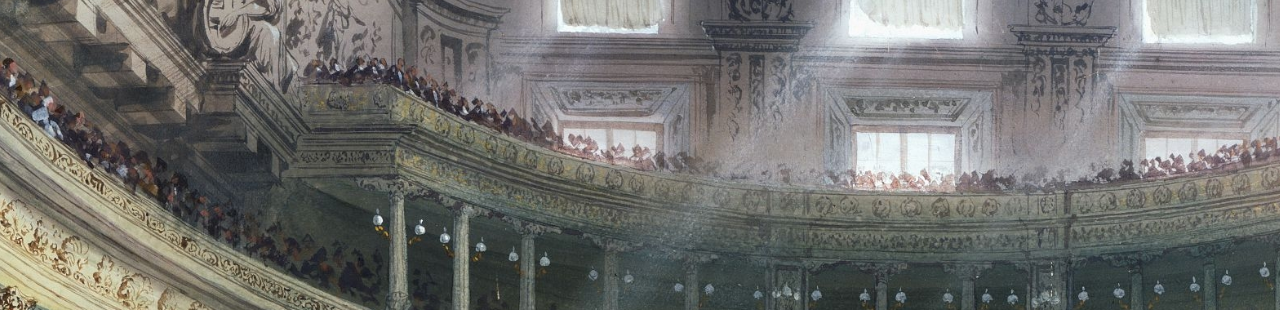
𝕿he longer they stood there, squirming like bugs in a perforated jar, ready for the pin and the cork, warming the hall with their entanglement of nervous bodies, was the more the worsted wool of her uniform seemed to rake her skin, and draw thereof a terrible itch. And why not?—with nothing else serving to whisk away her attention—the hall stark and bare of the previous's fineries, the speeches and the music inaudible through the wall, and Schöst, vigilant Schöst, in his lackadaisical slouch against the stairwell, appearing entirely to the contrary, but his ears too sharp by far to fool—that abhorrent itch, of black wool on summertime skin, provided the only diversion. From the regimen of steps and lyrics and rituals she had so dearly committed to memory in previous nights, and from the inevitable thought that she'd forgotten one; all her vain efforts to banish the dread that she would somehow err in performing these, too. And not only in front of a secretary and a small periphery of students from other classes, peers she may never see again; hundreds of people. Thousands. She could hear them in there, the impatient tapping of their feet against the rafter floors, the squealing of benches beneath the shifting of all their amassed weight, the timely applause! A sister, a headmaster, a professor, a class, a populace—and who knew?—perhaps an Archduke awaited in there, a Prince, an Elector—humiliate herself then and she might as well humiliate herself before the entire town of Ansbourg.
No. Before an empire.
"I swear to uphold the laws and values of the Laachtalian Empire," Hloþhilde mouthed, "I swear to uphold the laws and values of the Laachtalian Empire, I swear to uphold......" Tight was her chest, and swimming her head, but if she could only perfect the words; have them so utterly troughed in her mind by so many reiterations, chisel over stone, chisel over stone, that she could not possibly forget them......
Agalind, knowing not what so worried this new darling of hers (but how could she?—as effortlessly composed as she was), knew nonetheless to give her shoulder a squeeze, and to meet her gaze with an unflustered wink. Hloþhilde affected what little tics she could to reassure the girl she was quite alright; a faint smile here, there a straightening of her back and shoulders (as if literally inflated by the confidence); but the recesses of her mind remained a bedlam.
To bring strength to its people in war and in peace, to bring strength to its people...... Only one thing interrupted this chanting, this sheepish trance, and that was the arrival of a second herald through a yet-farther set of doors, leaned around a corner and beckoning to Schöst to march his greenhorn platoon through to the lecture chamber. And so began again his three-leggèd lilt, the crisp rapping of his cane against the flagstones. So began the drumming of some twenty boots behind him, their heels all of stiff, snappy leather, earning there and then their very first scuff marks, the first of their patina.
Keeping with Schöst's labored, lolling pace perhaps robbed their entrance of its grandeur for some. But for Hloþhilde was it a most valued opportunity. Rushed to her seat and arranged into the various rotes of the ceremony, she would have no chance to turn her head—nay, hardly a chance to cough without all the audience detecting it; in the shaking of her panache, and the rattling of her insignia, just as it had been back in the courtyard, the uniform itself forcing these untempered boys to stand straighter, and carry themselves with greater dignity than ever they had mustered before in all their lives. Still, with all his nonchalance (or was it apathy?) did their professor break them through the doors, onto the carpet beyond; down an aisle and on toward their rows. Narrow, confined halls of drab stone, like a birth canal, opened up to a womb of marble; of granite and alabaster, draped all in the colors of Empire. Flags and ensigns and coats of arms, stitched silk on lustrous silk. Like all the spectacles and cues which had come before, this entrance too the audience applauded. The music of their clapping hands and stamping feet could have filled a countryside and there it was, birdcaged beneath a domed vault and between hallowed walls which already had stood for a century, and intended to stand for centuries more. Thunderous was the applause and yet harmonious; choiral, and echoing back into a shared history, forward into a shared future.
Hloþhilde stole her chances where she could; turning the corner from aisle to row, for instance, and about-facing to place her gift beneath her chair, as others placed their own bouquets; moreover, while she doffed certain articles in readying herself for her seat, cloak smoothed out and cast over the back of the chair, helm doffed and held at the ready. In these sparse moments did her eyes wander the ceiling, the coffers, the opera boxes. Hellie had promised to be there. She would not have broken triflingly such an oath; she had to be somewhere up there. And yet in scouring the crowds gathered behind the students and above, peering down on them from on high, Hloþhilde saw only the same sea of cravats, and lapels, and waistcoats. A few cockades and ribbons. Twisted mustaches and forkèd beards. And in such multitudes! Just how many had arrived for this moment, and from what distant reaches of civilization? But with Hellie unaccounted for among those throngs, realizing the sight of them would only further shrivel her courage, the younger de Guillarmes sister resolved herself to the conduct of one unobserved at all. She would simply have to act as if they were not up there, looming, observing—remarking.
After the last of the applause died down, so too did the final flourish from the band, and through a great many horns and pipings, acoustic channels and coffers, did a great voice, an already-potent, assured voice, only furthered by these effects, begin to thunder across the vaulting. It urged them to sit, that voice, whereupon a multitude of helmets was seated upon a multitude of knees, plumes rustling, badges rattling. The voice belonged to the same man from before; stately and eminent and old, dressed in his gently rusted cuirass which jingled with medals, his bicorne which wavered with wilted feathers white. The one who had met that four-teamed carriage in person, even doffed his hat and bowed for its most prized passengers. Hloþhilde, at no more than a glance, had already come to expect no less from this man. Though his voice was tinnier than she had guessed, rasping sword-from-scabbardlike on certain trills, and in some places whistling like a tea kettle, his barrel-chested, thick-bearded personage spoke wordlessly of strength. Perhaps his voice had been even mightier once; less consumptive; but what he spoke of he addressed with a fervor which utterly filled the room. Not in his stature nor his seething countenance nor in his booming, rolling voice did he once falter; a well-practiced speech, reiterated over decades, to dozens of graduating classes. May be that he even deigned to mean what he said, inflaming his words not from performance, but the passions.
"My name is Hladekný," they began: "first a viscount, then a brigadier-general, and after that, for but a few brief, bloodless years, a field marshal. Now, in the autumn of my life, like a leaf shaken from the heights of the tallest oak, have I come aflutter to my earnèd rest within this very institution, as its humble headmaster." He indulged in a timely pause; perhaps seeing something amusing in the crowd, or thinking to himself a timely jape, for he smirked down into the flat of the podium. "I can hear some of you now. 'How dare he self-aggrandize at a time like this? Speaking of personal glories instead of duty, and sacrifice, and empire?' Fear not. For when I speak of myself, 'tis not lost on me that I speak of the past. Dust and cobwebs. In fact, the future—of the Reichsarmee, of the Crown, of peace, of honor, of Laachtalia, of Everything—it stands not upon this dais at all. It sits before us, in these very rows."
He gestured to the very center of the front rows (to the astonished Class C) and all the room once more erupted into applause (Hloþhilde's time to chance another peek—behind her and above; over the heads of the upperclassmen sat just behind her, who despite a mere year's distance between them in training and discipline, seemed utterly unflappable and rigid in their graces—already more ironlike). She lamented how this pause did not give her moment enough to count them. One year ago, sitting then where she sat now, in the front-most rows reserved exclusively for the new admittals, there had been fifty of them; but did fifty sit behind her in that moment? Just how many had succumbed to the tests, the rigors, the expectancies? But the clamor from the crowd once more snuffed out; the speech continued, dragging Hloþhilde's attention once more to the front of the room.
Beginning in earnest, it began predictably enough; inheritors of this, the future of that. Yes, yes. In truth, more interesting than the platitudes was how each of her peers in the front rows received them. She noted which faces brightened with enthused zeal, which remained deadened and dim like the cold ashes of an ardor long-ago-spent. Agalind, for the time, remained suitably unimpressed, though not without her graces, throwing all of herself into every applause, every teeming silence—precisely as expected of her. A few of the seven lads, hardly the masters of themselves which Agalind was, did not listen with her practiced measure, none of her decorum; even Hloþhilde sensed the change within their breasts, as the speech, stinger-like, slithered between two ribs and grabbed each one of them by their passions, injecting into them all the speaker's mettle, shaking them to an animate fury. As if Hladekný issued to each one of them in personal conference, extracting and distilling the very fierceness from their hearts.
But it was Schöst who managed to surprise her once again. True, Hloþhilde had come by now to expect his calloused indifference; his immunity to all ceremony and ritual; the music, the audience, the grandeur, all of it failing to stir from his soul its reeking, lilypadded stagnancy. But slouched there, bombarded by Hladekný's verbiage, and by all the sanctimonies of a crowd most well-trained, knowing fully when to chew the silence or when to clap or when to work themselves into an uproarious froth, Herr Schöst excreted a disgust the likes of which Hloþhilde had thought too crass—too vulgar—too blasphemous to ever find refuge in such a place as this, all its rites and traditions. Transfixed to him as all those paintings nailed to the academy walls, she watched as he employed every tactic, short of squinting shut his eyes and plugging his ears with wax, which would shut out this bedlam from his mind. How he drilled his livid gaze into some insignificant detail of the carpet tassels at his feet, or the various scuffs and scratches in the weary shoes (one more worn than the other) which had shambled these corridors, endured these speeches, for a decade or more. For Schöst was young, but carried with him, everywhere and at all times, the bitter desolation of a soul which longed for a carefree boyhood from many summers past; a ghost too forlorn to even haunt the halls he drifted.
No mere battle wound could so buttress a man with hatred, Hloþhilde was sure. So, what? What chained him to this place he so despised; what salary could be worth this day-and-nightly torment, marionetting himself along with rituals he resented, choreographed by people he loathed?
So consuming was his melancholy that it even seemed to bend the speech, nay, the room itself around it, sucking these down into its quagmires. The mood itself had changed, bidding Hloþhilde's attention once more to the fore of the room, toward the dais. Gone was Hladekný's enthusiasm, stripped away was all his zeal; he spoke softer then, slower, and in mustering from his deepest bowels this vicious anguish, he bent and stooped, gargoyle-like, over the lectern, clutching his talons round its book stand, sneering out at the new students like the limping prey, and the audience behind them and above them his legion of circling, black-feathered angels. No longer did he speak of duty, privilege, and other such high-minded abstractions at all, this headmaster, but the reek of the powder. Of mud. The screams of men and the roar of guns and the screams of devils all in choir. Gunfire and hellfire licking at the gods' sky in obscene confederacy. Daring them all to object with all their better understandings of what it was to be a soldier. Daring them to tell him what it truly meant to war. The audience, robbed of all their gaiety, as if then and there watching the Generalfeldmarschall join, and paint, and stuff with silken pillows their fifty children's coffins, looked on in astonished silence. All the while his dismal visions danced above them, echoing and amplified across the acoustics of the vaulted ceiling.
"The professors before you are among the most skilled and proven officers in the Laachtalian Empire. They will guide you, yes, but they will not carry your burdens. It is up to you to rise to the challenge," said the headmaster. It was Hloþhilde he addressed; and the rest of the nine-and-forty, yes, but it was she who had very nearly turned away before her journey through this place had truly begun, and who'd tasted already a morsel of the suffering then promised. "Where you may have found excuses and comforts as nestlings, you will find here only hard truths. You will be tested, you will be judged, and you will be held to a standard higher than you have ever known. You will face doubt; pain; defeat. Your boundaries will be appraised and dismantled. You will learn discipline; and like an iron in fire, you will fortify."
In all their copious silence laid a stunned terror, wide-eyed like that which belonged to the roe deer catching flashes off the hunter's barrel, the snap of twigs beneath his booted step. Had any one of them anticipated this?—a school intent on frightening them away with ghost stories, professors and headmasters like demons intent on sapping away with their will, their strength, their courage? Where was the eiderdown they'd been stuffed with all their lives by nostalgic grandfathers, by sentimental fencing teachers, by eager and emboldening parents—their power and their glory?
And before any one member in the audience had resolved in full to object, either to the vicious lies in themselves or the charlatan who uttered them, he had already finished. Hladekný's final, resounding syllable died across the vaulting, to a threadbare applause; undeterred, he ushered in the next proceeding. Explaining to all of them their role in the next ritual, he called the first student to the dais. The time had arrived for each of the fifty, starting on the opposite side of the room, with Class A, to deliver her oath. The headmaster asked the first boy his name, and though he spoke too softly to hear it, it seemed not from any dearth of courage; rather, an assumed intimacy on the part of the two participants, the older grasping the younger by the shoulder with a reassuring squeeze. Swapping reassuring whispers.
"Judeau von Sarkenberg!" declared the headmaster, loud enough to shatter that personal intonation, and announce to all the name of the prospective soldier who before them stood. "Repeat after me, lad." Issued he the oath, and Judeau mimicked it, effortlessly earning for himself that most sublime thunder, bellowing all through the lecture hall, the stamping and the clapping. Hloþhilde had both times followed along with the words, mouthing each one a moment before it was uttered. She would do so for most of the forty situated before her. But the finality of her own moment fast approached; forty was too few, far too few. Her chest feeling so much like a womb, the heart within it kicking and thrashing like a babe nourished on all her terror, all her dread, she peered out across the row. Morbidly compelled to count its ranks, and see with her own eyes as it shrank with every student processed up there, upon the stage and down the aisle and out of sight.
Should she have been grateful or dismayed that she would be one of the last? Perhaps forty students later the audience would have lost interest, offering only what remained of their halfhearted, obliged participation. Or, the later students would be all the more memorable amidst the slew.
"Egil of Stückeren!" announced the headmaster. "Repeat after me, son."
"Hmm. A commoner," Agalind remarked without a hint of malice, not holding the boy's lack of a family name against him for a moment. Of course, it brought Hloþhilde no comfort to know that she, or anyone, actually engaged with the ceremonies; that they were observing, and listening, and remarking. And worst of all: remembering.
Once more she was compelled to lean forward, looking past Agalind and over to the bedlam of Class A, with one student called up to wait in the aisle for every one processed through and then off the stage. Teeming with nerves, yet also pride, as they waited their turns. Damn it all! How was her own time onstage simultaneously so far away and yet so fleetingly near? How did she all at once dread what seemed but around a street corner, yet have to sit there squirming for minutes which felt akin to hours? Again she hazarded a glance up into the opera boxes, the audience pews; Hellie was up there somewhere, she had to be, but with their longing gazes unable to lock, their eyes unable to meet, it mattered not. Without Hellie there, there was no landfall, no sandbar, nary even a life raft to cling to in a sea of strangers. Another name, another seat closer. And another. Most of them spoke more brazenly than the intrepid Judeau had, their names bearing no repeating by the perfectly affable Hladekný. Even this, however, brought Hloþhilde some degree of shame, as she found herself hoping—wishing—for other students to stumble and err before she did; that she might gauge the reaction from the crowd, and know likewise that she alone would not stick out in their memories of this day. Serving as the centerpiece of all their bemused reminiscence and anecdotes......
"I swear to uphold the laws and values of the Laachtalian Empire, to bring strength to its people in war and in peace......" said Egil.
"......and to uphold the honour of the realm in all my deeds, in life and unto death," Hloþhilde murmured along. "In all my deeds in life and unto death......" Of course, she only needed worry if she actually made a mistake at all, and with the number of times she had repeated to herself this simple sentence, driving the words over her brain again and again until it was furrowed with their shapes, it should hardly have been possible.
Moreover—she pondered—even if she did somehow blunder over the words, surely in the last fifteen thousand years someone besides her had made of himself a fool before a crowd? Statesmen—schoolteachers—flautists and drummers and harpsichordists—even pharaohs? Maybe Artheuse Himself had once or twice stuttered and stammered his way through a speech. Why not? Give five hundred of them in a lifetime and surely no man could for five hundred successive incidents deliver perfection! How many great men had suffered similarly as she, laboring and agonizing before the stirring of a crowd? And how had each carried on despite his errors? The line shortened—the row was vacated—nearer and nearer to Hloþhilde did her fellow first-years rise from their seats, walk down the aisles, and give their introductions before their families, their peers, and their Empire—and then walk out through the vomitorium, this whole excruciating affair put behind them for-ever.
She blinked, and somehow it was Class E's turn.
Hloþhilde tried so very dearly not to panic. How terribly she tried to focus on something, on anything else but her impending decimation. She began with learning the names of some of her classmates. Giselmina—Giselmina Van der Szaalm, as it happened—remained stony and unflappable and lovely as she delivered in her oatmealy accent the magic words, the answer to the riddle, earning her passage over the stage and on through the academy doors. Just behind her answered another Tussenzijner: one Roelo de Barbroeck.
Before Roelo had even the chance to speak—nay, very nearly before Herr Hladekný had—from the moment the name left the headmaster's lips (foamy from two hours of bellowing) it had churned the crowd into an uproar of whispers and mutters; a turning of heads, a daisy-chain of mouths to ears, mouths to ears. Hloþhilde had heard of the Dukes of Lóðyria, of course. Everyone had, from the greatest political minds to the lowliest, muddy-footed peasant bairns. But the onlookers, ravenous for gossip and news, thirsted to know how a Prince-Elector's son had turned up at a military academy. Some even conjectured that they must have misheard; they had not known there to be a Barbroeck named Roelo at all. A second wife's firstborn?—perhaps even a bastard? Even the upperclassmen, sitting mere rows behind Hloþhilde and the others, exchanged tantalized words. "We should test that one," said one. "He would do nicely, I think."
From a second: "Agreed. He has a fire in him."
"A radiant blaze, or a guttering candle?"
Three voices chuckled in unison.
Floating amidst the pandemonium across the audience was the silence onstage, while Roelo and Hladekný waited for a return to the room's previous reverence; an oath unheard, after all, was no oath whatever. And how did Roelo feel about all this attention, and not, from what Hloþhilde could hear, of any welcome kind?—only jeering, and judgment, and scorn. Only as a centerpiece to their cruel scandals and slanders. How did he take it? She could not see much of his bearing, situated behind and beside him as she was; but what she did see astonished her: his head wanting to slouch forward, his shoulders shrink up in a shamed, defensive posture. And despite this instinct, how he pushed to remain straight-backed and high-headed. A quaking of silent rage to his hands, made subtle by his stifling. How brave he was being.
Then, having given his oath, Roelo turned to make the same march as the two-and-forty before him, and she saw him, as rhapsodic as any of the massive things which had preceded him, the massive orchestral chords and the crashing applause. His determination. His indignation. His spite. His fury.
For a single moment—only the one—Hloþhilde was not the next chicken on the chopping block, not the next bug primed for the scorch of the magnifying glass or the cold, crushing impalement of the pin through the cork. Just another member of the crowd, peering down on him. And she was in awe.
Agalind's turn came two students later, which left Hloþhilde standing, box in hand and shako acrest of her little head, at the fore of the aisle. She should have been terrified; as terrified as she had been for nearly an hour leading up to the moment. Instead she thought of Roelo. She suspected this time was not the first for him; ridicule and scrutiny chasing him like so many phantoms in their incalculable legions. Perhaps she was foolish, attributing to him so much bravery when he seemed so practiced in navigating such derisions. After all, after practice came grace; after grace, mastery. Perhaps it was no mark on his character at all that Roelo so nobly ignored the cavorting of the crowd but a symptom of his circumstance. It mattered not. As Agalind descended the dais (having performed as elegantly as Hloþhilde had already come to expect of her), the induction had very nearly concluded, with but three or four students left to enlist. Her turn had arrived.
Hloþhilde did not look to her right; but not for any fear of drowning among all those jackal-like eyes and all those jackal-like smiles. She had seen with her own eyes, tasted with her own teeth, what so amused them; what-upon they fed their sorry merriment.
And like all those eyes were stricken blind, and all those teeth plucked from the gums, their scrutiny seemed somehow powerless then.
The blood coursed slow and honey-like through Hloþhilde's veins; pumped tirelessly in her ears. But before her stood the table, and the four remaining swords. Her sword.
"What is your name, lass?" said the headmaster, still managing, despite the rote, to muster for her a sort of grandfatherly affection, twinkling alike in smile and in gaze. Not to would have been to spit in the face of she who offered up her life to him for the next three years. To Laachtalia for the rest of time.
"Hlo—" she began to say to him. But it felt—wrong, somehow. Like she was once more relying on the courtesies (the pities) of another. It wouldn't do. It would not do.
She turned and there they sat in all their multitudes, chitchatting, watching listlessly, adjusting their cravats, checking their pocket watches; most of them quite ready to be done with all this ritual, the people they'd come to see, to support, already long ejected from the lecture hall.
But then, by coincidence, glowering up into the opera boxes—there sat Hellie, holding a kerchief over her mouth, and beginning to weep.
Hloþhilde smiled.
"My name is Hloþhilde du Guillarmes! Daughter of Count Grinault-Pôntëfors du Guillarmes of Rodon!" shouted the soldier-to-be, up to her sister, up to all of them, that not even a dormouse could find a nook in the wall and escape her declaration; that the very ceiling resounded with it. "'Twill be an honor to serve you all!"
Then, in full fortissimo, the roll of the drums, the blare of the horns—the splendor of music! The Syggstrunnslied had begun, and like a ghost did its echoes, distant and dampened, hum through the ancestral walls. The stone, the foundation, and the very mortar of this place, once dismal and grey, all come alive with lyrics known by every Laachtalian tongue, with melodies buried in every Laachtalian heart. Some among the freshmen could not help but hum along, their breasts aflame with fervor. Herr Schöst's demeanor, however, did not waver—staunch in its bitter grimness.
Hloþhilde knew not how best to proceed—only to walk when walked the boys ahead of her, ushered, no doubt, into the next hall by that stodgy herald. The music was louder then, all-consuming, shuddering through every bead of the chandelier, every flagstone lining the stark, cool corridor. Then, it wasn't—the holding of a note, the applause, the collective sighing of so many chairs. The festivities continued with a speech, inaudible through the heavy doors and the immovable walls, save for the occasional stressed inflection; how this person, a gentleman, so emphasized certain words like "not a privilege but a duty," and "never," and "eternally." Already her blood thrummed over her ears; her chest began to squeeze; as she imagined tripping on her way down the aisle, seating herself too early, forgetting the lyrics no true Laachtalian would ever forget.
"Say," said a terribly hushed voice just abreast of her, "is this what I think it is?"
Already feeling terribly possessive over the box, even though she'd only held it for but a few minutes—even though she'd only allowed herself but a meager peek into its contents, the feeblest little taste of ownership over the thing—Hloþhilde clenched to it that slightest bit more tightly. It is, she so dearly wanted to say, and 'tis not yours to touch. Of course, on their travels from her heart to her mind to her tongue, these words' edges had a way of blunting against all her niceties. "From my sister," she divulged, praying for that to be warning enough.
Alas. "May I?" said Agalind, and ere Hloþhilde could object, small, delicate fingers, smaller than her own, worked at the hinges of the box, peeling back the lid. And, too polite to chastise, lest she should drive away perhaps the very first friend she might have made at this school, she kept her silence; condoned. Pretended it did not irritate her terribly to know that another's fingerprints blotted her new sword before she'd even had the chance to wear it.
Agalind stifled a gasp. "The silver-on-grey is magnificent. And the ricasso—such elegant touches all! Your sister has very good taste, t'would seem."
"Thank you."
"Alas that mine has already been sent ahead to my room, along with the rest of the luggage," Agalind whispered. "'Tis hardly so new and pristine, of course—I've worn it for years—but once we've settled in, we simply must christen this with a spar, don't you think?"
But Hloþhilde, robbed of her chance to answer, jolted with fright. For that distinctive tap-tap-scrape of a lilted, three-leggèd walk, one leg made of hickory and another dragged behind with a heavy limp, had come to rest just aft of the two girls—an effect she had first paid no mind. But it was, of course, Professor Schöst; catching up, in his shambling way, to the far brisker pace of his young and sprightly students. At first passing those two girls by, but then detecting their hushed chitchat, he must have let his cane fall with a particularly harsh rap upon the flagstones, there, so near to Hloþhilde's foot that it could not have been anything else but a warning shot, aimed at her poor, unguarded toes. The two yelping in unison (and stifling their skittish giggles), they met his expression, flashing with reprimand; heeded this message, and the good Herr Schöst needed not chastise them a second time, issuing on to the fore of the queue once more to wait with the rest of them. This girl seemed naught but trouble, decided the reproached Hloþhilde—who, nonetheless, could not but envision the adventures they'd have, the mischief they'd make, if she did not separate their friendship at birth. Agalind was already so very charming, true enough. So calming to stand beside with all her excesses of confidence, of aplomb.
𝕿he longer they stood there, squirming like bugs in a perforated jar, ready for the pin and the cork, warming the hall with their entanglement of nervous bodies, was the more the worsted wool of her uniform seemed to rake her skin, and draw thereof a terrible itch. And why not?—with nothing else serving to whisk away her attention—the hall stark and bare of the previous's fineries, the speeches and the music inaudible through the wall, and Schöst, vigilant Schöst, in his lackadaisical slouch against the stairwell, appearing entirely to the contrary, but his ears too sharp by far to fool—that abhorrent itch, of black wool on summertime skin, provided the only diversion. From the regimen of steps and lyrics and rituals she had so dearly committed to memory in previous nights, and from the inevitable thought that she'd forgotten one; all her vain efforts to banish the dread that she would somehow err in performing these, too. And not only in front of a secretary and a small periphery of students from other classes, peers she may never see again; hundreds of people. Thousands. She could hear them in there, the impatient tapping of their feet against the rafter floors, the squealing of benches beneath the shifting of all their amassed weight, the timely applause! A sister, a headmaster, a professor, a class, a populace—and who knew?—perhaps an Archduke awaited in there, a Prince, an Elector—humiliate herself then and she might as well humiliate herself before the entire town of Ansbourg.
No. Before an empire.
"I swear to uphold the laws and values of the Laachtalian Empire," Hloþhilde mouthed, "I swear to uphold the laws and values of the Laachtalian Empire, I swear to uphold......" Tight was her chest, and swimming her head, but if she could only perfect the words; have them so utterly troughed in her mind by so many reiterations, chisel over stone, chisel over stone, that she could not possibly forget them......
Agalind, knowing not what so worried this new darling of hers (but how could she?—as effortlessly composed as she was), knew nonetheless to give her shoulder a squeeze, and to meet her gaze with an unflustered wink. Hloþhilde affected what little tics she could to reassure the girl she was quite alright; a faint smile here, there a straightening of her back and shoulders (as if literally inflated by the confidence); but the recesses of her mind remained a bedlam.
To bring strength to its people in war and in peace, to bring strength to its people...... Only one thing interrupted this chanting, this sheepish trance, and that was the arrival of a second herald through a yet-farther set of doors, leaned around a corner and beckoning to Schöst to march his greenhorn platoon through to the lecture chamber. And so began again his three-leggèd lilt, the crisp rapping of his cane against the flagstones. So began the drumming of some twenty boots behind him, their heels all of stiff, snappy leather, earning there and then their very first scuff marks, the first of their patina.
Keeping with Schöst's labored, lolling pace perhaps robbed their entrance of its grandeur for some. But for Hloþhilde was it a most valued opportunity. Rushed to her seat and arranged into the various rotes of the ceremony, she would have no chance to turn her head—nay, hardly a chance to cough without all the audience detecting it; in the shaking of her panache, and the rattling of her insignia, just as it had been back in the courtyard, the uniform itself forcing these untempered boys to stand straighter, and carry themselves with greater dignity than ever they had mustered before in all their lives. Still, with all his nonchalance (or was it apathy?) did their professor break them through the doors, onto the carpet beyond; down an aisle and on toward their rows. Narrow, confined halls of drab stone, like a birth canal, opened up to a womb of marble; of granite and alabaster, draped all in the colors of Empire. Flags and ensigns and coats of arms, stitched silk on lustrous silk. Like all the spectacles and cues which had come before, this entrance too the audience applauded. The music of their clapping hands and stamping feet could have filled a countryside and there it was, birdcaged beneath a domed vault and between hallowed walls which already had stood for a century, and intended to stand for centuries more. Thunderous was the applause and yet harmonious; choiral, and echoing back into a shared history, forward into a shared future.
Hloþhilde stole her chances where she could; turning the corner from aisle to row, for instance, and about-facing to place her gift beneath her chair, as others placed their own bouquets; moreover, while she doffed certain articles in readying herself for her seat, cloak smoothed out and cast over the back of the chair, helm doffed and held at the ready. In these sparse moments did her eyes wander the ceiling, the coffers, the opera boxes. Hellie had promised to be there. She would not have broken triflingly such an oath; she had to be somewhere up there. And yet in scouring the crowds gathered behind the students and above, peering down on them from on high, Hloþhilde saw only the same sea of cravats, and lapels, and waistcoats. A few cockades and ribbons. Twisted mustaches and forkèd beards. And in such multitudes! Just how many had arrived for this moment, and from what distant reaches of civilization? But with Hellie unaccounted for among those throngs, realizing the sight of them would only further shrivel her courage, the younger de Guillarmes sister resolved herself to the conduct of one unobserved at all. She would simply have to act as if they were not up there, looming, observing—remarking.
After the last of the applause died down, so too did the final flourish from the band, and through a great many horns and pipings, acoustic channels and coffers, did a great voice, an already-potent, assured voice, only furthered by these effects, begin to thunder across the vaulting. It urged them to sit, that voice, whereupon a multitude of helmets was seated upon a multitude of knees, plumes rustling, badges rattling. The voice belonged to the same man from before; stately and eminent and old, dressed in his gently rusted cuirass which jingled with medals, his bicorne which wavered with wilted feathers white. The one who had met that four-teamed carriage in person, even doffed his hat and bowed for its most prized passengers. Hloþhilde, at no more than a glance, had already come to expect no less from this man. Though his voice was tinnier than she had guessed, rasping sword-from-scabbardlike on certain trills, and in some places whistling like a tea kettle, his barrel-chested, thick-bearded personage spoke wordlessly of strength. Perhaps his voice had been even mightier once; less consumptive; but what he spoke of he addressed with a fervor which utterly filled the room. Not in his stature nor his seething countenance nor in his booming, rolling voice did he once falter; a well-practiced speech, reiterated over decades, to dozens of graduating classes. May be that he even deigned to mean what he said, inflaming his words not from performance, but the passions.
"My name is Hladekný," they began: "first a viscount, then a brigadier-general, and after that, for but a few brief, bloodless years, a field marshal. Now, in the autumn of my life, like a leaf shaken from the heights of the tallest oak, have I come aflutter to my earnèd rest within this very institution, as its humble headmaster." He indulged in a timely pause; perhaps seeing something amusing in the crowd, or thinking to himself a timely jape, for he smirked down into the flat of the podium. "I can hear some of you now. 'How dare he self-aggrandize at a time like this? Speaking of personal glories instead of duty, and sacrifice, and empire?' Fear not. For when I speak of myself, 'tis not lost on me that I speak of the past. Dust and cobwebs. In fact, the future—of the Reichsarmee, of the Crown, of peace, of honor, of Laachtalia, of Everything—it stands not upon this dais at all. It sits before us, in these very rows."
He gestured to the very center of the front rows (to the astonished Class C) and all the room once more erupted into applause (Hloþhilde's time to chance another peek—behind her and above; over the heads of the upperclassmen sat just behind her, who despite a mere year's distance between them in training and discipline, seemed utterly unflappable and rigid in their graces—already more ironlike). She lamented how this pause did not give her moment enough to count them. One year ago, sitting then where she sat now, in the front-most rows reserved exclusively for the new admittals, there had been fifty of them; but did fifty sit behind her in that moment? Just how many had succumbed to the tests, the rigors, the expectancies? But the clamor from the crowd once more snuffed out; the speech continued, dragging Hloþhilde's attention once more to the front of the room.
Beginning in earnest, it began predictably enough; inheritors of this, the future of that. Yes, yes. In truth, more interesting than the platitudes was how each of her peers in the front rows received them. She noted which faces brightened with enthused zeal, which remained deadened and dim like the cold ashes of an ardor long-ago-spent. Agalind, for the time, remained suitably unimpressed, though not without her graces, throwing all of herself into every applause, every teeming silence—precisely as expected of her. A few of the seven lads, hardly the masters of themselves which Agalind was, did not listen with her practiced measure, none of her decorum; even Hloþhilde sensed the change within their breasts, as the speech, stinger-like, slithered between two ribs and grabbed each one of them by their passions, injecting into them all the speaker's mettle, shaking them to an animate fury. As if Hladekný issued to each one of them in personal conference, extracting and distilling the very fierceness from their hearts.
But it was Schöst who managed to surprise her once again. True, Hloþhilde had come by now to expect his calloused indifference; his immunity to all ceremony and ritual; the music, the audience, the grandeur, all of it failing to stir from his soul its reeking, lilypadded stagnancy. But slouched there, bombarded by Hladekný's verbiage, and by all the sanctimonies of a crowd most well-trained, knowing fully when to chew the silence or when to clap or when to work themselves into an uproarious froth, Herr Schöst excreted a disgust the likes of which Hloþhilde had thought too crass—too vulgar—too blasphemous to ever find refuge in such a place as this, all its rites and traditions. Transfixed to him as all those paintings nailed to the academy walls, she watched as he employed every tactic, short of squinting shut his eyes and plugging his ears with wax, which would shut out this bedlam from his mind. How he drilled his livid gaze into some insignificant detail of the carpet tassels at his feet, or the various scuffs and scratches in the weary shoes (one more worn than the other) which had shambled these corridors, endured these speeches, for a decade or more. For Schöst was young, but carried with him, everywhere and at all times, the bitter desolation of a soul which longed for a carefree boyhood from many summers past; a ghost too forlorn to even haunt the halls he drifted.
No mere battle wound could so buttress a man with hatred, Hloþhilde was sure. So, what? What chained him to this place he so despised; what salary could be worth this day-and-nightly torment, marionetting himself along with rituals he resented, choreographed by people he loathed?
So consuming was his melancholy that it even seemed to bend the speech, nay, the room itself around it, sucking these down into its quagmires. The mood itself had changed, bidding Hloþhilde's attention once more to the fore of the room, toward the dais. Gone was Hladekný's enthusiasm, stripped away was all his zeal; he spoke softer then, slower, and in mustering from his deepest bowels this vicious anguish, he bent and stooped, gargoyle-like, over the lectern, clutching his talons round its book stand, sneering out at the new students like the limping prey, and the audience behind them and above them his legion of circling, black-feathered angels. No longer did he speak of duty, privilege, and other such high-minded abstractions at all, this headmaster, but the reek of the powder. Of mud. The screams of men and the roar of guns and the screams of devils all in choir. Gunfire and hellfire licking at the gods' sky in obscene confederacy. Daring them all to object with all their better understandings of what it was to be a soldier. Daring them to tell him what it truly meant to war. The audience, robbed of all their gaiety, as if then and there watching the Generalfeldmarschall join, and paint, and stuff with silken pillows their fifty children's coffins, looked on in astonished silence. All the while his dismal visions danced above them, echoing and amplified across the acoustics of the vaulted ceiling.
"The professors before you are among the most skilled and proven officers in the Laachtalian Empire. They will guide you, yes, but they will not carry your burdens. It is up to you to rise to the challenge," said the headmaster. It was Hloþhilde he addressed; and the rest of the nine-and-forty, yes, but it was she who had very nearly turned away before her journey through this place had truly begun, and who'd tasted already a morsel of the suffering then promised. "Where you may have found excuses and comforts as nestlings, you will find here only hard truths. You will be tested, you will be judged, and you will be held to a standard higher than you have ever known. You will face doubt; pain; defeat. Your boundaries will be appraised and dismantled. You will learn discipline; and like an iron in fire, you will fortify."
In all their copious silence laid a stunned terror, wide-eyed like that which belonged to the roe deer catching flashes off the hunter's barrel, the snap of twigs beneath his booted step. Had any one of them anticipated this?—a school intent on frightening them away with ghost stories, professors and headmasters like demons intent on sapping away with their will, their strength, their courage? Where was the eiderdown they'd been stuffed with all their lives by nostalgic grandfathers, by sentimental fencing teachers, by eager and emboldening parents—their power and their glory?
And before any one member in the audience had resolved in full to object, either to the vicious lies in themselves or the charlatan who uttered them, he had already finished. Hladekný's final, resounding syllable died across the vaulting, to a threadbare applause; undeterred, he ushered in the next proceeding. Explaining to all of them their role in the next ritual, he called the first student to the dais. The time had arrived for each of the fifty, starting on the opposite side of the room, with Class A, to deliver her oath. The headmaster asked the first boy his name, and though he spoke too softly to hear it, it seemed not from any dearth of courage; rather, an assumed intimacy on the part of the two participants, the older grasping the younger by the shoulder with a reassuring squeeze. Swapping reassuring whispers.
"Judeau von Sarkenberg!" declared the headmaster, loud enough to shatter that personal intonation, and announce to all the name of the prospective soldier who before them stood. "Repeat after me, lad." Issued he the oath, and Judeau mimicked it, effortlessly earning for himself that most sublime thunder, bellowing all through the lecture hall, the stamping and the clapping. Hloþhilde had both times followed along with the words, mouthing each one a moment before it was uttered. She would do so for most of the forty situated before her. But the finality of her own moment fast approached; forty was too few, far too few. Her chest feeling so much like a womb, the heart within it kicking and thrashing like a babe nourished on all her terror, all her dread, she peered out across the row. Morbidly compelled to count its ranks, and see with her own eyes as it shrank with every student processed up there, upon the stage and down the aisle and out of sight.
Should she have been grateful or dismayed that she would be one of the last? Perhaps forty students later the audience would have lost interest, offering only what remained of their halfhearted, obliged participation. Or, the later students would be all the more memorable amidst the slew.
"Egil of Stückeren!" announced the headmaster. "Repeat after me, son."
"Hmm. A commoner," Agalind remarked without a hint of malice, not holding the boy's lack of a family name against him for a moment. Of course, it brought Hloþhilde no comfort to know that she, or anyone, actually engaged with the ceremonies; that they were observing, and listening, and remarking. And worst of all: remembering.
Once more she was compelled to lean forward, looking past Agalind and over to the bedlam of Class A, with one student called up to wait in the aisle for every one processed through and then off the stage. Teeming with nerves, yet also pride, as they waited their turns. Damn it all! How was her own time onstage simultaneously so far away and yet so fleetingly near? How did she all at once dread what seemed but around a street corner, yet have to sit there squirming for minutes which felt akin to hours? Again she hazarded a glance up into the opera boxes, the audience pews; Hellie was up there somewhere, she had to be, but with their longing gazes unable to lock, their eyes unable to meet, it mattered not. Without Hellie there, there was no landfall, no sandbar, nary even a life raft to cling to in a sea of strangers. Another name, another seat closer. And another. Most of them spoke more brazenly than the intrepid Judeau had, their names bearing no repeating by the perfectly affable Hladekný. Even this, however, brought Hloþhilde some degree of shame, as she found herself hoping—wishing—for other students to stumble and err before she did; that she might gauge the reaction from the crowd, and know likewise that she alone would not stick out in their memories of this day. Serving as the centerpiece of all their bemused reminiscence and anecdotes......
"I swear to uphold the laws and values of the Laachtalian Empire, to bring strength to its people in war and in peace......" said Egil.
"......and to uphold the honour of the realm in all my deeds, in life and unto death," Hloþhilde murmured along. "In all my deeds in life and unto death......" Of course, she only needed worry if she actually made a mistake at all, and with the number of times she had repeated to herself this simple sentence, driving the words over her brain again and again until it was furrowed with their shapes, it should hardly have been possible.
Moreover—she pondered—even if she did somehow blunder over the words, surely in the last fifteen thousand years someone besides her had made of himself a fool before a crowd? Statesmen—schoolteachers—flautists and drummers and harpsichordists—even pharaohs? Maybe Artheuse Himself had once or twice stuttered and stammered his way through a speech. Why not? Give five hundred of them in a lifetime and surely no man could for five hundred successive incidents deliver perfection! How many great men had suffered similarly as she, laboring and agonizing before the stirring of a crowd? And how had each carried on despite his errors? The line shortened—the row was vacated—nearer and nearer to Hloþhilde did her fellow first-years rise from their seats, walk down the aisles, and give their introductions before their families, their peers, and their Empire—and then walk out through the vomitorium, this whole excruciating affair put behind them for-ever.
She blinked, and somehow it was Class E's turn.
Hloþhilde tried so very dearly not to panic. How terribly she tried to focus on something, on anything else but her impending decimation. She began with learning the names of some of her classmates. Giselmina—Giselmina Van der Szaalm, as it happened—remained stony and unflappable and lovely as she delivered in her oatmealy accent the magic words, the answer to the riddle, earning her passage over the stage and on through the academy doors. Just behind her answered another Tussenzijner: one Roelo de Barbroeck.
Before Roelo had even the chance to speak—nay, very nearly before Herr Hladekný had—from the moment the name left the headmaster's lips (foamy from two hours of bellowing) it had churned the crowd into an uproar of whispers and mutters; a turning of heads, a daisy-chain of mouths to ears, mouths to ears. Hloþhilde had heard of the Dukes of Lóðyria, of course. Everyone had, from the greatest political minds to the lowliest, muddy-footed peasant bairns. But the onlookers, ravenous for gossip and news, thirsted to know how a Prince-Elector's son had turned up at a military academy. Some even conjectured that they must have misheard; they had not known there to be a Barbroeck named Roelo at all. A second wife's firstborn?—perhaps even a bastard? Even the upperclassmen, sitting mere rows behind Hloþhilde and the others, exchanged tantalized words. "We should test that one," said one. "He would do nicely, I think."
From a second: "Agreed. He has a fire in him."
"A radiant blaze, or a guttering candle?"
Three voices chuckled in unison.
Floating amidst the pandemonium across the audience was the silence onstage, while Roelo and Hladekný waited for a return to the room's previous reverence; an oath unheard, after all, was no oath whatever. And how did Roelo feel about all this attention, and not, from what Hloþhilde could hear, of any welcome kind?—only jeering, and judgment, and scorn. Only as a centerpiece to their cruel scandals and slanders. How did he take it? She could not see much of his bearing, situated behind and beside him as she was; but what she did see astonished her: his head wanting to slouch forward, his shoulders shrink up in a shamed, defensive posture. And despite this instinct, how he pushed to remain straight-backed and high-headed. A quaking of silent rage to his hands, made subtle by his stifling. How brave he was being.
Then, having given his oath, Roelo turned to make the same march as the two-and-forty before him, and she saw him, as rhapsodic as any of the massive things which had preceded him, the massive orchestral chords and the crashing applause. His determination. His indignation. His spite. His fury.
For a single moment—only the one—Hloþhilde was not the next chicken on the chopping block, not the next bug primed for the scorch of the magnifying glass or the cold, crushing impalement of the pin through the cork. Just another member of the crowd, peering down on him. And she was in awe.
Agalind's turn came two students later, which left Hloþhilde standing, box in hand and shako acrest of her little head, at the fore of the aisle. She should have been terrified; as terrified as she had been for nearly an hour leading up to the moment. Instead she thought of Roelo. She suspected this time was not the first for him; ridicule and scrutiny chasing him like so many phantoms in their incalculable legions. Perhaps she was foolish, attributing to him so much bravery when he seemed so practiced in navigating such derisions. After all, after practice came grace; after grace, mastery. Perhaps it was no mark on his character at all that Roelo so nobly ignored the cavorting of the crowd but a symptom of his circumstance. It mattered not. As Agalind descended the dais (having performed as elegantly as Hloþhilde had already come to expect of her), the induction had very nearly concluded, with but three or four students left to enlist. Her turn had arrived.
Hloþhilde did not look to her right; but not for any fear of drowning among all those jackal-like eyes and all those jackal-like smiles. She had seen with her own eyes, tasted with her own teeth, what so amused them; what-upon they fed their sorry merriment.
And like all those eyes were stricken blind, and all those teeth plucked from the gums, their scrutiny seemed somehow powerless then.
The blood coursed slow and honey-like through Hloþhilde's veins; pumped tirelessly in her ears. But before her stood the table, and the four remaining swords. Her sword.
"What is your name, lass?" said the headmaster, still managing, despite the rote, to muster for her a sort of grandfatherly affection, twinkling alike in smile and in gaze. Not to would have been to spit in the face of she who offered up her life to him for the next three years. To Laachtalia for the rest of time.
"Hlo—" she began to say to him. But it felt—wrong, somehow. Like she was once more relying on the courtesies (the pities) of another. It wouldn't do. It would not do.
She turned and there they sat in all their multitudes, chitchatting, watching listlessly, adjusting their cravats, checking their pocket watches; most of them quite ready to be done with all this ritual, the people they'd come to see, to support, already long ejected from the lecture hall.
But then, by coincidence, glowering up into the opera boxes—there sat Hellie, holding a kerchief over her mouth, and beginning to weep.
Hloþhilde smiled.
"My name is Hloþhilde du Guillarmes! Daughter of Count Grinault-Pôntëfors du Guillarmes of Rodon!" shouted the soldier-to-be, up to her sister, up to all of them, that not even a dormouse could find a nook in the wall and escape her declaration; that the very ceiling resounded with it. "'Twill be an honor to serve you all!"
────────────────────────────────•⋅⊰༻༒︎༺⊱⋅•──────────────────────────────────
────────────────────────────────•⋅⊰༻༒︎༺⊱⋅•──────────────────────────────────
𝕳loþhilde watched her sister go; watched her until the distance, the crowd, and the turning of a corner all conspired to conceal her, whereon all at once the enormity of the girl's situation began to subsume her. Above towered the school's crown steeple, the glint of a polished copper bell contained betwixt the buttresses; beneath that, the many spires and crenellations. The bell's ringer, sat precariously near to the precipice at the utmost edge of the eighty-foot drop, ate his breakfast and smoked a cigarillo with practiced nonchalance, monitoring as a goshawk does, watching for the scurrying of voles from the safety of his eyrie. Others, much nearer to the ground, but still so raptor-like, also surveyed the gathering freshmen. Like their prey they wore uniforms, though of a simpler ilk, the shakos swapped out for a humble képi, the Ivernii-styled tabard for a mess tunic, the breeches for striped trousers. More remarkable to Hloþhilde, however, were their ornaments, their cuffs and collars heavier with rank, their sashes laden with a great many badges and ribbons of achievement; and most extraordinary of all were their half-capes, not drab and black like hers but scarlet and smaragdine, sapphiric and golden. In coteries they'd gathered, one color never daring to mingle with another, creating a territoried effect all across the courtyard. The reds observed from a rampart, seated playfully between the merlons, or dangling their jackbooted feet over the parapet; the purples, from the windows and mock-murderslits of a second-story skywalk; as for the irreputable greens, the four swapping back and forth betwixt themselves a pipe and a bottle of apricot schnapps, they stood just there, near enough against a courtyard wall for one to choke on their vapors, which mingled on the air with their cheap smoke, and their cheap, strong perfumes.
When she saw that they whispered amongst themselves, these flocks of boys (they were mostly boys), and likewise pointed out to each other certain individuals standing in the queue, Hloþhilde resolved herself not to look too intensely or with too great an interest (though she was most assuredly intrigued). For she had noticed from the freshmen in front of her just how easily the uniforms exclaimed their every movement. They could not take a step without her hearing it jingle about the insignia, and rattle in the rings of their sword belts. But still more indictingly than that, they could not turn their heads, not even in passing interest, without the peaks and the plumage of their massive helms betraying it. So stiffly she stood, statuesque, nutcracker-like, except perhaps in the eyes, preferring by far to appear as if she had not noticed the motley boys at all. But they certainly noticed her; her and the rest of the fresh meat, passing by in a row as if on butchers' hooks.
Only ten students ahead, the secretary at the podium had just admitted another one, sending her on her way down the hall and on to the assemblage beyond. di Valdemar was her name, if Hloþhilde had heard it true; a daughter from the southern duchies, not that she could say just how far the other girl had traveled, nor the importance her family claimed among the peerage. Despite growing up around talks of territories weakened, corrupted, and shrunk—highwaymen, treaties, and revolution—it left Hloþhilde to wonder whether Laachtalia was still far too great for any one girl to see in the entirety, even with horses and inns and the ever-expanding railroads to assist in her travels. She listened a little more closely then, wondering if she might next hear a stodgy, oatmealish name hailing from the salt-swept lowlands of Lóðyria, or the mellifluous dialect of a Tuonon; perhaps even a fellow student hailing from Marsènne—her Marsènne, the streets still fragrant with bay myrtle this time of year, the tables copious with the vines' first harvest—Marsènne, which it was much too soon to regard with such sentimentality, there, before she'd even passed beneath the spires and the belfry and the gatehouse......
Another freshman processed, another shuffling-forward of the line. Ötz, or Lutz, or something similar was the lad's name, Hloþhilde hadn't been listening all too well, but sharp in its monosyllabism, ending crisply on the teeth like the biting of an apple. Onward he strode, past the secretary and her podium, beneath the decorative portcullis. Eight now.
Suffering from a dearth of anything better to let draw her eye, Hloþhilde retrieved from one of her abundant pouches and pockets the proceedings' formulary, already wrinkled and corner-worn by half a dozen such reiterations. She affected to remind herself of its contents, though in truth she had already committed them to memory the previous night, wary of joining a march to the wrong step, or a song of the wrong key; of rising to attention when she should be seated and sitting when she should rise. After all, in anything and all things was it this child's aim to go unnoticed; to be unworthy of scrutiny was to suffer no scorn. Thankfully, whether by sensing some quality of hers which their coteries deemed loathsome, or, inversely, by sensing that she lacked a quality requisite in all their members, for the moment the wolfish boys in the cocked caps and the gaudy half-cloaks did not waylay. Hloþhilde chanced here and there a sidewise peek, and indeed, to her relief other boys farther back in the queue, taller boys, stronger boys, appeared to have drawn to themselves that hungry appraisal.
Looking down at the formulary once more, Hloþhilde noted at the very top of the billing, lauded in so many fanciful words, the Ansbourg Students' Band & Choir, opening the ceremonies with their rendition of the Syggstrunnslied; and further down the page several more lays and hymns, interspersed between various speeches from alumni and valedictorians; even a drill or two from the acting ensigns. It occurred to her then to wonder: just who were these ruffian boys that had time aplenty to loiter and drink and leer at the freshmen while more important happenings proceeded mere rooms away? And what precisely could be the significance of their colors, brandished on their persons with the same pride as a flag, a banner, a coat of arms—those colors' sanctity guarded with the very same zeal as these?
"Good morning, Mein Herr," said the secretary, her nearby voice more bounteous then among the stirrings of the crowd, all the clinking and rattling and the other ungainly adjustments of bodies unaccustomed to their trappings, "family name, please?"
"Von Hulmboldt, ma'am, should it please you," said the student whose turn had arrived.
Another heartlander, Hloþhilde remarked to herself. And there, with but three or four spaces to go until her turn, did it strike her to ponder: did others among the students listen out, as she did, for names while they were uttered? Did they too scour for familiarities or recognitions, searching for commonalities in rank or in region? And from these questions spawned more still: where did an earl's second daughter rank up among this throng? Should she speak with humility or with pride, as a better or an equal or a subordinate? She did not know. She did not know, and all her father's instructions and all her sister's artless bluster had not prepared her for this, her very first interaction at the academy. One rendered effortless by her fellow students' assuredness and ease, but which gnawed deeper at her the longer she dwelt on it. Perhaps the simplest way her career could begin—a greeting, a name, and a brisk walk down a hallway to an assigned seat—and already was her first panic setting in.
In three years' time, ancestors willing, she would be a second lieutenant, braving shot and sword and spike; all odds would she defy, Death himself would she provoke! How long then did she mean to tremble and fret over such toothless exchanges as these? It would one day be a queue-headed, saber-swinging Sároveč coming at her, or a Jethaian darwan's lance, purchased in fine silks; so why there, ere she had even passed beneath the very first threshold?
"Godspeed, and have a good year," the secretary was saying. "A most blessèd morning to you, my lord," she said, having processed one and moved on to the next (and, evidently, recognized him without introduction at that). "The professor favored with Your Grace's pupilship this year is......"
No longer did Hloþhilde let astray her attention toward the bell or its dour-seeming ringer, or the school's magnificent spires and shingles; not the sharpness of the uniforms or the clacking of their ornaments; not even the gaily colored ruffians with their pipes and their bottles and their daggers. A madness seeming to overcome her, she soon found herself listening obsessively, singularly, for cues from the very few students who before her yet remained. Whether they spoke in hushed timbres or bragging ones, whether they sauntered or skulked; whether some measure of humility, as pupils in a place of learning, should supersede their status as lords and ladies, or the children of such; and furthermore, whether earning the notice of their peers should be worth earning likewise the notice of those delinquents all over the courtyard. All of these Hloþhilde measured and meted down to their most painstaking units. And most of all, lest the right words, the most graceful, nonchalant words, should not come to her naturally, she began to rehearse. Recite. Until she'd shambled far enough forward, and she stood unimpeded before the clerk, herself so poised, so effortlessly dignified despite her station, speaking (for all anyone knew) to dukes and princes with all the same ease as one addresses a bellhop or a waiter.
"A lovely morning, Fräulein," the woman said. "Your name, please?"
"Hloþhilde!" volunteered the child.
"Ah—......A beautiful name, no doubt—strong, and queenly—" the woman smiled a reassuring, motherly smile—"but I do mean your family name."
"Oh. Uh, it's du Guillarmes," she answered. Despite the pleasant shade to be found in the threshold beneath the gatehouse and its hoardings, her face was beginning to feel terribly warm. "Well, maybe de Guillarmes—a common-enough mistake—not that you would make such a mistake, of course—I only mean—well, I'm sure you know what I mean—but it's Marsènnish, so it should be under du, not von, or maybe de, like I said—"
"Guillarmes is fine," said the woman, her countenance remaining stiffly pleasant, her cool, steel-blue eyes sliding down to a page her spindly fingers had already turned to as if with a will of their own. "And I see it right here. Herr Schöst will be your professor this year. His is Section E. Godspeed and the very best of luck to you."
"You too!" Hloþhilde hurried to say, suddenly wincing. "I mean—Schöst. Yes. Thank you."
"Good day......Good morning, sir. Your name, please?......"
Hloþhilde gripped tightly her present and hurried on into the courtyard proper, and through a tall set of doors, following where she had seen the others go; her face by then utterly aflush and hot with humiliation. All the sudden, staring down Death's rifled barrel, or seeing Death's eyes reflected in the glimmer of a freshly stoned blade, did not seem half so unpleasant.
When she saw that they whispered amongst themselves, these flocks of boys (they were mostly boys), and likewise pointed out to each other certain individuals standing in the queue, Hloþhilde resolved herself not to look too intensely or with too great an interest (though she was most assuredly intrigued). For she had noticed from the freshmen in front of her just how easily the uniforms exclaimed their every movement. They could not take a step without her hearing it jingle about the insignia, and rattle in the rings of their sword belts. But still more indictingly than that, they could not turn their heads, not even in passing interest, without the peaks and the plumage of their massive helms betraying it. So stiffly she stood, statuesque, nutcracker-like, except perhaps in the eyes, preferring by far to appear as if she had not noticed the motley boys at all. But they certainly noticed her; her and the rest of the fresh meat, passing by in a row as if on butchers' hooks.
Only ten students ahead, the secretary at the podium had just admitted another one, sending her on her way down the hall and on to the assemblage beyond. di Valdemar was her name, if Hloþhilde had heard it true; a daughter from the southern duchies, not that she could say just how far the other girl had traveled, nor the importance her family claimed among the peerage. Despite growing up around talks of territories weakened, corrupted, and shrunk—highwaymen, treaties, and revolution—it left Hloþhilde to wonder whether Laachtalia was still far too great for any one girl to see in the entirety, even with horses and inns and the ever-expanding railroads to assist in her travels. She listened a little more closely then, wondering if she might next hear a stodgy, oatmealish name hailing from the salt-swept lowlands of Lóðyria, or the mellifluous dialect of a Tuonon; perhaps even a fellow student hailing from Marsènne—her Marsènne, the streets still fragrant with bay myrtle this time of year, the tables copious with the vines' first harvest—Marsènne, which it was much too soon to regard with such sentimentality, there, before she'd even passed beneath the spires and the belfry and the gatehouse......
Another freshman processed, another shuffling-forward of the line. Ötz, or Lutz, or something similar was the lad's name, Hloþhilde hadn't been listening all too well, but sharp in its monosyllabism, ending crisply on the teeth like the biting of an apple. Onward he strode, past the secretary and her podium, beneath the decorative portcullis. Eight now.
Suffering from a dearth of anything better to let draw her eye, Hloþhilde retrieved from one of her abundant pouches and pockets the proceedings' formulary, already wrinkled and corner-worn by half a dozen such reiterations. She affected to remind herself of its contents, though in truth she had already committed them to memory the previous night, wary of joining a march to the wrong step, or a song of the wrong key; of rising to attention when she should be seated and sitting when she should rise. After all, in anything and all things was it this child's aim to go unnoticed; to be unworthy of scrutiny was to suffer no scorn. Thankfully, whether by sensing some quality of hers which their coteries deemed loathsome, or, inversely, by sensing that she lacked a quality requisite in all their members, for the moment the wolfish boys in the cocked caps and the gaudy half-cloaks did not waylay. Hloþhilde chanced here and there a sidewise peek, and indeed, to her relief other boys farther back in the queue, taller boys, stronger boys, appeared to have drawn to themselves that hungry appraisal.
Looking down at the formulary once more, Hloþhilde noted at the very top of the billing, lauded in so many fanciful words, the Ansbourg Students' Band & Choir, opening the ceremonies with their rendition of the Syggstrunnslied; and further down the page several more lays and hymns, interspersed between various speeches from alumni and valedictorians; even a drill or two from the acting ensigns. It occurred to her then to wonder: just who were these ruffian boys that had time aplenty to loiter and drink and leer at the freshmen while more important happenings proceeded mere rooms away? And what precisely could be the significance of their colors, brandished on their persons with the same pride as a flag, a banner, a coat of arms—those colors' sanctity guarded with the very same zeal as these?
"Good morning, Mein Herr," said the secretary, her nearby voice more bounteous then among the stirrings of the crowd, all the clinking and rattling and the other ungainly adjustments of bodies unaccustomed to their trappings, "family name, please?"
"Von Hulmboldt, ma'am, should it please you," said the student whose turn had arrived.
Another heartlander, Hloþhilde remarked to herself. And there, with but three or four spaces to go until her turn, did it strike her to ponder: did others among the students listen out, as she did, for names while they were uttered? Did they too scour for familiarities or recognitions, searching for commonalities in rank or in region? And from these questions spawned more still: where did an earl's second daughter rank up among this throng? Should she speak with humility or with pride, as a better or an equal or a subordinate? She did not know. She did not know, and all her father's instructions and all her sister's artless bluster had not prepared her for this, her very first interaction at the academy. One rendered effortless by her fellow students' assuredness and ease, but which gnawed deeper at her the longer she dwelt on it. Perhaps the simplest way her career could begin—a greeting, a name, and a brisk walk down a hallway to an assigned seat—and already was her first panic setting in.
In three years' time, ancestors willing, she would be a second lieutenant, braving shot and sword and spike; all odds would she defy, Death himself would she provoke! How long then did she mean to tremble and fret over such toothless exchanges as these? It would one day be a queue-headed, saber-swinging Sároveč coming at her, or a Jethaian darwan's lance, purchased in fine silks; so why there, ere she had even passed beneath the very first threshold?
"Godspeed, and have a good year," the secretary was saying. "A most blessèd morning to you, my lord," she said, having processed one and moved on to the next (and, evidently, recognized him without introduction at that). "The professor favored with Your Grace's pupilship this year is......"
No longer did Hloþhilde let astray her attention toward the bell or its dour-seeming ringer, or the school's magnificent spires and shingles; not the sharpness of the uniforms or the clacking of their ornaments; not even the gaily colored ruffians with their pipes and their bottles and their daggers. A madness seeming to overcome her, she soon found herself listening obsessively, singularly, for cues from the very few students who before her yet remained. Whether they spoke in hushed timbres or bragging ones, whether they sauntered or skulked; whether some measure of humility, as pupils in a place of learning, should supersede their status as lords and ladies, or the children of such; and furthermore, whether earning the notice of their peers should be worth earning likewise the notice of those delinquents all over the courtyard. All of these Hloþhilde measured and meted down to their most painstaking units. And most of all, lest the right words, the most graceful, nonchalant words, should not come to her naturally, she began to rehearse. Recite. Until she'd shambled far enough forward, and she stood unimpeded before the clerk, herself so poised, so effortlessly dignified despite her station, speaking (for all anyone knew) to dukes and princes with all the same ease as one addresses a bellhop or a waiter.
"A lovely morning, Fräulein," the woman said. "Your name, please?"
"Hloþhilde!" volunteered the child.
"Ah—......A beautiful name, no doubt—strong, and queenly—" the woman smiled a reassuring, motherly smile—"but I do mean your family name."
"Oh. Uh, it's du Guillarmes," she answered. Despite the pleasant shade to be found in the threshold beneath the gatehouse and its hoardings, her face was beginning to feel terribly warm. "Well, maybe de Guillarmes—a common-enough mistake—not that you would make such a mistake, of course—I only mean—well, I'm sure you know what I mean—but it's Marsènnish, so it should be under du, not von, or maybe de, like I said—"
"Guillarmes is fine," said the woman, her countenance remaining stiffly pleasant, her cool, steel-blue eyes sliding down to a page her spindly fingers had already turned to as if with a will of their own. "And I see it right here. Herr Schöst will be your professor this year. His is Section E. Godspeed and the very best of luck to you."
"You too!" Hloþhilde hurried to say, suddenly wincing. "I mean—Schöst. Yes. Thank you."
"Good day......Good morning, sir. Your name, please?......"
Hloþhilde gripped tightly her present and hurried on into the courtyard proper, and through a tall set of doors, following where she had seen the others go; her face by then utterly aflush and hot with humiliation. All the sudden, staring down Death's rifled barrel, or seeing Death's eyes reflected in the glimmer of a freshly stoned blade, did not seem half so unpleasant.
────────────────────────────────•⋅⊰༻༒︎༺⊱⋅•──────────────────────────────────
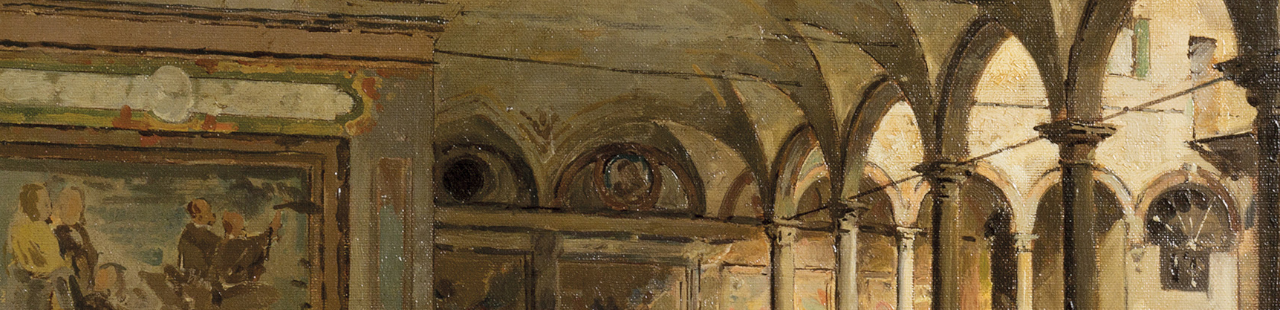
────────────────────────────────•⋅⊰༻༒︎༺⊱⋅•──────────────────────────────────
𝕿he nearer the pony clopped and whinnied toward the Ansbourg Imperial Command Academy's gatehouse was all the tighter Tilly tensed in the shoulders; all the more that she indulged her dreadful habit of turning her head this way and that, sensing, whisker-like, for the scrutinies of the quickly-gathering throng. So very cat-like in that way, the countess remarked. How hypocritically her baby sister hungered for contemplation, hunted the appreciativeness of others; until she had these, pierced and wriggling betwixt her teeth, and knew no longer what to do with them; and so always scorned them in the end, the way cats scorn the mouse once still and silent and spent of all its struggle. Always longing for little considerations—letters, lockets, cameos—anything to prove they cared—but less than a glance and a smile would send her away again to the farthest corners of the room, to the cloisters, to her locked and barricaded bedchamber, red-faced, flutter-chested. Ah. Young, fickle Tilly. How dearly she wanted father in Rodon, mother in the Afterweald, and all her cousins and cadets all over the duchy to see her now, so trim and regal in her uniform. Paradoxically, how shy and scarlet she would turn when came that precious moment.
Helgeða wondered. Was it truly so humiliating to be seen like this?—in clothes unfamiliar, perhaps a bit ill-fitting before the tailor's magic touch, but dashing all the same?—making a bit of an entrance astride a noble steed? (And with such an elegant, beautiful lady clinging to her hip, just like in the periodicals!) Still, with no small arsenal of ways to tease and embarrass the younger Guillarmes daughter, but with no one about to amuse by it, she sighingly obliged; hardly waiting for the rouncey to slow to a trot before sliding off the saddle, and stumbling forward to a halt. She busied herself upturning her pipe and scraping out the last of the ashes onto the dusty white ground while Tilly, at her own pace and with far greater measure of practiced dignity (she was feeling by now, after all, quite bashful around the crowd), also dismounted. The breeze of course had been nice while it lasted, but there again stood the two in the morning heat (growing hotter by the hour), their skins beginning to notice the languid, leaden air, the most unmentionable crooks and crevices of their bodies once more dampening under their fineries. Dignity, indeed.
The two set their hands to dusting the road from their boots, smoothing the seats of their hems; Tilly, for her part, knew then as the time to affix her shako, straighten the plated strap about her ears. While they preened, the countess could not help noticing that the thickest of the throngs had gathered 'round a particular four-wheeled coach, its team of draft horses caparisoned in a vivid orange. (Or was it tenné?) One of a station as modest as hers should not risk venturing too near, lest she presumed to stand in the presence of an Emperor's son, a Prince-Elector's second cousin, or gods know who; but she made the most of her vantage, rising to her tiptoes and straining for a better look.
"What are you doing?"
"Oh," exclaimed the countess, arranging, in its surprised, flighty sort of inflection, for that curt syllable to come off rather offhanded, less like absentmindedness than an interruption, "I don't suppose we know the next time we will be able to meet, do we?"
"With my luggage to unpack, my Fahnenjunker certificate to notarize, campus to find my way around, first classes to attend," Tilly, having either not noticed or not minded, rambled off with a lengthy, contemplative pause—"......no. I would suppose not."
"C'est la vie. Not the moment I would have chosen, but, 'tis the moment which will have to suffice."
"Moment?" replied the curious, smirking, and only slightly alarmed Hloþhilde. "Moment for what?"
Turning her gentle, quiet contempt from the clamorous crowds back to the pony she still clutched by the mouth, reins to bit to teeth, Hellie gave a nod toward its haunches. "Saddlebag. Starboard side."
Hloþhilde looked, too, and gave the animal's strong, skittish hindlegs a wide berth while wandering over to its other shank.
Afforded a second moment to catch a glance at the visitors in the coach, Hellie looked just in time to watch its doors swing wide. Two—no, at least three of them stepped out from the carriage, offering the coachmen no regard. However, someone who stood eminently prominent amongst the gathering crowd, in his tall and plumèd bicorne, and full dress beneath that—he had their full attention and address.
"Damn," Hellie whispered, not afforded a good look at any one of them with the wide-swung carriage door obscuring the arrivals' faces, and the backs of all those heads obscuring the host. She looked back to her darling sister, who rooted through the wrong saddlebag, and rolled her eyes. "The other starboard."
"Silence."
"Thank the gods 'tis not the naval academy you enrolled for, ay, Tilly?"
"Shut up!"
"Oh, my lord—just open it already."
Having said that, Helgeða could all but read her darling Tilly's thoughts in their unfurling metamorphosis from irritation to confusion to wonder. A gift—what could it be, and whom from?—how precious, her childlike enthusiasm, overtaking her like a fever! First she found the right compartment, and identified the thing by its velour wrapping, its silk ribbon, not a crate of punches and stains for re-tooling a broken saddle, no mere cigar box or half-sack of rations, but the box, her box—and drawing it from a leather tube-scabbard, seeing that it was many times longer than its breadth, feeling in her delicate hands the weight and the balance of it—the girl-woman, without yet reaching to unravel the knot, already had begun to infer.
Her disappointment matched only her need not to show it; to let the expected courtesies prevail.
"I cannot accept this," she said pensively.
"You can and you will."
"Hellie......"
"Darling," she interrupted. "Dearest. Respectfully, I did not spend ten gyldmarks and three weeks back-and-forthing with that—......horny toad of a blacksmith for you to rebuff now. Then, I did not spend three days by train, then one more by horseback coming all this way, bringing it to you, all for you to not even open it up and look inside." She stepped nearer, and Tilly had under her belt a lifetime of knowing what to expect from her elder sister when she was feeling saucy and enraged. But in lieu of the expected flick to the forehead or tug of her downy, drab hair, Tilly was pulled in close, and held taut about the shoulders. "'Tis yours," said Hellie. "And I will hear no more argument."
When they pulled away she could see Hloþhilde's curiosity getting the better of her, working hard to eat away at and supplant all her reservations. But what reservations they were. A lifetime of such disappointments had turned the thing gloomy since girlhood. Already she was expecting it to snap in twain in its first swing; or for the hilt to start rattling, such that no glue or binding could make it cease rattling, as with the piece she had once deemed her favorite, a cheap, skimped-upon thing purchased at groaning duress by their pinch of a father, as if buying a wide-eyed daughter her first blade had massively burdened the house coffers. If not that then some bullyish upperclassman would steal it from her, or it would slip from its frog and be lost forever in the sucking muds of a riverbed, or destiny would assure one or another way that she was deprived of her keepsake in the very same hour wherein she'd finally allowed herself to grow fond of it.
In one final burst of abstinence, Hloþhilde protested, "'Tis not regulation dress......They surely will not bid me wear it on campus......"
"Then wear it on the weekends," Hellie countered. "On fine, cool evenings after class. While walking the streets of Ansbourg, riding through the woods beyond the outskirts, going dancing with your new friends, treating them to noontime supper—surely these headmasters and disciplinarians cannot decide what a gentlelady wears then?"
And there it was: the final blow to beat down all of Tilly's gates, her portcullises, her ramparts. Her sensibilities had stood no chance against Hellie's doggèd obstinance, but they had certainly put up a better fight than usual. Unfurling the ribbon and allowing it to snag on the breeze, fluttering and scuttling away along the white, foot-tamped ground, the younger sister opened the lid of the box by its hinge, and stared down into the plush silk cushions which safeguarded her gift from all possible scratching; so soft they seemed knitted from rainclouds, from birdsong on a summer night.
"It's beautiful," she sighed, working tirelessly to dam up her affections while they threatened to overwhelm her, and burst out all at once as a single deluge. "Thank you, Hellie."
"'Tis from all of us. And we are all so very proud of you," Hellie said. "Please remember that."
"I will." But Hloþhilde hesitated to ask; had to muster up the courage to ask. Employ all her little tricks, refusing to make eye contact, pretending she spoke to herself......
"......Even father?"
"Especially father." The countess drew a breath she hadn't noticed she needed until her chest started aching, the last breath gone stale and hot inside of her. "Well! I can hardly be holding this beast during the ceremony, can I? I'd better go and have him stabled. Ah, and I should find a few locals to ask about some decent restaurants nearby. We cannot have your going-away supper being dry and stodgy like that cake—hoomph!"
"Prithee stay," Tilly whimpered, muffled by the fabrics at her sister's back; for she'd very nearly tumbled the both of them over with the running, tackling hug she'd sent slamming into Hellie's waist just after the latter had turned to find a stable-boy.
"Urgh—uh—" Hellie struggled—"sweet sister, is this not conduct unbefitting a—?"
"I don't care." The squeeze tightened, the breaths, already laboring in the heat and the fine clothes and the nearby stink of hay and manure, grew ever the more difficult to draw. "I cannot wait until Solstice to see you again. Please, please leave me not."
Hellie gasped, and upon hearing this found herself the one having to be stoic. It was nothing at all like she'd come to expect of courage, surrounded by all this pomp and circumstance. Not at all like the reassurances offered to an aging old earl who feared for the slow death of his legacy. Not at all like sitting at the end of the birthing bed. The deathbed. Countess Helgeða du Guillarmes smiled softly.
"We will meet for dinner in a few days, and you will regale me about your first week at academy," she promised, in her reassuring, cooing, big-sisterly way. A tone Tilly had heard all her life, from broken toys to scraped elbows to the burial of an old and sickly hunting-dog. "Thereafter we will write. Every week if you wish it. And in three years, just three short, miniscule years, you will not have to be brave anymore. Because a hero you will be, and a hero returned to us. But for now—" wriggling about face in the midst of this death-squeeze which had not yet relented, Hellie put a hand to the small of her sister's back, and another to her collarbone, and softly but sternly corrected Tilly's posture. "Dignity. Poise. And courage in all things. Promise me."
Sweet, darling Tilly's face, wrenched with grief and trembling; about the lower lip, about the wrinkles of the nose. "I promise," she mewled.
Helgeða embraced her once again. "Good girl. I love you so much."
"I love you too. All of you."
The countess pulled away again. "I shall return in time to find a seat by the door," she said, and knew there and then that she had to turn, to leave at once, and decisively; using the pony as an excuse again if she must, but to depart. Quickly; heartlessly. Before she, herself, no longer had it in her to be brave.
Now only time would tell whether Hloþhilde could break free of her most childish tendencies. No longer could she be seen clutching at her big sister's skirt, or running to her dour father to grudgingly solve her problems. Albeit in a circumstance the young countess could never have anticipated, the time had come to see what Tilly, her Tilly, could accomplish on her own. Her own skill, her own wits, and her own reputation. Yes. One last bravery, just this once to see the babe off on a high note, and then it was Tilly's turn.
Like a trout gutted of its innards did Hloþhilde stand there, watching Hellie go; feeling like some vital part of herself, priceless and irreplaceable, was departing from this world forever. For three months would she go without seeing her château—feeling the cold mountain air blustering between the pillars of the cloister, smelling the air perfumed down in the valley by the flowering Nierreux grapes—the same manservants changing her sheets, the same grandfatherly castellan who saw to her breakfasts and lessons......Three little months and yet to a girl who had gone not three days without these comforts at a time, they seemed a cold and desolate lifetime. So there she stood, clutching the box, her only memento to remember them by, seeming still warm with Hellie's tender touch.
And before her, the very first first step to take in her journey, the very first threshold to cross over on her way to heroism: the academy's gatehouse, replete with raised portcullis and imitation murderholes, and beneath those features, an older gentlewoman standing at a podium, admitting a queue of students in uniform one family name at a time.
"Good morning, sirs. Lansbach, is it? Let's see, L, L......here it is. Young Herr Lansbach, you will be seated in section B, with Professor Aberstein. Yes, godspeed and best of luck to you. Good morning, sir, last name, please? Let's see, Pfalaner......Is that by chance spelled with an F, or a P-H? Ah, I see......You're also in section B, with Professor Aberstein. Have a great year. Good morning, Fräulein. Family name, please?......"
Helgeða wondered. Was it truly so humiliating to be seen like this?—in clothes unfamiliar, perhaps a bit ill-fitting before the tailor's magic touch, but dashing all the same?—making a bit of an entrance astride a noble steed? (And with such an elegant, beautiful lady clinging to her hip, just like in the periodicals!) Still, with no small arsenal of ways to tease and embarrass the younger Guillarmes daughter, but with no one about to amuse by it, she sighingly obliged; hardly waiting for the rouncey to slow to a trot before sliding off the saddle, and stumbling forward to a halt. She busied herself upturning her pipe and scraping out the last of the ashes onto the dusty white ground while Tilly, at her own pace and with far greater measure of practiced dignity (she was feeling by now, after all, quite bashful around the crowd), also dismounted. The breeze of course had been nice while it lasted, but there again stood the two in the morning heat (growing hotter by the hour), their skins beginning to notice the languid, leaden air, the most unmentionable crooks and crevices of their bodies once more dampening under their fineries. Dignity, indeed.
The two set their hands to dusting the road from their boots, smoothing the seats of their hems; Tilly, for her part, knew then as the time to affix her shako, straighten the plated strap about her ears. While they preened, the countess could not help noticing that the thickest of the throngs had gathered 'round a particular four-wheeled coach, its team of draft horses caparisoned in a vivid orange. (Or was it tenné?) One of a station as modest as hers should not risk venturing too near, lest she presumed to stand in the presence of an Emperor's son, a Prince-Elector's second cousin, or gods know who; but she made the most of her vantage, rising to her tiptoes and straining for a better look.
"What are you doing?"
"Oh," exclaimed the countess, arranging, in its surprised, flighty sort of inflection, for that curt syllable to come off rather offhanded, less like absentmindedness than an interruption, "I don't suppose we know the next time we will be able to meet, do we?"
"With my luggage to unpack, my Fahnenjunker certificate to notarize, campus to find my way around, first classes to attend," Tilly, having either not noticed or not minded, rambled off with a lengthy, contemplative pause—"......no. I would suppose not."
"C'est la vie. Not the moment I would have chosen, but, 'tis the moment which will have to suffice."
"Moment?" replied the curious, smirking, and only slightly alarmed Hloþhilde. "Moment for what?"
Turning her gentle, quiet contempt from the clamorous crowds back to the pony she still clutched by the mouth, reins to bit to teeth, Hellie gave a nod toward its haunches. "Saddlebag. Starboard side."
Hloþhilde looked, too, and gave the animal's strong, skittish hindlegs a wide berth while wandering over to its other shank.
Afforded a second moment to catch a glance at the visitors in the coach, Hellie looked just in time to watch its doors swing wide. Two—no, at least three of them stepped out from the carriage, offering the coachmen no regard. However, someone who stood eminently prominent amongst the gathering crowd, in his tall and plumèd bicorne, and full dress beneath that—he had their full attention and address.
"Damn," Hellie whispered, not afforded a good look at any one of them with the wide-swung carriage door obscuring the arrivals' faces, and the backs of all those heads obscuring the host. She looked back to her darling sister, who rooted through the wrong saddlebag, and rolled her eyes. "The other starboard."
"Silence."
"Thank the gods 'tis not the naval academy you enrolled for, ay, Tilly?"
"Shut up!"
"Oh, my lord—just open it already."
Having said that, Helgeða could all but read her darling Tilly's thoughts in their unfurling metamorphosis from irritation to confusion to wonder. A gift—what could it be, and whom from?—how precious, her childlike enthusiasm, overtaking her like a fever! First she found the right compartment, and identified the thing by its velour wrapping, its silk ribbon, not a crate of punches and stains for re-tooling a broken saddle, no mere cigar box or half-sack of rations, but the box, her box—and drawing it from a leather tube-scabbard, seeing that it was many times longer than its breadth, feeling in her delicate hands the weight and the balance of it—the girl-woman, without yet reaching to unravel the knot, already had begun to infer.
Her disappointment matched only her need not to show it; to let the expected courtesies prevail.
"I cannot accept this," she said pensively.
"You can and you will."
"Hellie......"
"Darling," she interrupted. "Dearest. Respectfully, I did not spend ten gyldmarks and three weeks back-and-forthing with that—......horny toad of a blacksmith for you to rebuff now. Then, I did not spend three days by train, then one more by horseback coming all this way, bringing it to you, all for you to not even open it up and look inside." She stepped nearer, and Tilly had under her belt a lifetime of knowing what to expect from her elder sister when she was feeling saucy and enraged. But in lieu of the expected flick to the forehead or tug of her downy, drab hair, Tilly was pulled in close, and held taut about the shoulders. "'Tis yours," said Hellie. "And I will hear no more argument."
When they pulled away she could see Hloþhilde's curiosity getting the better of her, working hard to eat away at and supplant all her reservations. But what reservations they were. A lifetime of such disappointments had turned the thing gloomy since girlhood. Already she was expecting it to snap in twain in its first swing; or for the hilt to start rattling, such that no glue or binding could make it cease rattling, as with the piece she had once deemed her favorite, a cheap, skimped-upon thing purchased at groaning duress by their pinch of a father, as if buying a wide-eyed daughter her first blade had massively burdened the house coffers. If not that then some bullyish upperclassman would steal it from her, or it would slip from its frog and be lost forever in the sucking muds of a riverbed, or destiny would assure one or another way that she was deprived of her keepsake in the very same hour wherein she'd finally allowed herself to grow fond of it.
In one final burst of abstinence, Hloþhilde protested, "'Tis not regulation dress......They surely will not bid me wear it on campus......"
"Then wear it on the weekends," Hellie countered. "On fine, cool evenings after class. While walking the streets of Ansbourg, riding through the woods beyond the outskirts, going dancing with your new friends, treating them to noontime supper—surely these headmasters and disciplinarians cannot decide what a gentlelady wears then?"
And there it was: the final blow to beat down all of Tilly's gates, her portcullises, her ramparts. Her sensibilities had stood no chance against Hellie's doggèd obstinance, but they had certainly put up a better fight than usual. Unfurling the ribbon and allowing it to snag on the breeze, fluttering and scuttling away along the white, foot-tamped ground, the younger sister opened the lid of the box by its hinge, and stared down into the plush silk cushions which safeguarded her gift from all possible scratching; so soft they seemed knitted from rainclouds, from birdsong on a summer night.
"It's beautiful," she sighed, working tirelessly to dam up her affections while they threatened to overwhelm her, and burst out all at once as a single deluge. "Thank you, Hellie."
"'Tis from all of us. And we are all so very proud of you," Hellie said. "Please remember that."
"I will." But Hloþhilde hesitated to ask; had to muster up the courage to ask. Employ all her little tricks, refusing to make eye contact, pretending she spoke to herself......
"......Even father?"
"Especially father." The countess drew a breath she hadn't noticed she needed until her chest started aching, the last breath gone stale and hot inside of her. "Well! I can hardly be holding this beast during the ceremony, can I? I'd better go and have him stabled. Ah, and I should find a few locals to ask about some decent restaurants nearby. We cannot have your going-away supper being dry and stodgy like that cake—hoomph!"
"Prithee stay," Tilly whimpered, muffled by the fabrics at her sister's back; for she'd very nearly tumbled the both of them over with the running, tackling hug she'd sent slamming into Hellie's waist just after the latter had turned to find a stable-boy.
"Urgh—uh—" Hellie struggled—"sweet sister, is this not conduct unbefitting a—?"
"I don't care." The squeeze tightened, the breaths, already laboring in the heat and the fine clothes and the nearby stink of hay and manure, grew ever the more difficult to draw. "I cannot wait until Solstice to see you again. Please, please leave me not."
Hellie gasped, and upon hearing this found herself the one having to be stoic. It was nothing at all like she'd come to expect of courage, surrounded by all this pomp and circumstance. Not at all like the reassurances offered to an aging old earl who feared for the slow death of his legacy. Not at all like sitting at the end of the birthing bed. The deathbed. Countess Helgeða du Guillarmes smiled softly.
"We will meet for dinner in a few days, and you will regale me about your first week at academy," she promised, in her reassuring, cooing, big-sisterly way. A tone Tilly had heard all her life, from broken toys to scraped elbows to the burial of an old and sickly hunting-dog. "Thereafter we will write. Every week if you wish it. And in three years, just three short, miniscule years, you will not have to be brave anymore. Because a hero you will be, and a hero returned to us. But for now—" wriggling about face in the midst of this death-squeeze which had not yet relented, Hellie put a hand to the small of her sister's back, and another to her collarbone, and softly but sternly corrected Tilly's posture. "Dignity. Poise. And courage in all things. Promise me."
Sweet, darling Tilly's face, wrenched with grief and trembling; about the lower lip, about the wrinkles of the nose. "I promise," she mewled.
Helgeða embraced her once again. "Good girl. I love you so much."
"I love you too. All of you."
The countess pulled away again. "I shall return in time to find a seat by the door," she said, and knew there and then that she had to turn, to leave at once, and decisively; using the pony as an excuse again if she must, but to depart. Quickly; heartlessly. Before she, herself, no longer had it in her to be brave.
Now only time would tell whether Hloþhilde could break free of her most childish tendencies. No longer could she be seen clutching at her big sister's skirt, or running to her dour father to grudgingly solve her problems. Albeit in a circumstance the young countess could never have anticipated, the time had come to see what Tilly, her Tilly, could accomplish on her own. Her own skill, her own wits, and her own reputation. Yes. One last bravery, just this once to see the babe off on a high note, and then it was Tilly's turn.
Like a trout gutted of its innards did Hloþhilde stand there, watching Hellie go; feeling like some vital part of herself, priceless and irreplaceable, was departing from this world forever. For three months would she go without seeing her château—feeling the cold mountain air blustering between the pillars of the cloister, smelling the air perfumed down in the valley by the flowering Nierreux grapes—the same manservants changing her sheets, the same grandfatherly castellan who saw to her breakfasts and lessons......Three little months and yet to a girl who had gone not three days without these comforts at a time, they seemed a cold and desolate lifetime. So there she stood, clutching the box, her only memento to remember them by, seeming still warm with Hellie's tender touch.
And before her, the very first first step to take in her journey, the very first threshold to cross over on her way to heroism: the academy's gatehouse, replete with raised portcullis and imitation murderholes, and beneath those features, an older gentlewoman standing at a podium, admitting a queue of students in uniform one family name at a time.
"Good morning, sirs. Lansbach, is it? Let's see, L, L......here it is. Young Herr Lansbach, you will be seated in section B, with Professor Aberstein. Yes, godspeed and best of luck to you. Good morning, sir, last name, please? Let's see, Pfalaner......Is that by chance spelled with an F, or a P-H? Ah, I see......You're also in section B, with Professor Aberstein. Have a great year. Good morning, Fräulein. Family name, please?......"
────────────────────────────────•⋅⊰༻༒︎༺⊱⋅•──────────────────────────────────
𝖲𝖾𝗉𝗍𝖾𝗆𝖻𝖾𝗋 𝗍𝗁𝖾 𝟣𝗌𝗍, 𝖠𝗇𝗇𝗈 𝟧𝟫𝟦 𝖢𝖾𝗋𝗇𝗎𝗏𝖺𝗅𝗂𝖺𝗇
────────────────────────────────•⋅⊰༻༒︎༺⊱⋅•──────────────────────────────────
𝖂ith breakfast swallowed, and the pony watered, and the innkeeper paid off, and her personal effects in good order—everything brushed which must be supple, starched which must be stiff, steeled and stoned which must be readily sharp—the acting countess of Rodon saw fit to embark, a choice she regretted nigh-immediately. Stepping out into the clear morning, mounting (with labored groan) the lively, chestnut-colored rouncey, and spurring the beast into a trot down High Street, she was not even out of sight of the tavern, hardly upwind of its reeks, when already she had need of her kerchief. This article she dabbed to her face, and the back of her neck; though it did little to soothe the sting of her sweat wringing up through her pores. Being a gentlewoman, elegant and august, would be so easy were it not for such heats. Such wretched, abominable heats which debased her to removing her hat, fanning it to her miserable, clammy face like a harlot with her paper fan; giving her want to loosen the lace cravat about her neck, shed her fine silk justacorps; tempting her by half to frolick in the fountain like a naked child! But, it was the suffering which distinguished that same gentlewoman, the true gentlewoman, from all her counterfeits, was it not? A lesser woman would purchase with her dignity the momentary comfort of a discarded coat, a doffed hat; she would dip her toes in the fountain, and gorge herself fat on switchel. As for the countess, by her own estimation no lesser woman whatever, she rode on. She rode and she suffered, silently, as women do.
They made way for her pony as it passed, the townsfolk of Ansbourg; removed their hats (those who even wore hats anymore) and bowed their gazes low; knowing not, mayhap, her name nor her arms nor her countenance, but recognizing in her bearing a mark of her stature, a measure of Laachtalian nobility. The countess, having not visited the heartlands in some time, took the moment to observe the latest fashions running rampant across the populace. A pity. The young cosmopolitan wheresoever he rode now looked the half-dressed louse.
Ere long dirt road had given way to paved streets, livestock palisades to walls; tall and true, fluttering with His Imperial Majesty's colors, yet garrisoned by men in the consul's steel-on-white-on-grey, their hilts glittering in the mornlight, their bayonets stowed rakishly in their sashes. Beneath the gatehouse did the countess ride, its passage a swirling eddy of people: farmhands and other laborers departing the taverns, bloated with breakfast, to return to the fields, and that same ilk transporting the summer's first bushels inversely, field to market; wealthy children on their way to school or to fortepiano lessons. The heat curled off the cobblestones. By now the lady's breathing was a tatter; her forehead was as slick as oyster meat.
The building, a darling of Segiomara Square, stood tall and proud and great of breadth over the concourse; a venerable thing, its eggshell-white façade interrupted only by uniform windows (creamy with drawn curtains), and by the hotel's name leafed high and large in golden Fraktur. Long was the morning shadow cast by its copper-green roof, a roosting place for iron angels; for dry-throated grotesques of stone. A great many wondrous marble stoops, affixed to opera houses and courts-of-law and other places, made themselves available for the perching, as did several small gardens dotting the square. But in truth the countess saw no better place to grace with her highborn bottom than Segiomara herself, resplendent there upon her plinth. The hand which she did not clutch to her spear, coiled and draped with fruit-heavy vines, she outstretched to the north, longing for something known only by her and the sculptor and the God of a more barbaric era. Her hair befell either shoulder in two braids as thick as ship rigging; a spiral brooch clasped her cloak over one breast, the other copious and strong, engorged-seeming. The image of queenship herself, weather-stained and white with pigeon shit, and yet she cast as lovely and cool a shadow as any other. The countess dismounted her rouncey, sat herself upon the setback of the plinth, and when she was certain—entirely certain—that no one observed her, she deigned at the least to lift her hat from her clammy head, and set it upon one knee. Already the sweat began to wick from her forehead, and with it some of that obscene warmth.
From one pocket she procured her pouch and her tamp, from the other her pipe, which she filled and packed firm. But with none the streetlamps flickering at this virginal hour she could only have her spill at the ready, and await the right passerby. A good many ladies traversed the square already, and some gentlemen too, no doubt bound for the culture houses overlooking the estimable square, and the ballrooms and the parlors; it was, after all, still the social season. But of the few with pipes clenched between gaily gleaming teeth, none of the propensity to stop when petitioned for a share off their embers; none the nonchalance of gait and mood among those hurried lot; so the lady sucked the smokeless air through damp, unburnt leaves, chewed the bit, and bided. It afforded her the chance to observe the public as it walked by, anyhow—a ménagerie of travesties.
For the ladies she harbored no scorn—in every place, and every time, was it their lot to suffer for their art, in their whalebone corsets and powdered mercury facepaints—but the men—woe, the men......In a few breathless years had the latest fads rampaged through the commons like a plague; an affliction not of body but of sensibility, which bared the necks of those who had forgone their cravats, cocked their hats (or worse still, stripped their greasy curls of all ornament whatever), sheared smooth and hairless their babe-faces (but, of course, for a few ridiculous strips of beard about the ears). And what should the good countess have made of the tails affixed to the backs of their coats, flaring behind them like peacock plumage while they strutted down the road? No doubt they thought themselves so very dashing and rakish in these costumes of theirs; but didn't they see? There was no less artifice in their unbuttoned collars and cocked hats than in her own ribbons, lace, and hosiery. And there was no use, no use at all, in so much raffishness if one could not make it look effortless. Without that nonchalance, they only gave the appearance of having forgotten their cravats at home; slovenly, rather than aloof. But there was nothing to be done about it. Once concerned with a great many such things, before she knew it and entirely without warning she'd become a lord, rife with greater concernments than these; and the fashions, the etiquette, all of it had left her behind like a lees, rising ever and on to more novel things.
Still, she couldn't help it bringing her no small irritation to think how these peafowl sauntered past the humble partridge, no doubt mistaking her subtler style for stodginess, her tastes—hardly "new" per sē, not so intrepid or avant garde, but elegant, reliable enough—for obsolescence. Alas. Were it so simple a matter to carry one's self with the airs and attitudes befitting these men's betters, suffering in her silks no matter the weather, they would not say in places south of Ansbourg, "Noblesse oblige"—a phrase with, it occurred to her, had no equal in the local tongue.
Natürlich.
Checking her pocket watch and, with an authoritative click, snapping it shut again, she remarked upon the hour, which had begun to draw certain uniforms from the hotel, across Segiomara Square; some with escort while others went unaccompanied. It was a black tabard, shrouded under a cloak, also black, coming down to the same length about the knees; with tall, stiff jackboots, and a shako of modest panache, and a single-shouldered sash of maroon. Pinchbeck were the accents, which were a knot of braided cord to the shako's one side, the aiguillettes of the opposite shoulder, the clasp of the cloak; a few more bits of metal; insignia and such. But even at a slapdash glance did the countess know each of these passersby, despite the regalia, for an imposter. The way their feet clicked down the cobblestones, their strides laden with none of the measure, the anxious, unsure quietude; too straightly did they stand, likewise, and too firmly did they hold their gazes peerward as they merried along. No, the person the countess had come to fetch was of an altogether different breed. She could not exactly purport to call her "meek," but softly-spoken? Attracted, like sowbugs, to the mossy repose of cool, dark places? At times as sullen and gloomy as a church during dirge? Aye. Aye, those she was. And such a waste, too. All her mother's beauty, squandered on solitude and sulking......
Another moment later and there she was!—issuing from the Royal Palanquin; down the grand marble steps, between the marble elks seated en sejant (one point broken, by some past mischief, off the antlers of the sinister). The lady needed not catch the details in the countenance to know. It was in the way she robbed the jackboots of all their grandeur, tiptoeing down the steps so as to trouble no one with the clack-clacking of the hobnails. How her every word and every gesture reeked of apology, as if she did not deserve the very space she occupied from door to stair, stair to landing. How she made way for the porters and waitstaff who by all accounts should have made way for her. But how could they know?—only the academy's parade uniform betrayed her importance within the social order. As for the girl behind the cloth, all the fanciful names and titles and all the highborn blood in the empire lacked the strength to break through her true nature. What inspired other dukes' and earls' daughters to greatness seemed instead a furtive, shameful thing to their father's; something to smuggle place to place within a guilt-pricked heart. Something to bury.
It had taken many years and even a few switchings to teach the girl not to wince when she approached, or when she had to make appearance at the many balls thrown at Château Montmarcy. That, or perhaps she was finally taking in her personage a morsel of pride; for as the countess stood—returning to her ringleted head her ribboned hat—and strode over, pipe bit still betwixt her teeth and reins still in her gauntleted fist, she actually, contrary to all her nature, thought to smile. And not only politely—artlessly, beamingly she smiled. Not even taking care to shroud behind her upper lip the overlapped fang of which she was so girlishly ashamed.
"Tilly," said the countess. "Good morning."
The addressed effected her very best bow, either blushing slightly or awash with the same morning heat, beneath her black cloak and black tabard and leather, black helm. "How do I look?"
With great fondness and no small pride tightening her face did the countess look on. Twirling her finger—"Pirouette," she ordered—she took in the regalia's every feature, the flowing and the flaring of cinched fabrics as her sister obliged, spinning on her heels—"and a flourish"—this too Tilly did dutifully, doffing her shako and giving her characteristic curtsy-brandish-thing, charming in its clumsiness.
"Perfection. Well—" Having noted something, the countess stepped forward to correct it: reaching for her face, brushing aside the curtain of hair, on her dexter side, which so relished in falling over Hloþhilde's lovely face, obscuring her mist-grey eyes. Delicately her sister tucked the impish lock behind her ear. "There. Now you're perfect. My Gods, Tilly, just to look at you—majestueuse."
So it was a blush after all, she remarked to herself—as her words wrenched the smile wider, wider; deepening as well the wan, rosy pools of Hloþhilde's cheeks into an ocean's scarlet. The latter buried her mouth and her nose behind her hands; Countess Helgeða laughed.
It was then the younger's turn to notice a peculiarity about the face of the elder; and by the time the countess realized that she reached for the pipe, already it was snatched. "How long have you been suckling on this thing like a babe at a milkless teat?" Hloþhilde teased.
"You need not let it concern you," she said in reply, grasping to have it back, but her sister was quick, and still giggling she gave a quick scrabble up the hotel steps.
"They have a fire lit in the foyer."
"Come. Do not make yourself late for your own entrance ceremony."
"I will be only a minute," said the girl—finding her courage, and an equal measure of obstinance, when she wanted—and ere the countess could object she was off. Where she departed empty-handed, when she returned again some minutes later she'd somehow sourced a cedar spill, mayhap from the receptionist or even the gentlemen's parlor. This and the now-smoldering pipe she cradled in her cupped hands like a pair of baby birds, guarding them from even the frailest gusts. With great dignity and poise did she then offer the pipe to Helgeða's pursed, slightly smirking lips; but then the first cough escaped her, extinguishing an itch the smoke had coaxed from her throat, and with that itch all the gesture's grace, all its elegance. Too amused to be irritated, the countess took the bowl into her hand, and the bit to her tongue, and said nothing of it, only sucking air through the cinder, which soon enough had gushed the first ribbon of pungent smoke, a milky thing which drifted away and upward, dissipating, as if supped by the angels on the rooftops.
With the leaves well-seated in the pipe and the ashes in no danger of dwindling, the countess left them dangling from her clenched lips. Fastening together her freed hands and cupping them low about her sister's knee, the latter objected, saying, "Please, Hellie—I am a child no longer."
"And yet still and always the baby," she refuted. "Up."
Wondering, perhaps, whether this was her ceremony which she soon attended or her sister's, with a roll of her eyes "Tilly" stepped her heel into the waiting palms, and allowed herself to be hoisted into the saddle. Then, with every other business finished but to go, the two at last embarked. West, until the sharp right onto High Street, which unlike the genteel square began to sprawl and meander lazily uphill.
"So," gasped the countess as they walked, she and the pony, "how have the Free Cities treated you? Enjoying them, are you?"
"I suppose," said Tilly, distant-seeming, her attention pulled away by the rooftops; their architecture.
But eager to ignite conversation as she had ignited the half-lit pipe so graciously fetched to her, the lady pressed on. "Seen any shows?" said she. "Met anyone for supper?"
"Just settling in......"
Helgeða hummed thoughtfully. Looking to the small satchels and purses lining the girl-thing's waistbelt, she considered the gentler, more urbane way of having her answer; but what was life without the occasional amusement? So she lifted her riding crop, choking back tight against the jeweled handle; stood well clear of the pony's hindlegs, and gave its haunch one good switching. With a whinny and a kick the beast threw itself forward, nearly catapulting the unprepared Tilly from the saddle. Only the cantel and a tight grip on the horn saved her from the cobblestones, and she was across the street and partway up the hill when she regained control over the spooked animal. Pomegranate-red from the embarrassment of having nearly collided with half a dozen saunterers and carriages, the girl did not know what to think until she saw her sister, catching up to her; grinning, swaying her weight to and fro with haughty triumph.
"You fool-ass, what are you—how—what if I'd—" At once flustered and humiliated and enraged, Tilly knew not whether first to demand to know what she was doing, or apologize to the bystanders she'd very nearly trampled, or save some fragment of her injured honor, and so her tongue stumbled over all of these at once.
"You jingle like a sleighbell, girl," Hellie chided. "Jingle!—jingle!"
What did she mean by this? Her addled brain went to the small metal accents of her parade uniform: the clinking of the badges and beltloops, the slight rattle in the hilt of her parade saber. Plainly did the countess see her confusion patting at her collar and her epaulets and her ceremonious weapon, so she lifted the tip of the riding crop. "That," she said, with a jab to Tilly's coinpurse, the silver vollmarks jostling within, "was for disobeying my orders."
"Ouch!" Tilly hissed at the prodding to her kidney, sharp and (seemingly) unprovoked. "What in the Twelve Hells—"
"Language. Thou dreary, stingy girl! When I persuaded father to give you that allowance I had you promise to enjoy yourself, or did I not? Make some acquaintances—have a taste of the world beyond the little walls of our château! But what have you done instead? Locked yourself away in a courtyard somewhere, no doubt; practiced your fencing against a tree for your lack of a sparring partner; read books, and spent not one single penny on aught more lavish than a crust of ryebread."
"You're wrong! I—......" the uncertainty in her own offended convictions—the realizing that her sister knew her too well—caused Tilly pause—"I bought a sachertorte the other day."
"Your decadence dismays us all. And how was it?"
She averted her gaze, souring slightly in less-than-fond remembrance. "Dry."
As expected of the osterlands, the countess kept to herself. "Listen to me, Tilly," she said, breaking off to continue their walk, watching only to assure that the younger dutifully whipped back up to pace. "In one week's time I will be returning to Marsènne. Thereafter you will have your duties—teachers to oblige, calendars to keep, yes—but by the way, you will be alone, with only yourself to obey."
During the pony's panicked canter that unruly lock of hair had dislodged itself from behind Tilly's ear, falling forward, shrouding her expression once more from the good countess's scrutinies. Even more unreadable than usual was her glum sister.
"Only yourself to look to while plotting your course," she continued in a pant, but as for the exhileration of this day—life's first freedom sprawled out before her, or even the expected fear of making the wrong choice, following down the wrong road—nothing. "Are you listening to me?"
"Of course I am," said Tilly, attempting, in her timbres, to muster some second measure of indignation; but even this sounded more akin to a whimper. Her downcast, sidewise glare blunted by the flinch in her shoulders, anticipating another thwack! of the riding crop.
"But you know," chided the good countess Helgeða, "only this once in your life will it be your first journey from home—your first flap from the nest. And all this daydreaming while it passes you by—it disserves you."
"I only mean to wonder—" began the accused—but realizing some silliness to her words ere they departed her lips, or mayhap the futility in the persuasion—"no. You're right; 'tis nothing."
All her life, from girlhood to woman grown, had Helgeða sought to understand, like a sailor, the riptides of that soul she called her own soul's mirror—the cardinal winds whereon those thoughts drifted, and all the desert islands, distant and lonely, whereon they roosted. An entire lifetime had she spent charting those turbulent oceans. So when she saw the furtiveness—the quiet, grasping yearning in young Tilly's expression—there was some assurance to be found in seeing she'd struck the mark. Likewise a deep sadness, that even here, a half and a hundred leagues from home, yes, even here she feared the impish wind which would steal away with her words, and carry them to all the wrong ears, pricking them with her insolence.
"Worry not for the duties which have made off with his attention today," Hellie said. "He will set them aside to visit during the solstice holiday; willingly, should he choose it, or if not then I will drag him by his beard. I swear it by Brennicus's bones."
Such a warm and dulcet laugh Tilly had; a bucking, galloping thing; and shameless in the teeth, the gleaming, girlish teeth. "I'd like that," she confessed.
"'Tis a promise, then. And you!—after you've had a few days to settle in, and ere I have returned to Rodon, let us meet for noontime supper. You will regale me with how well you've settled in, the friends you've made—all over a proper cake. Good, moist, Marsènnish cake."
"I'd like that, too, methinks."
"Good. For now—gods, spare me," she sighed—as through some conspiracy between the blazing mornlight and the hugging of the dress wools dark as jet against her waist and the long, uphill journey along the cobblestones, the warmth eddied to the countess's brain; the world went swimming from her vision. Within grasping distance, only a lamppost wrought of iron seemed a rightful crutch, a roost wherefrom to recover her breath. "Forgive me, sweet sister. My skin sings for the breezes cooled over the dale, 'tis all—and this frock, atrocious thing—grant me but a moment's repose, and I'll be right again."
But it wouldn't do; not with her blood and kin halfway to sprawling cross the road, fallen before the next set of hooves and carriage wheels to happen along; not with room aplenty in the shelf of the saddle, and the rest of the hill to surmount, and a courtyard to reach ere the clocktowers' brazen chime. Not with the public beginning to take notice of their uncouth frolickings. Before the countess could compose herself unaccompanied, she found the pony sidled up abreast of her, and from above, outstretched and gloved in kidskin, a hand. Tilly had also flushed warm and pinkish, though not for being overdressed in the trim, dark wools of her parade dress; she looked nervously side-aside, sensing eyes on them.
"I'm quite alright, Tilly," the countess protested, swatting the hand away.
"I will hear no argument. Come on."
"Difficulties be damned—someone must give you away—" panted the beleaguered—"as befitting this—your finest hour."
"My 'finest hour' will soon see my sister fainted in the heat, face-down in horse leavings. Come!"
Pushing hard against the walk's vigors, its tolls upon her petal-soft body, Helgeða managed at the least to upright herself. Despite still laboring about the bodice, and flushed of face, she'd donned defiantly a look of bemusement; sharp, wry, and utterly befitting the acting countess of Rodon. She remarked upon this entreaty; pretended a moment's pause in its appraisal. "Very well," she relented, reaching for the hand still offered, "but only to the barbican. I will dismount there."
It took all Hellie's scrabbling and all her grinning junior's strength of shoulder to drag her into the lap of the saddle, but in no time whatever she sat both legs to the side, and they were off!—at full canter, up High Street where it crossed with Peltmarket, dodging hats and awnings and parasols all the while.
"So tell me when you became so gallant," cooed that breath just behind Tilly's ear, now that it had had a moment to catch itself, the wind billowing alike in cape and coattail, caressing and cooling their summer-blighted necks. "Who knew a dashing uniform was all it took to shuck our little pearl from her shell?"
Tilly pretended not to hear, engrossed with the road and evading its many obstacles, whether fixed or moving.
The countess tried once more—"I need not ask you your room number, I suppose," she said; "soon you'll be rebuffing boys left and right, and I need only follow the trail of broken hearts"—but when this too failed to elicit a reaction, Hellie placed an arm to the wide of Tilly's shoulders, rested there her cheek, and sighed, watching as the city of Ansbourg passed by in panorama. It wasn't long before she began to see more of those uniforms, then more and more; and not only in wayward scatterings like back in the square, but gatherings, congregations of them, congealing on the sidewalk to mount the last of the hill together. Upperclassmen meeting their juniors for the first time—younger siblings, and cousins from distant cadet branches, and the friends of these. Corps already scouting amongst the fresh blood, vainglorious in their sashes and ribbons-of-office. Last year's friends saying hello, how good to see you. Parents, siblings, and belovèd tutors swapping tearful goodbyes. Hellie turned her despondent, listless gaze away from the blur of shops and newspaper stands, turned it uphill. She could see, just past the swell of the hill, the first formings of the belfries, the spires, the gatehouse. There stood the Command Academy, awaiting them.
They made way for her pony as it passed, the townsfolk of Ansbourg; removed their hats (those who even wore hats anymore) and bowed their gazes low; knowing not, mayhap, her name nor her arms nor her countenance, but recognizing in her bearing a mark of her stature, a measure of Laachtalian nobility. The countess, having not visited the heartlands in some time, took the moment to observe the latest fashions running rampant across the populace. A pity. The young cosmopolitan wheresoever he rode now looked the half-dressed louse.
Ere long dirt road had given way to paved streets, livestock palisades to walls; tall and true, fluttering with His Imperial Majesty's colors, yet garrisoned by men in the consul's steel-on-white-on-grey, their hilts glittering in the mornlight, their bayonets stowed rakishly in their sashes. Beneath the gatehouse did the countess ride, its passage a swirling eddy of people: farmhands and other laborers departing the taverns, bloated with breakfast, to return to the fields, and that same ilk transporting the summer's first bushels inversely, field to market; wealthy children on their way to school or to fortepiano lessons. The heat curled off the cobblestones. By now the lady's breathing was a tatter; her forehead was as slick as oyster meat.
The building, a darling of Segiomara Square, stood tall and proud and great of breadth over the concourse; a venerable thing, its eggshell-white façade interrupted only by uniform windows (creamy with drawn curtains), and by the hotel's name leafed high and large in golden Fraktur. Long was the morning shadow cast by its copper-green roof, a roosting place for iron angels; for dry-throated grotesques of stone. A great many wondrous marble stoops, affixed to opera houses and courts-of-law and other places, made themselves available for the perching, as did several small gardens dotting the square. But in truth the countess saw no better place to grace with her highborn bottom than Segiomara herself, resplendent there upon her plinth. The hand which she did not clutch to her spear, coiled and draped with fruit-heavy vines, she outstretched to the north, longing for something known only by her and the sculptor and the God of a more barbaric era. Her hair befell either shoulder in two braids as thick as ship rigging; a spiral brooch clasped her cloak over one breast, the other copious and strong, engorged-seeming. The image of queenship herself, weather-stained and white with pigeon shit, and yet she cast as lovely and cool a shadow as any other. The countess dismounted her rouncey, sat herself upon the setback of the plinth, and when she was certain—entirely certain—that no one observed her, she deigned at the least to lift her hat from her clammy head, and set it upon one knee. Already the sweat began to wick from her forehead, and with it some of that obscene warmth.
From one pocket she procured her pouch and her tamp, from the other her pipe, which she filled and packed firm. But with none the streetlamps flickering at this virginal hour she could only have her spill at the ready, and await the right passerby. A good many ladies traversed the square already, and some gentlemen too, no doubt bound for the culture houses overlooking the estimable square, and the ballrooms and the parlors; it was, after all, still the social season. But of the few with pipes clenched between gaily gleaming teeth, none of the propensity to stop when petitioned for a share off their embers; none the nonchalance of gait and mood among those hurried lot; so the lady sucked the smokeless air through damp, unburnt leaves, chewed the bit, and bided. It afforded her the chance to observe the public as it walked by, anyhow—a ménagerie of travesties.
For the ladies she harbored no scorn—in every place, and every time, was it their lot to suffer for their art, in their whalebone corsets and powdered mercury facepaints—but the men—woe, the men......In a few breathless years had the latest fads rampaged through the commons like a plague; an affliction not of body but of sensibility, which bared the necks of those who had forgone their cravats, cocked their hats (or worse still, stripped their greasy curls of all ornament whatever), sheared smooth and hairless their babe-faces (but, of course, for a few ridiculous strips of beard about the ears). And what should the good countess have made of the tails affixed to the backs of their coats, flaring behind them like peacock plumage while they strutted down the road? No doubt they thought themselves so very dashing and rakish in these costumes of theirs; but didn't they see? There was no less artifice in their unbuttoned collars and cocked hats than in her own ribbons, lace, and hosiery. And there was no use, no use at all, in so much raffishness if one could not make it look effortless. Without that nonchalance, they only gave the appearance of having forgotten their cravats at home; slovenly, rather than aloof. But there was nothing to be done about it. Once concerned with a great many such things, before she knew it and entirely without warning she'd become a lord, rife with greater concernments than these; and the fashions, the etiquette, all of it had left her behind like a lees, rising ever and on to more novel things.
Still, she couldn't help it bringing her no small irritation to think how these peafowl sauntered past the humble partridge, no doubt mistaking her subtler style for stodginess, her tastes—hardly "new" per sē, not so intrepid or avant garde, but elegant, reliable enough—for obsolescence. Alas. Were it so simple a matter to carry one's self with the airs and attitudes befitting these men's betters, suffering in her silks no matter the weather, they would not say in places south of Ansbourg, "Noblesse oblige"—a phrase with, it occurred to her, had no equal in the local tongue.
Natürlich.
Checking her pocket watch and, with an authoritative click, snapping it shut again, she remarked upon the hour, which had begun to draw certain uniforms from the hotel, across Segiomara Square; some with escort while others went unaccompanied. It was a black tabard, shrouded under a cloak, also black, coming down to the same length about the knees; with tall, stiff jackboots, and a shako of modest panache, and a single-shouldered sash of maroon. Pinchbeck were the accents, which were a knot of braided cord to the shako's one side, the aiguillettes of the opposite shoulder, the clasp of the cloak; a few more bits of metal; insignia and such. But even at a slapdash glance did the countess know each of these passersby, despite the regalia, for an imposter. The way their feet clicked down the cobblestones, their strides laden with none of the measure, the anxious, unsure quietude; too straightly did they stand, likewise, and too firmly did they hold their gazes peerward as they merried along. No, the person the countess had come to fetch was of an altogether different breed. She could not exactly purport to call her "meek," but softly-spoken? Attracted, like sowbugs, to the mossy repose of cool, dark places? At times as sullen and gloomy as a church during dirge? Aye. Aye, those she was. And such a waste, too. All her mother's beauty, squandered on solitude and sulking......
Another moment later and there she was!—issuing from the Royal Palanquin; down the grand marble steps, between the marble elks seated en sejant (one point broken, by some past mischief, off the antlers of the sinister). The lady needed not catch the details in the countenance to know. It was in the way she robbed the jackboots of all their grandeur, tiptoeing down the steps so as to trouble no one with the clack-clacking of the hobnails. How her every word and every gesture reeked of apology, as if she did not deserve the very space she occupied from door to stair, stair to landing. How she made way for the porters and waitstaff who by all accounts should have made way for her. But how could they know?—only the academy's parade uniform betrayed her importance within the social order. As for the girl behind the cloth, all the fanciful names and titles and all the highborn blood in the empire lacked the strength to break through her true nature. What inspired other dukes' and earls' daughters to greatness seemed instead a furtive, shameful thing to their father's; something to smuggle place to place within a guilt-pricked heart. Something to bury.
It had taken many years and even a few switchings to teach the girl not to wince when she approached, or when she had to make appearance at the many balls thrown at Château Montmarcy. That, or perhaps she was finally taking in her personage a morsel of pride; for as the countess stood—returning to her ringleted head her ribboned hat—and strode over, pipe bit still betwixt her teeth and reins still in her gauntleted fist, she actually, contrary to all her nature, thought to smile. And not only politely—artlessly, beamingly she smiled. Not even taking care to shroud behind her upper lip the overlapped fang of which she was so girlishly ashamed.
"Tilly," said the countess. "Good morning."
The addressed effected her very best bow, either blushing slightly or awash with the same morning heat, beneath her black cloak and black tabard and leather, black helm. "How do I look?"
With great fondness and no small pride tightening her face did the countess look on. Twirling her finger—"Pirouette," she ordered—she took in the regalia's every feature, the flowing and the flaring of cinched fabrics as her sister obliged, spinning on her heels—"and a flourish"—this too Tilly did dutifully, doffing her shako and giving her characteristic curtsy-brandish-thing, charming in its clumsiness.
"Perfection. Well—" Having noted something, the countess stepped forward to correct it: reaching for her face, brushing aside the curtain of hair, on her dexter side, which so relished in falling over Hloþhilde's lovely face, obscuring her mist-grey eyes. Delicately her sister tucked the impish lock behind her ear. "There. Now you're perfect. My Gods, Tilly, just to look at you—majestueuse."
So it was a blush after all, she remarked to herself—as her words wrenched the smile wider, wider; deepening as well the wan, rosy pools of Hloþhilde's cheeks into an ocean's scarlet. The latter buried her mouth and her nose behind her hands; Countess Helgeða laughed.
It was then the younger's turn to notice a peculiarity about the face of the elder; and by the time the countess realized that she reached for the pipe, already it was snatched. "How long have you been suckling on this thing like a babe at a milkless teat?" Hloþhilde teased.
"You need not let it concern you," she said in reply, grasping to have it back, but her sister was quick, and still giggling she gave a quick scrabble up the hotel steps.
"They have a fire lit in the foyer."
"Come. Do not make yourself late for your own entrance ceremony."
"I will be only a minute," said the girl—finding her courage, and an equal measure of obstinance, when she wanted—and ere the countess could object she was off. Where she departed empty-handed, when she returned again some minutes later she'd somehow sourced a cedar spill, mayhap from the receptionist or even the gentlemen's parlor. This and the now-smoldering pipe she cradled in her cupped hands like a pair of baby birds, guarding them from even the frailest gusts. With great dignity and poise did she then offer the pipe to Helgeða's pursed, slightly smirking lips; but then the first cough escaped her, extinguishing an itch the smoke had coaxed from her throat, and with that itch all the gesture's grace, all its elegance. Too amused to be irritated, the countess took the bowl into her hand, and the bit to her tongue, and said nothing of it, only sucking air through the cinder, which soon enough had gushed the first ribbon of pungent smoke, a milky thing which drifted away and upward, dissipating, as if supped by the angels on the rooftops.
With the leaves well-seated in the pipe and the ashes in no danger of dwindling, the countess left them dangling from her clenched lips. Fastening together her freed hands and cupping them low about her sister's knee, the latter objected, saying, "Please, Hellie—I am a child no longer."
"And yet still and always the baby," she refuted. "Up."
Wondering, perhaps, whether this was her ceremony which she soon attended or her sister's, with a roll of her eyes "Tilly" stepped her heel into the waiting palms, and allowed herself to be hoisted into the saddle. Then, with every other business finished but to go, the two at last embarked. West, until the sharp right onto High Street, which unlike the genteel square began to sprawl and meander lazily uphill.
"So," gasped the countess as they walked, she and the pony, "how have the Free Cities treated you? Enjoying them, are you?"
"I suppose," said Tilly, distant-seeming, her attention pulled away by the rooftops; their architecture.
But eager to ignite conversation as she had ignited the half-lit pipe so graciously fetched to her, the lady pressed on. "Seen any shows?" said she. "Met anyone for supper?"
"Just settling in......"
Helgeða hummed thoughtfully. Looking to the small satchels and purses lining the girl-thing's waistbelt, she considered the gentler, more urbane way of having her answer; but what was life without the occasional amusement? So she lifted her riding crop, choking back tight against the jeweled handle; stood well clear of the pony's hindlegs, and gave its haunch one good switching. With a whinny and a kick the beast threw itself forward, nearly catapulting the unprepared Tilly from the saddle. Only the cantel and a tight grip on the horn saved her from the cobblestones, and she was across the street and partway up the hill when she regained control over the spooked animal. Pomegranate-red from the embarrassment of having nearly collided with half a dozen saunterers and carriages, the girl did not know what to think until she saw her sister, catching up to her; grinning, swaying her weight to and fro with haughty triumph.
"You fool-ass, what are you—how—what if I'd—" At once flustered and humiliated and enraged, Tilly knew not whether first to demand to know what she was doing, or apologize to the bystanders she'd very nearly trampled, or save some fragment of her injured honor, and so her tongue stumbled over all of these at once.
"You jingle like a sleighbell, girl," Hellie chided. "Jingle!—jingle!"
What did she mean by this? Her addled brain went to the small metal accents of her parade uniform: the clinking of the badges and beltloops, the slight rattle in the hilt of her parade saber. Plainly did the countess see her confusion patting at her collar and her epaulets and her ceremonious weapon, so she lifted the tip of the riding crop. "That," she said, with a jab to Tilly's coinpurse, the silver vollmarks jostling within, "was for disobeying my orders."
"Ouch!" Tilly hissed at the prodding to her kidney, sharp and (seemingly) unprovoked. "What in the Twelve Hells—"
"Language. Thou dreary, stingy girl! When I persuaded father to give you that allowance I had you promise to enjoy yourself, or did I not? Make some acquaintances—have a taste of the world beyond the little walls of our château! But what have you done instead? Locked yourself away in a courtyard somewhere, no doubt; practiced your fencing against a tree for your lack of a sparring partner; read books, and spent not one single penny on aught more lavish than a crust of ryebread."
"You're wrong! I—......" the uncertainty in her own offended convictions—the realizing that her sister knew her too well—caused Tilly pause—"I bought a sachertorte the other day."
"Your decadence dismays us all. And how was it?"
She averted her gaze, souring slightly in less-than-fond remembrance. "Dry."
As expected of the osterlands, the countess kept to herself. "Listen to me, Tilly," she said, breaking off to continue their walk, watching only to assure that the younger dutifully whipped back up to pace. "In one week's time I will be returning to Marsènne. Thereafter you will have your duties—teachers to oblige, calendars to keep, yes—but by the way, you will be alone, with only yourself to obey."
During the pony's panicked canter that unruly lock of hair had dislodged itself from behind Tilly's ear, falling forward, shrouding her expression once more from the good countess's scrutinies. Even more unreadable than usual was her glum sister.
"Only yourself to look to while plotting your course," she continued in a pant, but as for the exhileration of this day—life's first freedom sprawled out before her, or even the expected fear of making the wrong choice, following down the wrong road—nothing. "Are you listening to me?"
"Of course I am," said Tilly, attempting, in her timbres, to muster some second measure of indignation; but even this sounded more akin to a whimper. Her downcast, sidewise glare blunted by the flinch in her shoulders, anticipating another thwack! of the riding crop.
"But you know," chided the good countess Helgeða, "only this once in your life will it be your first journey from home—your first flap from the nest. And all this daydreaming while it passes you by—it disserves you."
"I only mean to wonder—" began the accused—but realizing some silliness to her words ere they departed her lips, or mayhap the futility in the persuasion—"no. You're right; 'tis nothing."
All her life, from girlhood to woman grown, had Helgeða sought to understand, like a sailor, the riptides of that soul she called her own soul's mirror—the cardinal winds whereon those thoughts drifted, and all the desert islands, distant and lonely, whereon they roosted. An entire lifetime had she spent charting those turbulent oceans. So when she saw the furtiveness—the quiet, grasping yearning in young Tilly's expression—there was some assurance to be found in seeing she'd struck the mark. Likewise a deep sadness, that even here, a half and a hundred leagues from home, yes, even here she feared the impish wind which would steal away with her words, and carry them to all the wrong ears, pricking them with her insolence.
"Worry not for the duties which have made off with his attention today," Hellie said. "He will set them aside to visit during the solstice holiday; willingly, should he choose it, or if not then I will drag him by his beard. I swear it by Brennicus's bones."
Such a warm and dulcet laugh Tilly had; a bucking, galloping thing; and shameless in the teeth, the gleaming, girlish teeth. "I'd like that," she confessed.
"'Tis a promise, then. And you!—after you've had a few days to settle in, and ere I have returned to Rodon, let us meet for noontime supper. You will regale me with how well you've settled in, the friends you've made—all over a proper cake. Good, moist, Marsènnish cake."
"I'd like that, too, methinks."
"Good. For now—gods, spare me," she sighed—as through some conspiracy between the blazing mornlight and the hugging of the dress wools dark as jet against her waist and the long, uphill journey along the cobblestones, the warmth eddied to the countess's brain; the world went swimming from her vision. Within grasping distance, only a lamppost wrought of iron seemed a rightful crutch, a roost wherefrom to recover her breath. "Forgive me, sweet sister. My skin sings for the breezes cooled over the dale, 'tis all—and this frock, atrocious thing—grant me but a moment's repose, and I'll be right again."
But it wouldn't do; not with her blood and kin halfway to sprawling cross the road, fallen before the next set of hooves and carriage wheels to happen along; not with room aplenty in the shelf of the saddle, and the rest of the hill to surmount, and a courtyard to reach ere the clocktowers' brazen chime. Not with the public beginning to take notice of their uncouth frolickings. Before the countess could compose herself unaccompanied, she found the pony sidled up abreast of her, and from above, outstretched and gloved in kidskin, a hand. Tilly had also flushed warm and pinkish, though not for being overdressed in the trim, dark wools of her parade dress; she looked nervously side-aside, sensing eyes on them.
"I'm quite alright, Tilly," the countess protested, swatting the hand away.
"I will hear no argument. Come on."
"Difficulties be damned—someone must give you away—" panted the beleaguered—"as befitting this—your finest hour."
"My 'finest hour' will soon see my sister fainted in the heat, face-down in horse leavings. Come!"
Pushing hard against the walk's vigors, its tolls upon her petal-soft body, Helgeða managed at the least to upright herself. Despite still laboring about the bodice, and flushed of face, she'd donned defiantly a look of bemusement; sharp, wry, and utterly befitting the acting countess of Rodon. She remarked upon this entreaty; pretended a moment's pause in its appraisal. "Very well," she relented, reaching for the hand still offered, "but only to the barbican. I will dismount there."
It took all Hellie's scrabbling and all her grinning junior's strength of shoulder to drag her into the lap of the saddle, but in no time whatever she sat both legs to the side, and they were off!—at full canter, up High Street where it crossed with Peltmarket, dodging hats and awnings and parasols all the while.
"So tell me when you became so gallant," cooed that breath just behind Tilly's ear, now that it had had a moment to catch itself, the wind billowing alike in cape and coattail, caressing and cooling their summer-blighted necks. "Who knew a dashing uniform was all it took to shuck our little pearl from her shell?"
Tilly pretended not to hear, engrossed with the road and evading its many obstacles, whether fixed or moving.
The countess tried once more—"I need not ask you your room number, I suppose," she said; "soon you'll be rebuffing boys left and right, and I need only follow the trail of broken hearts"—but when this too failed to elicit a reaction, Hellie placed an arm to the wide of Tilly's shoulders, rested there her cheek, and sighed, watching as the city of Ansbourg passed by in panorama. It wasn't long before she began to see more of those uniforms, then more and more; and not only in wayward scatterings like back in the square, but gatherings, congregations of them, congealing on the sidewalk to mount the last of the hill together. Upperclassmen meeting their juniors for the first time—younger siblings, and cousins from distant cadet branches, and the friends of these. Corps already scouting amongst the fresh blood, vainglorious in their sashes and ribbons-of-office. Last year's friends saying hello, how good to see you. Parents, siblings, and belovèd tutors swapping tearful goodbyes. Hellie turned her despondent, listless gaze away from the blur of shops and newspaper stands, turned it uphill. She could see, just past the swell of the hill, the first formings of the belfries, the spires, the gatehouse. There stood the Command Academy, awaiting them.
────────────────────────────────•⋅⊰༻༒︎༺⊱⋅•──────────────────────────────────
@Passable Writer and I will be working on our next co-write over the next couple days. AFAIK, with @Thayr's (very nice) post uploaded anyone who wants to progress a scene can now do so without infringing any plans. Appreciate the patience.
╔══⬩═══⬩═══⬩═══⬩═══⬩═══⬩═══⬩═══ ◇ ⯁ ◇ ═══⬩═══⬩═══⬩═══⬩═══⬩═══⬩═══⬩══╗
Table of Contents
╚══⬩═══⬩═══⬩═══⬩═══⬩═══⬩═══⬩═══ ◇ ⯁ ◇ ═══⬩═══⬩═══⬩═══⬩═══⬩═══⬩═══⬩══╝
Table of Contents
╚══⬩═══⬩═══⬩═══⬩═══⬩═══⬩═══⬩═══ ◇ ⯁ ◇ ═══⬩═══⬩═══⬩═══⬩═══⬩═══⬩═══⬩══╝
____________________________________________  | 𝕭ack at camp, Szaalm's first order of business was to away to the stream. Plucking the feather from his hat, he drenched the latter in the green, languid waters, drowned it 'til the bubbles stopped and the felt was altogether logged. This he upturned over his neck, over his scalp in buckets, before restoring it to good order again, smoothed and panached upon his head. His next visit was to the hogsheads, where, flagon in hand, he gulped until his belly had gone round and sloshing, where he gulped until the spigot spat and sputtered and his cup was more froth than smallbeer, where he gulped until he could taste the dregs at barrel's bottom, rich and yeasty. When one of his captains declared Szaalm's daily ration spent, his gut liable to pop, and the man himself nigh unfit to sit the saddle without oozing right out of it—or better yet, leading his rouncey clear over a cliff—he switched over to posca and switchel, and kept on quaffing. An hour later, while the enlisted men set to breaking the tents, Szaalm had vomited the half of his contents, and was pissing out the other half when he informed the first of several captains and aides-de-camp that they would have to lead the parade without him. Poker still in hand, tucked modestly behind the foliage or a bramble at camp's edge while his water poured from him, he withstood several rounds of interrogation in obstinate silence—unwilling, for a time, to reveal that Her Majesty had personally requested his company on the long road south to Calaria. But the questions did not relent, and soon enough the need to assuage the men had bested his false humility, and after calling a few assemblies of the officers, Szaalm had boasted the truth of it to all of them. |
"But, your speech," rang the prevailing sentiment—"your drills—" to which he disappeared, for a time, behind his tentflaps. When he appeared again he had incised several pages from his diary: scrawled on the lines and between them, scratched out in places, crossed, dotted, circled, underlined, annotated, but its spirit, all told, entirely recoverable. (It did not yet occur to the captains to wonder why most of the omitted words were simply drawn through with slapdash strokes, while a select few others were most carefully blotted over until entirely illegible—nor why that same ink stained Szaalm's fingertips even at that very moment.)
"Change what thou must," he commanded. "The speech I leave to the chaplain, the drills to Captains Iorlaf and Arkosias. As for the procession: to thee only the horses of the finest coat, and the greatest measure at the withers; the rest I shall bring along to provide to the wounded. Likewise to the men: only the tallest, broadest, and the stoutest of song shall accompany thee, and to them full dress and arms, well-buffed..."
And so it went for some time, the colonel dictating to the others every minutia of the route and the routine, suggesting the hymns and the maneuvers which he knew the men to know the best by heart. Soon the steel was polished, the leather oiled, and the sashes scrubbed; soon the veterans with the most barreled chests were winnowed from the wounded and the sick and the lean, and sent away to assail the towns and their villages with song, with cheer, with slogan. Soon Szaalm knew in how many days to expect the contingent returned to him (and hopefully with a great many volunteers in tow), just the same as the lieutenants knew by what route to find themselves rendezvoused with the main force. And hours later, when every pot was scrubbed and every tent was broken, when every chair, barrel, and chuck was hauled up into the wagons, when the last stakes were pulled and the last flags furled, the Firestripes struck forth.
"Change what thou must," he commanded. "The speech I leave to the chaplain, the drills to Captains Iorlaf and Arkosias. As for the procession: to thee only the horses of the finest coat, and the greatest measure at the withers; the rest I shall bring along to provide to the wounded. Likewise to the men: only the tallest, broadest, and the stoutest of song shall accompany thee, and to them full dress and arms, well-buffed..."
And so it went for some time, the colonel dictating to the others every minutia of the route and the routine, suggesting the hymns and the maneuvers which he knew the men to know the best by heart. Soon the steel was polished, the leather oiled, and the sashes scrubbed; soon the veterans with the most barreled chests were winnowed from the wounded and the sick and the lean, and sent away to assail the towns and their villages with song, with cheer, with slogan. Soon Szaalm knew in how many days to expect the contingent returned to him (and hopefully with a great many volunteers in tow), just the same as the lieutenants knew by what route to find themselves rendezvoused with the main force. And hours later, when every pot was scrubbed and every tent was broken, when every chair, barrel, and chuck was hauled up into the wagons, when the last stakes were pulled and the last flags furled, the Firestripes struck forth.
_________________________________________________________________________________________
_________________________________________________________________________________________
_________________________________________________________________________________________
The fighting had spared the village of Pelposyensis; spared it so thoroughly, in fact, that when the company's banners breached the horizon, many believed themselves beset. Those who had not seen the smoke issuing from the hills just a fortnight ago gathered in disquiet at the wattle fence which marked their settlement's southwest edge, squinting, whispering, wondering aloud whether anyone recognized that flag, those regalia, but especially the orange sash worn over every cuirass from hip to shoulder. At once apprehensions cleaved neighbors, clansmen, even kin atwain. Some believed the outriders mere messengers; others, foragers. They considered, for a time, gathering their dried victuals, their tools, their jewelry, leaving these at the village's convergence in a heap, that the invaders might pass through and feel no need to draw steel, light torches, and press for the supplies they sought. But then there were those who had been working the northern slope that day, who had seen the smoke—who knew the flames from the manor as no mere accident. These seized the former by the shoulders, dragged them into the throes of their panic; urged them right away to shuttering windows, barricading doorways, hiding their children in pantries and in cellars and instructing them to open the doors for no one else. Sending the few huntsmen and sport shooters to the attics, and the rest to the lower floors—fowlingpieces to the first, and to the latter any bill, fork, or scythe which in sufficient numbers could clog a doorway. Only a very few of either rank, however, tried to make off into the orchards and vineyards with what possessions they could carry, and even then, only because they had not stayed long and seen the horses. How easily they would be run down if the visitors willed it.
But they were not run down. Emerging from summer's silvered shimmer, coalescing over the dusklit hilltop, the soldiers marched calmly, slowly; in unbroken file and good order. So as their banners and feathers and sashes fluttered on the balmy breeze, so too did their hips and shoulders sway above the rhythmic plodding of their warbeasts. And so too did their eyes look out into the village with the very same wariness as the eyes which watched them from behind the eaves and shutters. This force, at the least, had not arrived to burn and to rape—a curiosity which drew scrutinies, dark but gleaming, to the slats of boarded windows; to vents and keyholes. Soon enough the cavalrymen rode not toward the village but through it, near enough for their buffed and oiled breastplates to glisten with the purples of gloaming, for their spurs to rattle in the ears of every villager who had not absconded in harelike terror. The billowing of the flags¹—white bends fimbriated gold, on fields chequyed red and black—beckoned the onlookers' attentions to befall the motto embossed thereon. The swirls and serifs drew only a passing interest from the illiterate, of course. But those who gleaned the message—who studied it and comprehended it—there stirred in them a change. The air itself transposed around them as they realized what these men had come for as they paraded past, rank after rank after rank, their oath repeated on every square of cloth despite the disparateness of their arms and dress.
Glorioſus et Liber, read the flags, each and all of them. "Glorious and Free."
Marching alongside the company was a priest, his cassock dark and simple, his shoes worn and battered but still holding. He was one of the very few not seated in a saddle, and unlike the others he had scraped any traces of a beard from his handsome face, and shorn his scalp also where the rest wore curls and lovelocks. The trek down the hillside in the summer heat had wrung a reddish moisture from his face, and hot breath from his parched lips. They filed around him, the others, and ceased when he did; each rank of six to eight horses called to a halt, then a wheel, by various blasts from voice and from trumpet, until two columns of men stood at the ready, facing away from each other (toward the houses). It seemed the priest held the only book among them; until all music ceased from the drums and the flutes, and there resounded from the formation a moment's massive silence, and he cried to the others from amongst it, "Number six-and-forty." And the drummers and the flautists listened for the rustling of the pages pulled from the soldiers' every pocket, and watched for the strike from the priest's uplifted hand.
"I am Vasian. We are the 2nd Regiment of Horse, hailing from the Red Wyvern Army of Ariana Hasikos, rightful queen of the Inburs," he declared. "Thy Lord Respen lays dead! His house destroyed—his line erased—his wicked works undone! Behold, mine brothers-in-blood, and hark!"
And when his hand fell (despite the murmurs issuing from the huts), and the instruments struck up, from the bosoms of the men burst forth resplendent song.
But they were not run down. Emerging from summer's silvered shimmer, coalescing over the dusklit hilltop, the soldiers marched calmly, slowly; in unbroken file and good order. So as their banners and feathers and sashes fluttered on the balmy breeze, so too did their hips and shoulders sway above the rhythmic plodding of their warbeasts. And so too did their eyes look out into the village with the very same wariness as the eyes which watched them from behind the eaves and shutters. This force, at the least, had not arrived to burn and to rape—a curiosity which drew scrutinies, dark but gleaming, to the slats of boarded windows; to vents and keyholes. Soon enough the cavalrymen rode not toward the village but through it, near enough for their buffed and oiled breastplates to glisten with the purples of gloaming, for their spurs to rattle in the ears of every villager who had not absconded in harelike terror. The billowing of the flags¹—white bends fimbriated gold, on fields chequyed red and black—beckoned the onlookers' attentions to befall the motto embossed thereon. The swirls and serifs drew only a passing interest from the illiterate, of course. But those who gleaned the message—who studied it and comprehended it—there stirred in them a change. The air itself transposed around them as they realized what these men had come for as they paraded past, rank after rank after rank, their oath repeated on every square of cloth despite the disparateness of their arms and dress.
Glorioſus et Liber, read the flags, each and all of them. "Glorious and Free."
Marching alongside the company was a priest, his cassock dark and simple, his shoes worn and battered but still holding. He was one of the very few not seated in a saddle, and unlike the others he had scraped any traces of a beard from his handsome face, and shorn his scalp also where the rest wore curls and lovelocks. The trek down the hillside in the summer heat had wrung a reddish moisture from his face, and hot breath from his parched lips. They filed around him, the others, and ceased when he did; each rank of six to eight horses called to a halt, then a wheel, by various blasts from voice and from trumpet, until two columns of men stood at the ready, facing away from each other (toward the houses). It seemed the priest held the only book among them; until all music ceased from the drums and the flutes, and there resounded from the formation a moment's massive silence, and he cried to the others from amongst it, "Number six-and-forty." And the drummers and the flautists listened for the rustling of the pages pulled from the soldiers' every pocket, and watched for the strike from the priest's uplifted hand.
"I am Vasian. We are the 2nd Regiment of Horse, hailing from the Red Wyvern Army of Ariana Hasikos, rightful queen of the Inburs," he declared. "Thy Lord Respen lays dead! His house destroyed—his line erased—his wicked works undone! Behold, mine brothers-in-blood, and hark!"
And when his hand fell (despite the murmurs issuing from the huts), and the instruments struck up, from the bosoms of the men burst forth resplendent song.
 |

Hope everybody has a good week.
I am now, thanks to this message. 👍
© 2007-2026