

Nation Name:
Free Republic of Acier
Flag

nulli secundus

Government:
The Free Republic is governed by directly elected representatives in the Grand Council made up of two hundred Councilors, who then elect an executive Small Council, made up of 12 heads of particular branches of the government. As there is no executive branch, the politics of the Small Council are cut-throat and frenzied, with councilors jockeying for power.
The Free Republic is a new nation, recently formed from rebellion against a monarchy that previously ruled the people of Acier. It is a nation with a unified culture, with a focus on individualism and personal achievement, and a history of industrial progress and a proud military tradition. The Free Republic is very overtly expansionist, demanding land and resources to fuel Progress, and to spread the freedoms within the nation to the rest of the world. The nation has a very small amount of Elan available to it, and has set its sights on other nation to supplement this natural weakness.
Liberty is the chief virtue of government in Acier. The people are beholden to no one but the government, and the State takes a very lax role in internal policies. There are almost no restrictions on industry, freedom of speech is guaranteed, voting is open to every citizen, and there is legal gender equality [the common person still believes in the dogma of women being subordinate to men, however] along with property rights and freedom of religion. The one area in which the freedom of the people is compromised is in the military: there is a three-year mandatory military service for every able-bodied man, with certain aspects of the government pushing to extend this requirement to women.
Economy
The Free Republic is as capitalist as a nation can be. There are almost no restrictions on industrialists, many of whom have created vast manufacturing empires within the small borders of Acier. Taxes are very light, with the government relying on the private sector to service its people with services such as roads, utilities and healthcare. Trade is unrestricted, with merchants of all stripes visible in the bustling markets of the nation. Technological advancement is prized by the Republic, and in the military especially the Republic is one of the technological frontrunners. The drawback of such things is that there is massive income disparity, with the poorest citizens living in abject poverty in the dirty shanty towns outside the major cities, and the wealthy industrialists living in opulent decadence.
Opiates have begun to be mass produced by a few of the more avant-garde captains of industry, and the Grand Council is divided as to whether or not it should be banned. It would be the first non-military good to be banned by the government, and the balance of power changes daily, with most favouring its production.
Leaders:
The Small Council holds a great deal of power, having massive pull in the Grand Council as well as having the traditional powers of an executive branch. The Councilors are:
High Justice Francois Piat: Head Justice and representative of the Judiciary on the Small Council, Abel is a hard-line liberal, fighting tooth and nail against the last few jobs of the government, to in his mind “free the people from the Tyranny of State”
High Consul Louis Montefleur: In charge of foreign policy, he is an ardent expansionist. He dreams of massive tracts of land and resources to fuel Acier to international glory.
Field Marshal Petra Lysette: The only female member of the council, in addition to being the youngest, she is in command of the nation’s land armies and is a firebrand nationalist. A talented orator, she holds a position as a hero of the people, and the accompanying massive popularity. She has so far stood apart from the expansionism issue, and is expected to be the swing vote.
Fleet Admiral Claude Bernadette: A new role on the council, he has become unpopular among his fellow councilors for his constant demand for a larger navy, which he sees as a severe deficiency in the nation’s national defense.
Lord Chancellor Arthur Gabler: A second-generation immigrant, he is in charge of the spending and collecting of the relatively small tax income of the nation. He is a close ally of Marshal Lysette, and supports the military more than other councilors would deem responsible
High Chamberlain Jean LaGarre: Speaker of the house and in charge of politics and bureaucracy, he is a traditional liberal deep in High Justice Piat’s camp, and strongly against the expansionist faction
Minister of Technology Gunther Farber: A new role, put in place just last election, he is in command of the national scientists, and plays the middle ground between the two major Councilar factions. His technological goals are focused on working around the severe lack of Elan in the nation, in both the private and military spheres.
Important Locations
Important Locations:
Lutte: The Capital city of the Republic and the largest city by a fair margin, Lutte is a city clouded with the smoke of industry. It is the manufacturing centre of the nation, with factories sitting side by side with governmental building and palatial mansions, while in the slums the poorest of society fight tooth and nail for food, shelter and safety.
Foirture: The major port of the nation and the second-largest city, Foiture is dominated by it massive market district, where items of every shape and size are traded for every coin under the sun. It has less industrial potential than Lutte, but is home to the small but quickly-expanding Grand Fleet, and sailors on shore leave are common sights.
Cultural Overview
The people of Acier value family and their rights – freedom is enjoyed by all classes of society, and the people make the most of it. The Press is a very popular institution, with cheap pamphlets distributed to all walks of life detailing everything from foreign policy decisions to fictional adventures of heroism and romance. There is no state religion, but the vast majority of people are [to be addressed later: probably some shitty Christian expy]. Family is important to the people of Acier, and large family gatherings are very common on feast days or national holidays. Families rely on each other, and most families are governed informally by the patriarch, though that is not without numerous exceptions. Most of the people are highly patriotic, the nation being very new. Many desire expansion and greater glory for their nation. Military service is very respected, and war heroes are rated on the same lines of fame as sporting legends and famous musicians or writers. Sports are also very common, especially among the rich, and inter-collegiate leagues are the largest venues for such competitions. Every citizen is required to own a weapon, and with the police being privately run under government oversight the average citizen defends this right before many others.
Military Overview
The Army is the focus of the Republic, and it is where most of the money and manpower goes. Infantry doctrine has faced massive upheaval in the last few years, with jacketed rounds and smokeless powder making massed infantry combat pointless and horribly bloody. Infantry doctrine now focuses on small units of a few dozen of men working independently, a Koch machinegun attached to every squad. The average infantryman is equipped with a bolt-action rifle. The Dupont rifle replaced the earlier lever-action variants in the interest of prone-firing and extra reliability. Grenades are standard issue in every squad, and the general plan of attack against civilized nations features infantry charges prefaced by grenades and artillery strikes, covered by pre-set machinegun and mortar emplacements. Bayonets have become largely useless, especially on the attack, with grenadiers clearing fortified positions. The Army take the lessons of modern military thinkers very seriously, focusing on very mobile warfare around fortified positions, aiming to outmaneuver on the attack and interdict on the defense. Mounted infantry regiments are a favorite of Republican generals, and are used extensively in aggressive operations
The officer corps is entirely professional soldiers, and so has a great deal of experience, fueling the army to push the envelope of combat doctrine, but the nature of a draft army is that many untested units will have a lack of real military knowledge.
The Artillery Corps is attached to the Army and is crucial to its success. Field artillery is a staple of Acian attacking and defensive strategy, air-burst shrapnel shells just now coming into use. The Artillery Corps’ newest responsibility is Air Defense, and their new anti-aircraft guns are designed to fix the severe lack of air power in the Republican military.
The Republic’s navy is no less professional, but significantly smaller. Despite the urging of the Fleet Admiral, the navy’s main jobs are protecting shipping from piracy and external threats, and safeguarding transport fleets for the Army. They have few battleships, several cruisers and a large number of destroyers, which rely on massed torpedo attacks to combat the floating Elan Fortresses of the other civilized nations.
The Republic’s Air Force is tiny, and there is no getting around it. They have two Elan-powered Flying Battleships, mostly for prestige. They are not intended for use against other civilized nations, but against southern Savages who do not possess anti-aircraft guns. The battleships are specifically designed to be able to be transported by sea, to reach the southern continent where their work can begin.
Acier was a paranoid state before the rebellion, and the old forts that lined the border with Lumenor and Kolkavia have been kept up to date with deep concrete bunkers and new pieces of artillery. Ironically, the only border that is not well defended is that with Masovia, with which the nation has the worst current relations. Shore defenses are also prevalent, and in lieu of advancing naval power projection the Artiller Corps has updated many of these shore batteries to be formidable, especially on port towns through which trade flows.
Current Diplomacy
Allied with Rinland
Allied with Talania
Attempting to gain trading rights with the Red Dragon
Defensive Alliance with Kovalka
Attempting to gain Non-Aggression Pact with Lumenor
Difficult Relations with Masovia and AUNSArmy:
Rifle: Dupont 7.92x51mm bolt-action, box-magazine fed w/bayonet
Side-Arm: Bisset .45 6-round revolver
Grenade: Pince Stick Grenade
Machine Gun: Poisson 7.92 belt-fed, recoil operated machine.
Mortar: Singe 3-inch man-portable tube mortar
Artilery:
Field Artillery: Coltza 80mm deBange-operated
Siege Artillery/Counterbattery Canon: 155mm deBange
Anti-Aircraft Gun: Faucon 75mm Long breech-loading impact-fused HE shells
Coastal/Fortress Defense: Marteau 254mm Dissapearing turreted cannon [modified to be able to function as anti-aircraft guns by being able to theoretically shoot at 89 degrees]
Ships:
3 Battleships
11 Cruisers
47 Destroyers
Transports sufficient for one Army
Aircraft:
2 Heavy Rocket Battlefliers
Purchase of commissions has been outlawed once the revolution was over - soldiers either enlist as privates or enter the officer corps as 2nd Lieutenants. Infantry is divided squad /section /company /Battalion /regiment/brigade. Mounted infantry is common for aggressive maneuvers, though there is almost no dedicated cavalry. Artillery is never attached to infantry individually, artillery works in no groups smaller than batteries unless extenuating circumstances arrive.


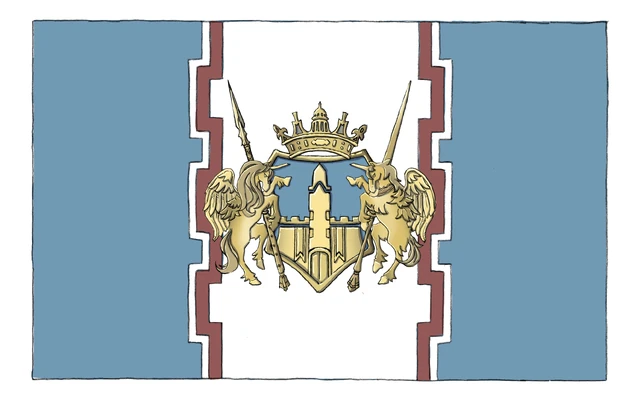 Government: Constitutional Monarchy in theory, in practice the military hold majority of political sway and authority in the Empire.
Economy: Mixed Economy, the government exists to support and set economic policy just as it does diplomatic and military policy, and businesses are expected to coordinate long-term plans with the government. While largely hands-off during times of peace, provisions and bureaus are in place for large-scale war mobilization as needed.
Major Imports: Technology, advanced steam engines, inventions, expert specialists,
Major Exports: Luxuries, bicycles, steel, high-grade anthracite coal, iron
Leader(s):
Empress Presilla Dalones Corvo-Valkyron, nominal leader of the Empire but still a young teenager and not of age to rule due to the early death of her parents, but beloved by most of the country as a progressive leader regardless. Her neophilic mindset makes her very aware of the changing tides of technology and society, but still somewhat naive in political or military settings.
Supreme Commander Adrian Weiben, supreme commander of the Valkyrian Empire military and de facto leader of the country. Ruthless in action and thought, but extremely loyal to the Empire and Empress.
Tethys Zevos, Chief of Administration. The master of coin, policy, and bureaucracy, meaning he’s perpetually overworked and angry at everything. But for all his grousing he is also very good at what he does. Coups may happen, political tides may shake, technology can bring change, but Tethys will keep the Empire chugging along no matter what.
Important People:
“The Tycoons” The five most powerful industrialists and businessmen in the Empire who built its foundations of economic and industrial power. While profit-seeking capitalists to the core, their interests presently align with that of the royalty and government in regards to the New World, and are pledging their assets for a cut of the take.
Government: Constitutional Monarchy in theory, in practice the military hold majority of political sway and authority in the Empire.
Economy: Mixed Economy, the government exists to support and set economic policy just as it does diplomatic and military policy, and businesses are expected to coordinate long-term plans with the government. While largely hands-off during times of peace, provisions and bureaus are in place for large-scale war mobilization as needed.
Major Imports: Technology, advanced steam engines, inventions, expert specialists,
Major Exports: Luxuries, bicycles, steel, high-grade anthracite coal, iron
Leader(s):
Empress Presilla Dalones Corvo-Valkyron, nominal leader of the Empire but still a young teenager and not of age to rule due to the early death of her parents, but beloved by most of the country as a progressive leader regardless. Her neophilic mindset makes her very aware of the changing tides of technology and society, but still somewhat naive in political or military settings.
Supreme Commander Adrian Weiben, supreme commander of the Valkyrian Empire military and de facto leader of the country. Ruthless in action and thought, but extremely loyal to the Empire and Empress.
Tethys Zevos, Chief of Administration. The master of coin, policy, and bureaucracy, meaning he’s perpetually overworked and angry at everything. But for all his grousing he is also very good at what he does. Coups may happen, political tides may shake, technology can bring change, but Tethys will keep the Empire chugging along no matter what.
Important People:
“The Tycoons” The five most powerful industrialists and businessmen in the Empire who built its foundations of economic and industrial power. While profit-seeking capitalists to the core, their interests presently align with that of the royalty and government in regards to the New World, and are pledging their assets for a cut of the take.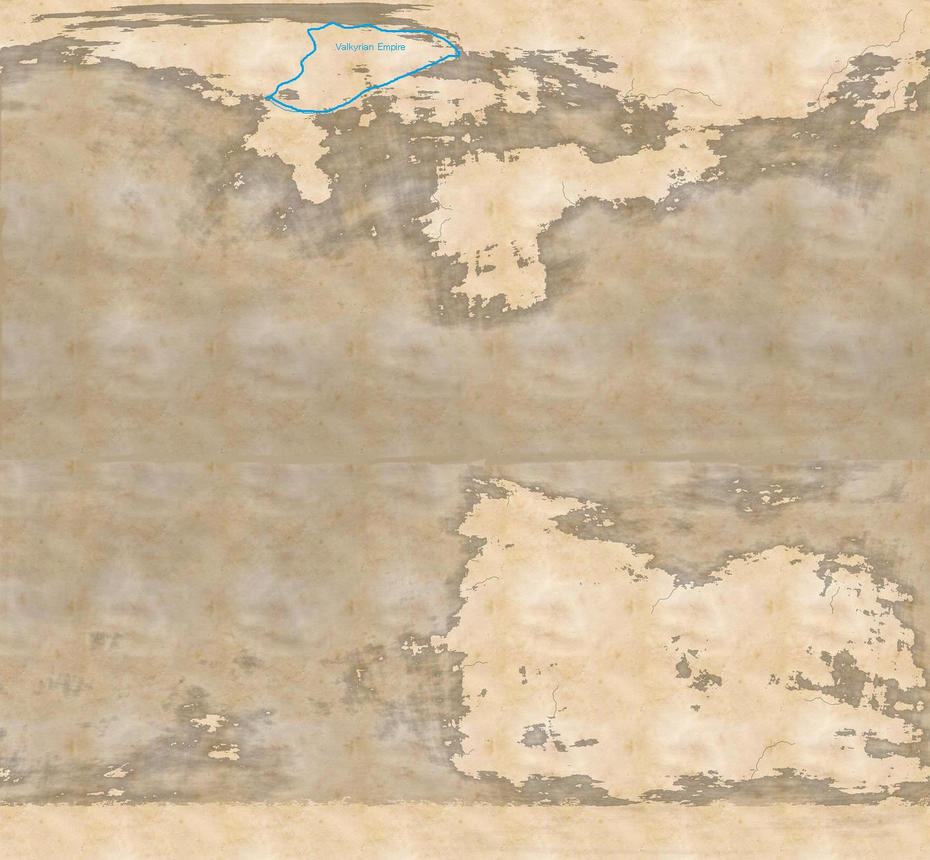


 Government: Condtitutional Monarchy
Economy: Trade-based, they produce many products and export them. Exports include: General machinery, small weaponry, engines, jewelry, furniture, luxury items, and clothing. Minola is very rich, and nobody goes hungry unless they are too lazy to get off their butts and work.
Leaders: King Samuel Niah-Kayes, a leader who focuses on the citizens of his country, and keeps a level head. He regulates quite a large portion of trade himself, as the royal family have industries of their own.
Google had a total space cadet moment and decided it would be a perfect time to crash, so a lot is missing.
Government: Condtitutional Monarchy
Economy: Trade-based, they produce many products and export them. Exports include: General machinery, small weaponry, engines, jewelry, furniture, luxury items, and clothing. Minola is very rich, and nobody goes hungry unless they are too lazy to get off their butts and work.
Leaders: King Samuel Niah-Kayes, a leader who focuses on the citizens of his country, and keeps a level head. He regulates quite a large portion of trade himself, as the royal family have industries of their own.
Google had a total space cadet moment and decided it would be a perfect time to crash, so a lot is missing.


 Government:
"The King should answer to none, so why does the Church expect me to answer to them?"
-King Kalle XII, "Behovet av Regeln"
The Holy Vanjanan Empire is an Absolute Monarchy, where the oldest remaining child of the monarch is heir to the throne. The monarch holds all power, and disobeying an order from them is the exact same thing as treason. Whether or not that charge of treason results in death is up to the monarch, as they can override any decision made by anyone else in the empire. The philosophy behind this is that by making the will of the Empire the will of its monarch, corruption and internal competition would be eliminated, thus creating a stronger nation. Whether or not this was correct can be debated, but the outcome of the Great Nordsjön War is usually referenced as proof of the government's effectiveness.
The monarch is also in complete control of the Empire's religion, a tradition that started with the current King Kalle XII Storen. Vanjana had long been entrenched in their religious beliefs, with the monarch always answering to the church. Kalle, however, refused to be crowned by the church. Instead, he claimed to answer to none other than God himself. After the Great Nordsjön War, the church found it hard to disagree.
Kalle Storen himself is famous for his genius, both political and military, as he proved during the Great Nordsjön War. His is known to be cruel to anyone who opposes him, to the point that he has many executed for daring to question the simplest of decisions. He holds a firm belief that to oppose him is to oppose the Goddess. However, this also means that to follow his orders is to serve the Goddess, and thus he is known to greatly reward those that do not question him. Because of his belief that his will is that of the Goddess, he will almost never change his mind, and refuses to accept that anything he does could possibly be bad. However, there is more to him than his arrogance, and he has been known to change his mind if someone gives him an
Government:
"The King should answer to none, so why does the Church expect me to answer to them?"
-King Kalle XII, "Behovet av Regeln"
The Holy Vanjanan Empire is an Absolute Monarchy, where the oldest remaining child of the monarch is heir to the throne. The monarch holds all power, and disobeying an order from them is the exact same thing as treason. Whether or not that charge of treason results in death is up to the monarch, as they can override any decision made by anyone else in the empire. The philosophy behind this is that by making the will of the Empire the will of its monarch, corruption and internal competition would be eliminated, thus creating a stronger nation. Whether or not this was correct can be debated, but the outcome of the Great Nordsjön War is usually referenced as proof of the government's effectiveness.
The monarch is also in complete control of the Empire's religion, a tradition that started with the current King Kalle XII Storen. Vanjana had long been entrenched in their religious beliefs, with the monarch always answering to the church. Kalle, however, refused to be crowned by the church. Instead, he claimed to answer to none other than God himself. After the Great Nordsjön War, the church found it hard to disagree.
Kalle Storen himself is famous for his genius, both political and military, as he proved during the Great Nordsjön War. His is known to be cruel to anyone who opposes him, to the point that he has many executed for daring to question the simplest of decisions. He holds a firm belief that to oppose him is to oppose the Goddess. However, this also means that to follow his orders is to serve the Goddess, and thus he is known to greatly reward those that do not question him. Because of his belief that his will is that of the Goddess, he will almost never change his mind, and refuses to accept that anything he does could possibly be bad. However, there is more to him than his arrogance, and he has been known to change his mind if someone gives him an  Important Locations:
"Our cities are thriving, our fortresses are impenetrable, and our monuments stand tall. Never before has the North seen such glory."
--King Kalle XII, "En Arbetare är Värt"
Heligastaden: The capital of Vanjana, this city is both a bustling port city and a center of industry, a thick cloud of smog constantly hanging in the sky. The classes are highly visible here, with the rich living right on the coast and the housing getting progressively worse as one journey's further inland. Since the factories are far from the rich, the city seems relatively clean from the coast. However, venturing too far from the docks will land you in a smog-filled, gang-run hell.
Oövervinnligafästning: The center of all Vanjanan military operations, this is a massive citadel on Vanjana's coast that contains facilities for all four military branches. It is connected via telegram to all other military installations, able to command any force, anywhere in Vanjana. Its defenses are certainly not trivial, with a division of Vanjana's best troops stationed there at all times and many of Vanjana's Naval fleets calling it home. It is where the main Elan Ship fleet is stationed as well, and has a dedicated AA system to support them in the event of an aerial attack. It is said that even if the cities of Vanjana are reduced to rubble, Oövervinnligafästning will still be standing.
Palatsavdenlord: The royal palace, located in the countryside near Heligastaden. It was built quite recently by King Kalle XII himself, as he had come to hate the smog of the city. It is famous for its extravagance, which the King has many times asserted is only to impress diplomats, insisting that he would have rather spent the money on something more practical. Whatever he claims, it is still true that the palace is a perfect example of badly allocated funds. Funnily enough, with the constant expansion of industry, the King had to officially order that the land around the palace be kept rural so as to keep the smog away.
Vanjana: The central part of the nation situated in-between Varmland and Nordsted, this is the location of the capital, royal palace, and Oövervinnligafästning. It is the seat of the Empire, and its inhabitants are by far the most loyal. Industry is abundant here, as the Vanjanan Kingdom that became the Holy Vanjanan Empire was quick to embrace the industrial revolution.
Nordsted: The norther part of the Empire, this is a territory conquered fifteen years ago in the Great Nordsjön War. It is a frozen and mountainous land with many deposits of resources such as iron, coal, lumber, and Elan. It is were the majority of the Empire's resources come from, and tends to be cooperative with the Imperial government thanks to Kalle XII's political maneuvering convincing them that he was liberating them from a corrupt government.
Varmland: The southern part of the Empire, which is across the Lägre Nordsjön and borders Rhinland. It is by far the most rebellious, though every attempt at freeing themselves from Vanjanan rule has been met with failure. They are kept in line only with fear, and most inhabitants of this land are simple farmers, with no way to get effective weapons. They provide most of the food to support Vanjana and Nordsted, but are nonetheless treated as second-class citizens due to their rebelliousness.
Cultural Overview: The people of Vanjana proper come in two types: The extremely rich and the extremely poor. Almost everyone lives in a city, and all cities have clear class separations. The rich live in the middle of the city, and as you go further out, the buildings get more rundown and covered is soot from the factories. Sadly, there is no sign of this changing, as even the poor workers are content with it. They have a "There's no point in trying" attitude towards change, and settle for their meager wages and constant bombardment of smoke. While these poor men, women, and children slowly kill themselves in the smog-filled hellhole of the outer city, the rich throw extravagant parties in the inner city, not caring at all whether their workers live or die so long as they get their profits. Even in the hell in which they live, the poor can find the time for fun, and it is not uncommon to see people of all ages playing various sports during off-hours.
In Nordsted, the same society as Vanjana proper continues until a point at which the hills end and the mountains begin. Past that point, there are no rich or poor, only people. They may be employed by the rich of Vanjana and the King himself, but the rich rarely come to the mines, and thus they live a much better life than the poor of Vanjana proper. The only steam-powered machines in the mountains are mining lifts, which don't cause nearly enough pollution to create the hellish conditions seen in the cities. Those in the mining towns are famous for their "Festival av Frihet", which is an annual festival celebrating the day Nordsted was conquered by Vanjana. They see that day as their day of liberation, as the mines were formerly harassed by bandits until the Vanjanan military wiped them out. Even the rich in the cities allow their workers to travel to the festival, as doing so gets them in well with the King, who obviously likes the fact that the festival exists.
In Varmland, there are few cities, and most of the land is dotted with farms. It holds the vast majority of Vanjanan food production, as Vanjana proper and Nordsted have little arable land. Even more so than Nordsted, its people are free from the tyranny of the rich, with each farm being independent of any larger organization. Despite their relative freedom, they are the most rebellious, still holding on to their nationality. However, very few will publicly display their ideas, as the freedom only extends to those who do not oppose the King. The Vanjanan military puts down any revolts, and the people of Varmland live not in fear of the rich, but in fear of the King.
The dominant religion in the Holy Vanjanan Empire is "Aätt av Atjärnan Ljus", and its followers are known as "Soldater av Stjärnan Ljus". They believe that all the universe is in a constant struggle between good and evil, and that there are an infinite number of gods and goddesses constantly battling on each side in order to secure victory. They believe that the stars are worlds just like Adara, some of which are populated by mortals, and others which are wastelands created from the endless war. It is believed that all mortals were created by goddesses (and only goddesses) on both sides to do battle for them. As such, it is an incredibly violent religion, known for seeing anyone who refuses to convert as a mortal created by an evil goddess.
The Soldater av Stjärnan Ljus worship one goddess in particular, who they simply call "The Goddess". She is believed to be the goddess that created the good humans, and is said to grant her power to only the best of people. King Kalle XII claims to be one of these people, going so far as to say that he is the avatar of The Goddess' will. There are many Monks and Nuns who have spent their entire lives devoted to worshipping the Goddess, hoping to be chosen to gain her power in their next life.
There are multiple languages in the Holy Vanjanan Empire, but the most used is Vanjanani (Similar to Swedish). Ancient Vanjanani is used in the anthem, however, and most know at least those words. The currency is the Fyrapoängstjärnamynt (Often shortened to Frya). There are quarter Frya coins, half Frya coins, one Frya coins, two Frya coins, four Frya coins, eight Frya coins, and sixteen Frya coins. The coins below one Frya are made from silver, their thickness determining their value. Above one Frya, the coins are made from gold, with their width determining their value. All are stamped with the face of Kalle XII.
Technology Overview: Vanjana is highly advanced in aeronautics, thanks to their large supply of Elan to experiment with. They are on the frontline of aeronautical advancements, constantly finding new ways to extend airship efficiency and effectiveness. They view the sky as the future, and are eager to reach it. Their cities are all connected by rail and telegraph lines, and they laid a telegraph line across both the Lägre Nordsjön and the Övre Nordsjön to enable telegraph communications between Vanjana proper, Nordsted, and Varmland. Industry in Vanjana is also quite advanced, with Elan being used more commonly than in other nations.
Vanjanan airships use a special type of ammunition in the mains guns. Known as "Elan Shot", this ammunition burns a small amount of Elan to reduce its weight when fired. There are different types of Elan Shot for different distances, as they are meant to run out of Elan before hitting the target. The antigravity effects of Elan allow a higher velocity to be achieved for these projectiles, and have the side effect of leaving behind a trail of Elan smoke. One can always tell when a Vanjanan airship is firing from by looking for those trails of smoke, but they have a larger destructive capability thanks to their velocity.
Military Overview:
'For the glory of the Goddess!"
-Vanjanan battle cry
The Vanjanan military is split up into three divisions: The Holy Vanjanan Army, the Holy Vanjanan Navy, and the Holy Vanjanan Air Corps. Out of these three, the Navy is by far the weakest, as they are the smallest in number. They van hold their ground given a good leader, but without one, they'll find themselves easily overrun. The Army has been the pride of Vanjana for decades, with well-disciplined and well-trained troops that hold their own even when vastly outnumbered. However, it is the King that truly makes the Army shine. It is believed that if the King is leading a battle, the Goddess herself is fighting with the Vanjanans. The King certainly does his best to reinforce this idea, as he didn't lose a single battle in the Great Nordsjön War.
The Airborne Corps is the most advanced division, with highly efficient Elan Drives and their Elan Shot. However, they are inexperienced in air-to-air combat, as war games can only account for so much. If the enemy uses a strategy they practiced for, they could most likely easily crush them. However, if the enemy Admiral invented a new tactic, they could very well be defeated unless their own Admiral came up with a way to counter it. The Airborne Corps is, however, one of the largest air fleets in the world. If all else fails, they could resort to sheer numbers. If they reached that point though, it likely means that they'll either lose anyways or take heavy losses winning.
Important Locations:
"Our cities are thriving, our fortresses are impenetrable, and our monuments stand tall. Never before has the North seen such glory."
--King Kalle XII, "En Arbetare är Värt"
Heligastaden: The capital of Vanjana, this city is both a bustling port city and a center of industry, a thick cloud of smog constantly hanging in the sky. The classes are highly visible here, with the rich living right on the coast and the housing getting progressively worse as one journey's further inland. Since the factories are far from the rich, the city seems relatively clean from the coast. However, venturing too far from the docks will land you in a smog-filled, gang-run hell.
Oövervinnligafästning: The center of all Vanjanan military operations, this is a massive citadel on Vanjana's coast that contains facilities for all four military branches. It is connected via telegram to all other military installations, able to command any force, anywhere in Vanjana. Its defenses are certainly not trivial, with a division of Vanjana's best troops stationed there at all times and many of Vanjana's Naval fleets calling it home. It is where the main Elan Ship fleet is stationed as well, and has a dedicated AA system to support them in the event of an aerial attack. It is said that even if the cities of Vanjana are reduced to rubble, Oövervinnligafästning will still be standing.
Palatsavdenlord: The royal palace, located in the countryside near Heligastaden. It was built quite recently by King Kalle XII himself, as he had come to hate the smog of the city. It is famous for its extravagance, which the King has many times asserted is only to impress diplomats, insisting that he would have rather spent the money on something more practical. Whatever he claims, it is still true that the palace is a perfect example of badly allocated funds. Funnily enough, with the constant expansion of industry, the King had to officially order that the land around the palace be kept rural so as to keep the smog away.
Vanjana: The central part of the nation situated in-between Varmland and Nordsted, this is the location of the capital, royal palace, and Oövervinnligafästning. It is the seat of the Empire, and its inhabitants are by far the most loyal. Industry is abundant here, as the Vanjanan Kingdom that became the Holy Vanjanan Empire was quick to embrace the industrial revolution.
Nordsted: The norther part of the Empire, this is a territory conquered fifteen years ago in the Great Nordsjön War. It is a frozen and mountainous land with many deposits of resources such as iron, coal, lumber, and Elan. It is were the majority of the Empire's resources come from, and tends to be cooperative with the Imperial government thanks to Kalle XII's political maneuvering convincing them that he was liberating them from a corrupt government.
Varmland: The southern part of the Empire, which is across the Lägre Nordsjön and borders Rhinland. It is by far the most rebellious, though every attempt at freeing themselves from Vanjanan rule has been met with failure. They are kept in line only with fear, and most inhabitants of this land are simple farmers, with no way to get effective weapons. They provide most of the food to support Vanjana and Nordsted, but are nonetheless treated as second-class citizens due to their rebelliousness.
Cultural Overview: The people of Vanjana proper come in two types: The extremely rich and the extremely poor. Almost everyone lives in a city, and all cities have clear class separations. The rich live in the middle of the city, and as you go further out, the buildings get more rundown and covered is soot from the factories. Sadly, there is no sign of this changing, as even the poor workers are content with it. They have a "There's no point in trying" attitude towards change, and settle for their meager wages and constant bombardment of smoke. While these poor men, women, and children slowly kill themselves in the smog-filled hellhole of the outer city, the rich throw extravagant parties in the inner city, not caring at all whether their workers live or die so long as they get their profits. Even in the hell in which they live, the poor can find the time for fun, and it is not uncommon to see people of all ages playing various sports during off-hours.
In Nordsted, the same society as Vanjana proper continues until a point at which the hills end and the mountains begin. Past that point, there are no rich or poor, only people. They may be employed by the rich of Vanjana and the King himself, but the rich rarely come to the mines, and thus they live a much better life than the poor of Vanjana proper. The only steam-powered machines in the mountains are mining lifts, which don't cause nearly enough pollution to create the hellish conditions seen in the cities. Those in the mining towns are famous for their "Festival av Frihet", which is an annual festival celebrating the day Nordsted was conquered by Vanjana. They see that day as their day of liberation, as the mines were formerly harassed by bandits until the Vanjanan military wiped them out. Even the rich in the cities allow their workers to travel to the festival, as doing so gets them in well with the King, who obviously likes the fact that the festival exists.
In Varmland, there are few cities, and most of the land is dotted with farms. It holds the vast majority of Vanjanan food production, as Vanjana proper and Nordsted have little arable land. Even more so than Nordsted, its people are free from the tyranny of the rich, with each farm being independent of any larger organization. Despite their relative freedom, they are the most rebellious, still holding on to their nationality. However, very few will publicly display their ideas, as the freedom only extends to those who do not oppose the King. The Vanjanan military puts down any revolts, and the people of Varmland live not in fear of the rich, but in fear of the King.
The dominant religion in the Holy Vanjanan Empire is "Aätt av Atjärnan Ljus", and its followers are known as "Soldater av Stjärnan Ljus". They believe that all the universe is in a constant struggle between good and evil, and that there are an infinite number of gods and goddesses constantly battling on each side in order to secure victory. They believe that the stars are worlds just like Adara, some of which are populated by mortals, and others which are wastelands created from the endless war. It is believed that all mortals were created by goddesses (and only goddesses) on both sides to do battle for them. As such, it is an incredibly violent religion, known for seeing anyone who refuses to convert as a mortal created by an evil goddess.
The Soldater av Stjärnan Ljus worship one goddess in particular, who they simply call "The Goddess". She is believed to be the goddess that created the good humans, and is said to grant her power to only the best of people. King Kalle XII claims to be one of these people, going so far as to say that he is the avatar of The Goddess' will. There are many Monks and Nuns who have spent their entire lives devoted to worshipping the Goddess, hoping to be chosen to gain her power in their next life.
There are multiple languages in the Holy Vanjanan Empire, but the most used is Vanjanani (Similar to Swedish). Ancient Vanjanani is used in the anthem, however, and most know at least those words. The currency is the Fyrapoängstjärnamynt (Often shortened to Frya). There are quarter Frya coins, half Frya coins, one Frya coins, two Frya coins, four Frya coins, eight Frya coins, and sixteen Frya coins. The coins below one Frya are made from silver, their thickness determining their value. Above one Frya, the coins are made from gold, with their width determining their value. All are stamped with the face of Kalle XII.
Technology Overview: Vanjana is highly advanced in aeronautics, thanks to their large supply of Elan to experiment with. They are on the frontline of aeronautical advancements, constantly finding new ways to extend airship efficiency and effectiveness. They view the sky as the future, and are eager to reach it. Their cities are all connected by rail and telegraph lines, and they laid a telegraph line across both the Lägre Nordsjön and the Övre Nordsjön to enable telegraph communications between Vanjana proper, Nordsted, and Varmland. Industry in Vanjana is also quite advanced, with Elan being used more commonly than in other nations.
Vanjanan airships use a special type of ammunition in the mains guns. Known as "Elan Shot", this ammunition burns a small amount of Elan to reduce its weight when fired. There are different types of Elan Shot for different distances, as they are meant to run out of Elan before hitting the target. The antigravity effects of Elan allow a higher velocity to be achieved for these projectiles, and have the side effect of leaving behind a trail of Elan smoke. One can always tell when a Vanjanan airship is firing from by looking for those trails of smoke, but they have a larger destructive capability thanks to their velocity.
Military Overview:
'For the glory of the Goddess!"
-Vanjanan battle cry
The Vanjanan military is split up into three divisions: The Holy Vanjanan Army, the Holy Vanjanan Navy, and the Holy Vanjanan Air Corps. Out of these three, the Navy is by far the weakest, as they are the smallest in number. They van hold their ground given a good leader, but without one, they'll find themselves easily overrun. The Army has been the pride of Vanjana for decades, with well-disciplined and well-trained troops that hold their own even when vastly outnumbered. However, it is the King that truly makes the Army shine. It is believed that if the King is leading a battle, the Goddess herself is fighting with the Vanjanans. The King certainly does his best to reinforce this idea, as he didn't lose a single battle in the Great Nordsjön War.
The Airborne Corps is the most advanced division, with highly efficient Elan Drives and their Elan Shot. However, they are inexperienced in air-to-air combat, as war games can only account for so much. If the enemy uses a strategy they practiced for, they could most likely easily crush them. However, if the enemy Admiral invented a new tactic, they could very well be defeated unless their own Admiral came up with a way to counter it. The Airborne Corps is, however, one of the largest air fleets in the world. If all else fails, they could resort to sheer numbers. If they reached that point though, it likely means that they'll either lose anyways or take heavy losses winning.
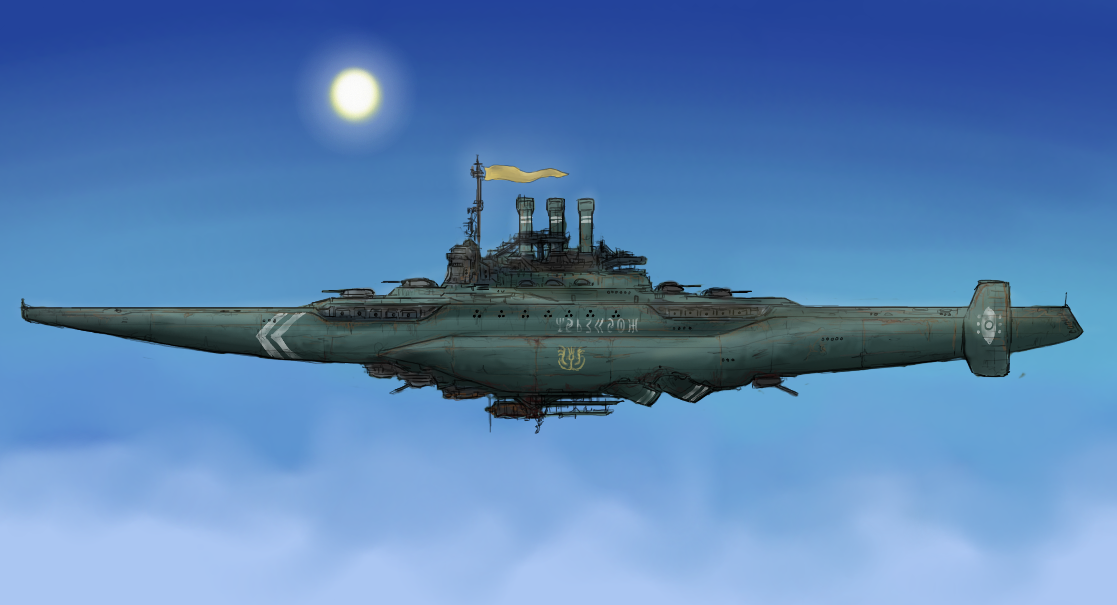 Vanjanan Elan Dreadnought, used by the Fleet Admiral himself as the flagship of the Airborne Corps.
 Vanjanan Elan Destroyer, the mainstay of the Airborne Corps fleet.


 Government: Appropriations are controlled in the name of the Grand Duke by a unicameral, directly elected popular vote Parliament, as are taxes and generally every facet of government but the military, where HGDH The Grand Duke exercises control in organization and deployment. He also may submit declarations of war to the parliament which may only be rejected with a two thirds vote.
Economy: As a liberal economy, Resia focuses on the financial and investment sectors, but most of all on maritime shipping. The country is heavily industrialized, but limited population and limited land area prevents it from being THE industrial powerhouse.
As for natural resources, the government is experimenting with offshore oil drilling on account of coal supplies being not that numerous.
For food, fishing in the gigantic Resian territorial waters is a tremendous part of the economy and helps mitigate low agricultural yields.
Leader(s):
~Grand Duke Vilhem I
~Prime Minister Lord Lloyd Smith.
~Admiral of The Fleet and Chief of the Admirality, Count Charles of Tayer.
~The Chief of the General Staff and Field Marshal, Margrave George of the Eastern Isles.
Desired Map location: http://imgur.com/8iIbWIF
Important Locations:
~Streymoy: the metropolitan home island and also the largest.
~Lohna, the beautiful and gigantic capital city, and site of most financial activity.
~Westmark and Eastmark: The furthest west island and furthest east islands. Their precarious positions are not unaware to the government. While Eastmark is close enough to fit niceky under the iron umbrella of the mighty Resian Navy, Westmark is too far to station a significant portion of the navy. Accordingly, it is effectively a garrison state. Press freedoms are limited, every citizen is required to own a gun, and much of the developed land by the coast is used for impressive coastal fortifications, and the beach is covered in obstacles for an amphibious assault. The army maintains a very large Westmark garrison.
Cultural Overview: The Resians have always been a free people, not withstanding they have not always had a means of legitimately participating in government. The widely distributed nature of the island kingdom meant rebels could revolt and rapidly secure the islands, forcing the government to have to make opposed amphibious landings against a well-armed people who have likely commandeered coastal cannon in the easy places to land. Thus, the Grand Dukes generally avoided incurring the wrath of his people when possible and reasonable demands were agreed to.
They are a hardworking, industrious, traditional and conformist people. A lack of government force has meant that those who defy social norms are only censured by an appropriate degree of ostracism.
Technology Overview: With limited government interference, the society of Resia has always been on the forefront of technology, whether the Resians have liked it or not. Better means of production, discovered in Resia or learned on voyages to other lands, are rapidly adopted by the market's invisible hand.
Military Overview:
By far, the predominant military arm is the navy.
Crucial to the navy's strength is the means by which the armor is made. It is a revolutionary process, and an intensely guarded state secret. The armor, a unique steel mixture with Carbon (cemented by gas cementation on only the outward facing side of the armor) Nickel, Manganese, Silicon, Magnesium, and Sulphur is heated on only one side while the other side is buried in clay. Once 40% of the plate is at the needed temperature for face hardening, the plate is dragged out of the furnace and into an enormous vat of water to ensure uniform cooling. The resultant armor is very hard on the exposed face, but not very prone to spalling or cracking. Given that GCMK2 (Gas Cementation Mark 2) armor is a very new, bleeding edge technology, it is only on the newest ships. Armor on the older ships, the GCMK1 armor is more prone to cracking and spalling, but will resist ship weapons just as well. Reserve ships have the 15% less effective CC (Coal Cementation) armor.
Resian Navy Battleship Classes:
Number Name (RL analogue)(Armor)(Reserve Status)
18
Government: Appropriations are controlled in the name of the Grand Duke by a unicameral, directly elected popular vote Parliament, as are taxes and generally every facet of government but the military, where HGDH The Grand Duke exercises control in organization and deployment. He also may submit declarations of war to the parliament which may only be rejected with a two thirds vote.
Economy: As a liberal economy, Resia focuses on the financial and investment sectors, but most of all on maritime shipping. The country is heavily industrialized, but limited population and limited land area prevents it from being THE industrial powerhouse.
As for natural resources, the government is experimenting with offshore oil drilling on account of coal supplies being not that numerous.
For food, fishing in the gigantic Resian territorial waters is a tremendous part of the economy and helps mitigate low agricultural yields.
Leader(s):
~Grand Duke Vilhem I
~Prime Minister Lord Lloyd Smith.
~Admiral of The Fleet and Chief of the Admirality, Count Charles of Tayer.
~The Chief of the General Staff and Field Marshal, Margrave George of the Eastern Isles.
Desired Map location: http://imgur.com/8iIbWIF
Important Locations:
~Streymoy: the metropolitan home island and also the largest.
~Lohna, the beautiful and gigantic capital city, and site of most financial activity.
~Westmark and Eastmark: The furthest west island and furthest east islands. Their precarious positions are not unaware to the government. While Eastmark is close enough to fit niceky under the iron umbrella of the mighty Resian Navy, Westmark is too far to station a significant portion of the navy. Accordingly, it is effectively a garrison state. Press freedoms are limited, every citizen is required to own a gun, and much of the developed land by the coast is used for impressive coastal fortifications, and the beach is covered in obstacles for an amphibious assault. The army maintains a very large Westmark garrison.
Cultural Overview: The Resians have always been a free people, not withstanding they have not always had a means of legitimately participating in government. The widely distributed nature of the island kingdom meant rebels could revolt and rapidly secure the islands, forcing the government to have to make opposed amphibious landings against a well-armed people who have likely commandeered coastal cannon in the easy places to land. Thus, the Grand Dukes generally avoided incurring the wrath of his people when possible and reasonable demands were agreed to.
They are a hardworking, industrious, traditional and conformist people. A lack of government force has meant that those who defy social norms are only censured by an appropriate degree of ostracism.
Technology Overview: With limited government interference, the society of Resia has always been on the forefront of technology, whether the Resians have liked it or not. Better means of production, discovered in Resia or learned on voyages to other lands, are rapidly adopted by the market's invisible hand.
Military Overview:
By far, the predominant military arm is the navy.
Crucial to the navy's strength is the means by which the armor is made. It is a revolutionary process, and an intensely guarded state secret. The armor, a unique steel mixture with Carbon (cemented by gas cementation on only the outward facing side of the armor) Nickel, Manganese, Silicon, Magnesium, and Sulphur is heated on only one side while the other side is buried in clay. Once 40% of the plate is at the needed temperature for face hardening, the plate is dragged out of the furnace and into an enormous vat of water to ensure uniform cooling. The resultant armor is very hard on the exposed face, but not very prone to spalling or cracking. Given that GCMK2 (Gas Cementation Mark 2) armor is a very new, bleeding edge technology, it is only on the newest ships. Armor on the older ships, the GCMK1 armor is more prone to cracking and spalling, but will resist ship weapons just as well. Reserve ships have the 15% less effective CC (Coal Cementation) armor.
Resian Navy Battleship Classes:
Number Name (RL analogue)(Armor)(Reserve Status)
18 

