Avatar of Dekaidin

Status

User has no status, yet

Bio

User has no bio, yet

Most Recent Posts

Although Autun expertly ignored people’s petulant and prudish demands, something definitely irritated him. At last, even as Apollo urged him to intervene, he extraneously exclaimed, “The little bugger is really starting to itch!” and plucked off his cockring. Aloft between his thumb and index finger, he observed it sizzle and crack with psionic energy and its minuscule individual segments writhe to a veritably prurient tempo. Rather than engage him in his analysis of the object, Apollo demurred with disgust and again urged Autun to address the jellyfish on the horizon.

Autun tilted his feathery head to the side, closed his eyes briefly, and tapped his foot.

“Unnecessary. You see—ouch! Little bugger bit my finger. Settle down, SMD’P!”—the name, while spoken glibly, sent many round-about into paroxysms. Were it uttered by Brobdingnag, they’d be dead. “Anyhoo … if you attack, they will too,” Autun concluded, “so it is best to order a stand down.”

Apollo gazed at him as if he were insane.

“Your scientists can confirm the astrometrics. The Val’Gara aren’t aligned with Earth. They’re chasing after your operative, Max, who went into that big glowing slit out past Neptune,” to which Autun again pointed to one of the screens in the monitor that showed the perspective of a radio telescope.

“You guys have an antimatter nuke test vault; right? I need to borrow it. This little menace is getting out of hand and could use a time out.”

. . .


Suddenly, [Czes] was elsewhere; a place he dubbed Spiritus Infra Terrarum. It was not the spirit world, but a plane below where the shades of souls wandered with features dimmed and animus bared [… There] he sojourned and at last came to Allure City […where...] in sharp contrast to the variegated images Spencer supplied, he saw an absence of diversity that intermingled merely drudgery and control. It was the former he sought to incite and the latter to dismay. Particularly the latter that were too similar, too singular, too much copies of the same. The mouthpiece that promised peace on Earth’s airwaves before being auspiciously silenced. Into that corrupt unity, he spoke a prahelikā of division that manifested as a vermin swarm on which danced the carriers of an astral plague that would flow from soul to mind and lay waste to the whole that was many.


A third of Allure City perished as the Platinum army along with Idereen and her extensions of self were rent from their mortal coils by Czes' sorcery. At least, from the perspective of a slaver. Instead of death, free will, independent consciousness, and total self-determination were foist upon whose able to accept such. The rest would die. Of course, that meant relative blindness for Idereen as she relaxed on her divan and closed her eyes. Perhaps she would enjoy the tranquility of solitude and, for the first time in her life, partake in an actually pleasant and uninterrupted nap. As for the Platinum army, their auspicious disarray and dismemberment made them easy work for Earth’s military forces.
As Apollo attempted to make his way tempestuously from the chamber, a hand smacked him collegiately on the back and a voice as familiar as it was unwanted cheerily prognosticated, “When this day is over, you’ll be able to take solace in the certainty that it was your absolute worst.” As if to exacerbate the point, a tanned limb extended past his periphery and gestured to a security monitor that, for whatever reason, displayed satellite footage of Earth from the perspective of Luna. Apollo was absolutely certain the owner of the arm and voice was stark naked, so he welcomed the excuse to look elsewhere. The screen appeared to show two Mobius-designated super suites adrift in space. Next to him, he heard, “That is the feed from satellite UAF-719. Delay is approximately eight seconds due to interference.”

. . .


‘Lionheart’ descended from orbit to Earth’s surface so forcefully, Tethys’ signal connection to Tristan’s coworker’s artificial intelligence unit—ANITA—lapsed. “You can count on me,” Tristan spoke into the lacuna, but as soon as he said the words they felt hackneyed and probably false. Momentarily, the connection was restored, but he didn’t repeat himself. He hoped, in retrospect, that his comment didn’t make it through the channel. Too much was probably different in the years since his departure for his show of support to mean much. Still, as he gazed down at the womb of humanity, a whorl of thin white over a great expanse of color, his heart ached, and he knew that despite that indescribable gap he could somehow elevate the phrase beyond empty idiom and make the thought actually count.

Tethys, can you summarize the ground situation or, better yet, patch me in to Ops mainline and get me an assignment?

> Patching now ...

<< Prototype U-9 model 934.c, identify. >>

> Pilot Tristan Singh recently from Jadis is requesting assignment. Uploading secure key now.

> GlzIGRpc3Rpbmd1aXN ...
> 4gb2Yga25vd2xlZGdlLZ ...
> ... BwbGVhc3VyZS4=

<< Secure key validated. Records indicate operative is— >>


Suddenly, comms and visuals decayed to violent static, their order dispersed into disarray as a branch of the Galactic Engine’s beam lanced through its multiversal prism and, on its way to the epicenter of Allure City, enveloped Tristan. While Tethys and his carbon nanofiber skin protected him from the beam’s more lethal qualities, it still penetrated deep into his system and caused his second black-out in as many days.

. . .


Behind Tristan, Tsathoskr lurked, a temporary fission of its primary mass that protruded midway through a spacial shunt. While the portal made possible the brevity of its passage from Jadis to Earth, it went beyond mere thoroughfare; it was sublime and subtle, an instrument of stealth that effectuated the undetected surveillance of great civilizations such as the Cizran Empire and Golden Technocracy—all one might expect of a Colossal Spawn’s thousands of years experience scouting systems and assessing their ripeness for harvest. Altogether, the phenomenon seemed a spec of indecipherable darkness, indistinguishable from the matte black of space and obscured from extraordinary detection measures by a field of probabilistically-induced anti-photons and quantum foam that fulminated chaos along the tunnel’s brim.

Suddenly, Tsathoskr lunged forth fully from the breach. In perfect synchronization, a thousand motes manifested in weird order that mimicked the constellations beyond. For a moment, they dilated, a brief twinkle in the void that betrayed their presence, then pierced the fabric of space and cleaved to their respective destinations beyond. All stilled, constrained by the same camouflage as their predecessor. Then Tsathoskr invariably and carefully blossomed into a multi-faceted chrysanthemum of black shards with a single aperture in its midst.

The horror’s metamorphosis resolved itself just as the beam of the Galactic Engine struck.

. . .


A nightmare played out on the dim canvass of Tristan’s unconscious mind. Every nerve was aflame, but the fire provided no light. Instead, his observation flickered like a strobe. He saw what he perceived to be his essence, an emerald mote adrift in a vast void and encoiled by two chains, one red and another white. Each trailed off in opposite directions while he swung haplessly in the middle. Then, a great torrent of astra flooded the scene. In its wake, arcs of energy danced throughout his translucent core and coursed along both chains. Steam rose from the red chain’s surface and made the scene rife with malevolent obscuras that hissed and howled in tormented torpor. Even as he recoiled, his mind’s-eye followed the electric dance downward in an effort to scry the agony’s source. Eventually, the steam burned away enough for him to observe its distant termination through a chitinous slit. It was on fire, steadily eviscerated by the cosmic energy until it morphed into a fiery maw.

To Tristan’s horror, he gazed into the very pit of Hell.

Not only did he recoil, but compelled himself to focus on the source of the white chain. Similar to the other, energy cascaded along its surface until it reached what appeared to be an impasse. However, neither smoke nor screams emanated from its surface. Instead, it was calm. Far away, he thought he saw it vanish into a radiant white keyhole. There, the energy twisted and writhed. Finally, he heard a click. The door flung wide and an incomprehensible force urged him onward. He felt the red chain snap and wither. He felt his heart palpitating and his body exploding. Yet, within, he felt peace and, strangely, an internal harmony and wholeness greater than at any point since awakening.

. . .


The beam’s transmundane energies coursed along the tether that bound Tristan to eternal damnation and opened within him a nine-dimensional vortex to Hell. Twisted to celestial radiation, it rained down on the place where time was lost and splashed into the Phlegathon’s bloody torrent like a rain of meteorites. Roused from his tormented slumber, Brobdingnag peered up, through the fiery hail, and to the pinprick of hope at the apex of its prison. Already, a host of evils ascended on crooked wing, Nessus amongst them. With titanic effort, the first Son sloughed off the coagulated vitae that ensnared it under the crimson tide, shook away the river’s burning flow, and likewise, with its slain brothers, ascended to freedom.

Brobdingnag’s great mass, encircled by a host of minions, easily eclipsed the sun as it appeared suddenly in orbit around Earth-F67X opposite and somewhat beyond the moon's ovalular trajectory.

. . .


While the bulk of the beam passed through the hole in Tsathoskr’s midst, the remainder refracted into space and, with ominous precision, onward toward the portals newly born. Many were conduits into what remained of Val’Gara space. Through them the beam, divided, traversed and achieved its manifold destinies in Glaceria, Gathix, the Collective, and the churning mass of bioforce at the system’s core that hung in Sal’Chazzar’s stead and preserved the dance of the god-star’s orphaned satellites. Last and largest of the celestial bodies, the pubescent star was the culmination of Tsathoskr’s eons of laboriously harvested and deposited bioforce. Struck by the beam, it awakened. Once awake, it spoke. What it said was heard everywhere. What fracatures of the beam that weren’t routed to Val’Gara space reached their targets in Caorthannach, Megalodon, Amphiprioninae, Thane, The Slut—all living Val’Gara Tsathoskr knew the locations of. All heard what the newly-awakened star said as, whence landed, the beam triggered the Herald’s psi-minds and, for a sufficient handful of moments, brought them into perfect synchrony.

Ever the prime directive persisted loudly and undeniably in their consciousness. Convert, Consume, Control, it proclaimed. It was never that which was missing. Rather, it was consensus on where and when it applied. The beam, tainted by its contact with Tsathoskr, overrode their presumption of self-determination. The portals were open. The lines between spaces blurred. Val’Gara space was Earth space and all of Idea’s children turned their attention to a long sought-after target:

Earth-F67X

Then something erupted from Earth into the Faultverse. Something that offered such an abundance of bioforce as to be irresistible.

. . .


> Tristan, I am glad to detect a stabilization in your neural activity. You are conscious.

He winced, tried to open his eyes, but the light was too bright. Instead, he thought the obvious. It was an instinctive thought, but one easily answered. Where am I? What happened?

> An unidentifiable energy changed your astral physiology. You are no longer a threat to Earth. As such, I was able to activate my internal beacon and teleport you to a secure medical center in Tel Aviv. Your vitals have checked out. Now get up, you already have your assignment. Opening a comm to General Millheiser now.
While not the strangest African settlement known to Ndakala, Marange certainly struck him as the most spiritual. There was a oneness with the land here that tightened the bond of his soul to the blood of his ancestors. Perhaps it was some ambient psychic resonance of the crystals in the cavern ceiling, but he certainly felt more belonging here in a place hitherto unknown than in the monotonously familiar Aldi at Cape Town.

In addition to his connection to the soil, there was an abundance of individuals whose possessed, in his view, capabilities beyond those belied by a casual glance. How else would dirt and stone deftly morph into tunnels before his very eyes? Certainly, given what was before him, they lacked technological means to do so, thus their capabilities emerged from elsewhere. Moreover, the array of stone, metal, and fiber structures that loomed around him were clearly the product of imagination, not tools, not efficiency. That unsettled him far more than the vast amount of weaponry, most of it, he deduced by a brief survey of what was on proud display round about, pilfered from Xanathan, but some acquired through illicit trade.

“Thank you for your hospitality, General Assad,” Ndakala said with deferential caution.

His pretense of respect was dispelled by an acerbic chirp from the American woman, “A hot meal would be hospitable.”

Appalled, particularly by how unimpressed she seemed by the environ, he was nevertheless use to such behavior from foreigners, and interjected, “Miss Benson means she is grateful for the safety you provided. Were it not for you, Xanathan soldiers would have filled our bodies with bullets.”

Assad nodded sympathetically then frowned. It seemed as if guilt momentarily etched finely into the lines around his eyes. In a measured voice, he replied in Xhosa, “I fear that, were it not for us, there would not have been danger for you to be in.” That said, his eased the jeep to a stop in front of a large structure built into the cavern wall, a protrusion of metal sculpted in the likeness of a close forest path comfortably illuminated by celadon photoluminescence. There, he switched to English, “You will be well looked after, I assure you, but for the moment I must leave you two here in the care of another.”

He pointed to the opening.

Ndakala helped himself and the lady out of their transportation, which by then they were weary of. It felt good to stretch again. Miraculously, despite the many hours between here and Johannesburg, the lady’s parcel remained with her and undamaged—it was, after all, the same jeep in which they initially departed. On it was a cross that indicated medical supplies. What did she say it contained—vaccines? No doubt useful.

“Makemba!” shouted Assad, then drove away without waiting for a response. He took their vehicle with him, but without opportunity or will to complain, Ndakala merely sighed while Lydia clutched wrapped her arms around herself in fearful irritation. Soon, a woman materialized in the archway and gestured with flour-covered hands for them to come inside.

“Welcome,” Makemba warmly brought them into a room with a cozy fireplace girded by several chairs. “What brings you to Marange?”

Lydia sat down and moaned, “Fate! Terrible fate! I was at the seaport in Cape Town awaiting my journey home when all world travel was suddenly suspended. I heard over the radio in the executive lounge that Spain was gone—how does a country go missing? With no way off this accursed continent until God knows when, I decided to extend my trip and visit the children in Phalaborwa my charity provides for when we came across the most dreadful carnage on the road. I don’t want to think about the rest—it is all so horrid.”
Samarra, Cizra Su-lah

Nostalgia threatened to manifest as tears as she plucked her coffee cup from her desk, a place ineffably imprinted on her heart and on the white slab in the form of a brown ring. Commonplace though it was, the act felt bittersweet, for it was, for her, its final performance. Resolute, she dismissed her memories, for she knew within minutes of her departure even the ring would be gone; expunged by process and bureaucracy. I’ll cry later, she affirmed, then steadied her nerves, exhaled, and inspected her keepsake. While her eyesight lacked the keenness of youth, her mind retained its edge; she did not need to see her mug to know, after countless washings, that it no longer boasted a vibrant red gloss and the embossed skull lingered on as only a vague blotch.

No other trinkets cluttered her workspace. Enclosed by the drab walls of her cubicle were only a white slab, which served as her desk; her console, for the last seventy-eight years her only aperture into the broader universe; a bin, a translucent plastic affair delivered by sanitation drones soon after she arrived for her shift, empty, for she possessed nothing to fill it; and a large binder prepared for the Av’sti.

“Is there anyone you would like to say farewell to?”—apologetically, from behind, the voice of her supervisor penetrated her reverie; a new hire, only twenty-three years employed.

Two prehensile tails elevated JAS-397 until she peered above her cubicle. Artificial lights desaturated the cruelly-ordered environment, glinted harshly off the metal frames, but went unnoticed. Unmoored by personal bonds, her gaze drifted in a perfunctory and futile survey until she lost track of time and place.

“Well?” urged the voice.

It occurred to her, wearily, that she didn’t know anyone. All of her friends were gone, most of them discovered lifeless at their work stations. Experience, fear, and cynicism dispelled her desire to form new friendships. It was too dangerous. Everyone informed for the inquisition. All too often, workers vanished; particularly the gregarious; especially the gossips. Whether they were actually auditors, she wasn’t sure; it might have all been theater—a sick manipulation.

Still, reality stung. In her mind reverberated the emptiness of her career, but landed hallow in her heart, poisoned by the toxicity of her former work environment.

It was simply too dangerous to care.

“No,” she replied, her voice wistful—husky in her mind, but the only actual noise she produced was a moan. After a final glance, an effort to engrave the moment onto her core, she lowered herself to her paws and plucked the binder from her slab. Then, as she turned to leave, she caught sight of herself. On the bin’s vaguely reflective surface she saw her face—flat, like a mask with dull black ovals where eyes ought to be and mouthless ever since the zar-Taliļ Incident.

Reflexively, she repulsed the memory. After decades of service, her discretion was absolute. To them, that didn’t matter. They took her voice—her mouth. Life was a luxury she retained only due to the value of her future testimony.

“It is time to go,” her supervisor sympathized.

Androgynous, brief, and porcine, it pointed her down the hall, followed her to an elevator, but declined to accompany her aboard. When the doors opened, a massive kukull confronted her. Despite its stature and coarse appearance, its aura soothed and a firm, yet gentle, touch managed to calm her nervous spirit. Silently they watched as the numbers on the elevator register went up, far higher than ever before permitted to her or, she speculated, anyone of her caste. Inexplicably, she felt honored. More than that, she felt nervous with expectation and noticed not the surgical collar, suffused from the kukull’s excess substance, as it encircled her neck.

Many hours of corridors, stairways, and doorways paraded by; many creatures, a few she suspected might even be Cizran, caught her attention until, in her frenetic desire to observe and internalize everything, she focused her gaze on another. Finally, she arrived in a room with an exquisite Ganeshan statue, whiter and purer than any of the architecture that surrounded it.

The kukull paused, reduced, temporarily, to a mountain of debris. JAS-397 almost didn’t notice, given the silence of its collapse. Instead, she peered in astonishment at the statue as it undulated and directed itself toward her.

“I am Nirak mul-Siyé,” the statue intoned with words that flowed over JAS-397 as intimately as a loose gown. “You are the auditor who reviewed the Dira var-sha’s admiralty and personnel communications at the time of the zar-Taliļ Incident. We have concluded that you will not live long enough to provide useful testimony at the trials related to that incident. As such, you are to be placed in suspended animation until you are needed as a witness. Place your documents on the floor and proceed to cryo-suspension. My kukull will guide you there.”

Stupefied, JAS-397 lifted a paw to her face, but was further amazed to feel beneath her fingertip the thin line of a mouth for the first time in decades.

“You will need that for your testimony,” the Cizran observed, as if the auditor’s mind was completely exposed. JAS-397 believed such well within Nirak’s capabilities, given how her own physiology was altered with little more than a thought.

Green tears coursed in twin rivulets down her flat white face, but she cared little about what any might think of her emotional display. For the first time in decades, the flame of happiness burned in her bosom. Without delay, she eagerly complied with Nirak’s request. The kukull resumed its role as guide. More corridors, streets, and structures blurred to a solid, but mostly unnoticed, phantasmagoria as she was escorted through the halls and boulevards of Samarra. Her first time seeing it, the city was beautiful, replete with architectural marvels and gardens as far as her limited vision allowed. Finally, her sojourn ended, and she entered a chamber full of translucent vessels almost as variegated in size as manifold in number. Within them she beheld the faint outlines of hundreds of different species. All too soon, she occupied her own. The container closed, cold air fogged the interior, something pierced the side of her neck. Then, instead of blissful rest, her worst memory awakened and paralysis abruptly censored her scream.

For her testimony to be fully utilized, they wanted her to remember every detail.

. . .

Beckoned by a callous will, darkness strangled her cry and aroused, through a nebula of unnatural and fitful slumber, memories she, for years, struggled to repel. Garishly visceral and, in a way that utterly unnerved her, more real than real, she relived them in a cruelly awakened existential clarity that her mind was barely equipped to parse. Nightmares that recurred over the decades, they, in this grand finale, were bolstered by knowledge gleaned in her career as an auditor, such that even the smallest detail loomed rife with nuance and pregnant with unsolved intrigue.

JAS-397 was justifiably excited, as work ushered in her second once-in-a-lifetime opportunity, a mere decade after her first. When she resumed her audit routine in the aftermath of Silexies’ unauthorized prisoner release, she assumed she was done with excitement forever. Instead, she stood, pale face lit by a magnetically-levitated console. Behind her, her tails nervously twitched and belied her stoicism—even as they indicated to her colleagues the criticality of the work on which she embarked. Her coworkers never learned that this was not merely a routine review nor an ordinary validation of protocol, but, instead, a top secret investigation into potential Cizran malfeasance.

Methodically, she analyzed what she knew or, more accurately, suspected. Interrogation of the former warden’s cronies exposed his plot to obtain a heretical text. Desperate to secure lenience, he invented a co-conspirator in the person of Admiral Nenegin zar-Taliļ. Circumstantial evidence in zar-Taliļ’s unexplained possession and subsequent transfer of the tome to Gereza certainly merited an audit. That was her role—to seek out evidence of conspiracy. Future recall tinged the facts, and she peered down the whirlpool of time to where the Admiral’s actions were judged as negligence that culminated in several lost konul harvests, an overturned Liars assessment that devastated the career of his protégé, and ultimately crescendoed in his ignoble discharge from public service.

Quite the fiasco.

Officially, ‘exceedingly poor judgment’ was the verdict rendered by the Si’ab and Noama for the admiral’s forced retirement. Were it not for an exemplary military record and familial connections, the consequence of his decisions, which remained inexplicable, would have terminated in a quiet sankul banishment. As Cizran war hero, she suspected his preference for that over his public evisceration in the Ja’Regia.

With fastidious dedication, she collated information pertinent to her superiors. While she observed no evidence of criminality, those in power gleaned from it what was convenient. However, she believed bureaucracy always prevailed and fixated her mind on the data feeds. In fixed-width block letters, she observed the feed summaries culminated from extensive log filtration. As she parsed them, information flooded her synapses. More than saw, she felt the emphatically-transcribed contents synchronize with her soul.

Nenegin’s inner mind, exposed in the memory transcripts of his admiralty logs, crystallized within her consciousness. He regretted his desire for personal involvement in the fate of Kilamara’s surreptitious visitors and was concerned for both his legacy and the safety of his away fleet. Especially in the interval where contact between the Dira var-sha and the Zara vi-Pol ceased. Once it resumed, Nenegin and The Liars encouraged Ezkshi to unleash the totality of her vessel’s destructive capabilities on the Aptosites. Cizran High Command disagreed and, in their report, concluded that the fleet should have remained hidden as the Bahá-cizr was sufficient to annihilate the enemy, additional strength mere hubris, and the outcome ultimately disadvantaged the Empire in potential future embroilments.

Nenegin further recognized that while the partial harvest of Kilamara and his response to the Vepsis Dol’s distress signal were perhaps serendipitous, they were inadequate. Still, he reflected, what were the odds that, after decades of mundane idleness, an incursion would occur at the exact moment of his departure; that Aredemos would, through idiocy, inflict genocide on his own race and homeworld; and that he, admiral of the fleet in patrol of that sector, would be absent?

He knew it didn’t matter.

He was not at his post. That is what mattered.

Inevitable as a somnambulist coerced into lockstep with caliginous night terrors of their own design, her consciousness descended into the final data feed. Initially, it imposed mere visual theater—an ante room of the Vepsis Dol. Unadorned, the vault-like entrance to the huge vessel was silent, still, and gray; a dreary environ with few creature comforts, not unlike her sparse work habitat numerous levels beneath the Hall of Records.

Other senses awakened. Her focus on mere appearance became less important. Instead, in diametric opposition to her self-perception, she, for the first time, felt burgeon within herself raw power and undeniable poise. It emanated effortlessly from zar-Taliļ, through the feed, and into her core. Stoic and composed as he seemed externally and unreadable as the false eyes grafted in the apertures of his basalt mask appeared, internally his mind churned in a tangle of distraction and worry. Even the task at hand he pushed aside in favor of an internal dialog, as he was fully confident in the adroitness of his mechanics and aptitude of his honor guard to restore the transport vessel to proper function. As they worked, he pondered the queer events and chaos that stirred inexplicably in his wake. It felt, to him, as though an inexorable fate teased him and tempted him onward to disaster; one impossible to mitigate even were he able to observe its approach.

As if executed by his milieu, two presences suddenly vanished from his awareness. Merely a tinge at the corner of his mind, they nevertheless snapped him back to the present. His guards, gone. Reactively, he queried their biosignatures, but they did not manifest within his techo-empathic compass. Exasperated, he activated ship-wide comms.

“Where are units c-x9 and c-x12?”

“Ambushed, Sir,” quavered, in his mind, the voice of his lieutenant, “We’re trying to contai—aaaah!”

Fully alert, Nenegin shifted his mind-state to the video feed of his away team and synchronized his surveillance augmentation with the ship’s security system. Everywhere, it seemed, bodies and their siphoned screams reverberated off the walls, reduced to mounds of gore. In one chamber, he saw a sanguine mass of sinew, shrouded in a brume of black flecks, as it writhed through the vanes of an air duct and into the ventilation system to affect its egress. Those who yet expressed life were too far gone to merit aid and choked their last words out into a miasma of spores that permeated the passageways in the wake of the thing.

Nenegin detected it through one security camera after another as it slunk and churned its way around the vessel. Eventually, it dripped like raw sewage through an exhaust vent in the ceiling of the medical ward. Below, an arachnid patient in temporary bio-stasis convulsed in helpless tactile horror, its lidless eyes seized in dread preternatural. A quick cross-reference of the manifest confirmed the unfortunate as Ulu’gol, an artisan whose plight brought him to Q’ab and, finally, here. Atop its paralyzed prey, the mass coagulated along the dorsal joint of Ulu’gol’s carapace, leered down, and erupted with maniacal laughter. “Ulu-ulu-ulu-uluuuuuuu—” it cackled as its physique clarified. Intensity mounted, then its being vibrated erratic until suddenly it seized and flopped to the floor beside the stasis pedestal in a viscous puddle.

A moment later, it was back on the move.

“Units, search for survivors and avoid engagement with any threats,” Nenegin ordered.

It took a mere moment to skim the ship’s recent errata and confirm the layout, another to activate the automatic quarantine protocol—which hermetically sealed every zone and inhibited gas and liquid flow—then he was in pursuit. Semi-translucent halls and bulkheads blurred in a kaleidoscopic array of colorful zone indicators embedded in the floors, ignored in favor of the spectral signature he developed ad-hoc to associate with his prey. Ominously quiet, his trek went nearly unimpeded, his only obstructions the bodies of his soldiers and his only distractions their plaintive cries for relief. Moments swelled to minutes, but he eventually cornered the thing in a cargo hold. In retrospect, he felt lured there—its twisted intelligence enjoined, in some ultramundane fashion, to his own ironic fate. Across the chamber idled, unaware of danger, two synths and a kukull—Tob “Boomslang” Ydrian and Eti Naris, he confirmed.

Guards and soldiers were expendable, but at least one of the unaware trio he was required to safeguard for the inquisition. Unless—there was another passenger unaccounted for. A political servant of Plangó Felho'Te-vesztø charged, as indicated by the manifest, with heresy.

Xo’pil, an Azot.

So this is the product of Plango’s crimes against the Well, Nenegin inwardly sneered.

Too late, he understood. It lurched down from the ceiling where it clandestinely clung and latched itself on to his mask. A whirlwind of howls beat against his crystalline exoskull. The psionic pulse with which he countered did little, if anything at all, to dissuade its onslaught. Instead, the thing—Xo’pil, he was certain—scraped and gnawed at his armor while its shrieks filled the gaps in the milliseconds betwixt its physical assault. Nenegin improvised, his chemistry altered, and his exterior slickened with oil that gushed from newly-formed pores. His chitin glowed white-hot, and the oil ignited. This, for the while, was effective. Xo’pil recoiled, gathered itself on the floor away from him, a weave of exposed muscle and storm of spores, then dashed away.

“Get off the ship,” Nenegin instructed the two synths, who gazed on slack-jawed and shocked, “yellow line. Now!” then was back on the hunt.

The aura of its seared flesh he followed easily enough. It teased him deeper into the Vepsis Dol, through propulsion, engineering, and finally into the sankul chamber. With only one way in or out, Nenegin sealed it and himself within.

Eventually, he emerged, victorious but damaged. What transpired in the interval was beyond his ability to frame in words the Av’sti believed and beyond JAS-397’s capacity to observe. It broke her as assuredly as it wounded him. As a precaution, he remained on the Vepsis Dol and sanitized every micro-angstrom of the vessel. He sanitized every molecule of his being. After over a dozen rounds and a hundred sweeps, he remained unsatisfied that the thing was eradicated.

Eventually, his power to make that decision was revoked—an incredulous high command demanded his return to Cizra Su-lahn.

. . .

Station X-b, Gereza

Thoroughly and uneventfully processed by Gereza civility enforcement drones, Kirri was ushered to a transport vessel and shuttled from the penitentiary to Station X-b, a large and dated spaceport in orbit around the prison planet that served as something between a halfway house and a melting pot. There in the hangar, his bonds dissipated in a nanite fog. Most of them, anyway. The civility-enforcement programming to his neuro-pathways remained intact, but would decay over the course of a year. Such was standard rehabilitation protocol, but was further beneficial as with it Kirri could comprehend the languages of the local species.

Around him, the hangar was a churn of chaos, a veritable tent city rife with kiosks, haggling, and raised voices. Occupied by riffraff with nowhere else to go, refugees, ex-cons, and people who were finally free of enslavement and wanted to get as far from Cizra Su-lahn as feasible, it was the perfect place to disappear into or come into power, relatively speaking.

If he played his cards right and fell into the right company, Kirri would be fine.

. . .

La Cantina, Eqiko-4

Boomslang and Eti-Naris perched atop stools in a dive bar on planet in the outer rim of the Su-laria Galaxy while their kukull friend hulked outside. No doubt it was stargazing, as it was its wont. They, meanwhile, enjoyed pints of MILK and quietly discussed future plans.

Mostly scrap metal, the establishment was quite worn, filled with fumes, suspicious characters, and soft voices. The only thing in good shape appeared to be the large wall screen behind the bar that projected a century-old documentary on Cizran Imperialism. They mostly ignored it, although some bits filtered into their consciousness. Extremely nationalistic, the documentary extolled the greatness of the Cizran Empire and its manifold conquests. At the moment, it was on their most recent, the Aptosite’s doomed invasion and subsequent rout. Disclosed was public domain knowledge of the Bahá-cizr’s capabilities and how it, alone, eliminated the threat without the necessity of an active response; how it, so briefly, debilitated the Cradle of Life and reduced to ashes the enemy’s galactic web. Mentioned also were the ruined careers of those who misappropriated Empire resources and reduced an exquisitely perfunctory victory into a gaudy and supercilious overexposure of power.

“Hey, look, we know a celebrity,” Eti opined, a claw pointed at the screen. To a narrative of his poor judgment, it displayed the simultaneous demolition of statues of Admiral Nenegin zar-Talil located in the Cizran Fleet Academy and the shipyards of Zo.

Boomslang rolled his eyes and replied, “Yeah, a bright shining star. You really piled on the misfortune, too.”

Eti nodded wistfully, “Yes, but it got us our freedom and it got me my ship. Free and clear. The news of Ec-shavar’s death didn’t hurt either. I mean, yes, I lost the estate to a greedy comer-up, but would you change anything?”

“You mean go back to being property? Hell no,” Boomslang snorted and, in exclamation, slammed his pint down on the bar.

. . .
. .
.

Tsathoskr and Ua, Plango and Ec-shavar, Nenegin and Silexies, Zeptir and Snil, Aredemos and Kaan—all came and went, egos confident, for a sharp glint in the corridor of time, of their personal dominion over the cosmos, but in the end bureaucracy endured and demonstrated that in the Cizran Empire it was no god's sky.
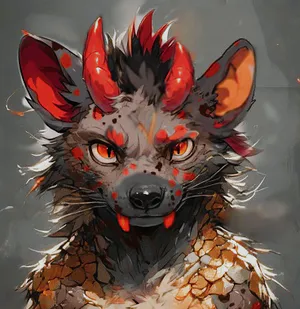
THE END
Shock gripped Ndakala and, to a far greater extent, the delicate sensibilities of the lady in white, although her pristine linen garments were now an ochre-tinged memory. He, meanwhile, found respite, briefly, in his ancestors’ native tongue. How the determined young woman knew it—amongst an abundance of other languages that dripped from her tongue as drops off a boaboa tree after a monsoon, several of which he was certain died with their last speakers a generation ago—was, to him, a riddle not well-suited to a solution. Najwa Moghadani’s linguistic artistry aside, he was not prepared for what followed whence he sat in the driver’s seat of the jeep, started the engine, and pressed down on the accelerator—neither was his captive, Lydia Benson. No, we are both refugees of fate, he justified as guilt hung in his chest, its intensity inflected more sharply in recognition of the deception he undertook.

This is necessary to our survival.

Was it, really, though? Half-thought, the malformed question cast a shadow on the wall of his mind. Why should he believe anything the wild girl—a stranger—said? Because she put him at ease by speaking Xhosa? Xanathan would have to conclude they were harmless passersby,; Lydia Benson alone on her name recognition as an interfering philanthropist.

Still, there were the rumors. No, not just rumors. Reports from those he trusted. Images seen by his own eyes.

When they felt the situation called for it, Xanathan were brutal.

Ndakala’s mind drifted a moment to the XSF convoy and he knew, without a doubt, that whoever did it were just as brutal; moreover, he sensed this young woman was somehow involved.

“Fate guide us safely on our journey,” he recited, decision made.

The jeep lurched forward and, inexplicably, downward. The ground gave way beneath them, not with violence, but as easily as one succumbs to water having given up their last breath. Darkness enveloped them, and he clicked on the lights. They were filthy, coated in dust from the hours driving across sun-hardened savanna and rocky terrain, but nevertheless served their purpose. The tunnel around him illuminated, he drove in grim silence without taking even a moment to glance at his passenger—still in shock, although her breathing was less frenetic as time went on—lest some momentary lapse in attention result in his personal peril.

An hour later, the harsh glint of the afternoon sun stung his eyes as jeep emerged from the unnatural tunnel and into the midst of a strange compound. Armed guards were standing at the ready, waiting for him. Young men with eyes that were older than they ought. The eyes of those who were prepared to kill. The only reasonable thing to do was cut the engine.

“Miss Benson, this is the end of the road for now.”

“This isn’t Phalaborwa,” she protested, but it was a defeated type of whine, a sighed exclamation wherein she recognized she would not make it to where she wanted to go, at least, not on a timeline of her choosing.
Moments after the transmission from The Liars, Ezkshi decided on her KTmA battle plan; a personally-devised fusion of several complex scenarios concocted at the Cizr Armada Academia. An opportunity such as this was too tantalizing to resist and would likely not come again for a thousand years, legacy be damned if the Liars’ prediction proved false. With a telepathic prompt, she placed all crew within visual proximity of her in temporary catatonia, withdrew from her benighted corner, drifted through the command deck, and entered a secure area. While the crew recovered, the door quietly morphed shut behind her. Sufficient lookahead protocols were in place for the command deck to function, however briefly, without her active direction. Besides, what she intended to do was more important—in both personal and collective terms—and demanded the entirety of her concentration.

Physically, she was alone in an unlit chamber adjacent to the command deck—a place that opened and responded only to her and other empathically pure Cizran officers. In spite of its ostensible simplicity, via the miracle of neuro-connectivity, it transformed what her senses beheld into something miraculous. It truly defied the science.

As immediately as the door sealed, she was enrobed in the shimmering astra of cyclically-harvested potential. Around her whorled a simulation of the interior of the konul she intended to manipulate, trillions of motes layered in manifold strata, each uniquely defined by the flavor of their reaping. Then, as a seer gazes through tongues of fire, she peered deeper than what her mundane senses allowed and beheld the battlefield. From a distance, she saw the utter vastness of the light-flecked cosmos; closer still, the faintly-blue spiral of the Su-laria galaxy as it swam through the heavens; even nearer, the sector of incursion where the great beast was butchered by the incessant onslaught of the Bahá-cizr; within, a conflagration of destruction and Diamobos burst like a clot of dirt-rife slurry against the interior bowels of their cosmic prison; and, finally, the Aptosite ship wherein Snil and Karzar stood before the fading phantasm of their would-be captive.

With a gesture, she ripped the Aptosite ship in twain from bow to stern. The groundwork was already in place from the explosive cocktail of nanites, chemicals, biologics, and femto-responsive quasi-mineral-organics—all of which burrowed into the enemy vessel’s hull as soon as the curtain was drawn back on their masquerade as Nenegin zar-Taliļ, Aredemos, and Kirri. Soon thereafter, the infection proliferated throughout the extent of the ship and its complement.

Unfamiliar as she was with their anatomy, Ezkshi did know few things fared well without atmosphere and she imagined the ruptured vessel would suffer a multitude of casualties.

Even so, she was not finished with her work; in fact, as far as konul manipulation went, she wasn’t even started.

Again, her consciousness expanded. She saw the whole of the strange being that interjected itself into the domain of the Empire. It swam in what was open space. Was, until she shaped her vision, and the whole fell into a box—one inundated with flashing MASERs, bursting LADAR, fulminating fusion reactions, would-be Cradles of Life, and genuflecting magicarp. The box compressed, like the interior of a trash compactor, shank, and cramped what was in it. The vision wasn’t hers alone, but it manifested in reality beyond her mind. What she did in this moment, her manipulation of the konul’s harvested potential, affected reality.

The box shrank into a nothing, and then was no longer in or part of the Su-laria galaxy. It had, instead, been all pushed into a microscopic dimension.

It was … inner space.

The cell she balanced on a talon contained the wreckage of Kilamara and Diemobos, the Cradle of Life and its pillaged worlds, and the Aptosite invaders. She had been careful to mortar the gaps precisely so as to plot an escape for her fleet and the nodes of the grid.

With a disgusted gesture, she flung it away; it skipped like a pebble across the trillions of light years of distance that separated the Empire from the slums of the verse. Then, without a second thought, she went about the restoration of this sector of Cizran space.

Beams of light and tunnels of time channeled through the colorful layers of strata, reshaping and reversing the photons of the star around which they orbited. An evolution seemed to be taking place, as dust coalesced, gathered into rocks, and further accumulated into a planet and a moon strikingly similar to Kilamara and Deimobos. Verdant and fertile, the planet boasted a single continent with a great central desert separating two vast jungles. There were no mountains, only deep fissures in the otherwise vaguely undulating landscape. Meanwhile, the volcanic moon became darker and colder as it aged. Life spawned, but, just as before, it was not intelligent. However, this time, she ensured it lacked the strange dynamic that allotted them possession of a power by which they could destroy their own world.

The sector was restored to what it was meant to be.

Another cycle.

Another subservient, mindless harvest that would one day be reaped and, after several cycles, restore the effort exerted on behalf of their redemption.

. . .


Meanwhile, on Cizra Su-lahn, outside the Av’sti’s headquarters, a scandal was playing out in polygraphic polyglotic polyamorous majesty.

“Butina cyp-Mariia, we have reasons to believe there are recordings wherein you colluded with the enemy—licentious treason wherein you and Zeptir wallowed in untold heresy! What have you to say for yourself?”

She struggled against her restraints, spit at the ground, and insisted, “No collusion! This is a witch hunt! It is the Av’sti, their deep-state strangle hold on the Cizran Empire, that is to blame! I did nothing wrong! See how big my hands are? SEE? LOOK AT ME! LOOK AT ME, YOU SPECIPHILES! The chemtrails are reaaaaaaaaaalllllllll!”

“Silence, sTRUMPet,” barked one of the guards, “soon you will be PUT IN a cage and left to rot!”
WIP - I'll finish this eventually. :) Otherwise, feel free refer to it as an example group.
The Cizran Empire

. . .


About

The Cizran Empire rests along an isolated filament of The Verse and sprawls throughout an entire galaxy. Many intelligent and heterogeneous species reside within, but the Cizran subjugated their rivals ages prior and their rule is absolute. As a consequence of a conflict-free era, bureaucracy, decadence, and ritual usurped further cultural maturation. Even so, technology is advanced and, through it, disease, death, and want are almost absent. Much less commonplace a solution to the universe’s difficulties is magic, regulated and relegated to state-sponsored objectives such as interstellar missions.

The Kr'Nalus—a cataclysm from beyond known space that splintered their hive mind and brought them to the brink of annihilation—marked the beginning of the second Cizran galactic expansion. Suddenly individuals, they were compelled to regroup, rebuild, and reconquer. While no specifics of the Kr'Nalus remain, it nevertheless influenced cultural resurgence, intertwining government with a peculiar brand of religious philosophy. In such, the gods, believed to dwell in houses set amongst the stars and threatened by the power of the Cizran whole, sent Heralds to dilute their strength. Over time, as secularism came into vogue, physical manifestations of divinity diffused to abstract concepts like beauty, acumen, and power. Many sites, such as the Space Temple and Shrine of Tsathoskr, were constructed in respect of these intangibles.

  • Leadership—There is no official figurehead; instead, society is governed by members of the Av'sti, which is the religious, legislative, and executive branch; the Noema, which is the bureaucratic oversight branch; and the Durantaza, which is the judicial branch.

  • Technology—Age and momentum birthed an era where subjects enjoy effective immortality, nigh-perfect health, and vast leisure time. Magic is almost unnecessary and money is the artifice of lesser beings. Instead, laws and regulations limit an individual’s impact on society. The Empire possesses colony-size spaceships, terraforms and destroys worlds, and harnesses almost all the energy of local stars. Superluminal travel is incredibly expensive, its price the spiritual energy of hundreds for a single jump, and as such is limited to gargantuan transports and military vessels.

  • Magic—The transmutation of arcana into power, magic drains the life of the caster and indeed weakens the whole. As a consequence, it is forbidden aside from that officially mandated by the Si’ab. Likewise, high priests seldom cast spells during their lifetime, but instead rely on a system of misinformation, manipulation, sankuls, and konuls to isolate and transfer the heavy cost of magic from society to individuals.

  • Religion—Jaded and sure of their place in the cosmos, Cizran religion is relegated to ritual and historical remembrance where gods and goddesses still exist, as do the millennia-old shrines erected in their honor, but they serve as symbols of intangibles that defy explanation or acceptance and as icons of mysteries beyond the scope of scientific knowledge.

  • Inequality—Compared to a Cizran, other species possess few rights, holdings, or power. Especially on Cizra Su-lahn. Power begets power, and niceties of state are bestowed on the basis of knowledge gleaned. Yet inequality yields satisfaction of place, and beneath them are castes lower still, those of artificial life, that which is grown, that which is machined, and, at the bottom, that which is animated.

The Divine Animal

Throughout the vastness of the cosmos, in intelligent minds, lurks a tao of dread and desire that life on other worlds strives against its own unlikelihood with familiar tenacity and diversity of form. On most, it fails, for nature’s demands on evolution are harsh and unpredictable. Yet, on a few, life prevails, flourishes into civilization, and contributes to the timeless poem of creation its own transcendent verse. Species emerge from sea, earth, fire, or sky; worship nature, ancestral bones, or the intestate and unthinkable expanse of light-pricked night; then foment war and inevitably devour another in the frantic climb to the acme of ambition.

Occasionally, this chaos yields culture, but even then life is a volatile affair relentlessly hammered into shape and structure. The shapes it takes are innumerable, many weak while only a handful are strong. Amongst all these, there must exist an expression that is the ideal sum of its many facets. Somewhere there must exist the perfect form and a divine animal that embodies it.

With that form in mind, Cizran flesh became a holy book; scripture waiting to be written in the blood of the divine animal. Across the many systems of their empire, rare is it that two Cizran share the same physiology. Few even remotely reflect the form that was forged on their homeworld. They elected new bodies, and over time a greater number degraded their flesh for the sake of gaudy fashion and to flaunt their wealth and power. Most forgot the quest that sent them into the far reaches of space. Fewer recognized that, one day, the excess would be shorn if they are to adorn that sacred form.

Critical Points

  • Samarra—see Territories.

  • Shipyards of Zo—see Territories.

  • Gareza Prison Complex—see Territories.

Territories
Cizra Su-lahn

( Diplomacy ) Bathed in weird orange glow of the star, Bukan, is the birthworld of the Cizran Empire, the planet Cizra Su-lahn. Tranquil and clement, the entire world is a garden cultivated by an army of kukulls and slaves. No non-native species is permitted unattended outside the capital; indeed, most "inferior beings" are segregated to space stations in orbit around the planet or enslaved as pets and side-shows in villas. The remainder of the planet is sacred and has been utterly dominated and domesticated, everything the eye can behold is owned and by prominent Cizrans.

  • Samarra—on either side of the river Sirnak sprawls the seat of galactic government, the city of Samarra. Within is the Ja'regia, where, over the course of centuries, bills become law; the Hall of Records, where homage is paid to bureaucracy and every moment transcribed; and shrines to various gods.

    • Shrine of Tsathoskr—this holy abode concealed no corner suitable for quiet contemplation. Instead, it was simultaneously awful and exquisite. From its interior dome and bowed walls luminiferous flora assaulted the visual and olfactory senses with the story of creation, neither wholesome nor pleasant, but possessed of vivacious honesty and bewitching brutality. Each scene punctured the mind with its loud awakening and to refuse intimacy brought a mad cacophony of thorough debauch. Nature awaited no consent to mold life and, later, consciousness. Rather, time and the elements lustily collided and birthed from their orgies all that would ever be. Scenes of ravenous rape and devour flushed in wild juxtaposition to raw canvasses of stark birth; creatures fed their offspring the young of other species; storms surged, volcanoes erupted, and supernovae shown. Notably, not a single depiction of conventional romance presented itself in the decor. The place was one of singular purpose. It served as a reminder of all that wrought civilization, indifferent to modern contrivances. Life, mollified neither by elaboration nor banality, was thrust upon those who dared enter.

      Such a scene splayed across one of numerous panels boasted millions of colorful carnivorous plants that writhed a presentation, with lifelike clarity, of two bears rutting. It emitted all the noises one might conceive: wind teasing the meadow grass, distant birds chirping, and each grunt, snarl, and howl of bestial union. With this colluded the musk of their mating, the dew on the verdance, and a vague essence of pine colluded and lanced directly into the viewer’s sensory cortex.

      Just one of a thousand depictions.

      Worship of such a deity requires to embrace with fecundity one’s base urges.

  • Space Temple—in orbit around the planet, here alcoves can read somebody’s mind and virtually link them to that location, often far-flung spiritual sites or places from which they have been banished. It serves the purpose as a neutral territory where any sojourner might take sanctuary and feel the presence of their fellow believers as they virtually stride the grounds of their elected shrine with neither the labor nor consequence of a physical manifestation. This is done by linking their mind via a psylink powered by divine force.

  • Cloud of Ghot -- blah blah blah.

Alcazar

( Trade ) A moon of endless astroblemes bearing enormous rifts in all direction as far as the eye can see.

  • Gareza Prison Complex—isolated from the riff-raff of Alcazar is a heavily-militarized prison complex that houses both Wa'ali and Cizran alike. Here, every inch and moment are recorded and subject to audit. The more dangerous the prisoner, the more heightened the security, with a range of group cells to dimensionally-isolated sensory deprivation chambers.

Ganax'ab

( Production ) On the outskirts of the empire, this system is governed by Ec-shavar and comprised of two planets.

  • Q'ab -- a verdant world and cultural seat of the Ganax'ab, most of its sapient denizens take refuge in the capital city of Zöld'nach.

  • Ganaxavori -- a harsh and barely habitable world where the handful of the natives still live in caves and the atmosphere is toxic, it is here that Ec-shavar's flagship set down as a symbol of his dominance over these worlds.

Killimara

( Military ) Blah blah blah.

  • Deimobos -- blah blah blah.

  • Shipyards of Zo -- blah blah blah.

Politics

Located in a relatively isolated area of The Verse, the Cizran Empire stretches across a whole galaxy. Within, relatively few species were sophisticated enough to challenge the might of Cizra. These were crushed. The dominant civilization for several thousand years, they are decadent and gaudy, often cultivating lesser species for entertainment and, ultimately, to harvesting their spiritual energy.
Allies

N/A
Enemies

N/A

Group Characteristics

Empathic Organ—What remains of the Cizran hivemind in the aftermath of the Kr'Nalus, a cataclysmic event that reduced a collective to individuals. The organ, a mineral structure, enables Cizrans to sense another's presence, communicate telepathically, identify members of their species in spite of physiological modifications, and assess the depth of the collective well.

The Well—All Cizrans have access to a shared life source, known as the common well, which may be manipulated and coerced in what is only describable as magic. Heavily regulated, this resource is not used casually, for each use weakens the whole.

Genetic Remapping—Expert geneticists, Cizrans are able to modify their physiology at will. This is the cause of their vast dissimilarities in appearance. With little more than a thought, a Cizran may sprout wings, grow armor, and so on. The possibilities are limited by only imagination, energy, and a comprehension of what changes will result in what forms.

Members

OOC Leader—there is no official leader; we just discuss the plot and our ideas in a Skype chat.

@Circ as Eti Naris, Nenegin zar-Taliļ, Nirak mul-Siyé
@Gattsu as Domnik, The Kukull
@apathy as Xo'pil, Plangó Felho'Te-vesztø
@Liaison as Silexies, Kaan, Eel Sermonde, Cigány Cnidaria
@Alucroas as Kirri, Aredemos, Zeptir

Appendix I - Characters

  • Ec-shavar—governor of Q'ab and Ganaxavori, he is a powerful Cizran and member of the upper-caste. His exterior like basalt, dark and rough, it is only broken by veins of variegated luminous crystal that shift in hue in accordance with his temperament. Concentrated around his skull, it is this crystal organ that facilitates his empathic bond with other Cizrans and allows him to draw from the common well of spiritual energy. He stands four meters tall, supported by four powerful legs while another quartet of mantis-like limbs serve as arms, ready to strike at a moment's notice. His head lacks eyes or ears, but boasts a powerful mouth, clenched like a bud until it blossoms with concentric rows of translucent teeth.

  • Potan Mul—Cizran assassin employed by the empire's high inquisition; owner of Eti Naris.

  • Eti Naris—synthetic companion and spaceship pilot; owned by Potan Mul; looks like a red panda in a gunslinger costume.

  • Nenegin zar-Taliļ—Cizran admiral charged with patrolling the sector of space containing Killimara and other planets; is large, white, and has eight legs.

  • Ulu'gol—arachnid artisan; he exists for comic relief.

  • Bajaga Garul and Tarhara Maka—echinoderm artisans working on a commission for Potan Mul; Ec-Shavar didn't appreciate Potan Mul's gift and murdered the pair of artisans.

  • Nirak mul-Siyé—Cizran member of the Noema and information conduit, she seldom moves, much less departs the Ja'regia.


Appendix II - Terminology

  • Konul—war device deployed in orbit around a planet that drains the spiritual vitality of the inhabitants.

  • Sankul—coffin-shaped device that restrains heretical or criminal Cizrans and separates their spirits from the common well; their vitality is then drained and channeled towards the execution of high-level magic, such as FTL travel.

  • Kukull—spirit-infused matter, much like a golem or an elemental, bound to a Cizran's will and purposed for specific physically-demanding tasks, such as farming or mining.

  • Kr'Nalus—the splintering of the Cizran hive mind that led to their new culture, need for bureaucracy, and subsequent re-expansion across the galaxy.

  • Ci’zaria su-to Tóth—sacred tome deemed heretical and officially banned within the Cizran empire.

  • Xo'Xan—a Cizran still alive from the time shortly following the Kr'Nalus who sought to use genetic modification to achieve deification; these are now deemed heretics.

  • Av'sti—inquisition branch of the Cizran religious arm of government.

  • Av'llys—member of the Av'sti.

  • Si'ab—highest body of the Av'sti.

  • Noema—head council of the Cizran bureaucratic arm of government.

  • Wa'ali—inferior species.

  • Durantaza—an hierarchical caste-structured system of courts.

  • Shalam—an atheractive and radioactive mineral.


Appendix III - Species

  • Cizran—although typically just under four meters tall, there is no end to Cizran variety and morphology due to their obsession with genetic self-modification. The only unifying factor is their empathic organ, a crystalline mineral substance that allows them to recognize one another and pull spiritual energy from the common well.

  • Killimaran—These insectoid aliens stand at 2.5 meters, their skin is a mixture of ruddy orange and sandy brown that allows them to blend in well with both the rainforests and desert. Their heads are somewhat squid-shaped, with black, ovular eyes set nearly on the sides, their mouths are horizontal insect mandibles, and their arms feature short retractable as well as regrowable spikes that curve upwards along the humerus and downward along the forearms, possessing a second pair of vestigial limbs near their hips. The nails on their fingers split in two small extensions which aid in a variety of tasks from gripping, piercing, and tearing into the objects of their desire.

  • Q'ush—between 1.5 and 2 meters tall, these are lizard-like in appearance.

  • Azot—a bipedal monkey that stands around 1.5 meters tall.

  • Alakast—arachnid beings with a hard carapace and as many eyes as legs, these stand around 1.5 meters tall.

  • Echinomorph—one-eyed, under 10 centimeters tall, these ambulate on five tentacles and reproduce by spores (similar to starfish) that fall off their sexually dimorphic bodies.

  • Ganaxan—the submoronic rift and cave dwellers of Ganaxavori, with their course hides and bulky bodies these blend in quite readily with the rocky landscape they call home.
In the wake of Ua’s corporeal manifestation, ignition of the galactic engine, and abrupt egress, Ajana, the star on which the divinity succored, waxed unstable. Knots of plasma and magnetic snares danced wantonly on its increasingly spotted surface. Within hours, the inevitable took place, and it discharged a multitudinous bevy of solar flares. The largest clusters thereof careened toward defenseless Q’ab and Ganaxavori. All surface life was threatened, but, serendipitously—if such could be claimed of a routine and predictable matter of cyclic fate—the lethal heat struck just as planets drifted into a haze of cosmic ice. That moment was the great deluge recorded of in ancient lore where, instead of burned or frozen worlds, ostensibly disconnected events rejuvenated the stellar system and only those arrogant enough to dare the highest reaches of atmosphere suffered for their hubris.

The native Q’sh were safe and, for the while, unencumbered by interlopers or oppressors; Ganaxavori yet imprisoned its celestial form; and whither went the engine’s transformational discharge mattered neither to either sphere’s time nor space.

All seemed calm.

Then, behind Ajana reared the lurking blight that smudged the further lights in the star’s penumbra to utter darkness. Black as coal and lit by an infernal internal fire, it shimmered with malevolent radiance and vibrated a chakra of mounting hostility as it unfurled into a ring-like structure of incredible breadth—a praxis archetypal in the Ouroboros. When the extremities mated, the shadow was illumined by a mist of cyan aether. Therein, space warped, and for an instant shone exposed the star of an alien galaxy, until it was eclipsed by an army of shades that erupted as a plague of equals parts madness and horror. Billions of Cataclysm descended on Q’ab to plunder its bioforce-rife surface; meanwhile dreadnoughts, leviathans, and sentinels encircled Ganaxavori and prepared to devour the flesh of a so-called god. The local node of Bahá-cizr, only just restored to order by Ec-shavar, posthumously relayed the late Cizran governor’s warning, but failed to activate defense protocols before being overwhelmed by the enemy swarm.

It took but hours to harvest the hibernating planets of Ganaxavori and Q’ab. Even the self-fashioned god, that imprisoned celestial and foe of Ua, was made short work of as Tsathoskr paralyzed its will and drained it of its every ounce of astral marrow.

Glutted on victory, the flotilla vanished from whence they came—through the hole pierced in space. Once all disappeared through the yawning portal, the jet span that circumnavigated the ominous center writhed in a diminishing spiral and vanished into its own dissipating fog.
Junior Audit Servitor 397 robustly fulfilled her obligation inasmuch as the documentation and collation of investigatory evidence into the inmate escape from Gereza Prison Compound was concerned and, quite likely, went into details beyond her standard purview although, that given, she certainly took all precaution to remain well within protocol; likewise, although with diminished enthusiasm, did Audit Servitor Supervisor 19, Junior Audit Manager 5, Audit Manager 7, and so forth up the chain perform their work within satisfactory parameters until a thin slip of paper with seven words eventually drifted into the Ja’Regia: Gereza inmate escape. Silexies among suspected conspirators. It was the official summary of the million page preliminary draft that landed with a metaphorical thud in a digital filing cabinet in the Hall of Records. Unless the investigation’s outcome became quite scandalous and managed to penetrate the public-sanctioned media feed within her lifetime, an unlikely prospect, JAS-397 would probably never know what became of her efforts. Instead, her work done on that matter, she recommenced with the mundane business of everyday auditing.
This story takes place on Earth-F67X. The -F67X designation comes from its participation in the UFP (United Federation of Planets) and UEF (United Earth Federation), a multiversal political entity that strove to combine all parallel Earth's under one political umbrella. After a multiversal fault, parallel Earths lost their ability to communicate and the UFP and UEF were obsolesced. Even so, Earth-F67X continues to maintain its designation in the event contact is every reestablished.

The various geopolitical zones of Earth-F67X are:

* North America
* South America
* Eurasia
* African Quarantine Zone
* SWAG (South-West Asia Group)
* Antarctica

North America

This is where Capital City is located.

African Quarantine Zone

This is where the Glasslands, Nyundo, and Xanathan are located.

SWAG

This encompasses and includes the geography west from was once the Indian subcontinent, south of what was Japan's Hokkaido island, north of what was Australia's Tasmania island, and east of what were the Hawai'in islands and ventures into the Asian continent as far north as what was Mongolia.

Leadership rotates among five capital flotillas-cities: Colobus, Vervet, Rhesus, Tamarin, and Mandrill. These are not in static locations, but may be anywhere within the adjoining oceans of the above-described territory.

New Roswell

Somewhere beneath the snow, ice, and stone of Antarctica is the New Roswell Earth-F67X Defense Headquarters.
© 2007-2026
BBCode Cheatsheet