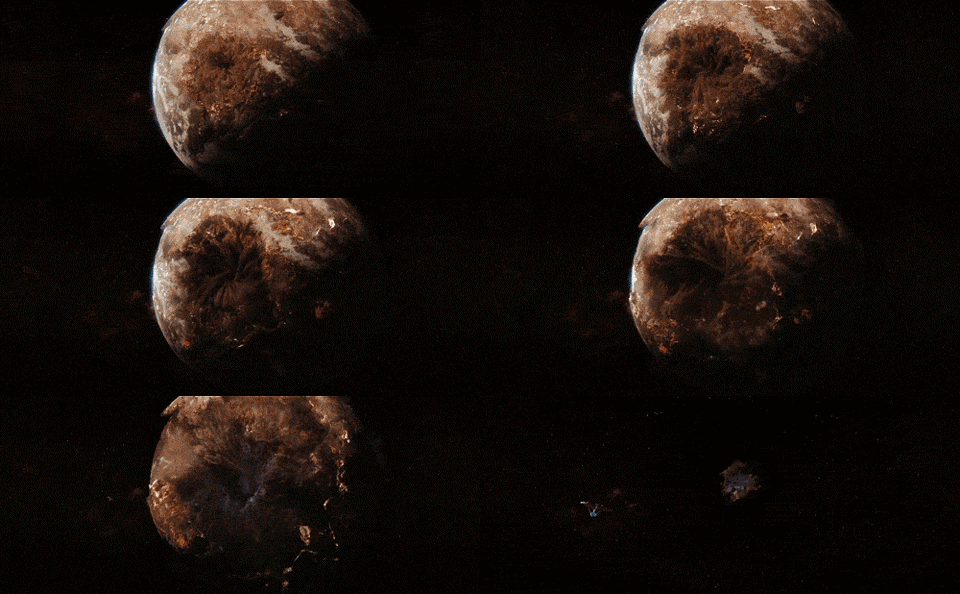
Looks good, though I uh... naval combat in WWI took place at considerable distance. That kind of tactic might work under cover of night, if you get lucky. As a chief weapon of the navy though... if a single warship spots you at a few miles out, or somesuch, you're pretty much doomed.
Otherwise, off to a great start!
To be completely fair, ramships were a thing just a decade or two before WW1. It isn't a stretch that somebody would actually roll with it. Torpedo rams were basically small yet well armored ships with very small above waterline height and only armaments enough to ward off smaller vessels. They might've also carried torpedoes but that wasn't a requirement. I can see somebody going with torpedo rams. Heck, they might be even vindicated if say ships stomp the Uruk in a previous war. Heorot could be Japan to my Russia here.
NATION NAME: Khagnuzg'Uruk (Uruk Lands of the Khagn, often translated as The Uruk Empire) GOVERNMENT: Imperial Parliamentary Monarchy RULER: Khagn (equivalent of the Emperor), Kri-Vizaarz (equivalent of Prime Minister) PRIMARY SPECIES: Ork PRIMARY RELIGION: Dorzai (believes in the god Zot and remembers its first herald Kudarsh) POPULATION: 388,690,528 (last census data) The Uruk Empire is large nation occupying the central portion of Narrev. It's known for its warlike ork inhabitants. It arguably has the largest continental army in all of Narrev yet owns a disproportionately slim influence over the seas. Its complex politics and constant wars make the Uruk lag behind technologically the other great powers but they're making a steady effort to modernize.
HISTORY OVERVIEW
Lacking record-keeping methods the early history of the orks is shrouded in mystery. It's known that orkish tribes were scattered around the central Narrevian steppes before even the Common Era. Their resilience and warlike qualities eventually caught the eye of the steadily expanding Kratorian Empire which captured them and initiated a long breeding program to create a slave race of soldiers fit to their needs. The Uruk soon became a feared shock troop on the continent. They were powerful, disciplined, relentless and loyal. They revered the Semideum as physical deities who could never do wrong and followed them blindly regardless of what they were told. Their official name became the Ordus, a mutation of the Kratorian word meaning "rank, file" or also meaning "order, command". Both meanings fit the Uruk well. Orkish culture remained but drastically altered to reflect Kratorian beliefs and their overall status in society. Yet the glory of the Kratorian Empire was about to take a sharp turn. In the Common Era Year 1448 the Empire spread far and wide, almost covering the entire Narrevian continent, it was only natural they'd turn for Etresna. Lytonius as the Empire's herald visited Etresna, demanding their prompt capitulation. It was a moment of arrogance and outright ignorance, product of time when no one could stop the Empire. On the other hand Etresna idolized valor and could never agree to bow without a fight. Insulted with the demands Lytonius was tried and later brutally murdered in response. Shocked and infuriated the Kratorian Empire hastily declared war on Etresna and legions of men, orks, demigods and other races marched up against the comparatively tiny nation. Arrogant and unprepared for what's to come Kratorian Army completely fell for Etresna's scorched earth tactics and guerilla attacks. The seemingly swift war turned into a meat grinder of attrition, slaying millions and killing numerous Semideum in the process. Experiencing failure for the first time, the Uruk's faith in the Semideum wavered. With many of their masters dead they rose up and their rampage engulfed most of Narrev in flames.
[To be continued...]
GEOGRAPHIC OVERVIEW
TERRITORY CLAIM:
Red - Uruk Empire Orange - Kyrennos Brown - Ogre nations Pink - Ushro Republic (orange territory next to it, Tsuljin Khanates)
[to be continued...]
CULTURAL OVERVIEW
There are three main social layers within the Empire. Ushatar, Shara and Snaga. Ushatar are pure blooded Orks who price themselves as warriors, Shara are the free people of lesser orks or other races while Snaga are the enslaved population. The law applies differently between these three groups and their various interactions. Uruk's laws in general are strict, precise and applies everywhere within the Empire. On the other hand Uruk laws are not everything and provinces have considerable degree of autonomy. Uruk laws were revolutionary at the time but their structure is nowadays in the age of centralized states could be more of a hindrance. [to be continued...]
TECHNOLOGICAL OVERVIEW
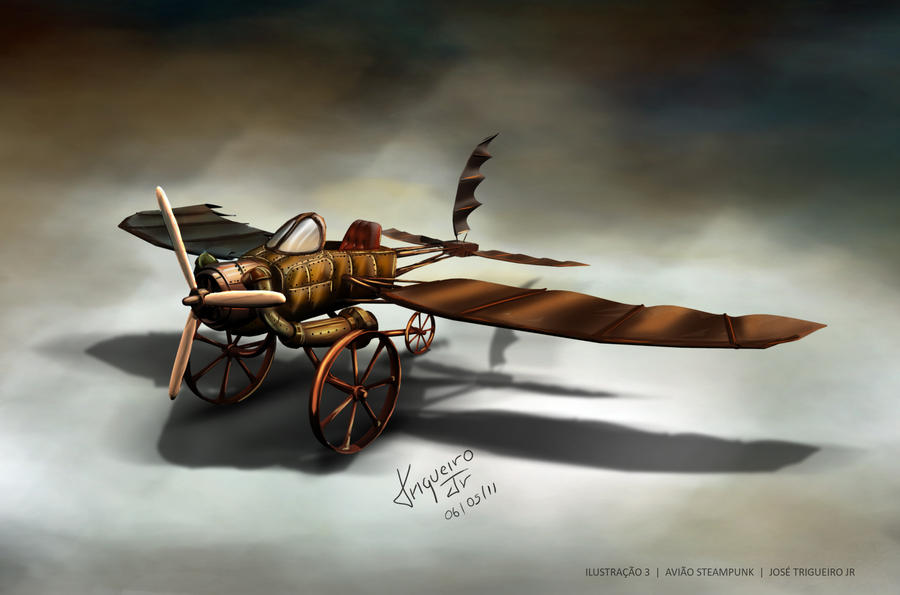
Uruk is an unique combination of antiquated and modern as it's yet to benefit in full from the industrial revolution. Rural populations at times live in borderline medieval societies while cities are very similar to the standards of the civilized world. Lacking large sea routes the center of Uruk development are connected by railroads. In spite of its size the density of rail lines almost approaches that of the other major powers. Uruk has a number of academies with some earning international fame. Urukian technology is known for its ruggedness, relative simplicity and raw power. The so-called "Orc-Steel" is well-known for its toughness and consistent quality even if at the cost of extra weight. In contrast orkish industry faces issues at producing fine machinery at large scale. With their struggling economy and prior investment in steam engines this resulted in Uruk being far slower at adopting internal combustion engines. Almost all orkish vehicles rely on steam instead of gasoline with aircraft being a major exception.
Shortened as Kabuum (or Kaboom) it's an Uruk variation of the smokeless gunpowder derived from Etresna's gun balm. It's at least three times stronger than black gunpowder, generates far less smoke and it doesn't clog up gun barrels like its predecessor. Orcish Kaboom utilizes plant derived components and the main process is simple enough to be accomplished in rural establishments, allowing widescale and cheap production immediately. On the other hand it suffers a bit in terms of strength and the overall quality can also fluctuate more. This is partially why Uruk has preference for high-caliber guns, that and their obsession with stopping power. More than small arms the Karikabuum derived explosives at average 20% less energetic than standard TNT, enough that newer shells utilize entirely different material as filler. Ordinance is mostly unaffected and the quality of the gun tubes makes more of a difference. Aside from these the Uruk also have a tradition for rocketry and they developed a variation of Karikabuum to keep them viable even in the 20th century.
Struggling economically and behind in sciences the Uruk had a hard time during the 19th century. With the invention of dynamite and guncotton the nations began the race to develop smokeless gunpowder, the next leap in firearms development. For over a decade Uruk were stuck at using black powder while their neighbors were adopting the new and superior propellants in full swing, mostly thanks to Etresnian inventor and industrial giant Firahl Davariskk. Her gun balm found wide scale application with patents in several countries yet eventually that led to her downfall. Using espionage the Uruk stole the patent and their chemists spent over a year to develop an alternative, Karikabuum. The process was eerily similar yet the compounds utilized were different. Davariskk sued the Uruk for infringing her patent yet after years of feud she lost the case. At the same time she received severe backlash for providing "savages" with the keys to modern weaponry.
Translate as "strong iron" Oflsong is an orcish variation of steel using extreme temperatures and their native resources. Oflsong is made from Hokur (meteoric nickel-iron ore) mixed with high temperature melt of Guratur (tungsten-carbide ore) and then undergoing rolling and heat treatment. Oflsong is known for its great strength and relatively good consistency. Objects made from the so-called "Orcish Steel" are known to be rather durable. On the other hand Oflsong due to its relatively high tungsten content is about 30% heavier than other steels which can effect performance and might make things unwieldy.
ECONOMICAL OVERVIEW
Uruk economy is under central control with only limited private enterprises. Larger industries are generally under the authority of the Khagn, even if in just name. The government obviously also prioritizes war materials over civilian goods. Combined with the lackluster industrial development compared to their neighbor this means the Uruk mostly focus on internal trade and being a tariff state between multiple international land routes. Uruk products otherwise have a hard time to compete with others which does set back their economy.
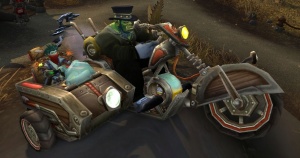
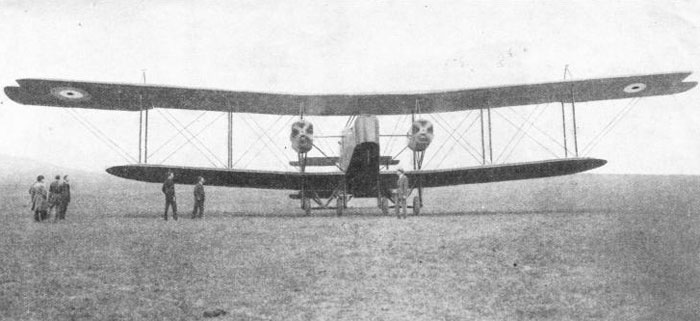
Uruk does have a few ports but barring the naval docks of Ogbed they have little shipbuilding activity. Rather than sea routes Uruk put high emphasis on the development of their railworks, connecting the entirety of the empire. Off the rails though the situation is less optimal with the main form of transportation being animal-drawn carts and wagons. Although steam powered vehicles have a growing niche, especially for jobs that require more power like bulk transport or farm equipment. Gasoline and diesel powered vehicles are rare, though. Uruk lacks the industry to build high-quality engines in large quantities so you mostly see automobiles for the rich who import them from other countries. On the other hand motorbikes enjoy a strange popularity, both import models and locally produced ones. Bikes made for orcs are usually made in the empire and in order to account for the weakness of import engines they use two of them. There are a limited number of bikes made entirely in Uruk, engine and all. Airplanes are rare in civilian use, the imperial administration turns what few planes they could get for transport and messaging duties. Of course if they aren't given outright to the Military.
MILITARY OVERVIEW
Army Branch The Ushatar forms the core of the Uruk military, practicing warfare and the tradition of warg riding from youth. They are learning how to fight from their parents and private teachers and upon the age of 13 they are sent to the military academy. This very much reflects the culture of knights in other nations. Ushatar are classically the officers and cavalry while the Shara does the grunt and logistics work. Snaga are not considered worthy of military duties nor wise to allow them to take arms thus they are almost entirely excluded from the military. In spite of the inherent caste system the military is overall a meritocratic organization where rank means more than status. Uruk troops are ferocious yet also highly disciplined. Punishment for misbehaving soldiers could be brutal and the leadership commands through rank, fear and a mixed sense of respect.Camaraderie is extremely valued and since ancient ages members of the same unit shared tent and were encouraged to work as a group. While option for more recruits are open the Uruk doesn't have a strict concept of reserve troops. All soldiers brought up by the Empire are active and usually kept busy doing raids or disciplinary actions against provinces that go against the Khagn's will. Also due to their nature of rapid deployment the Uruk doctrine prefers quick offensive of light forces followed by the main army than the standard approach. In this sense their warg riding cavalry still finds a lot of employment.
Kadar, Kadari = Squad (literally means "tent" as they share the same tent together) Zajar, Zajari = Platoon (originates from "campfire") Rothar, Rothari = Company (originates from the word "circle") Tuf, Tufri = Battalion or Regiment depending on size (the word means "horde") Kutoz, Kutozari - Division (the word otherwise means "garrison") Bajrak, Bajrim = Army (archaic word for "tribe" and orcish army groups can get quite familiar) Ushtarak, Ushtarim = Theater Force (Ushtarak is otherwise an archaic word for "army")
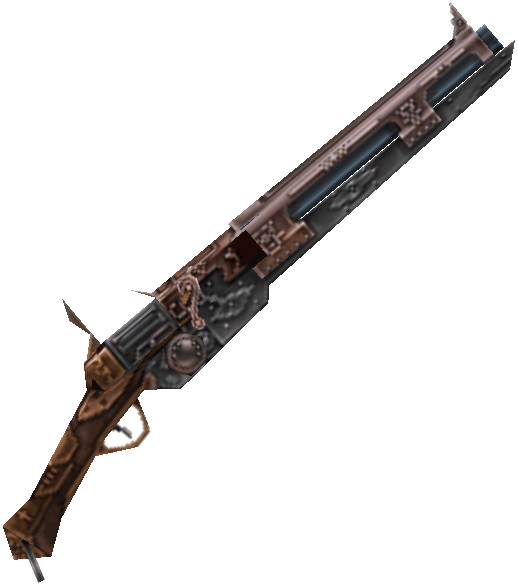
Standard pattern orcish rifle using the new and powerful 12.6x42mm cartridge with Karikabuum smokeless powder. It's built sturdy and almost unwieldy for non-orcs. Bad mouths call it a rifle-club than a proper weapon because of its weigh and brutish nature. Perhaps in response to this the Inruurz 1888 (carbine variant, pictured above) has a large blade section for assault, supposedly to add recoil mass while also serving as a melee and trench tool. The sheer appearance of the weapon also have a known psychological effect which is well valued by the Uruk. The weapon has a 9 round internal 3x3 magazine which can be reloaded by 3-round stripper clips. Unlike other rifles Orcish guns also use a simplified straight pull bolt-action which coupled with the heavy cartridge makes it difficult to operate for weaker races. For orcs though the mechanism is simple to manufacture and can be reliably operated even during cold or mud. The 1.26cm Ugaur, or".496 Orcish" as called by others, is a relatively stumpy load with less velocity than common cartridges. The standard load are softpoint bullets which have dreadful effects on humans upon hit and also effective at fighting particularly large creatures. This is of course part of the Uruk doctrine on psychological warfare, intended to scare the enemy out of their wits in fear of getting shot by these.
Crank-operated belt chain fed revolver gun chambered for the new 1.26cm Ugaur ammunition. While the Uruk aren't alien to automatic guns their industry still struggles to create the fine machinery required for them at large scale. Added up with its reliability issues compared to their corps of skilled crank-machinegun operators means the Uruk didn't adopt Maxim-style guns at wide scale. Ma'kall 1901 isn't the first machinegun to utilize the new round, either. It was preceded by the Ma'kall 1887 which used top-fed magazines akin to the old Gatlings. With the invention of belt-feed these weapons were rendered obsolete, though. As such they rebuilt the old guns and switched the production for the new Ma'kall 1901s. As said these weapons use revolving chambers with a single barrel instead of the Gatling's revolving barrels. This technically strains the barrel more but water cooling mechanisms can solve that. The weapon uses non-disintegrating chain-belts to feed 1.26cm Ugaur ammunition. Due to this mechanism and being cartridged for larger munitions the orcish "machineguns" weight considerably more than usual, albeit it doesn't deter the orcs. Lighter variant called Ma'kall 1906 with quick change barrel and without the water-cooling jacket was also developed for special use. There are also Roth'kall 1903 guns that use gatling mechanism and usually found for fixed emplacements or other uses where weight isn't a concern. Just like the Ma'kall 1901 these weapons are all converted to accept belt-feed mechanisms. A standard Tuf (regiment) has a machinegunner company with 8 guns to provide fire support. Depending on how rapidly cranked the Ma'kall 1901 can have the rate of fire up to 600RPM.
Kapuurz is the general Orcish term for pistols while Rothuurz specifically means revolver.The lack of precise tools make semi-automatic pistols a sorts of luxury item within the Empire and as such revolvers dominate. Rothuurz 1892 is a standardized and compact handgun issued for officers and anyone who could afford it. The weapon is chambered in 1.32cm Kapuan (.520 Savage for export markets) with dimensions of 13.2x33mm. The standard round uses a superheavy 30-gram softpoint bullet with the muzzle velocity of 290m/s (when fired from a 4" barrel). It has fearsome stopping power but also a tremedous kick which makes it unwieldy in the hands of weaker races. Even for an orc the weapon is made for measured shots rather than emptying the cylinder at wild abandon. Technical terms wise the Rothuurz 1892 is a 5-shot single action revolver with a short 4-inch barrel. It's designed for power, simplicity and easy portability. They are generally crude and hardly a collector's item but they do the job just fine.
Kordh is a traditional Orcish sword design originating from the 16th century. It's essentially a more bulky saber made for orcish strength and were mostly preferred by cavalry. When sabers rose in popularity the orc embraced the Kordh further and it became a common weapon of defense to nearly all soldiers. Nowadays swords are no longer issued to regular troops (albeit they often acquire them regardless). On the other hand officers are required to carry swords and they can buy one like the above pictured Kam-Kordh 1879 which was designed to be cheap yet enduring using simple but effective methods. The sword has a knife handle and blade made of Olfsong. Cavalry also use Kordh type swords which are considerably longer and lack anything but the most basic guard. Due to their toughness and the power behind an orc's swing these swords can at times hack through even armor or chop people in half. These swords are rightfully feared.
While horses aren't particularly rare and compete with them for civilian use the military almost exclusively rely on wargs for both cavalry and transport purposes. These are wolf-like omnivorous mammals with ferocious looks, good endurance and impressive sprinting speed. They can eat almost anything including grass, feed, fruits, meat or even corpses on the battlefield. Wargs were essential for the tactics of the raiding orcs who often roamed the lands without any supplies and the Uruk are still fond of them. Their fearsome appearance and overall ferocity also makes them fit for their doctrine even if the days of the cavalry are steadily vanning. Taming wargs is difficult and they pose more dangers than horses yet for cultural reasons they are quite commonly found within the Uruk Empire.
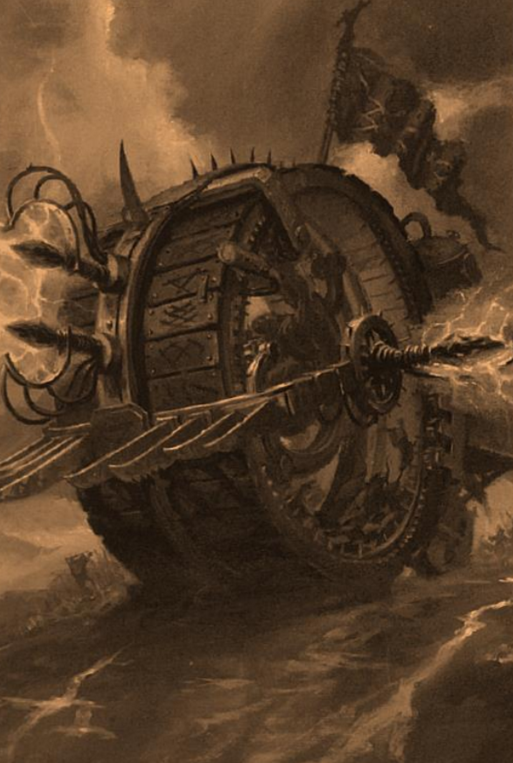
One of the newest products of Uruk weapons development still in testing. It's basially a giant wheel propelled by steam power and steered by a smaller wheel at the back. Kaltrothari are experimental vehicles trying to push the orcish cavalry tactics into the 20th century. The two-man contraption is equipped with a steam-spun machinegun and has numerous spikes and blade protrusions both for psychological effect and added shock factor during charges. The wooden wheel backed with metal reinforcements is tough enough to survive multiple bullets. Yet the Kalroth is an awkward contraption with numerous issues. For example it needs periscopes and numerous other aids in order to just see straight. In spite of that the Uruk claim their Kalroth will have excellent off-road mobility superior to regular bikes and performance approaching that of a warg in full charge.
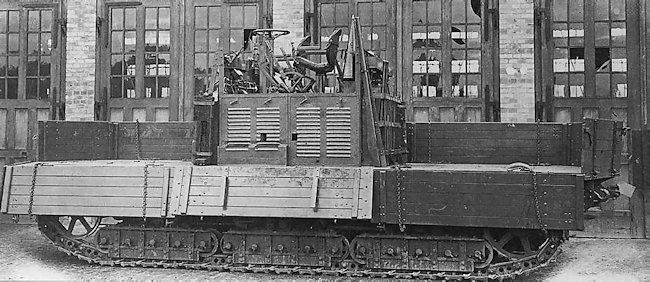
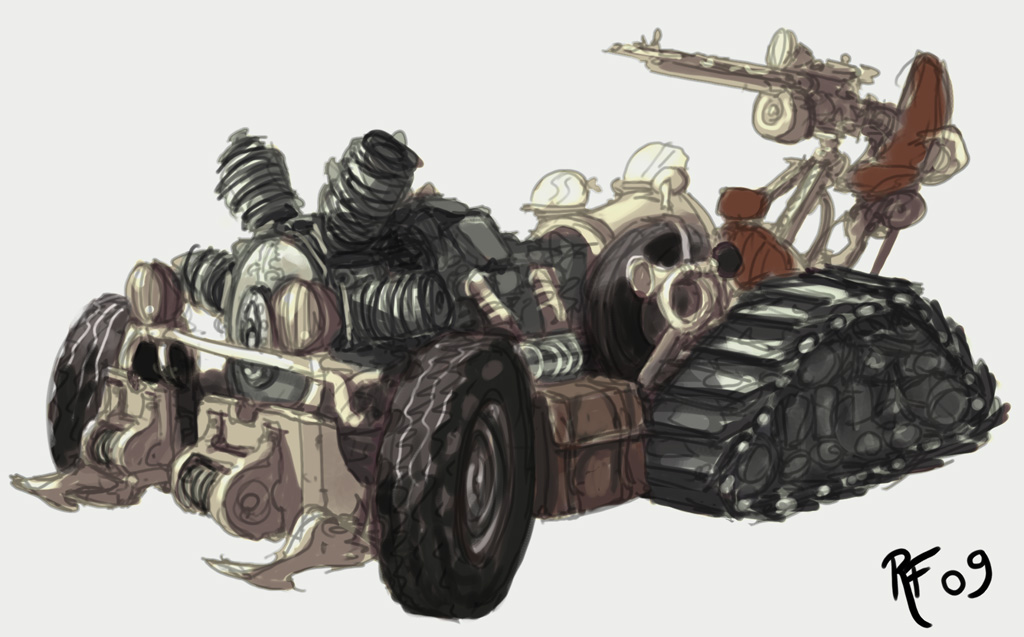
The Uruk military does make a limited use of civilian vehicles and even have a some automobiles built for use in war. These tend to be fairly limited in number compared to even military-use bikes but there are plans to increase their count within the army. Krogori are basically fast motor vehicles with no or only improvised protection. They are also often made to carry machineguns.
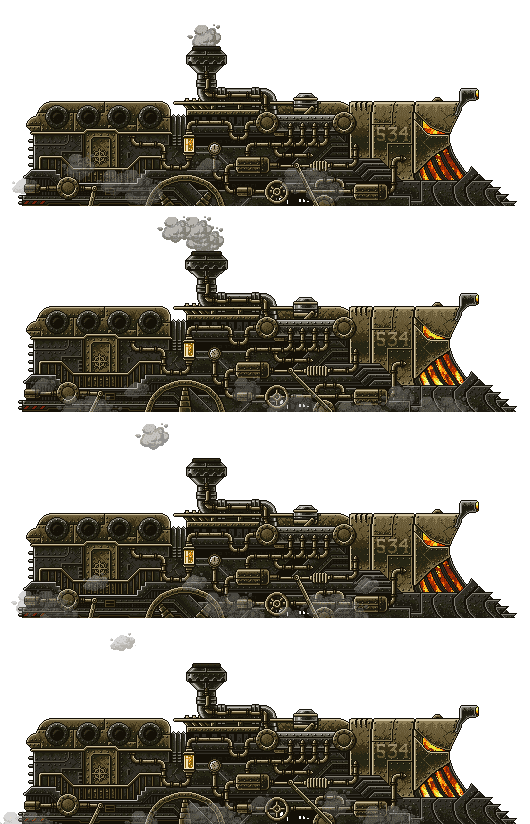
Secret military project enabling the transportation of huge amount of goods with a locomotive almost akin to a dreadnought. The train is still development and requires two parallel railways to travel. This is obviously costly to build and even with the full plans they don't expect to drive this monstrosity everywhere. The project itself might be even too ambitious and has numerous cost overruns. Regardless the leadership is impressed enough with the idea to keep the funding.
Artillery Branch Uruk never neglected the role of artillery and until the 19th century they were among the leaders on the continent. During the last century though the Uruk were always playing catch-up and nowadays their tubes are considered inferior to the guns employed by Etresna or Rotteburg. While lacking in quality they do make up with quantity and especially in terms of lighter artillery they have no shortages. Rocketry is also an unique face of the orcish artillery, light rocket units are even assigned to infantry regiments the same way as machineguns. Light artillery in general makes use of wargs for transport and the so-called "warg artillery" is still a popular doctrine within the Empire. Advances to maps, signals and mathematics also help. Forward observers and map makers are the key elements of the new indirect fire based artillery. Uruk doctrine puts more emphasis on mobility and thus for most engagements light artillery is all they could employ. During prolonged battles or preparing for sieges they might deploy heavy artillery. These are either towed by steam wagons but more commonly carried by train and then towed by wargs prior to assembly. A relatively innovative portion of Uruk heavy artillery are their collection of railroad guns. These elongated train cars house some of the greatest artillery pieces the Uruk have ever made, comparable to their coastal defense batteries. Indeed, at least some of them are originating from naval projects.
Technology with roots dating to times of the old Far West, before the Segon Dynasty came into power. Karijak are related to ancient rockets, using lower grade gunpowder as solid propellant. The Uruk adopted rockets early and kept them as staple element of their artillery since then. Over the centuries karijak underwent many changes yet their essential way of use is the same. Unlike ordinance the rockets are known for "soft" launch which means they can be fired from very light platforms. This allows the Uruk to maintain their mobility while still having the ability to lay down artillery fire. Rockets can have decent explosive payload and respectable range but the ammunition they use is always much larger thus limiting the stockpiles. Another issue is their accuracy, rockets are incapable of the same precision as modern gun tubes so in order to have any sorts of effectiveness they need to be fired in large numbers at once. On the other hand rockets can also easily lay down massive barrages within a short time while conventional artillery struggles with it. Karijak didn't replace gun based artillery for the Uruk but became a fine complement to it.
Train cars repurposed to house artillery. While locomotives are essential to transport large guns the difference here is that these don't require to leave the train and instead they form a weapon system by themselves. Railway artillery are known for their mobility and relatively quick capability to deploy. On the other hand they are obviously limited to railways. There are numerous variants to the idea involving cars with multiple medium artillery pieces, rocket artillery but most popularly it uses a single long tube heavy artillery (as pictured above). The latter has the advantage of range (best within the Uruk Empire) but with the issue of the gun being incapable of turning. The solution was (as pictured) to build specialized railways to move the entire vehicle to position which worked out perfectly. While relatively costly the advantage of having long range artillery is not lost to the Uruk.
THE URUK EMPIRE
18 - Territory - Your nation is magnificently sized, a premiere empire of the day.There is plenty of land to go around. 11 - Tech - Your nation is a mix of antiquated and modern, as modernization efforts are in full swing. 20 - Army Size - A worryingly large amount of your population is active-duty military. It is maintained year-round, and seems almost infinite. 5 - Your economy is weak, and is teetering on a recession 12 - Production - Your nation is somewhat majority industrial, with decent resource exploitation. 2 - Navy Size - You have a tiny navy. It is largely simple merchant vessels. 9 - Airforce Size - You have a few biplanes. 16 - Mobilization Ability - It takes a month to mobilize.
KYRENNOS - NPC ALLY 6 - Territory - 14 Provinces 6 - Political Stability - This nation enjoys popular support and satisfaction with its government. 4 - Nationalism - This nation is a little bit nationalist, and rejects many foreign policies.
OGRE KINGDOM 2 - Territory - 4 Provinces 5 - Political Stability - This nation is peaceful and stable. 5 - Nationalism - This nation is barely nationalist, and is somewhat easy to control.
OGRE TRIBES 1 - Territory - 2 Province 3 - Political Stability - This nation is doing alright. 4 - Nationalism - This nation is a little bit nationalist, and rejects many foreign policies.
USHRO REPUBLIC 6 - Territory - 14 Provinces 6 - Political Stability - This nation enjoys popular support and satisfaction with its government. 2 - Nationalism - This nation is rather nationalist, and looks upon foreigners with disdain.
@DarkspleenI don't wish to talk about it much because then it'd just sour moods and might even lead to antagonizing people. We actually talked this out on discord in your absence. It seems certain people imagined my Bolters as rapid-firing siege weapons and then accused me because of their own misconception. You reacted to that and probably the result. Also just like how you forgot about accepting my NS I didn't read about you banning said weapons when I posted my sheet. Although I kind of did ignore it after hearing the details. I apologize for that.
Anyways, please message me in Discord whenever you're online. I am working in irregular shifts, have multiple devices which might be turned on even when I am away so I am usually running Discord in invisible mode. So unfortunately you can never tell when I am up. But I can surprise you. Especially since I have a minor case of neurosis and my sleep schedule is a mess.
@DarkspleenJust ban clip and magazine fed weapons. Chu-ko-nu were useless at anything but extremely short range and were only ever used storming keeps. They have abysmal armor penetration. For a crossbow to be remotely useful against even lightly armored troops it needs a draw weight heavy enough that a magazine is only a hindrance when it is drawn.
I feel it's kind of redundant to ban magazine fed crossbows, too. Chu-ko-nu weren't useless, they just aren't used the same as other crossbows. Their design also had lot of inefficiencies that could've been streamlined if they became more widespread, I suppose. Anyways, what I wanted to say is that magazine fed weapons aren't really much better than loading the next round by hand, it adds convenience and better portability. Also they aren't really overtaking an archer in terms of effectiveness.
Lastly, being afraid of somewhat higher rate of fire is an ahistorical concern. Ancient battlefield weapons couldn't afford to spew thousands of ammunition per hour or anything crazy like that. Neither doctrines of the time had much to build on increased rate of fire. It was convenient but not a game changer. In case of repeating crossbows as you said rate of fire came at the cost of power. You needed relatively light draw weight to make it feasible which of course made the weapon weaker.
@Willy Vereb We've got two problems: 1) I don't recall giving you permission to post in the character tab and 2) your military uses pump-action and lever-action crossbows, both of which are explicitly banned. You will need to remove those crossbows, or bolters as you call them, and resubmit your sheet for approval before you can post ICly.
1.) You gave me explicit permission to post my sheet on Sunday or Monday. I asked you in the chat. Discord is a bit messy to scroll back that far with the message feed but you also have the search function for a good reason. EDIT: I actually found it. Not sure if this link format works but we'll see: discordapp.com/channels/3790804108036…
2.) Pump-action and Lever-action are both are as old as the ancient ages, even for weapons. Your decision to ban them basically also removes Gastraphetes and Chu-ko-nu, among others. In addition neither weapons are semi-automatic, that applies to weapons that load the next round by themselves. Blowback operated action was the first such example and from that you can guess how very different that would be. In addition there's a difference between pulling back a pump for a gun, where it only requires enough force to load the next cartridge, and for a crossbow. In a sense banning pump action is the equivalent of prohibiting bowmen to draw back the bowstrings.
Yngvar is the homeland of dwarves, bordering multiple nations and close to the major trade routes. They are known for their unique culture, skilled craftsmanship and mercenaries. The nation is generally referred as Yngvar but alternatives include: Yngvarseidgenossenschaft (semi-official), Eidgenossenschaft, Zwölfberge, Yngvarsland, Free Cities, Dwarvish Hills, etc...
Geography
Yngvar is both the name of the land and the unique chain of mountains populating it. There are twelve major mountains with a large city-state each. Due to their government structure Yngvarians don't have a capital, in theory all 12 cities are equal.
Culture
Yngvar in archaic dwarvish means "protected by Yngvi" and this is more than just a name for the inhabitants. Yngvar mountains are considered sacred to dwarves and while they are open to visitors they are far less willing to let them stay. As such Yngvar's population is predominantly dwarvish. Yngvi itself is an entity considered the creator of the dwarves, some consider it a Primordial others as something else. Some even connect Yngvi with the Serene One. Yngvi is the great ancestor and teacher of dwarves, universally respected by them. Dwarvish relationship with other faiths is somewhat strange, while they don't belong to either Argenism or the Serene Church they can respect them. In return dwarves are left alone with their faith which can be best described as ancestor worship while mixing elements from other faiths. What elements? It depends on the dwarf you ask, they tend to shape their beliefs to whichever large religion they're the closest. This does not harm dwarvish faith and also allow them to easily integrate with other cultures. Aside from religion dwarves are also well-known for their work moral and practical thinking. They are diligent craftsmen famous for their skills. They are also somewhat distant with other races, always keeping them at arms length. Another weird custom and show of their craftsmanship is that they wear armor. Every adult dwarf, be male or female are mandated to wear at least a maile shirt outside. Some cities' customs even mandate helmets or a full hauberk. Due to their robust build this does not bother a walk during their daily life and keeps reminding outsiders to tread carefully with them. This also gave dwarves an interesting nickname: Ironskins.
Dwarves are short (at average 4 feet tall) but robust humanoids known to be great workers and craftsmen. Their proportional strength is twice that of humans (but evens up in a brawl due to size difference) and their bodies are denser and overall tougher. Dwarves prefer to live in caves and have decent senses underground. At average a dwarf shows aging after 100 years and can live up to 150 years. They are also extremely resilient to temperature differences and disease. Their drawbacks are their short stature which also make them slower runners (though they can jump well) and their dense bodies sink almost like a rock in water thus dwarves almost never learn how to swim. They also have poor long distance vision compared to humans,albeit they can almost see in the dark which make them more comfortable to find their way through caves. Dwarven pregnancy lasts for 4 years and during that women aren't any less capable of work. Consequently, dwarvish culture rarely differentiates between the jobs of men and women, thus you could find female laborers and soldiers almost as often as men. Pregnancy is followed by 10 years of infertility, though which might be partially responsible for the low birth rates among dwarves. Combined with their longevity this evens out but dwarves in general think differently about time.
Government
Yngvar is ruled by twelve clans centered around a mountain each. These mountain city states are completely autonomous and at best can be only considered to be in alliance with each other, though some likes to call it a non-aggression pact. All leaders are tied by blood oath to not turn their arms against each other. They regularly hold the Twelve Chairs council, where the 12 Dwarven Lords sit at round table and discuss matters that involve entire Yngvar. Number of laws are laid down in the past that apply to all clans equally and they have certain obligations to defend each other. Aside from that all Clans are free to do whatever they want.
Military
Dwarves beleive in individual powers and that no self-respective adult member should be unable to defend themselves. All dwarves above a certain age know how to fight while wearing armor and weapons, often their own craftsmanship or family heirloom. For this reason other nations often dub the dwarves as Ironskins because they nearly always coat themselves in metal armors. In times of need citizens band together to defend their home. In addition to that there are dwarves who dedicated themselves to military service, either as watchmen and police force known as the Shieldbearers or to become full-blown mercenary. The latter often become travelers going from country-to-country until they return and settle down in their Clan as combat instructors and military leaders. As such dwarvish military are often a mix of eager volunteer militia, town watch and professional mercenaries.
Bultzer or Bolzer is a Yngvarian weapon similar to crossbows. Instead of a bow they rely on torsion or coil springs to launch bolts at a distance. The name "Bolter" is a mistranslation, the original word actually just means "thrower" in archaic Dwarvish. Bolters are narrower than crossbows which makes them less unwieldy in dwarvish hands. There are countless variants and working mechanisms depending on personal needs. A typical bolter design for example uses a long coil spring which can be pulled back in a pumping action without taking your eyes off the target. Such weapons are mostly for self defense, their bolts can only penetrate maille with gambeson padding at short ranges. Other variants sacrifice speed and comfort for more power. There are two-handed pull, lever action (akin to goat's foot), windlass, cranequin and even more diverse variants. Heavy Bolter is a term almost synonymous with heavy crossbows and often used very similarly in combat. Mastercrafted Bolters often replace the steel spring with mithril, such gadgets are called Thundercoils for their speed and noise compared to regular coil springs. Bolters are also not exclusive to handheld weapons, dwarven siege engines also make various siege weapons. While Bolter technology is mostly by Yngvarians and many craftsmen are reluctant to share their art with outsiders, these weapons are still occasionally made and sold for other countries.
Characters
TBA
Relations
Yngvar generally has good relations with its neighbors but only while keeping them at arms length. Dwarves travel a lot and known through the continent and while Wotanism isn't quite celebrated, both Argenist and Selenist faiths mostly tolerate it. That being said Yngvarian culture is exclusive to dwarves and other nationalities only know few details about it.
Yngvar is the homeland of dwarves, bordering multiple nations and close to the major trade routes. They are known for their unique culture, skilled craftsmanship and mercenaries. The nation is generally referred as Yngvar but alternatives include: Yngvarseidgenossenschaft (semi-official), Eidgenossenschaft, Zwölfberge, Yngvarsland, Free Cities, Dwarvish Hills, etc...
Geography
Yngvar is both the name of the land and the unique chain of mountains populating it. There are twelve major mountains with a large city-state each. Due to their government structure Yngvarians don't have a capital, in theory all 12 cities are equal.
Culture
Yngvar in archaic dwarvish means "protected by Yngvi" and this is more than just a name for the inhabitants. Yngvar mountains are considered sacred to dwarves and while they are open to visitors they are far less willing to let them stay. As such Yngvar's population is predominantly dwarvish. Yngvi itself is an entity considered the creator of the dwarves, some consider it a Primordial others as something else. Some even connect Yngvi with the Serene One. Yngvi is the great ancestor and teacher of dwarves, universally respected by them. Dwarvish relationship with other faiths is somewhat strange, while they don't belong to either Argenism or the Serene Church they can respect them. In return dwarves are left alone with their faith which can be best described as ancestor worship while mixing elements from other faiths. What elements? It depends on the dwarf you ask, they tend to shape their beliefs to whichever large religion they're the closest. This does not harm dwarvish faith and also allow them to easily integrate with other cultures. Aside from religion dwarves are also well-known for their work moral and practical thinking. They are diligent craftsmen famous for their skills. They are also somewhat distant with other races, always keeping them at arms length. Another weird custom and show of their craftsmanship is that they wear armor. Every adult dwarf, be male or female are mandated to wear at least a maile shirt outside. Some cities' customs even mandate helmets or a full hauberk. Due to their robust build this does not bother a walk during their daily life and keeps reminding outsiders to tread carefully with them. This also gave dwarves an interesting nickname: Ironskins.
Dwarves are short (at average 4 feet tall) but robust humanoids known to be great workers and craftsmen. Their proportional strength is twice that of humans (but evens up in a brawl due to size difference) and their bodies are denser and overall tougher. Dwarves prefer to live in caves and have decent senses underground. At average a dwarf shows aging after 100 years and can live up to 150 years. They are also extremely resilient to temperature differences and disease. Their drawbacks are their short stature which also make them slower runners (though they can jump well) and their dense bodies sink almost like a rock in water thus dwarves almost never learn how to swim. They also have poor long distance vision compared to humans,albeit they can almost see in the dark which make them more comfortable to find their way through caves. Dwarven pregnancy lasts for 4 years and during that women aren't any less capable of work. Consequently, dwarvish culture rarely differentiates between the jobs of men and women, thus you could find female laborers and soldiers almost as often as men. Pregnancy is followed by 10 years of infertility, though which might be partially responsible for the low birth rates among dwarves. Combined with their longevity this evens out but dwarves in general think differently about time.
Government
Yngvar is ruled by twelve clans centered around a mountain each. These mountain city states are completely autonomous and at best can be only considered to be in alliance with each other, though some likes to call it a non-aggression pact. All leaders are tied by blood oath to not turn their arms against each other. They regularly hold the Twelve Chairs council, where the 12 Dwarven Lords sit at round table and discuss matters that involve entire Yngvar. Number of laws are laid down in the past that apply to all clans equally and they have certain obligations to defend each other. Aside from that all Clans are free to do whatever they want.
Military
Dwarves beleive in individual powers and that no self-respective adult member should be unable to defend themselves. All dwarves above a certain age know how to fight while wearing armor and weapons, often their own craftsmanship or family heirloom. For this reason other nations often dub the dwarves as Ironskins because they nearly always coat themselves in metal armors. In times of need citizens band together to defend their home. In addition to that there are dwarves who dedicated themselves to military service, either as watchmen and police force known as the Shieldbearers or to become full-blown mercenary. The latter often become travelers going from country-to-country until they return and settle down in their Clan as combat instructors and military leaders. As such dwarvish military are often a mix of eager volunteer militia, town watch and professional mercenaries.
Also called as Bolt-Throwers, they are an evolution of crossbow. While crossbows gave the dwarves a viable ranged weapon these were too cumbersome for them to ever get attached to them. This changed after the development of coil springs thus replacing the bow and metal string with an internal mechanism. This already saved space and made bolt-throwers easier to carry. There are many variants and practically each Clan has their own kind of Bolter. A popular variant uses Mithril-made Thundercoil (named for their loud noise when released without weighs), pump-action with 200lbs draw and a clip holding ten 1x8cm all-steel bolts. Decently made Bolters of this kind can shoot accurately up to 70 meters and can be fired in volleys up to 350 meters. They can pierce most of the common armors, too. Snipers sometimes design oversized Bolters with much greater length and force so they require a winch to pull back. These are quite powerful and accurate up to 100-200 meters. Bolter is a name given to this weapon on the common tongue, it's a result from mistranslating the Dwarfish word Bultzer (thrower). Bolters are designed for dwarven strength and stature which makes them borderline inoperable by others. Even if it weren't the Bolter design would be much less effective when made for human capabilities in mind. As such dwarves still make crossbows even if it's only for export.
I am considering that small slip of land between Gold and Monkey. I'll probably pick dwarves and become Fantasy Switzerland. Clockwork, metalwork, mercenaries, all that.
Unknown. I might be more of an actual company without any strict territorial holdings. I am thinking about retooling my White Corps faction to fit this NRP. Alternatively I might do a "Space Hungary" but the faction being more of the successors of a pan-slavic expedition to Alpha Centaury which went through a lot over the centuries and by now think about Hungary as a mythical body or legend than anything strictly with the nationality or culture. It sounds a bit of mess and it is but in the good way. The only pitfall could be if interstellar expeditions were not done until very recently or you wish to not have anyone from outside the Solar System.
BTW, did you think about creating a Discord server to players? This is the newest trend for RPs to supplement the OOC chat and allow more through interaction/planning.
Yeah, you'd need a quite huge black hole to accomplish that, actually. Likely at least a few orders of magnitude heavier than the said planet.
What would a micro black hole do which was magically made stable? It'd keep falling in and out of the planet while likely excavating a relatively small hole in the process. So basically it'd be more like an unstoppable bowling ball which keeps circling in and out of the planet while growing ever so slightly in the process. If light enough it might also stop in the core and stabilize there, basically just adding a tiny mass to the planet. Although it might influence tectonic movements on the long run.
In the end all that the black hole is just mass. Highly concentrated for sure but it still behaves like any other object.
Also realistic micro black holes would be akin to a mini sun if not even more intense, they would be white-hot as they spread radiation leakage everywhere. That's actually how they are supposed to work as energy source. Basically you just replace nuclear reactors with a black hole and you can keep the rest of the apparatus.
 Member

 salamimike,
ivoryrolland95,
salamimike,
ivoryrolland95,
 Durandals