Avatar of Dinh AaronMk

Status

Recent Statuses

1 yr ago
Current As an American [user could not afford rest of post]
6 likes
3 yrs ago
Never spaghetti; Boston strong
3 yrs ago
The last post below me is a lie
1 like
3 yrs ago
THE SACRIFICE IS COMPLETE. THE BOILERMEN HAVE FRESH SOULS. THEY CAN DO SHIFT CHANGES.
2 likes
3 yrs ago
Was that supposed to be an anime reference

Bio

Harry Potter is not a world view, read another book or I will piss on the moon with my super laser piss.

Most Recent Posts

By the year 2023, the world was already two horsemen deep. With pre-existing conflicts intensifying, attacks against states from an amorphous and asymmetric foe had blanketed the western world in a near state of war, while the same enemies perpetuated heated war across the Middle East, attracting the attention of the world's great power who in swallowing their prides and willingly turning their back on the old lessons learned put boots on the ground. It was a move that wouldn't lead to the victory they sought to have, and the presence of the foreign enemy at arm's reach galvanized the enemy. In the end, the enraged conflict grew beyond its borders. This was the first Horseman.

Somehow by a miracle and in the tense atmosphere the war never saw the launch of missiles. But it saw the outbreak of something else. While it may have been directed by the invisible hand of the invisible enemy, or simply found the new capability to spread and to do so rapidly familiar diseases that had taken on an unfamiliar and dangerous new trait found its way across the world. Like an influenza, contagious diseases thought exterminated swept the western nations of the world. It could not be stopped with the old antibiotic medicines so often employed. Long incubated in parts of the world where the medicines have been abused beyond the breaking point the world was ravaged. This was the Second.

The Third Horseman though was already there, twisting the strings of trade and cheating the scales of weights. But as his brothers worked with loud and heavy-handed might the roads were opened for new opportunities of disaster. With the costs of war and defense sapping funding of the developed world into defense, and the rising price-tag of dealing with the biological disaster the banks and economy started to cough sputter. Turning anemic as it caught second hand the plague of human discontent. The line was drawn tight, and set ready for the final cut by the Third Horseman.

And the fourth came. Not in nuclear fire. Not from above. But a monster from within. With a great explosion, the sleeping cauldera of Yellowstone erupted in 2023 spewing ash and smoke into the atmosphere. The toxic ash the poured forth from the Earth's mantle spread like a heavy blanket over the United States showing the country the true form of black terror. In a force not since seen since the Black Blizzards of the thirties, and never before exceeded ash fell and blanketed large swathes of the North American continent and completely covering the United States.

This was the ax that fell, the knife that cut the string of sickly economy. The collapse of the United States sent more than ripples through the world's affairs and the nations that rose upon the terrifying crests of the waves formed by its banks falling Europe and Asia so too did fall. The world economy which had so long provided peace let loose unrestrained war and the rest of the world crumbled in the last desperate gasp of man.

But if the Fourth Horseman had intended it, he had failed. Or perhaps it was enough to swing the hammer of justice one time and strike out man's knees for now. Or they wanted to keep them for their own continuing games. For humanity did not die out. And while the US and Canada lay buried under thick ash, with the world smoldering from conflict around it man survived. Man survived to recollect, to rebuild.

This was the wake of the Four Horsemen.


RP Details

What is Fourth Horseman?


What does the Volcanic Ash do?


Technology


The world


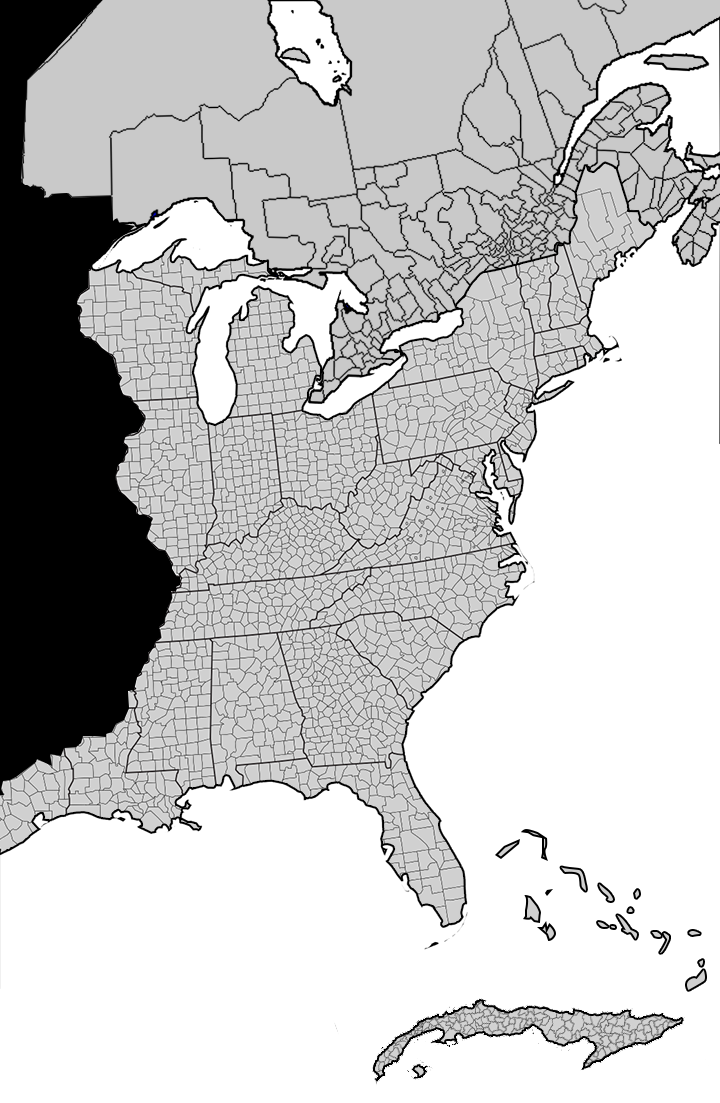
This is the base map:


Black is the American wasteland beyond the Mississippi, this is land that's so buried under ash it has not returned as everything east of the Mississippi has. Living is harsh and wild there, if not downright deadly yet in fear of breathing in lethal volcanic glass. I don't want anyone claiming land in the black, at least not yet. But it's not off-limits to play in for story purposes. Just no territorial expansion that way and no claiming to have settlements over there. Find an excuse.

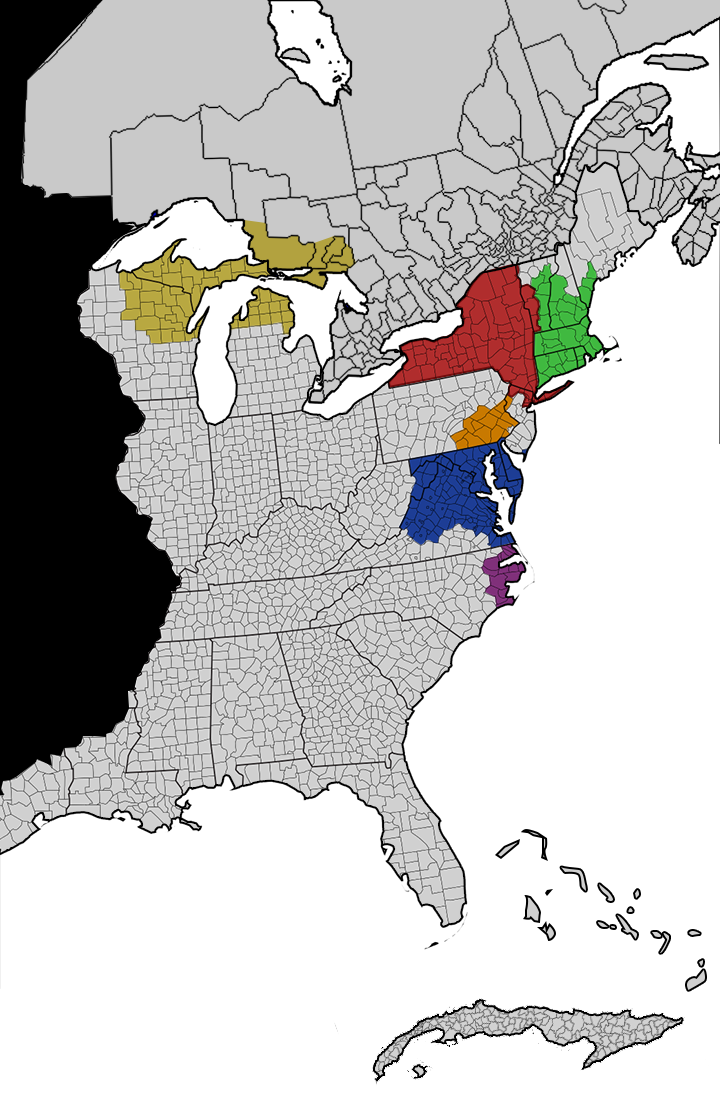
The maps are broken down by their Municipalities and counties in Canada, Cuba, and the United States (though in the case of Canada it may be census areas).

And here's the territory map:

Application


Name:

Location:

History:

On playing just as single individuals:
If for whatever reason you want to join this RP as a single character and not a country as a whole the above application can be recycled for that. For location simply say where your character's going to be entering the story at; basically where the first post(s) will be, as opposed to posting a map of territory like for a nation. I also ask if you're applying as a single individual to say "INDIVIDUAL CHARACTER" at the top of the application as a formality.

Post unapproved apps in the OOC tab, and once approved repost them in the characters tab.
<Snipped quote by Keyguyperson>

The only situation I would see muskets coming into use is when you have some place so deprived they have to rely on homemade guns made with basic tools. You might be able to imagine a place so cut off or remote that an unskilled population builds guns based on only a basic knowledge of how they work.

As for ironclads, steel production isn't particularly complex. It's one of those techs that required the discovery, but once discovered would require a disappearance of the knowledge to reproduce, and a lot of the advances in steel production were metalurgical and therefore reproducible up to a point with basic tools. There will be costs due to the lack of industrialized production, but those too would be shifted by the presence of so much scrap steel. I suppose the real question would be about need: what use is a large navy in a world where overseas trade is so limited? Even ironclads were pretty shit at bombarding simple forts.

If you are building a navy for pirate hunting, then wood will work. Pirates, after all, will have limited access to naval equipment and hunting them won't necessarily justify the cost of an iron fleet. For pirate hunting an iron fleet might be a worse idea, since it would cost quite a bit more fuel and would be slower than a wooden ship.


Not to mention the power demand behind retrofitting a container ship to work like a paddle ship or any steam ship of the day.

For example, the Great Western - the first steam ship to make a trans-Atlantic voyage - weighed 1,300-1,700 tons. By comparison a commercial cargo hauler weighs in excess 90,000-100,000 tons empty. So if we're talking retro-modding existing and modern haulers like we use today then the people doing the work will need to consider they're going to need to put an immense and excessive steam engine inside of it, and that would be in itself a very hard task.

Not to mention the efficiency, unless it's linking up with coal stations along the way it's not going to make Europe in one trip.
So I know it's been discussed but I'm not entirely sure where the technology level lies? As it's been stated, there would be some remnants of technology left over from before the collapse, but it would be difficult to find the manpower to operate a large-scale industrial movement. Not to mention the fact that this takes place a few generations after the collapse of society, so there'd probably be even less people who know how to operate advanced machinery. So would this mean that'd wed be working with a lesser technology level? I agree with Vilageidiotx and that we should probably have the technology equivalent of the 1800's and the early Industrial Revolution, so steam-power, muskets and early rifles, etc.

Also, how do I edit the map to add my location? I should post my nation sheet some time today.


Trying to cover how technology is affected is very broad and I could very well write a book on what'd happen in this worse-case scenario and provided the outside circumstances are in full play here. But the general rule of thumb is that first and foremost the interaction of volcanic ash with moving parts would mean there's a high chance of it ruining motors for something like generators, cars, airplanes, and the what not. It would or may be like what'd happen if you ran an engine on low or no oil and they'd eventually seize up and die, but this'd be concentrated more in the air intake for carburation or even air-cooling the motor and not reducing the friction heat between moving parts (though if it got inbetween those spaces it probably would do damage similar).

Destruction of cropland on the continent and the crippling of refrigeration and transporting things by air or by sea in mass also comes with the consequence that there's not a lot of food being produced, and being required for survival society would turn to emphasize more on feeding itself than it would in maintaining computer, automobiles, or any large modern infrastructure. Deaths by starvation and disease from the deterioration of hospitals and modern emergency services and medicine would contribute to a loss in population highlighting these new priorities.

It's unlikely anyone would forget how to do these things since we have a tendency to write books. People'd still know about germs and bacteria because it's been written, and technical guides to making guns would probably be in circulation. But the shift in society's focus and loosing out on important resources like oil and being set back more than a century means what can be accomplished with low-tech means would take priority over rebuilding the global supply chains required to even get back to the 20th century.

The best I can see is be aware and do some research. In order to get to steal we had to work with iron. And when it comes to synthetic rubbers we need first natural rubber which is unobtainable in North America and to even get to making the supply chains to get natural rubber again as a stepping stone towards synthetic rubber it could be said that America needs to be a nation once again.

And the rest of the world is in shit condition too. It took a hit as hard as the states minus the whole Yellowstone deal so they're not going to be coming to the former US either. We're down to dealing with the limitations of our local supply.
@Shyri

I can't think of anything.
The hydro-dam talk made me think. How possible would it have been for any nuclear reactors to go into meltdown after the apocalypse? Or should we just assume they were all safely shut down?


I actually have a few nuclear engineer friends and I managed to corner one on Steam and quiz him. There's several things that can happen.

Primarily in the event of danger like Yellowstone erupting they could theoretically pull some components from the reactors to make them "safe" in a sense. Mostly anything that'd be reason to fear runaway thermal activity that'd melt or actually burn down the plant when left unchecked. Fuel rods would still be in place but there'd be no activity that'd create the basis for a disaster, the reactor room would just become deadly, and those are so shielded and layered in cement far in excess of what actually might be needed nothing would come of it.

Alternatively the coolant could be doused with a reactive "poison" to capture and block neutron emission thereby limiting nuclear reactivity and lessening the risk of a run-away nuclear reaction.

But today nuclear power plants have so many safeguards that if left unattended one safeguard or another will trip and the plant will go into shutdown mode and stop a runaway event from happening.

And if all else fails, or in combination with the above the coolant valves can be thrown open and the reactor room flooded with water which will by itself absorb and insulate radioactivity while preventing runaway thermal reaction.

In the end, nothing happens.

@Dinh AaronMk

Quebecois is the french name, we present ourselves to the anglo as quebecers, which is what they call us. I should know, I'm from quebec.

As for the dams, I wouldn't expect to run the mega ones in the north, at least not for now, but there are plenty of them in the lower regions near the St-Lawrence and I happen to know (After 10 years of mandatory history of quebec in class) that to our pride, quebec has since the 70s an expertise in hydro power and all the components for the maintenance and indeed construction of these incredible pieces of infrastructures have been built entirely and solely in the province.

Still however, I have to say regarding the ash that I used this:


So I assumed the ash in such a far away region would be minor and as well, its been quite a few generations since this happened.

As for oil, I didn't know that and I assumed the tech levels would be more close to early 20th century.

Does this tech level apply to everything? Radio, automatic weapons, artillery, cars, tanks, etc...

As a compromise I'd suggest maybe only use a few small dams in Mauricie (Between Quebec and Montreal, north coast) that don't nearly have the production volume as the big ones in the north and have that energy monopolised by the metropolitan areas, so no general electrification.

But if you say no, I'll gracefully accept your judgement.


The big thing is even with the infrastructure at home supporting the upkeep of dams is the infrastructure that ultimately keeps those around. When you get down to it in the end this is a world where all of a sudden the means of supporting the modern life-style has come to and end and kicking back several squares. With significant oil you can't really have gas and without either you can't run trucks of automobiles which means transporting entire turbines or turbine parts from factory to plant is going to be a labor intensive procedure, not to mention the other complications this throws into other seemingly simple day-to-day operations.

And even if you have the means to make the parts you'll need to get the resources to make these parts which requires further transportation, which for the scale needed is more economical with trucking and motor-vehicles than carting it in wooden carts pulled by horses.

You could argue that you can make fuel from biofuel but this comes to the paradigm of simple sealants and sealing gaskets to keep still pressurized and prevent leaks of product or heat that can make producing bio-fuel inconsistent. And that doesn't even begin to tackle that ethanol is corrosive to normal fuel-grade rubbers in gaskets and fuel lines in automotives and other machines. And including the complications of fine dust basically glass getting into the moving parts of engines and spoiling those then anything relying on moving parts and with air intake may shorten its life-span.

I'm not completely against having electricity in use but the big thing I want to emphasize is that its production is likely to be downsized from lack of industrial materials that lend to making bigger and bigger power plants, machines, and over all engineering.

You can lay under this all too that people need to eat, and if mechanized farming is dead because farmers can't get their diesel to fuel their tractors then they'll require more humans hands in the field doing labor, taking from the population more workers that'd otherwise be used for industrial applications like maintaining and working in hydro-electric dams, factories, and what not so everyone can eat. A society will need to prioritize and if food isn't prioritized the society starves. And without the luxury of the modern industrial factory farm there's far fewer people to go to work in labor intensive industry than there is now; so then even if you can get anything working specific dams will need to be prioritized cutting hydroelectric power even further.

Post-Apocalyptic isn't just carving new nations out of the bones of another; it's total system overhauling.

So what I'm trying to say is: think about what you're doing and not just what the advantages of what you're doing is. Because to do a thing you'll need specific things that might not be accessible or doable for the way things are now.

But on guns: I'm allowing those. Automatic weapons theoretically but as far as they go they'll be expensive to fire because bullets will mostly need to be hand-loaded and you can easily tear through a day worth of work in a minute on full-auto and single-shot weapons may be more favorable than full-auto because they're more conservative. But the end demands of building a gun are pretty low-tech and industrial lathes for boring out gun barrels and parts can be hooked up to water mills or pedal power or something. Building guns is ultimately an art that dates back centuries before industrial equipment.
<Snipped quote by Dinh AaronMk>

So is the Free Republic of Northern New England comprised of Vermont, New Hampshire, and Maine acceptable?


Figure it out with Hugs.

Give him a reason to actually be active.
@chayden13

Take your pick of whatever one.
I'll make final say on some of the app when the full RP is launched when I'm not a particularly lazy cunt (I did just get back from my dad's birthday party, also half Christmas). But some particular comments:

@Fashy

We're still open.

@Wernher

I'm pretty sure the official demonym is Quebecois, but that's semantic.

My real issue would be the reliance of hydro-power. Really when I launched this RP I was expecting at most electricity would be a rarity on account of the lack of availability in resources, both in running shit and maintaining it with parts.

For the case of hydro-electric the whole system could fall apart rather quickly if something like O-ring seals break and create leakages r cause parts to grind lowering the efficiency or life-expectancy of parts. While a lot of small things can be handled on site or jury-rigged (you could probably use leather as a considerably worse version of vulcanized rubber o-rings), once the big parts of something like turbines fail then the hydro-power dam itself fails, it may not happen all at once but over time there'll be severe drops in efficiency as turbines fail in sequence, and these are giant machines that aren't built on site and there's no infrastructure there to do so; in a post-industrial, post-collapse society there may not be any turbines in mint condition worth obtaining.

Similarly this applies for most of everything else. Major oil producing areas are under a thick carpet of ash and the real supply of gas and oil for making the important industrial components are gone. The world now should be at a position of prioritizing certain jobs. One way to look at the world now is: what would be accomplished in a 18th or early 19th century way, and with equivalent tech?

So I'm going to ask either the importance of hydro-electric is struck, or I have some assurance that the system is failing now it's coming to the end of its life with minimal maintenance.
Right, so app and shit:

App

Name:

Location:

History:

Name:
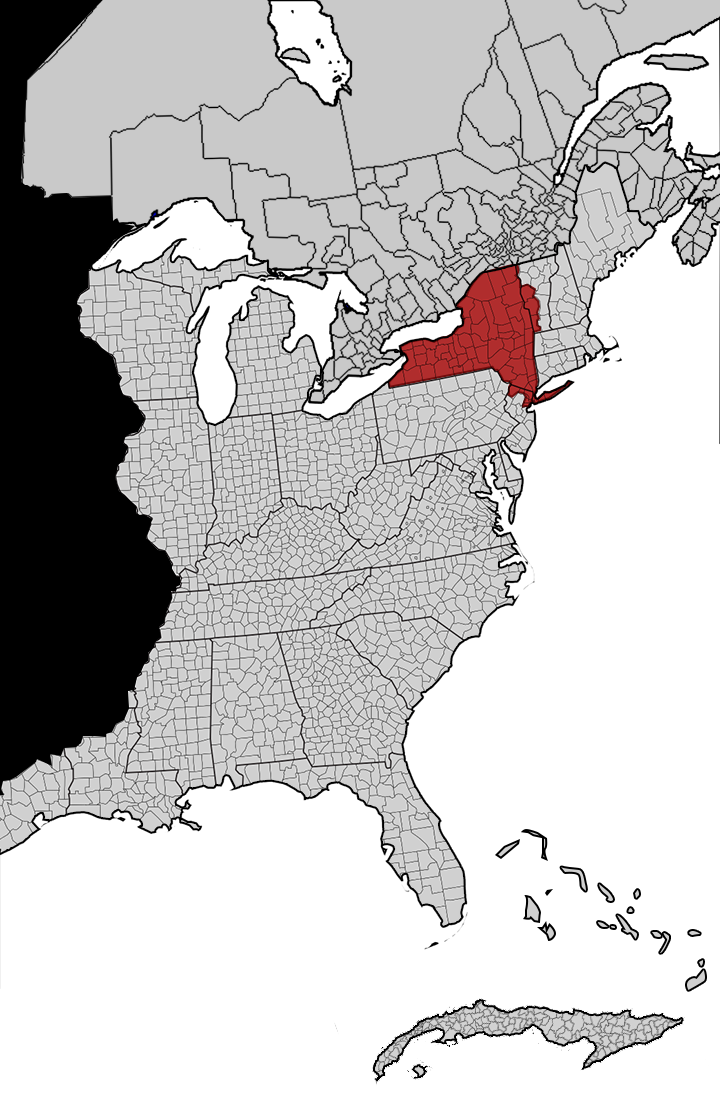
Republic of New York

Location:


History:
The fall of the US financial institutions following the eruption of Yellowstone and the straining of public and private equity came as precursors to the wider systematic collapse that followed. When the final deed was done the scope and severity of the rippling disaster meant that not even the best assurances and insurances by the government and other groups could hold up society. And when the ash fell over New York and the power shut down a rush to consolidate swept the nation as much as the area.

While it was not violent, the people recognizing the danger and actively trying to help one another get through the darkened and colder days the crippling end brought a slow march to the precipice. With the end of mass modern transport of goods and services fresh food in the major urban centers such as New York City began to fall violently short and the major metropolitan jewel of the United States buckeled and heaved from the stress. The failure of local health services to keep up with the sick and injured broke finally when medications and the advanced modern means to treat people failed to work through lack of resources of ultimate lack of power when all things ran out.

The effect on the city was like that of a plague sweeping over that no amount of shelter could soothe. With food having ran out local solidarity fell in to desperation and the city of New York fell to crippling gang-based violence as local war erupted over meager resources and the access to the pantries and storage for the few unspoiled caches of food. For the city, those who held the food held the power and people starved on the whims of man.

Outside, things were rough, but did not necessarily reach such crisis proportions. While crop failures in New Yorks agricultural areas failed due to ash-related damages and live-stock was crippled or itself succumbed the small size of small towns created stronger solidarity among themselves and they held on together. It could have been if the crisis carried on under this state, then things would have worked out alright. But the continuing crisis in New York City boiled over well beyond the metropolitan area and soon threatened the country-side when armed raiders sought to side-step the new inner-city barons by seeking stocks and farms outside.

The response to this sudden new threat came in the form and voice of strongmen from New York's other major – albeit small in comparison to New York – cities and towns who promised protection from New York's fiery invaders if they paid. But the US dollar was dead, the material commodities were sparse among the people. And so they paid with what they had: land. In quick response land-barons emerged from the ash and consolidated themselves in an informal alliance in response to the wild and disorganized threat posed by New York. Following them were the more rural land-barons who had began to consolidate their own power in much the same way and on the same pretenses. Some small, some large.

The war that followed was not so much one in a formal right, but vigilante skirmishes by upstate New Yorkers against the low-state ex-urbanites raiding inland. Large-scale engagements never happened, and the war – as it had become known – was more a series of skirmishes that chased the urbanites back to the shadowy towers in New York were they stay, afraid of the deer rifles and shotguns of the levees the land-barons raised.

The threat of urban raiders was not over permanent, and many of this new aristocracy recognized that. And so they saw to a second consolidation of power, and meeting in Albany, New York formed a congress in which the men met, discussed, and drew up plans for an active and powerful force against the powers that be in New York City.

Some eight years after the eruption of Yellowstone, the Federal State of Albany was declared in response to the continued threat of New York. Its influence spanning from the edge of the New York metro area to Buffalo and Niagra the Albany state was formed on the pretenses of:

That every male owning land, collecting rent in some manner from another – whether in agricultural surplus or commodities – was entitled to membership of a Grand Assembly.
Membership to the Assembly was hereditary, passing down from father to sons provided these sons held rentable land and had tenants.
The Assembly met four times yearly to build and pass upwards a federal plan if otherwise local issues were deemed among them to be a broader state-wide issue.
The permanent House of Landholders formed an upper house, elected from members of the Grand Assembly to replace a member of the House should he pass.
The House of Landholders is the legislative decider for federal plans.
Membership on – like in the Grand Assembly – is for life, and is only given access to by men elected to the position by the Grand Assembly.
A chief executive is additionally elected to rule for life as military chief and to enforce the laws of the realm.
A bench of life-long elected judges from the Grand Assembly is to also be formed.

The hope in the Congress' plan was to form a government of stability and permanence to counteract the perceived anarchy of New York City. And in its way the Albany government worked that way and performed its job well. The situation in New York City eventually resolved itself when an urban warlord assumed power, christening himself as “The State-Emperor”, after the tower he housed himself in.

The consolidation of power in New York sparked heated rivalry between the two as both believed they laid claim to the former state of New York. The rivalry spurred an active hot war that lasted some five years, ending in Albany's favor; but were incapable of annexing New York City itself.

In time, the first State-Emperor died twenty-three years after the eruption of Yellowstone. The second assumed power and staked his power on the claimed discovery of the old US Federal Reserve of gold under the city. While he refused to show anyone from the outside this gold, he acted through his agents to extend lines of credit to the broader world and to the State of Albany, in exchange for agricultural surplus.

By this time, Albany was producing an abundance of food surplus from the soils richly infused with volcanic ash and life was moving along in comfort and conservative predictability. A real economy was developing and the Albany state needed assistance and credit to operate on its grand schemes. Forays into Vermont were being made by the military on insistence from the Grand Assembly to broaden the base of the land-barons and their children, and the military expeditions needed to be paid for.

While cynical of the sudden discovery and what he saw as an unstable time for New York City, then-president Chuck Vanderman complied with the offer on insistence from the House of Landlords and they applied for credit with New York City.

The situation became suspicious for President Vanderman who saw what he believed was an almost infinite extension of credit by the city and he ordered the situation investigated. It took five years for fruits of the espionage work to bare fruit, but it was inevitably revealed that the State-Emperor held no such reserves. Or not at least to the degree he claimed to have been holding.

Breaking the news sent New York City into a panic and it descended into chaos as the State-Emperor was stripped of his title and civil war erupted. Deploying the Albany's military, Vanderman sent the state into war again and this time they occupied the entire city, seizing what small supply of gold the State-Emperor actually had.

The theft of the meager reserves of New York and the deposition of the meager government of the city proved a fatal blow, and after Vanderman was able to seize total control of New York City, but not without a near total purge of much of it, crippling its ability to raise arms. New York City, Manhatten island, and Long Island all fell into the hands of Albany. The seizure of New York was soon followed by the seizure of northern New Jersey for much the same reasons as parts of Vermont.

The holding of Albany called for a re-branding of the state, the Grand Assembly met and proposed to the House of Landlords a proposal to rename the Federal State of Albany to The Republic of New York. The proposal passed and was signed off by Vanderman.

Despite New York City now again being a part of New York State, the city itself was something of a blight on the whole. The ravages of disaster had not weathered it well and despite the blockade by land by the Albany state droves of the population had disappeared to either death or migration by sea to richer land. The Republic of New York found itself owning a large population in a large desolate geographical area impoverished, undernourished, and under-educated. An entire generation had grown up in a city marred by pseudo-tribal conflict between the Burroughs.

And like many things, the Grand Assembly ignored it. Overlooking the people they saw instead the benefits of effectively mining the city to cut it down to a size more in proportion to its population and to use the abundant second-hand resources for its own ends. In the case of this dream, the old citizens of New York City were human resources to acquire, move, and refine the recycled materials to use elsewhere. Socially, the people of New York were considered, “a worse sort than unproductive tenants”. The cosmopolitan nature of New York had moved upstate and into Albany in full.

Still, New York gave the Republic a port from which to operate a navy and designs were proposed for a merchant elite to begin moving mercantile business back to NYC. In the generation after this slowly gave rise to a new class of member to the Grand Assembly, the urban land-lord merchant who counted as his rentors the subsidiary merchants renting space in the factories that became the new centers of the old Burroughs.

To raise the value of an importance of New York as well as extend the markets of all involved designs were proposed and met to rebuild and refurbish the Eerie Canal for trade purposes west-ward. With its completion, the New York Republic was able to win the influence of and dependency of upriver, Great Lake societies through ownership - and the Republic's discretion in its use - of the Eerie Canal.

_______________

If you're like Hugs and you want to make just an individual character the format should be easily reformatted for that purpose. Just replace "location" with the present location of the character you want at the time you plan to write. And as well add a note before hand, even if it should be obvious otherwise.

I'll launch the RP in full sometime this weekend.
© 2007-2026
BBCode Cheatsheet