
 Flagg
Flagg Kassarock
 TokyoPewPew
 Mae
Mae Tlaloc
DEREGULATED

Twenty-five years ago, the planet SEVI-T3 was first explored by a planetary survey team contracted by the United Nations Interstellar Council. The distant planet's ruddy surface glowed against the black void like a smoldering firebrand, and so those first surveyors gave SEVI-T3 the more affectionate moniker Ember. The initial survey team spent less than a week in orbit above Ember and no more than 72 hours on the planet's surface; there were dozens of new star systems to explore in those first decades after the advent of the annihilation engine and there was simply not enough time to thoroughly explore them all. Despite their brief exploration, the xenobiologists and geologists sent to Ember's surface discovered a stunning world that was simultaneously alien and Earthlike. The atmosphere had the ideal nitrogen-oxygen composition to support terrestrial life and a comfortable gravitational field only slightly less powerful than that of Earth. But the surveyors were not alone on this new world, for a stunning array of extraterrestrial life had evolved on Ember. Curiously enough, the sheer volume and diversity of alien lifeforms on Ember precluded any further exploration or settlement by mankind of this planet. The early years of man's spacefaring age were rife with stipulations rigorously enforced by the UNIC, among which was the Law of Non-Intervention: that no space traveler was to ever intervene with the natural affairs extraterrestrial beings. Alien life, if encountered among the stars, was to be left to its own devices and allowed to flourish or flounder on its own. Wishing to comply with the Law of Non-Intervention, the Ember surveyors took a few soil and rock samples before boarding their dropships and leaving Ember's skies with no intention of ever returning.
A decade later, as space travel became increasingly frequent and overcrowding on Earth, Luna, and Mars sent human settlers farther afield, an interest developed in scouring soil samples from poorly-explored planets for traces of tritium: that all-important fuel for nuclear fusion. A physicist of Latvian stock - Andrei Baltuška - happened upon the substrate samples collected by the SEVI-T3 survey. He found negligible amounts of tritium those vials of orange Ember soil, but discovered something remarkable in a curious-looking hunk of rock collected from Ember. Embedded in this particular rock were flecks of bluish-gray mineral; a metallic material composed of the elements neodymium and osmium arranged in an alternating crystalline matrix. Sample of the isolated mineral, when exposed to powerful radiation, yielded a relatively enormous number of positrons: the antimatter fuel of the annihilation engines that propel starships through space. The discovery of this curious mineral, named baltuskite after its discovery, was surprisingly little celebrated in spite of the material's ability to make antimatter production 5-12 times more efficient. Efforts to recreate the crystalline structure of the mineral described by Andrei Baltuška were unsuccessful, suggesting either erroneous results from Baltuška's experiments, or that the baltuskite from Ember had formed under exotic conditions that could not be replicated in the laboratory. With UNIC regulations prohibiting anyone from returning to Ember to collect more baltuskite for further study; the scientific consensus came to be that baltuskite, the purported philosopher's stone of antimatter production, was nothing but a sensational rumor perpetuated by an incompetent quack.
As time went on, demand for tritium came to outstrip supply. The radioactive isotope needed for fusion power was becoming ever more scarce as humanity's population exploded across the stars. Mining asteroids and barren worlds had proven insufficient to meet mankind's appetite for tritium. The United Nation's Interstellar Council was unswayed at first by demands to allow mining on worlds with native organisms. A terrible economic crisis unfurled as the fusion reactors ran out of tritium. As brownouts erupted throughout the colonies and settlements, frustration turned into violence. A brief but bloody military coup on Earth resulted in the end of the United Nations, which was immediately replaced by a military junta known as the Federation of Worlds. Quickly after seizing control of Earth's government, the Law of Non-Intervention was stricken from the Federation's code of law. Dozens of alien planets that had been off-limits to even the most non-invasive surveys were opened completely to human exploitation and colonization overnight.
It has been six months since the Federation assumed control, and some semblance of normalcy has returned. Following the great deregulation that came with the new Federation government, a great mining boom has sent the stock indices on Earth and Mars rising sharply. Investors see easy money to be had in mining tritium on a number of alien-occupied worlds. But while the largest mining companies are totally focused on mining tritium, there are a handful of small-time entrepreneurs who recall rumors of a nigh-magical mineral found on a distant planet with the ability to effortlessly produce quantities of antimatter sufficient to make a billionaire overnight.
You are one such entrepreneur. You have enticed investors back on Earth and Mars with the promise of easy money, cobbled together your life savings and sold your other assets, or simply stolen enough for a one-way ticket on the very first freight starship to Ember and a little start up capital. You are by no means a mining tycoon - in fact you probably know nothing about mining to begin with. Big Tritium and the so-called "smart-money" is not interested in this wild goose chase on Ember. You haven't the faintest idea of the perils and risks associated with this gamble you are about to take in. The dangerous climatic and cosmic forces that plague Ember, the myriad hostile life forms that roam that remote planet's surface, the greed and malice of your peers who will be joining you in seeking incredible fortune; not a single one of these caveats has even crossed your mind.
All you know is that there is a fortune to be had, and you must find it if you have any hope of leaving this planet alive.

This is for Deregulated, a space colonization roleplay set approximately 200-350 years in the future on the exoplanet SEVI-T3 - Ember. Deregulated is an advanced, literary RP with some stat elements included. While I intend to have dice rolls and stats play a part in this roleplay, the primary purpose of this roleplay is to build an intriguing collaborative story while building and exploring an entire alien planet.
In this universe, man has taken to the stars and ditched their equivalent of the Prime Directive in order to drill, baby, drill. The player will take on the role of a small-time entrepreneur hoping to take advantage of the deregulation in order mine and sell the alien mineral baltuskite for a huge fortune. Due to the scant funds available for this endeavor, you and your fellow players have pooled some money in order to hire a freighter starship to transport yourselves from the Solar System to Ember - a 47 light year trip with a one-way trip lasting six weeks. This great distance will make Ember the most remote human settlement with a regular route to and from Earth. Deliveries and communication from Earth will therefore be costly and infrequent.
Funds (hopefully) acquired from your mining efforts will need to be used to buy items that you cannot make or MacGyver-rig at your settlement on Ember. Your funds can be exchanged for a wide variety of goods issued in an in-game catalog that can be ordered from and delivered to Ember when the next freight starship returns. At first, these catalog orders will likely be basic supplies like foodstuffs, medical equipment, and prospecting gear. But if your mining operation takes off, you will be making more specialized orders; heavy excavating equipment, electrified perimeter fencing to keep out hostile wildlife, and weaponry ranging from small arms for clearing out hostile fauna to the urban-combat exosuits and anti-orbital missiles that allowed the Federation to wrest control from the UN. If there's a demand, then there's a seller. The freighter company will be happy to reach out to their vendors to provide a quote for supplies not currently listed in the catalog.
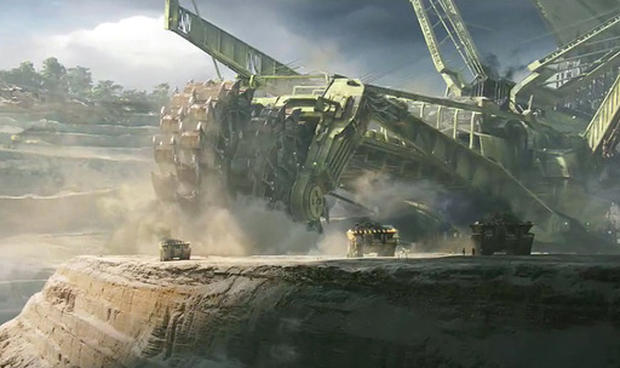
In this roleplay, players have the option of playing as a mining outfit hoping to strike it rich on Ember, or as an individual exploring the planet and working toward their own ends. Use the character sheet that suits your preferred roleplaying style. Remember that when it comes to a good character sheet, less really is more.
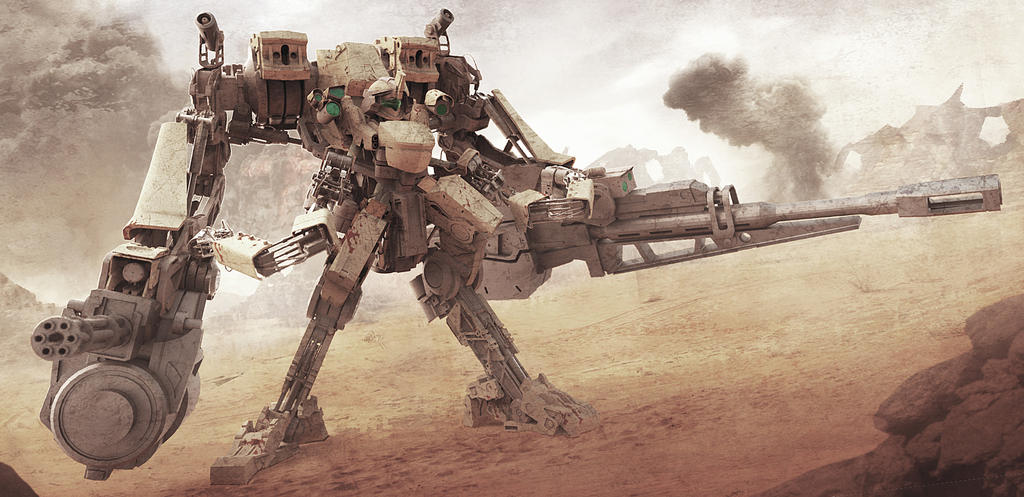
Ember is not a well studied planet. Separated from Earth by 47 light years of space that take six weeks to traverse, Ember is the most remote human settlement with regular starship route to Earth and is the closest thing to a uncharted planet that any of the miners or settlers on Ember are likely to ever see. Thirty years ago, the planet Ember was briefly surveyed by UN contractors but has not been visited since then. What precious little information was gathered by the initial survey team has been distilled here.
(More to come later)


This is the freighter company's catalog. Here you may purchase anything that your mining operation may need that you cannot fashion from the environment or steal from your rivals. Prices and items change frequently, so it is a good idea to check the catalog regularly. If an item you want does not appear in the catalog, you can always make a suggestion.
[Hider=Catalog]
Catalog
Survey Equipment
- Magnetic sensor - handheld: 100
In order to mine baltuskite, one must be able to properly identify the mineral. Luckily, baltuskite has a distinctive ferromagnetic profile that can be used to make a positive identification. This handheld device has two metal probes that can be placed on a piece of suspected ore. A pulse of energy is sent from one probe, passes through the sample, and is received on the opposite probe, yielding a simple positive/negative result that requires no background in geology. Must have physical contact with the ore to confirm/deny baltuskite content - Magnetic resonator - low sensitivity: 450
The same technology that allows for detailed medical imagery of the inside of the body also gives prospectors the ability to see underground. This magnetic resonator fires pulses of energy into the ground, and uses the reflected feedback to get an indication of what minerals lie underground. Could be mounted on the back of an ATV or UTV as it drives along, allowing prospectors to survey large areas. Must be near the ground, and can only sense approximately 100-200 feet/30-60 meters underground - Magnetic resonator - high sensitivity: 8,000
This magnetic resonator is extremely powerful; able to resolve mineral deposits more than a kilometer underground. The extreme sensitivity of this device means that it does not necessitate being right above the ground to function. This device could be used on low-flying aircraft to scout entire regions for baltuskite. - Core drill rig: 400
Magnetic sensors may indicate the presence of baltuskite underground, but no miner in his or her right mind would ever go through the expense of excavating a mine shaft to the deposit without tangible proof of baltuskite ore. This multi-directional core drill is capable of boring down 1.5 kilometers/~1 mile and retrieving a sample of rock, allowing a prospector to make a positive identification. The drill rig takes some time to deploy and stow away and makes a lot of noise - possibly drawing unwanted attention from native life forms. - Magnetic trommel separator - small: 800
- Magnetic trommel separator - large: 3,500
Base camp
- Field tent: 10
A large tent of tough construction. Suitable for living quarters or the headquarters of a mining operation on a shoestring budget. More than suitable for weather on Earth, but this tent may not provide adequate protection against the erratic, often-violent weather that prevails on Ember. - Inflatable structure: 100
An inflatable dome structure that uses ammonium azide to self-inflate with the push of a button. A climate controlled interior and rigidly-inflated walls provide more substantial protection against the elements. Can be deployed on any flat surface for near-instant shelter. - Steel building kit - barn: 1,000
Once - or rather, if - the mining operation on Ember takes off, field bivoaucs will not be sufficient for many mine activities. Ore processing and vehicle and gear storage will need to moved to more permanent structures before long. The cheap corrugated steel buildings that comprise warehouses, garages, and light industrial buildings on Earth, Mars, and Luna are a good short-term solution for putting a roof on many mine operations. Some assembly required. - Steel building kit - hangar: 2,500
A kit for constructing a larger building of corrugated steel. Large mine equipment and vehicles will need more space than a simple pole barn. Has taller ceilings and more floor space than the cheaper kit, and features tall retractable hangar doors to accommodate large vehicles. - Solar recharge station: 250
Utilizes an array of photovoltaic solar panels to transform the warmth of Ember's sun into useful energy to power vehicles and equipment. Does not produce enough energy to power energy-intensive machinery. - Field reactor: 5,200
When Big Tritium companies operate test mines on remote planets, their heavy mining equipment uses considerable quantities of energy - more so than can be harvested by photovoltaic panels. When Big Tritium needs more power, they use field reactors. A field reactor is simply a miniaturized fission reactor that generates power using a single rod of reactor-grade uranium to generate steam to turn a turbine. This reactor is a closed system and does not require any maintenance by the customer. The manufacturer claims this reactor to be "meltdown-proof".
Tools + power equipment
- Pneumatic jackhammer: 50
- Excavator - small: 2,500
- Excavator - large: 12,000
- Hauler truck - small: 1,600
- Hauler truck - medium: 7,600
- Electrosnare: 30
A spring-loaded trap used by naturalists on Earth to capture large animals without causing harm. Once triggered, a clamp snaps firmly onto the animal's leg. Once secured, the trap pulses with an electric current that relaxes the animal's muscles, effectively paralyzing it until released. Sends an alert to a smart tablet once triggered.
[*]Cage-large
A cage of thick aluminum bars welded onto a cube frame. Designed for transporting circus and show animals such as lions and tigers.
Vehicles
- ATV: 40
An all terrain vehicle similar to those of 2017, save for the fact that it is powered by an electric battery rather than fossil fuels. Can carry a driver and one passenger or a load of field equipment on a small rack mounted on the rear. Top speed of 40 mph/64 kmh. - UTV: 100
A small ground vehicle designed to transport small crews and field equipment over rough terrain. Can carry four passengers and one ton of field equipment in a small bed in the rear. Top speed of 40 mph/64 kmh unladen. - Hovercraft: 1,200
A floating platform kept aloft by four small, high-powered repulsorjets. Gimbal thrust-vectoring nozzles on these repulsorjets make the hovercraft fast and ultra-maneuverable. With a maximum altitude of 20 feet/6 meters off the ground and a top speed of 100 mph/160 kph, the hovercraft is perfect for cruising above rough terrain and dense brush that would bog down ATVs and UTVs. Carries six passengers or two tons of field equipment. - Bicopter - ultralight: 1,000
A very small aircraft with two propellers affixed on winglike booms. Pilot is seated in an enclosed plexiglass bubble at the front of the aircraft. Can carry two passengers in open-air seats or 500 lbs/250 kg of cargo over a distance of 300 miles/480 kilometers. Due to its light construction, the vendor cautions buyers not to fly this aircraft in adverse weather or in proximity of large flying wildlife. Unfortunately, both are common in Ember's skies. - Bicopter - military surplus: 15,000
A military reconnaissance aircraft sold off by the despot of some failed state on Earth or Mars. Can carry 10 passengers or 5 tons of equipment over a range of 1,000 miles/1,600 kilometers. Delivered with all armaments removed by the vendor, although some weaponry could be MacGyver-rigged on by a skilled tinkerer. - VTOL - training: 10,000
A lightweight VTOL (vertical take-off and landing) jet aircraft built to train commercial pilots. As a training aircraft, it was only designed to accommodate a pilot and instructor and as such can only carry a pilot and one passenger. Because it was designed for beginner pilots, it is extremely tolerant of adverse flight conditions and is remarkably maneuverable. Its pressurized cabin and flight range of 1,700 miles/2,720 kilometers allow this aircraft to reach locations that are simply inaccessible to bicopters. This aircraft is ideal for scouting out far-flung locales. - VTOL - cargo: 30,000
- Dropship - small civilian: 85,000
A small spacecraft designed to ferry passengers and equipment to and from the surface of a planet. Flies under jet power through the atmosphere and then transitions to liquid-fuel thrusters in the upper atmosphere to achieve orbital velocity. Once in low orbit, the dropship maneuvers into the docking hangar of an orbiting starship. The dropship is capable of transporting 20 passengers or 4 tons of equipment anywhere on the planet in under an hour. While the dropship is not capable of interstellar travel, it has enough fuel to reach either of Ember's moons.
Defense + weaponry
- Pistol - semi-automatic: 15
A military surplus sidearm that is old enough to be an antique. It is light and reliable, but has good stopping power for a sidearm of its size. Fires 9x17mm rounds from a 10-round magazine. Powerful enough to stop small to mid-sized wildlife at close range. - Semi-automatic rifle: 30
A very old firearm that fires 7.62x39mm rounds. Who knows where this thing's been in the time between its make nearly a century ago and its purchase by the vendor. These weapons are known for being cheap and reliable. Good enough for stopping native vermin or a lone intruder to the mine, but it will not be sufficient to bring down the larger wildlife roaming Ember's wildernesses. - Flamethrower: 240
A modern variant of the controversial weapons used during the numerous conflicts of the 20th century. This flamethrower is a lightweight and durable weapon and uses convenient cartridges of pressurized napalm rather than a bulky backpack. Excellent for dispersing numerous pest organisms and clearing out dense brush. - Assault rifle: 120
A more modern assault weapon. This weapon can lay down a withering 1,200 rounds per minute. Fires standard kinetic rounds, which are suitable for taking down most hostile life forms on Ember. However, the initial survey team sent to Ember discovered several species of large predators that might only be enraged by small arms fire. - Grenade launcher: 700
A large shoulder-fired weapon which lobs a fist-sized explosive projectile 1200 feet/465 meters. There are multiple grenade varieties available, including concussive and fragmentation. While the grenade launcher is overkill for most wildlife on Ember, it is an effective anti-vehicle weapon - not that the vendor would ever suggest it be used against rival mining outfits.
Sniper rifle: 140 - An older semiautomatic sniper rifle with excellent range and accuracy. Fires a standard kinetic round of large caliber. Skilled marksmen issued this particular firearm in combat report the ability to score a hit on a person at a range of 1,000 feet/305 meters. Comes with a telescoping scope with a passive infrared mode.
- Razorwire spool - 1 acre/.4 hectare: 30
A spool of razor-sharp fencing that can quickly be deployed to provide some measure of protection against intrusion by humans or alien life. Lacerations against the two lines of razorwire will deter curious wildlife, but determined attackers will get through. - Electrified perimeter fencing - 1 acre/.4 hectare: 300
A perimeter fence coursing with enough power to fry smaller wildlife and cause serious pain to predators. The fencing draws a lot of power, and if the fence shorts out it's no more effective than a sign that reads "no trespassing". - Sentry turret: 600
Twin machine guns mounted on a pivoting arm. A motion sensor keeps constant vigil over a designated area, and can be programmed to differentiate between human and wildlife, or armed to shoot anything that moves until it stops moving. An effective means of defending a mine or expedition camp, but only as long it has bullets to shoot. - Railgun - tripod mounted: 1,200
A railgun uses magnetic force to propel a projectile at incredible speed. Railguns have long been the primary weapon of combat starships, but only relatively recently has the technology been miniaturized to the point that hand-fired railguns are available. This railgun is too heavy and cumbersome to be carried into combat, but it can be mounted on a tripod or a pintle mount in a vehicle. A railgun should have no problem taking down even the largest and most formidable monsters on Ember. - Railgun - manportable: 2,400
This railgun has been miniaturized to the point that it can be carried by hand into combat. The ability to easily aim this weapon into the sky, along with the stunning velocity of its projectiles, allows its use as an effective anti-aircraft weapon. If the operator has true aim, this weapon poses a real threat to all but the heaviest aircraft. - Radar: 2,000
A miniaturized radar scanner capable of detecting any threat approaching from the sky, whether that threat be an airborne predator, an unauthorized aircraft, or one of Ember's unpredictable storm systems. - Surveillance camera - motion activated: 10
A small, high-resolution camera that activates upon detecting motion within a designated area. Switches to infrared at night or in low-light settings. Sends an alarm to a control panel or smart tablet when unexpected motion is encountered, and is able to distinguish between humans and wildlife. An excellent component of a complete mine or base camp security system.
Miscellaneous
[/hider]