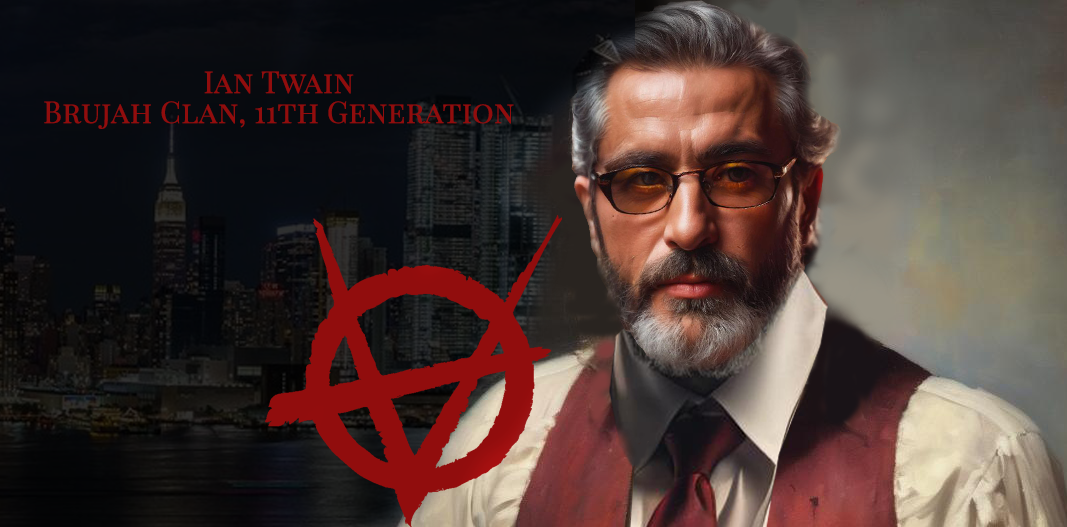
Huh. Looks interesting. The 30 YO aspect made it pretty unique. I have this idea of an office lady granted this paladin-esque evil vanquisher magical girl power except...she has a 9 to 5 job and is a single mother so she has to take care of her kid.
"It looks like they're not backing down," Ian thought as he wiped blood off his fists.
Regrettable. Ian was not particularly remorseful that he had killed them. They were attempting to kill him and were most likely involved in various unsavoury businesses. It was justified self-defence, and on the broader utilitarian scale, Ian had probably prevented them from harming others. Perhaps in the moral framework of Kant's Deontology there might be some argument from duty to inherent good to attempt not to kill them, but Ian had always found deontology to be too rigid and idealistic to be practical. Furthermore, even in deontology, there were variants of the moral framework that allowed permissible harm such as the more contemporary Frances Kamm's.
No, Ian's 'regret' did not come from guilt or any thoughts that what he did was wrong. He was certain that given the circumstances, he did the right thing. Rather, the regret was the fact that a series of bad life decisions were made by these people that led them to die here. It was, just as how Ian regretted his sire's hardheadedness, a waste of potential.
Still, there was nothing he could do for them now. And so, he turned away. As he did, he noticed Elizabeth walking toward the door. He then shouted, "Stop! Remember the formation we agreed on?"
Keeping an eye on the door, Ian turned to Raph, before indicating with a jerk of his face for Raph to check the door.

At his core, Clive is someone who seeks entertainment. His favourite form of entertainment, however, is solving complex problems with his intellect, preferably via science. Perhaps such is the natural result of a person with tremendous intellect who grew up in a sheltered place in which problem-solving is an integral part of society. Clive might be insistent on ‘doing things the right way’ and to those who do not know, it might make him appear to be morally upright, however, his actual motivation has less to do with morality and more with the fact that ‘doing things the right way’ usually is the harder war, and thus, provide more challenges that he may entertain himself with. Oppressing the weak, and stealing from helpless people is something that he is not interested in because it’s easy, and therefore ‘mind-numbingly boring’ but he might consider robbing a saint if it provides him with a good challenge. On the flip side, he’s also not interested in doing anything about small-time raiders but might be compelled to take action against large raider groups because of the challenge.
Clive Lim was born on the 24th of January 2262 in Vault 52. Vault 52 was originally a vault where the inhabitants were the brightest academics America had to offer by 2077. They were intended to be a think tank to solve American society’s issues post the nuke. Interconnected with Vault 53 to 62 containing common citizens, Vault 52 to 62 was supposed to restart society after their reclamation day arrived. Or so was the official designation of Vault 52 to 62 located in Virginia. The truth, is, of course, they were vaults intended for experiments.
The experiment in Vault 52 to 62 is that of a think tank cultivation. The part that Vault 52 was intended to be a think tank was true, however rather than to restart society, the purpose of Vault 53 to 62 is to be experiment subjects to cultivate the think tank of 52. The society of Vault 52 is designed with problem-solving and academic pursuits in mind, with case studies and hypothetical Vignette cases for debate making an integral part of their curriculum. Every so often an ‘accident’ would occur in Vault 53 to 62 that caused problems. Perhaps the water chip broke, or an epidemic, or an unrest. Whatever the case, a problem in their society would arise and Vault 52 would assign people to solve their issues. The truth, was, of course, these were problems engineered by the overseers as part of the experiment to create the best think tank by using the issues in 53 to 62 as ‘field exercises’. The population of Vault 52, being intellectually gifted people, realised it at one point or another and this fact became a public secret in Vault 52, not allowed to be part of the public discourse, but is tolerated within private conversations and debated often in the debating club as ‘hypothetical scenario’. Those who attempt to bring it up into public discourse are ‘taken care of’ by being treated mentally ill patients suffering from Paranoid Schizophrenia. There are, of course, people who felt the experiment was immoral and debated on the opposition side in the ‘hypothetical debate’, Clive, seeing the issues in 53 to 62 as a good source of intellectual simulation debated on the utilitarian side, that these experiments honed the problem-solving skills of people in 52 and is for the greater good.
When Clive was 23, the experiment ended as the Reclamation Day began for Vaults 52 to 62. The vault doors open and the inhabitants step into the wasteland. Vault 52 and those who survived the experiments from the other vaults established a technocratic society in Virginia, led by Vault 52. Some left, however, looking to make their own fortune elsewhere. Some were those from Vaults 53 to 62 who had grown distrustful of 52, some were inhabitants of Vault 52 who had philosophical and ideological differences with the rest. Clive heard some of the inhabitants of 52 who left joined the NCR, some created their own testing facility in the wasteland, and he even heard some who had been recruited by some institute in Massachusetts. Clive himself remained for a while, opening a clinic while buying robots scavenged from the wasteland and refurbishing them in his spare time.
Eventually, two years later, after determining he had enough robots and supplies, he set off to the untamed wasteland and set up a clinic, defended by robots and whatever defences he could scavenge. He did not do it because he wanted to help people, rather, it was a stimulating challenge. The lack of supplies and raider threat provide additional variables as challenges. At one point, a patient of his turned out to be the runaway son of a prominent politician in the NCR. Convinced by his near-death injury that the wasteland life is not for him, Clive helped him to get in contact with his father—relishing solving the problem of how to establish a connection to NCR territory out west from Virginia—they eventually managed to contact the father, Senator Anthony Pittman. Grateful for saving his son, the senator gives Clive a ticket to the luxury liner Green Horizon that he cannot make use of due to scheduling issues. Intrigued by the novelty of a luxury liner, Clive accepted and got on board the Green Horizon, taking only a protectron as a pack mule and bodyguard.
• Vault 52 Jumpsuit, modified with insulated lining • Doctor’s coat • Basic Medical Equipment and Supplies • Modified Pip-Boy 3000 to have medical utilities added on such as X-ray and ECG. • 10 mm pistol, modified with reflex sight • Laser Pistol, modified with short scope and beta wave turner • Stimpaks x10 • Rad Away x5 • Antibiotics x5 • Robot Repair Kit x5 • Rad-X x5 • A Protectron named Automated Personal General Assistant (APGA) • 2500 Bottle Caps
The Mahapatih of the Majapahit Empire once declared that until Nusantara was united, they would not taste spices or worldly pleasures. Sumpah Palapa..the oath of Palapa. To that end, the Mahapatih took up the banner of conquest as well as that of an effective statesman. Territories were absorbed into the Empire, and each time the Mahapatih did her utmost to ensure it flourished under her Empire. And so, she dedicated the rest of her life to the fulfilment of that oath. But despite all her sacrifices and effort, the oath went unfulfilled, as she died from poison given by her liege whom she had considered her own son, King Hayam Wuruk.
Such was the legend of Gajah Mada, Prime Minister of the mighty Majapahit Empire.
The unfulfilled oath of Sumpah Palapa by the time of her death was her greatest legacy, the very thing that was then picked up by Indonesia, the fledgling nation that claimed the seat of Majapahit's spiritual successor to galvanize their nationalism. And yet, even now, Nusantara as she envisioned in her oath had not been realized.
Gajah Mada realised that almost a thousand years had passed since her death, and surely Nusantara was not what it was. However, to someone whose life has largely been defined by that singular oath. Her duty and obligation to fulfil Sumpah Palapa transcended time. It was an oath she had made to the gods, an oath made to her lieges, Hayam Wuruk and his mother Tribhuwana Wijayatunggadewi. An oath made to Majapahit soldiers that their death and sacrifice would be honoured in the utopia of a united Nusantara under Majapahit...and an oath made to the enemies she cut down in her path, that their death would not be in vain, that their people and their children would enjoy prosperity under Majapahit.
It was not the conquest itself that was important to Gajah Mada in fulfilling the oath, it was the promise to realise a dream of a utopia in Nusantara and to honour those who have died and sacrificed themselves in pursuit of that dream.
And so, when she felt the summons of the Grail from the Thrones of Heroes, she answered the summon. Under the vessel of Saber, the Heroic Spirit Gajah Mada returned to the world, seeking the grail as the means to fulfil her oath.
As the light of the summoning subsided, Gajah Mada found herself in a church. It was different from the few churches that had been built during her time, but she recognized the Christian iconography.
Before her, is a black-haired young man. Through the mana that flows from the man to herself, Gajah Mada recognized him as her Master.
"Servant, Saber. I have come in response to your summon."

True Name: Gajah Mada Region: Southeast Asia Class: Saber Gender: Female Alignment: Lawful Good Attribute: Heaven

Strength: B Endurance: B+ Agility: B Mana: D Luck: C+
Gajah Mada (c. 1290 – c. 1364), also known as Jirnnodhara, was a powerful military leader and Mahapatih (the approximate equivalent of a modern prime minister) of the Javanese empire of Majapahit during the 14th century. They are credited in Old Javanese manuscripts, poems, and inscriptions with bringing the empire to its peak of glory. A famous oath, delivered by Gajah Mada was the Sumpah Palapa, in which they vowed to live an ascetic lifestyle by not consuming food containing spices until they had conquered all of the Southeast Asian archipelago of Nusantara for Majapahit.
The most popular depiction of Gajah Mada comes from Moh. Yamin, which interprets an ancient piggy bank found in the site of the old Majapahit kingdom as Gajah Mada's face. Another depiction is from how Bima from the wayang kulit show is based on Gajah Mada. Gajah Mada’s true appearance is uncertain, and the accounts left of the Majapahit’s Prime Minister had become so intertwined with legends that the true accounts have been lost to the passage of time. In truth, rather than the bare-chested ideal Javanese man they were often depicted as, their true identity was that of a black-haired woman, while the male figure often depicted as Gajah Mada was her adjutant who often attended official functions as the Prime Minister was busy with administrative work.
Gajah Mada was a commoner who rose to the rank of commander of Bhayangkara, an elite royal guard for Majapahit. When a rebellion against King Jayanegara broke out, Gajah Mada helped their family escape the capital, Trowulan. Gajah Mada then returned to the capital and spread rumours of the king's death in order to assess the situation and loyalty of the court. When she found out that many among the courts were angered at the news, and that the rebel leader, Rakrian Kuti was unpopular, Gajah Mada led a counter-rebellion and killed Kuti. As a reward, Gajah Mada is made a patih or minister of Daha and later Jenggala.
Jayanegara was succeeded by his half-sister Tribhuwana Wijayatunggadewi. It was during her reign that Gajah Mada became the most important figure in Majapahit. When a rebellion in Sadeng and Keta broke out, Gajah Mada was sent to quell the rebellion. A rival minister of Gajah Mada, Ra Kembar attempted to stop her, only for Gajah Mada to break the blockade and win the battle. Upon her return, she was made Mahapatih or Prime Minister in common parlance.
It was during her appointment as Mahapatih, that Gajah Mada made the famous Palapa Oath. The oath that until Nusantara (which would be Brunei, Indonesia, Malaysia, the Philippines, Singapore, and East Timor in modern times) is united under Majapahit, Gajah Mada would not taste spice. While ridiculed at first, Gajah Mada ended up conquering many territories including Bali, Gajah Mada also defeated the remnants of the Sriwijaya Kingdom in Palembang, installing Adityawarman a Majapahit prince as the vassal ruler.
By the time of Tribhuwana Wijayatunggadewi's son, Hayam Wuruk's reign, Gajah Mada effectively brought the modern Indonesian archipelago under Majapahit control, which spanned not only the territory of today's Indonesia but also that of Temasek (the historical name for Singapore), and the states comprising modern-day Malaysia, Brunei, the southern Philippines and East Timor. The young king seemed content to leave matters of government to Gajah Mada, who was also very involved in the internal policy. When she stepped down, it was said that Hayam Wuruk had to appoint four ministers in addition to a prime minister to replace Gajah Mada.
During the zenith of her status, Gajah Mada ordered the construction of a temple dedicated to Paduka Bhatara Sang Lumah ri Siwa Buddha (King Kertanegara), a king of the Singhasari Kingdom that preceded Majapahit. Some historians theorized that King Kertanegara was Gajah Mada's grandfather. It was, in fact, the truth, as Gajah Mada was the granddaughter of the old king, who often doted on her growing up, her parents fled and lived as commoners after the rebellion of Jayakatwang that killed Kertanegara.
Gajah Mada's downfall began with the Bubat Incident. In 1357, the only remaining state refusing to acknowledge Majapahit's hegemony was Sunda, in West Java, bordering the Majapahit Empire. King Hayam Wuruk intended to marry Dyah Pitaloka Citraresmi, a princess of Sunda and the daughter of Sunda's king. Gajah Mada was sent to Bubat in order to escort the Princess to Trowulan. It was there that an altercation broke out between Gajah Mada and his forces against the Sunda Kingdom forces.
History noted that the altercation began as the Sunda King insisted that Princess Dyah was made Queen Consort instead of merely a concubine, Gajah Mada disagreed and the altercation turned to open conflict. The battle ended up with the victory of Gajah Mada, and the princess committing suicide. Unfortunately for her, King Hayam Wuruk spurred by Gajah Mada's detractors in the court dismissed Gajah Mada from her position, citing her recklessness brought about needless tragedy.
Gajah Mada retired to her estate of Madakaripura in Probolingo. Despite this however, her role in the Majapahit government was indispensable as her dismissal made it clear that Majapahit simply could not function without Gajah Mada, this caused support for her reappointment to emerge as she was called in to solve crises even after stepping down. Fearing the influence of Gajah Mada even after being dismissed, King Hayam Wuruk ordered her poisoning and thus came the end of Gajah Mada. It was said that the king later regretted the decision after he wisened up.
Magic Resistance B Gajah Mada possesses resistance to magical effect, inherent to all Saber Class, however, it is also boosted by the divinity dwelling in her as the granddaughter of King Kertanegara who is the incarnation of Shiva and Buddha. Cancel spells with a chant below three verses. Even if targeted by greater magecraft and Greater Rituals, it is difficult for them to be affected.
Riding D As all Saber class do, Gajah Mada possesses riding skills, however, it is rather low as conceptually, she is considered the vehicle of the king rather than someone who rides. In fact, her name Gajah means elephant, a reference to Airavata, the divine elephant ride of the god Indra.
Divinity C Gajah Mada has inherent divinity due to her grandfather being King Kertanegara who is the incarnation of Shiva and Buddha. There are also accounts that deified Gajah Mada as Brajanata and Bima as well as being an incarnation of Vishnu. Even now, Gajah Mada still retains an important figure in modern Indonesian mysticism. Gajah Mada's mask is still worshipped as something that can grant wishes and bestow mystic powers, with no one being allowed to come close, see, or take a picture of it before a propitiation offering is given. Indonesia's second president had it brought to the national palace early on in his term, allegedly for ceremonial ritual.
Moksha B Gajah Mada is said to have achieved Moksha the freedom from ignorance: self-realization, self-actualization and self-knowledge. It is the ability to peer past preconceptions and see the true nature of things. This skill allows Gajah Mada to achieve limited precognition and foresight, allowing Gajah Mada to be a step ahead of their opponent in combat and acutely recognize danger before it comes.
Mana Burst (Light) C+ Gajah Mada is able to channel magical energy through her Kris, drawing upon the sacred Kris, increasing its sharpness and length manifested in a brilliant golden light. The mana burst comes from the status of Kris as pusaka or spiritual talisman that channels sacred magic power. This sacred light of Kris is enhanced by Gajah Mada's divinity and her enlightened state as one who achieved Moksha. Mana burst (Light) is stronger against those with evil alignment.
Sacred Oath A Sumpah Palapa, Gajah Mada’s famous vow is thought to be not only a personal commitment but a sacred pact sanctioned by the divines. This covenant made between Gajah Mada and the gods as well as her own resolve and determination to keep moving forward relentlessly to fulfil her oath gives her the reputation of being invincible in battle. It was said that Gajah Mada's life is often intertwined with moments of divine intervention, where her actions are guided or protected by the gods. For example, she may be saved from imminent danger by sudden changes in weather, unexpected reinforcements, or unexplained phenomena that thwart his enemies' plans. There were also accounts of Gajah Mada surviving fatal wounds and continued fighting from sheer force of will.
As a Servant, Gajah Mada is able to make an oath whereupon while acting to fulfil that oath, her Endurance and Luck gain a plus modifier. Furthermore, she is able to continue fighting even while sustaining fatal wounds. Ordinarily, this preternatural constitution would be classified as the Battle Continuation Skill, but rather than physical endurance, her constitution came from her iron resolve to not go back on her words and fulfil her oath.
Sumpah Palapa, The Eternal Enduring Vow
Rank: B+ NP Type: Fortress | Anti-Fortress Range: 1-99 | 1-50 Maximum Number of Targets: 10 | 500
The famous Sumpah Palapa or Palapa's Vow. It is the declaration of Gajah Mada's intent to conquer the Indonesian archipelago and to not stop until the dream is realized. As a noble phantasm, it not only sublimates the undefeatable reputation Gajah Mada had while fulfilling this vow but also as to how the vow endures even today, as even in modern Indonesia the vow becomes an important part of the nation's ideology of unified Indonesia. For instance, the satellite that was launched with the purpose of uniting the archipelago through communication is named the Palapa Satellite.
Even in modern Indonesia, Sumpah Palapa still galvanizes the nation's nationalism. The Nationalists prior to the Japanese invasion often cited Gajah Mada's oath as the inspiration and historical proof of Indonesian past greatness — that Indonesians could unite, despite vast territory and various cultures. The Gajah Mada campaign which united the far-flung islands within the Indonesian archipelago under Majapahit suzerainty, was used by Indonesian nationalists to argue that an ancient form of unity had existed prior to Dutch colonialism. Thus, Gajah Mada was a great inspiration during the Indonesian National Revolution for independence from Dutch colonization.
Almost paradoxically, historically Sumpah Palapa was both a rallying cry for conquest and against adversaries seeking to conquer Indonesia. It was both an oath to bring all of Nusantara under Majapahit and the beating heart of Indonesia’s nationalism to be independent of the Japanese and the Netherlands. This dual nature of Sumpah Palapa manifested as a Noble Phantasm that is both Fortress and Anti-Fortress.
On initial activation, the Noble Phantasm would summon the temple she built as a testament to her resolve to fulfil Sumpah Palapa, the Singashari Temple. The summoned Singashari Temple sublimated the essence of Sumpah Palapa that endures to the modern day, of the spirit of the Majapahit Empire that dreams of a united Nusantara, of the beating heart of Indonesian National Principle of Bhineka Tungal Ika that arose from its constituent shared burden of being colonized for over 200 years. This Fortress Noble Phantasm's initial form is the crystallization of the enduring spirit of Sumpah Palapa as a bulwark against those that would destroy the nation of Indonesia, both physically and conceptual, allowing Gajah Mada and those she allowed inside to seek shelter from adversaries and their attacks.
As a crystallization of the oath of conquest facet of Sumpah Palapa, the sublimated essence of the vow that made up the temple can be used as a magical furnace that fuels an offensive anti-fortress Noble Phantasm, though doing so ends the Noble Phantasm and forgoing its protective aspect. In this form, the Noble Phantasm is turned into a blade of light funnelled through Gajah Mada’s Kris, a sword to cut all in her path to fulfil Sumpah Palapa and conquer all of Nusantara.
The Noble Phantasm is more effective both defensively and offensively against those that originated from countries that are subject to the oath. Nusantara—which would be Brunei, Indonesia, Malaysia, the Philippines, Singapore, and East Timor in modern times—and Netherlands and Japan, the colonizers of which Indonesians fought against galvanized by the spirit of Sumpah Palapa.
True Name: Hojo Tokimune Region: Japan Class: Saber (Rogue) Gender: Male Alignment: Lawful Neutral Attribute: Man
Strength: B+ Endurance: B+ Agility: B+ Mana: E Luck: A
[Defier of Mongols]
Upon becoming shikken, Tokimune faced a national crisis. The Mongol emperor, Kublai Khan, demanded that Japan enter a "tributary relationship" or face invasion. Despite calls for compromise from many in the Japanese government, including royal family members, Tokimune defiantly rejected the demand and sent back the emissaries' headless bodies.
The Mongols sent a threatening letter and emissaries to Japan in January 1268. After discussion, Tokimune decided to send the emissaries back with no reply. The Mongols continued to send emissaries on March 7, 1269, September 17, 1269, September 1271, and May 1272, but each time Tokimune had them driven away without allowing them to land. After the first invasion in 1274 failed, five more emissaries were sent in September 1275 to Kyūshū, refusing to leave without a reply. Tokimune had them brought to Kamakura and beheaded. Their graves remain in Kamakura at Tatsunokuchi. On July 29, 1279, five more emissaries were sent and again beheaded, this time in Hakata.
[Samurai Resistance]
Tokimune led the emerging warrior class, later known as the samurai, against the Mongols. As a follower of Zen Buddhism, he integrated Zen principles with the samurai's moral code, which later became known as bushido. This code emphasized frugality, martial arts, loyalty, and "honor unto death." Originating from neo-Confucianism, bushido under Tokimune incorporated elements of Shinto and Zen, adding wisdom and serenity to the otherwise violent ethos. Eventually, under the Tokugawa shogunate, some of these bushido teachings were formalized into Japanese feudal law.
[The Roaring Lion]
When the Mongols invaded Japan, Tokimune approached his Zen Master, Mugaku and said, "At last, the greatest event of my life is here." Mugaku asked, "How do you plan to confront it?" Tokimune shouted, "Katsu!" (meaning "Victory!"), showcasing his determination to defeat the invaders. Mugaku, pleased, replied, "Indeed, the son of a lion roars like a lion!"
Due to Tokimune's influence, Zen Buddhism became firmly rooted in Kamakura and later spread to Kyoto and throughout Japan, particularly among the warrior class. Following the victory over the Mongols under Tokimune's leadership, Zen Buddhism quickly gained popularity among the samurai.
[Divine Wind]
Anticipating an invasion, on February 21, 1280, the Imperial Court commanded all temples and shrines to pray for victory over the Mongol Empire. Kublai Khan assembled troops for another invasion in 1281, which failed again, partly due to a typhoon. This storm, later called the Kamikaze or Divine Wind, was believed to be the wrath of the Thunder God, Raijin, against the Mongol invaders. As a result, Japan was saved and would not face another invasion threat until the end of World War II.
Riding C Allow one to ride mundane beasts and vehicles with above-average competency.
Magic Resistance C Allows one to be immune to spell below two verses chant. Fully affected by greater magecraft and greater rituals.
Defiant Defender of State A A shikken who rose to power in the midst of an imminent Mongol invasion, Tokimune went against the advice of his retainers to seek compromise with the Mongolian Emperor Kublai Khan, and instead defiantly rejected the proposal. Tokimune then led the Empire of Japan in a defensive war, successfully repelling the Mongolian army that had conquered so many others. Allows Tokimune to claim a region as his territory by securing the surrounding leylines. When fighting in the territory, grants plus modifiers to Strength, Endurance, and Agility.
Protection of the Gods A When the Mongolian army invaded the isle of Japan, Tokimune ordered all temples and shrines to pray for victory over the Mongols. As a response to the prayer, it was said that the Thunder God Raijin, Sea God Ryujin, Wind God Fujin, and War God Hachiman interceded, most notably in the forms of the two typhoons that devastated the invading army. When fighting a defensive battle, gives a negative modifier to attacks against Tokimune both mental and physical.
Clarity of Mind B+ A practitioner of Zen Buddhism, Tokimune practices a habitual ‘emptying’ of the mind, focusing only on the task at hand. It was said that when asked by his Zen Master regarding what answer his meditation gave him to face the invading Mongolian Army, ‘Victory!’ resolutely said, was Tokimune’s only reply. It was said that Tokimune’s adherence to Zen philosophy was what gave rise to the bushido code of the samurai. Grants Tokimune immunity to mental interference effect ranked B or below and the ability to astutely judge the battlefield the equivalent of Eye of Mind B. While fighting a defensive battle in the territory he has claimed, the efficacy is improved.
Kamikaze - Divine Wind of Raijin’s Fury Rank: A NP Type: Anti-Army Range: 1-50 Maximum Number of Targets: 1000
Description: The ruinous storm that destroyed the invading Mongolian Empire’s army during both invasions. In the final invasion of 1281, the 140,000-strong army composed of Chinese, Korean, and Mongolian troops were ravaged by a typhoon, leading to the victory of the Tokimune-led Empire of Japan. As a Noble Phantasm, the event has been sublimated into its myth of being the wrath of the Thunder God Raijin who had bestowed his favour to Tokimune.
This Noble Phantasm allowed Tokimune to summon lightning bolts and harsh gales of wind with his sword. With a true name release, the Noble Phantasm manifest as a divine thunderstorm that calls down the fury of heaven upon Tokimune’s enemy.
*Tokimune has manifested in the Kiyomizu-dera temple as a rouge servant and had seized the leylines around it to make the Higashiyama ward his territory
True Name: Gajah Mada Region: Southeast Asia Class: Saber Gender: Female Alignment: Lawful Good Attribute: Heaven
Strength: B Endurance: B+ Agility: B Mana: D Luck: C+
Gajah Mada (c. 1290 – c. 1364), also known as Jirnnodhara, was a powerful military leader and Mahapatih (the approximate equivalent of a modern prime minister) of the Javanese empire of Majapahit during the 14th century. They are credited in Old Javanese manuscripts, poems, and inscriptions with bringing the empire to its peak of glory. A famous oath, delivered by Gajah Mada was the Sumpah Palapa, in which they vowed to live an ascetic lifestyle by not consuming food containing spices until they had conquered all of the Southeast Asian archipelago of Nusantara for Majapahit.
The most popular depiction of Gajah Mada comes from Moh. Yamin, which interprets an ancient piggy bank found in the site of the old Majapahit kingdom as Gajah Mada's face. Another depiction is from how Bima from the wayang kulit show is based on Gajah Mada. Gajah Mada’s true appearance is uncertain, and the accounts left of the Majapahit’s Prime Minister had become so intertwined with legends that the true accounts have been lost to the passage of time. In truth, rather than the bare-chested ideal Javanese man they were often depicted as, their true identity was that of a black-haired woman, while the male figure often depicted as Gajah Mada was her adjutant who often attended official functions as the Prime Minister was busy with administrative work.
Gajah Mada was a commoner who rose to the rank of commander of Bhayangkara, an elite royal guard for Majapahit. When a rebellion against King Jayanegara broke out, Gajah Mada helped their family escape the capital, Trowulan. Gajah Mada then returned to the capital and spread rumours of the king's death in order to assess the situation and loyalty of the court. When she found out that many among the courts were angered at the news, and that the rebel leader, Rakrian Kuti was unpopular, Gajah Mada led a counter-rebellion and killed Kuti. As a reward, Gajah Mada is made a patih or minister of Daha and later Jenggala.
Jayanegara was succeeded by his half-sister Tribhuwana Wijayatunggadewi. It was during her reign that Gajah Mada became the most important figure in Majapahit. When a rebellion in Sadeng and Keta broke out, Gajah Mada was sent to quell the rebellion. A rival minister of Gajah Mada, Ra Kembar attempted to stop her, only for Gajah Mada to break the blockade and win the battle. Upon her return, she was made Mahapatih or Prime Minister in common parlance.
It was during her appointment as Mahapatih, that Gajah Mada made the famous Palapa Oath. The oath that until Nusantara (which would be Brunei, Indonesia, Malaysia, the Philippines, Singapore, and East Timor in modern times) is united under Majapahit, Gajah Mada would not taste spice. While ridiculed at first, Gajah Mada ended up conquering many territories including Bali, Gajah Mada also defeated the remnants of the Sriwijaya Kingdom in Palembang, installing Adityawarman a Majapahit prince as the vassal ruler.
By the time of Tribhuwana Wijayatunggadewi's son, Hayam Wuruk's reign, Gajah Mada effectively brought the modern Indonesian archipelago under Majapahit control, which spanned not only the territory of today's Indonesia but also that of Temasek (the historical name for Singapore), and the states comprising modern-day Malaysia, Brunei, the southern Philippines and East Timor. The young king seemed content to leave matters of government to Gajah Mada, who was also very involved in the internal policy. When she stepped down, it was said that Hayam Wuruk had to appoint four ministers in addition to a prime minister to replace Gajah Mada.
During the zenith of her status, Gajah Mada ordered the construction of a temple dedicated to Paduka Bhatara Sang Lumah ri Siwa Buddha (King Kertanegara), a king of the Singhasari Kingdom that preceded Majapahit. Some historians theorized that King Kertanegara was Gajah Mada's grandfather. It was, in fact, the truth, as Gajah Mada was the granddaughter of the old king, who often doted on her growing up, her parents fled and lived as commoners after the rebellion of Jayakatwang that killed Kertanegara.
Gajah Mada's downfall began with the Bubat Incident. In 1357, the only remaining state refusing to acknowledge Majapahit's hegemony was Sunda, in West Java, bordering the Majapahit Empire. King Hayam Wuruk intended to marry Dyah Pitaloka Citraresmi, a princess of Sunda and the daughter of Sunda's king. Gajah Mada was sent to Bubat in order to escort the Princess to Trowulan. It was there that an altercation broke out between Gajah Mada and his forces against the Sunda Kingdom forces.
History noted that the altercation began as the Sunda King insisted that Princess Dyah was made Queen Consort instead of merely a concubine, Gajah Mada disagreed and the altercation turned to open conflict. The battle ended up with the victory of Gajah Mada, and the princess committing suicide. Unfortunately for her, King Hayam Wuruk spurred by Gajah Mada's detractors in the court dismissed Gajah Mada from her position, citing her recklessness brought about needless tragedy.
Gajah Mada retired to her estate of Madakaripura in Probolingo. Despite this however, her role in the Majapahit government was indispensable as her dismissal made it clear that Majapahit simply could not function without Gajah Mada, this caused support for her reappointment to emerge as she was called in to solve crises even after stepping down. Fearing the influence of Gajah Mada even after being dismissed, King Hayam Wuruk ordered her poisoning and thus came the end of Gajah Mada. It was said that the king later regretted the decision after he wisened up.
Magic Resistance B Gajah Mada possesses resistance to magical effect, inherent to all Saber Class, however, it is also boosted by the divinity dwelling in her as the granddaughter of King Kertanegara who is the incarnation of Shiva and Buddha. Cancel spells with a chant below three verses. Even if targeted by greater magecraft and Greater Rituals, it is difficult for them to be affected.
Riding D As all Saber class do, Gajah Mada possesses riding skills, however, it is rather low as conceptually, she is considered the vehicle of the king rather than someone who rides. In fact, her name Gajah means elephant, a reference to Airavata, the divine elephant ride of the god Indra.
Divinity C Gajah Mada has inherent divinity due to her grandfather being King Kertanegara who is the incarnation of Shiva and Buddha. There are also accounts that deified Gajah Mada as Brajanata and Bima as well as being an incarnation of Vishnu. Even now, Gajah Mada still retains an important figure in modern Indonesian mysticism. Gajah Mada's mask is still worshipped as something that can grant wishes and bestow mystic powers, with no one being allowed to come close, see, or take a picture of it before a propitiation offering is given. Indonesia's second president had it brought to the national palace early on in his term, allegedly for ceremonial ritual.
Moksha B Gajah Mada is said to have achieved Moksha the freedom from ignorance: self-realization, self-actualization and self-knowledge. It is the ability to peer past preconceptions and see the true nature of things. This skill allows Gajah Mada to achieve limited precognition and foresight, allowing Gajah Mada to be a step ahead of their opponent in combat and acutely recognize danger before it comes.
Mana Burst (Light) C+ Gajah Mada is able to channel magical energy through her Kris, drawing upon the sacred Kris, increasing its sharpness and length manifested in a brilliant golden light. The mana burst comes from the status of Kris as pusaka or spiritual talisman that channels sacred magic power. This sacred light of Kris is enhanced by Gajah Mada's divinity and her enlightened state as one who achieved Moksha. Mana burst (Light) is stronger against those with evil alignment.
Sacred Oath A Sumpah Palapa, Gajah Mada’s famous vow is thought to be not only a personal commitment but a sacred pact sanctioned by the divines. This covenant made between Gajah Mada and the gods as well as her own resolve and determination to keep moving forward relentlessly to fulfil her oath gives her the reputation of being invincible in battle. It was said that Gajah Mada's life is often intertwined with moments of divine intervention, where her actions are guided or protected by the gods. For example, she may be saved from imminent danger by sudden changes in weather, unexpected reinforcements, or unexplained phenomena that thwart his enemies' plans. There were also accounts of Gajah Mada surviving fatal wounds and continued fighting from sheer force of will.
As a Servant, Gajah Mada is able to make an oath whereupon while acting to fulfil that oath, her Endurance and Luck gain a plus modifier. Furthermore, she is able to continue fighting even while sustaining fatal wounds. Ordinarily, this preternatural constitution would be classified as the Battle Continuation Skill, but rather than physical endurance, her constitution came from her iron resolve to not go back on her words and fulfil her oath.
Sumpah Palapa, The Eternal Enduring Vow
Rank: B+ NP Type: Fortress | Anti-Fortress Range: 1-99 | 1-50 Maximum Number of Targets: 10 | 500
The famous Sumpah Palapa or Palapa's Vow. It is the declaration of Gajah Mada's intent to conquer the Indonesian archipelago and to not stop until the dream is realized. As a noble phantasm, it not only sublimates the undefeatable reputation Gajah Mada had while fulfilling this vow but also as to how the vow endures even today, as even in modern Indonesia the vow becomes an important part of the nation's ideology of unified Indonesia. For instance, the satellite that was launched with the purpose of uniting the archipelago through communication is named the Palapa Satellite.
Even in modern Indonesia, Sumpah Palapa still galvanizes the nation's nationalism. The Nationalists prior to the Japanese invasion often cited Gajah Mada's oath as the inspiration and historical proof of Indonesian past greatness — that Indonesians could unite, despite vast territory and various cultures. The Gajah Mada campaign which united the far-flung islands within the Indonesian archipelago under Majapahit suzerainty, was used by Indonesian nationalists to argue that an ancient form of unity had existed prior to Dutch colonialism. Thus, Gajah Mada was a great inspiration during the Indonesian National Revolution for independence from Dutch colonization.
Almost paradoxically, historically Sumpah Palapa was both a rallying cry for conquest and against adversaries seeking to conquer Indonesia. It was both an oath to bring all of Nusantara under Majapahit and the beating heart of Indonesia’s nationalism to be independent of the Japanese and the Netherlands. This dual nature of Sumpah Palapa manifested as a Noble Phantasm that is both Fortress and Anti-Fortress.
On initial activation, the Noble Phantasm would summon the temple she built as a testament to her resolve to fulfil Sumpah Palapa, the Singashari Temple. The summoned Singashari Temple sublimated the essence of Sumpah Palapa that endures to the modern day, of the spirit of the Majapahit Empire that dreams of a united Nusantara, of the beating heart of Indonesian National Principle of Bhineka Tungal Ika that arose from its constituent shared burden of being colonized for over 200 years. This Fortress Noble Phantasm's initial form is the crystallization of the enduring spirit of Sumpah Palapa as a bulwark against those that would destroy the nation of Indonesia, both physically and conceptual, allowing Gajah Mada and those she allowed inside to seek shelter from adversaries and their attacks.
As a crystallization of the oath of conquest facet of Sumpah Palapa, the sublimated essence of the vow that made up the temple can be used as a magical furnace that fuels an offensive anti-fortress Noble Phantasm, though doing so ends the Noble Phantasm and forgoing its protective aspect. In this form, the Noble Phantasm is turned into a blade of light funnelled through Gajah Mada’s Kris, a sword to cut all in her path to fulfil Sumpah Palapa and conquer all of Nusantara.
The Noble Phantasm is more effective both defensively and offensively against those that originated from countries that are subject to the oath. Nusantara—which would be Brunei, Indonesia, Malaysia, the Philippines, Singapore, and East Timor in modern times—and Netherlands and Japan, the colonizers of which Indonesians fought against galvanized by the spirit of Sumpah Palapa.
As several thugs charged at them, Ian's attention was, first and foremost drawn to the thug carrying a torch. Even someone like Ian, who had survived an underground fighting ring in the 70s had to repress a shudder at the thought. Fire was a universal bane for kindred, and thus priority number one to be taken down.
Evoking the supernatural discipline of Celerity, Ian ran past the thugs that were going for him, intercepting the one armed with a torch. He then delivered a sharp jab to the thug, before following up with a heavy blow to the side of his head. Drawing upon all the supernatural strength afforded to him by the Potence discipline, Ian brutally drove the thug's head into a wall, cracking his skull.
He then shouted, "Anyone else wants to die!? If not, scram!"
Carnatia wondered why exactly Vesemir was expecting Varenheim's authorities. The elf did not give further explanation, but it seemed peculiar to Carnatia. The expedition had to have been approved by Varenheim, so why was Vesemir expecting the authorities? It was not as if this was part of Vareheim that was regularly patrolled to her knowledge. Was there something about the library that would warrant concern from the authorities?
Carnatia spent the rest of the march back to camp pondering about the possibilities. Unfortunately, each scenario was as baseless as the next. Concluding she had little else to go on except pure speculation, she gave up and quietly followed the rest back to the camp.
As they got closer to the camp, like the others, Carnatia noticed that things were amiss. Only one person was left, and that one person was approaching them with a woodcutter axe.
Carnatia placed her hand on her rapier, ready to draw it from the sheath. In the end, the man recognized the group and did not attack, but revealed that 'something' had taken the rest of the men left to guard the camp.
As Vesemir attempted to calm the man, Carnatia decided to take a look around the camp. He noticed Gray Flame inspecting their supplies, so she left the masked elf to it and instead looked around the perimeter for anything unusual.
Eventually, as Vesemir managed to calm the man, Carnatia returned to the rest of the group to listen to the man's account of what had happened.
Carnatia was of the opinion that the current situation was quite the conundrum. On one hand, those hired help had been made aware of the dangers in this exhibition and pragmatically speaking, looking for the rest of the men would mean taking a detour with no guaranteed chance of even catching up to their kidnapper. On the other hand, not going after them would mean that their camp would be much less secure when they were not around. It might also lower morale among the group as it gives the impression of all of them being expendable.
She supposed in the end, Vesemir would make the call as their employer. Though Carnatia certainly did not envy being in the elf's position.
Responding to several remarks regarding her 'esoteric' comment, Aile replied, "Technically, esoteric does not specifically refer to the occult, but in this case, yes, I could confirm that I am referring to more occult things. I was avoiding the term because usually, people are less receptive to it, but it seemed all of you are more open-minded. That's good."
Probably more open-minded than she was when she found out about it.
She continued, "In any case, if you would follow me, I'm sure the rest would explain it in more detail."
Aile then led them deeper into the cemetery, until they reached the clearing where the rest of the duelists gathered.
The Shop owner was the one to speak up, "Aile, I'm glad to see you made it safely. I was beginning to worry; after the last incident, I was beginning to worry about any of us travelling alone...
"I'll let you take over the explanation from here." Aile said with a nod, as she joined them on the other side.
She then listened as Yugi and the rest started to provide explanations.
As Yugi raised his duel boards to allow the rest to see through the spirit viewer, Aile followed suit.
"As you can see, I also have one. These things are called Duel Boards and the magnifying glasses Spirit Viewers. In case some of you think these magnifying glasses are some sort of optical illusion prop that caused you to see those green glow, I can assure you that those are real. We call them 'Ectoplasm'."